Achilles tendon (TA) ruptures are common injuries. A study conducted in Finland reported that the incidence of TA ruptures increased from 2.1 (95% confience interval [CI], 0.3–7.7) in 1979 to 21.5 (95% CI, 14.6–30.6) in 2011 in all age groups.[
1] Consistent with previous publications, most patients (94.5%) in the present study were male, but the males were seen to be significantly younger (mean age, 44.4 versus 50.0 years) than their female counterparts at the time of the TA rupture.[
2] Most injuries of the TA occur as a result of trauma or athletic activities such as jumping.[
2,
3] Treatment options include nonoperative treatment, immobilization, or surgery.
In literature, the rates of reported deep venous thrombosis (DVT) range from 0.43% to 34%, and pulmonary embolism (PE) rates range from 0% to 3% after surgical and conservative treatment of TA rupture.[
3,
4] Many risk factors have been reported for venous thromboembolism (VTE) after surgical treatment of TA ruptures, such as age, smoking, immobilization, corticosteroid use, obesity, protein C/S deficiencies, factor V Leiden mutation, and congestive heart failure.[
3,
5,
6] A well-documented risk factor for DVT is immobilization,[
7] and the treatment for TA rupture, whether surgical or nonsurgical, inevitably includes a period of immoblization. Furthermore, DVT in the leg is thought to be the source of 90% of PEs.[
8]
Although there is general consensus regarding the use of prophylactic antithrombotic therapy after knee and hip surgery,[
9] VTE prophylaxis after TA rupture is still a controversial issue. A previous study found significantly lower rates of DVT in those with lower-limb fractures treated with cast immobilization and low-molecular-weight heparin (LMWH) compared with those treated without LMWH.[
10] Other studies have found no significant difference in treatment with or without LMWH, despite a diagnosis of asymptomatic DVT.[
11,
12] The most recently published antithrombotic guidelines do not recommend prophylaxis of DVT after TA injury.[
9] The aim of this study was to investigate the incidence of and risk factors for DVT and PE after surgical treatment of an TA rupture in patients who received anticoagulants.
Methods
The study comprised patients who had undergone surgery for TA rupture in an orthopedic department between January 1, 2006, and November 30, 2014. Approval for the study was granted by the local ethics committee.
Patient data were collected retrospectively from the electronic medical record system at Dr Lütfi Kirdar Kartal Education and Research Hospital (Istanbul, Turkey). Specific International Classification of Diseases, 10th Revision codes were used for data collection (S86.0 [TA injury], I82.49 [acute embolism and thrombosis of other specified deep vein of lower extremity], and I26 [PE]). Exclusion criteria were existing, previous TA rupture, associated fractures and injuries in the lower extremity, previous DVT or PE, and TA pathology.
Patient treatment costs were covered by their health insurance. On physical examination most of the patients were found to have a palpable gap of the TA associated with a positive Thompson test. Magnetic resonance images of the ankles confirmed TA ruptures.
Patients underwent surgical repair by 11 different surgeons. Most of the patients (64%) were induced under spinal anaesthesia, and a tourniquet was inflated to 300 mm Hg after the foot was elevated for 5 min. The tendon was sutured using the Krackow technique, and the paratendon was repaired with continuous sutures. The procedure took approximately 35 to 45 min. The patients were subsequently immobilized with a below-the-knee plaster cast with the foot in a plantarflexed position and were mobilized the following day on crutches. After 4 to 6 weeks the patients were recalled for cast renewal and were immobilized with a below-the-knee plaster cast with the ankle in a neutral position, and partial weightbearing with two crutches was encouraged. This patient population received anticoagulation therapy (enoxaparin, 4,000 anti-Xa IU/0.4 mL) for 20 days (3 weeks) after surgical repair. Patients were followed up by an orthopedic surgeon for a minimum of 12 weeks, and most attended follow-up examinations 1, 2, 4, 8, and 12 weeks postoperatively. Physical therapy was recomended after cast removal.
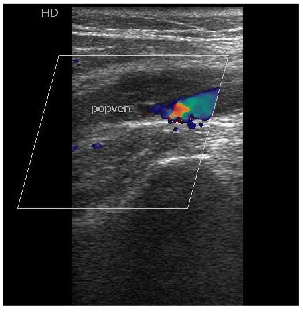
Patients who presented with pain, cough, and dyspnea that would not be expected of a TA rupture and symptoms of DVT underwent diagnostic imaging. A diagnosis within 3 months of the injury was considered to be symptomatic DVT or PE related to the TA rupture. A confirmatory duplex ultrasound was applied to patients clinically diagnosed as having DVT (
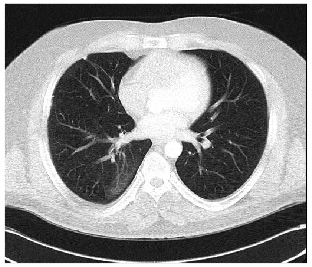
Fig. 1), and the patients were then referred to the cardiovascular surgeon. Patients with a suspected PE underwent computed tomographic scans to verify PE (
Fig. 2). Treatment of a standard regimen of anticoagulant was administered. Arterial blood gases and bleeding profiles were monitored closely. Heparin infusion was later changed to oral warfarin. The plaster cast was removed and replaced by a molded ankle-foot orthosis. After 3 weeks of brace therapy, during which time the patient continued full weightbearing, if the clinical examination revealed no evidence of a palpable defect on the TA, a customized anterior TA splint was applied and full weightbearing mobility was encouraged. Concentric and eccentric muscle-strengthening exercises were started under the supervision of a physiotherapist for patients who were referred to the physiotherapy department. Three months postoperatively, a progressive increase in muscle strengthening and a gradual return to sporting activities were permitted.
Figure 1
.
Duplex ultrasound image of the patient showing popliteal venous thrombosis.
Figure 1
.
Duplex ultrasound image of the patient showing popliteal venous thrombosis.
Figure 2
.
Pulmonary computed tomographic scan of the patient showing bilateral superior and inferior lobe pulmonary arterial segments occluded by embolus.
Figure 2
.
Pulmonary computed tomographic scan of the patient showing bilateral superior and inferior lobe pulmonary arterial segments occluded by embolus.
SPSS for Windows, Version 15.0 (SPSS Inc, Chicago, Illinois) was used for data analysis in this study. Descriptive statistics were used to determine the mean, range, and percentage distribution values.
Results
A total of 241 patients (13 females [5.4%]) with partial or complete TA rupture were retrospectively evaluated. Three patients were excluded because of previous TA rupture (n = 2) or surgery not related to TA (n = 1). When the medical records of the patients were analyzed, most of the TA injuries were the result of a sporting or physical activity or falling from a height, after a sudden dorsiflexion of the ankle in plantarflexion. All of the patients were admitted to the hospital within 3 weeks of the injury. The mean time from injury to surgery was 6 days (range, 1–25 days).
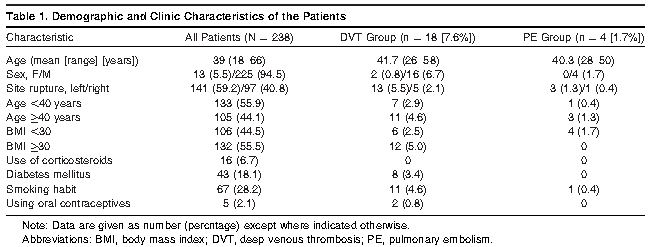
The average body mass index (BMI; calculated as weight in kilograms divided by height in meter squared) of the patients was 29.8 (range, 23.2–35). The 238 patients had a mean age of 39 years (range, 18–66 years) and average BMI of 31.8 (range, 24–33), and two-thirds had a BMI of at least 30. Symptomatic DVT was diagnosed in 18 patients (7.6%), of whom 11 were older than 40 years. Proximal DVT was diagnosed in one patient, and distal DVT in 17 (
Table 1). Pulmonary embolism was diagnosed in four patients (1.7%), none of whom had any DVT symptoms.
Table 1
.
Demographic and Clinic Characteristics of the Patients.
Table 1
.
Demographic and Clinic Characteristics of the Patients.
The 18 patients with DVT comprised 16 men and two women with a mean age of 41.7 years (range, 26–58 years). The patients with PE were men with a mean age of 40.3 years (range, 28–50 years). The average BMI of the patients with PE was 27.4 (range, 23.6–29.7). The youngest patient was diagnosed as having factor V leiden heterozygous mutation, and the oldest was a habitual smoker. Deep venous thrombosis occurred at a mean of 18 days (range, 7–32 days) after surgical treatment, and PE occurred at a mean of 35.3 days (range, 27–47 days). No deaths occurred in the study.
Discussion
Postoperative DVT and PE, which constitute venous thrombosis, continue to be leading causes of morbidity and mortality after surgery. The most common cause of preventable death in hospital in-patients has been reported to be PE.
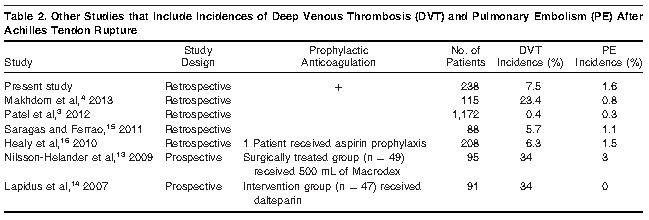
There have been few studies in the literature investigating the incidence of DVT and PE after TA rupture repair (
Table 2). To our knowledge, only two prospective studies have been published on this topic. The study by Patel et al[
3] had the largest sample size, and the overall rates of symptomatic DVT and PE after TA rupture were low (0.43% and 0.34%, respectively). Makhdom et al,[
4] Nilsson-Helander et al,[
13] and Lapidus et al[
14] reported higher rates of DVT and PE after TA rupture. In the present study, the rate of symptomatic DVT was 7.5% and of PE was 1.6%, which are similar to the results reported by Saragas and Ferrao[
15] and Healy et al.[
16]
Table 2
.
Other Studies that Include Incidences of Deep Venous Thrombosis (DVT) and Pulmonary Embolism (PE) After Achilles Tendon Rupture.
Table 2
.
Other Studies that Include Incidences of Deep Venous Thrombosis (DVT) and Pulmonary Embolism (PE) After Achilles Tendon Rupture.
The different rates of DVT and PE in the literature may be related to differences in study designs, with some reporting only the rate of symptomatic DVT and others with prospective design reporting the rates of both symptomatic and asymptomatic DVT. Differences can also be seen in the posttreatment procedures in different studies.
However, the lack of consensus on the use of VTE prophylaxis after TA rupture repair may also be a reason for different rates of DVT and PE. Most studies reported that routine anticoagulation treatment was not used.[
3,
4,
15] One survey of senior foot and ankle surgeons found no significant difference in DVT prevalence in those who never used thromboprophylaxis and those who always used it for elective forefoot, elective midfoot, open elective ankle, elective ankle arthroscopy, and ankle trauma surgery.[
17] In another study, Heyes et al[
18] reported that conservative treatment for TA does increase the incidence of symptomatic DVT compared with the general population. Healy et al[
16] reported that one of 208 patients received aspirin prophylaxis, and in a study by Nilsson-Helander et al,[
13] the surgically treated group received prophylactic treatment. Lapidus et al[
14] compared an intervention group of 47 patients administered dalteparin and a control group of 44 patients given placebo. It was suggested that dalteparin treatment did not significantly reduce the risk of thromboembolic complications compared with that of patients given placebo during immobilization after TA rupture surgery. In contrast, a retrospective analysis of 2,281 patients by Gritsiouk et al[
19] showed that prophylactic LMWH was associated with a reduction of VTE in trauma patients. However, Shibuya et al[
20] suggested the analysis of risk factors instead of routine pharmacologic thromboprophlaxis.
The patient population in the present study received anticoagulation therapy (enoxaparin) for 20 days (3 weeks) routinely. The use of anticoagulation therapy may have led to the lower incidence rates of DVT and PE compared with some other studies, and there was no evaluation of the subclinical DVT range in this patient population.
Various risk factors for the development of DVT and PE have been reported in the literature. The following factors have been reported to contribute to an increased risk of VTE: major surgery, multiple trauma, fracture of the hip or lower extremity, previous VTE, older age, BMI, cardiac or respiratory failure, prolonged immobility, the presence of central venous lines, estrogens, and a variety of inherited and acquired hematologic conditions.[
3,
6,
13-
15,
21] Due to the retrospective nature of the present study, there was no evaluation of age, BMI, use of corticosteroids and oral contraceptives, diabetes mellitus, or smoking habits. Patient age older than 40 years was determined in 63.6% of patients with DVT and in 75% of those with PE. A BMI greater than 30 was determined in 66.6% of patients with DVT but not in any patients with PE. In the DVT and PE population of the present study, there was no corticosteroid use. Of the patients with DVT, two females were using oral contraceptives, 61% were smokers, and 44% had diabetes mellitus. The oldest patient with PE was a habitual smoker, and the youngest patient was diagnosed as having factor V Leiden heterozygous mutation after PE. Makhdom et al[
4] reported a greater DVT rate after TA rupture in patients older than 40 years, but no significant difference was determined in a comparison of DVT rates between BMI groups. Another study reported that older age is a risk factor that is statistically significantly associated and clinically relevant for both DVT and PE in foot and ankle trauma.[
20]
Early mobilization and starting physiotherapy may reduce the incidence of DVT and PE. Patel et al[
3] reported a very low incidence of DVT and PE, stating that all patients with or without surgery were mobilized with crutches after rupture. In a study by Saragas and Ferrao,[
15] patients were nonweightbearing for 4 weeks with the application of a below-the-knee cast, and it was aimed to achieve full weightbearing in the following 6 weeks, with physiotherapy initiated after the cast was removed. Similarly, the present study group was nonweightbearing on the injured extremity for 4 weeks with a below-the-knee cast. Mobilization was provided with a three-point crutch gait, and physiotherapy was suggested when the cast was removed.
The risk of DVT may be reduced by the application of a weightbearing cast or molded ankle-foot orthosis, or by the use of electrical muscle stimulation through windows in the cast to allow muscle contraction, other physiotherapy techniques, and gentle mobilization. However, the value of these measures has not been assessed in terms of VTE prophylaxis. There is an urgent need for further randomized controlled studies of various pharmacologic and nonpharmacologic prophylactic measures to be able to establish evidence-based guidelines for the prevention of VTE during cast immobilization of patients with TA rupture.
The limitations of this study were that it was retrospective in design, and it is possible that some patients with symptomatic DVT may have been overlooked during clinical follow-up because the DVT symptoms could have been attributed to the normal postoperative course and that there was no evaluation of asymptomatic VTE.
In conclusion, the results of this study showed that age 40 years or older is a risk factor for DVT and PE, and BMI is a risk factor for DVT in patients with TA rupture. Although VTE prophylaxis was administered to the present study patient population, the incidences of DVT and PE were not low. In light of the literature review and results of this study, it can be suggested that routine VTE prophylaxis should be considered for these patients. Future studies are required to focus on the timing of VTE prophylaxis.
Financial Disclosure: None reported.
Conflict of Interest: None reported.