Since the 1990s, there has been a significant increase in narcotic prescriptions in the United States, peaking around 2011, which has led to an increased number of narcotic addiction cases. [
1] As regulations for prescribing and monitoring of these drugs have tightened, studies have shown that addicts are moving from prescription painkillers to street drugs, which has led to a national increase in injectable drug abuse, with heroin being the frontrunner. [
1] In August 2016, in Cincinnati, Ohio, alone, 174 known heroin overdoses were seen in just a 6-day span. Overall, there has been a nationwide increase in hospitalizations due not only to systemic complications of addiction but also to heroin-related infections as well. [
2] From 1993 to 2010 there was a 50% increase in opiate-related skin and soft-tissue infections, with a peak concentration in individuals 20 to 40 years old. [
2] Although heroin abusers are known to have a greater incidence of infection than nonabusers, there has been a recent increase in infections in even the injection drug abuser population. [
3] Many relate this recent increase in heroin-related infections and complications to injection practices and various synthetic adulterants and additives that are being used. In a study by Minkin and Cohen, [
4] only approximately 18% of a purchased pack of heroin actually contained pure heroin, or diacetylmorphine; the other 82% comprised additives such as mannitol, lactose, quinine, and fentanyl derivatives. In a statement from the Cincinnati coroner’s office, of the 488 heroin-related deaths in Hamilton County, approximately half involved fentanyl or its derivative, carfentanyl. Consider that heroin is already twice as potent as morphine, fentanyl is 100 times more potent than morphine, and carfentanyl has 10,000 times the potency of morphine. [
5] Because of this, their mu receptor effects of immune attenuation are significantly enhanced, leading to increased susceptibility to infection and difficulty healing. [
3,
5]
Just as an increase in heroin-related infections is being seen on a national and regional level, an increase in lower-extremity injection site infections have been noted. In a 2001 study, 19% of intravenous (IV) drug users injected into the foot, making the foot the fourth most common site of injection on the body. [
6] Although it is known that many users inject into the lower extremity, lower-extremity heroin-related infectious cases have been reported rarely in the literature. A 2014 study from Philadelphia reported a demographic data review of IV drug–related lower-extremity infections. [
7] However, to our knowledge, no hospital-based case series of lower-extremity heroin-related infections has been reported. Further knowledge in recognition and treatment of these infections can lead to efficient diagnosis and more effective management of this unique patient population.
Patients and Methods
We present a case series of lower-extremity infections in heroin users seen from January 1, 2016, to April 30, 2017 at The Jewish Hospital (Cincinnati, Ohio). Inclusion criteria for this retrospective case series included a lower-extremity infection and a history of IV heroin abuse, a positive urine drug screen on presentation, or patient admission to heroin use. The retrospective medical record review was performed with the following variables of interest: age and sex at initial presentation, complicating comorbidities, the patient’s user history (including history of lower-extremity injection), the anatomical location of the infection, the type of infection and level of tissue involved, infectious laboratory markers at presentation (including white blood cell [WBC] count and erythrocyte sedimentation rate [ESR]), diagnostic imaging findings obtained during admission, culture results and antibiotic drug therapy received, invasive or surgical treatment received, total length of hospital stay, and the patient’s follow-up course.
Results
Of the eight patients in this series, 75% were women and 25% were men. The patient age range was 29 to 45 years, with a mean ± SD age of 35.4 ± 6.11 years. Half of the patients were found to be positive for hepatitis C on presentation. Seventy-five percent of the patients had an unremarkable medical history; of the remaining 25% of patients, one had a medical history of rheumatoid arthritis and the other had a history of insulin-dependent diabetes mellitus. Mean ± SD length of stay at the hospital was 6.13 ± 1.46 days, with a range of 4 to 8 days. Only 62.5% of the patients admitted to injecting into the foot or ankle. Two of the patients who admitted to injecting into the lower extremity had infection isolated to just a digit. Three of the cases involved the ankle. Three patients (37.5%) had associated osteomyelitis. When considering the laboratory work on presentation, only half of the patient’s (four of eight) presented with leukocytosis. Mean ± SD WBC count on presentation was 11,800/μL ± 3,300/μL, with a range of 7,600/μL to 15,700/μL. The ESR was elevated in all of the patients but ranged from 25 to 105 mm/h, with a mean ± SD of 66.6 ± 29.9 mm/h. Cultures were taken in all eight cases. Half of the patients had culture results that were positive for Staphylococcus aureus, and three of those cases were methicillin-resistant S aureus (MRSA). Other microbial results that were seen included various strains of Serratia, Bacillus, Prevotella, Eikenella, Staphylococcus, and Streptococcus. Seven of the patients (87.5%) were treated surgically with an incision and drainage, and two of those patients also received an amputation. The surgical procedures completed in this case series were performed by five different surgeons at The Jewish Hospital. Only 50% of the patients made it to any follow-up appointment. Of the four patients who followed up, all missed at least one appointment. One patient died 4 months after discharge from complications due to infectious endocarditis. Of the four patients who did follow-up, only two continued to come for follow-up appointments after 19 days. Mean ± SD follow-up was 25.8 ± 37.5 days (range, 0–90 days).
Discussion
In a patient population with a history of heroin use as outlined in the present study, many factors should be considered during diagnosis and treatment. Although demographic analysis has been performed, no single hospital–based case series of lower-extremity heroin-related infections has been reported, to our knowledge. It is our goal to report case-based evidence of considerations in recognition and treatment of these infections to lead to more efficient diagnosis and effective management in a unique patient population.
Skin and Soft-Tissue Infections in Heroin Users
The prevalence of injection site infections among heroin users has been reported to be as high as one in three. [
8] Skin and soft-tissue infections in drug users are common but are not reported frequently in the lower extremity. All eight of the present study patients had a form of skin and soft-tissue infection, with only three having more extensive and deeper infection. In a 2002 study from San Francisco, 32% of IV drug users were found to have evidence of skin and soft-tissue infections. [
9] Of the skin and soft-tissue infections seen in IV drug users, abscesses are the most common manifestation, attributing to 65% of infections. [
10] In the present case series, five (62.5%) of the eight patients had abscesses. The biggest risk factors that lead to formation of abscess include “skin popping,” or injecting subcutaneously; “muscle popping,” or injecting intramuscularly; use of unsterilized needles; and injection of “speedball” (a mixture of heroin and cocaine) due to cocaine’s effect of local tissue ischemia. [
10] In the previously stated 2002 San Francisco study, skin popping was associated with a fivefold increased risk of skin and soft-tissue infection compared with IV injection. [
9] In the present case series, of the five patients who had an abscess on presentation, 60% admitted to frequently injecting directly into the skin of the foot or ankle. This is consistent with the literature: 61% of skin poppers have been shown to have abscess development at some point. [
11] Based on patient history of injection into the foot or ankle, a prediction as to the type of infection can be made and can help streamline diagnosis. However, these patients may not be reliable historians, so a thorough work-up should always be initiated.
Regarding work-up, in a report by Ebright and Pieper [
12] of subcutaneous abscesses in IV drug users, only 42% of the patients were febrile and only two-thirds displayed fluctuance on examination. Because abscesses can be masked as uncomplicated cellulitis, it is important to be suspicious even when history and physical examination findings are unremarkable. Although none of the present patients had a necrotizing infection, it has been reported in the literature that necrotizing fasciitis also presents far less dramatically in IV drug users, appearing as uncomplicated cellulitis or abscess. [
9] In both the work-up and surgical treatment, it is important to inspect the deeper tissue planes to rule out more significant involvement. A superficial infection that is responding poorly to antibiotic drug therapy may require advanced imaging to further evaluate the extent of infection. [
12]
In addition, sex has been shown to play a role in infection rates. Female drug users have a higher incidence of infections, which has been attributed to difficult venous access in less prominent veins compared with males. [
9] In the present study, six of the eight patients were women. Of the six women, four admitted to injecting into the foot after having difficulty accessing their veins.
Osteomyelitis in Heroin Users
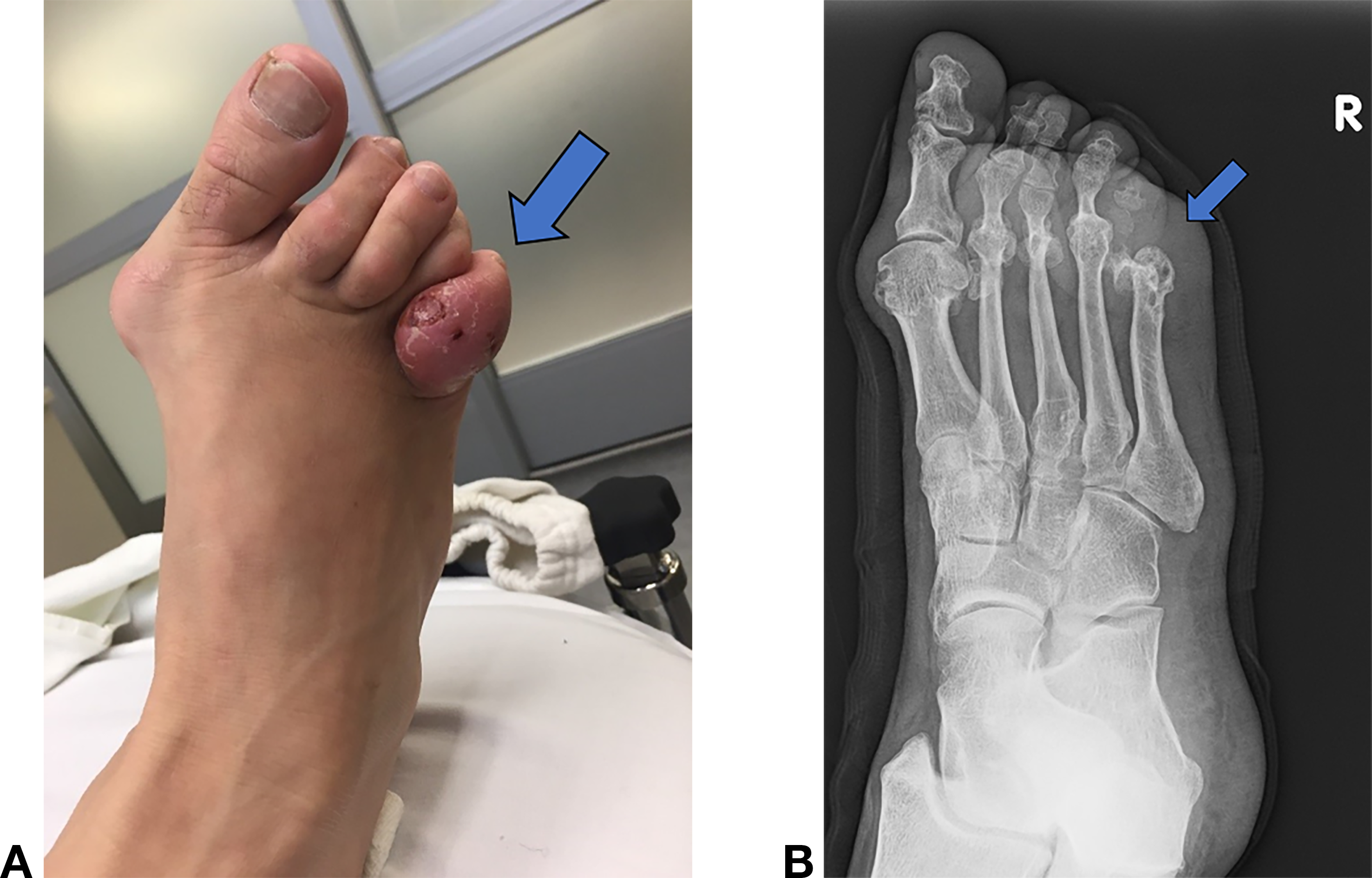
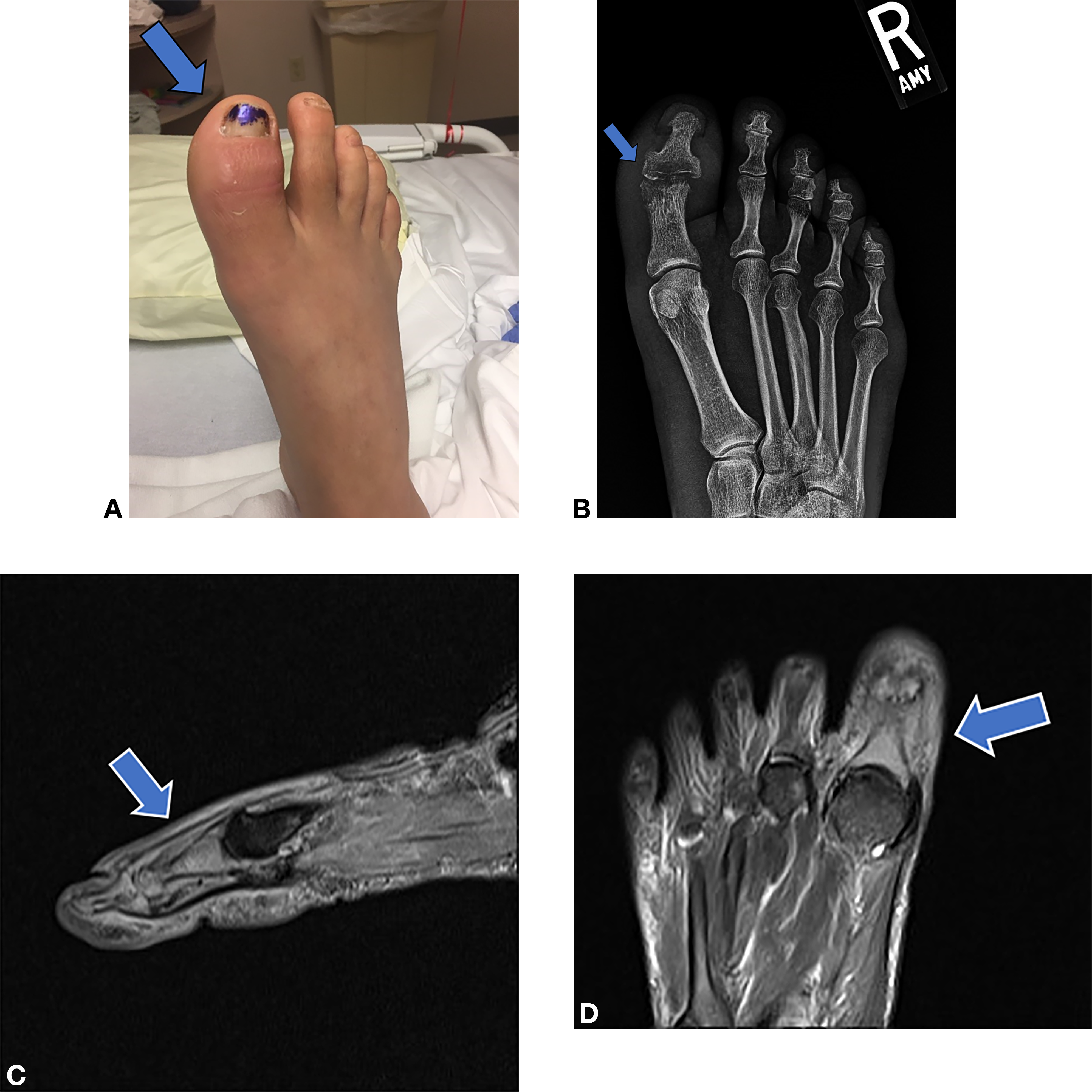
As mentioned previously herein, 37.5% of the patients in this series had evidence of osteomyelitis as confirmed via either bone biopsy or magnetic resonance imaging (
Figs. 1 and
2). In a thorough literature search, only 2 articles, by Fox and Brady [
13] and Canales et al [
11] with a total of three cases, were found to describe osteomyelitis of the foot secondary to illicit drug use. Most cases of osteomyelitis secondary to drug abuse that are found anywhere in the body are usually seen in patients younger than 50 years and are usually caused by hematogenous spread, with the vertebrae being the most common location for seeding. [
13] The present patient population in this case series presented younger than 50 years, but in each case it is unclear as to the etiology of the osteomyelitis. Although two patients of the three osteomyelitis cases admitted to injection into the foot, the location at which the patients injected did not seem to be in anatomical proximity to the actual site of osteomyelitis, so direct or contiguous spread can be neither confirmed nor ruled out. Two of the cases of osteomyelitis were treated with primary amputation of the affected area: hallux amputation and fifth toe amputation (
Figs. 1 and
2). The other patient was treated with IV antibiotic drugs, serial surgical debridements with split-thickness skin grafts, and negative pressure wound therapy at an outside hospital.
Figure 1.
Clinical and radiographic images of one of the study patients. A, On initial presentation, the patient had a dactylitis and cellulitis of the right foot in the presence of chronic rheumatoid arthritis (arrow). B, Radiograph of the right foot revealed osteolysis of the fifth digit consistent with osteomyelitis (arrow), best seen on the medial oblique view.
Figure 1.
Clinical and radiographic images of one of the study patients. A, On initial presentation, the patient had a dactylitis and cellulitis of the right foot in the presence of chronic rheumatoid arthritis (arrow). B, Radiograph of the right foot revealed osteolysis of the fifth digit consistent with osteomyelitis (arrow), best seen on the medial oblique view.
Figure 2.
Clinical, radiographic, and magnetic resonance images from one of the study patients. A, On initial presentation, the patient had dactylitis and cellulitis of the right hallux (arrow). B, The patient underwent radiographs of the right foot that revealed lysis of the first metatarsophalangeal joint (arrow), best seen on the anteroposterior view. C and D, Magnetic resonance imaging of the right foot without contrast revealed marrow edema of the proximal and distal hallucal phalanges (arrows) consistent with osteomyelitis and joint effusion consistent with septic joint arthritis, best seen on sagittal short-TI inversion recovery (C) and coronal T2-weighted (D) images.
Figure 2.
Clinical, radiographic, and magnetic resonance images from one of the study patients. A, On initial presentation, the patient had dactylitis and cellulitis of the right hallux (arrow). B, The patient underwent radiographs of the right foot that revealed lysis of the first metatarsophalangeal joint (arrow), best seen on the anteroposterior view. C and D, Magnetic resonance imaging of the right foot without contrast revealed marrow edema of the proximal and distal hallucal phalanges (arrows) consistent with osteomyelitis and joint effusion consistent with septic joint arthritis, best seen on sagittal short-TI inversion recovery (C) and coronal T2-weighted (D) images.
Microbiology Results in Heroin Users
Another important consideration in management is microbial culture results. In the literature, the most common pathogen seen in IV drug users is
S aureus. Specifically, the first-ever community outbreak of MRSA occurred in Detroit among heroin users. [
14] Overall, IV drug users have a higher rate of nasal and skin carriage of MRSA. [
14] Therefore, empirical initial antibiotic drug therapy with MRSA coverage should be considered. In the present case series, only half of the patients were positive for
S aureus, and three of those patients had methicillin resistance. In fact, more than half of the cases (62.5%) were polymicrobial, which is in accordance with the literature. Chen et al, [
15] in
Clinical Infectious Diseases, found that more than 50% of IV drug abuse–related infections are polymicrobial. In two separate studies, 52% and 62% of cultured specimens in IV drug users yielded both aerobic and anaerobic organisms. [
12] This finding is thought to be due to a variety of factors, including unsterile injection practices, contaminated drug paraphernalia, and drug adulterants. [
14]
Unsterile injection practices are a common trend in this patient population. In a 2013 study by Hope et al, [
8] only 43% of IV drug users washed their hands before injecting and only 52% swabbed the injection site with alcohol before injecting. Contaminants in drugs are another potential source of polymicrobial infections. Preparation techniques often include “cutting” the heroin with adulterants such as methamphetamines, starch, lidocaine, and fentanyl, which can introduce bacterial spores into the final product, such as
Clostridium and
Bacillus. [
14] Similarly, because heroin is poorly dissolved in water, it is often dissolved in mild acids, which can kill non–spore-forming bacteria but does not affect spore-forming bacteria. In half of the patients in this case series, a spore-forming bacteria was isolated in the culture, including
Bacillus and
Serratia. The culture results in those four patients could possibly be attributed to drug preparation practices. Other culture results of the case series yielded
Eikenella corrodens and multiple variants of
Prevotella, which can be attributed to the specific injection practice of “needle licking.” Brown and Ebright [
9] stated that needle licking or other oral contact before injection can cause microbes such as
Eikenella, Streptococcus milleri, Prevotella, or
Fusobacterium, which can all be found as part of the normal oral flora.
Another interesting finding is that none of the eight patients displayed positive blood cultures, which according to Ebright and Pieper [
12] is actually a very normal trend in drug users. Regardless, broad spectrum treatment for both aerobic and anaerobic coverage should be initiated with attention given to MRSA coverage because it is the most common pathogen.
Antimicrobial Drug Treatment in Heroin Users
In the management of uncomplicated cellulitis, the literature recommends initiation of systemic antibiotic agents, which are primarily directed against
Staphylococcus and
Streptococcus, including penicillinase-resistant penicillins, first-generation cephalosporins, or vancomycin. [
12] Owing to its high incidence in the literature, antibiotic drug coverage should also include methicillin-resistant gram-positive organisms. All eight of the patients in the present retrospective case series were started on IV antibiotic agents on presentation. Seven of the eight patients received combination therapy. Seven of the eight patients were treated with vancomycin, with the outlier having a vancomycin allergy. Half of the patients were treated with a combination of vancomycin and piperacillin/tazobactam. According to the literature, IV heroin users with abscesses should be treated surgically as well as managed medically with antibiotic drug therapy. [
12] Antibiotic drug therapy is guided by culture and sensitivity results taken on presentation. However, initial choice should include coverage of both gram-positive aerobes and anaerobes. The patients in the present case series grew anaerobes, including
Eikenella,
Serratia, and
Prevotella, and various gram-positive aerobes, including
Staphylococcus,
Streptococcus, and
Bacillus. Initial antibiotic drug coverage can include clindamycin, ampicillin-sulbactam, and vancomycin plus metronidazole, and duration should be at least 2 weeks. [
12] It is important to recognize that even in what seems to be a superficial cellulitis or abscess, broader coverage should always be initiated in the heroin abuser.
Effects of Heroin on Immune Function
One important trend that was noticed during this case series is the lack of impressive laboratory inflammatory markers in the presence of infection. Only half of the cases displayed leukocytosis on presentation, ranging from WBC counts of 12,000/μL to 15,700/μL. The mean WBC count on presentation for all of the patients in this case series was 11,800/μL. It was noted that of the five patients who displayed notable purulent drainage intraoperatively, four had leukocytosis on presentation. An initial presentation of leukocytosis might increase the clinical index of suspicion for abscess formation. Although all of the patients had some level of elevation in the ESR, the three patients with osteomyelitis yielded ESR values of 86, 52, and 25 mm/h, which show no association of ESR value and prediction of osteomyelitis in a heroin user. The lack of a significant increase in WBC count and ESR could possibly be attributed to heroin’s effects on immune function. Because opiates, similar to heroin, influence the mu and gamma receptors, they have been known to have attenuated immune effects, including inhibition of T-cell function, delayed phagocytosis and chemotaxis, and decreased cytokine production. [
14] Mu receptor activation has also been shown to decrease the number of macrophages that are available to respond to an infection and suppress the capacity of macrophages to ingest opsonized pathogens. [
3] Several studies have shown that drug abuse impairs the ability to eradicate infection by inhibiting phagocytosis, leading to increased bacterial load. [
3] In a study performed in 2010, activation of mu receptors led to significant suppression of neutrophil recruitment to the wound site. [
3] In addition, opiates interact with neural cells via the hypothalamic-pituitary axis by stimulating the release of corticotropin-releasing hormone and adrenocorticotropin-releasing hormone, which results in increased glucocorticoid levels, leading to suppression of several immune parameters. [
14]
Compromised Immune Function Secondary to Additives
In addition to heroin’s immune effects, additives can also cause delayed or diminished immune response. Injecting a mixture of cocaine and heroin (speedball) has been shown to cause local tissue vasospasm, ischemia, and thrombosis. [
12] Another common drug filler, quinine, is known to be a highly sclerosing agent, along with talc, mannitol, and barbiturates. [
12] Repeated injections into the same location with sclerosing agents can cause impaired lymphatic function and diminished venous return, leading to chronic edema and even stasis ulcerations. [
12]
With additives such as fentanyl or carfentanyl being 100 to 10,000 times the potency of morphine, even further potentiation of the mu receptor effects is seen on immune function. [
5] Kaushik et al [
14] described that other additives found in heroin can contain immunomodulatory drugs. For example, levamisole is frequently added to heroin due to its potentiation of euphoric effects. However, it has been shown to cause a reversible neutropenic state. [
14] With heroin already affecting neutrophil action, additional drugs such as levamisole can further inhibit neutrophil function. There are also many studies showing other additives that enhance the likelihood of infection, but the exact mechanism is unclear. For example, colored methamphetamines added to heroin have been shown to lead to a 34% infection rate, whereas clear varieties have a 24% infection rate. [
14] With these effects of both drug and additives in mind, it is important to not rely solely on laboratory values in a heroin user when deeper or worsening infection is being considered. The knowledge that heroin users often present with unimpressive laboratory values even in light of significant lower-extremity infections can possibly lead to more efficient diagnosis and treatment.
Viral Effects on Inflammatory Markers
Another important consideration when treating the heroin user is the patient’s comorbidities. Of the patients in the present case series, half were positive for hepatitis C, as confirmed via viral testing during their admission. According to the literature, hepatitis C prevalence rates in IV drug users range from 40% to 90% in different studies. [
14] In a 2005 study by the Department of Hepatology in Lyon, France, there was dissociation found between inflammatory conditions and inflammatory markers such as ESR in the hepatitis C–positive patient. [
16] The study found that patients with hepatitis C with inflammatory conditions maintained a normal or only mildly elevated ESR. [
16] Viral comorbidities play an important role on immune function and can, therefore, possibly cause a delay in diagnosis or further evaluation due to unimpressive laboratory values on presentation. Although none of the patients in this case series were reactive for human immunodeficiency virus, it is important to test for all viral conditions that are common in drug users.
Pain Control in the Heroin Abuser
In all of the cases in this series, the patients admitted to various levels of pain throughout their admission, most of them relating to greater than 5 of 10 on the pain scale for the duration of their admission. Pain control in the heroin abuser is a difficult task. Besides withdrawals, pain is one of the most common reasons heroin abusers will leave the hospital against medical advice before discharge. In a 1999 study, Laulin et al [
17] found that a single small dose of heroin induces enhanced pain sensitivity for several days. Five of the eight patients in the present case series admitted to daily heroin use, which can be extrapolated to substantial enhancement in their sensitivity toward pain. This is due to the fact that even a small dose of heroin induces a gradual lowering of the nociceptive threshold, which progressively masks a sustained analgesic effect. [
17] In addition, their existing tissue injury and inflammation, which is secondary to their infection, also causes enhanced nociceptive excitation at this lower threshold. [
3] Pain management is a difficult facet of treatment in the heroin abuser due to the patient being non–opiate-naive and having enhanced pain sensitivity. Nonopiate oral agents and topical agents can help supplement opiate analgesia in these patients.
Follow-up and Compliance
Finally, follow-up and compliance of the heroin abuser has been proved unreliable and difficult. In a 2014 study by Pirozzi et al, 73.47% of their skin popping subjects did not return for scheduled outpatient visits. [
7] Only half of the patients in the present study followed up after their hospital discharge. Of the patients who did not follow up, one died 4 months after discharge from the hospital due to complications of infectious endocarditis. Of the four patients who did follow up, each missed at least one appointment, and only two continued to come for follow-up appointments after 19 days. Because reliability in follow-up is not a common finding in this patient population, one consideration when treating these patients is to lengthen their hospital admission. Early discharge from the hospital should not be a consideration, and rehabilitation and addiction services should be offered to all of these patients.
Drug-related infections are placing a burden on the health-care system as well. Although endocarditis is most commonly attributed to IV drug abuse, skin and soft-tissue infections are actually the most common reason for hospital admission in this patient population. [
12] In 2004, annual health-care costs for injection site infections in IV drug users were
$20 million to
$61 million. [
8]
Conclusions
With a 50% increase in opiate-related skin and soft-tissue infections during the past two decades, [
2] along with complicating factors such as new additives and preparation techniques being used by heroin abusers, a multifactorial approach is recommended in the treatment of these complicated lower-extremity infections. To our knowledge, no hospital-based case series of lower-extremity heroin-related infections has been reported. By having greater knowledge in unique considerations of diagnosis and management, better and more efficient care can be provided to this patient population.