Next Article in Journal
An Unusual Case of a Fibular Sesamoid Phalangeal Ligament Tear Caused By Chronic Trauma
Previous Article in Journal
A Rare Cause of Heel Pain: A Calcaneal Spur Fracture
 
 
Journal of the American Podiatric Medical Association is published by MDPI from Volume 116 Issue 1 (2026). Previous articles were published by another publisher in Open Access under a CC-BY (or CC-BY-NC-ND) licence, and they are hosted by MDPI on mdpi.com as a courtesy and upon agreement with American Podiatric Medical Association.
Article

How to Create a Hot Foot Line to Prevent Diabetes-Related Amputations: Instant Triage for Emergency Department and Inpatient Consultations

by
John D. Miller
1,
Eric J. Lew
2,
Nicholas A. Giovinco
1,
Christian Ochoa
1,
Vincent L. Rowe
1,
Leonardo C. Clavijo
1,
Fred Weaver
1 and
David G. Armstrong
1,3,*
1
Southwestern Academic Limb Salvage Alliance (SALSA) Department of Surgery, Section of Vascular Surgery, Keck School of Medicine at the University of Southern California, Los Angeles, CA
2
Center for the High-Risk Lower Extremity, University of New Mexico College of Medicine, Albuquerque, NM
3
Southwestern Academic Limb Salvage Alliance (SALSA) Department of Surgery Keck Medical Center of USC 1520 San Pablo Street, Suite 4300 Los Angeles, CA 90033
*
Author to whom correspondence should be addressed.
J. Am. Podiatr. Med. Assoc. 2019, 109(2), 174-179; https://doi.org/10.7547/17-204
Published: 1 March 2019

Abstract

Emergency department visits for lower extremity complications of diabetes are extremely common throughout the world. Surprisingly, recent data suggest that such visits generate an 81.2% hospital admission rate with an annual bill of at least $1.2 billion in the United States alone. The likelihood of amputation and other subsequent adverse outcomes is strongly associated with three factors: 1) wound severity (degree of tissue loss), 2) ischemia, and 3) foot infection. Using these factors, this article outlines the basic principles needed to create an evidence-based, rapid foot assessment for diabetic foot ulcers presenting to the emergency department, and suggests the establishment of a “hot foot line” for an organized, expeditious response from limb salvage team members. We present a nearly immediate assessment and referral system for patients with atraumatic tissue loss below the knee that has the potential to vastly expedite lower extremity triage in the emergency room setting through greater collaboration and organization.

Lower extremity complications in patients with diabetes continue to enact an increasing toll on the health-care system.[1-3] Between 2006 and 2010, more than 1 million cases of diabetic foot infection presented to emergency departments (EDs) in the United States, with an inpatient admission rate of 81.2%.[4] These emergencies cost the health-care system $1.2 billion (2012 dollars), a burden that expands to over $41 billion when including the inpatient charges necessary for care.[4-6] Given these startling figures, it is evident that ED providers exist at the front-line in the health-care war against diabetic foot infections (DFI). Although the current health-care system has evolved to quickly and accurately evaluate and treat acute cardiovascular, neurovascular, or traumatic emergencies, it is not as well designed to deal with the often acute-on-chronic complications of noncommunicable diseases such as DFIs.
Patients with diabetes and confounding peripheral neuropathy or peripheral artery disease require an interdisciplinary team to deliver comprehensive and coordinated care in both short-term (inpatient) and long-term (outpatient) settings. For instance, the Diabetic Rapid Response Acute Foot Team protocol outlines the specific minimum requirements necessary to form a rapid response team for the diabetic foot and is tailored toward skilled infection control, correction of ischemia, along with basic and surgical wound management.[7,8] Use of specialized, synergistic teams provides the impetus for effective health-care planning and effectively reduces costs and gross amputation. Therefore, the establishment of an interdisciplinary “hot foot line” may reduce the quantity of proximal amputations, and may lead to a shift from reactionary and ablative procedures to more proactive and prophylactic therapeutic measures.[9]
Because the most prominent morbid characteristics of a diabetic foot problem typically require only history, visual inspection, and physical examination detection, considerable efforts to streamline rapid screening and referral may be a valuable investment.[8,10] Therefore, the simplification of patient care flowcharts on presentation to the ED should be a major emphasis of emergency care. Doing so will best mitigate the growing epidemic of emergency expenditures related to ED presentations of noncommunicable diseases and aid in limb preservation. To our knowledge, little has been written regarding the presentation of a diabetic foot wound to the ED. In this article, we present a triage method for use by the ED physician to determine the need for referral to a preestablished hot foot line for at-risk diabetic feet with a clinical vignette to demonstrate the system in action.

Grading System for Threatened Limbs: Tumor/Node/Metastasis System for Feet

Nontraumatic lower extremity wounds, particularly in patients with diabetes, may be defined by three factors: 1) wound (tissue loss), 2) ischemia, and 3) foot infection (WIFI).[11,12] Although numerous isolated grading systems exist to evaluate the individual components of wound risk, the Society of Vascular Surgery WIFI system combines these three fundamental elements into a comprehensive definition of severity and likelihood of healing.[13] Each of these three factors is graded as “none” (0), “mild” (1), “moderate” (2), and “severe” (3), yielding a functional score much like the “tumor/node/metastasis” staging system for malignancy.[14] Although the emergency physician need not know a specific WIFI score as outlined in Table 1 before engaging the hot foot line, knowledge of its parameters will significantly improve all subsequent interspecialty communication.
Table 1. Abbreviated Society for Vascular Surgery Wound, Ischemia, and Foot Infection Wound Classification System 
Japma 109 00174 i001
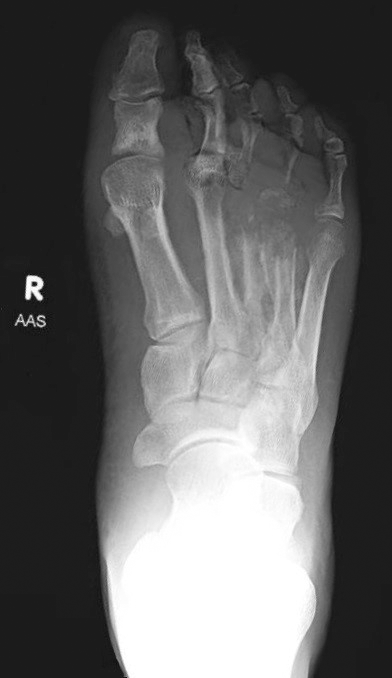
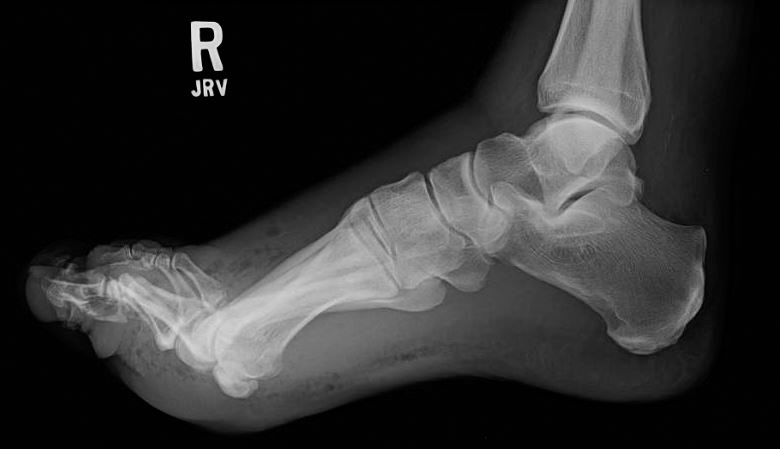
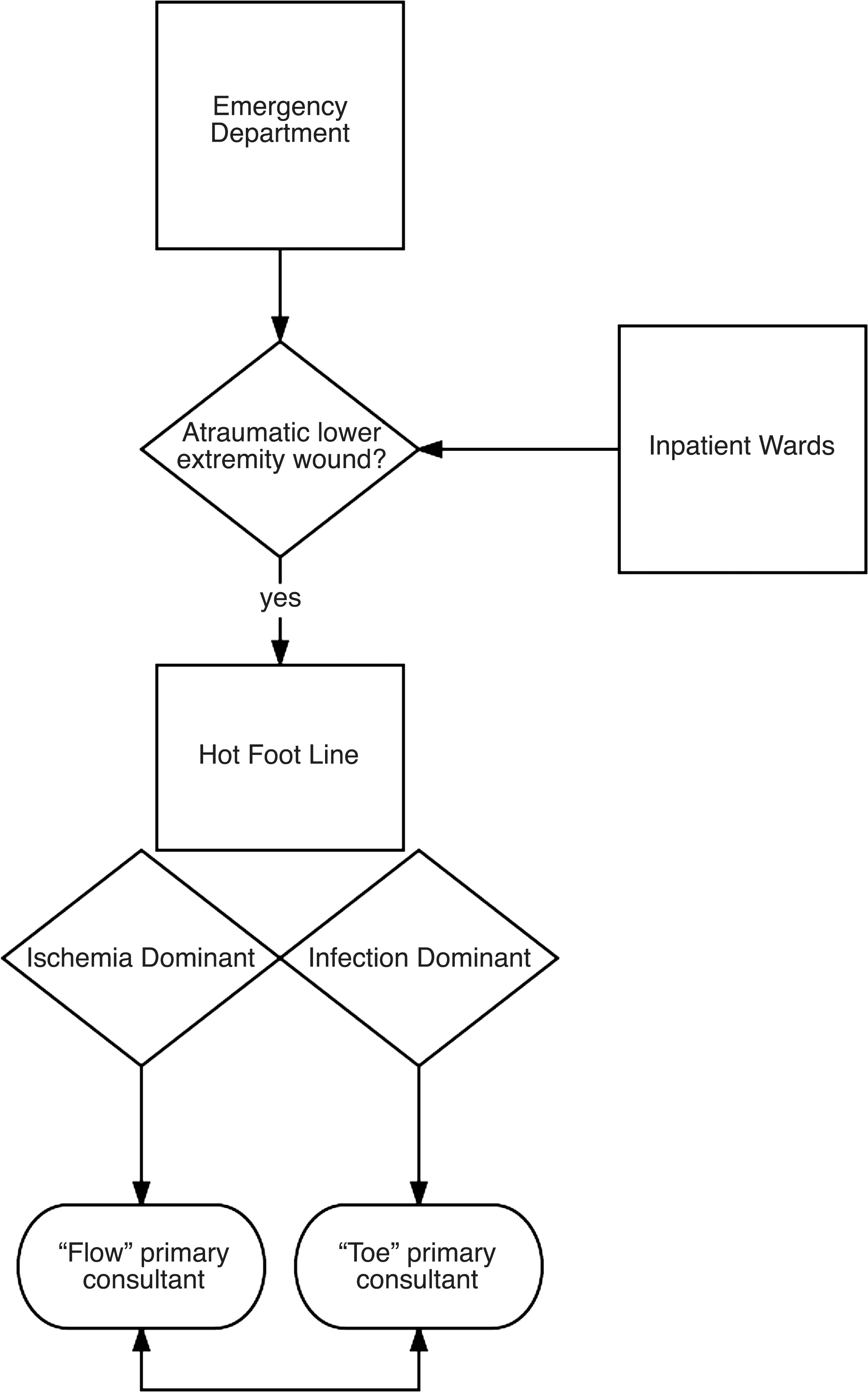
Fundamentally, the ED physician or hospitalist should conduct a basic physical assessment of the wound. If, in this case, tissue loss is present to the extremity, engagement of the hot foot line is warranted. This assessment should take only seconds, yet is sufficient to clearly delineate whether a diabetic wound is limb threatening. In the event that signs of either infection or ischemia are present, plain film radiographs and a complete blood count with differential should be ordered and the hot foot line consulted for further workup. Suspicion of osteomyelitis (Fig. 1) or presence of soft-tissue gas (Fig. 2) on plain film radiographs alone indicates the need for immediate hot foot line consultation. The essential guidelines for this rapid evaluation are shown in Figure 3 below.
Figure 1. Plain film radiographs of the right foot reveal extensive osseous destruction beginning at the distal third of the right third and fourth rays and extending into the proximal phalanges. These appearances are consistent with the physical appearance, and are in-line with suspicion of osteomyelitis.
Japma 109 00174 g001
Figure 2. Soft-tissue gas gangrene is a severe complication of extremity ulcers and wounds, associated with a potentially lethal outcome. Here, gas is demonstrable in both the dorsal and plantar midfoot. These patients require prompt administration of broad-spectrum antibiotics and emergent surgical debridement.
Japma 109 00174 g002
Figure 3. Hot foot line schematic. A general guideline for the workflow of a patient with a diabetic foot ulcer presenting to the emergency department. Following swift activation of the “one-call” rapid response limb preservation team, once activated, the members will evaluate the “dominance” of ischemia or infection. This comprehensive workup may then be used to guide the course of both short- and long-term management.
Japma 109 00174 g003

Organization and Activation of the Hot Foot Line

Patient care algorithms are frequently convoluted and can paradoxically create barriers to patient care. Given that more streamlined models are often the most desirable, it is in the best interests of the limb preservation team to create a single point of contact to activate the multifaceted cascade of diabetes-, ischemic-, or infection-related limb care. It has been our experience that a unified service simplifies decision making for the ED physician or hospitalist, requiring only one call[4,9,15,16] to manage all such lower-extremity complications regardless of the causative agents. Such a system has led to reductions in length of stay, and a nearly 50% reduction in high-level amputation with a fundamental shift from reactive and ablative surgery to more proactive and reconstructive surgery. Problems such as acute Charcot arthropathy, which is often initially diagnosed as a cellulitis or osteomyelitis, is a particular area where a rapid response system such as this can be beneficial.[17]
Following activation of the hot foot line, further within-team triage may be established as needed. The following scenarios represent the majority of lower-extremity limb-threatening cases:
1.
Lower-extremity ulceration with infection or gangrene without suspected ischemia (palpable pulses): Contact the podiatric surgical consultant.
a.
Podiatric surgery will address the tissue loss and infection in consultation with infectious disease if necessary.
b.
Podiatric surgery will consult vascular/interventional specialist if ischemia is present or perfusion is poor and vascular intervention is necessary. Vascular surgery may also be needed if urgent intervention such as amputation is required, such as in patients with gas gangrene, necrotizing fasciitis, or an unsalvageable foot.
2.
Lower-extremity ulceration with suspected ischemic etiology (gangrene, black eschar, and nonpalpable pulses), with or without infection: Contact the vascular surgery consultant.
a.
Vascular surgery, including vascular/endovascular surgery, interventional cardiology, and interventional radiology, will manage the ischemia with appropriate noninvasive vascular studies and determine whether vascular intervention is necessary.
b.
Podiatric surgery can be consulted as needed to address tissue loss and/or infection.
Additional collaboration with other members of the limb salvage team including vascular medicine, infectious disease, medicine, rheumatology, endocrinology or other specialties may be necessary to increase the chances for a successful outcome.[7] In addition, other specialists may play a vital central role in regions or facilities where podiatric or vascular surgery are not available.
There have been significant successes in implementing programs such as this within inpatient wards. During routine in-hospital nursing management, previous works by Duncan Stang and colleagues of the Scottish Diabetic Foot Society propose using the check, protect, and refer method for diagnosing and referring at-risk diabetic feet.[18-21] This simple tool allows the health-care provider to remember only to check, protect, and refer patients with any active signs of ulceration or gangrene. Use of this simple screening and referral program has proven extremely effective and greatly impacted the outcomes of diabetic limbs in the inpatient care setting. It is our hope that this rapid diabetic foot examination/triage for the ED and inpatient setting will be equally efficacious in reducing the impact of diabetes-related ulcerations on the health-care community when paired with a hot foot line for rapid-response and amputation prevention.

Case Report

A 37-year-old man with a history of type 2 diabetes mellitus and associated peripheral neuropathy, prior left transmetatarsal amputation, hypertension, and hyperlipidemia presented to the ED with acute right foot infection. He complained of 1 week of progressively increased pain, swelling, drainage, and redness from an ulcer on the bottom of his foot. He had also noted increased drainage and malodor. The foot ulcer was chronic, having been present for more than 2 months and having been treated with daily dressing changes of Dakin's solution. In addition, the patient stated that his second toe had also recently turned black. Other pertinent history included fever, chills, nausea, vomiting, loss of appetite, and diarrhea for 1 week.
Vital signs included the following: blood pressure, 98/66 mm Hg; pulse, 118/min; temperature, 39.7°C (103.5°F); and respiratory rate, 18/min. General observations included the following: the patient was alert, oriented × 3, and lying in bed in apparent distress. Focused examination of the right lower extremity revealed palpable pedal pulses with triphasic dorsalis pedis and posterior tibial triphasic Doppler signals; capillary refill time less than 3 seconds (bilaterally); and 1+ pitting edema of the right lower leg, ankle, and foot.
Dermatologic findings included skin texture; temperature; and turgor that was thin, atrophic, and shiny in appearance. Interdigital maceration was present, with an open wound on the right plantar foot and with a necrotic gangrenous second digit measuring 7 × 3 × 4 cm.
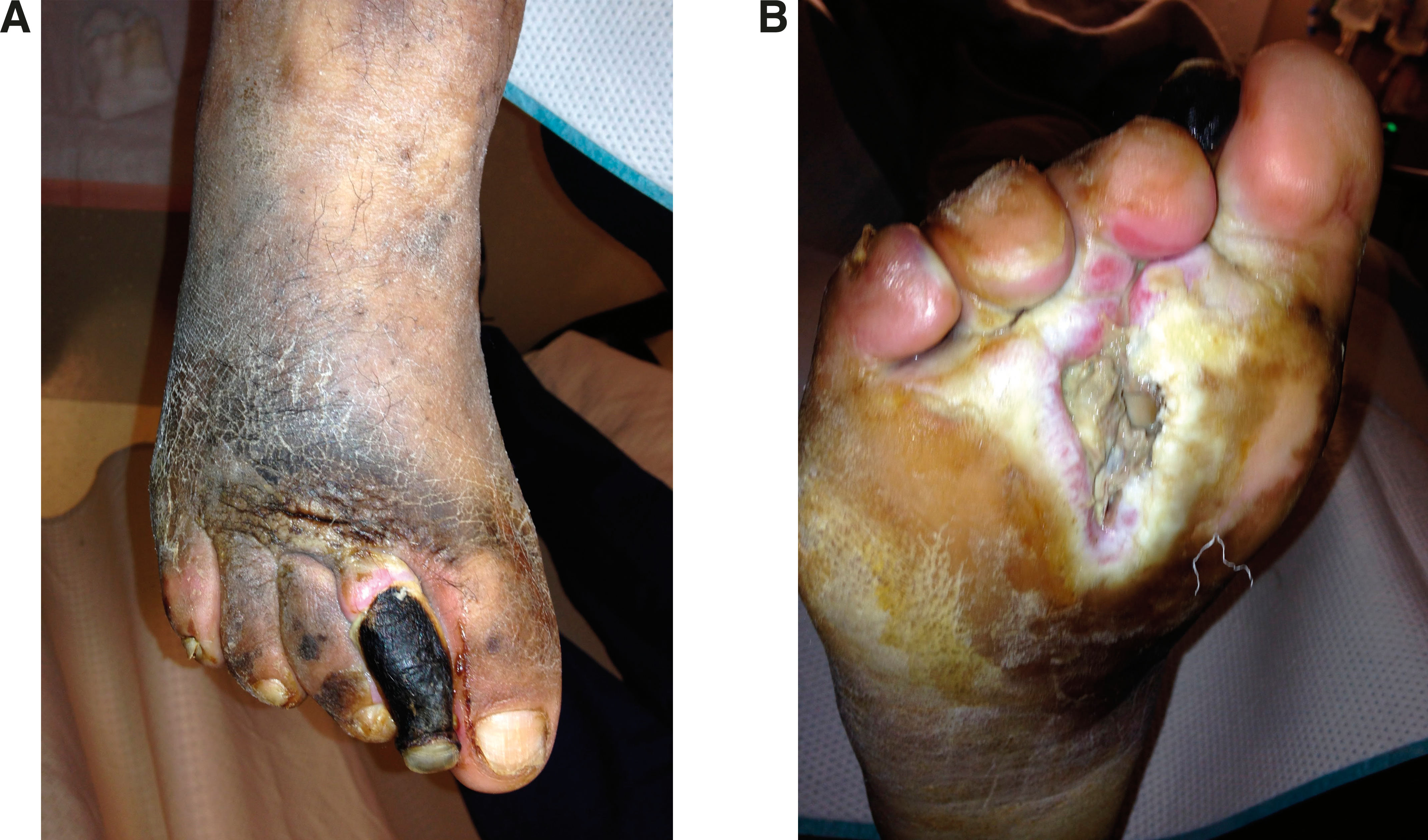
The wound was a full-thickness wound with a necrotic base and exposed and grossly visible erosion of the third metatarsal head. There was undermining of the wound edges, with a hyperkeratotic rim and maceration along the wound perimeter. There was significant periwound erythema, edema, warmth extending more than 5 cm beyond wound edges, and malodorous, purulent exudate with soft-tissue crepitus and exquisite pain to palpation (Fig. 4).
Figure 4. Dorsal (A) and plantar (B) views of the patient's right foot on presentation to the emergency department. The patient described 1 week of increased pain, swelling, drainage, and redness from the right plantar ulcer. The patient stated that the second toe started to turn black, and noticed increasing fever, chills, nausea, vomiting, loss of appetite, and diarrhea in the same 1-week timeframe.
Japma 109 00174 g004
The following laboratory values were recorded: white blood cell count, 26.3 × 10⁹/L (high); hemoglobin, 9.1 g/dL (high); hematocrit, 27.7% (high); platelets, 509 × 109/L (high); lymphocytes, 15.0 × 10³ cells/L (high); neutrophils, 85.0% (high); sodium, 123 mEq/L (high); potassium, 4.1 mmol/L; chloride, 93 mEq/L (high); carbon dioxide, 18 mmol/L (high); blood urea nitrogen 24 mg/dL; creatinine, 1.4 mg/dL (high); glucose, 197 mg/dL (high); calcium, 8.7 mg/dL; C-reactive protein, 24.38 mg/L (high); and erythrocyte sedimentation rate, 127 mm/h.
Regarding plain radiographs, three views of the right foot revealed extensive osseous destruction of the right third and fourth rays involving the proximal phalanges and metatarsal shafts. This appeared to be consistent with osteomyelitis.
Noninvasive vascular studies were performed. In the right leg, the systolic pressures were 154 mm Hg in the posterior tibial artery and 150 mm Hg in the dorsalis pedis artery. The waveform was triphasic in both pedal arteries. The ankle-brachial index was 1.13. The right great toe has a pulsatile great toe arterial waveform.
Our diagnostic impression was of a 37-year-old man with life- and limb-threatening diabetic foot infection after 2 months of ineffective outpatient management, presenting gas gangrene, and systemic inflammatory response syndrome/sepsis (ie, leukocytosis, fever, tachycardia, tachypnea, and borderline hypotension). The patient's WIFI grade was as follows: wound, 3 (extensive tissue loss involving the midfoot with bony involvement); ischemia, 0 (palpable pedal pulses, normal ankle-brachial indices, and Doppler waveforms); and foot infection, 3 (intense signs and symptoms of local and systemic infection).
The following treatment plan was implemented. Because of the presence of tissue loss with significant infection without ischemia, the hot foot line activated the podiatric surgical team for immediate consultation. Because of the lack of ischemia, podiatric surgery was determined to be the primary member of the hot foot team to care for the patient. The patient was given intravenous fluids, started on systemic antibiotics, and taken to the operating room for urgent incision and drainage with third- and fourth-ray resections, intraoperative Gram's stain and culture, and excisional bone biopsy. Broad-spectrum antibiotic therapy was subsequently tailored according to final microbiologic culture and sensitivity results. Because of further wound progression, this patient required an open transmetatarsal amputation. Following two additional intraoperative debridements and an attempt at primary closure, two wounds remained. These were treated with negative-pressure wound therapy until deemed acceptable for skin grafting.

Conclusions

Assessment of a limb's status in the ED or hospital wards requires only seconds.[22-24] Rapid referral to a ready response team expedites triage and may dramatically improve patient outcomes and prevent the need for costly amputation.
Financial Disclosure: None reported.
Conflict of Interest: None reported.

References

  1. Armstrong DG, Boulton AJM, Bus SA: Diabetic foot ulcers and their recurrence. N Engl J Med376: 2367, 2017.
  2. Boulton AJM, Vileikyte L, Ragnarson-Tennvall G, et al: The global burden of diabetic foot disease. Lancet366: 1719, 2005.
  3. Singh N, Armstrong DG, Lipsky BA: Preventing foot ulcers in patients with diabetes. JAMA293: 217, 2005.
  4. Skrepnek GH, Mills JL, Armstrong DG: Foot-in-wallet disease: tripped up by “cost-saving” reductions?Diabetes Care37: e196, 2014.
  5. Skrepnek GH, Mills JLSr, Armstrong DG: A diabetic emergency one million feet long: disparities and burdens of illness among diabetic foot ulcer cases within emergency departments in the United States, 2006-2010. PLoS One10: e0134914, 2015.
  6. Skrepnek GH, Mills JLSr, Lavery LA, et al: Health care service and outcomes among an estimated 6.7 million ambulatory care diabetic foot cases in the U.S. Diabetes Care40: 936, 2017.
  7. Fitzgerald RH, Mills JL, Joseph W, et al: The diabetic rapid response acute foot team: 7 essential skills for targeted limb salvage. Eplasty9: e15, 2009.
  8. Rogers L, Andros G, Caporusso J, et al: Toe and flow: essential components and structure of the amputation prevention team. JAPMA100: 342, 2010.
  9. Armstrong DG, Bharara M, White M, et al: The impact and outcomes of establishing an integrated interdisciplinary surgical team to care for the diabetic foot. Diabetes Metab Res Rev28: 514, 2012.
  10. Brem H, Sheehan P, Boulton AJM: Protocol for treatment of diabetic foot ulcers. Am J Surg187: 1S, 2004.
  11. Duval S, Keo HH, Oldenburg NC, et al: The impact of prolonged lower limb ischemia on amputation, mortality, and functional status: the FRIENDS registry. Am Heart J168: 577, 2014.
  12. Armstrong DG, Mills JL: Juggling risk to reduce amputations: the three-ring circus of infection, ischemia and tissue loss-dominant conditions. Wound Med1: 13, 2013.
  13. Mills JLSr, Conte MS, Armstrong DG, et al: The Society for Vascular Surgery lower extremity threatened limb classification system: risk stratification based on wound, ischemia, and foot infection (WIfI). J Vasc Surg59: 220, 2014.
  14. Edge SB, Compton CC: The American Joint Committee on Cancer: the 7th edition of the AJCC cancer staging manual and the future of TNM. Ann Surg Oncol17: 1471, 2010.
  15. Sanders LJ, Robbins JM, Edmonds ME: History of the team approach to amputation prevention: pioneers and milestones. J Vasc Surg52(suppl): 3S, 2010.
  16. Hingorani A, LaMuraglia GM, Henke P, et al: The management of diabetic foot: a clinical practice guideline by the Society for Vascular Surgery in collaboration with the American Podiatric Medical Association and the Society for Vascular Medicine. J Vasc Surg63(suppl): 3S, 2016.
  17. Rogers LC, Frykberg RG, Armstrong DG, et al: The Charcot foot in diabetes. JAPMA101: 2123, 2011.
  18. Miller JD, Carter E, Shih J, et al. How to do a 3-minute diabetic foot exam. J Fam Pract63: 646, 2014.
  19. Kennon B, Leese GP, Cochrane L, et al. Reduced incidence of lower-extremity amputations in people with diabetes in Scotland: a nationwide study. Diabetes Care35: 2588, 2012.
  20. Leese GP, Cochrane L, Mackie ADR, et al: Measuring the accuracy of different ways to identify the “at-risk” foot in routine clinical practice. Diabet Med28: 747, 2011.
  21. Leese GP, Stang D, Pearson DW, et al: A national approach to diabetes foot risk stratification and foot care. Scott Med J56: 151, 2011.
  22. Lipsky BA, Peters EJG, Senneville E, et al: Expert opinion on the management of infections in the diabetic foot. Diabetes Metab Res Rev28(suppl 1): 163, 2012.
  23. Wukich DK, Hobizal KB, Brooks MM: Severity of diabetic foot infection and rate of limb salvage. Foot Ankle Int34: 351, 2013.
  24. Mills JL, Beckett WC, Taylor SM: The diabetic foot: consequences of delayed treatment and referral. South Med J84: 970, 1991.