Next Article in Journal
Toenail Changes in Patients with Diabetes Mellitus with and Without Onychomycosis
Previous Article in Journal
Associations Between Obesity and Pediatric Foot Dimensions
 
 
Journal of the American Podiatric Medical Association is published by MDPI from Volume 116 Issue 1 (2026). Previous articles were published by another publisher in Open Access under a CC-BY (or CC-BY-NC-ND) licence, and they are hosted by MDPI on mdpi.com as a courtesy and upon agreement with American Podiatric Medical Association.
Article

Effect of Different Insole Materials on Kinetic and Kinematic Variables of the Walking Gait in Healthy People

by
Ramadan Özmanevra
1,*,
Salih Angin
2,
İzge H. Günal
3,4 and
Ata Elvan
2
1
Department of Orthopaedics and Traumatology, Dr. Suat Gunsel Hosptial Medical Faculty, University of Kyrenia, Northern Cyprus
2
School of Physical Therapy and Rehabilitation, Dokuz Eylul University, Inciralti, Izmir, Turkey
3
Dokuz Eylül University, Medical Faculty, Orthopaedics and Traumatology, Tıp Fakültesi, İzmir, Turkey
4
private practice, İzmir, Turkey
*
Author to whom correspondence should be addressed.
J. Am. Podiatr. Med. Assoc. 2018, 108(5), 390-396; https://doi.org/10.7547/16-175
Published: 1 September 2018

Abstract

Background: There is a lack of data that could address the effects of off-the-shelf insoles on gait variables in healthy people. Methods: Thirty-three healthy volunteers ranging in age from 18 to 35 years were included to this study. Kinematic and kinetic data were obtained in barefoot, shoe-only, steel insole, silicone insole, and polyurethane insole conditions using an optoelectronic three-dimensional motion analysis system. A repeated measures analysis of variance test was used to identify statistically significant differences between insole conditions. The alpha level was set at P < .05 Results: Maximum knee flexion was higher in the steel insole condition (P < .0001) compared with the silicone insole (P = .001) and shoe-only conditions (P = .032). Reduced maximum knee flexion was recorded in the polyurethane insole condition compared with the shoe-only condition (P = .031). Maximum knee flexion measured in the steel insole condition was higher compared to the barefoot condition (P = .020). Higher maximum ankle dorsiflexion was observed in the barefoot condition, and there were significant differences between the polyurethane insole (P < .0001), silicone insole (P = .001), steel insole (P = .002), and shoe conditions (P = .004). Least and highest maximum ankle plantarflexion were detected in the steel insole and silicone insole conditions, respectively. Maximum ankle plantarflexion in the barefoot and steel insole conditions (P = .014) and the barefoot and polyurethane insole conditions (P = .035) were significant. There was no significant difference between conditions for ground reaction force or joint moments. Conclusions: Insoles made by different materials affect maximum knee flexion, maximum ankle dorsiflexion, and maximum ankle plantarflexion. This may be helpful during the decision-making process when selecting the insole material for any pathological conditions that require insole prescription.

Insoles are believed to align the skeleton and to reduce the loading of structures in the lower extremities, and are commonly used in the conservative management of foot disorders.[1,2] Insoles generally aim to realign skeletal structures, alter movement patterns of the lower extremity during gait, and provide shock attenuation and plantar pressure changes, thus reducing symptoms associated with lower-limb conditions.[3,4]
The effects of specific insole types (eg, wedging insoles in different angles,[5,6] smooth and textured insoles,[7,8] or posted and molded insoles[9]) have been studied earlier. Recently, Hellstrand Tang et al[10] investigated the effect of three different types of insoles on plantar pressure in the diabetic foot. However, they found a difference between types of insole only in the heel regions. Similarly, pressure-relieving properties of various shoe inserts were investigated in older people.[11] In a comparative study, sham foot orthoses were found to reduce the plantar pressures with plantar heel pain, which should be used cautiously as a control intervention in a clinical trial.[12] In a systematic review, it has been reported that the effect of foot orthoses on kinetic outcomes during running were unclear.[4] In contrast, the medially wedged and laterally wedged custom-made foot orthoses had been found effective on the kinematics and kinetics of the rearfoot complex during walking. The knee, hip, and pelvis were generally unaffected.[6] It has been suggested that insoles alter plantar loads and thus plantar sensory input. Thus, it has been found that an insole with high hardness increased the perception of the lowest mechanical stimulus in the forefoot compared with soft metatarsal pads.[13] Healy et al[14] compared lower-limb kinematics and plantar pressure during treadmill gait in healthy people using four different insoles made of polyurethane and ethylene vinyl acetate with two different densities.
A range of materials are available for fabrication of custom insoles in different shapes, and prescriptions for custom insoles are becoming commonplace. In contrast, prescription of off-the-shelf insoles is also common because of their ready availability and low cost; in addition, researchers have recently shown an increased interest in their effects. Consequently, at least two articles have recently been published on the effects of off-the-shelf foot orthoses in early rheumatoid arthritis and midfoot osteoarthritis.[15,16] However, there is a lack of study data that could address the effects of off-the-shelf insoles on gait variables in healthy people. Therefore, the purpose of this study was to investigate the effects of off-the-shelf insoles made of different materials on lower-limb kinematic and kinetic variables during walking. To extend the current knowledge and understanding in this area, it was hypothesized that insole materials (ie, steel, silicone, and polyurethane) would have an effect on lower-limb sagittal kinematics and kinetics during walking in healthy people.

Materials and Methods

Participants

Thirty-three (19 women and 14 men) healthy volunteers with age ranging from 18 to 35 years were included to this study (mean age, 26.03 ± 7.28 years; mean height, 171.15 ± 13.06 cm; mean weight, 68.66 ± 11.43 kg). All participants were free from any musculoskeletal injury at the time of testing and had no known history of foot pathologies or structural abnormalities. Ethical approval was obtained (2013/32-14, Dokuz Eylul University Research Ethics Committee) and informed consent was given to each of the participants before assessment.

Insoles

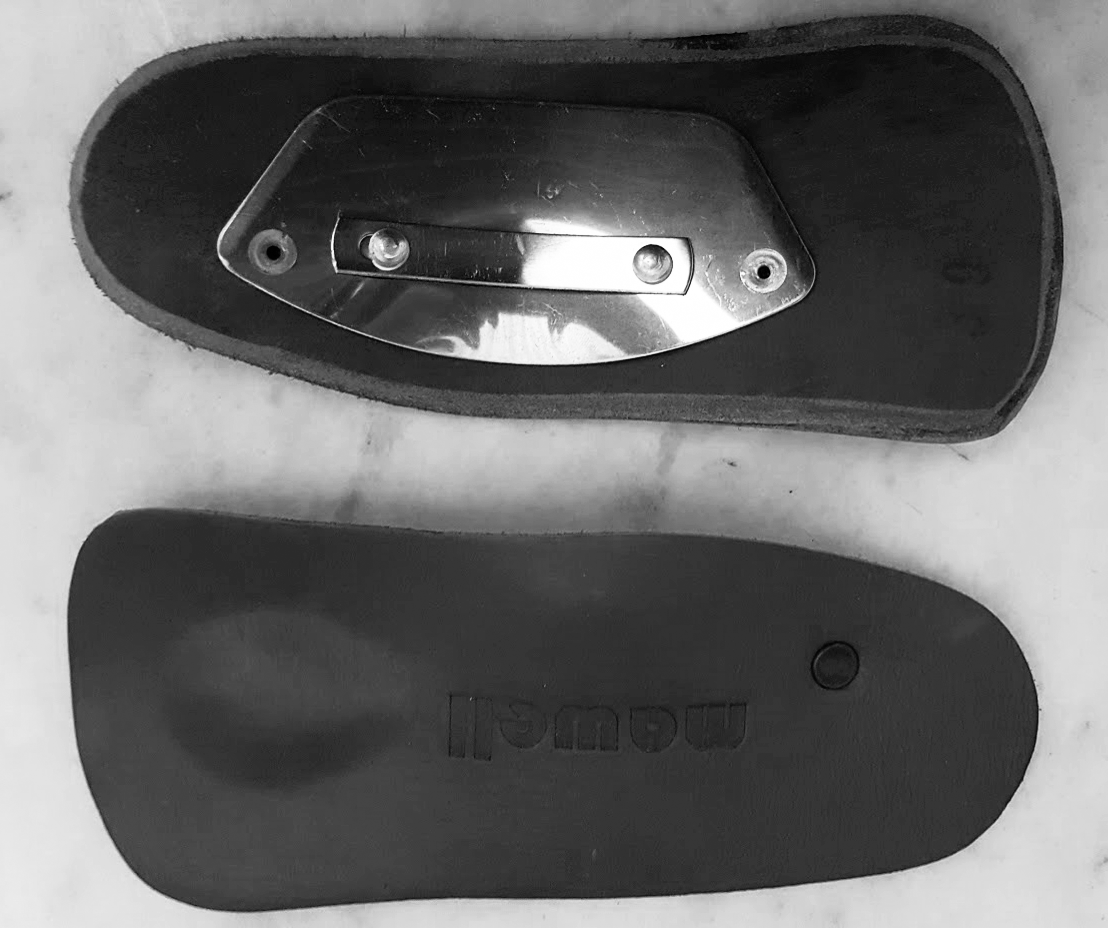
Off-the-shelf insoles were used for the study. The steel insole was made from 1-mm-thick leather reinforced with a 0.5-mm-thick steel sheet under the midfoot, starting from the heel and forefoot margin, and finishing behind the metatarsal heads. An additional steel bar, 0.5-mm thick, 10-mm wide, and 60-mm long, was attached to the steel sheet under the medial longitudinal arch (Figure 1).
Figure 1. Steel insole.
Japma 108 00390 g001
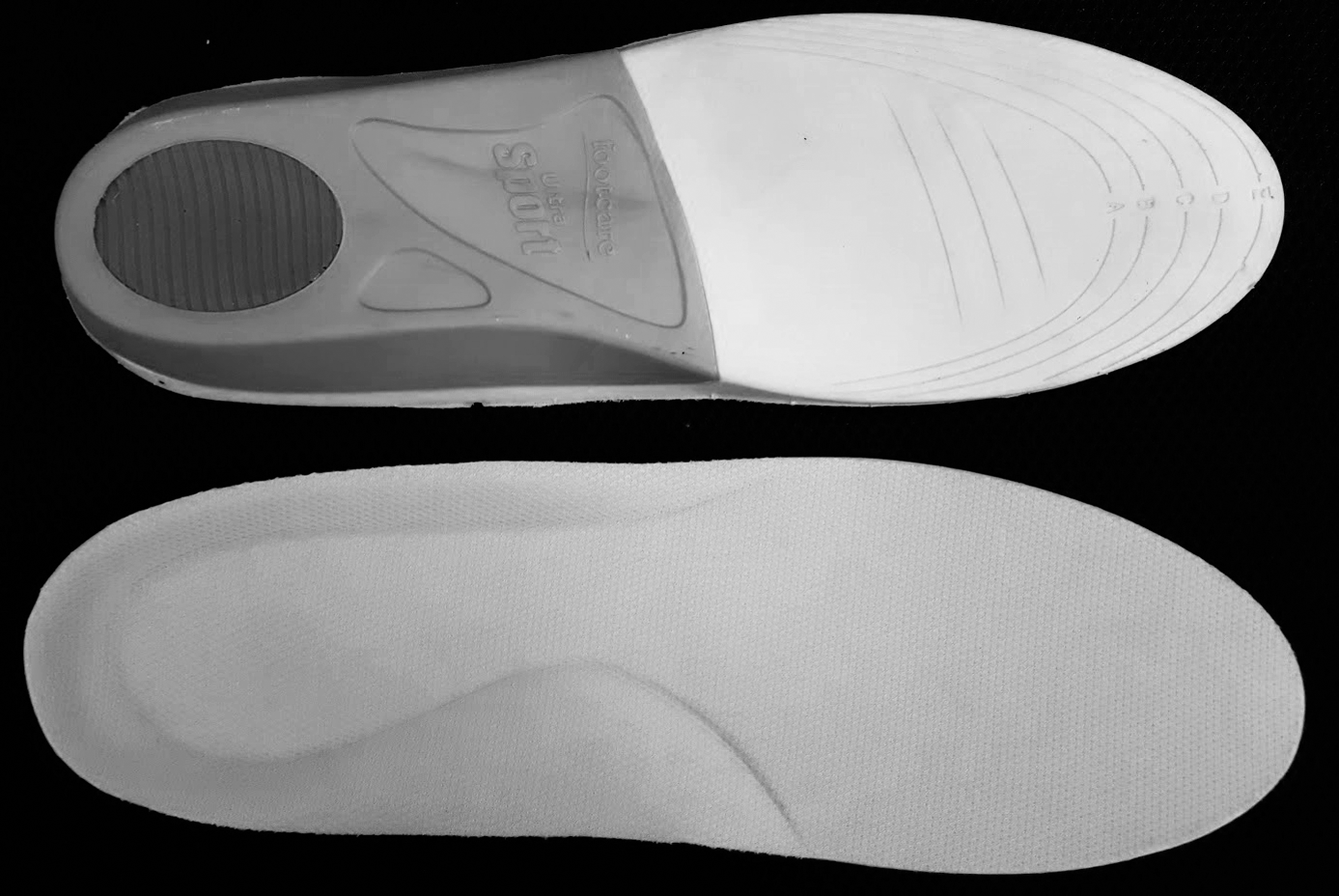
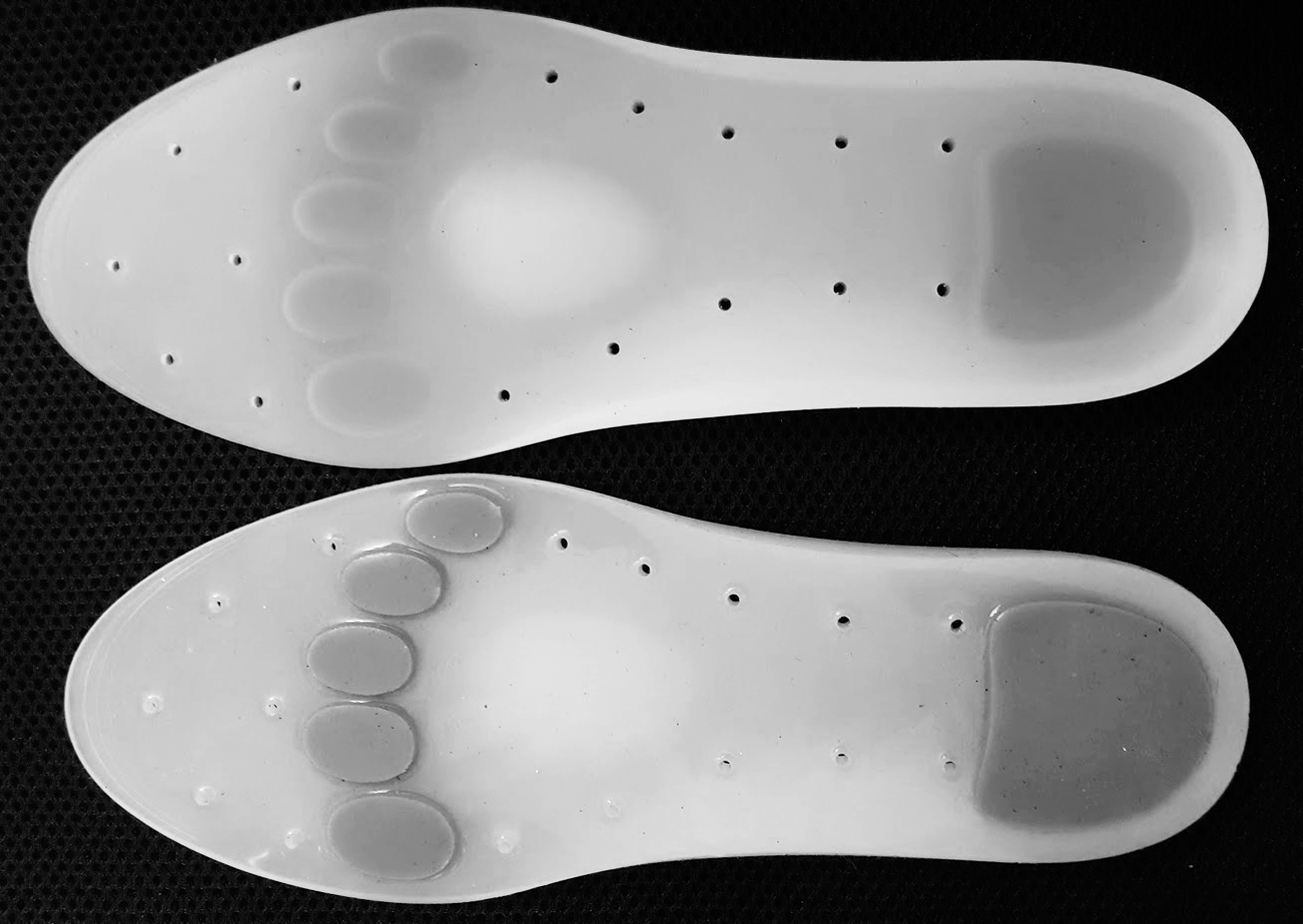
The polyurethane insole was made using polyurethane with a hardness of 50 Shore extending from the heel to beneath the toes (Figure 2). The silicone insole was made from silicone gel with a hardness of 20 Shore, where the heel and the metatarsal regions are softer than the other parts, thus providing medial longitudinal arch support (Figure 3).
Figure 2. Polyurethane insole.
Japma 108 00390 g002
Figure 3. Silicone insole.
Japma 108 00390 g003

Procedure

The gait analysis was performed using an ELITE Clinic (Bioengineering Technology System, Milano, Italy) three-dimensional optoelectronic motion analysis system. The ELITE Clinic system consists of six infrared cameras, three force platforms, and retroreflective markers. The Helen Hayes marker set was selected for analysis. Two additional markers were placed behind each calcaneus for static acquisition, which were then removed before gait acquisition. The marker trajectories were recorded with six infrared cameras at a frequency of 100 Hz, and the ground reaction forces (GRFs) were measured simultaneously at 100 Hz. with three Kistler force platforms (Kistler, Inc, Winterthur, Switzerland) embedded in a 10-m-long walkway. The trial was selected as successful when each foot contacted one platform, and the gait cycle was time normalized to 100%. ELITE Clinic (v.2.92; Bioengineering Technology System) software was used for calculating kinematics, moments, and GRFs for the ankle, knee, and hip joints from an average of three successful trials. Kinematic and kinetic variables were determined according to insole type by the following conditions with randomized order: barefoot, shoe-only, steel insole, silicone insole, and polyurethane insole. Participants performed all trials in their personal shoes at self-selected speed.

Data Reduction and Statistical Analysis

The distribution of the data values about the mean value of each kinematic and kinetic variable was assessed and the data were found to be suitable for parametric statistical testing. Among the variables attained from gait analysis, hip flexion and extension, knee flexion and extension, ankle dorsiflexion, and plantarflexion reported at heel strike, foot flat, midstance, and toe-off were put into the statistical analysis along with the hip and knee flexion and extension moments, ankle dorsiflexion and plantarflexion moments, and GRFs. Data were analyzed using MedCalc Software, 15.1 trial version (MedCalc Software, Ostend, Belgium), and a series of one-way repeated measures analysis of variance tests were used to identify statistically significant differences between insole conditions. The alpha level was set at P < .05. Significant univariate F statistics were followed by Bonferroni post hoc analysis.

Results

Statistically significant differences have been found between insole conditions only for knee flexion in toe-off, maximum ankle dorsiflexion in heel-off, and plantarflexion variables in toe-off. None of the other variables showed a significant difference. In comparison with the barefoot condition, knee flexion was significantly higher in steel insole (P < .0001) and polyurethane insole conditions (P < .0001). A statistically significant difference was also found between the steel insole and silicone insole conditions (P = .001), and the steel insole and shoe-only conditions for the knee flexion (P = .032). Reduced knee flexion was recorded in the polyurethane insole condition compared with the shoe-only condition (P = .031) (Table 1).
Table 1. Comparison of Five Insole Conditions for Knee Flexion in the Toe-off Phase
Japma 108 00390 i001
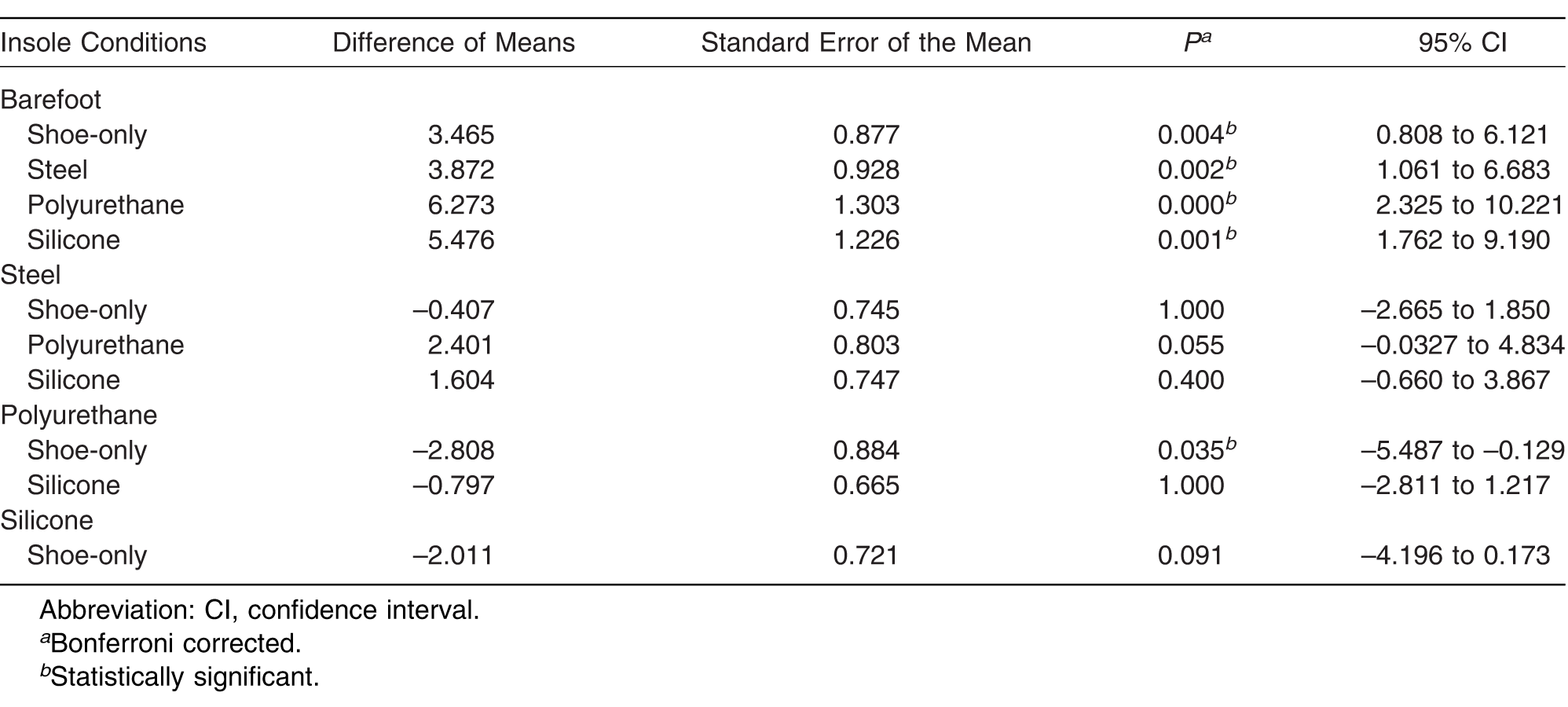
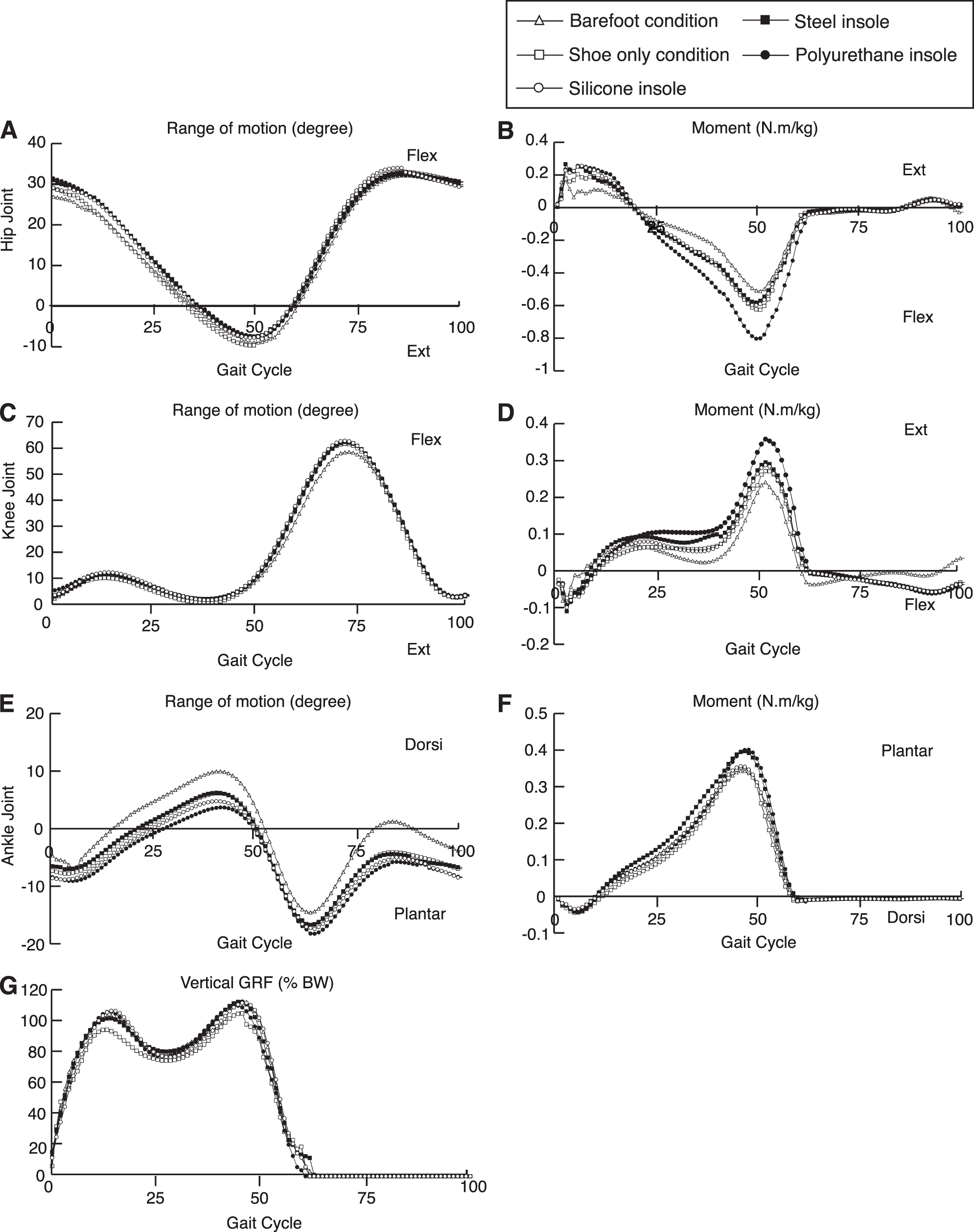
Maximum ankle dorsiflexion was observed in the barefoot condition, and there were significant differences between polyurethane insole (P < .0001), silicone insole (P = .001), steel insole (P = .002), and shoe-only (P = .004) conditions (Table 2). In the comparison of shoe-only and polyurethane insole conditions, there was significantly reduced knee flexion in the polyurethane insole condition (P = .035) (Table 2). Least and highest maximum plantarflexion were detected in the steel insole and silicone insole conditions, respectively. However, mean differences of maximum plantarflexion in the barefoot and steel insole conditions (P = .014) and the barefoot and polyurethane insole conditions (P = .035) were significant (Table 3). There was no significant difference between any of five conditions for GRFs and moments (Figure 4).
Table 2. Comparison of Five Insole Conditions for Maximum Ankle Dorsiflexion
Japma 108 00390 i002
Table 3. Comparison of Five Insole Conditions for Maximum Plantarflexion in the Toe-off Phase
Japma 108 00390 i003
Figure 4. Measured range of motion, moments, and ground reaction force in five different conditions during gait.
Japma 108 00390 g004

Discussion

The results of our study showed that most of the kinematic changes were taking place at the ankle joint. Maximum ankle dorsiflexion of the ankle joint appeared to be limited with the polyurethane insole condition compared with the barefoot condition. Increased dorsiflexion was detected with silicone insole, steel insole, and shoe-only conditions. Although both polyurethane and silicone insoles extend from the heel to the forefoot, they probably produce a rocker effect along with the shoe, which requires less ankle dorsiflexion. In contrast, polyurethane and steel insoles limited plantarflexion in the ankle joint, which might be useful for reducing pain by limiting the range of motion at the ankle joint in case of the presence of a painful condition such as arthritis or Achilles tendinitis. Such insoles may increase the stiffness of the midfoot,[17] which may increase the mechanical advantage of the great toe and reduce the stress at the proximal segments during the rollover process.[18]
The highest degree of knee flexion has been measured in the steel insole condition, but decreased with the silicone insole and shoe-only conditions. The most reduced degree of flexion was measured in the polyurethane insole condition at the toe-off phase. These results suggest that the polyurethane insole decreases dorsiflexion with early heel-rise and thus causes decreased knee flexion at the toe-off phase.[8] Therefore, this is clear evidence that knee flexion appears to be associated with sagittal plane motion of the ankle joint, which is altered by the insole. There was no significant change in hip joint motion. This could be attributable to absorption of the mechanical effect of insoles at the lower segments. We did not find any difference between insoles regarding joint moments or GRFs. This is probably attributable to insignificant changes in the sagittal plane motions at the hip and knee joints. It has also been expected that significant sagittal plane motions (Tables 2 and 3) would alter the ankle dorsiflexion and plantarflexion moments. However, we did not observe such alterations; therefore, they are likely to be affected not only by sagittal plane motion but also by transverse and frontal plane motions in the ankle and foot.[19] Alternatively, we have tested the initial effects of insoles made of different materials in healthy participants. They may therefore have some small and undetectable effect on the kinematics of the knee and hip and the kinetics of the lower extremity. Consequently, insoles, regardless of the type of material used, would also have an additional effect on passive structures and the action of the muscles by means of altering the proprioceptive mechanisms involved in regulating muscle function to keep the joint motion within normal limits.[6,20]
A limitation of this study is that we used off-the-shelf insoles. They were not individually constructed. Thus, possible anatomical differences between the participants were not accounted for. Natural variation of the gait might also have resulted in some differences in our data. Consequently, the position of skin-mounted markers and segmental wands used in the gait analysis protocol, and skin movement artifacts, are also factors known to affect kinematic and kinetic values.[21] It must also be noted that skin movement artifacts cause higher error, particularly for smaller measured kinematic and kinetic values compared with larger ones.

Conclusions

We conclude that insoles made of different materials affect ankle dorsiflexion and plantarflexion and maximum knee flexion during walking gait. The results of this study also suggest that the effects of off-the-shelf insoles with different material properties on the lower-extremity kinematics and kinetics during walking gait appeared to be small in healthy people. As we have recruited healthy participants for this study and obtained initial data, testing off-the-shelf insoles made from different materials could provide clinically more valuable data in pathologic conditions and may also help during the decision-making process regarding the selection of insole material for insole prescription.

Financial Disclosure

None reported.

Conflicts of Interest

None reported.

References

  1. Murley GS, Landorf KB, Menz HB: Do foot orthoses change lower limb muscle activity in flat-arched feet towards a pattern observed in normal-arched feet?Clin Biomech (Bristol, Avon)25: 728, 2010.
  2. Nigg BM, Nurse MA, Stefanyshyn DJ: Shoe inserts and orthotics for sport and physical activities. Med Sci Sports Exerc31(Suppl): S421, 1999.
  3. Collins N, Bisset L, McPoil T, et al: Foot orthoses in lower limb overuse conditions: a systematic review and meta-analysis. Foot Ankle Int28: 396, 2007.
  4. McMillan A, Payne C: Effect of foot orthoses on lower extremity kinetics during running: a systematic literature review. J Foot Ankle Res1: 13, 2008.
  5. Murley GS, Bird AR: The effect of three levels of foot orthotic wedging on the surface electromyographic activity of selected lower limb muscles during gait. Clin Biomech (Bristol, Avon)21: 1074, 2006.
  6. Nester CJ, van der Linden ML, Bowker P: Effect of foot orthoses on the kinematics and kinetics of normal walking gait. Gait Posture17: 180, 2013.
  7. Nurse MA, Hulliger M, Wakeling JM, et al: Changing the texture of footwear can alter gait patterns. J Electromyogr Kinesiol15: 496, 2005.
  8. Kelleher KJ, Spence WD, Solomonidis S, et al: The effect of textured insoles on gait patterns of people with multiple sclerosis. Gait Posture32: 67, 2010.
  9. Mundermann A, Wakeling JM, Nigg BM, et al: Foot orthoses affect frequency components of muscle activity in the lower extremity. Gait Posture23: 295, 2006.
  10. Hellstrand Tang U, Zügner R, Lisovskaja V, et al: Comparison of plantar pressure in three types of insole given to patients with diabetes at risk of developing foot ulcers—a two-year, randomized trial. J Clin Transl Endocrinol1: 121, 2014.
  11. Bonanno DR, Landorf KB, Menz HB: Pressure-relieving properties of various shoe inserts in older people with plantar heel pain. Gait Posture33: 385, 2011.
  12. McCormick CJ, Bonanno DR, Landorf KB: The effect of customised and sham foot orthoses on plantar pressures. J Foot Ankle Res6: 19, 2013.
  13. Vie B, Nester CJ, Porte LM, et al: Pilot study demonstrating that sole mechanosensitivity can be affected by insole use. Gait Posture41: 263, 2015.
  14. Healy A, Dunning DN, Chockalingam N: Effect of insole material on lower limb kinematics and plantar pressures during treadmill walking. Prosthet Orthot Int36: 53, 2012.
  15. Santos D, Cameron-Fiddes V: Effects of off-the-shelf foot orthoses on plantar foot pressures in patients with early rheumatoid arthritis. JAPMA104: 610, 2014.
  16. Chapman GJ, Halstead J, Redmond AC: Comparability of off the shelf foot orthoses in the redistribution of forces in midfoot osteoarthritis patients. Gait Posture49: 235, 2016.
  17. Rao S, Baumhauer JF, Tome J, et al: Orthoses alter in vivo segmental foot kinematics during walking in patients with midfoot arthritis. Arch Phys Med Rehabil91: 608, 2010.
  18. Riskowski J, Dufour AB, Hannan MT: Arthritis, foot pain and shoe wear: current musculoskeletal research on feet. Curr Opin Rheumatol23: 148, 2011.
  19. Nester CJ, Hutchins S, Bowker P: Effect of foot orthoses on rearfoot complex kinematics during walking gait. Foot Ankle Int22: 133, 2001.
  20. Stacoff A, Reinschmidt C, Nigg BM, et al: Effects of foot orthoses on skeletal motion during running. Clin Biomech (Bristol, Avon)15: 54, 2000.
  21. Benoit DL, Ramsey DK, Lamontagne M, et al: Effect of skin movement artifact on knee kinematics during gait and cutting motions measured in vivo. Gait Posture24: 152, 2006.