Fungal infections predominantly occur in immunocompromised patients. Especially,
Cryptococcus neoformans infections are more often seen in patients with defective cell-mediated immunity, such as human immunodeficiency virus infection; hematologic disorders; several chronic diseases[
1,
2]; or previous organ transplants.[
3]
Cryptococcus neoformans, a yeastlike fungus, usually enters through the respiratory tract[
4] by inhalation of the infectious propagules and then spreads to the central nervous system owing to the neurotropic nature of the fungus.[
3] However, direct inoculation of the organism into tissue by trauma or through the gastrointestinal tract can be possible portals of entry to the host as well.[
1] Cryptococcal osteomyelitis or avascular necrosis of bone can occur occasionally.[
5]
Gurevitz et al[
6] reported that fungal infections in immunocompetent hosts are rare. In immunocompetent individuals, the infection is commonly cleared or may remain in latent form for a prolonged period.[
7] However, 10% to 40% of cryptococcal infections occur in healthy individuals.[
5,
8] Early diagnosis is important because the infections may become fatal if not treated promptly.
Cryptococcus neoformans is an uncommon but treatable cause of osteomyelitis that may affect both immunocompetent and immunocompromised patients.[
7,
9] Bone involvement of
C neoformans is rare and is found in less than 10% of patients with disseminated cryptococcosis.[
10,
11] Only a little more than 50 cases of cryptococcal osteomyelitis without cryptococcemia have been reported.[
12] Behrman et al[
9] reported that a single skeletal site was affected in 74% of cryptococcal cases. In their study, vertebral infection was most common, which accounts for 15% of the cases. Infection of the tibia, femur, ilium, humerus, and ribs was also noted. Zhang et al[
8] described a case of cryptococcal osteomyelitis of the scapula and rib in an immunocompetent middle-aged woman. Peripheral joint involvement of
C neoformans is especially rare and usually results from contiguous spread of adjacent osteomyelitis.[
13,
14] Geller et al[
14] reviewed the previous English literature and found 21 cases of cryptococcal arthritis. The most commonly involved joint was the knee. Other reported locations included the hip, acromioclavicular joint, wrist, sternoclavicular joint, elbow, shoulder, ankle, and sacroiliac joint. In 2013, Ettahar et al[
15] reported cryptococcal osteomyelitis of metacarpal bone in a patient with lymphocytic leukemia. Their patient also showed pulmonary cryptococcosis and costal osteolysis. Cryptococcal infection of a single metatarsal bone is unusual, especially without any involvement of other organs in the immunocompetent host.
The clinical findings of cryptococcal osteomyelitis usually include tenderness of the involved bones and swelling of adjacent soft tissue, sometimes with a low-grade fever. On the other hand, serologic markers of infection, such as erythrocyte sedimentation rate, C-reactive protein, and leukocyte counts, may be nonspecific.[
2,
14] The radiographic finding of cryptococcal bone involvement exhibits an osteolytic lesion with indistinct borders with or without a periosteal reaction.[
5,
16] Radiographically, cryptococcal bone infection may be difficult to differentiate from blastomycosis, histoplasmosis, coccidioidomycosis, and actinomycosis, except that the latter conditions usually show proliferative periosteal reactions.[
17] Owing to the slow progressive nature of the clinical presentation, the radiographic findings of cryptococcal osteomyelitis were more suggestive of tuberculous osteomyelitis or subacute pyogenic osteomyelitis. Clinical and radiographic similarity to several pathologic bone disorders may delay the initiation of antifungal drug treatment.[
5]
Herein, we describe a case of cryptococcal infection of the first metatarsal head in an immunocompetent patient without lung involvement. A careful review of the published literature revealed no reports of cryptococcal osteomyelitis in a single metatarsal bone.
Case Report
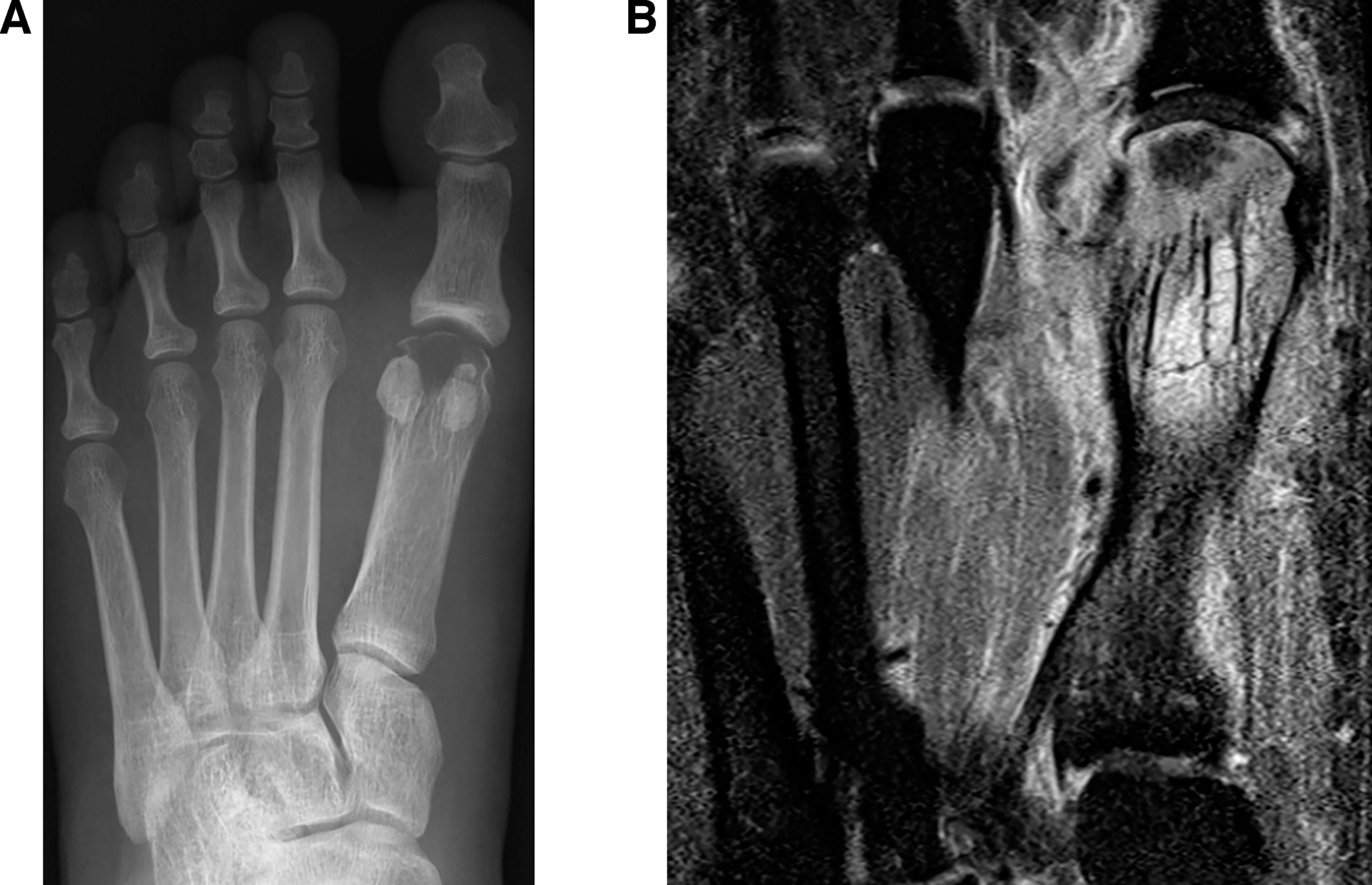
A 42-year-old woman presented with a 1-month history of pain and swelling in her left first metatarsophalangeal joint. She had no history of fever, chills, weight loss, or other general symptoms. She had no history of trauma, diabetes mellitus, gout, rheumatoid arthritis, tuberculosis, malignancy, or other immunocompromised diseases. Physical examination revealed moderate swelling, redness, warmth, and tenderness around the first metatarsophalangeal joint. No respiratory and neurologic symptoms or signs were shown. A chest radiograph demonstrated no abnormality. Plain foot radiographs showed an osteolytic lesion in the first metatarsal head, suggesting the possibility of osteomyelitis. The first metatarsophalangeal joint space was preserved (
Fig. 1A). Serum inflammatory profiles, such as white blood cell count, erythrocyte sedimentation rate, and C-reactive protein level, were all slightly increased. Serum uric acid and rheumatoid factor levels were within their respective reference ranges. Magnetic resonance imaging revealed an intraosseous abscess, metatarsal osteomyelitis, and an increased inflammatory response in the surrounding soft tissue (
Fig. 1B).
Figure 1
.
A, A plain anteroposterior foot radiograph showing an osteolytic lesion in the first metatarsal head, suggesting osteomyelitis. B, A T2-weighted coronal magnetic resonance image revealing an intraosseous abscess, metatarsal osteomyelitis, and increased signal intensity in the surrounding soft tissue, suggesting inflammation.
Figure 1
.
A, A plain anteroposterior foot radiograph showing an osteolytic lesion in the first metatarsal head, suggesting osteomyelitis. B, A T2-weighted coronal magnetic resonance image revealing an intraosseous abscess, metatarsal osteomyelitis, and increased signal intensity in the surrounding soft tissue, suggesting inflammation.
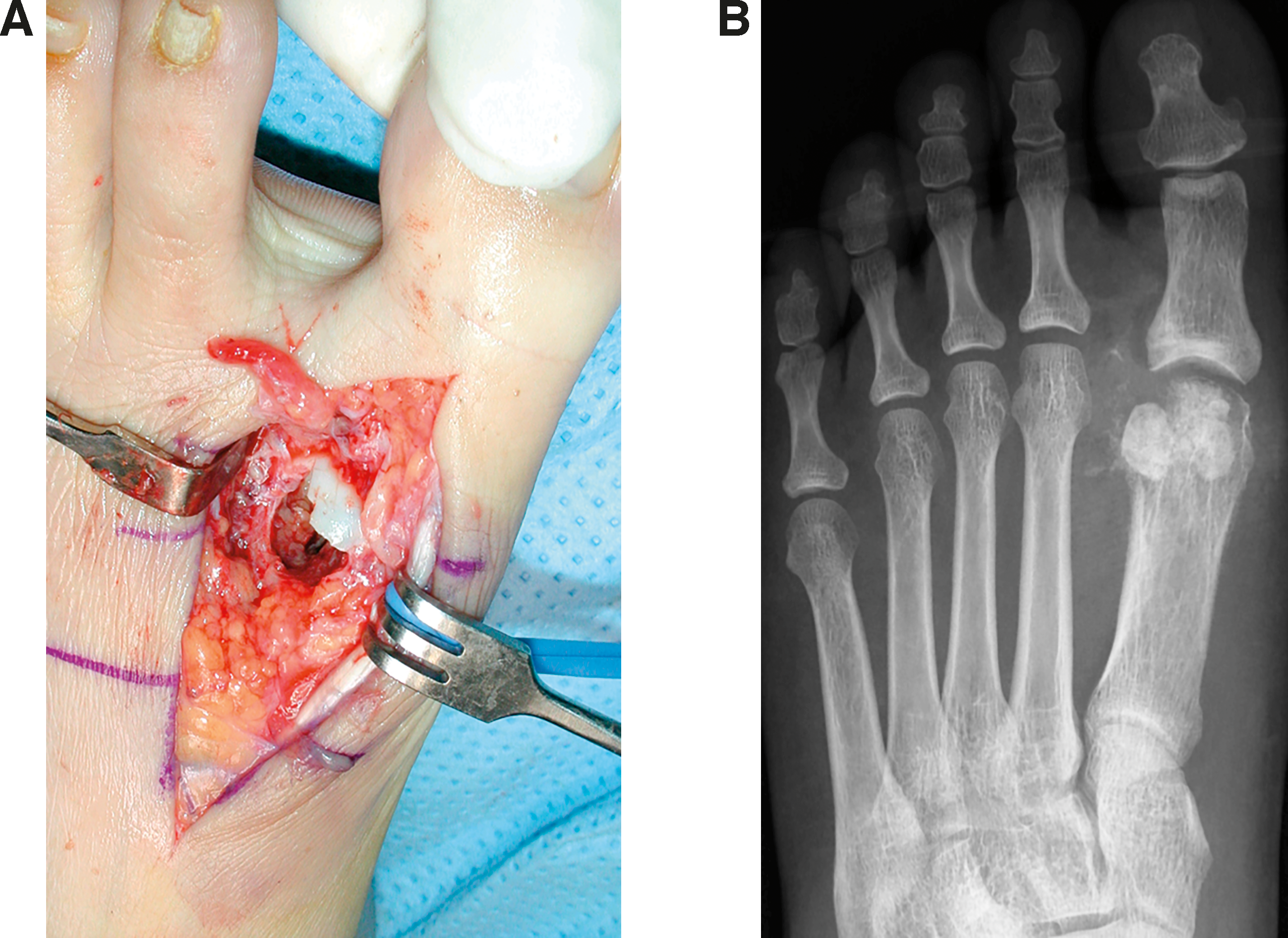
Under the diagnosis of first metatarsal osteomyelitis, we performed an operation. Through a dorsal approach centered over the first metatarsophalangeal joint, a longitudinal incision was made along and just lateral to the extensor hallucis longus tendon. Inflamed soft tissue was noted around the first metatarsophalangeal joint, and the infected portion of soft tissue was radically debrided, with special caution to prevent neurovascular injury. The extensor hallucis longus tendon was well protected during the operation. The osteolytic portion of the first metatarsal head was easily excised with a No. 15 scalpel without using an osteotome or any drilling device. An intramedullary abscess was drained, and the surrounding cancellous portion was completely removed with a curette (
Fig. 2A). Only the thin cartilage portion of the first metatarsal head was not damaged by infection and so could be preserved. Then the intramedullary defect was packed with allogeneic chip bone graft (
Fig. 2B). Histologically,
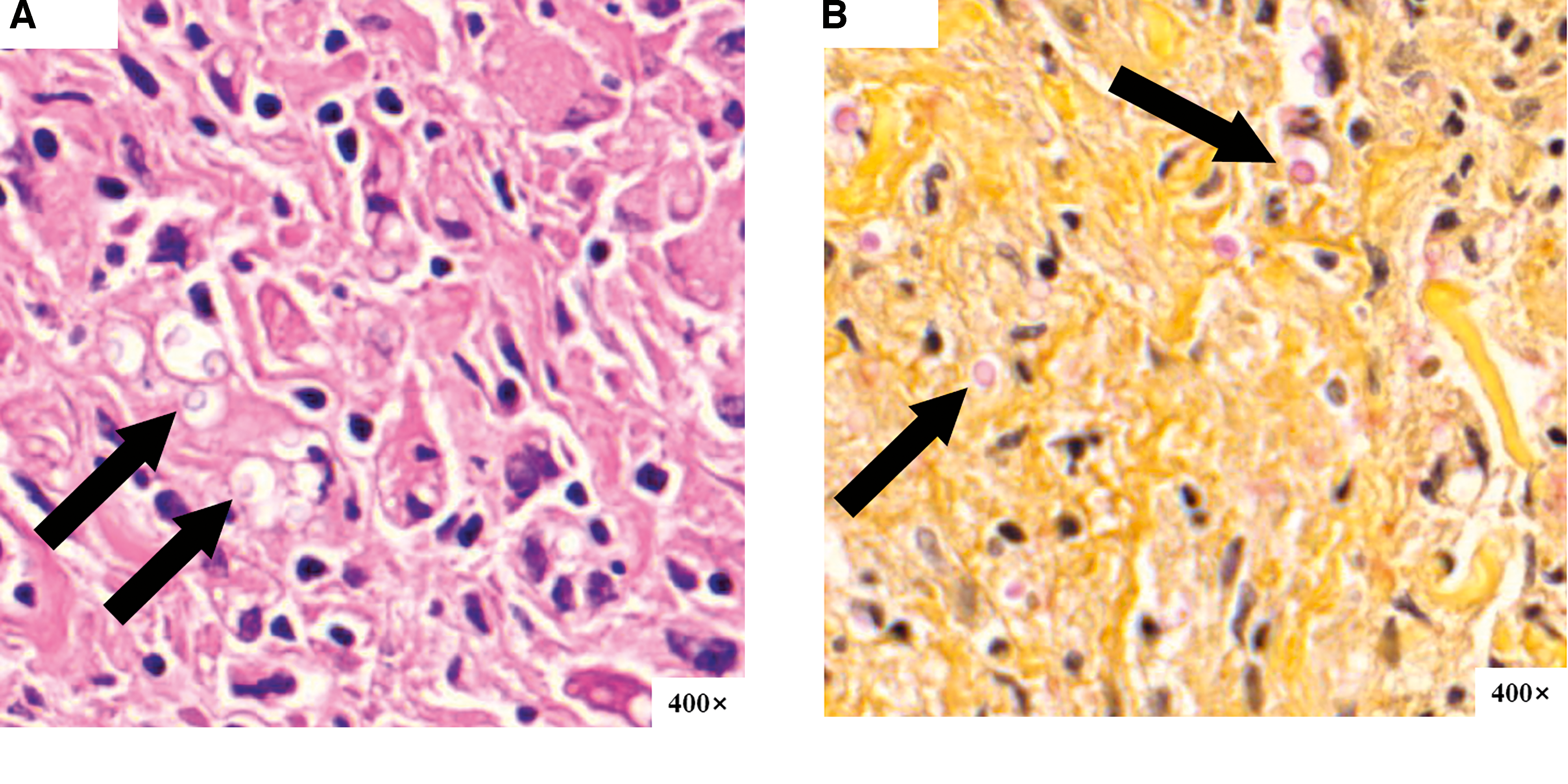
C neoformans was found in hematoxylin and eosin staining (
Fig. 3A) and in mucicarmine staining, which is specific for
Cryptococcus (
Fig. 3B). Fungal culture was performed by using Sabouraud glucose agar at room temperature, and fungal osteomyelitis was confirmed microbiologically as well. No other bacteria or mycobacterium were cultured from the infected tissue.
Figure 2
.
A, An intramedullary abscess was radically debrided, and the surrounding infected cancellous bone was completely removed with a curette. B, A postoperative radiograph shows that the intramedullary defect was filled with allogeneic chip bone graft.
Figure 2
.
A, An intramedullary abscess was radically debrided, and the surrounding infected cancellous bone was completely removed with a curette. B, A postoperative radiograph shows that the intramedullary defect was filled with allogeneic chip bone graft.
Figure 3
.
Cryptococcus neoformans (black arrows) was confirmed on photomicrographs. A, Hematoxylin and eosin staining (x400). B, Mucicarmine staining (x400).
Figure 3
.
Cryptococcus neoformans (black arrows) was confirmed on photomicrographs. A, Hematoxylin and eosin staining (x400). B, Mucicarmine staining (x400).
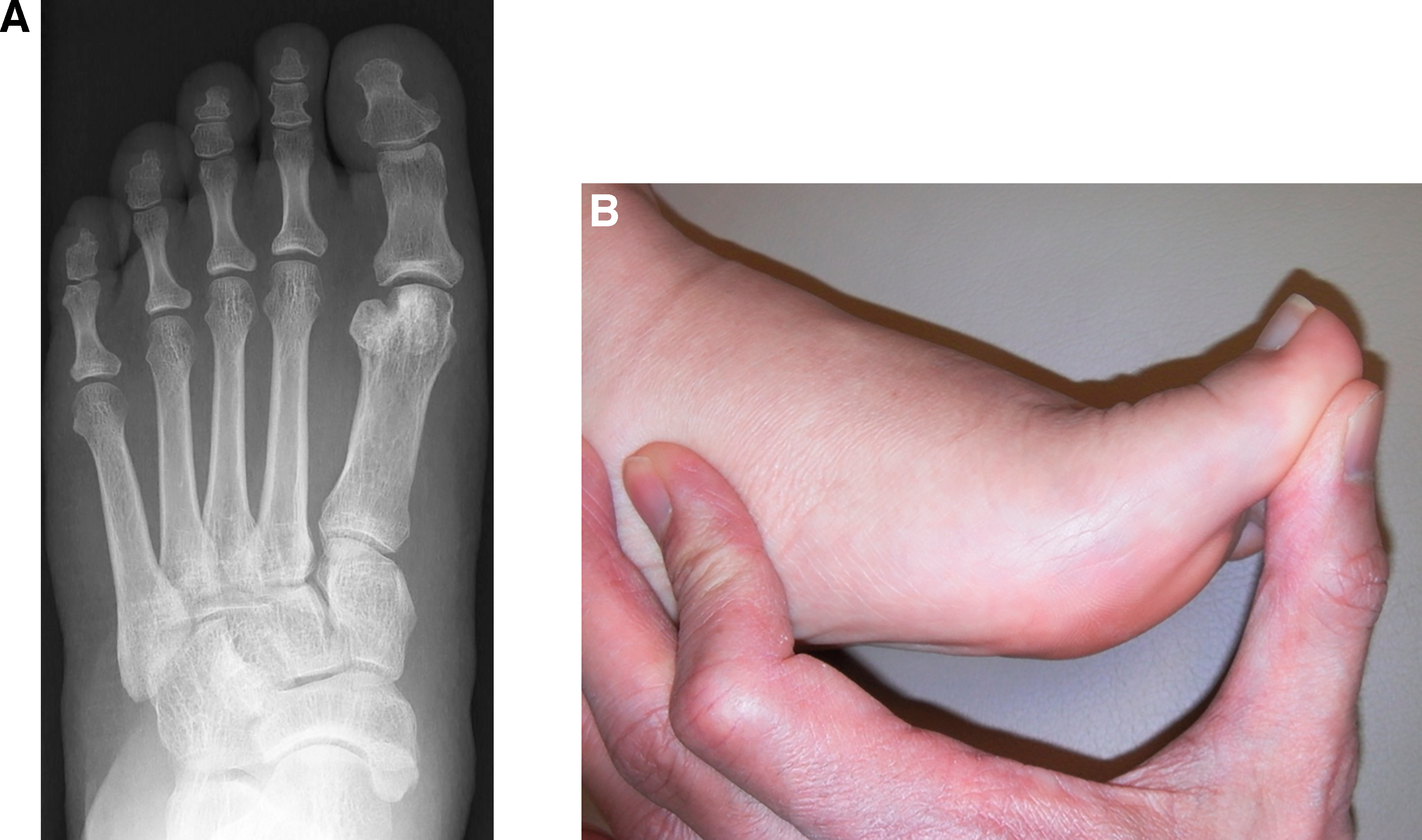
A short-leg splint was applied for 6 weeks postoperatively, and then a hard-soled shoe was used for another 6 weeks. The antifungal medication fluconazole was administered orally for 6 months postoperatively. Five years after the operation, there were no signs of recurrence of infection, and the first metatarsophalangeal joint space was well preserved on the follow-up plain radiographs (
Fig. 4A). She had no discomfort with activities of daily living. First metatarsophalangeal joint motion of 60° dorsiflexion and 10° plantarflexion was possible without pain (
Fig. 4B).
Figure 4
.
A, On the follow-up radiograph 5 years after the operation, there was no sign of recurrence. The first metatarsophalangeal joint space was preserved as well. B, The first metatarsophalangeal joint motion of the patient was good and without pain.
Figure 4
.
A, On the follow-up radiograph 5 years after the operation, there was no sign of recurrence. The first metatarsophalangeal joint space was preserved as well. B, The first metatarsophalangeal joint motion of the patient was good and without pain.
The patient and her husband were informed that data from the case would be submitted for publication, and they consented.
Discussion
Fungal infection in immunocompetent individuals may show the latent form for a prolonged period.[
7] Early detection of the organism by histopathologic diagnosis, culture study, and serologic analysis can improve the prognosis and treatment of cryptococcal infection.[
18] In the present case, the patient had no symptoms or signs of respiratory tract infection and no history of trauma. Her chest radiograph showed no parenchymal infiltration, nodules, or pleural effusions. Only pain and swelling in her first metatarsophalangeal joint were suspicious clinical cues of infection. A plain radiograph of her foot demonstrated osteolysis of the first metatarsal head without any periosteal reaction. To our knowledge, this is the first report of cryptococcal osteomyelitis in a single metatarsal bone.
Most cases of localized cryptococcal osteomyelitis can be treated successfully by surgical debridement combined with antifungal drug therapy.[
5,
9,
19,
20] Especially, the outcome of non–human immunodeficiency virus–infected patients with cryptococcal osteomyelitis is known to be favorable.[
10] Effective antifungal agents include amphotericin B and flucytosine, followed by long-term oral fluconazole.[
2,
9] In the present case, we decided to treat the patient with oral fluconazole single therapy considering the low severity of the disease after the infectious disease consultation. The radical operation combined with 6 months of single-antifungal chemotherapy cured this patient of cryptococcal osteomyelitis.