Topical silver nitrate is often used in the primary-care and emergency department settings to obtain hemostasis in small wounds and areas of granulation tissue. [
1] On contact with bleeding or granulation tissue, silver nitrate causes protein coagulation, which leads to tissue necrosis, thrombus formation, and eventual eschar formation. [
2]
Silver nitrate absorbs the electromagnetic radiation of radiographs and, therefore, appears radiodense on radiographs. [
3] If radiographs are taken after treatment with silver nitrate, the resultant artifact may be confused for a foreign body or osseous pathology if the correlation to silver nitrate application is not made.
Cases of this phenomenon have been reported in the medical literature, and they have led to misdiagnoses, including bony fragments, foreign bodies, and even malignancy. [
3–
8] The duration of this effect has not been studied. One case reported that the silver nitrate artifact resolved within 2 weeks. [
6] In one of the cases presented herein, there was almost complete resolution of the artifact 2 weeks later.
Although this phenomenon has been reported in the medical literature, misinterpretation still occurs. A thorough patient history and knowledge of recent silver nitrate application may prevent additional imaging or unnecessary treatment.
Case 1
A 42-year-old woman presented with a history of a left hallux matrixectomy of the medial and lateral nail borders performed at her primary-care clinic 1 week earlier. The patient reported that silver nitrate sticks were used as the cauterizing agent for the matrixectomy. Within a few days of the procedure, she developed erythema, pain, and drainage at the matrixectomy site and subsequently presented to the emergency department. Plain radiographs were taken, and the patient was referred by the emergency department physician due to concern for osteomyelitis based on review of the radiographs.
On clinical examination, there was localized erythema just proximal to the left hallux nail plate. There was clear, colorless drainage from the matrixectomy sites, and eschar was noted along the medial and lateral nail folds. There did not seem to be any retained nail fragments or visible foreign bodies.
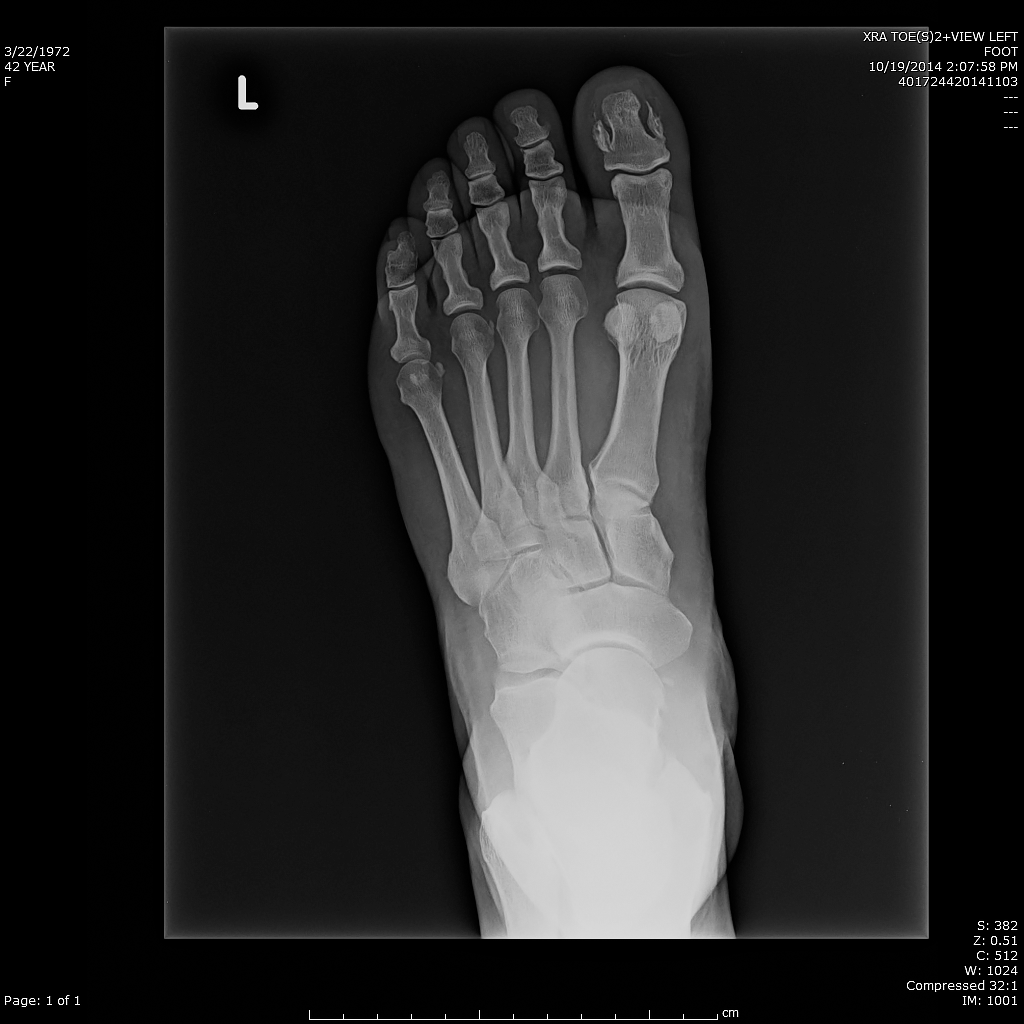
The radiographs of the left hallux were reviewed. There were two radiopaque, fusiform densities noted on the anteroposterior view, one each on the medial and lateral sides of the distal phalanx (
Fig. 1). The radiology report read as follows: “Three views of the left great toe demonstrate abnormal soft-tissue calcification in the nail bed of the great toe.”
Figure 1.
Case 1. Radiograph of the left foot demonstrating the radiographic appearance of silver nitrate, which had been applied to the hallux during a matrixectomy procedure.
Figure 1.
Case 1. Radiograph of the left foot demonstrating the radiographic appearance of silver nitrate, which had been applied to the hallux during a matrixectomy procedure.
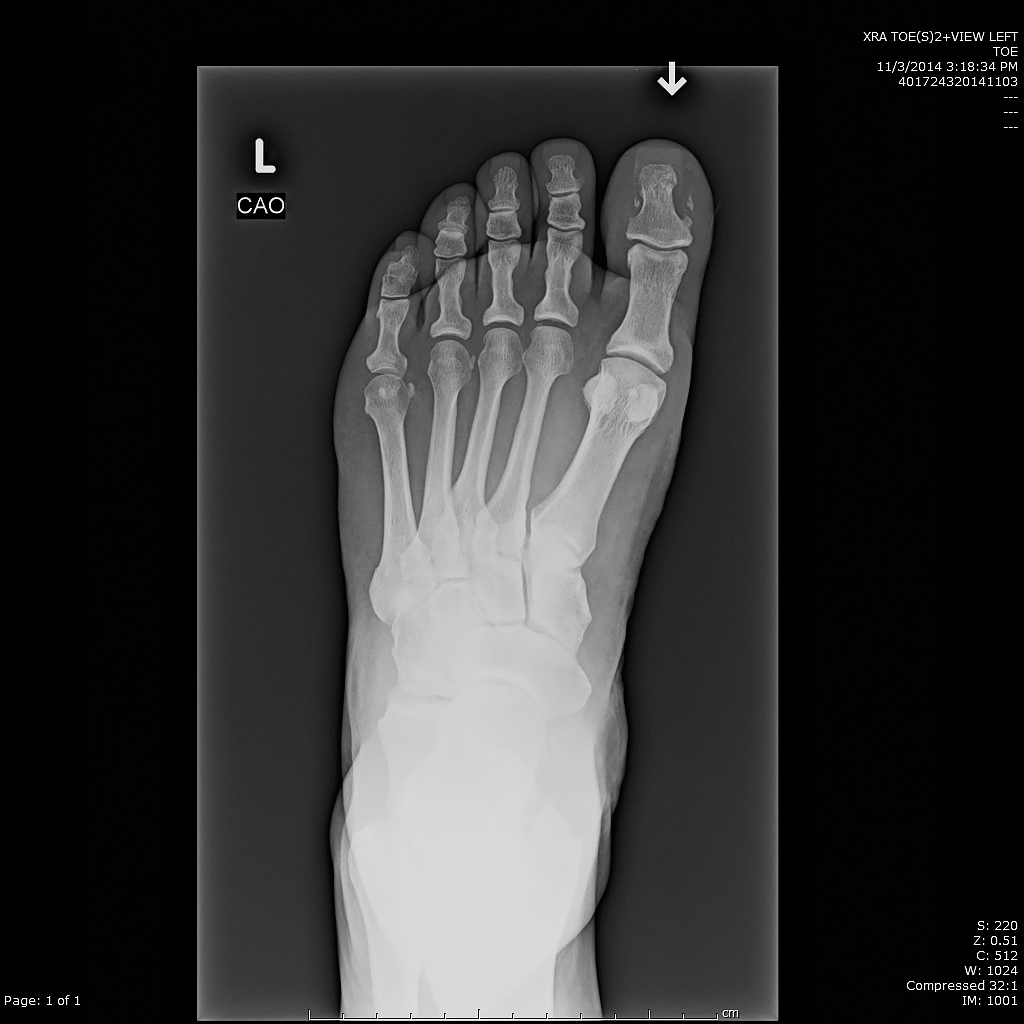
The densities had almost completely resolved on repeated radiographs taken 2 weeks later (
Fig. 2), and it was determined that they represented silver nitrate artifacts and not calcifications. The matrixectomy sites eventually healed with local wound care.
Figure 2.
Case 1. Radiograph of the left foot taken several weeks after the matrixectomy showing resolution of the densities attributed to silver nitrate application.
Figure 2.
Case 1. Radiograph of the left foot taken several weeks after the matrixectomy showing resolution of the densities attributed to silver nitrate application.
Case 2
A 32-year-old woman developed an open sore on her right fourth toe after a night of dancing in high-heeled shoes. The wound persisted for approximately 2 months, prompting her to seek treatment with her primary-care provider. A diagnosis of pyogenic granuloma was made, and the wound was treated with an application of silver nitrate. After this, plain radiographs were obtained. The radiologist identified a “5-mm calcific entity lying at the distal medial aspect of the right fourth toe.” The patient was referred for evaluation and treatment of a potential foreign body.
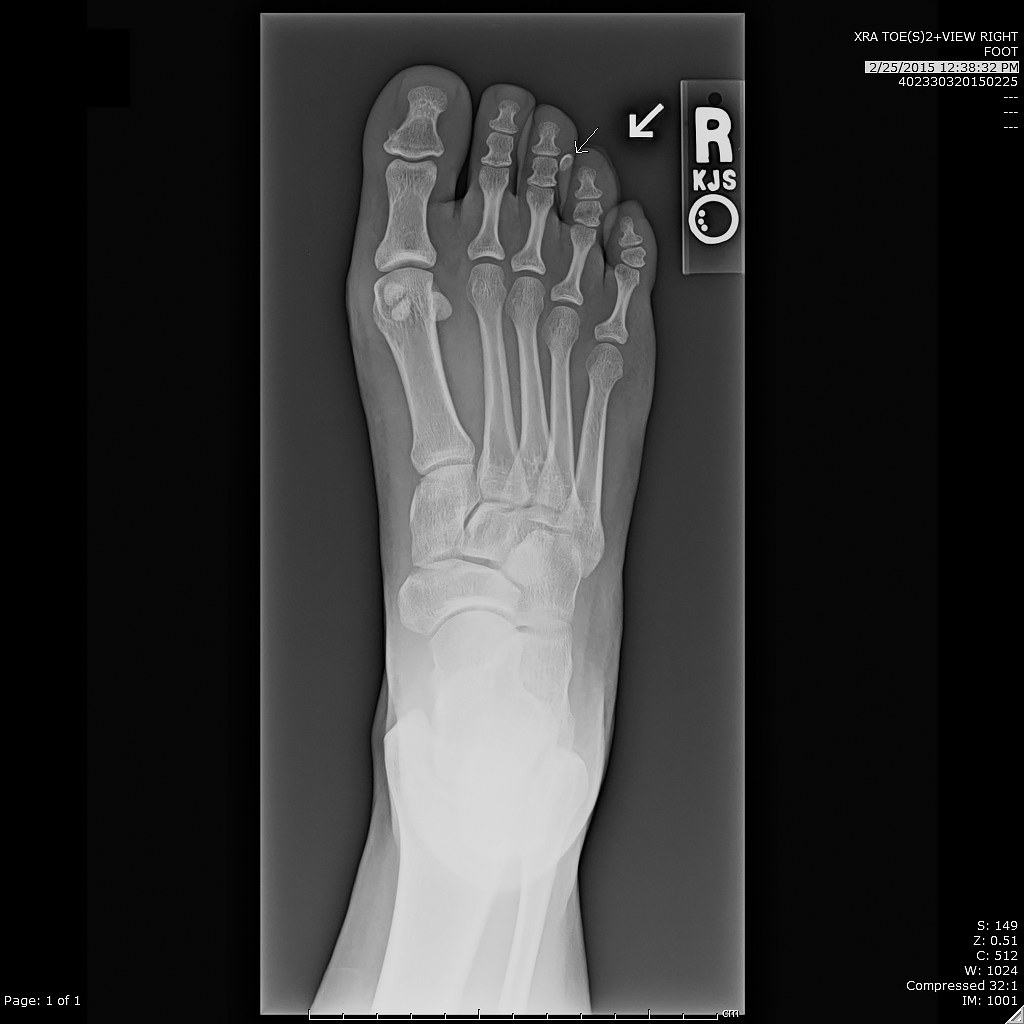
The patient was seen 1 week after the silver nitrate application. A 5-mm lesion was noted on the distal portion of the right fourth toe with a macerated edge and granular base. The radiographs were reviewed, and a radiodensity at the medial aspect of the toe was noted in the same area as the wound (
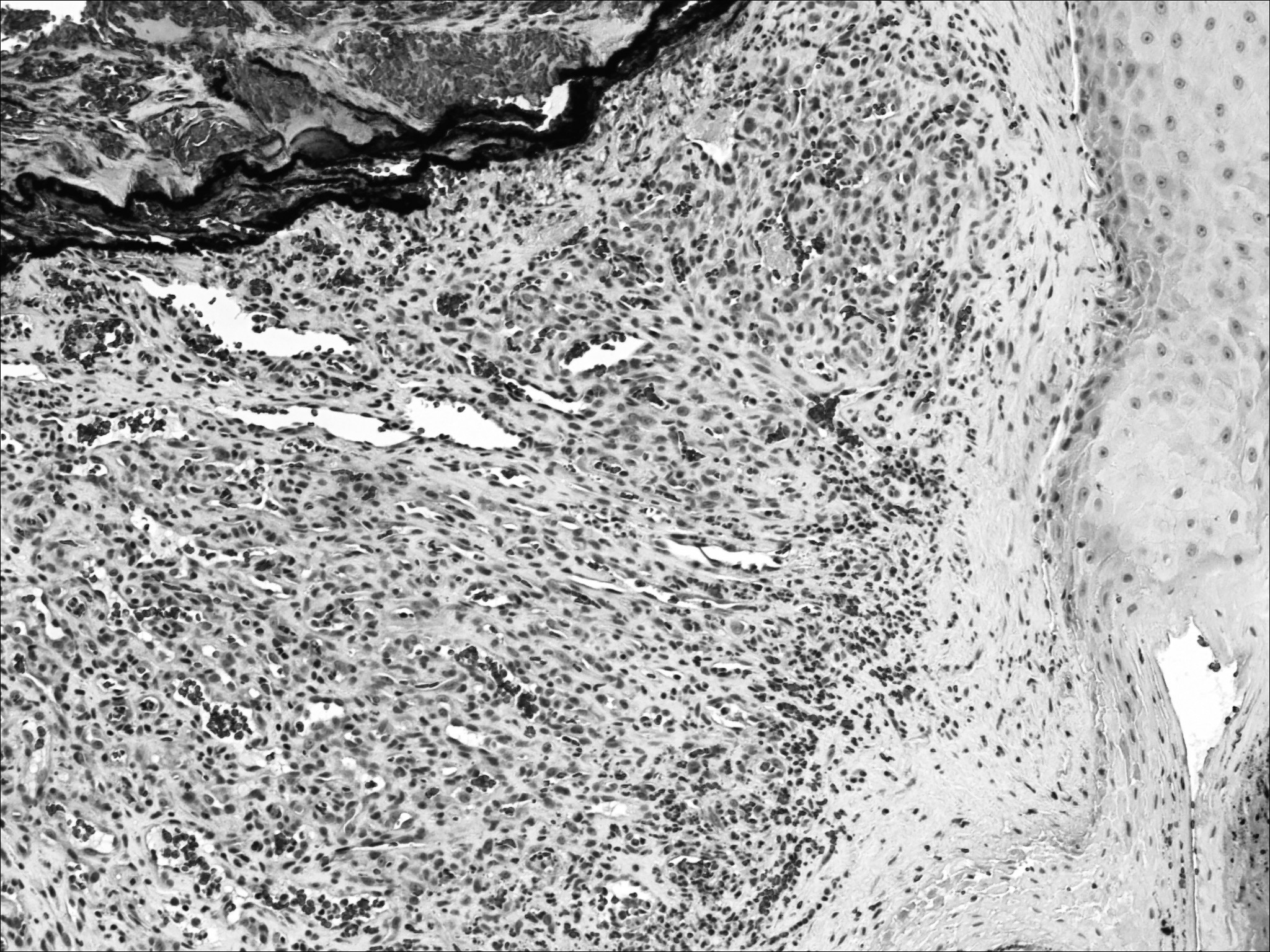
Fig. 3). An excisional biopsy of the lesion was performed. The skin specimen did not contain any calcified tissue, and the pathology report identified the specimen as a pyogenic granuloma with no calcification (
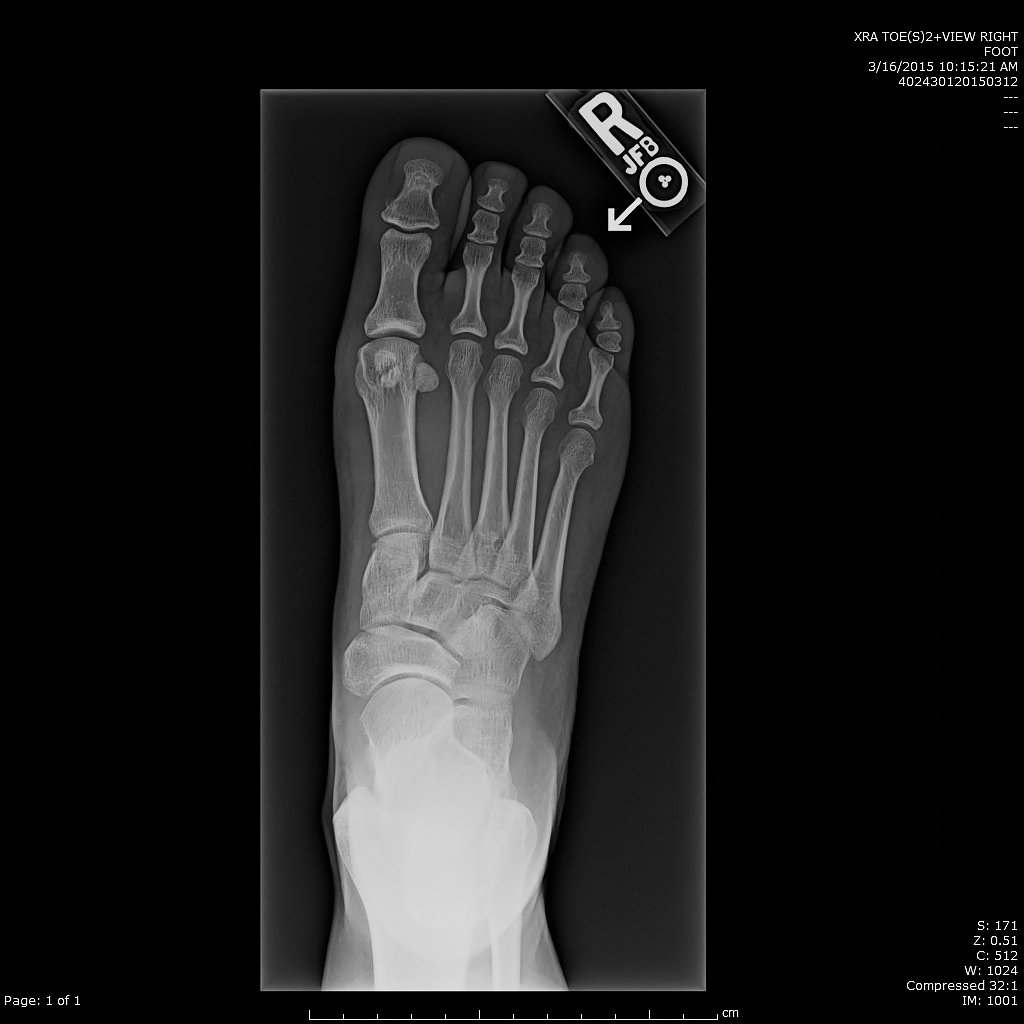
Fig. 4). Subsequent radiographs showed complete resolution of the radiodensity (
Fig. 5). Owing to the location of the density and the patient history of recent silver nitrate application, it was determined that the radiodensity was a silver nitrate artifact. The biopsy site healed without incident.
Figure 3.
Case 2. Right foot radiograph demonstrating the radiographic appearance of silver nitrate, which had been applied to the fourth toe to treat a pyogenic granuloma.
Figure 3.
Case 2. Right foot radiograph demonstrating the radiographic appearance of silver nitrate, which had been applied to the fourth toe to treat a pyogenic granuloma.
Figure 4.
Case 2. Radiograph after biopsy showing resolution of the radiodensity.
Figure 4.
Case 2. Radiograph after biopsy showing resolution of the radiodensity.
Figure 5.
Case 2. Photomicrograph of the fourth toe biopsy site. No calcified tissue was observed.
Figure 5.
Case 2. Photomicrograph of the fourth toe biopsy site. No calcified tissue was observed.
Discussion
The radiographic appearance of silver nitrate and its tendency to be mistaken for a foreign body or calcified tissue has been reported in the medical literature. As shown by these two case reports, radiologic misdiagnosis still occurs when the patient's history of silver nitrate application is not communicated or taken into account. When the patient history includes recent topical silver nitrate application, knowledge of the radiographic appearance of silver nitrate may help avoid misdiagnosis and unnecessary treatments or procedures.