Next Article in Journal
First Metatarsal Head and Medial Eminence Widths with and Without Hallux Valgus
Previous Article in Journal
Acroangiodermatitis
 
 
Journal of the American Podiatric Medical Association is published by MDPI from Volume 116 Issue 1 (2026). Previous articles were published by another publisher in Open Access under a CC-BY (or CC-BY-NC-ND) licence, and they are hosted by MDPI on mdpi.com as a courtesy and upon agreement with American Podiatric Medical Association.
Article

A Case Report of an Osteoid Osteoma on the Bearing Surface of the Talus Treated with Arthroscopic Resection Associated with Autologous Iliac Crest Graft

1
Department of Traumatic Orthopedics, The Second Affiliated Hospital of Guangzhou University of Traditional Chinese Medicine, Guangzhou, Guangdong Province 510120, P.R. China
2
Department of Orthopedics, Zhongshan Hospital Affiliated to Guangzhou University of Chinese Medicine, Zhongshan City, China
*
Author to whom correspondence should be addressed.
J. Am. Podiatr. Med. Assoc. 2016, 106(5), 375-378; https://doi.org/10.7547/15-014
Published: 2 September 2016

Abstract

Osteoid osteomas are most likely to occur in the talar neck and can be classified as cortical, cancellous, or subperiosteal according to the position of the tumor nidus. However, cases located on the bearing surface of the talus are rare. Herein, the patient presented with an osteoid osteoma on the bearing surface of the talus and achieved good curative effects with arthroscopic resection associated with autologous iliac crest graft.

Osteoid osteomas mainly appear in young men, and the morbidity is approximately 10% to 12% in all of the benign bone tumors.[1] Seventy-five percent of osteoid osteomas occur in the tibia and femur, 11% in the ankle,[2] and only 2% in the talus.[3] Among the 2%, osteoid osteomas most likely occur in the talar neck and can be classified as cortical, cancellous, or subperiosteal according to the position of the tumor nidus.[4] However, cases located on the bearing surface of the talus are rare.
The typical clinical feature of an osteoid osteoma is pain for most patients, which progresses from slight to severe, from intermittent to persistent, and from localized (limited to the position of the lesion) to radiating. Owing to the function of prostaglandin, the pain of most patients will be quickly alleviated after taking medicines such as salicylates or a nonsteroidal anti-inflammatory drug,[5] which is significant for the diagnosis of osteoid osteoma. In addition, the misdiagnosis rate of osteoid osteoma is relatively high due to a lack of obvious specificity of the symptom.[6]
Herein, the patient presented with an osteoid osteoma on the bearing surface of the talus and achieved good curative effects with arthroscopic resection associated with autologous iliac crest graft.

Case Report

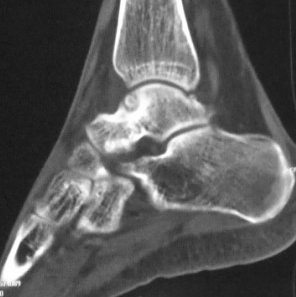
A 23-year-old man first presented with severe pain and limited range of motion in his right ankle 3 years earlier. However, the pain was now more severe owing to a lack of systematic treatment. The pain was obvious at night and was mildly eased by medicines such as salicylates. The lateral malleolus was obviously swollen, and plantarflexion (5°) and dorsiflexion (20°) were limited. Computed tomographic (CT) scans revealed a 1 × 1 × 1–cm reactional sclerotic bone (Fig. 1). Based on the comprehensive data, the patient's clinical diagnosis was an osteoid osteoma on the talus dome.
Figure 1. Computed tomographic scan shows the 1 × 1 × 1–cm nidus of the tumor in the center of the sclerotic bone.
Japma 106 00375 f01
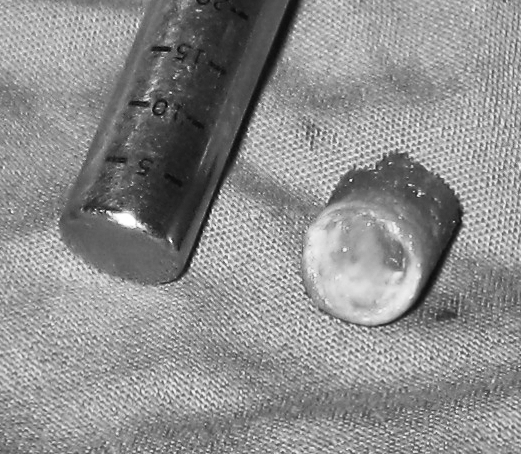
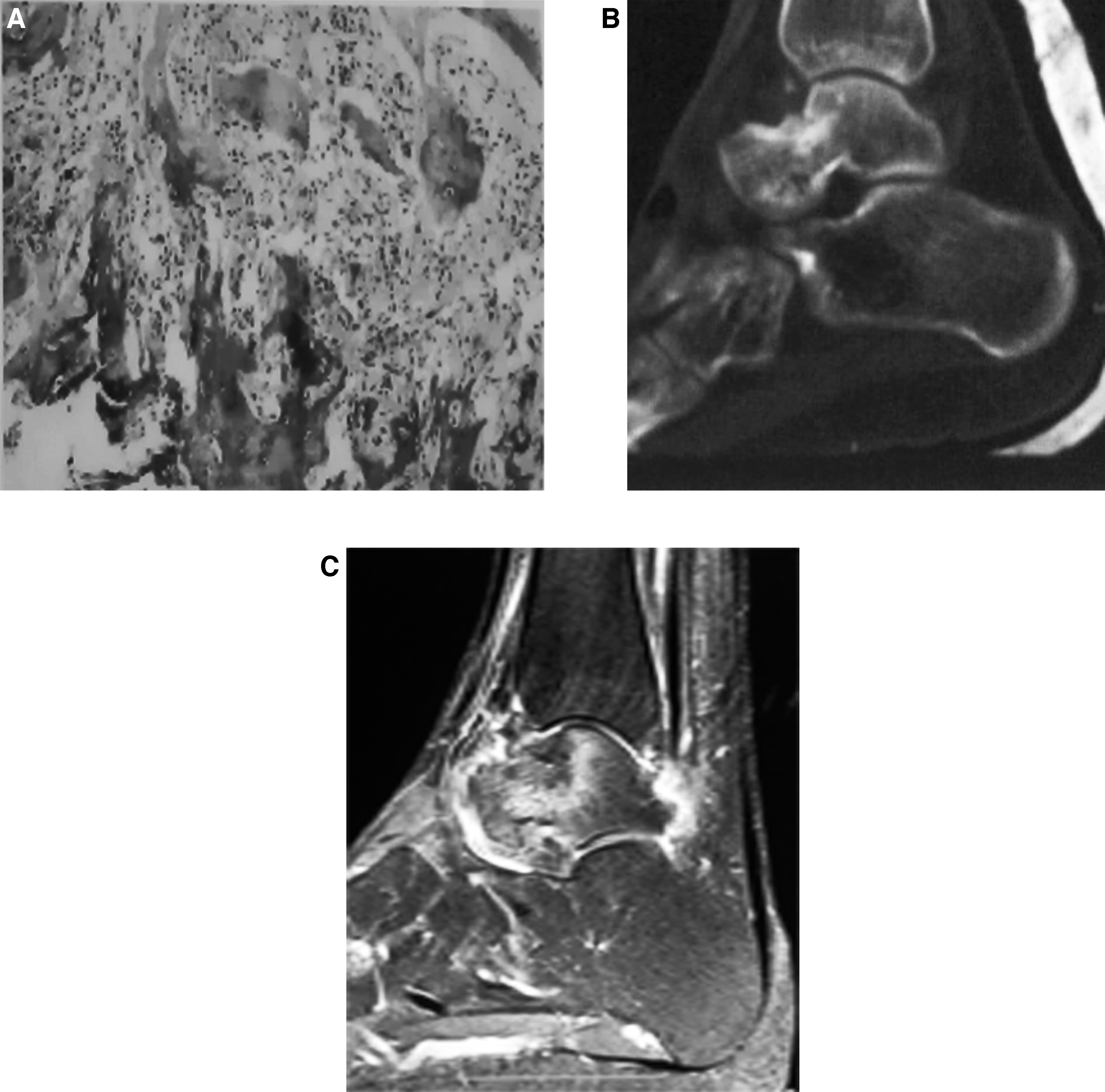
Surgery was performed with the arthroscopic anteromedian and anterolateral approaches. Extensive hemorrhage and synovial hyperplasia were shown, and part of the cartilage on the talar dome was degenerated and softened. The bone tumor was exposed under the cartilage by removal of the softened cartilage. The osteoid osteoma was then cut off with arthroscopic guidance (Fig. 2). Then we made a 2-cm median incision and filled the cavity of the osteoid osteoma with autologous iliac crest graft with periosteum (10 × 15 mm). The surface of the tibiotalar joint was smooth and showed no obvious signs of impingement during movements. The results of the biopsy suggested an osteoid osteoma as predicted (Fig. 3A). The patient had obvious alleviation of pain and had achieved better joint function at 6-month follow-up. The American Orthopaedic Foot & Ankle Society scores of ankle and heel function were 64 and 94 before and after the operation, respectively. A repeated CT scan demonstrated the intact curvature of the tibiotalar joint (Fig. 3B), and magnetic resonance imaging suggested no detachment of the autologous osteochondral transplant (Fig. 3C). In addition, the patient obtained 25° of dorsiflexion and 40° of plantarflexion at 18-month follow-up and had no tumor recurrence.
Figure 2. The cylindrical bone graft was taken out with the osteochondral autograft transfer system from the ipsilateral iliac of the patient and then trimmed.
Japma 106 00375 f02
Figure 3. A, Pathologic examination reveals an osteoid osteoma. B, Postoperative computed tomographic scan shows the smooth articular surface without obvious impingement. C, Magnetic resonance image shows the healed planted bone graft and the growth of the cartilage as well as the smooth surface of the tibiotalar joint 18 months after surgery.
Japma 106 00375 f03

Discussion

Typical radiographs of osteoid osteomas show a small, round, lucid nidus of tumor (diameter, <1.5 cm) surrounded by varying degrees of sclerotic bone. The CT scans play a key role in the diagnosis of osteoid osteomas, specifically suggesting a tumor-centered sclerotic nidus (Fig. 1). Moreover, magnetic resonance imaging also has superb diagnostic value due to its capacity to reflect different phases of the nidus; the ratio of vascular, bonelike tissue, and woven bone in the nidus; and the degree of surrounding marrow edema.[7]
Related treatments for osteoid osteoma have been reported (eg, salicylates, radiofrequency ablation with CT guidance, percutaneous laser coagulation, percutaneous drill resection, and percutaneous ethanol injection technology).[8] Related reports have suggested that the therapies for talar osteoid osteoma by arthroscope resection with a minimal incision have achieved excellent curative effect without evidence of recurrence during follow-up.[9-11] Furthermore, complete removal of the tumor and the surrounding sclerotic bone in the subperiosteal nidus of an osteoid osteoma may help decrease the risks of infection and recurrence after the operation.[11]
To date, there is no related literature about the osteoma tumor located on the bearing surface of the talus. In principle, the defect should be repaired after removal of the tumor from the osteochondral weightbearing surface. The therapies for cartilage injury generally include arthroscopic debridement, the microfracture technique, autologous osteochondral transplant, osteochondral allograft transplant, chondrocyte transplant, and tissue engineering of an osteochondral transplant, and various methods have their own advantages. A nonweightbearing surface of the knee can be chosen as the donor area for autologous osteochondral transplant.[12,13] Nevertheless, Badekas et al[14] suggested that cartilage of the nonweightbearing surface of the knee was thicker compared with that of the talar dome. Hence, he recommended the cartilage on the nonweightbearing surface of the talus as the osteochondral transplant.[14]
Periosteum has the potential for differentiation, proliferation, and transformation into articular cartilage because it contains abundant undifferentiated mesenchymal precursor cells. The feasibility of reparative therapy with autologous iliac crest graft has been tested and proved effective in clinical cases.[15-17] Thus, in this report, the iliac with periosteum was chosen as the grafting material for the reparative therapy on the bearing surface of the talus. A fibrocartilage scar would be formed owing to the embedded bone implantation. Therefore, attention must be focused on the implanted bone height not being higher than the surface of the joint cartilage so as not to cause collision.
In conclusion, this report suggests that arthroscopic resection associated with autologous iliac crest graft may be an effective therapy option for an osteoid osteoma on the bearing surface of the talus owing to its mini-incision and successful follow-up.
Financial Disclosure: None reported.
Conflict of Interest: None reported.

References

  1. Bruners P, Penzkofer T, Günther RW, et al: Percutaneous radiofrequency ablation of osteoid osteomas: technique and results [in German]. Rofo181: 740, 2009.
  2. Freyschmidt J: Skeletterkrankungen: Klinisch-Radiologische Diagnose Und Differentialdiagnose, Springer-Verlag GmbH, Berlin, 2007.
  3. Chuang SY, Wang SJ, Au MK, et al: Osteoid osteoma in the talar neck: a report of two cases. Foot Ankle Int19: 44, 1998.
  4. Khan JA, Vaidya S, Devkota P, et al: Subperiosteal osteoid osteoma of the neck of talus. J Nepal Med Assoc48: 58, 2009.
  5. Osarumwense D, Esene C, Feldman A: Bone trephining for osteoid osteoma excision: a case report. J Orthop Surg (Hong Kong)15: 230, 2007.
  6. Snow SW, Sobel M, DiCarlo EF, et al: Chronic ankle pain cause by osteoid osteoma of the neck of the talus. Foot Ankle Int18: 98, 1997.
  7. Mahmoudi A, Bendahou M, Rami M, et al: Ostéome ostéoïde du talus gauche chez l'enfant [in French]. Pan Afr Med J14: 33, 2013.
  8. Cantwell CP, Obyrne J, Eustace S: Current trends in treatment of osteoid osteoma with emphasis on radiofrequency abalation. Eur Radiol14: 607, 2004.
  9. Gunes T, Erdem M, Sen C, et al: Arthroscopic removal of a subperiosteal osteoid osteoma of the talus. JAPMA97: 238, 2007.
  10. Winters KN, Jowett AJL, Taylor H: Osteoid osteoma of the talus presenting as posterior ankle impingement: case reports. Foot Ankle Int32: 1095, 2011.
  11. David P, Legname M, Dupond M: Arthroscopic removal of an osteoid osteoma of the talar neck. Orthop Traumatol Surg Res95: 454, 2009.
  12. Guettler JH, Demetropoulos CK, Yang KH, et al: Osteochondral defects in the human knee: influence of defect size on cartilage rim stress and load redistribution to surrounding cartilage. Am J Sports Med32: 1451, 2004.
  13. Garretson RBIII, Katolik LI, Verma N, et al: Contact pressure at osteochondral donor sites in the patellofemoral joint. Am J Sports Med32: 967, 2004.
  14. Badekas T, Evangelou E, Takvorian M: Treatment of talar osteochondral lesions using local osteochondral talar autograft-long term results. Sports Med Sports Injuries2: 482, 2012.
  15. Ueno T, Kagawa T, Fukunaga J, et al: Evaluation of osteogenic/chondrogenic cellular proliferation and differentiation in the xenogeneic periosteal graft. Ann Plast Surg48: 539, 2002.
  16. O' Driscoll SW, Fitzsimmons JS: The role of periosteum in cartilage repair. Clin Orthop Relat Res391(Suppl): S190, 2001.
  17. Mukherjee N, Saris DB, Schultz FM, et al: The enhancement of periosteal chondrogenesis in organ culture by dynamic fluid pressure. J Orthop Res19: 524, 2001.