Next Article in Journal
Contribution Levels of Intrinsic Risk Factors to the Management of Patients with Plantar Heel Pain. A Pilot Study
Previous Article in Journal
The Sprint to the Finish
 
 
Journal of the American Podiatric Medical Association is published by MDPI from Volume 116 Issue 1 (2026). Previous articles were published by another publisher in Open Access under a CC-BY (or CC-BY-NC-ND) licence, and they are hosted by MDPI on mdpi.com as a courtesy and upon agreement with American Podiatric Medical Association.
Article

Giant Glomus Tumor and Neuroma in the Fifth Ray

by
José Valero
1,
José Gallart
1,
David González
1,
Javier Deus
2 and
Manuel Lahoz
1,*
1
Department of Human Anatomy and Histology, Zaragoza University, Zaragoza 50009, Spain
2
Department of Surgery, Obstetrics and Gynecology, Zaragoza University, Zaragoza, Spain
*
Author to whom correspondence should be addressed.
J. Am. Podiatr. Med. Assoc. 2016, 106(2), 151-154; https://doi.org/10.7547/13-146
Published: 1 March 2016

Abstract

We present the case of a patient with a glomus tumor that was atypical because of its large size and histologic characteristics. It was located in the dorsal-distal zone of the fifth ray of the left foot and was associated with a neuroma under the fifth metatarsal head. Although the pain (of a neurologic type) was attributed to the neuroma, the unknown nature and evolution of the dorsal lesion (glomus tumor) made surgical treatment necessary. Surgery, together with compensating treatment of the functional alterations of the patient’s feet (pronation of the subastragalar joint, supination of the forefoot, and fifth metatarsal overload syndrome), resolved the case.

The glomus tumor was first described by Masson in 1924, [1] although long before this, in 1812, Wood referred to this tumor as a ‘‘subcutaneous tuber-cle.’’ [2] When found on the foot, it usually forms a small (1–5 mm in diameter) reddish-blue or violet lesion with an irregular shape and is located most commonly on the subungual bed. It produces intense pain (especially if subungual) on compres-sion, when cold, and, sometimes, spontaneously. It is a relatively rare tumor because it accounts for only 1% of all of the tumors of the soft parts of the foot. [3]
Neuroma under the fifth metatarsal head is not considered to be a common tumor, and very few authors mention it. [3,4,5,6] However, this neuroma is not so uncommon in our case reports (21.7% of patients with fifth-ray surgery) and is usually seen in patients with fifth metatarsal overload syndrome and, more commonly, if they also have Tailor’s bunion.[7] We consider it to be a tumor of pathomechanical etiology [8] because in all of the patients, including the one presented herein, it is associated with fifth metatarsal overload syndrome.

Case Report

A 76-year-old man reported intense pain in the metatarsodigital segment of the fifth metatarsal of his left foot. The pain, which intensified with compression of his shoe from the dorsal to the plantar surface, appeared at any moment of walking and even when resting. Physical examination of the dorsal region revealed a dorsal tumoral mass that was soft to dorsoplantar pressure, firm to lateral clamping, and easily displaced (Figure 1). Handling during the dorsal examination did not cause pain and did not reproduce the pain reported by the patient. Plantar examination revealed slight inflammation in the distal zone of the fifth metatarsal head, pain on plantar-dorsal compression, and lateral clamping in the metatarsodigital segment of the fifth ray. From a morphological and functional point of view, a slight medial deviation was observed, as was infraduction of the fifth toe, cavus-valgus foot (increase in the height of the medial arch with excessive pronation of the subastragalar joint), supination of the forefoot, and a slight fifth metatarsal overload syndrome. The radiologic study did not reveal anything of clinical interest.
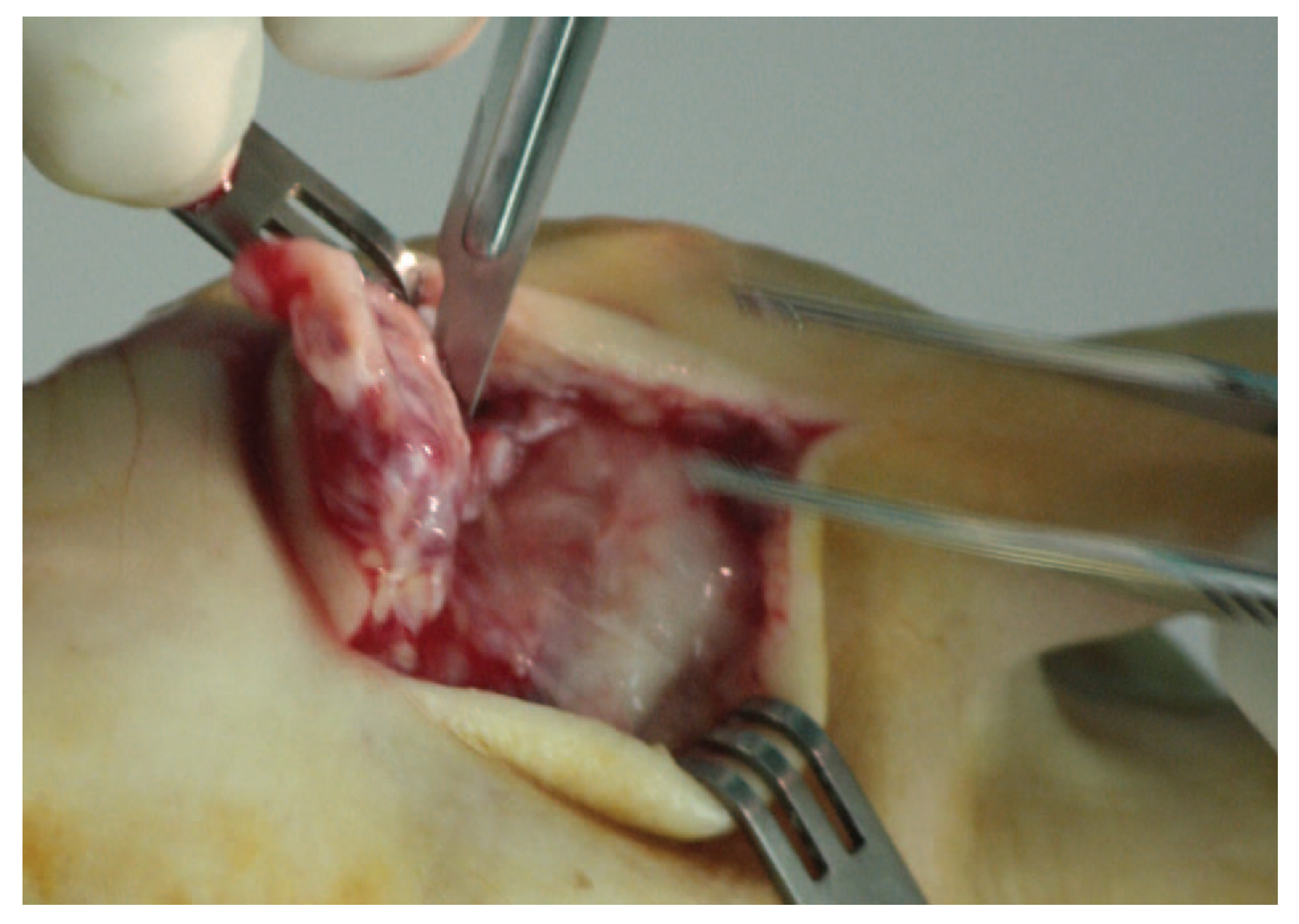
After local anesthesia, the surgical procedure consisted of making a dorsal incision laterally, parallel to the fifth toe extensor tendon; dissecting the superficial fascia and the subcutaneous cell tissue; and exposing the glomus tumor. The tumor was removed, displaying a well-delimited nodule that was not encapsulated and was completely free from any other tissue (Figure 2).
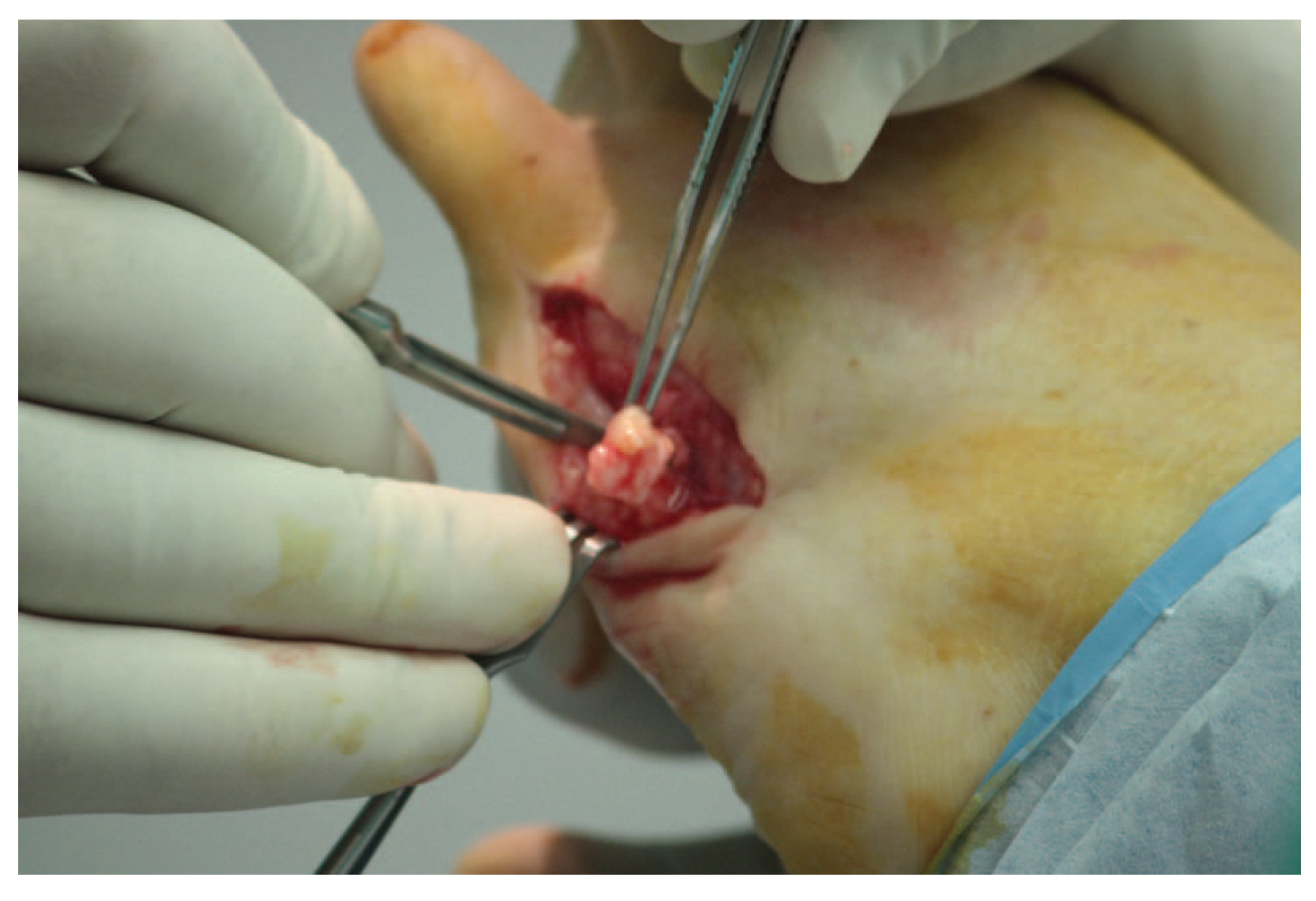
On lateral separation, the plantar-lateral neuroma of the fifth metatarsal was detected (Figure 3) and was removed by means of ablation of the branch nerve, and a plane suture was applied.
As postoperative treatment, complete rest was recommended for the first 24 hours and then relative rest for the following days until the external suture was removed, 12 days after surgery. That was when the patient could return to his normal life, with comfortable footwear. The patient was seen every month, and after 6 months he reported that the painful symptoms had completely disappeared. Three years after the operation the patient still had no pain and no signs of recurrence.
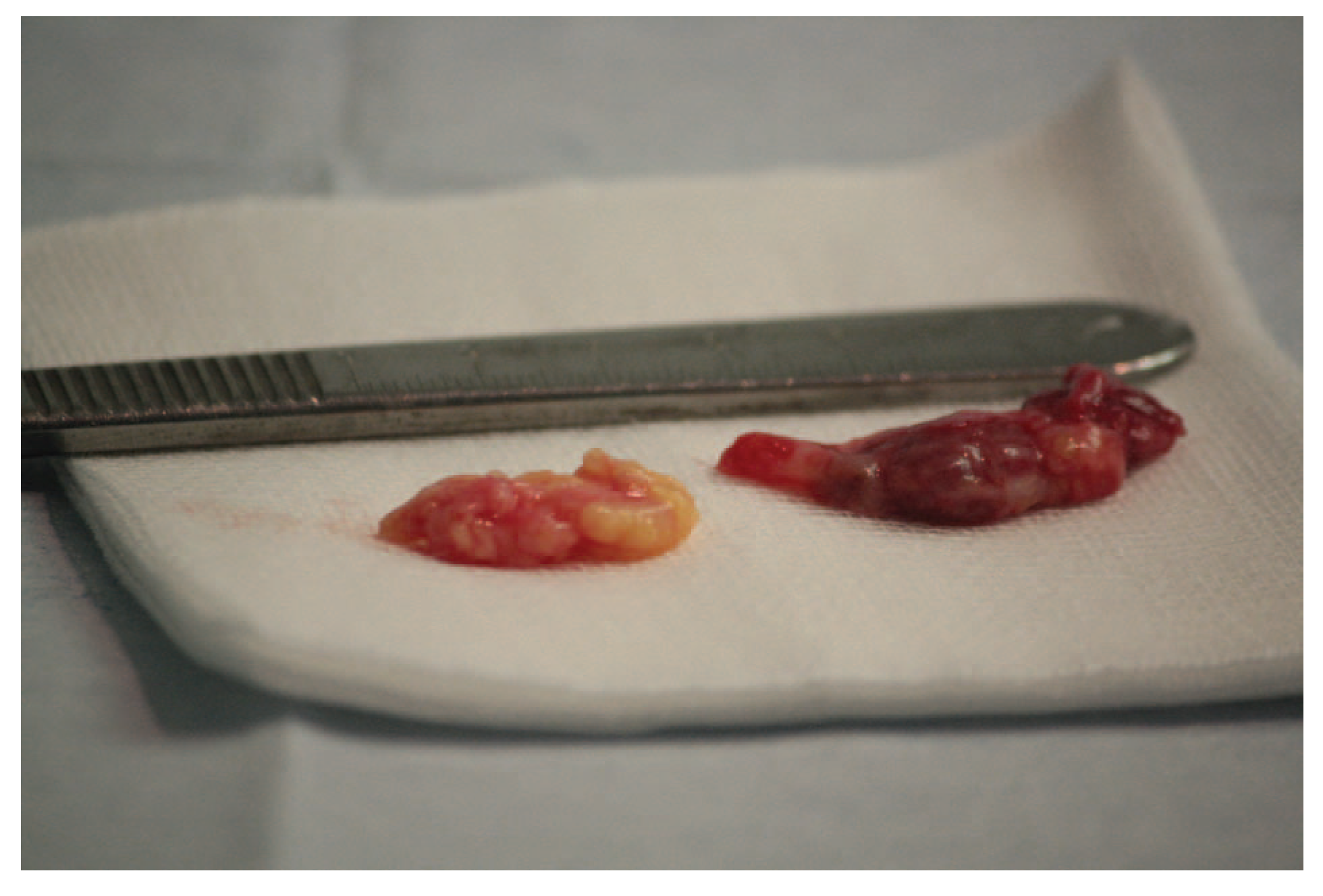
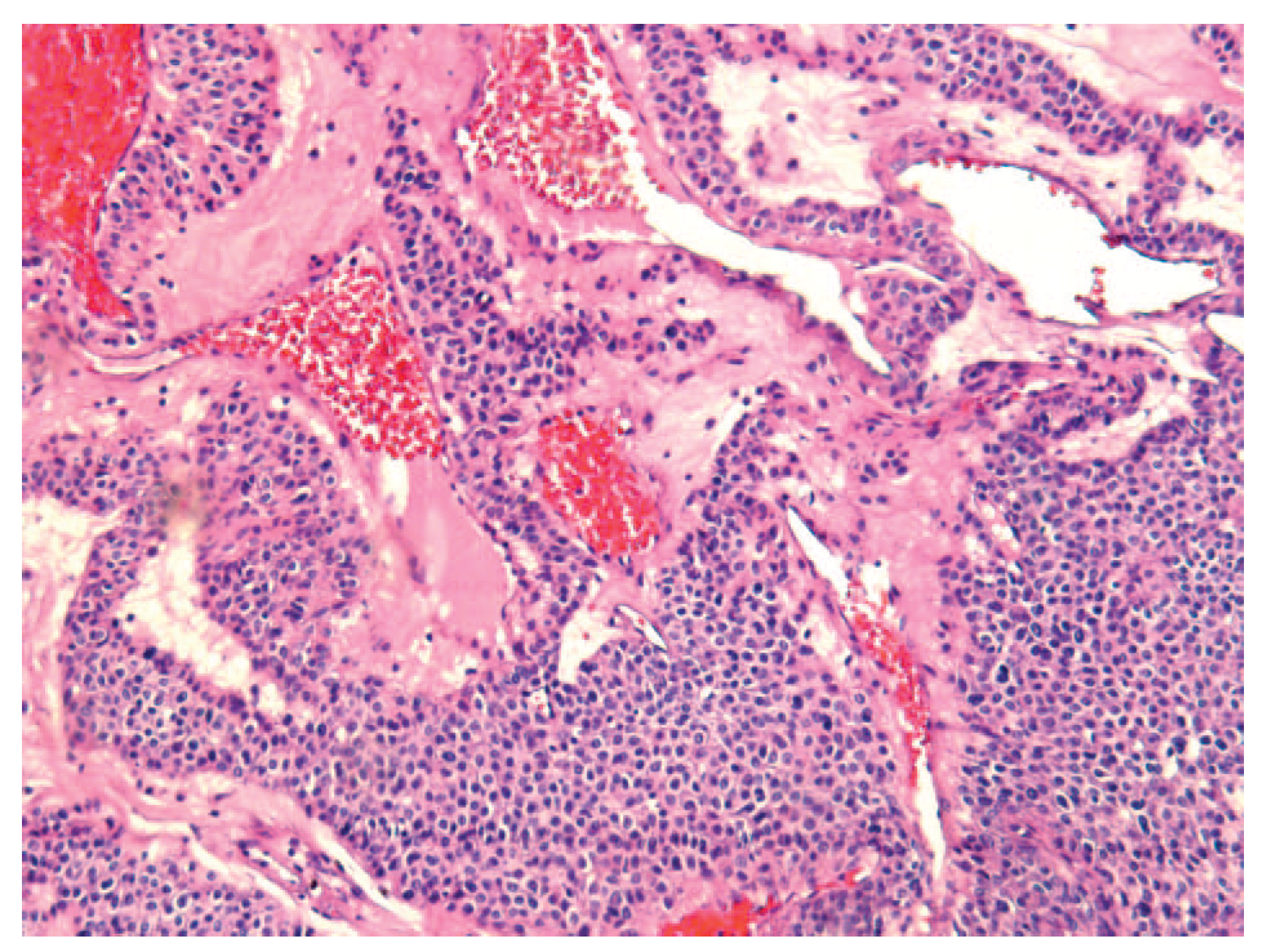
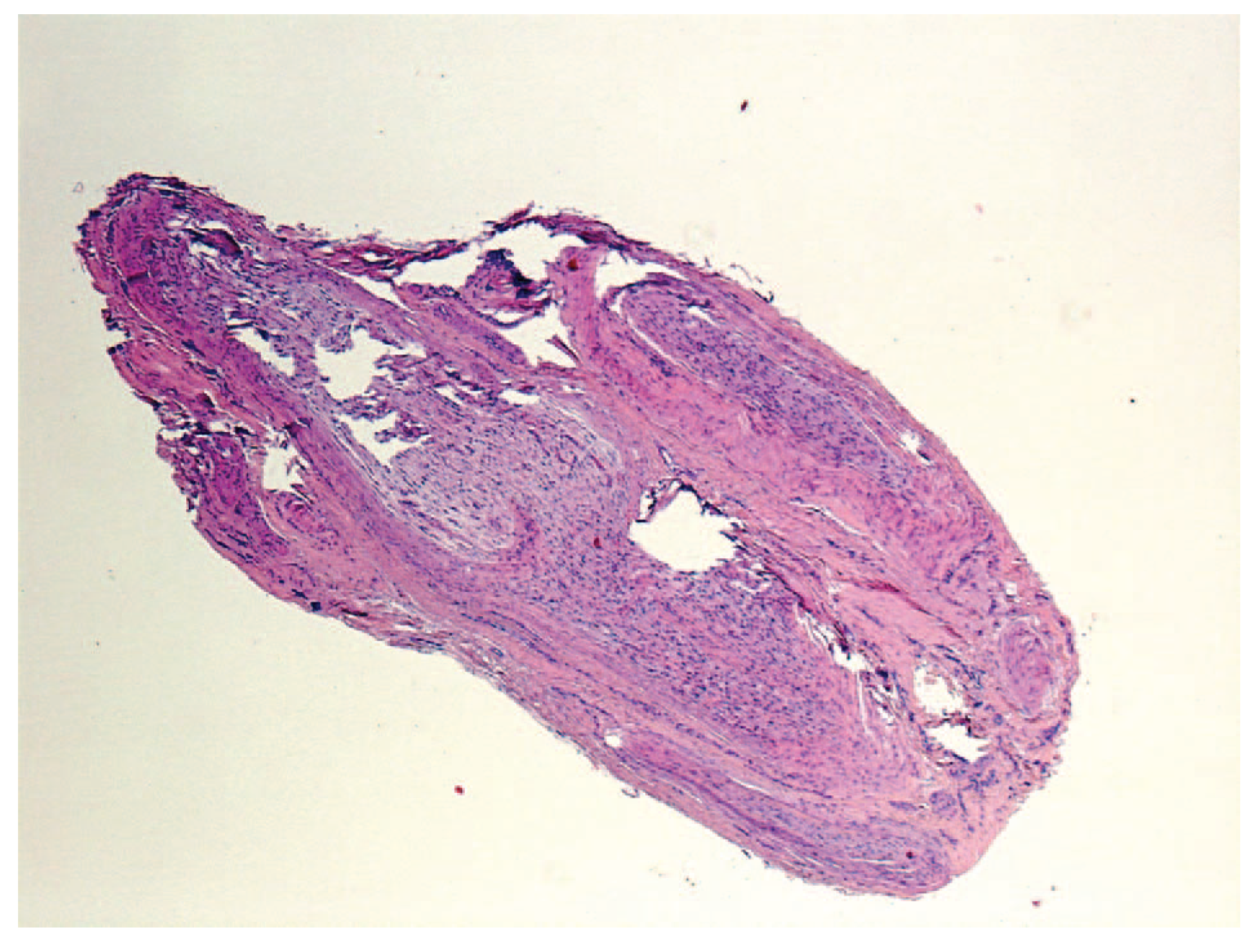
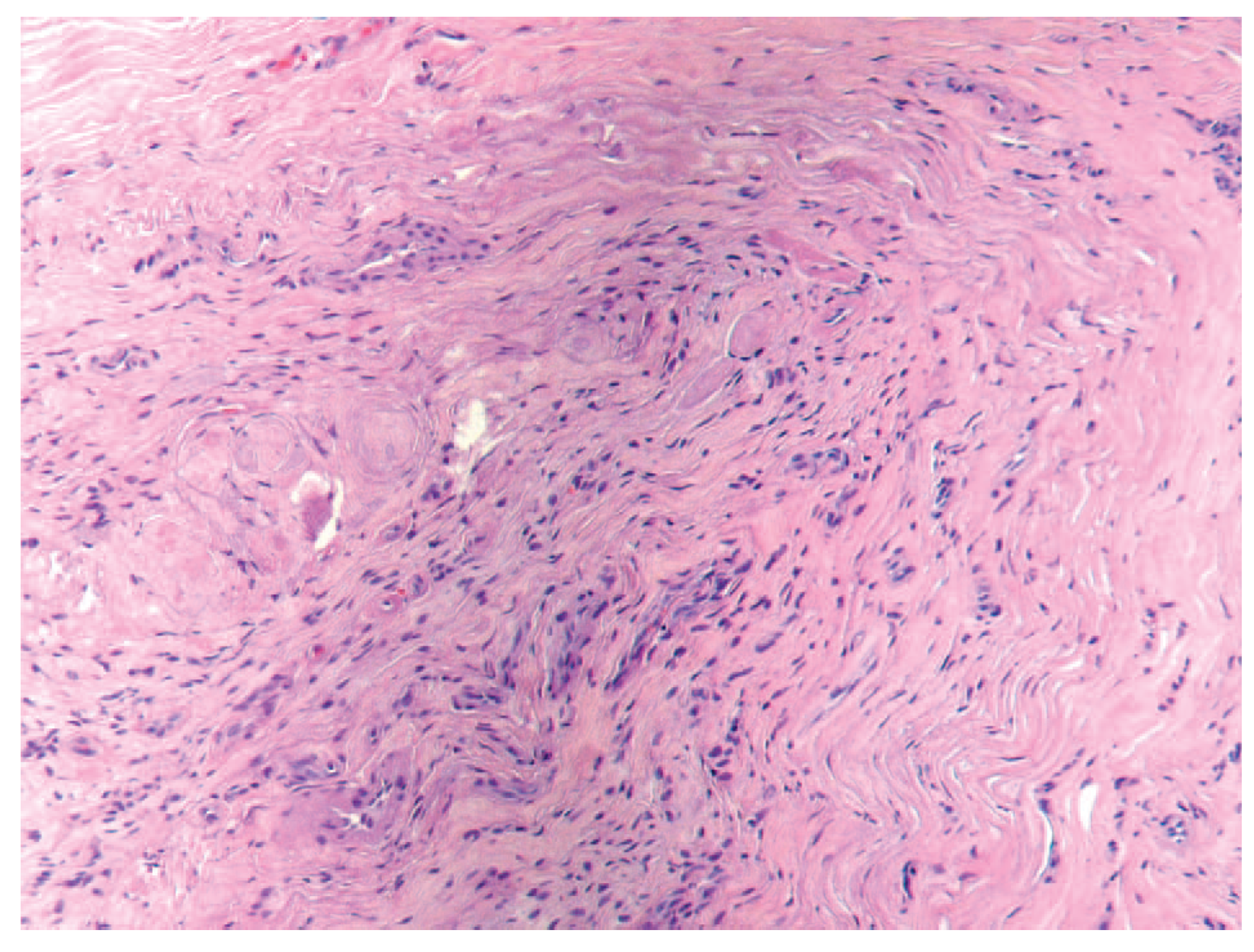
Histopathologically, one mass measured 2 × 2 × 0.3 cm and consisted of fibroadipose tissue, and the other mass was a well-delimited brownish nodule measuring 3 × 3 × 0.4 cm (Figure 4). Microscopic examination revealed the first mass to consist of fibroadipose tissue in which proliferation of nerve fibers with perineural and intraneural fibroses was seen (Figure 5 and Figure 6). The second mass demonstrated a well-delimited, nonencapsulated nodule consist-ing of dilated venous and congestive vessels coated with a flat endothelium and surrounded by a proliferation of monotone cells of eosinophilic cytoplasm with round or ovoid nuclei with finely granular chromatin, with no atypia or mitosis detected (Figure 7). The histopathologic diagnosis was a lateral-plantar neuroma of the fifth metatarsal of the left foot and an angiomatous glomus tumor.

Discussion

The glomus, as a solitary lesion, is the most common of the paragangliomas (90% of cases). It can be congenital or acquired, but it is not hereditary. It is a localized lesion that is painful and has a fibrous consistency. However, as a multiple lesion (glomangioma) it is not very common (10% of cases), is hereditary (autosomal dominant), [9] can appear at any time in a person’s life, can be disseminated, usually is not painful, and is smooth to the touch. [10] Contrary to the present case, this tumor usually affects young people, approximately 30 years old, with an incidence rate at this age ranging from 25% to 75%. [11] Cases in children have also been reported. [12]
Although the most common location is in the subungual region of the hands and feet, glomus tumors have also been described in the hallux, [13] in other extradigital locations, [14] and even intraos-seously. [15] This tumor has also been linked to other pathologic disorders, such as type 1 neurofibroma-tosis. [16]
Histopathologic analysis of a glomus tumor reveals a well-confined lesion (sometimes encapsulated) consisting of small vascular lumina covered by a layer of flat endothelial cells, which coincides with the present case. Sometimes, myelinic and amyelinic nerves have been found. Histopathologic variations have also been described in which glomus cells have been found with large and hyperchromatic nuclei, which probably represents a degenerative phenomenon. [17]
Treatment for glomus tumors is surgical, although other exeresis procedures have been described using cauterants. For glomangiomas (multiple lesions), surgical treatment is advised for painful lesions. [18]
A neuroma under the fifth metatarsal head shows the same characteristics as any other neuroma of the forefoot: intraneural and perineural fibroses, demyelination and degeneration of nerve fibers, thickening of the digital artery with occasional thrombosis, and occlusion of the lumina. In the present case, the anatomopathologic report focused on the most significant aspect: the intraneural and perineural fibroses.
There is some controversy regarding clinical assessment [19] and treatment of a neuroma, in any of its forms. However, when conservative treat-ments do not eliminate the pain, the treatment should always be surgical.

Financial Disclosure

This work was supported by the Government of Aragon and the European Social Fund.

Conflicts of Interest

None reported.

References

  1. MASSON, P. Le glomus neuromyoarterial des regions ta’ctiles et ses tumeurs. Lyon Chir 1924, 21, 257. [Google Scholar]
  2. WOOD W: On painful subcutaneous tubercle. Edinburgh Med J 8, 283, 1812.
  3. VALERO, J. Tumores de la Piel y de las Partes Blandas del Pie, p 116; Exa Editores: Madrid, 2003. [Google Scholar]
  4. FABRIKANT, J.; CALIFANO, P.J. Atypical neuroma of the lateral fifth metatarsal head. J Foot Surg 1981, 20, 35. [Google Scholar] [PubMed]
  5. THUL, J.R.; HOFFMAN, S.J. Neuromas associated with Tailor’s bunion. J Foot Surg 1985, 24, 342. [Google Scholar] [PubMed]
  6. MORENO, M.; VALERO, J. Sobrecarga del Quinto Metatar-siano,’’ in Sesiones Clı’nicas Podolo’gicas (1998-1999), p 65, Clı’nica Universitaria de Podolog’ıa (Universidad Complutense de Madrid); Federacio’ n Espan˜ ola de Podo’ logos: Madrid, 2000. [Google Scholar]
  7. VALERO, J.; GALLART, J.; GONZA’ LEZ, D. ET AL: Neuroma under the fifth metatarsal head: a retrospective study. Histol Histopathol 2012, 27, 1103. [Google Scholar] [PubMed]
  8. VALERO, J.; GALLART, J.; GONZA’ LEZ, D. ET AL: Tumores de origen patomeca’nico. Podol Clı’n 2012, 13, 11. [Google Scholar]
  9. BRAUER, J.A.; ANOLIK, R.; TZU, J. ET AL: Glomuvenous malformations (familial generalized multiple glomangi-omas). Dermatol Online J 2011, 17, 9. [Google Scholar] [CrossRef] [PubMed]
  10. CONNANT, M.A.; WISENFELD, S.L. Multiple glomus tumors of the skin. Arch Dermatol 1973, 107, 431. [Google Scholar] [CrossRef]
  11. ANAQNOSTOV, G.D.; PAPADEMETRIOU, M.D.; TOUMAZONI, M.N. Subcutaneous glomus tumors. Surg Gynecol Obstet 1973, 136, 945. [Google Scholar]
  12. RABARIN, F.; SAINT CAST, Y.; FOUQUE, P.A. ET AL: Glomus tumors in the extremities of children: a rare cause of chronic pain: two clinical cases [in French]. Chir Main 2010, 29, 270. [Google Scholar] [CrossRef] [PubMed]
  13. PATER, T.J.; MARKS, R.M. Glomus tumor of the hallux: case presentation and review of the literature. Foot Ankle Int 2004, 25, 434. [Google Scholar] [CrossRef] [PubMed]
  14. SCHIEFER, T.K.; PARKER, W.L.; ANAKWENZE, O.A. ET AL: Extradigital glomus tumors: a 20-year experience. Mayo Clin Proc 2006, 81, 1337. [Google Scholar] [CrossRef] [PubMed]
  15. GOMBOS, Z.; FOGT, F.; ZHANG, P.J. Intraosseous glomus tumor of the great toe: a case report with review of the literature. J Foot Ankle Surg 2008, 47, 299. [Google Scholar] [CrossRef] [PubMed]
  16. STEWART, D.R.; SLOAN, J.L.; YAO, L.; et al. Diagnosis, management, and complications of glomus tumours of the digits in neurofibromatosis type 1. J Med Genet 2010, 47, 525. [Google Scholar] [CrossRef] [PubMed]
  17. RAMOS, R. MEDINA E: Tumor glo’ mico: publicacio’ n de un caso con topograf’ıa poco usual. Rev Cent Dermatol Pascua 2000, 9, 160. [Google Scholar]
  18. REQUENA, L.; SANQUENZO, O. Cutaneous vascular prolifera-tions: part II. Hyperplasias and benign neoplasms. J Acad Dermatol 1997, 37, 887. [Google Scholar] [CrossRef] [PubMed]
  19. MANN, R.A.; REYNOLDS, J.C. Interdigital neuroma: a critical clinical analysis. Foot Ankle 1983, 3, 238. [Google Scholar] [CrossRef] [PubMed]
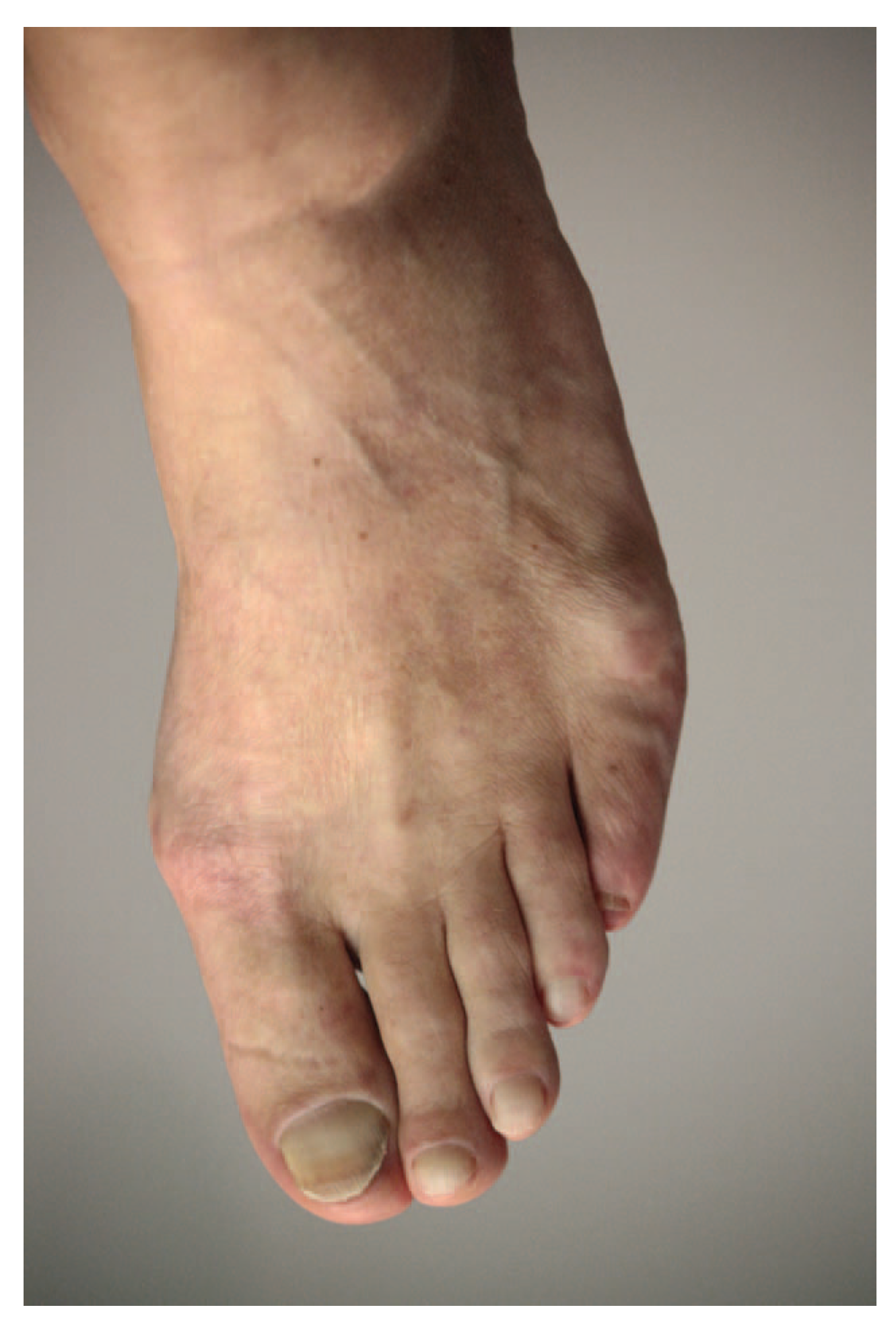
Figure 1. Appearance of the tumor. Note the increased size of the soft parts and the deviated position of the fifth toe.
Japma 106 00151 g001
Figure 2. Removal of the glomus tumor.
Japma 106 00151 g002
Figure 3. Removal of the neuroma using proximal ablation of the affected nerve branch.
Japma 106 00151 g003
Figure 4. Removed neuroma (left) and glomus tumor (right).
Japma 106 00151 g004
Figure 5. Microphotographic panoramic view of the neuroma under the fifth metatarsal head showing perineural and endoneural fibroses (H&E, x2.5).
Japma 106 00151 g005
Figure 6. Microphotographic view of the neuroma under the fifth metatarsal head showing important perineural and endoneural fibroblastic proliferation, which produces a disorganized and hypercellular aspect (H&E, x10).
Japma 106 00151 g006
Figure 7. Microphotographic view of the glomus tumor showing congestive and dilated venous-type vessels coated with a flat endothelium and sur-rounded by a rounded or ovoid monotonous core with chopped granular chromatin and eosinophilic cytoplasm cell proliferation (H&E, x100).
Japma 106 00151 g007