Next Article in Journal
The Use of Rubrics in the Clinical Evaluation of Podiatric Medical Students. Objectification of the Subjective Experience
Previous Article in Journal
Author Index
 
 
Journal of the American Podiatric Medical Association is published by MDPI from Volume 116 Issue 1 (2026). Previous articles were published by another publisher in Open Access under a CC-BY (or CC-BY-NC-ND) licence, and they are hosted by MDPI on mdpi.com as a courtesy and upon agreement with American Podiatric Medical Association.
Article

A Long-Term Study of the Effect of Subtalar Arthrodesis on the Ankle and Hindfoot Joints

1
Department of Orthopaedics, Shanghai Ruijin Hospital North, Shanghai Jiaotong University School of Medicine, Shanghai, China
2
Department of Orthopaedics, Shanghai Ruijin Hospital, Shanghai Institute of Orthopaedics and Traumatology, Shanghai Jiaotong University School of Medicine, Shanghai, China
3
Department of Hand and Foot Surgery, Shandong Provincial Hospital, Shandong Province, China
*
Author to whom correspondence should be addressed.
J. Am. Podiatr. Med. Assoc. 2016, 106(1), 47-53; https://doi.org/10.7547/14-002
Published: 1 January 2016

Abstract

Background: Subtalar arthrodesis is a common therapy for subtalar joint disorders. In this article, we evaluate the effect of subtalar arthrodesis on the ankle and hindfoot joints. Methods: Fifty patients (33 men and 17 women) underwent subtalar arthrodesis between January 1, 1996, and August 31, 2011. The 36-item Short-Form Health Survey and American Orthopaedic Foot and Ankle Society ankle hindfoot scores were used for clinical evaluation. Radiographic analysis included assessment of degenerative changes and ankle and hindfoot joint function in the frontal and sagittal planes. Results: Thirty-seven patients (27 men and 10 women; mean age, 42.6 years) were followed up for an average of 9.2 years (range, 2–17 years). The mean ± SD 36-item Short-Form Health Survey score improved from 30.21 ± 7.19 before surgery to 78.50 ± 12.23, and the American Orthopaedic Foot and Ankle Society ankle hindfoot score increased from 50.32 ± 12.39 to 73.14 ± 15.44. Degenerative changes in the talonavicular, calcaneocuboid, metatarsocuboid, and ankle joints occurred. The talar-vertical angle was positively related to the tibial-plantar minimal angle (affected side: r = 0.56; P < .01; healthy side: r = 0.46; P < .01). The difference in hindfoot height is positively related to the difference in tibial-plantar minimal angle (r = 0.54; P < .01). Conclusions: Subtalar arthrodesis is effective treatment for subtalar joint disease but could induce joint degeneration and ankle joint motion limitation related to talar declination and hindfoot height.

Isolated subtalar arthrodesis is regarded as effective treatment for subtalar joint problems, including osteoarthritis caused by fractures of the calcaneus or talus, isolated subtalar joint instability, talocalcaneal coalition, deformities of the hindfoot, calcaneal facture, and primary or secondary osteoarthritis [1-5]. Traditionally, triple arthrodesis has been considered to be favorable for talocalcaneal problems. However, isolated subtalar arthrodesis possesses the advantages of preserved hindfoot motion and limited tarsometatarsal joint stress [6,7].
Degeneration has been reported to occur in the ankle and transverse tarsal joints after subtalar arthrodesis [3]. In the study by Glanzmann and Sanhueza-Hernandez [8], there was no evidence of degeneration. It is still under debate whether degeneration occurs after subtalar arthrodesis. In addition, the relation between hindfoot height (HH)/talar inclination and ankle motion is still pending [9,10]. In this retrospective study, 37 patients with subtalar arthrodesis were followed up. We evaluated clinical outcomes, degenerative joint changes, and ankle and hindfoot function after subtalar arthrodesis.

Materials and Methods

Patients

Between January 1, 1996, and August 31, 2011, 50 patients (33 men and 17 women; mean age, 42.6 years; age range, 13–74 years) underwent isolated subtalar arthrodesis. The pathologic findings leading to subtalar arthrodesis included fracture of the calcaneus (42 patients), talocalcaneal coalition (two patients), calcaneal osteoarthritis (one patient), tarsal sinus syndrome (three patients), and flatfoot (two patients). Patients who simultaneously underwent another arthrodesis or had deformity after surgery were excluded.

Operative Technique

The procedures were carried out with the patients supine, with a thigh tourniquet in place. A horizontal skin incision was centered over the lateral aspect of the hindfoot. The residual cartilages on the surfaces of the subtalar joint were removed with a power saw to create two flat surfaces. Screws were placed through the tuberosity of the calcaneus to the talar body. When necessary, a bone graft was performed. The cast was removed after 4 to 6 weeks, and radiographs were taken.

Method

All of the patients provided written informed consent. The Medical Outcomes Study 36-item Short Form Health Survey and the American Orthopaedic Foot and Ankle Society rating system were used for preoperative and postoperative evaluations [11]. The 6 points for subtalar motion were not assigned; therefore, a postoperative score of 94 of 100 was regarded as the maximum possible score. The physical examination focused on pain at the ankle and hindfoot.
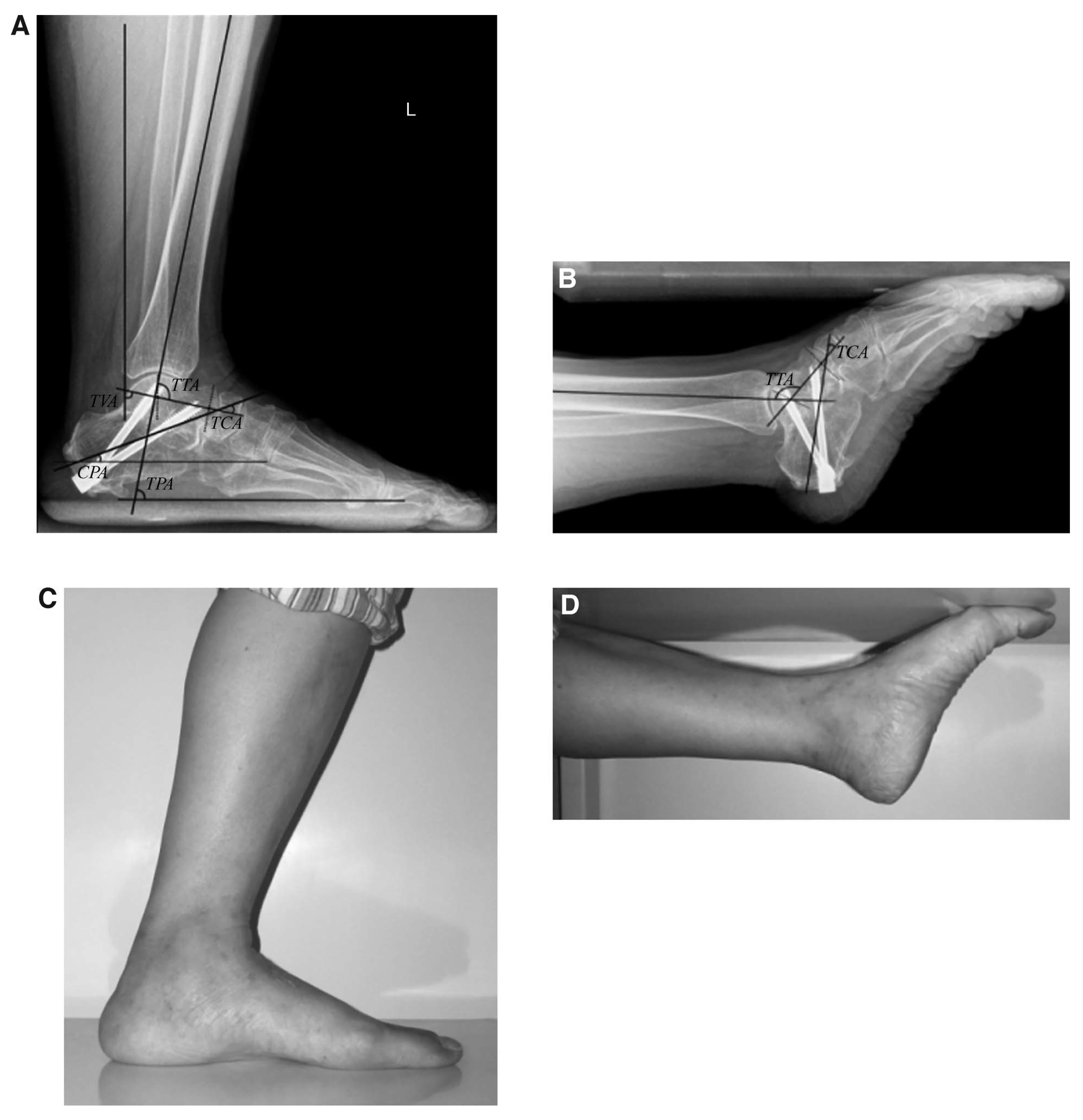
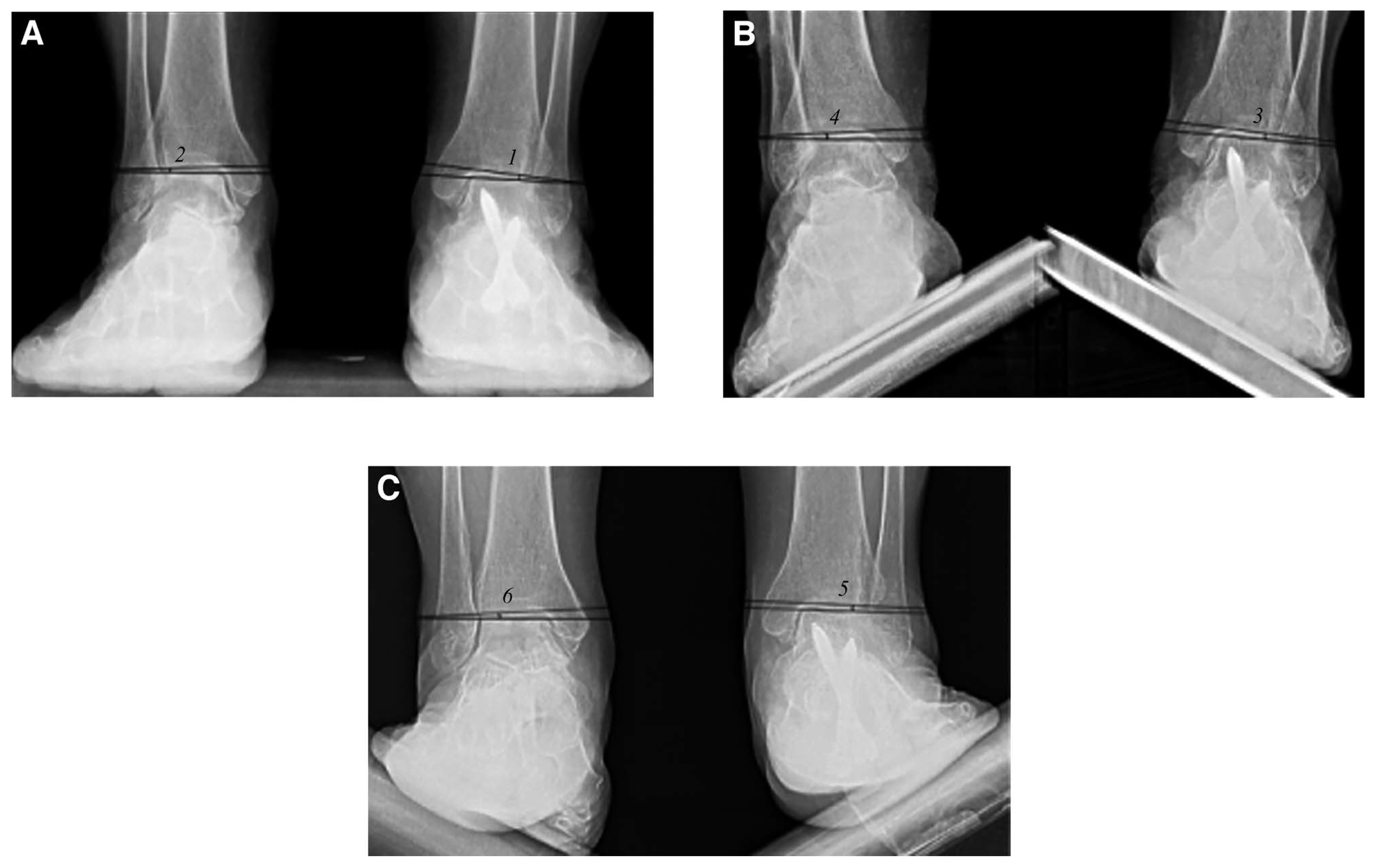
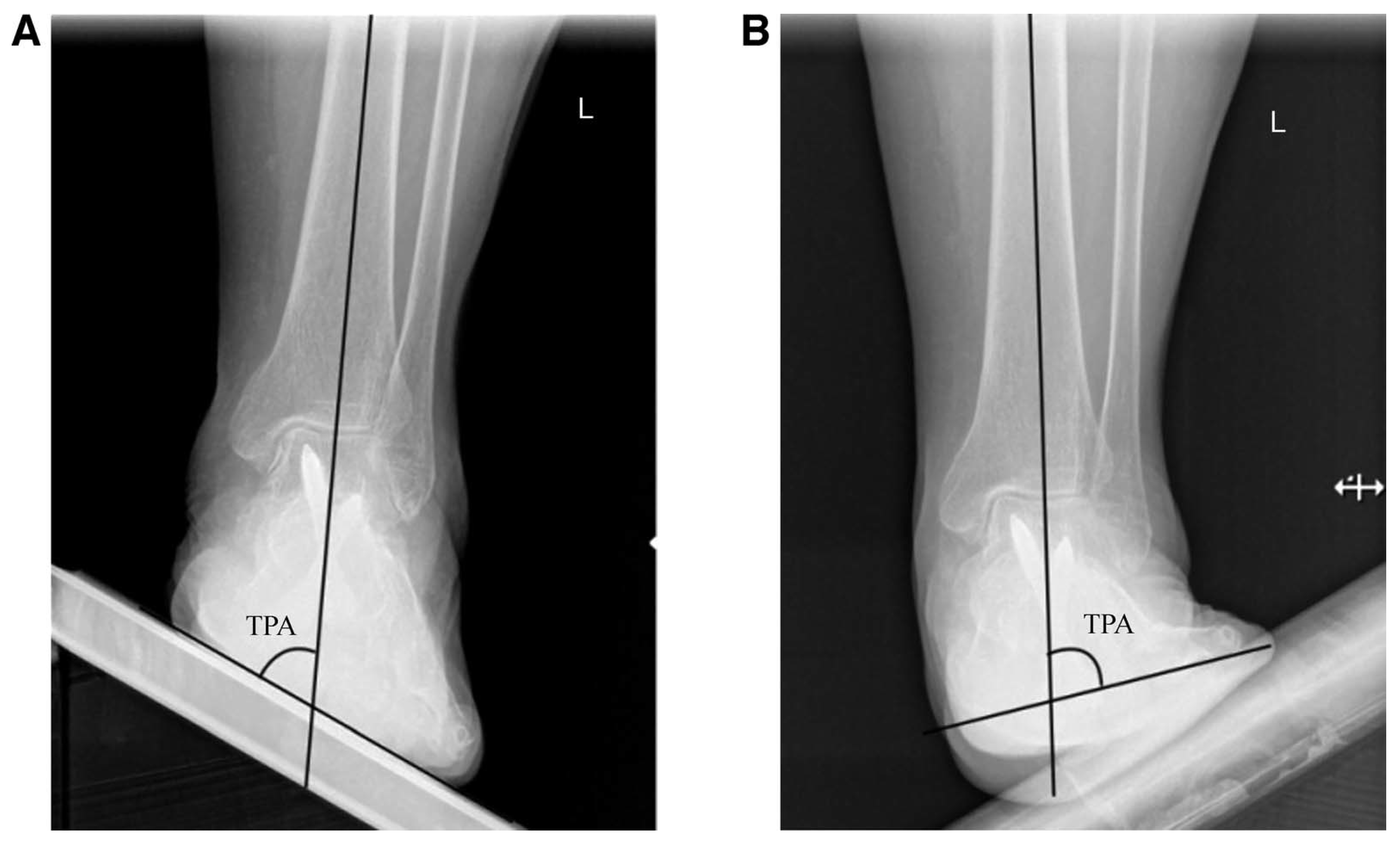
Radiographs taken at the final follow-up visit included anteroposterior radiographs of the foot and ankle, Mortise's ankle radiographs, inversion and eversion radiographs, and dorsoplantar radiographs of the foot. The following parameters were assessed: tibiotalar angle, talar-vertical angle (TVA), talocalcaneal angle, tibial-plantar minimal angle (TPA), calcaneoplantar angle (CPA), HH, and tibiotalar tilt angle (TTTA) (Figure 1, Figure 2 and Figure 3). The position of the plantar surface was revealed by the ligature between the first and fifth metatarsal heads. All of the angles were measured by PACS (Picture Archiving and Communication Systems) system UniWeb Viewer 6.1 software (EBM Technologies, Honolulu, Hawaii).
Figure 1. Lateral radiographs of the ankle joint of a patient with subtalar arthrodesis in maximum dorsiflexion (A) and maximum plantarflexion (B). A patient with the ankle joint in maximum dorsiflexion (C) and maximum plantarflexion (D). CPA, calcaneoplantar angle; TCA, talocalcaneal angle; TPA, tibial-plantar minimal angle; TTA, tibiotalar angle; TVA, talar-vertical angle.
Japma 106 00047 g001
Figure 2. Anteroposterior radiographs of the ankle joint in the neutral position (A), 30° of inversion (B), and 30° of eversion (C). Angles 1, 3, and 5 represent the tibiotalar tilt angles (TTTAs) of the affected side in the neutral position, 30° of inversion, and 30° of eversion, respectively. Angles 2, 4, and 6 represent the TTTAs of the healthy sides in the neutral position, 30° of inversion and 30° of eversion.
Japma 106 00047 g002
Figure 3. Radiographs of the tibial-plantar minimal angle (TPA) of the affected and healthy sides in 30° of inversion (A) and 30° of eversion (B) in the frontal plane.
Japma 106 00047 g003

Statistical Analysis

Data are presented as mean ± SD. We used statistical software (IBM SPSS Statistics for Windows, Version 19.0; IBM Corp, Armonk, New York) for data analysis by the t test, analysis of variance, and Pearson correlation analysis. Statistical significance was set at P < .05.

Results

Overall Evaluation

Thirty-seven patients (27 men and 10 women) were successfully followed up. The 13 excluded patients had moved from the area, had changed their telephone number, or both. Mean follow-up was 9.2 years (range, 2–17 years), and the average course of the disease was 1.6 years (range, 3 months to 6 years). The postoperative 36-item Short Form Health Survey score was 78.50 ± 12.23 at the last follow-up visit, which was higher than the preoperative score (30.21 ± 7.19; P < .01). The postoperative American Orthopaedic Foot and Ankle Society score was 73.14 ± 15.44 at the last follow-up visit, which was higher than the preoperative score of 50.32 ± 12.39 (P < .01). Eight patients (21.6%) had ankle impingement and residual pain in the lateral aspect of the calcaneus.

Joint Degeneration

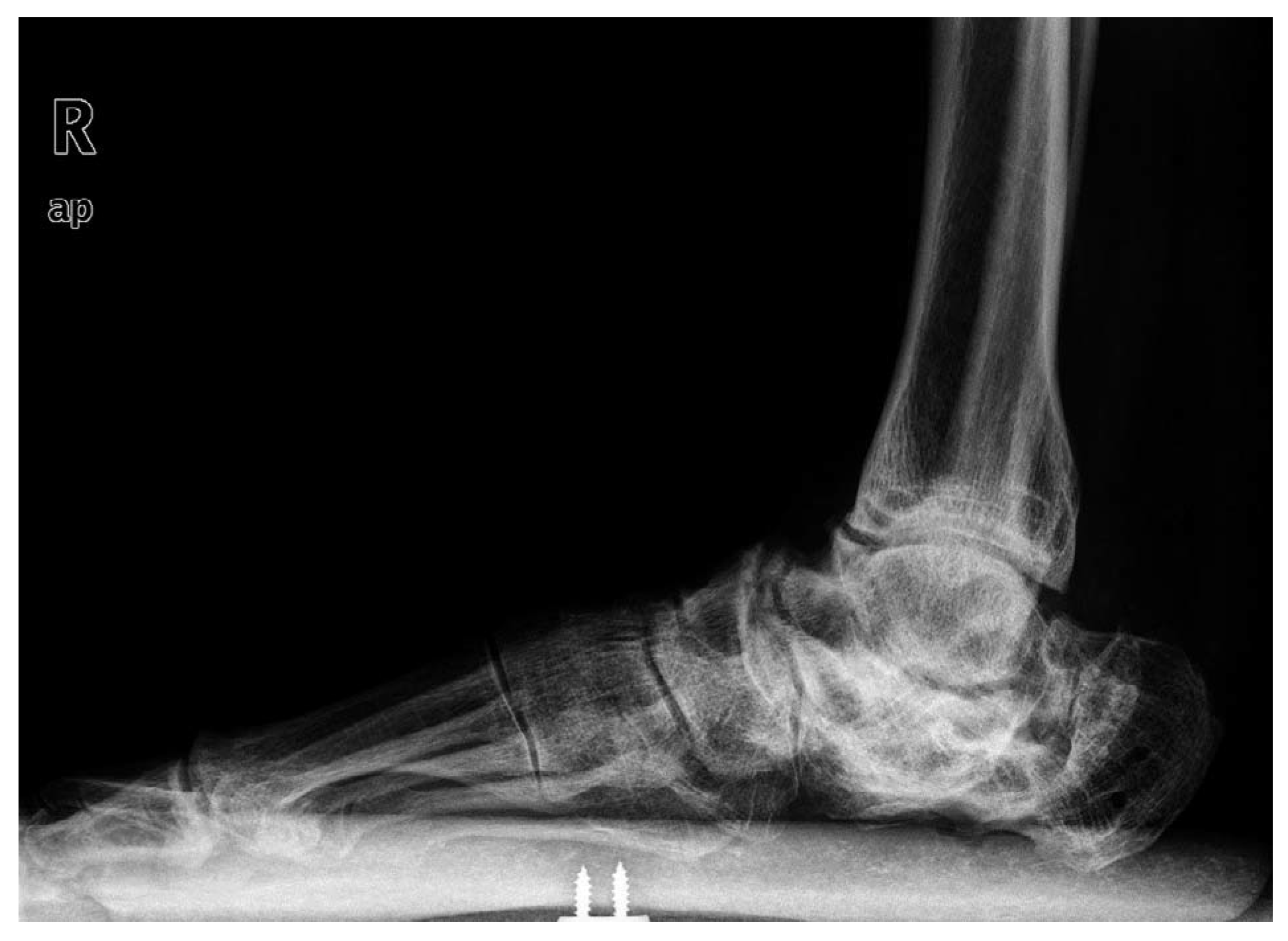
Radiographic assessment demonstrated evidence of degenerative changes in the talonavicular joint in 13 patients (35.1%), in the cuneonavicular joint in five patients (13.5%), in the calcaneocuboid joint in 21 patients (56.8%), in the metatarsocuboid joint in ten patients (27.0%), and in the ankle joint in five patients (13.5%). Five patients had evidence of severe degenerative changes in the talonavicular joint showing “bird mouth syndrome” (Fig. 4). In addition, there was no significant correlation between degeneration prevalence and follow-up time (r = 0.13; P > .05).
Figure 4. A 60-year-old man underwent subtalar arthrodesis for calcaneal fracture. Follow-up was 15 years. Degeneration occurred in the ankle, talonavicular, and calcaneocuboid joints at the last follow-up visit. The lateral radiograph shows “bird mouth syndrome” in the talonavicular joint.
Japma 106 00047 g004

Radiographic Findings

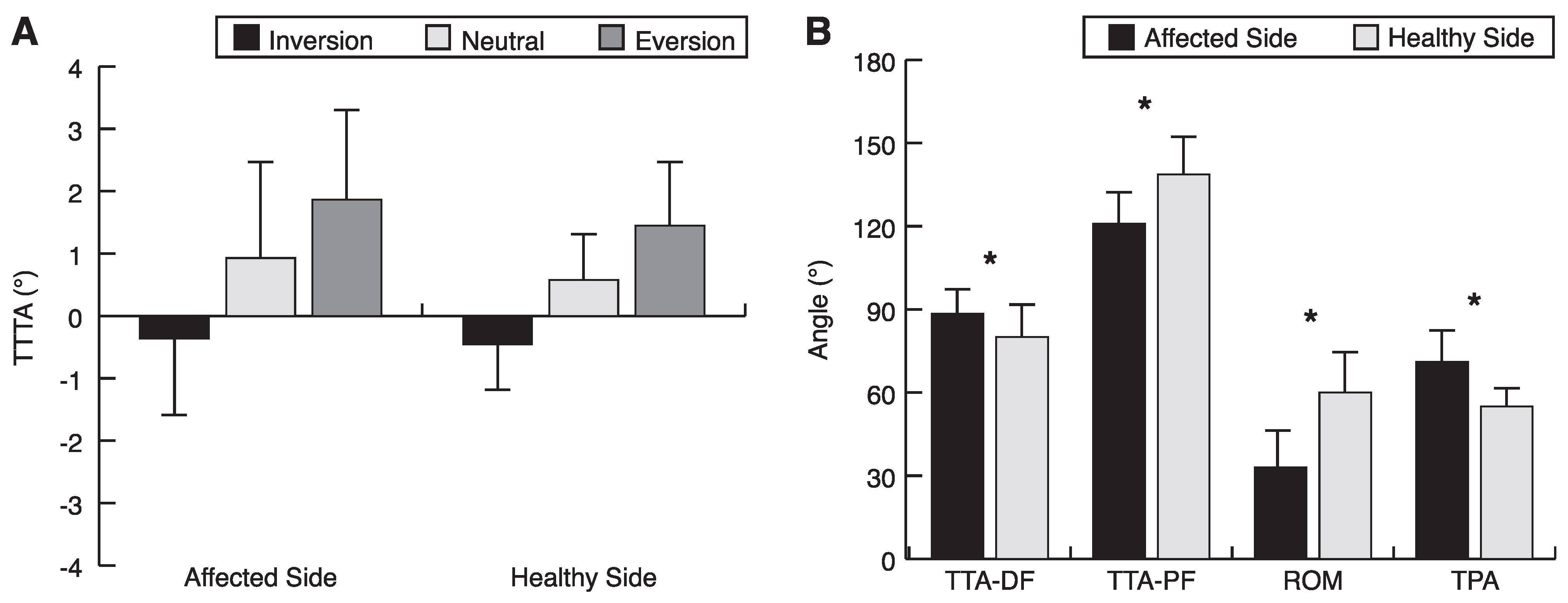
Patients were standing with the foot in 30° of inversion, the neutral position, and 30° of eversion. Anteroposterior radiographs of the ankle were taken for TTTA, TPA, tibiotalar angle, TVA, and CPA measurements. The TTTAs of the affected sides were −0.30° ± 1.29°, 0.89° ± 1.59°, and 1.82° ± 1.51°, respectively, and the TTTAs of the healthy sides were −0.39° ± 0.78°, 0.54° ± 0.74°, and 1.41° ± 1.08°, respectively, in 30° of inversion, the neutral position, and 30° of eversion in the frontal plane (Fig. 5A). The TPAs of the affected side were 65.27° ± 6.08° and 82.27° ± 7.56° in 30° of inversion and eversion, respectively, in the frontal plane, which were both larger than the TPAs of the healthy sides (61.31° ± 3.10° and 76.57° ± 4.77°, respectively; P < .05).
Figure 5. A, The tibiotalar tilt angle (TTTA) of the affected and healthy sides in the neutral position, 30° of inversion, and 30° of eversion in the frontal plane. B, The tibiotalar angle in dorsiflexion (TTA-DF), TTA in plantarflexion (TTA-PF), range of motion (ROM), and tibioplantar angle (TPA) of the affected and healthy sides in the sagittal plane. *P < .05. Values are given as mean ± SD.
Japma 106 00047 g005
Figure 5B shows that the tibiotalar angles of the healthy side in dorsiflexion and plantarflexion in the sagittal plane were 78.64° ± 13.25° and 136.83° ± 14.13°, respectively, and the tibiotalar angles of the affected side were 87.38° ± 9.87° and 119.03° ± 12.66°, respectively (P < .05). The TPA of the healthy side was decreased by 33.4% compared with the affected side (53.57°±7.56° versus 71.46°±11.17°; P < .05). The range of motion of the tibiotalar joint of the affected side was decreased by 45.6% compared with the healthy side (31.65° ± 3.64° versus 58.19° ± 15.43°; P < .05).
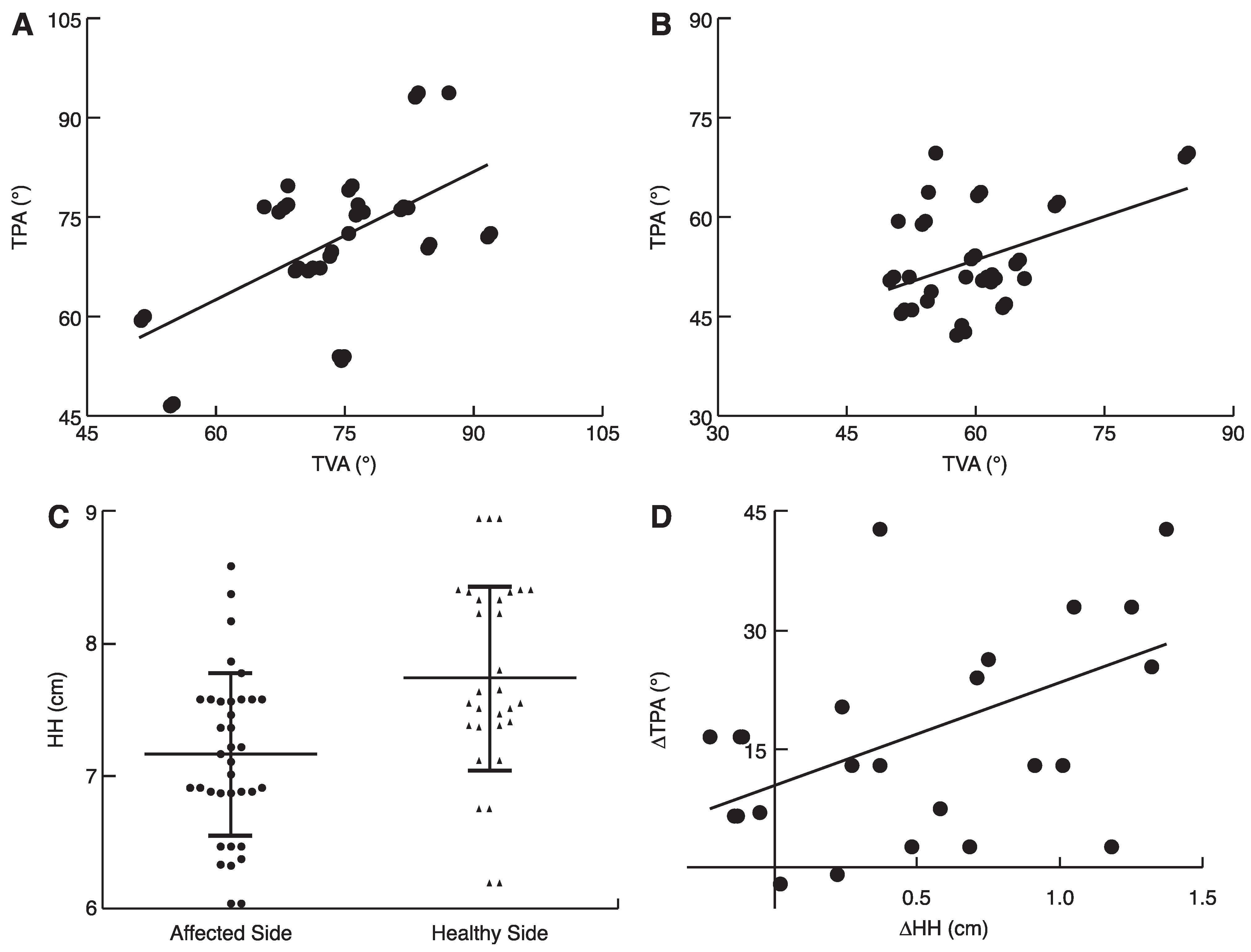
The TVA of the affected side was larger than that of the healthy side (73.60° ± 9.86° versus 60.01° ± 7.89°; P < .01) in 32 patients (86.5%). There was a significantly positive relation between bilateral TVAs and TPAs (affected side: r = 0.56; P < .01; healthy side: r = 0.46; P < .01) (Fig. 6A). There were no significant differences between bilateral CPAs and TPAs (affected side: r = −0.26; P > .05; healthy side: r = 0.10; P > .05) (Fig. 6B).
Figure 6. Correlations between the talar-vertical angle (TVA) and the tibioplantar angle (TPA) of the affected (A) and healthy (B) sides. C, The hindfoot height (HH) of the affected and healthy sides. The points represents the data of the hindfoot height; the longer line is the mean and the shorter line, the standard deviation. D, Correlation between HH difference and TPA difference.
Japma 106 00047 g006
The HH was measured by lateral radiographs. The results showed that the HH of the affected sides was lower than that of the healthy sides (7.16 ± 0.62 cm versus 7.74 ± 0.69 cm; P < .01) in 29 patients (78.4%) (Fig. 6C). There was a significant positive correlation between the difference in HH and the difference in the TPA (r = 0.54; P < .05) (Fig. 6D).

Discussion

Isolated subtalar arthrodesis was commonly used for the treatment of subtalar problems. In this study, 36-item Short Form Health Survey and American Orthopaedic Foot and Ankle Society scores were significantly increased postoperatively. There was evidence of degeneration in the joints, but these changes were not symptomatic. The angle range of motion was correlated with the talar inclination and HH.
Russotti et al. [12] demonstrated that no degenerative changes were observed in 41 patients with fusion of the talocalcaneal joint. Easley et al. [3]. reported that there was evidence of degenerative changes in the transverse tarsal joints (15 feet) and ankle (five feet) after isolated subtalar arthrodesis. In the study by Glanzmann and Sanhueza-Hernandez [8], degeneration in the adjacent joints was observed in only three of 41 patients with arthroscopic subtalar arthrodesis. In this study, there was evidence of degeneration in the talonavicular, calcaneocuboid, metatarsocuboid, and ankle joints after subtalar arthrodesis. However, these changes were observed on radiographs but were not symptomatic.
The subtalar joint allows inversion or eversion of the foot for adaptation in the uneven slope [13]. The stability of the ankle can be judged by the TTTA in inversion and eversion [14-16]. In this study, TTTA changes were less than 3° from 30° of inversion to the neutral position then to 30° eversion, which can be considered good mechanical stability of the ankle. In this study, the TPA of the affected sides was larger than that of the healthy side in inversion and eversion. The results revealed that the inversion and eversion abilities of the ankle were, indeed, reduced but could be compensated for with inversion and eversion of the midfoot. Because of the increased compensatory activity of the midtarsal joints on uneven slope, the range of motion of the talonavicular, calcaneocuboid, and lateral tarsometatarsal joints was increased, thereby promoting the prevalence of degeneration.
The range of motion of the ankle joint of the affected side in the sagittal plane is significantly reduced compared with that of the healthy side, indicating that plantarflexion and dorsiflexion activities of the ankle were reduced by subtalar arthrodesis. In this study, the TVA of the affected side was lower than that of the healthy side in 32 patients, and 29 patients had reduced HH. There was a positive correlation between HH/talar inclination and range of motion of the ankle joint. In this study, although most patients received a bone graft, it is difficult to determine the proper talar tilt angle for the different lesions and types of surgery. For patients with calcaneal compression fractures, cartilage in the articular surface of the posterior subtalar was mainly removed, but little cartilage in the anterior and median articular surfaces was removed, which led to the increase in the TVA. These results suggest that bone grafting is required when HH is decreased and talar inclination is smaller. In addition, calcaneofibular impingement will easily happen with the reduction of HH, which contributes to the residual pain in the lateral wall. Carr et al. [9] demonstrated that loss of ankle function was observed in patients with a dorsiflexed talus and shortening of the hindfoot after subtalar distraction arthrodesis and believed that ankle impingement and pain were due to decreased talar declination. Thus, the motion limitation of the ankle joint may be due to the change in talar declination and HH after surgery.
In addition, there is no significant difference between the affected side and the healthy side in terms of the CPA. Also, the bilateral CPA is not significantly related to the TPA. All of the results indicate that subtalar arthrodesis has no significant effect on the degree of calcaneal inclination, and motion limitation of the ankle is not related to calcaneal inclination.
In conclusion, subtalar arthrodesis is an effective treatment for subtalar joint lesions, which could induce joint degeneration. The motion of the ankle joint was limited, which was related to talar declination and HH. These results provide references for further subtalar joint lesion therapy by subtalar arthrodesis.


Acknowledgment

The authors would like to acknowledge the assistance of Bo Chen and Ping Huang (Shanghai Institute of Orthopaedics and Traumatology, Shanghai Jiaotong University School of Medicine), as well as Meng Fu and Tao Wang (Department of Radiology, Shanghai Ruijin Hospital, Shanghai Jiaotong University School of Medicine). We also thank all of the patients.

Financial Disclosure

This study was supported by the Natural Science Foundation of China (grant 81272051).

Conflict of Interest

None reported.

References

  1. Flemister ASJr, Infante AF, Sanders RW, et al: Subtalar arthrodesis for complications of intra-articular calcaneal fractures. Foot Ankle Int21: 392, 2000.
  2. Chahal J, Stephen DJ, Bulmer B, et al: Factors associated with outcome after subtalar arthrodesis. J Orthop Trauma20: 555, 2006.
  3. Easley ME, Trnka H-J, Schon LC, et al: Isolated subtalar arthrodesis. J Bone Joint Surg Am82: 613, 2000.
  4. Davies MB, Rosenfeld PF, Stavrou P, et al: A comprehensive review of subtalar arthrodesis. Foot Ankle Int28: 295, 2007.
  5. Albert A, Deleu P-A, Leemrijse T, et al: Posterior arthroscopic subtalar arthrodesis: ten cases at one-year follow-up. Orthop Traumatol Surg Res97: 401, 2011.
  6. Astion DJ, Deland JT, Otis JC, et al: Motion of the hindfoot after simulated arthrodesis. J Bone Joint Surg Am79: 241, 1997.
  7. Wülker N, Stukenborg C, Savory KM, et al: Hindfoot motion after isolated and combined arthrodeses: measurements in anatomic specimens. Foot Ankle Int21: 921, 2000.
  8. Glanzmann MC, Sanhueza-Hernandez R: Arthroscopic subtalar arthrodesis for symptomatic osteoarthritis of the hindfoot: a prospective study of 41 cases. Foot Ankle Int28: 2, 2007.
  9. Carr JB, Hansen ST, Benirschke SK: Subtalar distraction bone block fusion for late complications of os calcis fractures. Foot Ankle Int9: 81, 1988.
  10. Chandler JT, Bonar SK, Anderson RB, et al: Results of in situ subtalar arthrodesis for late sequelae of calcaneus fractures. Foot Ankle Int20: 18, 1999.
  11. SooHoo NF, Vyas R, Samini D: Responsiveness of the foot function index, AOFAS clinical rating systems, and SF-36 after foot and ankle surgery. Foot Ankle Int27: 930, 2006.
  12. Russotti GM, Cass JR, Johnson KA: Isolated talocalcaneal arthrodesis: a technique using moldable bone graft. J Bone Joint Surg Am70: 1472, 1988.
  13. Pearce TJ, Buckley RE: Subtalar joint movement: clinical and computed tomography scan correlation. Foot Ankle Int20: 428, 1999.
  14. Hertel J, Denegar CR, Monroe MM, et al: Talocrural and subtalar joint instability after lateral ankle sprain. Med Sci Sports Exerc31: 1501, 1999.
  15. Louwerens JW, Ginai AZ, van Linge B, et al: Stress radiography of the talocrural and subtalar joints. Foot Ankle Int16: 148, 1995.
  16. van Hellemondt FJ, Louwerens JW, Sijbrandij ES, et al: Stress radiography and stress examination of the talocrural and subtalar joint on helical computed tomography. Foot Ankle Int18: 482, 1997.