During the past decade, the analysis of joint stiffness has been introduced in the field of biomechanics as a tool for assessing the mechanical properties of the joints of the lower limb for the study and development of prostheses and orthoses.[
1,
2,
3,
4,
5,
6,
7,
8,
9,
10,
11,
12,
13,
14] From a biomechanical perspective, the term
stiffness is defined as the ratio between the external moment applied to the joint and the joint angle, at a specific angle. Some studies use the concept of passive stiffness,[
8,
15,
16,
17] which is assessed without muscle activity and corresponds to the stiffness associated with the storage of potential energy by deformation of the soft tissues surrounding the joint. Other studies use the concept of dynamic stiffness (or quasi-stiffness),[
6,
7,
13,
14] which is assessed while performing activities that require muscle activation, such as jumping, running, and walking. This dynamic stiffness combines the effect of muscle forces, inertia, and deformation of soft tissue and can be used as a joint stability indicator.[18[ The concept of dynamic stiffness has been applied to characterize ankle behavior during different activities, such as walking, running, and climbing stairs.[
1,
14,
18,
19,
20] These works have shown that the dynamic function of the ankle joint can be assessed by focusing on the stride phases in which moment and angle changes are coordinated. In particular, the ankle shows two distinctive stages, with an approximate linear relationship between joint moment and joint angle: the midstance phase (MSP), with a rising dorsiflexor moment stage that stores energy, and the propulsion phase, with a descending dorsiflexor moment stage that returns energy.[
13] The MSP is divided into two stages in some works[
4,
7] because of the differences in dynamic stiffness between them. The dynamic stiffness characterization of the ankle joint has been used to study the effects of mobile-bearing total ankle replacement, to assess the treatment of patients with cerebral palsy, and to assess gait function in patients with hemiparesis.[
5,
6,
13]
However, to our knowledge, there are no data in the literature regarding dynamic stiffness of other foot joints. This is mainly due to the complexity of the lower limb, so that most gait biomechanical studies have considered the foot as a rigid body without any possible movement between its joints. Knowledge of the dynamic stiffness of the different foot joints would help foot and ankle surgeons to accurately quantify the mechanical effect of their surgical procedures, especially techniques related to arthrodesis of foot joints. Finally, the study of dynamic stiffness is also important for the design of foot prostheses and orthoses.
Nowadays, it is possible to find in the literature multisegment biomechanical models of the foot[
21,
22,
23,
24,
25,
26,
27,
28,
29,
30] that could be properly adapted to analyze the stiffness of foot joints. A recent example is that presented by Bruening et al[
21] consisting of the shank (tibia and fibula) and three foot segments: the hindfoot (calcaneus and talus), forefoot (navicular, cuboid, cuneiforms, and metatarsals), and hallux (proximal and distal phalanges). The shank, hindfoot, forefoot, and hallux are connected through the ankle, midtarsal (MT), and metatarsophalangeal (MP) joints, from proximal to distal.
The main goal of this work was to characterize the behavior of the foot joints during normal walking through analysis of the dynamic flexion stiffness of the ankle, MT, and MP joints in healthy individuals. The different stride phases in which there is coordination between the changes in moments and angles are identified, approximate linear relationships between joint moment and joint angle are found, and values for the flexion stiffness of these joints are calculated and statistically analyzed.
Materials and Methods
Four healthy men (age, 26.8 ± 2.6 years; weight, 81.6 ± 15.8 kg; height, 180 ± 5.1 cm) without a history of neuromuscular problems participated in the experiment. No goniometric study was performed on the participants as part of the selection criteria, although none of them had a pes planus or pes cavus deformity. All of the participants provided written informed consent to participate in the study, which was approved by the ethical committee of the University Jaume I (Castello´ n, Spain). The participants were asked to walk barefoot at a self-selected speed along a 7-m walkway. A pressure platform was located in the middle of the walkway, and the participant had to step on it with his right foot. The participant faced forward while walking to avoid platform targeting, and he repeated the activity as many times as required to have three valid trials, discarding those where the participant did not step on the platform with the right foot. Before data collection started, participants walked on the walkway several times to get familiar with the walking conditions.
Gait evaluation included simultaneous recording of body kinematics and the normal component of ground reaction force. The kinematics of the ankle, MT, and MP joints were registered using an adaptation of the model proposed by Bruening et al.[
21] The model considers the shank and the foot divided in three segments—rearfoot, forefoot, and hallux—connected by the ankle, MT, and MP joints, respectively. The original model uses 19 markers on specific anatomical locations of the lower limb and considers ± degrees of freedom at the ankle and MT joints and only flexion and abduction at the MP joint.[
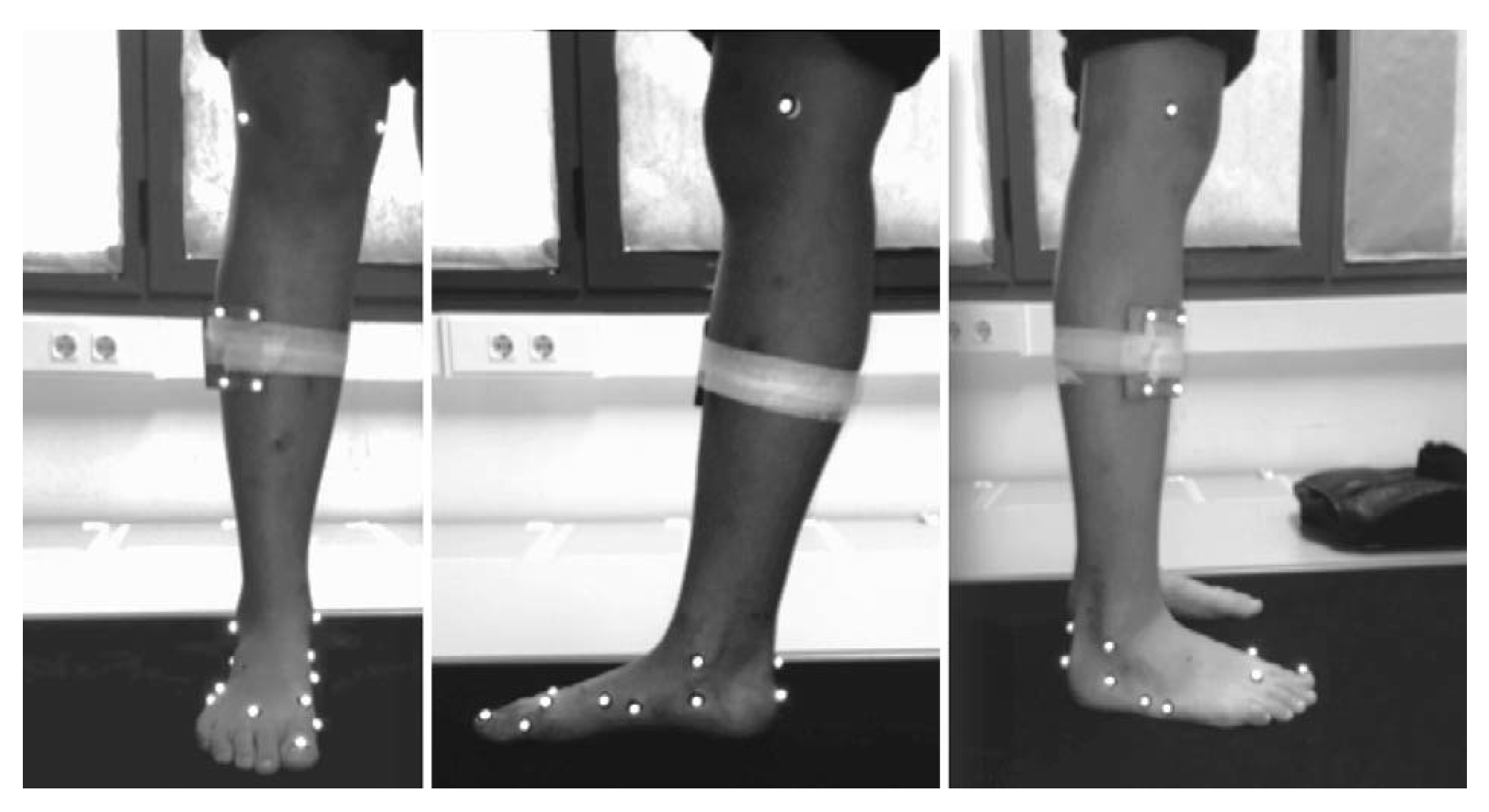
21] In this work, a third marker was added on the medial side of the MP joint, allowing the calculation of ± degrees of freedom also at the MP joint (
Figure 1). Three-dimensional (3-D) motions of the markers were measured by an eight–infrared camera motion analysis system (Vicon Motion Systems Ltd, Oxford, England) operating at a 100-Hz sampling rate. The 3-D coordinates of the markers were used to obtain segment position and orientation.31 Finally, joint angles were calculated using a Cardan rotation sequence between the distal and proximal segments (1 = dorsiflexion/plantarflexion, 2 = abduction/adduction, and 3 = inversion/ eversion).[
32] Movement was calculated from the upright standing static reference posture, which was registered to each participant at the beginning of the experiment. The joint flexion angles were presented as a percentage of the stance phase during the gait cycle. All kinematic data were lowpass filtered using a fourth-order Butterworth filter with a cutoff frequency of 10 Hz.
A 0.40 × 0.40-m Podoprint pressure platform (Namrol Group, Barcelona, Spain) was synchronized with the infrared camera system to measure contact pressure distribution at a 100-Hz sampling rate. Pressure data are required to be segmented so that the pressure of each contact cell is applied to the appropriate foot segment. This was performed by comparing the contact cell coordinates with the anteroposterior location of the ankle, MT, and MP joint centers. The normal component of ground reaction forces and centers of pressure were calculated for each frame on each foot segment from the segmented pressure data. The 3-D joint moments were calculated from the cross product of the ground reaction forces on distal segments and the 3-D distances between the centers of pressure and the joint centers of rotation, as defined by Bruening et al.[
21] According to previous works,[
4,
7,
13] the effect of the weight of the foot was neglected for calculation of the joint moments, as well as the effect of foot angular velocity and linear and angular accelerations. The joint moments were expressed relative to the orientation of the local segment frame of the proximal segment. The joint flexion moments were presented as a percentage of the stance phase during the gait cycle, and, consistent with previous publications,[
4,
5,
6,
7,
13] the amplitudes were normalized to body weight. All of the kinetic data were low-pass filtered using a fourth-order Butterworth filter with a cutoff frequency of 50 Hz. A descriptive analysis of the joint flexion angle and moment along the stance phase was performed for each joint considered using means and 95% confidence intervals from all of the repetitions and participants. Also, plots of averaged joint moments versus joint angles from all of the repetitions and participants were used for characterization and qualitative analysis.
For the ankle, the stride phases reported in previous works[
4,
7] in which moment and angle changes are coordinated were identified. In the present study, these phases are designated as phases 1, 2, and 3: phases 1 and 2 correspond to the early and late phases of the MSP and phase 3 to the propulsion phase. Dynamic stiffness during the whole MSP (phase 1 + 2) was also calculated because some works in the literature[
6,
13] did not split this phase. The beginning of phase 1 was identified by locating the local minimum of the ankle plantarflexion at the beginning of the stance phase. The transition to phase 2 was identified as the transition to a lower ankle joint flexion speed during the MSP. For the MT and MP joints, similar phases to those used for the ankle were investigated, and linearity between joint moment and joint angle was studied.
According to previous works,[
4,
7] dynamic stiffnesses were calculated at each of the phases in all of the joints from the slope of the linear regressions of the joint flexion moment versus the joint flexion angle (phases were trimmed at 5% of the maximum moment at both the onset and the end of each phase). Global dynamic stiffness was calculated as the averaged joint moments versus joint angles from all of the repetitions and participants for the ankle, MT, and MP joints. Individual dynamic stiffnesses obtained at each repetition of each participant were used to check the intraparticipant repeatability at each phase. This was assessed as the root mean squared errors of the analyses of variance on the dynamic stiffnesses with factor ‘‘participant.’’ Also, dynamic stiffnesses at each phase were obtained for each participant from the averaged joint angles and joint moments from all of the repetitions, and SD was used to analyze differences in dynamic stiffnesses between participants.
Results
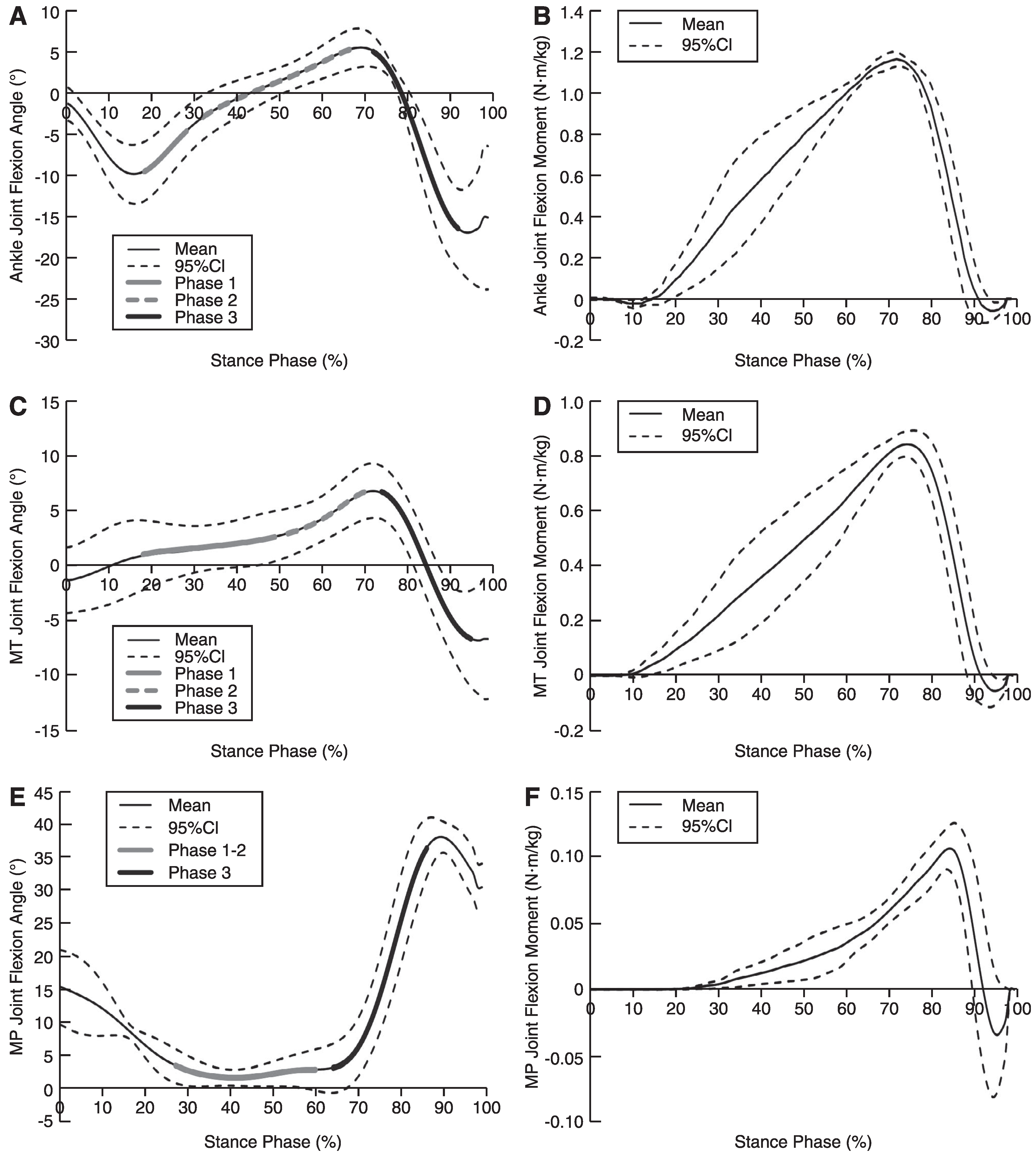
Figure 2 shows the mean flexion moment and flexion angle at the ankle, MT, and MP joints, averaged throughout all of the repetitions and participants. The curves for the ankle and MT joints are quite similar, making it possible to identify similar phases. For a short time after initial contact, the ankle joint plantarflexes (mean maximum plantarflexion angle of 9.74°) subject to a plantarflexor joint moment; meanwhile, no moment is exerted on the MT joint, which decreases the small plantarflexion observed at the initial contact of the foot. Subsequently, once the foot sole has landed on the floor, the ankle and MT joints dorsiflex subject to an increasing dorsiflexor moment. This rising phase corresponds to the MSP. This phase can be split into two phases with approximately constant angular velocity each: phases 1 and 2. At the ankle, the angular velocity during phase 1 is higher than that during phase 2, opposite to the MT joint. Also, the length of phase 1 at the MT joint is longer than that at the ankle joint. In the last part of the stance phase, both angle and moment at the ankle and MT joints decrease. This phase corresponds to the propulsion phase (phase 3). Finally, at the onset of the swing phase, the ankle and MT moments become plantarflexor before returning to zero.
The evolution of the mean flexion moment and flexion angle at the MP joint is different, but it is also possible to identify stance phases. First, the MP joint shows some dorsiflexion at the initial contact of the foot, which decreases while the joint moment is null, until the forefoot has landed on the floor. Subsequently, during the MSP, the MP joint flexion angle remains quite constant while being subjected to an increasing dorsiflexor moment. After that, the MP joint dorsiflexes and the joint moment increases faster than during the MSP. This corresponds to the propulsion phase.
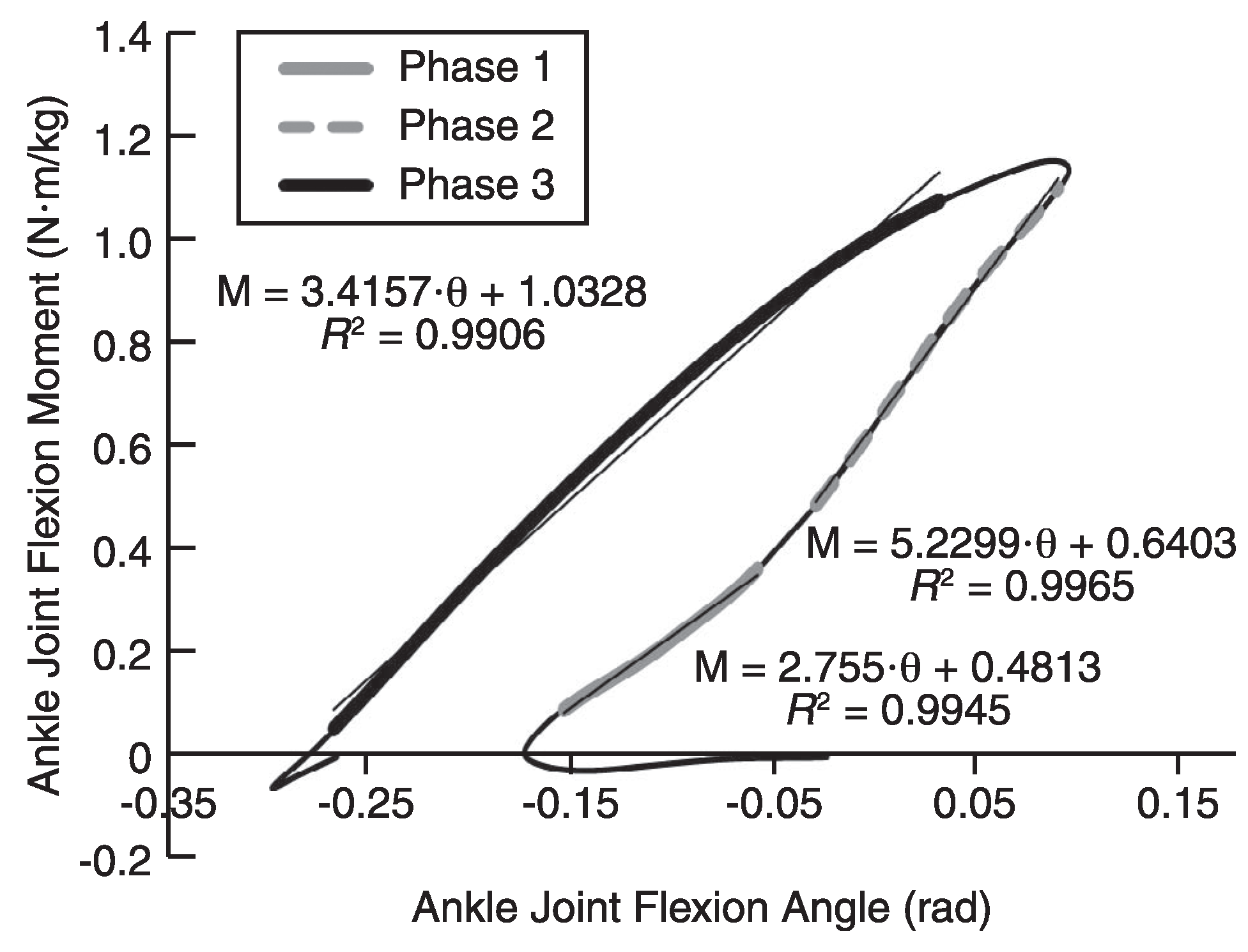
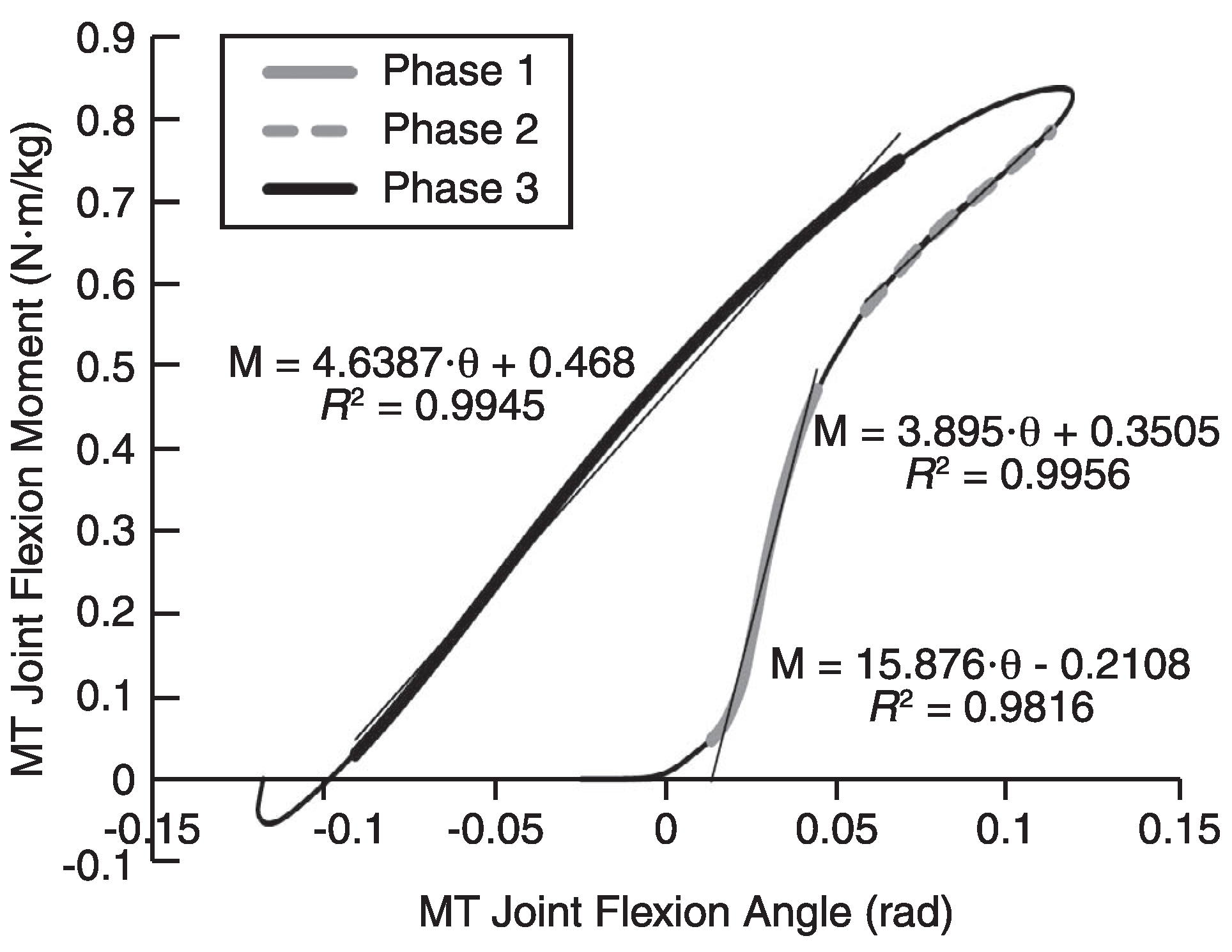
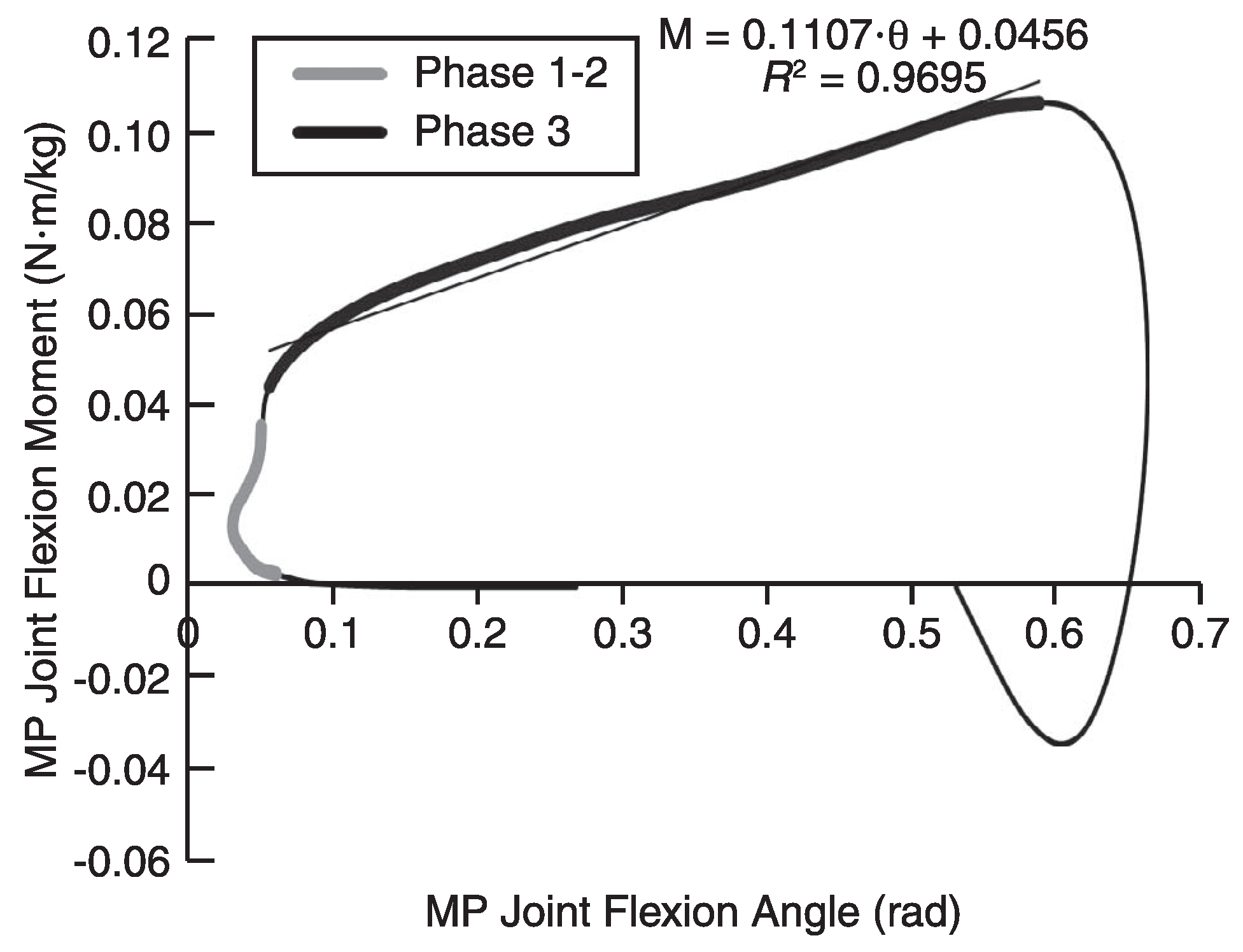
Plots of the flexion moment versus flexion angle at the ankle, MT, and MP joints, averaged throughout all of the repetitions and participants, are shown in
Figure 3,
Figure 4 and
Figure 5. Approximately linear relationships were observed between joint flexion moment and angle during different phases of the gait cycle at all of the joints. At the ankle and MT joints, three phases (1, 2, and 3) with approximately constant stiffness (
R2 > 0.98) were identified during the gait cycle, named S(1), S(2), and S(3). The stiffnesses S(1), S(2), and S(3) obtained at the ankle joint were 2.73, 5.23 and 3.42 N·m/Kg/rad, respectively, and 15.88, 3.90 and 4.64 N·m/Kg/rad, at the MT joint. At the MP joint, it was possible to observe only an approximately linear relationship (
R2 > 0.97) between joint flexion moment and angle during a phase analogous to phase 3 identified in the ankle and MT joints, with a stiffness of 0.11 N·m/ Kg/rad, named S(3).
At the ankle joint, phase 1 spans from forefoot contact to the beginning of tibia forward movement (19%–29% of the gait cycle), phase 2 spans until the heel rises half above the ground (30%–69% of the gait cycle), and phase 3 spans until the foot loses contact with the ground (71%–90% of the gait cycle). At the MT joint, phase 1 spans from forefoot contact to heel rise (19%–50% of the gait cycle), phase 2 spans until the heel rises half above the ground (51%–70% of the gait cycle), and phase 3 spans until the foot loses contact with the ground. At the MP joint, phase 3 is analogous to that at the MT joint.
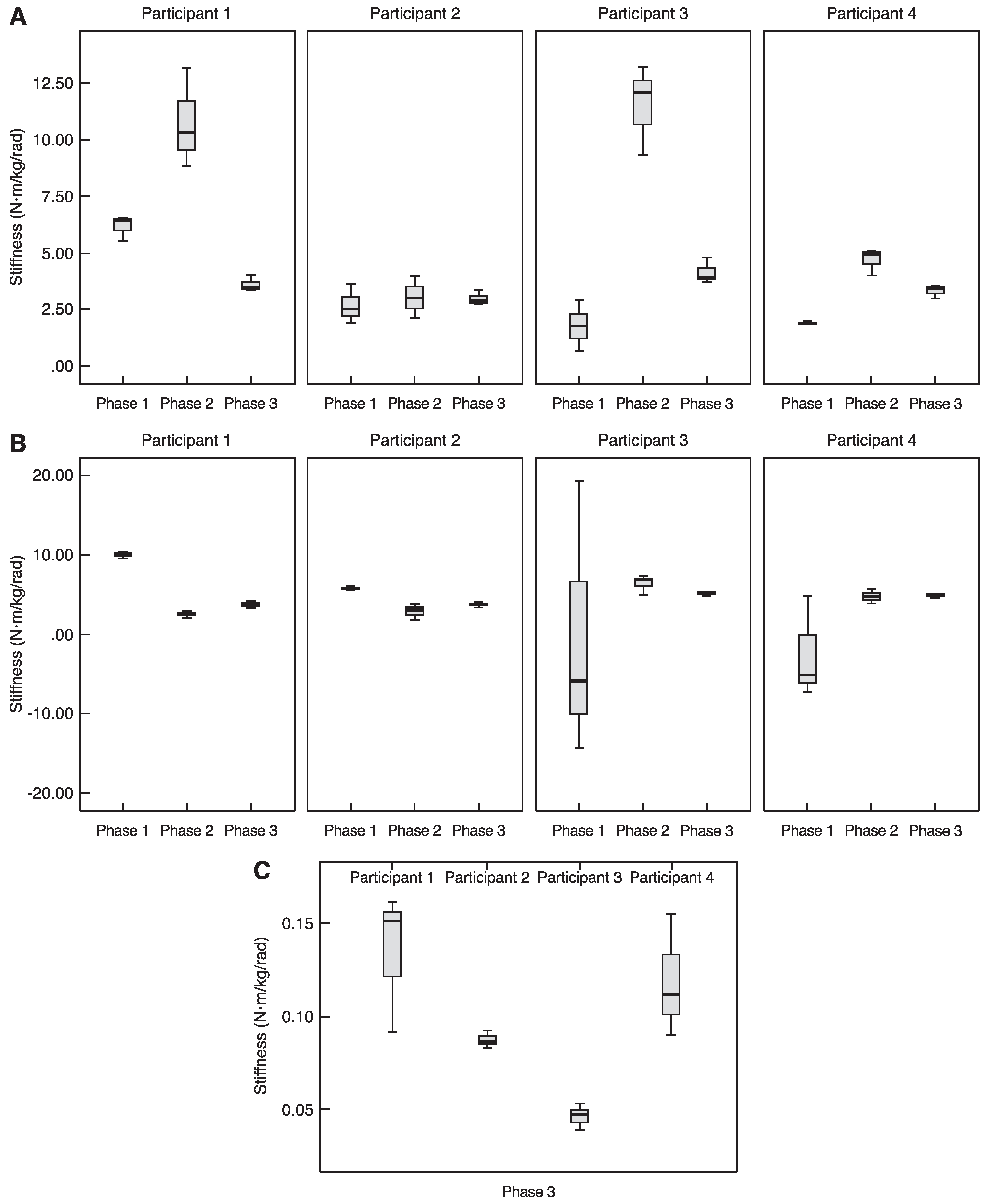
Figure 6 shows the box-and-whisker plots of the dynamic stiffnesses of the ankle, MT, and MP joints for each phase and each participant in the trials. For the ankle, the highest dispersion was observed for S(2) (mainly for participants 1 and 3). In contrast, the highest dispersion for the MT joint corresponded to S(1) (mainly for participants 3 and 4). This phase was found to be very variable from one trial to another, with highly nonlinear relationship between the joint moment and joint angle (
R2 values reached 0.07 in some cases).
For the ankle, the intraparticipant repeatability errors obtained from the corresponding analyses of variance for the dynamic stiffnesses S(1), S(2), and S(3) were 2.17, 4.50, and 1.16 N·m/kg/rad, respectively, and for the nonsplit S(1-2) was 2.36 N·m/kg/ rad (R2 > 0.91), smaller than that obtained for S(2). For the MT joint, the intraparticipant repeatability errors for S(1), S(2), and S(3) were 26.36, 2.61, and 0.82 N·m/kg/rad, respectively, and for the nonsplit S(1-2) was 4.44 N·m/kg/rad (R2 > 0.64), smaller than that obtained for S(1). Finally, the intraparticipant repeatability error for the MP joint dynamic stiffness for S(3) was very small (0.0707 N·m/kg/ rad).
Mean dynamic stiffness values are shown in
Table 1. S(3) is the one with the smallest SD in the dynamic stiffness between participants at all of the joints. At the ankle, S(2) has the highest value, and S(1-2) has a slightly smaller SD between participants than S(2). At the MT joint, S(2) has acceptable repeatability, and considering a unique S(1-2) has a quite small SD between participants, in opposition to the unacceptably high SD values observed for S(1). The SD of dynamic stiffness between participants at the MP joint is also small, so that the dynamic stiffness during this phase has high repeatability.
Discussion
In this study, dynamic stiffness at the ankle, MT, and MP joints during walking was investigated. The results of this dynamic study provide unique information regarding the behavior of the MT and MP joints during normal walking. Regarding stiffness, looking at the total curves, the three joints showed highly nonlinear behavior, which was expected because muscle contraction can greatly affect the stiffness of those three joints during the different phases of the gait cycle. However, the curves present specific areas with close to linear behavior, making it possible to give numerical values for S(1).
Comparison of these findings with the work of other investigators is constrained because only the ankle was investigated in previous works, and we did not find other studies investigating MT and MP joint stiffnesses. For the ankle joint, we were able to distinguish three stance phases with high
R2 values for linear curve fitting to the flexion moment-angle relationship that are in good agreement with previous results in the literature.[
4,
7] According to these works, we found higher values for S(2) than for S(1) and S(3). Dynamic stiffness increases from S(1) to S(2), helping to stabilize the ankle when the whole body weight is in a more anterior position with respect to the foot (30%–69% of the gait cycle). At this moment, ground reaction forces are supported only by the forefoot, thus making a strong dorsiflexion moment at the ankle joint, which is balanced by the combined effect of ligament stretching and contraction of muscles of the posterior leg. Dynamic stiffness of the ankle joint is at its maximum at this moment.
We also found high intraparticipant and interparticipant variability in dynamic stiffness at the ankle, especially for S(2). This finding agrees with the high SD values observed in previous works[
4,
7] during this phase and could be explained by differences in contraction forces of the posterior leg muscles exerted by different individuals during the initial propulsive phase. Here, it is noticeable that we observed lower intraparticipant variability in stiffness when considering a unique S(1-2), which is in agreement with previous works.[
5,
6,
13] This is relevant when trying to use dynamic stiffness as a parameter to compare the dynamic behavior of the ankle under a specific condition or injury; significant differences between groups could be hidden in the case of high stiffness variability. For such goals, it seems more suitable to consider the ankle dynamic stiffnesses S(3), S(1-2), or S(1). According to the present results, an effort to control the variability of dynamic stiffness would be desirable. In this sense, the effect of sex and age on dynamic stiffness of the ankle joint was investigated in a previous work,[
4] not having identified significant differences. However, the variability of dynamic stiffness within groups was high, so that the effect of sex and age might be hidden because of improper control of the sample parameters, for example, body weight, height, and physical conditions or sportive habits.
We showed that at the MT joint, the flexion moment-angle curves are similar to those for the ankle, being possible to clearly identify three stance phases with an approximate constant stiffness: S(1), S(2), and S(3). Opposite to the ankle joint, at the MT joint phase 1 shows a lower angular velocity than phase 2, which results in higher S(1) than S(2) and S(3). These results can be interpreted clinically. During phase 1, the MT joint spans from forefoot contact to heel rise, the forefoot starts to support body weight, and the arch tends to flatten. Under these circumstances, plantar soft tissues, muscles, and plantar fascioligamentous structures contract and stretch, creating tensional force to stabilize the foot in the sagittal plane. This is when stiffness of the joint increases rapidly. This phase is followed by a different stiffness profile that spans from just before the beginning of heel rise until the heel rises half above the ground (51%–70% of the stance phase), with a stiffness, S(2), smaller than that of the previous phase, S(1). This is an interesting point because it seems that once the heel rises from the ground, plantar soft-tissue elements are no longer able to stabilize the midtarsal joint and it becomes less stiff, allowing for a higher contact area to distribute the body weight load being supported by a unique foot. This is contrary to what happens to the ankle when the stabilizing elements increase during heel-off due to sural triceps contraction making the joint more stiff. From these results, it seems that the performance of the MT joint in terms of stiffness in the sagittal plane is variable during the stance phase of gait, which is in agreement with the classic podiatric medical interpretation of the foot as a mobile adapter or a rigid lever during the gait cycle. However, we studied only healthy individuals, and more research is needed to study this mechanism in those with flat feet or cavus feet.[
33,
34,
35]
Similarly, as at the ankle joint, we observed a high dispersion of dynamic stiffness of the MT joint for S(1) because of high variability from one trial to another and because of a highly nonlinear relationship between the joint moment and the joint angle. Considering a unique S(1-2) decreases the intraparticipant repeatability error and provides a quite small SD between participants so that it seems more suitable to consider the MT dynamic stiffnesses S(3), S(1-2), and S(2).
The MP joint flexion moment-angle curves turned out to be quite different from those of the ankle and MT joints. It has been possible, though, to identify an approximately linear relationship between joint flexion moment and angle during the propulsion phase (phase 3) of the MP joint. Dynamic stiffness during this phase is not high so that the joint moves into dorsiflexion easily. It might be interesting to study this curve in patients with hallux limitus or rigidus to look at differences in the stiffness behavior of this joint in these patients compared with healthy individuals. However, the MP joint moments during this phase are low because the antagonist foot is supporting most of the body weight, and the propulsion performed by this joint is low. The role of the MP joint during running is expected to be more important because the propulsion required is higher, and no simultaneous contact of both feet occurs in that case. Both intraparticipant repeatability error and SD between participants has been found to be very small so that the dynamic stiffness during this phase is quite repeatable. In fact, this phase in the MP joint is the most repeatable phase for all analyzed joints.
Characterization of the stiffness of different foot joints during walking may help us understand the behavior of those joints from a clinical standpoint. If we look at the ankle, MT, and MP joint graphs presented in this work, they can be interpreted as springlike joints with varying degrees of stiffness during the different moments of the stance phases of normal walking. This is quite notorious in the ankle and MT joints. As ground reaction forces increase on the forefoot during walking, dorsiflexion moments at the ankle and MT joints also increase. These moments are counterbalanced by plantarflexion moments exerted by soft tissues (muscles and fascioligamentous structures) at the posterior leg and plantar foot, increasing the stiffness of the ankle and MT joints, respectively. So, thinking in terms of springlike joints gives a more precise idea of the mechanical events that occur during the stance phase and could explain the behavior of the foot as a rigid lever in late stance instead of thinking in terms of end-range motion or locking mechanisms in the tarsus. Obviously, the stiffnesses of these joints depend mainly on the integrity of the soft tissues helping to counterbalance the ground reaction forces acting on the forefoot.
The differences found in the dynamic stiffness of the ankle joint between participants could point to new ways of differentiating between normal and abnormal tight Achilles tendons versus traditional static measurement goniometric techniques. The graphic representation of dynamic stiffness at the ankle joint represents a more accurate scenario of dynamic ankle behavior regarding gastrocnemius or gastrocnemius and soleus muscle tightening during walking.
The present study has some limitations. Because we used a pressure platform for kinetic analysis, we did not consider the contact frictional forces to obtain the joint moments; however, previous works have shown that the magnitude of these forces do not significantly affect the joint flexion moment values.[
36] Also, the number of participants in the experiment is low; however, to minimize the variability of the results, care was taken to control their characteristics: all of the participants were male and with the same approximate age and height. Although the mean stiffness values reported herein might lack statistical power, the stiffness characterization of the different joints during the stance phase is relevant, as well as the repeatability observations, that for the case of the ankle agreed with previous works. The dynamic stiffness behavior described herein is constrained to walking; other activities (running, jumping, etc) might present different patterns that should be investigated.
The results of this study may serve as a basis for future studies to investigate the dependence of the dynamic joint stiffnesses identified for the different foot joints on different parameters, such as age, sex, weight, and height. Also, these results highlight the importance of properly controlling the samples in future studies aimed to investigate the role of dynamic stiffness in different foot abnormalities and how this could be used in the design of prostheses, orthoses, or preplan surgical interventions for the foot and ankle.