Chronic venous insufficiency (CVI) with or without venous ulceration is a common vascular condition seen in clinicians' offices and wound care centers. However, the underlying cause of the venous pathology frequently remains undiagnosed, poorly understood, and inadequately treated. Clinicians typically manage “venous” ulcers by treating the local leg edema and ulcer, and occasionally they assume a cardiac etiology for the edema. Most of these patients have venous reflux or obstruction as the cause of their skin changes, ulceration, and leg edema, although most rarely have the etiology of the venous hypertension investigated. [
1] Even when patients are evaluated, assessment of the venous system is often limited to the leg. Normal anatomical variants can exhibit compression of the deep venous system of the pelvis by the adjacent arteries, resulting in severe venous hypertension in the legs of some patients.
The prevalence of venous disease ranges from 40% to 50% in men and from 50% to 55% in women. Venous leg ulcers (VLUs) are the most severe clinical manifestations of CVI, and the prevalence ranges from 2% to 7%, with a female predominance. [
2,
3] Venous leg ulcers account for up to 70% of chronic leg ulcers, and the overall age- and sex- adjusted incidence is 18 cases per 100,000 person-years. [
4,
5] However, the incidence is expected to rise with the aging population because VLUs are the most prevalent type of leg wound in the ambulatory elderly population. [
6,
7]
The Society for Vascular Surgery chronic venous disease clinical guidelines strongly recommend use of the CEAP (clinical, etiologic, anatomical, pathophysiologic) classification and the Venous Clinical Severity Score, grades 1A and 1B, respectively (
Tables 1 and
2). [
3] The CEAP classification provides a uniform determination of all factors to better understand the pathology of chronic venous hypertension and to help guide treatment. As an adjunct to CEAP, the Venous Clinical Severity Score helps standardize the clinical examination and define clinical severity. These two methods of standardizing the examination in healed and active ulcers, CEAP grades C
5 and C
6, can help determine the potential etiology of the disease.
Table 1.
The CEAP (Clinical, Etiologic, Anatomical, Pathophysiologic) Classification System of Venous Insufficiency
Table 1.
The CEAP (Clinical, Etiologic, Anatomical, Pathophysiologic) Classification System of Venous Insufficiency
Table 2.
The Scoring System Used Adjunctively to CEAP to Improve Standardization of the Clinical Examination and Better Define Clinical Severity of the Disease
Table 2.
The Scoring System Used Adjunctively to CEAP to Improve Standardization of the Clinical Examination and Better Define Clinical Severity of the Disease
Compression therapy remains the primary modality for aiding VLU healing, with the Society for Vascular Surgery clinical guidelines reporting a grade 1B recommendation. [
3] Despite compression therapy accelerating healing, only 65% of VLUs heal within 6 months, and up to 20% remain unhealed after 2 years. [
4,
8] Recurrence rates for venous ulcers are 54% to 78%, and a history of VLU increases the risk of recurrence 20-fold. [
2,
9]
Based on the high rate of poor healing and the high recurrence rates, the need to determine the etiology of the venous disease is paramount. The Effect of Surgery and Compression on Healing and Recurrence trial showed diminished VLU recurrence rates when the underlying CVI was treated, emphasizing the importance of addressing the underlying venous disease when treating patients with VLUs. [
8,
10] It is imperative that along with evaluating the venous system of the legs, the deep veins of the abdomen and pelvis also be evaluated in patients with nonhealing VLUs because studies with evidence levels I to III conclude that outflow obstruction plays a more significant role in CVI and VLUs than is generally appreciated. [
1,
11,
12]
Venous compression syndromes are frequently overlooked causes of severe CVI. These syndromes are characterized by vein entrapment between rigid or semirigid surfaces in a confined anatomical space. Although May-Thurner syndrome is one of the more common lower-extremity venous compression syndromes, popliteal vein compression and other anatomical sites have been observed on rare occasions. The stenosis or obstruction in May-Thurner syndrome can be secondary to direct physical pressure on the left common iliac vein (LCIV) as the right common iliac artery (RCIA) crosses it anteriorly and the fifth lumbar vertebra abuts it posteriorly. Luminal stenosis may also be caused by intimal hyperplasia from the chronic pulsatile force of the RCIA on the LCIV. May and Thurner [
13] identified measurable thickening of the venous wall at the intersection of the RCIA and the LCIV along with histologic findings consistent with intimal thickening from the long-term, repetitive, pulsatile compression. Intraluminal defects described as webs, chords, and spurs are the result of the intraluminal intimal proliferation and, in part, cause the stenosis responsible for the pathologic changes observed clinically. For individual patients, the combination of compression and intimal thickening are synergistic in causing CVI and VLUs. [
14-
17]
The anatomical incidence of May-Thurner syndrome is reported to be 22% to 37%. [
1,
16-
18] Emphasizing that asymptomatic iliac vein compression exists, Kibbe et al [
19] used the diameter reduction of the LCIV to show that two-thirds of patients in an asymptomatic population exhibited greater than 25% compression, which is nearly a 50% reduction in the vessel cross-sectional area, and 24% of patients had greater than 50% compression. Patients with lower-leg symptoms, not surprisingly, have a higher incidence of iliac vein outflow obstruction. In the patient with VLU, there is a 37% to 52% incidence of iliac vein obstruction or stenosis of at least 50%. [
1,
12] Marston et al [
1] reported on 78 limbs in 64 CEAP C
5 and C
6 patients, identifying an obstruction of at least 80% in nearly 25% of patients. The incidence of iliocaval obstruction increased 17.7 times with deep venous reflux. Recurrent lower-leg cellulitis may also indicate an underlying iliocaval obstruction. [
20]
Iliofemoral venous outflow obstruction affects the left leg and females more than twice as often as the right limb and males. [
21] However, identifying the etiology of venous ulcers in the right leg cannot be neglected. In fact, a study of 493 limbs with nonthrombotic outflow obstruction showed that vein compression can cause venous hypertension and VLUs in either leg. Using intravascular ultrasound (IVUS), Raju and Neglen [
11] visualized venous compression of the right common iliac vein and bilateral external iliac veins (EIVs) by the adjacent arteries, resulting in venous outflow obstruction and VLUs. They concluded that no patient should be excluded from consideration of iliocaval outflow obstruction based on age, sex, or involvement of the right lower extremity. [
11] The EIV is the most likely site of right-sided compression because the RCIA typically crosses the right EIV (75% of cases), although it may cross the right common iliac vein as well (7%). [
22]
Several imaging modalities have been described to diagnose iliac vein compression syndrome (
Table 3). Initial diagnostic examination frequently involves Doppler ultrasound for evaluation of reflux or thrombotic disease. However, visualization of the iliac vessels with Doppler ultrasound is inadequate in 20% of the population. [
23] A study of patients with CVI with ulcers found that ultrasound accurately identified only 13% of patients with deep venous reflux, and false-negatives occurred in 23% of patients. [
1] Alternative imaging can be performed with computed tomography or magnetic resonance venography, although ascending venography is commonly considered the diagnostic imaging gold standard. Depending on the modality, common findings include visualization of the stenosis or obstruction and tortuous pelvic collateral vessels, which usually indicate more severe obstruction. Although computed tomography can identify outflow obstruction, the diagnosis of chronic vein obstruction is made by inference. [
17,
24] Magnetic resonance venography includes visualization of the external compression caused by the RCIA and the ability to demonstrate retrograde flow. However, turbulent flow superior to the confluence of the common iliac veins can create false-positives for intraluminal defects with magnetic resonance venography. [
1,
17]
Table 3.
Comparison of Imaging Modalities Used in May-Thurner Syndrome
Table 3.
Comparison of Imaging Modalities Used in May-Thurner Syndrome
As a superior modality when imaging deep veins, IVUS characterizes the degree of outflow obstruction and the morphology of the intraluminal lesions and venous compression. A prospective study of more than 300 patients undergoing balloon dilation and stenting of stenosed common iliac veins demonstrated by single-plane venography underestimated stenosis by 30% compared with IVUS. For severe stenosis (>70%), venography had a sensitivity of 45% compared with greater than 90% with IVUS. [
25] Also, IVUS identified 46% of common iliac vein intraluminal lesions extending into the EIV. [
11] Meanwhile, venography did not visualize 68% of common iliac vein lesions that extended into the EIV or common femoral vein. [
26]
To restore venous patency and relieve outflow obstruction, management of iliac vein compression syndromes favors balloon dilation and stenting using IVUS for proper stent sizing and placement. Studies evaluating outcomes after stenting nonthrombotic iliac vein disease show that complete ulcer healing ranges from 58% to 89% even when reflux is also present. Pain relief is achieved in 86% to 94% of patients, with pain relief and cessation of serous drainage occurring nearly immediately. Edema relief is observed in 66% to 89% of patients. [
11,
12,
27] Based on the quality of the studies and the consistency and magnitude of the evidence, a grade 1B recommendation was given for stenting nonthrombotic disease in patients with severe, disabling symptoms that have not responded to conservative care, and a grade 2B recommendation was made for less severe symptoms. [
20] The relief of clinical symptoms and the improvement in the quality-of-life scores after iliac vein stenting in select patients demonstrate the clinical significance of the pathology in many patients with advanced CVI (CEAP C
3-C
6). [
11,
27]
We present a case of bilateral nonhealing lower-extremity venous ulcers secondary to iliac vein compression syndrome.
Case Report
A 72-year-old white woman developed bilateral lower-extremity wounds at the ankle and distal calf in September 2008. A general surgeon managed her wounds, presumed to be secondary to venous hypertension, with compression therapy. In January 2009 the wounds had not healed, and she was admitted to the hospital for local debridement and split-thickness skin grafts. The biopsy results of her debridement revealed 1) a right lower-extremity ulcer with gangrene and granulation and 2) a left lower-extremity ulcer with gangrene. The gangrene identified in both ulcers was attributed to previous infections. During the admission she was also seen by the wound center and was started on prednisone therapy for a clinical diagnosis of pyoderma gangrenosum.
During the ensuing 5 months, she received outpatient wound care consisting of local debridement and compression to just distal to the knee. During this time, the bilateral calf and ankle wounds deteriorated further to involve the proximal calves. The wounds were remarkable for exuding a large amount of serous drainage, causing further skin maceration and skin loss, thus increasing the size of the calf and ankle wounds. After 2 additional months of unsuccessful management, the patient was referred to vascular surgery to evaluate for underlying venous hypertension due to possible venous outflow obstruction or valvular incompetence.
The patient's relevant history was recalcitrant bilateral ankle ulcers 10 years earlier. Two different wound centers required 2 years of treatment to achieve wound closure, with treatments consisting of compression ending just distal to the knee, debridement, split-thickness skin grafts, and hyperbaric oxygen therapy. At the time, she was advised that the delayed healing was secondary to her newly diagnosed diabetes mellitus. She also had a history of essential arterial hypertension but no history of peripheral arterial disease, collagen vascular disease, vasculitis, arthritis, or colonic polyps. The patient is allergic to penicillin.
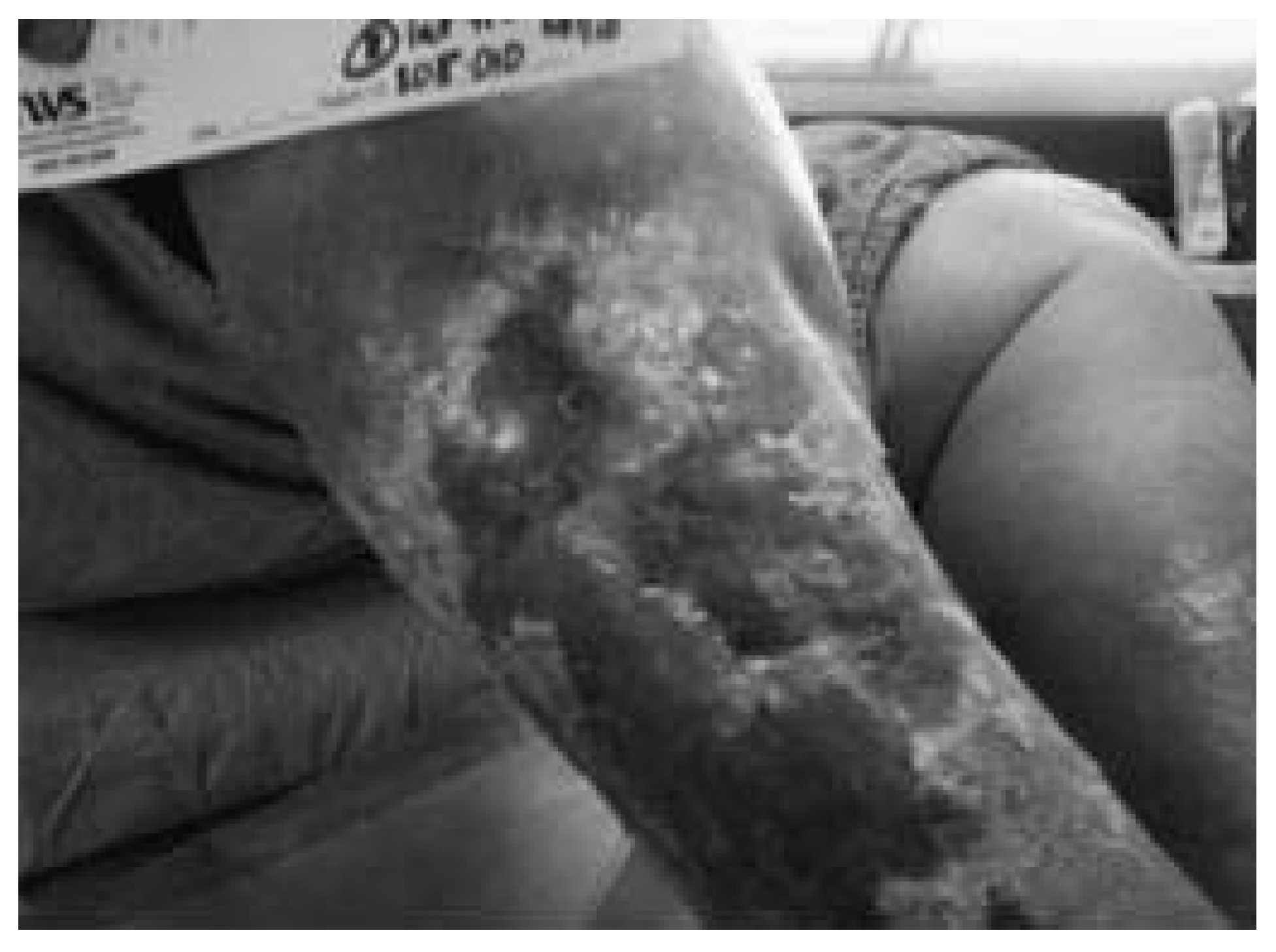
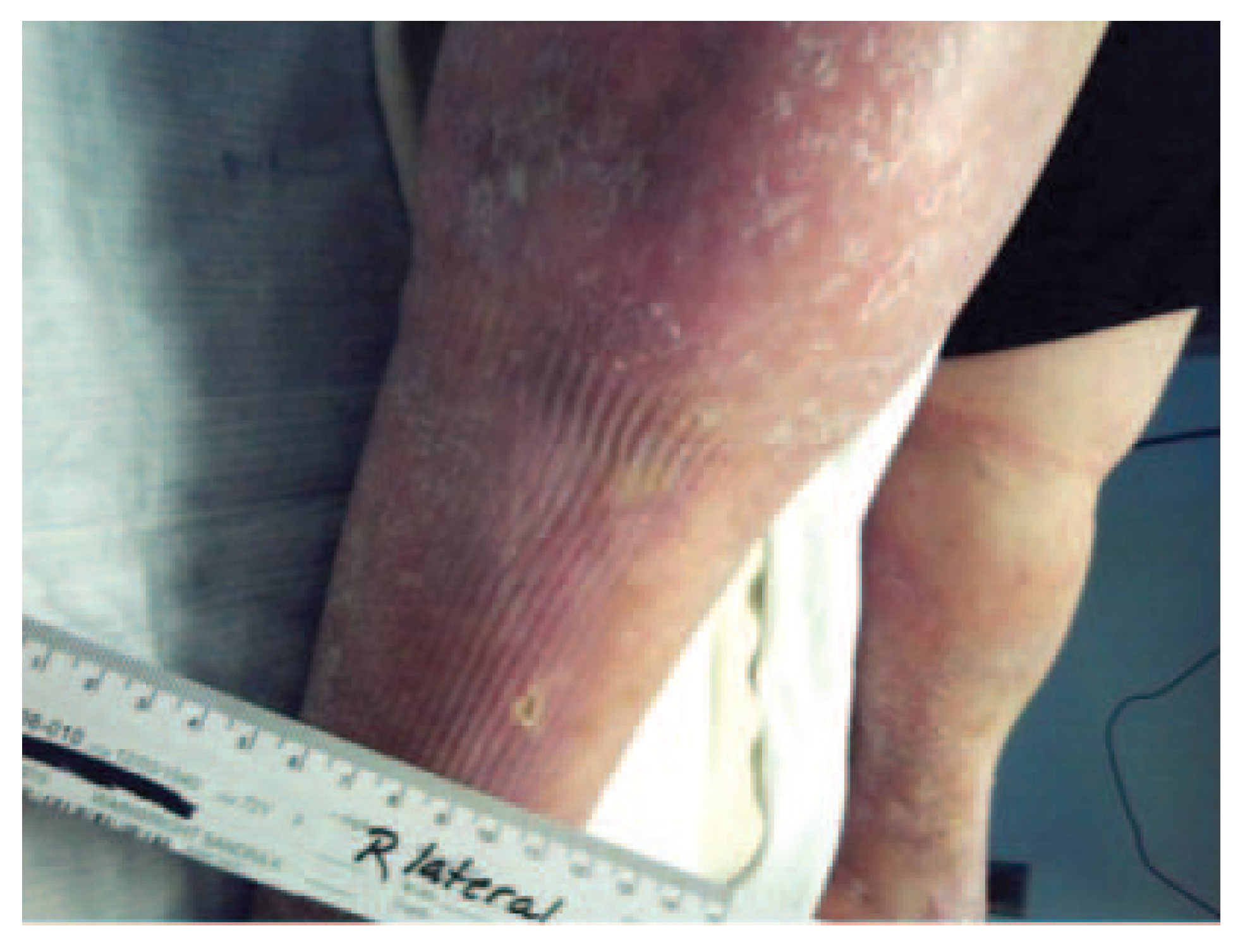
Physical examination revealed granulating superficial circumferential wounds in the gaiter distribution of the calves bilaterally, with copious serous drainage (
Fig. 1). The femoral, popliteal, and dorsalis pedis pulses were 2+ bilaterally. Edema was present to the calf bilaterally. Venous duplex ultrasound found no significant superficial or deep venous insufficiency. Before the intervention, the hemoglobin and hematocrit levels were 9.9 g/dL and 29.6%, respectively. The white blood cell count, platelet count, and blood urea nitrogen, electrolyte, creatinine, and blood glucose levels were within their respective reference ranges at the time of the procedure.
Figure 1.
A lateral view of the right leg showing granulating superficial wounds in the gaiter distribution of the calf.
Figure 1.
A lateral view of the right leg showing granulating superficial wounds in the gaiter distribution of the calf.
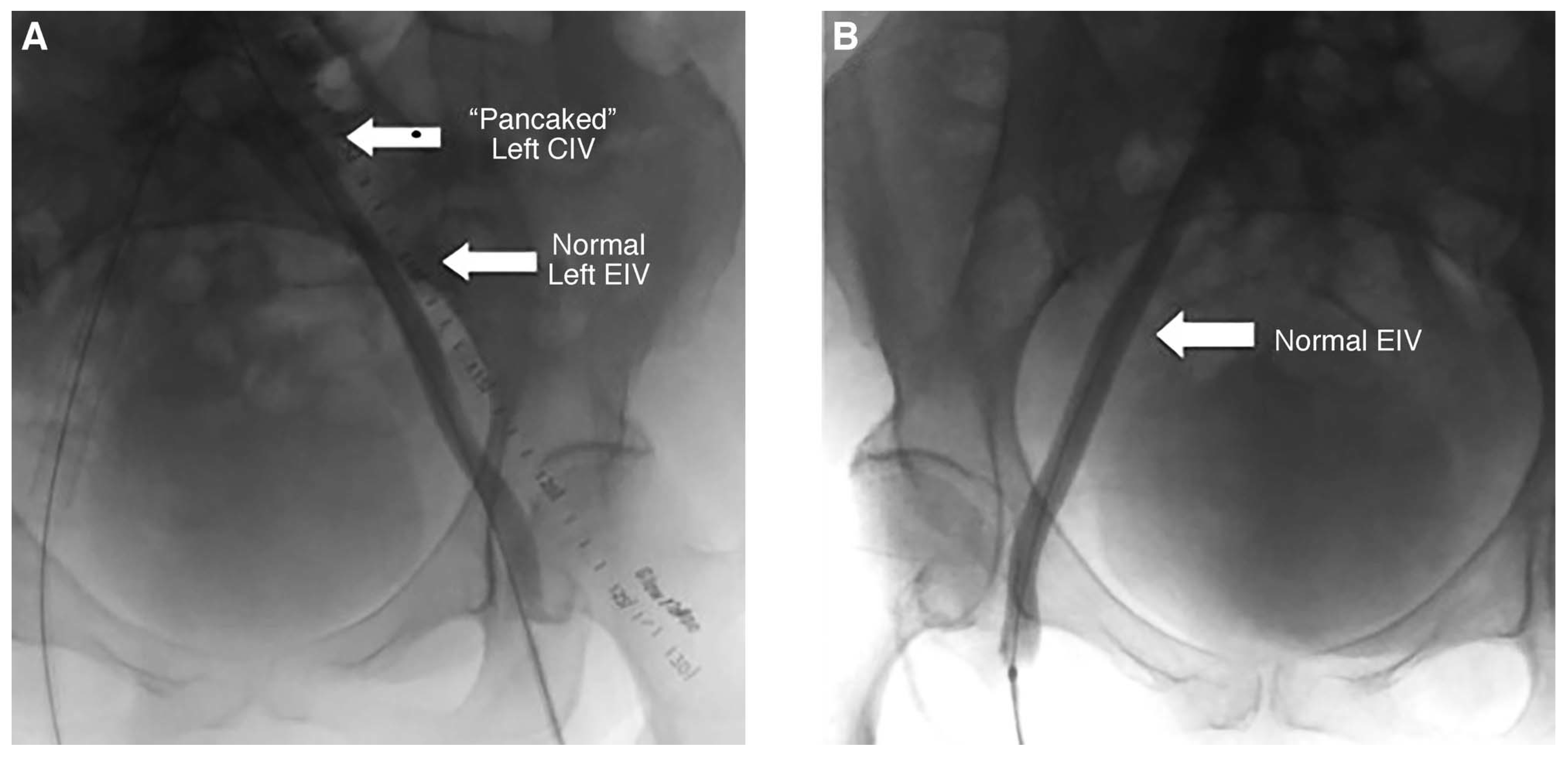
The patient was taken to the catheterization laboratory for a venogram and IVUS interrogation of the deep venous outflow tract of the legs. With the patient in the prone position, bilateral popliteal vein access with transcutaneous ultrasound guidance was obtained. Bilateral leg, pelvis, and inferior vena cava venograms were performed that were not diagnostic of significant venous pathology (
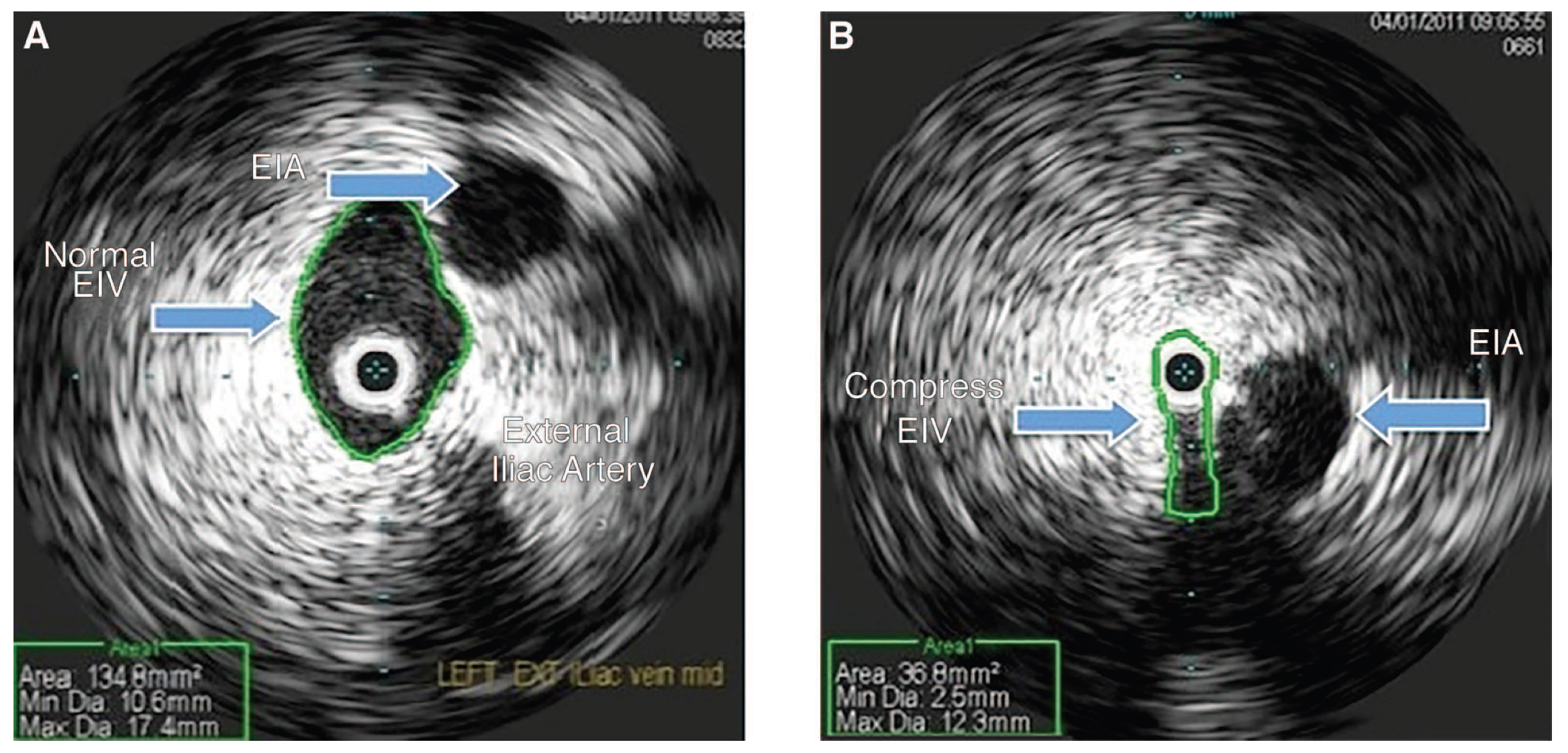
Fig. 2). The patient then underwent bilateral leg, pelvis, and inferior vena cava IVUS imaging using the Volcano IVUS system (Volcano Corp, San Diego, California) with an 8.2-French catheter. This procedure revealed severe stenosis due to compression of the LCIV and the EIVs bilaterally (
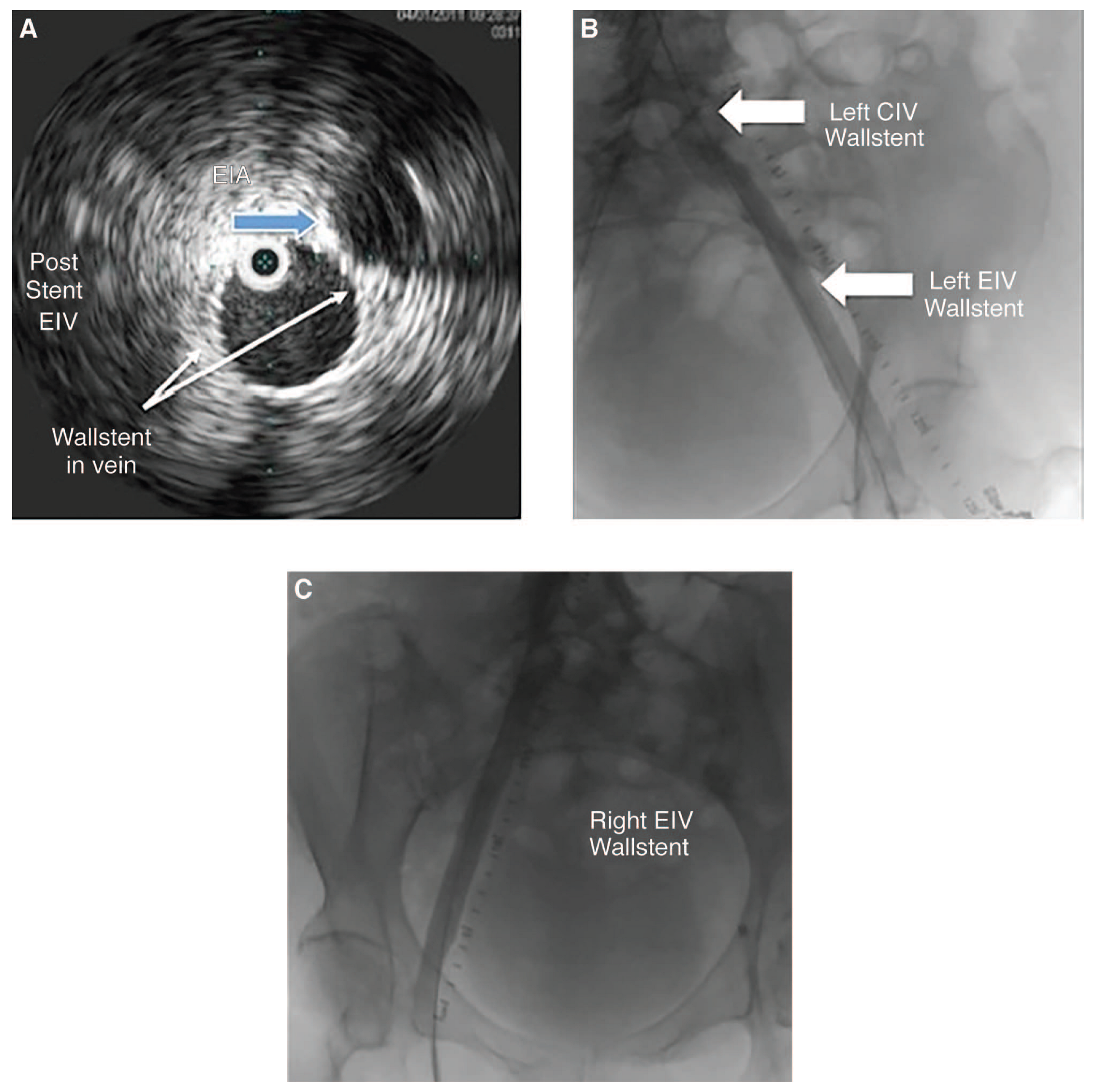
Fig. 3). Percutaneous transluminal balloon angioplasty and stent placement of the LCIV and bilateral EIVs were performed, and the patient experienced no postprocedure morbidity (
Fig. 4).
Figure 2.
Venograms demonstrating no significant venous outflow obstruction in the left (A) and right (B) common iliac veins (CIVs). EIV, external iliac vein.
Figure 2.
Venograms demonstrating no significant venous outflow obstruction in the left (A) and right (B) common iliac veins (CIVs). EIV, external iliac vein.
Figure 3.
Intravascular ultrasound images. A, Normal appearance of the external iliac vein (EIV) and the adjacent external iliac artery (EIA). B, The EIA compressing the EIV in the described patient.
Figure 3.
Intravascular ultrasound images. A, Normal appearance of the external iliac vein (EIV) and the adjacent external iliac artery (EIA). B, The EIA compressing the EIV in the described patient.
Figure 4.
A, An intravascular ultrasound image showing a patent left external iliac vein (EIV) after percutaneous transluminal angioplasty and stenting of the stenosis and the neighboring external iliac artery (EIA). Venography shows patency of the left common iliac vein (CIV) and EIV (B) and the right EIV (C) after percutaneous transluminal angioplasty and stenting.
Figure 4.
A, An intravascular ultrasound image showing a patent left external iliac vein (EIV) after percutaneous transluminal angioplasty and stenting of the stenosis and the neighboring external iliac artery (EIA). Venography shows patency of the left common iliac vein (CIV) and EIV (B) and the right EIV (C) after percutaneous transluminal angioplasty and stenting.
Within 14 days of the procedure, the wound center noted that her bilateral leg edema and associated serous drainage had resolved. Previously used treatments consisting of compression and local wound care were resumed. Circumferential negative pressure wound therapy was initiated. The patient's ulcers began healing in a predictable and linear manner. Complete wound healing was achieved 18 months after treatment of her bilateral EIV outflow obstruction and venous hypertension (
Fig. 5). During 4 years of follow-up, the patient has experienced no new ulcers or evidence of advanced venous disease.
Figure 5.
Complete wound healing achieved after iliac compression syndrome intervention.
Figure 5.
Complete wound healing achieved after iliac compression syndrome intervention.
Discussion
As exemplified by the case presented, clinicians often underestimate the impact of venous disease, even in patients with symptoms and wounds involving the legs. A failure to accurately evaluate, diagnose, and treat the patient with CVI leads to delayed diagnosis and treatment, nonhealing or slow-healing ulcers, and high VLU recurrence rates. This case demonstrates an all-too-common scenario, where the failure to fully assess the etiology of the venous disease results in an incomplete diagnosis and incomplete treatment, causing chronic edema and nonhealing ulcers.
The prevalence and consequences of venous insufficiency, due to reflux or outflow obstruction, are generally underappreciated, and thus undertreated, by the medical community. As with this case, patients with slow-healing VLUs often are diagnosed and treated for other potential factors that can slow wound healing. This patient had slow wound healing attributed to 1) diabetes mellitus, although peripheral arterial disease was not clinically apparent; 2) wound infection and wound necrosis, for which debridement was performed; 3) inadequate healthy skin or tissue factors, for which skin grafting was performed; and 4) a collagen vascular disease (pyoderma gangrenosum), which was managed with corticosteroid therapy. Although this patient was diagnosed from the outset as having venous hypertension and received appropriate initial treatment with compression, no further evaluation or treatment of the venous system was performed, even when the patient's VLU did not respond. A delay in the comprehensive evaluation and treatment of the primary underlying problem, CVI, occurs often in these patients. This is particularly common in elderly patients, where edema is often dismissed as cardiac related, hormonal imbalance, or fluid retention. [
15] As with other wound-healing etiologies, such as peripheral arterial disease and autoimmune diseases, a healthy degree of suspicion that untreated CVI exists and application of CEAP scoring and the Venous Clinical Severity Score will help ensure that patients with active or previous VLUs are properly diagnosed and completely treated.
The clinical significance of the proper assessment and diagnosis of CVI is highlighted by the present case. Compression and obstruction of the pelvic veins is often not considered as a cause of CVI and VLUs, although approximately one in four patients with VLUs will experience it. Unfortunately, when the clinical incidence and significance are either not considered or underestimated, patients suffer needlessly from incomplete treatment. Resolution of the underlying outflow obstruction, as in this case, interrupts the chronic CVI sequela of edema and nonhealing ulcers. In addition, the present patient has not had any VLU recurrence despite the traditionally high recurrence rates. Although decreased VLU recurrence is not a proven consequence of this treatment approach, the value of treating CVI to prevent ulcer recurrence has been established. [
8]