Calcaneus deformity of the foot can be disabling, because it causes an alteration in the weightbearing axis of the lower extremity, leading to early degenerative changes, and in severe cases, results in formation of plantar sores. Clinical features of calcaneocavus deformity as described by Bradley and Coleman[
1] include 1) a prominent heel giving rise to so called pistol-grip deformity, 2) an elevated longitudinal arch, and 3) a relatively plantarflexed forefoot. Absence of the push-off stage in the gait cycle results in a peg-gait.[
1]
Calcaneus deformity results mainly from neuroparalytic conditions affecting the foot. The triceps surae muscle becomes paralyzed or weakened, and unopposed action of anterior muscles of the foot and ankle results in the deformity.[
2] Calcaneus deformity was previously thought to be a product of poliomyelitis. Though it has been eradicated from the western world, a few cases are still seen in developing countries.
The purpose of this case report is to present an unusual complication of osteomyelitis of the distal metaphysis of the tibia in a 14-year-old boy, resulting in a calcaneus deformity of the foot, which has not been previously reported in the literature.
Case History
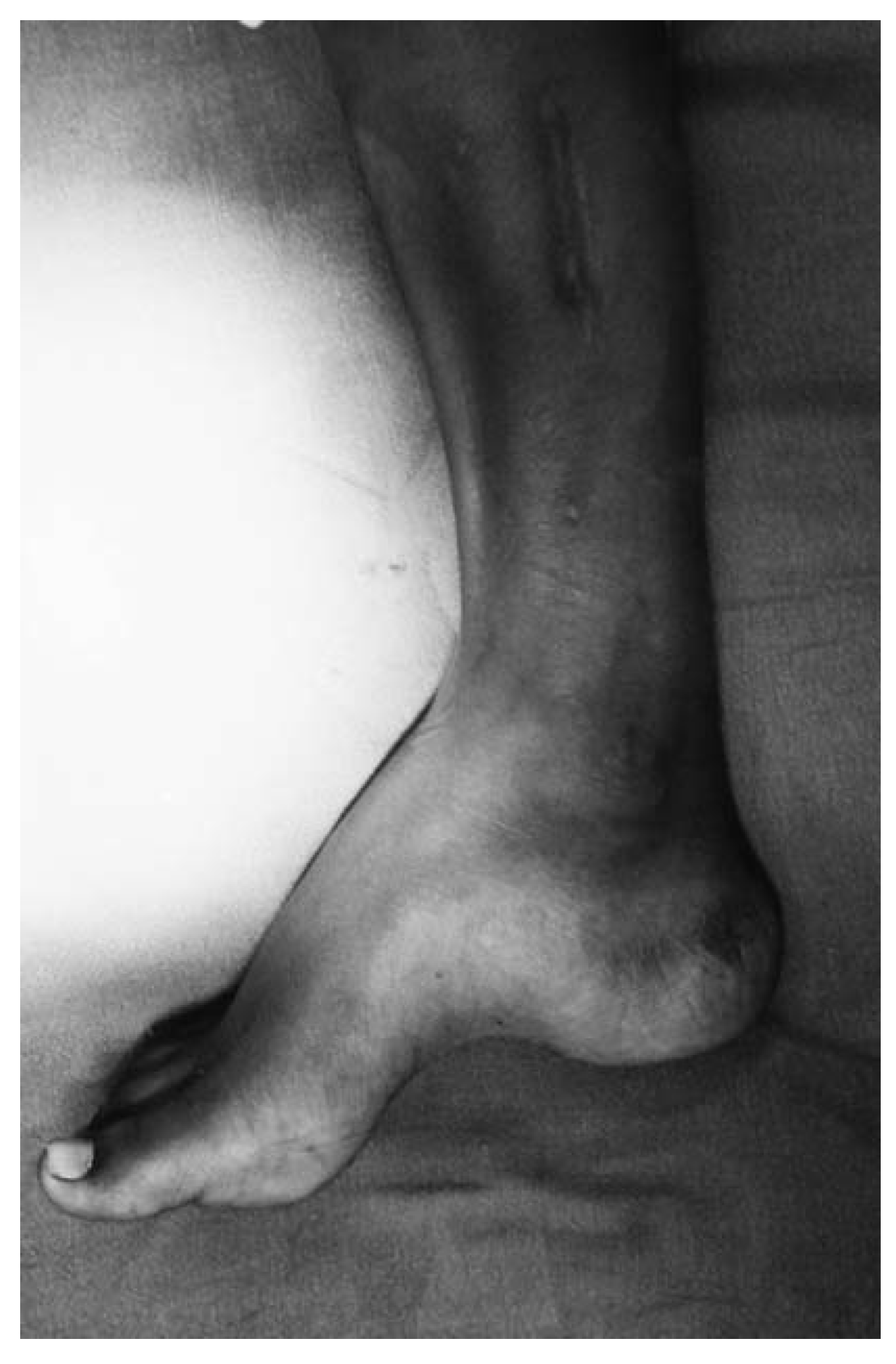
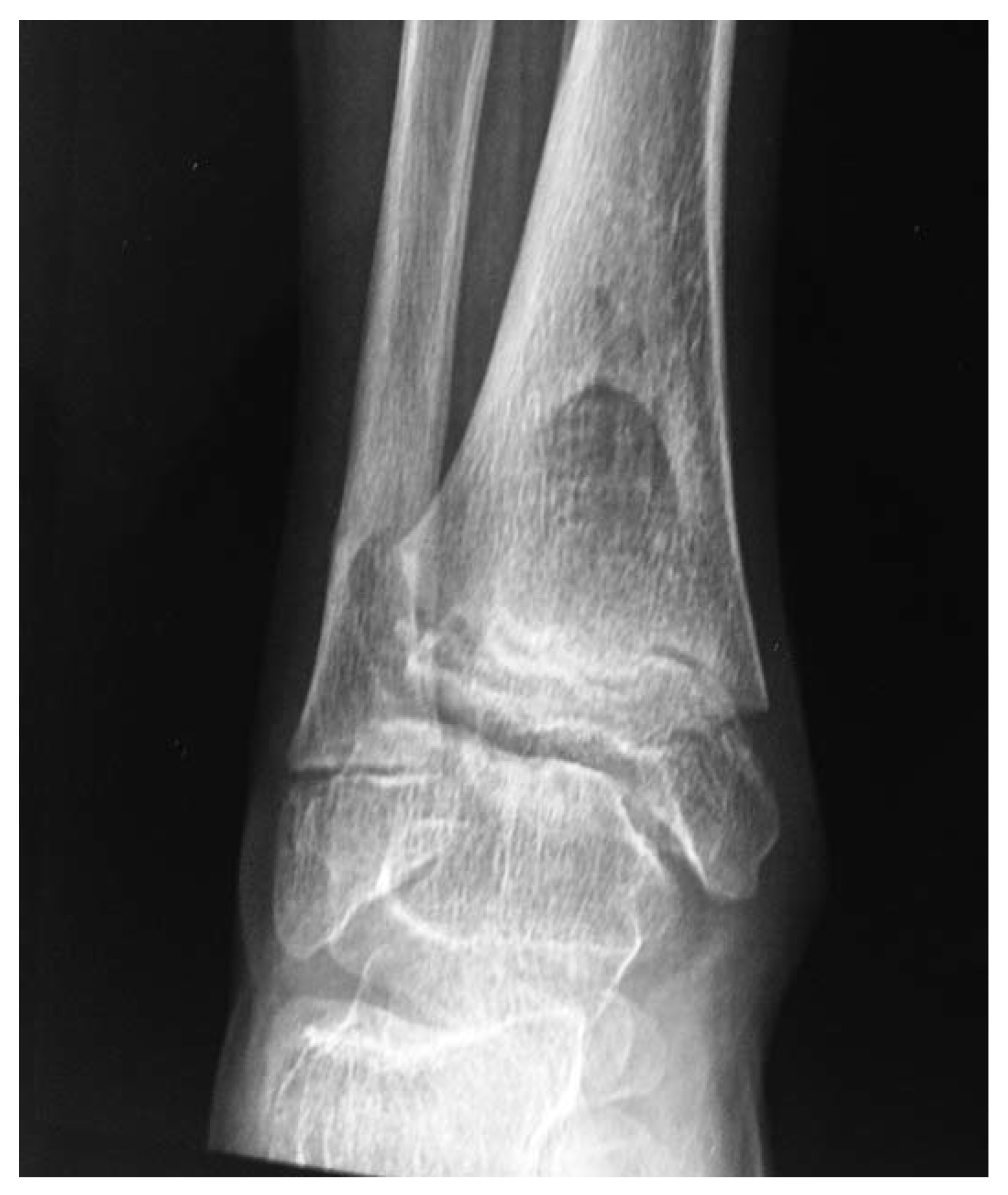
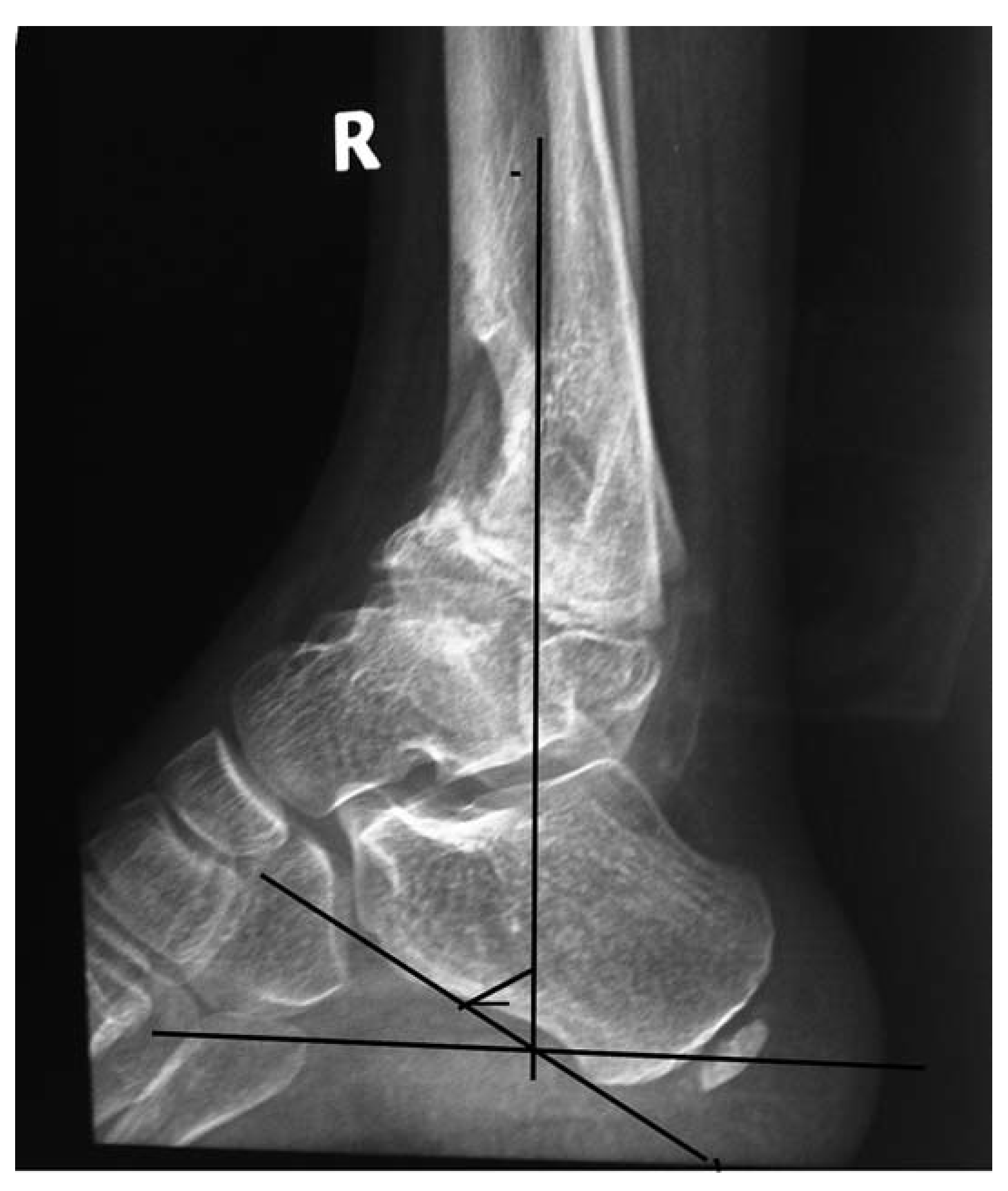
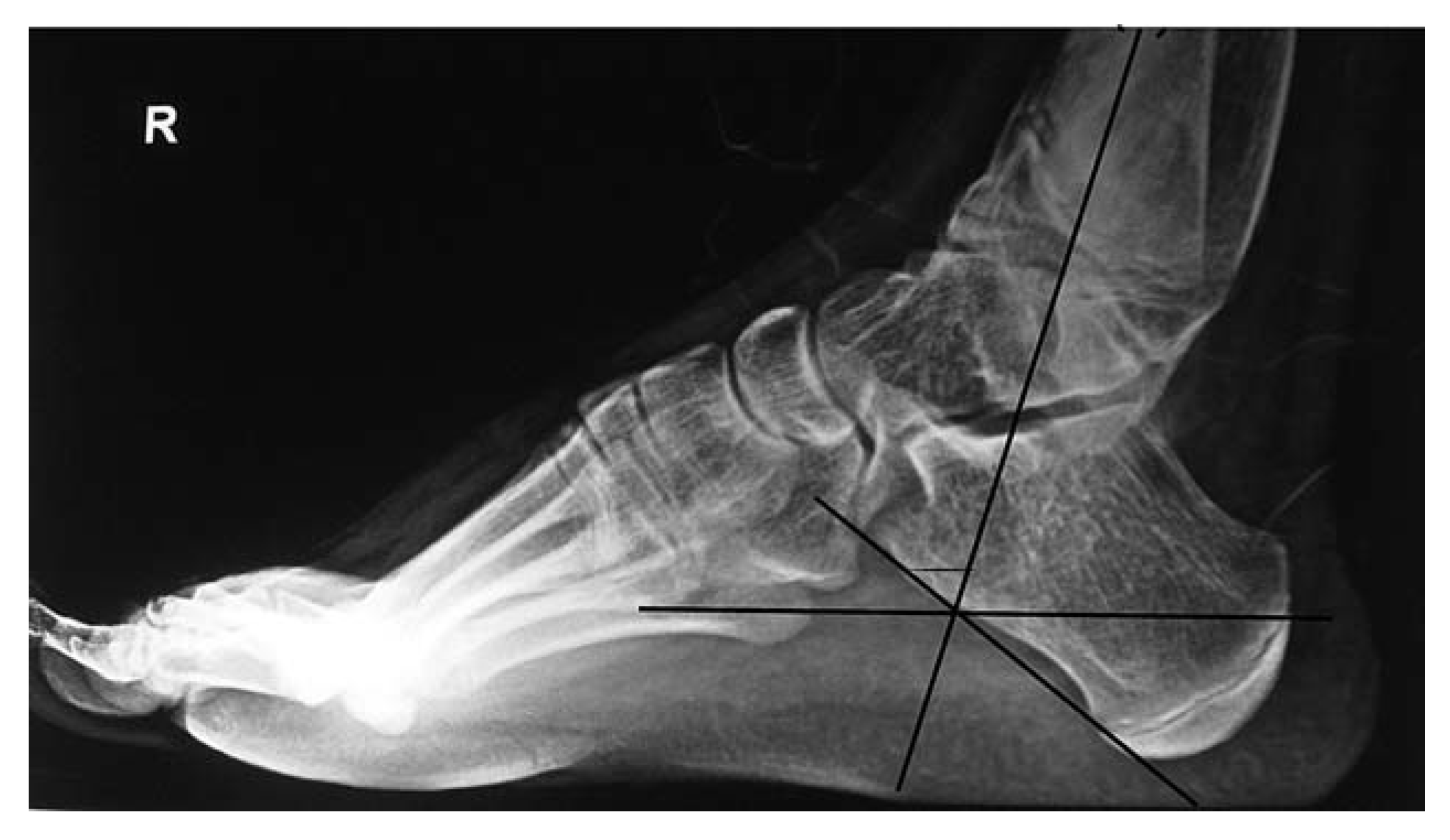
A 14-year-old boy presented with a history of deformity of the right foot, which was slowly progressive in nature. The patient had a history of acute pyogenic osteomyelitis of the distal tibia at the age of 1 year, which was treated with antibiotics at a peripheral hospital. After 3 months of the index episode, the patient developed swelling, followed by sinus discharge in the region of the distal tibia. The patient was diagnosed with a case of chronic osteomyelitis, and was subsequently treated with debridement, sequestrectomy, and antibiotics at the age of 2 years. The patient remained symptom free for 1 year after the index operation. Two years after the index operation, the patient’s parents noted a deformity of the right foot, for which he was treated conservatively at a peripheral hospital. The patient presented to us with a deformity of the right foot and ankle. Upon inspection, there was a 5-cm-long healed surgical scar on the medial surface at the junction of the upper and middle third of the tibia. There was no puckering of skin or sinus discharge. The tibia was curved with posterior convexity in its distal third, which was associated with loss of prominence of the tendo Achillis. The calcaneum was dorsiflexed, producing a calcaneal deformity with an associated forefoot cavus (Fig. 1). Anteroposterior and lateral radiographs of the right ankle revealed the obliteration of the epiphyseal line in the anterior half of the distal physis (Fig. 2). The calcaneotibial angle measured 50 degrees (Fig. 3). The calcaneotibial angle is formed by the intersec tion of the axis of the tibia with a line drawn along the plantar aspect of the calcaneus. Normally, this angle measures between 70 and 80 degrees; in equinus deformity, it is greater than 80 degrees and in calcaneus deformity, it is less than 70 degrees. The patient was put on preoperative serial stretching casts. Extended Steindler’s release of the plantar fascia was performed, and a below-the-knee plaster cast was applied to hold the foot in the corrected position. At the final follow-up, the calcaneotibial angle measured 60 degrees (Fig. 4). An osteotomy of the calcaneus was planned but the patient refused any further surgery.
Figure 1.
Calcaneus deformity of the foot.
Figure 1.
Calcaneus deformity of the foot.
Figure 2.
Anteroposterior radiographs of the right ankle showing osteomyelitis of the distal tibia.
Figure 2.
Anteroposterior radiographs of the right ankle showing osteomyelitis of the distal tibia.
Figure 3.
Preoperative lateral radiographs of the right ankle showing obliteration of distal physis of tibia and calcaneus deformity. The calcaneotibial angle measures 50 degrees.
Figure 3.
Preoperative lateral radiographs of the right ankle showing obliteration of distal physis of tibia and calcaneus deformity. The calcaneotibial angle measures 50 degrees.
Figure 4.
Postoperative lateral radiographs of the right ankle showing the calcaneotibial angle of 60 degrees.
Figure 4.
Postoperative lateral radiographs of the right ankle showing the calcaneotibial angle of 60 degrees.
Discussion
In infants, spread of infection to the epiphysis of long tubular bone can produce significant damage to the physis.[
3,
4] Injury to the cartilage cells on the epiphyseal side of the growth plate is irreparable[
5] and subsequent growth disturbances can be expected.[
3,
4,
6] Various authors have reported that even with severe epiphyseal disintegration, regeneration of the epiphysis can occur after eradication of the infection.[
7,
8,
9,
10] However, it is difficult to accurately predict the occurrence and extent of the epiphysis damage.[
4]
Osteomyelitis of the growing skeleton, as in the case of children, can lead to a variety of sequelae, such as limb-length discrepancy, obliteration of the epiphysis, and angular deformities of the diaphyses.[
7] Most of these sequelae are related to the adverse effects of infection on the growing epiphysis and depend on the age of the child at the onset of infection. Osteomyelitis can lead to partial or total closure of the epiphyseal line. Ogden,[
11] in his classic paper, described the effect of osteomyelitis on the epiphyseal plate. He proposed that in neonatal osteomyelitis, the amount of growth disturbance is directly related to a) the total area of the physis destroyed (relative to the total area of the plate), b) the anatomical location of the destroyed area of the physis (ie, central versus peripheral), c) the degree of concomitant destruction of the hyaline cartilage of the chondroepiphysis, and d) the degree of damage to the cartilage canal/vascular system of the chondroepiphysis. Abnormalities in septic arthritis of infancy probably relate to the destruction of the growth plate and portions of the epiphysis by the osteomyelitis process, as well as by direct destruction secondary to joint sepsis, with both processes being integral to the overall destruction. Partial closure of the epiphysis of the distal tibia can lead to varus/valgus deformities at the ankle as a result of overgrowth of the uninvolved part of the distal tibial epiphysis, and also because of overgrowth of the fibula.
The calcaneus deformity invariably results from a neural disorder that produces weakness of the triceps surae muscle. Poliomyelitis, myelomeningocele, and cerebral palsy are the major causes. Other less important neural disorders such as Charcot-Marie-Tooth disease, Friedriech’s ataxia, Roussy-Levy syndrome, Refsum disease, DejerineSottas syndrome, hereditary cerebellar ataxia of Marie, and olivopontocerebellar atrophy, and diastematomyelia associated with congenital scoliosis have also been associated with calcaneocavus deformity.[
1,
9] Uncommonly, a familial mode of transmission for calcaneal deformity has been described.
Sanjiva et al[
12] mentioned gross calcaneus deformity following surgery for talipes equinovarus deformity in three patients. All patients developed severe overcorrection after the surgery. All patients had ill-defined neurological disorders. Rasool[
13] described both calcaneus and equinus deformity in 14 children (average 9 years of age) with primary hematogenous osteomyelitis of the calcaneus. In our case, the most likely cause of the calcaneus deformity appears to be asymmetric growth at the distal epiphysis of the tibia, secondary to osteomyletis in the lower third of the tibia. It is a well-known fact that infection in the form of osteomyelitis can alter the growth of adjacent epiphysis leading to various deformities and limb-length discrepancies. In this case, asymmetric growth pushed the calcaneus into a dorsal position, leading to the calcaneus deformity.
Surgical techniques, such as calcaneal osteotomies, with or without tendon transfer of the tibialis anterior, have been described in skeletally immature feet, for calcaneus deformity.[
14,
15] In skeletally mature feet, surgery for talipes calcaneus consists of plantar fasciotomy and triple arthrodesis that corrects the calcaneus and the cavus deformities.[
14]
Steindler[
16] recommended the procedure of plantar fascial release. He emphasized the importance of stripping the origins of short toe flexors and abductors of the great and little toes from the os calcis. Sherman[
17] advocated the procedure but advised against it in calcaneocavus deformity, because in the absence of a functioning triceps surae, the addition of a plantar release destabilizes the os calcis. For calcaneal deformity, a combination of plantar fascia release with a calcaneal osteotomy would be appropriate. Soft-tissue procedures alone have been used in children. Paulos et al[
18] reported good results in 26 of 27 feet with cavovarus deformity treated with radical plantar release or plantar medial release. Extensor tendon transfer, achilles lengthening, posterior release, and/or tibialis anterior transfer were also performed as needed.
In summary, calcaneus deformity can arise from various causes; the most common being neuroparalytic disorders. In our case, deformity was caused by the asymmetric growth of the distal tibial epiphysis as a result of osteomyelitis of the distal tibia. A thorough search of the literature did not find any similar case mentioning calcaneus deformity arising secondary to complication of osteomyelitis of the distal tibia. We propose that in the differential diagnosis of calcaneal deformities, asymmetric growth of the distal tibial epiphysis secondary to osteomyelitis of the distal tibia should also be kept in mind.