The prevalence of toe deformities is high. The most common reasons are foot deformations such as pes planovalgus or cavovalgus, alteration of the metatarsal index (eg, intrinsic minus deformity), rheumatic or neurologic diseases, and shoes that are simply too narrow. In clinical practice, deformities are often overlooked. In addition, (undetected) polyneuropathy can cause claw toes and hammertoes, often due to unknown diabetes mellitus or alcohol abuse. Patients with toe malformations combined with polyneuropathy are at high risk for ulcers. [
1,
2] Therefore, exact clinical examination and treatment are essential to prevent severe damage. We have to avoid the vicious cycle of ulceration, infection, immobilization, and risk of amputation. Once an ulcer occurs, prolonged healing time, high costs, and long immobilization are the consequences. [
3] The treatment for primary healing of an ulcer costs up to
$10,000. [
4]
Toe malformations can be treated by operation, orthoses, or shoe alterations. New materials, such as silicone, offer new opportunities in treatment. There are little scientific data, and valid studies are missing, especially of long-term clinical benefit. Scirè et al [
1] showed a reduction in plantar peak pressure in patients with diabetic polyneuropathy, but only with follow-up of 3 months, so long-term clinical benefit cannot be measured. The best silicone orthosis will not help the patient if it is not accepted and used.
We hypothesized that customized interdigital silicone orthoses have a biomechanical long-term clinical benefit consisting of reduction of in-shoe peak pressure; they are comfortable and, therefore, are well accepted by patients.
Methods
All 46 patients in the Department of Technical Orthopedic Surgery and Rehabilitation, University of Muenster (Muenster, Germany), who received customized interdigital silicone orthoses for hammertoe or claw toes in 2008 were included in this clinical and biomechanical retrospective study. Patients who presented with hallux valgus only were excluded because we see this group as a special entity that we want to look at in our next study. All of the patients were informed personally about the study, and their written consent was obtained. All of the criteria of the Declaration of Helsinki were followed. All of the patient data were blinded. The exclusion criteria were an inability to walk outside (activity level <2) and amputations of toes or parts of the foot. All of the orthoses were custom-made and were indicated and checked by a physician after delivery. Compliance and acceptance were measured by the Muenster shoe and foot questionnaire, which includes 13 items on pain, activities of daily living, satisfaction, and activity, rated from 1 (very good/right) to 6 (very bad/wrong). [
5] Mean follow-up was 18 months.
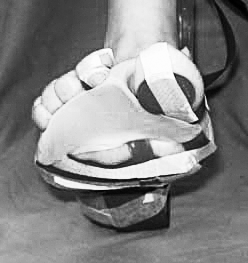
Of the 22 patients who still used the orthosis at the 18-month follow-up, eight (10 orthoses) were chosen by random to undergo pedobarography (Pedar Fa; Novel GmbH, Munich, Germany) (
Figure 1). The observed data were entered into a computerized database (Microsoft Excel 2003; Microsoft Corp, Redmond, Washington) and were statistically evaluated using IBM SPSS Statistics for Windows, version 20.0.0 (IBM Corp, Armonk, New York). Categorical variables are expressed as frequency and percentage, and continuous variables are presented as mean ± SD. The paired-samples
t test was used to compare the peak pressure differences between two dependent study groups. Differences were considered significant at
P < .05.
Figure 1.
Fixation of pedobarography sensors.
Figure 1.
Fixation of pedobarography sensors.
One forefoot sensor and two single sensors were fixed between the skin and the orthosis under the first toe, second toe, and forefoot (
Figure 1). Measurements were performed in-shoe three times with and without orthoses; during the test, the sensors were not removed. Mean results were calculated for each patient. The patients wore the shoes they wore most in daily life. All of the patients used regular shoes. Patients with severe malformations or polyneuropathy were advised not to walk barefoot. In-shoe pressure was measured because the patients were advised to use permanently protective shoes and because silicone orthoses do not work without shoes. Therefore, measuring barefoot peak pressure is not indicated.
Results
Of 46 patients (16 men and 30 women) who received silicone orthoses, 44 participated in the study (two patients declined to participate). The mean ± SD patient age was 56.8 ± 22.0 years, and mean follow-up was 18 months. After 18 months, 22 patients still regularly used their orthoses, and 19 did not. An additional two patients never received an orthosis, the insurance company refused to pay for the orthosis for one patient, and two patients did not want to participate.
Ten feet (eight patients [7 women and 1 man; mean age, 66.1 years]; two patients had orthoses on both feet) were included. The daily use of 6.8 hours was high. Four of these patients had polyneuropathy. In-shoe peak pressure was reduced significantly from 297.2 N/cm
2 to 266.9 N/cm
2 (
P < .05) (
Table 1). General acceptance was high (mean Muenster shoe and foot questionnaire score, 2.4). Low scores were seen in walking more than 1 km and walking barefoot (
Table 2).
Table 1.
In-Shoe Peak Pressures
Table 1.
In-Shoe Peak Pressures
Table 2.
Muenster Shoe and Foot Questionnaire Scores
Table 2.
Muenster Shoe and Foot Questionnaire Scores
Twenty-two patients were still using their orthoses at 18 months. The mean patient age was 60.4 years. Most patients (82%) believed that the orthosis improved their gait; 90% of patients would like to have an orthosis again, and most used the orthosis the whole day (8 h/d) (
Table 3). Pain during use of the orthosis was the most common reason for rejection, followed by problems with sweat (
Table 4).
Table 3.
Acceptance of Orthoses by the 22 Patients Who Still Used Them at 18 Months of Follow-Up
Table 3.
Acceptance of Orthoses by the 22 Patients Who Still Used Them at 18 Months of Follow-Up
Table 4.
Reasons for Not Using the Orthosis
Table 4.
Reasons for Not Using the Orthosis
Discussion
Satisfaction with the orthosis was high in patients who used it regularly: 82% of the patients felt that their gait improved, and 90% would like to get an orthosis again. On the other hand, 19 patients did not use their orthoses regularly because of problems with the material (sweat, tinea pedis, or skin tears) or feeling uncomfortable when wearing the orthosis (
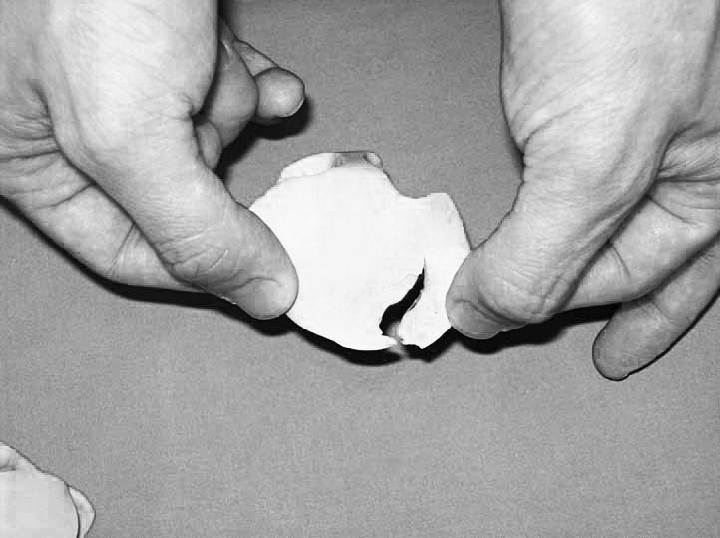
Table 4). It is surprising and represents a problem that so many patients did not use their orthoses after some months. Some of the reasons were the material (torn orthoses, sweat problems) and the crafting of the orthosis. During this study, one orthosis broke and had to be replaced (
Figure 2).
Figure 2.
Orthosis that was torn while putting on the sensors.
Figure 2.
Orthosis that was torn while putting on the sensors.
Forming an interdigital silicone orthosis is a very sensitive treatment that demands a good technique and interdisciplinary interaction between an orthopedic surgeon and a technician. The shoes always have to be adapted to the new form of the forefoot. A thorough check of the fitting of the orthosis, toes, and shoe is essential. We have to improve the material to make it more durable. Three patients explicitly complained about a durability of less than half a year and were not willing to invest in several meetings with their technician to fix their orthosis. At least in one documented case a patient was not fitted for an orthosis because the insurance company refused to pay.
In-shoe peak plantar pressure was significantly reduced in each individual (
P < .05). That showed the biomechanical long-term effect of the orthosis in the shoe after 18 months (
Table 1). Reducing plantar pressure is one factor to prevent pedar ulceration. [
1] However, there is no defined threshold. Therefore, further clinical studies to show the reduction in foot ulceration are needed. Scirè et al [
1] measured feet in patients with diabetes and had follow-up of only 3 months.
The present study showed that interdigital silicone orthoses have a long-term effect in reducing in-shoe pressure at 18 months and are well accepted by the patient. On the other hand, we saw some problems in fitting, distribution, and the material. That is why 19 patients stopped wearing their orthoses.
Conclusions
Silicone interdigital orthoses were shown to be able to reduce in-shoe peak pressure. The acceptance of a well-crafted in-shoe fitted orthosis by the patients is high, but the material has to be improved. Supplying patients with these orthoses requires close interaction between a skilled technician and an orthopedic surgeon. Special focus on fitting in the shoe is imperative.