


Abstract
Background: Foot and ankle (FA) exercise programs might reduce the risk of falling in older adults. We sought to systematically review the current literature on FA exercise programs targeted at reducing the risk of falling in older adults.
Methods: A systematic literature search was performed in the PubMed database, the Physiotherapy Evidence Database, the Cumulative Index to Nursing and Allied Health Literature, and the Cochrane Central Register of Controlled Trials. Articles were included based on the following criteria: 1) randomized controlled trial, 2) FA exercise program, and 3) use of fall risk–related motor outcomes (strength, balance, flexibility, and functional ability) or use of falls as an outcome. Weighted effect sizes (d) were calculated across studies for estimating the overall effect of FA exercises on the most frequently reported motor outcome parameters. Results: Eight publications met the inclusion criteria. Small to moderate overall effects were found for balance (d = 0.46, P < .001) and ankle flexibility (d = 0.29, P = .006). No significant overall effects were found for ankle plantarflexor strength (d = 0.11, P = .223) and walking performance (d = −0.05, P = .404). Controversial results were reported for other functional measures. Effects varied depending on the type of intervention. Only one study reported improved ankle evertor strength and a significant reduction in falls. Conclusions: Evidence suggests that FA exercise can improve certain fall risk–related motor outcomes and reduce falls. Limited effects on strength and functional ability might be related to insufficient training intensity and lack of adherence. Further studies that include progressive strength and flexibility training are necessary to validate which FA exercise programs are most effective at preventing falls.
At least 30% of individuals 65 years and older experience one or more falls each year, [1] and this percentage increases to 40% after age 75 years. [2] The incidence of falls and the severity of complications stemming from these falls increase with age, level of disability, and extent of functional impairment. [3] Falls are a major health problem in older adults, causing fall-related sequelae, such as fractures, head injuries, and post-fall anxiety. [4,5] Older adults are hospitalized for fall-related injuries five times more often than they are for injuries from other causes, [6] and the associated costs of care and institutionalization from injurious falls substantially burdens the health-care system. [7]
It has been well described that falls result from the interaction between environmental hazards and physiologic risk factors, such as muscle weakness, poor balance, impaired vision, and slow reaction time. [1,8] More recently, foot problems, which affect approximately 30% of older adults, [9–11] are a common reason for consultation in primary care and in podiatric medical, orthopedic, rheumatologic, sports medicine, and geriatric specialty care [12] and have been associated with falls. [13] Specifically, foot pain, reduced range of motion, toe weakness, and toe deformity have each been shown to be independent risk factors for falling. [14,15] It has been demonstrated that ankle dorsiflexion range of motion [16–18] and the toe plantarflexor muscles [19,20] are specifically linked to balance control and gait performance. The toes play an important role in stabilizing the foot during standing and walking, [19,20] and adequate range of motion at the ankle and toes is necessary to conduct basic everyday motor functions, such as walking and sit-to-stand motions, safely and efficiently. At least 10° of ankle dorsiflexion is necessary for the stance phase of gait, [21] whereas rising from a chair requires maximum dorsiflexion between 21° and 36°. [22]
Several studies have demonstrated that aging is associated with significant changes to the musculoskeletal and sensory characteristics of the foot. Older adults tend to have more pronated feet, reduced ankle joint flexibility, and toe plantarflexor weakness and to experience a reduction in plantar tactile sensation. [23] Differences such as decreases in physical activity levels possibly contribute to the observed age-related issues with ankle joint range of motion and toe plantarflexion strength. [24]
Given the age-related decline in foot strength and flexibility and the emerging evidence that foot problems increase the risk of falls, established guidelines for falls prevention recommend that older adults have their feet examined by a podiatric physician as a precautionary measure. [25] However, these guidelines do not specify which intervention activities might be performed, and too few randomized controlled trials have been executed to provide clinical practitioners with germane information concerning the prevention of falls. [13] In addition to advice about footwear and foot orthoses, intuitively, it may be good practice to recommend exercise programs that focus specifically on strengthening and stretching the foot and ankle (FA). Systematic reviews document that exercise programs can significantly reduce the risk of falling [26,27]; however, most of the existing studies have concentrated on muscle groups proximal to the FA. The effectiveness of specific FA exercise programs has not been systematically reviewed. This review aims to evaluate the effects of specific FA exercise programs on improving fall risk–related motor outcomes and reducing falls in older adults.
Methods
Search Strategy
A systematic literature search was performed according to the PRISMA (Preferred Reporting Items for Systematic Reviews and Meta-Analyses) statement. [28] Articles were searched for in the PubMed database, the Physiotherapy Evidence Database (PEDro), the Cumulative Index to Nursing and Allied Health Literature, and the Cochrane Central Register of Controlled Trials. The search was tailored specifically to retrieve literature focusing on FA exercise programs in older adults aimed at improving motor performance and preventing falls. The search terms were foot, ankle, and toes combined with AND to exercise, stretching exercise, resistance training, and strength. The database search was conducted without using language restrictions and was limited to articles with publication dates up to April 30, 2013. Reference lists of relevant articles were subsequently hand searched to identify additional appropriate articles. The Google Scholar database was used to check the related citations of relevant articles to identify additional appropriate articles.
Study quality was coded using the PEDro scale, which is widely used to rate the quality of randomized controlled trials. [29] The scale is based on the list developed by Verhagen et al [30] using the Delphi consensus technique. The PEDro scores are summarized, and high-quality studies are those with scores of 6 to 11; fair quality, 4 to 5; and low quality, less than 4. [31]
Study Selection and Data Extraction
Two reviewers (M.S. and B.H.) screened the titles and abstracts from all of the literature searches to identify potentially relevant trials based on the following inclusion criteria: 1) randomized controlled trial, 2) use of an FA exercise program, and 3) use of fall risk–related motor outcome parameters (strength, balance, flexibility, and functional ability) or use of falls as an outcome parameter. The reviewers obtained full-text copies of all of the trials that met the inclusion criteria for the systematic review. Next, the two reviewers independently extracted information about study characteristics, types and modalities of FA exercise interventions, and fall risk–related outcomes of interventions.
Statistical Analysis
Because most randomized controlled trials reported continuous measures related to fall risk, effect sizes (the Cohen d) were defined as the standardized mean difference between the exercise and control groups divided by the pooled SD, [32] correcting for sample size bias and baseline differences. Effect sizes with 95% confidence intervals (CIs) were calculated from the randomized controlled trials that reported sufficient data on intervention effect on fall risk–related motor outcomes. To interpret the effect size, we used the Cohen criteria: 0.2 and greater indicates small effect; 0.5 and greater, moderate effect; and 0.8 and greater, large effect. [32] When the pooled SD of the difference scores was not provided, an estimate was calculated using the following formula [33]:
Positive effect sizes indicate benefits of exercises training. To compare study results, effect sizes were calculated for similar motor outcome parameters, if available. Mean effect sizes and 95% CIs were calculated for each outcome parameter. Because effect sizes of large studies are more likely to be reliable estimates of the efficacy of an intervention than those of small studies, sizes were weighted by the number of participants in each study. The homogeneity statistic Q was calculated to determine whether a weighted mean effect size characterized a common effect size. A significant Q value indicated the absence of homogeneity. To standardize Q, the I2 statistic was calculated; I2 ranges from 0% to 100%, with low values suggesting homogeneity and large values suggesting heterogeneity. To provide a visual representation of the effect sizes and associated 95% CIs, forest plots were constructed. All of the meta-analyses were conducted with a software program (MetaXL, version 1.32; EpiGear, Wilston, Australia).
Figure 1.
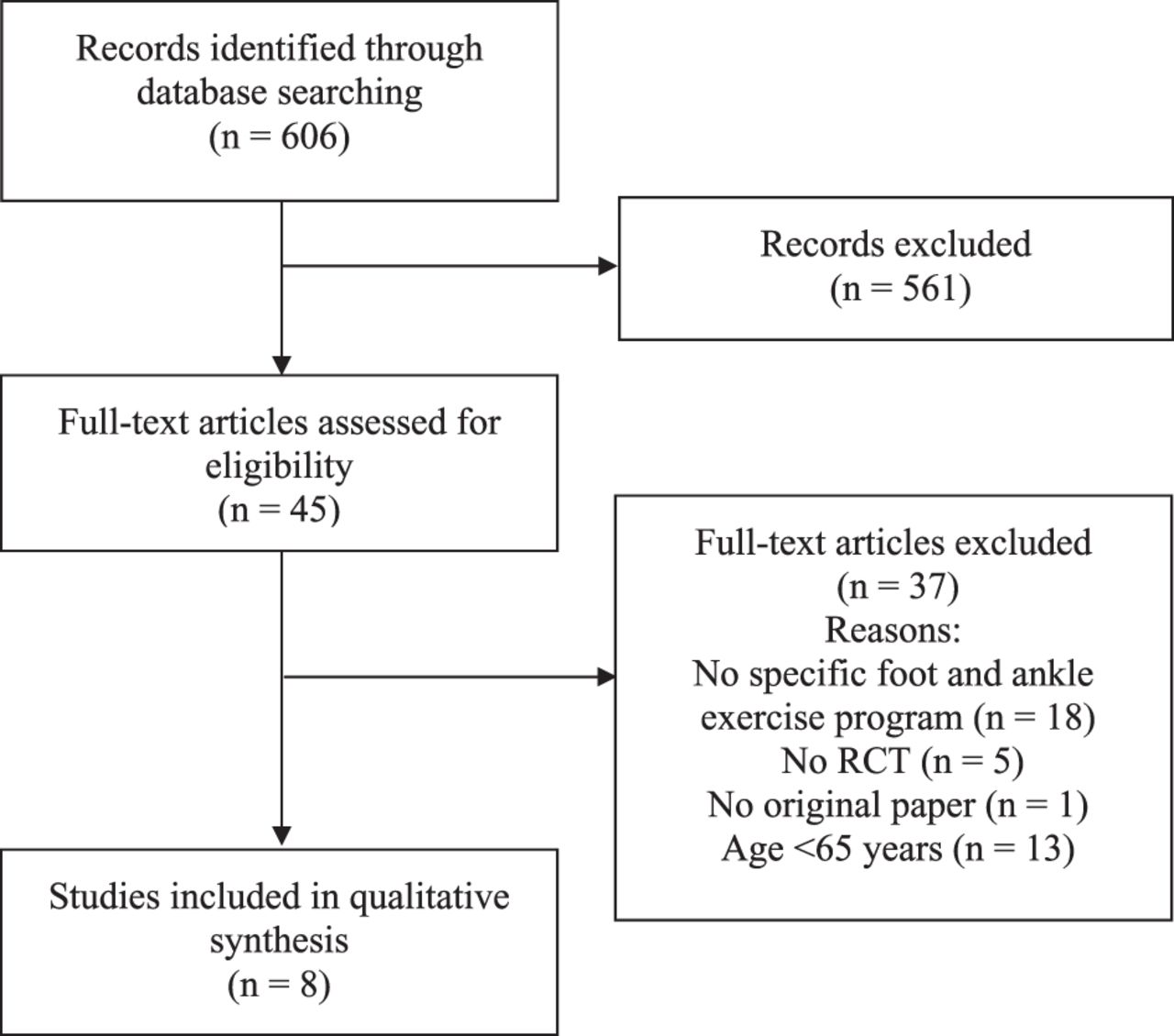
Flowchart showing the literature search and the extraction of studies meeting the inclusion criteria. RCT indicates randomized controlled trial.
Results
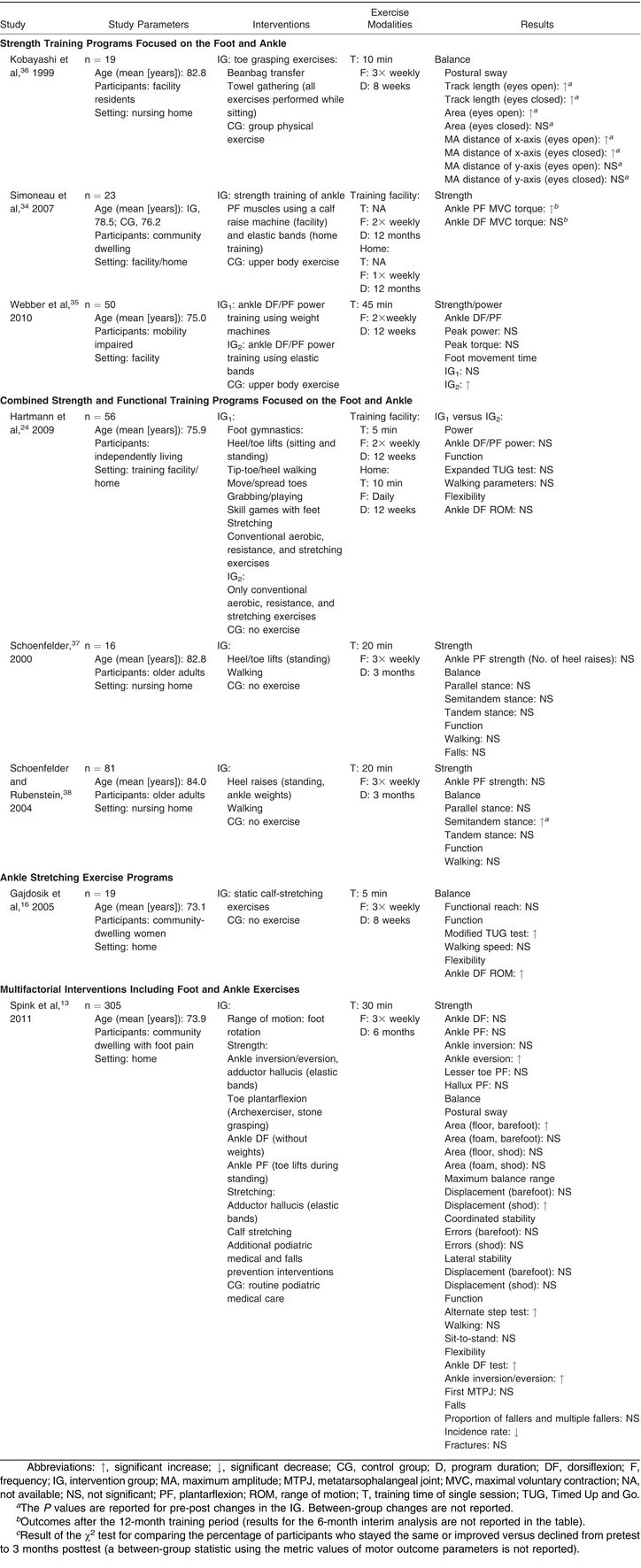
The search yielded 606 articles, with eight publications meeting the inclusion criteria (Figure 1). Table 1 illustrates the study characteristics, exercise interventions, training modalities, and results of the studies included in the review.
Study Characteristics
Five studies included community-dwelling older adults [13,16,24,34,35] and three included institutionalized older adults. [36–38] Only one study specifically included older adults with diagnosed foot problems (foot pain). [13] The mean age of the participants ranged from 73.1 to 84.0 years, and sample sizes ranged from 16 to 305.
Types and Modalities of Exercise Interventions
Types and modalities of exercise interventions are displayed in Table 1. The intervention periods ranged from 8 weeks to 12 months. The frequency of exercise training ranged from two times per week to daily. Adherence to the exercise programs varied considerably. Some studies reported good adherence, [13,35] whereas adherence was low [24] or not specified [16,36–38] in other studies. One study reported minor adverse events, such as worsening joint pain and exacerbation of preexisting musculoskeletal conditions, related to the exercise training intervention. [35]
The types of FA exercise interventions used in the articles varied. Three studies were categorized as strength exercise programs (Table 1). One of these studies evaluated toe grasping exercises (beanbag transfer and towel gathering) performed in a sitting position by nursing home residents. [36] Another study evaluated an ankle power training program using either elastic band exercises or weight training exercises for improvement in ankle movement time. [35] Simoneau et al [34] evaluated the effects of long-term ankle strength training (12 months) using a calf raise machine in a training facility and elastic bands for home training.
Three studies evaluated combined strength and functional training programs focusing on the FA. [24,37,38] Two of these studies combined ankle strengthening and a walking program and compared it with an inactive control group in nursing home residents. [37,38] A single study was specifically designed to investigate the added value of foot gymnastics (group training and home training) combined with conventional exercises (aerobic, resistance, and stretching exercises) compared with conventional exercises only. [24]
One study evaluated a calf-stretching home exercise program. [16] A standardized stretching pose in which one foot was placed on the floor in front of the body with the knee slightly bent and the other knee was kept straight with the heel touching the floor was used to stretch the calf muscles. Participants held this static stretch position for 15 sec and completed ten repetitions, for a total of 150 sec of stretching during each session.
Another study evaluated a multifaceted podiatric medical intervention that included a home-based FA exercise program including strengthening exercises using elastic bands, specific toe strength training devices (Archxerciser; Elgin, Westmont, Illinois), body weight–bearing exercises (toe lifts), and stretching. [13] The other elements of the multifaceted intervention were advice on footwear, subsidy for footwear, new foot orthoses, a falls prevention education booklet, and routine podiatric medical care for 12 months.
Fall Risk–Related Outcome Parameters Reported in Studies
Fall risk–related motor outcomes differ substantially among the studies, which limits the ability to compare results (Table 1). Five studies [13,34,35,37,38] reported strength parameters; all of these studies assessed ankle plantarflexor strength, three evaluated ankle dorsiflexion strength, [13,34,35] and one additionally evaluated ankle inversion/eversion, hallux flexor, and lesser toe flexor strength. [13] Two studies assessed ankle power. [24,35] Most of the five studies that assessed balance used conventional balance tests, such as the functional reach test [16] or time stance tests. [37,38] Only two studies used objective biomechanical tests for a detailed assessment of balance parameters such as postural sway. [13,36] Functional ability was most often quantified by walking (5 studies); most of the studies used timed walking tests, [13,16,33,34] and only one study used an electronic system for a detailed documentation of FA training–related changes in gait parameters. [24] Other functional measures included modified versions of the Timed Up and Go test, [16,24] the alternate step test, [13] and the sit-to-stand test. [13] Three studies reported on flexibility and measured ankle dorsiflexion range of motion, [13,16,24] and only one of the three additionally measured range of motion of ankle inversion/eversion and of the first metatarsophalangeal joint. [13] Of the eight studies reviewed, only two reported falls as an outcome parameter. [13,37]
Methodological Quality of the Studies
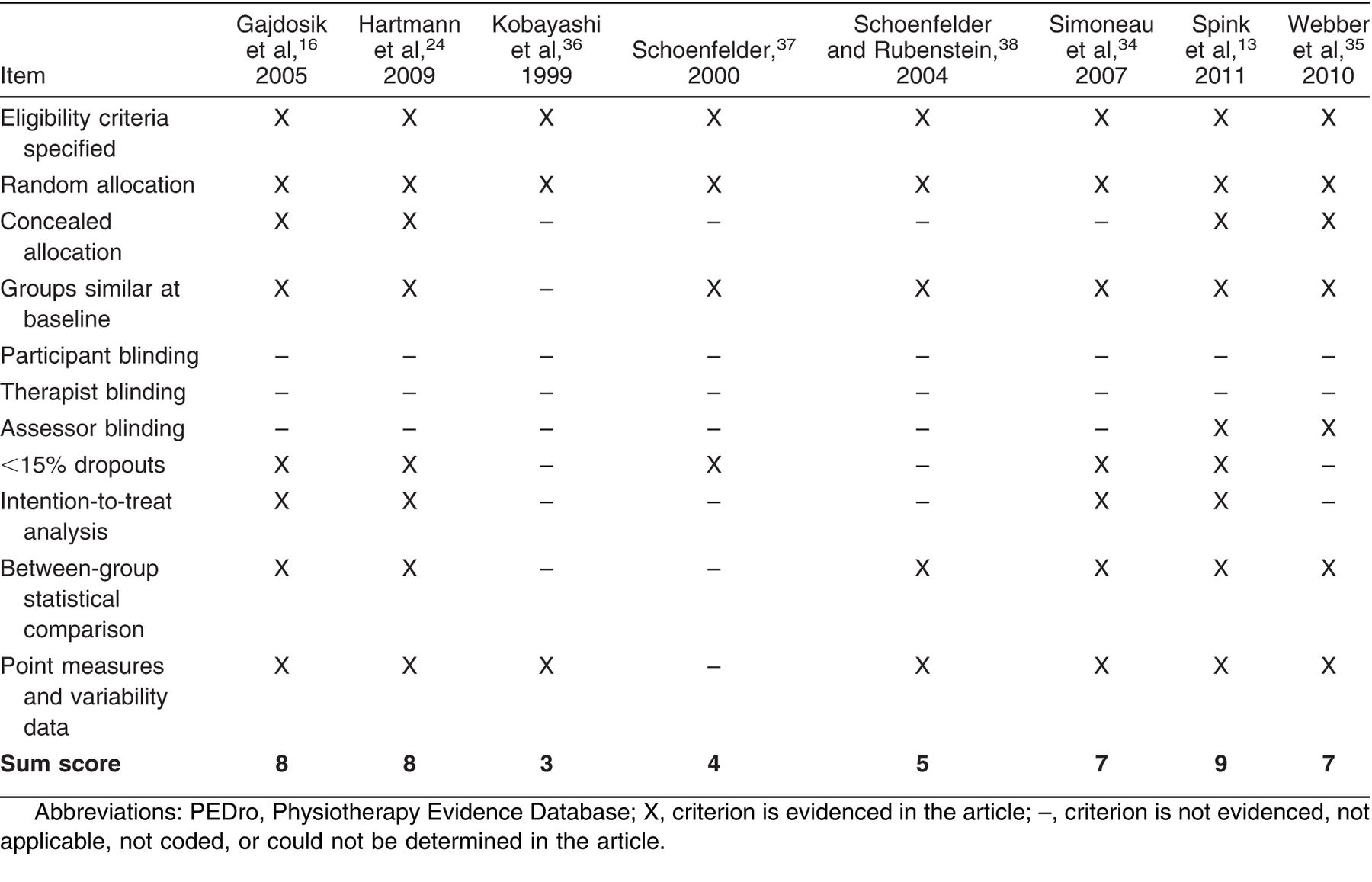
The results of quality rating using the PEDro scale are presented in Table 2. The PEDro score averaged 6.4 points (range, 3–9) for all of the articles included. Study quality varied, with most studies (n = 5, 62.5%) rated as high quality (score ≥6), two as fair quality (score of 4–5), and one as low quality (score <4). The most frequent methodological limitations were a lack of blinding of study personnel, therapists, or participants and an unconcealed group allocation. Two studies did not perform statistical between-group comparisons but only within-group comparisons. One study reported point measures but not variability data, which are required for calculating effect sizes (the Cohen d). A variety of studies did not correct the statistical analysis for multiple testing of parameters. [36–38]
Table 1.
Qualified Clinical Studies Demonstrating Foot and Ankle Exercise Interventions
Training Effects on Fall Risk–Related Outcome Measures
Strength/Power
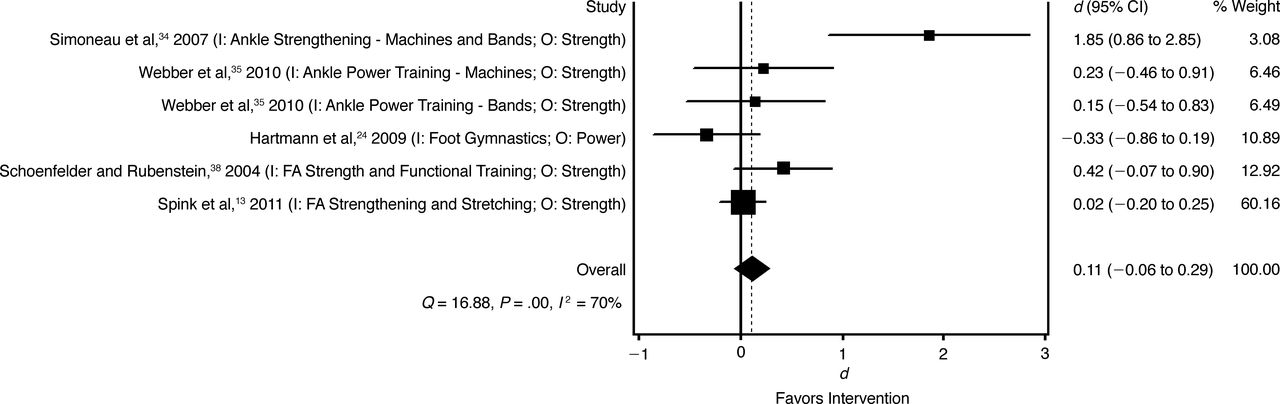
Results of FA exercise interventions for improvement in muscle strength or muscle power are displayed in Table 1. Only one study [34] reported a significant training effect (d = 1.85; 95% CI, 0.86 to 2.85) on ankle plantarflexor strength, whereas five other studies did not report positive results on ankle plantarflexor strength [13,35,37,38] or power. [24,35] A meta-analysis using ankle plantarflexor strength (if reported) or, alternatively, ankle plantarflexor power did not find an overall effect of FA exercise training on these parameters (d = 0.11; 95% CI, −0.06 to 0.29; P = .223) (Fig. 2). One study [37] was not included in the meta-analysis because no variability measures were reported, which are required for calculating effect sizes (d). No significant training effects were reported in any study for ankle dorsiflexion strength [13,34,35] or power. [24,35]
Table 2.
Results of Quality Scoring Using the PEDro Scale
One study [13] evaluated strength parameters beyond ankle dorsiflexion/plantarflexion strength and reported significant improvements in ankle eversion strength but not in hallux flexor strength or lesser toe flexor strength following the multifaceted intervention approach including FA exercises.
Balance
Two studies, which used postural sway measurements, reported significant improvements in some but not all of the parameters (Table 1) after toe grasp training [36] and FA strength and flexibility training. [13] No improvement in balance performance was found after a stretching exercise intervention. [16] Two studies documented postural balance using stance tests incorporating different foot positions (parallel, semitandem, and tandem). One of these studies reported that a significantly larger proportion of participants of the intervention group showed maintenance or improvement in balance over time with the semitandem stance compared with the control group at completion of the exercise program. However, no statistics were reported for between-group changes of point measures (stance time), which limited the comparability of the results with those of other studies.
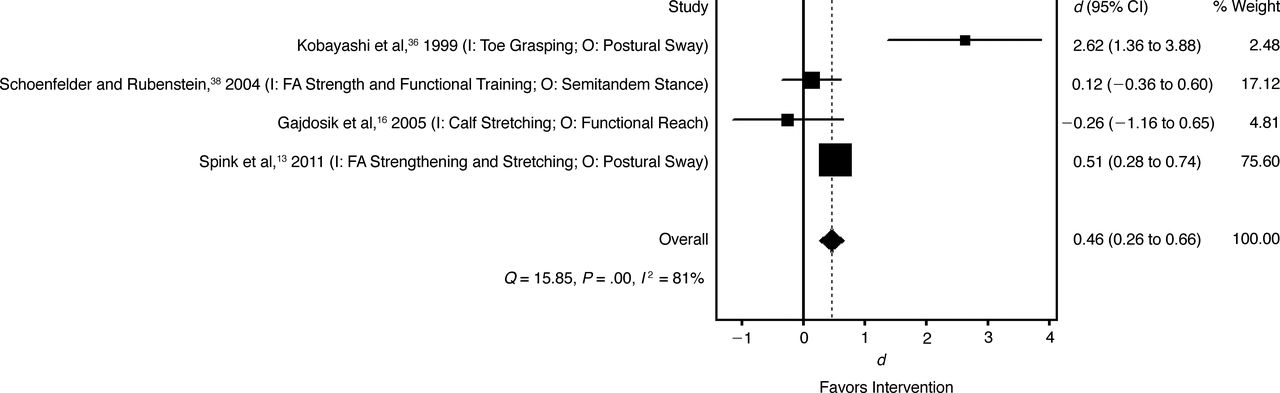
A meta-analysis was performed using the results of four studies (Fig. 3). Two of these studies [13,36] provided a variety of postural sway parameters (Table 1), but only the parameter with the highest effect size in each study was included in the analysis (ie, sway area on floor barefoot [13] or sway area eyes open [36]). Moderate to high effect sizes were obtained for studies that used strengthening and stretching training (d = 0.51; 95% CI, 0.28 to 0.74) [13] or toe grasp training (d = 2.62; 95% CI, 1.36 to 3.88) and that objectively evaluated postural sway. In contrast, no effects were obtained for two studies that used either calf-stretching exercises or FA strength and functional training and conventional measures of balance performance (Fig. 3). Overall, the meta-analysis revealed a moderate effect of FA exercise training on balance performance (P = 0.46; 95% CI, 0.26 to 0.66; P < .001). One study [37] that reported balance parameters was not included in the meta-analysis because no variability measures were reported for quantification of effect sizes.
Figure 2.
Forest plot of effects of foot and ankle (FA) exercise training on ankle plantarflexor strength/power. The dotted vertical line corresponds to the summary effect size for the sample. The solid vertical line correspondents to an effect size of 0 (no effect). CI indicates confidence interval; I, intervention; O, outcome parameter used for calculating effect size.
Flexibility
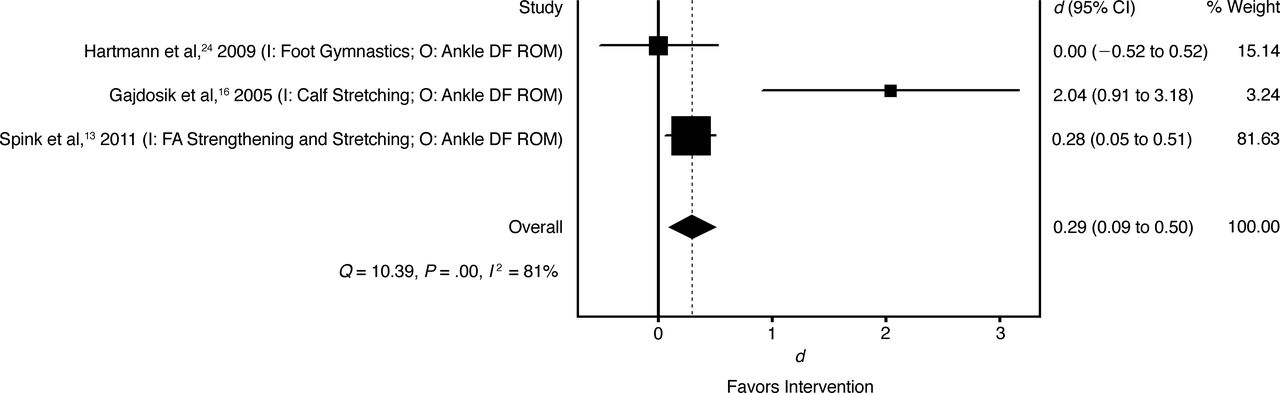
Three studies evaluated ankle flexibility by measuring ankle dorsiflexion range of motion (Table 1). Two studies, which either used specific calf-stretching exercises [16] or strengthening and stretching exercises in the multifaceted intervention, [13] reported significant improvements. In contrast, no significant improvements in ankle flexibility were identified in the foot gymnastics study conducted by Hartmann et al. [24] A meta-analysis of these three studies revealed a small overall effect of FA exercise training on ankle dorsiflexion range of motion (d = 0.29; 95% CI, 0.09 to 0.50; P = .006), whereas the highest effect was found for the study [16] that used calf stretching as a single intervention (d = 2.04; 95% CI, 0.91 to 3.18) (Fig. 4). One study used additional FA flexibility measures and found a significant improvement in ankle inversion/eversion but no changes in dorsiflexion of the first metatarsophalangeal joint. [13]
Figure 3.
Forest plot of effects of foot and ankle (FA) exercise training on balance performance. The dotted vertical line in corresponds to the summary effect size for the sample. The solid vertical line correspondents to an effect size of 0 (no effect). CI indicates confidence interval; I, intervention; O, outcome parameter used for calculating effect size.
Functional Ability
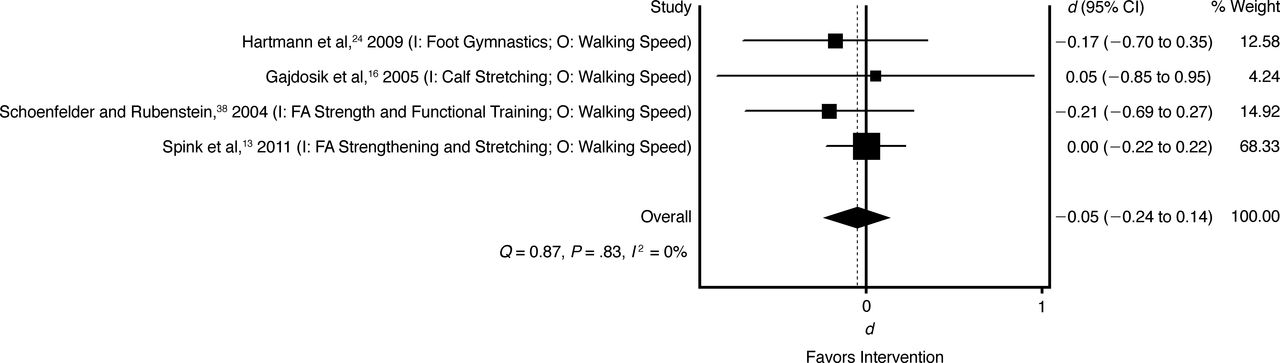
Five studies evaluated FA exercise effects on walking performance; however, none of these studies reported significant improvements (Table 1 and Fig. 5). Negative results were confirmed by a meta-analysis that included four studies that provided sufficient data for calculating effect sizes for walking speed (overall effect: d = −0.05; 95% CI, −0.24 to 0.14; P = .404) (Fig. 5). Contradictory results were found for other functional ability outcomes. The study that compared combined conventional exercise and foot gymnastics with a conventional exercises–only control group did not find any significant improvement in the expanded Timed Up and Go test. [24] The expanded Timed Up and Go test provides separate results for sit-to-stand, gait initiation, walking, turning, and stand-to-sit. One study that used a calf-stretching exercise program found a significant improvement in mobility performance verified by a modified version of the Timed Up and Go test that included advanced functional activities (rising from a chair without the aid of the arms), walking, stair ascending and descending, and sitting down. [16]
Figure 4.
Forest plot of effects of foot and ankle (FA) exercise training on ankle flexibility. The dotted vertical line in corresponds to the summary effect size for the sample. The solid vertical line correspondents to an effect size of 0 (no effect). CI indicates confidence interval; DF, dorsiflexion; I, intervention; O, outcome parameter used for calculating effect size; ROM, range of motion.
The study by Spink et al [13] that evaluated a multifaceted intervention that included FA exercises shows a significant improvement in the alternate step test but no changes in sit-to-stand performances. The study that evaluated an ankle power training program found a specific improvement in foot movement time in the elastic bands group but not in the machine-based exercise group compared with a control group. [35]
Falls
Only two studies reported falls as an outcome parameter. [13,37] One study that evaluated a 3-month combined FA strength and walking training regimen in nursing home residents reported nonsignificant changes in fall rates after 3 and 6 months of follow-up. [37] A study using a 12-month multifaceted podiatric medical intervention that included FA exercises reported a 36% reduction in falls in the intervention group compared with the control group (incidence rate ratio, 0.64; P = .01). [13] In addition to the reduced fall rate, fewer participants in the intervention group experienced a fracture resulting from a fall during the trial than in the control group. However, this result did not reach significance (P = .07), potentially owing to a lack of statistical power required to demonstrate a convincing relationship between exercise interventions and a reduction in injurious falls. [39]
Figure 5.
Forest plot of effects of foot and ankle (FA) exercise training on walking speed. The dotted vertical line in corresponds to the summary effect size for the sample. The solid vertical line correspondents to an effect size of 0 (no effect). CI indicates confidence interval; I, intervention; O, outcome parameter used for calculating effect size.
Discussion
The aim of this study was to review the studies that have evaluated the effects of FA exercise programs on improving fall risk–related motor outcomes and reducing falls in older adults. Overall, this systematic review and meta-analysis demonstrates that FA exercises are effective for improving balance performance and ankle flexibility, whereas evidence for improvement of FA strength and functional abilities is insufficient. Only one study provided evidence for the effectiveness of FA exercises in reducing the number of falls in older adults.
Foot and ankle exercises were found to be effective for improving postural balance in nursing home residents and community-dwelling elderly individuals, particularly if specific toe-strengthening exercises (toe grasping) are included. Adequate toe flexor strength is crucial for maintaining balance, [15] although it remains unclear whether the substantial balance improvements reported in one study after 8 weeks of toe grasping exercises [36] are related to improved toe flexor strength because it was not measured. The author of this paper discussed other potential mechanisms of toe grasp training, such as triggering of mechanoreceptors at the bottom of the foot, that are relevant for postural adjustment. Also, this study had several methodological limitations (PEDro score of 3), and further high-quality studies are required to examine the effectiveness of specific toe-strengthening exercises for improving balance.
Limited range of motion of the ankle is related to reduced balance and functional ability and is a significant risk factor for falls. [18] Evidence from studies included in this review shows that flexibility in terms of ankle dorsiflexion range of motion can be improved using FA exercise training. A specific home-based 8-week calf-stretching regimen was found to be most beneficial. [16] As a result of calf stretching, participants also improved in the advanced Timed Up and Go test, which included functional activities such as chair transfer, walking, and stair ascending/descending. However, it remained unclear which specific functional activities were improved by the calf-stretching exercises because the authors did not report which specific parts of the Timed Up and Go test changed (eg, stair descending); the study reported only the total duration of the test.
The results of this review reveal that evidence for the improvement of ankle dorsiflexion/plantarflexion strength or power by using FA exercise training is insufficient because only one of six studies reported a significant improvement. Importantly, negative results might be related to a lack of strength training intensity, particularly in studies that did not use training machines. The study that reported positive results used a standardized progressive resistance training regimen based on machines and elastic bands and adjusted the training intensity based on the one-repetition maximum. In contrast, some studies that reported negative results [24,37] did not clearly describe whether training intensity was properly adjusted according to guidelines of progressive resistance training in older adults. [40] Some exercise programs included heel raises with body weight and increased the number of repetitions over the training period but did not use additional weights, thus most likely lacking in adequate training intensity. [37] Another study specifically focused on improvement of ankle movement time by encouraging participants to perform concentric movements as fast as possible, whereas ankle strength and power were only secondary outcomes. The authors discussed that sample size was calculated for movement time and that a much larger sample size would be required to detect significant changes in ankle strength or power. [35] Note that the results of non–randomized controlled trials, which were not included in this review, suggest that an adequate adjustment in training intensity results in significant improvements in ankle strength, even if using elastic bands only. For example, Ribeiro et al [41] used a progressive resistance exercise program with elastic bands with adjusted intensity according to the American College of Sports Medicine guidelines for strength training. [42] A color-coded series of elastic bands with varying tension was used to provide progressive resistance to the muscles. The starting elastic band level was determined by finding the point at which the participant could perform 6 to 8 repetitions of the exercise displaying good quality before fatigue. Improved ankle strength was associated with significant improvement in balance and functional performance. This suggests that a simple and low-cost exercise program, if adequately adjusted relative to intensity, can significantly reduce the risk of falling, even after a short training period of 6 weeks. Further studies should explore similar exercise programs using a randomized controlled trial design.
Most of the studies included in this review quantified ankle plantarflexion/dorsiflexion strength only and did not obtain other strength parameters, thus potentially missing gains in strength in other FA muscles as a result of exercise training. This assumption is supported by the study by Spink et al [13] that assessed a variety of FA strength parameters but did not identify a training-related improvement in FA plantarflexion/dorsiflexion strength. Still, they discovered significant improvements in ankle eversion strength, a parameter that has been previously linked to balance performance. [43] Spink et al [13] found a significantly reduced fall rate in the intervention group compared with the control group. One potential mechanism for the exercise-related reduction in fall risk might be improved ankle stability caused by gains in ankle evertor strength (peroneal muscles), although this relationship has not been examined yet.
Foot and ankle characteristics, particularly ankle flexibility, plantar tactile sensation, and the strength of the toe plantarflexor muscles, are significant independent predictors of balance and functional ability in older people. [18] In the present review, controversial results were observed regarding the impact of FA exercises on functional ability. Although a few authors reported improvements in functional ability verified by the advanced Timed Up and Go test [16] or alternate step test, [13] no evidence was found for an exercise-related improvement in walking performance. An important reason for negative results might be a lack of adherence in studies that specifically investigate the impact of FA exercises on gait performance. [24] For example, a study designed to demonstrate the added value of FA exercise in a conventional falls prevention program failed to show additional ameliorative effects of FA training on gait parameters. [24] The authors concluded that complementary foot gymnastics intended to strengthen the muscles of the feet and increase ankle joint range of motion had no additional effects on these parameters. However, a major reason for the limited effectiveness might be the limited adherence to the home-based exercise program. Almost half of the participants (43%) never performed the foot gymnastics, and only 13% of participants performed the exercises daily. The authors’ sole analysis was intention-to-treat, without secondary adherence analyses evaluating a potential association between adherence to the exercise sessions and training effects. Despite the low compliance and nonsignificant results, the findings of this study should be incorporated into future studies. For example, within-group pre-post changes indicated that specific gait parameters, such as gait initiation, changed significantly only in the group in which additional FA exercise was performed; however, between-group changes were not significantly different. Nevertheless, results may indicate that the additional FA training improved specific aspects of gait, which should be investigated in future studies by using a detailed gait analysis.
Several authors discussed that negative results might be related to small sample sizes limiting the statistical power [35,37,38] or to a short training period. [24] In addition, cognitive impairment might be a potential factor for lack of effectiveness of FA training in some studies. Two studies [37,38] that found limited effectiveness of FA strength training partly included cognitively impaired older adults (Mini-Mental State Examination score ≥20). Cognitive impairment has been repeatedly identified as a negative predictor of training response. [44,45] It remains unclear whether cognitively impaired individuals with limited executive functions were able to follow the training instructions. No subanalysis was provided to determine whether cognitive status negatively affected training gains. Neither study performed training sessions according to specific guidelines developed for exercise training with cognitively impaired patients. [46]
Which FA Exercise Interventions Provide Evidence for Preventing Falls in Older People?
Evidence for the effectiveness of FA exercise for reducing the number of falls is provided in only one study. [13] This study is a methodologically sound randomized controlled trial (PEDro score of 9) with a large sample size, ensuring adequate statistical power for documenting an intervention-related association with falls. In addition, the authors used a variety of established outcome measures for documenting changes in various domains of motor performance. The home-based training program used different methods for progressive resistance training, including elastic bands, body weight, a specific device for strengthening the foot muscles (Archerxerciser), and flexibility training. [47] Compared with another home training study that did not demonstrate a specific effect of FA exercise, potentially due to low adherence, [24] adherence in the study by Spink et al [13] was promoted by regular telephone calls. Adherence to the exercise intervention was generally good, with more than half of the participants performing 75% of the exercise sessions. Also, this was a multifactorial intervention that included other podiatric medical interventions, and the authors reasoned that the reduction in fall rate is most likely a result of the significant improvements related to ankle strength (ankle eversion), ankle range of motion, balance, and functional ability. The observed improvements in the intervention group in strength and range of motion, in conjunction with improvements in some balance measures, suggest that the intervention resulted in changes in the musculoskeletal system, thus reducing the risk of falling. Adherences to other parts of the multifaceted intervention, such as provision of footwear, were only minor. However, the effect of the other falls prevention interventions cannot be ruled out.
Future Research
Several authors of studies included in this review have requested further studies for evaluating FA exercise regimens. [13,24,36,37] Future studies should be designed according to established guidelines for falls prevention trials, [48] including a randomized controlled trial design, a proper case definition (eg, individuals with disabling foot pain), [13] a standardized fall definition, and prospective daily recording of falls. Studies should be adequately powered to report a potential reduction in falls and, more ideally, injurious falls. [39] Motor outcome measures should include established measures of FA strength and range of motion [47] and validated tests for balance and functional performances. [49–51] Ideally, balance parameters and spatiotemporal gait parameters should be assessed objectively by biomechanical methods, which are suitable for use in large-scale studies and can be applied in a clinical environment or in the participant’s home. [52,53] Intervention components should include exercises focused on strengthening and stretching of the ankle and foot as described by protocols of established studies. [47] Intensity of training should be adjusted during the training period according to the principles of progressive resistance training as described in exercise guidelines for older adults. [40] If cognitively impaired older adults are included, specific guidelines for effective exercising in this target group should be included. [46]
Limitations
We did not adjust the meta-analysis according to study quality, which may have biased the results. However, effect sizes were weighted by the number of participants in each study. We found that studies with larger sample sizes generally had higher methodological quality. We, therefore, believe that this meta-analysis provides a reliable estimate of FA exercise effects on fall risk–related motor outcome parameters.
Conclusions
There is evidence that FA exercise can improve selected fall risk–related motor outcomes, such as balance and ankle flexibility. Limited effects on ankle strength and functional ability might be related to insufficient training intensity and lack of adherence. Only one multifaceted intervention, which included FA exercise and other podiatric medical interventions, provided evidence for a significant reduction in the fall rate, which most likely was due to FA exercises. More studies with adequate sample size, sensitive measurement methods, and standardized training protocols, including progressive resistance training and flexibility exercises, are required to evaluate the effectiveness of such training regimens and to provide evidence-based recommendations.
Financial Disclosure
This study was supported in part by a postdoctoral research fellowship from the German Academic Exchange Service and by a grant from the Qatar National Research Foundation (award number NPRP 4-1025-3-276). The sponsors had no role in the design or conduct of the study; the collection, management, analysis, or interpretation of the data; or the preparation, review, or approval of the manuscript.
Conflict of Interest
Guest editor, Bijan Najafi, PhD, was not involved in the review and acceptance of this paper.
References
- Tinetti, ME, MSpeechley, and SFGinter: Risk factors for falls among elderly persons living in the community. N Engl J Med 319, 1701, 1988.
- Tinetti, ME and CSWilliams: The effect of falls and fall injuries on functioning in community-dwelling older persons. J Gerontol A Biol Sci Med Sci 53, 112, 1998.
- van Weel, C, HVermeulen, and Wvan den Bosch: Falls, a community care perspective. Lancet 345, 1549, 1995.
- Kannus, P, HSievanen, MPalvanen, et al: Prevention of falls and consequent injuries in elderly people. Lancet 366, 1885, 2005.
- Tinetti, ME, JDoucette, EClaus, et al: Risk factors for serious injury during falls by older persons in the community. J Am Geriatr Soc 43, 1214, 1995.
- Alexander, BH, FPRivara, and MEWolf: The cost and frequency of hospitalization for fall-related injuries in older adults. Am J Public Health 82, 1020, 1992.
- Davis, JC, MCRobertson, MCAshe, et al: International comparison of cost of falls in older adults living in the community: a systematic review. Osteoporos Int 21, 1295, 2010.
- Todd, C: What are the main risk factors for falls amongst older people and what are the most effective interventions to prevent these falls? Available at:http://www.euro.who.int/__data/assets/pdf_file/0018/74700/E82552.pdf. Published March 2004.Accessed April 10, 2013.
- Dunn, JE, CLLink, DTFelson, et al: Prevalence of foot and ankle conditions in a multiethnic community sample of older adults. Am J Epidemiol 159, 491, 2004.
- Hill, CL, TKGill, HBMenz, et al: Prevalence and correlates of foot pain in a population-based study: the North West Adelaide health study. J Foot Ankle Res 1, 2, 2008.
- Menz, HB, ATiedemann, MMKwan, et al: Foot pain in community-dwelling older people: an evaluation of the Manchester Foot Pain and Disability Index. Rheumatology (Oxford) 45, 863, 2006.
- Menz, HB, KPJordan, ERoddy, et al: Characteristics of primary care consultations for musculoskeletal foot and ankle problems in the UK. Rheumatology (Oxford) 49, 1391, 2010.
- Spink, MJ, HBMenz, MRFotoohabadi, et al: Effectiveness of a multifaceted podiatry intervention to prevent falls in community dwelling older people with disabling foot pain: randomised controlled trial. BMJ 342, 3411, 2011.
- Menz, HB, MEMorris, and SRLord: Foot and ankle risk factors for falls in older people: a prospective study. J Gerontol A Biol Sci Med Sci 61, 866, 2006.
- Mickle, KJ, BJMunro, SRLord, et al: ISB Clinical Biomechanics Award 2009: toe weakness and deformity increase the risk of falls in older people. Clin Biomech (Bristol, Avon) 24, 787, 2009.
- Gajdosik, RL, DWVander Linden, PJMcNair, et al: Effects of an eight-week stretching program on the passive-elastic properties and function of the calf muscles of older women. Clin Biomech (Bristol, Avon) 20, 973, 2005.
- Mecagni, C, JPSmith, KERoberts, et al: Balance and ankle range of motion in community-dwelling women aged 64 to 87 years: a correlational study. Phys Ther 80, 1004, 2000.
- Menz, HB, MEMorris, and SRLord: Foot and ankle characteristics associated with impaired balance and functional ability in older people. J Gerontol A Biol Sci Med Sci 60, 1546, 2005.
- Endo, M, JAAshton-Miller, and NBAlexander: Effects of age and gender on toe flexor muscle strength. J Gerontol A Biol Sci Med Sci 57, 392, 2002.
- Menz, HB, GVZammit, SEMunteanu, et al: Plantarflexion strength of the toes: age and gender differences and evaluation of a clinical screening test. Foot Ankle Int 27, 1103, 2006.
- Saltzman, C and DNawoczenski: Complexities of foot architecture as a base of support. J Orthop Phys Ther 21, 354, 1995.
- Norkin, W: Measurement of Joint Motion: A Guide to Goniometry. ,FA Davis Co. ,Philadelphia. ,2009.
- Scott, G, HBMenz, and LNewcombe: Age-related differences in foot structure and function. Gait Posture 26, 68, 2007.
- Hartmann, A, KMurer, RAde Bie, et al: The effect of a foot gymnastic exercise programme on gait performance in older adults: a randomised controlled trial. Disabil Rehabil 31, 2101, 2009.
- Kenny, R, LRubenstein, MTinetti, et al: Summary of the updated American Geriatrics Society/British Geriatrics Society clinical practice guideline for prevention of falls in older persons. J Am Geriatr Soc 59, 148, 2011.
- Sherrington, C, JCWhitney, SRLord, et al: Effective exercise for the prevention of falls: a systematic review and meta-analysis. J Am Geriatr Soc 56, 2234, 2008.
- Gillespie, LD, MCRobertson, WJGillespie, et al: Interventions for preventing falls in older people living in the community. Cochrane Database Syst Rev 2, CD007146, 2009.
- Moher, D, ALiberati, JTetzlaff, et al: Preferred reporting items for systematic reviews and meta-analyses: the PRISMA statement. Int J Surg 8, 336, 2010.
- Maher, CG, CSherrington, RDHerbert, et al: Reliability of the PEDro scale for rating quality of randomized controlled trials. Phys Ther 83, 713, 2003.
- Verhagen, AP, HCde Vet, RAde Bie, et al: The Delphi list: a criteria list for quality assessment of randomized clinical trials for conducting systematic reviews developed by Delphi consensus. J Clin Epidemiol 51, 1235, 1998.
- Craft, LL, EHVaniterson, IBHelenowski, et al: Exercise effects on depressive symptoms in cancer survivors: a systematic review and meta-analysis. Cancer Epidemiol Biomarkers Prev 21, 3, 2012.
- McGough, JJ and SVFaraone: Estimating the size of treatment effects: moving beyond p values. Psychiatry (Edgmont) 6, 21, 2009.
- Morris, SL, KJDodd, and MEMorris: Outcomes of progressive resistance strength training following stroke: a systematic review. Clin Rehabil 18, 27, 2004.
- Simoneau, E, AMartin, and JVan Hoecke: Adaptations to long-term strength training of ankle joint muscles in old age. Eur J Appl Physiol 100, 507, 2007.
- Webber, SC and MMPorter: Effects of ankle power training on movement time in mobility-impaired older women. Med Sci Sports Exerc 42, 1233, 2010.
- Kobayashi, R, MHosoda, AMinematsu, et al: Effects of toe grasp training for the aged on spontaneous postural sway. J Phys Ther Sci 11, 31, 1999.
- Schoenfelder, DP: A falls prevention program for elderly individuals: exercise in long-term care settings. J Gerontol Nurs 26, 43, 2000.
- Schoenfelder, DP and LMRubenstein: An exercise program to improve fall-related outcomes in elderly nursing home residents. Appl Nurs Res 17, 21, 2004.
- Schwenk, M, ALauenroth, CStock, et al: Definitions and methods of measuring and reporting on injurious falls in randomised controlled falls prevention trials: a systematic review. BMC Med Res Methodol 12, 50, 2012.
- Chodzko-Zajko, WJ, DNProctor, MAFiatarone Singh, et al: American College of Sports Medicine position stand: exercise and physical activity for older adults. Med Sci Sports Exerc 41, 1510, 2009.
- Ribeiro, F, FTeixeira, GBrochado, et al: Impact of low cost strength training of dorsi-and plantar flexors on balance and functional mobility in institutionalized elderly people. Geriatr Gerontol Int 9, 75, 2009.
- Kraemer, WJ, KAdams, ECafarelli, et al: American College of Sports Medicine position stand: progression models in resistance training for healthy adults. Med Sci Sports Exerc 34, 364, 2002.
- Daubney, ME and EGCulham: Lower-extremity muscle force and balance performance in adults aged 65 years and older. Phys Ther 79, 1177, 1999.
- Diamond, PT, GFelsenthal, SNMacciocchi, et al: Effect of cognitive impairment on rehabilitation outcome. Am J Phys Med Rehabil 40, 40, 1996.
- Landi, F, RBernabei, ARusso, et al: Predictors of rehabilitation outcomes in frail patients treated in a geriatric hospital. J Am Geriatr Soc 50, 679, 2002.
- Hauer, K, MSchwenk, TZieschang, et al: Physical training improves motor performance in people with dementia: a randomized controlled trial. J Am Geriatr Soc 60, 8, 2012.
- Spink, MJ, HBMenz, and SRLord: Efficacy of a multifaceted podiatry intervention to improve balance and prevent falls in older people: study protocol for a randomised trial. BMC Geriatr 8, 30, 2008.
- Lamb, SE, ECJorstad-Stein, KHauer, et al: Development of a common outcome data set for fall injury prevention trials: the Prevention of Falls Network Europe consensus. J Am Geriatr Soc 53, 1618, 2005.
- Duncan, PW, DKWeiner, JChandler, et al: Functional reach: a new clinical measure of balance. J Gerontol 45, 192, 1990.
- Guralnik, JM, EMSimonsick, LFerrucci, et al: A short physical performance battery assessing lower extremity function: association with self-reported disability and prediction of mortality and nursing home admission. J Gerontol 49, 85, 1994.
- Podsiadlo, D and SRichardson: The timed “Up & Go”: a test of basic functional mobility for frail elderly persons. J Am Geriatr Soc 39, 142, 1991.
- Najafi, B, TKhan, and JWrobel: Laboratory in a box: wearable sensors and its advantages for gait analysis. Conf Proc IEEE Eng Med Biol Soc 2011, 6507, 2011.
- Najafi, B, DHorn, SMarclay, et al: Assessing postural control and postural control strategy in diabetes patients using innovative and wearable technology. J Diabetes Sci Technol 4, 780, 2010.
© 2013 American Podiatric Medical Association