Diabetes is a worldwide epidemic. In the United States alone, there are an estimated 26 million people with diabetes, having increased by 3 million in just 2 years.[
1] Diabetic peripheral neuropathy (DPN) is prevalent in 50% of patients with diabetes for 20 or more years and results in loss of protective sensation in the lower extremities.[
2,
3] This subsequently leads to a significant deterioration in lower-limb proprioception, touch sensation, vibration perception, and kinesthesia.[
4,
5] Diabetic peripheral neuropathy has been associated with a high risk of falls in elderly individuals with diabetes[
2,
5,
6] besides increased postural sway.[
7–
10] In addition, patients with DPN have also been reported to have five times greater ankle inversion/eversion proprioceptive thresholds.[
11] During walking, patients with DPN exhibit reduced ankle muscle strength and speed,[
12] which impairs postural stability and increases the risk of subsequent falls.[
12–
14] Owing to impaired proprioception and postural instability, these individuals are at higher risk for fall-related injuries, which leads to high financial costs.[
5,
15–
17]
Balance rehabilitation/training is, therefore, an important aspect of the clinical management of diabetic foot disease, especially to improve postural stability and reduce the risk of falling. The current strategies include physiotherapy, strength exercises, and Tai Chi.[
18–
21] In addition, researchers have used instrumental balance training programs, including dynamic platforms and powered platforms.[
8,
22,
23] A recent review of the effect of these various interventions on balance in diabetes reported exercise to be the most promising in treating balance dysfunction.[
24]
Note that most of the balance training regimens, including physiotherapy, strength training, and Tai Chi, lack any visual feedback from joint perception. Visual feedback is an important element of platform systems based on center of pressure.[
8,
23] Benefits of similar visual feedback systems on balance have been demonstrated in patients with other disorders, mainly neurodegenerative disorders.[
25–
27]
The present research draws from the applications of wearable sensors implemented for joint motion tracking and physical activity monitoring[
28–
30] and implements them into an innovative balance training paradigm. Our team has previously demonstrated the use of a wearable sensor-based balance assessment system to quantify balance from ankle joint, hip joint, and center of mass (COM) sway.[
6] The present research advances this process and integrates the data from inertial sensors into a virtual reality interface to develop a novel balance training paradigm. Virtual reality–based training programs provide several advantages over conventional therapy in trying to achieve rehabilitation goals.[
31] Another aspect of virtual reality–based paradigms is the concordance of visual and proprioceptive information during training, providing information on joint perception with respect to the patient’s environment.[
32] Recent research has provided preliminary evidence for using virtual reality technology for the assessment of joint perception and its association with underlying neuropathy in diabetic patients.[
33]
To our knowledge, there is no evidence of balance improvement using virtual reality techniques with wearable sensors and real-time visual feedback from the ankle joint in patients with DPN. It is, therefore, the purpose of this study to evaluate balance improvements in patients using the proposed virtual reality paradigm. This included predefined ankle reaching tasks with video game–style visual feedback from the ankle joint. The hypothesis of this research is that balance training performed with real-time feedback from ankle joint motion will improve postural stability by reducing body sway. We also hypothesize that this innovative paradigm will improve postural coordination.
Research Design and Methods
To evaluate the efficacy of the proposed balance training paradigm, the authors evaluated improvements in postural stability in patients with DPN.
Participant Recruitment
The study recruited 29 patients with DPN from multiple podiatric medical centers, including Hamad Medical Center (Doha, Qatar) and local clinics around Chicago, Illinois. The inclusion criterion was defined as adults older than 18 years capable of walking a minimum of 100 feet independently. Peripheral neuropathy was screened using either the 10-g monofilament test at the hallux or the first, third, and fifth metatarsal heads or the vibration perception threshold test (cutoff value of >25 V), depending on accessibility. The mean ± SD VPT was 41 ± 16.8 V. The exclusion criteria included any medical condition other than diabetes that may alter the patient’s balance. Individuals with previous professional balance training were also excluded. All of the participants signed a consent form approved by local institutional review boards.
Equipment and Training Interface
To provide real-time visual feedback based on ankle joint motion, miniaturized inertial body-worn sensors were used (BalanSens; BioSensics LLC, Cambridge, MA). Each inertial sensor had triaxial accelerometers, gyroscopes, and magnetometers, which provide kinematic data of the anatomical segment on which it is mounted. An interactive game–based virtual reality interface was designed using MatLab, release 2007a (The MathWorks Inc, Natick, Massachusetts), and Psychtoolbox V2.54.[
34–
36] The kinematic data from body-worn sensors were used to animate the virtual reality interface. Balance training included a series of point-to-point ankle reaching exercises on a laptop screen that was placed in front of the participant at a preferred height. To estimate the rotation around the ankle joint and translate it to the virtual reality interface for training, an inertial sensor was attached to the shank of the participant using an elastic Velcro brand hook and loop fastener (Velcro USA Inc, Manchester, New Hampshire) strap. During the ankle reaching exercises, the participant stays in the double-stance position; therefore, rotation around the ankle joint can easily be determined by the shank-mounted sensor. The raw sensor data were processed through a quaternion algorithm to estimate the ankle joint motion in real time.[
6] The processed data were used to provide visual feedback to the participant during the ankle joint reaching task (detailed in the “Training Protocol” subsection).
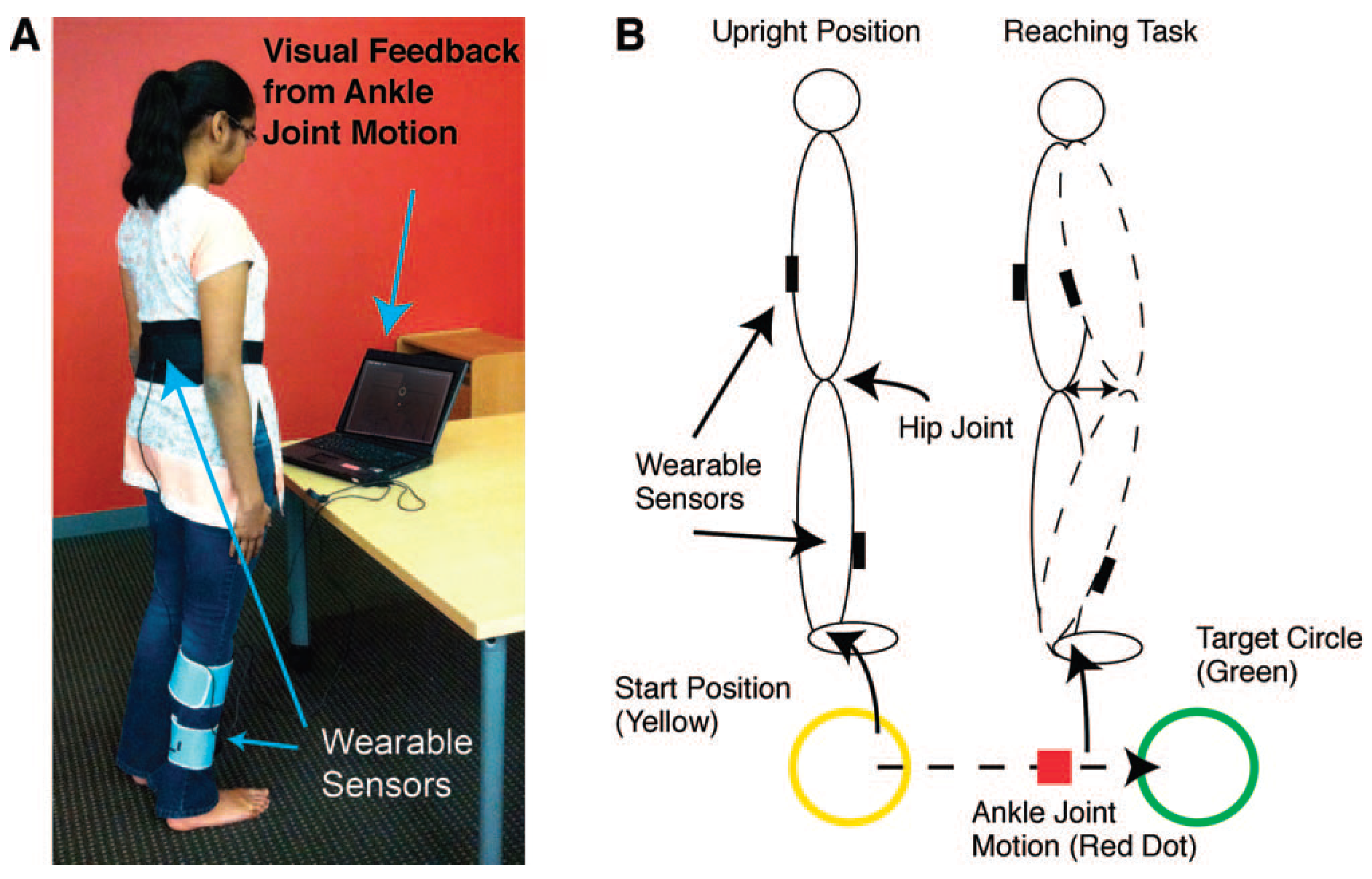
Figure 1A illustrates the ankle reaching exercise and the sensor mounting on different anatomical segments required for balance training and assessment.
Training Protocol
During balance training, participants were presented an interactive virtual reality interface on a laptop screen. The ankle joint–based point-to-point reaching task included two circles that appeared sequentially on the screen: a start circle in yellow followed by a target circle in green. An illustration of the virtual reality interface implemented is presented in
Figure 1B. The participant’s rotation around the ankle joint, acquired using a shank-mounted sensor, was translated and was represented by a red square on the screen. By moving the hip joint in the anteroposterior direction through coordination of the upper and lower body, rotation around the ankle joint can be achieved, and, thus, the participants were able to move the square to and fro. Similarly, movement of the red square in the mediolateral direction can be achieved. The participants now performed a series of point-to-point ankle reaching exercises by coordinating upper and lower body movement to move the red square from the start circle to the target circle in a straight line as fast as possible once the green target circle appeared on the screen. After successfully reaching the target circle, another circle appeared at the initial start position, and participants moved the red square back to the initial circle in the same manner and resumed their upright position. This to and fro motion continued for 25 tasks to complete one training block of ankle-based exercises. Because the training required both legs to move in the same manner simultaneously, only one sensor was required at one of the two shanks to capture the rotation around the ankle joint.
The reaching task was performed in the standing position, with the feet shoulder-width apart, by coordinating ankle joint and hip joint motion. Because movement of the red square is solely dependent on the shank-mounted sensor, the participants were instructed to try not to bend their knees or lift their heels, otherwise they could cheat and could increase the range of motion of the red square without the effort of coordinating the upper and lower body.
Figure 1B shows the motion of a participant during the reaching task. At the beginning of training, the red square appeared in the middle of the start circle (yellow), and the target circle (green) appeared after a predefined period. The reaching task was performed in the barefoot or shod condition depending upon patient preference.
To control the timing of the reaching task, audio and additional visual feedback was also provided. If the red square (representing ankle joint motion) reached the target within the preset threshold (<1 sec), the target circle exploded with a positive feedback sound. On reaching, if the target circle changed to blue, it would indicate that the individual’s movement was either too slow or too late, and the patient was then instructed to move faster. On the other hand, if the target circle turned red on reaching, it implied that the patient initiated movement too early; thus, the patient was instructed to wait for the green target circle to appear before initiating motion. Training was divided into three blocks of 25 reaching tasks each; a 1- to 2-min break was given between blocks to avoid fatigue. The total training time was approximately 10 to 15 min.
The protocol for assessment of balance included double-stance measurements during the eyes-open and eyes-closed conditions for 30 sec. Arms were kept straight at the sides during balance measurements, and no visual feedback was provided. A chair was seated next to the patients during balance measurements in case they lost balance; in addition, a research team member was present alongside the participant during the entire training and assessment time for safety. Measurements were stopped if the patient lost balance.
Figure 1.
A, Photograph of a volunteer demonstrating the point-to-point ankle reaching task. B, Illustration of the ankle joint reaching task and sensor mounting. The reaching task involves moving the red square from the start circle (yellow) to the target circle (green) in a straight line through ankle and hip joint coordination.
Figure 1.
A, Photograph of a volunteer demonstrating the point-to-point ankle reaching task. B, Illustration of the ankle joint reaching task and sensor mounting. The reaching task involves moving the red square from the start circle (yellow) to the target circle (green) in a straight line through ankle and hip joint coordination.
Outcomes
Balance was assessed 2 min before and after training. The primary study end point was changes in COM sway before and after training during the eyes-open and eyes-closed conditions. However, to determine whether potential improvement in COM sway is due to improvement in postural coordination or to improvement in ankle and hip stability or both, we also examined potential changes in postural coordination between two distal joints (ie, the ankle and hip). The COM sway was estimated using a two-link model via the data extracted from two body-worn sensors (BalanSens) attached to the patient’s shank and lower back using elastic straps. The sensors allow measurement of three-dimensional joint angles. The methods and validation results have been described previously.[
6] The COM was assessed in the mediolateral and anteroposterior directions, and the area of sway was then calculated for each condition. All of the values are reported as area of COM sway. In addition, postural coordination between the upper and lower body in the mediolateral and anteroposterior directions was also examined for each participant and was quantified using the reciprocal compensatory index. This index measures postural coordination between the upper and lower body (reciprocal coordination between hip and ankle motions, which, in turn, allows the reduction of COM sway).[
37] The closer the value is to 0, the better coordination is between the distal joints (the hip and ankle); a value of 1 signifies no coordination, and values greater than 1 signify poor coordination.[
37]
Statistical Analysis
A paired-sample t test was used to examine significant changes in balance between the pre-and post-balance training conditions. The Spearman correlation coefficient was used to examine the correlation between balance changes after training and baseline parameters. A multiple linear regression model (stepwise) was applied to determine the association between baseline measurement and magnitude of COM sway change after training. Independent variables included baseline balance parameters (eg, COM, ankle, and hip sway) and the patient’s demographic characteristics (age and body mass index) and clinical information (vibration perception threshold and diabetes duration). Results are expressed as mean ± SD. A P ≤ .05 was considered statistically significant. Statistical analyses were performed with a commercially available software program (SPSS, version 20; SPSS Inc, Chicago, Illinois).
Results
Twenty-nine patients with type 2 diabetes and confirmed DPN were recruited (mean ± SD: age, 57 ± 10 years; body mass index [calculated as weight in kilograms divided by height in meters squared], 26.9 ± 3.1; 86% men). The mean ± SD duration of diagnosed diabetes was 15.2 ± 11.3 years. The mean ± SD hemoglobin A1c level of participants was 7.7% ± 1.5%. All of the participants had a mean ± SD vibration perception threshold of 25 V or higher for at least one foot, with a mean ± SD vibration perception threshold of 41 ± 16 V.
Body Sway Changes
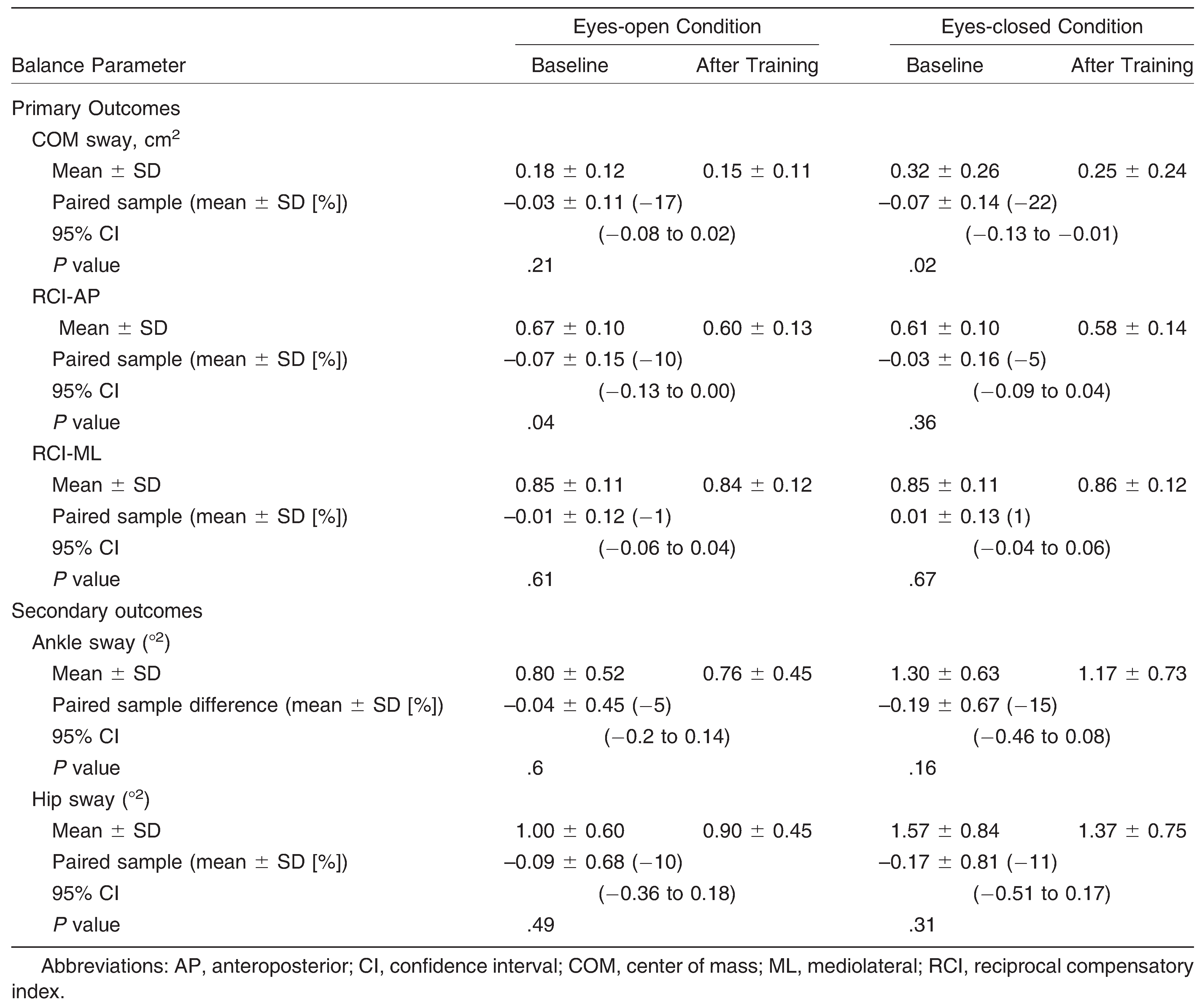
Table 1 lists changes in all of the measured parameters before and after balance training. Trends toward reduction in sway were observed for almost all of the parameters, including ankle, hip, and COM, during balance assessments. After approximately 15 min of the ankle joint reaching task with visual feedback, reductions of 10% (mean ± SD: from 1.3 ± 0.63°[
2] to 1.17 ± 0.73°
2), 12.7% (mean ± SD: from 1.57 ± 0.85°
2 to 1.37 ± 0.75°
2), and 22% (mean ± SD: from 0.32 ± 0.26 cm
2 to 0.25 ± 0.24 cm
2) in sway of the ankle, hip, and COM, respectively, were observed during the eyes-closed balance assessment (
Table 1).
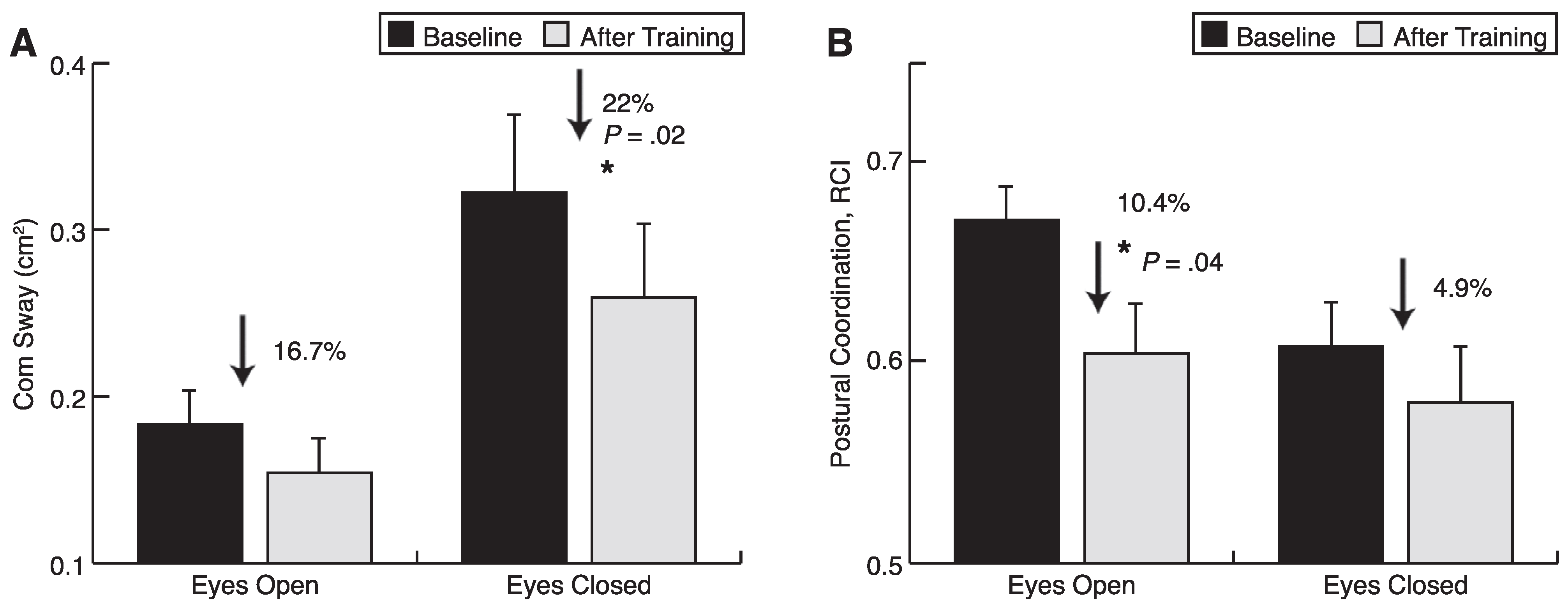
Figure 2A plots reductions in COM sway during the eyes-open and eyes-closed measurements; changes during the eyes-closed measurement were significant (
P = .02).
Similar trends toward reductions in sway were observed during the eyes-open balance measurements (
Table 1). The sway of hip, ankle, and COM was reduced by 10%, 5%, and 16.7%, respectively; however, these values were not statistically significant.
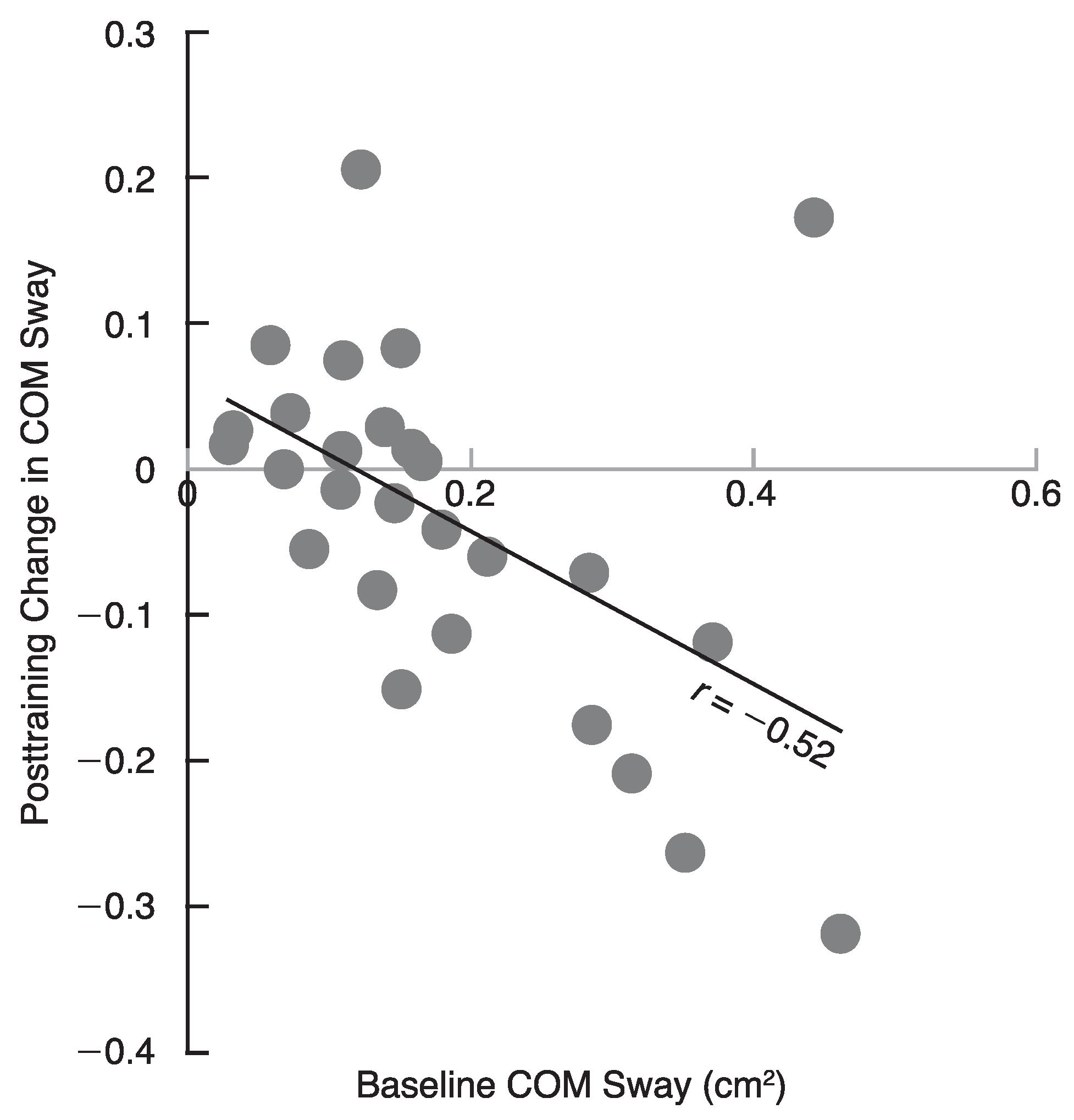
A negative correlation (
r = −0.52,
P < .05) was found between reduction in COM sway (Baseline COM minus posttraining COM) and baseline COM sway during the eyes-open balance assessment (
Fig. 3). These results suggest that patients with a higher postural deficit could benefit more from ankle joint–based balance training.
Of the tested parameters at baseline, only COM sway during the eyes-open condition (r = −0.52, P = .005), hip sway (r = −0.8, P < .001), and the reciprocal compensatory index in the mediolateral direction (r = −0.38, P = .04) had a significant correlation with the magnitude of the COM sway change after training during the eyes-open condition. On the same note, the magnitude of COM sway change after training during the eyes-closed condition had significant correlation with COM sway during the eyes-closed condition (r = −0.41, P = .02), ankle sway (r = −0.42, P = .02), and hip sway (r = −0.40, P = .05). This indicates that improvement in balance during the eyes-closed condition is mainly due to reductions in ankle and hip sway. No significant correlation was observed between the magnitude of COM sway change after training during both conditions and the patient’s demographic features (ie, age and body mass index) or clinical information (ie, vibration perception threshold and duration of diabetes).
The results of the multiple linear regression model suggest that of the measured parameters at baseline, including patient demographic and clinical information (eg, age, body mass index, vibration perception threshold, and diabetes duration), only hip sway during the eyes-open condition is a significant independent variable to determine the magnitude of COM sway change after training and during the eyes-open condition (B = −0.167, 95% confidence interval =−0.28 to −0.05°2, P = .008, r2 = 0.46). Similarly, hip sway during the eyes-closed condition was the only independent predictor of COM sway change after training during the eyes-closed condition (B = −0.1, SE = 0.03, P = .01, 95% confidence interval =−0.15 to −0.02°2, r2 = 0.3).
Postural Coordination
It was observed that patients with DPN improved coordination between the ankle and hip joints during posttraining balance measurement when quantified by the reciprocal compensatory index.[
6] Significant improvements (
P < .05) in the postural coordination strategy in the anteroposterior direction were observed during the eyes-open balance assessment (
Fig. 2B). The mean ± SD reciprocal compensatory index was reduced from 0.67 ± 0.10 to 0.60 ± 0.13 (10.4%,
P = .04) and from 0.85 ± 0.11 to 0.84 ± 0.12 (1%) in the anteroposterior and mediolateral directions, respectively. However, nonsignificant reductions were observed during the eyes-closed balance assessment in the anteroposterior direction, where mean ± SD reciprocal compensatory index values were reduced from 0.61 ± 0.10 to 0.58 ± 0.14 (
Table 1 and
Fig. 2B).
Table 1.
Reductions Observed in Measured Parameters Between the Baseline and Posttraining Assessments of Balance
Table 1.
Reductions Observed in Measured Parameters Between the Baseline and Posttraining Assessments of Balance
Discussions
Patients with diabetes experience peripheral neuropathy, which increases their risk of falling due to diminished joint proprioception in the lower extremities.[
10,
16,
38,
39] In addition, this altered somatosensory feedback mechanism increases body sway, leading to balance deterioration and further increasing the risk of falling.[
10,
37,
40] Falls pose a huge economic burden on health-care resources and negatively affect the patient’s quality of life.[
15] Balance rehabilitation strategies provide a useful resource to clinicians caring for diabetic patients, especially offering tools to increase ankle joint strength and proprioception in patients with DPN. Current balance training regimens are effective but do not provide any real-time feedback from joint motion, particularly from the ankle joint, that may benefit patients with DPN by compensating the loss in proprioceptive feedback. The benefit of real-time visual feedback during balance training has been demonstrated in various clinical abnormalities.[
23,
25,
27] In addition, conventional balance training programs require several weeks of training, which may necessitate increased motivation and result in compliance issues, especially in elderly patients.
We propose a novel balance training paradigm with real-time feedback from ankle joint motion to improve postural control through a series of point-to-point ankle reaching exercises. To our knowledge, this is the first study to provide ankle-based balance training for diabetic patients with real-time visual feedback from joint motion. In addition, the virtual reality–based interface we implemented during training introduces a gaming factor into training to enhance motivation and increase user participation.[
31] The virtual reality paradigm compared with traditional approaches also has the advantage of controllability of the training environment with respect to level of difficulty and exercise dosage, which we would introduce in prospective studies by introducing mediolateral reaching tasks. Training progress can be objectively evaluated, allowing accurate analysis of patient performance over time.
Figure 2.
A, Changes in center of mass (COM) sway during the eyes-open and eyes-closed balance assessments. B, Postural coordination between the ankle and hip joints quantified by the reciprocal compensatory index (RCI) observed in the anteroposterior direction during the eyes-open and eyes-closed balance assessments. Asterisks signify P value < 0.05.
Figure 2.
A, Changes in center of mass (COM) sway during the eyes-open and eyes-closed balance assessments. B, Postural coordination between the ankle and hip joints quantified by the reciprocal compensatory index (RCI) observed in the anteroposterior direction during the eyes-open and eyes-closed balance assessments. Asterisks signify P value < 0.05.
These results suggest that postural stability can be improved significantly through balance training by including visual feedback from ankle joint motion. Overall, posttraining changes in postural stability were encouraging; we observed a 22% reduction in body sway and a 10.4% improvement in postural coordination in the anteroposterior direction (P < .05 for both). These improvements were observed after only three training blocks of 25 point-to-point ankle reaching tasks, with a total duration of approximately 15 min.
Figure 3.
Correlation between reduction in center of mass (COM) sway and baseline COM sway.
Figure 3.
Correlation between reduction in center of mass (COM) sway and baseline COM sway.
Significant reductions in COM sway were achieved (
P = .02, 22% eyes closed and 16.7% eyes open). Other researchers have reported similar improvements of 16% to 31% for COM sway reduction.[
8,
18,
23,
41,
42] Note that these studies had a much more intensive training protocol, with training periods of generally several weeks compared with 15 min during the present study. In the present study, a trend toward reductions in sway was observed after training for all three of the postural stability–quantifying parameters: ankle, hip, and COM. Because there is a direct association between reaching tasks and sensorimotor functions,[
40] it seems that incorporation of visual feedback based on joint motion during reaching tasks has benefited the participant by providing relatively better perception of the ankle joint. Other groups have proposed improvement in plantar sensations from Tai Chi training.[
21] The role of visual feedback in reducing risk of falls has also been demonstrated in frail older women.[
27] A similar effect of visual feedback on postural coordination can be seen herein. These results are consistent with findings from previous studies demonstrating benefits of balance training.[
8,
23,
42]
When quantifying the postural compensatory strategy, we observed significant improvements in postural coordination between the ankle and hip joints after training tasks. Improvements were evident in the anteroposterior and mediolateral directions but were significant only in the anteroposterior direction (
P = .04, 10%). These findings are intuitive because the reaching task was oriented only in the anteroposterior direction for the present protocol. On a similar note, Akbari et al[
8] reported that after balance training no significant improvements in the mediolateral stability index were found, and they proposed that because hip abductor and adductor muscles control this movement and these are rarely affected by diabetes, the improvement effect is less.
In the present study, it stands to reason that participants were better able to compensate ankle joint motion with appropriate motion of the hip joint because of visual feedback corresponding to ankle joint motion. This strategy contributes to reducing hip sway, which, in turn, allows the reduction of COM sway during the eyes-open and eyes-closed conditions. In particular, during the eyes-closed condition, participants had a trend toward using the ankle strategy after training, whereas they had a trend toward using the hip strategy at baseline. Studies have reported that individuals with DPN often switch their postural strategy from the ankle to the hip joint owing to a loss of or reduction in somatosensory feedback.[
7,
9,
43] Therefore, the improvements in postural coordination between the ankle and the hip that we observed may reflect a benefit of ankle joint motion feedback during balance training. There has also been some previous evidence of improvements in proprioception of the trunk through balance training.[
42] To our knowledge, the present study is also the first to look at the benefits of a balance training paradigm on the postural compensatory strategy between the ankle and hip joints.
This study has some limitations, most importantly the training time (only 15 min). However, because the reductions in sway were still significant, we envisage that increasing the training time could further benefit the target population and offer significant sway reductions for the ankle and hip joints. Second, we did not incorporate the ankle reaching task in the mediolateral direction because the aim was to minimize the risk of fall during training at this stage of research. Third, the present study was not designed to have a control group to compare the effect of the proposed balance training between groups. Finally, all of the study participants were relatively young (mean ± SD age, 57 ± 10 years), limiting any evidence from the elderly population, where risk of falling is higher.
Based on the present results, we argue that such a novel training paradigm incorporating visual feedback through longer training periods could better benefit patients with DPN in improving not only postural stability but also postural coordination. For future research studies, we aim to include a larger population sample and mediolateral reaching tasks. We demonstrated postural stability improvements from only 15 min of training, which is very short compared with other conventional balance training paradigms, which often take several weeks of training.[
18–
20,
23,
42] In addition, in future studies, we would like to include a control group and also assess changes in functional test results (Timed Up and Go and 10-m walking tests) as a result of balance training from the ankle joint reaching tasks. In essence, the present research has taken a step forward in balance training by providing real-time feedback from ankle joint motion.
Conclusions
We implemented a novel balance rehabilitation strategy based on virtual reality technology. The methods included wearable sensors, visual feedback, and an associated interactive user interface that uses ankle joint position projected on a screen, as in a video gaming environment, to compensate for impaired joint proprioception. These findings support that visual feedback generated from the ankle joint coupled with motor learning may be effective in improving postural stability in patients with DPN. Future investigations will address the previously mentioned limitations and provide evidence of the proposed approach from a large patient population.