Fall-related injuries are a major public health concern.[
1–
3] One in three adults older than 65 years experience a fall each year,[
4,
5] and 10% to 20% of falls result in serious injury, including skeletal fractures and head trauma.[
6] Nonfatal falls impose substantial health-care costs and frequently lead to short- or long-term institutionalization of the person sustaining the fall. Patients who experience falls can lose their independence through physical disability or from the fear of falling again.[
7,
8] In 2000 alone, the direct medical care costs totaled more than
$19 billion for fall-related injuries in the United States, and these costs are estimated to reach
$43.8 billion per year by 2020.[
8,
9] With our aging population worldwide, much attention has been given to identifying and targeting modifiable risk factors for falls in older adults.
Mounting evidence suggests that foot pain and deformity, which can affect up to 30% of older adults,[
10–
12] are important risk factors for falling.[
13–
18] Hallux valgus (HV), in particular, is associated with poorer performance during balance and functional testing in older adults.[
14,
15] In a study of 176 elderly men and women, Menz et al[
15] found increased postural sway, increased time needed to perform the alternate step test, increased time for sit-to-stand, and decreased walking speed in those with HV foot deformity. Following that same cohort forward, Menz and colleagues[
16] found that adults with greater HV severity were more likely to sustain a fall injury. In a study of 336 older adults, Tinetti et al[
18] found that the presence of a serious foot problem, which included HV, doubled one’s risk of a fall. Similarly, in a prospective study of 979 people older than 70 years in Finland, Koski et al[
13] found that HV was associated with a twofold increased risk of a fall event. Finally, in a recent 12-month prospective study of 312 community-dwelling older adults, Mickle et al[
17] demonstrated that fallers were more likely to have HV and lesser toe deformity than were nonfallers.
Podiatric physicians can play a major role in falls prevention efforts. Current evidence suggests that targeted interventions aimed at addressing lower-extremity risk factors can reduce the rate of fall events in high-risk populations by as much as 36%.[
19–
21] Historically, these efforts have focused on home-based exercise programs, foot orthoses, footwear recommendations, and patient education. It remains unclear, however, whether surgical intervention affects balance control and fall risk in patients with foot deformity. In this work, we use a cross-sectional study design to explore whether corrective HV surgery improves gait and balance performance in an adult patient population.
Materials and Methods
Participants
Nineteen adult patients with symptomatic HV (preoperative group) and ten adult patients with corrected HV (postoperative group) were recruited from two high-volume podiatric medical outpatient clinics in Chicago, Illinois. Eleven healthy adults (without HV) were also recruited from the same clinics to serve as a control group. The presence or absence of HV was determined clinically. All of the patients with HV demonstrated symptoms of “bump” pain for longer than 6 months and had a first metatarsophalangeal joint angle greater than 20° abducted while standing. All of the patients in the postoperative group had successful bilateral HV surgery via scarf osteotomies by one of two surgeons (L.S.W. or L.W.) using standard operative techniques.[
22] Gait and balance assessments for postoperative patients were performed at a mean ± SD of 10 ± 2.3 weeks after surgery (range, 4–12 weeks). Patients were excluded if they had neuro-muscular disease or orthopedic conditions that impaired walking, were unable to walk 12.5 m unassisted, had a recent injury to the back or legs, or had an unstable medical condition. The study was approved by the local institutional review board at Rosalind Franklin University of Medicine and Science (North Chicago, Illinois). All of the participants provided written informed consent.
Measurement Protocol
Balance Control
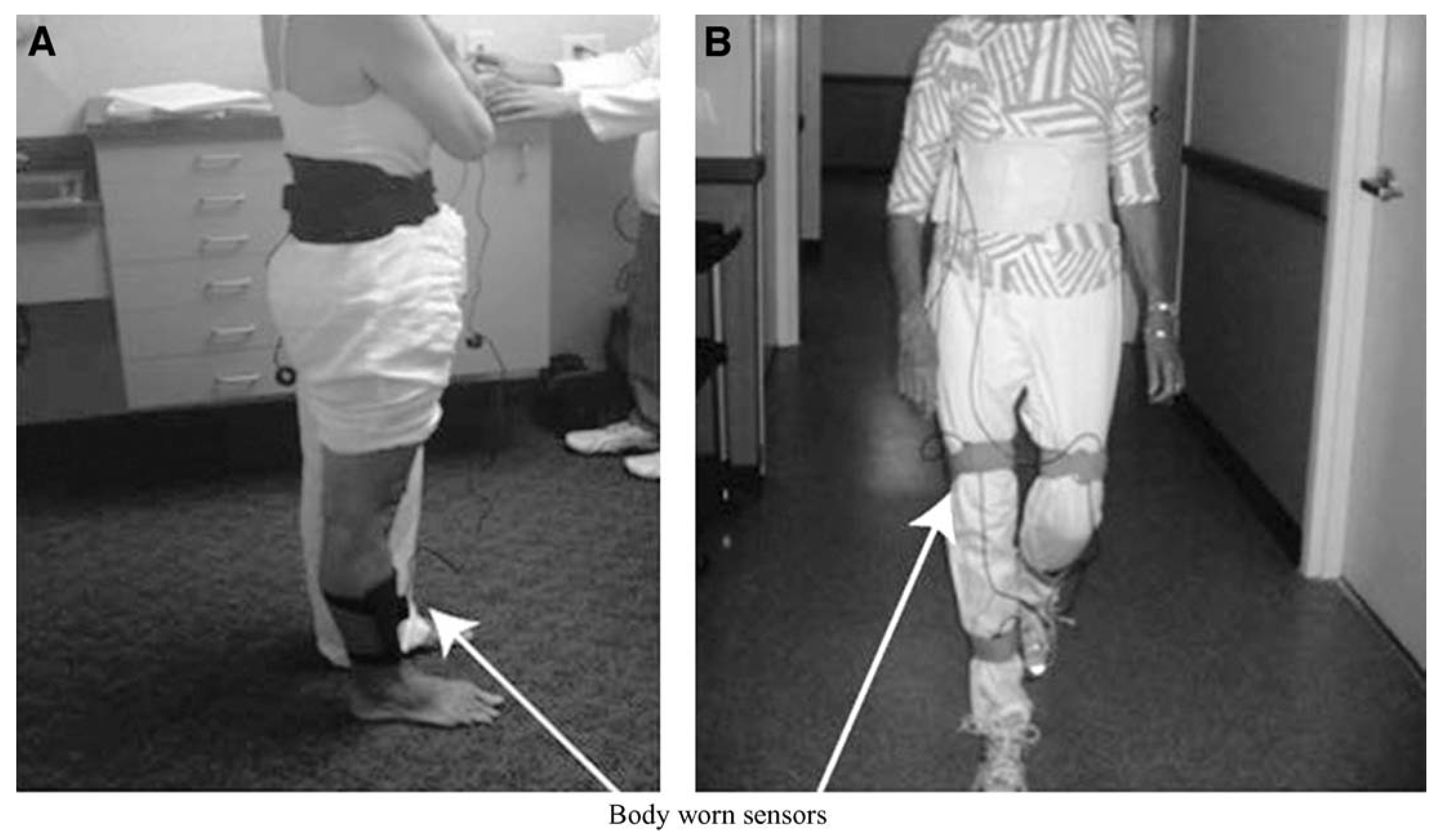
Static balance was assessed during the double- and single-support conditions. During double support, participants were required to stand upright with arms crossed around their shoulders and feet together. Balance was examined during the eyes-open and eyes-closed conditions (Romberg’s test) for at least 30 sec (
Figure 1A). Single-leg support was performed only with the eyes open for 10 sec. Performance was quantified using center of mass, ankle, and hip joint sway using validated body-worn sensor technology (BalanSens; BioSensics, Cambridge, Massachusetts[
23,
24]). Center of mass was assessed in the mediolateral and anteroposterior directions, and the area of sway was then calculated for each condition. All of the values are reported as area of center of mass sway. In addition, postural coordination between the upper and lower body in the mediolateral and anteroposterior directions was also examined for each participant and was quantified using the reciprocal compensatory index. This index measures postural coordination between the upper and lower body (reciprocal coordination between hip and ankle motions, which, in turn, allows reducing center of mass sway).[
23] The closer the value is to zero, the better the coordination between distal joints (hip and ankle); a value of 1 signifies no coordination, and values greater than 1 indicate poor coordination.[
23]
Figure 1.
An illustration of balance (A) and gait (B) assessments using body-worn sensors. Balance was assessed during the double-support eyes-open, double-support eyes-closed, and single-support eyes-open conditions. Gait was assessed in the shod condition with participants walking at their habitual speed for approximately 12.5 m.
Figure 1.
An illustration of balance (A) and gait (B) assessments using body-worn sensors. Balance was assessed during the double-support eyes-open, double-support eyes-closed, and single-support eyes-open conditions. Gait was assessed in the shod condition with participants walking at their habitual speed for approximately 12.5 m.
Gait
Numerous spatiotemporal parameters of gait, including dynamic balance, were measured using validated wearable sensor technology (LEGSys; BioSensics[
25–
27]) while participants wore their habitual footwear (
Figure 1B). Apparatus setup and testing was performed as previously described by Najafi et al.[
27,
28] Patients were asked to walk approximately 12.5 m at their habitual speed. Two trials were performed, and the data obtained from the second trial were used in the analysis. Gait speed intercycle variability was also assessed for each participant and was quantified using coefficient of variation:
, where
mean represents the average stride velocity and
SD represents the standard deviation of stride velocity. In addition, foot pain magnitude was assessed for all of the patients with HV (preoperative and postoperative) using a 10-cm visual analog scale. Quality of life was assessed using the 12-Item Short Form Health Survey, which includes a physical component score and a mental component score. Analysis of variance and the post hoc Scheffe test were used to test for group and pairwise comparisons. The significance level was set at
P < .05.
Results
Height and weight measurements did not differ significantly among the three groups (P > .05). Mean ± SD age also did not differ for participants in the preoperative (44.3 ± 11.9 years) and postoperative (50 ± 9.4 years) groups (Scheffe, P = .49); however, those in the control group (22.9 ± 1.9 years) were younger than those in the patient groups (P < .01).
Results of the static balance assessment are provided in
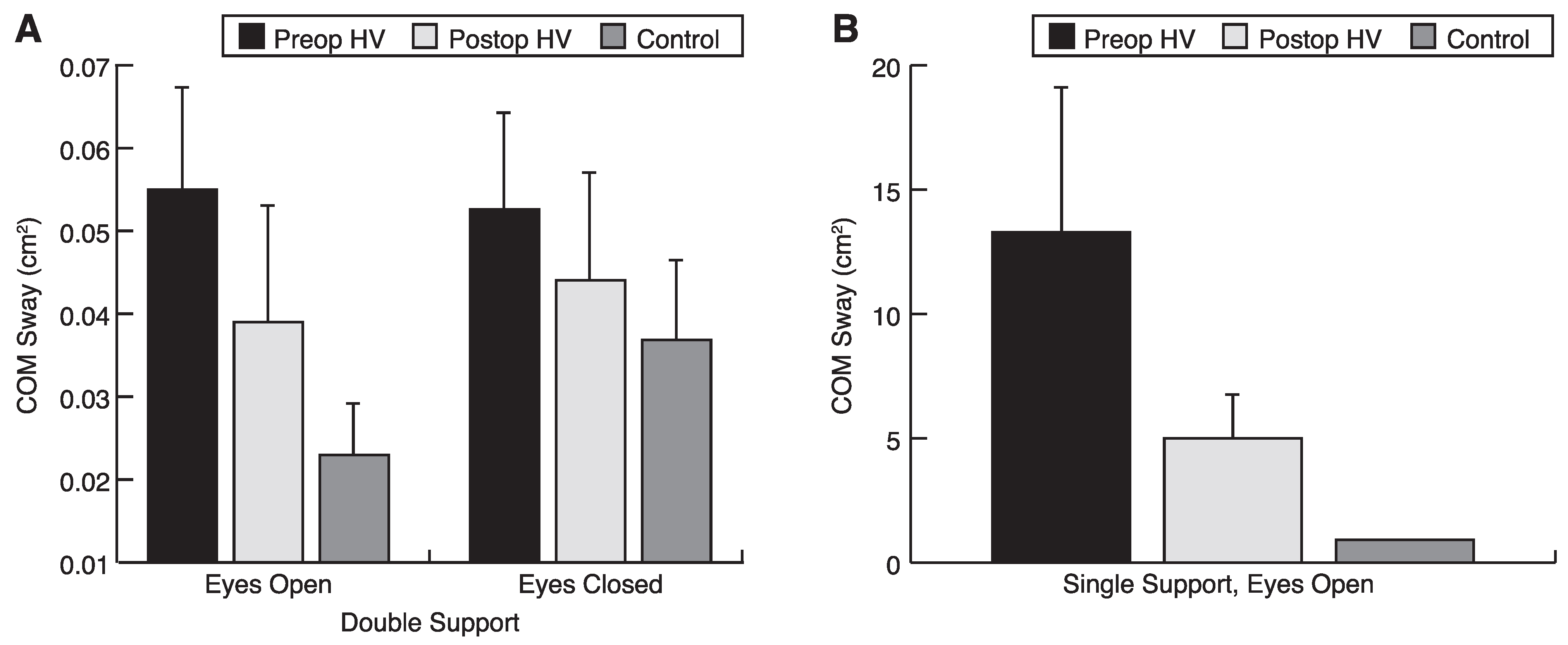
Table 1. Overall, center of mass sway showed a decreasing trend from preoperative patients to postoperative patients and control participants. More specifically, patients with symptomatic HV (preoperative group) tended to exhibit greater mean ± SD postural sway (0.055 ± 0.05 cm
2) in static stance compared with postoperative patients (0.039 ± 0.04 cm
2) and control participants (0.023 ± 0.02 cm
2) during the double-support eyes-open condition (
P = .17) (
Figure 2A). During single-support tasks, where balance was further challenged, patients with symptomatic HV also tended to have much greater mean ± SD center of mass sway (13.2 ± 25.3 cm
2) compared with postoperative patients (4.9 ± 5.6 cm
2) and control participants (0.88 ± 0.5 cm
2) (
P = .14) (
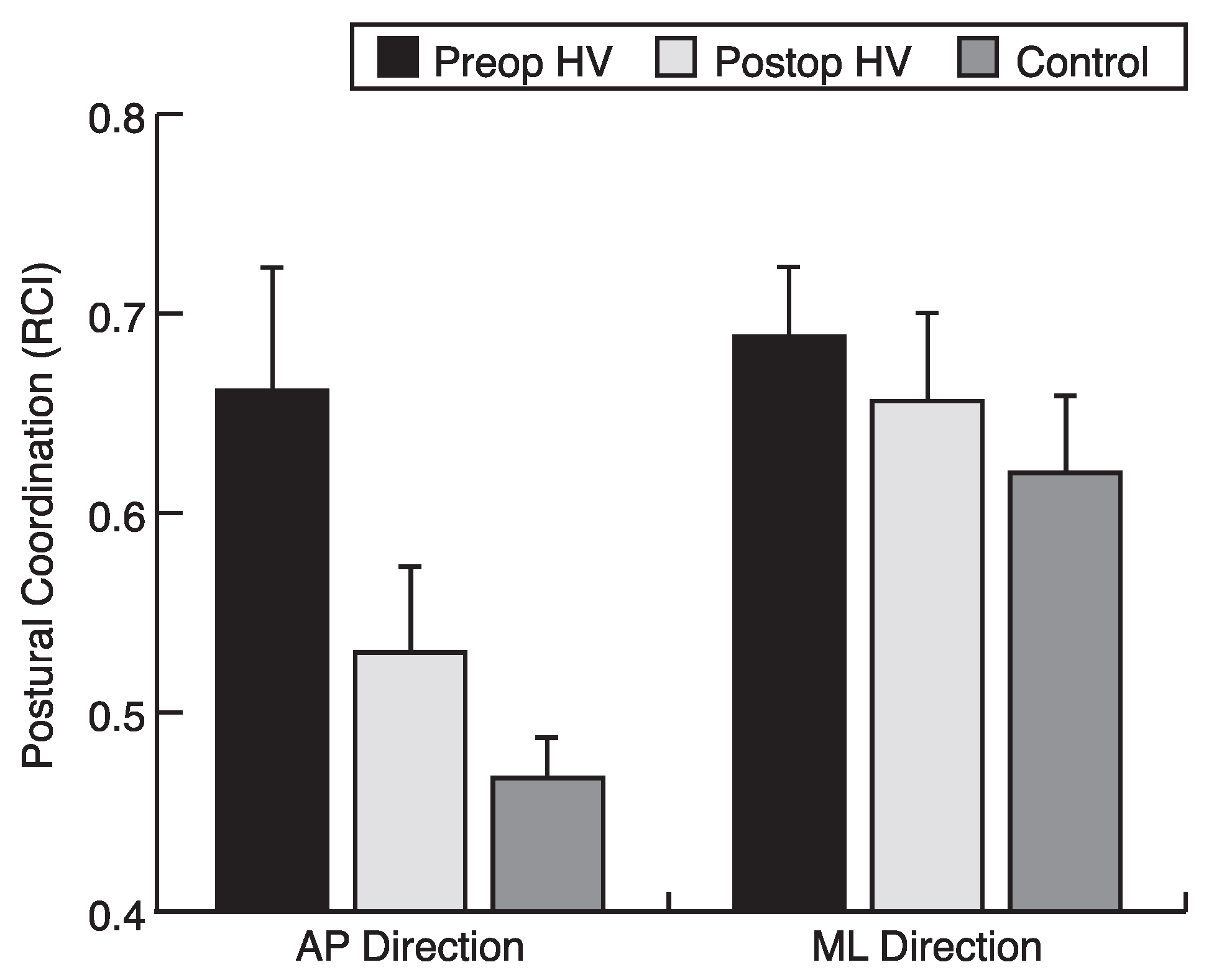
Figure 2B), although this comparison did not quite reach statistical significance. Finally, preoperative patients with HV seemed to have the poorest postural coordination between their upper and lower bodies among the three groups, particularly in the anteroposterior direction (
P = .046) (
Figure 3); however, pairwise tests failed to confirm this general observation (all Scheffe
P ≥ .06).
Table 1.
Comparison of Balance Performance in the Control, Preoperative (Preop), and Postoperative (Postop) Groups
Table 1.
Comparison of Balance Performance in the Control, Preoperative (Preop), and Postoperative (Postop) Groups
Figure 2.
Mean differences in center of mass (COM) sway among the three groups during the double-support (A) and single-support (B) conditions. HV indicates hallux valgus; postop, postoperative; preop, preoperative. Error bars represent the SD.
Figure 2.
Mean differences in center of mass (COM) sway among the three groups during the double-support (A) and single-support (B) conditions. HV indicates hallux valgus; postop, postoperative; preop, preoperative. Error bars represent the SD.
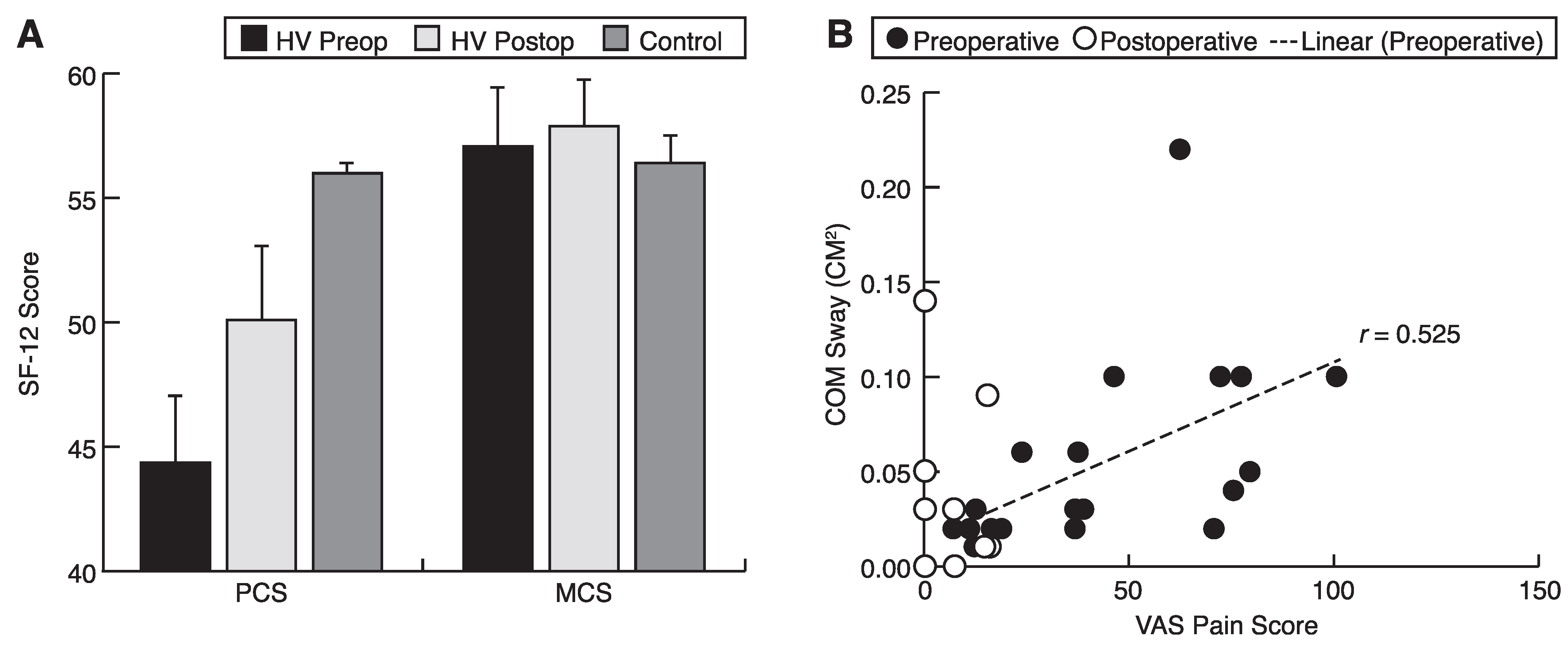
There was no difference in the mental component score domain of the 12-Item Short Form Health Survey among the three groups, but a significant group difference was found for the physical component score domain (
P = .01) (
Figure 4A). Participants in the preoperative group reported significantly lower physical component score totals compared with those in the control group (Scheffe,
P = .01), whereas physical component scores for healthy and postoperative participants were similar (Scheffe,
P = .4). Mean ± SD visual analog scale pain scores were also significantly lower in postoperative compared with preoperative patients ( 6.4 ± 6.8 vs 43.5 ± 6.8,
P = .001). These findings support the premise that participants in the postoperative group were, in fact, “successful” HV surgical cases.
Figure 3.
Mean differences in anteroposterior (AP) and mediolateral (ML) postural coordination among the three groups. Analysis of variance P = .046 for AP coordination, P = .48 for ML coordination. HV indicates hallux valgus; postop, postoperative; preop, preoperative; RCI, reciprocal compensatory index. Error bars represent the SD.
Figure 3.
Mean differences in anteroposterior (AP) and mediolateral (ML) postural coordination among the three groups. Analysis of variance P = .046 for AP coordination, P = .48 for ML coordination. HV indicates hallux valgus; postop, postoperative; preop, preoperative; RCI, reciprocal compensatory index. Error bars represent the SD.
A positive linear correlation (
r = 0.53,
P < .05) was demonstrated between foot pain intensity (ie, visual analog scale pain) and center of mass sway for those in the preoperative HV group (
Figure 4B); however, a similar correlation was not observed in the postoperative HV group.
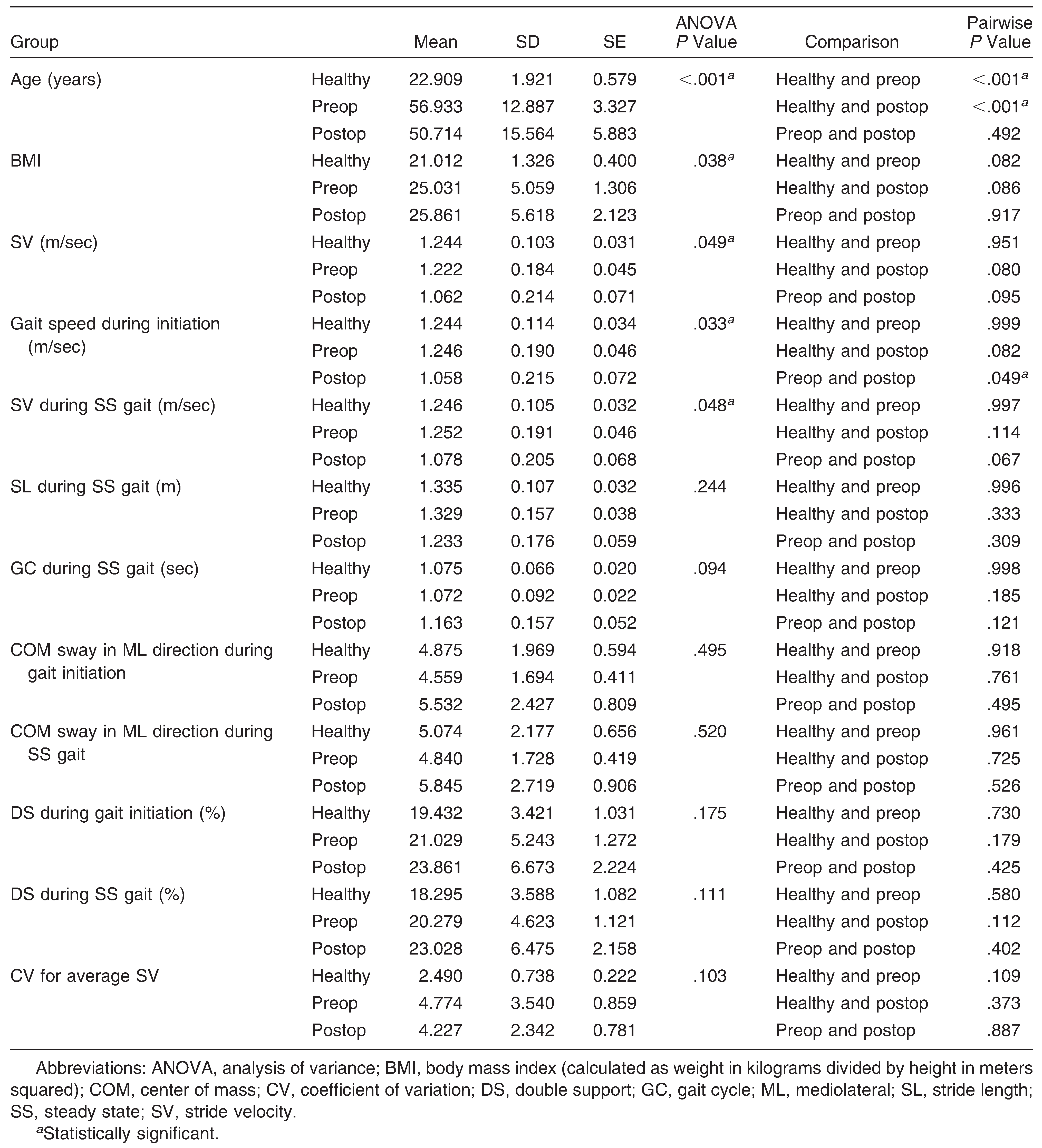
Select spatiotemporal gait characteristics from the study are provided in
Table 2. Most gait parameters did not differ among the three groups; however, preoperative patients walked faster than postoperative patients during their first few steps (ie, gait initiation) (
P = .049). Control participants and preoperative patients also tended to walk with greater stride velocities than postoperative patients (analysis of variance
P < .05); however, pairwise tests did not confirm these observations (all Scheffe
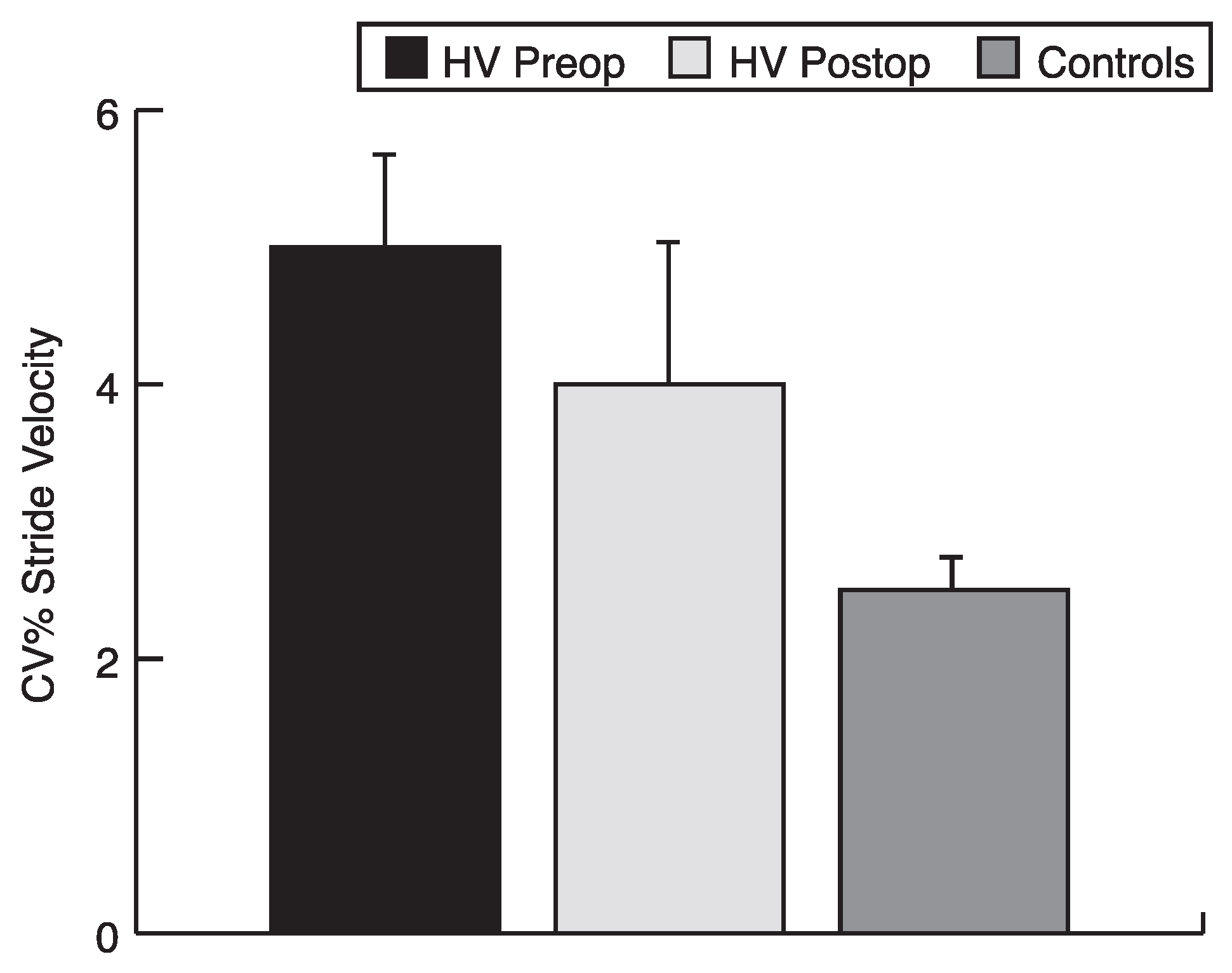
P ≥ .08). Finally, a nonsignificant trend suggesting progressively less intercycle gait variability (defined using coefficient of variation for stride velocity) from preoperative patients to postoperative patients and control participants was also found (
P = .10) (
Figure 5).
Figure 4.
A, Mean 12-Item Short Form Health Survey (SF-12) scores by physical component score (PCS) and mental component score (MCS). A trend toward increasingly better physical health (PCS) can be seen across the preoperative (preop), postoperative (postop), and control groups (P =.01). Error bars represent the SD. B, Scatterplot comparing visual analog scale (VAS) pain scores with center of mass (COM) sway (anteroposterior direction) in the preoperative and postoperative hallux valgus (HV) groups. A positive correlation (r = 0.525, P < .05) was observed between COM sway and pain in the preoperative group.
Figure 4.
A, Mean 12-Item Short Form Health Survey (SF-12) scores by physical component score (PCS) and mental component score (MCS). A trend toward increasingly better physical health (PCS) can be seen across the preoperative (preop), postoperative (postop), and control groups (P =.01). Error bars represent the SD. B, Scatterplot comparing visual analog scale (VAS) pain scores with center of mass (COM) sway (anteroposterior direction) in the preoperative and postoperative hallux valgus (HV) groups. A positive correlation (r = 0.525, P < .05) was observed between COM sway and pain in the preoperative group.
Table 2.
Comparison of Gait Parameters in the Control, Preoperative (Preop), and Postoperative (Postop) Groups
Table 2.
Comparison of Gait Parameters in the Control, Preoperative (Preop), and Postoperative (Postop) Groups
Discussion
Herein, we found that balance control was better by as much as 63% in patients who recently underwent successful HV surgery compared with those in a symptomatic HV group who were awaiting surgery. This is important because poor balance is linked to an increased risk of falling.[
29,
30] Although similar minimally invasive procedures (eg, cataract surgery and pacemaker insertion) have recently been shown to reduce fall risk in select patient groups,[
31,
32] this work represents the first attempt to study a surgically modifiable risk factor for falls in the lower extremity.
Figure 5.
Gait variability, defined as mean coefficient of variation (CV) for stride velocity, among the three groups. A trend toward improvement can be seen, with the postoperative hallux valgus (HV) group demonstrating nearly 12% less variation compared with the preoperative HV group.
Figure 5.
Gait variability, defined as mean coefficient of variation (CV) for stride velocity, among the three groups. A trend toward improvement can be seen, with the postoperative hallux valgus (HV) group demonstrating nearly 12% less variation compared with the preoperative HV group.
We feel that these findings offer considerable promise on several levels. First, the 29% to 63% better balance observed in the postoperative patients is comparable with the results achieved in past work targeting balance control in high-risk patients.[
33] Second, and perhaps most important, HV surgery can be performed once at a single sitting yet offers the hope of providing long-term maintenance of improvements in balance and gait. This is in stark contrast to the current fall risk reduction approaches targeting the lower extremities (eg, exercise programs, shoe choices, and bracing), which require repetition and rely heavily on patient adherence for their effectiveness. Finally, the effects of HV surgery on balance may be immediate. Herein, we found that improvements in balance control may be realized even before postoperative week 12.
Improvements in balance control after HV surgery may occur via several mechanisms. A corrected position of the great toe, for example, may allow for better proprioception or first metatarsophalangeal joint range of motion, processes that are known to deteriorate with the aging process.[
33,
34] Surgical realignment of HV deformity may also lead to improvements in tactile sensation in the plantar foot. This concept is supported by the fact that some authors have found that plantar pressures beneath the hallux become normalized after HV corrective surgery.[
35] Improved tactile sensation coupled with better proprioceptive feedback and possibly better first metatarsophalangeal joint range of motion may enhance one’s ability to regulate the center of mass over the foot. Finally, enhancements in balance control might be achieved through a reduction in foot pain after HV surgery.
We observed, for example, a relatively high correlation between center of mass sway and foot pain magnitude in participants in the preoperative HV group. This finding suggests that the poorer balance seen in patients with untreated HV may have been, at least partly, mediated through higher levels of foot pain. This mechanism seems quite plausible as previous work has shown that reducing foot pain correlates with improved functional abilities in older adults.[
36] What is not clear, however, is why greater pain along the medial foot is associated with greater instability during static balance. We believe that this may be related to the patient’s conscious (or unconscious) attempt to shift weight beneath their planted foot in an effort to shield their prominent bunion from the pressure of shoes. Further study is, of course, needed to support or refute this notion.
The quality of gait performance in the postoperative group was somewhat poorer compared with that in preoperative patients and control participants; however, none of the differences were significant except for stride velocity. We found that gait speed variability was actually lower in the postoperative compared with the preoperative group. Hence, even during the early postoperative recovery period, patients who underwent corrective surgery were, in some respects, better able to coordinate their gait. However, despite nonsignificant
P values, it seemed that postoperative patients exhibited a more cautious gait during early recovery after HV surgery, with generally lower stride velocities, higher gait cycle times, and higher double-support times than the other groups. Although most authors indicate that gait and plantar pressures can take up to a year to normalize, there is now new evidence to suggest that with aggressive postoperative rehabilitation, improvements may be seen as early as 8 weeks after HV surgery.[
37] We speculate that we simply did not observe these patients long enough to see normalization or improvement in gait characteristics.
These findings need to be interpreted in the context of several limitations. First, there were fewer participants in the postoperative group compared with the preoperative group, and the overall number of participants was relatively small in this pilot work. This increased the likelihood of committing a type 2 error and would explain why several of the comparisons did not reach statistical significance. Second, with a cross-sectional study design, we were unable to report on balance and gait changes longitudinally. Also, owing to time limitations, we were unable to observe the postoperative patients long enough to see a possible recovery or enhancement in gait performance. Finally, we did not specifically target older adults in this pilot work. It is, therefore, uncertain just how generalizable these findings will be to those at greatest risk for falling. It will be important to investigate these questions using a larger, prospective, and older adult cohort with longer-term follow-up. It would also be interesting to simultaneously collect plantar pressure data and correlate the results to changes in gait and balance performance after corrective HV surgery.
Conclusions
The results of this pilot study are encouraging and suggest that surgical correction of HV may enhance balance control. Furthermore, corrective HV surgery may have a relatively early effect on static balance, whereas gait requires longer recovery periods relative to balance. Further research with a longitudinal study design and a larger sample size that is capable of assessing the long-term effects of HV surgical correction on balance and gait is probably warranted.