Thrombocytopenia is a well-recognized adverse complication of heparin therapy. It usually occurs in the first 5 to 10 days after the onset of therapy [
1] and has an incidence of 0.2% to 5.0% in patients exposed to heparin for longer than 4 days [
2–
7]. Thrombocytopenia can often result in complications for patients undergoing podiatric surgery, such as loss of limb, deep venous thrombosis, pulmonary embolism, extended hospitalizations, and even death. Heparin-induced thrombocytopenia (HIT) is often underrecognized or underreported, and, as such, there is a paucity of information on this topic in the podiatric medicine literature. There are multiple risk factors associated with the development of HIT, and multiple forms of HIT exist. We herein report on a diabetic patient who had undergone podiatric surgery for a metatarsal fracture and subsequently developed thrombosis with associated thrombocytopenia. The diagnosis, pathogenesis, clinical concerns, and management options of this potentially life-threatening complication are also discussed.
Case Study
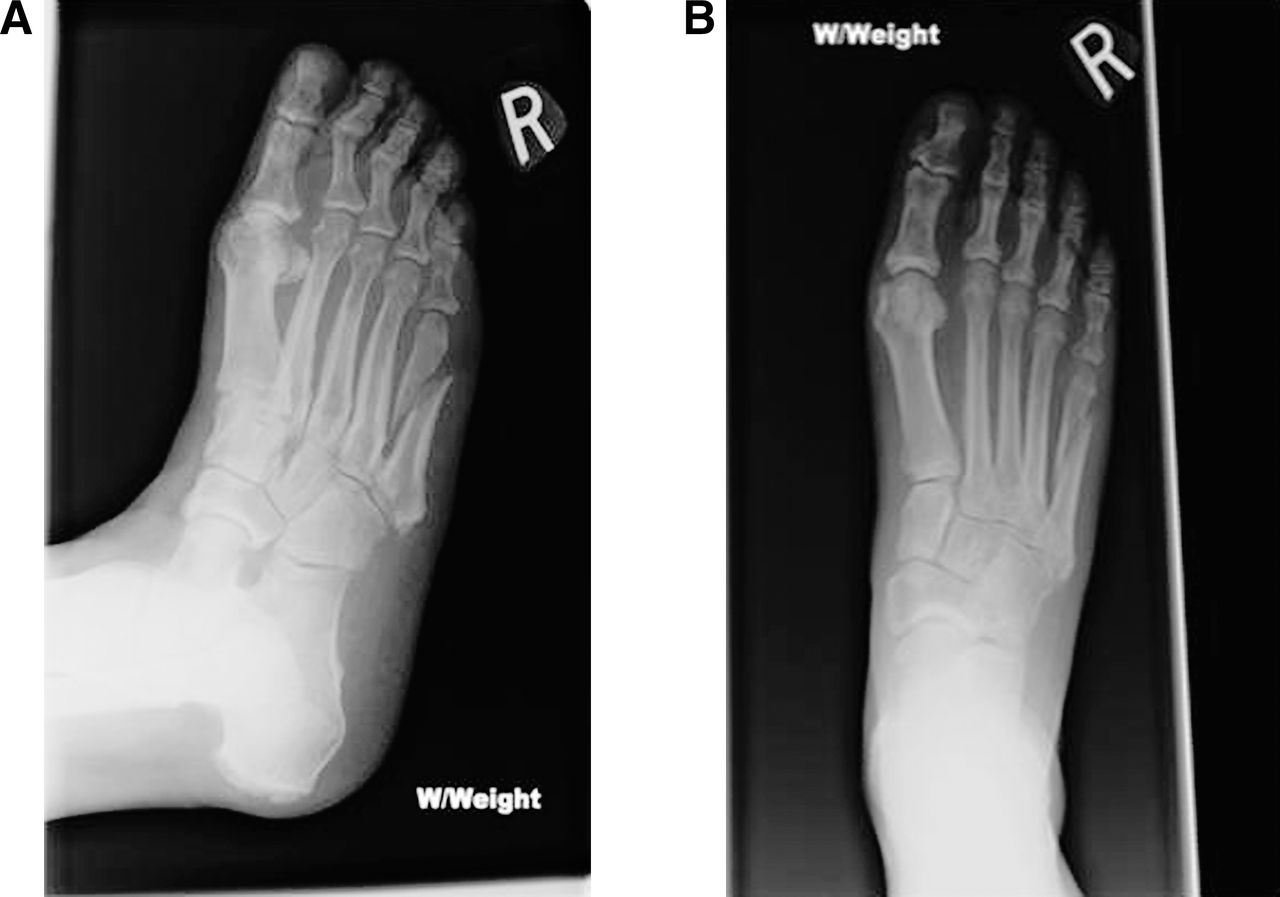
A 64-year-old man with a medical history of type 2 diabetes, neuropathy, and chronic anemia was admitted to the Veterans Administration Medical Center in Phoenix, Arizona, for renal failure and subsequently was started on hemodialysis for end-stage renal disease. On admission to the hospital, it was noted that the patient had a displaced midshaft oblique fracture of the right fifth metatarsal that he stated occurred approximately 3 weeks earlier when he tripped at home (
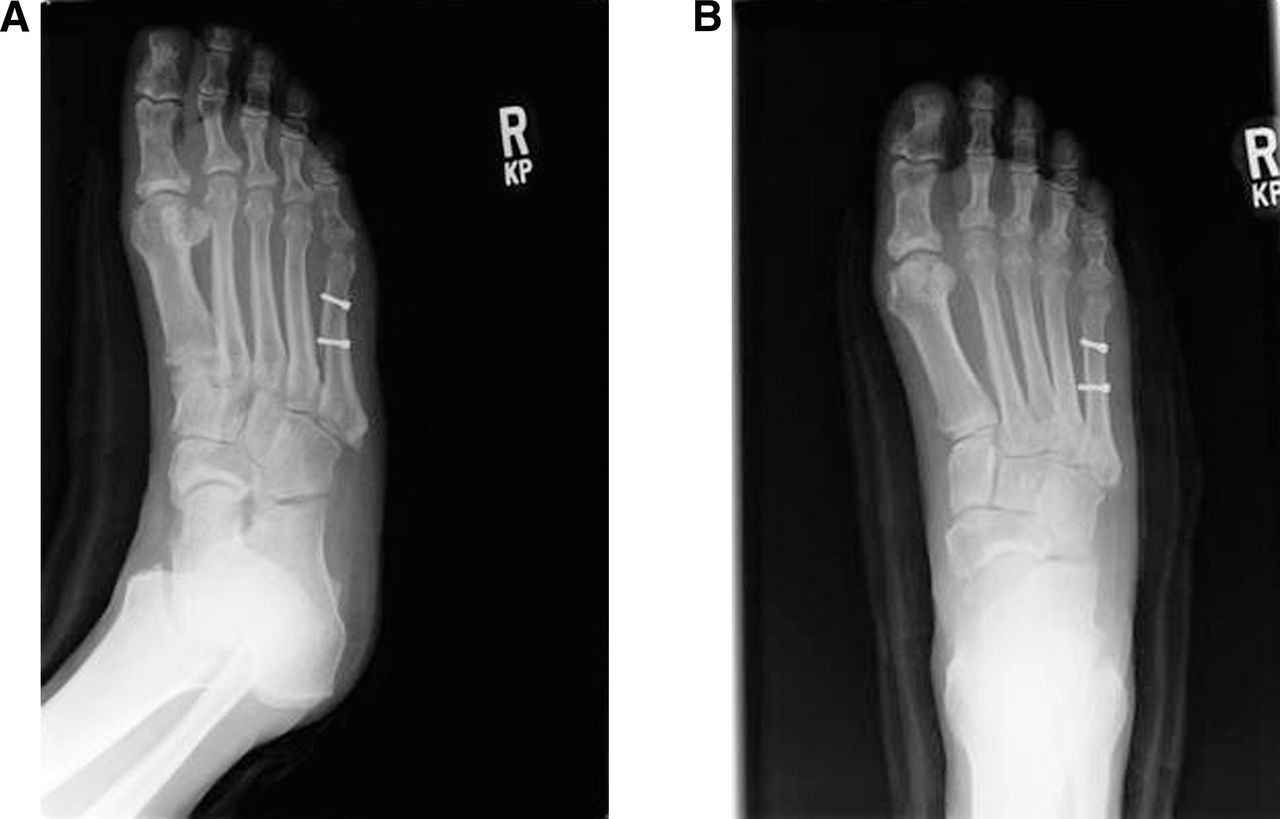
Fig. 1). The podiatric medical department was consulted for treatment of the fracture. During his admission, the patient underwent placement of a left arteriovenous fistula for his hemodialysis, a right tunneling catheter for temporary use until his fistula matured, and open reduction and internal fixation of his fifth metatarsal fracture (
Fig. 2). He tolerated the procedures well and was discharged from the hospital several days later. His platelet count at discharge was 108,000 K/ul and his international normalized ratio was 1.2.
After being discharged from the hospital, the patient returned to the emergency department at the Veterans Administration Medical Center 1 week later with increased swelling to his right neck and chest. His subsequent work-up revealed an internal jugular and subclavian vein deep venous thrombosis. The patient was admitted to the hospital for anticoagulation therapy, which included a weight-based unfractionated heparin sulfate drip and bridging to warfarin. When his international normalized ratio was therapeutic at 2.4, he was again discharged from the hospital. No adverse complications to his heparin sulfate use were noted on this admission, and his platelet count remained stable at 200,000 K/ul at discharge.
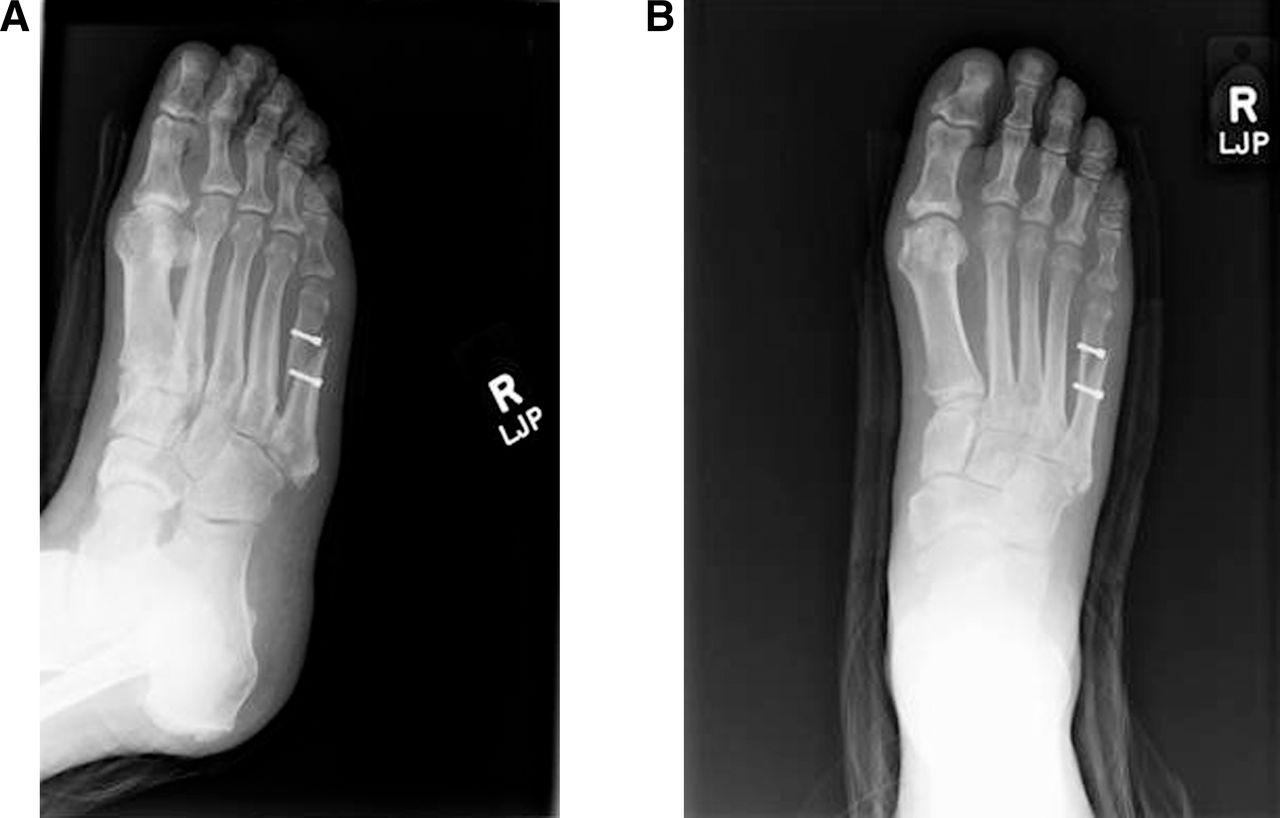
The patient returned to the podiatric medical clinic 4 weeks after his right fifth metatarsal fracture repair. He admitted to having walked to the restroom without using his walking boot at least twice and having fallen while standing without wearing the protective device. Follow-up radiographs of his foot demonstrated reinjury/displacement of his fracture repair (
Fig. 3).
It was decided that a second repair was indicated and that admission to the hospital for bridging of his warfarin, in light of his recent deep venous thrombosis and hemodialysis, would be appropriate. He was admitted to the podiatric medical service, and bridging was initiated with a weight-based heparin drip. His admission international normalized ratio was 1.6, and his platelet count was 146,000 K/ul. On hospital day 3 and the morning of surgery it was noted that his platelet count had decreased from more than 150,000 to 77,000 K/ul (49%) in 24 hours. The patient had no complaints, and his vital signs remained stable. His physical examination findings were unremarkable. However, HIT was suspected, and his surgery was cancelled. The patient was transferred to the medicine service, where he was given argatroban for continued anticoagulation. A heparin antibody enzyme-linked immunosorbent assay was performed, and the results were positive for HIT.
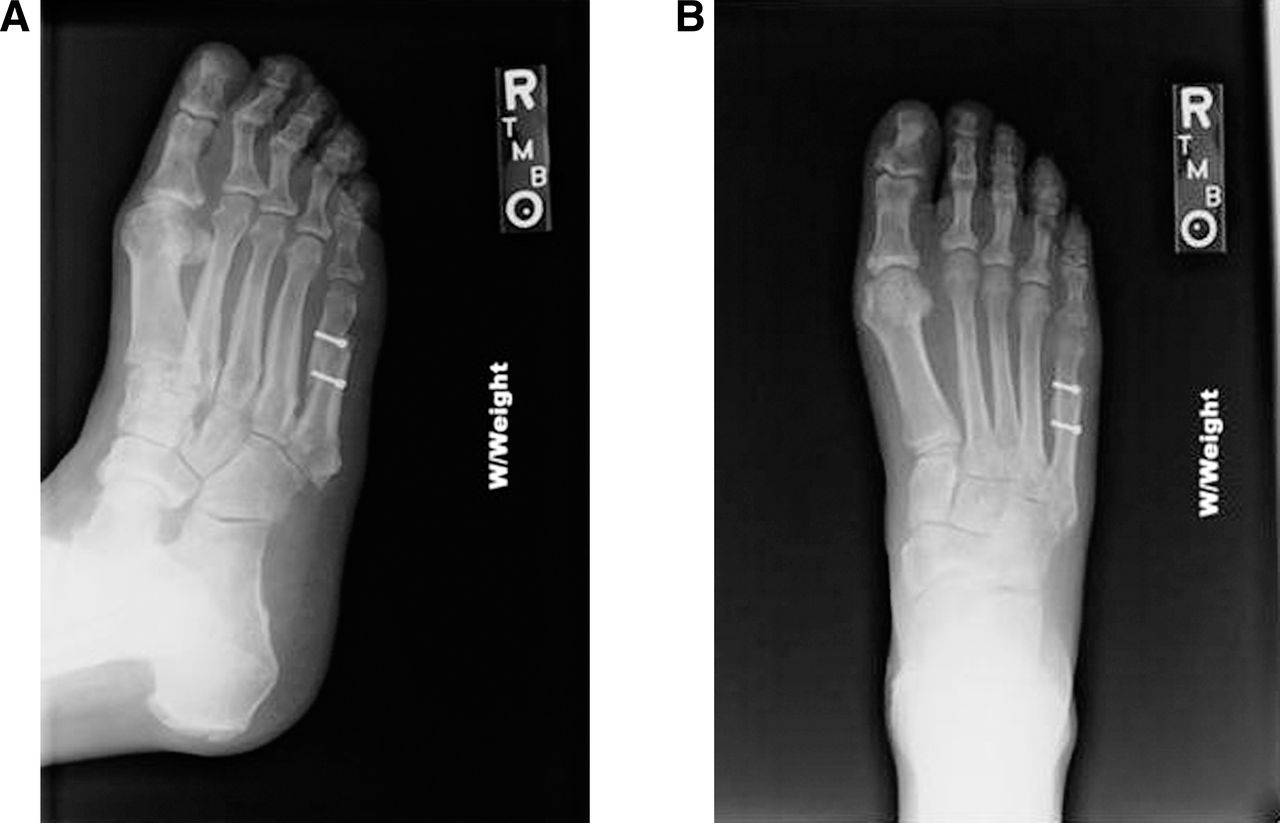
In the next few days, his platelet count steadily increased to greater than 150,000 K/ul. He was bridged back to warfarin and was discharged with a platelet count of 186,000 K/ul and an international normalized ratio of 2.3. Any further surgical intervention at that time was deemed to be too risky owing to his hyperthrombotic state, and conservative therapy with nonweightbearing in a protective walking boot was decided. Since that time, he has continued anticoagulation therapy with warfarin. His platelet count has remained greater than 150,000 K/ul, and radiographs of his right foot, taken 4 months after his initial surgery, demonstrate his fracture to be healed (
Fig. 4).
Discussion
Heparin-induced thrombocytopenia is a well-recognized adverse complication associated with the use of heparin-based products. It typically occurs within the first 5 to 10 days of the onset of therapy [
1] and has an incidence of 0.2% to 5.0% in patients exposed to heparin for longer than 4 days [
2–
7].
Risk factors for thrombocytopenia include the use of unfractionated heparin vs low-molecular-weight heparin [
7]. A study by Martel et al [
2] showed that the risk of thrombocytopenia was 2.6% with the use of unfractionated heparin and only 0.2% with the use of low-molecular-weight heparin in orthopedic patients. Surgical rather than medical patients, female patients, and patients with a duration of use greater than 4 days are also at increased risk for HIT.
Multiple forms of HIT exist. The more serious form of HIT is type II, which is an immune-mediated response to heparin with the formation of antibodies against the heparin-platelet factor complex (PF4) [
1]. Activated platelets become bound by the PF4 antibody complex and are quickly removed from circulation, leading to thrombocytopenia [
8]. Type II is also associated with a paradoxical hyperthrombotic state known as heparin-induced thrombocytopenia and thrombosis (HITT). The exact mechanism is unclear, but it is believed that early activation and removal of platelets from the circulation leads to the generation of procoagulant, platelet-derived microparticles, which frequently result in the generation of thrombin and subsequent thrombosis [
8]. Devastating arterial and venous thrombotic complications can arise and are the major clinical concern associated with HIT. The 30-day risk of thrombosis after the diagnosis of HIT is 53% [
9], with most cases of HIT being diagnosed only after a thrombotic event. Thrombotic complications of HITT include limb loss, deep venous thrombosis, pulmonary embolism, and even death [
10].
The diagnosis of HIT or HITT should be suspected when there is thrombocytopenia, thrombosis with thrombocytopenia, or necrotic skin lesions at injection sites after the onset of heparin therapy. Immune-mediated HIT is associated with loss of greater than 50% of circulating platelets within 5 to 10 days [
1,
11], as was seen in the present patient. Although the initial diagnosis is mainly clinical, it may be confirmed with the use of 1) the serotonin release assay (the gold standard, with sensitivity and specificity >95%), 2) the heparin-induced platelet aggregation assay (>90% specific but lacks sensitivity), and 3) heparin-PF4 antibody enzyme-linked immunosorbent assay (very sensitive [91%–97%], with a negative predictive value greater than 95%) [
1,
12].
Early onset of HIT may be seen if the patient has been treated with heparin in the previous 1 to 3 months and still has circulating HIT antibodies present [
13]. In this patient, HIT was seen earlier than predicted. This was thought to be attributable to his earlier exposure to heparin in his preceding hospitalization. This likely sensitized him to heparin, and on reexposure to the medication, he still had circulating HIT antibodies present.
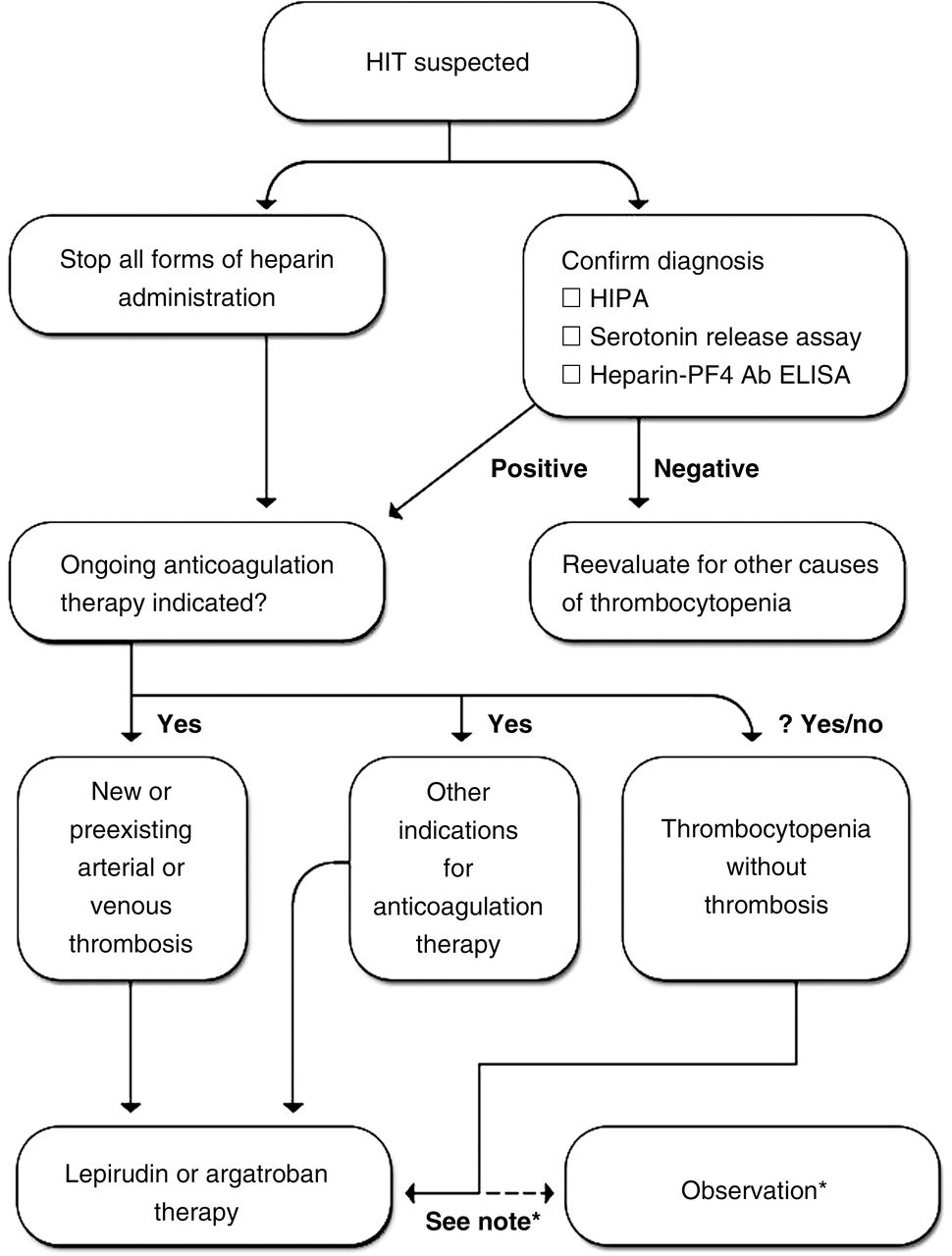
Multiple options exist for the management of patients with HIT or HITT. When HIT or HITT is suspected, we recommend that immediate consultation be sought from appropriate medical colleagues for complete work-up and initiation of therapy. Therapy typically includes immediate cessation of heparin use, confirmation of HIT diagnosis, evaluation for further need for anticoagulation, and initiation of an alternative nonheparin anticoagulant, such as lepirudin, argatroban, danaparoid, fondaparinux, or bivalirudin (
Fig. 5) [
1]. It is recommended that patients with HIT undergo anticoagulation for at least 2 to 3 months after diagnosis and that patients with HITT undergo anticoagulation for 3 to 6 months after a thrombotic event [
14].
Conclusions
Heparin-induced thrombocytopenia can have severe consequences with significant morbidity, including loss of limbs, pulmonary embolism, and deep venous thrombosis; even death can occur. Early detection and recognition of HIT is vital for patient safety, especially in the setting of perioperative bridging for surgical patients, as these patients are at increased risk for thrombosis [
7]. In this case report, we detected a sudden drop of nearly 50% in this patient’s platelet count on the morning of his scheduled surgery. It was this critical event that lead to the diagnosis of HIT. We, therefore, recommend routine platelet count monitoring for operative patients undergoing bridging for anticoagulation therapy and for any patient receiving heparin therapy.