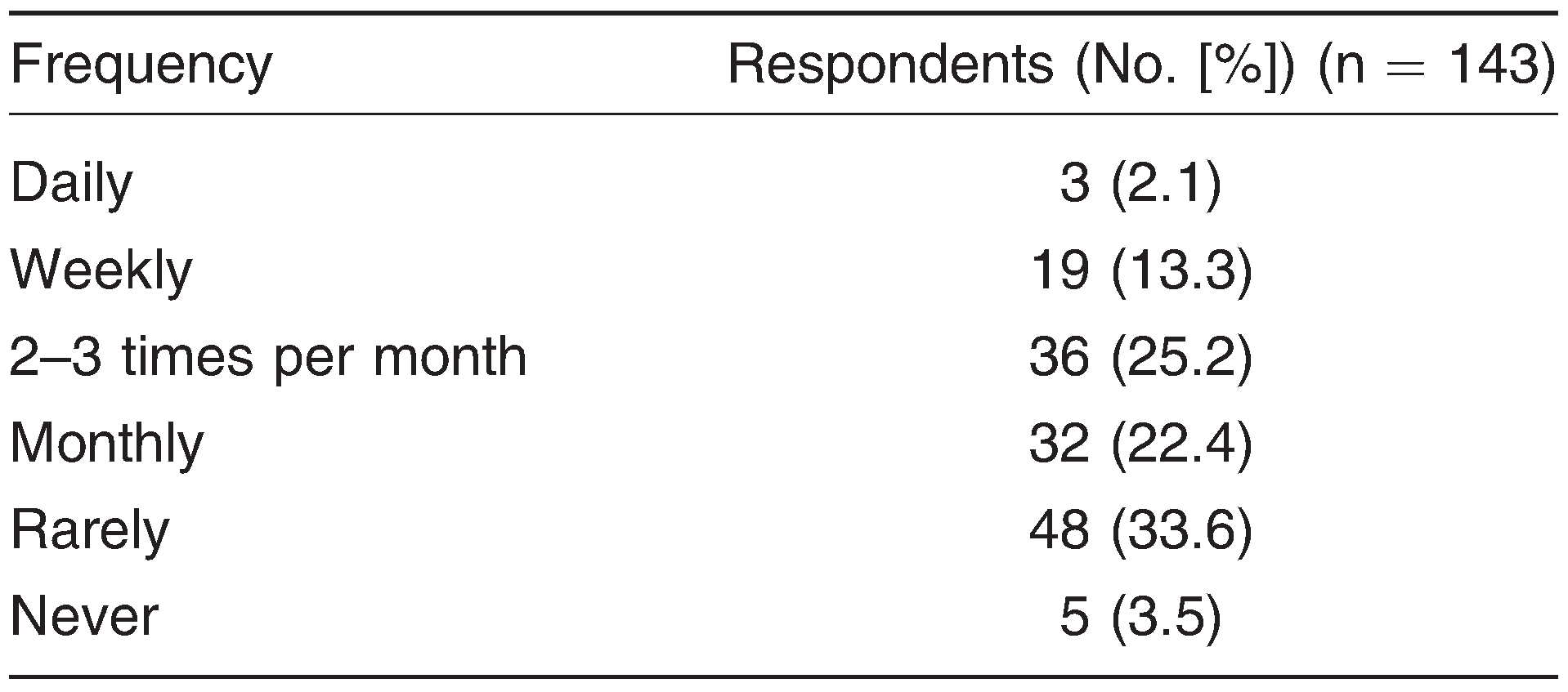
The goal of this study was to evaluate the information-seeking behaviors of podiatric physicians when patient care visits lead to a need for information. This study surveyed the alumni of the Ohio College of Podiatric Medicine (OCPM; now Kent State University College of Podiatric Medicine [KSUCPM]) who have e-mail addresses on file with the OCPM Office of Institutional Advancement. Invitations to participate were e-mailed, along with a detailed explanation of the study, informed consent information, and a link to a survey.
The main objectives of the study were 1) to learn about the types and frequency of information needs that podiatric physicians encounter during patient care visits, 2) to learn the primary and additional information resources used by podiatric physicians to answer clinical questions that arise during patient care, and 3) to learn what barriers podiatric physicians encounter when searching for answers to clinical questions.
In addition to learning which information resources podiatric physicians currently use and what barriers they encounter, it was anticipated that with the increased use of the Internet, this study would show how many podiatrists use the Web as an information resource and what sites they commonly search to access authoritative sources for patient care issues. Furthermore, the survey questioned podiatric physicians about their evaluation skills of Internet resources. With this knowledge, librarians may have a better understanding of podiatric physicians’ information-seeking practices and may be better able to provide assistance and education to podiatric medical students and podiatric physicians. In addition, practicing podiatric physicians may learn their own limitations when sifting through the large quantity of available information and may seek out tips, techniques, and training on locating and evaluating high-quality information for patient care.
The Kent State University College of Podiatric Medicine (KSUCPM), formerly the Ohio College of Podiatric Medicine (OCPM), is a private 4-year specialty medical college located in Independence, Ohio. The College, one of nine podiatric medical schools in the United States, was founded in 1916 in downtown Cleveland, Ohio, and has since graduated more than 6,000 students. Students graduate with the degree of Doctor of Podiatric Medicine. The curriculum parallels that of allopathic and osteopathic medical schools but has a much greater emphasis on the lower extremity. The podiatric physician is a health-care professional who specializes in the prevention, diagnosis, treatment, and surgery of foot disorders and who is trained to detect signs of medical disorders that may be discovered first in the lower extremities, such as diabetes.
If a podiatric physician has a question regarding the diagnosis or treatment of a patient’s disease, where does he or she turn for an answer? Literature on studies of information-seeking behaviors of other health-care professionals indicates that there is a high preference for using the medical literature and colleagues, with Internet searching substantially increasing. The medical literature includes print textbooks and journal articles as well as electronic books, e-journal articles, and professional medical databases. Print materials may be from the podiatric physician’s personal library or from an institutional library, such as a hospital, university, or public library. Other information sources used may include pharmaceutical or equipment company literature, Internet virtual forums, and health-care databases.
Methods
Information-seeking behaviors were examined by using a survey of 29 questions administered through an Internet Web site. There are approximately 4,330 practicing and nonpracticing graduates of OCPM, and there are more than 12,000 practicing podiatric physicians in the United States. [
15] An invitation to participate in the survey was sent by e-mail to the 1,982 alumni who have e-mail addresses on file with the OCPM Department of Institutional Advancement. Although not achieved, the sample size called for 322 participants, with a 95% confidence level and a 5% margin of error. [
16]
The e-mail invitation explained the research project and included informed consent information. A link to the Web site SurveyMonkey [
17] connected the participant to the survey. One reminder e-mail was sent 3 weeks after the first e-mail. The survey investigated podiatric physicians’ information needs, the resources they use to meet those needs, and the barriers they encounter in their search. The questions in the survey were based on previous literature from studies analyzing physicians and other types of health-care professionals.
After the study was piloted by five practicing podiatric physicians for review and comments, the invitation was distributed by e-mail, not only saving the cost of mailing a paper survey but also with the expectation of a better response rate. Although using e-mail to distribute the survey would skew the data by focusing on those who may already use a computer more often, it was expected that the study would illustrate current Internet use and future Internet resource trends.
This study was intended to examine how podiatric physicians obtain information after they finish residency and are seeing patients in practice, a time when they will likely lose access to the hospital’s or medical school’s library resources used to support their residency.
The survey took approximately 15 min to complete and had six sections. Section 1 addressed the type and frequency of the information needs. Section 2 asked what sources podiatrists use to locate answers to their patient care questions. In section 3, information was requested regarding podiatric physicians’ use of Internet resources, such as search engines, electronic e-journals and databases, and communication tools. Section 4 examined the barriers that are commonly encountered in acquiring information. In section 5, podiatric physicians were questioned about their skills regarding Internet searching and evaluation of information. Finally, section 6 requested demographic information.
There were limitations to this survey. First, the survey sample was limited to podiatric physicians who graduated from OCPM. This convenience sample of podiatric physicians may not be an accurate representation of the entire podiatric medical community as the study did not include podiatric physicians from any of the other eight podiatric medical schools and might have limited generalization. As already indicated, by its very nature, the e-mailed survey included respondents who are likely to be predisposed to using a computer to obtain information. In addition, participants were asked to self-report information. Covell et al [
14] indicated that self-reported responses can be underreported and overreported and are limited by the respondent’s recall. Furthermore, all alumni with e-mail addresses were invited to participate with no randomization of the group, so participants ultimately self-selected to respond. Finally, the response rate was very low. Podiatric physicians who chose not to respond to the survey may have answered much differently than those who did respond.
Data were collected by the Web site software provider, SurveyMonkey. At the conclusion of the study, the data for each question were provided and a report was generated in graph and table form for analysis. SurveyMonkey provided percentages and counts for each specific question or response. Included with the data were total response count, total started and total completed, respondent count for each question, and corresponding percentages. The software also provided the comment data, which was imported into a word-processing document, and allowed filters to be applied to filter by responses or properties.
Discussion
Haug [
19] explained that seeking the information needed in solving a problem is part of an involved process that begins with recognizing the problem and ends with resolving the problem. Between those two points is the process of finding, judging, and using the information. An individual who is information literate can accurately determine what information is needed and then can find the information, critically evaluate the information, and subsequently use the information effectively.
As Davies [
10] noted, the health-care professional must have the willingness and ability to personally search for an answer. A podiatric physician who has a question after a patient care visit needs to identify the need, know where and how to locate the information, evaluate that information to determine whether it is authoritative and fits the needs of the patient, and, finally, use what was learned for the benefit of the patient.
Past studies of the information-seeking behaviors of health-care professionals have shown similarities across all of the reported medical specialties. The specialty of podiatric medicine has not been studied, but the results were anticipated to be similar to those of other health professions, especially primary care physicians who do not have academic or organizational affiliations.
Although some studies have shown a preference toward consulting colleagues and using print resources, [
9,
14] according to Podichetty and Penn, [
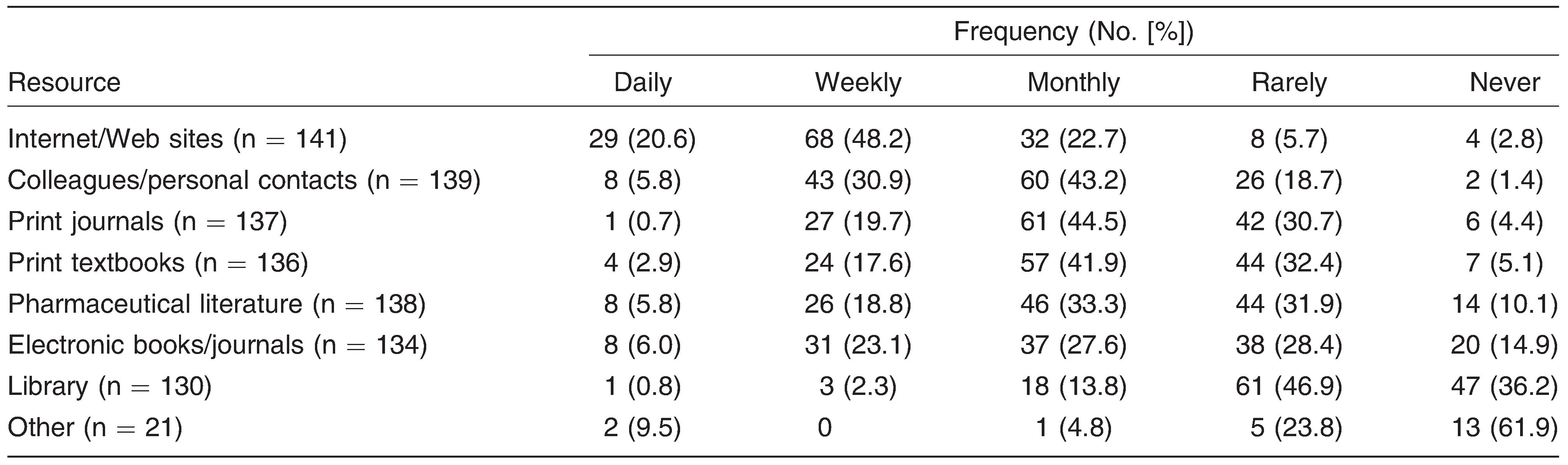
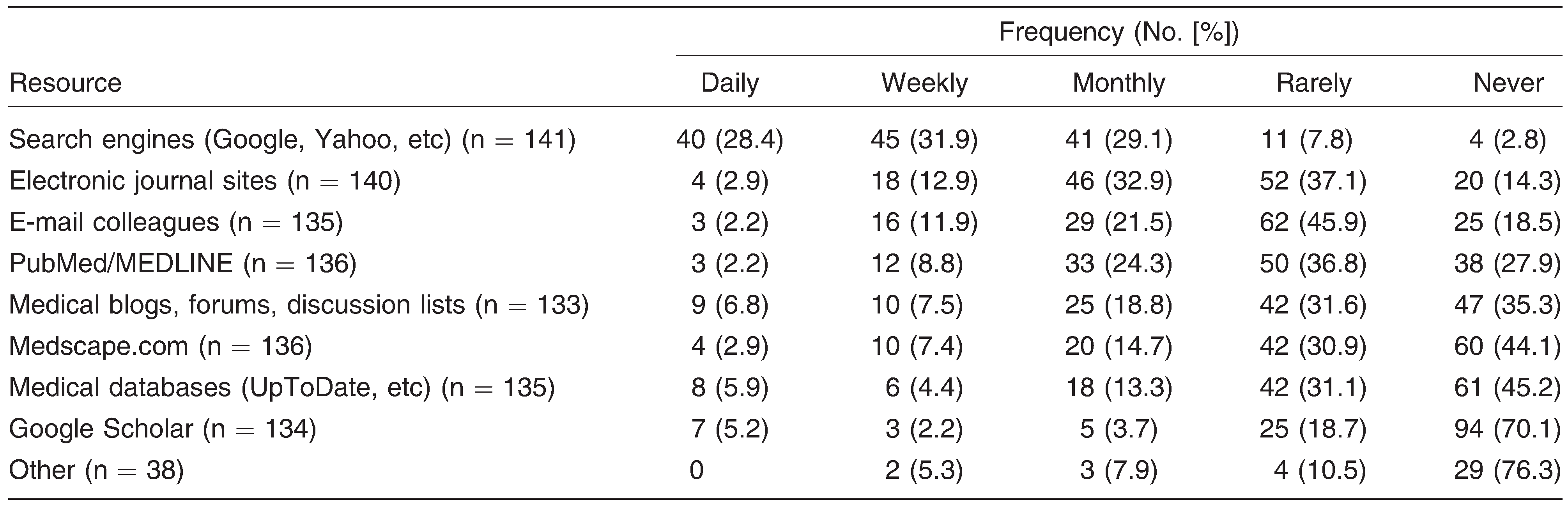
20] more than 90% of physicians use the Internet for patient care, and 70% say that the Internet has influenced their decisions regarding treatment or has aided in a diagnosis. This survey of podiatric physicians also indicates a trend toward greater Internet use, with respondents using the Internet much more often than colleagues and print resources.
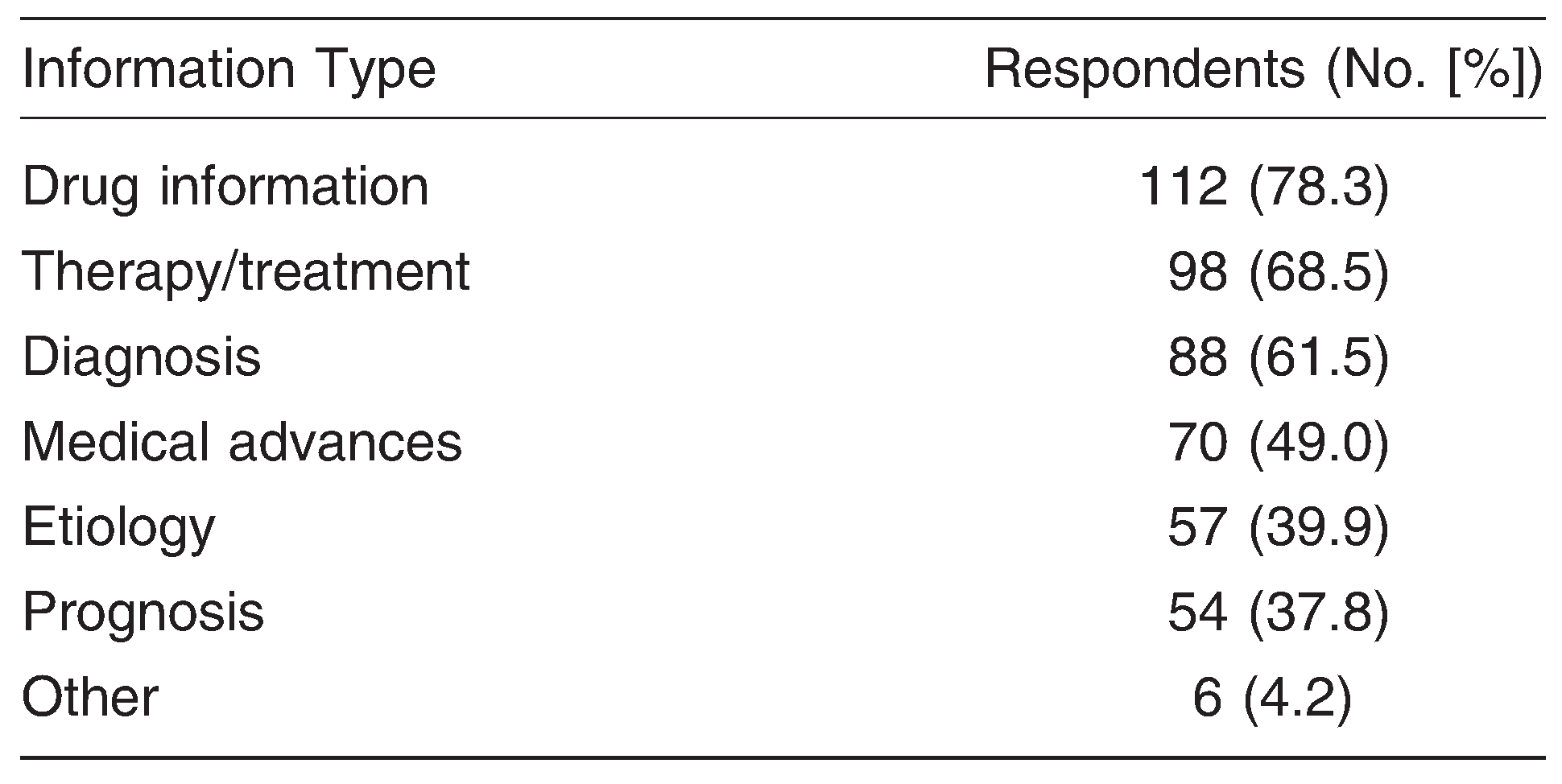
When seeking information for patient care, podiatric physicians most often searched for information on medications, therapy or treatment, diagnosis, and new advances. This mirrors data on physicians, who most often searched for the same information. [
10,
11,
14,
21,
22]
It was anticipated that this study would show that podiatric physicians favor contacting colleagues and looking at the medical literature. However, search engines were accessed far more often than personal contacts. Colleagues remain high on the list as an information resource but are not used as extensively as sitting at the computer and using a search engine. AlGhamdi [
3] noted that half of the dermatologists in his study used e-mail to communicate with colleagues about patient care. Although daily and weekly use of the Internet was high, podiatric physicians indicated that they rarely or never contacted colleagues via the Internet and rarely or never used blogs, forums, or discussion lists to communicate with peers. Eighty percent of podiatric physicians (111 of 139) reportedly contacted colleagues at least monthly, yet only 36% (48 of 135) used e-mail to communicate with colleagues at least monthly. This may be due to a lack of proficiency at social networking or a lack of e-mail addresses for those they wish to contact. It may also be that personal contacts are still made the old-fashioned way, at meetings or seminars, at the hospital, or in the halls of a medical office building. From these results, it does not seem as though the Internet significantly helps facilitate communication between colleagues or personal contacts.
Podiatric physicians in urban and rural practices contact colleagues more often than do those in suburban practices, and those in group practice are slightly more likely to use personal contacts than are solo practitioners. This finding is probably due to having colleagues conveniently accessible in a group practice but also indicates that those in solo practice do reach out to colleagues when needed. One may expect solo podiatric physicians to reach out using the convenience of the Internet, but the results do not confirm that. There are some Internet blogs, discussion groups, and forums designed specifically for the podiatric physician to query colleagues. However, 67% of respondents (89 of 133) said that they rarely or never used this tool as an Internet resource.
Just as Hider et al [
7] found in their study of medical professionals, this study identified a preference to use search engines over going directly to electronic journal Web sites. Cullen [
4] and Nail-Chiwetalu and Bernstein Ratner [
13] noted that their respondents, physicians and speech-language pathologists, respectively, did not seem to know the differences between Internet search engines and scholarly article databases.
The podiatric physicians who responded to this survey reported using search engines most often; however, they were not questioned as to whether they use the search engine as easy access to a favorite or targeted Web site or whether they preferred sifting through the search engine results hoping to find something of interest. Because of the vast range of information resources, the challenge is not only having the skills and techniques to search effectively but also having the ability to select the best resource from the many available. These are skills and techniques at which information professionals excel, indicating an opportunity for librarians to offer continued education for podiatric physicians.
In a study to determine whether Google could be used to locate the correct diagnosis, [
23] health-care professionals entered key terms into Google to search for a diagnosis for 26 cases that originally appeared in articles in the
New England Journal of Medicine. Google results were compared with the
New England Journal of Medicine articles, with 15 of 26 correct diagnoses found using Google. The authors noted that much depends on the searchers’ knowledge and search skills, and they stressed that as other search engines become more popular as a tool for medical professionals, physicians need to perfect their search techniques.
When surveyed whether they use the Web site of a professional organization to search for patient care information, about half of the respondents report using the American Podiatric Medical Association Web site and the American College of Foot and Ankle Surgeons Web site. The Web sites of these two podiatric medical organizations have a wealth of health-care information, some of which is available only to members.
Barriers to locating and acquiring information were expected to be consistent with those in other studies. Lack of time is a common barrier in most studies that surveyed health-care professionals. Although their respondents listed 582 obstacles that prevented them from obtaining high-quality information, Nail-Chiwetalu and Bernstein Ratner [
13] noted that issues related to time were by far the most commonly mentioned barrier in their study. In several studies, other frequently reported barriers included not knowing how to search, lacking skills to locate information, and an inability to gain access to information once found. [
2,
11,
12,
21]
Podiatric physicians may select resources based on ease of accessibility, including time and cost, rather than on quality. The study by Gorman et al [
24] compared rural and nonrural primary care physicians. The study noted that although rural doctors have less access to library and electronic resources, neither group used either resource frequently. This is likely due to the cost, in time and money, of accessing the information. Podiatric physicians, similar to other physicians, have busy practices. When searching for information, they must make a decision on the most efficient, yet reliable, method to fill their information needs. As noted by Gorman et al, [
24] that may mean a quick telephone call to a colleague. Yet, trends indicate an increased use of search engines, which may become the principal choice because they are free, are simple to use, and do not interrupt anyone.
Indeed, the Internet was reportedly searched more often than even the podiatric physicians’ own print libraries. Podiatric physicians cited the cost of print subscriptions and that their print library was outdated as the primary reasons for not using their personal library. Indeed, sitting at the computer and typing a term into a search engine can be easy, inexpensive, and current.
Barriers include not only the cost to access resources but also the limited availability of resources for those who need them. Podiatric physicians were asked if they had an affiliation that provided access to electronic databases or subscription e-journals. Thirty-nine percent of respondents reported that they held no affiliation that offered this benefit. Barriers to acquiring information on the Internet were consistent with findings from other studies. [
2,
18]
In past literature, limited access to information was also due to computer and technical issues. [
2,
10,
12,
25] When questioned about problems such as inadequate Internet access, lack of computer skills, or computer or information technology problems, the podiatric medical respondents rarely found these to hinder their access to information. These may no longer be obstacles due to improved computer technology, user-friendly software, and high-speed Internet service that is readily available.
Almost two-thirds of the podiatric physicians responded that they use only basic keyword searches when searching the Internet and PubMed instead of the advanced search features. Developing more effective search skills could help reduce the difficulty of using the Internet as an information resource. By learning advanced search techniques, podiatric physicians could reduce the number and improve the relevance of the results they receive.
Once podiatric physicians locate information to address their patient care needs, they must evaluate that information. When surveyed about the criteria they use to judge Internet-based information, most respondents said that they use the institution or affiliation of the resource to judge the quality. Many also said that they use articles from reputable journals. However, only 29% of respondents said that they check the research methods of the information. Research method is an important factor when measuring the quality of the evidence presented in an article.
Of course, not every patient care query requires a high level of statistical analysis. Quick answers from reputable resources regarding medication dosage or gold standard diagnostic tests are fine. However, for podiatric physicians comparing treatment options or considering a new medical advance, careful examination of the research methods should help guide the podiatric physician’s decision to use a piece of information. As found in previous literature, [
4,
7] the results of this survey indicate a desire for further training about search strategies and retrieving and evaluating information. Although there is a strong preference for using search engines, the responses to the question regarding evaluating information show that podiatric physicians know to judge the quality of the Internet-based information.
PubMed is a Web-based interface that provides free public access to the National Library of Medicine’s MEDLINE database. MEDLINE is considered the premier bibliographic index for life science and biomedical citations and abstracts from more than 5,400 journals from around the world. PubMed provides access to the citations of some of the most recent and relevant medical information available, including preprint citations indexed before the article is published. In addition, past citations that were once available only in printed indices are continually being added and now date back to the 1940s and earlier. Citations are from high-quality, peer-reviewed journals selected on editorial policy and scientific merit. Many citations include links for full-text retrieval.
Intended for health-care professionals looking for answers from quality journal articles, PubMed should be a primary resource for podiatric physicians. At one time, all searching began at PubMed, but now researchers are finding articles and abstracts through search engines, some of which take the searcher back to PubMed. [
26] Although some medical subspecialties have created indices and databases to provide an easier and better yield when searching, podiatric medicine does not offer this type of tool. This leaves podiatric physicians to search 20 million references in MEDLINE. Unfamiliar with the best search strategies to unearth the information needed, podiatric physicians may become frustrated with PubMed and stop using it. This may be evidenced in the survey by the podiatric physicians’ low use responses.
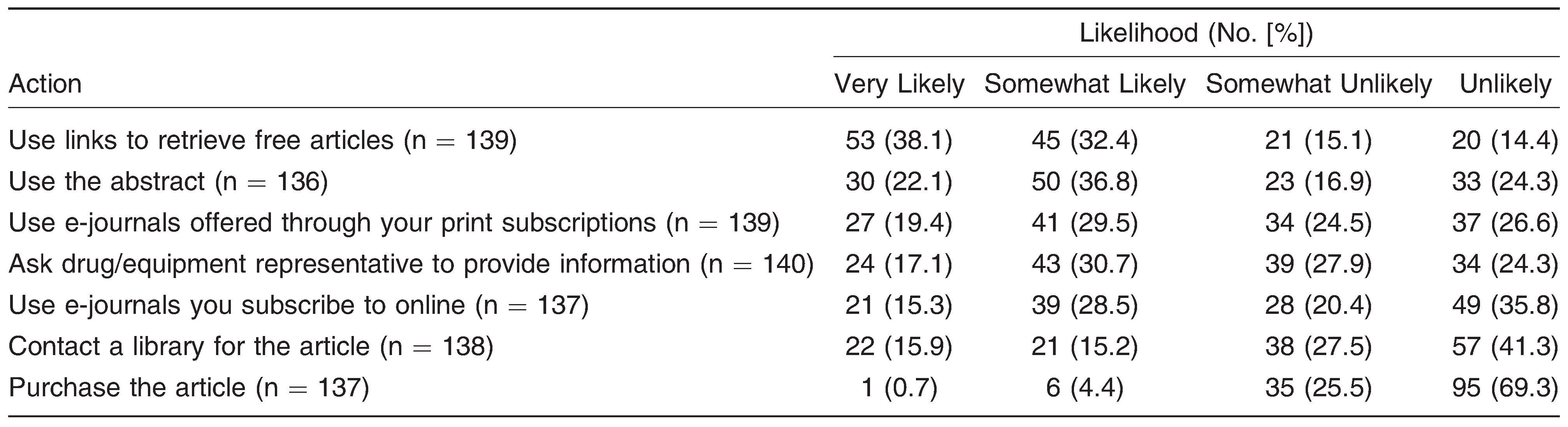
It is also worrisome that almost two-thirds of respondents reported that they would be likely or somewhat likely to use an abstract as their information resource. Research has shown abstracts to be unreliable sources of information. [
4,
27] In fact, Pitkin et al [
27] noted that after comparing 44 abstracts with their original articles in six high-quality prominent medical journals, inaccurate abstracts appeared 18% to 68% of the time.
Podiatric physicians may not have had information literacy education, but they are not without guidance. In this, their own association’s journal, articles have appeared on Internet resources that could be of specific interest to them. The former library director of the New York College of Podiatric Medicine, Dr. Charles Fikar, [
28–
35] along with several coauthors, has written eight articles on Internet resources for the podiatric physician and podiatric medical student. In these articles, the authors suggest free Internet resources from high-quality authoritative Web sites and reputable organizations. The sites have special relevance to the podiatric medical profession and cover many subjects, including internal medicine, orthopedics, dermatology, and diabetes. Each of Fikar’s articles includes a brief synopsis of the sites presented. Note that in this study’s survey, participants were asked to name additional Web sites used. The only two sites named were WebMD and Epocrates. Although WebMD was listed, Epocrates was not mentioned in any of Fikar’s articles on Internet resources.
The EBM literature is becoming increasingly important to clinical decision making, yet many podiatric physicians admit to not finding EBM articles that meet their needs. Those who express a desire to improve skills related to evaluating information may struggle with practicing EBM. The ability to appraise the validity and relevance of the statistical data in a high-quality EBM article is crucial to applying the information to patient care.
Searching for EBM literature is more complicated than merely conducting a keyword search for information. A search strategy is created that will narrow the search to the best-available evidence that is relevant to the medical problem and the patient. Once literature is found, the podiatric physician must critically evaluate it, integrate the best evidence with his or her clinical expertise and the patient’s values, and apply what he or she has learned to the decision for the patient’s care.
The highest level of evidence is often found in clinical trials and randomized controlled studies that test a hypothesis. Some Web sites offer EBM filters, such as PubMed’s Clinical Queries. However, when surveyed about the use of Clinical Queries, only 14% of podiatric physicians acknowledged using this feature.
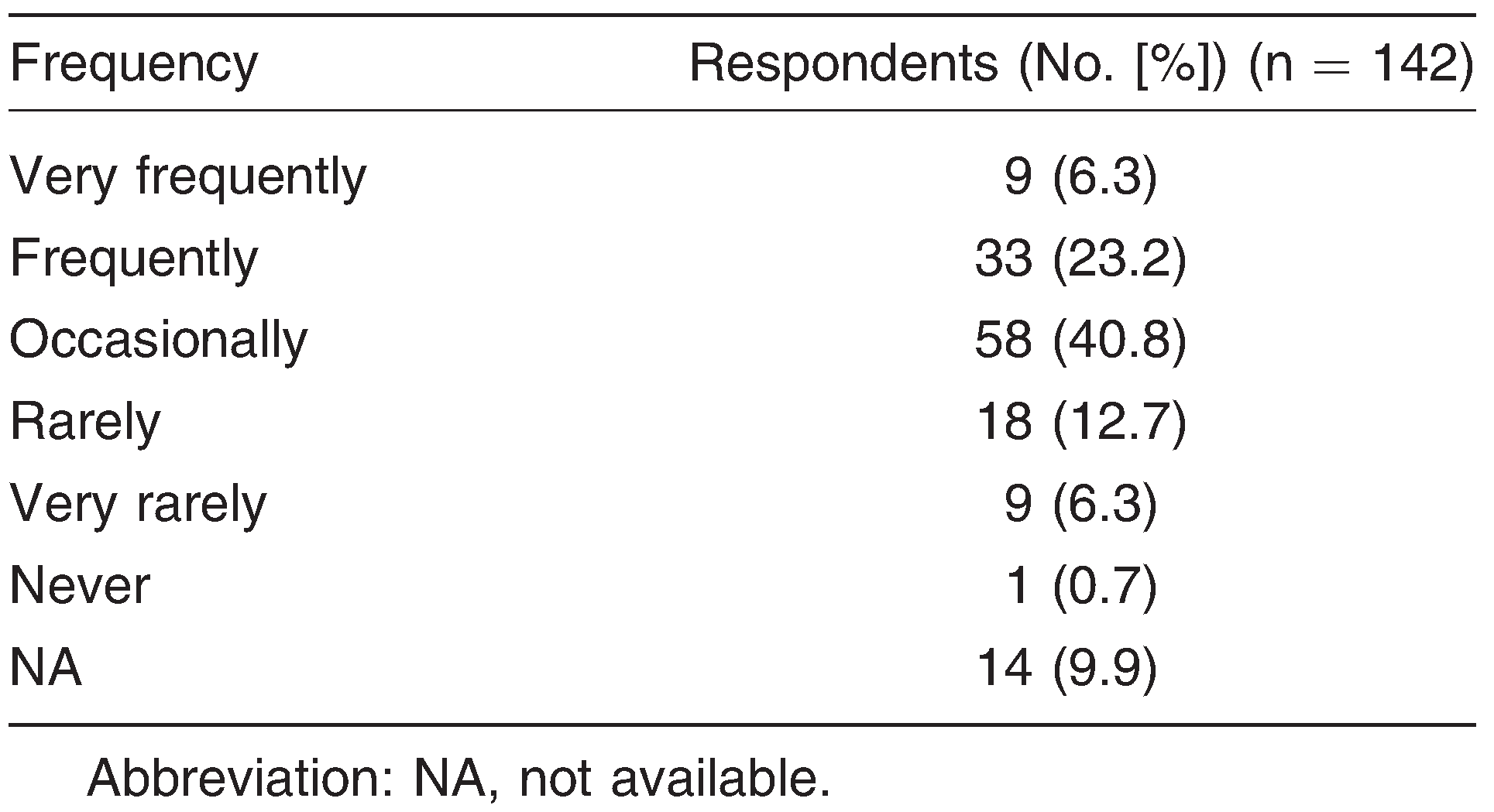
Andrews et al [
25] reported in their study on primary care physicians that few were using EBM resources. He speculated that this could be caused by a lack of awareness that there are resources available or a lack of understanding of the importance of EBM in the care of patients. Whereas two-thirds of podiatric physicians reported that they do search for EBM literature, almost half reported only occasionally finding suitable information to meet their needs. Although Andrews et al [
25] gave compelling reasons for not practicing EBM, the podiatric physicians’ problems may also be due to either a lack of search skills or a lack of high-level EBM articles available in the podiatric medical literature. In a 2000 study assessing the quantity of EBM articles in podiatric medical journals, Turlik and Kushner [
36] reviewed the two most prominent podiatric medical journals in the United States. In their sampling, they found that only 1% of the articles would be considered high-level EBM literature. Further documentation may be needed to confirm an apparent increase in the number of EBM articles available to the podiatric physician during the past decade.
Podiatrists may need specific training to enhance search and evaluation skills to find the best evidence available. Past literature has commented on the health-care professional’s lack of use of a library and librarian to gain access to information, to assist in searching, or to improve information-seeking skills and techniques. [
2,
10,
19,
25,
37] Podiatric physicians mirror other studies with their responses, indicating that more than 80% rarely or never use a library. When asked whether they use a library, nearly 40% of those in a rural or suburban practice reported never using a library much more often than the quarter of podiatric physicians in urban locations. This finding is likely due to urban centers having convenient and more comprehensive library services at major hospitals, colleges, and public libraries. [
38]
Libraries subscribe to expensive, high-quality, authoritative information resources. However, those with access to databases such as EBSCOhost or Ovid may not use them due to the investment of time needed to learn the different interfaces. [
39] If health-care professionals do not use these resources regularly, when they require information quickly and easily they are likely to choose a search engine over a library resource. For this reason, it is imperative for librarians to educate users on the importance of evaluating resources for unbiased, credible, and authoritative information.
Proper information literacy preparation is essential for podiatric medical students. At KSUCPM, students are taught information literacy and EBM several times throughout the curriculum. During the first year, students take the Introduction to Medical Research course, which includes EBM, information literacy, and biomedical statistics. Projects for the class include critically evaluating an assigned EBM article and completing five modules that give students the opportunity to use library resources, formulate good clinical questions, practice search strategies, and evaluate information sources. Throughout their 4 years, KSUCPM students complete case studies, read articles chosen to complement coursework, and apply information to clinical problems. In Patient Care Rotations during the third and fourth years, students are assigned articles for discussion, receive learning issues with article presentation, and use information-seeking skills for patient care.
At the end of the third year, students participate in a Library Resource Refresher Workshop to review the library’s resources, EBM principles, and techniques for finding, evaluating, and using information before leaving for fourth-year clerkships. During Senior Experience at the end of the fourth year, students have an EBM Workshop and an Information Literacy and PubMed Review. Finally, residents who have a residency affiliated with KSUCPM receive sessions on EBM and Information Resources and PubMed Review.
The librarian can also play a key role in ensuring that a podiatric physician has the information literacy skills needed to care for his or her patients. For podiatric physicians who have been practicing for several years, their hospital or college librarian may still be a valuable resource. Podiatric physicians may do their own research, but they might need additional help defining their search strategy for best results. Librarians can assist in the search or can explain tools to help the podiatric physician better locate relevant and valid information. The librarian can offer links to online tutorials or can offer workshops to familiarize podiatric physicians with search techniques and strategies that best use public resources, such as PubMed. In addition, hospital or alumni newsletters may occasionally contain a column on new resources, written by the librarian.
Moreover, the hospital or college librarian might create a gateway or portal on the organization’s Web site specifically for practicing podiatric physicians. This portal could separate fee-based and free Web sites, giving those without an affiliation an opportunity to link to relevant, authoritative resources chosen by an information professional. By narrowing the search to specific sites, podiatric physicians may be more likely to find the information they are seeking.
With the amount of medical knowledge growing exponentially, the importance of identifying high-quality medical information cannot be overstated. To remain current in their treatment protocol and to provide the best possible EBM care for their patients, podiatric physicians need to know where to find authoritative resources, how to refine their searches, and how to judge what they find as they navigate through an ever-increasing amount of information.