Next Article in Journal
Weightbearing and Nonweightbearing Ankle Dorsiflexion Range of Motion. Are We Measuring the Same Thing?
Previous Article in Journal
Anatomical Origin of Forefoot Varus Malalignment
 
 
Journal of the American Podiatric Medical Association is published by MDPI from Volume 116 Issue 1 (2026). Previous articles were published by another publisher in Open Access under a CC-BY (or CC-BY-NC-ND) licence, and they are hosted by MDPI on mdpi.com as a courtesy and upon agreement with American Podiatric Medical Association.
Article

Partial or Total Calcanectomy as an Alternative to Belowthe- Knee Amputation for Limb Salvage. A Systematic Review

by
Valerie L. Schade
Limb Preservation Service, Vascular/Endovascular Surgery Service, Department of Surgery, Madigan Army Medical Center, 9040-A Fitzsimmons Dr, MCHJ-SV, Tacoma, WA 98431
J. Am. Podiatr. Med. Assoc. 2012, 102(5), 396-405; https://doi.org/10.7547/1020396
Published: 1 September 2012

Abstract

Background: Below-the-knee amputations are regarded as definitive treatment for calcaneal osteomyelitis. They may be less than desirable in patients with a viable midfoot and forefoot. Partial and total calcanectomies have been reported as an alternative for limb salvage. However, the durability of the residual limb is questionable. Methods: A systematic review was undertaken to identify material relating to the potential for limb salvage with partial or total calcanectomy in ambulatory patients with calcaneal osteomyelitis. Studies eligible for inclusion consecutively enrolled ambulatory patients older than 18 years who underwent partial or total calcanectomy without adjunctive free tissue transfer for the treatment of calcaneal osteomyelitis and had a mean follow-up of 12 months or longer. Results: Sixteen studies involving 100 patients (76 partial and 28 total calcanectomies) met all of the inclusion criteria. Weighted mean follow-up was 33 months. Minor complications with subsequent healing occurred in less than 24% of patients. Most major complications were related to residual soft-tissue infection and osteomyelitis. Approximately 10% of patients required a major lower-extremity amputation. Major complications and major lower-extremity amputations occurred more frequently after total calcanectomy and in patients with a diagnosis of diabetes. Eighty-five percent of patients maintained or improved their ambulatory status postoperatively. Only 3% of patients decreased their ambulatory status postoperatively, becoming unlimited household ambulators. Conclusions: This systematic review provides evidence that partial or total calcanectomy is a viable option for limb salvage in ambulatory patients with calcaneal osteomyelitis.

Limb salvage has been defined as the preservation of function and the avoidance of amputation [1]. This can be difficult to accomplish in patients with calcaneal osteomyelitis. Below-the-knee amputation is a definitive treatment option in these patients; however, it may be undesirable in ambulatory patients with a viable midfoot and forefoot. Gaenslen [2] was the first to report on a surgical approach for the treatment of chronic calcaneal osteomyelitis that allowed for limb salvage. The surgical technique involved a posterior linear incision centered over the Achilles tendon and calcaneus. The calcaneus was then split into medial and lateral halves, and the medullary bone was resected via curettage. The calcaneal halves were then reapproximated without the use of fixation. Of the 11 patients reported, 10 (90.9%) maintained their preoperative ambulatory status postoperatively with either no limp or a slight limp. Only 1 patient (9.1%) had recurrence of osteomyelitis 17 months postoperatively [2]. Subsequent studies [3,4,5,6,7] using Gaenslen’s technique, or a modification in incision placement, reported similar results.
Formal resection of a portion of the calcaneus for the treatment of calcaneal osteomyelitis was reported by Wiltse et al [8] in 1959. They noted partial calcanectomy to be advantageous owing to the ability to eradicate infection and avoid vital structures and joints, resulting in a predictable postoperative recovery owing to the minimal risk of flap necrosis. The procedure also resulted in minimal scarring and freedom from pain [8]. Several authors have since advocated partial or total calcanectomy as a viable alternative to below-the- knee amputation for limb salvage in the treatment of recalcitrant heel ulcerations and calcaneal osteomyelitis [9,10,11,12]. In addition, should the procedure fail, the next higher level of amputation remains unchanged [9,10,11,12,13,14,15]. However, given the loss of the weightbearing component of the foot, the durability of the salvaged limb remains unknown. This systematic review was undertaken to determine the durability of partial or total calcanectomy performed without adjunctive free tissue transfer for the treatment of calcaneal osteomyelitis in patients 18 years and older who were ambulatory preoperatively and postoperatively with a minimum of 12 months of follow-up.

Materials and Methods

Eleven electronic databases were searched from inception to July 2010: the American College of Physicians Journal Club (http://www.acpjc.org), the Cumulative Index of Nursing and Allied Health Literature (http://www.ebscohost.com/cinahl), the Cochrane Library (http://www.thecochranelibrary. com/view/0/index.html?CRETRY&), the Cochrane Central Register of Controlled Trials (http://www. ovid.com/site/products/ovidguide/cctrdb.htm), The Cochrane Collaboration Cochrane Reviews (now Cochrane Summaries) (http://summaries.chochrane. org/reviews), the Cochrane Methodology Register (http://cmr.cochrane.org), the Centre for Reviews and Dissemination (http://www.crd.york.ac.uk/ crdweb), the Health Technology Assessment Data-base (http://www.dimdi.dc/static/en/db/dbinfo/ inahta.htm), Infotrieve-PubMed/MEDLINE (http:// www.infotrieve.com), the National Health Service Economic Evaluation Database (http://mrw. interscience.wiley.com/cochrane/cochrane_cleed_ articles_fs.html), and Ovid MEDLINE In-Process & Other Non-Indexed Citations (http://www.ovid.com/ site/products/ovidguide/premdb.htm). The search was restricted to the English language, with no restriction on date, using an inclusive text word query for ‘‘partial’’ OR ‘‘total’’ AND ‘‘calcanectomy’’ OR ‘‘calcaneus’’ OR ‘‘os calcis’’ AND ‘‘resection,’’ where the uppercase words represent the Boolean operators used. To maximize the number of potentially useful references, every combination of text words was queried through each of the electronic databases. In addition, an Internet-based general interest search engine, specifically, Google (http:// www.google.com), was used to identify available sources that could potentially provide useful information by using various combinations of the text words listed previously herein. Finally, the references from each article identified were hand searched to identify any pertinent material for review that was not identified from the electronic searches. If a reference could not be obtained through purchase, librarian assistance, or e-mail contact with the author, it was excluded from consideration.
For the purposes of the systematic review, partial calcanectomy was defined as resection of a portion of cortical and cancellous calcaneus, not as simple curettage of medullary bone. Total calcanectomy was defined as excision of the calcaneus en toto. Success was defined as complete healing of the index procedure that resulted in a stable, functional limb that allowed for continued ambulation postoperatively. Studies were included that clearly defined consecutive enrollment of patients 18 years and older with a diagnosis of calcaneal osteomyelitis who underwent partial or total calcanectomy without adjunctive free tissue transfer, were ambulatory preoperatively and postoperatively, and had follow-up for at least 12 months.

Results

The search for potentially eligible publications for inclusion in the systematic review yielded 56 publications. All of the publications were obtained and reviewed in their entirety in July 2010. On completion of the review, 31 publications were determined to be potentially eligible for inclusion in the analysis. Detailed review of these references revealed that 15 publications did not meet all of the required inclusion criteria [1,3,5,6,10,11,13,15,16,17,18,19,20,21,22]. Specifically, five publications involved cases where only curettage of calcaneal bone was performed, three involved nonambulatory patients, and two did not meet the minimum follow-up time [3,5,6,10,11,16,17,18,21,22]. In addition, 5 publications [1,13,15,19,20] did not possess enough information for inclusion even after contacting the authors. Three of these publications [1,15,20] did not clearly state whether the procedures were performed for the treatment of calcaneal osteomyelitis. The remaining two publications [13,19] provided a detailed review of the outcomes of partial calcanectomies performed but did not meet all of the required criteria for inclusion. This left only 16 publications (28.6%) that met all of the inclusion criteria (Table 1) [8,9,12,14,23,24,25,26,27,28,29,30,31,32,33,34].

Case Reports

Four of the 16 included publications (25.0%) were case reports [23,27,28,33]. Three of these publications focused on surgical technique and postoperative follow-up [23,27,28]. The remaining publication [33] focused on gait and functional limitations of a patient who had undergone bilateral partial calcanectomy. MacKay and Mauer [23] reported on seven patients who developed calcaneal osteomyelitis after triple arthrodesis, subtalar arthrodesis, or open reduction and internal fixation for treatment of a severely comminuted calcaneal fracture. Only one patient required calcanectomy, starting with partial calcanectomy with subsequent conversion to total calcanectomy and eventual below-the-knee amputation. The patient’s treatment course spanned 3 years, with 11 operative procedures performed from index calcaneal fracture open reduction and internal fixation to final below-the-knee amputation [23]. Giacalone et al [28] reported on a 45-year-old man with a diagnosis of diabetes who underwent total calcanectomy. Postoperatively, residual osteomyelitis necessitated partial talectomy. The patient remained healed and fully ambulatory 15 months after these procedures with the use of custom shoes and custom orthotic devices [28].
In contrast to the two previous case reports, Gidurnal and Evanski [27] reported on a 71-year-old man who underwent partial calcanectomy and remained ambulatory 3 years postoperatively. The patient’s only complaint was mild insertional Achilles tendinitis and incisional pain [27]. Beals et al [33] reported on a 47-year-old man who underwent bilateral partial calcanectomy and amputation of all of his digits except for the left hallux owing to complications secondary to sepsis from Rocky Mountain spotted fever. The patient used bilateral plantarflexion stop hinged ankle-foot orthoses for the first 9 months postoperatively and then transitioned to normal athletic shoes with custom orthoses. Gait and functional capacity analysis revealed near-normal ambulation patterns, including on uneven terrain, with the use of normal athletic shoes and a custom orthotic device [33].

Case Series

The remaining 12 publications [8,9,12,14,24,25,26,29,30,31,32,34] (75.0%) were small case series, with the number of patients ranging from 2 to 17. Four publications reported on the results of two patients [8,24,32,34]. Horwitz [24] reported on two patients who both underwent partial calcanectomy. Postoperative follow-up was 1 and 2 years. No complications were reported. Both patients maintained their ambulatory status postoperatively [24]. Both patients in the case series by Fisher and Armstrong [32] had a diagnosis of diabetes and underwent partial calcanectomy. Dr. Armstrong reported (written communication, 2010) that both patients were observed for 24 months postoperatively. One patient had delayed healing due to early ambulation. Both patients maintained their ambulatory status postoperatively with the use of custom shoes and orthotic devices. One patient required the addition of a posterior ankle-foot orthosis [32]. Wiltse et al [8] had a case series of seven patients, but only two had the minimum of 12 months of postoperative follow-up for inclusion in the analysis. Both patients underwent partial calcanectomy and had reported excellent results postoperatively. Both patients maintained unrestricted, pain-free ambulation postoperatively [8]. Han and Ezquerro [34] performed a large study regarding the outcomes of partial and total calcanectomies for the treatment of pressure ulcerations and calcaneal osteomyelitis in patients residing in a skilled nursing facility. Most of these patients were nonambulatory. However, there were six patients included in the study who were ambulatory. Only two of these patients had the required follow-up of at least 12 months. Both of these patients underwent partial calcanectomy, with one remaining healed 45 months postoperatively and the second requiring an above-the-knee amputation 13 months postoperatively due to a nonhealing wound [34].
Two publications reported on the results of seven patients, and one reported on the results of eight patients [9,14,29]. Of the seven patients reported by Woll and Beals [29], three had a diagnosis of diabetes. Postoperative complications were minimal, with two postoperative hematomas and one incidence of delayed healing reported. All seven patients improved their ambulatory status postoperatively with the use of custom or normal footwear. Two patients required the addition of a total-contact orthotic device in their shoes [29]. Of the seven patients reported by Baumhauer et al [9], six had a diagnosis of diabetes [9]. All of the patients underwent total calcanectomy. Two patients developed wound necrosis postoperatively that resolved with local wound care in one and a split-thickness skin graft in the other. One patient with a contralateral below- the-knee amputation and ipsilateral transmetatarsal amputation developed subluxation of the talonavicular joint. The patient subsequently underwent talonavicular joint arthrodesis, which resulted in nonunion. This patient’s ambulatory status decreased postoperatively to unlimited household ambulation. One patient required a below-the-knee amputation. The postoperative ambulatory status was not reported. Of the remaining five patients, three maintained their ambulatory status postoperatively and two had a decrease in their ambulatory status postoperatively, becoming unlimited household ambulators [9]. All eight patients in the study by Crandall and Wagner [14] underwent partial calcanectomy with no complications reported, and all maintained their ambulatory status postoperatively, ambulating without a limp and with no plantarflexory weakness with the use of custom shoes and orthotic devices with or without an ankle-foot orthosis [14].
The remaining five publications reported on the results of ten or more patients [12,25,26,30,31]. Smith et al [12] reported on ten patients who all underwent partial calcanectomy. Seven of these patients had a diagnosis of diabetes. Two patients developed skin breakdown due to unprotected ambulation postoperatively, both of which resolved with local wound care. Two patients required a below-the-knee amputation. The ambulatory status of the patients who underwent a major amputation was not reported. The remaining eight patients maintained their ambulatory status postoperatively [12]. Eid [25] reported on 11 patients who all underwent total calcanectomy. All 11 patients maintained their ambulatory status postoperatively in normal shoes, with only four patients requiring the addition of a 1.5- to 2.0-cm heel lift. Three patients fatigued easily with ambulation. Eversion and inversion of the foot was noted to be comparable with that of the contralateral foot. Four patients, although ambulatory, had continued pain with ambulation secondary to residual chronic osteomyelitis [26]. Bollinger and Thordarson [30] reported on the results of 13 patients who underwent partial calcanectomy. Only one patient had a diagnosis of diabetes. Four patients had delayed wound healing that resolved with either local wound care or minor surgical intervention. One patient required exostectomy postoperatively. This same patient reported continued pain with ambulation postoperatively. However, this pain was reported to be secondary to a previous pantalar fusion. This was the only patient in the series who would have preferred a below-the-knee amputation. The remaining patients had no pain to moderate pain, with all of the patients maintaining their ambulatory status postoperatively [30]. Martini et al [25] reported on 15 patients (11 partial calcanectomies and four total calcanectomies). Three patients (two partial calcanectomies and one total calcanectomy) developed subcutaneous abscesses, which resolved in two patients who underwent incision and drainage. The third patient refused another operation. One patient who had undergone partial calcanectomy developed a papilloma, which resolved with surgical excision. All of the patients maintained their ambulatory status postoperatively. Patients who underwent partial calcanectomy could walk several kilometers on uneven terrain. Patients who underwent total calcanectomy could walk 2 to 3 km, with improvement in ambulation distance with the use of shoes and custom orthotic devices [25].
The largest series of included publications was performed by Brooks et al [31], who reported on the results of 17 patients. Fifteen partial calcanectomies and five total calcanectomies were performed, with a bilateral procedure performed on three patients (two bilateral partial calcanectomies and 1 left total calcanectomy and right partial calcanectomy). All 17 patients had a diagnosis of diabetes. This publication was included for analysis after receiving additional written information from the corresponding author, Dr. Lin, in 2010. The average age of the 17 patients was reported to be 65 years. Mean follow-up for all of the patients was reported to be 12 months. No individual breakdown was given for either patient age or length of follow-up. All of the patients were reported to maintain their ambulatory status postoperatively with the use of a Charcot restraint orthotic walker, although five below-the- knee amputations and one above-the-knee amputation were reported. Other reported complications were conversion of two partial calcanectomies to total calcanectomies, with one of these going on to heal and the other resulting in the one above-the- knee amputation reported in the study. Delayed healing occurred in six patients. One patient remained with residual chronic osteomyelitis [31].
The combined data represent 100 patients who underwent 76 partial and 28 total calcanectomies, for a total of 104 calcanectomies performed (Table 1). Most cases reported on the results of unilateral partial or total calcanectomy. Only two studies [31,33] reported on patients undergoing a bilateral procedure. The case report by Beals et al [33] involved a patient who underwent bilateral partial calcanectomy. The case series by Brooks et al [31] involved three patients, with two undergoing bilateral partial calcanectomy and one undergoing total calcanectomy of the left foot and partial calcanectomy of the right foot. Laterality was mentioned in seven of the publications [9,14,24,28,31,32,33], with the results reported on 29 right feet and 13 left feet. Eleven publications [8,9,14,23,24,27,28,29,31,32,33] reported the sex of the patients, with 34 men and 14 women. Eight publications [9,12,14,28,29,30,31,32] reported on the number of patients with diabetes for a total of 45 patients with a diagnosis of diabetes. Two articles [25,34] (17 patients) did not report patient ages. The weighted mean age of the remaining 83 patients was 51 years. The weighted mean follow-up from all 15 studies was 33 months. Sixty-six patients (63 procedures; 63.5%) had no complications (Table 2). Minor complications occurred in 24 patients (23 procedures; 23.1%). Major complications occurred in 22 patients (22 procedures; 21.2%). Major lower-extremity amputation occurred in 11 patients (11 procedures; 10.6%). Eighty-five of the 100 patients (85.0%) improved or maintained their preoperative ambulatory status postoperatively (Table 3). Three patients (3.0%) had a decrease in their ambulatory status postoperatively. All three of these patients had undergone total calcanectomy and remained unlimited household ambulators. The functional status of patients with a major lower-extremity amputation was reported in only two publications [9,12] (three patients), all of whom had undergone a below-the-knee amputation. One of these patients increased their ambulatory status postoperatively, becoming an unlimited community walker [12]. The remaining two patients had a decrease in their postoperative ambulatory status, both becoming unlimited household ambulators [9,12]. Eighty- three of the 100 patients (83%) were maintained in either normal or custom shoes with or without the use of custom orthotic devices or custom bracing postoperatively (Table 4).

Discussion

The purpose of this systematic review was to evaluate the best evidence available for determining the durability of partial or total calcanectomy performed as an isolated procedure without adjunctive free tissue transfer for the treatment of calcaneal osteomyelitis in patients 18 years and older who were ambulatory preoperatively and postoperatively with a minimum of 12 months of follow-up. The systematic review was performed according to the well-described principles of performing a systematic review [35]. Of 56 publications identified for possible inclusion in the systematic review, only 16 (28.6%) met all of the inclusion criteria. The results of this systematic review reveal that total or partial calcanectomy is a viable alternative for limb salvage, with greater than 60% of patients having no complications and 85% maintaining their ambulatory status postoperatively, with greater than 83% returning to ambulation with the use of normal or custom shoes with or without custom orthotic devices. The results of this systematic review can be further analyzed regarding the rate of complications and ambulatory status after partial and total calcanectomies and the rate of complications for patients with and without a diagnosis of diabetes.

Rate of Complications After Partial and Total Calcanectomies

Minor complications were defined as development of subcutaneous abscesses, papilloma requiring excision, development of postoperative hematoma, and breakdown after index healing. All of these minor complications healed with either local wound care or operative intervention. An additional minor complication was scarring with recurrent callus. This complication was readily managed with routine preventive foot care and education on proper shoe use. Major complications were defined as talonavicular joint subluxation, conversion of partial calcanectomy to total calcanectomy, the need for talectomy, persistent residual osteomyelitis, and major lower-extremity amputation (above- and below-the-knee amputations). Analysis of the combined data reveals that the risk of minor complications based on the number of total procedures performed after partial calcanectomy versus total calcanectomy was similar for partial and total calcanectomies at 23.7% and 21.4%, respectively (Table 5). The rate of no complications after partial calcanectomy was slightly higher than that after total calcanectomy, at 64.5% and 50.0%, respectively. The main difference between the two groups was in the rate of major complications, with the percentage after total calcanectomy nearly double that after partial calcanectomy (32.1% and 15.8% respectively). The rate of major amputation was also higher after total calcanectomy versus partial calcanectomy (14.3% versus 9.2%). This difference is seen even with the number of partial calcanectomies in the combined data being almost three times the number of total calcanectomies reported.
Subluxation of the talonavicular joint has been reported to be a concerning complication after partial or total calcanectomy [9,12,14,17,31]. Wiltse et al [8] believed that partial calcanectomy was more stable than total calcanectomy owing to preservation of the calcaneocuboid joint, minimizing this risk. From the combined data of this systematic review, there was only one report of talonavicular joint subluxation, which occurred in a patient who had undergone total calcanectomy. This patient also had an ipsilateral transmetatarsal amputation and contralateral below-the-knee amputation, both of which will alter the mechanical stresses sustained to the residual limb [9]. Crandall and Wagner [14] reported two instances of talonavicular joint subluxation. One occurred 5 years after total calcanectomy and the other 1 year after partial calcanectomy. Talonavicular subluxation due to disruption of the calcaneocuboid joint was not clearly hypothesized as another patient had undergone total calcanectomy, partial talectomy, and cuboidectomy and remained ambulatory with no instability noted to the midtarsal joint or forefoot. For these reasons, the authors could not provide a concise conclusion as to which procedure, partial calcanectomy or total calcanectomy, was more stable. From all the literature reviewed, subluxation of the talonavicular joint was reported in only three patients, two after total calcanectomy and one after partial calcanectomy, making it an infrequently reported complication [9,14].

Ambulatory Status After Partial and Total Calcanectomies

Seventy-five percent of patients maintained their preoperative ambulatory status postoperatively following either partial or total calcanectomy (Table 3). Only 7.0% and 9.2% of patients improved their ambulatory status postoperatively following partial and total calcanectomy, respectively. The only patients who had a decrease in their ambulatory status postoperatively had undergone total calcanectomy. This occurred in 10.7% of patients, with all of these patients becoming unlimited household ambulators. One of these patients had previously undergone a contralateral below-the-knee amputation and ipsilateral transmetatarsal amputation. With the status of this patient’s remaining lower extremity, unlimited household ambulation is a reasonable functional status regarding lifelong mobility restrictions to minimize the potential for further complications [9]. Beals et al [33] reported that community ambulation after a bilateral partial calcanectomy is a reasonable expectation. With either partial or total calcanectomy, being either an unlimited household ambulator or a limited com- munity ambulator is a reasonable expectation to minimize further complications to the limb.
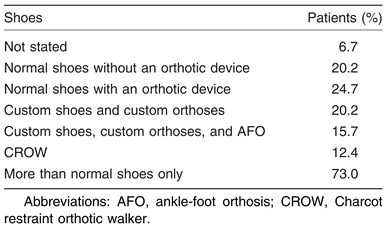
All of the patients returned to ambulation in either normal or custom shoes with or without a custom orthotic device or bracing. The type of shoe used was not reported for 6.7% of the patients in the combined data (Table 4). Sixty-five (73.0%) patients had some supplement to their normal footwear, whether that was a custom orthotic device or a custom orthotic device and ankle-foot orthosis. Twenty-five patients (28.1%) had their limb protected in a high-profile prosthetic device.

Diabetic versus Nondiabetic Patients

Patients with a diagnosis of diabetes experienced higher rates of minor and major complications and major lower-extremity amputation (Table 5). The combined data reveal that patients with a diagnosis of diabetes have an approximately 50% risk of a minor or major complication. The rates of minor and major complications were similar at 28.9% and 26.7%, respectively. The main significant difference between patients with a diagnosis of diabetes versus nondiabetic patients was the nearly five times greater risk of major lower-extremity amputation.

Study Weaknesses

The weaknesses of this study include a single author performing the systematic review, the level of evidence of the studies included in the analysis, and the poor definition of surgical procedure, specifically pertaining to the amount of the calcaneus resected when partial calcanectomy was performed and whether Achilles tendon reattachment was attempted or performed. Although this systematic review was performed by a single reviewer, the author has performed several systematic reviews with multiple reviewers and is well versed in the process of performing a systematic review [35,36,37]. None of the included publications were prospective in design; all were either a case report or a small cases series (range, 2–17 patients), corresponding to a low level of clinical evidence (level 4, therapeutic, or level 5). None of the included publications specifically stated what percentage of the calcaneus was resected when partial calcanectomy was performed; thus, recommendations on the most appropriate footwear or bracing combination for long-term management after partial calcanectomy cannot be deduced. Reattachment, or attempts at reattachment, of the Achilles tendon after calcanectomy has been reported but was not mentioned in the included publications, making the effect of Achilles tendon reattachment after calcanectomy impossible to determine [19]. Despite these weaknesses, the findings of this systematic review give evidence that partial or total calcanectomy is a viable alternative for limb salvage in ambulatory adult patients when the procedure will definitively eradicate soft-tissue and osseous infections of the limb, with most patients returning to ambulation in normal or custom shoes with or without a custom orthotic device or custom bracing.

Conclusions

A systematic review was performed of a wide range of electronic biomedical databases, abstracts, posters, meeting proceedings, and references to identify published material relating to the potential for limb salvage in ambulatory patients 18 years and older who underwent isolated partial or total calcanectomy without adjunctive free tissue transfer for the treatment of calcaneal osteomyelitis with a minimum of 12 months of follow-up. Based on the inclusion criteria, only 4 case reports and 12 case series, all of poor methodological design (level of clinical evidence: 4, therapeutic intervention, or 5), were included in the analysis. The results of these studies support the idea that partial or total calcanectomy may be a viable alternative to below-the-knee amputation for limb salvage in ambulatory patients with calcaneal osteomyelitis and at least 12 months of postoperative follow-up with the use of normal or custom shoes with or without a custom orthosis or custom bracing for lifelong use. Most major postoperative complications were attributable to residual osteomyelitis or soft-tissue infection leading to persistent osteomyelitis or major lower-extremity amputation. All minor complications were remedied with either local wound care or minor surgical intervention in addition to education of the patient on the need for proper use of shoes, custom bracing, or both. These findings, although limited, provide support that partial or total calcanectomy is a feasible alternative to major lower-extremity amputation in ambulatory patients with calcaneal osteomyelitis, maintaining a functional residual limb that can be protected in normal or custom shoe gear with or without custom orthotic devices or custom bracing for at least 33 months postoperatively when the procedure will definitively eradicate soft-tissue and osseous infections and allow for primary wound closure.

Financial Disclosure

None reported.

Conflicts of Interest

None reported.

References

  1. SMITH, W.J.; JACOBS, R.L.; FUCHS, M.D. Salvage of the diabetic foot with exposed os calcis. Clin Orthop Relat Res 1993, 296, 71. [Google Scholar]
  2. GAENSLEN FJ: Split-heel approach in osteomyelitis of os calcis. J Bone Joint Surg 1931, 13, 759.
  3. ANTONIOU D, CONNER AN: Osteomyelitis of the calcaneus and talus. J Bone Joint Surg Am 1974, 56, 338. [CrossRef]
  4. BROUDY, A.S.; SCOTT, R.D. WATTS HG: The split-heel technique in the management of calcaneal osteomyelitis in children: report of three cases. Clin Orthop Relat Res 1976, 119, 202. [Google Scholar]
  5. FEIGIN, R.D.; MCALISTER, W.H.; JOAQUIN, V.H. ET AL: Osteomy- elitis of the calcaneus: report of eight cases. Am J Dis Child 1970, 119, 61. [Google Scholar]
  6. MANSOOR, I.A. Typhoid osteomyelitis of the calcaneus due to direct inoculation: a case report. J Bone Joint Surg Am 1967, 49, 732. [Google Scholar] [CrossRef]
  7. RASOOL MN: Hematogenous osteomyelitis of the calca- neus in children. J Pediatr Orthop 2001, 21, 738.
  8. WILTSE, L.L.; BATEMAN, J.G.; KASE, S. Resection of major portion of the calcaneus. Clin Orthop Relat Res 1959, 13, 271. [Google Scholar]
  9. BAUMHAUER, J.F.; FRAGA, C.J.; GOULD, J.S. ET AL: Total calcanectomy for the treatment of chronic calcaneal osteomyelitis. Foot Ankle Int 1998, 19, 849. [Google Scholar] [CrossRef]
  10. LEHMANN, S.; MURPHY, R.D.; HODOR, L. Partial calcanectomy in the treatment of chronic heel ulceration. JAPMA 2001, 91, 369. [Google Scholar] [CrossRef]
  11. PEREZ, M.L.; WAGNER, S.S. YUN J: Subtotal calcanectomy for chronic heel ulceration. J Foot Ankle Surg 1994, 33, 572. [Google Scholar]
  12. SMITH, D.G.; STUCK, R.M.; KETNER, L.; ET, A.L. Partial calcanec- tomy for the treatment of large ulcerations of the heel and calcaneal osteomyelitis: an amputation of the back of the foot. J Bone Joint Surg Am 1992, 74, 571. [Google Scholar] [CrossRef] [PubMed]
  13. BARAVARIAN, B.; MENENDEZ, M.M.; WEINHEIMER, D.J. ET AL: Subtotal calcanectomy for the treatment of large heel ulceration and calcaneal osteomyelitis in the diabetic patient. J Foot Ankle Surg 1999, 38, 194. [Google Scholar] [CrossRef] [PubMed]
  14. CRANDALL, R.C.; WAGNER, F.W. Jr: Partial and total calcanec- tomy: a review of thirty-one consecutive cases over a ten-year period. J Bone Joint Surg Am 1981, 63, 152. [Google Scholar] [CrossRef] [PubMed]
  15. ALCARAZ, P.; AUBRAN, C.; JAOUA, S. ET AL: Calcaneal osteomyelitis due to fistulization of an ulcerated rheumatoid nodule. Joint Bone Spine 2006, 73, 102. [Google Scholar] [CrossRef]
  16. JACOBS, R.L.; KARMODY, A.M. Treatment of the diabetic foot with exposed os calcis. Foot Ankle 1980, 1, 173. [Google Scholar] [CrossRef]
  17. GEERTZEN, J.H.; JUTTE, P.; ROMPEN, C. ET AL: Calcanectomy, an alternative amputation? two case reports. Prosthet Orthot Int 2009, 33, 78. [Google Scholar] [CrossRef]
  18. COOK, J.; COOK, E.; LANDSMAN, A.S. ET AL: A retrospective assessment of partial calcanectomies and factors influencing postoperative course. J Foot Ankle Surg 2007, 46, 248. [Google Scholar] [CrossRef]
  19. RANDALL, D.B.; PHILLIPS, J.; IANIRO, G. Partial calcanectomy for the treatment of recalcitrant heel ulcerations. JAPMA 2005, 95, 335. [Google Scholar]
  20. NAFTULIN, K.A.; STONE, P.A.; MCGARRY, J.J. Bilateral total calcanectomy for the treatment of chronic refractory osteomyelitis. JAPMA 1997, 87, 141. [Google Scholar] [CrossRef]
  21. ISENBERG, J.S.; COSTIGAN, W.M.; THORDARSON, D.B. Subtotal calcanectomy for osteomyelitis of the os calcis: a reasonable alternative to free tissue transfer. Ann Plast Surg 1995, 35, 660. [Google Scholar] [CrossRef]
  22. WEISENFELD, L.S.; FLANNERY, D.; LUZZI, A. ET AL: Partial calcanectomy for the treatment of osteomyelitis of the os calcis. J Foot Surg 1990, 29, 226. [Google Scholar] [PubMed]
  23. MACKAY, C.R.; MAUER, I.S. Osteomyelitis of the os calcis following triple arthrodesis. Am J Surg 1958, 96, 708. [Google Scholar] [CrossRef] [PubMed]
  24. HORWITZ, T. Partial resection of the os calcis and primary closure in the treatment of resistant large ulcers of the heel, with or without osteomyelitis of the os calcis. Clin Orthop Relat Res 1972, 84, 149. [Google Scholar] [CrossRef] [PubMed]
  25. MARTINI, M.; MARTINI-BENKEDDACHE, Y.; BEKHECHI, T.; et al. Treatment of chronic osteomyelitis of the calcaneus by resection of the calcaneus: a report of twenty cases. J Bone Joint Surg Am 1974, 56, 542. [Google Scholar] [CrossRef]
  26. EID AM: Treatment of chronic haematogenous osteomy- elitis of the os calcis. Acta Orthop Scand 1997, 48, 712.
  27. GIDURNAL, R.; EVANSKI, P. Calcaneal osteomyelitis following steroid injection: a case report. Foot Ankle 1991, 6, 44. [Google Scholar]
  28. GIACALONE, V.F.; GREGORY, J.L.; KRYCH, S.M. Calcanectomy for the treatment of calcaneal osteomyelitis: a case report. JAPMA 1991, 81, 88. [Google Scholar] [CrossRef]
  29. WOLL, T.S.; BEALS, R.K. Partial calcanectomy for the treatment of osteomyelitis of the calcaneus. Foot Ankle 1991, 12, 31. [Google Scholar] [CrossRef]
  30. BOLLINGER, M.; THORDARSON, D.B. Partial calcanectomy: an alternative to below knee amputation. Foot Ankle Int 2002, 10, 927. [Google Scholar] [CrossRef]
  31. BROOKS, K.R.; LIN, S.S.; BERBERIAN, W.S. Calcanectomy for treatment of the infected os calcis. Tech Foot Ankle Surg 2004, 3, 165. [Google Scholar] [CrossRef]
  32. FISHER, T.K. ARMSTRONG DG: Partial calcanectomy in high- risk patients with diabetes: use and utility of a ‘‘hurricane’’ incisional approach. J Plast Surg 2010, 10, 140. [Google Scholar]
  33. BEALS, T.C.; MACWILLIAM, B.A.; WEBSTER, J. ET AL: Gait and functional implications of bilateral, partial calcanec- tomy: case report. Foot Ankle Int 2010, 31, 448. [Google Scholar] [CrossRef] [PubMed]
  34. HAN, P.Y.; EZQUERRO, R. Surgical treatment of pressure ulcers of the heel in skilled nursing facilities: a 12-year retrospective study of 57 patients. JAPMA 2011, 101, 167. [Google Scholar] [CrossRef] [PubMed]
  35. WRIGHT, R.W.; BRAND, R.A.; DUNN, W. ET AL: How to write a systematic review. Clin Orthop Relat Res 2007, 455, 23. [Google Scholar] [CrossRef]
  36. SCHADE, V.L.; ROUKIS, T.S. YAN JL: Factors associated with successful Chopart amputation in patients with diabe- tes: a systematic review. Foot Ankle Spec 2010, 3, 278. [Google Scholar] [CrossRef]
  37. ROUKIS, T.S.; SCHADE, V.L. Percutaneous flexor tenotomy for treatment of neuropathic toe ulceration secondary to toe contracture in persons with diabetes: a systematic review. J Foot Ankle Surg 2009, 48, 684. [Google Scholar] [CrossRef]

Additionnal References

  1. ANDERSON, R.B.; FOSTER, M.D.; GOULD, J.S.; et al. Free tissue transfer and calcanectomy as treatment of chronic osteomyelitis of the os calcis: a case report. Foot Ankle 1990, 11, 168. [Google Scholar] [CrossRef]
  2. BALLOTTA, E.; DA GIAU, G.; GRUPPO, M. ET AL: Infrapopliteal arterial revascularization for critical limb ischemia: is the peroneal artery at the distal third a suitable outflow vessel? J Vasc Surg 2008, 47, 952. [Google Scholar] [CrossRef]
  3. BRENNER, P.; ZWIPP, H.; RAMMELT, S. Vascularized double barrel ribs combined with free serratus anterior muscle transfer for homologous restoration of the hindfoot after calca- nectomy. J Trauma 2000, 49, 331. [Google Scholar] [CrossRef]
  4. CEVERA, J.J.; BOLTON, L.L.; KERSTEIN, M.D. Options for diabetic patients with chronic heel ulcers. J Diabetes Complica- tions 1997, 11, 358. [Google Scholar] [CrossRef] [PubMed]
  5. CLEMINSON, K. Excision of calcaneum for fracture. J Bone Joint Surg Br 1952, 34, 158. [Google Scholar]
  6. DHILLON, M.S.; SINGH, B.; GILL, S.S.; et al. Management of giant cell tumor of the tarsal bones: a report of nine cases and a review of the literature. Foot Ankle 1993, 14, 265. [Google Scholar] [CrossRef] [PubMed]
  7. GOULET, J.A.; STEVENSON, T. Chronic osteomyelitis of the calcaneus: treatment with a vascularized muscle flap. Orthopedics 1993, 16, 81. [Google Scholar] [CrossRef]
  8. FLEISCHLI, J.G.; LAUGHLIN, T.J. Subtotal calcanectomy for the treatment of large heel ulceration and calcaneal osteo- myelitis in the diabetic patient. J Foot Ankle Surg 2009, 38, 373. [Google Scholar] [CrossRef]
  9. GER R: The surgical management of ulcers of the heel. Surg Gynecol Obstet 1975, 140, 909.
  10. GONZALEZ, M.H.; TARANDY, D.I.; TROY, D. ET AL: Free tissue coverage of chronic traumatic wounds of the lower leg. Plast Reconstr Surg 2002, 109, 592. [Google Scholar] [CrossRef]
  11. GUEDES, A.; BARRETO, B.; SOARES BARRETO, L.G. ET AL: Calcaneal chondroblastoma with secondary aneurysmal bone cyst: a case report. J Foot Ankle Surg 2010, 49, 298.e5. [Google Scholar] [CrossRef]
  12. KARR J: Utilization of living bilayered cell therapy (Apligraf) for heel ulcers. Adv Skin Wound Care 2008, 21, 270. [CrossRef]
  13. KURVIN, L.A.; VOLKERING, C.; KESSLER, S.B. Calcaneus replacement after total calcanectomy via vascularized pelvis bone. Foot Ankle Surg 2008, 14, 221. [Google Scholar] [CrossRef]
  14. LI, J.; GUO, Z.; PEI, G.X. ET AL: Limb salvage surgery for calcaneal malignancy. J Surg Oncol 2010, 102, 48. [Google Scholar] [CrossRef] [PubMed]
  15. MUSCOLO, D.L.; AYERZA, M.A.; APONTE-TINAO, L.A. Long-term results of allograft replacement after total calcanectomy: a report of two cases OTTOLENGHI CE, PETRACCHI LJ: Chondromyxosarcoma of the calcaneus: report of a case of total replacement of involved bone with a homogenous refrigerated calcaneus. J Bone Joint Surg Am 2000, 82: 109 35: 211. [Google Scholar]
  16. OZNUR, A.; KOMURCU, M.; MARANGOZ, S. ET AL: A new perspective on management of open calcaneus fractures. Int Orthop 2008, 32, 785. [Google Scholar] [CrossRef] [PubMed]
  17. PRIDIE KH: A new method of treatment for severe fractures of the os calcis. Surg Gynecol Obstet 1946, 140, 671.
  18. SCOCCIANTI, G.; CAMPANACCI, D.A.; INNOCENTI, M. ET AL: Total calcanectomy and reconstruction with vascularized iliac bone graft for osteoblastoma: a report of two cases. Foot Ankle Int 2009, 30, 716. [Google Scholar] [CrossRef]
  19. SIEBERT, C.H.; HANSEN, M.; WOLTER, D. Follow-up evaluation of open intra-articular fractures of the calcaneus. Arch Orthop Trauma Surg 1998, 117, 442. [Google Scholar] [CrossRef]
  20. ULUSAL, A.E.; LIN, C.H.; LIN, Y.T.; ET, A.L. The use of free flaps in the management of type IIIB open calcaneal fractures. Plast Reconstr Surg 2008, 121, 2010. [Google Scholar] [CrossRef]
  21. YILDIRIM, S.; LU, K.; AKO¨, Z. T. The simple and effective choice for treatment of chronic calcaneal osteomyelitis: neurocutaneous flaps. Plast Reconstr Surg 2003, 111, 753. [Google Scholar] [CrossRef]

Table 1. Data from the 16 Publications Included in the Systematic Review.

Patients
Weighted Mean Age
Diabetes

Sex

Right

Left
Partial CalcanectomyTotal Calcanectomy
Source(No.)(years)(No.)(M/F [No.])(No.)(No.)(No.)(No.)
MacKay and Mauer [23], 1958150NS1/0NSNS10
Wiltse et al [8] 1959250NS1/0NSNS20
Horwitz [24], 1972241NS2/01120
Martini et al [25], 197415NSNSNS/NSNSNS114
Eid [26], 19771125NSNS/NSNSNS011
Gidurnal and Evanski [27], 1991171NS1/0NSNS10
Giacalone et al [28], 199114511/01001
Woll and Beals [29], 199175035/2NSNS70
Smith et al [12], 199210517NS/NS55100
Baumhauer et al [9], 199875363/45207
Crandall and Wagner [14], 198185885/30380
Bollinger and Thordarson [30], 200213541NS/NSNSNS130
Brooks et al [31], 200417651713/4146155
Fisher and Armstrong [32], 201025121/12020
Beals et al [33], 2010147NS1/01120
Hans and Ezquerro [34], 20112NSNSNS/NSNSNS20
Abbreviation: NS, not stated.
Table 2. Complication Rates After Partial and Total Calcancetomy.

Complication
Partial Calcancecotmy (No.)Total Calcanectomy (No.)Combined Partial and Total Calcanectomy (%)aPartial Calcanectomy (%)aTotal Calcanectomy (%)a
No complications
None491463.564.550.0
Minor complications
Breakdown4223.123.721.4
Subcutaneous abscess51
Papilloma10
Postoperative hematoma20
Delayed healing61
Scarring with recurrent callus01
Major complications and major LEAs
TNJ subluxation0121.2/10.6b15.8/9.2b32.1/14.3b
Conversion to total calcanectomy4NA
Persistent osteomyelitis14
Talectomy01
AKA20
BKA54
Total procedures performed7628
Abbreviations: AKA, above-the-knee amputation; BKA, below-the-knee amputation; LEA, lower-extremity amputation; NA, not applicable; TNJ, talonavicular joint. aBased on the number of procedures performed. bMajor complications/major LEAs.
Table 3. Ambulatory Status After Partial and Total Calcanectomy.

Status
Combined Partial and Total Calcanectomy (%)
Partial Calcanectomy (%)

Total Calcanectomy (%)
Improved7.09.20
Same78.075.075.0
Decreased3.0010.7
Table 4. Shoes Used After Partial and Total Calcanectomy.
Japma 102 00396 i002
Table 5. Complication Rates for Patients With and Without a Diagnosis of Diabetes.
Japma 102 00396 i001