More than any other structure, it is the foot that has made the development of modern man possible.[
1] Bipedalism, which began in early hominids 3 to 5 million years ago, is the starting point that differentiates the predecessors of man from other primates. [
2,
3,
4] It was a necessary precursor to large brains capable of functions requiring acute eye-hand coordination and complex cognitive capabilities.
2 “Our earliest most distinguishing characteristic was not a large brain, language or tool making, but rather the ability to habitually walk upright.”[
5] The foot, not the hand, was uniquely modified; the human hand is an essentially unremarkable primate hand, and its uniqueness is really its functionality, not its morphological features.[
1] The functional shape and geometry of the first metatarsophalangeal joint is integral to this evolutionary process that differentiates us as a species.
Aristotle, considered the founder of comparative anatomy and the father of kinesiology, was the first to describe and classify (in his
Historia Animalium) the structure of animals in a somewhat scientific manner.[
6,
7,
8] Although his writing lacked specific morphological descriptions, he believed that it was possible to infer functionality from observations of the structure and behavior of animals.[
6,
7] Archimedes established the laws of leverage and developed methods to determine centers of rotation.[
9] Leonardo Da Vinci, although better known for his meticulous anatomical dissections, was the first to integrate form and function by describing a parallelogram of forces to the movement of human limbs.[
10] Galileo[
11] recognized that to prevent structures from becoming unstable and collapsing under their own weight, it was always necessary to maintain proportionality in any feature that was altered. Borelli, considered the father of biomechanics and the author of the masterpiece
On the Movement of Animals, used mechanical principles and geometry to describe complex limb motions in animals by reducing the actions of muscles on bones to simple lever systems.[
7,
12,
13] In
Principia, Newton[
14] provided the first contemporary foundation for experimental investigation by demonstrating that the most precise method of determining the property of things was to deduce them by experimentation. He reduced complex problems to their simplest components, analyzed each individual part before reassembling them, and showed how, by using this method, it was possible to solve seemingly unanswerable questions. Around the turn of the 19th century, the famous French comparative anatomist Cuvier conceptually expanded functional morphology as a science with his principle of correlation, or doctrine of “corresponding parts,” in which he stated that with extensive empirical knowledge of an individual’s isolated parts, it would be possible to infer the functionality of an entire organism.[
7,
15] This technique is routinely used by evolutionary morphologists to describe functional motions in extinct specimens.[
7]
Homberger[
16] scrutinized the inherent difficulties in deciphering functional motions in complex structural systems and established specific guidelines to be followed when ascertaining which morphological features would be relevant for any intended study. She recognized that any analysis had to verify the descriptive accuracy of a system’s morphological characteristics and account for individual variations and needed to integrate known information from other disciplines, eg, functional anatomy, biomechanical principles, imaging, and kinematic observations.[
16] To analyze the mechanical properties of any anatomical part under study, Homberger[
16] further recommended constructing a structural replica, based on its unique morphological features, before integrating it into a fully functional model.
Lauder,[
17] acutely aware of how evolutionary processes shape morphology, expanded Homberger’s criteria by listing specific principles that must be used when attempting to assess complex motions in extinct organisms. Skeletal anatomy (morphological features) must be qualified and quantified by shape, articular geometry, and size when possible.[
17] Limb abduction from the sagittal plane should be quantified in degrees, and a range of joint angles must be used to describe the structure’s position at any time relative to the line of progression.[
17] These joint angles should be quantified as deviations from specific body planes, and the angular displacement of limb segments over time, without specific reference to force, is described as limb kinematics.[
17] Winter[
18] demonstrated how Euler equations could be used to accurately describe three-dimensional (3-D) joint motions and how a body segment propels an organism forward in the context of ground reaction forces (kinetics).
Subject-specific morphological studies have been conducted to discern motion in the foot and ankle. Dykyj et al[
19] examined the articular geometry of the medial tarsometatarsal joint in the foot with a 3-D coordinate measuring machine (Brown & Sharpe; Hexagon Metrology Inc, North Kingstown, Rhode Island). They found a highly statistically significant relationship between flat articular surfaces at the first metatarsal and medial cuneiform joint surfaces and medially deviated first metatarsals, and they believed that this type of construct was a precursor to hallux abducto valgus deformities. Ferrari et al[
20] found that articular surfaces in females, because they are smaller and, thus, more curved in the transverse plane, create a greater potential risk of hallux valgus deformities. Hyer et al[
21] attempted to correlate the incidence of the intermetatarsal facet to metatarsus primus varus. They found an inter-metatarsal facet in 22 of 77 specimens, and noted the obliquity of the first metatarsal base to be 2.92° when the facet was absent and 4.63° when the facet was present (
P < .002). Le Minor et al[
22] examined 412 metatarsal bones, of which an intermetatarsal facet was observed in 127 specimens. The facet was positioned in the dorsal third of the lateral side of the first metatarsal in 103 of 127 specimens (81%) and in the middle third in 24. They believed this facet to be one of the morphological modifications that ultimately resulted in the loss of first-ray adduction, with subsequent bipedalism in humans. ElSaid et al,[
23] in a survey involving 478 metatarsal cadavers, found a facet in 25% of specimens and noted that the proximal metatarsal articular angle was significantly deviated laterally when the joint was present (
P < .001).
There is a substantial published record of in vitro experiments demonstrating inversion of the first ray (and first metatarsal head) around its longitudinal axis during dorsiflexion and supination.[
24,
25,
26,
27,
28,
29,
30,
31,
32] Mann’s experiment,[
33] although not specifically designed with dorsiflexion, illustrated first-ray inversion and eversion motion in conjunction with internal and external rotation of the lower leg. By placing a vertical pin with a weight attached to a string on the distal dorsal aspect of the hallux, he was able to illustrate that the proximal and distal phalanges also invert and evert as a single unit in stance, and both function in unison with the first ray. In an in vivo study (N = 8), Lundberg et al[
34] inserted tantalum markers into the cuneiform and first metatarsal bones in volunteers and measured inversion of the first ray with dorsiflexion. Roukis and Landsman[
35] drew specific attention to their results and how they were consistent with those of several other studies[
27,
32,
36,
37] that quantified frontal plane closed-kinetic-chain motion, with ranges of motion varying from 1.6° to 9.4°. In another in vivo study, Hetherington et al[
38] demonstrated a 2° increase in the hallux abductus angle with metatarsal dorsiflexion-inversion; since the hallux was immobilized during the maneuver, this seemed to confirm adduction of the metatarsal head in the transverse plane. Shereff et al[
39] made similar observations regarding transverse plane hallux adduction (approximately 2°) in their in vitro experiment. Consistent with early clinical observations made by Fick[
40] and Steindler,[
41] the preponderance of evidence supports a hypothesis that first-ray motion simultaneously occurs in all three body planes.
Using the approach developed by Borelli[
7,
13] and later refined by Cuvier,[
15] Homberger,[
16] and Lauder,[
17] this analysis examines the first metatarsophalangeal joint by isolating four specific morphological features in 21 first metatarsal specimens and five characteristics in 21 proximal phalanx specimens. The purpose was to determine whether there is an association between specific selected osseous features and previous in vivo and in vitro studies[
24,
25,
26,
27,
30,
31,
34,
36,
37,
38,
39,
40,
41,
42] that have found multiplane metatarsal motion. More specifically, we sought to determine whether metatarsal inversion around its longitudinal axis with dorsiflexion are its dominant movements and if the selected morphological features provide further evidence that these motions are essential components of the joint’s functionality.
Methods
Cwikla et al[
43] examined 187 metatarsals and proximal phalanges and measured ten variables representing seven articular characteristics. They found significant differences between males and females and only minor differences between black and white patients. Yoshioka et al,[
44] in a cohort sample of ten male cadavers, all embedded in resin blocks, took sagittal plane 0.5-mm sections of the metatarsal head. They noted that the intersesamoidal ridge was parallel to the lateral shaft, with the peak of the ridge just lateral to the midline of the metatarsal head. Yoshioka et al[
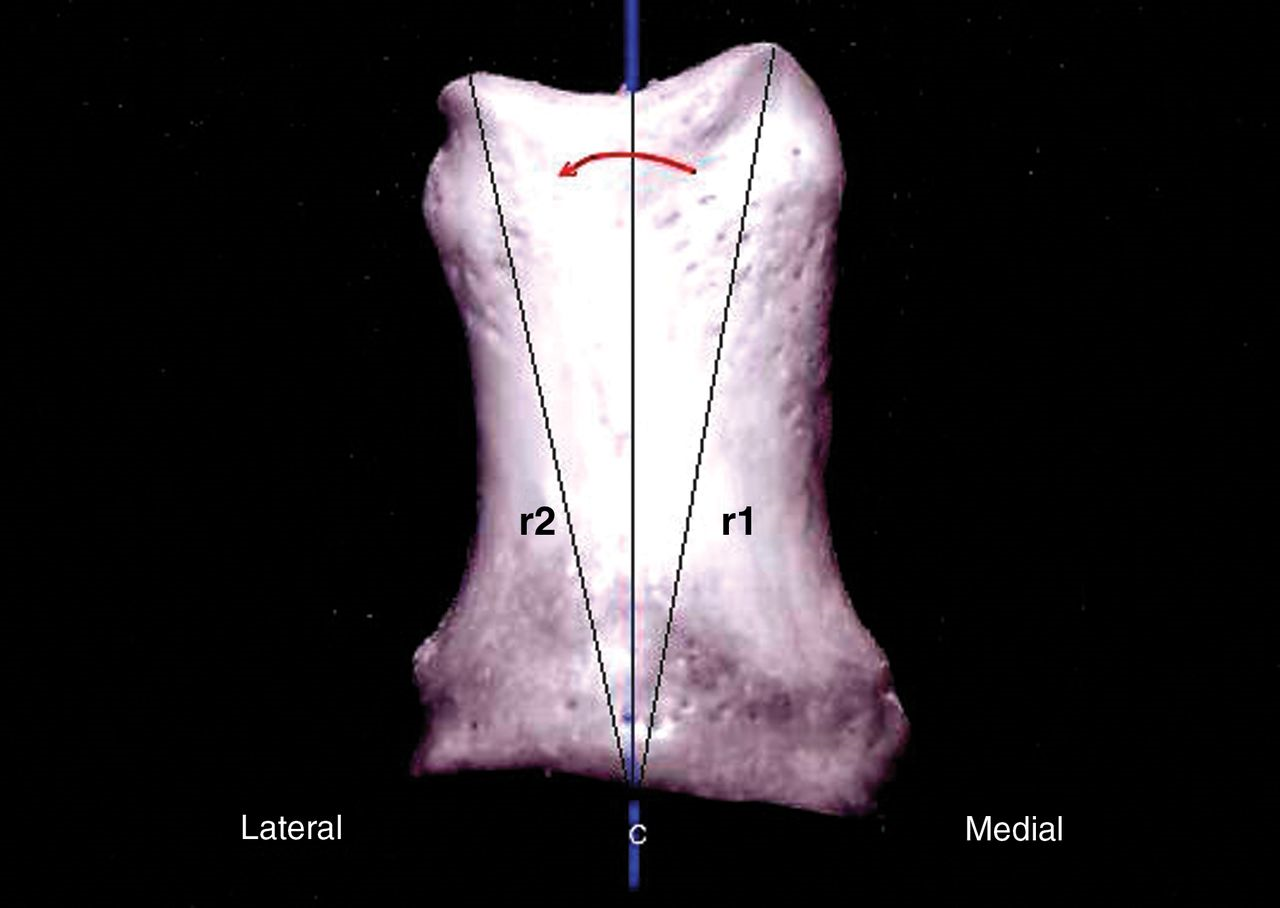
44] also found symmetrical relationships between the related grooves and each sesamoid. The present analysis examines the following nine different morphological characteristics: 1) A convex spherical metatarsal head is the best geometric shape to facilitate multiplane motion. 2) A lateral metatarsal ridge with a cartilaginous surface that extends the spherical surface of the metatarsal more proximal. 3) A dorsal metatarsal cartilaginous surface that extends more lateral proximal. 4) A distal torsion in the metatarsal head that results in it being everted when referenced to a vertical bisection at the metatarsal’s base. 5) A concave spherical proximal phalanx articular surface that is congruent with the opposing metatarsal head. 6) The distally abducted and everted shape of the proximal phalanx facilitates an inversion rotation around its longitudinal axis. 7) The medial length of the proximal phalanx exceeds its lateral length in almost all specimens. 8) A proximal articular surface that exhibits more depth medially. 9) A distal medial condyle that is, relative to the ground, vertically oriented and a lateral condyle that is more obliquely oriented.
Results
Since the sample group was small (N = 21), the stated numbers in
Table 1 should be viewed only as estimates of the proportion of the underlying population with the given characteristic. And because all of the visual observations ascertaining their presence or absence were performed by the same investigator (M.D.), the results are subject to bias associated with outcomes of interest. Although not every specimen exhibited all nine morphological characteristics that were deemed essential for metatarsophalangeal joint motion, their prevalence in the sample group seemed to indicate that the conclusions could be generalized to the population as a whole.
In all 21 specimens, the distal dorsal aspect of the metatarsal head exhibited a convex spherical surface and a lateral metatarsal cartilaginous surface and ridge. Twenty of 21 metatarsal heads were found to be everted, and 18 of 21 specimens exhibited dorsal cartilaginous surfaces that extended more proximal lateral. In the proximal phalanx, all 21 specimens exhibited a proximal articular surface that was concave and spherical, 20 of 21 specimens exhibited more length medially, and 19 of 21 specimens exhibited a proximal articular surface with more depth medially. When the distal aspect of the phalanx was referenced to its most proximal plantar aspect, it was found to be everted and abducted in 19 of 21 specimens, and 19 of 21 specimens exhibited a plantar distal medial condyle more vertically aligned than the distal lateral condyle. From this sample cohort, we selected one metatarsal and one phalanx, which were from the same individual. Both bones expressed all the selected characteristics and, as such, were representative of the group as a whole. They became the chosen specimens for photographs illustrating the selected morphological features and conceptual model.
Table 1.
Prevalence of Anatomical Features in 21 Metatarsophalangeal Specimens
Table 1.
Prevalence of Anatomical Features in 21 Metatarsophalangeal Specimens
Discussion
It is necessary to assume that the specimen’s morphological features are a reflection of the sum of all the forces that it and its predecessors have been subjected to and that, excluding small variations, the morphological characteristics unique to this specimen induce relatively similar motions in each of the other skeletal specimens.
Defining the interdependent relationship between morphological features and functionality is complicated by the complexity of the foot as a kinematic system[
34] and its small magnitudes of motion, which are difficult to visualize.[
45] Lundberg et al[
34] measured kinematic in vivo motions in multiple joints in the foot; excluding all metatarsal dorsiflexion ranges of motion, they found no rotational motion around any axis that exceeded 2°. This same inherent difficulty exists in in vitro studies, but to a greater extent. Although some experiments may demonstrate greater degrees of motion, no matter how well designed and precisely implemented, they lack the accuracy of analyses performed on a live subject. Koo et al[
46] believed that it was difficult if not impossible to extrapolate kinematic motions from nonambulatory kinematic studies.
The present specimen selection process was based solely on availability, morphological homogeneity, and a lack of obvious osseous pathologic abnormalities. Assuming that the selection process was accurate, it should be possible, by examining the spatial characteristics and geometry of each joint and defining its cartilaginous boundaries as its terminal functional limit, to establish a theoretical correlation between the selected features and the motion described by multiple investigators.
Lateral Metatarsal Ridge with an Abducted Cartilaginous Surface That Extends More Proximal
Asymmetry between the medial and lateral aspects of the metatarsal head is well documented. Latimer and Lovejoy[
49] developed a formula to describe the functional angle of the metatarsal head. The angle between the metatarsal head’s cartilaginous borders and its longitudinal axis were radiographically defined by La Porta et al[
50] as the proximal articular set angle. Increases in this angle are found in almost all hallux valgus deformities, and a failure to reduce this angle has been implicated in recurrent hallux valgus deformities.[
51] Ferrari et al[
20] found a statistically significantly larger angle in females, concluding that females, by virtue of their sex, were more at risk for the structural deformity.
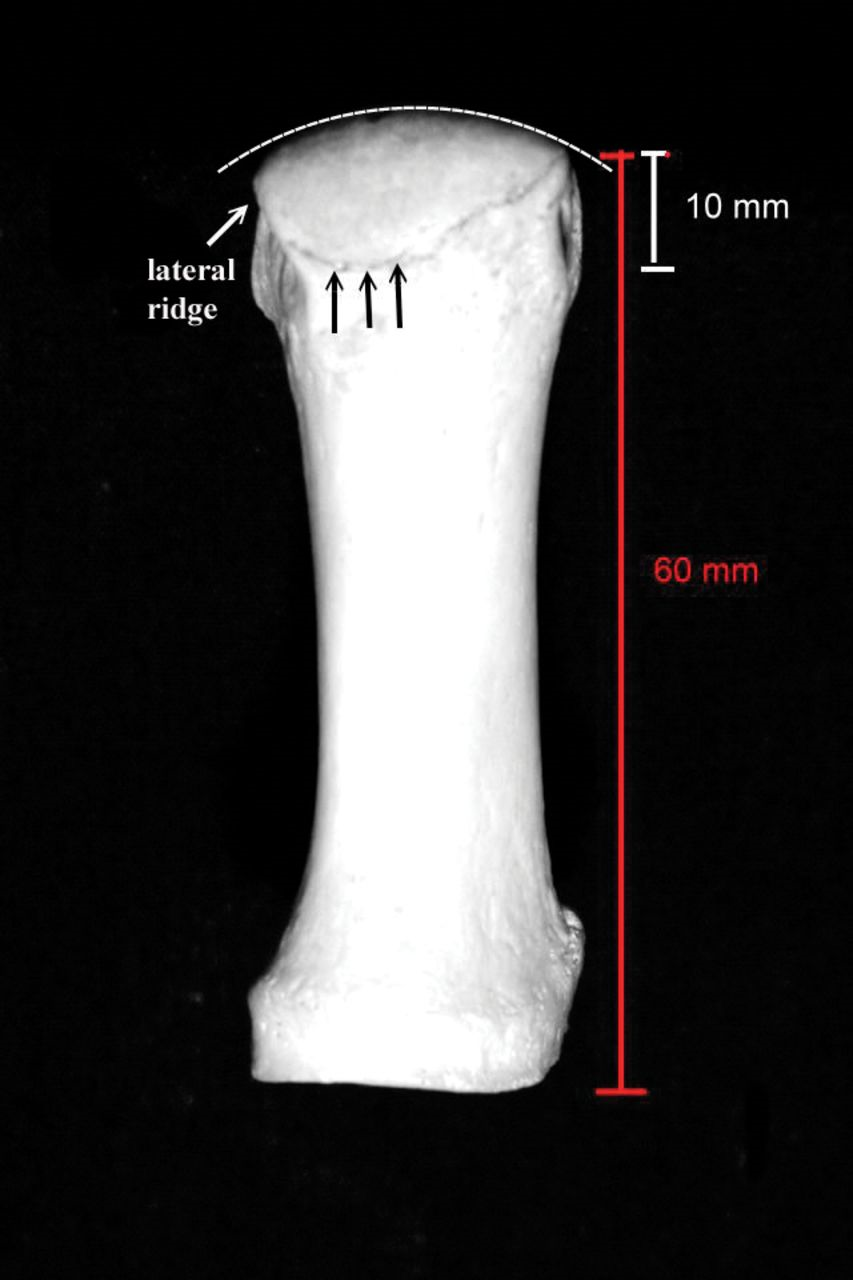
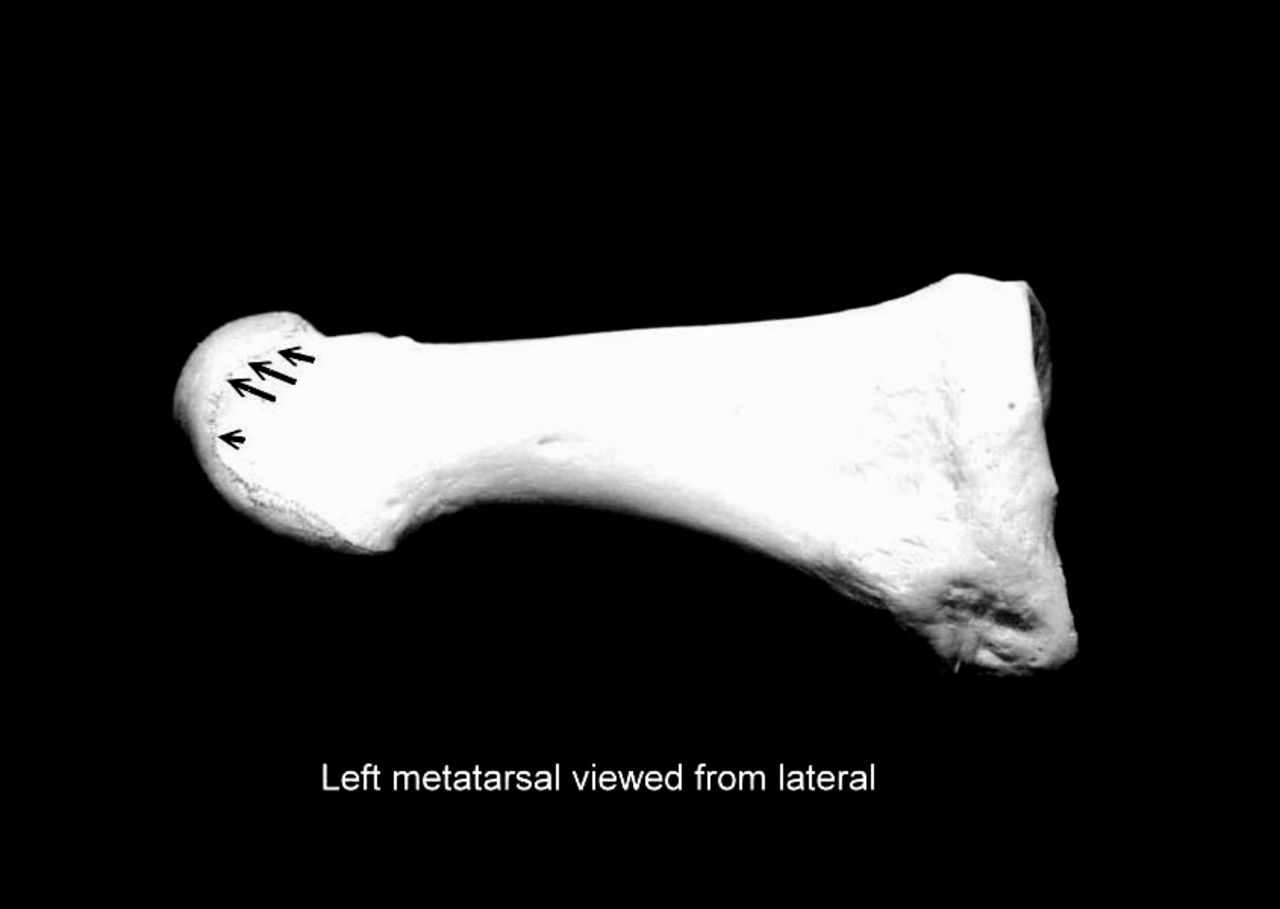
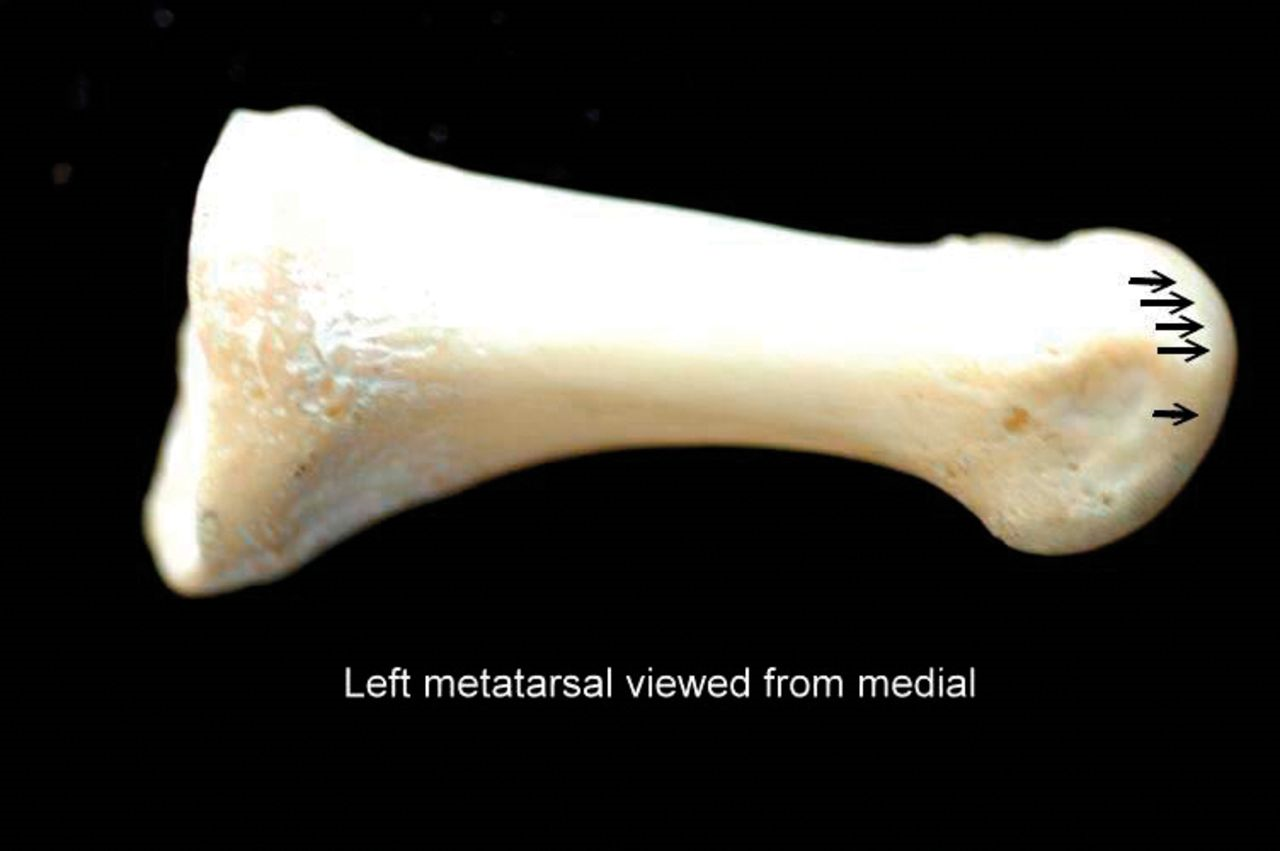
All 21 osseous specimens exhibited a lateral ridge with an overlapping cartilaginous surface extending more proximal. These characteristics can be observed in
Figure 1 and
Figure 2.
Figure 1 and
Figure 3 clearly show, by way of comparison, that the medial cartilaginous surface does not extend proximal (a finding in all 21 specimens). A cartilaginous surface that extends further lateral ensures that the dorsolateral aspect of the metatarsal remains in contact with the proximal phalanx at higher declination angles than its medial dorsal surface. This configuration permits compressive forces originating from the proximal phalanx, particularly those from distal lateral, to be focused on the metatarsal head for a slightly longer period. This characteristic is also supportive of a metatarsal shift away from its alignment with the phalanx while permitting the phalanx to maintain contact with its cartilaginous surface for longer periods. Although a shallow ball-and-socket joint will accommodate such a metatarsal motion, none of the selected morphological characteristics in this analysis offer an explanation for this.
Dorsal Metatarsal Cartilaginous Surface That Extends More Proximal Lateral
This characteristic can be observed in
Figure 1. Ahn et al,[
52] using a 3-D magnetic tracking system in six cadaver feet, noted that the contact surface between the metatarsal head and the proximal phalanx was greatest when the joint was in neutral position, with the contact area progressively diminishing with dorsiflexion of the first metatarsophalangeal joint. An asymmetrical cartilaginous surface in which the dorsal cartilage extends more proximal lateral implies that this part of the metatarsal head remains in contact with the proximal phalanx at higher declination angles and that the contact surface progressively diminishes with dorsiflexion. In a model where this type of asymmetry exists, it seems highly improbable that metatarsal inversion alone, without a shift away from sagittal alignment with the hallux, will permit it to maintain contact with the proximal phalanx at higher declination angles. The selected morphological characteristics in this analysis do not offer a credible explanation for this finding.
Intrinsic Eversion Torsion in the Metatarsal
Physical anthropologists have long recognized eversion torsion in the metatarsal head and have used it to identify bipedalism in early hominids; it is also used to differentiate humans from other primates.[
53,
54,
55] Its role in first-ray functionality has received little attention in the literature. To define eversion torsion in the metatarsal head, it is necessary to establish a coordinate system, so the authors make the assumption (perhaps incorrectly) that the vertical bisection of the metatarsal base is perpendicular to the ground (transverse plane) in a neutral static stance. An everted metatarsal head, when referenced to a vertical bisection of its base, was found in 20 of 21 specimens in the sample group. Torsional extremes in the tibia (and other long bones) have been shown to result in pathologic joint changes at the bone’s proximal and distal ends,[
56,
57,
58] and the underlying torsional growth patterns and shape can be a result of genetic factors or external forces.[
59] Distal metatarsal torsion resulting in an everted metatarsal head was initially observed by Morton[
53,
54] and has been subsequently noted by David et al,[
29] Elftman and Manter,[
60] Lewis,[
61] Trinkaus,[
62] Drapeau and Harmon,[
55] Olson and Seidel,[
63] Meldrum and Hilton,[
64] Largey et al,[
65] Schmid,[
66] Susman and de Ruiter,[
67] Eustace et al,[
68] and Talbot and Saltzman.[
69]
Trinkaus[
62] seems to be the first investigator to have tried to establish normal metatarsal torsional values in a cohort study (N = 40). Although he does not state his method of measurement, he determined a mean ± SD of 15° ± 12° of torsion in his sample.
Largey et al[
65] used 3-D computer-aided methods to establish torsional changes, and they chose a vertical bisection of the first metatarsal head to demonstrate this distal torsion. Their sample group (N = 7) averaged 33°. Although their research did not specifically address the issue of metatarsal torsion, in an in vivo study involving two cohorts, one with normal feet (N = 30) and another demonstrating hallux valgus (N = 33), Talbot and Saltzman[
69] found mean ± SD metatarsal eversion of 3.1° ± 8.4° in the control group and 9.3° ± 7.8° in the sample with hallux valgus. Presumably, the metatarsal eversion in the control represented distal torsion in the metatarsal.
In a radiographic study involving 100 radiographs, Eustace et al[
68] found a statistically significant relationship between first metatarsal eversion and hallux valgus. Their analysis was based on the movement of the inferior tuberosity of 20 cadaveric first metatarsals at 0°, 10°, 20°, and 30° of pronation. From these data, they measured the intermetatarsal angles and concluded that as the intermetatarsal angle increased, so did metatarsal eversion (
r = 0.69). Only four of 43 specimens with intermetatarsal angles of 9° or less exhibited eversion greater than 10°, and 48 of 57 specimens with intermetatarsal angles greater than 9° had everted positions greater than 10° (statistical relationship
P < .001). They found that pronation and varus deviation of the first metatarsal were linked, concluding that both altered the tendon balance maintaining the proximal phalanx alignment, which led to hallux valgus. Until this study, radiographic everted rotation of the metatarsal had never been evaluated because of a lack of reliable markers in the bone. In another study (N = 50), Eustace et al[
70] found a strong statistically significant relationship between first metatarsal eversion and the height of the medial longitudinal arch (
r = 0.93,
P < .001). They determined that only three of 18 feet with a medial longitudinal arch angle greater than 24° had first metatarsal eversion (pronation) greater than 10° and that all patients with a medial longitudinal arch less than 20° had greater than 10° of first metatarsal eversion. Eustace et al determined that there is an inverse relationship between the two values: greater metatarsal eversion was associated with a lower medial longitudinal arch.
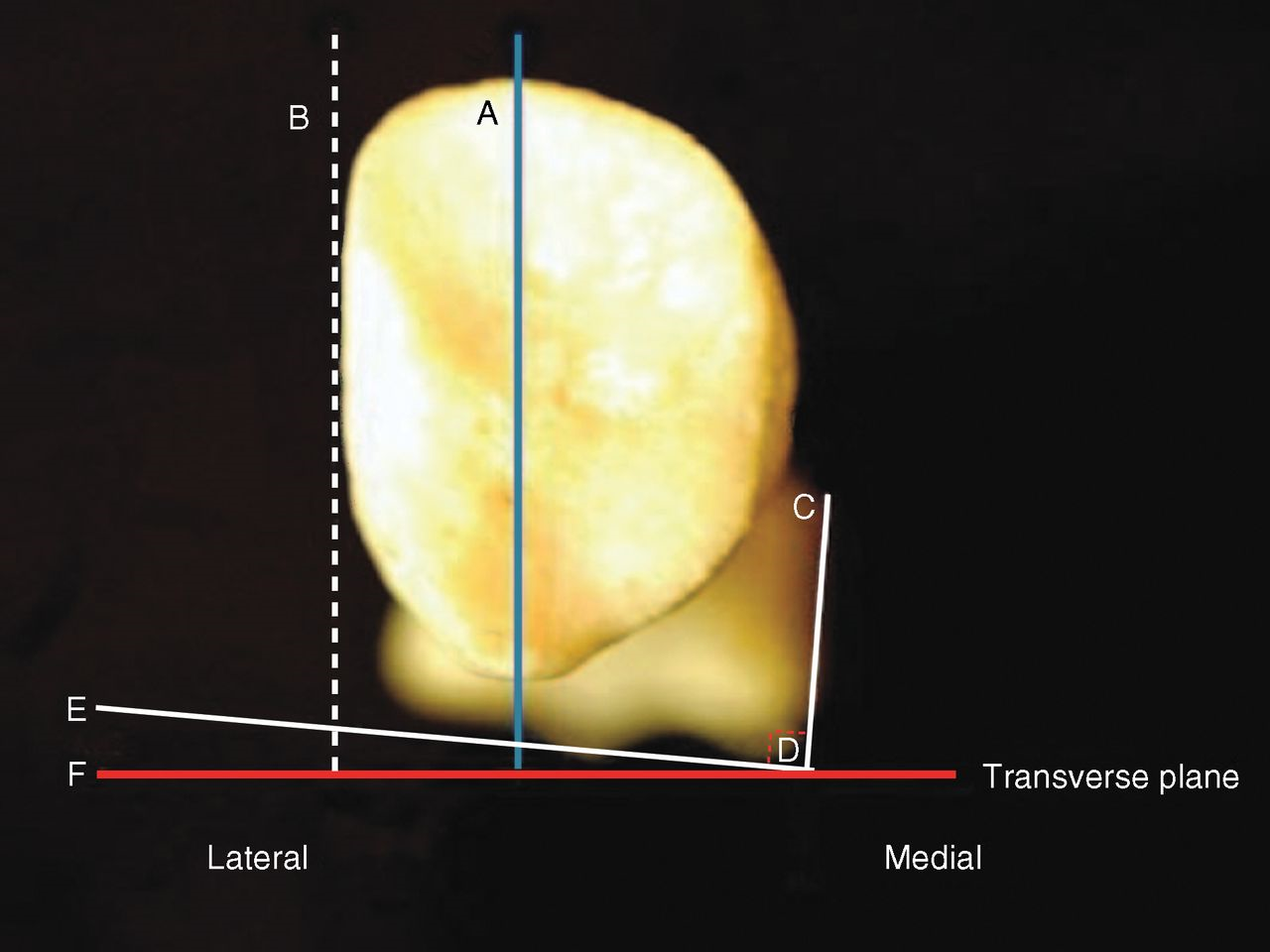
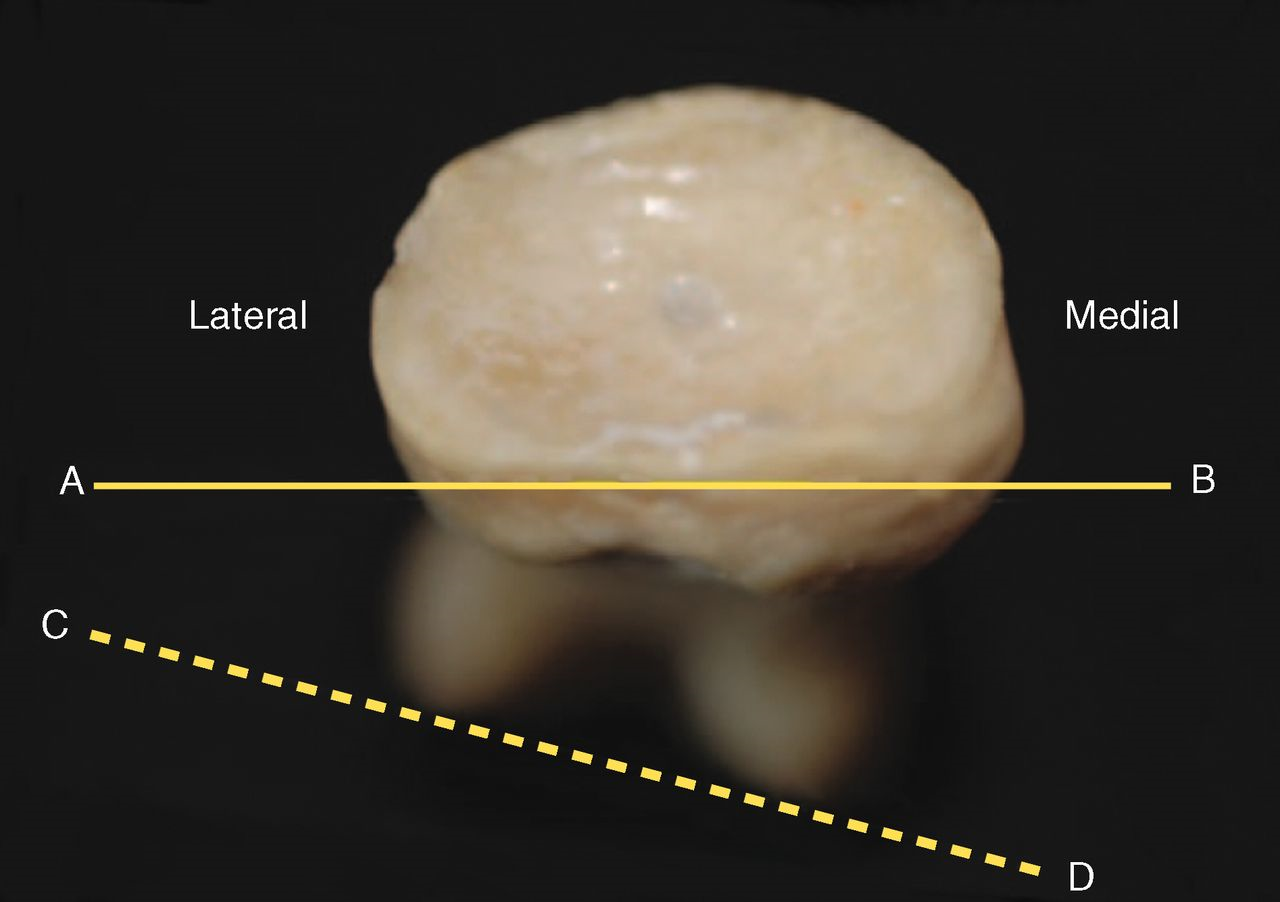
By defining the vertical bisection of the metatarsal base as that point where it exhibits its greatest vertical depth and orienting this point perpendicular to a line representative of the transverse plane, it becomes possible to quantify intrinsic metatarsal torsion (eversion) in this model by referencing the medial aspect of the metatarsal head (
Figure 4). Distribution in this sample group included 0° of metatarsal eversion in one specimen, 3° to 6° in 19 specimens, and 15° of torsion in one specimen. To mitigate measurement errors, photographs of each specimen were taken from a proximal slightly plantar perspective to visualize the metatarsal base simultaneously with the medial aspect of the metatarsal head and both sesamoid grooves. Quantifying abduction and eversion in the bone was difficult. There was morphological variability in every metatarsal base examined, and attempts to ascertain angular relations at opposing ends of the metatarsal were problematic. There is high variability in the studies that have examined torsion in the metatarsal, and we are unsure whether this inconsistency is truly representative of the general population, whether it is associated with the poor choice of reference features or to error in measurements, or whether it is a combination of all of the above.
Figure 4.
Metatarsal viewed from a proximal axial perspective. The medial aspect of the metatarsal head (line CD) and a line drawn tangential to the sesamoid grooves (line DE), when referenced to a vertical bisection of the metatarsal base, demonstrate the distinctive distal everted nature of the bone, defined by angle EDF, measuring 6° in this specimen. Line B, defining the lateral edge of the metatarsal base, is relatively parallel to line A, defining the vertical bisection axis of the metatarsal base.
Figure 4.
Metatarsal viewed from a proximal axial perspective. The medial aspect of the metatarsal head (line CD) and a line drawn tangential to the sesamoid grooves (line DE), when referenced to a vertical bisection of the metatarsal base, demonstrate the distinctive distal everted nature of the bone, defined by angle EDF, measuring 6° in this specimen. Line B, defining the lateral edge of the metatarsal base, is relatively parallel to line A, defining the vertical bisection axis of the metatarsal base.
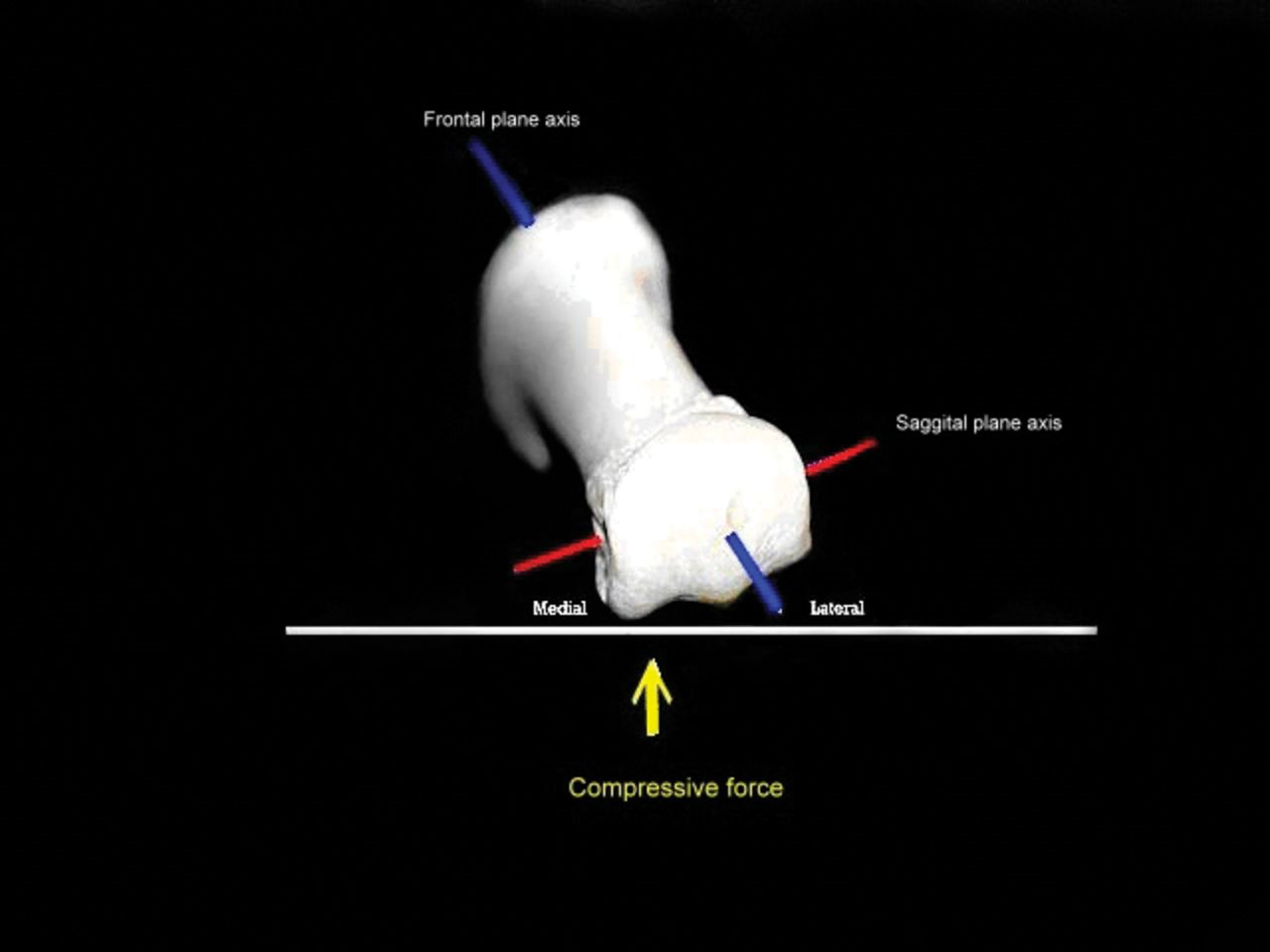
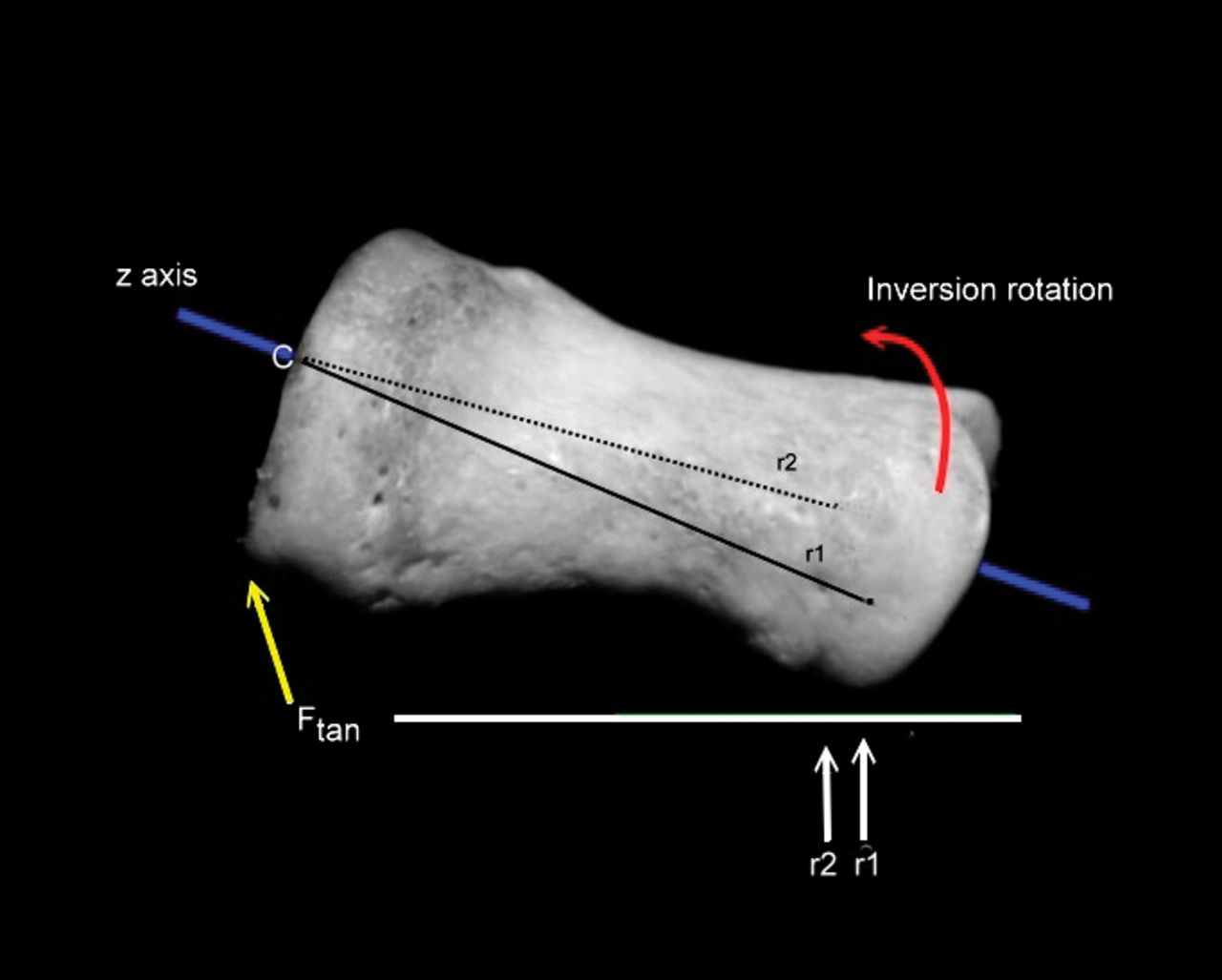
Distal abduction in the metatarsal specimens seemed to be more lateral plantar and appeared to be associated with the shape of the fibular groove. In the present simplified model, an everted metatarsal head would ensure that ground reaction forces will encounter the medial aspect of the metatarsal initially and, due to a biomechanical tendency for motions to follow the path of least resistance,[
71] force it to invert around its longitudinal axis (
Figure 5). This feature ensures that metatarsal inversion around its longitudinal axis (frontal plane axis) must surely occur if both sesamoids are to make contact with the ground. Obviously, the more everted the metatarsal head, the more it must invert around its frontal plane axis if the fibular groove and sesamoid are to be subjected to ground reaction forces. Excessive torsion delays the time it takes for both grooves to assume a parallel position relative to the ground, which could, presumably, result in a certain level of joint instability and be a contributor to hallux valgus deformities.
Figure 5.
One effect of distal metatarsal eversion torsion is that compressive forces from the ground (yellow vector) will encounter the medial aspect of the metatarsal head first, forcing it to invert around its longitudinal axis.
Figure 5.
One effect of distal metatarsal eversion torsion is that compressive forces from the ground (yellow vector) will encounter the medial aspect of the metatarsal head first, forcing it to invert around its longitudinal axis.
Proximal Concave Spherical Joint Articulation
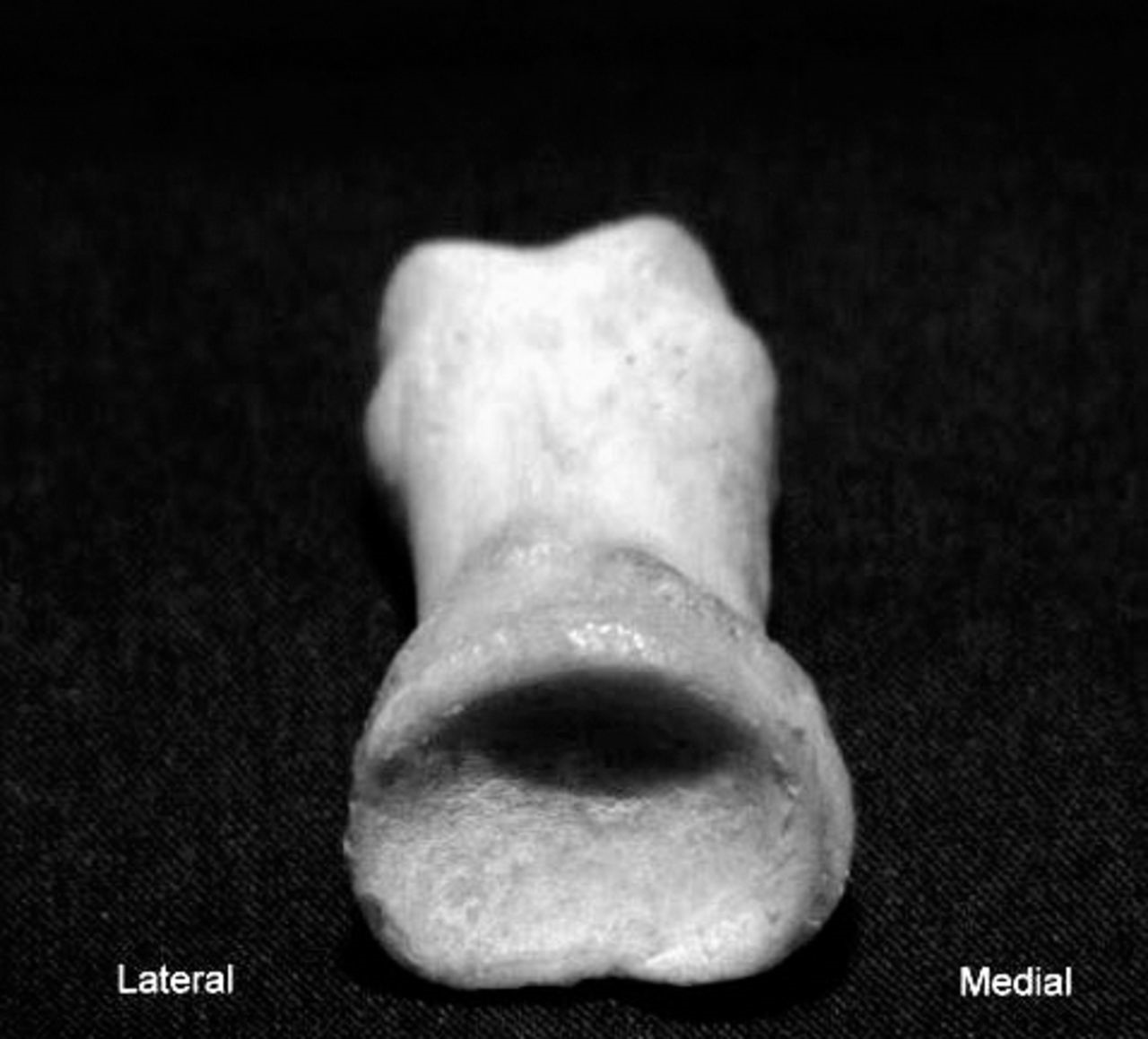
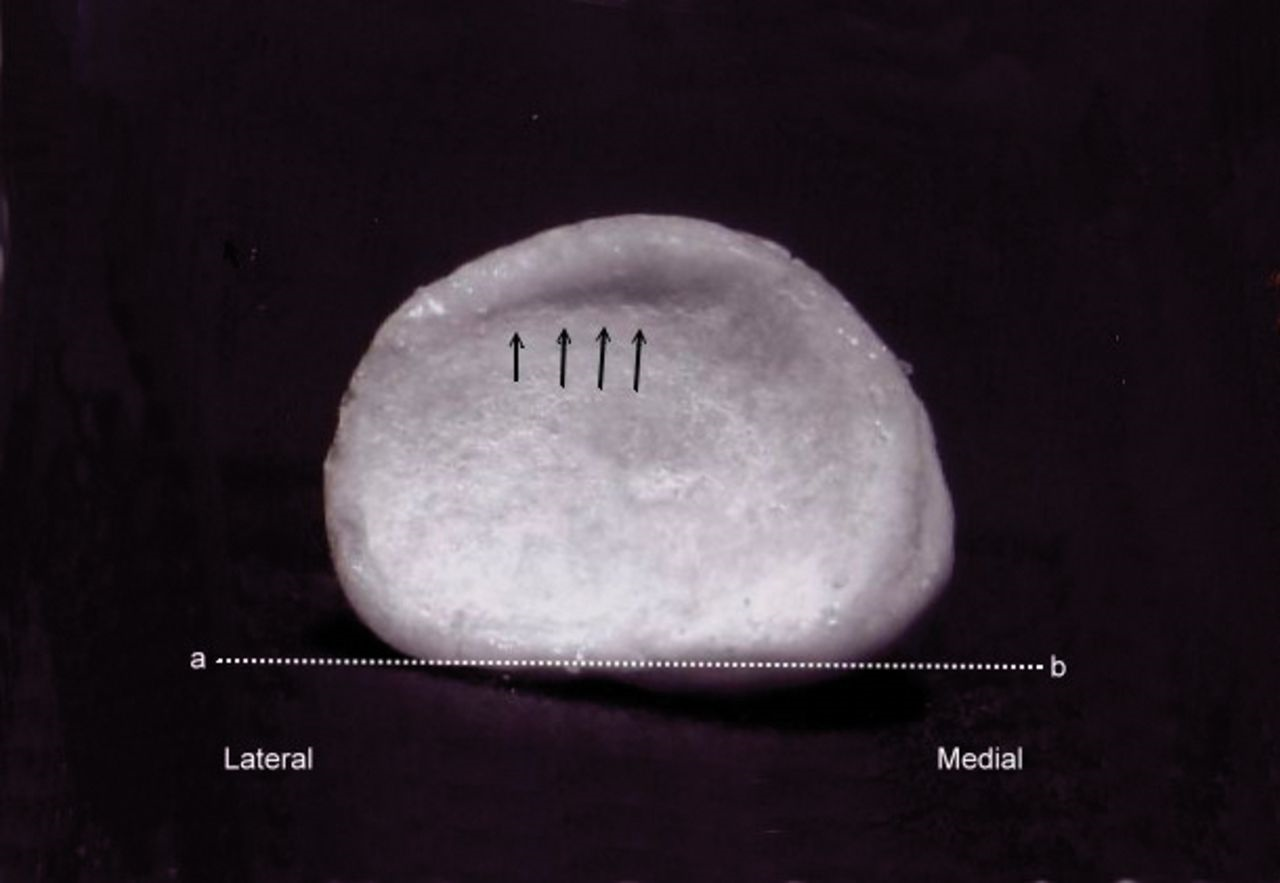
In all 21 specimens, the proximal phalanx articular surfaces exhibited a shallow concave spherical surface, congruent with an opposing convex metatarsal head; this finding is consistent with Hick’s[
24] and Hetherington et al’s[
38] description of the joint being a shallow ball-and-socket or spherical joint (
Figure 6). This surface is shaped so that it is possible for the metatarsal head to invert around its longitudinal axis while simultaneously dorsiflexing and to evert while plantarflexing. Unlike the metatarsal head, with its overlapping dorsal and dorsolateral cartilaginous surfaces that define its motion, the phalanx’s articular borders are sharply demarcated and cease at its concave margins. This is consistent with observations by Kravitz et al[
72] that it is really the metatarsal alone that expresses the joint motion.
Figure 6.
Proximal phalanx observed from proximal. Note the concave spherical nature of the joint surface.
Figure 6.
Proximal phalanx observed from proximal. Note the concave spherical nature of the joint surface.
Distal Intrinsic Eversion Torsion in the Phalanx
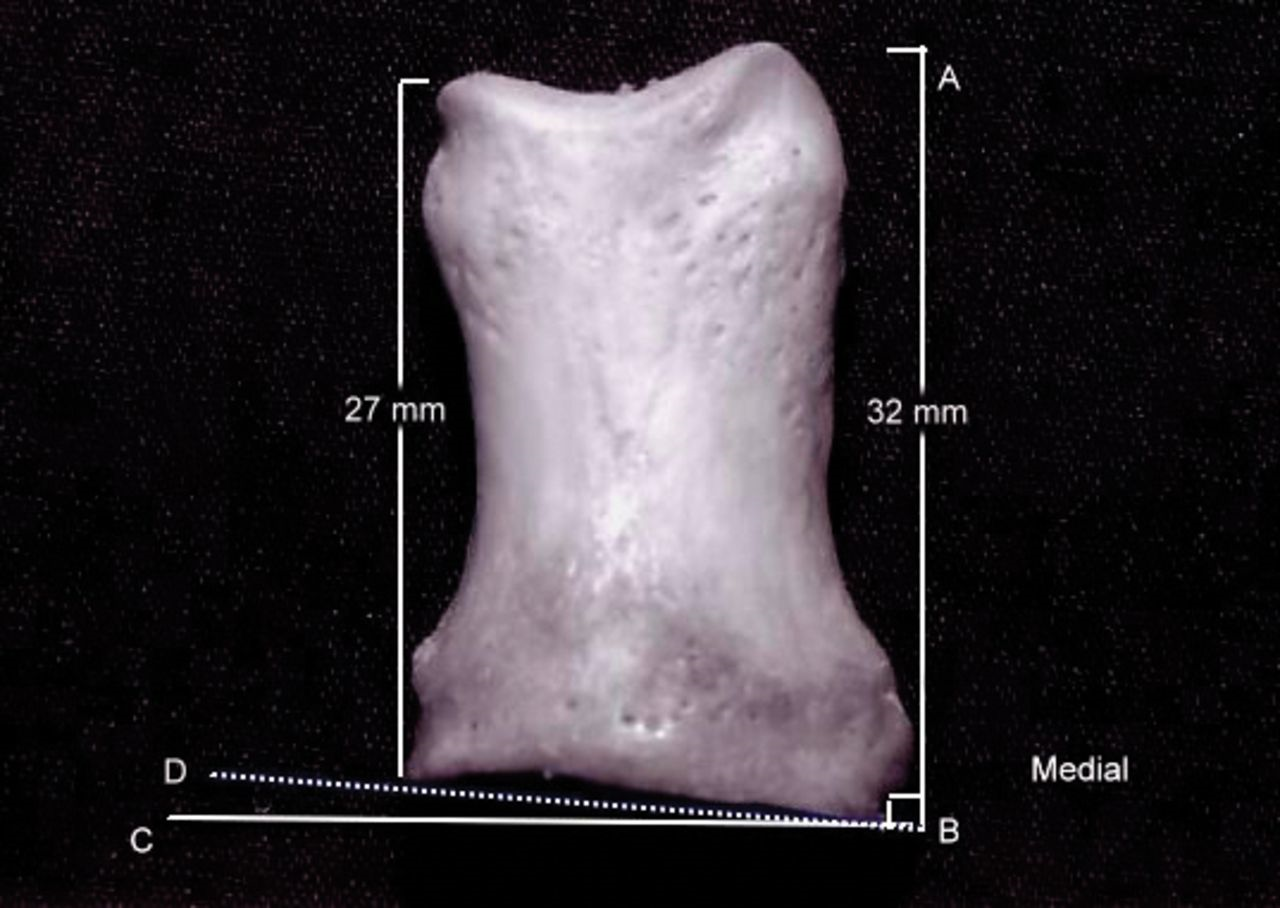
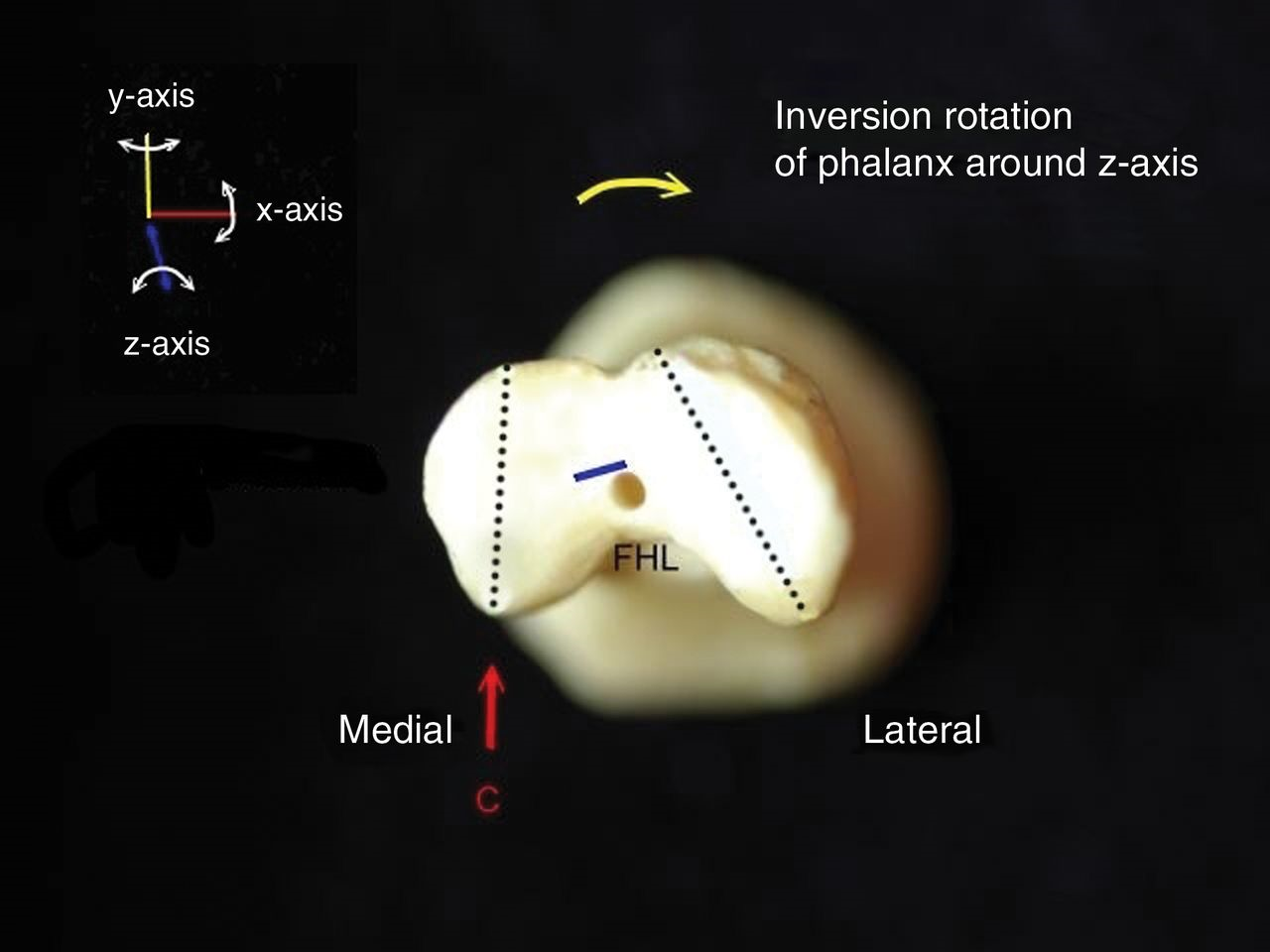
This feature, observed in 19 of 21 specimens, was defined by the distal portion of the proximal phalanx being abducted and everted relative to its base. This characteristic was most visible from a proximal and slightly plantar axial view of the phalanx (
Figure 11). The flattened plantar phalangeal base is the proximal reference point. The torsional characteristics in the proximal phalanx seem similar to those found in the distal aspect of the metatarsal; both are distally abducted and everted. Talbot and Saltzman[
73] found 4.0° of hallucal eversion in their control group (n = 30) and 13.8° in those exhibiting hallux valgus (n = 33).
Figure 11.
Proximal phalanx viewed from a proximal axial perspective. By using solid yellow line AB, which defines the plantar proximal aspect of the bone, and dotted line CD, which illustrates the leading edges of the two distal condyles, the distal everted and abducted nature of the bone can be seen. One result of this distal torsion is to make the medial distal condyle more plantarly prominent relative to the lateral condyle. This torsion in the bone also exacerbates the appearance of hallux valgus deformities.
Figure 11.
Proximal phalanx viewed from a proximal axial perspective. By using solid yellow line AB, which defines the plantar proximal aspect of the bone, and dotted line CD, which illustrates the leading edges of the two distal condyles, the distal everted and abducted nature of the bone can be seen. One result of this distal torsion is to make the medial distal condyle more plantarly prominent relative to the lateral condyle. This torsion in the bone also exacerbates the appearance of hallux valgus deformities.
With heel-off, with a subsequent increase in the proximal phalanx’s declination angle relative to the ground, inversion must occur if the lateral condyle is to make contact with the ground. Sequentially, the lateral condyle must contact the ground later. Consistent with Mann’s findings,[
33] these features seem to help facilitate a collective inversion of both the proximal phalanx and metatarsal. This torsional shape also subjects the proximal phalanx to more inversion if its entire plantar surface is to make contact with the ground. The highest level of stability to the joint may occur if both distal condyles are firmly planted on the ground.
Talbot and Saltzman[
73] examined hallucal rotations and found significant differences between a control cohort (n = 30) and a sample with hallux valgus deformities (n = 39) (
P ≤ .005). They concluded that bunion deformities involve variable degrees of axial and coronal rotations of the first metatarsophalangeal joint. Clearly, excessive distal eversion torsion in the proximal phalanx must also be a consideration in these structural deformities, and reducing it in those bones that have high values would seem to be a crucial consideration in reconstructive hallux valgus surgery.
Theoretical Two-Axis Kinematic Model of Metatarsophalangeal Joint Motion
Motion in the present model was defined according to criteria established by Inman[
78] and Green and Carol,[
79] with translation being movement of the metatarsal in a straight line defined as the line of progression, where the line of force passes through its longitudinal axis. Rotational motion is perpendicular to translation and is motion of the metatarsal around its longitudinal or z-axis, and it occurs when the line of force passes through its center. By definition, rotational movement must be perpendicular to the axis of rotation and will occur in the frontal plane.[
78,
79] Green and Carol’s theory[
79] of planal dominance, used to define foot motion, is applicable to first metatarsophalangeal joint kinematics. These planes of motion, which are perpendicular to the longitudinal axis of the first metatarsal, continually change as the metatarsal transitions from a low to a higher declination angle and inverts relative to the transverse plane (ground) from an initially everted position.[
79]
The initial reference point for the metatarsal is slightly abducted from the sagittal plane or line of progression, within a variable range of 7° to 12°, as established originally by Morton[
54] and later by Sgarlato,[
80] Curran et al,[
81] Olson and Seidel,[
63] and Murray et al.[
82] This point defines the initial foot position in static stance and is referred to as its line of propulsive leverage, commonly used when comparing primates’ limb positions with the sagittal plane. The sagittal plane center of rotation (x-axis) used for the present model was theoretically established by Root et al[
42] and was confirmed clinically by Hetherington et al.[
38] Their model does not account for frontal plane variations in this axis.
Inversion of the metatarsal around its frontal plane axis is also defined only in approximate terms. Based on this analysis, it is initially placed slightly everted to the transverse plane, and since there is significant morphological evidence suggesting that the metatarsal inverts around its longitudinal axis, the following figures demonstrate this frontal plane shift.
The metatarsal initial declination angle is 15°, with its terminal declination angle approximately 65° from the transverse plane. Sagittal plane range of motion in the present model has been previously established.[
38,
39,
42,
52,
83,
84,
85,
86,
87,
88,
89] Although collectively these studies demonstrate some variability, most fall within 65° to 80° of motion.
To reference metatarsal motion by plane, we used the orthogonal referencing system,[
34,
48,
90] in which the three body planes are classified as follows: the sagittal plane is defined as (y-z), the frontal plane as (x-y), and the transverse or horizontal plane as (x-z). Motion in the frontal plane occurs around the z-axis, motion in the sagittal plane occurs around the x-axis, and motion in the transverse plane occurs around the y-axis.[
34,
48,
90] As the metatarsal’s longitudinal axis (z-axis) transitions from a position somewhat aligned with the sagittal plane at a low declination angle to a position more aligned with the y-axis or transverse plane axis at its terminal position, frontal plane motion almost becomes transverse plane motion at the metatarsal’s terminal dorsiflexion position. These axes, which define metatarsal position at any instant, are subject to change since both separate centers of rotation are simultaneously transitioning from one zonal plane to another.[
83] Although transverse plane motion in the metatarsophalangeal joint has been observed, since there was no specific morphological characteristic that defined this motion, the y-axis has not been included in the model. In addition, no attempt was made to establish either axis precisely; each is representational in nature, designed for the purposes of describing, in general terms, metatarsal kinematic motion.
We recognize the inherent difficulties in defining motion in a joint that is not an integral part of the foot, and we further acknowledge how problematic it can be to infer motion based on morphological features in one specimen to in vitro and in vivo findings by other researchers. These limitations, however, do not invalidate the conclusions regarding the joint’s functionality.
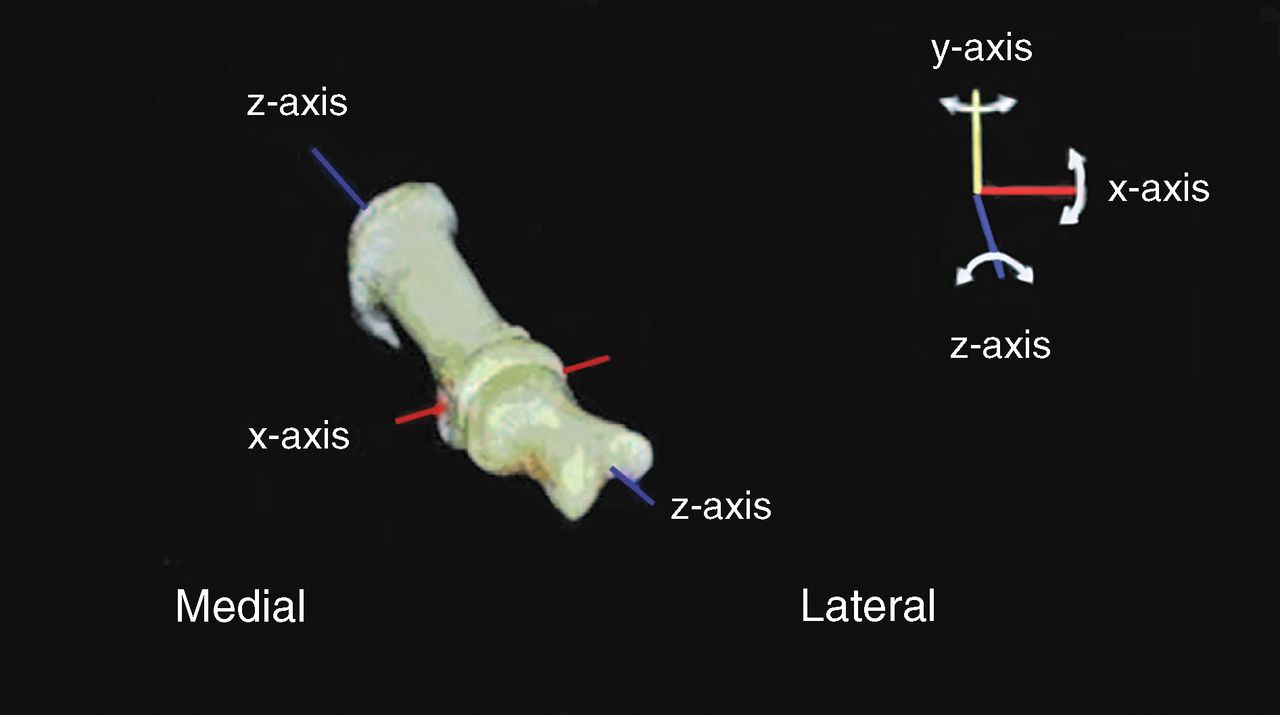
In
Figure 14, the metatarsal has been positioned at its lowest declination angle, typically associated with static stance position. Note that in
Figure 15, the metatarsal remains longitudinally aligned with the proximal phalanx, with neither bone everted.
Figure 14.
A slightly everted metatarsal with a declination angle of 15°. The proximal phalanx is similarly everted relative to the frontal (x-y) plane. The frontal plane center of rotation (z-axis) is located in near the center of the longitudinal bisection of the metatarsal. The sagittal plane center of rotation (x-axis) is located near the center of the metatarsal head. The metatarsal has been abducted 6° to 8° from the line of progression (sagittal plane y-x). The transverse plane is designated (x-z).
Figure 14.
A slightly everted metatarsal with a declination angle of 15°. The proximal phalanx is similarly everted relative to the frontal (x-y) plane. The frontal plane center of rotation (z-axis) is located in near the center of the longitudinal bisection of the metatarsal. The sagittal plane center of rotation (x-axis) is located near the center of the metatarsal head. The metatarsal has been abducted 6° to 8° from the line of progression (sagittal plane y-x). The transverse plane is designated (x-z).
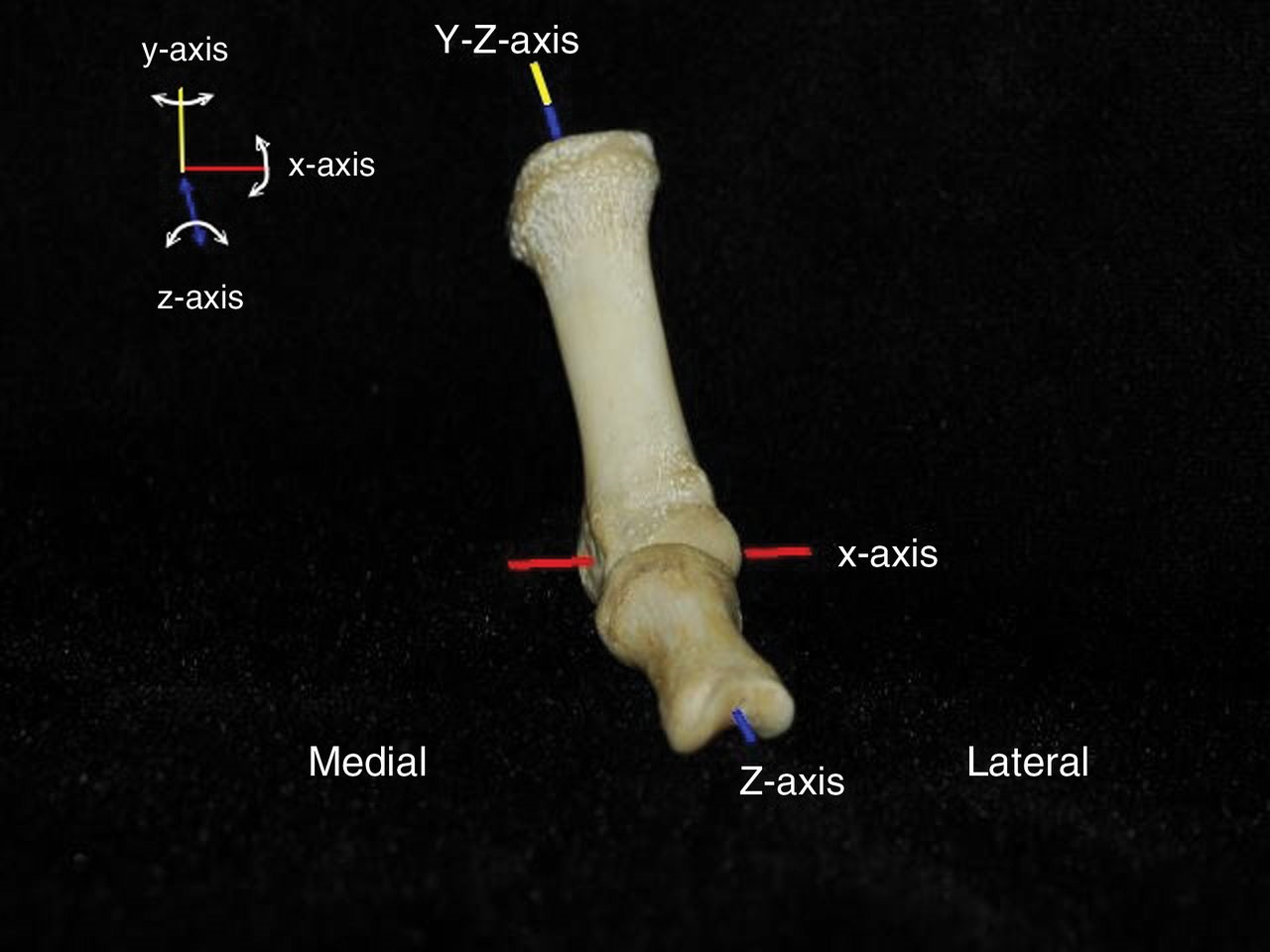
Figure 15.
Viewed from distal medial, the metatarsal declination angle is approximately 45°.
Figure 15.
Viewed from distal medial, the metatarsal declination angle is approximately 45°.
Root et al[
42] theoretically demonstrated how the metatarsophalangeal joint’s center of rotation shifted with metatarsal dorsiflexion. The amount of hallux dorsiflexion with the foot in static stance position was determined to be approximately 25°, which translated into approximately 45° of dorsiflexion with heel lift.[
42] For the metatarsal to reach end-range dorsiflexion of 65° to 75°, Root et al’s model required that the first ray plantarflex, by gliding past the proximal phalanx, in relation to the rest of the foot by approximately 10°.[
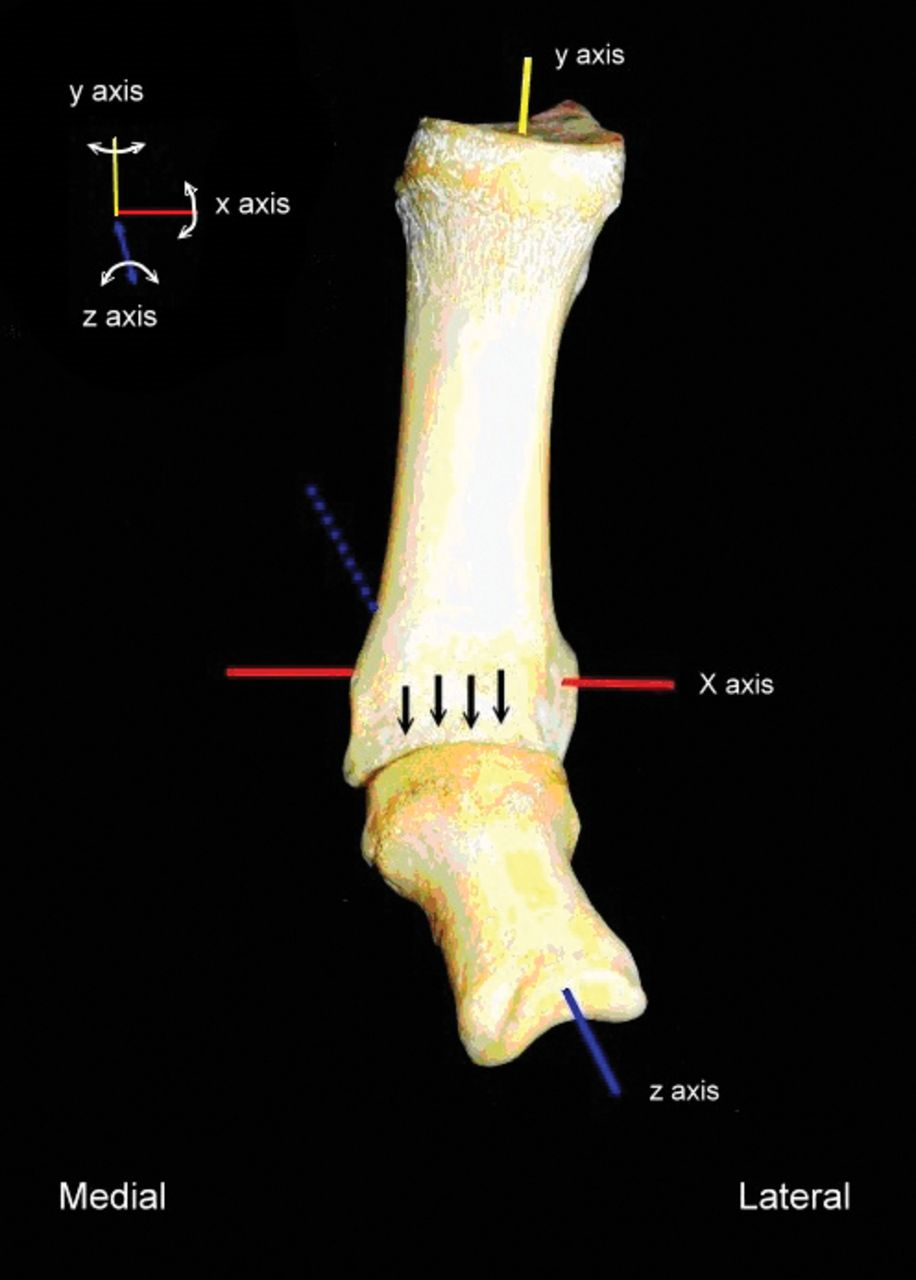
42] This motion was made possible by a proximal dorsal shift in the transverse axis of motion (our x-axis) and is demonstrated in
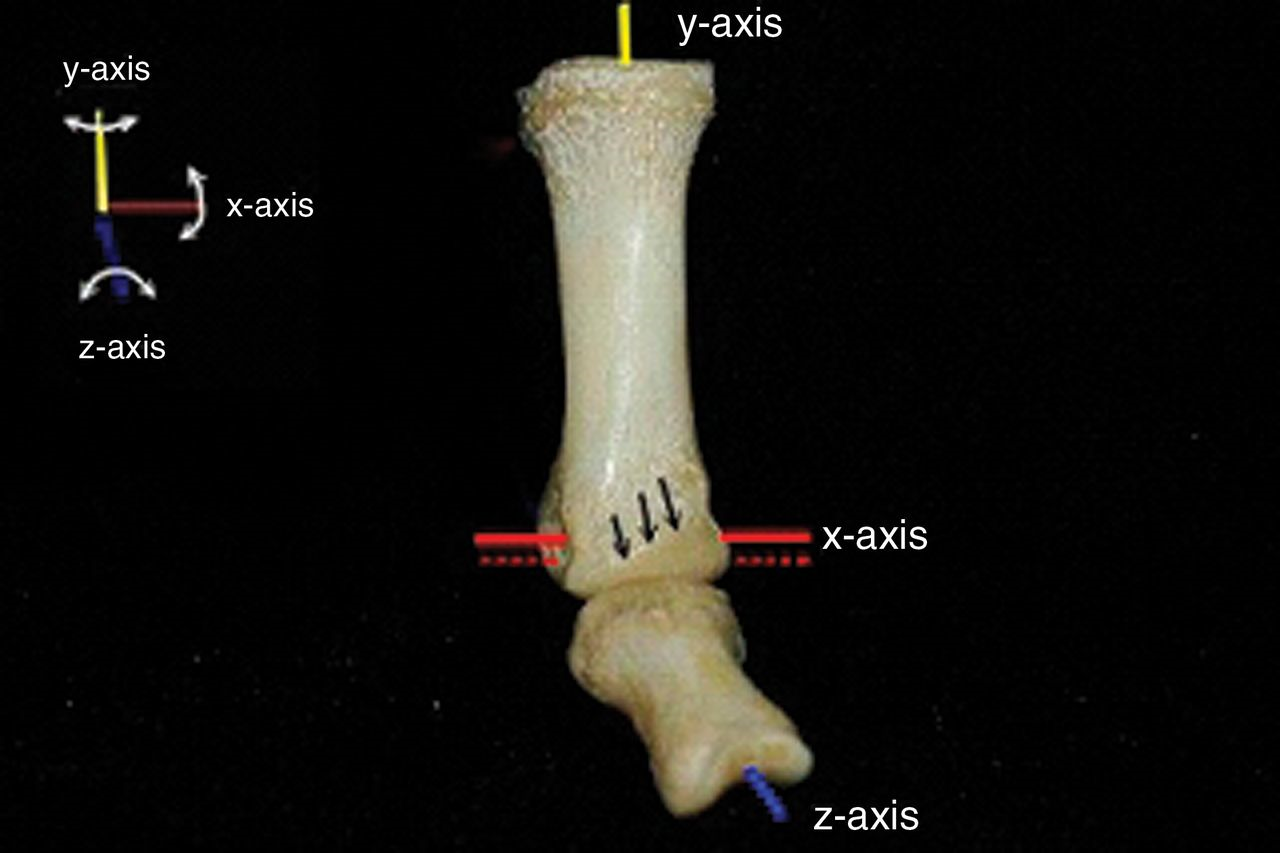
Figure 16, with the broken red line representing the initial center of rotation with the foot in static stance and the solid red line representing the joint’s axis at the end range of dorsiflexion. Their analysis examined metatarsal function only in the sagittal plane and, similar to the present analysis, does not account for the sesamoid’s presence.
Figure 16.
The metatarsal declination angle is approximately 65° and is longitudinally aligned with the proximal phalanx. There has been no further inversion of the metatarsal or proximal phalanx around their respective longitudinal (z) axes. Furthermore, observe that since the z-axis has now transitioned to a position more consistent with the y-axis, motion must occur more in the transverse rather than the frontal plane. Note the amount of remaining dorsolateral cartilage, defined by the black arrows, still visible.
Figure 16.
The metatarsal declination angle is approximately 65° and is longitudinally aligned with the proximal phalanx. There has been no further inversion of the metatarsal or proximal phalanx around their respective longitudinal (z) axes. Furthermore, observe that since the z-axis has now transitioned to a position more consistent with the y-axis, motion must occur more in the transverse rather than the frontal plane. Note the amount of remaining dorsolateral cartilage, defined by the black arrows, still visible.
The only possible way for the most dorsolateral aspect of the metatarsal to make contact with the proximal phalanx is for it to shift to a position no longer aligned with the proximal phalanx (
Figure 17). The mechanisms responsible for this motion are currently unknown, but there is evidence that it is a critical component of joint functionality. Spurring on the lateral aspect of the metatarsal head, found frequently on radiographic images of hallux limitus deformities, is one obvious sign of a metatarsal that is being restricted from making this shift toward the sagittal plane.
Figure 17.
The black arrows define the dorsal lateral cartilaginous border of the metatarsal head. The necessary position of the metatarsal if its entire cartilaginous surface is to be obscured by the proximal phalanx.
Figure 17.
The black arrows define the dorsal lateral cartilaginous border of the metatarsal head. The necessary position of the metatarsal if its entire cartilaginous surface is to be obscured by the proximal phalanx.
Since it is impossible to visualize some of the selected morphological features without more expensive imaging techniques, ie, computed tomography and magnetic resonance imaging, their clinical applicability is adversely affected and, as such, is a limiting factor in this research. Another obvious weakness is the morphological feature selection process; all of the features were selected by one investigator (M.D.).
Conclusions
Although this analysis is based on a theoretical association between the prevalence of selected morphological characteristics in a cohort of 21 individual specimens and the in vitro and in vivo results of other researchers, when all of the evidence is collectively considered, it seems plausible to draw valid conclusions regarding the metatarsal’s intended direction of motion. To insure that metatarsal inversion occurs during propulsion, the joint appears to have developed a whole series of redundant morphometrics specifically for this purpose. McGlamry,[
91] Root et al,[
42] D’Amico and Schuster,[
30] Grode and McCarthy,[
31] Olson and Seidel,[
63] Scranton and Rutkowski,[
32] Dykyj,[
92] Talbot and Saltzman,[
93] and Eustace et al[
68] have implicated everted metatarsals with hallux valgus deformities, so calculating normal torsional values would seem to be fundamental to understanding these structural deformities. Valmassy[
94] described an increase in the metatarsus adductus angle as a rudimentary regression to an earlier prehensile state found in lower primates. Absent the interdigital webbing (which forces only the hallux into abduction), a model that positions the metatarsal and hallux in adduction and then externally rotates both will place them precisely opposite the other metatarsals. Bipedalism seems to have occurred, in part, by a reduction in both the intermetatarsal angle and eversion torsion, and incremental steps involving the geometry of the metatarsal head and proximal phalanx and their spatial relationships to each other. Finding additional morphological features that place the metatarsal at low declinations in an everted position relative to the ground and at higher declination angles in an inverted position should provide further insight into the underlying etiologic factors associated with hallux valgus and hallux limitus. An analysis of each sesamoid and its respective grooves morphology should provide some of this evidence.