Next Article in Journal
Letter to the Editor. Poor Sitting Posture and Metatarsus Adductus Deformity
Previous Article in Journal
Synovial Sarcoma of the Foot. A Case Report
 
 
Journal of the American Podiatric Medical Association is published by MDPI from Volume 116 Issue 1 (2026). Previous articles were published by another publisher in Open Access under a CC-BY (or CC-BY-NC-ND) licence, and they are hosted by MDPI on mdpi.com as a courtesy and upon agreement with American Podiatric Medical Association.
Article

Functional Hallux Limitus or Rigidus Caused by a Tenodesis Effect at the Retrotalar Pulley. Description of the Functional Stretch Test and the Simple Hoover Cord Maneuver That Releases This Tenodesis

by
Jacques Vallotton
*,
Santiago Echeverri
and
Vinciane Dobbelaere-Nicolas
Swiss Ortho Clinic, Av du Servan 4, 1006 Lausanne, Switzerland
*
Author to whom correspondence should be addressed.
J. Am. Podiatr. Med. Assoc. 2010, 100(3), 220-229; https://doi.org/10.7547/1000220
Published: 1 May 2010

Abstract

Functional hallux limitus is a loss of metatarsophalangeal joint extension during the second half of the single-support phase, when the weightbearing foot is in maximal dorsiflexion. Functionally, it constitutes a sagittal plane blockade during gait. As a result, the mechanical support and stability mechanisms of the foot are disrupted, with important consequences during gait. Functional hallux limitus is a frequent, though relatively unknown condition that clinicians may overlook when examining patients with complaints that are not limited to their feet, for they can also present other symptoms such as hip, knee and lower-back pain. The purpose of this article is to present a critical review of the literature on functional hallux limitus and to explain a previously described and simple diagnostic test (flexor hallucis longus stretch test) and a physiotherapeutic manipulation (the Hoover cord maneuver) that recovers the dorsiflexion of the hallux releasing the tenodesis effect at the retrotalar pulley, which according to our clinical experience is the main cause of functional hallux limitus. The latter, to the best of our knowledge, has never been described before.

The hallux and its flexor hallucis longus tendon have evolved from a prehensile function to a propulsive one. They have lengthened the lever arm of the foot, which constitutes a central characteristic of bipedalism in Homo sapiens.[1] This static and dynamic mechanical lever provides the foot with stability during midstance and dramatically increases the forces during push-off.
For gait to take place normally, the first ray and its metatarsophalangeal joint must have adequate and painless mobility in the sagittal plane.[2] Functional hallux limitus is a lack of metatarsophalangeal joint extension during the second half of the single-support phase, when the weightbearing foot is in maximal dorsiflexion, constituting a sagittal plane blockade.[2] Consequently, the mechanical support and stability mechanisms of the foot fail. This failure has important biomechanical and dynamic consequences not only in the foot but also elsewhere in the lower extremities and the back as a result of the compensatory mechanisms required during gait.[35]
Functional hallux limitus is a frequent condition with mild symptoms that may be confused with those of local entities such as metatarsalgia, tendinitis, and plantar fasciitis. It may cause local pain over the first metatarsophalangeal joint, over the sesamoids, along the tract of the flexor hallucis longus tendon, and in the retromalleolar region.[6,7] Its clinical presentation and the diagnostic tests available, such as the functional stretch test,[8] remain relatively unknown, particularly in the orthopedic community. As a result, functional hallux limitus is not actively sought by physicians, and it is, therefore, frequently overlooked when examining patients with complaints that are not limited to the feet because they can also present with knee, hip, and back pain.[25]
There is substantial evidence to support a tenodesis effect in the retrotalar pulley as one of several origins of functional hallux limitus.[6,7] Its clinical consequences have been underestimated; it plays a role in the development of not only hallux rigidus and hallux valgus but also other painful compensatory mechanisms in the lower extremities as a result of the sagittal plane blockade. This entity deserves a much more aggressive diagnostic and therapeutic approach given that most cases can easily be treated with manipulation of the subtalar joint (the “Hoover cord maneuver”), described in this article, and physiotherapy.

Definitions of Functional Hallux Limitus

Functional hallux limitus is a relatively unknown clinical condition in which dorsiflexion of the first metatarsophalangeal joint is limited to less than 40° during the second half of the single-support phase of gait despite having a normal range of motion of 50° or more when the foot is in plantarflexion.[24,8] This definition emphasizes the restricted dorsiflexion of the first metatarsophalangeal joint during gait given the dynamic expression of this condition. More than a limitation to a certain number of degrees of dorsiflexion, functional hallux limitus must be understood as the result of limited tendon glide (a tenodesis effect) of the flexor hallucis longus tendon at the retrotalar pulley that limits dorsiflexion of the first metatarsophalangeal joint and that occurs only when the ankle and the first ray are in maximal dorsiflexion[6,9]; in some cases, the condition can be so severe that slight dorsiflexion of the ankle is enough to cause the first metatarsophalangeal to go into plantarflexion.
The absence of degenerative changes of the first metatarsophalangeal joint and the presence of complete range of motion when the foot is in plantarflexion differentiate functional hallux limitus from hallux rigidus,[2,10] which has traditionally been considered a separate entity. However, some studies[11,12] have included functional hallux limitus as grade I hallux rigidus.
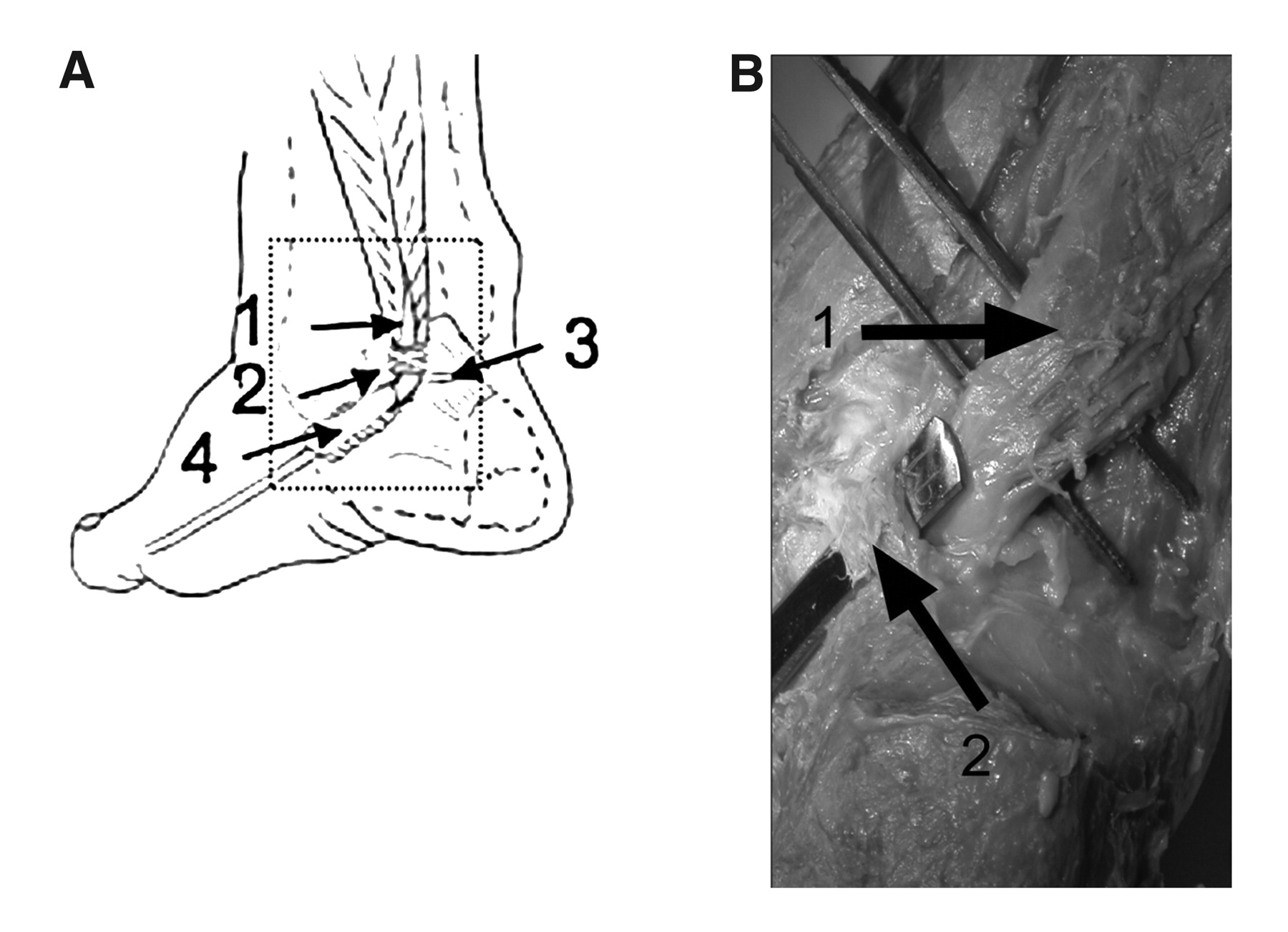
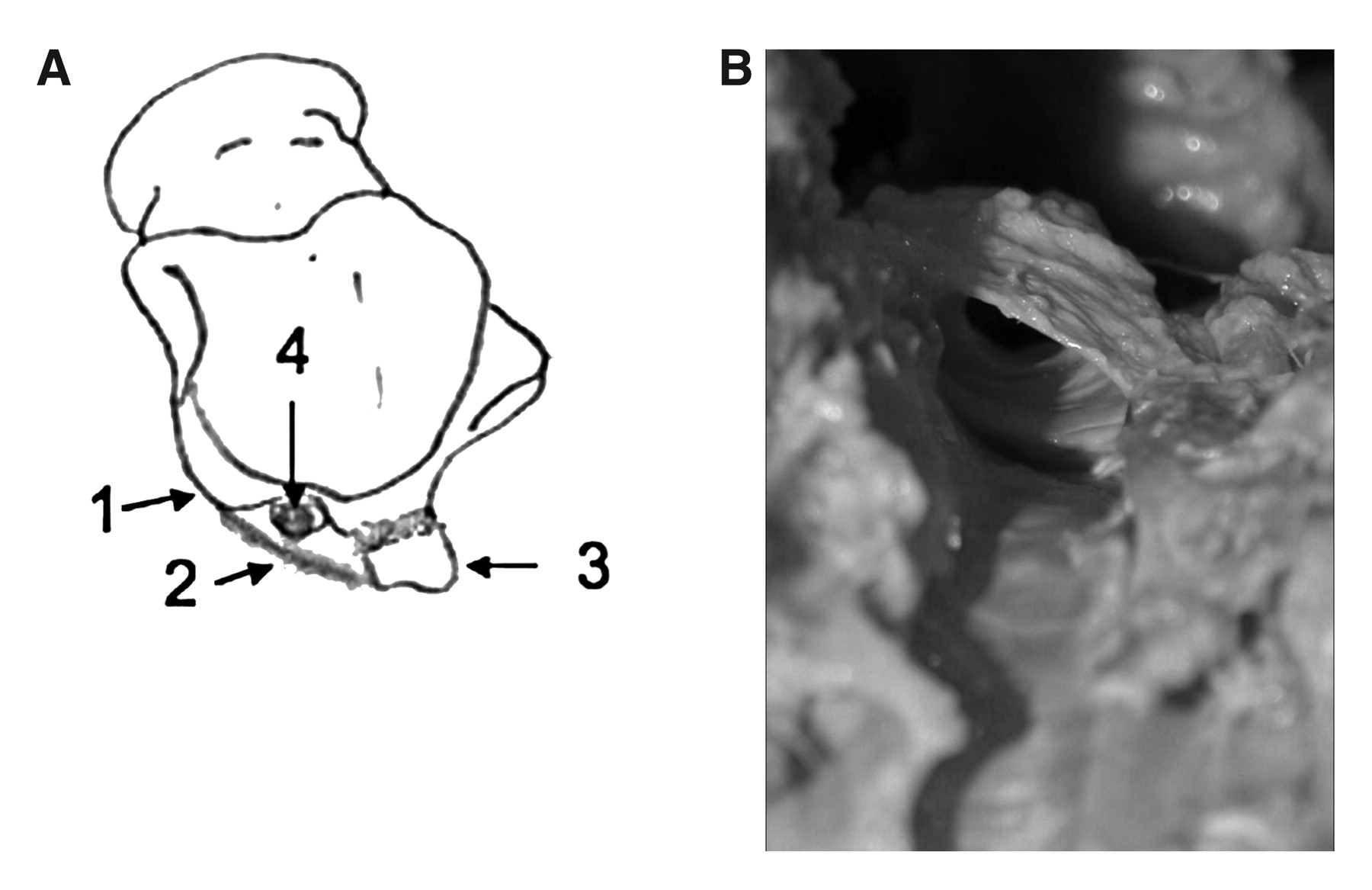
Clayton and Ries[13] observed functional hallux limitus, which they called “functional hallux rigidus,” in patients with rheumatoid arthritis and suggested that the cause of the condition was “spasm of the great toe intrinsic muscles in an effort to unload painful lesser metatarsal heads related to synovitis.”[14] Stenosing tenosynovitis of the flexor hallucis longus tendon in the sesamoid area has also been reported as the cause of restricted dorsiflexion of the hallux.[9] These physiopathologic mechanisms are rare examples of other etiologies not related to a tenodesis effect at the retrotalar pulley but elsewhere. However, according to the literature and our experience with more than 100 endoscopies of the retrotalar space, the most frequent cause of functional hallux limitus is a tenodesis effect at the retrotalar pulley (Figure 1 and Figure 2).
Hamilton[9] reported in ballet dancers a series of flexor hallucis longus tendon tenosynovitis, or dancer’s tendonitis, that caused a “pseudo hallux rigidus.”[15] In this study, he described a clinical test to diagnose the tenodesis effect that causes functional hallux limitus or rigidus. A simple maneuver, the test for functional hallux rigidus, shows restricted first metatarsophalangeal joint dorsiflexion when the ankle is placed in full dorsiflexion. This qualitative and diagnostic test has also been called the “flexor hallucis longus stretch test” by Michelson and Dunn.[7]

Description of the Flexor Hallucis Longus Stretch Test

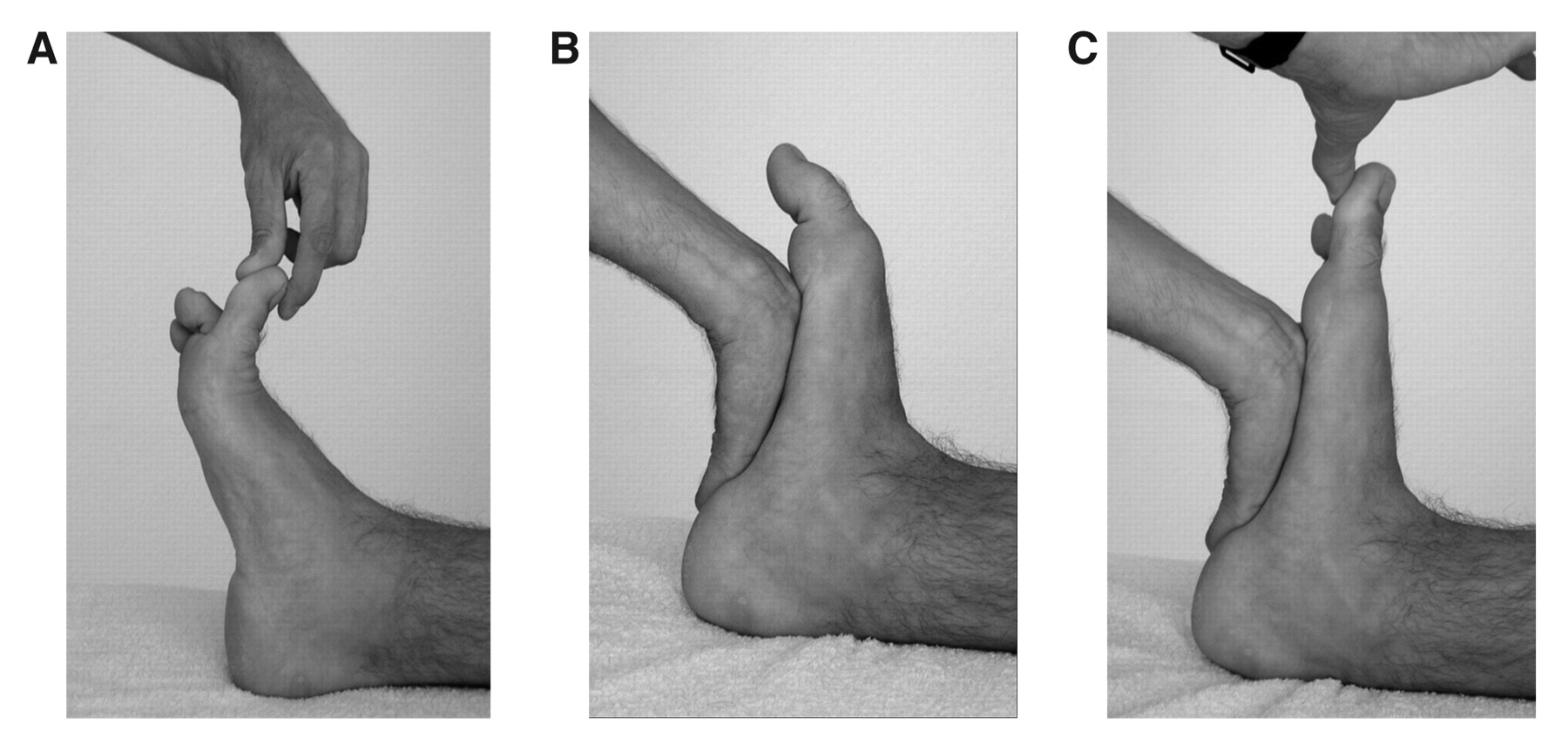
When performed as follows, this test is reproducible and accurate: 1) Place the patient in the supine position, 2) evaluate the range of motion of the first metatarsophalangeal joint in plantarflexion of the ankle. Dorsiflexion of approximately 50° to 80° is normally present.[12] When dorsiflexion is reduced, degenerative hallux rigidus is ruled out, 3) place the ankle at 90° of dorsiflexion by pushing the foot backwards with the palm of your hand placed beneath the first metatarsophalangeal head while supporting your bent elbow against your iliac crest. This maneuver will put the flexor hallucis longus tendon under tension, and 4) test the passive extension of the first metatarsophalangeal joint by pushing the first toe backwards. The test result is negative if extension of the first metatarsophalangeal joint is possible and unrestricted and positive if extension of the metatarsophalangeal joint is restricted or not possible (Figure 3).
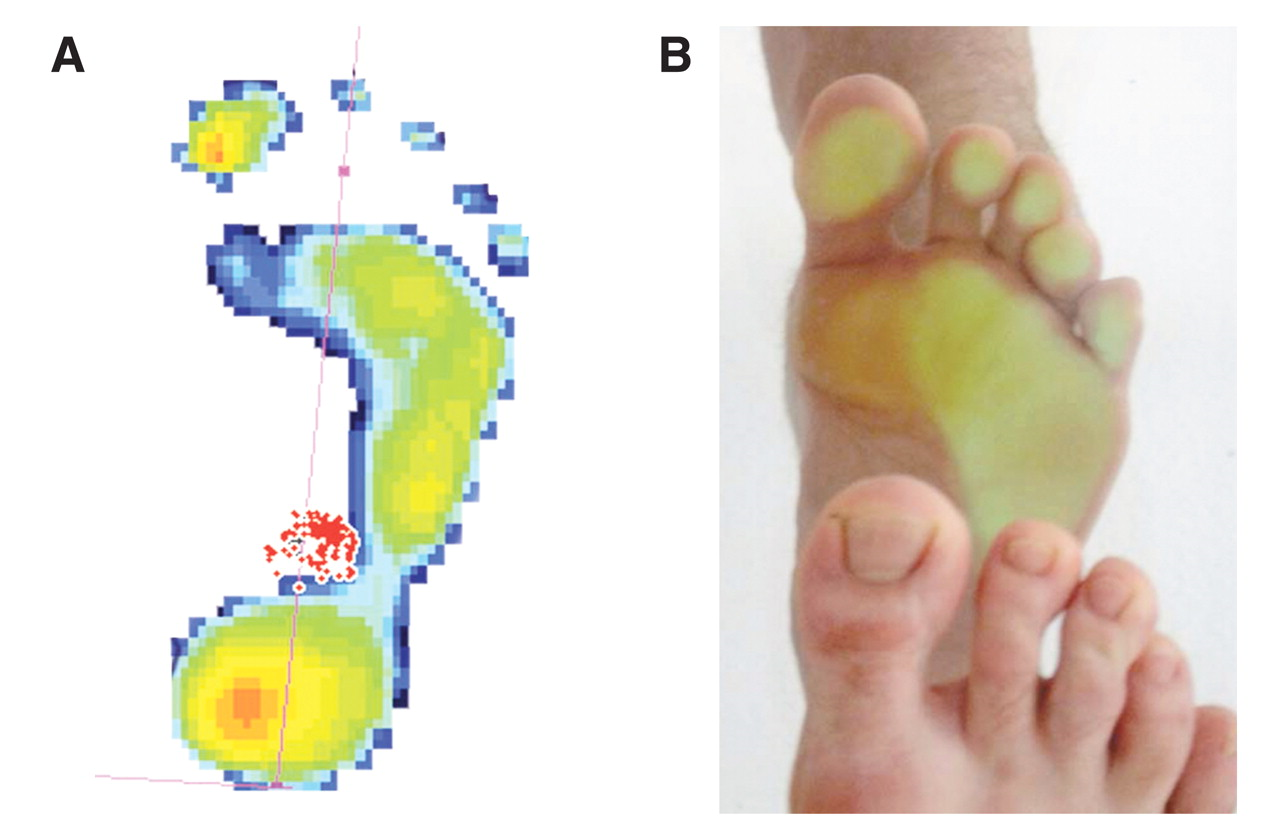
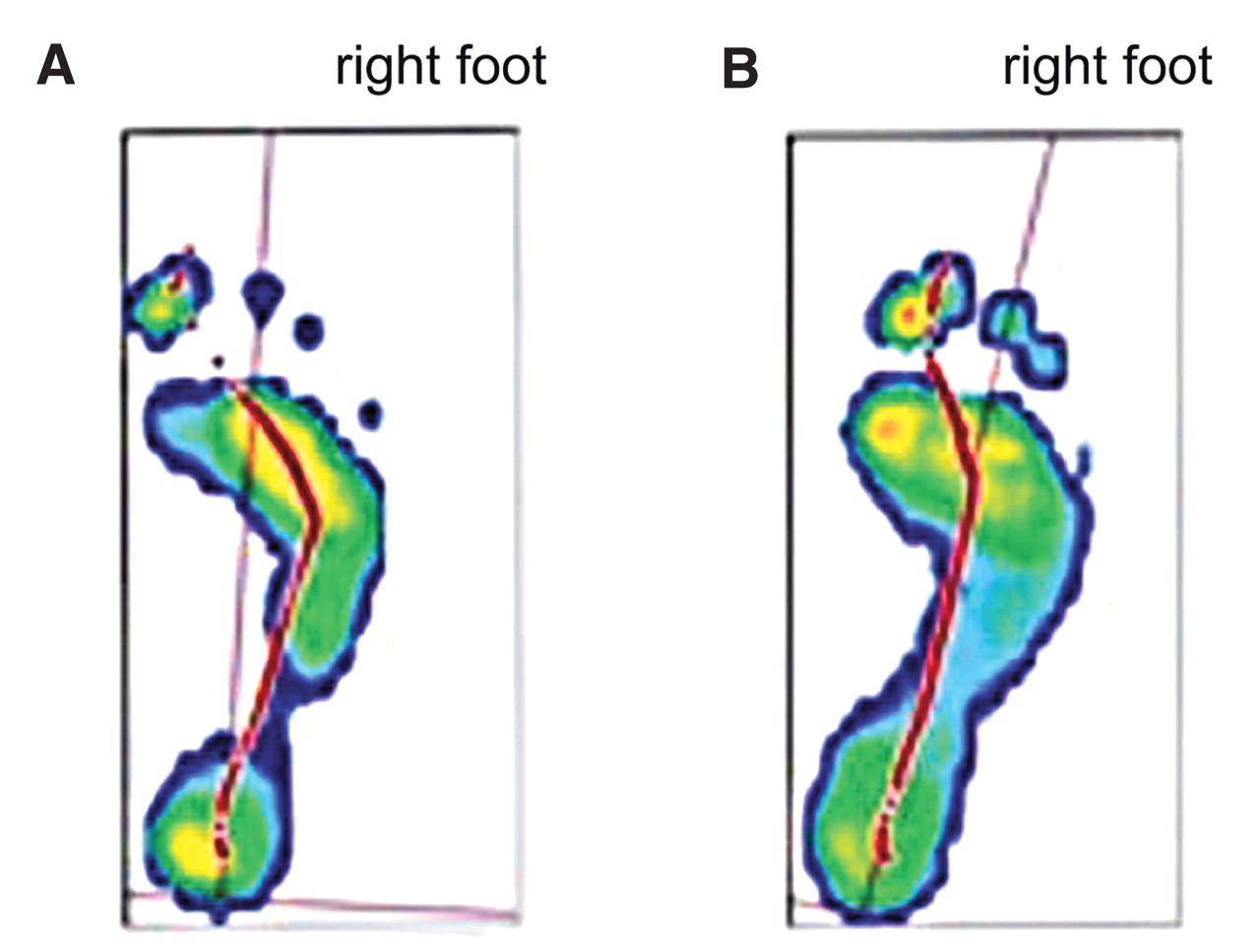
A positive stretch test result confirms a tenodesis effect, a limited sliding motion of the flexor hallucis longus tendon that gets blocked in the retrotalar space like a cork in a bottle.[13] Under passive dorsiflexion of the hallux, the tendon fails to glide and constitutes a taut string that produces a specific footprint during gait analysis (Figure 4).

Functional Anatomy

Flexor Hallucis Longus Tendon

The flexor hallucis longus muscle is a pronator and a propulsion muscle, an agonist of the peroneus longus and tibialis posterior muscles, and an antagonist of the tibialis anterior (supinator) muscle. It has its origins on the posterior face of the middle and distal thirds of the fibula and the interosseous membrane. The tendon crosses the ankle obliquely from lateral to medial and from posterior to anterior, penetrating the flexor retinaculum behind the medial malleolus. It is located posterior to the tibialis posterior muscle, the flexor digitorum longus muscle, and the neurovascular bundle.
As it comes out of the fibro-osseous tunnel in the midfoot, the flexor hallucis longus muscle is crossed over by the flexor digitorum longus tendons in the so-called master knot of Henry.[11,15] It then continues in direct contact with the plantar surface of the first metatarsal between the medial and lateral heads of the flexor hallucis brevis muscles and their insertions onto the sesamoids at the base of the proximal phalanx. The flexor hallucis longus muscle inserts into the base of the distal phalanx.

Subtalar Joint

The talus is oriented slightly obliquely from posterolateral to anteromedial on the superior surface of the calcaneus. There are two points of articular contact: one anteriorly and one posteriorly. Pisani[16] called the anterior joint “coxa pedis” given its resemblance to the hip joint; the convex head of the talus fits on a concave surface of the calcaneus and the navicular bone. The posterior joint is called the “thalamus” and is where the concave surface of the talus fits on the convex surface of the calcaneus. The morphological features of the talocalcaneal joints provide only one position of congruence and stability in the standing position, called “arthrodie” by Kapandji.[17] Therefore, its mobility requires a certain degree of lift off that leads to incongruence: inversion that combines adduction and plantarflexion with internal rotation and eversion that combines abduction and dorsiflexion with internal rotation.[16]
The mobility of the subtalar joint provides the foot with the ability to adapt to changing inclinations of the floor. According to Faraboeuf, cited in Kapandji,[18] the calcaneus beneath the talus is like a rocking boat over a wave that adapts to the changing inclination of the surface.[16] Our hypothesis is that a tenodesis effect at the retrotalar pulley turns the flexor hallucis longus tendon into a taut string across the medial aspect of the subtalar joint, fixing it in varus and eliminating the necessary lift off it requires to function. The distraction of the subtalar joint, the Hoover chord maneuver, would recover the lift off by relaxing the flexor hallucis longus tendon across the subtalar joint.

Etiology of Functional Hallux Limitus Due to a Tenodesis Effect at the Retrotalar Pulley

Tenodesis can be caused by disproportionate size between the flexor hallucis longus tendon and the pulley. There are mainly three types of tendon disorders, and they often coexist[9,16,19]: 1) stenosing tenosynovitis, 2) tendinosis, and 3) a hypertrophied or distal flexor hallucis longus muscle belly.
First described by Lewin[20] in 1940, stenosing tenosynovitis has been reported almost exclusively in ballet dancers, in whom activities such as jumping and plié in V position suggest a repetitive microtrauma mechanism as the main cause. There have also been some reports with other activities such as horseback riding, distance running, jumping sports, and tennis. The flexor hallucis longus tendon has been reported as the Achilles tendon of the dancer’s foot because it is strained and frequently traumatized as it passes through the fibro-osseous tunnel on the posterior aspect of the talus. As a result, there is chronic inflammation and adhesions of the tendon and the synovial lining at the pulley. The increased volume of the tendon and reduced space at the pulley are responsible for the blockage. The hypertrophy of the flexor hallucis longus tendon in these patients is an important coexisting factor.
In the absence of trauma, tendinosis has been reported almost exclusively in association with athletic activities. It manifests with nodule developments with or without triggering partial or complete tendon ruptures that can also be the result of trauma.
A frequent finding in athletes and ballet dancers, a hypertrophied or distal flexor hallucis longus muscle belly can reduce the excursion of the flexor hallucis longus muscle as it becomes jammed at the retrotalar pulley in a way analogous to a cork in a bottle.[9,15] In physically demanding patients, this can lead to microtrauma and secondary painful tendinosis or stenosing tenosynovitis. The incidence of these three conditions can be facilitated also by other osseous deformities such as Sheperd’s fracture, a large Stieda’s process, an os trigonum (ununited lateral tubercle), cysts, and dorsal talar exostosis.[9,15]
There is, anatomically, a communication between the subtalar joint and the flexor hallucis longus tendon sheath. A long history of ankle instability with repetitive ankle sprains may cause secondary joint effusions that lead to stenosing tenosynovitis of the flexor hallucis longus muscle and a tenodesis effect. Alternatively, functional hallux limitus, with its typically reduced subtalar joint mobility, may predispose to repetitive ankle sprains, causing a vicious cycle.[21] Prolonged immobilization of the ankle joint may cause a spontaneous tenodesis effect and ankylosis of the subtalar joint related to the absence of gliding at the retrotalar pulley.
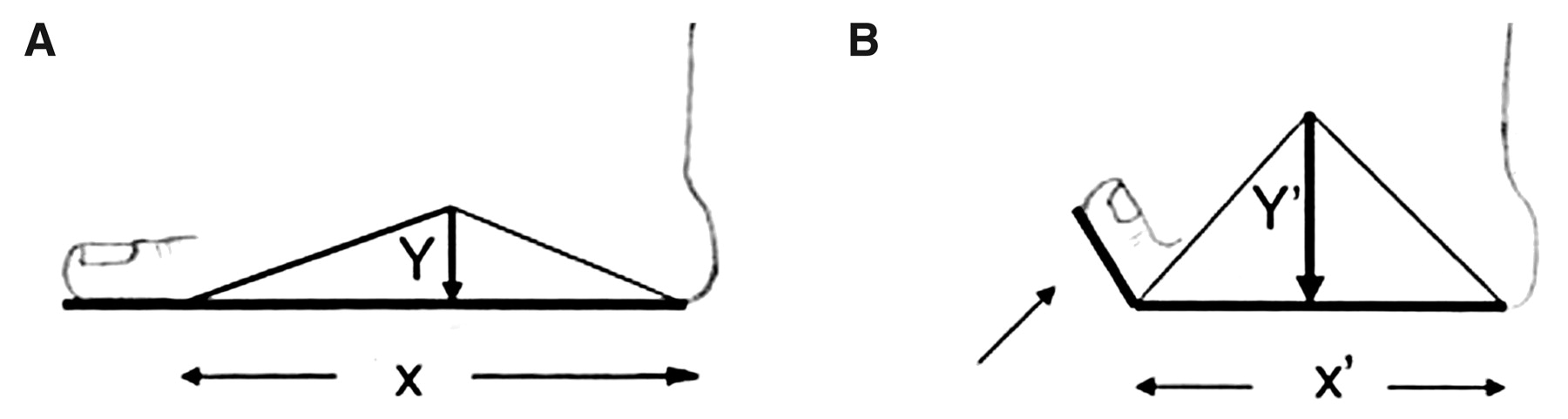
The limitation in normal dorsiflexion of the great toe as a result of functional hallux limitus causes failure of the three auto support mechanisms: 1) the windlass mechanism[22] (Figure 5), 2) the close packing mechanism of the calcaneocuboid joint,[2,23] and 3) the locked wedge effect mechanism.
Most cases of functional hallux limitus may present only mild symptoms locally. Symptoms may be minimal if physical activity is limited, but any increase in activity may produce retromalleolar pain and other symptoms elsewhere, such as anterior knee, hip, and lower back pain, that are related to the compensatory mechanisms during gait.[3,4] Treatment strategies should focus on releasing this tenodesis effect to reestablish the three auto-support mechanisms.

Releasing the Tenodesis Effect: the Hoover Cord Maneuver

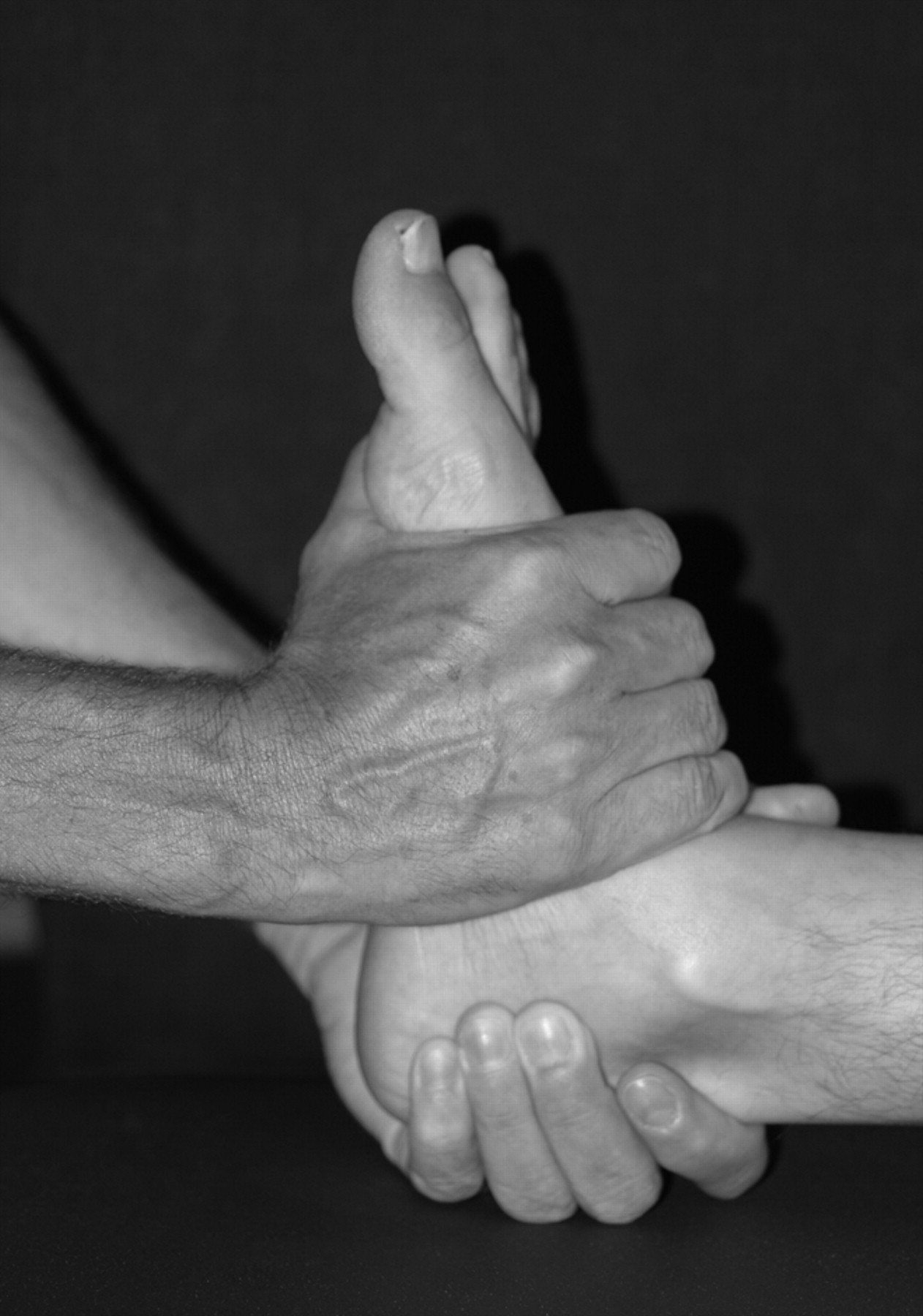
In our experience, we found recovery of full dorsiflexion of the first metatarsophalangeal joint and varus valgus mobility of the subtalar joint with a simple manual distraction maneuver, the Hoover cord maneuver, which is pathognomonic of functional hallux limitus caused by a tenodesis effect at the retrotalar pulley (Figure 6).
With the patient lying in the supine position, the foot is held with both hands at the forefoot and the heel. A firm and constant distraction force is applied while performing gentle swaying varus and valgus movements of the heel. In most cases, this maneuver is associated with a “popping” sound. Adequate distraction of the subtalar joint allows us to immediately recover varus valgus mobility at the subtalar joint and normal dorsiflexion of the hallux while holding the foot in maximal dorsiflexion (negative result of the flexor hallucis longus stretch test).[7,8]
This maneuver, which, to our knowledge, has never been described in the literature, is simple and reproducible. The patient, who is often surprised to see the recovery of the great toe’s range of motion after the manipulation, can feel the difference.

Methods

To illustrate the therapeutic effect of the Hoover cord maneuver, we tested 16 physiotherapists working with Swiss Ortho Clinic. For each participant, the range of motion of the hallux was tested with the foot in plantarflexion to rule out the presence of hallux rigidus. The stretch test was performed, and dorsiflexion of the hallux was assigned one of six grades (grade 0 = approximately 90°, grade 0+ = 45°–90°, grade 1 = approximately 45°, grade 1+ = 0°–45°, grade 2 = approximately 0°, and grade 2+ = presence of spontaneous plantarflexion when the ankle joint is in dorsiflexion). Grade assignments were verified by two independent observers. The Hoover cord maneuver was performed, mobilizing the subtalar joint. The stretch test was performed again. Dorsiflexion of the hallux was again assigned one of six grades (0, 0+, 1, 1+, 2, or 2+), which was again verified by two independent observers.

Results

The 16 participants (9 men and 7 women) had an average age of 30.8 years (range, 22–50 years). One participant already had hallux rigidus, and manipulation did not modify his range of motion. Range of motion before manipulation was rated as complete (grade 0) for both feet in nine of 16 participants. Four participants presented with reduced dorsiflexion graded as 1+ in both feet. Two participants presented with reduced dorsiflexion graded as 1+ in only one foot. Excluding the participant with hallux rigidus, the stretch test before the maneuver revealed bilateral functional hallux limitus in 15 of 15 participants: severe (grade 2+) in two, grade 2 in seven, grade 1+ in one, and unilateral grade 2 in three. After the Hoover cord maneuver, dorsiflexion improved in all of the participants. Severe cases (grade 2+) had a tendency to improve only partially, obtaining grade 1+ mobility. Maximum mobility never exceeded the mobility obtained in plantarflexion of the foot.

Discussion

Functional hallux limitus was first described by Dananberg[24] as the origin of a capital plane blockade. It is a frequently unrecognized entity that physicians fail to look for despite its known implications in a diversity of foot problems.
The tenodesis effect on the flexor hallucis longus muscle was recognized by Hamilton[6,9] as the cause of functional hallux limitus thanks to the severe and very symptomatic tenosynovitis observed in ballet dancers. The high demand put on their first metatarsophalangeal joint lead to degenerative lesions of the tendon, such as nodules, partial ruptures, and a severe inflammatory response in the retromalleolar region that constituted the cause of the complaint. Open tenosynovectomy, release of the retrotalar pulley, and partial release of the subtalar pulley were effective at treating the inflammatory symptoms.
Severe pain in the retromalleolar region was the predominant symptom,[6,9] so much so that Hamilton saw recovery of the normal glide of the flexor hallucis longus tendon as only a secondary result. His main objective was to treat the painful inflammatory response. There is, however, concern in the literature about the risks related to the invasiveness of the open surgical approach and the lengthy recovery time required.[6,9] This has affected the risk-benefit ratio and explains why surgical treatment is proposed only for recalcitrant cases,[9,15,16] even in this very symptomatic population.
At the other end of the spectrum, where most cases of functional hallux limitus are found, functional hallux limitus is either asymptomatic or only mildly symptomatic.[24] Given the underestimation of the biomechanical disorders it provokes, the condition is often undiagnosed or is misdiagnosed[7] as plantar fasciitis, tarsal tunnel syndrome, or even subtler presentations such as pain on the sesamoids. For these reasons, the diagnosis requires a high degree of suspicion and use of the flexor hallucis longus stretch test, which is diagnostic.[7]
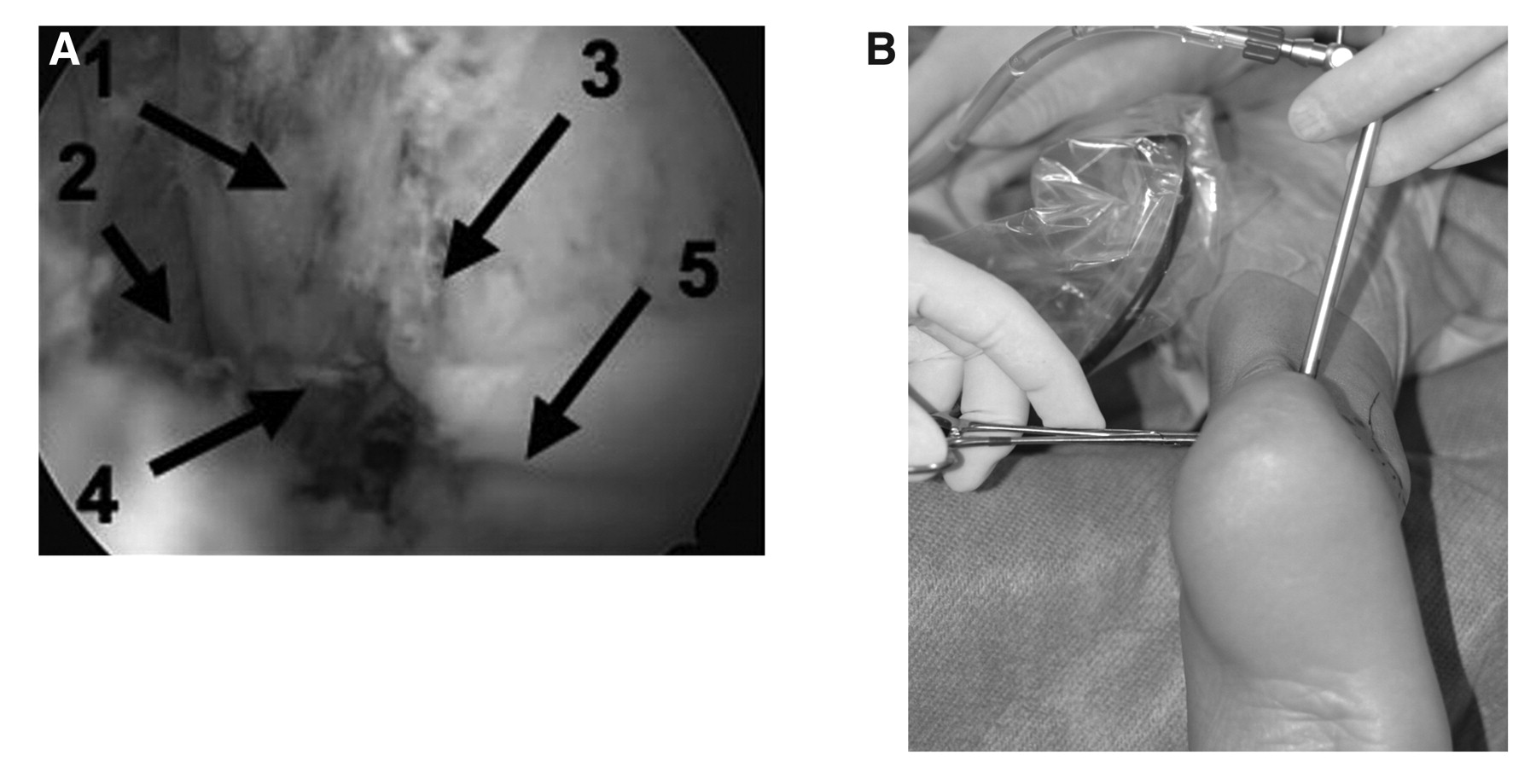
Functional hallux limitus and reduced mobility of the subtalar joint always coexist as part of the capital plane blockade. The Hoover cord maneuver releases the tenodesis effect, allowing normal glide of the flexor hallucis longus tendon. Most patients recover normal mobility after manipulation followed by physiotherapy. For the few who fail to improve with physiotherapy, with recurrence of the blockage, we proposed endoscopic synovectomy and release of the retrotalar pulley (Figure 7). In our experience, patients immediately recover full range of motion of the first metatarsophalangeal joint and start full weightbearing straight away. In addition, we observed how the usual functional hallux limitus load transfer pattern (Figure 8A) is normalized, increasing the contact pressures on the first metatarsal head (Figure 8B).
The mechanism by which the Hoover cord maneuver recovers normal dorsiflexion of the hallux and mobility of the subtalar joint is not yet clearly understood. Our hypothesis is that the longitudinal traction of the foot forces distraction of the subtalar joint and distal glide of the tendon through the pulley, releasing the impingement and increasing the length of the tendon between the pulley and its insertion. This effect cannot be obtained by passive dorsiflexion of the hallux, which pulls the tendon in a direction perpendicular to its direction proximal to the pulley, given its abrupt change in direction at the pulley. This effect is comparable with the electric cord of the Hoover when it is blocked around a corner. The release of the cord is not possible no matter how hard you pull, unless the pulling force is in the axis of the cord before it bends around the corner where it is stuck (Figure 6).
Hallux rigidus is the second most frequent site of arthrosis, after the knee, and hallux valgus affects one in 45 individuals older than 50 years.[24,25] Both entities generate billions of dollars in expenses in orthoses, physiotherapy, surgery, and sick leave. Few or no preventive measures are widely available. It is an invalidating, painful condition for which only symptomatic treatments are proposed. They range from non-steroidal anti-inflammatory drugs and supports that provide transitory relief but no cure to palliative and invasive surgeries such as keilectomy, osteotomy, Keller Brandes procedure, arthroplasty, and arthrodesis of the first metatarsophalangeal joint. These reconstructive procedures, by definition, are reserved for extremely symptomatic patients, and their chances of success are often limited.
Hallux rigidus has been attributed to many common causal factors: a long first metatarsal (Nilsonne,[26] McMurray,[27] Bonney and Macnab[28]), hypermobility of the first ray (Lambrinudi,[29] Jack[30]) metatarsus primus elevatus, immobilization of the first ray, and pronation of the forefoot.[25] The common denominator to all of the previously mentioned factors is functional hallux limitus that causes the three auto-support mechanisms to fail. During push-off, it causes compressive forces on the dorsal aspect of the first metatarsophalangeal joint and the sesamoids, causing a degenerative destruction and increased dorsiflexion of the first ray, ie, metatarsus primus elevatus.[12,25] This physiopathologic mechanism of hallux rigidus has already been reported in the literature. Functional hallux limitus has been recognized as a stage I hallux rigidus[24] that requires early diagnosis and treatment to avoid irreversible progression of joint destruction.
Some of the predisposing factors in hallux valgus are different from those in hallux rigidus,[24] with a greater prevalence of primus metatarsus brevis, hyperlaxity, and reduced femoral antetorsion. The prolonged hyperpronation in late stance and push-off combined with external progression of the stride increases the constraints in valgus on the metatarsophalangeal joint, ultimately leading to deformity.[3,4]
When diagnostic techniques evolve, and patients’ demand for answers to their symptoms increases, more subtle and early-stage manifestations of disease, such as this one, can be identified. This is a fact common to all branches of medicine. These patients are seeking answers: a diagnosis and an effective means of preventing evolution toward a degenerative first metatarsophalangeal joint such as hallux rigidus or valgus.
The Hoover cord maneuver is a confirmation that limited excursion of the flexor hallucis longus tendon is taking place at the retrotalar fibro-osseous pulley. It also constitutes the objectives of the conservative treatment we propose: to recover and maintain tendon glide with stretching exercises of the flexor hallucis longus tendon.[31] In addition, stretching exercises must be performed to equilibrate the muscular chains involved.
Proposing an open surgical partial release of the retrotalar pulley for stage I hallux rigidus provides a risk-benefit ratio that is too high to be acceptable even if we consider the long-term causal effect that functional hallux limitus may have on more incapacitating entities, such as hallux rigidus and hallux valgus, that may take years to develop. Endoscopic release[32,33] of the flexor hallucis longus muscle, being an ambulatory, less invasive, and reliable method, opens a new therapeutic perspective for functional hallux limitus (stage I hallux rigidus) that could also prevent evolution toward hallux valgus or rigidus.
Methodologically complex clinical studies would be required to measure the effect of this intervention on the painful compensatory mechanisms of gait that have been described; the studies would also have to be particularly lengthy if the objective is to study the effect on the physiopathologic course of entities such as hallux rigidus and hallux valgus. Given the simplicity and low risk related to the treatment options, surgical or nonsurgical, screening for the presence of functional hallux limitus and early treatment could become a standard of care to prevent evolution toward painful degenerative arthrosis of the first metatarsophalangeal joint and to treat other entities caused by functional hallux limitus.


Conclusions

Functional hallucis limitus is a frequently misdiagnosed clinical entity, and its effect on the evolution of hallux rigidus[34,35] and hallux valgus has been underestimated. Its diagnosis is clinical and requires a high degree of suspicion. It is caused in most cases by a tenodesis effect on the flexor hallucis longus tendon and can be demonstrated by the flexor hallucis longus stretch test, which is diagnostic. The tenodesis effect induces a capital plane blockade, inducing a time lag during gait that requires a series of compensatory mechanisms that are not limited to the foot. Pain elsewhere in the lower extremities and back is often present.
Functional hallux limitus requires early diagnosis and treatment to prevent the evolution of invalidating degenerative deformities on the first metatarsophalangeal joint (hallux rigidus and hallux valgus), especially in light of simple, effective diagnostic tests and low-risk therapeutic options ranging from physiotherapy, which releases the flexor hallucis longus tendon with the Hoover cord maneuver, to minimally invasive endoscopic release.[33,36] Physicians should look systematically for the presence of functional hallux limitus.
Financial Disclosure

None reported.

Conflict of Interest

None reported.

References

  1. Bramble D, Lieberman D: Endurance running and the evolution of Homo.. Nature432: 345, 2004.
  2. Payne CB, Dananberg HJ: Sagittal plane facilitation of the foot. Aust J Podiatr Med31: 7, 1997.
  3. Dananberg HJ: Gait style as an etiology to chronic postural pain: part 1. Functional hallux limitus. JAPMA83: 433, 1993.
  4. Dananberg HJ: Gait style as an etiology to chronic postural pain: part 2. Postural compensatory process. JAPMA83: 615, 1993.
  5. Dananberg HJ: Functional hallux limitus and its relationship to gait efficiency. JAPMA76: 648, 1986.
  6. Hamilton WG: Foot and ankle injuries in dancers. Clin Sports Med7: 143, 1988.
  7. Michelson J, Dunn L: Tenosynovitis of the flexor hallucis longus: a clinical study of the spectrum of presentation and treatment. Foot Ankle Int26: 291, 2005.
  8. Payne C, Chuter V, Miller K: Sensitivity and specificity of the functional hallux limitus test to predict foot function. JAPA92: 269, 2002.
  9. Hamilton W: Stenosing tenosynovitis of the flexor hallucis longus tendon and posterior impingement upon the os trigonum in ballet dancers. Foot Ankle3: 74, 1982.
  10. Drago JJ, Oloff L, Jacobs AM: A comprehensive review of hallux limitus. J Foot Surg23: 213, 1984.
  11. Feeney MS, Williams RL, Stephens MM: Selective lengthening of the proximal flexor tendon in the management of acquired claw toes. J Bone Joint Surg Br83: 335, 2001.
  12. Hanft JR, Mason ET, Landsman AS, et al: A new radiographic classification for hallux limitus. J Foot Ankle Surg32: 397, 1993.
  13. Clayton ML, Ries MD: Functional hallux rigidus in the rheumatoid foot. Clin Orthop271: 233, 1991.
  14. Shrader JA, Lohmann Siegel K: Nonoperative management of functional hallux limitus in a patient with rheumatoid arthritis. Phys Ther83: 831, 2003.
  15. O’Sullivan E, Carare-Nnadi R, Greenslade J, et al: Clinical significance in the interconnections between flexor digitorum longus and flexor hallucis longus in the region of the knot of Henry. Clin Anat18: 121, 2005.
  16. Pisani G: Integrazione funzionale dell’arto inferiore. Chir del Piede26: 35, 2002.
  17. Kapandji IA: The Physiology of the Joints: Lower Limb, Vol 2, Churchill Livingstone, Philadelphia, 1988.
  18. Kapandji IA: Physiologie Articulaire 2eme “Tomo”, Miembre inférieur, 5th Ed, Cap. Les mouvements dans la sousastragalienne, Maloine, 2004.
  19. Oloff LM, Schulhofer SD: Flexor hallucis longus dysfunction. J Foot Ankle Surg37: 101, 1998.
  20. Lewin P: Painful conditions of the foot and ankle. Postgrad Med6: 292, 1949.
  21. Willens T, Witvrouw E, Delbaere K, et al: Relationship between gait biomechanics and inversion sprains: a prospective study of risk factors. Gait Posture21: 379, 2005.
  22. Halstead J, Turner DE, Redmond AC: The relationship between hallux dorsiflexion and ankle joint complex frontal plane kinematics: a preliminary study. Clin Biomech20: 526, 2005.
  23. Bojsen-Mollor F: Calcaneocuboid joint stability of the longitudinal arch of the rearfoot at high and low gear push off. J Anat129: 165, 1979.
  24. Muehlemann CD, Bareither K, Huch Cole A, et al: Prevalence of degenerative morphological changes in the joints of the lower extremity. Osteoarthritis Cartilage5: 23, 1997.
  25. McMaster MJ: The pathogenesis of hallux rigidus. J Bone Joint Surg Br60: 82, 1978.
  26. Nilsonne H: Hallux rigidus and its treatment. Acta ortho Scand1: 295, 1930.
  27. McMurray TP: Treatment of hallux valgus and rigidus. BMJ2: 218, 1936.
  28. Bonney G, Macnab I: Hallux valgus and hallux rigidus. A critical survey of operative results. J Bone Joint Surg34-B: 366, 1952.
  29. Lambrinudi C: Metatarsus primus elevates. Proc R Soc Med31: 1273, 1938.
  30. Jack EA, The aethiology of hallux rigidus. Br J Surg27: 492, 1940.
  31. Shamus J, Shamus E, Gugel RN, et al: The effect of sesamoid mobilization, flexor hallucis strengthening, and gait training on reducing pain and restoring function in individuals with hallux limitus: a clinical trial. J Orthop Sports Phys Ther34: 368, 2004.
  32. Van Dijk CN: Hindfoot endoscopy for posterior ankle pain. Instr Course Lect55: 545, 2006.
  33. Lui TH: Flexor hallucis longus tendoscopy: a technical note. Knee Surg Sports Traumatol Arthrosc17: 107, 2009.
  34. Shereff MJ, Baumhauer JF: Current concepts review: hallux rigidus and osteoarthrosis of the first metatarsophalangeal joint. J Bone Joint Surg Am80: 898, 1998.
  35. Nawoczenski DA, Baumhauer JF, Umberger BR: Relationship between clinical measurements and motion of the first metatarsophalangeal joint during gait. J Bone Joint Surg Am81: 370, 1999.
  36. Saxena A: The Valenti procedure for hallux limitus/rigidus. J Foot Ankle Surg34: 485, 1995.
Figure 1. A, Posteromedial view of the ankle (right side) with the muscle belly of flexor hallucis longus (1) close to the retrotalar pulley (2) in the vicinity of the subtalar joint (3), with continuation of the tendon into the subtalar pulley (4). B, Detailed anatomical dissection showing the tendon of the flexor hallucis longus (1) and the retrotalar pulley (2).
Japma 100 00220 g001
Figure 2. A, Axial view of the talus showing the fibro-osseous calcaneal tunnel: the flexor hallucis longus tendon (4) going through the retrotalar pulley (2) between the posteromedial tubercle (1) and the posterolateral tubercle (os trigonum) (3). B, Inferior view of the subtalar pulley (anatomical dissection).
Japma 100 00220 g002
Figure 3. Flexor hallucis longus stretch test. A, Full dorsiflexion of the first metatarsophalangeal joint is possible when the foot is in plantarflexion (grade 0+). B, The tenodesis effect on the flexor hallucis longus tendon at the retrotalar pulley causes exaggerated plantarflexion of the first metatarsophalangeal joint when the foot is pushed into maximal dorsiflexion (grade 2+). C, Dorsiflexion of the hallux is restricted (grade 2).
Japma 100 00220 g003
Figure 4. A, Static monopodal footprint of a flexor hallucis longus muscle showing the load transfer along the lateral column and the greater toe. The red dots show the center of the average instantaneous pressures abnormally displaced toward the rear of the foot. B, Pathognomonic podoscopic image of a flexor hallucis longus muscle showing how load transfer is absent on the first metatarsal head.
Japma 100 00220 g004
Figure 5. Windlass mechanism: schematic illustration showing how dorsiflexion of the first metatarsophalangeal joint raises the longitudinal arch of the foot from Y (A) to Y′ (B), decreasing the distance between the calcaneus and the first metatarsal head (from X to X′).
Japma 100 00220 g005
Figure 6. Hoover cord maneuver. Distraction of the subtalar joint combined with swaying movements in varus and valgus recovering full excursion of the flexor hallucis longus tendon and, hence, normal hallux dorsiflexion and subtalar mobility.
Japma 100 00220 g006
Figure 7. A, Endoscopic release of the flexor hallucis longus tendon (right side) at the retrotalar pulley (1). 2 indicates the posteromedial tubercle; 3, the posterolateral tubercle; 4, the location of the resected pulley; and 5, the subtalar joint. B, Introduction of the arthro-scope and surgical instruments.
Japma 100 00220 g007
Figure 8. Dynamic foot scans of functional hallux limitus. A, Before tenolysis: a typical load transfer progression from the lesser metatarsal heads to the tip of the first toe by passing the first metatarsal head. B, After tenolysis: load transfer progression is normalized.
Japma 100 00220 g008