Article

Fintech, Financial Access, and Financial Literacy: Evidence from Bangladesh
1
Department of Accounting and Finance, College of Business and Public Affairs, Alabama A&M University, 4900 Meridian Street, Normal, AL 35762, USA
2
Department of Finance, Independent University, Bangladesh, Plot 16, Block B, Aftabuddin Ahmed Road, Bashundhara R/A, Dhaka 1229, Bangladesh
*
Authors to whom correspondence should be addressed.
J. Risk Financ. Manag. 2026, 19(9), 732; https://doi.org/10.3390/jrfm19090732
Submission received: 12 August 2026 / Revised: 9 September 2026 / Accepted: 11 September 2026 / Published: 16 September 2026

Abstract

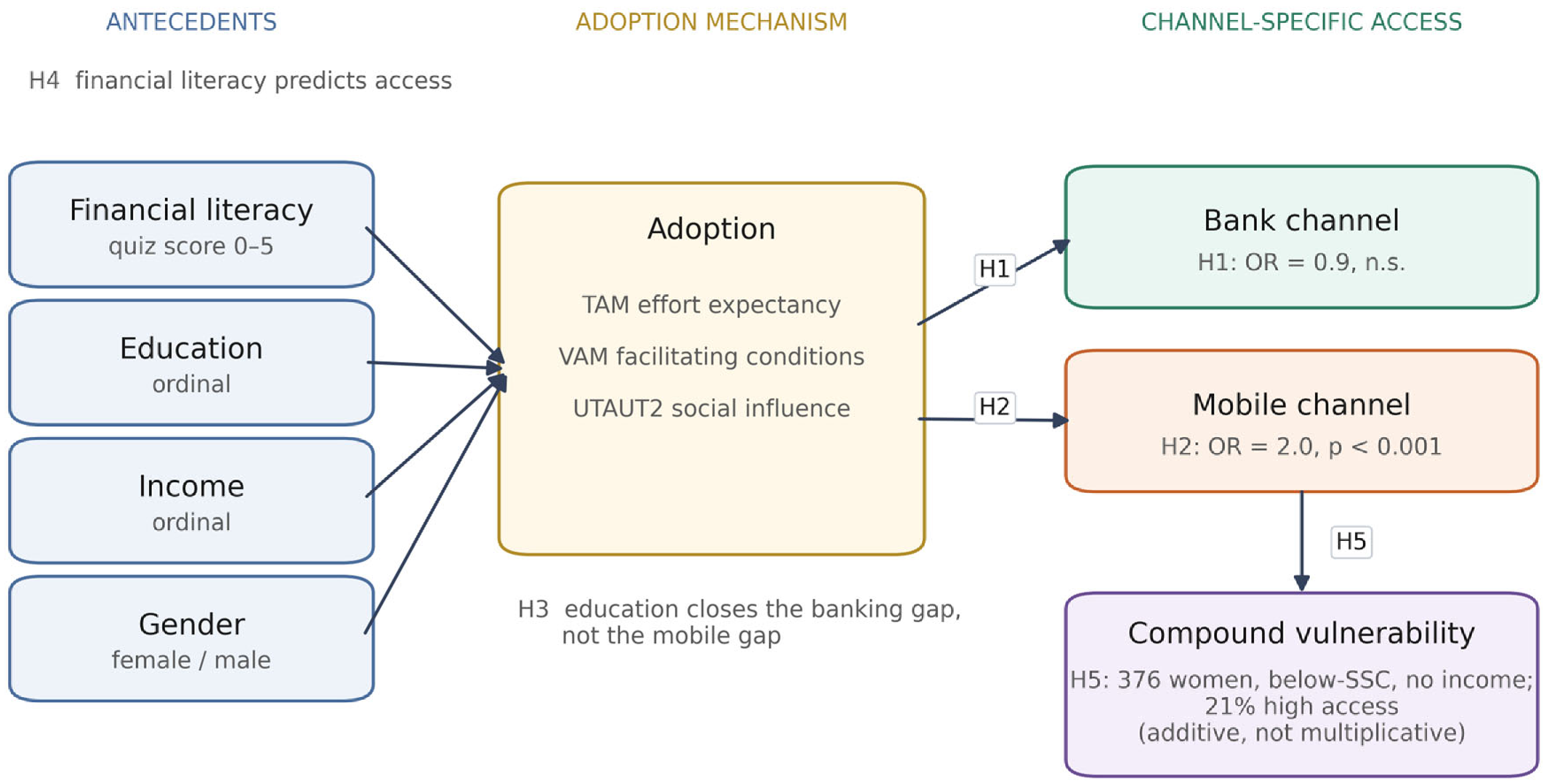
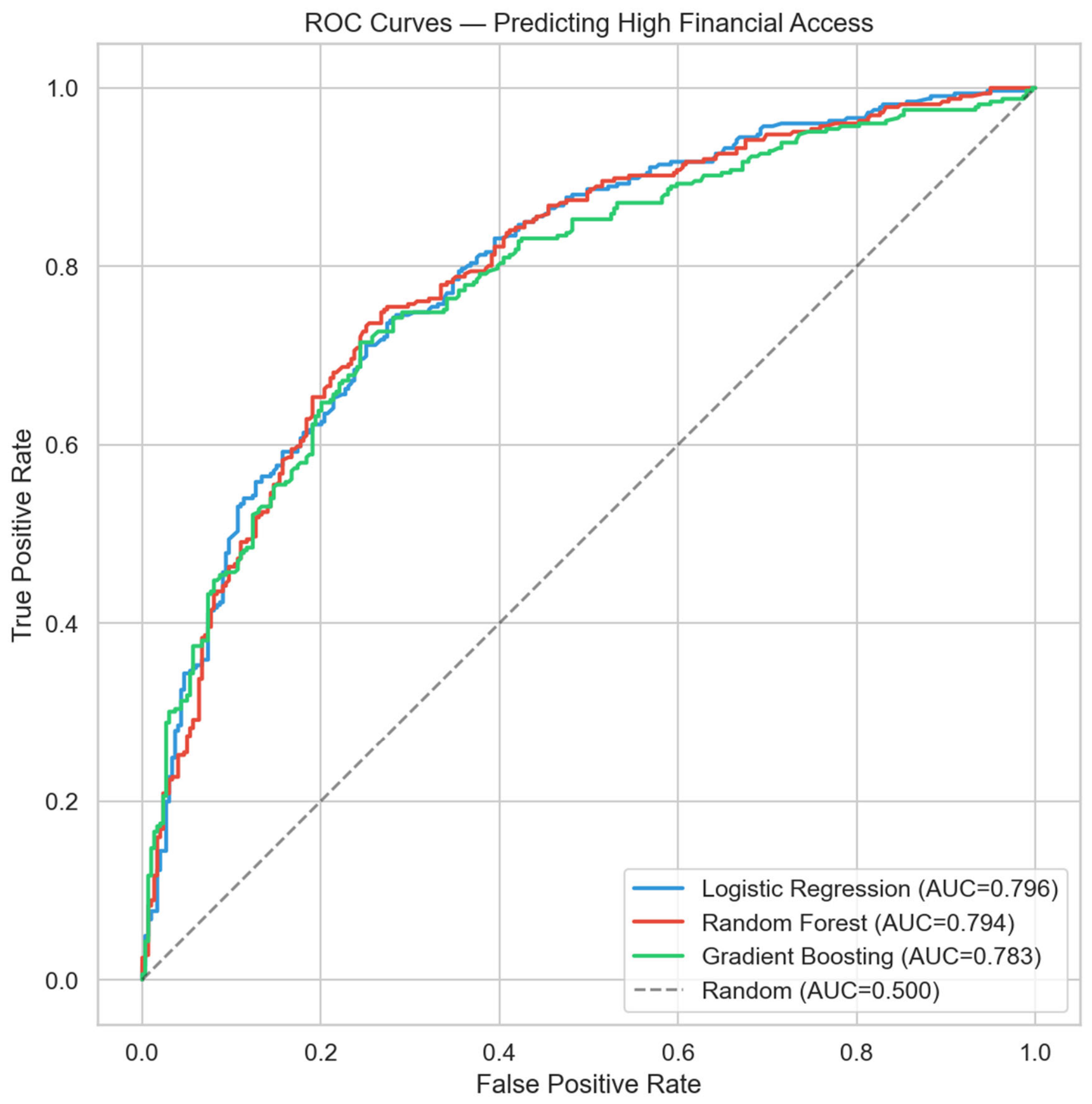
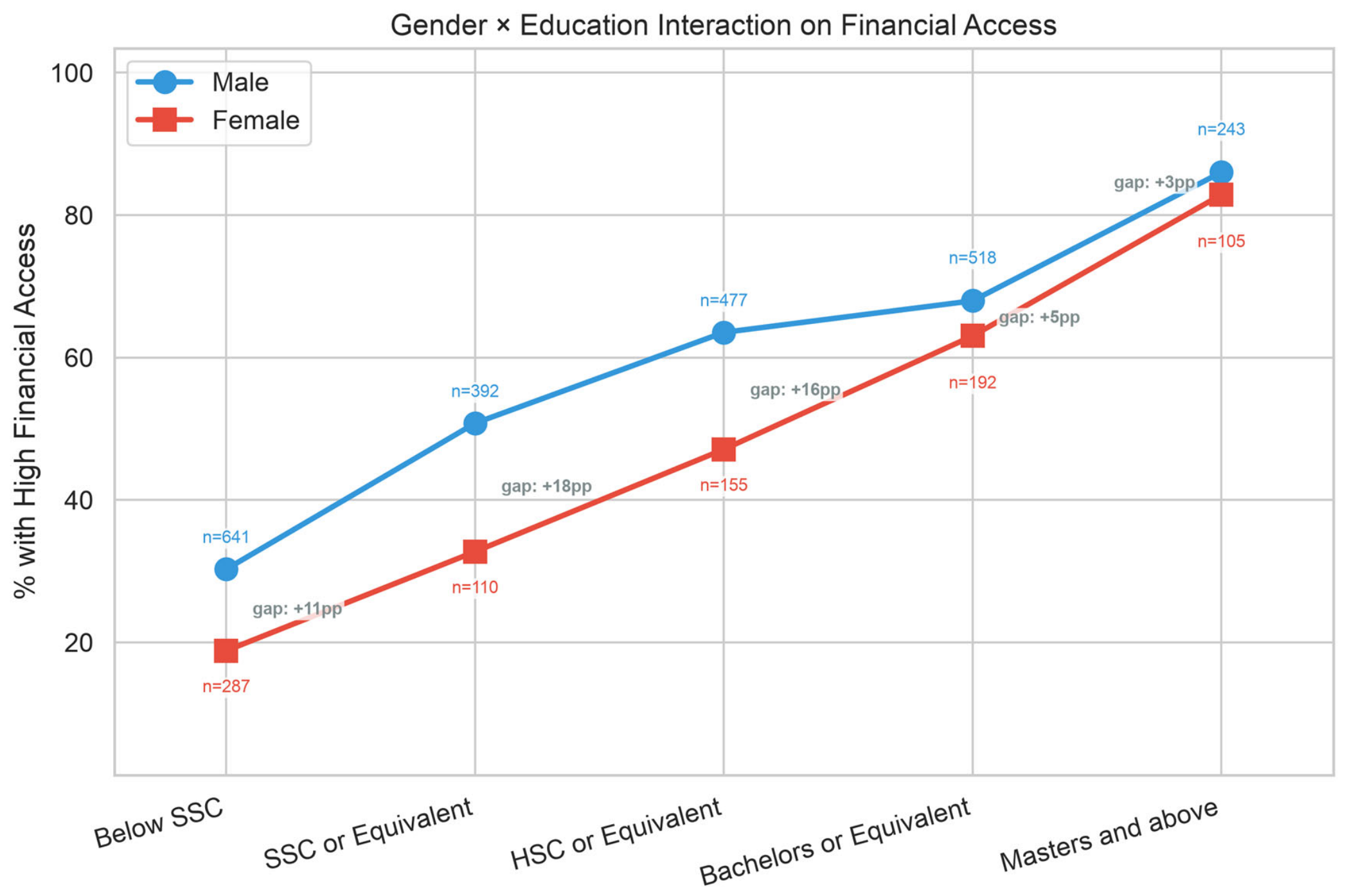
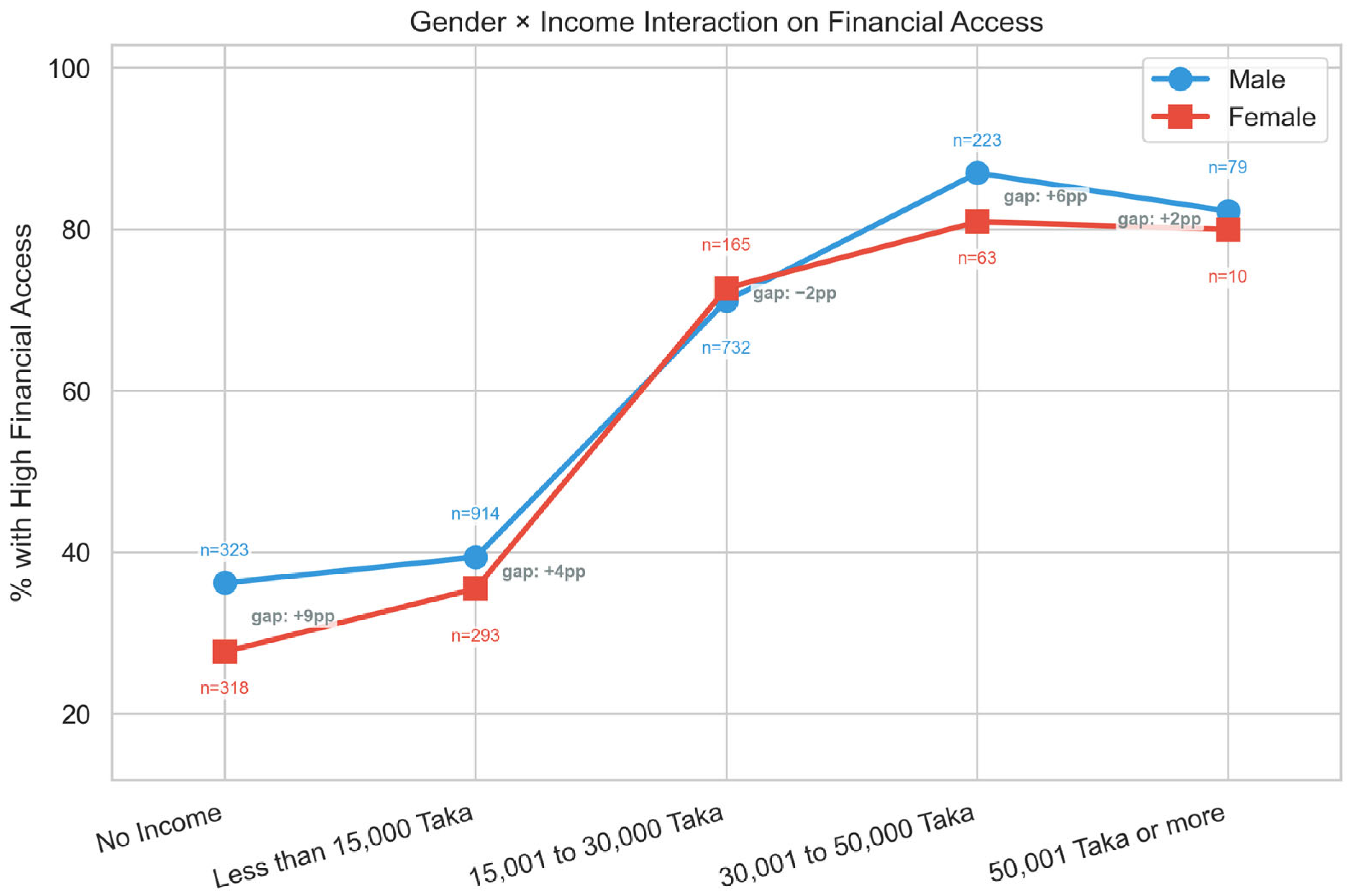
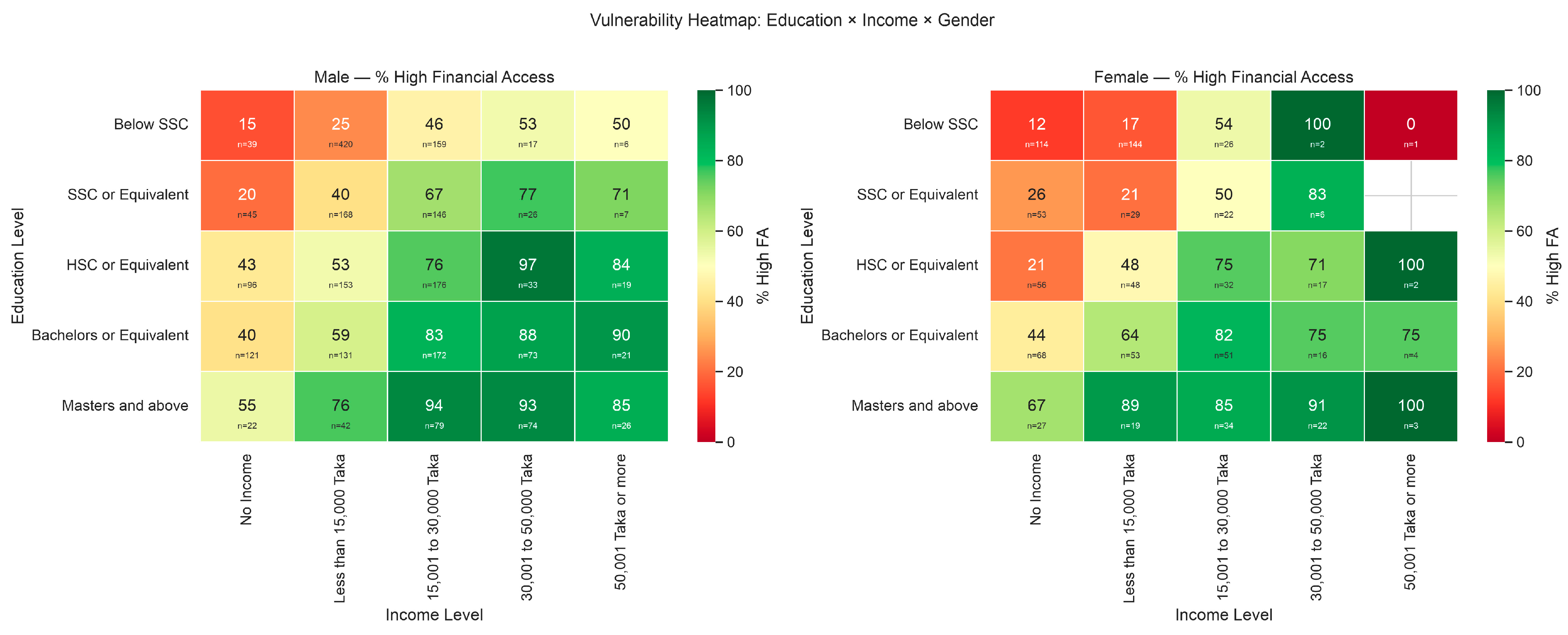
Bangladesh is widely cited as a success story for closing the financial inclusion gender gap through mobile money. We use a November 2021 nationwide survey of 3121 adults, a sample that over-represents men (72.8%) and is, therefore, validated throughout against nationally representative Global Findex microdata, and we combine logistic and ordinal regression, machine learning classification, clustering, and a channel-level decomposition of access. The gender gap in access is almost entirely a mobile money gap. Once education and income are held constant, men and women are equally likely to hold and use formal bank accounts, while men have roughly twice the odds of holding and using a mobile wallet. The pattern replicates in the Findex data, where the mobile money gap holds and the banking gap, present among the least educated, closes with education. A Blinder–Oaxaca decomposition attributes about two-thirds of the composite gap to women’s lower education and income, leaving a residual concentrated in mobile money. Gender appears weak as an aggregate predictor precisely because its effect is channel-specific. Exclusion is sharply concentrated in a segment of women with below-secondary education and no income, but the concentration is additive rather than multiplicative: a main effects model reproduces even the most excluded cell. For policy, closing the gender gap means closing the gap in mobile money adoption, the gap that neither banking-side progress nor education closes.
Keywords: compound vulnerability; financial inclusion; intersectionality; gender gap; financial literacy; Bangladesh compound vulnerability; financial inclusion; intersectionality; gender gap; financial literacy; Bangladesh