

Management Accounting Digitalization in Emerging Economies: A Mixed-Methods Investigation of AI and Data Quality as Serial Mediators of Financial Performance

Abstract
1. Introduction
2. Literature Review
3. Integrative Theoretical Framework
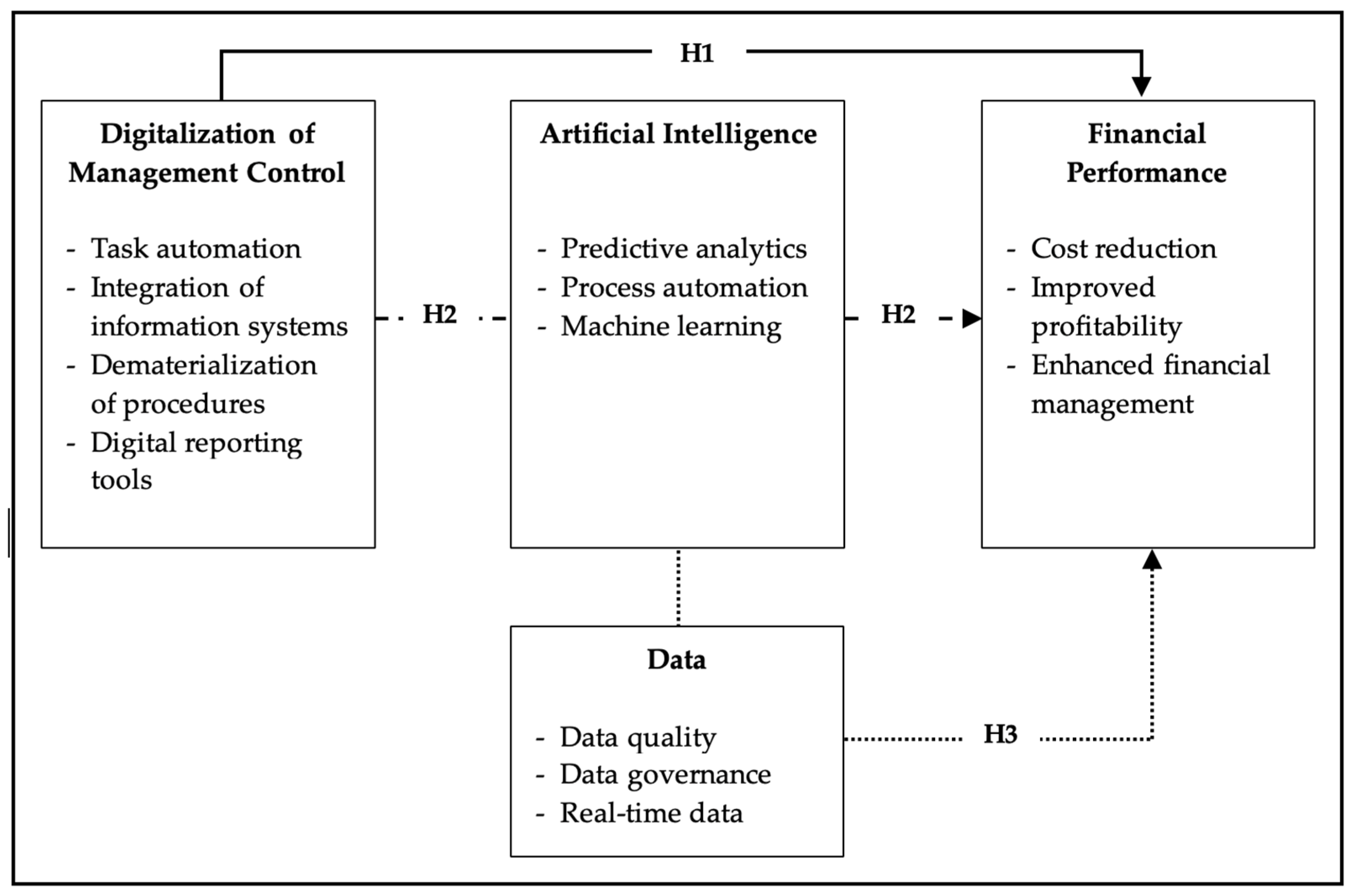
4. Research Problem, Hypotheses and Conceptual Research Model
5. Research Methodology
6. Qualitative Study: Results and Discussion
6.1. Lexicographic Analysis
6.2. Word Tree (Synapsie) Analysis
6.3. Readjustment of the Conceptual Model
7. Confirmatory Quantitative Study
7.1. Sample Profile
7.2. Validation of the Measurement Model (Outer Model)
7.2.1. Item Reliability and Convergent Validity
7.2.2. Discriminant Validity
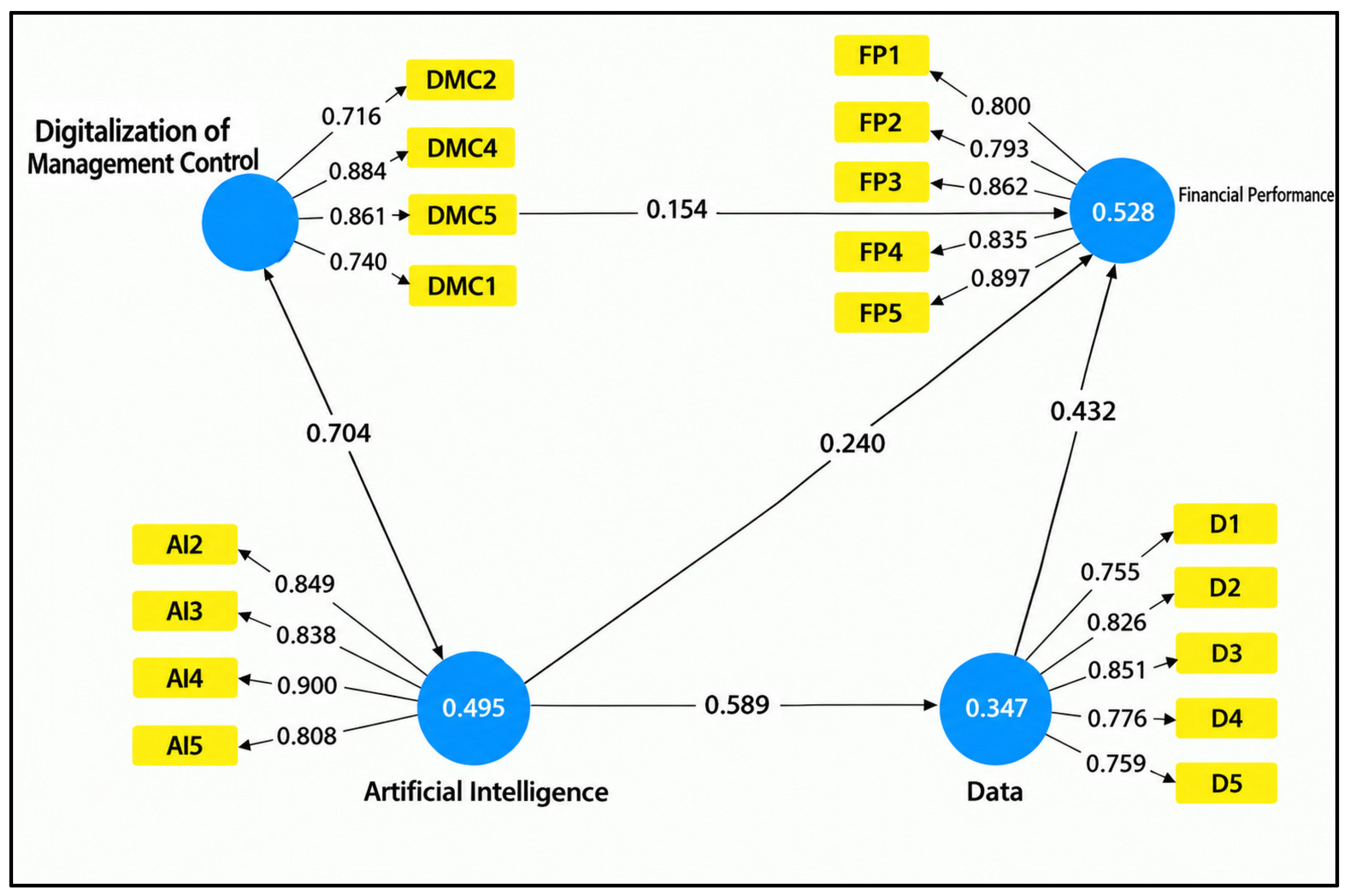
7.3. Hypothesis Testing and Structural Model
7.4. Coefficient of Determination (R2) and Effect Size (f2)
7.5. Discussion of the Results
7.5.1. Rejection of H1: Digitalization Alone Is Not Enough
7.5.2. Rejection of H2: AI Alone Remains Insufficient
7.5.3. Confirmation of H3: The Complete Mediation Chain
8. Implications
8.1. Theoretical Implications
8.2. Managerial Implications
8.3. Policy Implications
8.4. Implications for the Accounting Profession and Management Control
9. Conclusions
10. Limitations and Avenues for Future Research
Author Contributions
Funding
Institutional Review Board Statement
Informed Consent Statement
Data Availability Statement
Acknowledgments
Conflicts of Interest
References
- Abbas, K. (2026). Management accounting and artificial intelligence: A comprehensive literature review and recommendations for future research. The British Accounting Review, 58(2), 101551. [Google Scholar] [CrossRef] [Scilit]
- Abbas, K., De Santis, F., & Kolbjørnsrud, V. (2026). Artificial intelligence in accounting: A comparative analysis of adoption in accounting and non-accounting firms. Journal of Accounting and Public Policy, 57, 107433. [Google Scholar] [CrossRef] [Scilit]
- Allouli, N., Boumeska, M., & Hammani, S. (2024). L’agilité financière à l’ère digitale: Le rôle des pratiques innovantes du contrôle de gestion. Revue des Études Multidisciplinaires en Sciences Économiques et Sociales, 9(2), 229–244. [Google Scholar]
- Anthony, R., & Govindarajan, V. (2007). Management control systems (12th ed.). McGraw-Hill. [Google Scholar]
- Appelbaum, D., Kogan, A., & Vasarhelyi, M. A. (2017). Big data and analytics in the modern audit engagement: Research needs. Auditing: A Journal of Practice & Theory, 36, 1–27. [Google Scholar] [CrossRef] [Scilit]
- Arharbi, N., & El Aissaoui, Y. (2024). Vers un contrôle de gestion agile: L’intelligence artificielle et le big data pour la performance en environnement incertain. International Journal of Data Analytics and Management, 1(2), 195–210. [Google Scholar] [CrossRef] [Scilit]
- Arkhipova, D., Montemari, M., Mio, C., & Marasca, S. (2024). Digital technologies and the evolution of the management accounting profession: A grounded theory literature review. Meditari Accountancy Research, 32(7), 35–64. [Google Scholar] [CrossRef] [Scilit]
- Askarany, D., & Yazdifar, H. (2012). Why ABC is not widely implemented. International Journal of Business and Management, 7(2), 143–152. [Google Scholar]
- Bal, M., & Goumari, S. (2025a). Contrôle budgétaire, transformation numérique et performance financière: Une étude empirique dans les entreprises agricoles de souss-massa. Revue Française d’Economie et de Gestion, 6(7), 705–740. [Google Scholar]
- Bal, M., & Goumari, S. (2025b). L’automatisation du processus du contrôle de gestion à l’ère de l’intelligence artificielle. Revue Internationale du Chercheur, 6(2), 21–56. [Google Scholar]
- Barney, J. (1991). Firm resources and sustained competitive advantage. Journal of Management, 17(1), 99–120. [Google Scholar] [CrossRef] [Scilit]
- Berroukech, Y., & Hanin, B. (2025). Intelligence artificielle et contrôle de gestion: Mutations, tensions et perspectives d’une gouvernance algorithmique. Revue du Contrôle, de la Comptabilité et de L’audit, 9(3), 419–442. [Google Scholar]
- Bhimani, A., & Willcocks, L. (2014). Digitisation, ‘big data’ and the transformation of accounting information. Accounting and Business Research, 44(4), 469–490. [Google Scholar] [CrossRef] [Scilit]
- Boutgayout, M. B. (2020). Contrôle de gestion 3.0: Nouveaux outils et prise de décision à l’ère de la transformation digitale. Revue Internationale d’Économie Numérique, 2(1), 62–78. [Google Scholar]
- Broccardo, L., Francesca, C., Daniele, G., & Crocco, E. (2024a). Performance management systems and digital technologies: An exploratory analysis of practitioners and academics’ perspectives. Industrial Management & Data Systems, 124(10), 2870–2898. [Google Scholar] [CrossRef] [Scilit]
- Broccardo, L., Tenucci, A., Agarwal, R., & Alshibani, S. M. (2024b). Steering digitalization and management control maturity in small and medium enterprises (SMEs). Technological Forecasting & Social Change, 204(2024), 123446. [Google Scholar] [CrossRef] [Scilit]
- Brynjolfsson, E., & McAfee, A. (2017). The business of artificial intelligence. Harvard Business Review, 7, 3–11. [Google Scholar]
- Burns, J., & Scapens, R. W. (2000). Conceptualizing management accounting change: An institutional framework. Management Accounting Research, 11(1), 3–25. [Google Scholar] [CrossRef] [Scilit]
- Caglio, A. (2003). Enterprise resource planning systems and accountants: Towards hybridization? European Accounting Review, 12(1), 123–153. [Google Scholar] [CrossRef] [Scilit]
- Cohen, J. (1988). Statistical power analysis for the behavioral sciences (2nd ed.). Lawrence Erlbaum Associates. [Google Scholar]
- Cooper, L. A., Holderness, D. K., Sorensen, T. L., & Wood, D. A. (2019). Robotic process automation in public accounting. Accounting Horizons, 33(4), 15–35. [Google Scholar] [CrossRef] [Scilit]
- Davenport, T. H., & Ronanki, R. (2018). Artificial intelligence for the real world. Harvard Business Review, 96(1), 108–116. [Google Scholar]
- DiMaggio, P. J., & Powell, W. W. (1983). The iron cage revisited: Institutional isomorphism and collective rationality in organizational fields. American Sociological Review, 48(2), 147–160. [Google Scholar] [CrossRef] [Scilit]
- Dirks, P., Möller, K., Schäffer, U., & Verbeeten, F. (2026). The impact of digital technology on management accounting and control. Journal of Management Control, 37, 1–17. [Google Scholar] [CrossRef] [Scilit]
- Dong, M., Stratopoulos, T. C., & Wang, V. X. (2024). A scoping review of ChatGPT research in accounting and finance. International Journal of Accounting Information Systems, 55, 100715. [Google Scholar] [CrossRef] [Scilit]
- Drazin, R., & Van de Ven, A. H. (1985). Alternative forms of fit in contingency theory. Administrative Science Quarterly, 30(4), 514–539. [Google Scholar] [CrossRef] [Scilit]
- Ed-douib, A., & Fahmi, Y. (2025). L’impact de la transformation digitale sur la compétitivité et la performance financière des PME marocaines: étude empirique des facteurs déterminants. Revue Internationale des Sciences de Gestion, 8(1), 402–424. [Google Scholar]
- Elhamma, A., & El-Moumane, R. (2023). Impact of firm size on digitalization of management control: Evidence from Morocco. International Journal of Management, Accounting and Economics, 10(6), 412–424. [Google Scholar] [CrossRef]
- El Harnane, Y., & El Harchaoui, E. (2025). L’impact de la digitalisation des systèmes d’information sur le métier des contrôleurs de gestion: Une revue de littérature. Revue du Contrôle, de la Comptabilité et de L’audit, 8(4), 412–430. [Google Scholar]
- Fayyad, U., Piatetsky-Shapiro, G., & Smyth, P. (1996). From data mining to knowledge discovery in databases. AI Magazine, 17(3), 37–54. [Google Scholar]
- Fähndrich, J. (2023). A literature review on the impact of digitalisation on management control. Journal of Management Control, 34, 9–65. [Google Scholar] [CrossRef] [Scilit]
- Frank, A. G., Dalenogare, L. S., & Ayala, N. F. (2019). Industry 4.0 technologies: Implementation patterns in manufacturing companies. International Journal of Production Economics, 210, 15–26. [Google Scholar] [CrossRef] [Scilit]
- Goretzki, L., Strauss, E., & Weber, J. (2013). An institutional perspective on the changes in management accountants’ professional role. Management Accounting Research, 24(1), 41–63. [Google Scholar] [CrossRef] [Scilit]
- Granlund, M. (2011). Extending AIS research to management accounting and control issues: A research note. International Journal of Accounting Information Systems, 12(1), 3–19. [Google Scholar] [CrossRef] [Scilit]
- Granlund, M., & Malmi, T. (2002). Moderate impact of ERPS on management accounting: A lag or permanent outcome? Management Accounting Research, 13(3), 299–321. [Google Scholar] [CrossRef] [Scilit]
- Hair, J. F., Hult, G. T. M., Ringle, C. M., Sarstedt, M., Danks, N. P., & Ray, S. (2014). A primer on partial least squares structural equation modeling (PLS-SEM). SAGE Publications. [Google Scholar]
- Hair, J. F., Risher, J. J., Sarstedt, M., & Ringle, C. M. (2019). When to use and how to report results of PLS-SEM. European Business Review, 31(1), 2–24. [Google Scholar] [CrossRef] [Scilit]
- Hilmi, Y., & Kaizar, C. (2023). Le contrôle de gestion à l’ère des nouvelles technologies et de la transformation digitale. Revue Française d’Économie et de Gestion, 4(4), 1–28. [Google Scholar]
- Jensen, M. C., & Meckling, W. H. (1976). Theory of the firm: Managerial behavior, agency costs and ownership structure. Journal of Financial Economics, 3(4), 305–360. [Google Scholar] [CrossRef] [Scilit]
- Kock, N., & Hadaya, P. (2018). Minimum sample size estimation in PLS-SEM: The inverse square root and gamma-exponential methods. Information Systems Journal, 28(1), 227–261. [Google Scholar] [CrossRef] [Scilit]
- Leitner-Hanetseder, S., Lehner, O. M., Eisl, C., & Forstenlechner, C. (2021). A profession in transition: Actors, tasks and roles in AI-based accounting. Journal of Applied Accounting Research, 22(3), 539–556. [Google Scholar] [CrossRef] [Scilit]
- Lhaloui, F. E., & Ait Lhassan, I. (2025). Management control in the age of artificial intelligence: Toward a conceptual model for decision support. Management Control, Auditing and Finance Review (MCAFR), 2(2), 232–254. [Google Scholar] [CrossRef]
- Matt, C., Hess, T., & Benlian, A. (2015). Digital transformation strategies. Business & Information Systems Engineering, 57(5), 339–343. [Google Scholar] [CrossRef] [Scilit]
- McKinsey Global Institute. (2023). The economic potential of generative AI: The next productivity frontier. McKinsey Global Institute. [Google Scholar]
- Mesly, O. (2015). Creating models in psychological research. Springer. [Google Scholar]
- Metwally, A. B. M. (2026). Artificial intelligence adoption in accounting systems and organizational performance: The mediating role of financial decision-making quality. Journal of Risk and Financial Management, 19(6), 405. [Google Scholar] [CrossRef] [Scilit]
- Moinard, C., & Berland, N. (2020). Intelligence artificielle et contrôle de gestion: Un rapport aux chiffres revisité. Revue de Contrôle, de Comptabilité et d’Audit, 12(4), 44–50. [Google Scholar] [CrossRef] [Scilit]
- Moll, J., & Yigitbasioglu, O. (2019). The role of internet-related technologies in shaping the work of accountants: New directions for accounting research. The British Accounting Review, 51(6), 100833. [Google Scholar] [CrossRef] [Scilit]
- Möller, K., Schäffer, U., & Verbeeten, F. (2020). Digitalization in management accounting and control: An editorial. Journal of Management Control, 31(1), 1–8. [Google Scholar] [CrossRef] [Scilit] [PubMed]
- Podsakoff, P. M., MacKenzie, S. B., Lee, J. Y., & Podsakoff, N. P. (2003). Common method biases in behavioral research: A critical review of the literature and recommended remedies. Journal of Applied Psychology, 88(5), 879–903. [Google Scholar] [CrossRef] [Scilit] [PubMed]
- PwC. (2017). Sizing the prize: What’s the real value of AI for your business and how can you capitalise? PricewaterhouseCoopers. [Google Scholar]
- Quattrone, P. (2016). Management accounting goes digital: Will the move make it wiser? Management Accounting Research, 31, 118–122. [Google Scholar] [CrossRef] [Scilit]
- Rikhardsson, P., & Yigitbasioglu, O. (2018). Business intelligence & analytics in management accounting research: Status and future focus. International Journal of Accounting Information Systems, 29(C), 37–58. [Google Scholar] [CrossRef] [Scilit]
- Rogers, E. M. (2003). Diffusion of innovations (5th ed.). Free Press. [Google Scholar]
- Scapens, R. W., & Jazayeri, M. (2003). ERP systems and management accounting change: Opportunities or impacts? A research note. European Accounting Review, 12(1), 201–233. [Google Scholar] [CrossRef] [Scilit]
- Shatila, K. (2026). Artificial intelligence capability and real-time financial reporting: The mediating roles of automation, integration, and data quality. International Journal of Disclosure and Governance. [Google Scholar] [CrossRef] [Scilit]
- Strong, D. M., Lee, Y. W., & Wang, R. Y. (1997). Data quality in context. Communications of the ACM, 40(5), 103–110. [Google Scholar] [CrossRef] [Scilit]
- Teece, D. J., Pisano, G., & Shuen, A. (1997). Dynamic capabilities and strategic management. Strategic Management Journal, 18(7), 509–533. [Google Scholar] [CrossRef] [Scilit]
- Verhoef, P., Broekhuizen, T., Bart, Y., Bhattacharya, A., Dong, J. Q., Fabian, N., & Haenlein, M. (2021). Digital transformation: A multidisciplinary reflection and research agenda. Journal of Business Research, 122, 889–901. [Google Scholar] [CrossRef] [Scilit]
- Vial, G. (2019). Understanding digital transformation: A review and a research agenda. Journal of Strategic Information Systems, 28(2), 118–144. [Google Scholar] [CrossRef] [Scilit]
- Wang, R. Y., & Strong, D. M. (1996). Beyond accuracy: What data quality means to data consumers. Journal of Management Information Systems, 12(4), 5–33. [Google Scholar] [CrossRef] [Scilit]
- Westerman, G., Bonnet, D., & McAfee, A. (2014). Leading digital: Turning technology into business transformation. Harvard Business Review Press. [Google Scholar]
- Windeck, D., Weber, J., & Strauss, E. (2015). Enrolling managers to accept the business partner: The role of boundary objects. Journal of Management and Governance, 19(3), 617–653. [Google Scholar] [CrossRef] [Scilit]
- Yazdifar, H., Askarany, D., Wickramasinghe, D., Nasseri, A., & Alam, A. (2019). The Diffusion of Management Accounting Innovations in Dependent (Subsidiary) Organizations and MNCs. The International Journal of Accounting, 54(1), 1950004. [Google Scholar] [CrossRef] [Scilit]




| Artificial Intelligence | Financial Performance | |
|---|---|---|
| Data | 29 | 10 |
| Concepts | Sub-Concepts | Verbatims | Codes | Meanings |
|---|---|---|---|---|
| Digitalization of management control | Task automation | Operational time savings | DMC_1 | The professionals interviewed unanimously emphasize that automation has freed up precious time, formerly devoted to repetitive tasks, in favor of activities with higher analytical value. |
| Increased data reliability | DMC_2 | The elimination of manual data entry has drastically reduced human errors, thereby strengthening managers’ confidence in the figures produced by management control. | ||
| Decision-making responsiveness | DMC_3 | Thanks to automation, finance teams can now produce analyses in a few minutes where several days were previously required, radically transforming the speed of decision-making. | ||
| Digital reporting tools | Real-time dashboards | DMC_4 | Managers express marked satisfaction with dynamic dashboards that offer them an instantaneous, up-to-date view of performance, without waiting for the monthly close. | |
| Intelligent visualization | DMC_5 | The ability of Business Intelligence tools to transform massive volumes of data into readable charts is perceived as a paradigm shift in the culture of financial reporting. | ||
| Accessibility of information | DMC_6 | The digitalization of reporting has democratized access to financial information, enabling all hierarchical levels to steer their activity using the same reference indicators. | ||
| Information systems integration | Elimination of information silos | DMC_7 | The respondents testify that systems integration has put an end to inconsistencies between the data of different departments, formerly a major source of conflict and wasted time. | |
| Fluidity of inter-departmental exchanges | DMC_8 | The interoperability of digital tools has created a fluid informational ecosystem in which data circulates freely between accounting, sales and top management. | ||
| Unified and consistent data | DMC_9 | Having a single source of data shared by all actors is described by the professionals as a silent yet fundamental revolution in their management practices. | ||
| Artificial Intelligence | Predictive analytics | Anticipation of financial risks | AI_1 | The management controllers interviewed describe predictive analytics as a genuine safety net enabling them to identify budgetary drifts before they become critical. |
| Intelligent budget forecasting | AI_2 | AI has transformed the budgeting exercise from a laborious and uncertain task into a dynamic and precise process, fed by historical data and market trends. | ||
| Proactive anomaly detection | AI_3 | AI’s ability to automatically flag unusual variances is experienced by practitioners as a vigilant assistant that never sleeps and constantly monitors the company’s financial health. | ||
| Machine learning | Continuous learning from data | AI_4 | What fascinates the professionals interviewed is machine learning’s capacity to improve on its own over time, producing increasingly relevant analyses without additional human intervention. | |
| Optimization of financial processes | AI_5 | Machine learning algorithms have revealed unsuspected pockets of efficiency in financial processes, enabling substantial savings that the human eye would never have identified. | ||
| Personalization of analysis | AI_6 | Machine learning now makes it possible to produce tailor-made financial analyses, adapted to the specificities of each profit center, significantly strengthening the relevance of steering. | ||
| Robotic process automation (RPA) | Intelligent flow automation | AIA_7 | RPA is described by the respondents as the ideal combination of machine speed and reasoning intelligence, capable of executing complex tasks without fatigue or error. | |
| Financial language processing | AI_8 | AI’s ability to read, understand and synthesize voluminous financial reports in a few seconds is perceived as an unprecedented productivity gain for management control teams. | ||
| AI embedded in ERP systems | AI_9 | The native integration of AI into existing ERP systems is welcomed by the professionals because it enriches analytical capabilities without requiring a costly overhaul of the information systems in place. | ||
| Data (emergent variable) | Data reliability | Accuracy and precision | D_1 | The professionals are categorical: an inaccurate piece of data introduced into an AI system produces erroneous analyses, whatever the sophistication of the tool. Reliability is the foundation of everything else. |
| Consistency across systems | D_2 | The consistency of data across the different information systems is described as the sine qua non condition of credible financial steering and of an effective exploitation of artificial intelligence. | ||
| Traceability and auditability | D_3 | The traceability of data reassures both managers and auditors: knowing where a piece of data comes from, how it was processed and who modified it has become an imperative of sound financial governance. | ||
| Data integration | Systems interoperability | D_4 | The protection of sensitive financial data is experienced as a strategic responsibility: a security breach does not merely threaten the data—it threatens the trust of all stakeholders. | |
| Centralization and unification | QD_5 | Putting an end to the scattering of data across dispersed Excel files is described by the respondents as the indispensable first step toward a truly effective digitalization of management control. | ||
| Fluidity of data exchanges | D_6 | The ability of data to circulate freely and without loss between the company’s different systems is presented as the invisible cement that gives digitalized financial steering all its coherence. | ||
| Real-time availability | Instant access to information | D_7 | Access to financial data in real time is unanimously cited as a paradigm shift: decisions are no longer made on the basis of the past, but on the reality of the present moment. | |
| Automated data collection | D_8 | The automation of data collection removes the incompressible delays of traditional reporting and guarantees that decision-makers always work with the freshest and most relevant information available. | ||
| Continuous steering | D_9 | The permanent availability of quality data transforms management control from a periodic, retrospective function into a continuous, proactive process genuinely at the service of performance. | ||
| Financial Performance | Cost reduction | Control of operating expenses | FP_1 | The respondents observe a tangible and measurable reduction in operating costs since digitalization: fewer working hours spent on tasks without added value, fewer costly errors to correct. |
| Elimination of waste | FP_2 | AI has revealed structural inefficiencies long ignored for lack of adequate analytical tools. Their elimination has translated into savings directly visible in the company’s margins. | ||
| Optimization of human resources | FP_3 | Digitalization did not eliminate jobs; it repositioned employees toward high-value-added analysis and advisory missions, improving both performance and job satisfaction. | ||
| Improved profitability | Fine-grained margin steering | FP_4 | Thanks to digital tools, management controllers can now analyze profitability by product, by customer and by distribution channel with a precision that was simply unattainable before. | |
| Reduction of budget variances | FP_5 | The automation of variance analysis has significantly reduced budget overruns: real-time alerts allow immediate corrective actions before drifts worsen. | ||
| Risk anticipation | FP_6 | AI-powered predictive analytics has transformed financial risk management from a reactive posture into a proactive approach, enabling companies to guard against shocks before they occur. | ||
| Better strategic steering | Real-time financial vision | FP_7 | Having access to a complete and up-to-date financial vision at any time is described by executives as a fundamental change in the way they steer the company and make strategic decisions. | |
| Quality of strategic decision-making | FP_8 | The data analyzed by AI considerably enriches the quality of strategic decisions: executives now arbitrate on the basis of objective facts rather than intuitions or past experience. | ||
| Sustainable competitive advantage | FP_9 | Companies that have taken the leap of intelligent digitalization observe a growing competitive advantage: they react faster, decide better and anticipate further than their competitors who have stayed behind. |
| Characteristic | Category | Frequency | % |
|---|---|---|---|
| Position held | Management controller | 27 | 39.7% |
| CFO/Administrative and financial manager | 21 | 30.9% | |
| Chief accountant | 4 | 5.9% | |
| Other | 16 | 23.5% | |
| Company size | Fewer than 10 employees | 9 | 13.2% |
| 10 to 49 employees | 23 | 33.8% | |
| 50 to 199 employees | 14 | 20.6% | |
| 200 employees and more | 22 | 32.4% | |
| Dominant sector | Services | 19 | 27.9% |
| Trade/Industry | 22 | 32.4% | |
| Agri-food/Construction | 13 | 19.1% | |
| Other | 14 | 20.6% |
| Construct | Cronbach’s α | CR (rho_a) | CR (rho_c) | AVE |
|---|---|---|---|---|
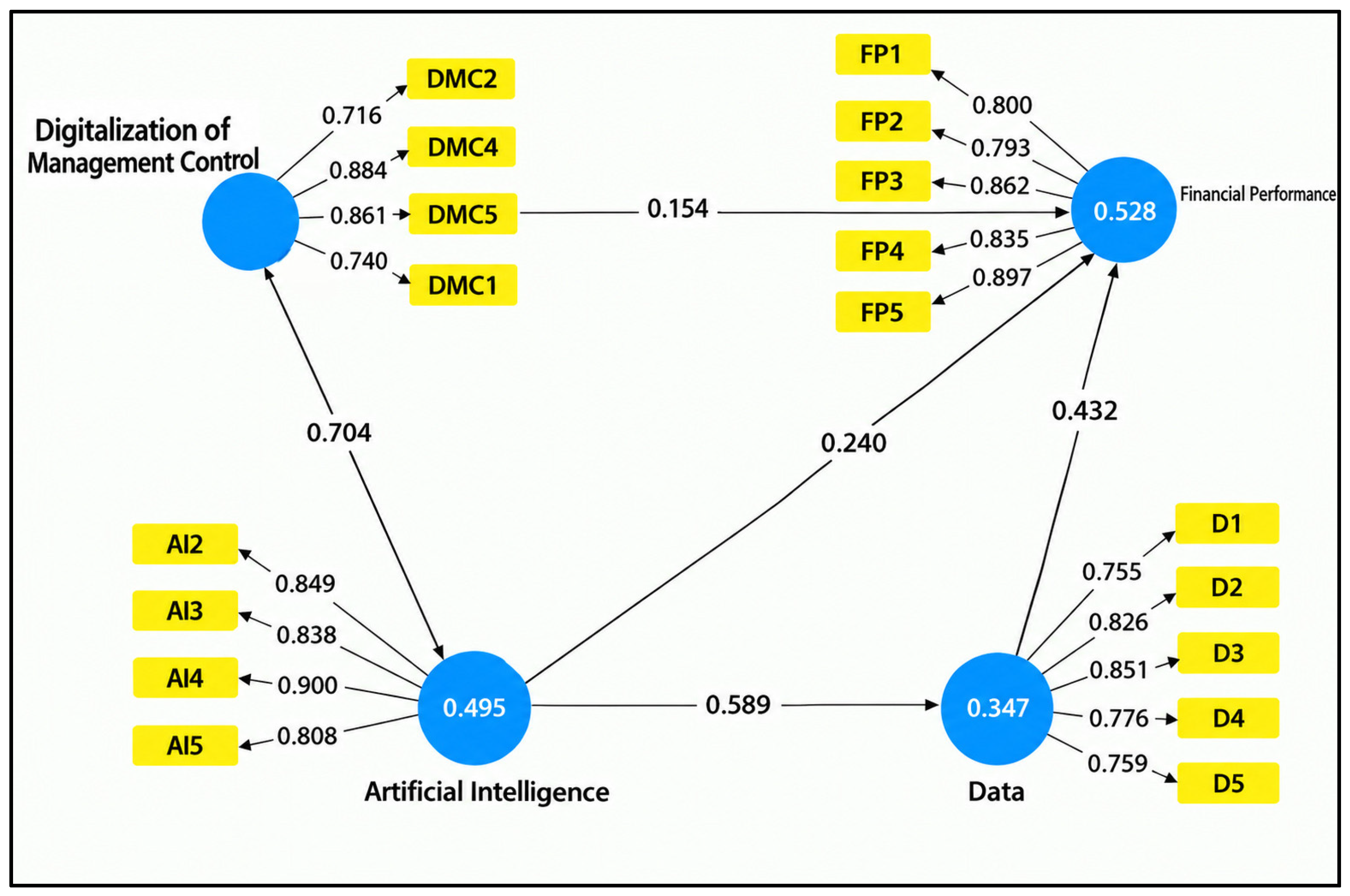
| Artificial Intelligence (AI) | 0.871 | 0.874 | 0.912 | 0.721 |
| Digitalization of MC (DMC) | 0.817 | 0.838 | 0.879 | 0.646 |
| Financial performance (FP) | 0.907 | 0.913 | 0.931 | 0.729 |
| Data (D) | 0.853 | 0.857 | 0.895 | 0.631 |
| Relationship Tested | β (O) | Mean (M) | STDEV | T-Stat | p-Value | Decision |
|---|---|---|---|---|---|---|
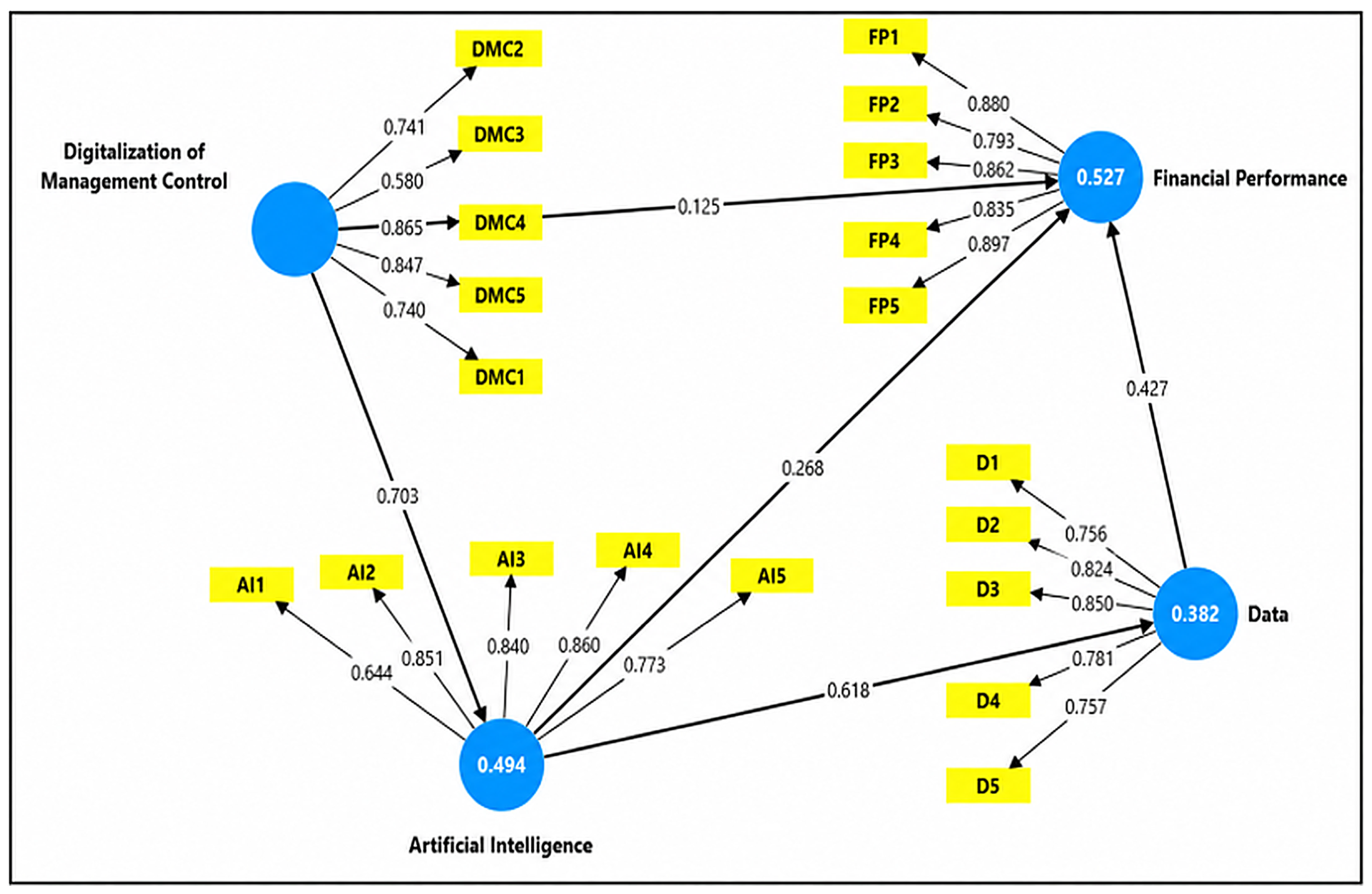
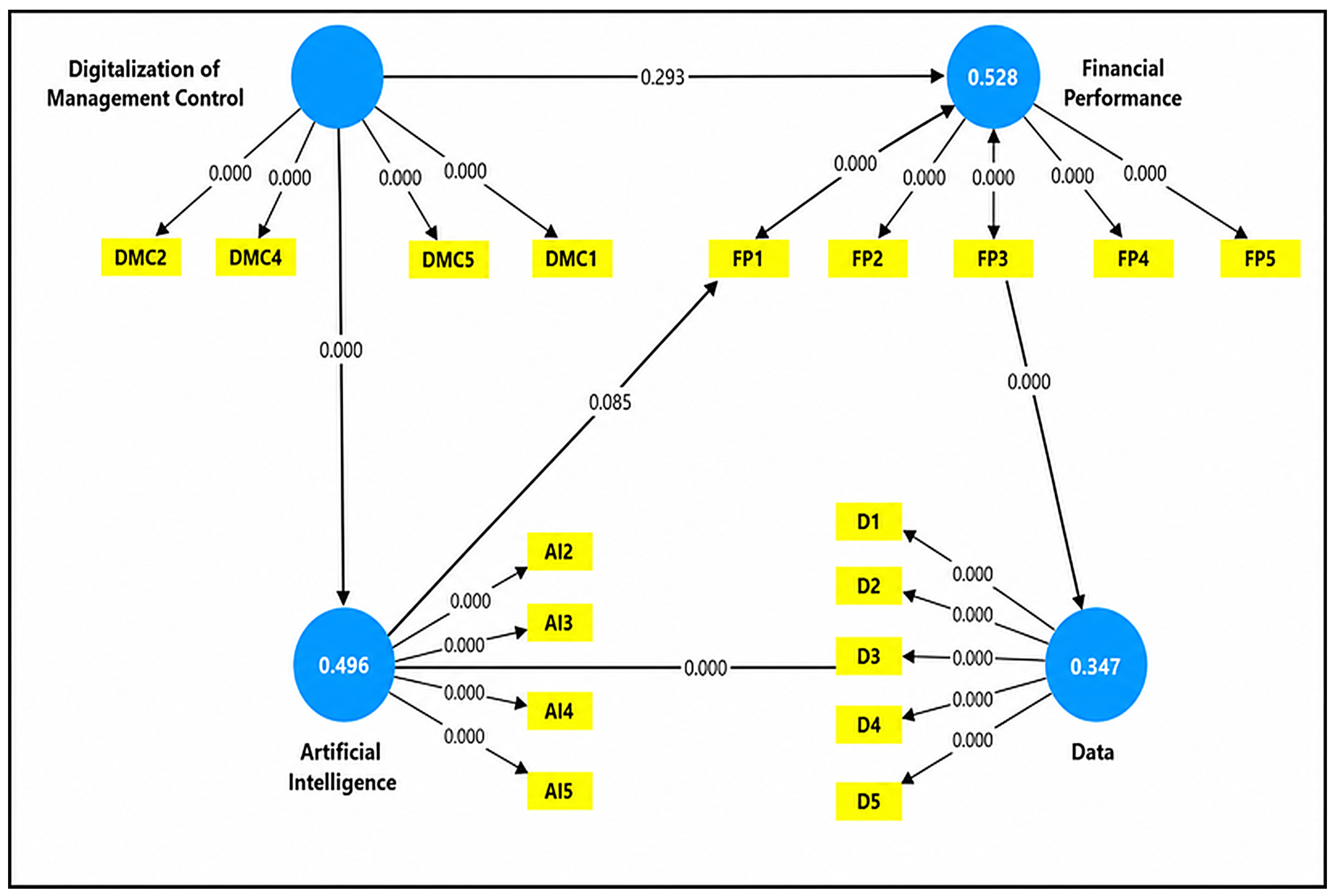
| Digitalization of MC → Financial performance (H1) | 0.154 | 0.155 | 0.146 | 1.051 | 0.293 | Rejected |
| Digitalization of MC → Artificial Intelligence | 0.704 | 0.705 | 0.078 | 9.016 | 0.000 | Confirmed |
| Data → Financial performance | 0.432 | 0.449 | 0.112 | 3.854 | 0.000 | Confirmed |
| AI → Financial performance (H2 direct) | 0.240 | 0.226 | 0.140 | 1.718 | 0.086 | Rejected |
| AI → Data | 0.589 | 0.588 | 0.114 | 5.180 | 0.000 | Confirmed |
| MC dig. → AI → Performance (H2 mediation) | 0.169 | 0.160 | 0.103 | 1.644 | 0.100 | Rejected |
| MC dig. → AI → Data → Performance (H3) | 0.179 | 0.191 | 0.077 | 2.318 | 0.020 | Confirmed |
| Code | Hypothesis | Result |
|---|---|---|
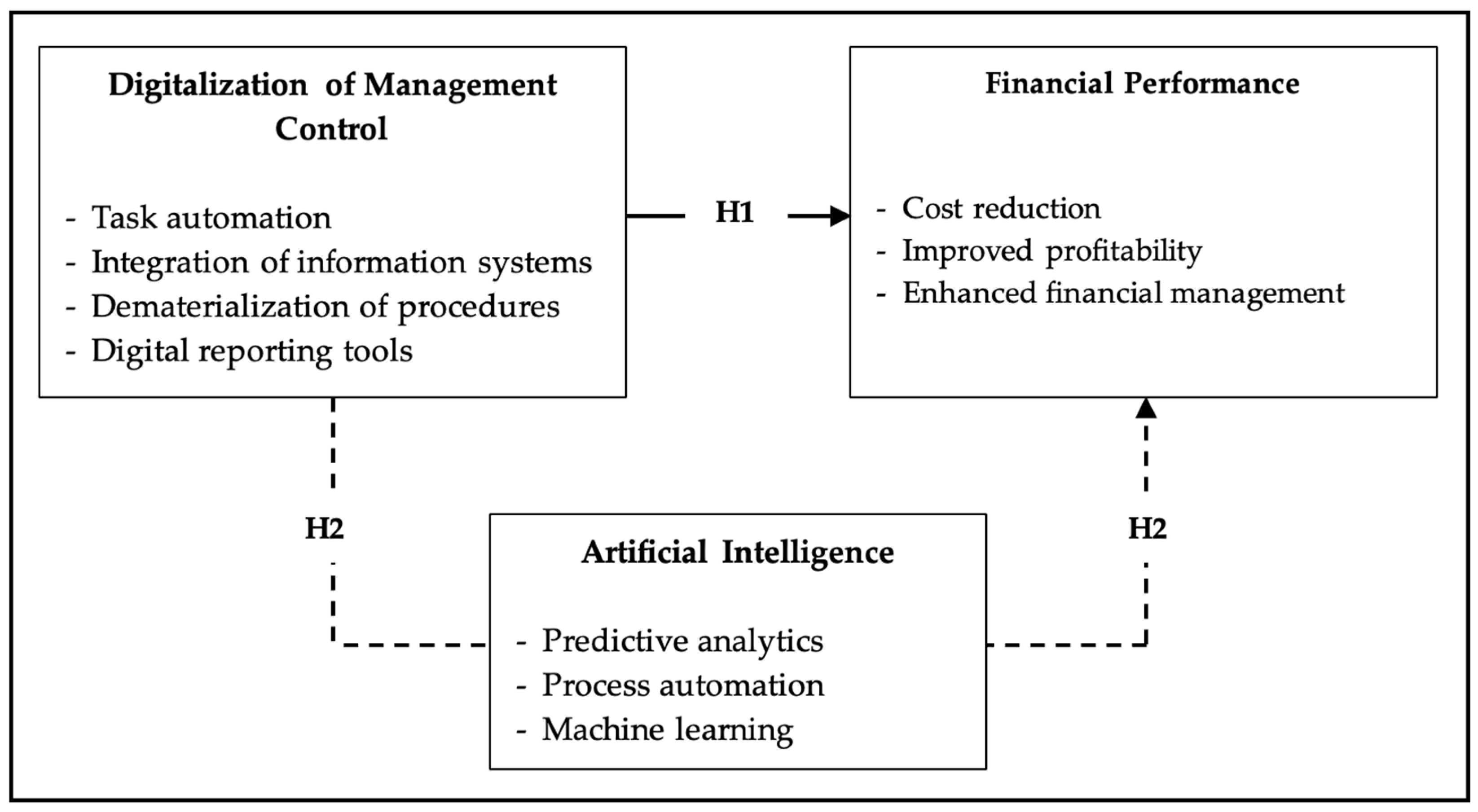
| H1 | The digitalization of MC processes contributes directly and significantly to the improvement of financial performance. | Rejected |
| H2 | Artificial intelligence plays a positive and significant mediating role between digitalization and financial performance. | Rejected |
| H3 | AI, fed with quality data, plays a positive and significant mediating role between digitalization and financial performance. | Confirmed |
Disclaimer/Publisher’s Note: The statements, opinions and data contained in all publications are solely those of the individual author(s) and contributor(s) and not of MDPI and/or the editor(s). MDPI and/or the editor(s) disclaim responsibility for any injury to people or property resulting from any ideas, methods, instructions or products referred to in the content. |
© 2026 by the authors. Licensee MDPI, Basel, Switzerland. This article is an open access article distributed under the terms and conditions of the Creative Commons Attribution (CC BY) license.
Share and Cite
Bal, M.; Benadi, M.; Ait Oufkir, A. Management Accounting Digitalization in Emerging Economies: A Mixed-Methods Investigation of AI and Data Quality as Serial Mediators of Financial Performance. J. Risk Financ. Manag. 2026, 19, 722. https://doi.org/10.3390/jrfm19090722
Bal M, Benadi M, Ait Oufkir A. Management Accounting Digitalization in Emerging Economies: A Mixed-Methods Investigation of AI and Data Quality as Serial Mediators of Financial Performance. Journal of Risk and Financial Management. 2026; 19(9):722. https://doi.org/10.3390/jrfm19090722
Chicago/Turabian StyleBal, Mohamed, Mohamed Benadi, and Abdellah Ait Oufkir. 2026. "Management Accounting Digitalization in Emerging Economies: A Mixed-Methods Investigation of AI and Data Quality as Serial Mediators of Financial Performance" Journal of Risk and Financial Management 19, no. 9: 722. https://doi.org/10.3390/jrfm19090722
APA StyleBal, M., Benadi, M., & Ait Oufkir, A. (2026). Management Accounting Digitalization in Emerging Economies: A Mixed-Methods Investigation of AI and Data Quality as Serial Mediators of Financial Performance. Journal of Risk and Financial Management, 19(9), 722. https://doi.org/10.3390/jrfm19090722