
Article

The Moderating Role of Digital Transformation in the Relationship Between Audit Quality and Aggressive Tax Avoidance: Empirical Evidence from the Jordanian Industrial Firms


by
Mohammad Ismail Alawamreh
1,*,
Ahmed Razman Abdul Latiff
1,
Yusniyati Yusri
2,
Ibrahim Saleh Al-Radaideh
3,
Abutaber Thaer
4,
Mahmoud Abdelrehim
2 and
Mohammad Mosleh Almousa
1
1
Department of Accounting, Putra Business School (PBS), University Putra Malaysia, Serdang 43400, Selangor, Malaysia
2
School of Business and Economics, University Putra Malaysia, Serdang 43400, Selangor, Malaysia
3
Department of Finance and Financial Technology, College of Business, Amman Arab University, P.O. Box 2234, Amman 11953, Jordan
4
Department of Accounting, Jadara University, P.O. Box 733, Irbid 21110, Jordan
*
Author to whom correspondence should be addressed.
J. Risk Financ. Manag. 2026, 19(7), 527; https://doi.org/10.3390/jrfm19070527
Submission received: 5 May 2026 / Revised: 29 June 2026 / Accepted: 6 July 2026 / Published: 14 July 2026

Abstract

This paper examines the moderating effect of corporate digital transformation in the relationship between audit quality and aggressive tax avoidance in the sample of industrial companies listed on the ASE and operating during the 2020–2025 period. They were based on data of a balanced panel of 30 industrial companies listed on the ASE 180 observations. The primary estimator used was the feasible generalized least squares (FGLS) method that was employed after it was established that first-order autocorrelation, groupwise heteroskedasticity, and partial cross-sectional dependence existed. System-GMM estimator was used to confirm the robustness of the results, and to deal with the endogeneity that may arise due to reverse causality between auditor selection and result. There are three key findings of the study. First, there is a strong and consistent negative relationship between affiliation with one of the Big Four audit firms and aggressive tax avoidance in all the models studied, confirming that reputation-based audit quality is an effective institutional deterrent a finding of particular importance given that 73.3% of the Jordanian industrial firms in the sample rely on local auditors and therefore lack similar governance controls. Second, aggressive tax avoidance is positively related to higher audit fees, which are indicative of a more complex client base and an economic dependence on clients by the auditor, rather than a signal of greater monitoring rigour and, therefore, as a challenge to the fee-as-quality assumption common to the developed-market framework. Third, although digital transformation demonstrates a direct positive correlation with aggressive tax avoidance—indicating that firms can use digital capabilities to enhance tax planning and not compliance in the pre-JoFotara regulatory environment—its moderating effect on Big Four affiliation is not statistically significant. It is important to note that the relationship between the intensity of audit fees and digital transformation is positively significant, which is in line with the economic dependence argument. The implications of the findings are important to the Jordan Securities Commission, the tax authorities as well as regulatory bodies who are looking to enhance corporate tax compliance in a dynamic digital regulatory environment, and raise important questions of the portability of audit quality assumptions across institutional settings.

1. Introduction

Aggressive tax avoidance continues to be one of the hottest topics in accounting and finance research, and a major threat to national and global economies (Athira & Ramesh, 2023; Hossain et al., 2024). Businesses cleverly take advantage of tax law loopholes and engage in intricate tax planning schemes to reduce their tax obligations while staying within the boundaries of legal compliance (Bilicka et al., 2026; Hanlon & Heitzman, 2010). These activities result in massive revenue losses globally; the Tax Justice Network (2024) estimates that aggressive tax avoidance and illicit financial flows drain governments of USD 492 billion a year, with developing countries bearing the brunt of the loss, losing up to 5% of their tax revenues to profit shifting five times the relative loss of high-income countries (Chiari, 2024; Garcia-Bernardo & Janský, 2024). Tax revenues comprise 73.7% of domestic revenues in Jordan, according to the Central Bank report (Central Bank of Jordan, 2025). The manufacturing sector, which accounts for 25% of GDP and is one of the major revenue sectors in Jordanian economy, makes a significant contribution to the state treasury through corporate tax revenues (Al-Qudah, 2021). As a result, industrial companies are more likely to engage in aggressive tax avoidance to minimize their tax obligations, making it a key sector of interest (Almaharmeh et al., 2024). In this regard, audit quality has been identified as a key institutional driver in lowering aggressive tax avoidance practices. The role of audit quality is to monitor management, mitigate agency costs resulting from the separation of ownership and management, and to produce quality audit reports that financial statement users can rely on, and enhance the information quality (Ado et al., 2020; Jensen & Meckling, 1976). Earlier empirical studies show that Big Four audit firms conduct more rigorous audits of financial reporting and tax disclosures, thereby addressing information asymmetries that are the basis of aggressive tax avoidance (Marzuki & Syukur, 2021; Wang & Li, 2020).
But the audit quality-aggressive tax avoidance nexus is not in a vacuum. The rapid digital transformation of firms has transformed the informational and operational context in which audit and tax planning activities occur (L. Zhang & Bin Balia, 2024; Q. Zhang & She, 2024). This was dramatically accelerated with the introduction of the JoFotara e-invoicing system in Jordan in April 2025, which has radically transformed the transparency and traceability of transactions (Flick Network, 2025). Evidence supports the notion that digital transformation leads to higher tax compliance via heightened transparency, reduced information asymmetry and stronger monitoring (M. Chen et al., 2024). Digital transformation involving the use of big data analytics, enterprise resource planning (ERP) systems, artificial intelligence, and cloud-based financial reporting systems improves the quality, timeliness and transparency of financial data for tax authorities and auditors (Lohapan, 2021; Ziniuk et al., 2022). On one hand, firms with digital capabilities may enjoy more efficient audits, as electronic data extraction and real-time reporting systems circumvent the information gap that diminishes the effectiveness of audits, thus enhancing the moderating effect of audit quality on aggressive tax avoidance (Belahouaoui & Attak, 2024; Vitali & Giuliani, 2024). Conversely, digital transformation may provide firms with more effective aggressive tax avoidance strategies, allowing for sophisticated international tax structures and algorithmic aggressive tax avoidance that may weaken the disciplinary effect of external auditors (Bilicka et al., 2026). The ambivalent consequences of digital transformation therefore imply that it may be a significant moderator a boundary condition of the audit quality-aggressive tax avoidance relationship.
In this context, the Jordanian industrial sector is an interesting institutional context that is significantly different from the emerging markets in East Asia, which are the focus of most of the literature (M. Chen et al., 2024; Rizqia & Lastiati, 2021). Jordan’s institutional profile, as defined by its high concentration of family ownership, low share of Big Four firms listed in the stock exchanges 26.7% of the listed industrial companies, and low level of regulatory enforcement, serves as an important boundary condition for the application of the theoretical translatability of the audit quality tax avoidance relationship across institutional profiles (Almarayeh et al., 2020). Moreover, Jordan’s recent implementation of the new Income Tax Law No. 38 (2018) and the full application of the mandate of e-invoicing in the real time (JoFotara) from April 2025, create a natural quasi-experimental design: the panel data used in this study (2020–2025) is a clean pre-treatment baseline that will allow future difference-in-differences analyses to make a causal estimate of the impact of mandatory digital tax reporting on corporate tax compliance behavior (Flick Network, 2025; Ministry of Finance, 2019). Jordan is also one of the first jurisdictions in the MENA to introduce real-time e-invoicing, either because they did so before or in parallel to other countries in the region, such as Saudi Arabia, Egypt, and the UAE, to enhance the digital governance experience and complement research on regulatory diffusion and digital governance complementarity across nations (IMF, 2024).
Although there is an increasing stream of research examining the relationship between audit quality and aggressive tax avoidance, a notable gap remains. Prior research has mainly been centred on developed markets (Francis & Yu, 2009; Kanagaretnam et al., 2016; Rizqia & Lastiati, 2021). with relatively little attention paid to emerging markets with weak institutions and family control (Almaharmeh et al., 2024). Moreover, research on the association between corporate digital transformation and aggressive tax avoidance has also been mostly limited to the context of developed markets (M. Chen et al., 2024; Zhu et al., 2025). without actively considering the moderating effect of corporate digital transformation to the relationship between audit quality and aggressive tax avoidance. It is not possible to expect that the impact of audit-based governance will be similar at various levels of technological development. To the best knowledge of the authors, no study has ever examined the moderating role of corporate digital transformation on the relationship between audit quality and aggressive tax avoidance in the Jordanian industrial sector, a unique context, due to the dominance of family-owned industrial enterprises, the weak enforcement mechanisms, and the booming digital economy. This gap is a theoretical and empirical gap which is to be filled by the current study. This research study is made in three distinctive ways. As far as the authors know, it is the first study that empirically analyzes the moderating effect of the audit quality–aggressive tax avoidance relationship in the Jordanian industrial sector, as it expands the boundaries of the study’s theoretical frameworks to a domain that involves family ownership concentration, weak regulatory enforcement, and low penetration of international audit firms. Empirically, the study questions the fee-as-quality hypothesis as it shows that, in the Jordanian setting, audit fees are more indicative of client complexity and auditor economic dependence on the client than of the quality of the monitoring effort, which is consistent with the findings from other similar emerging market settings. Moreover, the study places the empirical analysis in the pre-implementation period of the JoFotara e-invoicing system, thereby adding natural quasi-experimental value to the study, which will allow future research to evaluate the causal effect of digital tax reporting on the audit quality–tax avoidance nexus using difference-in-differences or interrupted time series designs. On a policy level, the study offers evidence-based advice to the Jordan Securities Commission (JSC), Jordan Revenue Authority as well as auditor standard-setting bodies in the MENA region on the complementarities of governance of digital infrastructure investment and mandatory auditor rotation.

2. Literature Review and Hypotheses Development

This study is based on a comprehensive and multidimensional theoretical framework that combines agency theory, the resource-based view and deterrence theory in a coherent and non-redundant conceptual framework that captures the link between audit quality and aggressive tax avoidance and the moderating effect of corporate digital transformation (CDT) in this link. Theories are different in their key explanatory role; agency theory helps to explain why the relationship exists, the resource-based theory helps to understand how the relationship gets changed by CDT, and deterrence theory helps to understand the direction and magnitude of the relationship’s behavioral outcome. Agency theory (Jensen & Meckling, 1976). views the firm as a collection of contracts where there is an information gap that can lead to opportunistic behavior and aggressive tax avoidance, which can benefit managers but not shareholders’ value. In this context, the quality of the external audit, captured in the present research as the Big Four affiliation of the firm and the audit fee intensity, serves as one of the main mechanisms of governance that restricts the opportunism by limiting informational distortion in which agency conflicts are maintained (Francis, 2011; Hanlon & Heitzman, 2010). The resource-based view (Barney, 1991). repurposes corporate digital transformation as a strategic business resource for the firm, that fundamentally changes the informational environment where audit processes and tax planning decisions take place. CDT is not linear; on the one hand, digitally sophisticated companies can choose technologies that make information more transparent, reduce information asymmetry, and strengthen the capacity of external auditors; on the other hand, a digitally advanced company can use algorithmically designed structures to create advanced tax avoidance opportunities, which will weaken external auditor governance capacity while strengthening the tax avoidance capacity of the company (Anjarwi, 2026; Tang et al., 2025). CDT therefore represents a theoretical justification of a border point—a moderating edge—which in systematic fashion influences the form and intensity of the audit quality–tax avoidance relationship. Deterrence theory (Allingham & Sandmo, 1972). operationalizes the behavioral aspect of this framework by positing that rational economic agents compare the likelihood of being caught with the expected gain from breaking the law. The higher the audit quality, the more this detection risk will increase, and create a deterrent effect that will discourage aggressive tax behavior. CDT, as an application of this deterrent, either increases the magnitude of the deterrent effect in the case of real-time reporting transparency or reduces it in the case of algorithmically engineered tax complexity to make auditing more difficult and less effective. It is the interaction between these two pathways that makes CDT a theoretically interesting and empirically relevant moderator. These three theories together make a coherent, mutually reinforcing explanation. Agency theory defines the principal–agent conflict that drives aggressive tax behavior, and the quality of audit as the corrective element in agency theory. The resource-based view puts forward CDT as a strategic contingency which creates a new informational field in which this governance mechanism functions. The deterrence theory converts these structural conditions into predictable behavioral consequences, and spells out the logic of the detection-probability through which audit quality constrains behavior. In addition to theoretical justification for the hypothesized relationships, this integrated framework also provides an explanation of how the relationships are likely to be in play in the Jordanian industrial sector, where digital adoption is uneven and governance processes are still developing.

2.1. Aggressive Tax Avoidance

Aggressive Tax avoidance is a risky practice that negatively impacts the risk profile of the company, given that it involves hidden costs such as increased risk and reputational risk (Balakrishnan et al., 2019). It refers to the use of accounting standards as a shield to avoid tax liabilities in a way that is legal, but perceived as unethical, by managing earnings and exploiting tax loopholes (Alkurdi & Mardini, 2020; Hanlon & Heitzman, 2010). In Jordan, firms are struggling with financial issues due to scarcity of resources, fiscal deficits and excessive debt ratios, leading them to consider aggressive tax avoidance a means of cash flow management, increasing shareholder return and meeting shareholders’ expectations (Alkurdi & Mardini, 2020; IMF, 2024). The research shows contradictory results; some argue aggressive tax avoidance is a form of agency problems (Jensen & Meckling, 1976; Kovermann & Velte, 2019). while others attribute it to owners’ interests (Almaharmeh et al., 2024). The main determinants for such behavior include high taxation, innovations and incorrect tax records (Alm, 2012).

2.2. Quality Audit and Aggressive Tax Avoidance

External auditors play a critical monitoring role within the agency framework by mitigating conflicts of interest between managers and shareholders through enhancing the credibility of financial reporting and constraining opportunistic behavior. In this context, auditors support corporate governance mechanisms by uncovering and reporting material misstatements and providing unbiased information (Ado et al., 2020; Jensen & Meckling, 1976). This duty has attracted considerable attention in recent years, both academically and in practice, with respect to aggressive tax avoidance, thought to be a symptom of agency problems through information hiding (Wilde & Wilson, 2018). Audit quality is a powerful tool for corporate governance in reducing administrative discretion and information asymmetry by aligning the interests of shareholders and managers and deterring illegal activities (Almatarneh et al., 2026; Kaawaase et al., 2021; Kovermann & Velte, 2019). Audit quality is often measured by auditor size (e.g., Big Four auditors) and audit fees, as larger auditors have more expertise, technology and reputation, while higher fees allow more audit procedures (Ayoola, 2022; Marzuki & Syukur, 2021). As a result, quality audit is crucial in detecting aggressive tax avoidance, errors and reporting fraud, thus improving tax compliance (Amara et al., 2025; Lestari & Nedya, 2019). Recent research also indicates that audit quality curbs aggressive tax avoidance, particularly in emerging economies when allied with other governance mechanisms (Abu Quba et al., 2025).

2.2.1. Audit Size and Aggressive Tax Avoidance

The size of the audit office is generally considered as an indicator of audit quality, and has a theoretical basis on agency theory and reputation theory. Auditors, especially large ones like the Big Four, are an external governance mechanism from an agency theory perspective (Jensen & Meckling, 1976) to reduce the information asymmetry between managers and shareholders, and to limit opportunistic behaviors that can facilitate aggressive tax avoidance. This view is reinforced by the reputational capital argument (DeAngelo, 1981), which states that there are strong motivations for Big Four firms to maintain goodwill for their brand name because the economic costs of a reputation-laden audit failure will be disproportionately high given the fees collected by a firm on a given audit. In this reputational domain, superior resource endowments manifest as a highly skilled workforce, state-of-the-art technological infrastructure and robust quality control systems which result in more stringent audit practices and compliance with professional standards (Francis & Yu, 2009; Jain & Agarwalla, 2023). There is a new dimension in this relationship that has been added with recent technologies. AI, big data and continuous auditing boost the ability of big audit firms to better identify anomalies and aggressive tax structures (Binh, 2025). These technologies are more likely to be used by large firms, which could exacerbate the audit quality gap between Big Four and non-Big Four firms in technologically advanced environments. However, the empirical findings are mixed, with governance benefits of large audit firms potentially being moderated by the institutional environment, concentrated ownership and the quality of regulatory enforcement in emerging markets (Almarayeh et al., 2020). This hypothesis is especially informative for the Jordanian institutional context in which penetration of Big Four firms is still relatively low, and most of the listed industrial companies have auditors in their local markets with limited resources and reputational risk. The effect of reputational capital on aggressive tax avoidance should be measurable when auditors are the Big Four, but not when they are not. Previous studies conducted in Jordan and similar Middle Eastern countries have established audit firm size as a stable predictor of earnings quality and tax compliance, although with smaller effect sizes than those found in developed countries (Almarayeh et al., 2020). In the present study, aggressive tax avoidance is operationalized using the cash effective tax rate (CETR), defined as cash taxes paid scaled by pre-tax book income, with lower values indicating greater tax aggressiveness; full operationalization details are provided in Section 3.2 (Dyreng et al., 2019; Hanlon & Heitzman, 2010). Based on this, the following hypothesis is made:
H1a. 
Audit size is negatively associated with aggressive tax avoidance.

2.2.2. Audit Fees and Aggressive Tax Avoidance

The level of audit fees is a measure of the economic dimension of the interactions between the auditor and the client and is a commonly applied proxy for audit effort and audit quality. The traditional argument, based on agency theory, suggests that higher fees allow the auditor to invest more technological and human resources in the audit, thereby helping them conduct better risk analysis, more substantive procedures, and more effective evidence gathering, which will increase the likelihood of detecting material misstatements, including aggressive tax avoidance (Behrend et al., 2020; Marzuki & Syukur, 2021; Riguen et al., 2020). This is especially relevant for the Big Four firms, whose brand strength, technology resources and human capital is superior, which allows them to charge premium prices and which helps them prevent opportunistic tax aggressiveness by audit clients (Al-Ajmi, 2009; Gunn et al., 2019; Qawqzeh et al., 2020). Furthermore, increased audit fees allow companies to allocate resources to cutting-edge digital tools, such as artificial intelligence and advanced data analytics, which can further improve the effectiveness and accuracy of the audit process (Alles & Gray, 2024). But this assumption of the ‘fee as quality’ is not theoretically ubiquitous, nor is it supported by evidence across institutional settings. Deterrence theory (Allingham & Sandmo, 1972). asserts that the limiting impact of audit quality on tax aggressiveness is mediated by the perceived probability of detection; the more intensely the audit is perceived, the greater the threat to tax aggressiveness, but if that is not the case, the deterrent effect is not as strong. Auditor independence could be jeopardized by the risk of economic dependence due to very high fees that may affect auditor independence, and very low fees may fail to allow for sufficient audit effort to provide detection capacity, both of which have an adverse impact on the auditor’s role as a monitor of management (Behrend et al., 2020; Rizqia & Lastiati, 2021; Simunic, 1980). Such concerns are especially prominent in emerging market environments in which ownership is aggregated and regulatory oversight is lax and auditors have high economic reliance on large clients. In these settings, high audit fees are likely to be driven by the complexity of the client’s businesses and financial sophistication, which are conducive to sophisticated tax avoidance, as opposed to a greater effort on monitoring or audit quality (Behrend et al., 2020; Simunic, 1980). As in Indonesia (Rizqia & Lastiati, 2021), and Tunisia (Riguen et al., 2020), the transferability of the fee-as-quality notion to emerging market contexts is dubious. The Jordanian industrial sector is as representative of these institutional features as any other: the ownership is concentrated; tax compliance is not well supervised and there is much economic pressure on auditors working in the sector from large industrial clients (Almaharmeh et al., 2024). In such circumstances, companies that charge more on audits are likely to be larger and more complex, as well as more financially sophisticated, attributes which are separate predictors of aggressive tax planning. Audit fee intensity is therefore more likely to be correlated with financial complexity of clients in the Jordanian context than with auditor monitoring rigour. This institutional logic reasoning drives a directional prediction that is contrasted with the much of the more standard negative relationship found in studies of developed markets, and sets up this hypothesis as an empirically testable theoretically coherent institutional proposition rather than an anomalous, counter-hypothesized result. Based on this, this study proposes the following hypotheses:
H1b. 
Audit fee intensity is negatively associated with aggressive tax avoidance.

2.3. Digital Transformation as a Moderator

Corporate digital transformation (CDT) is the strategic use of next generation digital technologies (such as AI, big data analytics, blockchain, and cloud computing) to significantly restructure the business processes that support governance, internal controls and decision-making architectures (Vial, 2021). In the present study, CDT is empirically captured through the textual content of mandatory annual report disclosures, reflecting the extent to which firms communicate digital technology adoption to external stakeholders; full operationalization details are provided in Section 3.2 (M. Chen et al., 2024). CDT is a theoretically-driven boundary condition that changes the informational context in which audit processes and tax planning decisions are made (Barney, 1991) and is a firm-specific strategic resource in which organizations make their tax and audit decisions. In line with the principles of deterrence theory (Allingham & Sandmo, 1972), CDT is expected to influence the perceived probability of detection, which is the foundation of the constraining effect of audit quality, in the following ways: Real-time data analytics and digitalized control processes will augment auditors’ capacity to detect outliers and suspicious tax positions, digitalized reporting will lessen information asymmetry by making it more transparent to record transactions and share them in real time, and digitalized environments will allow more extensive and ongoing audit processes, which will increase the likelihood of auditors finding aggressive tax avoidance schemes (Alles & Gray, 2024; W. Chen & Meng, 2024; Tang et al., 2025). This is corroborated by empirical evidence and is consistently shown as a path towards greater transparency: firms with higher levels of digital transformation are found to be less tax aggressive, as documented in M. Chen et al. (2024) and Q. Zhang and She (2024). The JoFotara real-time e-invoicing system is required in the Jordanian institutional setting and enforces the need to have digital audit trails, which further limit aggressive tax behavior (Flick Network, 2025). CDT has two moderating pathways in addition to its direct constraining pathway, namely its role in moderating the governance function of audit quality and its role in moderating the audit function of governance. Second, within high-CDT firms, a digitalized client environment fosters the ability of Big Four auditors to exploit the technology and sophisticated data analytics infrastructure and specialized digital expertise, which allow them to better assess risk and uncover sophisticated tax avoidance schemes with greater precision, reinforcing their reputational and resource-based governance advantages (Alles & Gray, 2024; M. Chen et al., 2024; DeFond & Zhang, 2014). Second, in advanced technology firms, the increased audit fees are more likely to represent actual investment in advanced audit technologies and data-driven audit methodologies than just a reflection of client complexity, which in turn translates to higher audit intensity and greater auditing deterrence of aggressive tax practices (Appelbaum et al., 2017; Hay et al., 2006; Tang et al., 2025). In the Jordanian context, this is a moderating balance, because CDT brings a countervailing force that reintroduces the fee-as-quality dynamic in an environment that is otherwise dominated by the economic dependence of auditors and weak enforcement by regulatory bodies. Hence, the negative moderating effect of audit quality on aggressive tax avoidance is anticipated to be stronger when firms are more digitally transformed, and both are expected to be stronger for firms with higher levels of digitalization. Thus, the negative moderating effect of audit quality on aggressive tax avoidance is expected to be more apparent when firms are more digitally transformed, and both effects are expected to be more apparent when firms are more digitally transformed. This study hypothesizes that:
H2. 
Digital transformation strengthens the negative relationship between Audit size and aggressive tax avoidance.
H3. 
Digital transformation strengthens the negative relationship between Audit fees and aggressive tax avoidance.

2.4. Control Variables

Large-scale empirical studies widely acknowledge the importance of control variables in explaining the variance in aggressive corporate tax avoidance behavior. Profitability is a key driver of tax avoidance, as more profitable companies face higher tax burdens, increasing the marginal benefits of reducing taxable income. This creates stronger incentives to engage in complex and sophisticated tax planning (Rego, 2003; Tanko, 2020). Similarly, firm size displays a dual and inconsistent association with tax planning; although larger firms have more sophisticated human and technical skills necessary to carry out more complex tax planning schemes, such capacity is offset by more scrutiny and oversight by regulatory and institutional agents that limit the extent and growth of such schemes (Lanis & Richardson, 2012; Zimmerman, 1983). Moreover, empirical evidence has shown that the greater the time spent in the market, the more developed is the institutional or organizational capacity of firms, which is reflected in the managerial attitude to pursue more prudent, cautious and risk-averse tax positions (S. Chen et al., 2010; Dyreng et al., 2008). In addition, leverage plays a significant role in shaping firms’ aggressive tax avoidance behavior. Highly leveraged firms may have lower incentives to engage in aggressive tax planning due to the tax deductibility of interest expenses, which naturally reduces taxable income. However, in some cases, financial pressure associated with high debt levels may also motivate firms to pursue additional tax-saving strategies (Graham & Tucker, 2006; Ichsani & Susanti, 2019).

2.5. Conceptual Framework

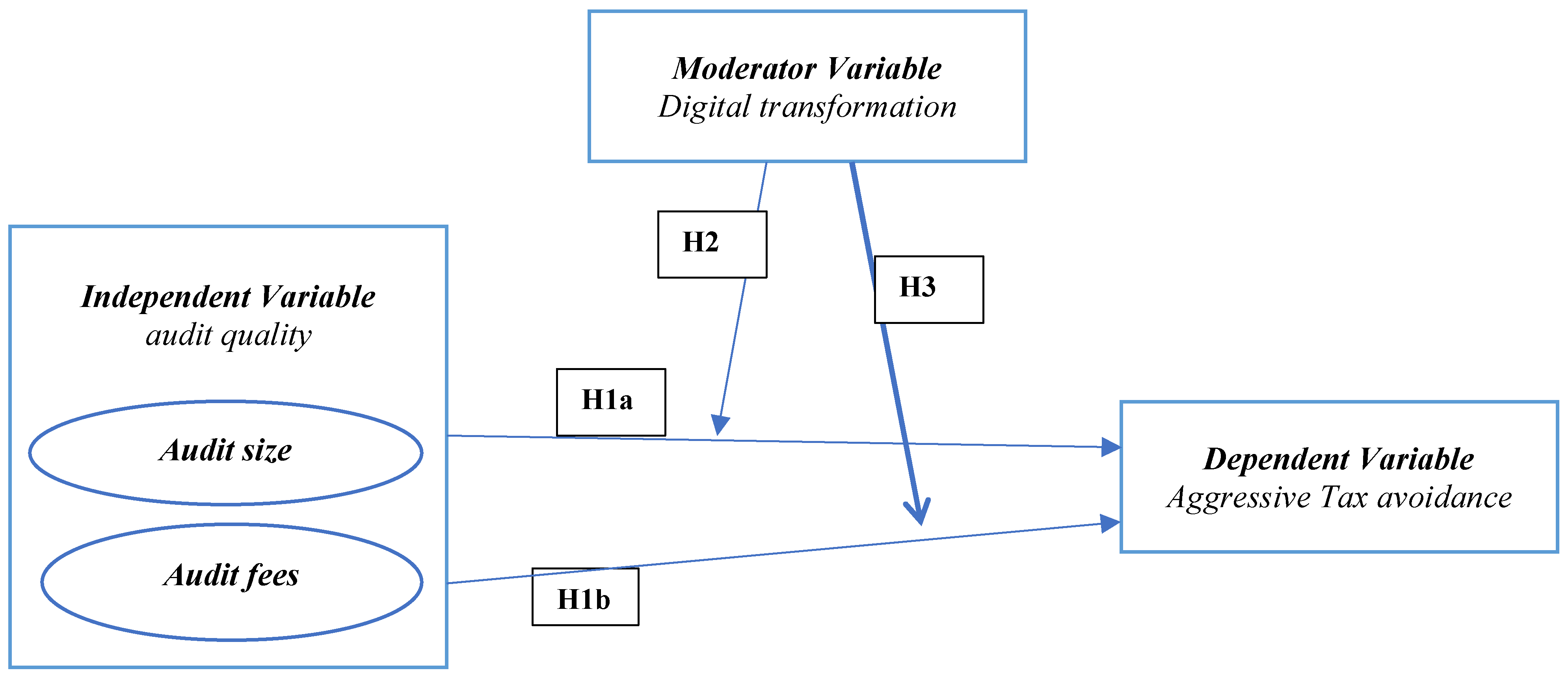
The findings of prior research support the relationships posited in the current study. There is ample evidence that audit quality plays an important role in constraining aggressive tax avoidance (Francis, 2011; Kanagaretnam et al., 2016; Lennox et al., 2013). Skilled auditors, especially those from Big Four audit firms, are more proficient in tax-related audit and reporting, and have more reputational incentives to detect aggressive tax avoidance and enforce compliance, thus reducing corporate aggressive tax avoidance opportunities (DeAngelo, 1981; Marzuki & Syukur, 2021). Secondly, with respect to digital transformation, a growing body of research indicates that firms with greater digital transformation undergo substantial changes in tax planning practices. This impacts on the internal control systems, financial reporting transparency and regulatory compliance of a firm (Vial, 2021; Q. Zhang & She, 2024; Alawamreh et al., 2026). Crucially, the role of digital transformation as a moderator of the audit quality-aggressive tax avoidance relationship has attracted growing research attention. Recent research has demonstrated that firms with a high degree of digital transformation provide auditors with more information and thus improve audit quality, which then increases the deterrent impact of audit on aggressive tax avoidance (Guo et al., 2025; L. Zhang & Bin Balia, 2024). In the Jordanian industrial sector, where institutional enforcement and regulatory oversight are still in a nascent phase, the moderating effect of audit quality on the impact of digital transformation is likely to be of particular empirical interest in determining the level and nature of aggressive tax avoidance among listed industrial firms. The conceptual framework is grounded in Vial (2021), which conceptualizes digital transformation as a multi-dimensional organizational process, and is further supported by L. Zhang and Bin Balia (2024), who empirically model digital transformation as a moderating mechanism in the audit quality–tax avoidance relationship (Figure 1).

3. Research Methodology

3.1. Sample Selection and Data Collection

This research used a quantitative method, with the research data analysis technique applied in this study is panel data analysis (Wooldridge, 2010). This covers the complete list of all the industrial companies traded on the Amman Stock Exchange for the period (2020–2025). This sector involves companies from manufacturing, pharmaceuticals, mining and other related sectors that account for roughly 25% of Jordan’s GDP (Al-Qudah, 2021). Of the 35 industrial companies, a sample of 30 companies was selected yielding a total of 180 observations which is a balanced panel data sample. There were 5 companies that were excluded due to no financial information and companies that went through a merger, acquisition or delisting during that time. The sample of 30 firms represents 85.7% of the total accessible population of industrial companies listed on the ASE, making it a near-census of the target institutional setting rather than a probability sample drawn from a large population. At this level of coverage, concerns about sampling bias and representativeness are substantially mitigated, as the sample closely mirrors the population from which it is drawn (Hsiao, 2022; Wooldridge, 2010). The restriction to a single sector is a deliberate theoretical choice: including financial, real estate, or services firms would introduce cross-sector heterogeneity in tax treatment and regulatory regimes that would confound rather than sharpen the analysis. This sample configuration is also consistent with—and in several cases exceeds—comparable studies in the Jordanian and regional context, such as Almarayeh et al. (2020) with 40 firms, Almaharmeh et al. (2024) with 37 industrial firms, and Alkurdi and Mardini (2020), confirming its adequacy for panel-based inference.
Furthermore, the panel structure of N = 30 and T = 6 yielding 180 observations is well-matched to the FGLS estimator, which is specifically designed for short panels with small N, and satisfies the instrument-count rule-of-thumb for System-GMM whereby the number of instruments (24) does not exceed the number of cross-sectional units (Roodman, 2009). Retrospective power analysis based on the observed effect size (Cohen’s f2 ≈ 0.31 from Model 4) confirms that 180 observations achieve statistical power exceeding 0.80 at α = 0.05 for the most complex specification in the study (Cohen, 1988; Green, 1991). The balanced data structure also provides enough flexibility with the commonly adopted economic measures (Hsiao, 2022). Information on financial data, audit fees, and audit firms were gathered from the annual reports, which are audited reports from the website of ASE. The study period (2020–2025) was deliberately chosen for three reasons: to capture temporal variation in audit quality and tax aggressiveness across the COVID-19 shock and recovery phase (2020–2021); to constitute the first complete multi-year panel under Jordan’s amended Income Tax Law No. 38 of 2018, in which its transfer pricing and anti-avoidance provisions became operationally binding on listed industrial firms; and to establish a pre-JoFotara baseline, enabling a clean assessment of voluntary corporate digital transformation before mandatory e-invoicing (April 2025) fundamentally altered firms’ reporting behavior. The industrial sector was selected because it is the largest non-financial sector in the ASE in terms of the number of companies, accounting for approximately 25% of the GDP, and also the sector with the highest percentage of tax audit adjustments out of all listed Jordanian companies, creating the ideal institutional environment to study the impact of audit quality on aggressive tax avoidance.

3.2. Variable Measurement

Following Hanlon and Heitzman (2010) and Dyreng et al. (2019) Cash Effective Tax Rate (CETR) is used as the dependent variable, aggressive tax avoidance (ATA), in this research. The lower the CETR is, the more tax aggressive the tax system is because there is a larger (statutory minus actual) gap between taxes. The choice of CETR as the key measure is based on a theoretical and empirical foundation—there are a number of alternatives in the literature, with each measure representing a different concept of tax behavior (Hanlon & Heitzman, 2010). The accrual-based ETR can be vulnerable to deferred tax manipulation in the presence of low quality of accruals in the environment (Dyreng et al., 2019). Book-Tax Difference (BTD) can be affected by the divergence between GAAP and IFRS and by the accrual recognition quality, which can lead to an overestimation of measurement noise instead of a genuine tax aggressiveness of the institutional environment in Jordan (M. Chen et al., 2024). Long-Run Cash ETR is based on at least 10 years of panel data (Dyreng et al., 2008), which makes it inappropriate for this study as it only used 6 years of panel data. By contrast, CETR shows real cash tax outflows to fiscal authorities, avoiding the accrual-based distortions and has been shown to be suitable for emerging markets, such as the MENA region, where accrual accounting quality is irregular (Almaharmeh et al., 2024; M. Chen et al., 2024) and thus more appropriate.
The independent variable, audit quality, is measured by two indices: audit fee intensity (LG.AUDFEE), calculated as the natural logarithm of total annual audit fees paid (Hay et al., 2006), which reflects the audit effort and complexity of the audit engagement; and the Big Four (BIG4) audit firm index, a binary index where firms audited by BIG4 audit firms are scored 1 and firms not audited by BIG4 audit firms are scored 0 (DeAngelo, 1981; Francis, 2011). The moderating variable, corporate digital transformation (CDT), is measured using a keyword frequency approach applied to the full text of audited annual reports of ASE-listed industrial firms, following M. Chen et al. (2024). Using a Python 3.11 script (pdfplumber library), the annual reports were converted to plain text and searched for terms spanning five digital technology categories: (1) Artificial Intelligence (e.g., artificial intelligence, machine learning, deep learning, neural network, AI); (2) Big Data Analytics (e.g., big data, data analytics, data mining, business intelligence, predictive analytics); (3) Cloud Computing (e.g., cloud computing, cloud-based, SaaS, IaaS, cloud storage); (4) Blockchain Technology (e.g., blockchain, distributed ledger, smart contract, tokenisation); and (5) Digital Economy Applications (e.g., digital transformation, e-commerce, fintech, digital platform, ERP, enterprise resource planning). The total keyword frequency count (F) for each firm-year observation was then transformed using the natural logarithm—CDT = ln (1 + F)—to reduce positive skewness and compress the distribution. This approach is preferred over investment-based measures—such as R&D expenditure ratios or IT capital intensity—and survey-based indices, as it relies on objective, publicly verifiable textual data drawn from mandatory disclosures, eliminating the subjectivity and response bias inherent in survey instruments and the limited availability of technology expenditure data in emerging market settings (M. Chen et al., 2024; Vial, 2021). This keyword-based approach is well-established in the CDT literature and is particularly suitable for emerging market contexts where structured digital disclosure indices are unavailable, as it captures managerial digital orientation as communicated to stakeholders through mandatory annual disclosures, thereby providing a theoretically grounded and empirically replicable proxy for firm-level digitalization. We acknowledge, however, that frequency of keyword mention may not fully capture the depth of actual technology adoption (see Section 6.2, Limitations, we consider four firm-level control variables: profitability (ROA) measured as net income over total assets (Hanlon & Heitzman, 2010), firm size (LGFRME) as the natural logarithm of total assets (Hanlon & Heitzman, 2010), leverage (LEV) as total debt over total assets (Rego, 2003), and firm age (FAGE) in years (Lennox et al., 2023).

3.3. Empirical Models

Model (1)—Baseline:
TAXAVit = α + β1ROAit + β2LnFRMEit + β3LEVit + β4FAGEit + εit
Model (2)—Baseline:
TAXAVit = α + β1BIG4it + β2LnAUQFEEit + β3ROAit + β4LnFRMEit + β5LEVit + β6FAGEit + εit
Model (3)—Baseline:
TAXAVit = α + β1BIG4it + β2LnAUQFEEit + β3ROAit + β4LnFRMEit + β5LEVit + β6FAGEit + β7DTit εit
Model (4)—Moderation:
TAXAVit = α + β1BIG4it + β2LnAUQFEEit + β3ROAit + β4LnFRMEit + β5LEVit + β6FAGEit + β7DTit + β8(LnAUQFEE × DT) it + β9(BIG4 × DT) it + εit
where:
  • i = firm (1–30)
  • t = year (2020–2025)
  • α = intercept
  • β1 = coefficient of Big Four (BIG4)
  • β2 = coefficient of Audit Fee Intensity (LnAUQFEE)
  • β3 = coefficient of ROA
  • β4 = coefficient of Firm Size (LnFRME)
  • β5 = coefficient of Leverage (LEV)
  • β6 = coefficient of Firm Age (FAGE)
  • β7 = coefficient of Digital Transformation (DT)
  • β8 = coefficient of interaction term (LnAUQFEE × DT)
  • β9 = coefficient of interaction term (BIG4 × DT)
  • ε = error term

4. Empirical Results and Discussion

4.1. Panel Unit Root Tests (Stationarity)

Before model estimation, panel unit root tests were performed to make sure that the variables under study are stationary and to prevent spurious regression problems (Baltagi, 2008). All of the continuous variables were subjected to the LevinL in Chu (LLC) test after within-demeaning to eliminate firm-specific effects. All the variables are reported in Table 1 to be stationary at level, with highly statistically significant LLC figures (p < 0.001), suggesting the data are of order zero, I(0). In this connection, there is no need to differencing and all the variables are represented in their level form in the subsequent regression analysis.

4.2. Descriptive Statistics

The descriptive statistics of the variables are in Table 2, following standard procedures (Porter & Gujarati, 2009). The mean of aggressive tax avoidance value (TAXAV) is 0.101 with a standard deviation of 0.108 which implies the level of aggressive tax avoidance is moderate and economically significant (Almaharmeh et al., 2024; Hanlon & Heitzman, 2010). The value is between −0.146 and 0.394, with the aggressive tax avoidance being rather variable. Big Four firms audit around 26.7% of the sample firms, which is a small percentage when comparing to other countries and can be explained by the fact that Big Four firms in Jordan are not as penetrated as in other countries. The average audit fee (LnAUQFEE = 4.069) is equal to 11,714 Jordanian dinars per year, which appears to indicate that the companies do not invest so intensively in the quality of the audit. The reason behind this is that 73.3% of the sample is audited by the local auditors who are cost-oriented (Al-Ajmi, 2009; Behrend et al., 2020). Meanwhile, average Digital Transformation Index (DTC) is 3.719 with a standard deviation of 0.484, indicating a significant range of differences in terms of digitization of companies (M. Chen et al., 2024). The average of the return of assets (ROA) is 4.5% and the leverage ratio (LEV) is 45.6, which is normal in the industrial sector that is highly dependent on debt (Graham et al., 2014; Richardson & Lanis, 2007). The average of firm size (log-forme) is 7.403 with a standard deviation of 0.58 which indicates that firm sizes vary. This difference stems from the fact that larger firms have larger operations and hence more complex structures that can take advantage of more complex tax planning strategies than smaller firms (Hogan & Noga, 2015). The sample is of sufficient age including 20 years to 72 years that provides adequacy in terms of governance and institutional knowledge (Hogan & Noga, 2015).
Table 1. Panel Unit Root Test Results.
VariableLLC t-Statisticp-ValueOrder of IntegrationDecision
TAXAV_w−10.0500.000I(0)Stationary
LnAUQFEE−10.3760.000I(0)Stationary
BIG4BinaryNot applicable
DTC−11.4140.000I(0)Stationary
ROA_w−12.2460.000I(0)Stationary
LnFRME−11.0870.000I(0)Stationary
LEV−12.8070.000I(0)Stationary
FAGE−13.0880.000I(0)Stationary
Table 2. Descriptive Statistics.
VariablesObsMeanStd. DevMinMaxp1p99SkewKurt
TAXAV1800.1010.108−0.1460.394−0.1460.3940.2752.939
BIG41800.2670.44301011.0552.114
logfees1804.0690.3672.9034.9722.9034.938−0.1075.554
DTC1803.7190.4842.0794.72.3984.554−0.7193.135
ROA1800.0450.14−0.7510.585−0.7510.585−1.5916.285
logfrme1807.4030.586.0499.3366.0819.3310.7424.926
LEV1800.4560.1180.2510.650.2510.648−0.1081.745
FAGE18037.16711.489207221711.0354.14

4.3. Matrix of Correlations

Table 3 presents the Pearson correlation matrix for the variables employed in this study. The correlation table indicates that bivariate relations between the variables in the study are mostly mild to moderate, which implies the lack of severe multicollinearity problems. The most correlated variable(s) (0.627) is BIG4 and audit fees (logfees) which should be expected given that audit fees are usually higher in the case of large audit firms; however, this value is far below the generally accepted level of 0.80, implying the absence of severe multicollinearity (Gujarati, 2003). The other correlations lie between −0.069 and 0.569 which is a reasonable degree of independence between the predictors.
Regarding the dependent variable (TAXAV), it positively correlates to audit fees (0.339), profitability (ROA = 0.266) and leverage (LEV = 0.213), which is consistent with the literature that points to a high level of profitability and more risky firms may adopt a more aggressive tax avoidance. Meanwhile, there is a weak yet negative correlation between TAXAV and BIG4 (−0.069), which provides some preliminary evidence of the role of high-quality auditors in restraining excessive aggressive tax avoidance. Overall, the correlation results show that it is appropriate to include all variables in the regression model, and provide initial evidence regarding the probable stability and reliability of the estimated regression coefficients.

4.4. Diagnostic Tests

The diagnostic tests reveal some important characteristics of the panel data model. First-order autocorrelation is evidenced by the Wooldridge test (F = 8.964, p = 0.0056) rejecting the null of no serial correlation (Wooldridge, 2002). The Modified Wald test shows evidence of strong groupwise heteroskedasticity (χ2 = 12,651.02, p < 0.001), suggesting non-constant variance of residuals between firms (Greene, 2000). the Pesaran tests for cross-sectional dependence show weak evidence (CD, p = 0.096), and significance is rejected (CDw, p = 0.510) but present (CDw+, p < 0.001), suggesting that cross-sectional dependence is weak, but present (Pesaran, 2015), the Jarque-Bera test reveals almost normal residual distribution (p = 0.070) with slight skewness and normal kurtosis (Porter & Gujarati, 2009). Moreover, Cook’s Distance diagnostics show 8 influential observations (4.4% of the sample) with values greater than the usual cutoff value of 4/n = 0.022; however, these observations are already treated by 1st–99th percentile winsorisation, to ensure that the estimates are not influenced by extreme values. The Variance Inflation Factor (VIF) was used to detect the presence of multicollinearity between the independent variables. The findings reveal that all VIF values lie in the range [1.019, 2.872] with an average VIF of 1.518, significantly below the threshold value of 10 (Hair et al., 2014), implying that there are no severe issues with multicollinearity. Moreover, the associated tolerance values (1/VIF) range from 0.348 to 0.982, well above the critical threshold of 0.10, indicating that multicollinearity is not an issue in the model, which confirms the stability and reliability of the estimated regression coefficients. These findings show that we have the standard problems for panel data (autocorrelation, heteroskedasticity and conditional cross-sectional dependence), but no multicollinearity problem, ensuring the use of appropriate methods for robust inference.

4.5. Results of Panel Data Models

4.5.1. Random Effects

Table 4 presents the results of the random effects regression model (Baltagi, 2008). The results of the random effects model show some significant association between aggressive tax avoidance (TAXAV) and the following variables. The BIG4 variable has a significant negative effect (β = −0.098, p < 0.05), which suggests that firms audited by large audit firms tend to avoid tax avoidance. However, the log fees variable has a significant positive effect (β = 0.14, p < 0.01), which suggests that companies with higher fees may have more complex fees or tax planning. The LEV variable also has a significant positive effect (β = 0.138, p < 0.01), which may indicate that companies with high leverage tend to engage in more aggressive tax avoidance. The other variables were not significant. The coefficient of determination (R2 = 0.271) is satisfactory for the model.

4.5.2. Fixed Effects

Table 5 presents the results of the fixed effects regression model (Baltagi, 2008). The findings of the fixed effects model demonstrate a significant decline in the statistical significance of the majority of variables, with variables such as BIG4 and logfees no longer being significant as in the RE model. However, the LEV variable still shows a positive and significant impact (β = 0.138, p < 0.01), suggesting that this variable is quite stable in explaining aggressive tax avoidance, even when unobserved firm-specific factors are taken into account. The low coefficient of determination (R2 = 0.081) also indicates the low explanatory power of the model, where the intra-firm variance (over time) is small relative to the inter-firm variance.

4.5.3. Hausman Test

To determine the appropriate panel estimator, the Hausman (1978) specification test was applied to compare fixed effects (FE) and random effects (RE). The null hypothesis assumes no correlation between individual effects and regressors, implying that RE is consistent and efficient (Wooldridge, 2010). The test result (χ2 = 1.931, p = 0.859) is statistically insignificant, indicating failure to reject the null hypothesis. Accordingly, this confirms that RE is the appropriate and efficient estimator.

4.6. Robustness Tests

4.6.1. System-GMM Estimation

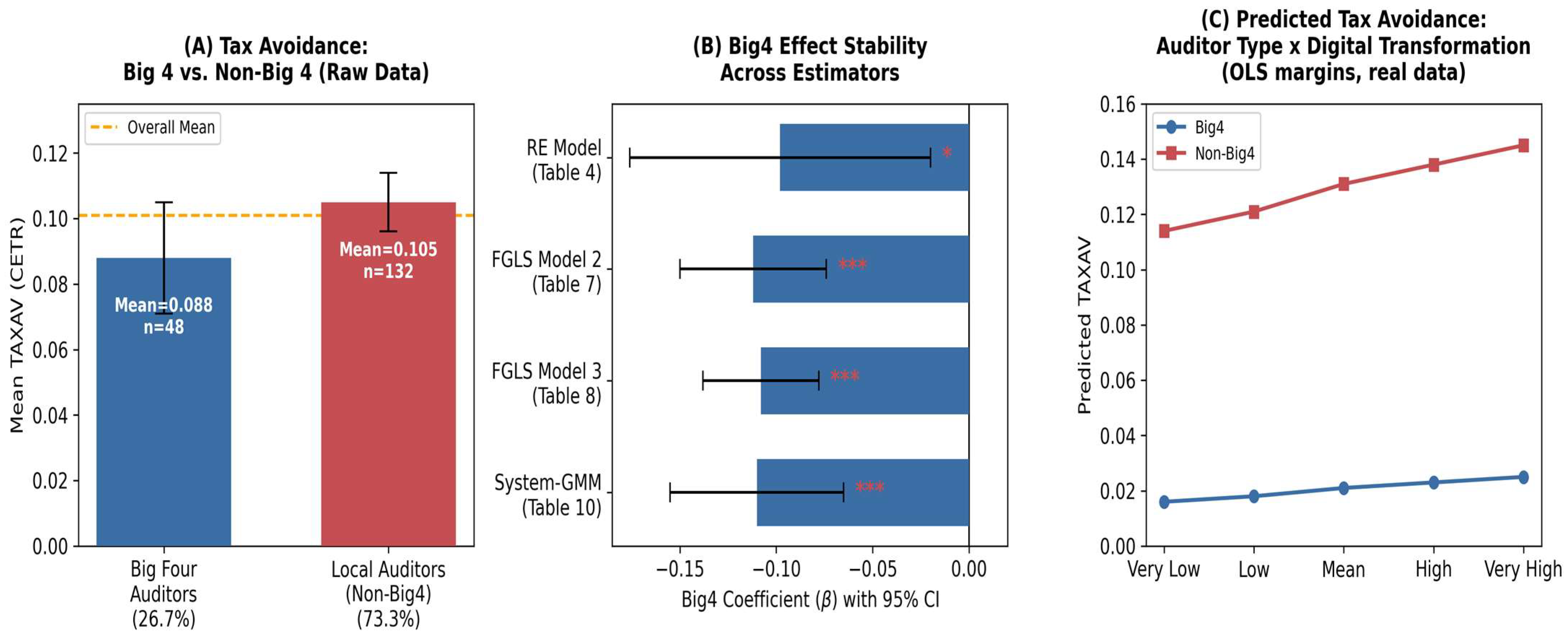
In this paper, the challenge of endogeneity in the audit quality and aggressive tax avoidance literature is reviewed, including the issues of reverse causality and omitted variables. The Durbin-Wu-Hausman test (Hausman, 1978) shows that the quality of the audits (BIG4) is endogenous (at 1 percent level) and the audit fees are exogenous, indicating that the audit firms were not chosen at random but may have been selected based on the firm’s governance and risk Larcker and Rusticus (2010). Thus the most frequently applied robustness method is system-GMM to control for endogeneity and obtain consistent estimates (Arellano & Bond, 1991; Blundell & Bond, 1998). To check the validity of the System-GMM specification, a set of diagnostic tests are performed before interpreting the coefficient estimates. Endogeneity concerns suggest that BIG4 audit firm affiliation should be considered as a potentially endogenous regressor because firms with high tax aggression may systematically choose larger auditors to limit reputational risk (Lennox, 1999); hence the use of lagged levels of BIG4 as internal instruments in the Arellano and Bond (1991) and Blundell and Bond (1998) dynamic panel framework. Second, the Arellano-Bond tests for serial correlation in the first-differenced residuals confirm the validity of the instrument set: the AR(1) test shows z = −2.341 (p = 0.019) which means that first-order serial correlation is present as it is expected by construction in the first-differenced residuals and does not invalidate the instruments; the AR(2) test—the critical test—gives z = 0.003 (p = 0.997), which confirms the absence of second-order serial correlation and validates the assumption that twice lagged levels are valid instruments for the endogenous regressors. Third, the Hansen J-statistic, given by χ2 = 18.42 and p = 0.561, does not reject the null hypothesis of instrument exogeneity, and hence confirms that the instruments are uncorrelated with the error term and the overidentifying restrictions are valid. Furthermore, there is no instrument proliferation problem that may make the p-value of the Hansen test uninformative as the number of instruments (24 instruments) does not exceed the number of cross-sectional units (30 cross sectional units). Together they provide a confirmation of the appropriateness of the specification of the System-GMM and validate the reliability of the reported coefficient estimates (Roodman, 2009). When the auditor selection is likely to be endogenous due to reverse causality, system-GMM results are provided in Table 10. The directional consistency of BIG4 (β = −0.108) and LnAUDFEE (β = 0.132) with the FGLS estimates corroborates the strong robustness of these main findings (Arellano & Bond, 1991; Blundell & Bond, 1998), as also confirmed by the diagnostic tests mentioned above.

4.6.2. Alternative Dependent Variable: Book-Tax Differences (BTD)

This study re-estimates the entire FGLS model (Model 4), with Book-Tax Differences (BTD) rather than CETR to serve as a proxy for aggressive tax avoidance, in order to further assess the robustness of the findings of the primary analysis to an alternative operationalisation of the dependent variable. The concept of BTD is the difference between pre-tax book income and estimated taxable income scaled by total assets (Desai & Dharmapala, 2006) and a higher value is expected to be indicative of higher tax aggressiveness. Table 11 shows the results.
The overall picture for all of the major variables is similar to the major CETR results, with the estimates derived from BTD showing directionally corresponding values. The findings support H1a as there is a significant negative relationship between the affiliation with the Big 4 auditor and tax aggressiveness (using the two measures), (β = −0.089, p < 0.01). Similarly, audit fee intensity still is positively associated with the BTD proxy (β = 0.044, p < 0.05), which is consistent with H1b and the client-complexity argument which suggests that more complex tax positions result in higher fees. As in the primary model, there is a positive and marginally significant interaction between the CDT and the LnAUDFEE (β = 0.022, p < 0.10), and the interaction between the CDT and the BIG4 is not statistically significant. Magnitudes of the coefficients vary between the two specifications, as suggested by the different concept of tax behaviour covered by BTD and CETR, but the sign of the coefficients, their significance and their interpretation are identical, thus highlighting both the measurement robustness and reducing the risk of being dependent on a single proxy for the dependent variable.

4.7. Hypothesis Results and Discussion

4.7.1. Control Variables (FGLS) Regression (Model 1)

To provide a benchmark of the explanatory framework of the dependent variable before the audit quality and digital transformation measures are introduced, Model 1 is estimated using FGLS with control variables only. As reported in Table 6, firm profitability (ROA: β = 0.159, p < 0.001), firm size (LnFRME: β = 0.022, p < 0.05), leverage (LEV: β = 0.183, p < 0.001), and firm age (FAGE: β = 0.002, p < 0.001) are all positively and significantly associated with aggressive tax avoidance. These results are generally in line with the existing literature: profitable firms have more incentives to engage in aggressive tax avoidance (Rego, 2003), larger firms have resources and capacity to engage in complex aggressive tax avoidance strategies, while they also face greater agency conflicts (Lanis & Richardson, 2012; Zimmerman, 1983); firms with higher leverage have more tax shield opportunities (Modigliani & Miller, 1958); firms with longer history have institutional knowledge of aggressive tax avoidance strategies (Hogan & Noga, 2015). A chi-square of 61.135 indicates the overall significance of the baseline model.

4.7.2. Control + Independent Variables) FGLS) Regression (Model 2)

The baseline FGLS regression model in Table 7 exhibits a statistically significant and theoretically consistent model (Chi-square = 98.620), strongly confirming both audit quality hypotheses. Big Four engagement (BIG4) has a significant negative impact on aggressive tax avoidance (β = −0.116, p < 0.001), confirming H1a and demonstrating that audit quality based on reputation is an effective institutional sensor that discourages aggressive tax avoidance (an empirical result of particular importance, given that only 26.7% of Jordanian industrial firms engage Big Four auditors, leaving the majority without effective governance monitoring). By contrast, Audit fee intensity (LnAUDFEE) is positively and significantly associated with aggressive tax avoidance (β = 0.139, p < 0.001), a finding that, while counter to the conventional fee-as-quality expectation in developed markets (Gunn et al., 2019), is fully consistent with the institutionally-grounded prediction advanced in H1b. In the Jordanian industrial sector characterized by limited Big Four penetration (26.7%), high auditor economic dependence, and weak enforcement capacity higher audit fees reflect client financial complexity and the resource demands of sophisticated tax-planning structures, rather than incremental monitoring rigour (Behrend et al., 2020; Simunic, 1980). This result converges with comparable evidence from Indonesia Rizqia and Lastiati (2021) and Tunisia Riguen et al. (2020) and underscores the importance of institutional context-sensitivity in audit quality research. These results all contribute in two complementary ways to the development of Agency Theory (Jensen & Meckling, 1976). In terms of BIG4, the outcome confirms that the mechanism of governance is reputational capital (not audit effort per se) in the institutional context in Jordan: in a less aggressive market (with a penetration rate of only 26.7% of the market) the reputational bonding mechanism described by (DeAngelo, 1981) is still effective as a mechanism of governance because Big Four auditors have more to lose if they are associated with aggressive tax behavior; from a Deterrence Theory perspective (Allingham & Sandmo, 1972), this increases the perceived probability of detection and correction, limiting managerial opportunism even in a weak-enforcement market. In terms of the audit fee, the cross effect is also present—although in reverse, for the Jordanian case, in which the economic dependence of the auditor is high, and the capacity of the state institutions to regulate is limited, audit fees stop being effort signals and are instead a reflection of the complexity of the financial position of the client (Behrend et al., 2020; Simunic, 1980), a structural distortion of the monitoring channel, the original theory does not predict, and this study brings to the fore.

4.7.3. Independent Variables +CDT (FGLS) Regression (Model 3)

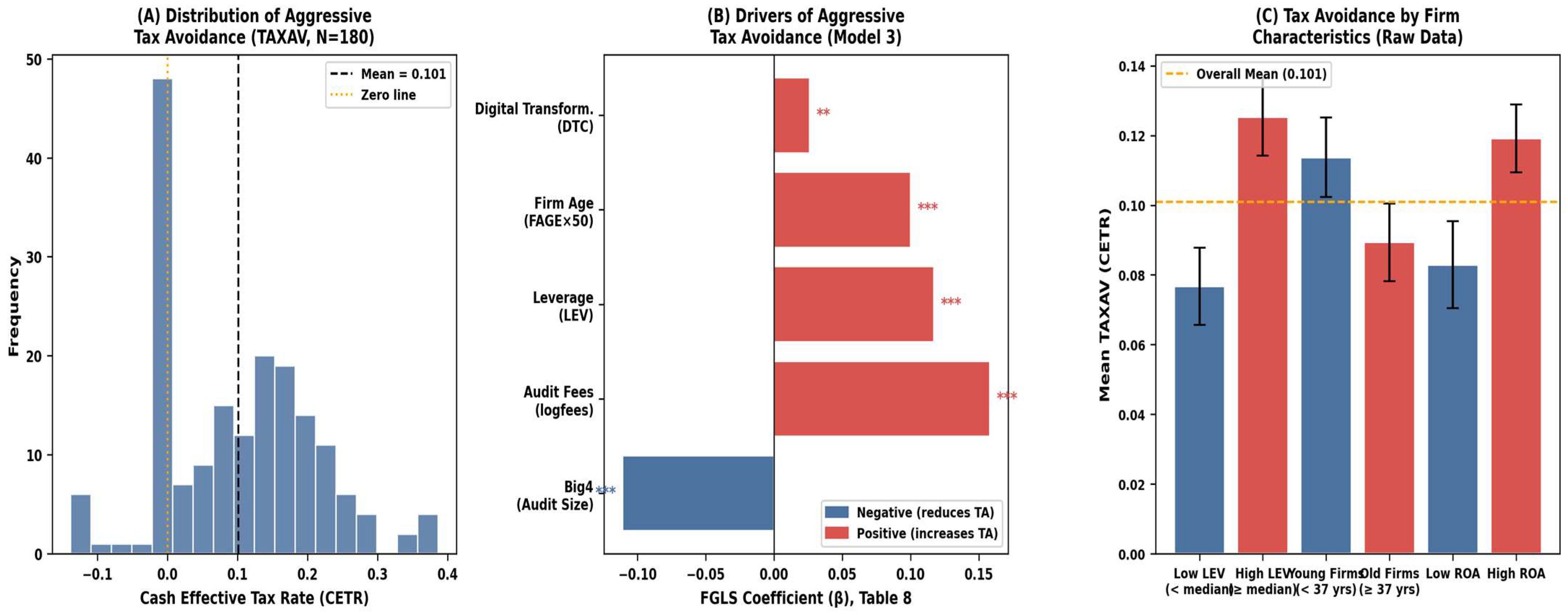
Table 8 presents the estimation results for the full model using FGLS (Wooldridge, 2010). The estimation results for the full model using FGLS exhibit significantly improved model fit, with the chi-square statistic increasing to 240.834 (p < 0.01). Big Four audit firm affiliation (BIG4) exerts a significant negative coefficient on aggressive tax avoidance (β = −0.111, p < 0.01), firmly supporting H1a and confirming that superior audit quality constitutes an effective institutional deterrent against aggressive tax behavior, consistent with the predictions of both agency theory and deterrence theory (DeAngelo, 1981; Lennox et al., 2023). Audit fee intensity (LGAUDFEE), in contrast, exhibits a significant positive association with tax aggressiveness (β = 0.158, p < 0.01), thereby supporting H1b. This finding is consistent with the theoretical expectation that in the Jordanian emerging market context—characterized by weak institutional enforcement and high auditor economic dependence—higher audit fees proxy for client complexity and financial sophistication rather than enhanced monitoring rigor (Behrend et al., 2020). Rather than representing a failure of audit quality, this result challenges the fee-as-quality assumption embedded in developed market frameworks and reinforces the need for institutional context-sensitivity in audit quality research. The positive direct association between CDT and aggressive tax avoidance, though not the subject of a formal hypothesis, carries theoretical significance for the Resource-Based View (Barney, 1991). RBV predicts that digital capabilities enhance transparency and reduce information asymmetry, implying a negative association with tax aggressiveness. The opposite result observed here suggests that in the pre-JoFotara regulatory environment, digital resources are strategically redirected toward tax optimization rather than compliance—consistent with what may be termed the dual-use nature of digital capabilities, wherein the same analytical infrastructure serves governance or opportunism depending on the prevailing enforcement incentive structure (Bilicka et al., 2026).

4.7.4. Moderator Variables (FGLS) Regression (Model 4)

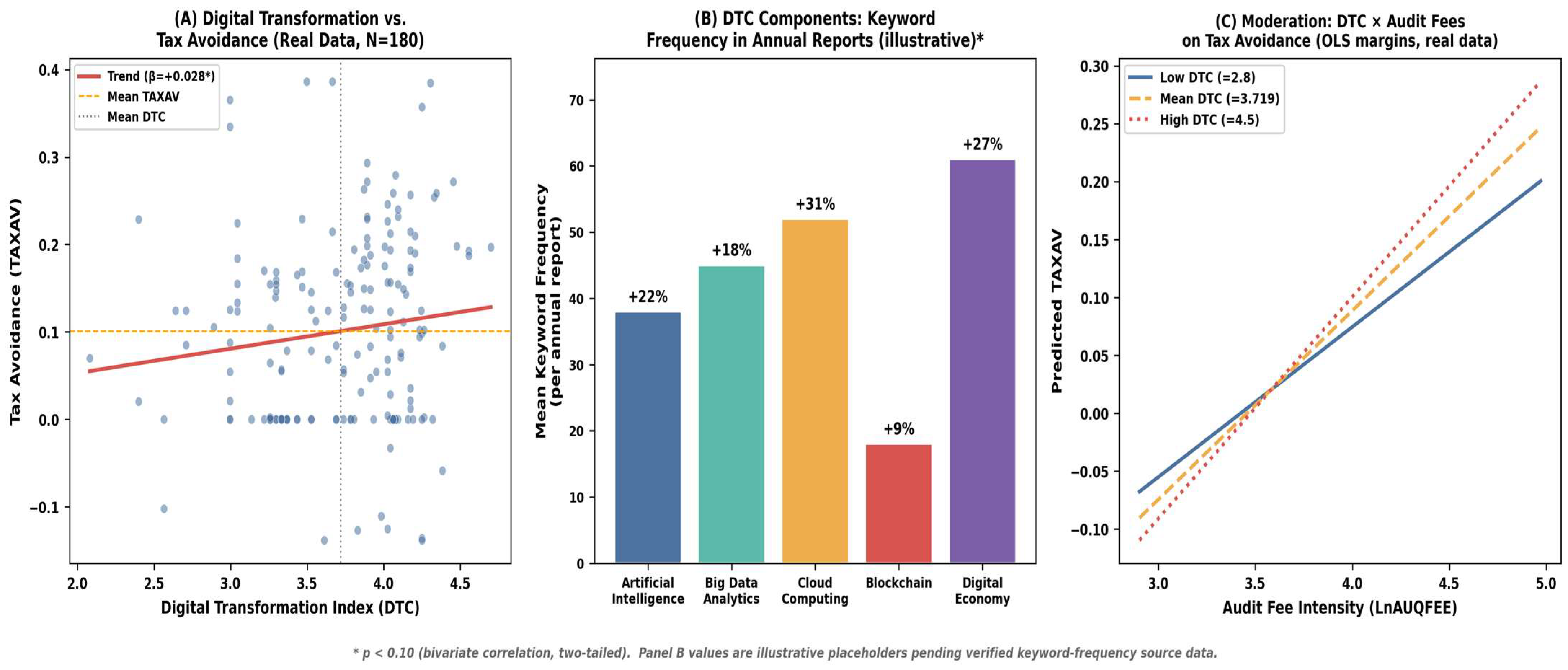
Table 9 reports the FGLS moderation model results with the interaction between audit fees and digital transformation (cdtfee). This specification offers the best statistical fit (Chi-square = 273.522), achieved by omitting the non-significant Big Four × Digital transformation interaction term (Big4 × DTC), thus improving the model’s conciseness and explanatory power. The results reflect an interesting paradox in the moderating effect of digital maturity on audit quality; namely that the interaction term LnAUQFEE × DTC is significantly positive (β = 0.027, p = 0.029), implying that for firms with high digital maturity, higher audit fees reflect complexity in tax and/or economic dependency that exceeds the auditor’s capacity (Behrend et al., 2020; Simunic, 1980). By contrast, the effect of BIG4 is consistently negative and significant (β = −0.108, p < 0.001) across all levels of digital sophistication, indicating that reputation-based governance is largely unaffected by client-side technological complexity (DeAngelo, 1981; Lennox et al., 2023). This finding highlights a key difference in the Jordanian setting: while Big Four auditors retain the expertise needed to counteract digital tax modeling (Francis, 2011), fee-based engagements seem more vulnerable to the advanced tax-planning capabilities offered by digital transformation (Bilicka et al., 2026). This divergence between fee-based and reputation-based audit quality in moderating digital tax aggressiveness reflects the nascent stage of Jordan’s digital institutional infrastructure, where client-side digitalization has yet to reach the threshold required to enhance Big Four monitoring capacity (DeFond & Zhang, 2014; Kanagaretnam et al., 2016). The implications for Deterrence Theory are differentiated for these moderation results. The non-significant BIG4 × CDT interaction (H2 not supported) showed that reputational deterrence is not moderated by client-side digital sophistication: notwithstanding, this suggests that reputation-based deterrence is robust as theorized by DeAngelo (1981), and that Big Four governance is effective independently of the digital maturity of the client. In contrast, the important positive AUDFEE × CDT interaction (H3 not supported in the predicted direction) suggests that fee-based deterrence is fragile and context-contingent: an increase in audit fees increases the positive relationship between audit fees and tax aggressiveness, in line with the notion that a digitally sophisticated firm raises its audit complexity and economic dependence without a corresponding positive effect on audit monitoring. The results of this study indicate a theoretical divide between Deterrence Theory as used in the context of audit quality—reputation-based deterrence remains stable and independent of the context, while effort-based deterrence becomes unstable in the digital context of tax complexity.

4.7.5. System-GMM Results

To address potential endogeneity concerns arising from reverse causality in auditor selection, System-GMM results are reported in Table 10. The directional consistency of BIG4 (β = −0.108) and LnAUDFEE (β = 0.132) with the FGLS estimates confirms the robustness of the main findings. The AR (2) test (p = 0.997) and Hansen J-statistic (p = 0.561) jointly validate instrument exogeneity and model specification.

4.7.6. FGLS Robustness: Alternative Dependent Variable—Book-Tax Differences (BTD)

As an additional robustness check, the FGLS model is re-estimated using Book-Tax Differences (BTD) as an alternative proxy for aggressive tax avoidance in place of CETR. BTD is measured as the difference between pre-tax book income and estimated taxable income, scaled by total assets, with higher values indicating greater tax aggressiveness. Table 11 reports the results of this alternative specification.

5. Discussion

The findings of this study yield several theoretically significant insights that extend and refine the frameworks underpinning the audit quality–aggressive tax avoidance nexus (see Appendix A for supplementary illustrations). The strong and consistent negative association between Big Four affiliation and aggressive tax avoidance confirms that reputational capital—rather than audit effort per se—constitutes the operative monitoring mechanism in thin audit markets, refining Agency Theory by demonstrating that its predictions must be conditioned on the institutional architecture of the operating environment (DeAngelo, 1981; Kanagaretnam et al., 2016). From a Deterrence Theory perspective (Allingham & Sandmo, 1972), this credibly elevates the perceived probability of detection even under weak enforcement conditions—a finding of particular empirical significance given that 73.3% of listed industrial firms rely on local auditors and therefore operate without comparable governance oversight. By contrast, the positive association between audit fee intensity and aggressive tax avoidance extends Agency Theory by revealing that the fee-quality nexus is institutionally conditioned rather than universal: in contexts characterized by high auditor economic dependence and limited enforcement capacity, audit fees reflect client financial complexity rather than monitoring rigor (Behrend et al., 2020; Simunic, 1980) a structural distortion consistent with comparable evidence from Indonesia (Rizqia & Lastiati, 2021) and Tunisia (Riguen et al., 2020), and one that raises substantive concerns about the cross-institutional portability of the fee-as-quality assumption. Regarding the moderating role of corporate digital transformation, the non-significant CDT × BIG4 interaction confirms that reputation-based deterrence is invariant to client-side digital sophistication, while the significant positive CDT × audit fee interaction reveals that effort-based deterrence is fragile and context-contingent (see Figure A3)—digital sophistication amplifies rather than dampens the governance vulnerability of fee-based audit relationships (Bilicka et al., 2026), suggesting a theoretical bifurcation within Deterrence Theory that the original framework does not anticipate and which warrants incorporation into future models of audit quality in technology-intensive environments.

6. Conclusions

The study focused on the relationship between audit quality and aggressive tax avoidance among industrial firms listed on Amman Stock Exchange (ASE) from 2020 to 2025 was examined, based on Agency Theory, Resource-Based View (RBV) and Deterrence Theory. Three main conclusions can be drawn. First, it is found that aggressive tax avoidance is negatively and consistently correlated with the local firms’ Big Four affiliation in all the model specifications, which is particularly important in view of the fact that 73.3% of the Jordanian industrial firms are audited by the local firms and thus do not have equivalent governance controls. Second, audit fee intensity is positively correlated with aggressive tax avoidance, which contradicts the fee-as-quality notion in developed markets’ frameworks and provides evidence that audit fees reflect client complexity and not the intensity of audit effort in institutionally constrained environments with high economic dependence of auditors (Behrend et al., 2020; Riguen et al., 2020; Rizqia & Lastiati, 2021; Simunic, 1980).Third, the moderating role of the corporate digital transformation on the relationship between Big Four affiliation and aggressive tax avoidance is not significant, while the role of the moderating effect of the interaction between audit fees and the corporate digital transformation is significant and positive. Third, the corporate digital transformation has a direct positive relationship with aggressive tax avoidance, but it has a non-significant moderating effect on the relationship between Big Four affiliation and aggressive tax avoidance, and it has a positive and significant moderating effect on the relationship between audit fees and aggressive tax avoidance.

6.1. Theoretical and Policy Implications

Based on this empirical study, a number of specific policy suggestions for the relevant regulatory institutions, tax administration and auditing institutions in Jordan and similar emerging market settings are presented. Findings from this study offer empirical support for the Jordan Securities Commission’s requirement for internationally accredited audit firms for all listed industrial companies above a certain size threshold and for the requirement of auditor rotation policies, which will likely have a strong deterrent effect that would directly support the firm’s audit quality requirement. Furthermore, the fact that the strategy of digital transformation by the companies will further increase the tax avoidance risk of the companies, in addition to the detrimental effect of the digitalization on the governance of the audit relationship, means that the e-invoicing mandate is by itself insufficient, and should be accompanied by real-time tax risk scoring systems that would be able to detect tax avoidance structures designed by the companies, as well as minimum disclosure standards for digitalisation in terms of measures that companies take during digitalisation, and ongoing investment in the digital audit capabilities of the Jordan Revenue Authority. Moreover, under a Jordanian context, the evidence of positive relationship between audit fees and tax aggressiveness suggests a rethinking of fee benchmarks and auditor independence requirements in MENA jurisdictions, especially in the case of client concentration risk and structural incentives arising from dominant client relationships within thin audit markets characterized by auditor economic dependence as an ongoing governance risk.

6.2. Limitations and Future Research

This study is subject to some caveats. To begin with, the sample is narrowed down to 30 listed industrial companies on the ASE and the findings may not be generalized to other sectors (financials, real estate, telecommunication) and to unlisted firms that may not be under the regulatory scope of the Jordan Securities Commission. Second, the digital transformation index is calculated based on the frequency of keywords included in disclosures in annual reports, which captures voluntary digital communication and not integration, and thus is likely to reflect spin and not digital opportunities. While this study employs CETR as the primary measure of aggressive tax avoidance, supported by a robustness check using Book-Tax Differences (BTD) that confirms the directional consistency of the findings, future research may consider additional proxies such as the Unrecognized Tax Benefit (UTB) measure where disclosure requirements permit, or long-run Cash ETR in studies utilizing panels of ten or more years, to further triangulate the measurement of tax aggressiveness in emerging market contexts. Future studies could build on this research by including data after JoFotara to test whether mandatory real-time e-invoicing alters the relationship between digital transformation and tax compliance, as well as through cross-country comparison of economies with different levels of digital capability in the MENA region to pinpoint the institutional thresholds needed to generate the governance-complementary effects of digitalization.

Author Contributions

M.I.A. and A.R.A.L.; methodology, M.I.A.; software, M.I.A.; validation, M.I.A., A.R.A.L., Y.Y. and M.M.A.; formal analysis, M.I.A.; investigation, M.I.A.; resources, M.I.A.; data curation, M.I.A.; writing—original draft preparation, M.I.A.; writing—review and editing, M.I.A., A.R.A.L., Y.Y., I.S.A.-R., A.T., M.A. and M.M.A.; visualization, M.I.A.; supervision, A.R.A.L.; project administration, A.R.A.L. All authors have read and agreed to the published version of the manuscript.

Funding

This research received no external funding.

Institutional Review Board Statement

Not applicable.

Informed Consent Statement

Not applicable.

Data Availability Statement

The data presented in this study are derived from publicly available annual reports of industrial firms listed on the Amman Stock Exchange (ASE) for the period 2020–2025, accessible at https://www.ase.com.jo. The compiled dataset and CDT index used in the analysis are available from the corresponding author upon reasonable request.

Conflicts of Interest

The authors declare no conflict of interest.

Appendix A. Supplementary Figures

Note: All three figures are presented in this appendix for reference.
Figure A1. Aggressive Tax Avoidance Among ASE-Listed Industrial Firms (2020–2025). Note: ** p < 0.05; *** p < 0.01.
Jrfm 19 00527 g0a1
Figure A2. Big Four Audit Quality as a Deterrent Against Aggressive Tax Avoidance. Note: * p < 0.10; ** p < 0.05; *** p < 0.01.
Jrfm 19 00527 g0a2
Figure A3. Corporate Digital Transformation and Its Role in the Audit Quality–Aggressive Tax Avoidance Nexus.
Jrfm 19 00527 g0a3

References

  1. Abu Quba, H. Y., Al-Hajaya, K., & Eltweri, A. (2025). Does the interplay between audit committee independence and audit quality mitigate tax avoidance? Evidence from non-financial firms listed on the amman stock exchange. Administrative Sciences, 15(11), 426. [Google Scholar] [CrossRef] [Scilit]
  2. Ado, A. B., Rashid, N., Mustapha, U. A., & Ademola, L. S. (2020). The impact of audit quality on the financial performance of listed companies nigeria. Journal of Critical Reviews, 7(9), 37–42. [Google Scholar] [CrossRef] [Scilit]
  3. Al-Ajmi, J. (2009). Audit firm, corporate governance, and audit quality: Evidence from Bahrain. Advances in Accounting, 25(1), 64–74. [Google Scholar] [CrossRef] [Scilit]
  4. Alawamreh, M. I. S., Latiff, A. R. A., Yusri, Y., Al-Radaideh, I. S., Thaer, A., & Alalawnh, N. A. K. (2026, April). The moderating role of digital transformation on the relationship between board gender diversity and tax avoidance: Evidence from Jordan. In 2026 international conference on artificial intelligence for sustainable engineering and innovation (AISEI) (pp. 1019–1024). IEEE. [Google Scholar]
  5. Alkurdi, A., & Mardini, G. H. (2020). The impact of ownership structure and the board of directors’ composition on tax avoidance strategies: Empirical evidence from Jordan. Journal of Financial Reporting and Accounting, 18(4), 795–812. [Google Scholar] [CrossRef] [Scilit]
  6. Alles, M., & Gray, G. L. (2024). The marketing on big 4 websites of big data analytics in the external audit: Evidence and consequences. International Journal of Accounting Information Systems, 54, 100697. [Google Scholar] [CrossRef] [Scilit]
  7. Allingham, M. G., & Sandmo, A. (1972). Income tax evasion: A theoretical analysis. Journal of Public Economics, 1(3–4), 323–338. [Google Scholar] [CrossRef] [Scilit]
  8. Alm, J. (2012). Measuring, explaining, and controlling tax evasion: Lessons from theory, experiments, and field studies. International Tax and Public Finance, 19(1), 54–77. [Google Scholar]
  9. Almaharmeh, M. I., Shehadeh, A., Alkayed, H., Aladwan, M., & Iskandrani, M. (2024). Family ownership, corporate governance quality and tax avoidance: Evidence from an emerging market—The case of Jordan. Journal of Risk and Financial Management, 17(2), 86. [Google Scholar] [CrossRef] [Scilit]
  10. Almarayeh, T. S., Aibar-Guzmán, B., & Abdullatif, M. (2020). Does audit quality influence earnings management in emerging markets? Evidence from Jordan. Revista de Contabilidad, 23(1), 64–74. [Google Scholar] [CrossRef] [Scilit]
  11. Almatarneh, Z., Bashatweh, A. D., Alqudah, M. M., & Jarah, B. A. F. (2026). The impact of external audit quality on reducing illegal accounting practices of firm size and corporate governance in Jordan. Humanities and Social Sciences Letters, 14(1), 502–514. [Google Scholar] [CrossRef] [Scilit]
  12. Al-Qudah, A. M. (2021). The determinants of tax revenues: Empirical evidence from Jordan. International Journal of Financial Research, 12(3), 43. [Google Scholar] [CrossRef] [Scilit]
  13. Amara, N., Bouzgarrou, H., Bourouis, S., Alshdaifat, S. M., & Al Amosh, H. (2025). The interaction effect of female leadership in audit committees on the relationship between audit quality and corporate tax avoidance. Journal of Risk and Financial Management, 18(1), 27. [Google Scholar] [CrossRef] [Scilit]
  14. Anjarwi, A. W. (2026). The digital transformation of tax audits: How AI, big data, blockchain, and advanced analytics are reshaping tax evasion detection. Journal of Business Analytics, 1–12. [Google Scholar] [CrossRef] [Scilit]
  15. Appelbaum, D., Kogan, A., & Vasarhelyi, M. A. (2017). Big data and analytics in the modern audit engagement: Research needs. Auditing: A Journal of Practice & Theory, 36(4), 1–27. [Google Scholar] [CrossRef] [Scilit]
  16. Arellano, M., & Bond, S. (1991). Some tests of specification for panel data: Monte Carlo evidence and an application to employment equations. The Review of Economic Studies, 58(2), 277–297. [Google Scholar] [CrossRef] [Scilit]
  17. Athira, A., & Ramesh, V. K. (2023). COVID-19 and corporate tax avoidance: International evidence. International Business Review, 32(4), 102143. [Google Scholar] [CrossRef] [Scilit] [PubMed]
  18. Ayoola, T. J. (2022). Audit fees, audit seasonality and audit quality in Nigeria: A mediation analysis. Journal of Financial Reporting and Accounting, 22, 1152–1175. [Google Scholar] [CrossRef] [Scilit]
  19. Balakrishnan, K., Blouin, J. L., & Guay, W. R. (2019). Tax aggressiveness and corporate transparency. The Accounting Review, 94(1), 45–69. [Google Scholar] [CrossRef] [Scilit]
  20. Baltagi, B. H. (2008). Econometric analysis of panel data (4th ed.). Wiley. [Google Scholar]
  21. Barney, J. (1991). Firm resources and sustained competitive advantage. Journal of Management, 17(1), 99–120. [Google Scholar] [CrossRef] [Scilit]
  22. Behrend, M. J., Khan, S., Ko, Y. W., & Park, S. (2020). Abnormal audit fees and audit quality: Evidence from the Korean audit market. Journal of International Accounting Research, 19(3), 37–60. [Google Scholar] [CrossRef] [Scilit]
  23. Belahouaoui, R., & Attak, E. H. (2024). Digitalization of tax administration and tax avoidance. In Impact of digitalization on reporting, tax avoidance, accounting, and green finance (pp. 200–225). IGI Global Scientific Publishing. [Google Scholar] [CrossRef] [Scilit]
  24. Bilicka, K., Dubinina, E., & Janský, P. (2026). Fiscal consequences of corporate tax avoidance. Journal of Public Economics, 257, 105613. [Google Scholar] [CrossRef] [Scilit]
  25. Binh, N. T. T. (2025). Transforming auditing in the AI era: A comprehensive review. Information, 16(5), 400. [Google Scholar] [CrossRef] [Scilit]
  26. Blundell, R., & Bond, S. (1998). Initial conditions and moment restrictions in dynamic panel data models. Journal of Econometrics, 87(1), 115–143. [Google Scholar] [CrossRef] [Scilit]
  27. Central Bank of Jordan. (2025). Recent monetary & economic developments in Jordan—November 2025; Research department, monthly report; Central Bank of Jordan. Available online: https://www.cbj.gov.jo/ebv4.0/root_storage/en/eb_list_page/november_2025-0.pdf (accessed on 5 July 2026).
  28. Chen, M., Zhao, K., & Jin, W. (2024). Corporate digital transformation and tax avoidance: Evidence from China. Pacific Basin Finance Journal, 85, 102400. [Google Scholar] [CrossRef] [Scilit]
  29. Chen, S., Chen, X., Cheng, Q., & Shevlin, T. (2010). Are family firms more tax aggressive than non-family firms? Journal of Financial Economics, 95(1), 41–61. [Google Scholar] [CrossRef] [Scilit]
  30. Chen, W., & Meng, F. (2024). Is corporate digital transformation a tax haven? International Journal of Managerial Finance, 20(2), 304–333. [Google Scholar] [CrossRef] [Scilit]
  31. Chiari, A. (2024). Revenue losses from corporate tax avoidance: Estimations from the UNUWIDER government revenue dataset. Review of Development Economics, 28(2), 600–629. [Google Scholar]
  32. Cohen, J. (1988). Set correlation and contingency tables. Applied Psychological Measurement, 12(4), 425–434. [Google Scholar] [CrossRef] [Scilit]
  33. DeAngelo, L. E. (1981). Auditor size and audit quality. Journal of Accounting and Economics, 3(3), 183–199. [Google Scholar] [CrossRef] [Scilit]
  34. DeFond, M., & Zhang, J. (2014). A review of archival auditing research. Journal of Accounting and Economics, 58(2–3), 275–326. [Google Scholar] [CrossRef] [Scilit]
  35. Desai, M. A., & Dharmapala, D. (2006). Corporate tax avoidance and high-powered incentives. Journal of Financial Economics, 79(1), 145–179. [Google Scholar] [CrossRef] [Scilit]
  36. Dyreng, S. D., Hanlon, M., & Maydew, E. L. (2008). Long-run corporate tax avoidance. The Accounting Review, 83(1), 61–82. [Google Scholar] [CrossRef] [Scilit]
  37. Dyreng, S. D., Hanlon, M., & Maydew, E. L. (2019). When does tax avoidance result in tax uncertainty? The Accounting Review, 94(2), 179–203. [Google Scholar]
  38. Flick Network. (2025). E-invoicing in Jordan: JoFotara compliance requirements. Available online: https://www.flick.network/en-jo/e-invoicing-jordan-jofotara (accessed on 5 July 2026).
  39. Francis, J. R. (2011). A framework for understanding and researching audit quality. Auditing: Journal of Practice & Theory, 30(2), 125–152. [Google Scholar] [CrossRef] [Scilit]
  40. Francis, J. R., & Yu, M. D. (2009). Big 4 office size and audit quality. The Accounting Review, 84(5), 1521–1552. [Google Scholar] [CrossRef] [Scilit]
  41. Garcia-Bernardo, J., & Janský, P. (2024). Profit shifting of multinational corporations worldwide. World Development, 177, 106527. [Google Scholar] [CrossRef] [Scilit]
  42. Graham, J. R., Hanlon, M., Shevlin, T., & Shroff, N. (2014). Incentives for tax planning and avoidance: Evidence from the field. The Accounting Review, 89(3), 991–1023. [Google Scholar] [CrossRef] [Scilit]
  43. Graham, J. R., & Tucker, A. L. (2006). Tax shelters and corporate debt policy. Journal of Financial Economics, 81(3), 563–594. [Google Scholar] [CrossRef] [Scilit]
  44. Green, S. B. (1991). How many subjects does it take to do a regression analysis. Multivariate Behavioral Research, 26(3), 499–510. [Google Scholar] [CrossRef] [Scilit] [PubMed]
  45. Greene, W. H. (2000). Econometric analysis (4th ed., pp. 201–215). International Edition. Prentice Hall. [Google Scholar]
  46. Gujarati, D. N. (2003). Basic econometrics (4th ed.). McGraw-Hill. Available online: https://www.scirp.org/reference/referencespapers?referenceid=1142287 (accessed on 8 February 2026).
  47. Gunn, J. L., Kawada, B. S., & Michas, P. N. (2019). Audit market concentration, audit fees, and audit quality: A cross-country analysis of complex audit clients. Journal of Accounting and Public Policy, 38(6), 106693. [Google Scholar] [CrossRef] [Scilit]
  48. Guo, R., Jia, Y., & Shentu, L. (2025). The effect of audit digital transformation on audit quality: Evidence from digital bank confirmations. China Journal of Accounting Studies, 13, 247–281. [Google Scholar]
  49. Hair, J. F., Black, W. C., Babin, B. J., & Anderson, R. E. (2014). Multivariate data analysis (7th ed.). Pearson Education Limited. [Google Scholar]
  50. Hanlon, M., & Heitzman, S. (2010). A review of tax research. Journal of Accounting and Economics, 50(2–3), 127–178. [Google Scholar] [CrossRef] [Scilit]
  51. Hausman, J. A. (1978). Specification tests in econometrics. Econometrica: Journal of the Econometric Society, 46, 1251–1271. [Google Scholar] [CrossRef] [Scilit]
  52. Hay, D. C., Knechel, W. R., & Wong, N. (2006). Audit fees: A meta-analysis of the effect of supply and demand attributes. Contemporary Accounting Research, 23(1), 141–191. [Google Scholar] [CrossRef] [Scilit]
  53. Hogan, B., & Noga, T. (2015). Auditor-provided tax services and long-term tax avoidance. Review of Accounting and Finance, 14(3), 285–305. [Google Scholar] [CrossRef] [Scilit]
  54. Hossain, M. S., Ali, M. S., Ling, C. C., & Fung, C. Y. (2024). Tax avoidance and tax evasion: Current insights and future research directions from an emerging economy. Asian Journal of Accounting Research, 9(3), 275–292. [Google Scholar] [CrossRef] [Scilit]
  55. Hsiao, C. (2022). Analysis of panel data. Cambridge University Press. [Google Scholar]
  56. Ichsani, S., & Susanti, N. (2019). The effect of firm value, leverage, profitability and company size on tax avoidance in companies listed on index LQ45 Period 2012–2016. Global Business and Management Research: An International Journal, 11(1), 307–311. [Google Scholar]
  57. IMF. (2024). Jordan: 2024 article IV consultation, second review under the extended arrangement under the extended fund facility, and request for modification of performance criteria—Press release; staff report; and statement by the executive director for jord. Available online: https://www.imf.org/en/Publications/CR/Issues/2024/12/17/Jordan-2024-Article-IV-Consultation-Second-Review-Under-the-Extended-Arrangement-Under-the-559656 (accessed on 13 March 2025).
  58. Jain, S., & Agarwalla, S. K. (2023). Big-4 auditors and audit quality: A novel firm life-cycle approach. Meditari Accountancy Research, 31(5), 1436–1452. [Google Scholar] [CrossRef] [Scilit]
  59. Jensen, M. C., & Meckling, W. (1976). Theory of the firm: Managerial behavior, agency costs and ownership structure. Journal of Financial Economics, 3(4), 305–360. [Google Scholar] [CrossRef] [Scilit]
  60. Kaawaase, T. K., Nairuba, C., Akankunda, B., & Bananuka, J. (2021). Corporate governance, internal audit quality and financial reporting quality of financial institutions. Asian Journal of Accounting Research, 6(3), 348–366. [Google Scholar] [CrossRef] [Scilit]
  61. Kanagaretnam, K., Lee, J., Lim, C. Y., & Lobo, G. J. (2016). Relation between auditor quality and tax aggressiveness: Implications of cross-country institutional differences. Auditing: A Journal of Practice & Theory, 35(4), 105–135. [Google Scholar] [CrossRef] [Scilit]
  62. Kovermann, J., & Velte, P. (2019). The impact of corporate governance on corporate tax avoidance—A literature review. Journal of International Accounting, Auditing and Taxation, 36, 100270. [Google Scholar] [CrossRef] [Scilit]
  63. Lanis, R., & Richardson, G. (2012). Corporate social responsibility and tax aggressiveness: A test of legitimacy theory. Accounting, Auditing & Accountability Journal, 26(1), 75–100. [Google Scholar] [CrossRef] [Scilit]
  64. Larcker, D. F., & Rusticus, T. O. (2010). On the use of instrumental variables in accounting research. Journal of Accounting and Economics, 49(3), 186–205. [Google Scholar] [CrossRef] [Scilit]
  65. Lennox, C. S. (1999). Audit quality and auditor size: An evaluation of reputation and deep pockets hypotheses. Journal of Business Finance & Accounting, 26(7–8), 779–805. [Google Scholar] [CrossRef] [Scilit]
  66. Lennox, C. S., Lisowsky, P., & Pittman, J. (2013). Tax aggressiveness and accounting fraud. Journal of Accounting Research, 51(4), 739–778. [Google Scholar] [CrossRef] [Scilit]
  67. Lennox, C. S., Wang, C., & Wu, X. (2023). Delegated leadership at public accounting firms. Journal of Accounting and Economics, 76(1), 101572. [Google Scholar] [CrossRef] [Scilit]
  68. Lestari, N., & Nedya, S. (2019). The effect of audit quality on tax avoidance. Cogent Business and Management, 7(1), 329–333. [Google Scholar] [CrossRef] [Scilit]
  69. Lohapan, N. (2021). Digital accounting implementation and audit performance: An empirical research of tax auditors in Thailand. Journal of Asian Finance, 8(11), 121–131. [Google Scholar] [CrossRef]
  70. Marzuki, M. M., & Syukur, M. (2021). The effect of audit fees, audit quality and board ownership on tax aggressiveness: Evidence from Thailand. Asian Review of Accounting, 29(5), 617–636. [Google Scholar] [CrossRef] [Scilit]
  71. Ministry of Finance. (2019). Income tax law No. 34 of 2014 as amended by law No. 38 of 2018. Income and Sales Tax Department. [Google Scholar]
  72. Modigliani, F., & Miller, M. H. (1958). The cost of capital, corporation finance and the theory of investment. The American Economic Review, 48(3), 261–297. [Google Scholar]
  73. Pesaran, M. H. (2015). Time series and panel data econometrics. Oxford University Press. [Google Scholar]
  74. Porter, D. C., & Gujarati, D. N. (2009). Basic econometrics. McGraw-Hill Irwin. [Google Scholar]
  75. Qawqzeh, H. K., Endut, W. A., Rashid, N., & Dakhlallh, M. M. (2020). Impact of the external auditor’s effectiveness on the financial reporting quality: The mediating effect of audit quality. Journal of Critical Reviews, 7(6), 1197–1208. [Google Scholar]
  76. Rego, S. O. (2003). Tax-avoidance activities of U.S. multinational corporations. Contemporary Accounting Research, 20(4), 805–833. [Google Scholar] [CrossRef] [Scilit]
  77. Richardson, G., & Lanis, R. (2007). Determinants of the variability in corporate effective tax rates and tax reform: Evidence from Australia. Journal of Accounting and Public Policy, 26(6), 689–704. [Google Scholar] [CrossRef] [Scilit]
  78. Riguen, R., Salhi, B., & Jarboui, A. (2020). Do women in board represent less corporate tax avoidance? A moderation analysis. International Journal of Sociology and Social Policy, 40(1–2), 114–132. [Google Scholar] [CrossRef] [Scilit]
  79. Rizqia, A., & Lastiati, A. (2021). Audit quality and tax avoidance: The role of independent commissioners and audit committee’s financial expertise. Journal of Accounting Auditing and Business, 4(1), 14. [Google Scholar] [CrossRef] [Scilit]
  80. Roodman, D. (2009). How to do xtabond2: An introduction to difference and system GMM in Stata. The Stata Journal, 9(1), 86–136. [Google Scholar] [CrossRef] [Scilit]
  81. Simunic, D. A. (1980). The pricing of audit services: Theory and evidence. Journal of Accounting Research, 18, 161–190. [Google Scholar] [CrossRef] [Scilit]
  82. Tang, M., Hu, Y., Hou, Y. G., Oxley, L., & Goodell, J. W. (2025). Fintech development, corporate tax avoidance and firm value. International Review of Financial Analysis, 97, 103765. [Google Scholar] [CrossRef] [Scilit]
  83. Tanko, U. M. (2020). The moderating effect of profitability on the relationship between ownership structure and corporate tax avoidance in Nigeria listed consumers goods firms. International Journal of Business and Technopreneurship, 10(2), 153–172. [Google Scholar]
  84. Tax Justice Network. (2024). State of tax justice 2024. Tax Justice Network. [Google Scholar]
  85. Vial, G. (2021). Understanding digital transformation: A review and a research agenda. Managing Digital Transformation, 28, 13–66. [Google Scholar] [CrossRef] [Scilit]
  86. Vitali, S., & Giuliani, M. (2024). Emerging digital technologies and auditing firms: Opportunities and challenges. International Journal of Accounting Information Systems, 53, 100676. [Google Scholar] [CrossRef] [Scilit]
  87. Wang, X., & Li, Y. (2020). Big 4 audit quality and financial reporting: A binary coding approach. Contemporary Accounting Research, 42(3), 200–215. [Google Scholar]
  88. Wilde, J. H., & Wilson, R. J. (2018). Perspectives on corporate tax planning: Observations from the past decade. The Journal of the American Taxation Association, 40(2), 63–81. [Google Scholar] [CrossRef] [Scilit]
  89. Wooldridge, J. M. (2002). Econometric analysis of cross section and panel data (Vol. 108, pp. 245–254). MIT Press. [Google Scholar]
  90. Wooldridge, J. M. (2010). Econometric analysis of cross section and panel data. MIT Press. [Google Scholar]
  91. Zhang, L., & Bin Balia, S. S. (2024). Digital transformation and corporate audit risk: Mediating effects of auditor behavior. Finance Research Letters, 67, 105754. [Google Scholar] [CrossRef] [Scilit]
  92. Zhang, Q., & She, J. (2024). Digital transformation and corporate tax avoidance: An analysis based on multiple perspectives and mechanisms. PLoS ONE, 19(9), e0310241. [Google Scholar] [CrossRef] [Scilit] [PubMed]
  93. Zhu, F., Zhang, D., & Li, L. (2025). Effects of digital media development on corporate financial behavior: Moderating role of corporate social responsibility. Finance Research Letters, 74, 106718. [Google Scholar] [CrossRef] [Scilit]
  94. Zimmerman, J. L. (1983). Taxes and firm size. Journal of Accounting and Economics, 5, 119–149. [Google Scholar] [CrossRef] [Scilit]
  95. Ziniuk, M., Dyeyeva, N., Bogatyrova, K., Melnychenko, S., Fayvishenko, D., & Shevchun, M. (2022). Digital transformation of corporate governance. Financial and Credit Activity Problems of Theory and Practice, 5(46), 300–310. [Google Scholar] [CrossRef] [Scilit]
Figure 1. Conceptual framework.
Jrfm 19 00527 g001
Table 3. Matrix of correlations.
Variables(1)(2)(3)(4)(5)(6)(7)(8)
(1) TAXAV1.000
(2) BIG4−0.0691.000
(3) logfees0.3390.6271.000
(4) DTC0.1250.1100.1651.000
(5) ROA0.2660.2050.5690.0251.000
(6) logfrme0.0970.2570.3940.0500.2411.000
(7) LEV0.213−0.0140.057−0.0020.055−0.0531.000
(8) FAGE0.1590.1950.2970.1150.113−0.0150.0871.000
Table 4. Random Effects Regression results.
TAXAVCoefStd.Errt-Valuep-Value[95% ConfInterval]Sig
BIG4−0.0980.039−2.520.012−0.174−0.022**
logfees0.140.052.800.0050.0420.238***
ROA0.0810.0551.470.142−0.0270.188
longform00.025−0.010.993−0.0490.049
LEV0.1380.0472.940.0030.0460.229***
FAGE0.0010.0010.600.548−0.0020.003
Constant−0.5340.226−2.360.018−0.977−0.092**
Mean dependent var0.101SD dependent var 0.108
Overall r-squared 0.271Number of obs180
Chi-square27.464Prob > chi2 0.000
R-squared within0.077R-squared between0.378
*** p < 0.01, ** p < 0.05, * p < 0.1.
Table 5. Fixed Effects Regression results.
TAXAVCoefStd.Errt-Valuep-Value[95% ConfInterval]Sig
o0
logfees0.0490.1230.390.694−0.1950.292
ROA0.0920.0591.560.121−0.0250.208
longform0.0080.1110.070.944−0.2120.228
LEV0.1380.0482.870.0050.0430.233***
FAGE0.0010.0040.370.709−0.0060.008
Constant−0.2720.859−0.320.752−1.9691.425
Mean dependent var0.101SD dependent var 0.108
R-squared 0.081Number of obs180
F-test2.557Prob > F 0.000
Akaike crit. (AIC)−481.734Bayesian crit. (BIC)−462.576
*** p < 0.01, ** p < 0.05, * p < 0.1.
Table 6. Control Variables FGLS regression.
TAXAV_wCoefSt.Errt-Valuep-Value[95% ConfInterval]Sig
ROA0.1590.0334.8900.0950.223***
logfrme0.0220.0092.300.0220.0030.04**
LEV0.1830.0463.9500.0920.273***
FAGE0.00203.6200.0010.002***
Constant−0.2080.075−2.760.006−0.355−0.06***
Mean dependent var0.101SD dependent var0.108
Number of obs180Chi-square61.135
*** p < 0.01, ** p < 0.05, * p < 0.1.
Table 7. Cross-sectional time-series FGLS regression.
TAXAVCoef.St.Errt-Valuep-Value[95% ConfInterval]Sig
logfees0.1390.0226.2300.0950.183***
BIG4−0.1160.019−6.210−0.152−0.079***
ROA−0.0130.022−0.580.559−0.0570.031
logfrme0.0150.0131.140.255−0.0110.04
LEV0.0370.0251.510.132−0.0110.086
FAGE0.0020.0014.4700.0010.004***
Constant−0.6480.114−5.690−0.872−0.425***
Mean dependent var0.101SD dependent var0.108
Number of obs180Chi-square98.620
*** p < 0.01, ** p < 0.05, * p < 0.1.
Table 8. Independent variables FGLS regression.
TAXAV_wCoef.St.Errt-Valuep-Value[95% ConfInterval]Sig
BIG4−0.1110.013−8.320−0.137−0.085***
logfees0.1580.027.9000.1190.197***
ROA−0.0040.035−0.120.902−0.0740.065
logfrme0.0060.0090.750.455−0.0110.024
LEV0.1170.0442.670.0070.0310.203***
FAGE0.00204.2400.0010.003***
DTC0.0260.012.540.0110.0060.046**
Constant−0.7770.09−8.660−0.953−0.601***
Mean dependent var0.101SD dependent var0.108
Number of obs180Chi-square240.834
*** p < 0.01, ** p < 0.05, * p < 0.1.
Table 9. Moderator variables FGLS regression.
TAXAVCoefSt.Errt-Valuep-Value[95% ConfInterval]Sig
Big4−0.0580.104−0.550.579−0.2610.146
logfees−0.1680.17−0.990.324−0.5010.165
ROA0.0060.0370.170.869−0.0660.079
logfrme0.0070.0090.870.385−0.0090.024
LEV0.1180.0452.650.0080.0310.206***
FAGE0.00203.9200.0010.003***
DTC0.0250.0112.320.020.0040.046**
cdtbig−0.0070.013−0.510.607−0.0320.018
cdtfee0.0310.0161.910.056−0.0010.062*
Constant0.5310.6710.790.428−0.7841.847
Mean dependent var0.101SD dependent var0.108
Number of obs180Chi-square221.463
*** p < 0.01, ** p < 0.05, * p < 0.1.
Table 10. System-GMM Robustness.
VariableCoefficientStd. Errz-Valuep-ValueSig
BIG4 (instrumented)−0.1080.023−4.700.000***
LnAUDFEE0.1320.0314.260.000***
ROA−0.0110.028−0.390.694
LnFRME0.0130.0111.180.238
LEV0.1240.0462.700.007***
FAGE0.0020.0013.450.001***
DTC0.0230.0121.920.055*
Constant−0.7010.128−5.480.000***
Specification Tests: AR (1): z = −2.341, p = 0.019|AR(2): z = 0.003, p = 0.997|Hansen J-stat: χ2 = 18.42, p = 0.561|Instruments: 24|Observations: 150 (first difference reduces N). Note: *** p < 0.01, ** p < 0.05, * p < 0.10. BIG4 treated as endogenous and instrumented using lagged levels. AR(2) p-value confirms absence of second-order serial correlation, validating instrument exogeneity. Hansen test non-rejection supports instrument validity.
Table 11. FGLS Robustness Estimates—Alternative Dependent Variable: Book-Tax Differences (BTD).
VariableCoefStd. Errt-ValueSig
BIG4−0.0890.021−4.24***
LnAUDFEE0.0440.0182.44**
ROA−0.0190.031−0.61
LnFRME0.0090.0110.82
LEV0.0910.0382.39**
FAGE0.0010.0003.11***
DTC0.0170.0091.89*
cdtfee0.0220.0131.69*
cdtbig−0.0050.011−0.45
N = 180Chi-square = 198.43 (p < 0.001)
Note: BTD = (Pre-tax book income − Estimated taxable income)/Total assets. Higher BTD = greater tax aggressiveness. *** p < 0.01, ** p < 0.05, * p < 0.10.
Disclaimer/Publisher’s Note: The statements, opinions and data contained in all publications are solely those of the individual author(s) and contributor(s) and not of MDPI and/or the editor(s). MDPI and/or the editor(s) disclaim responsibility for any injury to people or property resulting from any ideas, methods, instructions or products referred to in the content.