
Artificial Intelligence in Tourism Businesses: Financial Resilience, Organisational Adaptation and Performance Drivers—A Systematic Literature Review

 ,
,  , and
, and
Abstract
1. Introduction
2. Theoretical Background
2.1. AI-Related Technology in the Tourism Industry
2.2. Organisational Performance
2.3. AI, Financial Fragility and Resilience in Tourism Businesses
3. Materials and Methods
4. Results
4.1. Production Based-Measurements
4.1.1. Resources
4.1.2. Most Relevant Authors and Most Cited Documents
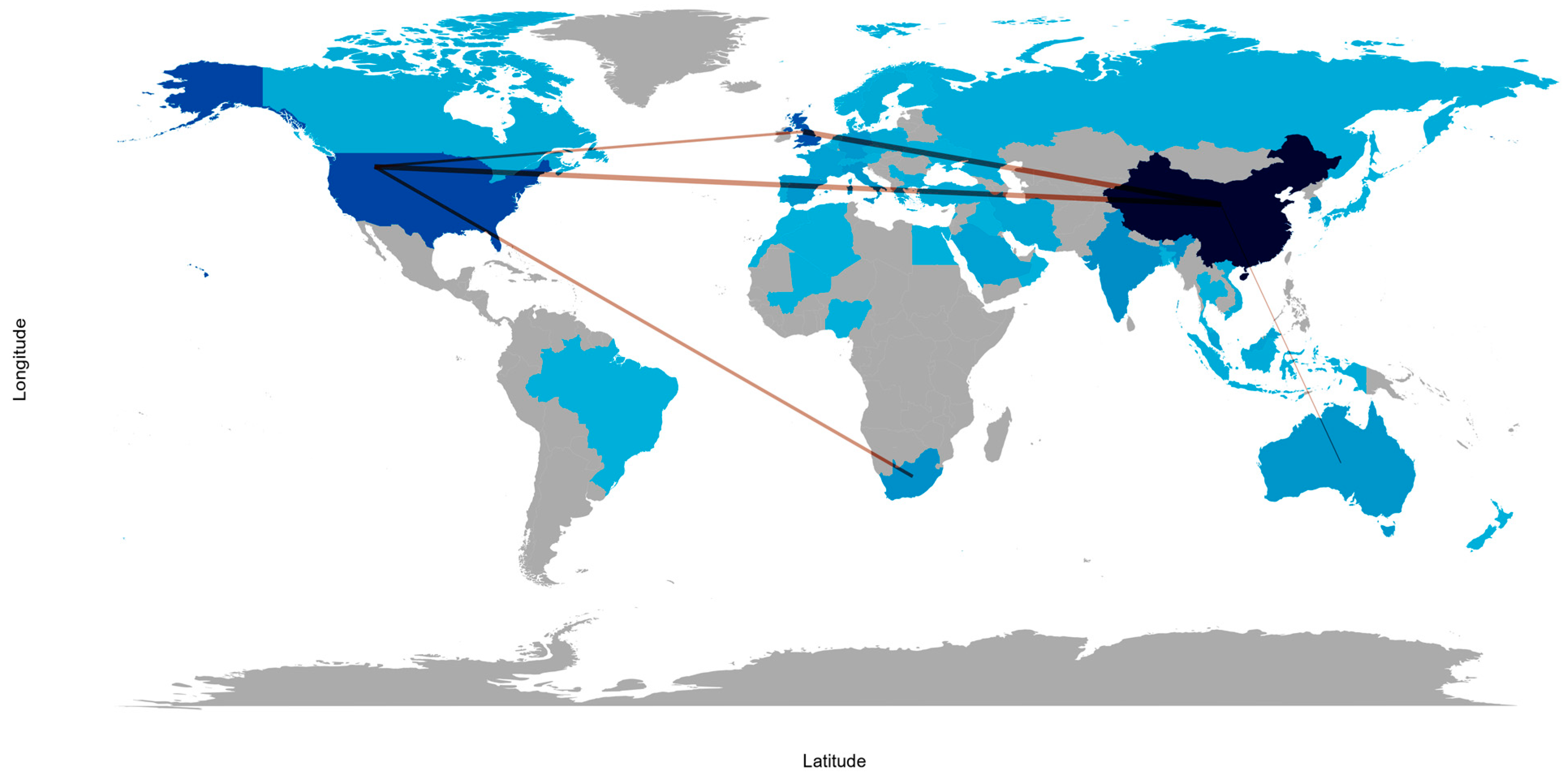
4.1.3. Production and Collaboration by Countries
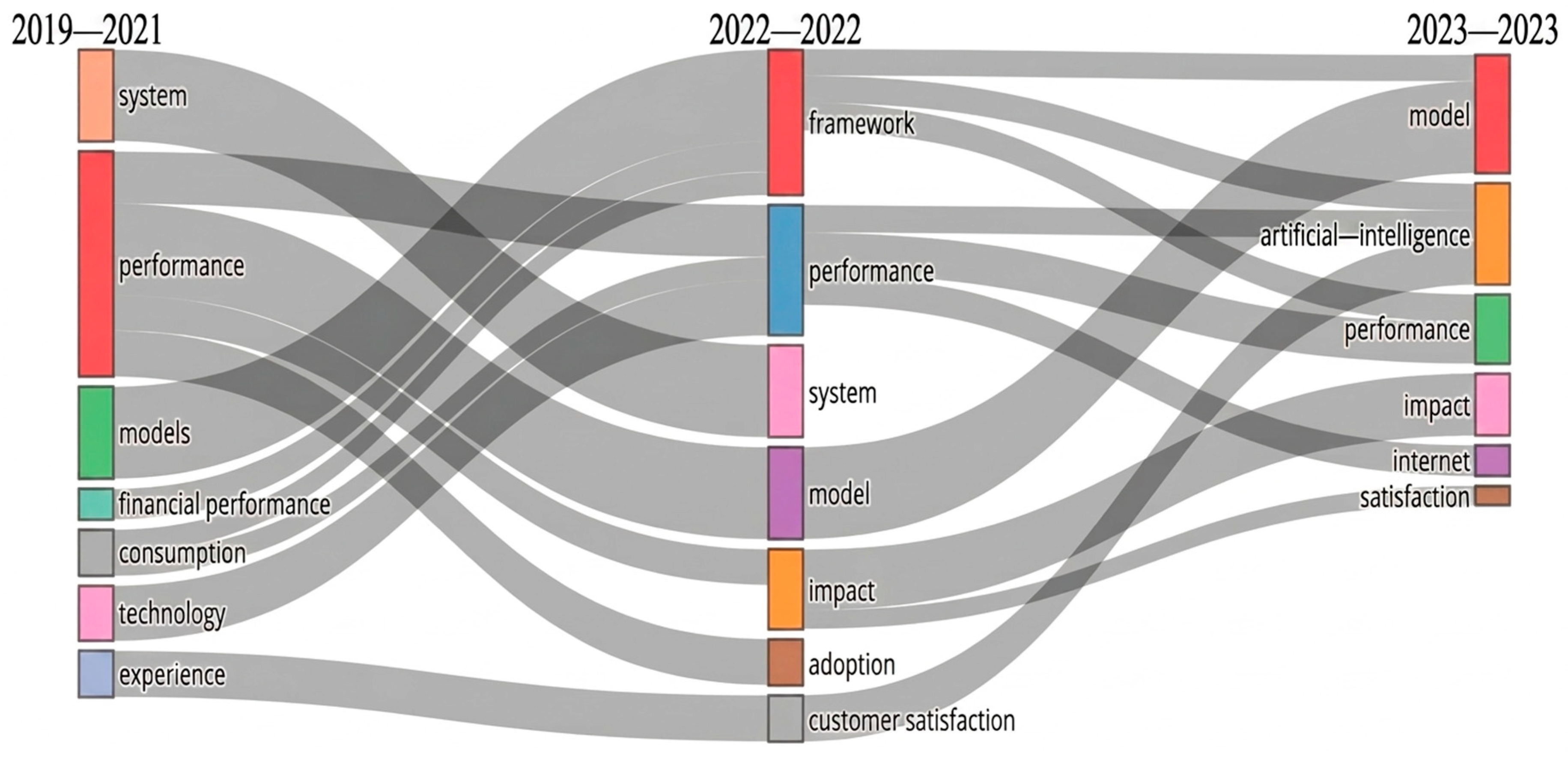
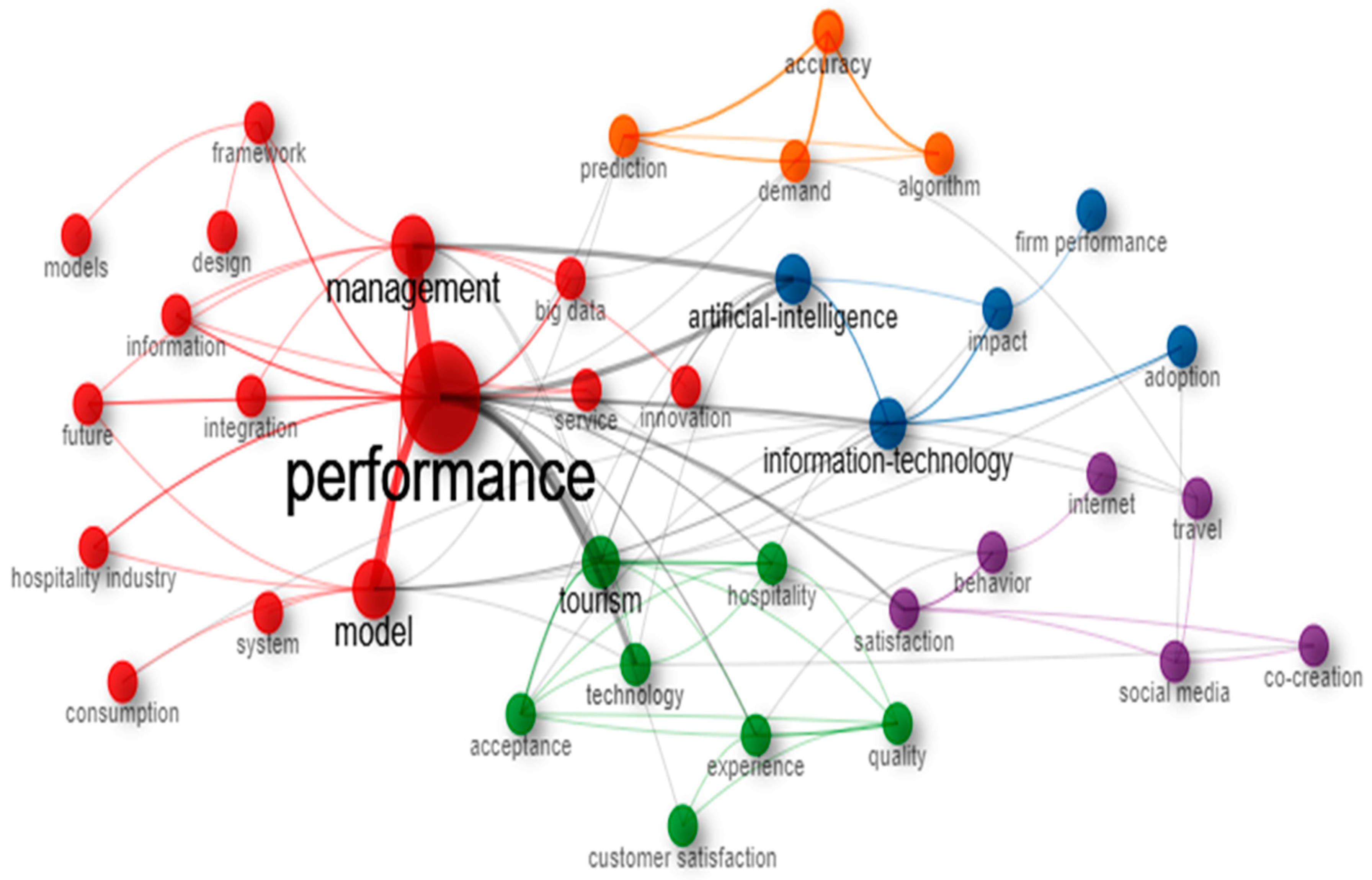
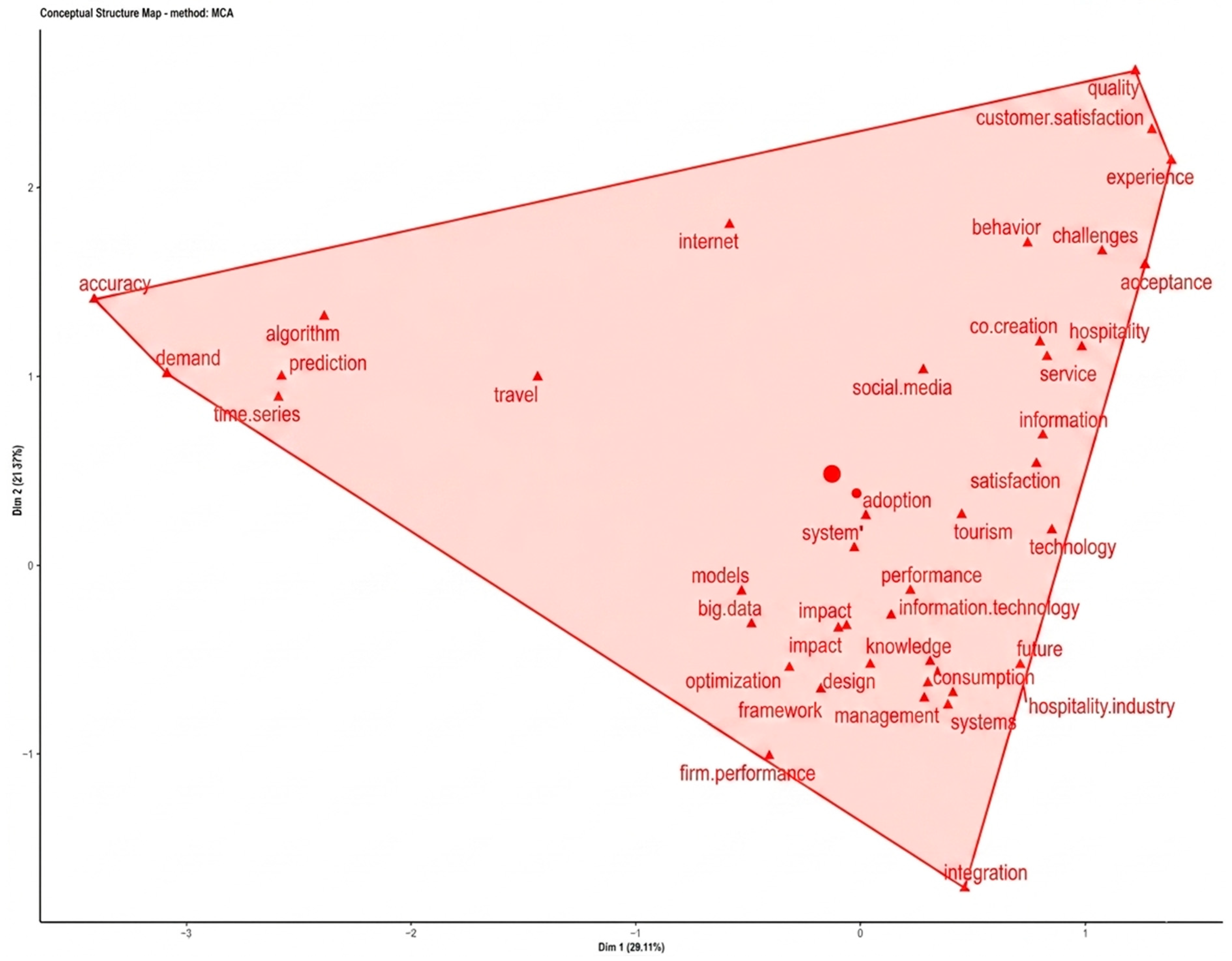
4.2. Conceptual Structure
5. Discussion
6. Conclusions
6.1. Theoretical and Practical Implications
6.2. Limitations and Future Research Directions
Author Contributions
Funding
Institutional Review Board Statement
Informed Consent Statement
Data Availability Statement
Conflicts of Interest
References
- Abarca, V. M. G., Palos-Sanchez, P. R., & Rus-Arias, E. (2020). Working in virtual teams: A systematic literature review and a bibliometric analysis. IEEE Access, 8, 168923–168940. [Google Scholar] [CrossRef]
- Abdi, H., & Valentin, D. (2007). Multiple factor analysis (MFA). In N. J. Salkind (Ed.), Encyclopedia of measurement and statistics (pp. 657–663). Sage. [Google Scholar]
- AlMujaini, H., Hilmi, M. F., Abudaqa, A., & Alzahmi, R. (2021). Corporate foresight organizational learning and performance: The moderating role of digital transformation and mediating role of innovativeness in SMEs. International Journal of Data and Network Science, 5(4), 703–712. [Google Scholar] [CrossRef]
- Aria, M., & Cuccurullo, C. (2017). bibliometrix: An R-tool for comprehensive science mapping analysis. Journal of Informetrics, 11(4), 959–975. [Google Scholar] [CrossRef]
- Ariza-Colpas, P. P., Piñeres-Melo, M. A., Morales-Ortega, R. C., Rodriguez-Bonilla, A.-F., Butt-Aziz, S., Naz, S., del Carmen Contreras-Chinchilla, L., Romero-Mestre, M., & Ascanio, R. A. V. (2023). Augmented reality and tourism: A bibliometric analysis of new technological bets in the post-COVID era. Sustainability, 15(21), 15358. [Google Scholar] [CrossRef]
- Ashari, H. A., Heidari, M., & Parvaresh, S. (2014). Improving SMTEs’ business performance through strategic use of information communication technology: ICT and tourism challenges and opportunities. International Journal of Academic Research in Accounting, Finance and Management Sciences, 4(3), 1–20. Available online: https://econpapers.repec.org/article/hurijaraf/v_3a4_3ay_3a2014_3ai_3a3_3ap_3a1-20.htm (accessed on 13 May 2025). [CrossRef]
- Azis, N., Amin, M., Chan, S., & Aprilia, C. (2020). How smart tourism technologies affect tourist destination loyalty. Journal of Hospitality and Tourism Technology, 11(4), 603–625. [Google Scholar] [CrossRef]
- Barro, S., & Davenport, T. H. (2019). People and machines: Partners in innovation. MIT Sloan Management Review, 60(4), 22–28. Available online: https://www.proquest.com/docview/2273706424/abstract/19ED1CAF29D6484FPQ/1 (accessed on 13 May 2025).
- Bastidas-Manzano, A.-B., Sánchez-Fernández, J., & Casado-Aranda, L.-A. (2021). The past, present, and future of smart tourism destinations: A bibliometric analysis. Journal of Hospitality & Tourism Research, 45(3), 529–552. [Google Scholar] [CrossRef]
- Bi, F., & Liu, H. (2022). Machine learning-based cloud IOT platform for intelligent tourism information services. EURASIP Journal on Wireless Communications and Networking, 2022(1), 59. [Google Scholar] [CrossRef]
- Borges, A. F. S., Laurindo, F. J. B., Spínola, M. M., Gonçalves, R. F., & Mattos, C. A. (2021). The strategic use of artificial intelligence in the digital era: Systematic literature review and future research directions. International Journal of Information Management, 57, 102225. [Google Scholar] [CrossRef]
- Bulchand-Gidumal, J., William Secin, E., O’Connor, P., & Buhalis, D. (2024). Artificial intelligence’s impact on hospitality and tourism marketing: Exploring key themes and addressing challenges. Current Issues in Tourism, 27(14), 2345–2362. [Google Scholar] [CrossRef]
- Cai, W., Richter, S., & McKenna, B. (2019). Progress on technology use in tourism. Journal of Hospitality and Tourism Technology, 10(4), 651–672. [Google Scholar] [CrossRef]
- Carlisle, S., Ivanov, S., & Dijkmans, C. (2021). The digital skills divide: Evidence from the European tourism industry. Journal of Tourism Futures, 9(2), 240–266. [Google Scholar] [CrossRef]
- Castellacci, F., & Viñas-Bardolet, C. (2019). Internet use and job satisfaction. Computers in Human Behavior, 90, 141–152. [Google Scholar] [CrossRef]
- Chen, M.-H. (2007). Interactions between business conditions and financial performance of tourism firms: Evidence from China and Taiwan. Tourism Management, 28(1), 188–203. [Google Scholar] [CrossRef]
- Chen, S., Law, R., Xu, S., & Zhang, M. (2020). Bibliometric and visualized analysis of mobile technology in tourism. Sustainability, 12(19), 7975. [Google Scholar] [CrossRef]
- Chen, Y., Hu, Y., Zhou, S., & Yang, S. (2022). Investigating the determinants of performance of artificial intelligence adoption in hospitality industry during COVID-19. International Journal of Contemporary Hospitality Management, 35(8), 2868–2889. [Google Scholar] [CrossRef]
- Costa, V., Silva, L., & Paula, L. (2020). Intellectual capital and its impact on business performance: An empirical study of Portuguese hospitality and tourism sector. Intangible Capital, 16(2), 78–89. [Google Scholar] [CrossRef]
- Cruz-Cárdenas, J., Zabelina, E., Guadalupe-Lanas, J., Palacio-Fierro, A., & Ramos-Galarza, C. (2021). COVID-19, consumer behavior, technology, and society: A literature review and bibliometric analysis. Technological Forecasting and Social Change, 173, 121179. [Google Scholar] [CrossRef]
- Cui, Y., van Esch, P., & Phelan, S. (2024). How to build a competitive advantage for your brand using generative AI. Business Horizons, 67, 583–594. [Google Scholar] [CrossRef]
- Damioli, G., Van Roy, V., & Vertesy, D. (2021). The impact of artificial intelligence on labor productivity. Eurasian Business Review, 11(1), 1–25. [Google Scholar] [CrossRef]
- Desai, N., Veras, L., & Gosain, A. (2018). Using Bradford’s law of scattering to identify the core journals of pediatric surgery. Journal of Surgical Research, 229, 90–95. [Google Scholar] [CrossRef]
- Durán-Sánchez, A., Álvarez-García, J., del Río-Rama, M. D. L. C., & Rosado-Cebrián, B. (2019). Science mapping of the knowledge base on tourism innovation. Sustainability, 11(12), 3352. [Google Scholar] [CrossRef]
- Dwivedi, Y. K., Hughes, L., Ismagilova, E., Aarts, G., Coombs, C., Crick, T., Duan, Y., Dwivedi, R., Edwards, J., Eirug, A., Galanos, V., Ilavarasan, P. V., Janssen, M., Jones, P., Kar, A. K., Kizgin, H., Kronemann, B., Lal, B., Lucini, B., … Williams, M. D. (2021). Artificial intelligence (AI): Multidisciplinary perspectives on emerging challenges, opportunities, and agenda for research, practice and policy. International Journal of Information Management, 57, 101994. [Google Scholar] [CrossRef]
- Elkhwesky, Z., El Manzani, Y., & Elbayoumi Salem, I. (2024). Driving hospitality and tourism to foster sustainable innovation: A systematic review of COVID-19-related studies and practical implications in the digital era. Tourism and Hospitality Research, 24(1), 115–133. [Google Scholar] [CrossRef]
- Ersoy, A., & Ehtiyar, R. (2023). The impact of artificial intelligence on hospitality employees’ work outcomes. Advances in Hospitality and Tourism Research (AHTR), 11(4), 505–526. [Google Scholar] [CrossRef]
- Fang, S., Han, X., & Chen, S. (2023). The impact of tourist–robot interaction on tourist engagement in the hospitality industry: A mixed-method study. Cornell Hospitality Quarterly, 64(2), 246–266. [Google Scholar] [CrossRef]
- Florido-Benítez, L., & del Alcázar Martínez, B. (2024). How artificial intelligence (AI) is powering new tourism marketing and the future agenda for smart tourist destinations. Electronics, 13(21), 4151. [Google Scholar] [CrossRef]
- Füller, J., Hutter, K., Wahl, J., Bilgram, V., & Tekic, Z. (2022). How AI revolutionizes innovation management—Perceptions and implementation preferences of AI-based innovators. Technological Forecasting and Social Change, 178, 121598. [Google Scholar] [CrossRef]
- Gajdošík, T. (2019). Towards a conceptual model of intelligent information system for smart tourism destinations. In R. Silhavy (Ed.), Software engineering and algorithms in intelligent systems (pp. 66–74). Springer International Publishing. [Google Scholar] [CrossRef]
- Giotis, G., & Papadionysiou, E. (2022). The role of managerial and technological innovations in the tourism industry: A review of the empirical literature. Sustainability, 14(9), 5182. [Google Scholar] [CrossRef]
- Goel, P., Kaushik, N., Sivathanu, B., Pillai, R., & Vikas, J. (2022). Consumers’ adoption of artificial intelligence and robotics in hospitality and tourism sector: Literature review and future research agenda. Tourism Review, 77(4), 1081–1096. [Google Scholar] [CrossRef]
- Gössling, S., & Mei, X. Y. (2025). AI and sustainable tourism: An assessment of risks and opportunities for the SDGs. Current Issues in Tourism, 28, 1–14. [Google Scholar] [CrossRef]
- Hadinejad, A., Noghan, N., Moyle, B. D., Scott, N., & Kralj, A. (2021). Future research on visitors’ attitudes to tourism destinations. Tourism Management, 83, 104215. [Google Scholar] [CrossRef]
- Hall, C. M., & Cooper, C. (2025). Making tourism smart in the age of artificial intelligence. Current Issues in Tourism, 28(1), 1–5. [Google Scholar] [CrossRef]
- Henriques, H., & Pereirsa, L. N. (2024). Hotel demand forecasting models and methods using artificial intelligence: A systematic literature review. Tourism & Management Studies, 20(3), 39–51. [Google Scholar] [CrossRef]
- Huang, M.-H., & Rust, R. T. (2018). Artificial intelligence in service. Journal of Service Research, 21(2), 155–172. [Google Scholar] [CrossRef]
- Jalilvand, M. R., & Ghasemi, H. (2024). Augmented reality technology in tourism and hospitality research: A review from 2010 to 2024. Journal of Science and Technology Policy Management, 17(4), 872–898. [Google Scholar] [CrossRef]
- Jarrahi, M. H., Askay, D., Eshraghi, A., & Smith, P. (2023). Artificial intelligence and knowledge management: A partnership between human and AI. Business Horizons, 66(1), 87–99. [Google Scholar] [CrossRef]
- Kitchenham, B., Pretorius, R., Budgen, D., Pearl Brereton, O., Turner, M., Niazi, M., & Linkman, S. (2010). Systematic literature reviews in software engineering—A tertiary study. Information and Software Technology, 52(8), 792–805. [Google Scholar] [CrossRef]
- Kitsios, F. C., & Grigoroudis, E. (2020). Evaluating service innovation and business performance in tourism: A multicriteria decision analysis approach. Management Decision, 58(11), 2429–2453. [Google Scholar] [CrossRef]
- Kowalkiewicz, M., Safrudin, N., & Schulze, B. (2017). The business consequences of a digitally transformed economy. In G. Oswald, & M. Kleinemeier (Eds.), Shaping the digital enterprise: Trends and use cases in digital innovation and transformation (pp. 29–67). Springer International Publishing. [Google Scholar] [CrossRef]
- Landis, J. R., & Koch, G. G. (1977). The measurement of observer agreement for categorical data. Biometrics, 33(1), 159–174. [Google Scholar] [CrossRef]
- Latah, M., & Toker, L. (2019). Artificial intelligence enabled software-defined networking: A comprehensive overview. IET Networks, 8(2), 79–99. [Google Scholar] [CrossRef]
- Lei, C., Hossain, M. S., & Wong, E. (2023). Determinants of repurchase intentions of hospitality services delivered by artificially intelligent (AI) service robots. Sustainability, 15(6), 4914. [Google Scholar] [CrossRef]
- Li, J., Xu, L., Tang, L., Wang, S., & Li, L. (2018). Big data in tourism research: A literature review. Tourism Management, 68, 301–323. [Google Scholar] [CrossRef]
- Li, J.-M., Zhang, R.-X., Wu, T.-J., & Mao, M. (2023). How does work autonomy in human-robot collaboration affect hotel employees’ work and health outcomes? Role of job insecurity and person-job fit. International Journal of Hospitality Management, 117, 103654. [Google Scholar] [CrossRef]
- Loureiro, A. (2019). Innovation and technology—The only answer for sustainable tourism growth. Worldwide Hospitality and Tourism Themes, 11(6), 743–747. [Google Scholar] [CrossRef]
- López-Naranjo, A. L., Puente-Riofrio, M. I., Carrasco-Salazar, V. A., Erazo-Rodríguez, J. D., & Buñay-Guisñan, P. A. (2025). Artificial intelligence in the tourism business: A systematic review. Frontiers in Artificial Intelligence, 8, 1599391. [Google Scholar] [CrossRef]
- Lu, L., Cai, R., & Gursoy, D. (2019). Developing and validating a service robot integration willingness scale. International Journal of Hospitality Management, 80, 36–51. [Google Scholar] [CrossRef]
- Lv, H., Shi, S., & Gursoy, D. (2022). A look back and a leap forward: A review and synthesis of big data and artificial intelligence literature in hospitality and tourism. Journal of Hospitality Marketing & Management, 31(2), 145–175. [Google Scholar] [CrossRef]
- Mao, H., Zhang, T., & Tang, Q. (2021). Research framework for determining how artificial intelligence enables information technology service management for business model resilience. Sustainability, 13(20), 11496. [Google Scholar] [CrossRef]
- Marino-Romero, J. A., Palos-Sanchez, P. R., & Velicia-Martin, F. (2022). Improving KIBS performance using digital transformation: Study based on the theory of resources and capabilities. Journal of Service Theory and Practice, 33(2), 169–197. [Google Scholar] [CrossRef]
- Marino-Romero, J. A., Palos-Sanchez, P. R., & Velicia-Martin, F. (2024a). The organizational impact in Kibs companies of certain digital marketing factors: Digital capabilities and internet technologies. Journal of Marketing Analytics, 14, 44–61. [Google Scholar] [CrossRef]
- Marino-Romero, J. A., Palos-Sánchez, P. R., & Velicia-Martín, F. (2024b). Evolution of digital transformation in SMEs management through a bibliometric analysis. Technological Forecasting and Social Change, 199, 123014. [Google Scholar] [CrossRef]
- Martens, B. (2024). Why artificial intelligence is creating fundamental challenges for competition policy. Bruegel. Available online: https://econpapers.repec.org/paper/brepolbrf/node_5f10182.htm (accessed on 22 February 2026).
- Martínez-Román, J. A., Tamayo, J. A., Gamero, J., & Romero, J. E. (2015). Innovativeness and business performances in tourism SMEs. Annals of Tourism Research, 54, 118–135. [Google Scholar] [CrossRef]
- Merigó, J. M., Blanco-Mesa, F., Gil-Lafuente, A. M., & Yager, R. R. (2016, December 6–9). A bibliometric analysis of the first thirty years of the international journal of intelligent systems. 2016 IEEE Symposium Series on Computational Intelligence (SSCI) (pp. 1–6), Athens, Greece. [Google Scholar] [CrossRef]
- Mikalef, P., & Gupta, M. (2021). Artificial intelligence capability: Conceptualization, measurement calibration, and empirical study on its impact on organizational creativity and firm performance. Information & Management, 58(3), 103434. [Google Scholar] [CrossRef]
- Miskiewicz, R. (2020). Internet of things in marketing: Bibliometric analysis. Marketing and Management of Innovations, 3, 371–381. [Google Scholar] [CrossRef]
- Molina-Collado, A., Gómez-Rico, M., Sigala, M., Molina, M. V., Aranda, E., & Salinero, Y. (2022). Mapping tourism and hospitality research on information and communication technology: A bibliometric and scientific approach. Information Technology & Tourism, 24(2), 299–340. [Google Scholar] [CrossRef]
- Morrison, A., & Teixeira, R. (2004). Small business performance: A tourism sector focus. Journal of Small Business and Enterprise Development, 11(2), 166–173. [Google Scholar] [CrossRef]
- Núñez, J. C. S., Gómez-Pulido, J. A., & Ramírez, R. R. (2024). Machine learning applied to tourism: A systematic review. WIREs Data Mining and Knowledge Discovery, 14, e1549. [Google Scholar] [CrossRef]
- Okoli, C., & Schabram, K. (2010). A guide to conducting a systematic literature review of information systems research. Sprouts: Working Papers on Information Systems, 10(26), 1–49. [Google Scholar] [CrossRef]
- Park, S. (2020). Multifaceted trust in tourism service robots. Annals of Tourism Research, 81, 102888. [Google Scholar] [CrossRef]
- Peter, M. K., Kraft, C., & Lindeque, J. (2020). Strategic action fields of digital transformation: An exploration of the strategic action fields of Swiss SMEs and large enterprises. Journal of Strategy and Management, 13(1), 160–180. [Google Scholar] [CrossRef]
- Prentice, C., Dominique Lopes, S., & Wang, X. (2020a). Emotional intelligence or artificial intelligence—An employee perspective. Journal of Hospitality Marketing & Management, 29(4), 377–403. [Google Scholar] [CrossRef]
- Prentice, C., Weaven, S., & Wong, I. A. (2020b). Linking AI quality performance and customer engagement: The moderating effect of AI preference. International Journal of Hospitality Management, 90, 102629. [Google Scholar] [CrossRef]
- Ramayah, T., Lee, J. W. C., & In, J. B. C. (2011). Network collaboration and performance in the tourism sector. Service Business, 5(4), 411–428. [Google Scholar] [CrossRef]
- Reichel, A., & Haber, S. (2005). A three-sector comparison of the business performance of small tourism enterprises: An exploratory study. Tourism Management, 26(5), 681–690. [Google Scholar] [CrossRef]
- Rip, A., & Courtial, J.-P. (1984). Co-word maps of biotechnology: An example of cognitive scientometrics. Scientometrics, 6(6), 381–400. [Google Scholar] [CrossRef]
- Robina-Ramírez, R., Leal-Solís, A., Medina-Merodio, J. A., & Estriegana-Valdehita, R. (2023). From satisfaction to happiness in the co-creation of value: The role of moral emotions in the Spanish tourism sector. Quality & Quantity, 57(4), 3783–3804. [Google Scholar] [CrossRef]
- Robina-Ramírez, R., Sánchez, M. S.-O., Jiménez-Naranjo, H. V., & Castro-Serrano, J. (2022). Tourism governance during the COVID-19 pandemic crisis: A proposal for a sustainable model to restore the tourism industry. Environment, Development and Sustainability, 24(5), 6391–6412. [Google Scholar] [CrossRef]
- Sánchez-Oro Sánchez, M., Castro-Serrano, J., & Robina-Ramírez, R. (2021). Stakeholders’ participation in sustainable tourism planning for a rural region: Extremadura case study (Spain). Land, 10(6), 553. [Google Scholar] [CrossRef]
- Sestino, A., Kahlawi, A., & De Mauro, A. (2023). Decoding the data economy: A literature review of its impact on business, society and digital transformation. European Journal of Innovation Management, 28(2), 298–323. [Google Scholar] [CrossRef]
- Sharma, K., Jain, M., & Dhir, S. (2021). Analysing the impact of artificial intelligence on the competitiveness of tourism firms: A modified total interpretive structural modeling (m-TISM) approach. International Journal of Emerging Markets, 17(4), 1067–1084. [Google Scholar] [CrossRef]
- Si-Tou, C. F. (2024). Intelligent technologies and applications in smart tourism—A systematic review. Open Journal Systems, 5(1), 2643. [Google Scholar] [CrossRef]
- Sjödin, D., Parida, V., Palmié, M., & Wincent, J. (2021). How AI capabilities enable business model innovation: Scaling AI through co-evolutionary processes and feedback loops. Journal of Business Research, 134, 574–587. [Google Scholar] [CrossRef]
- Small, H. (1997). Update on science mapping: Creating large document spaces. Scientometrics, 38(2), 275–293. [Google Scholar] [CrossRef]
- Sugathan, P., & Ranjan, K. R. (2019). Co-creating the tourism experience. Journal of Business Research, 100, 207–217. [Google Scholar] [CrossRef]
- Sujood, Bano, N., & Siddiqui, S. (2024). Consumers’ intention towards the use of smart technologies in tourism and hospitality (T&H) industry: A deeper insight into the integration of TAM, TPB and trust. Journal of Hospitality and Tourism Insights, 7(3), 1412–1434. [Google Scholar] [CrossRef]
- Tussyadiah, I. (2020). A review of research into automation in tourism: Launching the annals of tourism research curated collection on artificial intelligence and robotics in tourism. Annals of Tourism Research, 81, 102883. [Google Scholar] [CrossRef]
- von Krogh, G. (2018). Artificial intelligence in organizations: New opportunities for phenomenon-based theorizing. Academy of Management Discoveries, 4(4), 404–409. [Google Scholar] [CrossRef]
- Widagdo, C. S., Octafian, R., Mistriani, N., & Mansur, A. (2024). Exploring the influence of technology on travel experiences: Digital evolution in tourism. Proceeding of the International Global Tourism Science and Vocational Education, 1(1), 99–108. [Google Scholar] [CrossRef]
- Wirtz, B. W., Weyerer, J. C., & Geyer, C. (2019). Artificial intelligence and the public sector—Applications and challenges. International Journal of Public Administration, 42(7), 596–615. [Google Scholar] [CrossRef]
- Yoon, J., & Choi, C. (2023). Real-time context-aware recommendation system for tourism. Sensors, 23(7), 3679. [Google Scholar] [CrossRef]
- Yousaf, Z., Radulescu, M., Sinisi, C. I., Serbanescu, L., & Păunescu, L. M. (2021). Towards sustainable digital innovation of SMEs from the developing countries in the context of the digital economy and frugal environment. Sustainability, 13(10), 5715. [Google Scholar] [CrossRef]
- Yu, X., Xu, S., & Ashton, M. (2023). Antecedents and outcomes of artificial intelligence adoption and application in the workplace: The socio-technical system theory perspective. Information Technology & People, 36(1), 454–474. [Google Scholar] [CrossRef]
- Yuan, Y., Tseng, Y.-H., & Ho, C.-I. (2019). Tourism information technology research trends: 1990–2016. Tourism Review, 74(1), 5–19. [Google Scholar] [CrossRef]
- Zhu, J. J., Liu, Z., Huang, T., & Guo, X. S. (2023). Roboethics of tourism and hospitality industry: A systematic review. PLoS ONE, 18(6), e0287439. [Google Scholar] [CrossRef]



| Keyword Block | Function in the Study | Search Terms/Coding Terms |
|---|---|---|
| Artificial intelligence block | Mandatory search block | “artificial intelligence”, “AI”, “machine learning”, “deep learning”, “robot*”, “service robot*”, “big data”, “smart technolog*”, “intelligent system*”, “Internet of Things”, “IoT” |
| Tourism block | Mandatory search block | “tourism”, “hospitality”, “hotel*”, “travel”, “tourist*”, “destination*” |
| Performance block | Mandatory search block | “performance”, “business performance”, “organisational performance”, “organizational performance”, “financial performance”, “firm performance”, “productivity”, “competitiveness”, “efficiency”, “innovation”, “service quality”, “customer satisfaction” |
| Financial resilience/fragility/risk block | Analytical coding block applied to the final dataset | “financial resilience”, “financial fragility”, “financial vulnerability”, “risk management”, “liquidity”, “solvency”, “profitability”, “cost reduction”, “revenue volatility”, “shock”, “crisis”, “business continuity”, “adaptive capacity”, “resilience” |
| Element | Description |
|---|---|
| Database | Web of Science Core Collection |
| Search date | 4 December 2025 |
| Search field | Topic search, including title, abstract, author keywords, and Keywords Plus |
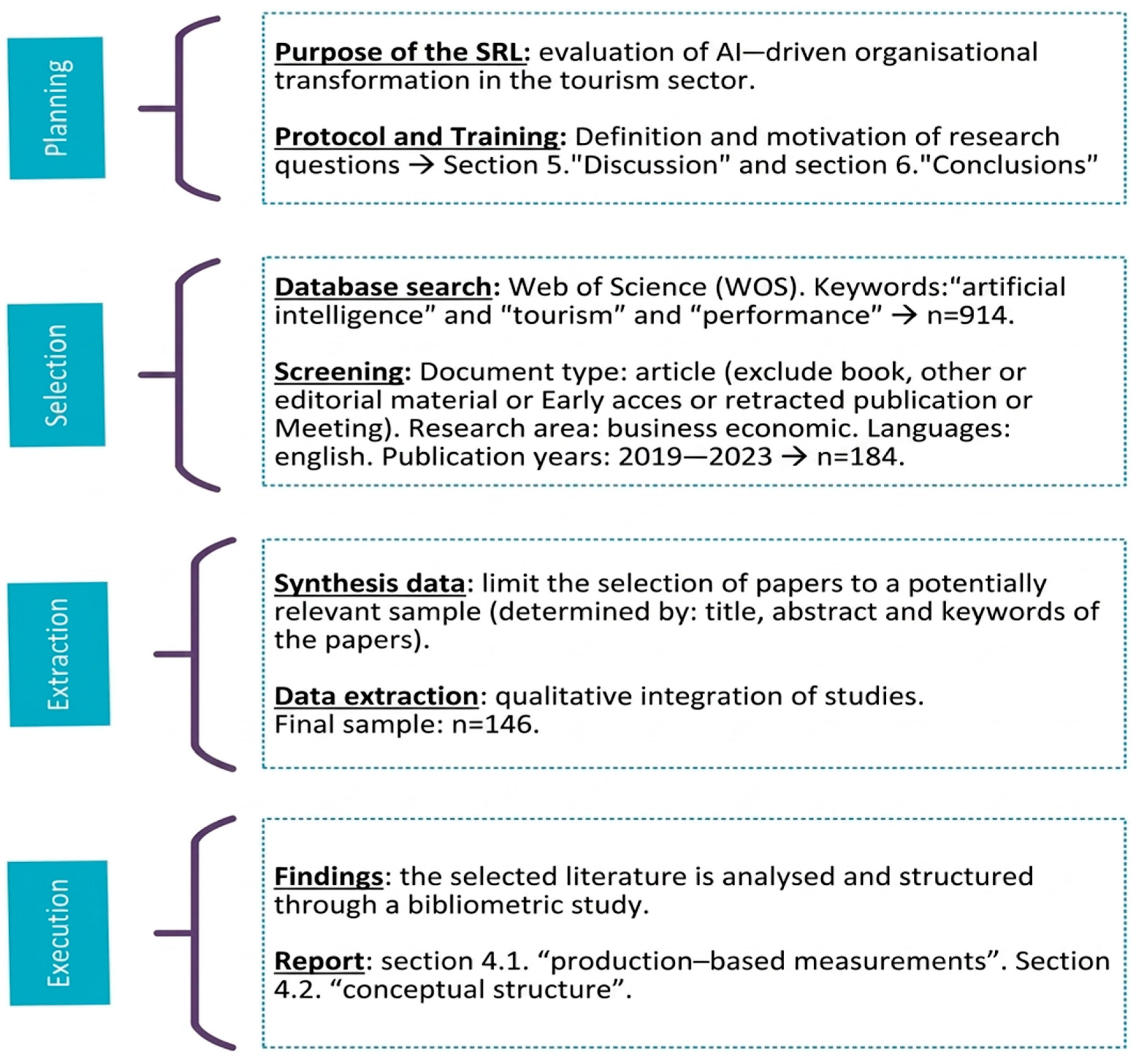
| Search query | TS = ((“artificial intelligence” OR “AI” OR “machine learning” OR “deep learning” OR “robot*” OR “service robot*” OR “big data” OR “smart technolog*” OR “intelligent system*” OR “Internet of Things” OR “IoT”) AND (“tourism” OR “hospitality” OR “hotel*” OR “travel” OR “tourist*” OR “destination*”) AND (“performance” OR “business performance” OR “organisational performance” OR “organizational performance” OR “financial performance” OR “firm performance” OR “productivity” OR “competitiveness” OR “efficiency” OR “innovation” OR “service quality” OR “customer satisfaction”)) |
| Filters applied | Peer-reviewed journal articles; English language; Business Economics category; publication period 2019–2023 |
| Inclusion criteria | Articles addressing AI-related technologies in tourism or hospitality businesses and their relationship with performance, innovation, management, or organisational outcomes |
| Exclusion criteria | Non-peer-reviewed documents; non-English documents; records outside the selected period or subject category; articles unrelated to AI, tourism, or business performance after title, abstract, and keyword screening |
| Screening stages | Initial WOS search; application of database filters; title, abstract, and keyword screening; exclusion of unrelated articles; final validation of 146 articles |
| Initial records after filtering | 184 articles |
| Final dataset | 146 articles |
| Coder count | Three authors independently participated in the coding process. |
| Coder agreement | Inter-rater reliability was assessed using Cohen’s Kappa coefficient (κ = 0.78), indicating substantial agreement among coders. |
| Conflict resolution rule | Disagreements were discussed among the authors until consensus was reached |
| Software used | Biblioshiny/Bibliometrix (bibliometrix R package, version 4.1.4; RStudio version 2023.06.1) for bibliometric analysis |
| Coding Element | Description | Illustrative Examples |
|---|---|---|
| Unit of analysis | Individual article included in the final dataset of 146 records. | Each WOS-indexed article retained after screening. |
| Textual fields analysed | Title, abstract, author keywords, Keywords Plus, and full text when required. | Papers with ambiguous abstracts were checked in full text. |
| AI-related technologies | Identification of the main technological focus of each paper. | AI, machine learning, robotics, big data, IoT, smart technologies. |
| Tourism business context | Identification of the tourism setting or organisational unit analysed. | Hotels, hospitality firms, travel agencies, destinations, tourism SMEs. |
| Performance outcomes | Identification of business, organisational, service, or economic outcomes. | Operational efficiency, customer satisfaction, productivity, innovation, competitiveness, financial performance. |
| Financial resilience, fragility, and risk-management implications | Identification of direct or indirect links with vulnerability, risk, or shock absorption. | Liquidity pressures, revenue volatility, cost reduction, demand forecasting, dynamic pricing, business continuity, adaptive capacity. |
| Coding approach | Combination of deductive categories derived from the research questions and inductive codes emerging from the reviewed literature. | Forecasting and resource optimisation were inductively linked to resilience-related implications. |
| Synthesis rule | Coded categories were compared with bibliometric outputs to interpret dominant and emerging themes. | Co-occurrence and thematic evolution results were interpreted in relation to performance and resilience categories. |
| Consistency procedure | Disagreements in coding were discussed among the authors until consensus was reached. | Ambiguous papers were reassessed jointly. |
| Category | Classification Rule | Examples of Terms or Themes |
|---|---|---|
| Direct financial resilience focus | Articles explicitly addressing financial performance, vulnerability, fragility, liquidity, solvency, profitability, risk management, or shock absorption. | financial performance; financial vulnerability; liquidity; profitability; risk management; shock absorption |
| Indirect resilience-related implications | Articles discussing mechanisms that may support resilience without explicitly framing them as financial resilience. | demand forecasting; dynamic pricing; cost reduction; resource optimisation; operational flexibility; business continuity; crisis response |
| No explicit resilience connection | Articles focused mainly on technological adoption, customer experience, service quality, or innovation without financial or resilience-related implications. | AI acceptance; customer satisfaction; service robots; smart tourism; user experience |
| Total | Final dataset retained after screening. | 146 articles |
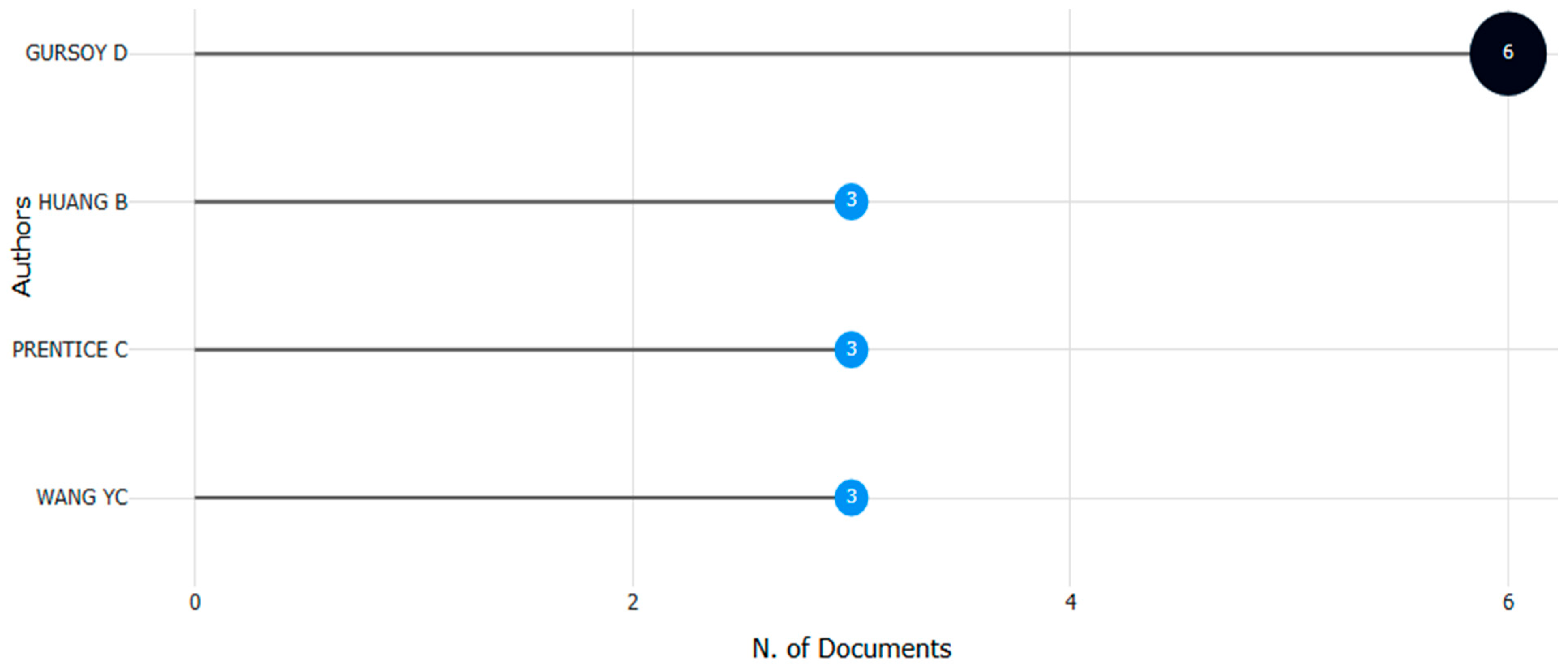
| Documents Written | No. of Authors | Proportion of Authors |
|---|---|---|
| 1 | 453 | 95.0% |
| 2 | 20 | 4.2% |
| 3 | 3 | 0.6% |
| 6 | 1 | 0.2% |
| Country | Articles | Articles % | SCP | MCP | MCP % |
|---|---|---|---|---|---|
| China | 53 | 36.3 | 34 | 19 | 35.8 |
| Usa | 13 | 8.9 | 5 | 8 | 61.5 |
| United Kingdom | 8 | 5.5 | 4 | 4 | 50 |
| India | 6 | 4.1 | 5 | 1 | 16.7 |
| Italy | 6 | 4.1 | 3 | 3 | 50 |
| Korea | 6 | 4.1 | 5 | 1 | 16.7 |
| Germany | 5 | 3.4 | 3 | 2 | 40 |
| Spain | 5 | 3.4 | 3 | 2 | 40 |
| Australia | 4 | 2.7 | 2 | 2 | 50 |
| Saudi Arabia | 4 | 2.7 | 3 | 1 | 25 |
Disclaimer/Publisher’s Note: The statements, opinions and data contained in all publications are solely those of the individual author(s) and contributor(s) and not of MDPI and/or the editor(s). MDPI and/or the editor(s) disclaim responsibility for any injury to people or property resulting from any ideas, methods, instructions or products referred to in the content. |
© 2026 by the authors. Licensee MDPI, Basel, Switzerland. This article is an open access article distributed under the terms and conditions of the Creative Commons Attribution (CC BY) license.
Share and Cite
Marino-Romero, J.A.; Sanguino, Á.-S.M.; Crespo-Cebada, E.; Díaz-Caro, C. Artificial Intelligence in Tourism Businesses: Financial Resilience, Organisational Adaptation and Performance Drivers—A Systematic Literature Review. J. Risk Financial Manag. 2026, 19, 379. https://doi.org/10.3390/jrfm19060379
Marino-Romero JA, Sanguino Á-SM, Crespo-Cebada E, Díaz-Caro C. Artificial Intelligence in Tourism Businesses: Financial Resilience, Organisational Adaptation and Performance Drivers—A Systematic Literature Review. Journal of Risk and Financial Management. 2026; 19(6):379. https://doi.org/10.3390/jrfm19060379
Chicago/Turabian StyleMarino-Romero, Jorge Alberto, Ángel-Sabino Mirón Sanguino, Eva Crespo-Cebada, and Carlos Díaz-Caro. 2026. "Artificial Intelligence in Tourism Businesses: Financial Resilience, Organisational Adaptation and Performance Drivers—A Systematic Literature Review" Journal of Risk and Financial Management 19, no. 6: 379. https://doi.org/10.3390/jrfm19060379
APA StyleMarino-Romero, J. A., Sanguino, Á.-S. M., Crespo-Cebada, E., & Díaz-Caro, C. (2026). Artificial Intelligence in Tourism Businesses: Financial Resilience, Organisational Adaptation and Performance Drivers—A Systematic Literature Review. Journal of Risk and Financial Management, 19(6), 379. https://doi.org/10.3390/jrfm19060379