1. Introduction
This paper is motivated by the academic debate on the influence of external governance and regulation on internal control in banks, and on their role in mitigating weaknesses and enhancing the effectiveness of control mechanisms. In recent years, regulators have introduced specific standards and guidelines to improve corporate governance and ensure the reliability of financial reporting.
Weak internal control is widely recognized as a major source of risk to financial reporting. According to
Donelson et al. (
2017), fraud increases when internal controls are weak, which can lead to misleading financial statements. This exposes companies to regulatory sanctions to shareholders’ conflict and greater pressure on auditors to disclose internal control weaknesses (
Kevin et al., 2023). Furthermore, the implementation of internal control systems is being guided by theoretical frameworks such as COSO and COBIT, and several empirical studies show a significant relationship between the components of these frameworks and the presence of internal control weaknesses (
C. Li et al., 2012).
However, the effectiveness of control mechanisms depends on organizational and institutional factors, including ownership structure, governance, and the applicable regulatory framework (
Petrovits et al., 2011;
Belina et al., 2023).
Institutional ownership plays an important role in managerial discipline and the effectiveness of internal control systems. The literature distinguishes among different types of institutional investors and their effects on governance: long-term and committed investors tend to strengthen monitoring, require documented procedures, and support investment in internal audit, whereas short-term oriented investors may prioritize profitability over the control quality (
Bushee, 1998,
2001). These differences suggest that the effects of institutional ownership on internal control weaknesses are not uniform and depend on the stability and concentration of investors.
State ownership, a component of institutional ownership, influences internal control through governance mechanisms. Banks subject to state influence may face closer monitoring and stronger policy constraints, which can reduce managerial discretion and improve internal control systems.
In the banking sector characterized by prudential constraints, state ownership can complement regulatory mechanisms to improve the reliability of internal control (
Laeven & Levine, 2009). Some empirical studies show that the presence of the state significantly reduces weaknesses and improves the quality of financial information and performance (
Doyle et al., 2007;
Ashbaugh-Skaife et al., 2009;
Cornett et al., 2010). Performance gaps between banks are particularly evident in countries where state intervention and political corruption in the banking system are pronounced (
Cornett et al., 2010).
The regulation is a fundamental tool for strengthening internal control. Several studies show that regulation can substantially mitigate internal control weakness, improve transparency, and support performance, including in its ESG dimensions (
Beneish et al., 2008;
Lu & Ma, 2019;
Yao et al., 2024).
In Algeria, internal control practices in the banking sector are governed by Regulation 11-08 (
Bensilette, 2024). This regulation sets out the main responsibilities of banks regarding the establishment of effective internal control and requires the preparation of a detailed internal control report to be submitted to the audit committee (Article 73). Despite its importance, this regulatory framework remains largely unexplored in the academic literature, which limits our understanding of its effectiveness and its interaction with the state ownership structure.
Our research aims to examine the impact of state ownership and regulation on internal control weaknesses in the Algerian banking sector, using Regulation 11-08 as an analytical framework. By highlighting an underexplored regional setting, this article contributes to a better understanding of banking governance mechanisms in emerging economies. It also provides useful insights for standard setters and regulators when assessing the effectiveness of accounting regulation in such contexts. More broadly, the paper highlights the political dimension of governance and the impact of legal reforms on the internal control system, and it underlines the need to strengthen regulatory efforts in order to improve governance mechanisms, enhance transparency and reinforce confidence in the banking system.
The remainder of the paper is organized as follows: The first section presents the theoretical framework and literature review. The second section details the empirical methodology, including data collection and variable measurement. The third section presents the results and discusses the findings.
2. Prior Literature
Agency theory is used to frame the relationship between debtholders, shareholders and managers who engage in opportunistic behavior cause of conflict of interest arising from information asymmetry. Managers with discretionary power can manipulate earnings, which requires the establishment of governance mechanisms to mitigate shareholder-manager conflicts (
Jensen & Meckling, 1976). In this context, improving audit quality is essential as a control mechanism for reducing agency costs and information asymmetries.
Institutional theory suggests that the social, regulatory and institutional environment shapes organizational structures and behavior. It explains how institutional pressure specifically from regulatory mandates, encourages banks to adopt superior internal control practices.
Thus, regulation plays a decisive role by helping organizations to comply with formal standards, reducing failures in the internal control systems that may lead to financial scandals.
Our research draws on these two theories since we first examine the impact of governance on internal control and then the impact of regulation on the system.
2.1. Governance, State Ownership, and Internal Control Weaknesses
The relationship between governance and internal control quality has been widely studied in the literature. Several studies highlight the role of board characteristics in explaining internal control weakness, including board independence (
Schneider et al., 2009), directors’ expertise (
Ginesti et al., 2025), CEO duality (
Chen et al., 2017), gender diversity (
Luh, 2024), audit committee expertise (
Ha, 2022), and external audit (
Usman et al., 2023).
These studies suggest that stronger governance mechanisms contribute to more effective internal control systems.
Beyond board characteristics, ownership structure represents a key governance mechanism influencing internal control quality. However, the empirical evidence is mixed and depends on the nature of ownership (
Elhennawy, 2021). Previous studies show a significant relationship between ownership structure and the disclosure of internal control weaknesses (
Tang & Xu, 2010). This relationship varies across different types of owners.
Mitra et al. (
2017) show that managerial ownership can strengthen the internal control environment and reduce the frequency and severity of weakness. This finding is supported by
Arianpoor et al. (
2025). Managerial ownership also plays a moderating role by enhancing monitoring mechanisms and improving audit quality (
Mousavi Shiri et al., 2023).
In contrast, family ownership can weaken internal control systems.
Jadoon et al. (
2021) argue that family involvement leads to entrenchment effects and to governance inefficiencies. Similarly,
Rostami et al. (
2019) suggest that family owners may engage in opportunistic behavior, thereby impairing internal control quality and increasing agency costs. These findings indicate that ownership concentration does not systematically improve governance.
However, institutional ownership is associated with stronger monitoring and improved transparency. Institutional investors tend to reduce misleading financial reporting (
Ajinkya et al., 2005), accounting fraud (
Carcello & Nagy, 2004), and the occurrence of internal control weaknesses (
Rostami et al., 2019). In addition, higher institutional ownership is positively associated with greater transparency in the disclosure of internal control weaknesses (
Tang & Xu, 2010).
More recent studies emphasize the monitoring role of institutional investors.
Zhou et al. (
2025) showed that cross-Institutional investors enhance control systems, particularly in environments characterized by high information asymmetry and agency costs.
Z. Li et al. (
2021) found that foreign institutional investors from countries with strong governance frameworks contribute to improving internal control systems in Chinese firms.
Al-Qadasi (
2024) also reported that firms with higher institutional ownership invest more in internal auditing and develop more effective monitoring mechanisms.
Among institutional ownership types, the role of state ownership is ambiguous and remains subject to debate. On the one hand, state ownership may enhance internal effectiveness. For instance,
Kong et al. (
2013) showed that state-owned enterprises benefit from government subsidies and political advantages, which provide resources to strengthen governance and internal controls, particularly in competitive markets. Similarly,
Zhang and Chen (
2016) highlighted the role of regulatory bodies and the state in supporting external governance and encouraging firms to improve internal control systems.
Tong et al. (
2014) also found that government-directed internal controls in Chinese state-owned enterprises strengthen monitoring mechanisms and firm value.
On the other hand, state ownership may introduce agency problems and political interference.
Iannotta et al. (
2007), for example, found that state ownership significantly influences risk and governance mechanisms in developing countries.
Ji et al. (
2017) showed that the quality of internal control reporting was associated with voluntary disclosure practices, suggesting that transparency may vary across firms. These contrasting findings indicate that the effect of state ownership on internal control weaknesses is not homogeneous but depends on institutional and regulatory contexts.
In this paper, we focus on state ownership of the Algerian banking sector, which is characterized by strong regulatory oversight and a significant state presence. In this context, banks are subject to higher political pressure and stricter regulatory requirements, both of which may encourage stronger internal control systems. At the same time, these banks may face market discipline that increases transparency in the disclosure of internal control weaknesses. Given the mixed evidence in the prior literature regarding the role of state ownership, we propose the following hypothesis:
Hypothesis 1. State ownership has an impact on internal control weaknesses in Algerian banks.
2.2. Compliance and Internal Control Weaknesses
Internal control regulations originate from governmental frameworks, such as the Sarbanes-Oxley Act (SOX) in the United States, or from professional bodies, such as the International Auditing and Assurance Standards Board (IAASB). In addition, firms may develop internal policies to comply with these regulatory requirements. These frameworks aim to establish best practices and limit internal control weaknesses, while modern approaches extend their scope to governance structures and organizational culture (
Henk, 2020).
However, the literature examining the impact of regulation on internal control weaknesses provides mixed evidence, highlighting an ongoing debate.
On the one hand, several studies highlight the positive role of regulation in strengthening internal control systems. Regulation can exert pressure on firms to improve internal control quality to avoid sanctions and reputational damage (
Schantl & Wagenhofer, 2021). In this regard, the Sarbanes-Oxley Act is often cited as a major regulatory reform that enhances internal control quality and strengthens corporate governance (
Chang & Choy, 2016;
Bajra et al., 2023).
Furthermore, SOX compliance has been associated with improved financial reporting quality and reduced inaccuracies (
Velte, 2023), with better alignment with stakeholders’ information needs (
Su et al., 2022). Evidence from emerging economies also supports this view. For example,
Lartey et al. (
2020) showed that regulatory frameworks have a positive impact on internal control quality in Ghanaian listed firms. In addition, a compliance-oriented organizational culture contributes to stronger internal control systems (
Phornlaphatrachakorn, 2019).
These findings suggest that the effect of regulation on internal control weaknesses is not uniform, but depends on several contextual factors, including the legal environment, enforcement mechanisms and firms’ capacity to implement regulatory requirements effectively.
In the Algerian context, Articles 69 to 73 of Regulation 11-08 impose strict disclosure, reporting and requirements, involving executive management, audit committees, and regulatory authorities. These provisions are structured around six main pillars of internal control (
Messaoud & Kamel, 2020).
The framework is applied uniformly to all banks in Algeria, regardless of their ownership structure (whether public state-owned banks or private foreign-owned banks).
Regulation 11-08 is consistent with international standards, particularly the Basel I and Basel II frameworks, reflecting the intention of Algerian authorities to align national practices with global prudential requirements. Its implementation also required significant investments in training and capacity building for both internal and external control actors.
In this study, we examined the Algerian banking sector, which has undergone major regulatory reform with the introduction of Regulation No. 11-08 establishing a comprehensive internal control framework, including mandatory reporting of weaknesses, risk monitoring, and enhanced governance responsibilities.
This context provides a relevant setting in which to assess whether a regulatory framework effectively reduces internal control weakness, especially in a banking system characterized by strong regulation and institutional oversight.
Because the prior literature provides mixed evidence on the effectiveness of regulation, the impact of regulation on internal control weaknesses remains an open empirical question. We therefore propose the following hypothesis:
Hypothesis 2. Regulation has an impact on internal control weaknesses in Algerian banks.
Table 1 summarizes the conflicting literature related to the impact of regulation in mitigating internal control weaknesses.
3. Materials and Methods
This section presents the methodological framework of the paper. We describe the sample, explain how the variables are measured, and present an empirical model.
3.1. The Sample and the Data Collection Method
To test our research hypotheses, we conducted an empirical study within the Algerian banking sector, which comprises twenty (20) banks, including six public banks and fourteen private banks, as shown in
Table 2. We exclude only one private bank, established in Algeria, because its data are unavailable.
The banks’ accounting and financial data were collected from the Association of Banks and Financial Institutions (ABEF). Additional data were gathered manually from banks’ financial statements and annual reports, available on official websites and on the website of the Algerian National Centre of the Trade Registers, which publishes legal information on companies operating in Algeria.
The analysis covers 10 years (2007–2016), five years before the promulgation of Regulation 11-08 and five years after. This window is used to capture the pre- and post-reform contrast and should therefore be interpreted as a historically grounded analytical period rather than as a description of the current state of the sector. It allows us to observe the evolution of internal control practices from a longitudinal perspective while taking into account the potentially delayed effects of regulatory change.
3.2. Variables Definition and Measurement
This section details the measurements of the variables, their definitions, and the empirical research model.
3.2.1. The Dependent Variable
To measure the internal control, empirical studies have identified several indicators that assess the reliability and effectiveness of an organization’s internal control function (
Kim et al., 2011). The main measures adopted in the literature relate to internal control effectiveness scores, external auditors’ assessments of internal control, the presence of significant weaknesses, and the type and number of such weaknesses.
In this paper, we used the auditor’s opinion as a proxy for internal control quality (
Schneider et al., 2009;
Masli et al., 2010). The accounting literature shows that the auditors’ opinion in its four forms reflects the effectiveness of the internal control (
Silote et al., 2021). To contextualize the assessment of internal control weaknesses, it is useful to refer to professional auditing standards, such as the PCAOB Auditing Standard 2201 (AS 2201). According to AS 2201, auditors use a range of procedures, including inquiries, observations, and document inspections, to identify potential material weaknesses in internal control. In our study, the identification of an ICW is consistent with this rigorous assessment process, which makes the auditor’s opinion a reliable and standardized proxy for internal control quality.
The evaluation of internal control weaknesses is often operationalized through a binary variable (
Ashbaugh-Skaife et al., 2009;
Cho & Chung, 2016). In our study, this binary variable is collected through a content analysis of audit reports.
ICW = an indicator variable for a material internal control weakness, equal to 1 if a material internal control weakness is disclosed by the auditor, and 0 otherwise.
3.2.2. The Independent Variables
In the empirical model, we used two independent variables: state ownership and regulation.
State Ownership (STATE)
Previous studies have shown that ownership structure influences the internal control weaknesses. In line with
Panizza (
2023), the variable STATE is defined as follows:
Internal Control Regulations (LAW)
Empirically, the impact of regulation on internal control weaknesses can be tested by introducing a LAW variable based on a comparative analysis of regulatory practices and statistical modeling techniques (
H. Xu, 2024).
3.2.3. The Control Variables
The variables included in our model are profitability measured by ROA, bank size and dividend distribution.
Firm Size (SIZE)
Several studies show that small firms are more likely to tolerate weaknesses in their internal control (
Sun, 2016). By contrast, stronger internal control systems may help large firms limit agency costs and reduce managerial opportunism (
Hu & Yang, 2022), thereby reducing internal control weaknesses (
Boyle et al., 2004).
According to
Yaya and Suprobo (
2019), firm size and the use of technology have a negative impact on internal control weaknesses. In our study, size is measured by the natural logarithm of total assets:
Dividend Distribution (DIV)
Dividend distribution plays an important role in determining a firm’s overall value and financial performance (
Theiri et al., 2023). According to
Sun (
2016), firms with weak internal control are less likely to invest in profitable projects, which negatively affects their long-term financial stability (
Gao, 2019) and consequently, their dividend policy (
Nguyen et al., 2021):
This paper examines the impact of ownership structure on internal control weaknesses and then tests the effect of regulation on internal control. We included the STATE and LAW as the main explanatory variables. To test our hypotheses, we estimated the following panel data model:
Because the dependent variable is binary, the empirical analysis relies on binary response models. We performed specification diagnostics and exploratory distributional comparisons to assess which link function is most consistent with the data. The asymmetric extreme-value specification, namely the complementary Gompit model, was therefore retained for estimation.
4. Results and Discussion
This section presents and interprets the empirical results. We first provided descriptive statistics, then reported the statistical tests, and finally discussed the model estimates.
4.1. Analysis of Descriptive Statistics
This subsection reports the descriptive statistics of the variables, aiming to describe the means and standard deviations of the variables. The results are reported in
Table 3.
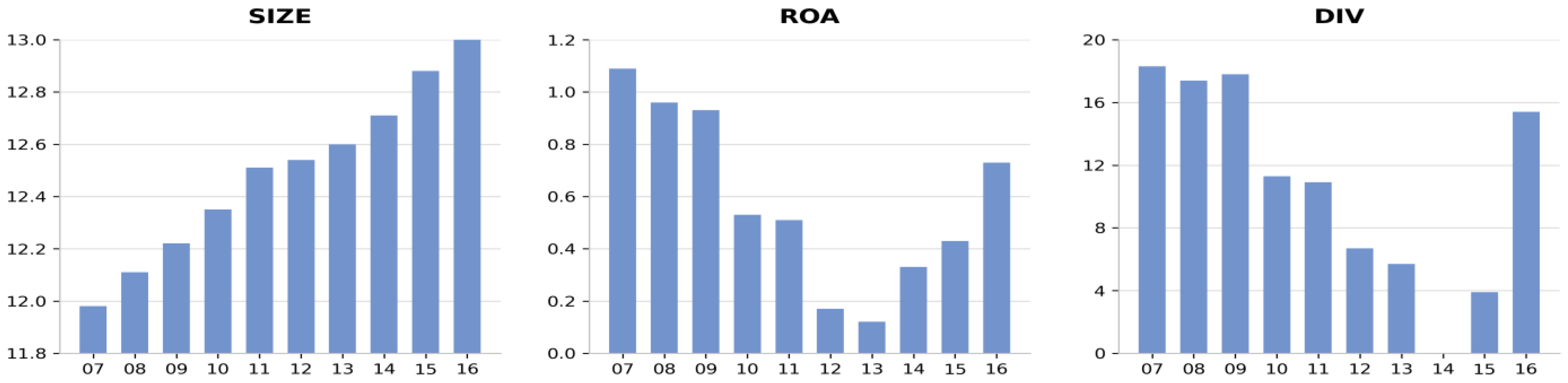
Table 3 indicates that ROA shows significant variability (Std. Dev. = 0.917), reflecting market asymmetry. Dividends (DIV) show the greatest dispersion, with some banks paying high dividends (34.7) while others do not. Finally, bank size (SIZE) is moderately dispersed, with a majority of banks falling into the medium or large size categories.
4.1.1. Evolution of the Variables
Figure 1 shows the evolution of the study variables from 2007 to 2016.
A higher ROA indicates greater profitability, while fluctuations in dividend payouts suggest periods of non-distribution. Moreover, increases in total assets generally reflect growth in the banking activity through expansion and acquisitions.
4.1.2. Comparative Analysis of Independent Variables by ICW Status
Table 4 shows that in the absence of internal control weaknesses (ICW = 0), the mean values of ROA, DIV, STATE, and LAW are higher.
4.1.3. Descriptive Statistics of the Dependent Variable
Table 5 shows that 108 observations revealed internal control weaknesses (ICW) between 2007 and 2016. In addition, 82 observations (43.16%) were classified as unable to remediate internal control weaknesses during this period (43.16%).
According to the table, all banks with expected ICW values below 0.5 are considered to have a good level of internal control. Thus, 92 observations did not reveal internal control weakness, whereas 40 did, for a total of 132 observations.
For banks with a low level of internal control, 16 observations did not reveal any weaknesses during the study period, whereas 42 observations did, for a total of 58 observations.
These results reflect the predictive capacity of the model, and the overall prediction rate reaches 70%, comprising 69% correct predictions and 72% correct predictions for their presence.
4.1.4. Expected Values of the ICW Variable
Table 6 presents the expected ICW averages by bank and by year. Seven private and public banks fall into the red zone, indicating a weak expected level of internal control, with ICW values above 0.5. The remaining banks recorded ICW values below 0.5, indicating a stronger expected level of internal control.
Across years, the highest average level of internal control weaknesses was recorded in Algerian banks in 2010 and 2011. According to
Table 6, the average ICW value for the period 2007–2011 is higher than that for the period 2012–2016, showing that the period following the promulgation of Regulation 11-08 was characterized by lower internal control weakness.
4.2. Bivariate Analysis
To assess the assumptions of the panel model, we tested the correlations among variables and assessed the homogeneity of the dependent variable.
4.2.1. Correlation Matrix
Table 7 reports Pearson correlations for quantitative variables and Spearman correlations for binary variables, indicating the absence of severe multicollinearity. SIZE, DIV, and Law show are insignificantly correlated with the dependent variable ICW. Whereas ROA or state ownership is negatively significantly correlated with ICW (23.81% and 11.67%, respectively).
Table 8 presents the binary correlation matrix and indicates the absence of multicollinearity problems. The highest correlation is observed between the STATE and SIZE (−0.657), followed by the correlation between LAW and DIV (−0.446). All other correlation coefficients remain below 0.40. These values are below the critical threshold (typically 0.80), indicating the absence of severe multicollinearity.
4.2.2. Homogeneity Tests
The results of the homogeneity tests following
Hsiao (
1986) are presented in
Table 9.
According to this test, H1 states that the coefficients are homogeneous across all banks, since the Fisher statistic is equal to 0.907715. Therefore, the model is considered and can be estimated as a regression model.
4.3. Multivariate Analysis
The study estimates three alternative binary-response specifications: Logit, Probit, and Gompit (extreme value). We use specification diagnostics with exploratory distributional comparisons to assess whether an asymmetric extreme-value link is more appropriate. Since these diagnostics favor the extreme-value specification, the Gompit model is retained as the baseline model, while Logit and Probit are reported as sensitivity analyses.
4.3.1. Model Specification Tests
We analyze the distribution of the model’s errors.
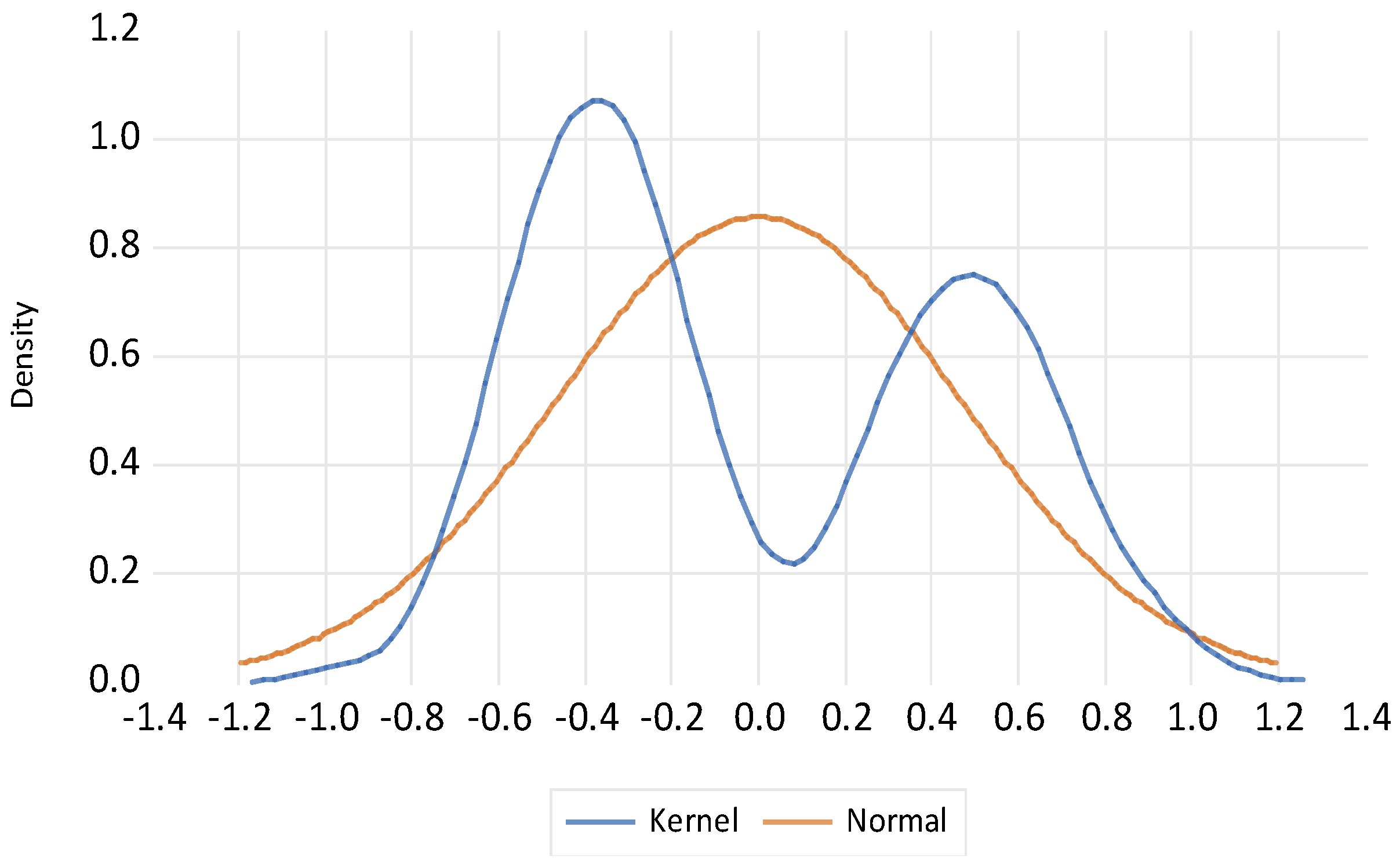
Figure 2 compares the empirical error distribution with the normal distribution,
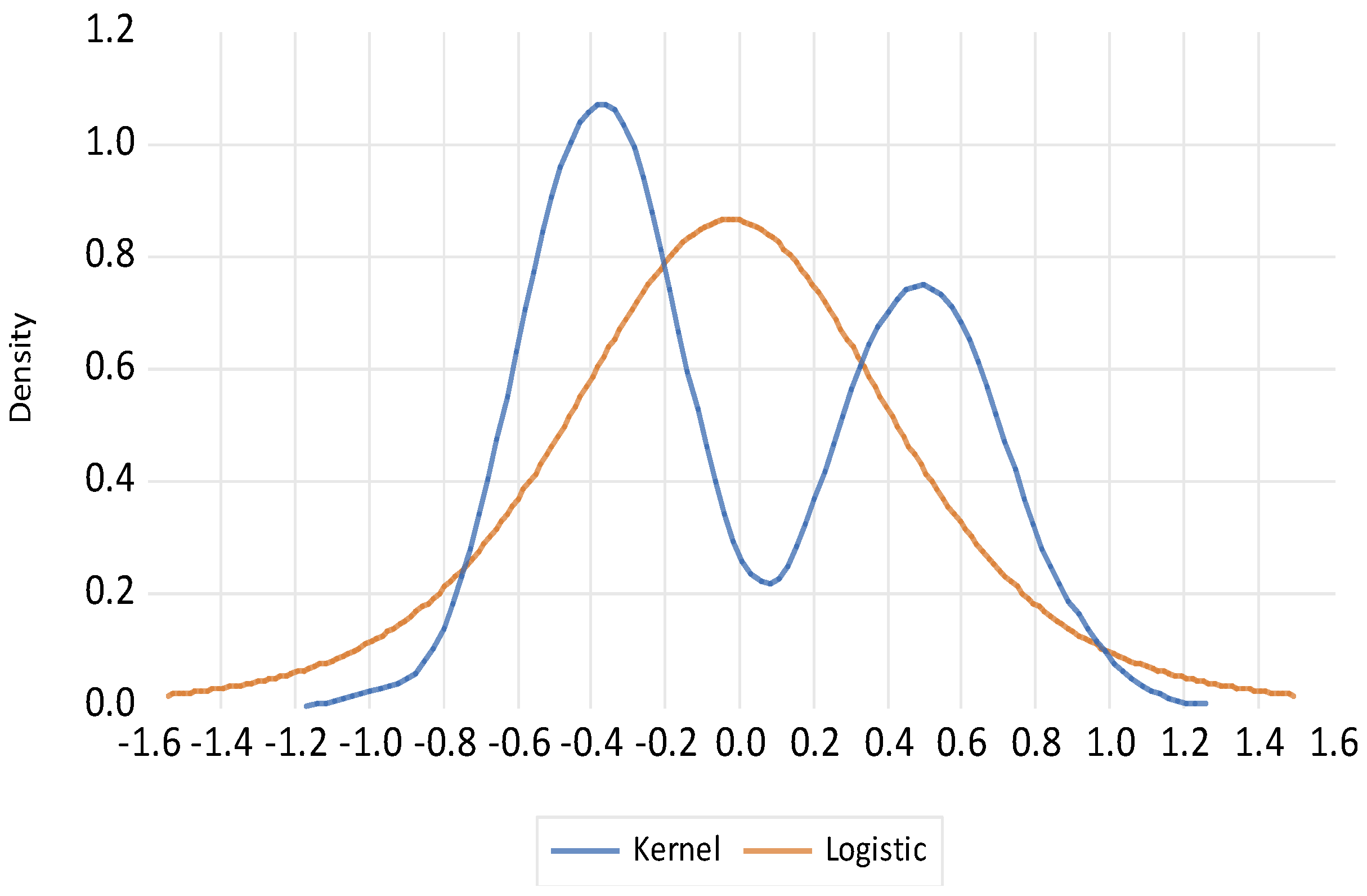
Figure 3 compares it with the logistic distribution, and
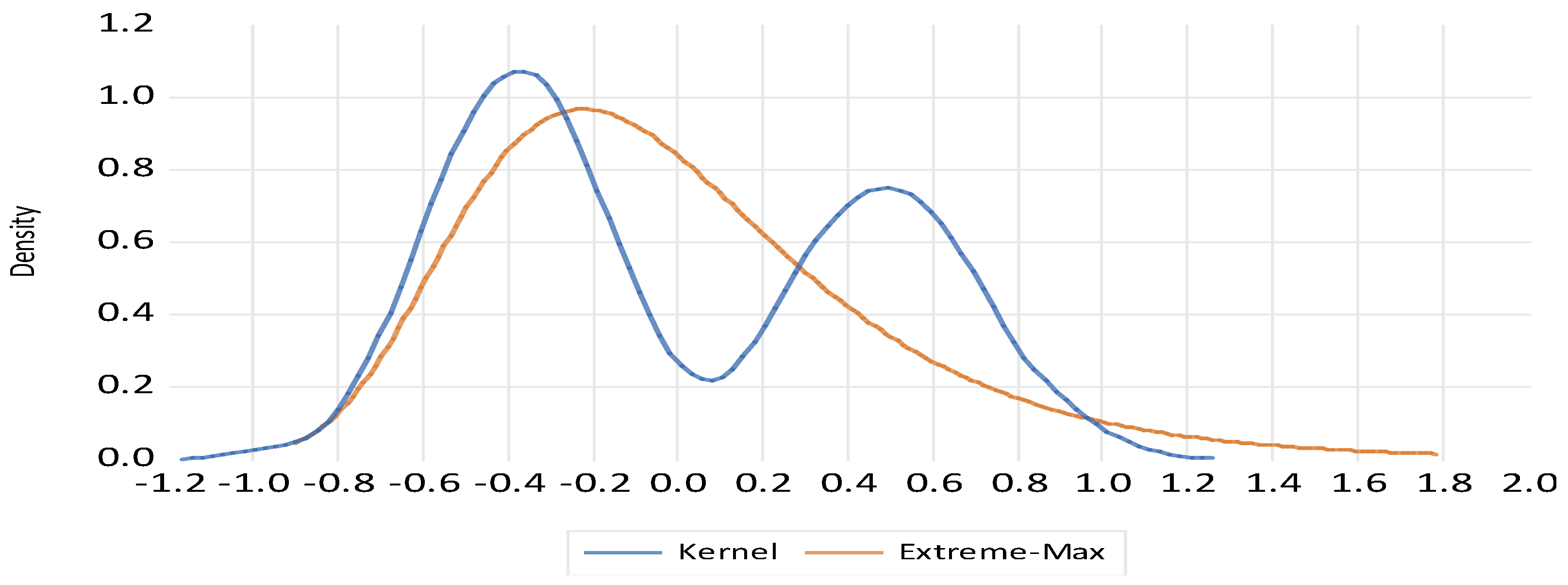
Figure 4 compares it with the extreme-value distribution. The residuals exhibit a positively skewed distribution with two tails. As shown in the figures below, the residuals exhibit a right-skewed distribution with two tails. The skewness value is positive and differs from that of a normal distribution (0.316). Similarly, the kurtosis (1.698) differs from the value of three expected under normality.
The mean of the deviates from the median is −0.19, with most frequencies concentrated in the first and second quartiles. The empirical errors distribution is therefore more consistent with an extreme value model, suggesting that the Gompit model is more suitable than the Probit model, as illustrated in
Figure 4. The results are presented below:
To complement graphical analysis, we perform three tests to compare the empirical error distribution with the corresponding theoretical distributions for continuous data: Kolmogorov–Smirnov, Anderson–Darling, and Chi-square tests. The results are reported in
Table 10.
Table 10 shows that the lowest statistics are obtained for the extreme value distribution with Kolmogorov–Smirnov, Anderson–Darling, and Chi-square statistics of 0.16, 7.74, and 85.64, respectively. These results are consistent with the graphical evidence reported above.
4.3.2. Gompit Model Estimation
This asymmetric extreme value function is suitable for binary data with asymmetric distributions and has been used in recent banking studies. For instance,
Calabrese and Giudici (
2015) show that generalized extreme value regression models outperform classical logistic models in banking contexts characterized by asymmetric events. In recent literature, the Gompit specification is often referred to as the complementary log–log model. Similarly,
Fiordelisi and Mare (
2013) employ the cloglog model to assess the probability of default in the banking sector. Therefore, this model provides a more robust and methodological specification for our data.
After selecting the Gompit model, we estimate the extreme value distribution model. The estimation results are presented in
Table 11.
The asymmetric extreme value model is estimated and reported in
Table 11. The McFadden’s R
2 is approximately 8.4%, which suggests an acceptable level of explanatory power for the binary-response model. The overall significance of the model (LR) reaches 0.000 and is significant at conventional levels, indicating that the model is significant.
To test the autocorrelation among the errors, we perform a test whose null hypothesis indicates the absence of residual autocorrelation.
Table 10 shows that the Q statistic is equal to 0.391, indicating no autocorrelation among the errors. The Levene test also shows that the variance of the errors is not homogeneous, with a value of 0.0320, meaning that the variances differ significantly across observations.
4.3.3. Model Estimation Results
To address heterogeneity in the variance of the residuals, we estimated the model using cluster-robust standard errors. The results are presented in the
Table 12.
5. Discussions
Table 11 shows that the variables that significantly affect ICW are ROA, SIZE, and LAW. STATE and DIV do not have a statistically significant effect on the dependent variable.
The coefficient for the state is negative but not statistically significant (−0.283511), indicating that state ownership does not systematically affect internal control weaknesses in the Algerian bank sector.
Accordingly, Hypothesis 1 is rejected, as the absence of a significant effect may reflect a substitution mechanism within the Algerian institutional setting. In a strongly regulated banking system, strict legal constraints and uniform compliance standards may reduce the relative importance of ownership-based monitoring. Regardless of ownership structure (public or private), banks are subject to the same supervisory pressure from the Bank of Algeria, which may limit the marginal effect of state ownership on internal control weakness.
By contrast, our result is consistent with studies conducted in highly regulated or emerging markets contexts, where regulatory pressure can dominate ownership effects (
X. Xu & Wang, 1999;
Al-Matari et al., 2014).
In these contexts, governance mechanisms related to regulation and to bank internal performance (size, profitability) are more decisive than those related to shareholding composition.
By contrast, the LAW variable is negative and statistically significant at the 1% level. This result indicates that the probability of observing an internal control weakness is lower in the post-regulation (11-08) period than in the pre-regulation period. Hypothesis 2 is therefore supported.
The regulation provided a regulatory framework forcing banks to improve their internal control systems. In response to this pressure, banks implemented internal reforms to align their practices with legal requirements. This finding is consistent with prior research emphasizing the role of regulatory reforms in improving governance and internal control.
Jiang and Yue (
2010) show that regulatory reforms in China have strengthened financial transparency and reduced weaknesses in banking governance systems.
Similarly,
Coates and Srinivasan (
2014) suggest that the introduction of the Sarbanes–Oxley Act (SOX) in the United States induced a significant improvement in internal control systems and a reduction in accounting fraud, confirming the effect of a strict legal framework.
Likewise,
Baatwah et al. (
2022) observe that in emerging countries, the implementation of rules on internal control improves the quality of financial reporting and limits opportunistic behavior.
Al-Matari et al. (
2014) showed that in Gulf countries, regulatory pressure is a determinant of the effectiveness of internal control more than shareholder governance mechanisms.
However, the effectiveness of a regulation depends on its application. While rules theoretically improve internal control, their impact can be limited when companies prioritize formal compliance over effective integration of control practices (
Doyle et al., 2007).
This highlights that the impact of Regulation 11-08 is not only linked to the existence of the legal text, but also to its strict application and the organizational adaptation of banks to the law.
Our results converge with research highlighting the coercive role of regulatory reforms in banking systems, particularly in emerging economies. They confirm that Regulation 11-08 influenced internal control practices in Algeria, encouraging banks to implement significant internal reforms. These adjustments are not a response to compliance but strengthen stakeholder confidence and improve the resilience of the banking system.
The performance measured by ROA has a significantly negative effect on ICW of around 5%. This effect can be explained by the increasing involvement of banks in improving the quality of their internal control in order to maintain a high level of performance. Similarly, the SIZE variable is positive by around 1%. This relationship can be interpreted as larger banks are more complex, which may increase the likelihood of internal control weakness.
6. Conclusions
This research provides empirical evidence on the impact of the regulatory framework, specifically Regulation 11-08, and state ownership on internal control systems in the Algerian banking sector. The results highlight that regulation plays a decisive role in reducing internal control weaknesses, confirming its importance in strengthening transparency and institutional legitimacy. However, state ownership does not have a significant effect, suggesting that, in the Algerian context, regulatory pressures and internal mechanisms (such as performance) have a greater impact than shareholder-related mechanisms in limiting opportunistic behavior and internal control weaknesses.
From a theoretical perspective, this study enriches the literature grounded in agency theory and institutional theory. The first perspective explains how a bank’s profitability can strengthen the capacity to implement monitoring mechanisms and reduce agency costs. However, larger bank size appears to be associated with higher internal control risk because of greater operational complexity.
The second perspective highlights the importance of the coercive and normative pressures generated by regulations (Regulation 11-08), which require banks to improve their control systems in order to maintain compliance and legitimacy.
The study contributes to our understanding of the determinants of internal control weaknesses in an emerging institutional context, where market mechanisms are less developed than in advanced economies.
Empirically, the analysis conducted on a sample of Algerian banks over the period 2007–2016 provides robust results. The largest banks are exposed to higher levels of operational risk and organizational complexity, which may increase their vulnerability to internal control deficiencies, while the most profitable institutions have stronger incentives to improve the quality of their control mechanisms to maintain stakeholder confidence. These results confirm that efficient organizational structures are important for internal control quality.
The absence of a significant effect of state ownership shows that in emerging economies, external governance may be more limited than internal and regulatory mechanisms.
The practical implications of this research are particularly important for emerging economies. For policymakers, our findings suggest that future regulatory updates should move from a rule-based approach to a risk-based supervisory framework. Rather than enforcing formal compliance alone, regulators should mandate qualitative external evaluations of IT control systems and require specialized, continuous training for audit committee members.
For bank managers, the study highlights the need to embed a culture of risk management, going beyond statutory reporting and ensuring that internal control is effective rather than merely legally compliant.
This research suggests that robust internal control systems are not only a regulatory requirement but also a strategic governance tool. The internal control improves operational efficiency, reduces exposure to fraud risks, and increases organizational resilience.
In a banking environment marked by complexity and increasing digitalization, internal control appears to be an essential for sustainable performance and stakeholder trust. The Algerian case illustrates the importance for emerging economies of strengthening both regulatory and internal mechanisms to enhance the stability and credibility of their banking systems.