Article

Digital Asset Inheritance: Perceptions, Readiness, and Challenges in a Developing Economy

by
Pongsakorn Limna
1,
Rattawut Nivornusit
2,* and
Yarnaphat Shaengchart
1,3,*
1
International College, Pathumthani University, Mueang 12000, Pathum Thani, Thailand
2
Wisdom Media, Rangsit University, Mueang 12000, Pathum Thani, Thailand
3
Faculty of Information Technology and Digital Innovation, King Mongkut’s University of Technology North Bangkok, Bangsue, Bangkok 10800, Thailand
*
Authors to whom correspondence should be addressed.
J. Risk Financ. Manag. 2026, 19(4), 285; https://doi.org/10.3390/jrfm19040285
Submission received: 16 March 2026 / Revised: 12 April 2026 / Accepted: 13 April 2026 / Published: 15 April 2026
(This article belongs to the Section Financial Technology and Innovation)

Abstract

The rapid expansion of digital assets has transformed contemporary financial systems, yet their role in inheritance planning remains underexplored, particularly in developing economies. Employing a mixed-methods design, this study examines the factors influencing individuals’ acceptance of digital assets as inheritance and explores their perceptions and readiness to adopt such assets within estate planning in Thailand. The quantitative phase analyzes survey data using descriptive statistics and binary logistic regression, focusing on investment experience, risk orientation, emotional responses to financial risk, financial capacity, and perceived suitability. The results indicate that investment orientation, discretionary financial capacity, familiarity with diverse digital asset types, and psychological resilience toward financial volatility significantly increase acceptance, with Preferred Investment Group emerging as the strongest predictor. In contrast, anxiety toward high-risk investments reduces acceptance. Qualitative findings, derived from content analysis of in-depth interviews, reveal persistent skepticism regarding asset stability, legal and institutional uncertainty, technological barriers, and subjective valuation. Despite these concerns, participants expressed conditional readiness to adopt digital assets in inheritance planning given clearer legal frameworks, professional guidance, and user-friendly technologies. This study contributes to the emerging literature on digital wealth transfer and offers practical implications for policymakers, financial advisors, and legal professionals seeking to develop regulatory frameworks, financial literacy initiatives, and technological infrastructures that support the secure intergenerational transfer of digital assets.

1. Introduction

The contemporary world is experiencing profound transformations driven by advancements in digital technology, which have significantly enhanced convenience and improved overall quality of life. Across all sectors—spanning communication, transportation, finance, and investment—organizations, institutions, and individuals are undergoing profound technological transformation. As these technologies progress, the digitization of information has become ubiquitous, enabling more efficient data management and reducing reliance on traditional paper-based systems. Financial value, too, is now often represented and managed in digital form, with blockchain technology emerging as a pivotal innovation. Blockchain ensures the security and reliability of decentralized transactions, thereby eliminating the need for traditional intermediaries. This foundational technology underpins the trading of digital currencies, positioning the present era as one characterized by intense competition within digital marketplaces. In this context, virtually all forms of assets are being digitized, and investment in digital assets has gained considerable popularity among contemporary investors (Javaid et al., 2022; Polanco, 2023; Reis & Melão, 2023; Shoommuangpak & Wongta, 2023).
Digital assets are defined as electronically created and stored items that possess uniqueness, traceability, and inherent or perceived value. These assets—ranging from data, images, and videos to text documents—play an increasingly integral role in both personal and professional domains. Their value can be subjective and personal, such as a family photograph, or strategic and commercial, like a corporate brand. Although organizations have long leveraged digital data as a source of value, the advent of blockchain technology and cryptocurrencies in 2009 significantly broadened the conceptual and practical scope of digital assets. They now encompass a diverse range of digital items that can generate value and be transferred or exchanged through technologically enabled systems. While the notion of digital assets is not entirely new, its relevance has expanded beyond niche domains such as data science, gaining widespread recognition with the proliferation of blockchain-based technologies (Hashemi, 2024; Intelligence Team, 2023; Schneider, 2024). In the Thai context, interest in digital assets saw a marked increase during the COVID-19 pandemic. By the second quarter of 2022, approximately 2.9 million accounts had been opened for digital asset exchanges, with around 250,000 of those actively engaged in trading activities. Although this number remains modest compared to the 5.5 million accounts registered with the Stock Exchange of Thailand, it signifies a noteworthy rise in public engagement with digital assets. In response to this growing trend, key regulatory bodies—including the Stock Exchange of Thailand (SET), the Securities and Exchange Commission (SEC), and the Revenue Department—have initiated the development of strategic frameworks and policy measures. These efforts aim to address the rapid expansion of the digital asset market and ensure alignment with broader digital technology trends (Intelligence Team, 2023; Shoommuangpak & Wongta, 2023).
While prior studies have examined the general adoption of digital assets in Thailand, particularly within the context of investment behavior and capital market transactions (e.g., Chaisiripaibool et al., 2025; Shoommuangpak & Wongta, 2023), far less attention has been given to their role in inheritance planning. Public awareness of digital assets as an investment instrument has expanded, yet this does not necessarily translate into readiness to incorporate them into intergenerational wealth transfer. Inheritance involves unique considerations that extend beyond transactional ownership—such as legal recognition, procedural clarity, emotional preparedness of heirs, and long-term value stability. Existing literature has emphasized the risks and opportunities of digital assets in capital markets, but few studies have directly compared how digital and traditional assets are treated in inheritance contexts. For instance, while property, gold, and securities have established legal and procedural pathways for succession, cryptocurrencies, Non-Fungible Tokens (NFTs), Decentralized Finance (DeFi) investments, and other digital assets lack comparable legal clarity and institutional infrastructure. This disconnect underscores a critical gap: although individuals may increasingly hold digital assets, there remains limited empirical understanding of how such assets are perceived, planned for, and transferred in inheritance processes. Accordingly, employing a mixed-methods approach, this study aims to examine the factors influencing individuals’ acceptance of digital assets as inheritance through a quantitative approach, and to explore how individuals in Thailand perceive and express their readiness to adopt such assets within inheritance planning through qualitative inquiry, where acceptance refers to attitudinal willingness and readiness reflects the intention and perceived capability to implement. Importantly, this research examines these dimensions from the perspective of digital asset holders (i.e., asset owners or potential testators), rather than beneficiaries. The focus is therefore on how individuals who own or invest in digital assets evaluate their suitability, stability, and procedural feasibility for intergenerational wealth transfer. The research contributes to the emerging discourse on digital asset management, offers practical insights for financial advisors and legal professionals, informs policymakers on regulatory needs, and lays the groundwork for future research on digital asset succession and personal financial planning in the digital era.

1.1. Research Objectives

This study aims to examine the factors influencing individuals’ acceptance of digital assets as inheritance through a quantitative approach and to explore how individuals in Thailand perceive and express their readiness to adopt digital assets within inheritance planning through qualitative inquiry.

1.2. Research Questions

What factors influence individuals’ acceptance of digital assets as inheritance, and how do digital asset holders perceive and express their readiness to adopt digital assets within inheritance planning?
The remainder of this paper is structured as follows. Section 2 reviews the relevant literature and develops the theoretical framework and research hypotheses. Section 3 outlines the research methodology. Section 4 presents the empirical results from both the quantitative and qualitative analyses. Section 5 discusses the findings in relation to existing literature and theoretical perspectives. Finally, Section 6 concludes the study by summarizing key insights, outlining implications for policy and practice, and suggesting directions for future research.

2. Literature Review

This literature review synthesizes prior research across five key dimensions: (1) the conceptualization and types of digital assets; (2) the emerging concept and challenges of digital inheritance; (3) the legal and regulatory context in Thailand; (4) issues of awareness, digital literacy, and readiness for digital asset succession; and (5) theoretical foundations of digital asset inheritance and hypothesis development.

2.1. Overview of Digital Assets

Digital assets have become a significant component of modern estates, presenting distinct challenges and considerations for inheritance. Unlike tangible property, these assets exist in diverse digital forms—ranging from personal memorabilia to financial instruments—and their management upon the owner’s death requires careful planning and legal understanding (Chaisiripaibool et al., 2025; Yolanda et al., 2025). Among the most prominent are cryptocurrencies such as Bitcoin and Ethereum, which operate on decentralized blockchain networks and function as mediums of exchange, investment vehicles, or stores of value. NFTs represent unique digital assets, including digital artwork, virtual collectibles, and in-game items; typically stored in digital wallets, their value derives from rarity, market demand, and creator reputation. DeFi investments further provide opportunities to generate income through mechanisms such as interest, staking, and yield farming within decentralized financial ecosystems that operate without traditional intermediaries. Additionally, social media accounts—such as Facebook, Instagram, and YouTube—may hold substantial economic and personal value, particularly for influencers and content creators who generate income through sponsorships, advertising, and audience engagement. Importantly, cryptocurrencies, NFTs, DeFi investments, and social media accounts are conceptually distinct. Cryptocurrencies primarily serve as digital currencies or stores of value; NFTs represent unique, non-interchangeable digital property; DeFi investments involve blockchain-based financial services without intermediaries; and social media accounts embody digital identity and personal data. Consequently, each category differs in legal status, transferability, valuation, and inheritance implications (Farooqui et al., 2022; Hashemi, 2024). Collectively, these assets reflect the evolving landscape of digital ownership and underscore the need for secure management, comprehensive estate planning, and regulatory awareness. This study therefore examines individuals’ perceptions and readiness to incorporate diverse digital assets into inheritance planning within the Thai context, focusing on knowledge, financial preparedness, emotional readiness, and procedural understanding.

2.2. Digital Inheritance: Concept and Challenges

In the digital era, inheritance has expanded to encompass digital possessions, giving rise to the field of digital inheritance, which focuses on the deliberate management and transfer of a deceased individual’s digital assets—such as social media accounts, cryptocurrencies, cloud-stored documents, and intellectual property—to designated heirs. This expansion reflects the increasing digitization of daily life, where individuals accumulate valuable online content and financial instruments that require structured planning for succession. The management of digital assets presents unique legal, technical, and ethical challenges, including difficulties in identifying multiple accounts, navigating password protections and security features, interpreting terms of service agreements that differentiate ownership from licensing rights, and complying with evolving privacy regulations (Akramov et al., 2024; Farooqui et al., 2022; Hernando-Corrochano et al., 2025; Juhász, 2024; Kharitonova, 2021; Kraiwanit et al., 2025; Yolanda et al., 2025). The absence of standardized legal frameworks and limited public awareness often results in the permanent loss of sentimental or financially valuable digital content upon death. Consequently, a comprehensive understanding of what constitutes a digital asset, combined with effective strategies for integrating these assets into estate planning, is essential to safeguard digital legacies and ensure that individuals’ final wishes are fulfilled.

2.3. Legal and Regulatory Context in Thailand

In Thailand, as in many developing economies, the incorporation of digital assets into inheritance planning is still in its early stages, constrained by both institutional limitations and cultural factors. The legal framework for digital asset succession remains underdeveloped, creating uncertainty among legal professionals, estate planners, and asset owners regarding appropriate procedures and formal recognition (Chaiyong, 2024; Fuwattananukul, 2024; Wata, 2016). Many individuals are unclear about how to legally transfer digital holdings or which types of digital assets can be formally included in a will, and the absence of standardized procedures continues to hinder broader adoption of digital inheritance practices. Consequently, asset owners often rely on informal and potentially insecure methods—such as writing down passwords or sharing credentials—which increases the risk of asset loss, mismanagement, or disputes among heirs (Ion & Ciuca, 2024; Klasiček, 2023; Syarifah, 2024; Ugli, 2024). These challenges underscore the urgent need for regulatory development, institutional guidance, and public education to support secure and legally recognized digital asset succession.

2.4. Awareness, Digital Literacy, and Readiness for Digital Inheritance

Limited public awareness and a lack of digital literacy remain major obstacles to the adoption of digital inheritance practices. While digital asset owners may be proficient with technology, effective inheritance planning requires not only technical competence but also an understanding of how to securely transfer these assets to their heirs. The readiness of owners to include digital assets in their legacy planning depends on their awareness of legal frameworks, procedural clarity, and potential risks associated with digital wealth transfer. Ensuring that heirs can access and manage inherited digital assets safely underscores the importance of targeted education, guidance from financial and legal professionals, and supportive institutional mechanisms. Scholars have called for coordinated actions among policymakers, legal experts, and financial advisors to promote public understanding and develop practical tools that facilitate the secure inclusion of digital assets in inheritance planning (Akramov et al., 2024; Ion & Ciuca, 2024; Meyer, 2024; Pratt, 2018; Wata, 2016). Enhanced awareness, digital literacy, and readiness for digital inheritance are essential for informed decision-making, risk management, and capitalizing on financial opportunities in a rapidly evolving landscape. In this study, these challenges are examined in relation to individuals’ perceptions and readiness to include digital assets in inheritance planning in Thailand, focusing on key factors such as awareness, procedural preparedness, financial readiness, and emotional confidence. Understanding these dimensions provides insight into the conditions necessary for secure and effective digital asset succession, informing both policy development and practical guidance for estate planning.

2.5. Theoretical Foundations of Digital Asset Inheritance and Hypothesis Development

The integration of digital assets into inheritance planning can be theoretically grounded in four interrelated streams of literature: risk tolerance and portfolio theory; behavioral finance and emotional decision-making; financial capability and life-cycle theory; and technology acceptance and innovation diffusion. Together, these perspectives provide a multidimensional foundation for explaining how investment experience, risk orientation, financial capacity, psychological resilience, and attitudinal perceptions shape the acceptance of digital assets as inheritance.
Classical portfolio theory, particularly Harry Markowitz’s Modern Portfolio Theory (MPT), posits that investors allocate assets based on expected returns, variance (risk), and diversification benefits. Investors with higher risk tolerance tend to include more volatile assets in their portfolios in pursuit of greater expected returns (Yu & Zhang, 2023; Zhang, 2025). In the context of digital asset inheritance, this framework suggests that individuals who demonstrate broader investment exposure and willingness to hold high-risk instruments are more likely to perceive digital assets as appropriate components of intergenerational wealth transfer. This theoretical logic directly underpins the inclusion of the Investment Experience Score (IEX) and High-Risk Asset Experience (HRAE) variables. Individuals who have held multiple asset types or participated in high-risk markets (e.g., common stocks, equity funds, digital assets) have already internalized portfolio diversification principles and volatility management. Similarly, Primary Investment Objective (PIO) and Preferred Investment Group (PIG) reflect forward-looking risk–return preferences, operationalizing the risk appetite dimension central to MPT. Higher scores on these variables theoretically indicate greater openness to including volatile digital assets within long-term financial strategies, including inheritance planning. Thus, from a portfolio theory perspective, digital asset inheritance acceptance is expected to increase with investment diversification experience and higher risk–return orientation (Chaplot & Lohar, 2025; Dondjio & Kazamias, 2024; Katuk et al., 2024; Kraiwanit et al., 2025).
Furthermore, while classical finance assumes rational decision-making, behavioral finance demonstrates that investment decisions are heavily influenced by cognitive biases, emotional reactions, and loss aversion. Prospect Theory argues that individuals weigh losses more heavily than equivalent gains, often leading to conservative behavior under uncertainty (Baker & Nofsinger, 2010; Tian, 2024). According to Kraiwanit et al. (2025) and Long et al. (2025), digital assets are characterized by high volatility, price swings, and media-driven sentiment. Therefore, emotional responses become particularly salient in shaping inheritance decisions. The inclusion of Emotional Response to High-Risk Investments (ERHRI) captures anxiety and discomfort toward volatility, reflecting loss aversion tendencies. Conversely, Investment Value Decline Tolerance (IVDT) and Investment Loss Reaction (ILR) operationalize psychological resilience—measuring whether individuals panic, rebalance, or strategically average down during downturns. Theoretically, individuals who exhibit lower anxiety (low ERHRI), higher tolerance for decline (high IVDT), and constructive behavioral responses to losses (high ILR) are more likely to integrate volatile digital assets into long-term succession planning. In contrast, emotionally risk-averse individuals may reject digital assets as inheritance instruments due to perceived instability (Corter, 2011; Khan et al., 2024; Littrell et al., 2024; Thai & Huong, 2025).
Life-cycle theory suggests that individuals plan consumption, saving, and wealth transfer across different life stages (Miehe, 2025). Financial decisions—including inheritance planning—are influenced by accumulated wealth, income stability, and perceived financial security (Chaudary et al., 2024; Kraiwanit et al., 2025). In this study, Expense-to-Income Ratio (EIR) and Current Financial Status (CFS) represent indicators of financial capacity and stability. Individuals with greater discretionary income and stronger asset–liability positions are theoretically more capable of engaging in diversified or higher-risk investments. Financial security reduces perceived vulnerability and enhances willingness to incorporate emerging asset classes into estate planning. From this perspective, digital asset inheritance is not solely a function of risk preference but also of financial readiness. Those facing financial constraints may prioritize liquidity and capital preservation, whereas financially stable individuals may view digital assets as growth-oriented components suitable for legacy diversification (Hossain et al., 2025; Katuk et al., 2023; Kraiwanit et al., 2025; D. Li et al., 2025).
Digital assets are not merely financial instruments but also technological innovations rooted in blockchain systems. Acceptance of such assets in inheritance planning can be interpreted through the Technology Acceptance Model (TAM) and Innovation Diffusion Theory (IDT). According to TAM, individuals adopt new technologies when they perceive them as useful and appropriate. In this study, perceived appropriateness is captured through Cryptocurrency Suitability Rating (CSR) and Average Digital Asset Suitability Score (ADASS). These variables reflect evaluative judgments regarding whether digital assets are legitimate, reliable, and appropriate for inheritance. Innovation diffusion theory further emphasizes familiarity and exposure. The Digital Asset Type Preference Count (DATPC) reflects breadth of engagement across multiple digital asset categories. Individuals comfortable with diverse digital asset types are more likely to normalize their inclusion in long-term planning (Chaisiripaibool et al., 2025; Folkinshteyn & Lennon, 2016; Kraiwanit et al., 2025).
Building on these adapted theoretical foundations, this study proposes a set of hypotheses to explain the determinants of individuals’ acceptance of digital assets as inheritance. Portfolio theory explains how investment experience and risk orientation shape asset allocation decisions (Yu & Zhang, 2023; Chaplot & Lohar, 2025). Behavioral finance highlights how emotional responses and loss tolerance influence decision-making under uncertainty (Baker & Nofsinger, 2010; Tian, 2024; Bird et al., 2025). Life-cycle theory emphasizes the role of financial capacity in shaping individuals’ willingness to allocate resources to higher-risk or emerging assets (Miehe, 2025; Chaudary et al., 2024). Technology acceptance theory further explains how perceived suitability and familiarity with digital assets influence their inclusion in inheritance planning (Folkinshteyn & Lennon, 2016; Chaisiripaibool et al., 2025). Collectively, these perspectives suggest that investment experience, risk orientation, emotional responses to uncertainty, financial capacity, and perceived suitability jointly shape individuals’ willingness to incorporate digital assets into inheritance planning.
First, investors with broader investment exposure are more likely to understand diversification strategies and risk–return trade-offs. Individuals who have experience investing in multiple asset types are therefore expected to demonstrate greater openness to incorporating digital assets into inheritance planning (Yu & Zhang, 2023; Z. Li et al., 2023; Kraiwanit et al., 2025). Therefore, a hypothesis is proposed as follows:
H1. 
Investment Experience Score (IEX) positively influences the acceptance of digital assets as inheritance.
Similarly, prior experience with high-risk assets may increase familiarity with market volatility and speculative investment environments. Individuals who have previously invested in higher-risk financial instruments may therefore be more comfortable including digital assets in long-term financial strategies (Chaisiripaibool et al., 2025; Khaki et al., 2023; Kraiwanit et al., 2025; Ma et al., 2020). Therefore, a hypothesis is proposed as follows:
H2. 
High-Risk Asset Experience (HRAE) positively influences the acceptance of digital assets as inheritance.
Investment objectives also reflect an individual’s risk orientation. Investors who prioritize higher returns and capital growth may be more inclined to consider emerging and volatile assets as part of their legacy planning (D. Li et al., 2025; Abbas & Usman, 2025). Therefore, a hypothesis is proposed as follows:
H3. 
Primary Investment Objective (PIO) positively influences the acceptance of digital assets as inheritance.
Closely related to investment objectives is the preference for different risk–return investment groups. Individuals who prefer investment portfolios with higher potential returns despite greater risks are expected to be more receptive to digital assets in inheritance planning (Chaplot & Lohar, 2025; Khaki et al., 2023). Therefore, a hypothesis is proposed as follows:
H4. 
Preferred Investment Group (PIG) positively influences the acceptance of digital assets as inheritance.
Behavioral finance emphasizes the role of emotional responses in financial decision-making. Individuals who experience strong anxiety or discomfort toward high-risk investments may be less likely to consider volatile assets such as cryptocurrencies suitable for inheritance (Corter, 2011; Khan et al., 2024; Bird et al., 2025; Smutny et al., 2021). Therefore, a hypothesis is proposed as follows:
H5. 
Emotional Response to High-Risk Investments (ERHRI) negatively influences the acceptance of digital assets as inheritance.
Conversely, individuals with greater tolerance for investment value decline are more likely to accept volatility as part of long-term financial strategies (Tian, 2024; Marjerison et al., 2025; Mohammad et al., 2025) and may therefore be more open to including digital assets in their inheritance plans. Therefore, a hypothesis is proposed as follows:
H6. 
Investment Value Decline Tolerance (IVDT) positively influences the acceptance of digital assets as inheritance.
Behavioral reactions to financial losses also shape investment decision-making. Individuals who demonstrate constructive responses—such as maintaining or increasing investments during downturns—are more likely to accept digital assets as part of inheritance planning (Corter, 2011; Khan et al., 2024; Kraiwanit et al., 2025). Therefore, a hypothesis is proposed as follows:
H7. 
Investment Loss Reaction (ILR) positively influences the acceptance of digital assets as inheritance.
From a financial capability perspective, individuals with greater discretionary income may have stronger financial resilience and thus greater capacity to invest in higher-risk or emerging asset classes (Hossain et al., 2025; Chaudary et al., 2024). Therefore, a hypothesis is proposed as follows:
H8. 
Expense-to-Income Ratio (EIR) positively influences the acceptance of digital assets as inheritance.
Similarly, individuals who perceive their financial status as stable or secure may feel more confident in allocating part of their wealth to innovative or high-growth assets (D. Li et al., 2025; Kraiwanit et al., 2025). Therefore, a hypothesis is proposed as follows:
H9. 
Current Financial Status (CFS) positively influences the acceptance of digital assets as inheritance.
From the perspective of technology acceptance, individuals’ perceptions of the suitability and usefulness of digital assets play a crucial role in shaping their willingness to adopt them in inheritance planning (Chaisiripaibool et al., 2025; Folkinshteyn & Lennon, 2016; Phillips et al., 2022). Therefore, a hypothesis is proposed as follows:
H10. 
Cryptocurrency Suitability Rating (CSR) positively influences the acceptance of digital assets as inheritance.
More broadly, individuals who perceive digital assets as appropriate or valuable for inheritance purposes are expected to demonstrate stronger acceptance (Curry, 2025; Ng, 2025). Therefore, a hypothesis is proposed as follows:
H11. 
Average Digital Asset Suitability Score (ADASS) positively influences the acceptance of digital assets as inheritance.
Finally, familiarity with multiple types of digital assets may normalize their role within personal financial management and long-term planning (Chaisiripaibool et al., 2025; Kraiwanit et al., 2025; Steen et al., 2024). Therefore, a hypothesis is proposed as follows:
H12. 
Digital Asset Type Preference Count (DATPC) positively influences the acceptance of digital assets as inheritance.
Taken together, these hypotheses form the empirical framework of this study, allowing for the examination of how investment behavior, emotional responses to financial risk, financial capacity, and attitudinal perceptions collectively shape individuals’ acceptance of digital assets as inheritance in Thailand.
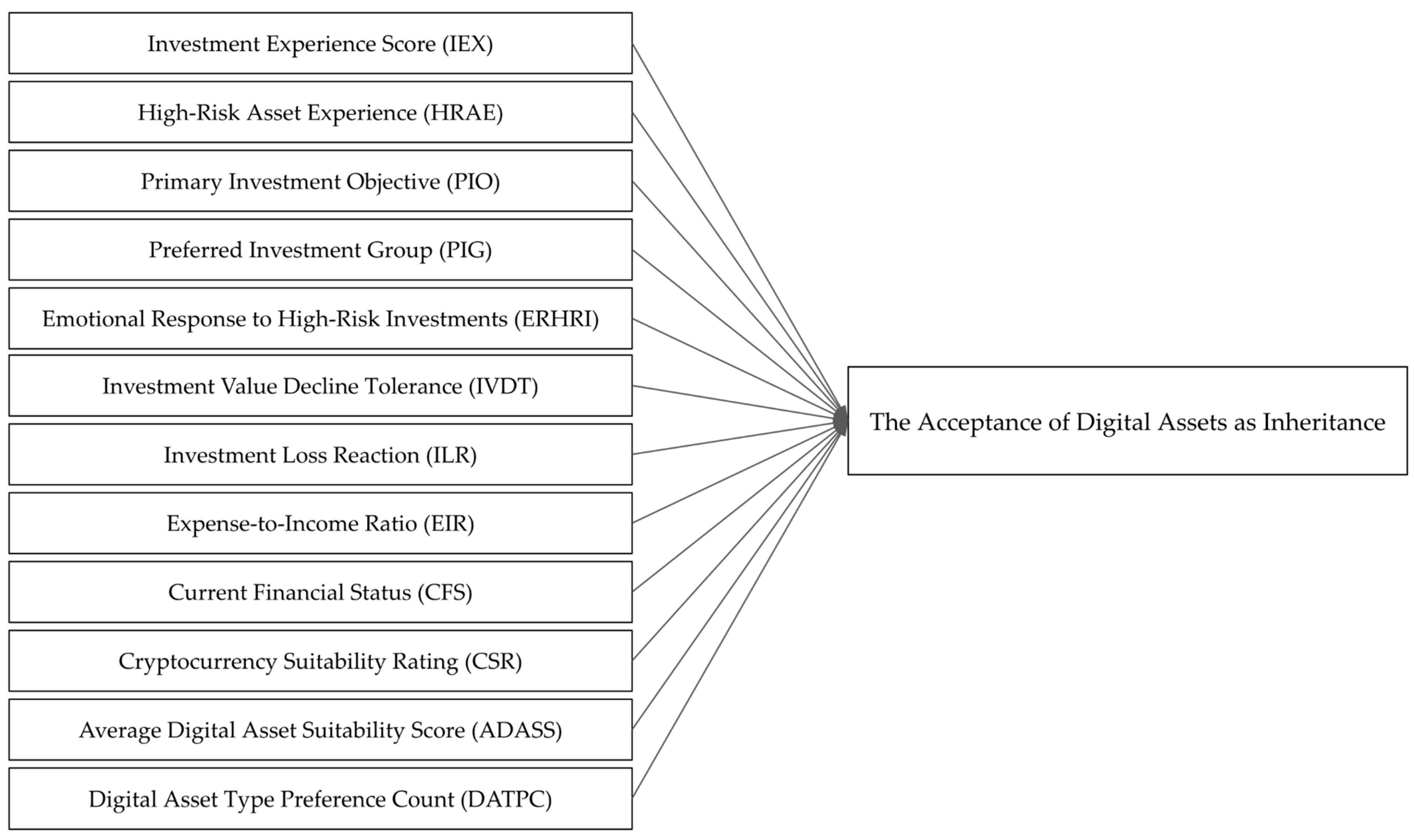
Figure 1 illustrates the conceptual model used to examine the determinants of individuals’ acceptance of digital assets as inheritance.
As presented in Figure 1, the model integrates variables derived from multiple theoretical perspectives and organizes them as predictors of individuals’ intention to adopt digital assets in inheritance planning. All variables are hypothesized to influence the acceptance of digital assets as inheritance.

3. Materials and Methods

This study employed a sequential explanatory mixed-methods design, in which quantitative data collection and analysis were conducted first, followed by a qualitative phase to elaborate and explain the findings. A mixed-methods approach was necessary because the phenomenon under investigation—digital asset inheritance—encompasses not only measurable financial and behavioral variables but also subjective perceptions, emotional responses, and institutional concerns that cannot be fully captured through survey data alone. The quantitative phase aimed to identify statistically significant predictors of acceptance of digital assets as inheritance. Using structured questionnaires and binary logistic regression, this phase provided generalizable evidence regarding the influence of investment experience, risk tolerance, financial capacity, and perceived suitability on inheritance acceptance. The quantitative analysis established patterns, tested hypotheses, and determined the relative strength of predictors. However, while statistical modeling reveals what factors influence acceptance, it does not fully explain why individuals hold certain perceptions or how institutional and technological concerns shape readiness. Therefore, a qualitative phase was subsequently conducted to provide deeper contextual understanding. Through in-depth semi-structured interviews, the qualitative component explored legal uncertainty, emotional hesitation, technological barriers, and cultural attitudes toward inheritance stability. This phase enabled interpretation of the mechanisms underlying the statistical relationships observed in the quantitative model. The integration of quantitative breadth and qualitative depth enhances the validity and comprehensiveness of the findings. The quantitative phase ensures empirical rigor and generalizability, while the qualitative phase provides explanatory richness and contextual nuance. Together, this sequential explanatory design offers a more holistic understanding of individuals’ perceptions and readiness regarding digital asset inheritance in Thailand.

3.1. Quantitative Approach

The quantitative component was conducted using a structured online questionnaire administered through Google Forms. The measurement items were developed through a comprehensive review of the relevant literature and were adapted from established and validated scales, including those proposed by Z. Li et al. (2023), Chaisiripaibool et al. (2025), and Ger et al. (2025). Investment experience was captured through the Investment Experience Score (IEX; continuous, 0–4), reflecting the number of asset types held, and High-Risk Asset Experience (HRAE; binary), indicating whether participants had engaged in common stocks, equity mutual funds, digital assets, or other high-risk assets. Risk orientation was measured using Primary Investment Objective (PIO; ordinal, 1–4) and Preferred Investment Group (PIG; ordinal, 1–4), with higher scores reflecting greater risk appetite. Emotional and behavioral responses to risk were assessed using Emotional Response to High-Risk Investments (ERHRI; ordinal, 1–4), Investment Value Decline Tolerance (IVDT; ordinal, 1–4), and Investment Loss Reaction (ILR; ordinal, 1–4). Financial capacity was evaluated with Expense-to-Income Ratio (EIR; ordinal, 1–4) and Current Financial Status (CFS; ordinal, 1–4). Participants’ digital asset attitudes were examined via Cryptocurrency Suitability Rating (CSR; ordinal, 1–5), Average Digital Asset Suitability Score (ADASS; continuous), and Digital Asset Type Preference Count (DATPC; continuous, 0–4). These constructs were operationalized using single-item measures and composite indices rather than multi-item psychometric scales. Because they represent concrete behavioral or financial conditions rather than latent psychological traits, internal consistency reliability is not applicable.
The draft questionnaire underwent rigorous evaluation by three domain experts specializing in finance, digital technology, digital asset regulation, behavioral economics, and survey methodology. Based on their feedback, the instrument was refined to improve clarity, contextual suitability, and construct validity. The resulting Item Objective Congruence (IOC) values ranged from 0.80 to 1.00, indicating a high level of item appropriateness and alignment with research objectives. A pilot test with 30 participants was conducted to evaluate clarity and effectiveness of the questionnaire. Consistent with Aithal and Aithal (2020), this step ensured instrument validity before full deployment. The test led to simplifying terminology, refining response options, improving question order, and removing redundancies, thereby enhancing the reliability and validity of the instrument. The finalized questionnaire was distributed electronically through multiple digital platforms—such as Facebook, LINE, and WhatsApp—to maximize accessibility and demographic reach. Participation was voluntary and preceded by an informed consent process, in which all respondents agreed to the use of their data for academic purposes. The target population included Thai residents aged 18 years and older, with varying degrees of familiarity with digital assets. The required minimum sample size for this study was determined using Cochran’s formula, applying a 95% confidence level and a 5% margin of error, which yielded a threshold of 384 participants (Uakarn et al., 2021). To improve precision and enhance the reliability of the findings, the study ultimately recruited 630 participants through convenience sampling in March 2025, thereby exceeding the required threshold and yielding a robust dataset for analysis.
To ensure methodological transparency and data integrity, all collected responses underwent a structured data screening and preprocessing procedure prior to analysis. First, incomplete or partially submitted questionnaires were excluded to maintain consistency across variables. Second, responses were screened for straight-lining, extreme response patterns, and unusually short completion times, which may indicate low engagement or inattentive answering. Outliers were assessed using standardized residuals and boxplot inspection to ensure that extreme values did not unduly influence the results. Missing data were minimal and handled using listwise deletion to preserve the robustness of multivariate analysis. In addition, internal consistency and construct reliability were assessed prior to hypothesis testing to ensure measurement validity. Data coding and transformation procedures were applied where necessary to align variable scales and ensure comparability across constructs. These procedures ensured that the dataset was robust, reliable, and suitable for subsequent statistical analysis.
Quantitative data were analyzed using descriptive statistics in Jamovi (version 2.16.17.0) for both descriptive and inferential analyses. Binary logistic regression was employed to examine the influence of independent variables on the dependent variable, “acceptance of digital assets as inheritance,” which was operationalized as a single binary item measuring respondents’ willingness to accept digital assets in inheritance planning (1 = Yes, 0 = No). This approach estimated the likelihood of such acceptance and generated odds ratios to indicate the strength and direction of each factor’s effect, thereby providing insights into the key determinants of digital-asset inheritance planning in Thailand.

3.2. Qualitative Approach

To complement the quantitative findings and explore nuanced individual perspectives, a qualitative phase was conducted using in-depth semi-structured interviews. This phase adhered to established qualitative research reporting standards, particularly the COREQ checklist, to ensure transparency, methodological rigor, and credibility (Tong et al., 2007). With respect to research design and theoretical orientation, the qualitative component adopted a pragmatic interpretivist perspective, aiming to understand how individuals construct meaning around digital asset inheritance within their socio-legal and financial contexts. Semi-structured interviews were selected to provide flexibility while ensuring systematic coverage of core themes derived from the quantitative findings and the literature review. The interview guide was developed through a comprehensive review of relevant scholarship and refined in consultation with experts in finance, digital assets, and qualitative research methodology. The sequence of questions was intentionally structured to progress from general perceptions of digital assets to more specific concerns related to inheritance planning, legal clarity, emotional readiness, and technological barriers.
In relation to the research team and reflexivity, the interviews were conducted by researchers with formal training in qualitative research methodology and experience in financial and digital asset research. The interviewers had no prior personal relationships with the participants, thereby minimizing potential bias. Before each interview, participants were informed of the researchers’ academic backgrounds and the objectives of the study. Reflexive memoing was undertaken throughout the data collection and analysis phases to acknowledge and critically reflect on potential researcher assumptions, particularly those related to digital finance and inheritance planning.
For participant selection and recruitment, the inclusion criteria required that participants: (1) be Thai citizens; (2) reside in Thailand; (3) be at least 18 years of age; and (4) possess recent experience with or demonstrable knowledge of digital assets (e.g., cryptocurrencies, NFTs, or DeFi platforms). A purposive sampling strategy was initially employed to identify individuals from diverse backgrounds—including digital investors, professionals, and novices—thereby ensuring information-rich cases relevant to digital asset inheritance. To further expand access to participants with specialized knowledge and practical experience, a snowball sampling technique was subsequently applied, whereby initial participants recommended additional individuals who met the inclusion criteria. This combined purposive–snowball approach enhanced the diversity and depth of perspectives while remaining aligned with the study’s objectives. In total, 10 participants were interviewed. This sample size is consistent with qualitative research best practices, which suggest that approximately 6 to 10 interviews are generally sufficient to achieve data saturation in focused qualitative studies, particularly when participants possess relevant experiential knowledge (Sebele-Mpofu, 2020).
Regarding data collection, interviews were conducted in May 2025 in Thai, either face-to-face or via secure online platforms, such as Zoom or Google Meet, based on participant preference. Each interview lasted approximately 45–60 min. All interviews were audio-recorded, transcribed verbatim, and anonymized prior to analysis. Identifiable information was removed or coded to ensure confidentiality while preserving the contextual integrity of the responses.
The data were analyzed using qualitative content analysis through a systematic multi-stage procedure. Transcripts were first read repeatedly to ensure familiarity and immersion. Open coding was then conducted to identify meaningful units related to perceptions, legal concerns, emotional responses, financial readiness, and technological challenges. These codes were subsequently grouped into broader categories based on shared patterns and refined into overarching themes through iterative comparison.
To enhance analytical rigor, coding was conducted iteratively using constant comparison across transcripts to ensure consistency and reduce subjective bias. Discrepancies were resolved through repeated review and refinement of the coding framework. A clear audit trail was maintained to document coding decisions, theme development, and analytical procedures, thereby strengthening transparency and reproducibility. In addition, reflexive memos were recorded, and peer debriefing among co-authors was conducted to validate coding structures and thematic interpretations. Selected participants were also invited to review summary findings to confirm their accuracy and resonance. Data saturation was considered achieved when no new themes or substantive insights emerged from successive interviews. The final themes—skepticism toward digital assets as inheritance, legal and institutional uncertainty, technological challenges and digital literacy gaps, subjective and contextual valuation, and conditional readiness contingent upon external support—were reviewed against the original transcripts to ensure coherence and analytical consistency. Through this rigorous analytic process, the qualitative findings provided contextual depth and explanatory insight into the statistical patterns observed in the quantitative phase, thereby strengthening the overall validity and comprehensiveness of the study.

3.3. Ethical Considerations

With regard to ethical considerations, this study employed both online questionnaires and interviews, with all participants receiving clear information regarding the study’s objectives and assurances that their data would be used exclusively for academic purposes. The research was non-medical in nature, did not involve vulnerable populations, and included only individuals aged 18 years or older. Participation was entirely voluntary, and incomplete or withdrawn responses were excluded from the final analysis to uphold data integrity and respect for participant autonomy. Anonymity and confidentiality were rigorously maintained, with no personally identifiable information collected or disclosed. Informed consent was obtained from all participants following a transparent explanation of the study’s aims, procedures, and any potential risks or benefits. Data were analyzed in aggregate form and presented in a manner that ensured individual identities could not be discerned.
This research complied with national research ethics guidance issued by the Office of the Permanent Secretary of the Ministry of Higher Education, Science, Research and Innovation (OPS MHESI) (No. MHESI 0209.5/W 7017, dated 11 April 2023) and Thailand Science Research and Innovation (TSRI) (No. MHESI 6309.FB 6.1/1/2564, dated 22 March 2021). Although this study qualified for exemption, it nevertheless adhered strictly to established ethical standards and regulatory frameworks, reflecting a strong commitment to protecting the rights, dignity, and well-being of all participants.

4. Results

Drawing on data from a structured survey, this study identifies the factors influencing individuals’ acceptance of digital assets as inheritance, while in-depth interviews provide insights into how individuals in Thailand perceive and express their readiness to adopt such assets within inheritance planning. Collectively, these findings provide a comprehensive understanding of the evolving role of digital assets in inheritance planning.

4.1. Quantitative Determinants of Digital Asset Inheritance Acceptance

The quantitative analysis examining the factors influencing individuals’ acceptance of digital assets as inheritance was conducted using data from 630 respondents. Binary logistic regression was applied to assess the effects of investment experience, risk orientation, emotional responses to financial risk, financial capacity, and perceived suitability of digital assets on acceptance.
Table 1 presents the results of the Omnibus Test of Model Coefficients, which assesses the overall significance of the logistic regression model predicting the acceptance of digital assets as inheritance. The model yielded a chi-square value of 488.717 with 12 degrees of freedom and a p-value of 0.000, indicating statistical significance at the 0.05 level. This result confirms that the set of independent variables collectively improves the model’s ability to predict individuals’ willingness to accept digital assets as part of their inheritance, compared to a model without predictors.
Table 2 presents the model summary statistics for the logistic regression analysis, highlighting the model’s explanatory power in predicting the acceptance of digital assets as inheritance. The −2 Log Likelihood value of 885.803 indicates an adequate goodness-of-fit, with lower values reflecting better model fit. Two pseudo R-square measures are reported: Cox & Snell R2 = 0.344 and Nagelkerke R2 = 0.497. While Cox & Snell R2 provides a conservative estimate of explained variance, Nagelkerke R2 adjusts the value to a 0–1 scale, facilitating interpretation. The Nagelkerke R2 of 0.497 suggests that approximately 49.7% of the variance in acceptance of digital assets as inheritance is accounted for by the predictors in the model. These results indicate that the model possesses meaningful explanatory power and effectively captures the key factors influencing individuals’ likelihood of accepting digital assets as inheritance. To further evaluate model calibration, the Hosmer–Lemeshow goodness-of-fit test was conducted. The result was non-significant (χ2(8) = 7.842, p = 0.449), indicating no statistically significant difference between observed and predicted probabilities across deciles of risk. This finding suggests that the logistic regression model demonstrates adequate goodness-of-fit and satisfactory calibration.
Table 3 presents the classification results, assessing its ability to accurately predict individuals’ acceptance of digital assets as inheritance. Using a cut-off value of 0.50, the model differentiates between predicted cases of acceptance (“Yes”) and non-acceptance (“No”). The results indicate an overall prediction accuracy of 81.3%. However, acceptance cases constituted 77.9% of the sample (491 out of 630), whereas non-acceptance cases accounted for 22.1% (139 out of 630), reflecting moderate outcome imbalance. To ensure a more comprehensive evaluation of predictive performance, additional diagnostic metrics were examined. The model demonstrated strong sensitivity (88.0%), correctly identifying the majority of acceptance cases. In contrast, specificity was more moderate (57.6%), indicating comparatively lower accuracy in classifying non-acceptance cases. The balanced accuracy was 72.8%, providing a more conservative and distribution-adjusted assessment of model performance.
To further evaluate discriminatory ability independent of the selected classification threshold, Receiver Operating Characteristic (ROC) analysis was conducted. The Area Under the Curve (AUC) was 0.854 (95% CI: 0.819–0.889), indicating excellent discrimination between acceptance and non-acceptance cases. An AUC exceeding 0.80 suggests that the model possesses strong capability to distinguish individuals who accept digital assets as inheritance from those who do not. Collectively, these findings confirm that the model’s predictive performance extends beyond overall classification accuracy and remains robust despite the observed outcome imbalance.
Table 4 presents the results of the logistic regression analysis, identifying the specific factors that significantly influence individuals’ acceptance of digital assets as inheritance. All predictors in the model are statistically significant at the 0.05 level, underscoring their collective and individual relevance to shaping acceptance behavior.
The coefficients and corresponding odds ratios (Exp(B)) reveal the direction and magnitude of each effect. Positive coefficients indicate that as the variable increases, so too does the likelihood of accepting digital assets as inheritance, while negative coefficients indicate the opposite. Among the strongest positive predictors, Preferred Investment Group (PIG, Exp(B) = 3.668) emerges as the most influential factor, suggesting that individuals who favor higher-return investment portfolios with associated risks are more than three times as likely to accept digital assets as part of inheritance planning. Similarly, the Expense-to-Income Ratio (EIR, Exp(B) = 3.135) indicates that those with greater discretionary financial capacity are substantially more inclined to adopt digital assets in their estate considerations. The Digital Asset Type Preference Count (DATPC, Exp(B) = 2.347) further reinforces the importance of familiarity and openness to a variety of digital asset types, highlighting that individuals comfortable with multiple asset categories are significantly more likely to integrate them into inheritance strategies.
Other important contributors include Investment Value Decline Tolerance (IVDT, Exp(B) = 2.185) and Investment Loss Reaction (ILR, Exp(B) = 2.158), which underscore the role of psychological resilience in shaping digital asset acceptance. Individuals who can tolerate value fluctuations or who respond strategically to losses rather than reacting with panic are more receptive to including digital assets in inheritance planning. Current Financial Status (CFS, Exp(B) = 2.191) also plays a role, indicating that respondents who perceive their assets as exceeding liabilities demonstrate greater readiness for digital wealth transfer. Likewise, Investment Experience Score (IEX, Exp(B) = 1.921) and High-Risk Asset Experience (HRAE, Exp(B) = 1.419) point to the critical role of accumulated investment knowledge and exposure to higher-risk financial instruments in shaping positive perceptions toward digital assets.
In terms of attitudinal factors, Cryptocurrency Suitability Rating (CSR, Exp(B) = 1.456) and Average Digital Asset Suitability Score (ADASS, Exp(B) = 1.944) both suggest that perceived appropriateness of digital assets strongly predicts their acceptance in inheritance contexts. These findings highlight the importance of individuals’ evaluative judgments about digital assets, which can either encourage or inhibit their integration into legacy planning. In contrast, Emotional Response to High-Risk Investments (ERHRI, Exp(B) = 0.492) emerges as a negative predictor. This means that individuals who experience high levels of anxiety or discomfort in response to risky investments are significantly less likely to view digital assets as suitable for inheritance, underscoring the inhibiting effect of negative emotional dispositions toward volatility.
Taken together, the results from Table 4 confirm that acceptance of digital assets as inheritance is shaped by a multifaceted combination of experiential, financial, psychological, and attitudinal factors. The model illustrates that beyond financial resources, variables such as risk tolerance, behavioral responses to investment losses, and the perceived suitability of digital assets exert strong influence on individuals’ decision-making. Importantly, the strongest predictors—PIG, EIR, and DATPC—demonstrate that acceptance is particularly driven by investment orientation, financial flexibility, and breadth of digital asset engagement. Conversely, risk-related anxiety reduces acceptance, highlighting the need for interventions aimed at improving financial literacy, emotional preparedness, and confidence in managing high-volatility assets. These findings not only validate the predictive power of the model but also provide practical insights for policymakers, financial advisors, legal professionals, and other stakeholders seeking to design strategies that encourage secure and informed adoption of digital assets in inheritance planning.

4.2. Qualitative Perspectives on Digital Asset Inheritance

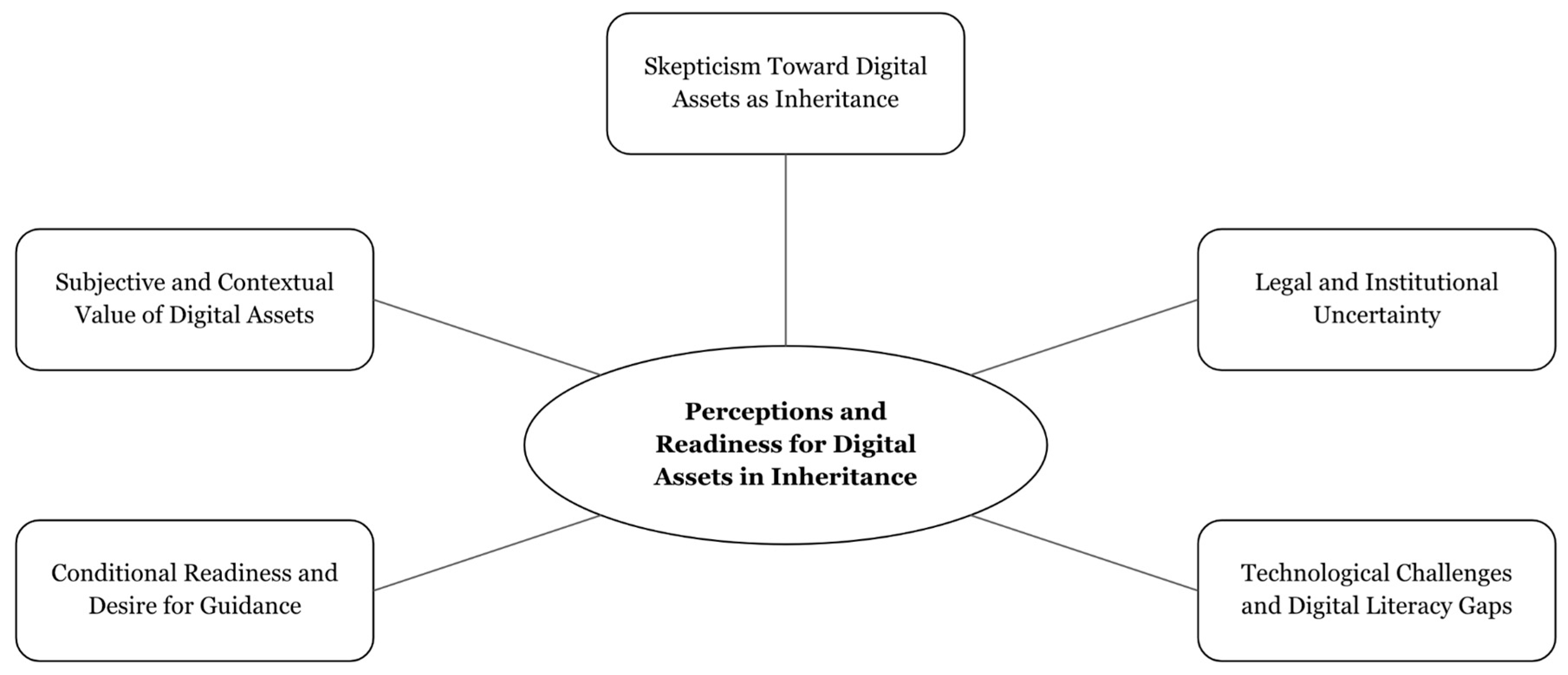
The qualitative findings provide nuanced insights into how individuals in Thailand perceive and negotiate the role of digital assets within inheritance planning, highlighting the main concerns and perspectives expressed by interview participants regarding their perceptions of and readiness to adopt such assets. Analysis of interview data revealed five dominant themes: skepticism toward digital assets as inheritance, subjective and contextual valuation of digital holdings, legal and institutional uncertainty, conditional readiness contingent on external support, and technological challenges rooted in digital literacy gaps. Together, these themes illuminate the complex interplay of financial, emotional, and structural factors that shape readiness to adopt digital assets into intergenerational wealth transfer.
Figure 2 visually summarizes the main concerns and perspectives expressed by interview participants regarding their perceptions of and readiness to adopt digital assets in inheritance planning. It illustrates five dominant themes that emerged from the qualitative analysis. Participants expressed skepticism toward the stability and reliability of digital assets for legacy purposes, often preferring traditional assets like property or gold. There was also significant concern about the lack of clear legal and institutional frameworks, which discouraged formal planning and reliance on professional support. Technological challenges, such as managing passwords and private keys, combined with digital literacy gaps—especially among potential heirs—were seen as major obstacles. The theme of subjective asset valuation highlighted that some digital assets, like NFTs, held personal rather than monetary value, making them difficult to pass on meaningfully. Despite these barriers, a portion of participants conveyed conditional readiness, noting they would be open to including digital assets in their estate plans if proper guidance, legal clarity, and user-friendly tools were available. The figure encapsulates these complex attitudes and underscores the need for supportive systems to facilitate digital inheritance planning.

4.2.1. Skepticism Toward Digital Assets as Inheritance

Participants expressed conditional readiness to adopt digital assets within inheritance planning, while consistently demonstrating hesitation toward treating them as reliable instruments of intergenerational wealth transfer. While most acknowledged the growing importance of cryptocurrencies and other blockchain-based assets in financial markets, they remained wary of their inherent volatility and speculative nature. Many respondents emphasized that inheritance should embody stability, security, and longevity, qualities they associated with traditional assets such as property, land, and gold. For instance, one participant remarked that while digital assets might generate returns in the short term, they lacked the permanence and tangibility required to ensure long-term security for heirs. Others associated digital assets with market “hype” and speculative bubbles, reinforcing the perception that they may be inappropriate as legacy assets. This skepticism illustrates a cultural preference for tangible and historically trusted forms of wealth transfer, even as digital adoption grows.
“I see crypto as something you trade or invest in for the short term. Inheritance should be something stable, like property or gold.”
(Personal communication, Respondent 1)
“Digital assets are exciting, but I still don’t feel secure enough to pass them down to my children. What if they lose everything in a crash?”
(Personal communication, Respondent 2)
These perspectives reveal that, despite increased participation in digital asset markets, their inclusion in long-term financial strategies like inheritance is still met with skepticism.

4.2.2. Legal and Institutional Uncertainty

A recurrent and significant concern was the absence of clear legal frameworks and institutional mechanisms to manage digital inheritance. Respondents revealed that they were unaware of any formal procedures for including digital assets in wills or estate plans, and several who had consulted legal professionals reported receiving vague or dismissive responses. This uncertainty fostered mistrust and reluctance to engage in digital inheritance planning. They often resorted to informal methods—such as writing down passwords or verbally sharing private keys with family members—which carry considerable risks of mismanagement, disputes, or permanent loss of assets. Some respondents compared this lack of legal clarity with the well-established procedures for transferring land, securities, or gold, emphasizing the gap between traditional inheritance practices and the emerging digital landscape.
“I asked my lawyer about digital assets and he said it’s too new to have proper laws. That doesn’t give me confidence.”
(Personal communication, Respondent 3)
“There’s no bank or legal office I know that can help with this. It’s like we’re on our own.”
(Personal communication, Respondent 4)
This perceived institutional void contributes to reluctance and reinforces informal or ad hoc approaches to digital asset succession, such as writing down passwords or relying on family members to “figure it out.” This theme highlights the urgent need for regulatory reform and professional guidance to provide clarity and assurance for asset holders.

4.2.3. Technological Challenges and Digital Literacy

Technological barriers emerged as one of the most pressing concerns. Participants frequently discussed the difficulties of securely storing, accessing, and transferring digital assets, particularly in scenarios involving heirs with limited digital literacy. Many respondents acknowledged their own struggles with technical requirements such as managing seed phrases, private keys, or wallet backups, expressing anxiety about the risk of irreversible loss. Concerns extended to intergenerational gaps, with older heirs often perceived as lacking the knowledge to manage digital holdings effectively. One participant described the stress of imagining a spouse or child attempting to navigate wallet recovery procedures without guidance. This theme highlights the dual challenge of technical complexity and uneven digital literacy across generations, both of which threaten the secure transfer of digital assets.
“If I forget my seed phrase, my money’s gone. That’s already stressful for me—imagine if my wife or kids had to deal with it after I’m gone.”
(Personal communication, Respondent 5)
“I have friends who invest in crypto but don’t know how to back up their wallets properly. How can they expect to pass it on?”
(Personal communication, Respondent 6)
This digital literacy gap not only raises the risk of asset loss but also discourages people from making digital assets part of their formal inheritance strategies.

4.2.4. Subjective and Contextual Value of Digital Assets

Another prominent theme concerned the personal and situational value attributed to digital assets. Participants recognized that not all digital assets hold universal or transferable worth. While cryptocurrencies, such as Bitcoin, were generally regarded as having financial legitimacy, other assets—such as NFTs or digital collectibles—were seen as highly subjective. Respondents noted that NFTs might carry sentimental value for creators or collectors but may not hold significance for heirs who lack similar emotional attachments or familiarity. This distinction highlights a broader issue: digital assets often blend financial and personal dimensions, making their transfer complex. For some participants, the idea of passing on a family-owned property ensured intergenerational stability, while digital assets such as NFTs were considered “personal artifacts” rather than assets of shared economic value.
“Bitcoin has been around and has real value. I’d consider putting that in my will. But those meme coins? I wouldn’t touch them.”
(Personal communication, Respondent 7)
“I have a few NFTs, but I doubt my family would see them as valuable. They’re personal to me, not necessarily to them.”
(Personal communication, Respondent 8)
This illustrates the subjective nature of perceived value in digital assets, which further complicates decisions around legacy planning.

4.2.5. Conditional Readiness and Desire for Guidance

Despite skepticism and uncertainty, a subset of participants expressed conditional readiness to include digital assets in their inheritance plans, provided that appropriate safeguards and guidance were available. These individuals highlighted the importance of clear legal frameworks, standardized procedures, and user-friendly technological tools to reduce complexity and build confidence. Several respondents suggested that workshops, seminars, or online resources would empower them to make informed decisions. Others expressed interest in professional services tailored to digital inheritance, noting that collaboration between financial institutions, legal practitioners, and government agencies would enhance credibility and reduce perceived risks. This theme underscores a transitional stage in public attitudes: while conceptual acceptance exists, practical implementation hinges on the availability of supportive structures and accessible expertise.
“If there were proper guidelines or legal templates for including crypto in my will, I’d definitely consider it.”
(Personal communication, Respondent 9)
“There should be seminars or online tools to help people like us. Even just knowing the steps would help.”
(Personal communication, Respondent 10)
Respondents emphasized the need for collaboration between government agencies, legal professionals, and financial institutions to build confidence and provide structured solutions for digital asset inheritance.
In summary, the qualitative findings reveal a complex and often cautious outlook toward digital asset inheritance among Thai participants. While there is growing recognition of digital assets as a legitimate part of modern finance, their integration into inheritance planning is hindered by skepticism regarding stability, the subjective nature of certain asset types, the absence of legal and institutional support, and technological challenges. At the same time, conditional readiness—anchored in a desire for guidance, education, and regulation—suggests that with appropriate interventions, public confidence in digital inheritance could be strengthened. These insights provide a crucial complement to the quantitative findings, illustrating the broader social, emotional, and institutional dynamics that shape readiness for digital wealth transfer in Thailand.

4.3. Integrated Findings: Explaining Quantitative Patterns Through Qualitative Insights

The qualitative findings provide focused explanatory depth to the statistical relationships identified in the logistic regression model. While the quantitative analysis demonstrates that investment orientation, financial capacity, psychological resilience, and perceived suitability significantly predict acceptance of digital assets as inheritance, the interviews clarify why these variables matter. The strong positive effects of Preferred Investment Group (PIG), Investment Experience Score (IEX), and High-Risk Asset Experience (HRAE) reflect a normalization of volatility among experienced investors. Interview participants with broader portfolio exposure framed digital assets as extensions of diversified strategies rather than speculative anomalies, explaining why higher risk–return orientation translates into greater inheritance acceptance.
The negative effect of Emotional Response to High-Risk Investments (ERHRI) is directly supported by narratives emphasizing anxiety, instability, and fear of market crashes. Participants repeatedly contrasted digital assets with traditional, tangible forms of wealth such as property and gold, illustrating how emotional discomfort toward volatility constrains long-term succession planning. Moreover, the significant influence of Expense-to-Income Ratio (EIR) and Current Financial Status (CFS) indicates that financial resilience underpins readiness. Interviews revealed that financially secure individuals view digital assets as supplementary growth vehicles, whereas financially constrained participants prioritize capital preservation for heirs. Acceptance, therefore, depends not only on familiarity with digital assets but also on perceived financial security. Furthermore, attitudinal variables—Cryptocurrency Suitability Rating (CSR), Average Digital Asset Suitability Score (ADASS), and Digital Asset Type Preference Count (DATPC)—align with the theme of conditional readiness. Participants expressed conceptual openness to digital inheritance, yet this openness was contingent upon legal clarity, institutional recognition, and secure technological mechanisms. This helps explain the substantial neutrality observed in suitability ratings across asset types: hesitation reflects institutional ambiguity rather than outright rejection.
Finally, themes of legal uncertainty and technological complexity contextualize the model’s explanatory power (Nagelkerke R2 = 0.497). Even risk-tolerant investors reported reluctance when legal procedures were unclear or when heirs lacked digital literacy. Thus, psychological resilience operates alongside institutional trust and technological competence in shaping acceptance. Collectively, the integrated findings show that digital asset inheritance is not merely a function of investment behavior. It is a multidimensional decision shaped by financial stability, emotional responses to risk, perceived legitimacy, and structural support systems. The qualitative insights therefore substantively explain the mechanisms underlying the quantitative predictors, strengthening the study’s overall interpretive coherence.

5. Discussion

Drawing on quantitative survey data, this study elucidates the key determinants shaping individuals’ acceptance of digital assets as inheritance, while qualitative insights from in-depth interviews provide a deeper understanding of how individuals in Thailand interpret and express their readiness to adopt such assets into inheritance planning. The results reveal that while Thai investors generally exhibit risk-averse tendencies, with most preferring capital preservation and expressing anxiety toward high-risk instruments, nearly half reported prior engagement with high-risk assets such as cryptocurrencies. This indicates a cautious but emerging openness to alternative financial vehicles, consistent with findings by Beck et al. (2023) and Pitchaya-Auckarakhun et al. (2025). Moreover, financial readiness was shown to be uneven. While a significant proportion of respondents reported strong savings potential, others faced financial vulnerability, and only a minority expressed confidence in retirement preparedness. These disparities highlight the unequal capacity for engaging in long-term planning with digital assets and point to the need for targeted financial education, as emphasized by Mendes et al. (2025). Despite such constraints, conceptual acceptance of digital assets in inheritance planning was relatively high, with 77.9% of participants agreeing they could play a role in succession. However, attitudes diverged by asset type: cryptocurrencies were viewed as more suitable, while NFTs and social media accounts elicited skepticism. These concerns echo prior work highlighting legal and procedural uncertainties in digital inheritance (Szwajdler, 2023; Ugli, 2024; Yolanda et al., 2025).
The binary logistic regression analysis provided further insights, showing that acceptance is shaped by experiential, financial, psychological, and attitudinal factors. The strongest predictors—Preferred Investment Group (PIG), Expense-to-Income Ratio (EIR), and Digital Asset Type Preference Count (DATPC)—indicate that risk appetite, financial flexibility, and familiarity with multiple digital assets substantially increase the likelihood of adoption. These findings align with evidence that portfolio diversification and investment orientation are central to digital asset adoption (Abbas & Usman, 2025; Ma et al., 2020; Khaki et al., 2023). Psychological resilience was equally influential: tolerance for value decline (IVDT) and constructive reactions to loss (ILR) promoted acceptance, whereas anxiety toward high-risk assets (ERHRI) inhibited it. This supports Bird et al. (2025) and Mohammad et al. (2025), who highlight the role of emotional regulation in shaping investor behavior. Financial capacity, measured through income-to-expense ratios and asset–liability balance, also emerged as decisive, suggesting that adoption may remain concentrated among financially advantaged groups, as noted by Saiedi et al. (2021), Chancharoenrit (2023), and Kraiwanit et al. (2025). Attitudinal variables such as the Cryptocurrency Suitability Rating (CSR) and Average Digital Asset Suitability Score (ADASS) further underscore the role of perceived legitimacy and institutional trust in shaping acceptance, reinforcing insights from Phillips et al. (2022) and Curry (2025). Overall, the regression highlights both opportunities and barriers: while risk tolerance, financial stability, and diversification foster acceptance, emotional discomfort and legal uncertainty constrain it. These dynamics parallel international findings on digital inheritance, where psychological, financial, and structural challenges intersect with regulatory gaps.
Furthermore, the qualitative data reinforces these insights, shedding light on persistent institutional and legal barriers. Participants reported limited access to reliable legal advice and a lack of standardized procedures for including digital assets in wills or succession plans. In many cases, individuals relied on informal solutions—such as sharing login credentials with family members—which pose substantial risks of loss, mismanagement, or legal disputes. This absence of institutional support reflects a broader regulatory gap and emphasizes the need for clear legal frameworks and guidance tailored to digital asset succession, in line with Chaisiripaibool et al. (2025), Leskina (2024), and Ng (2025).
Additionally, concerns about technological complexity and security were prevalent among participants. Respondents frequently cited issues related to password management, private key storage, and the technical knowledge required to recover or transfer digital assets. These concerns are magnified in inheritance scenarios, where beneficiaries may lack the expertise needed to access or manage the assets effectively. Addressing these concerns will require the development of user-friendly technological solutions, improved digital literacy programs, and clearer protocols to support secure inheritance of digital assets. Consistent with these findings, Ion and Ciuca (2024) highlight that the absence of a clear and unified legislative framework poses significant challenges to the post-mortem transfer of digital assets. Heirs frequently encounter both technological and legal obstacles, including privacy concerns, encryption barriers, and inconsistencies in policies across digital platforms. Similarly, Ugli (2024) emphasizes the multifaceted nature of digital inheritance, calling attention to the urgent need for accessible tools, enhanced digital literacy, and clearly defined guidelines to assist beneficiaries in securely managing and transferring inherited digital assets.
Taken together, these technological and legal challenges demonstrate that the institutional implications of digital asset inheritance extend well beyond procedural formalities. They directly shape behavioral readiness, emotional confidence, and perceptions of long-term wealth security. The findings of this study indicate that acceptance of digital assets in inheritance planning is not determined solely by financial literacy or risk tolerance; rather, it is fundamentally influenced by structural trust in legal systems, regulatory clarity, and professional support infrastructures. When institutional mechanisms remain underdeveloped, even financially capable and technologically literate individuals may hesitate to formalize digital inheritance arrangements. Without coherent regulation, enforceable succession procedures, and credible advisory support, digital asset inheritance remains conceptually acknowledged yet practically constrained. Strengthening institutional frameworks is therefore not merely a matter of regulatory refinement but a foundational prerequisite for integrating digital assets into legitimate, secure, and socially recognized systems of intergenerational wealth transfer.

6. Conclusions

This study provides a comprehensive empirical assessment of the acceptance and readiness to adopt digital assets in inheritance planning within the Thai context. The findings clearly demonstrate that acceptance is shaped by a combination of financial, behavioral, and psychological factors rather than any single determinant. In particular, individuals with stronger investment orientation, higher financial capacity, greater familiarity with digital assets, and higher tolerance for financial volatility are significantly more likely to consider digital assets as part of inheritance planning. Conversely, anxiety toward high-risk investments acts as a key constraint, limiting acceptance even among financially capable individuals. Importantly, the results reveal that acceptance remains conditional and does not readily translate into actual adoption. The qualitative findings highlight persistent skepticism regarding the stability and long-term reliability of digital assets, as well as significant concerns related to legal ambiguity, technological complexity, and unequal digital literacy among potential heirs. These barriers collectively contribute to a pronounced intention–behavior gap, indicating that favorable perceptions alone are insufficient to support implementation. Ultimately, the study underscores a central empirical insight: while digital assets are increasingly recognized as potential components of intergenerational wealth, their integration into inheritance planning is uneven, contingent, and structurally constrained. This suggests that adoption is not merely a function of individual readiness but depends critically on the alignment of financial capability, psychological acceptance, and enabling institutional and technological conditions.

6.1. Research Contributions

This study makes several important and interrelated contributions to the literature on digital assets, inheritance planning, and financial decision-making. First, it provides empirical evidence from a developing-economy context, clearly demonstrating that acceptance of digital assets as inheritance is not driven by a single factor but by the combined influence of investment behavior, financial capacity, psychological resilience, and perceived suitability. Crucially, the findings show that these drivers are conditional and constrained by structural barriers, revealing a persistent gap between acceptance and actual adoption. Furthermore, the study advances theory by integrating portfolio theory, behavioral finance, life-cycle theory, and technology acceptance theory into a unified and context-sensitive framework. This synthesis highlights a key insight: digital inheritance decisions cannot be adequately explained by traditional financial rationality alone. Instead, they emerge from the interaction of financial capability, emotional responses to risk, institutional uncertainty, and technological perceptions. In doing so, the study moves beyond fragmented theoretical explanations and demonstrates the necessity of a multidimensional approach.
Most importantly, the study develops a coherent theoretical reframing of inheritance, assets, and risk in the digital era. It shows that inheritance is shifting from a model of legally mediated ownership transfer to one of technologically enabled access continuity, where control depends on cryptographic credentials rather than formal documentation. At the same time, assets are redefined as hybrid forms of value—financial, algorithmic, and socially constructed—whose legitimacy is context-dependent rather than institutionally fixed. Correspondingly, risk is reconceptualized as inherently multidimensional, encompassing not only financial volatility but also technological vulnerability, regulatory ambiguity, emotional resilience, and intergenerational digital competence. Taken together, these contributions converge on a central insight: digital inheritance represents a paradigmatic shift rather than an incremental extension of existing frameworks. By explicitly linking empirical evidence with theoretical advancement, the study highlights how wealth transfer in the digital age is increasingly shaped by the interplay of financial, technological, institutional, and behavioral forces. This synthesis underscores the need for more integrated and interdisciplinary approaches to understanding and governing intergenerational wealth in an evolving digital landscape.

6.2. Research Implications

This study offers research implications for advancing scholarship on digital assets, inheritance planning, and financial decision-making in the digital era by integrating behavioral, financial, and regulatory perspectives within a developing-economy context. It enhances understanding of how psychological resilience, financial stability, and digital literacy interact to shape individuals’ readiness to adopt digital estate planning.
From a policy perspective, the findings underscore the urgent need for clearer legal recognition and regulatory frameworks governing digital asset inheritance. Policymakers should prioritize the development of standardized legal definitions, inheritance procedures, and tax guidelines to reduce uncertainty and enhance institutional trust. In emerging economies such as Thailand, this may involve clarifying the legal status of private keys, establishing procedures for digital asset disclosure in probate processes, and integrating digital assets into existing inheritance and taxation systems. In addition, national strategies that promote digital financial literacy and public awareness are essential to ensure that individuals and heirs can effectively manage and transfer digital assets. Targeted public campaigns, integration of digital asset modules into financial literacy programs, and collaboration with financial institutions to deliver community-based training can further strengthen public readiness.
From a practical standpoint, the study provides actionable insights for key stakeholders involved in estate planning and financial management. Financial advisors should incorporate digital asset inventories, risk assessments, and inheritance planning strategies into routine consultations. This includes using structured checklists, guiding clients in documenting wallet access protocols, and recommending secure storage solutions such as multi-signature arrangements or hardware wallets. In addition, legal professionals are encouraged to develop standardized clauses, professional guidelines, and advisory services tailored to digital assets, including legally recognized digital wills, protocols for third-party custodianship, and guidance on jurisdiction-specific compliance. Technology providers should focus on designing secure, user-friendly solutions—such as inheritance-enabled digital wallets and access recovery mechanisms—to facilitate safe asset transfer. Relevant innovations may include time-locked access features, beneficiary designation functions, and layered authentication systems that balance security with accessibility for heirs.
Importantly, the findings highlight the need for coordinated and sustained collaboration among policymakers, financial institutions, legal practitioners, and technology developers. Establishing cross-sector working groups, regulatory sandboxes, or pilot programs focused on digital inheritance solutions can accelerate the development of standardized practices and foster innovation in a controlled and adaptive environment. Such cross-sector integration is critical for establishing a reliable, scalable ecosystem that supports the secure, transparent, and efficient intergenerational transfer of digital wealth. Collectively, these implications reinforce the importance of strategically aligning regulatory development, professional practice, and technological innovation to effectively support the evolving landscape of digital inheritance.

6.3. Limitations and Future Research

Despite its contributions, this study has several limitations that suggest avenues for future research. The use of convenience sampling may limit generalizability, indicating the need for probability-based or stratified approaches. The small qualitative sample (n = 10) may not fully capture societal diversity, warranting broader demographic and generational representation. Reliance on self-reported and single-item measures may introduce bias, suggesting the adoption of validated multi-item scales and objective indicators. The omission of key demographic controls (e.g., age, education, income) may affect estimation accuracy and should be addressed in future models, while online recruitment may overrepresent younger and more digitally literate individuals, highlighting the importance of mixed recruitment strategies. Methodologically, the use of logistic regression restricts analysis to direct effects; future studies should employ more advanced techniques, such as structural equation modeling, to examine mediation and moderation. The single-country focus limits broader applicability, supporting the need for comparative and cross-cultural research, while the cross-sectional design constrains temporal analysis, calling for longitudinal approaches. Finally, reliance on self-reported intentions rather than observed behavior limits practical inference; future research should incorporate behavioral and real-world data to enhance validity.

Author Contributions

Conceptualization, P.L.; methodology, P.L.; software, P.L., R.N. and Y.S.; validation, P.L., R.N. and Y.S.; formal analysis, P.L., R.N. and Y.S.; investigation, P.L., R.N. and Y.S.; resources, P.L., R.N. and Y.S.; data curation, P.L., R.N. and Y.S.; writing—original draft preparation, P.L., R.N. and Y.S.; writing—review and editing, P.L.; visualization, P.L., R.N. and Y.S.; supervision, P.L.; project administration, P.L., R.N. and Y.S.; funding acquisition, P.L., R.N. and Y.S. All authors have read and agreed to the published version of the manuscript.

Funding

This research received no external funding.

Institutional Review Board Statement

Ethical review and approval were waived for this study. This research complied with national research ethics guidance issued by the Office of the Permanent Secretary of the Ministry of Higher Education, Science, Research and Innovation (OPS MHESI) (No. MHESI 0209.5/W 7017, dated 11 April 2023) and Thailand Science Research and Innovation (TSRI) (No. MHESI 6309.FB 6.1/1/2564, dated 22 March 2021).

Informed Consent Statement

Informed consent was obtained from all subjects involved in the study.

Data Availability Statement

The data supporting the findings of this study are available from the first or corresponding author upon reasonable request.

Acknowledgments

The authors extend their sincere gratitude to Pathumthani University, Rangsit University, and King Mongkut’s University of Technology North Bangkok for their invaluable support and encouragement throughout the research process. The institutions’ academic resources, collaborative environment, and unwavering commitment to scholarly excellence significantly contributed to the successful completion of this study. During the preparation of this manuscript, the authors utilized the GPT-5.3 model to assist with language refinement and optimization of select sections. All content was subsequently reviewed and revised by the authors, who assume full responsibility for the final version of this publication.

Conflicts of Interest

The authors declare no conflicts of interest.

References

  1. Abbas, S. F., & Usman, M. (2025). Optimizing portfolios in digital finance: An integration of cryptocurrencies with conventional assets. The Critical Review of Social Sciences Studies, 3(1), 2894–2913. [Google Scholar] [CrossRef]
  2. Aithal, A., & Aithal, P. S. (2020). Development and validation of survey questionnaire & experimental data—A systematical review-based statistical approach. International Journal of Management, Technology, and Social Sciences, 5(2), 233–251. [Google Scholar] [CrossRef]
  3. Akramov, A. A., Rakhmonkulova, N. K., Khazratkulov, O. T., Inamdjanova, E. E., Imamalieva, D. I., Tuychieva, S. R., Ibodullaev, S. B., Ergashev, A. E., Khamidov, S., & Rustamova, N. R. (2024). The impact of digitalization in inheritance law. Qubahan Academic Journal, 4(3), 100–134. [Google Scholar] [CrossRef]
  4. Baker, H. K., & Nofsinger, J. R. (Eds.). (2010). Behavioral finance: Investors, corporations, and markets. John Wiley & Sons. [Google Scholar] [CrossRef]
  5. Beck, K. L., Chiu, H.-H., & Timmerman, I. (2023). The changing assessment of risk for young investors. Financial Services Review, 31(2/3), 97–106. [Google Scholar] [CrossRef]
  6. Bird, R., Gallagher, D. R., Khan, A., & Yeung, D. (2025). Do emotions influence investor behavior? Journal of Behavioral Finance, 26(2), 229–250. [Google Scholar] [CrossRef]
  7. Chaisiripaibool, S., Kraiwanit, T., Rafiyya, A., Snongtaweeporn, T., & Yuenyong, N. (2025). Digital asset adoption in developing economy: A study of risk perception and related issues. Risk Governance and Control: Financial Markets & Institutions, 15(1), 37–49. [Google Scholar] [CrossRef]
  8. Chaiyong, S. (2024, January 17). Is there a digital afterlife? Bangkok Post. Available online: https://www.bangkokpost.com/life/social-and-lifestyle/2725542/ (accessed on 12 June 2025).
  9. Chancharoenrit, C. (2023). Factors affecting invertor’s decision to choose a digital asset trading account through a digital asset exchange in Thailand. Journal of Yanasangvorn Research Institute Mahamakut Buddhist University, 14(2), 49–57. [Google Scholar]
  10. Chaplot, D., & Lohar, H. (2025). Crypto meets wall street: A review of digital assets in portfolio theory. International Journal of Global Research Innovations & Technology, 3(3), 72–78. [Google Scholar] [CrossRef]
  11. Chaudary, S., Zafar, S., & Tang, T. L. P. (2024). Investors’ financial aspirations excite investment decisions: Current income, future inheritance expectations, and short-term and long-term decisions—The Matthew Effect in Pakistan’s emerging markets. International Journal of Emerging Markets, 19(5), 1306–1334. [Google Scholar] [CrossRef]
  12. Corter, J. E. (2011). Does investment risk tolerance predict emotional and behavioural reactions to market turmoil? International Journal of Behavioural Accounting and Finance, 2(3–4), 225–237. [Google Scholar] [CrossRef]
  13. Curry, D. (2025). Limitations of trust and legitimacy in blockchain: Exploring the effectiveness of decentralisation, immutability and consensus mechanisms in blockchain governance. International Journal of Public Sector Management, 38(1), 98–117. [Google Scholar] [CrossRef]
  14. Dondjio, I., & Kazamias, A. (2024). A blockchain framework for digital asset ownership and transfer in succession. In M. Papadaki, M. Themistocleous, K. Al Marri, & M. Al Zarouni (Eds.), Information systems. EMCIS 2023 (Vol. 501, pp. 88–106). Lecture Notes in Business Information Processing. Springer. [Google Scholar] [CrossRef]
  15. Farooqui, M. O., Sharma, B., & Gupta, D. (2022). Inheritance of digital assets: Analyzing the concept of digital inheritance on social media platforms. Novum Jus, 16(3), 413–435. [Google Scholar] [CrossRef]
  16. Folkinshteyn, D., & Lennon, M. (2016). Braving Bitcoin: A technology acceptance model (TAM) analysis. Journal of Information Technology Case and Application Research, 18(4), 220–249. [Google Scholar] [CrossRef]
  17. Fuwattananukul, N. (2024, October 25). The next phase of digital asset growth in Thailand. Bangkok Post. Available online: https://www.bangkokpost.com/business/general/2890003/ (accessed on 12 June 2025).
  18. Ger, A., Maheta, D., Mehta, M., & Patel, B. (2025). Investors personality traits and mutual fund investment decisions: A regression analysis of risk tolerance and investment choices. Journal of Information Systems Engineering and Management, 10(10s), 5–22. [Google Scholar] [CrossRef]
  19. Hashemi, M. (2024). To coordinate or not to coordinate: The governance of digital assets in a global marketplace. Ohio Northern University International Law Journal, 2(2), 1–28. [Google Scholar]
  20. Hernando-Corrochano, J., Pastor-Vargas, R., & Hernández-Berlinches, R. (2025). Inheritance of digital assets using blockchain. In J. Prieto, R. P. Vargas, O. Lage, J. M. Machado, & M. Bálint (Eds.), Blockchain and applications, 6th international congress. BLOCKCHAIN 2024 (Vol. 1256, pp. 180–193). Lecture Notes in Networks and Systems. Springer. [Google Scholar] [CrossRef]
  21. Hossain, M. Z., Sohana, F., & Purnima, F. H. (2025). Sustainable income: A key metric for long-term financial stability and reporting. Scientia. Technology, Science and Society, 2(4), 99–114. [Google Scholar] [CrossRef]
  22. Intelligence Team. (2023, May 2). Digital asset (Part 1) ‘When Thais are drawn towards digital assets’. Research Intelligence, Krungsri Research. Available online: https://www.krungsri.com/en/research/research-intelligence/digital-asset-part1-2023 (accessed on 12 June 2025).
  23. Ion, G. F., & Ciuca, L. B. (2024). Heritage and digital assets—Legal challenges in the age of technology. In Proceedings of 11th SWS International Scientific Conference on Social Sciences—ISCSS 2024 (pp. 155–162). SGEM WORLD SCIENCE (SWS) Scholarly Society. [Google Scholar] [CrossRef]
  24. Javaid, M., Haleem, A., Singh, R. P., Suman, R., & Khan, S. (2022). A review of blockchain technology applications for financial services. BenchCouncil Transactions on Benchmarks, Standards and Evaluations, 2(3), 100073. [Google Scholar] [CrossRef]
  25. Juhász, Á. (2024). Inheriting digital assets–A glimpse into the future. Juridical Tribune-Review of Comparative and International Law, 14(4), 547–563. [Google Scholar] [CrossRef]
  26. Katuk, N., Tey, P. Y., Sinal, M. S., Abdullah, W. A. N. W., Wahab, N. A., Kurniadi, E., & Budianto, H. (2024). Estate planning model for sustaining economic values of digital assets. In N. H. Zakaria, N. S. Mansor, H. Husni, & F. Mohammed (Eds.), Computing and informatics. ICOCI 2023 (Vol. 2002, pp. 336–350). Communications in Computer and Information Science. Springer Singapore. [Google Scholar] [CrossRef]
  27. Katuk, N., Wahab, N. A., & Kamis, N. S. (2023). Cryptocurrency estate planning: The challenges, suggested solutions and Malaysia’s future directions. Digital Policy, Regulation and Governance, 25(4), 325–350. [Google Scholar] [CrossRef]
  28. Khaki, A., Prasad, M., Al-Mohamad, S., Bakry, W., & Vo, X. V. (2023). Re-evaluating portfolio diversification and design using cryptocurrencies: Are decentralized cryptocurrencies enough? Research in International Business and Finance, 64, 101823. [Google Scholar] [CrossRef]
  29. Khan, M. S. R., Yoshimura, H., & Kadoya, Y. (2024). Emotional instability and financial decisions: How neuroticism fuels panic selling. Risks, 12(12), 203. [Google Scholar] [CrossRef]
  30. Kharitonova, J. (2021). Digital assets and digital inheritance. Law & Digital Technologies, 1(1), 19–26. [Google Scholar] [CrossRef]
  31. Klasiček, D. (2023). Inheritance law in the twenty-first century: New circumstances and challenges. In O. J. Gstrein, M. Fröhlich, C. van den Berg, & T. Giegerich (Eds.), Modernising European Legal Education (MELE). MELE 2023 (Vol. 10). European Union and its Neighbours in a Globalized World. Springer. [Google Scholar] [CrossRef]
  32. Kraiwanit, T., Limna, P., & Suradinkura, S. (2025). Digital asset and inheritance in Thailand. Pathumthani University. [Google Scholar] [CrossRef]
  33. Leskina, E. I. (2024). Legal regulation of inheritance of non-fungible tokens. Theoretical and Applied Jurisprudence, 1, 37–43. [Google Scholar] [CrossRef]
  34. Li, D., Luo, X., Liang, W., & Yang, X. (2025). Wealth accumulation, financial asset diversification, and future confidence: A behavioural economics perspective. Finance Research Letters, 86, 108386. [Google Scholar] [CrossRef]
  35. Li, Z., Wu, Q., Hong, P., & Tian, R. (2023). Effects of investment experience on the stock investment task: The mediating role of risk perception. Behavioral Sciences, 13(2), 115. [Google Scholar] [CrossRef]
  36. Littrell, S., Klofstad, C., & Uscinski, J. E. (2024). The political, psychological, and social correlates of cryptocurrency ownership. PLoS ONE, 19(7), e0305178. [Google Scholar] [CrossRef] [PubMed]
  37. Long, S. C., Xie, Y., Zhou, Z., Lucey, B., & Urquhart, A. (2025). From whales to waves: Social media sentiment, volatility, and whales in cryptocurrency markets. The British Accounting Review, 101682. [Google Scholar] [CrossRef]
  38. Ma, Y., Ahmad, F., Liu, M., & Wang, Z. (2020). Portfolio optimization in the era of digital financialization using cryptocurrencies. Technological Forecasting and Social Change, 161, 120265. [Google Scholar] [CrossRef] [PubMed]
  39. Marjerison, R. K., Dong, H., & Kim, J. M. (2025). Generational investment behavior: The influence of risk tolerance and technology adoption in an evolving financial landscape. SAGE Open, 15(3), 1–20. [Google Scholar] [CrossRef]
  40. Mendes, I., de Oliveira, F. A., dos Santos, J. H., de Oliveira, E. A., da Silva, S. D., Mainardi, F. H. B., Pereira, J. A. B. F. G., & Marsoli, G. F. (2025). Financial education and the development of investment habits: Misinformation among young Brazilians about cryptocurrencies and digital investments. Ibero-American Journal of Humanities, Sciences and Education, 11(1), 257–270. [Google Scholar] [CrossRef]
  41. Meyer, C. (2024). When two worlds collide: Digital assets and your estate plan. Trusts & Trustees, 30(4), 181–183. [Google Scholar] [CrossRef]
  42. Miehe, R. (2025). Life cycle theory of value creation-context and perspectives. Procedia CIRP, 135, 732–737. [Google Scholar] [CrossRef]
  43. Mohammad, S. J., Sial, M. S., Jo, H., & Comite, U. (2025). Assessing the impact of emotion on investors’ behavior and decision-making. Review of Behavioral Finance, 17(4), 722–742. [Google Scholar] [CrossRef]
  44. Ng, Y. K. I. (2025). The legal recognition and regulation of digital assets. Highlights in Business, Economics and Management, 52, 52–61. [Google Scholar] [CrossRef]
  45. Phillips, D., Bylund, P. L., Rutherford, M. W., & Moore, C. B. (2022). Cryptocurrency legitimation through rhetorical strategies: An institutional entrepreneurship approach. Entrepreneurship & Regional Development, 35(1–2), 187–208. [Google Scholar] [CrossRef]
  46. Pitchaya-Auckarakhun, M., Kasorn, K., Jedaman, P., & Kenaphoom, S. (2025). Investment Dimensions in Financial Assets Under the Changing Circumstances of New Generation Investors. In K. Wongmahesak, I. Wekke, & P. Suanpang (Eds.), Sustainable development, humanities, and social sciences for society 5.0 (pp. 313–334). IGI Global Scientific Publishing. [Google Scholar] [CrossRef]
  47. Polanco, R. (2023). The impact of digitalization on international investment law: Are investment treaties analogue or digital? German Law Journal, 24(3), 574–588. [Google Scholar] [CrossRef]
  48. Pratt, T. C. (2018). The myth of the tech-savvy teen and the clueless senior citizen: Revisiting technology-based victimization over the life course. Criminal Justice Review, 43(3), 360–369. [Google Scholar] [CrossRef]
  49. Reis, J., & Melão, N. (2023). Digital transformation: A meta-review and guidelines for future research. Heliyon, 9(1), e12834. [Google Scholar] [CrossRef]
  50. Saiedi, E., Broström, A., & Ruiz, F. (2021). Global drivers of cryptocurrency infrastructure adoption. Small Business Economics, 57, 353–406. [Google Scholar] [CrossRef]
  51. Schneider, H. (2024). Digital assets: A portfolio perspective. Cambridge University Press. [Google Scholar] [CrossRef]
  52. Sebele-Mpofu, F. Y. (2020). Saturation controversy in qualitative research: Complexities and underlying assumptions. A literature review. Cogent Social Sciences, 6(1), 1838706. [Google Scholar] [CrossRef]
  53. Shoommuangpak, P., & Wongta, O. (2023). Factors affecting investment decision to invest in digital asset of investors in the stock exchange of Thailand. Journal of Humanities and Social Sciences Loei Rajabhat University, 5(1), 1–15. [Google Scholar]
  54. Smutny, Z., Sulc, Z., & Lansky, J. (2021). Motivations, barriers and risk-taking when investing in cryptocurrencies. Mathematics, 9(14), 1655. [Google Scholar] [CrossRef]
  55. Steen, A., Graves, C., D’Alessandro, S., & Shi, H. X. (2024). Managing digital assets on death and disability: An examination of the determinants of digital asset planning literacy. Australian Journal of Management, 49(4), 561–580. [Google Scholar] [CrossRef]
  56. Syarifah, M. (2024). Dynamics of inheritance law in the digital age: Challenges and solutions. Nawala Patra Biksa, 1(1), 26–38. [Google Scholar] [CrossRef]
  57. Szwajdler, P. (2023). Digital assets and inheritance law: How to create fundamental principles of digital succession system? International Journal of Law and Information Technology, 31(2), 144–168. [Google Scholar] [CrossRef]
  58. Thai, H. M., & Huong, G. N. T. (2025). Determinants of digital asset volatility: A literature review. In V. Q. Trinh, & T. N. Pham (Eds.), The future of accounting and finance: Sustainable finance (pp. 333–352). Springer. [Google Scholar] [CrossRef]
  59. Tian, Y. (2024). Behavioral finance: Loss aversion, market anomalies, and prospect theory in financial decision-making. Highlights in Business, Economics and Management, 28, 276–280. [Google Scholar] [CrossRef]
  60. Tong, A., Sainsbury, P., & Craig, J. (2007). Consolidated criteria for reporting qualitative research (COREQ): A 32-item checklist for interviews and focus groups. International Journal for Quality in Health Care, 19(6), 349–357. [Google Scholar] [CrossRef] [PubMed]
  61. Uakarn, C., Chaokromthong, K., & Sintao, N. (2021). Sample size estimation using Yamane and Cochran and Krejcie and Morgan and green formulas and Cohen statistical power analysis by G* Power and comparisons. APHEIT International Journal of Interdisciplinary Social Sciences and Technology, 10(2), 76–88. [Google Scholar]
  62. Ugli, M. M. D. (2024). Digital inheritance: Transfer of real rights according to the procedure of universal succession. International Journal of Law and Criminology, 4(3), 17–21. [Google Scholar] [CrossRef]
  63. Wata, T. (2016). Legal measures for managing the deceased’s digital assets in online accounts. Thammasat Business Law Journal, 6, 1–20. [Google Scholar]
  64. Yolanda, M. K., Paramitha, C. L., & Putra, M. R. S. (2025). Exploring digital assets inheritance: A comparative study of transnational legal frameworks and practices. AURELIA: Jurnal Penelitian dan Pengabdian Masyarakat Indonesia, 4(1), 942–951. [Google Scholar] [CrossRef]
  65. Yu, J., & Zhang, J. (2023). A comprehensive analysis of the modern portfolio theory. BCP Business & Management, 38, 2111–2114. [Google Scholar] [CrossRef]
  66. Zhang, Q. (2025, August). Modern portfolio theory in practice: Optimizing risk-return trade-offs through a case study of tesla and procter & gamble. In 2025 5th international conference on enterprise management and economic development (ICEMED 2025) (pp. 697–705). Atlantis Press. [Google Scholar] [CrossRef]
Figure 1. Conceptual Model of Factors Influencing the Acceptance of Digital Assets as Inheritance.
Jrfm 19 00285 g001
Figure 2. Qualitative Themes on Digital Asset Inheritance.
Jrfm 19 00285 g002
Table 1. Omnibus test of the model’s performance.
Chi-SquaredfSig.
Step 1Step488.717120.000
Block488.717120.000
Model488.717120.000
Table 2. The model summary.
Step−2 Log LikelihoodCox & Snell R SquareNagelkerke R SquareHosmer–Lemeshow χ2Sig.
1879.047 a0.3440.4977.8420.449
a. Estimation terminated at iteration number 7 because parameter estimates changed by less than 0.001.
Table 3. Classification table for back-testing.
Predicted
Observed Acceptance of Digital Assets as InheritancePercentage Correct
NoYes
Step 1Acceptance of digital assets as inheritanceNo805957.6%
Yes5943288.0%
Overall percentage 81.3%
Note: The cut-off value is 0.500.
Table 4. Variables in the model.
VariablesBS.E.WalddfSig.Exp(B)Actions
Step 1 aIEX0.6530.09349.04810.0001.921Accepted
HRAE0.3500.1515.35810.0211.419Accepted
PIO0.8040.3046.99010.0082.235Accepted
PIG1.3000.101166.21710.0003.668Accepted
ERHRI−0.7100.18714.40810.0000.492Accepted
IVDT0.7810.13931.54210.0002.185Accepted
ILR0.7690.09664.56610.0002.158Accepted
EIR1.1420.23423.77210.0003.135Accepted
CFS0.7850.23910.73410.0012.191Accepted
CSR0.3760.1744.67210.0311.456Accepted
ADASS0.6650.20710.31410.0011.944Accepted
DATPC0.8530.20916.62710.0002.347Accepted
Constant−18.4762.13474.93210.0000.000Accepted
a. Variable(s) entered in step 1: Investment Experience Score (IEX), High-Risk Asset Experience (HRAE), Primary Investment Objective (PIO), Preferred Investment Group (PIG), Emotional Response to High-Risk Investments (ERHRI), Investment Value Decline Tolerance (IVDT), Investment Loss Reaction (ILR). Expense-to-Income Ratio (EIR), Current Financial Status (CFS), Cryptocurrency Suitability Rating (CSR), Average Digital Asset Suitability Score (ADASS), Digital Asset Type Preference Count (DATPC). Note: Variables with p-values below 0.05 are accepted as significant predictors, while those with p-values above 0.05 are rejected as not statistically significant.
Disclaimer/Publisher’s Note: The statements, opinions and data contained in all publications are solely those of the individual author(s) and contributor(s) and not of MDPI and/or the editor(s). MDPI and/or the editor(s) disclaim responsibility for any injury to people or property resulting from any ideas, methods, instructions or products referred to in the content.