Structured Framework for Dealing with Types of Financial Statement Fraud, Integrating Common Modalities, Variables, Strategies, and Patterns

Abstract
1. Introduction
2. Background
3. Related Works
Literature Identification and Analytical Approach
4. Structured Framework
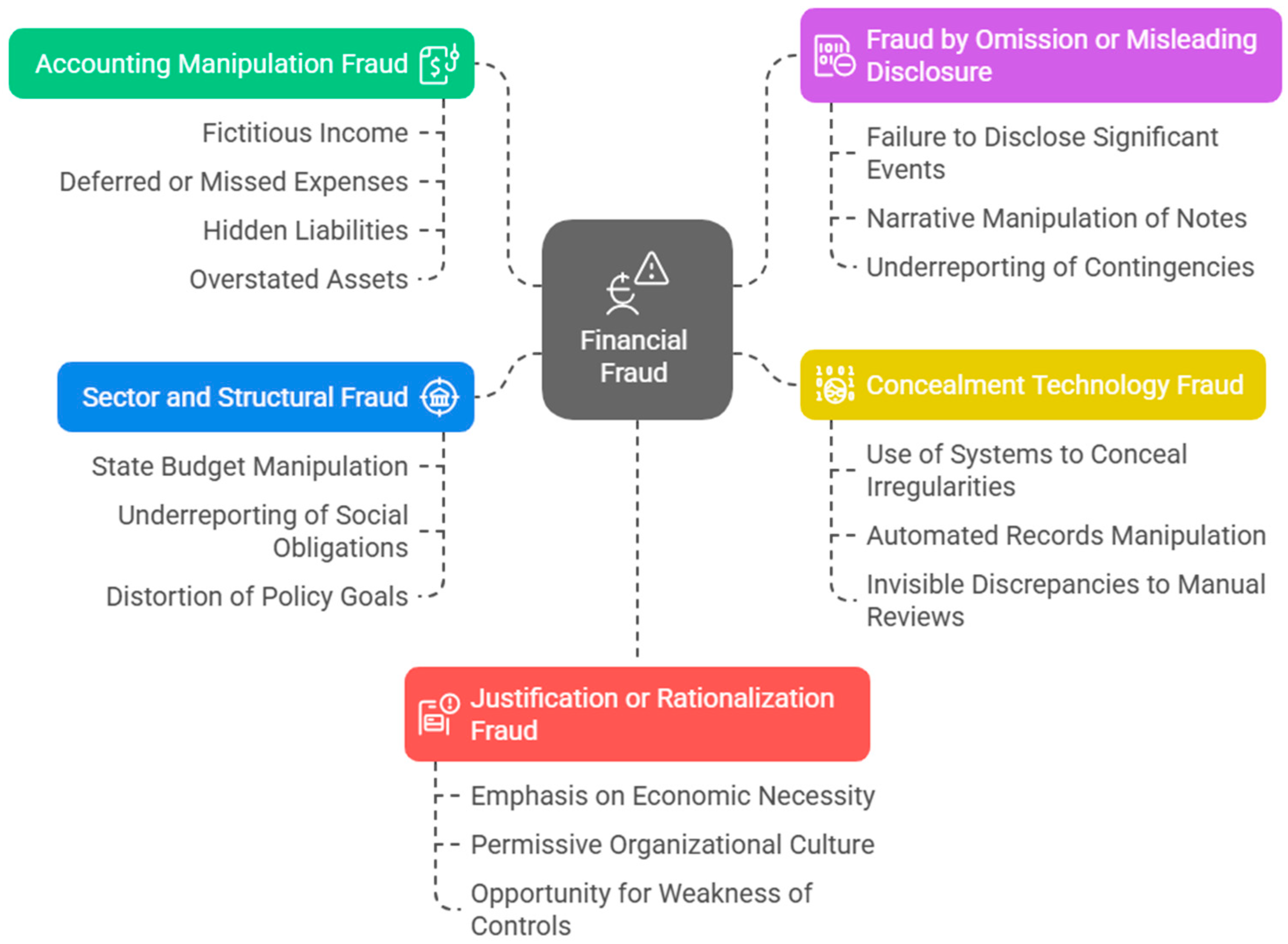
- Fraud through accounting manipulation;
- Fraud through omission or misleading disclosure;
- Fraud through concealment technology;
- Sectoral and structural fraud;
- Fraud through justification/rationalization.
4.1. Classification and Mapping of Fraud in Financial Statements
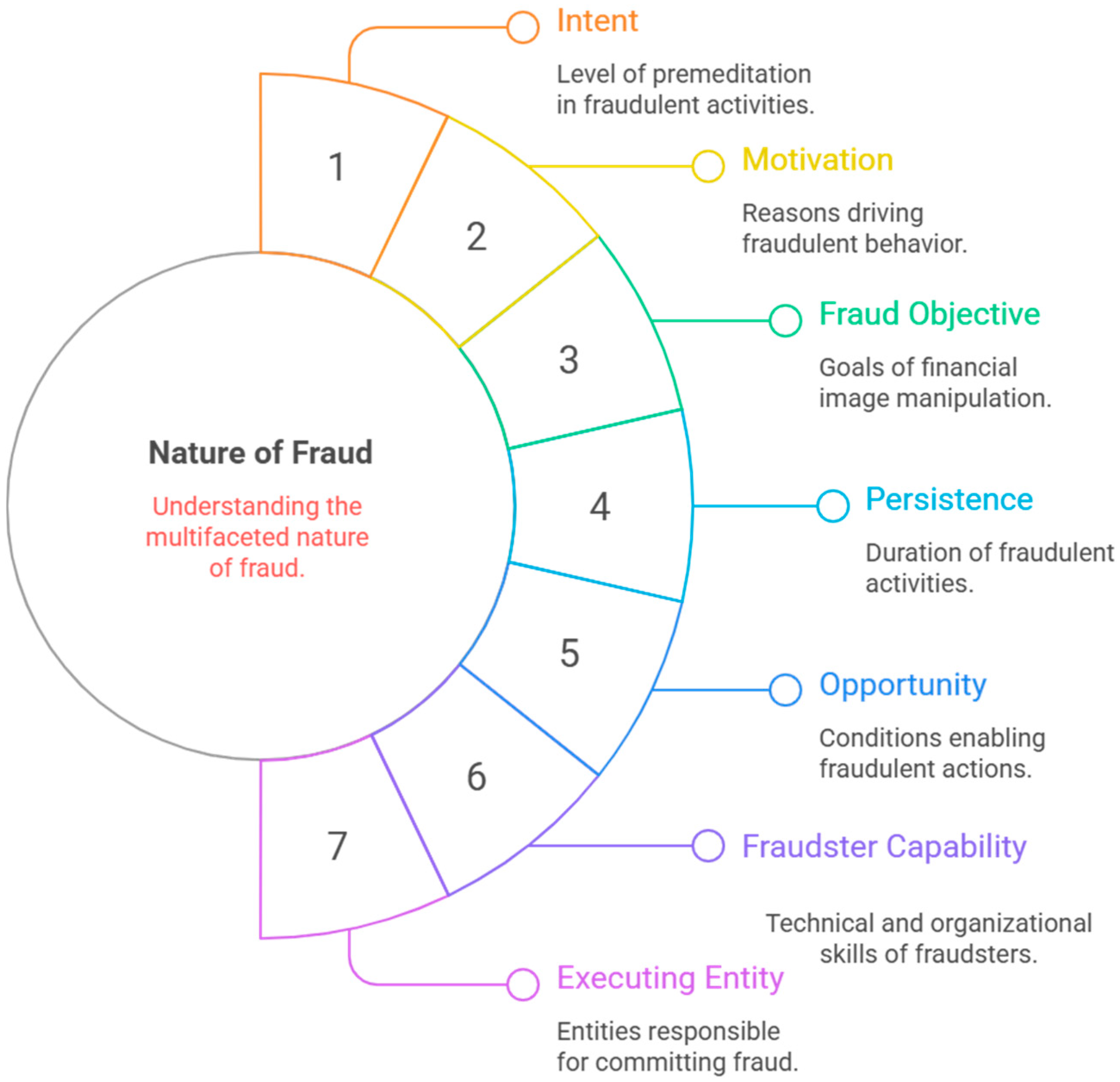
4.1.1. First Category: Nature of Fraud—Dimension: Intent
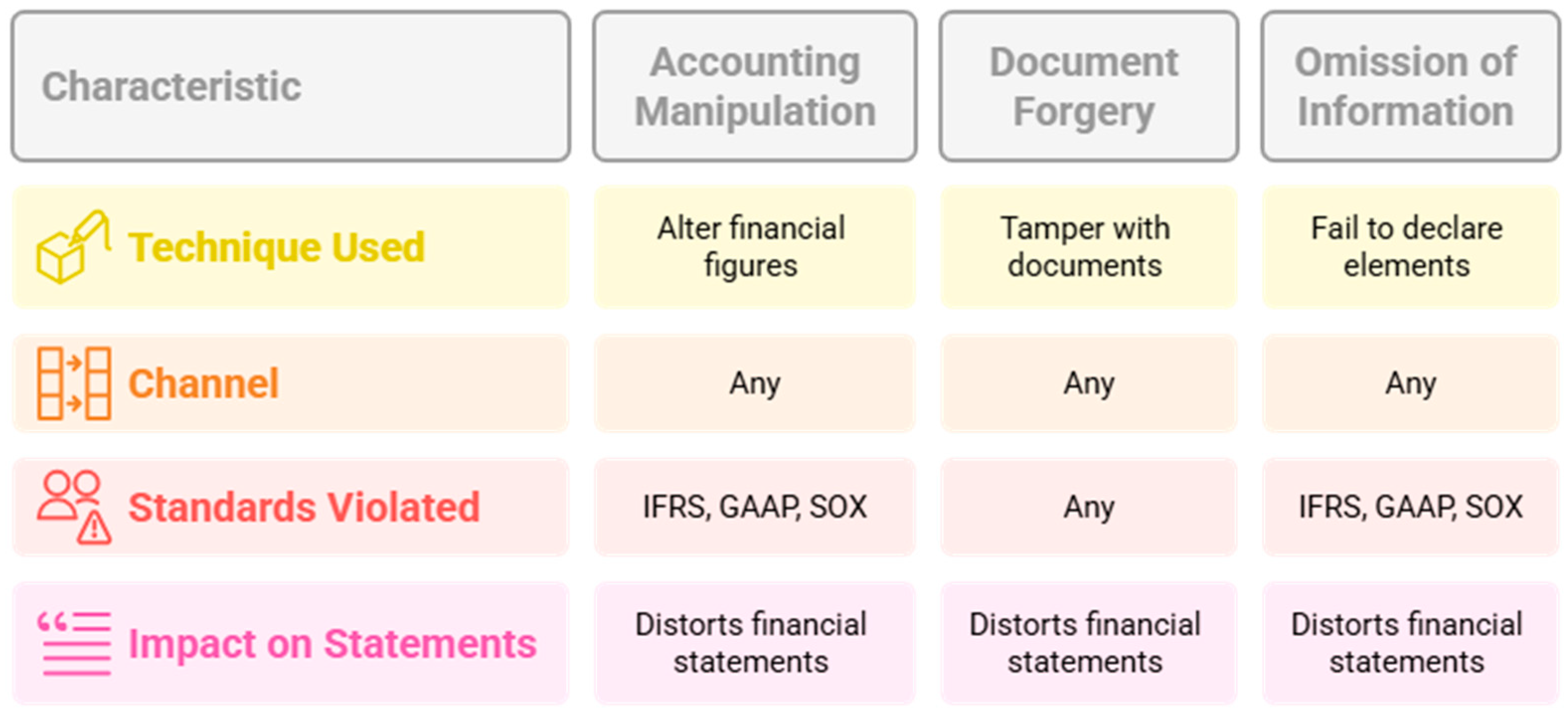
4.1.2. Second Category: Execution of Fraud—Dimension: Method
4.1.3. Third Category: Participation—Dimension: Level of Collusion
4.1.4. Fourth Category: Organizational Impact—Dimension: Affected Area
4.1.5. Fifth Category: Environment and Signs—Dimension: Context
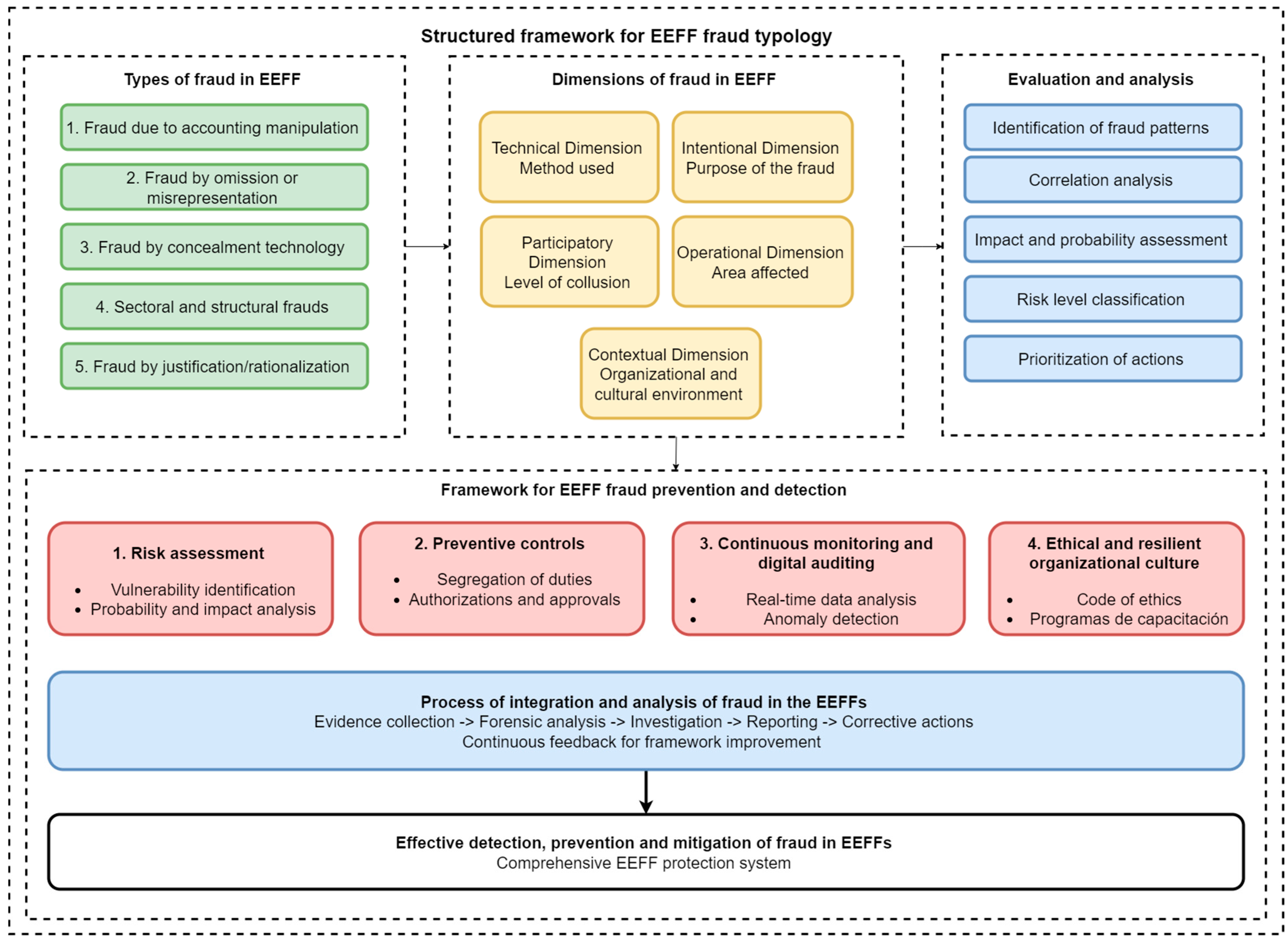
4.2. Forensic Framework for the Prevention and Detection of Fraud in Financial Statements
5. Conclusions
5.1. Limitations
5.2. Future Work
5.3. Management Implications
5.4. Practical Implications
5.5. Theoretical Implications
Author Contributions
Funding
Institutional Review Board Statement
Informed Consent Statement
Data Availability Statement
Acknowledgments
Conflicts of Interest
References
- Aboud, A., & Robinson, B. (2022). Fraudulent financial reporting and data analytics: An explanatory study from Ireland. Accounting Research Journal, 35(1), 21–36. [Google Scholar] [CrossRef]
- ACFE. (2024). Occupational fraud 2024: A report to the nations. Available online: https://www.acfe.com/-/media/files/acfe/pdfs/rttn/2024/2024-report-to-the-nations.pdf (accessed on 1 June 2025).
- Achmad, T., Ghozali, I., Helmina, M. R. A., Hapsari, D. I., & Pamungkas, I. D. (2022). Detecting fraudulent financial reporting using the fraud hexagon model: Evidence from the banking sector in Indonesia. Economies, 11(1), 5. [Google Scholar] [CrossRef]
- Al-Harrasi, A., Shaikh, A. K., & Al-Badi, A. (2023). Towards protecting organisations’ data by preventing data theft by malicious insiders. International Journal of Organizational Analysis, 31(3), 875–888. [Google Scholar] [CrossRef]
- Andersson, P., & Hellman, N. (2020). Analysts’ evaluations of acquisitions: Swedish survey evidence on IFRS knowledge and the use of accounting information for valuation purposes. Journal of International Accounting, Auditing and Taxation, 41, 100354. [Google Scholar] [CrossRef]
- Anning, A. A., & Adusei, M. (2022). An analysis of financial statement manipulation among listed manufacturing and trading firms in Ghana. Journal of African Business, 23(1), 165–179. [Google Scholar] [CrossRef]
- Ashtiani, M. N., & Raahemi, B. (2022). Intelligent fraud detection in financial statements using machine learning and data mining: A systematic literature review. IEEE Access, 10, 72504–72525. [Google Scholar] [CrossRef]
- Bandara, S., & Falta, M. (2021). The usefulness of IFRS-compliant reports: Perceptions of Sri Lankan investors and lenders. Asian Review of Accounting, 29(4), 525–557. [Google Scholar] [CrossRef]
- Bar Lev, E., Maha, L.-G., & Topliceanu, S.-C. (2022). Financial frauds’ victim profiles in developing countries. Frontiers in Psychology, 13, 999053. [Google Scholar] [CrossRef] [PubMed]
- Baumgärtler, T., Eudelle, P., & Cano, J. G. (2024). An international analysis of fraud detection in European structural and investment funds. European Journal of International Management, 22(2), 198–229. [Google Scholar] [CrossRef]
- Benkraiem, R., Bensaad, I., & Lakhal, F. (2022). How do international financial reporting standards affect information asymmetry? The importance of the earnings quality channel. Journal of International Accounting, Auditing and Taxation, 46, 100445. [Google Scholar] [CrossRef]
- Bhattacharya, I., & Mickovic, A. (2024). Accounting fraud detection using contextual language learning. International Journal of Accounting Information Systems, 53, 100682. [Google Scholar] [CrossRef]
- Black, D. E., Christensen, T. E., Ciesielski, J. T., & Whipple, B. C. (2021). Non-GAAP earnings: A consistency and comparability crisis? Contemporary Accounting Research, 38(3), 1712–1747. [Google Scholar] [CrossRef]
- Blanco, B., Dhole, S., & Gul, F. A. (2023). Financial statement comparability and accounting fraud. Journal of Business Finance & Accounting, 50(7–8), 1166–1205. [Google Scholar] [CrossRef]
- Błaszczyński, J., de Almeida Filho, A. T., Matuszyk, A., Szeląg, M., & Słowiński, R. (2021). Auto loan fraud detection using dominance-based rough set approach versus machine learning methods. Expert Systems with Applications, 163, 113740. [Google Scholar] [CrossRef]
- Boddy, C. R., Freeman, C., & Karpacheva-Hock, E. (2024). Fraud and corporate psychopaths: The proposition for reintroducing personality traits of the economic crime offender. Journal of Economic Criminology, 5, 100081. [Google Scholar] [CrossRef]
- Brasel, K., Doxey, M. M., Grenier, J. H., & Reffett, A. (2016). Risk disclosure preceding negative outcomes: The effects of reporting critical audit matters on judgments of auditor liability. The Accounting Review, 91(5), 1345–1362. [Google Scholar] [CrossRef]
- Burlando, A., & Motta, A. (2015). Collusion and the organization of the firm. American Economic Journal: Microeconomics, 7(3), 54–84. [Google Scholar] [CrossRef][Green Version]
- Bustamante, L. X., Hernández Aros, L., & Gutiérrez Portela, F. (2025). Financial fraud detection through the application of machine learning techniques with an anomaly-based approach. In Human-computer interaction. HCI-COLLAB 2024 (pp. 159–172). Springer. [Google Scholar] [CrossRef]
- Chen, L., Xiu, B., & Ding, Z. (2020). Finding misstatement accounts in financial statements through ontology reasoning. IEEE Access, 13, 124449–124462. [Google Scholar] [CrossRef]
- Christensen, B. E., Newton, N. J., & Wilkins, M. S. (2024). Costs and benefits of a risk-based PCAOB inspection regime. Accounting, Organizations and Society, 112, 101552. [Google Scholar] [CrossRef]
- Clauss, P., Roncalli, T., & Weisang, G. (2009). Risk management lessons from madoff fraud. In Credit, currency, or derivatives: Instruments of global financial stability or crisis? (pp. 505–543). Emerald Group Publishing Limited. [Google Scholar] [CrossRef]
- Cox, H., & Mowatt, S. (2019). Horatio Bottomley and the rise of John Bull magazine. Media History, 25(1), 100–125. [Google Scholar] [CrossRef]
- Cugniere, A., Tusch, O., & Mösenbacher, A. (2022). How fraud detection technologies can help to detect damages in aircraft structures. Procedia Structural Integrity, 38, 168–181. [Google Scholar] [CrossRef]
- Davis, R. T., Lopez, T. J., & Pollard, T. (2023). The joint influence of Sarbanes-Oxley and FAS123R on financial misreporting. Journal of Business Finance & Accounting, 50(9–10), 1836–1866. [Google Scholar] [CrossRef]
- De La Torre Lascano, C. M., & Quiroz, J. I. (2023). Ciberdelito y su asociación en el cometimiento de fraudes financieros en la pandemia de la COVID-19. Revista Venezolana de Gerencia, 28(102), 609–628. [Google Scholar] [CrossRef]
- Dellaportas, S. (2013). Conversations with inmate accountants: Motivation, opportunity and the fraud triangle. Accounting Forum, 37(1), 29–39. [Google Scholar] [CrossRef]
- Demetriades, P., & Owusu-Agyei, S. (2022). Fraudulent financial reporting: An application of fraud diamond to Toshiba’s accounting scandal. Journal of Financial Crime, 29(2), 729–763. [Google Scholar] [CrossRef]
- de Oliveira Orth, C., Momo, F., Manfroi da Silva Bonotto, M., & Schiavi, G. (2024). Motivational processes involved in the behavior of the financial statement fraudster. Journal of Financial Crime, 31(6), 1362–1373. [Google Scholar] [CrossRef]
- Dewi, N. S., Said, J., Faiza, S. N., & Julian, L. (2024). The effect of big data competencies and tone at the top on internal auditors fraud detection effectiveness. Decision Science Letters, 13(1), 153–160. [Google Scholar] [CrossRef]
- DeZoort, F. T., & Harrison, P. D. (2018). Understanding auditors’ sense of responsibility for detecting fraud within organizations. Journal of Business Ethics, 149(4), 857–874. [Google Scholar] [CrossRef]
- Dimmock, S. G., & Gerken, W. C. (2011). Finding Bernie Madoff: Detecting fraud by investment managers. SSRN Electronic Journal, 1–62. [Google Scholar] [CrossRef]
- Donelson, D. C., Ege, M. S., & McInnis, J. M. (2017). Internal control weaknesses and financial reporting fraud. Auditing: A Journal of Practice & Theory, 36(3), 45–69. [Google Scholar] [CrossRef]
- El-Halaby, S., Aboul-Dahab, S., & Bin Qoud, N. (2021). A systematic literature review on AAOIFI standards. Journal of Financial Reporting and Accounting, 19(2), 133–183. [Google Scholar] [CrossRef]
- Elsayed, M., Elshandidy, T., & Ahmed, Y. (2023). Is expanded auditor reporting meaningful? UK evidence. Journal of International Accounting, Auditing and Taxation, 53, 100582. [Google Scholar] [CrossRef]
- Encalada, V. R. (2023). Auditoría forense: Riesgo de auditoría, fraude y materialidad. Suma de Negocios, 14(31), 122–135. [Google Scholar] [CrossRef]
- Erazo-Castillo, J., & De la A-Muñoz, S. (2023). Auditoría del futuro, la prospectiva y la inteligencia artificial para anticipar riesgos en las organizaciones. Novasinergia Revista Digital de Ciencia, Ingeniería y Tecnología, 6(1), 105–119. [Google Scholar] [CrossRef]
- Eutsler, J., Nickell, E. B., & Robb, S. W. G. (2016). Fraud risk awareness and the likelihood of audit enforcement action. Accounting Horizons, 30(3), 379–392. [Google Scholar] [CrossRef]
- Fang, V. W., Li, N., Wang, W., & Zhang, G. (2021). Everlasting fraud (pp. 1–74). European Corporate Governance Institute—Law Working Paper No. 617/2021. Available online: https://ssrn.com/abstract=3762260 (accessed on 5 December 2025).
- Flesher, D. L., Flesher, T. K., & Previts, G. J. (2018). The financial accounting standards board: Profiles of seven leaders. Research in Accounting Regulation, 30(1), 38–48. [Google Scholar] [CrossRef]
- Föhr, T. L., Reichelt, V., Marten, K.-U., & Eulerich, M. (2025). A framework for the structured implementation of process mining for audit tasks. International Journal of Accounting Information Systems, 56, 100727. [Google Scholar] [CrossRef]
- García, G. H., Hernández Arauz, M. A., Zárate Fonseca, S. E., & Chicaiza Sánchez, O. L. (2023). NIIF 15: Un diagnóstico inicial conforme la norma internacional de información financiera. Revista Eruditus, 4(1), 43–57. [Google Scholar] [CrossRef]
- Gray, G. L., & Debreceny, R. S. (2014). A taxonomy to guide research on the application of data mining to fraud detection in financial statement audits. International Journal of Accounting Information Systems, 15(4), 357–380. [Google Scholar] [CrossRef]
- Gui, Z., Huang, Y., & Zhao, X. (2024). Financial fraud and investor awareness. Journal of Economic Behavior & Organization, 219, 104–123. [Google Scholar] [CrossRef]
- Gupta, S., & Mehta, S. K. (2021). Data mining-based financial statement fraud detection: Systematic literature review and meta-analysis to estimate data sample mapping of fraudulent companies against non-fraudulent companies. Global Business Review, 25, 1290–1313. [Google Scholar] [CrossRef]
- Hagen, J., & Malisa, A. (2022). Financial fraud and individual investment behavior. Journal of Economic Behavior & Organization, 203, 593–626. [Google Scholar] [CrossRef]
- Hamza, C., Lylia, A., Nadine, C., & Nicolas, C. (2023). Semi-supervised method to detect fraudulent transactions and identify fraud types while minimizing mounting costs. International Journal of Advanced Computer Science and Applications, 14(2), 861–870. [Google Scholar] [CrossRef]
- Hernandez, L., Bustamante Molano, L. X., Gutierrez-Portela, F., Moreno Hernandez, J. J., & Rodríguez Barrero, M. S. (2024). Financial fraud detection through the application of machine learning techniques: A literature review. Humanities and Social Sciences Communications, 11(1), 1130. [Google Scholar] [CrossRef]
- Hilal, W., Gadsden, S. A., & Yawney, J. (2022). Financial fraud: A review of anomaly detection techniques and recent advances. Expert Systems with Applications, 193, 116429. [Google Scholar] [CrossRef]
- Hoberg, G., & Lewis, C. (2017). Do fraudulent firms produce abnormal disclosure? Journal of Corporate Finance, 43, 58–85. [Google Scholar] [CrossRef]
- Hogan, C. E., Rezaee, Z., Riley, R. A., & Velury, U. K. (2008). Financial statement fraud: Insights from the academic literature. Auditing: A Journal of Practice & Theory, 27(2), 231–252. [Google Scholar] [CrossRef]
- Hudayati, A., Nisa, T. K., & Sanusi, Z. M. (2022). Financial pressure and related party transactions on financial statement fraud: Fraud triangle perspective. International Journal of Business and Emerging Markets, 14(2), 213–230. [Google Scholar] [CrossRef]
- IAASB. (2019). ISA 315 (revised 2019): Identifying and assessing the risks of material misstatement (International Federation of Accountants (IFAC) Ed.). IAASB. Available online: https://www.iaasb.org/publications/isa-315-revised-2019-identifying-and-assessing-risks-material-misstatement (accessed on 5 December 2025).
- IAASB. (2025). ISA 240 (revised): The auditor’s responsibilities relating to fraud in an audit of financial statements (International Federation of Accountants (IFAC) Ed.). IAASB. Available online: https://www.iaasb.org/publications/isa-240-revised-auditor-s-responsibilities-relating-fraud-audit-financial-statements (accessed on 5 December 2025).
- International Organization for Standardization (ISO) & International Electrotechnical Commission (IEC). (2022). ISO/IEC 27001:2022: Information security, cybersecurity and privacy protection—Information security management systems—Requirements (3rd ed.). Available online: https://www.iso.org/standard/27001 (accessed on 5 December 2025).
- Imhanzenobe, J. (2022). Value relevance and changes in accounting standards: A review of the IFRS adoption literature. Cogent Business & Management, 9(1), 2039057. [Google Scholar] [CrossRef]
- Jiang, R. (2022). Exploring employees’ computer fraud behaviors using the fraud triangle theory. Pacific Asia Journal of the Association for Information Systems, 14, 100–121. [Google Scholar] [CrossRef]
- Johri, A. (2024). Examining the impact of international financial reporting standards adoption on financial reporting quality of multinational companies. International Journal of Financial Studies, 12(4), 96. [Google Scholar] [CrossRef]
- Kim, Y. J., Baik, B., & Cho, S. (2016). Detecting financial misstatements with fraud intention using multi-class cost-sensitive learning. Expert Systems with Applications, 62, 32–43. [Google Scholar] [CrossRef]
- Kranacher, M.-J., & Riley, R. (2019). Forensic accounting and fraud examination. John Wiley & Sons. Available online: https://books.google.com.co/books/about/Forensic_Accounting_and_Fraud_Examinatio.html?id=GnOODwAAQBAJ&redir_esc=y (accessed on 1 June 2025).
- Krokoszinski, L., Westenberger, A., & Hosser, D. (2018). Social competencies and the sociomoral reflectiveness of imprisoned fraudsters. Journal of Forensic Practice, 20(4), 279–288. [Google Scholar] [CrossRef]
- Laguna, J. P., & Romero, E. C. (2009). Las sociedades que utilizan las NIC/NIIF ya no tienen que reconciliar las cifras contables a us gaap. ¿está justificada esta decisión de la sec en el ámbito del sector de las telecomunicaciones? Revista de Contabilidad, 12(1), 45–93. [Google Scholar] [CrossRef][Green Version]
- Leal, L., Rodríguez, E., & González, R. (2020). Auditoría forense: Los procedimientos del Contador Público en la investigación del fraude corporativo. Gestión y Sociedad, 3(2), 141–160. [Google Scholar]
- Lee, S. (2024). Has R&D investment become riskier for CEOs after the Sarbanes Oxley act? Journal of Corporate Accounting & Finance, 35(3), 350–363. [Google Scholar] [CrossRef]
- Leistedt, S. J., & Linkowski, P. (2016). Fraud, individuals, and networks: A biopsychosocial model of scientific frauds. Science & Justice, 56(2), 109–112. [Google Scholar] [CrossRef] [PubMed]
- Lisic, L. L., Silveri, S. (Dino), Song, Y., & Wang, K. (2015). Accounting fraud, auditing, and the role of government sanctions in China. Journal of Business Research, 68(6), 1186–1195. [Google Scholar] [CrossRef]
- Liu, C., Ryan, D., Lin, G., & Xu, C. (2023). No rose without a thorn: Corporate teamwork culture and financial statement misconduct. Journal of Behavioral and Experimental Finance, 37, 100786. [Google Scholar] [CrossRef]
- Lu, P., Wang, Y., & Li, B. (2024). Short selling and corporate financial fraud: Empirical evidence from China. International Review of Economics & Finance, 89, 1569–1582. [Google Scholar] [CrossRef]
- Lu, W., & Zhao, X. (2021). Research and improvement of fraud identification model of Chinese A-share listed companies based on M-score. Journal of Financial Crime, 28(2), 566–579. [Google Scholar] [CrossRef]
- Mabelane, K., Mongwe, W. T., Mbuvha, R., & Marwala, T. (2022). An analysis of local government financial statement audit outcomes in a developing economy using machine learning. Sustainability, 15(1), 12. [Google Scholar] [CrossRef]
- Majeed, M. A., Xie, S., Ullah, I., Fu, J., & Wang, C. (2023). Do powerful CEOs affect qualitative financial disclosure? Evidence from accounting comparability. Research in International Business and Finance, 66, 102026. [Google Scholar] [CrossRef]
- Malau, W. C., Ohalehi, P., Badr, E. S., & Yekini, K. (2021). Fraud interpretation and disclaimer audit opinion. Managerial Auditing Journal, 36(2), 240–260. [Google Scholar] [CrossRef]
- Mandal, A., & S., A. (2024). Fathoming fraud: Unveiling theories, investigating pathways and combating fraud. Journal of Financial Crime, 31(5), 1106–1125. [Google Scholar] [CrossRef]
- Mandal, A., & S., A. (2025). Preventing financial statement fraud in the corporate sector: Insights from auditors. Journal of Financial Reporting and Accounting, 23(1), 56–80. [Google Scholar] [CrossRef]
- Mann, L. (2013). How to reduce the risk of purchasing fraud. Healthcare Financial Management: Journal of the Healthcare Financial Management Association, 67(7), 78–82. [Google Scholar] [PubMed]
- Marquart, J., & Thompson, A. (2024). Exploring relation fraud, murder, and the Fraud Triangle. Journal of Economic Criminology, 4, 100061. [Google Scholar] [CrossRef]
- Masulis, R. W., & Mobbs, S. (2023). Influential independent directors’ reputation incentives: Impacts on CEO compensation contracts and financial reporting. Journal of Corporate Finance, 82, 102449. [Google Scholar] [CrossRef]
- Mat Ridzuan, N. I., Said, J., Razali, F. M., Abdul Manan, D. I., & Sulaiman, N. (2022). Examining the role of personality traits, digital technology skills and competency on the effectiveness of fraud risk assessment among external auditors. Journal of Risk and Financial Management, 15(11), 536. [Google Scholar] [CrossRef]
- Mensah, J. M. K. (2012). Why Lehman Brothers failed: “Preventive measures and recommendations”. SSRN Electronic Journal, 5(4), 85–91. [Google Scholar] [CrossRef]
- Mohammed, A. (2023). The impact of the fraud examiners on fraud risk management in Lehman Brothers Inc. in the financial crisis in the United States. International Journal of Research and Studies Publishing, 4(47), 309–336. [Google Scholar] [CrossRef]
- Munawer, Z., Yahya, S., & Siti-Nabiha, A. K. (2012). Sell-side security analysts: Re-reporting of Enron corporation fraudulent financial data. Procedia-Social and Behavioral Sciences, 62, 749–760. [Google Scholar] [CrossRef]
- Murphy, P. R., & Dacin, M. T. (2011). Psychological pathways to fraud: Understanding and preventing fraud in organizations. Journal of Business Ethics, 101(4), 601–618. [Google Scholar] [CrossRef]
- Musfi, P. N., & Soemantri, R. (2024). The effect of nature of industry, financial stability, ineffective monitoring, and changes in company directors on indications of fraudulent financial statements. Indonesian Journal of Economics, Social, and Humanities, 6(1), 16–37. [Google Scholar] [CrossRef]
- Naldo, R. R., & Widuri, R. (2023). Fraudulent financial reporting and fraud hexagon: Evidence from infrastructure companies in ASEAN. Economic Affairs, 68(3), 1455–1468. [Google Scholar] [CrossRef]
- Narsa, N., Afifa, L., & Wardhaningrum, O. (2023). Fraud triangle and earnings management based on the modified M-score: A study on manufacturing company in Indonesia. Heliyon, 9(2), e13649. [Google Scholar] [CrossRef]
- Nasir, N. A. B. M., Ali, M. J., & Ahmed, K. (2019). Corporate governance, board ethnicity and financial statement fraud: Evidence from Malaysia. Accounting Research Journal, 32(3), 514–531. [Google Scholar] [CrossRef]
- Nazarova, K., Mysiuk, V., Gordopolov, V., Koval, V., & Danilevičienė, I. (2020). Preventional audit: Implementation of sox control to prevent fraud. Business: Theory and Practice, 21(1), 293–301. [Google Scholar] [CrossRef]
- Nia, E. H., & Said, J. (2015). Assessing fraud risk factors of assets misappropriation: Evidences from Iranian banks. Procedia Economics and Finance, 31, 919–924. [Google Scholar] [CrossRef][Green Version]
- Nigrini, M. J. (2019). The patterns of the numbers used in occupational fraud schemes. Managerial Auditing Journal, 34(5), 606–626. [Google Scholar] [CrossRef]
- Nigro, H. (2025). Contabilidad forense digital: Nuevas herramientas para la detección del fraude financiero. Revista Colombiana de Contabilidad, 13(26), 37–57. [Google Scholar] [CrossRef]
- Nonnenmacher, J., & Marx Gómez, J. (2021). Unsupervised anomaly detection for internal auditing: Literature review and research agenda. The International Journal of Digital Accounting Research, 21, 1–22. [Google Scholar] [CrossRef] [PubMed]
- Nyakarimi, S. (2022). Probable earning manipulation and fraud in banking sector. Empirical study from East Africa. Cogent Economics & Finance, 10(1), 2083477. [Google Scholar] [CrossRef]
- Ocampo, C. A. (2023). Detectando el fraude con inteligencia artificial: Una perspectiva avanzada en auditoría forense. Revista La Junta, 6(2), 13–40. [Google Scholar] [CrossRef]
- Onwubiko, C. (2020). Fraud matrix: A morphological and analysis-based classification and taxonomy of fraud. Computers & Security, 96, 101900. [Google Scholar] [CrossRef]
- Parlindungan, R., Africano, F., & Elizabeth, P. S. M. (2017). Financial statement fraud detection using published data based on fraud triangle theory. Advanced Science Letters, 23(8), 7054–7058. [Google Scholar] [CrossRef]
- Petra, S., & Spieler, A. C. (2020). Accounting scandals: Enron, worldcom, and global crossing. In Corporate fraud exposed (pp. 343–360). Emerald Publishing Limited. [Google Scholar] [CrossRef]
- Phong, N. A., Tam, P. H., & Tung, N. T. (2024). Identifying fraud financial reports based on signs of income management using machine learning technology: The case of listed companies in Vietnam. Journal of International Commerce, Economics and Policy, 15(2), 2450013. [Google Scholar] [CrossRef]
- Rahman, M. J., & Zhu, H. (2024). Detecting accounting fraud in family firms: Evidence from machine learning approaches. Advances in Accounting, 64, 100722. [Google Scholar] [CrossRef]
- Ramírez-Alpízar, A., Jenkins, M., Martínez, A., & Quesada-López, C. (2020). Use of data mining and machine learning techniques for fraud detection in financial statements: A systematic mapping study. Revista Ibérica de Sistemas e Tecnologias de Informação, E28, 97–109. [Google Scholar]
- Ramos, M., López, W., & Mateos, G. (2022). Importancia de las auditoria externas para el análisis efectivo de los estados financieros. Revista de Investigación Académica Sin Frontera, 37, 10. [Google Scholar] [CrossRef]
- Ranganatha, H. R., & Syed Mustafa, A. (2025). Enhancing fraud detection efficiency in mobile transactions through the integration of bidirectional 3d quasi-recurrent neural network and blockchain technologies. Expert Systems with Applications, 260, 125179. [Google Scholar] [CrossRef]
- Rao, R. K., & Mandhala, V. N. (2024). Unveiling financial fraud: A comprehensive review of machine learning and data mining techniques. Ingénierie Des Systèmes d Information, 29(6), 2309–2334. [Google Scholar] [CrossRef]
- Rashid, M., Khan, N. U., Riaz, U., & Burton, B. (2023). Auditors’ perspectives on financial fraud in Pakistan—Audacity and the need for legitimacy. Journal of Accounting in Emerging Economies, 13(1), 167–194. [Google Scholar] [CrossRef]
- Raudha, F., & Saeedi, M. (2019). Artificial intelligence and machine learning as a tool in preventing and detecting financial fraud: A systematic literature review. Journal of Advanced Research in Dynamical and Control Systems, 11(11), 904–911. [Google Scholar] [CrossRef]
- Reurink, A. (2018). Financial fraud: A literature review. Journal of Economic Surveys, 32(5), 1292–1325. [Google Scholar] [CrossRef]
- Rezaee, Z. (2005). Causes, consequences, and deterence of financial statement fraud. Critical Perspectives on Accounting, 16(3), 277–298. [Google Scholar] [CrossRef]
- Robles Quiñónez, G. D., Egas Moreno, F. G., Benites Valverde, L. A., & Cifuentes Quiñónez, L. M. (2024). International accounting in Latin America: An overview of International Financial Reporting Standards (IFRS). Sapienza: International Journal of Interdisciplinary Studies, 5(2), e24040. [Google Scholar] [CrossRef]
- Rodríguez Salinas, J. (2023). Auditoría forense en la era de la inteligencia artificial, un enfoque vanguardista para combatir el fraude financiero. Punto de Vista, 14(21), 99–118. [Google Scholar] [CrossRef]
- Roszkowska, P. (2021). Fintech in financial reporting and audit for fraud prevention and safeguarding equity investments. Journal of Accounting & Organizational Change, 17(2), 164–196. [Google Scholar] [CrossRef]
- Sarkar, S., & Spieler, A. C. (2020). Corporate fraud: The cases of Barings bank, Volkswagen, and HIH insurance. In Corporate fraud exposed (pp. 421–437). Emerald Publishing Limited. [Google Scholar] [CrossRef]
- Sawangarreerak, S., & Thanathamathee, P. (2021). Detecting and analyzing fraudulent patterns of financial statement for open innovation using discretization and association rule mining. Journal of Open Innovation: Technology, Market, and Complexity, 7(2), 128. [Google Scholar] [CrossRef]
- Scharff, M. M. (2005). Understanding WorldCom’s accounting fraud: Did groupthink play a role? Journal of Leadership & Organizational Studies, 11(3), 109–118. [Google Scholar] [CrossRef]
- Sequeira, N., Mota, M., Costa, R., & Luty, P. (2024). The influence of the COVID-19 crisis on financial statements manipulations in the Portuguese wine and tourism sector. In Advances in tourism, technology and systems. ICOTTS 2023 (pp. 483–493). Springer. [Google Scholar] [CrossRef]
- Setiawan, N., & Soewarno, N. (2025). The examination of asset misappropriations in managers’ workplaces using hexagon’s fraud and the moderating impact of perceived strength of internal control. Journal of Financial Crime, 32, 860–877. [Google Scholar] [CrossRef]
- Shahana, T., Lavanya, V., & Bhat, A. R. (2023). State of the art in financial statement fraud detection: A systematic review. Technological Forecasting and Social Change, 192, 122527. [Google Scholar] [CrossRef]
- Shi, W., Connelly, B. L., & Hoskisson, R. E. (2017). External corporate governance and financial fraud: Cognitive evaluation theory insights on agency theory prescriptions. Strategic Management Journal, 38(6), 1268–1286. [Google Scholar] [CrossRef]
- Souvenir, G., de Clerck, T., Schyvinck, C., Vermeersch, A., Hardyns, W., & Willem, A. (2025). From financial statement fraud to asset misappropriation: Fraud in nonprofit sports clubs and cultural underpinnings. Deviant Behavior, 1–17. [Google Scholar] [CrossRef]
- Srebro, B., Mavrenski, B., Bogojević Arsić, V., Knežević, S., Milašinović, M., & Travica, J. (2021). Bankruptcy risk prediction in ensuring the sustainable operation of agriculture companies. Sustainability, 13(14), 7712. [Google Scholar] [CrossRef]
- Suljić, M., Jusufović, A., Filipović, S., Suljić, E., & Gadžo, A. (2025). Data mining approach in detecting inaccurate financial statements in government-owned enterprises. Croatian Operational Research Review, 16(1), 1–15. [Google Scholar] [CrossRef]
- Tan, K.-L., Hii, I. S. H., Huang, Y., & Yan, Y. (2024). Reducing dishonest disclosures during expense reimbursement: Investigating the predictive power of the technology acceptance model with a corporate governance perspective. Journal of Accounting & Organizational Change, 20(5), 874–895. [Google Scholar] [CrossRef]
- Tawiah, V., & Gyapong, E. (2023). International financial reporting standards, domestic debt finance and institutional quality: Evidence from developing countries. International Journal of Finance & Economics, 28(3), 2915–2936. [Google Scholar] [CrossRef]
- Uygur, S. A., & Napier, C. J. (2024). Understanding fraud in the not-for-profit sector: A stakeholder perspective for charities. Journal of Business Ethics, 190(3), 569–588. [Google Scholar] [CrossRef]
- Van Driel, H. (2019). Financial fraud, scandals, and regulation: A conceptual framework and literature review. Business History, 61(8), 1259–1299. [Google Scholar] [CrossRef]
- Villaescusa, N., & Amat, O. (2022). When collusion meets the fraud triangle: A case study approach. Journal of Financial Crime, 29(3), 805–815. [Google Scholar] [CrossRef]
- Vizcarra, H. (2019). Influencing energy company climate disclosure practices: Cautionary words for state attorneys general. SSRN Electronic Journal, 1–5. [Google Scholar] [CrossRef]
- Wan, J. (2024). Bubble occurrence and landing. Journal of Financial Stability, 70, 101210. [Google Scholar] [CrossRef]
- Wan-Hussin, W. N., Fitri, H., & Salim, B. (2021). Audit committee chair overlap, chair expertise, and internal auditing practices: Evidence from Malaysia. Journal of International Accounting, Auditing and Taxation, 44, 100413. [Google Scholar] [CrossRef]
- West, J., & Bhattacharya, M. (2016). Intelligent financial fraud detection: A comprehensive review. Computers & Security, 57, 47–66. [Google Scholar] [CrossRef]
- Whiting, D. G., Hansen, J. V., McDonald, J. B., Albrecht, C., & Albrecht, W. S. (2012). Machine learning methods for detecting patterns of management fraud. Computational Intelligence, 28(4), 505–527. [Google Scholar] [CrossRef]
- Wu, H., Chang, Y., Li, J., & Zhu, X. (2022). Financial fraud risk analysis based on audit information knowledge graph. Procedia Computer Science, 199, 780–787. [Google Scholar] [CrossRef]
- Yang, L. (2022). An information quality-based explanation for loan loss allowance inadequacy during the 2008 financial crisis. Journal of Accounting and Economics, 73(1), 101433. [Google Scholar] [CrossRef]
- Yassine, H., Zahra, H., & Kezazy Hamza, E. (2024). Systematic review of IPSAS standards: The introduction of IPSAS in public establishments. Edelweiss Applied Science and Technology, 8(5), 292–306. [Google Scholar] [CrossRef]
- Zajmi, S. (2019). Principles of transparent financial reporting as the basis of financial statements quality control. Poslovna Ekonomija, 13(2), 60–68. [Google Scholar] [CrossRef]
- Zambrano Vargas, Y. (2017). La auditoría forense: Un mecanismo para detectar el fraude de estados financieros en Colombia. Inquietud Empresarial, 15(2), 13–36. [Google Scholar] [CrossRef]
- Zemankova, A. (2019, December 8–10). Artificial intelligence in audit and accounting: Development, current trends, opportunities and threats—Literature review. 2019 International Conference on Control, Artificial Intelligence, Robotics & Optimization (ICCAIRO), Athens, Greece. [Google Scholar] [CrossRef]
- Zhang, B., Zhang, Q., Huang, Z., Li, M., & Li, L. (2018). A multi-criteria detection scheme of collusive fraud organization for reputation aggregation in social networks. Future Generation Computer Systems, 79, 797–814. [Google Scholar] [CrossRef]
- Zhao, Y., Liu, R., Xue, J., Wu, Q., & Zhang, X. (2024). Environmental protection tax law and corporate financial fraud: Evidence from listed firms in China. International Review of Financial Analysis, 96, 103537. [Google Scholar] [CrossRef]



| Category | Dimension | Variable | Sub Variable | Description | Characteristics | Strategies |
|---|---|---|---|---|---|---|
| 1. Nature of fraud | Intention | Type of intent | — | Level of premeditation of fraud. | Malicious, not malicious, and accidental. | Analysis of behavioral patterns, evaluation of accounting judgments. |
| Motivation | — | Reason or incentive driving fraud. | Financial (profits), non-financial (reputation). | Interviews, analysis of pressures and incentives. | ||
| Purpose of the fraud | Improving the financial image | Manipulation to attract investors or meet internal goals. | Inflating revenues, hiding liabilities. | Forensic analysis of financial goals, review of economic rationality | ||
| Reduce the tax burden | Tax evasion through accounting manipulation. | Underreporting income, fictitious expenses. | ||||
| Persistence | — | Whether fraud is ongoing or a one-time occurrence. | Transitory (single), permanent (recurring). | Continuous monitoring, recurring audit | ||
| Capacity of the fraudster | — | Technical and organizational level of the fraud perpetrator. | Level of ability: low, medium, or high, depending on the fraudster’s expertise. Ability to defraud limited, competent, or significant. | Assessment of access profiles and technical skills | ||
| Implementing agency | — | Individual or collective actor who committed the fraudulent act. | Human, bot, Robotic Process Automation (RPA), script, malware. | Evaluation of access profiles, traceability of digital activity | ||
| 2. Execution of fraud | Method | Technique used | Accounting manipulation | Intentional alteration of financial figures. | Change in accounting policies, improper recognition. | Development of intelligent solutions based on AI and RPA to optimize the review of accounting records, detect anomalous patterns, and expose fraud schemes. |
| Document forgery | Manufacture or falsification of documents. | Fake invoices, altered contracts. | ||||
| Omission of information | Failure to declare or register key items. | Hidden liabilities, overlooked risks. | ||||
| Channel | — | Means by which fraud is committed. | Web, mobile, telephony, physical. | Multi-channel supervision, monitoring of electronic transactions | ||
| Rules violated | — | Rules or laws are broken. | IFRS, GAAP, SOX, tax regulations. Internal regulations Internal control | Regulatory compliance verification, legal compliance, and internal control audit | ||
| Impact on financial statements | — | How fraud distorts financial statements. | Accounting manipulation, concealment of losses or risks. | Analysis of significant variations, substantive tests, and control tests | ||
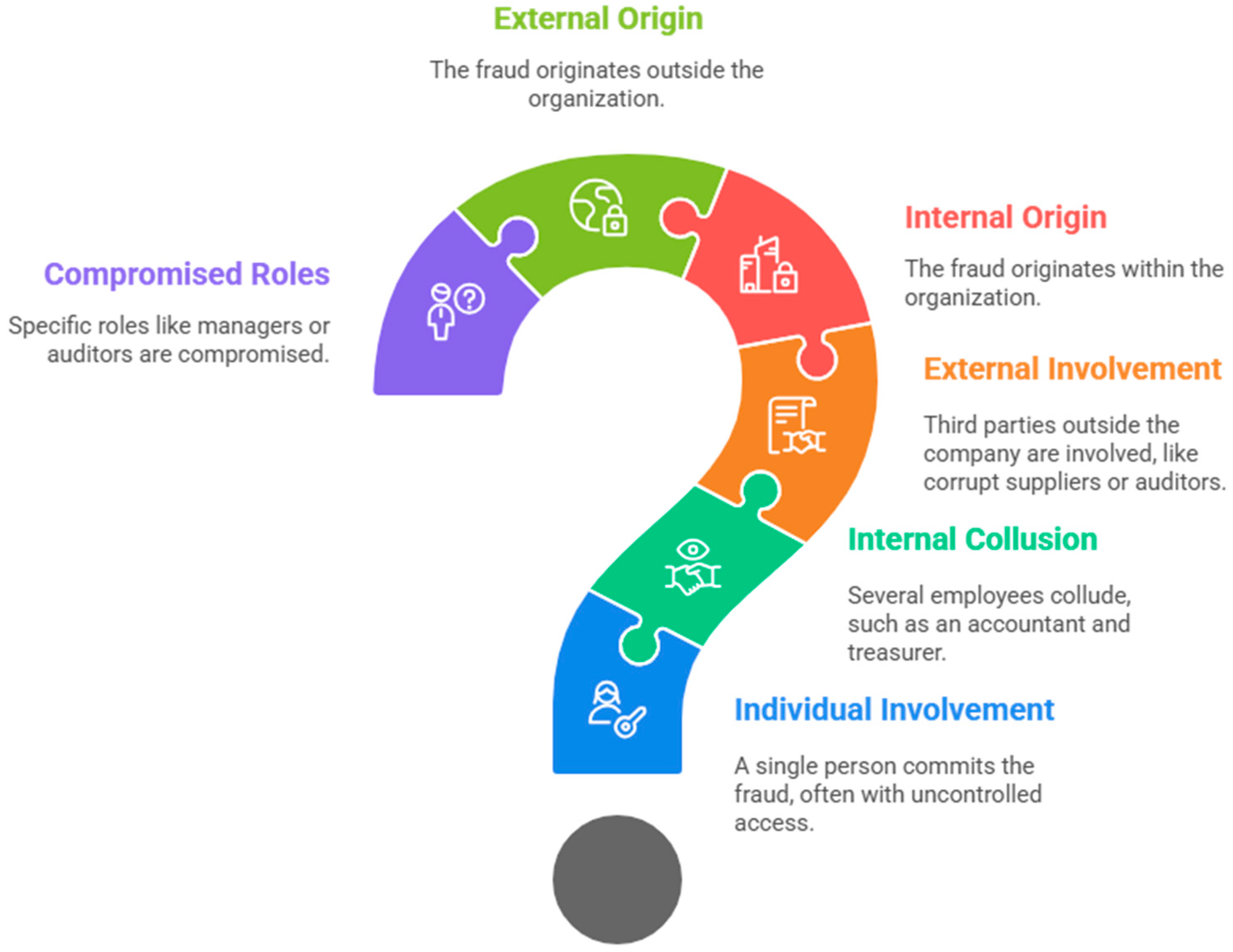
| 3. Participation | Level of Collusion | Level of participation | Individual | A single person commits the fraud. | Employees with uncontrolled access. | Mapping of key actors, collusion analysis, and analysis of factors such as access to accounting records, employee capability, and opportunity to perpetrate fraud |
| Interna | Several employees in collusion. | E.g., Accountant + treasurer + CEO + others. | ||||
| Externa | Participation of third parties outside the company. | Example: Supplier, corrupt auditor | ||||
| System limit | — | Where the fraud originates. | Internal (within the organization), external. | Analysis of access origin, segregation of duties | ||
| Roles involved | — | People or roles involved. | Managers, auditors, operators. | Assessment of critical functions, rotation of sensitive personnel Analysis of the profile of those involved | ||
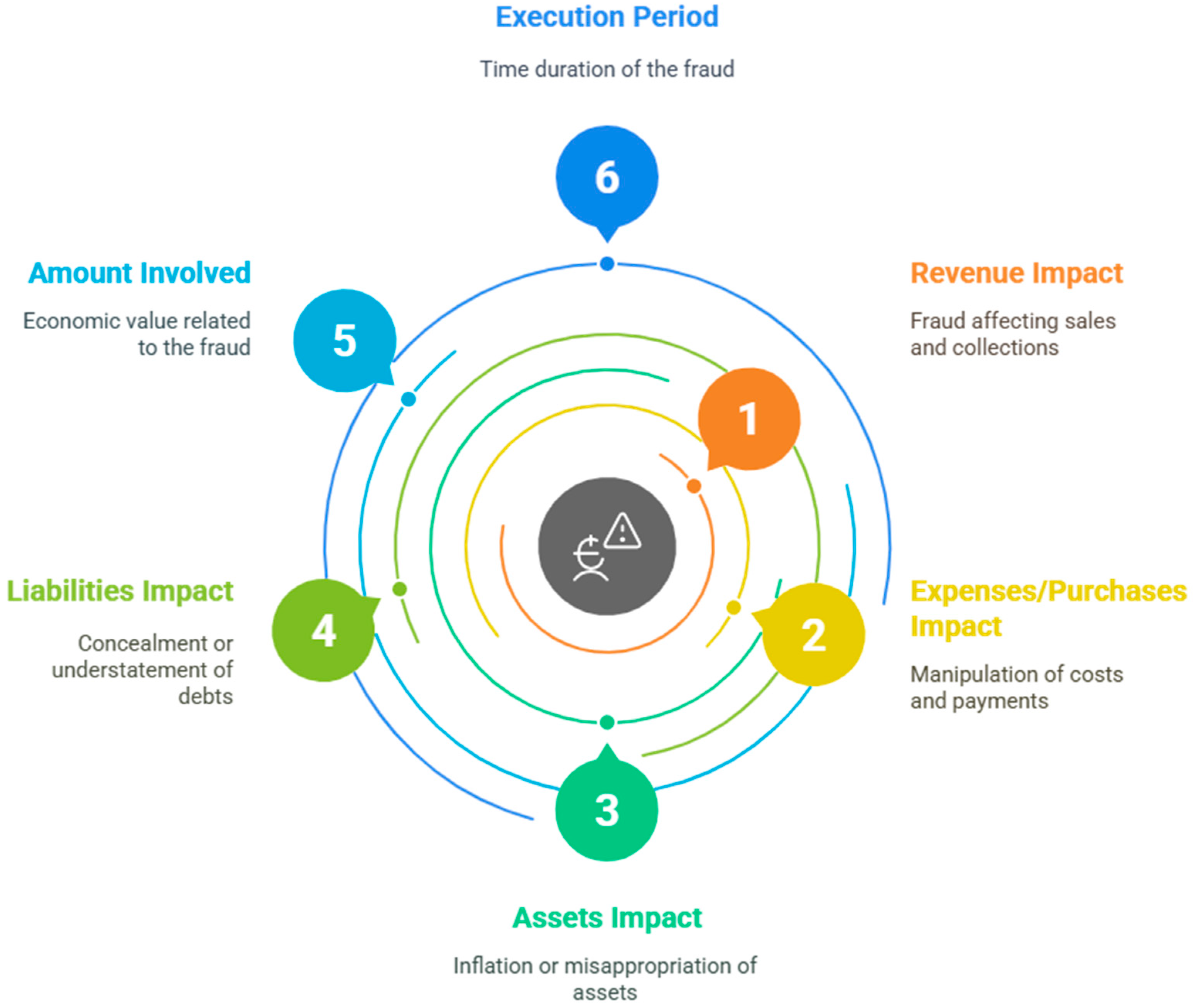
| 4. Organizational impact | Affected area | Type of impact | Revenue | Fraud that alters sales or collections. | Fictitious sales, double invoicing. | Accounting materiality analysis, financial scenario simulation, analysis of historical financial indicators |
| Expenses/Purchases | Manipulation of costs or payments. | Fictitious suppliers, bribes. | ||||
| Assets | Inflation or appropriation of assets. | Inflated inventory, covert theft. | ||||
| Liabilities | Concealment or underestimation of debts. | Omit loans, litigation. | ||||
| Amount involved | — | Economic value related to fraud. | High, moderate, low. | Evaluation of significant transactions, integrity tests, and substantive tests | ||
| Implementation period | — | Temporary duration of the fraud. | Short, prolonged, chronic. | Time series comparison, seasonality adjustment | ||
| 5. Environment and signs | Context | Culture and internal control | — | Environments that facilitate fraud. | Perverse incentives, weak controls. | Organizational climate diagnosis, internal control assessment |
| Warning indicators | — | Visible or detectable signs of fraud. | Frequent auditor changes, recurring inconsistencies. | Early warning systems, use control panels to minimize risks. Use of models that integrate AI for early prevention | ||
| Operational context | — | Pressures, weaknesses, or organizational environment. | Crisis, pressure to meet targets, lax supervision. | Analysis of the control of environment, evaluation of strategic processes |
| Category | Associated Dimension |
|---|---|
| Nature of fraud | Intent |
| Execution of fraud | Method |
| Participation | Level of Collusion |
| Organizational impact | Area Affected |
| Environment and signs | Context |
Disclaimer/Publisher’s Note: The statements, opinions and data contained in all publications are solely those of the individual author(s) and contributor(s) and not of MDPI and/or the editor(s). MDPI and/or the editor(s) disclaim responsibility for any injury to people or property resulting from any ideas, methods, instructions or products referred to in the content. |
© 2026 by the authors. Licensee MDPI, Basel, Switzerland. This article is an open access article distributed under the terms and conditions of the Creative Commons Attribution (CC BY) license.
Share and Cite
Hernandez Aros, L.; Sarmiento Morales, J.J.; Moreno Hernández, J.J. Structured Framework for Dealing with Types of Financial Statement Fraud, Integrating Common Modalities, Variables, Strategies, and Patterns. J. Risk Financial Manag. 2026, 19, 157. https://doi.org/10.3390/jrfm19020157
Hernandez Aros L, Sarmiento Morales JJ, Moreno Hernández JJ. Structured Framework for Dealing with Types of Financial Statement Fraud, Integrating Common Modalities, Variables, Strategies, and Patterns. Journal of Risk and Financial Management. 2026; 19(2):157. https://doi.org/10.3390/jrfm19020157
Chicago/Turabian StyleHernandez Aros, Ludivia, José Jimmy Sarmiento Morales, and John Johver Moreno Hernández. 2026. "Structured Framework for Dealing with Types of Financial Statement Fraud, Integrating Common Modalities, Variables, Strategies, and Patterns" Journal of Risk and Financial Management 19, no. 2: 157. https://doi.org/10.3390/jrfm19020157
APA StyleHernandez Aros, L., Sarmiento Morales, J. J., & Moreno Hernández, J. J. (2026). Structured Framework for Dealing with Types of Financial Statement Fraud, Integrating Common Modalities, Variables, Strategies, and Patterns. Journal of Risk and Financial Management, 19(2), 157. https://doi.org/10.3390/jrfm19020157