
Article

The Effects of Globalization and Foreign Direct Investment on the Economic Growth of South Africa

by
Ndivhuho Eunice Ratombo
* and
Dintuku Maggie Kgomo
Department of Economics, School of Economics and Management, University of Limpopo, Polokwane, Private Bag X1106, Sovenga, Polokwane 0727, South Africa
*
Author to whom correspondence should be addressed.
J. Risk Financial Manag. 2026, 19(1), 7; https://doi.org/10.3390/jrfm19010007 (registering DOI)
Submission received: 22 August 2025 / Revised: 10 October 2025 / Accepted: 14 October 2025 / Published: 22 December 2025
(This article belongs to the Special Issue Recent Developments in Finance and Economic Growth)

Abstract

Developed and developing economies use globalization and foreign direct investment (FDI) to pave the way and to maximize economic growth. This study aims to investigate the impact of globalization and FDI on the economic growth of South Africa over the period from 1998 to 2022. The study employed the autoregressive distributed lag (ARDL) approach on annual data from the World Bank and the KOF index of globalization. ARDL tests reveal a long-run positive and statistically significant relationship of 12.7% in the case of economic globalization. This indicates that there is a reasonable level of the emergence of a globalized economy to integrate new and diverse systems, within internal economic growth forces that are supporting the globalization and endogenous growth theories. Political globalization is negative and statistically significant, while social globalization is positive but is used to depress long-run economic growth because of its insignificant status. The novelty of this study is to focus on the impacts of economic, social, and political globalization and FDI on the economic growth of South Africa, through direct and interactive procedures. The findings can be used by South African policymakers and other countries to prioritize reaping the benefits of globalization. These outcomes can be used to sensitize and promote policies that can attract relevant FDI, while enhancing economic growth.

1. Introduction

Many developing countries have attempted to accelerate their economic growth by pursuing outward-oriented policies that are intended to elevate and integrate them into the world economy (Han, 2025). This understanding shifted most developed and developing economies’ investigations related to economic growth to approach this issue from various perspectives that incorporate the use of physical capital, human capital, natural resources, and technological knowledge. According to Ali and Hussain (2017), and Kgomo and Zhanje (2024), economic growth advancement requires infinite ways. These several ways hold the notion that through globalization, developing nations are offered the opportunity to augment and accomplish economic growth by means of trade and investment. Furthermore, the foreign direct investment (FDI) indicator is vital to quantify a nation’s level of economic globalization and monitor its integration into the global economy. This has led developed and developing economies to use globalization and FDI to pave the way and to maximize their economic growth (Ying et al., 2014; Shittu et al., 2020). Globalization and FDI were recognized as crucial in determining the current, cogent, and imminent status of economic growth. Having established the prominent role of globalization and FDI on economic growth. This study focused on investigating the effects of globalization and foreign direct investment on the economic growth of South Africa.
Following that, the definition was updated to cover some of the specific indices, such as economic, social, and political dimensions of globalization (Dreher, 2006a, 2006b; Dreher et al., 2008; Clark, 2000; Norris, 2000; Keohane & Nye, 2000; Shittu et al., 2020). Globalization was also referred to as a conceptualized process of connections used in generating the exchange of information, ideas, capital, and goods (Trushkina, 2019; Shittu et al., 2020). These connections were used to integrate national economic growth, which was hidden under cultural, technological, and governance boundaries. The three globalization dimensions indices were used to improve the focus on national economies. Firstly, the issues related to the observation of the long-distance movements of goods, capital, and services are categorized as economic globalization. Secondly, social globalization covers the distribution of ideas, information, pictures, and cultural activities. Lastly, the circulation of legal policies is a feature of political globalization. This study captured economic, social, and political globalization indices by using the data obtained from the KOF index of globalization, which integrates the three globalization variables to erode national boundaries, integrates national economies, cultures, technologies, and governance, and further produces complex relationships of mutual interdependence which was also noted by Nye and Donahue (2000) and Cevik (2025). Furthermore, the study’s selection of globalization proxies was also based on the recommendations of Nye and Donahue (2000) and Cevik (2025), who suggested that measuring the extent of economic globalization with a single metric may lead to a deplorable outcome, as the term also incorporates social and political dimensions.
Apart from that, in this study context, FDI was also used as a significant driver and potential game-changer of trade expansion, to facilitate capital inflow, technology transfer, market access, and job creation (H. Utouh & Tile, 2023; Fazaalloh, 2024; H. M. Utouh & Kitole, 2024). FDI inflows have been used to influence, attract, boost, and extend the manufacturing sectors to empower economic growth in developed Nations like the United States, Germany, and Japan (Yimer & Geda, 2024). Furthermore, countries in Asia, such as China, Taiwan, and South Korea, have employed FDI to drive their economic development processes and to establish the global manufacturing borderlines (Ben Mim et al., 2022). Similarly, African countries like Morocco, Egypt, and South Africa have harnessed FDI in several sectors like automotive, textiles, and agro-processing to increase value-added production and economic growth, as alluded to by C. Li and Tanna (2019). Through the adoption of FDI, these nations have developed their economies insufficiently. However, despite the potential roles that globalization and FDI play in many economies, including South Africa, there is a need to understand their assured effect and changing aspects on accelerating economic growth. There is a crucial need to broaden the scope of globalization and FDI to target potential economic growth. This study intended to contribute to the most significant up-to-date globalization and FDI on economic growth ongoing discussions to provide a novel reconfiguration of time and social space, which are essential to respective globalization theories.
The remaining sections of the study are structured as follows: Section 2 reports the review of theoretical and empirical literature; Section 3 outlines the study employed econometric technique, while Section 4 presents the study’s results and discussion. Lastly, Section 5 concludes the study and proposes recommendations.

2. Literature Review

2.1. Theoretical Literature

This study presents the traditional Solow growth theory, endogenous growth, and globalization in theoretical literature. The endogenous growth was useful to capture both economic growth and FDI dynamics. Furthermore, the empirical literature presented an appropriate relationship between globalization, FDI, and economic growth.
According to Appelbaum and Robinson (2005), Rodrik (2007), and Robinson (2007), globalization was introduced in the 1970s as a process of reforming how tradition is used to review the pace of social world change and transformation of human culture across the globalization disciplines. Globalization is a multidimensional phenomenon that affects and connects economic, social, political, cultural, and ideological processes, as alluded to by Appelbaum and Robinson (2005).
Robertson (1992) was another pioneer of globalization, who posits that this process integrates modernities and postmodernities to determine and strengthen awareness of globalization. This theory postulates that individual creativity and imagination are essential characteristics to fit into the whole world. Inclusion of local or national community spheres assists in embracing improvement in independent, enlightening, and phenomenological aspects, within institutional activities in general. Although globalization has many dimensions and is sometimes referred to as globalism, this study opted for economic, social, and political globalization to capture their role in economic growth. Economic globalism accounts for goods, services, and capital flows through market exchange and measurement of distances. Social and cultural globalism studies the movement of ideas, information, and people. This reveals societal practice and imitation based on scientific knowledge. Social and cultural globalism is described as an interaction between military, environmental, and economic activity to convey information and generate ideas across geographical and political boundaries (Peter, 2017; Naz & Ahmad, 2018).
According to Solow (1956) and Gould and Ruffin (1993), changes in population and technological progress are highlighted by capital accumulation through investments and exogenous rates to predict the same continuous growth rate to ultimately reach and provide technological progress and population growth. Furthermore, the Solow theory supports the notion that the long-run growth rate is unattainable within the influence of policymakers.
Paul Romer’s (1986) endogenous growth theory’s line of thought has indicated that countries can achieve diverse, substantial, and accelerating growth rates over the long run without following the traditional path. Implying that economic developments are intentional, useful to generate technological spillovers, and focus on lowering the cost of future innovations.
The study employed the endogenous growth theory (EGT), which was extended by Paul Romer in the 1980s, as alluded to by Romer (1990, 1994) and Apostol et al. (2022). Endogenous growth is useful to determine long-term internal economic growth forces in the economic system (Natufe & Evbayiro-Osagie, 2023). The EGT holds that economic activities create and set new technological knowledge and skills, which cause growth over the long run, as alluded to by Thach (2020); Natufe and Evbayiro-Osagie (2023). The EGT expectations were to advance creativity and innovations that boost production of both physical and human capital, and quality standards (Romer, 1990; Apostol et al., 2022).
The theory further emphasizes that FDI can have an endogenous impact on growth if it generates increasing returns in production through externalities and spill-over effects (Makki & Somwaru, 2004; Schilirò, 2019). FDI stimulates economic growth by facilitating the transfer of technology from the developed world to the host country (Borensztein et al., 1998; X. Li & Liu, 2005). FDI further leads to industrialization and commerce (Jijian et al., 2021).
It is worthwhile to note that the selected theories also provide a link between globalization and FDI, towards the Cobb–Douglas Production Function, which is a valuable tool in providing simple insights into studying production processes, growth, and efficiency in economics (Peter, 2017; Naz & Ahmad, 2018). This link can be expressed from a general Cobb–Douglas Production Function equation as follows:
Y = F L , K
where Equation (1) is typically expressed as follows:
Y = A K L β
where Y represents the quantity of output, A   is the total factor productivity, K   denotes capital input, and L stands for labor input. Furthermore, and β are the output elasticities of capital and labor, respectively.
This link is used to expand factors of production to stretch beyond national boundaries and permit countries to increase access to capital ( K ), labor ( L ), and advanced technological levels ( A ), through output ( Y ), particularly levels of international trade and investment, which affect economic growth. In this study, increased access to capital ( K ) was used to measure economic globalization and FDI. As globalization increases access to these inputs and facilitates the distribution of technology through TFP. Furthermore, Cobb–Douglas utilizes FDI to incorporate FDI-driven capital accumulation by increasing total capital and boosting output capacity, Y which denotes economic growth. According to Smirnov and Wang (2019) and Motoyama (2025), countries can increase access to capital through FDI and global financial markets. Furthermore, FDI is also useful to measure the absorption capacity, and to measure if the financial markets are playing an essential positive role in fostering backward linkages between foreign firms and domestic suppliers, and to further measure country openness. L , was used to measure social globalization by providing access to the global labor market within the country context. Management and enhancement of technological practices were measured through political globalization.
It is sensible to note that globalization theories have primarily focused on the independent dimension and tend to highlight globalizing cultural systems, movements, belief systems, and principles while overlooking the economic and political dimensions. This study opted for this theory to detect the effects of globalization by incorporating the three dimensions, such as economic, social, political, and foreign direct investment, on the economic growth of South Africa from 1998 to 2022. Apart from the globalization theory, the study also employed the traditional Solow growth and endogenous growth theories to provide a prominent framework within economic growth theory, and to capture both growth and FDI changing aspects during the study’s investigated period, to delve into the intricate relationship between globalization and FDI within the broader context of South Africa’s economic growth.

2.2. Empirical Literature

2.2.1. Globalization and Economic Growth

Muhammad and Khan (2021) examined the relationship between foreign direct investment inflow, globalization, energy consumption, economic growth, export of fuel resources, export of ore and metal resources, with carbon dioxide emission in 170 countries. The study was conducted worldwide using panel data from 1990 to 2018. The study uses GMM and fixed effect models to reveal a decrease in greenhouse gas emissions caused by exports of natural resources, export of fuel resources, and of ore and metal resources, urbanization, economic globalization, and political globalization. However, the use of energy, social globalization, foreign direct investment, and economic growth provide a positive stimulus to carbon dioxide emissions.
Kurniawati (2020) employed the panel cointegration test, pooled mean group regression, fully modified and dynamic ordinary least squares (FMFOLS), panel Granger causality, and forecast error variance decomposition to estimate the short-run and long-run inter-linkages among ICT, innovation technology, globalization, and economic growth for the period 1996–2017 in OECD countries. There is a positive relationship between ICT, innovation, and globalization to economic growth. Furthermore, the OECD countries should promote economic growth by expanding ICT infrastructure, enhancing technology innovation, and promoting the spread of globalization, although there is a strong causal endogenous relationship among both ICT proxies, such as mobile and internet use, innovation development, globalization, and economic growth in both the short and long run.
Dabwor et al. (2022) conducted a study to investigate the effect of stock market volatility on economic growth in Nigeria, accounting for the moderating role of globalization by using proxies such as economic, social, and political globalization from 1981 to 2018. The study reveals that there is evidence of a long-run relationship and uses the GARCH (1,1) model to reveal a positive, rigid, and statistically insignificant effect of stock market returns on economic growth. Moreover, globalization reveals a positive, elastic, and statistically significant influence on economic growth.
Tsimisaraka et al. (2023) examined the impact of financial inclusion, globalization, renewable energy, ICT, and economic growth on CO2 emissions in the top 10 emitter OBOR countries from 2004 to 2019. The study employed the CS-ARDL technique to reveal a strong relationship between FI, ICT, and CO2 emissions during both the long-term and short-term periods. On the other hand, renewable energy decreases the CO2 emissions in both periods. There is a negative relationship between globalization and CO2 emissions in the long run. However, in the short run, economic growth is positively associated with CO2 emissions.
Similarly, Sadiq et al. (2023) analyzed the relationship between globalization, energy consumption, and economic growth among selected South Asian countries using the fully modified ordinary least squares (FMOLS) method on annual time series starting from 1985 to 2019. The study reveals an inferior environmental quality in the South Asian region. Furthermore, outcomes differ between countries, such as a significant positive influence on CO2 emissions, non-renewable energy, and the globalization index, which were discovered in Bangladesh. The study reveals both negative and positive growth levels (GDP) and the square of GDP, which supports the EKC hypothesis in the region. Moreover, the study confirms bidirectional causality, which flows from GDP growth and carbon emission, and between economic growth and energy consumption.
Ahmad et al. (2023) examined the impact of information communication technology (ICT), human capital, and globalization on environmental degradation in OECD economies from 1990 to 2018. The study employed second-generation panel econometric techniques, such as CADF and CIPS panel unit root tests, Westerlund co-integration technique, cross-sectional ARDL, and AMG to report that ICT, renewable energy consumption, and human capital are useful in attracting OECD countries’ environmental sustainability. Nevertheless, globalization, economic growth, and non-renewable energy consumption variables lead to an increase in environmental degradation.

2.2.2. FDI and Economic Growth

H. M. Utouh and Kitole (2024) used data from the Bank of Tanzania and the National Bureau of Statistics time series spanning from 1960 to 2020 to investigate the impact of foreign direct investment (FDI) on the industrialization process. The study employed a vector autoregressive (VAR) model and the error correction model (ECM) inclusive approach to highlight the positive and significant role of FDI in shaping Tanzania’s industrial progress, both in the short-term and long-term. On the other hand, exchange rates largely impact the short-term industrial landscape.
Fazaalloh (2024) analyzed the impact of foreign direct investment (FDI) on economic growth using sectoral data to cover 33 provinces in Indonesia from 2010 to 2019. The study used the fixed effects and GMM System estimators to reveal that FDI has a statistically significant and positive impact on economic growth at the Indonesian provinces’ level. Furthermore, a statistically significant and positive FDI was also distinguished in the mining, manufacturing, water, gas and electricity, hotels and restaurants, and real estate sectors, on economic growth. However, a statistically significant and negative FDI was observed in the agricultural sector in Indonesia.
Kgomo and Zhanje (2024) employed an autoregressive distributed lag bound test and numerous appropriate econometrics techniques on annual time series data from 1988 to 2022 to investigate the interrelationship among foreign direct investment, trade, and South Africa’s economic growth. The study reveals a positive and statistically significant relationship between economic growth and foreign direct investment in both the short and long term from 1988 to 2022.
Chaplyuk et al. (2022) investigated the impact of inward foreign direct investment on Algeria’s economic growth during the period 1990–2020. The study uses Linear, Logarithmic, Inverse, Quadratic, Cubic, Compound, Power, S-curve, Growth, Exponential, and Logistic models, and statistical regression to reveal that there is a weak and insignificant influence between FDI and Algeria’s economic growth.
Nguyen (2020) assessed the impact of foreign direct investment and international trade on the economic growth of Vietnam using secondary data from 2000 to 2018. The study used the ordinary least squares (OLS) technique to reveal that FDI and international trade are connected to Vietnam’s economic growth from 2000 to 2018. There is a positive and statistically significant relationship between FDI and economic growth.
Okwu et al. (2020) employed an appropriate econometric methodology on panel data to examine whether foreign direct investment enhances economic growth, using data from the 30 leading global countries for the periods of 1998 and 2017. The study reveals that FDI has a positive and statistically significant influence on the economic growth of the 30 countries during the period.
Tahir et al. (2020) employed the autoregressive distributed lag cointegration approach to investigate the impact of foreign inflows and economic growth in Pakistan from 1976 to 2018. The study reveals that there is a positive and statistically significant relationship between FDI inflows and economic growth in Pakistan from 1976 to 2018.
Through empirical observation, there is a dearth of literature on globalization, FDI, and economic growth within the South African context. Although a similar study was conducted by Muhammad and Khan (2021), the aim differs since Muhammad and Khan (2021) examined the relationship between foreign direct investment inflow, globalization, energy consumption, economic growth, export of fuel resources, export of ore and metal resources, with carbon dioxide emission in 170 countries. The study was also conducted worldwide using panel data from 1990 to 2018 and the GMM methodology, which completely differs from the current study’s selection of variables, methodology, and duration. Henceforth, even though Kgomo and Zhanje (2024) employed an ARDL bound test and numerous appropriate econometrics techniques from 1988 to 2022 to reveal a positive and statistically significant relationship between economic growth and foreign direct investment in both the short and long run in South Africa’s economic growth. Yet, Kgomo and Zhanje’s study did not consider globalization dimensions, as the current study intends to integrate national economic growth and to minimize the gap that was hidden under cultural, technological, and governance boundaries to delay desired growth.

3. Methodology

3.1. Data

This study employs secondary annual data from 1998 to 2022. The data for the variables used in the model were obtained from the World Bank database, excluding the globalization indicators that were obtained from the KOF index of globalization. The following variables were used to achieve the purpose of the study, namely, economic growth as the dependent variable proxied by GDP growth (annual %), including independent variables, namely, globalization and FDI (measured by FDI, net inflows as % of GDP). Several indicators to capture economic, social, and political integration were used as proxies for globalization. Thus, economic globalization, social globalization, and political globalization are used in this study. Globalization and FDI are positive contributors to an economy’s performance and growth.

3.2. Model Specification

The objective of the study is to investigate the impact of globalization and FDI on economic growth in South Africa at the time t . It can thus be stated that economic growth is a function of globalization and FDI. The following econometric function of the estimated model can be expressed as follows:
G D P = f ( G l o b a l i z a t i o n , F D I )
The econometric model can be written as follows:
G D P t =   α 0 + β 1 E G t + β 2 S G t + β 3 P G t + β 4 F D I t + ε t
In Equation (4), G D P represents economic growth, E G is economic globalization, S G is social globalization, and P G denotes political globalization. From the estimated equation α 0 denotes the intercept, β 1 to β 4 the estimated parameters, ε t the random error term and t , represent the time trend. All variables were sourced in percentage format, and there was no need for standardization.

3.3. Estimation Methods

The descriptive statistic, correlation analysis, unit root tests, autoregressive distributed lag (ARDL) bounds test, Granger causality test, and diagnostic and stability tests were conducted. This section provides a discussion on the various econometric methods used in the study.

3.3.1. Descriptive Statistics

The descriptive statistic test shows a summary of the mean, median, and standard deviation of the variables, including the normality tests probability, skewness, kurtosis, and Jarque–Bera. When the skewness is found to be close to zero, then there is a normal distribution. The kurtosis can assist in determining whether or not the tails are light or heavy. A kurtosis equal to or greater than 3 is required for the variables to be normally distributed; however, if it is lower than 3, it indicates that the variables/model are platykurtic (Raihan, 2023).

3.3.2. Correlation Analysis

Correlation analysis in the study has assisted in uncovering the degree of the linear relationship between two variables considered in a study (Sarwar et al., 2021). The level of multicollinearity and the moderating status between the two variables in the model can be checked by the test (Abidemi et al., 2023).

3.3.3. Stationarity Test

To avoid spurious regression and assess the order of integration for each variable, the unit root tests are crucial to conduct. The tests also ensure that the variables are not integrated of higher order, especially greater than one. The Augmented Dickey–Fuller (Dickey & Fuller, 1979) and Phillips–Perron (Phillips & Perron, 1988) unit root tests are conducted in this study. The variables testing procedures include the intercept and trend. The null hypothesis ( H 0 ) in the study, there is no stationarity and an alternative hypothesis ( H 1 ) is that there is stationarity (Pegkas, 2018). If the unit root results meet the requirements of the ARDL approach, the ARDL can be conducted.

3.3.4. Autoregressive Distributed Lag (ARDL) Bounds Test

The ARDL cointegration bounds test recommended by Pesaran et al. (2001) was carried out in the study to check if the variables are cointegrated and able to return to equilibrium in the long run. The approach also has several advantages compared to the normal cointegration test. Firstly, the series does not have to be integrated in a certain order; however, it can be a mixture of I ( 0 ) and I ( 1 ) uniform order of integration; secondly, it provides a dependable forecast of the long-run model; lastly, it is more reliable when it comes to dealing with models of small sample sizes. The ARDL was preferred for its advantage of selecting relevant lags, during the long run, short run, and speed of adjustment, computing at once or through automatic lag selection. For the bounds test, if it is found that the F-statistic exceeds the lower and upper bound critical values, there exists a long-run cointegrating relationship, and the null hypothesis would be rejected (Raihan, 2023). However, if the FF-statistic is between the minimum and maximum threshold or less than the values of both limits, then the results are inconclusive or there is no cointegration between the variables, and the null hypothesis would be accepted. The null hypothesis ( H 0 ) in the study is that there is no cointegration, and the alternative hypothesis ( H 1 ) is that there is cointegration. The ARDL test further provides the kind of influence globalization and FDI might have on GDP, both in the short and long run.

3.3.5. Granger Causality Test

To examine the causal relation between economic growth, globalization, and FDI, the pairwise Granger causality test was implemented. Granger causality examines which fraction of the current y can be described by y s past values, as well as whether adding x s lagged values improve the explanation of y (Pilinkiene, 2016). When the x variable (independent) contributes to the prediction of the y variable (dependent), it can be concluded that the y variable will be regarded to be Granger-caused by the x variable (Granger, 2008; Raihan, 2023).

3.3.6. Diagnostic and Stability Tests

To check the suitability of the model and to validate the intensity of the cointegration valuation, several diagnostic tests were performed. The Jarque–Bera normality, Breusch–Godfrey serial correlation lagrange multiplier (LM), and autoregressive conditional heteroskedasticity (ARCH) tests were included in the study. The data set will be normally distributed when the probability value (p-value) is greater than 0.05 significance level (Abidemi et al., 2023).
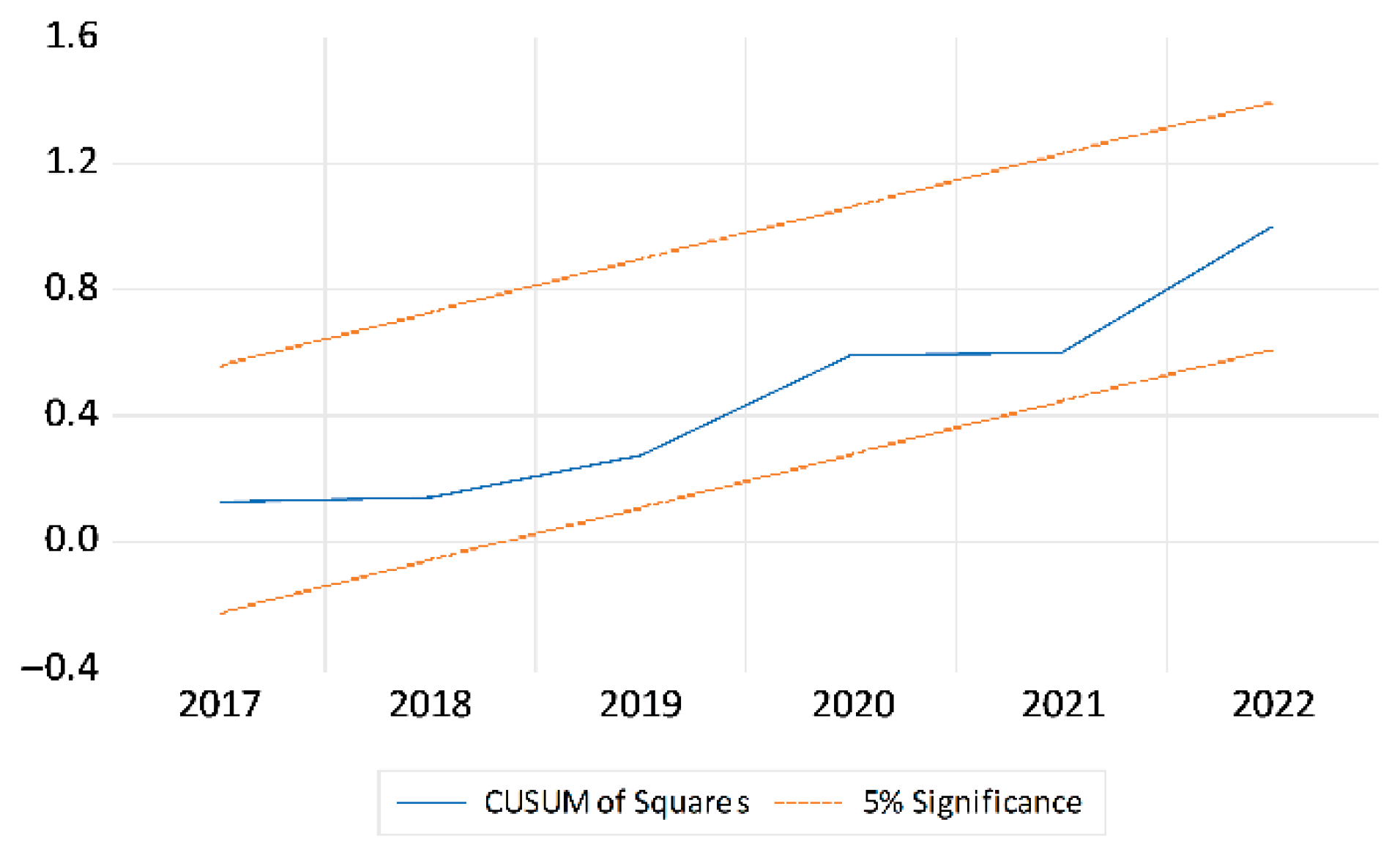
Any model with an autoregressive structure must have its dynamic stability tested and validated. Validating a cointegration model is crucial to avoid instability caused by model misspecification (Daly et al., 2024). To account for omitted variable bias and test for parameter instability, the CUSUM of squares (CUSUMSQ) and CUSUM of recursive residuals (CUSUM) were utilized.

4. Results and Discussion

The findings of the study are presented and discussed in this section.

4.1. Descriptive Statistic Outcomes

Table 1 displays the descriptive statistical outcomes.
The statistics demonstrate that the average economic growth (GDP) in South Africa is 2.28%. The average contribution of economic globalization (EG), social globalization (SG), political globalization (PG), and FDI towards economic growth is 54%, 57%, 84% and 1.71%. Economic growth, economic globalization, social globalization, and political globalization are negatively skewed, unlike FDI. The skewness value of social globalization (−0.372588) is close to zero, which implies a normal distribution. However, the kurtosis of social globalization (1.620898) is less than three, indicating that the variable is platykurtic. The kurtosis for economic growth (6.391188), economic globalization (9.412616), political globalization (6.966294), and FDI (11.33980) are high and above the threshold of three, implying the variables are leptokurtic.

4.2. Correlation Analysis Outcomes

Correlation and multicollinearity of the variables were checked, and Table 2 shows the findings.
The correlation analysis indicates that economic and social globalization and FDI are positively correlated with economic growth. While political globalization is negatively correlated with economic growth. There might be a correlation among the variables; however, the values are less than the multicollinearity threshold of 0.7. There are no concerns of multicollinearity in the model.

4.3. Stationarity Outcomes

Stationarity of the variables was checked, and the results are displayed in Table 3.
The decision rule: “*”, “**”, and “***” represent rejection of the null hypothesis at 10%, 5% and 1%. Stationarity was tested, and the order of integration for each variable at levels and first differences was determined. From the outcome, it is evident that economic growth, economic globalization, political globalization, and FDI are stationary at levels, implying the variables are of I ( 0 ) as the null hypothesis of nonstationarity is rejected at 1% and 5% significance levels. Social globalization was found to contain a unit root at levels, and the null hypothesis could not be rejected but was accepted. The variable had to be differenced for both the ADF and PP unit root tests. After the first difference, social globalization was stationary and, in this case, the null hypothesis can be rejected at 1% significance level.

4.4. ARDL Bounds Outcomes

After the verification of stationarity, the ARDL cointegration bounds test was conducted. The ARDL bounds results are shown first in Table 4, followed by the long and short run outcomes. The model selection criteria for the test are based on the Akaike info criterion (AIC). The maximum lags for the dependent variable were one, and the regressors were three under the automatic lag selection.
The results of the ARDL cointegration bounds indicate that the variables are cointegrated in the long run, as the estimated F-statistic is found to be 6.620790 and greater than the critical values of the lower and upper bounds levels. The null hypothesis of no cointegration is rejected.
The long-run equation can be written as follows:
G D P t =   1.269232 E G t + 0.162452 S G t 0.947091 P G t + 1.469641 F D I t
In the long run, economic globalization is the main driver of economic growth and has a positive and significant relationship with economic growth as indicated in Table 5. FDI also positively influences economic growth; however, the relation is insignificant. If economic globalization were to increase by 10% it would result in a 12.7% increase in economic growth. Economic globalization’s positive influence on economic growth concurs with Kurniawati (2020), Dabwor et al. (2022), and Sadiq et al. (2023) studies that applied FMFOLS and GARCH (1,1) model on OECD countries, the South Asian region, and Nigeria. These outcomes support Paul Romer’s (1986) endogenous growth theory’s line of thought that reveals that countries use diverse methods and economic incentives to achieve diverse, substantial, and accelerating growth rates of economic growth over the long run.
Furthermore, FDI’s positive long-run connection to economic growth results is in agreement with Nguyen (2020), Okwu et al. (2020), Tahir et al. (2020), Fazaalloh (2024), Kgomo and Zhanje (2024), and H. M. Utouh and Kitole (2024) econometrics outcomes, confirmed by OLS, ARDL, fixed effects, and GMM System, VAR, and ECM techniques, which were discovered in the Global context, Vietnam, Pakistan, Indonesia, Tanzania, and South Africa.
The current study outcomes match the globalization theory by highlighting a reasonable level of the emergence of a globalized economy that involves new and diverse systems related to global economic integration, as suggested by Appelbaum and Robinson (2005). However, negative and significant political globalization symbolizes that South Africa is aware of the emergence of new and diverse international political processes, including international institutions, the expansion of global governance, and shifting power structures, but it is not yet ready to facilitate its political globalization sphere to yield economic growth. This reveals that the country’s political globalization operates as an independent structure. The South African economic growth is harmed by not bringing into line social globalization, particularly negligence of the production, poor management of finance, higher level of consumption, weak administration of new international cultural patterns, and diverse practices, and failure to monitor the unique multidirectional movement of people’s records around the world by connecting new patterns of international movement, identities, and communities. Furthermore, the country’s social globalization is compromised and twisted; only economic globalization upholds the economic growth principles, as outlined by Romer (1986). The endogenous growth theory, stipulated by Romer (1986), suggests that the traditional theory failed to resolve economic growth predictions. Although there might be a slight improvement in economic growth, individual creativity and imagination positions will be limited to local or national community spheres instead of enlightening the whole world’s activities in general.
Looking at the short-run elasticities, it is evident that both economic globalization and FDI positively affect economic growth meaningfully. Moreover, Chaplyuk et al. (2022) study conducted in Algeria, applied Linear, Logarithmic, Inverse, Quadratic, Cubic, Compound, Power, S-curve, Growth, Exponential, and Logistic models, and statistical regression to criticize FDI and economic growth positive relationship which concurs with the current study’s short-run results. Given the FDI and economic growth positive and significant results, the current study endorse the endogenous growth theory that exposes that long-term internal economic growth forces in the economic activities which create and set new technological knowledge and skills and causes growth over the long run as alluded by Romer (1986, 1990, 1994), Thach (2020), Apostol et al. (2022), and Natufe and Evbayiro-Osagie (2023).
Political globalization might have a negative relationship by moving opposite economic growth, based on the short-run outcome, but it is statistically influential. However, social globalization is positive and statistically insignificant. This may imply that dynamic economic growth strategies are exercised best by compromising various human well-being benefits in the long term rather than the short term. The speed of adjustment is −0.943755, with a p-value of 0.000, indicating the presence of a long-run cointegrating relationship. This further shows that the speed at which economic growth returns to equilibrium after changes in the explanatory variables is acceptable and relatively high, at 94%.

4.5. Pairwise Granger Causality Outcomes

To determine the causal effect between economic growth, globalization, and FDI, the pairwise Granger causality test with three lags selected was conducted.
The Granger causality results displayed in Table 6 show that economic globalization, political globalization, and economic growth do not Granger-cause each other. The hypothesis cannot be rejected between these variables. The study found that there is a unidirectional association between social globalization and economic growth. The unidirectional relation runs from social globalization towards economic growth, and the null hypothesis is rejected at 5% significance level. However, economic growth does not Granger-cause social globalization; the null hypothesis cannot be rejected. It was revealed that FDI and economic growth do not Granger-cause each other, as the p-values of 0.7236 and 0.2380 are greater than the 0.05 significance level. The study outcome contradicts Kgomo and Zhanje’s (2024) study, which used ADRL to reveal a positive and statistically significant relationship between economic growth and foreign direct investment in both the short and long term from 1988 to 2022 in South Africa. Moreover, the results challenged the endogenous growth theory notion that highlighted that endogenous growth is useful to determine long-term internal economic growth forces in the economic system, as alluded to by Romer (1990, 1994) and Apostol et al. (2022) and Natufe and Evbayiro-Osagie (2023).
Social globalization and economic globalization were also found not to have a causal relationship, including FDI and economic globalization, and political globalization and social globalization.
A unidirectional relation from FDI to social globalization exists; this proves that changes in FDI will influence social globalization. From a 10% significance level perspective, the null hypothesis will be rejected at a 10% significance level as 0.0503 is less than the 0.10 level of significance. However, social globalization does not Granger-cause FDI. Another unidirectional link was found between FDI and political globalization, implying rejection of the null hypothesis at 5%, as the p-value of 0.0343 is below the 0.05 significance level. Any changes in FDI will have an influence on political globalization; however, political globalization will not cause any changes or influence FDI.

4.6. Diagnostic and Stability Outcomes

The diagnostic results are presented and discussed first, followed by the stability outcome.
The null hypothesis ( H 0 ) is that there is a normal distribution, no serial correlation, and no heteroskedasticity, and ( H 0 ) will only be accepted if the p-values are greater than 0.05 significance levels. The alternative hypothesis ( H 1 ) is that the data set is not normally distributed, there is serial correlation and heteroskedasticity, and ( H 1 ) will only be accepted if the p-values are less than 0.05 significance levels. It is evident from the p-values presented in Table 7 for each diagnostic estimation technique that the model is normally distributed (0.875630 > 0.05). Furthermore, the model does not suffer from serial correlation (0.6439 > 0.05) and heteroskedasticity (0.6826 > 0.05) problems.
Figure 1 and Figure 2 show the CUSUM and CUSUMQ Results from 1998 to 2022.
Looking at the CUSUM and CUSUMSQ outcomes, it can be stated that the parameters are stable and the model is robust. Indicated by both Figure 1 and Figure 2, the CUSUM and CUSUMSQ trends are within the 5% significance level.

5. Conclusions and Recommendations

The aim of the study was to investigate the impact of globalization and FDI on the economic growth of South Africa, focusing on the period 1998 to 2022. The ARDL approach was used to achieve the objective of the study. The findings of the study revealed that the variables are stationary and cointegrated in the long run, which shows a sensible level of the emergence of a globalized economy. However, South Africa is struggling to align long-run social globalization with economic growth. While political globalization moves opposite economic growth, and is statistically significant. Economic globalization, in the long run, was found to promote economic growth. In the short run, economic and political globalization, and FDI were found to be statistically significant contributors to economic growth, respectively. Although an increase in political globalization decreases the rate of economic growth in the short run. The pairwise Granger causality test showed that a unidirectional relationship exists between social globalization and economic growth, FDI and social globalization, and FDI and political globalization. No bidirectional relation was found among the variables. The study recommends that new and diverse international political processes, which integrate international institutions, expansion of global governance, and shifting power structures to be rearranged to facilitate desired economic growth. Furthermore, there is a need to evaluate the economic growth damage from social globalization to bring into line the production, management of finance, level of consumption, administration of new international cultural patterns, and diverse practices, and to monitor the exclusive multidirectional movement of people’s records around the world by connecting new patterns of international movement, identities, and communities. Practically, South Africa should promote an apparent tactical economic growth application that can standardize globalization and FDI sentiment. There is a need for future studies to increase and prioritize the relationships between globalization and FDI on economic growth to minimize the globalization independence by covering economic, social, and political dimensions of globalization indicators to integrate national economic growth, hidden under cultural, technological, partisan, and governance boundaries. Furthermore, future studies can investigate the impact of globalization and FDI on the economic growth of South Africa, focusing on a different period, and also include other variables such as the real effective exchange rate index, trade, general government final consumption expenditure, and population growth or population density to control for fundamental growth and openness factors, and demographic variables, etc.

Author Contributions

N.E.R. conceived the key ideas for this research paper. N.E.R. collected and analyzed the data. She also worked on the introduction, the literature review, methodology, results, and conclusion. D.M.K. collected and analyzed the data. She also worked on the introduction, the literature review, methodology, results, and conclusion. D.M.K. conceived the key ideas for this research paper. She collected and analyzed the data. She also worked on the introduction, the literature review, methodology, results, and conclusion. All authors have read and agreed to the published version of the manuscript.

Funding

This research received no external funding.

Institutional Review Board Statement

Not applicable.

Informed Consent Statement

Not applicable.

Data Availability Statement

The data for this article can be made available upon reasonable request by the reader(s) or can be accessed from well-known institutions.

Acknowledgments

Acknowledgments are directed to the University of Limpopo, particularly the Department of Economics, for being a continuous source of information.

Conflicts of Interest

The authors declared no potential conflicts of interest with respect to the research, authorship, and/or publication of this article. This manuscript is an original work and has been performed by the author(s). N.E.R. and D.M.K. are aware of its content and approve its submission since the manuscript has not been published elsewhere in part or in entirety and is not under consideration by another journal. The author(s) have given consent for this article to be submitted for publication in the Journal of Risk and Financial Management or MDPI.

References

  1. Abidemi, A. K., Bright, A. F., & Musa, A. (2023). Classification of some test of normality techniques into UMP and LMP using monte Carlo simulation technique. Mathematics Letters, 9(1), 8–17. [Google Scholar] [CrossRef]
  2. Ahmad, M., Kuldasheva, Z., Nasriddinov, F., Balbaa, M. E., & Fahlevi, M. (2023). Is achieving environmental sustainability dependent on information communication technology and globalization? Evidence from selected OECD countries. Environmental Technology & Innovation, 31, 103178. [Google Scholar] [CrossRef]
  3. Ali, N., & Hussain, H. (2017). Impact of foreign direct investment on the economic growth of Pakistan. American Journal of Economics, 7(4), 163–170. [Google Scholar]
  4. Apostol, M., Enriquez, H. A., & Sumaway, O. (2022). Innovation factors and its effect on the GDP per capita of selected ASEAN countries: An application of Paul Romer’s endogenous growth theory. International Journal of Social and Management Studies, 3(2), 119–139. [Google Scholar]
  5. Appelbaum, R. P., & Robinson, W. I. (Eds.). (2005). Critical globalization studies. Psychology Press. [Google Scholar]
  6. Ben Mim, S., Hedi, A., & Ben Ali, M. S. (2022). Industrialization, FDI and absorptive capacities: Evidence from African Countries. Economic Change and Restructuring, 55(3), 1739–1766. [Google Scholar] [CrossRef]
  7. Borensztein, E., De Gregorio, J., & Lee, J. W. (1998). How does foreign direct investment affect economic growth? Journal of International Economics, 45(1), 115–135. [Google Scholar] [CrossRef]
  8. Cevik, S. (2025). Long live globalization: Geopolitical shocks and international trade. International Economics and Economic Policy, 22(2), 32. [Google Scholar] [CrossRef]
  9. Chaplyuk, V. Z., Akhmedov, F. N., Zeitoun, M. S., Abueva, M. M. S., & Al Humssi, A. S. (2022). The impact of FDI on Algeria’s economic growth. In Geo-economy of the future: Sustainable agriculture and alternative energy (pp. 285–295). Springer International Publishing. [Google Scholar] [CrossRef]
  10. Clark, D. (2000). City, space and globalisation: An international perspective. Journal of Urban Design, 5(1), 86. [Google Scholar]
  11. Dabwor, D. T., Iorember, P. T., & Yusuf Danjuma, S. (2022). Stock market returns, globalization and economic growth in Nigeria: Evidence from volatility and cointegrating analyses. Journal of Public Affairs, 22(2), e2393. [Google Scholar] [CrossRef]
  12. Daly, H., Abdulrahman, B. M. A., Ahmed, S. A. K., Abdallah, A. E. Y., Elkarim, S. H. E. H., Sahal, M. S. G., Nureldeen, W., Mobarak, W., & Elshaabany, M. M. (2024). The dynamic relationships between oil products consumption and economic growth in Saudi Arabia: Using ARDL cointegration and Toda-Yamamoto Granger causality analysis. Energy Strategy Reviews, 54, 101470. [Google Scholar] [CrossRef]
  13. Dickey, D. A., & Fuller, W. A. (1979). Distribution of the estimators for autoregressive time series with a unit root. Journal of the American Statistical Association, 74(366a), 427–431. [Google Scholar] [CrossRef]
  14. Dreher, A. (2006a). Does globalization affect growth? Evidence from a new index of globalization. Applied Economics, 38(10), 1091–1110. [Google Scholar] [CrossRef]
  15. Dreher, A. (2006b). The influence of globalization on taxes and social policy: An empirical analysis for OECD countries. European Journal of Political Economy, 22(1), 179–201. [Google Scholar] [CrossRef]
  16. Dreher, A., Sturm, J. E., & Ursprung, H. W. (2008). The impact of globalization on the composition of government expenditures: Evidence from panel data. Public Choice, 134, 263–292. [Google Scholar] [CrossRef]
  17. Fazaalloh, A. M. (2024). FDI and economic growth in Indonesia: A provincial and sectoral analysis. Journal of Economic Structures, 13(1), 3. [Google Scholar] [CrossRef]
  18. Gould, D. M., & Ruffin, R. J. (1993). What determines economic growth. Economic Review, 2, 25–40. [Google Scholar]
  19. Granger, C. W. J. (2008). Spurious regressions. In The new Palgrave dictionary of economics. Palgrave Macmillan. [Google Scholar] [CrossRef]
  20. Han, Y. (2025). Mirror, reflection, and prospect: South Korea’s integration into economic globalization—Process, experiences, and implications for China. Journal of Current Social Issues Studies, 2(5), 316–321. [Google Scholar] [CrossRef]
  21. Jijian, Z., Twum, A. K., Agyemang, A. O., Edziah, B. K., & Ayamba, E. C. (2021). Empirical study on the impact of international trade and foreign direct investment on carbon emission for belt and road countries. Energy Reports, 7, 7591–7600. [Google Scholar] [CrossRef]
  22. Keohane, R. O., & Nye, J. S. (2000). The club model of multilateral cooperation and problems of democratic legitimacy. In Power and governance in a partially globalized world (pp. 219–244). Routledge. [Google Scholar] [CrossRef]
  23. Kgomo, D. M., & Zhanje, S. (2024). Foreign direct investment, trade and economic growth: A case study of South Africa. International Journal of Research in Business & Social Science, 13(7), 367–378. [Google Scholar] [CrossRef]
  24. Kurniawati, M. A. (2020). The role of ICT infrastructure, innovation and globalization on economic growth in OECD countries, 1996–2017. Journal of Science and Technology Policy Management, 11(2), 193–215. [Google Scholar] [CrossRef]
  25. Li, C., & Tanna, S. (2019). The impact of foreign direct investment on productivity: New evidence for developing countries. Economic Modelling, 80, 453–466. [Google Scholar] [CrossRef]
  26. Li, X., & Liu, X. (2005). Foreign direct investment and economic growth: An increasingly endogenous relationship. World Development, 33(3), 393–407. [Google Scholar] [CrossRef]
  27. Makki, S. S., & Somwaru, A. (2004). Impact of foreign direct investment and trade on economic growth: Evidence from developing countries. American Journal of Agricultural Economics, 86(3), 795–801. Available online: http://www.jstor.org/stable/3697825 (accessed on 22 August 2025). [CrossRef]
  28. Motoyama, Y. (2025). A dynamic optimization model considering cost and speed in the cobb-Douglas production function. Decision Analytics Journal, 14, 100535. [Google Scholar] [CrossRef]
  29. Muhammad, B., & Khan, M. K. (2021). Foreign direct investment inflow, economic growth, energy consumption, globalization, and carbon dioxide emission around the world. Environmental Science and Pollution Research, 28(39), 55643–55654. [Google Scholar] [CrossRef] [PubMed]
  30. Natufe, O. K., & Evbayiro-Osagie, E. I. (2023). Credit risk management and the financial performance of deposit money banks: Some new evidence. Journal of Risk and Financial Management, 16(7), 302. [Google Scholar] [CrossRef]
  31. Naz, A., & Ahmad, E. (2018). Driving factors of globalization: An empirical analysis for the developed and developing countries. Business & Economic Review, 10(1), 133–158. [Google Scholar] [CrossRef]
  32. Nguyen, H. H. (2020). Impact of foreign direct investment and international trade on economic growth: Empirical study in Vietnam. The Journal of Asian Finance, Economics and Business, 7(3), 323–331. [Google Scholar] [CrossRef]
  33. Norris, P. (2000). A virtuous circle: Political communications in post-industrial societies. Cambridge University Press. [Google Scholar]
  34. Nye, J. S., & Donahue, J. D. (2000). Governance in a globalizing world (pp. 45–71). Visions of Governance for the 21st Century. Brookings Institution Press. [Google Scholar]
  35. Okwu, A. T., Oseni, I. O., & Obiakor, R. T. (2020). Does foreign direct investment enhance economic growth? Evidence from 30 leading global economies. Global Journal of Emerging Market Economies, 12(2), 217–230. [Google Scholar] [CrossRef]
  36. Pegkas, P. (2018). The effect of government debt and other determinants on economic growth: The Greek experience. Economies, 6, 10. [Google Scholar] [CrossRef]
  37. Pesaran, M. H., Shin, Y., & Smith, R. J. (2001). Bounds testing approaches to the analysis of level relationships. Journal of Applied Econometrics, 16(3), 289–326. [Google Scholar] [CrossRef]
  38. Peter, P. (2017). Indian manufacturing industry in the Era of globalization: A Cobb-Douglas production function analysis. Indian Journal of Economics and Development, 5(1), 1–11. [Google Scholar]
  39. Phillips, P. C., & Perron, P. (1988). Testing for a unit root in time series regression. Biometrika, 75(2), 335–346. [Google Scholar] [CrossRef]
  40. Pilinkiene, V. (2016). Trade openness, economic growth and competitiveness. The case of the central and eastern European countries. Inzinerine Ekonomika-Engineering Economics, 27(2), 185–194. [Google Scholar] [CrossRef]
  41. Raihan, A. (2023). The dynamic nexus between economic growth, renewable energy use, urbanization, industrialization, tourism, agricultural productivity, forest area, and carbon dioxide emissions in the Philippines. Energy Nexus, 9, 100180. [Google Scholar] [CrossRef]
  42. Robertson, R. (1992). Globality, global culture, and images of world order. In Social change and modernity (pp. 395–411). University of California Press. Available online: http://ark.cdlib.org/ark:/13030/ft6000078s/ (accessed on 11 April 2025).
  43. Robinson, W. I. (2007). Theories of globalization. In The Blackwell companion to globalization (pp. 125–143). Wiley. [Google Scholar] [CrossRef]
  44. Rodrik, D. (2007). One economics, many recipes: Globalization, institutions, and economic growth. Princeton University Press. [Google Scholar] [CrossRef]
  45. Romer, P. M. (1986). Increasing returns and long-run growth. Journal of Political Economy, 94(5), 1002–1037. [Google Scholar] [CrossRef]
  46. Romer, P. M. (1990). Endogenous technological change. Journal of Political Economy, 98(5), S71–S102. [Google Scholar] [CrossRef]
  47. Romer, P. M. (1994). The origins of endogenous growth. Journal of Economic Perspectives, 8(1), 3–22. [Google Scholar] [CrossRef]
  48. Sadiq, M., Kannaiah, D., Yahya Khan, G., Shabbir, M. S., Bilal, K., & Zamir, A. (2023). Does sustainable environmental agenda matter? The role of globalization toward energy consumption, economic growth, and carbon dioxide emissions in South Asian countries. Environment, Development and Sustainability, 25(1), 76–95. [Google Scholar] [CrossRef]
  49. Sarwar, A., Khan, M. A., Sarwar, Z., & Khan, W. (2021). Financial development, human capital and its impact on economic growth of emerging countries. Asian Journal of Economics and Banking, 5(1), 86–100. [Google Scholar] [CrossRef]
  50. Schilirò, D. (2019). Public debt and growth in Italy: Analysis and policy proposals. International Journal of Business Management and Economic Research, 10(5), 1695–1702. [Google Scholar]
  51. Shittu, W. O., Yusuf, H. A., El Moctar El Houssein, A., & Hassan, S. (2020). The impacts of foreign direct investment and globalisation on economic growth in West Africa: Examining the role of political governance. Journal of Economic Studies, 47(7), 1733–1755. [Google Scholar] [CrossRef]
  52. Smirnov, R. G., & Wang, K. (2019). The Cobb-Douglas production function revisited. In International conference on applied mathematics, modeling and computational science (pp. 725–734). Springer International Publishing. [Google Scholar] [CrossRef]
  53. Solow, R. M. (1956). A contribution to the theory of economic growth. Quarterly Journal of Economics, 70, 65–94. [Google Scholar] [CrossRef]
  54. Tahir, M., Jan, A. A., Shah, S. Q. A., Alam, M. B., Afridi, M. A., Tariq, Y. B., & Bashir, M. F. (2020). Foreign inflows and economic growth in Pakistan: Some new insights. Journal of Chinese Economic and Foreign Trade Studies, 13(3), 97–113. [Google Scholar] [CrossRef]
  55. Thach, N. N. (2020). Endogenous economic growth: The Arrow-romer theory and a test on Vietnamese economy. WSEAS Transactions on Business and Economics, 17(1), 374–386. [Google Scholar] [CrossRef]
  56. Trushkina, N. (2019). Development of the information economy under the conditions of global economic transformations: Features, factors and prospects. Virtual Economics, 2(4), 7–25. [Google Scholar] [CrossRef] [PubMed]
  57. Tsimisaraka, R. S. M., Xiang, L., Andrianarivo, A. R. N. A., Josoa, E. Z., Khan, N., Hanif, M. S., & Limongi, R. (2023). Impact of financial inclusion, globalization, renewable energy, ICT, and economic growth on CO2 emission in OBOR countries. Sustainability, 15(8), 6534. [Google Scholar] [CrossRef]
  58. Utouh, H., & Tile, A. (2023). The nexus between foreign direct investment and nominal exchange rate, real GDP, and capital stock in Tanzania. Acta Scientiarum Polonorum. Oeconomia, 22(1), 73–87. [Google Scholar] [CrossRef]
  59. Utouh, H. M., & Kitole, F. A. (2024). Forecasting effects of foreign direct investment on industrialization towards realization of the Tanzania development vision 2025. Cogent Economics & Finance, 12(1), 2376947. [Google Scholar] [CrossRef]
  60. Yimer, A., & Geda, A. (2024). A two-edged sword: The impact of public debt on economic growth—The case of Ethiopia. Journal of Applied Economics, 27(1), 2398908. [Google Scholar] [CrossRef]
  61. Ying, Y. H., Chang, K., & Lee, C. H. (2014). The impact of globalization on economic growth. Romanian Journal of Economic Forecasting, 17(2), 25–34. [Google Scholar]
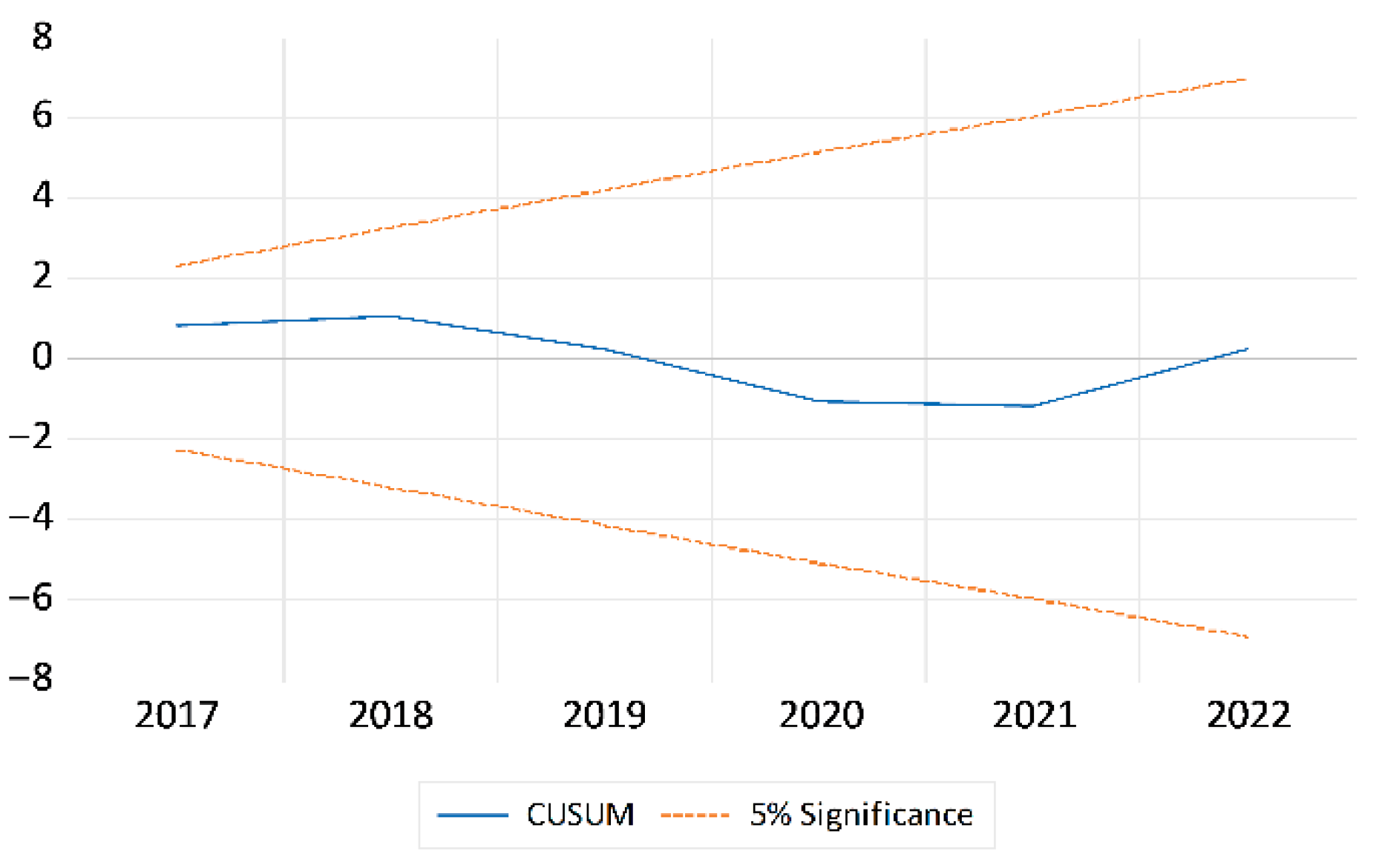
Figure 1. CUSUM. Source: Authors’ own computations.
Jrfm 19 00007 g001
Figure 2. CUSUMSQ. Source: Authors’ own computations.
Jrfm 19 00007 g002
Table 1. Descriptive Statistics Results from 1998 to 2022.
GDPEGSGPGFDI
Mean2.28243254.2991357.2194684.424791.707904
Median2.48546855.1088058.3837587.030451.064922
Maximum5.60380656.7757864.5020388.787509.660265
Minimum−6.16891842.8330246.8983362.920660.205126
Std. Dev.2.4987523.1210946.4450456.2027912.003242
Skewness−1.486435−2.593214−0.372588−2.0423712.835439
Kurtosis6.3911889.4126161.6208986.96629411.33980
Jarque–Bera21.1855470.854872.55959633.76730105.9491
Probability0.0000250.0000000.2780930.0000000.000000
Source: Authors’ own computations.
Table 2. Correlation Analysis Results from 1998 to 2022.
GDPEGSGPGFDI
GDP10.6843047190663330.2067838396259611−0.11623020974864380.1854778738703447
EG0.68430471906633310.382512231466979−0.3389367069193484−0.2756592046858194
SG0.20678383962596110.38251223146697910.06710024620488241−0.478841140684206
PG−0.1162302097486438−0.33893670691934840.0671002462048824110.06084438119746366
FDI0.1854778738703447−0.2756592046858194−0.4788411406842060.060844381197463661
Source: Authors’ own computations.
Table 3. Stationarity Results from 1998 to 2022.
Level, I(0)First Difference, I(1)
VariablesModel SpecificationADF Test StatisticPP Test StatisticADF Test StatisticPP Test Statistic
GDPIntercept−3.928384 ***−3.922439 ***
Trend and intercept−3.887106 **−5.095355 ***
EGIntercept−7.434145 ***−7.968747 ***
Trend and intercept−7.512395 ***−6.684237 ***
SGIntercept−1.446228−1.486405−4.684442 ***−4.699117 ***
Trend and intercept0.4039390.089354−5.418640 ***−5.537796 ***
PGIntercept−9.007075 ***−9.387655 ***
Trend and intercept−3.704694 **−7.443643 ***
FDIIntercept−4.734383 ***−9.883640 ***
Trend and intercept−4.809780 ***−10.24407 ***
Source: Authors’ own computations. Note: **, and *** denote statistical significance at 5% and 1%.
Table 4. ARDL Cointegration Bounds Results from 1998 to 2022.
F-Statistic: 6.620790
K: 4
10%5%1%
I ( 0 ) I ( 1 ) I ( 0 ) I ( 1 ) I ( 0 ) I ( 1 )
1.9003.0102.2603.4803.0704.440
Source: Authors’ own computations.
Table 5. ARDL Long and Short-Run Elasticities Results from 1998 to 2022.
LONG-RUN
VariableCoefficientStd. Errort-StatisticProbability
EG1.2692320.4944132.5671460.0194 **
SG0.1624520.2785280.5832530.5670
PG−0.9470910.425053−2.2281740.0389 **
FDI1.4696410.9226791.5927970.1286
SHORT-RUN
D(EG)1.3051650.2163926.0314830.0001 ***
D(SG)0.5394660.3707251.4551650.1763
D(PG)−1.1974940.361277−3.3146110.0078 ***
D(FDI)0.8306510.1002168.2886270.0000 ***
SPEED OF ADJUSTMENT
ECT−0.9437550.127056−7.4278700.0000 ***
Source: Authors’ own computations. Notes: **, and *** denote statistical significance at 5% and 1%, respectively.
Table 6. Pairwise Granger Causality Results from 1998 to 2022.
Null Hypothesis:ObsF-StatisticProbability
EG does not Granger-cause GDP220.714200.5586
GDP does not Granger-cause EG0.434100.7317
SG does not Granger-cause GDP223.780770.0334 **
GDP does not Granger-cause SG0.302370.8232
PG does not Granger-cause GDP221.542730.2445
GDP does not Granger-cause PG0.543960.6596
FDI does not Granger-cause GDP220.446220.7236
GDP does not Granger-cause FDI1.570170.2380
SG does not Granger-cause EG220.427290.7364
EG does not Granger-cause SG0.975750.4302
PG does not Granger-cause EG220.894360.4668
EG does not Granger-cause PG1.631990.2241
FDI does not Granger-cause EG221.211270.3397
EG does not Granger-cause FDI0.709100.5615
PG does not Granger-cause SG221.848720.1817
SG does not Granger-cause PG0.792290.5169
FDI does not Granger-cause SG223.281230.0503 *
SG does not Granger-cause FDI1.857900.1801
FDI does not Granger-cause PG223.749510.0343 **
PG does not Granger-cause FDI0.376850.7710
Source: Authors’ own computations. Notes: * and ** denote statistical significance at 10% and 5%, respectively.
Table 7. Residual Diagnostics Results from 1998 to 2022.
Estimation Technique Null   Hypothesis :   H 0 ProbabilityDecision
Jarque–Bera normality testNormal Distribution0.875630Accept H 0 , there is normal distribution.
Breusch–Godfrey Serial Correlation LM TestNo serial correlation up to 2 lags0.6439Accept H 0 , there is no serial correlation.
ARCH: Heteroskedasticity TestNo Heteroskedasticity0.6826Accept H 0 , there is no heteroskedasticity.
Source: Authors’ own computations.
Disclaimer/Publisher’s Note: The statements, opinions and data contained in all publications are solely those of the individual author(s) and contributor(s) and not of MDPI and/or the editor(s). MDPI and/or the editor(s) disclaim responsibility for any injury to people or property resulting from any ideas, methods, instructions or products referred to in the content.