1. Introduction
Supervisors now expect banks to quantify and manage climate risk within the
internal capital adequacy assessment process (ICAAP), risk-appetite frameworks, and stress-testing programmes. In the euro area, the European Central Bank’s
Guide on climate-related and environmental risks sets explicit expectations to embed climate drivers into business strategy (Exp. 1–2), governance and risk-appetite (Exp. 3–6), risk management across risk types (Exp. 7), credit underwriting and monitoring (Exp. 8), market/operational/liquidity risk (Exp. 9–12), and disclosures (Exp. 13) (
ECB, 2020). The ECB’s 2022 climate stress test (CST) further highlighted persistent data and methodology gaps—coverage of physical risks, treatment of tail events, limited spatial granularity, and weak links from narratives to capital metrics—underscoring the need for operational, statistically validated tools suitable for ICAAP and Pillar 2 processes (
ECB, 2022). Global standard-setters echo this direction: the BCBS
Principles call for measurement of climate risks as drivers of traditional risk categories and for decision-useful scenario analysis and stress testing for capital planning (
BCBS, 2022).
Climate change poses systemic financial risks via physical channels (acute and chronic hazards such as floods, heatwaves, sea-level rise) and transition channels (policy, technology, and market shifts) (
Campiglio et al., 2023;
ECB, 2020;
Feng & Chen, 2025;
Redondo & Aracil, 2024). A large literature spans scenario analysis and stress testing, sensitivity analysis, and exposure-based metrics such as Weighted Average Carbon Intensity (WACI), (Climate) VaR, and Climate Risk Capital Shortfall (CRISK) (
Battiston et al., 2021;
Gualandri et al., 2024;
Jung et al., 2025;
Rogge, 2023;
TCFD, 2017). Yet four practical limitations recur: (i) weak capture of non-linear, fat-tailed dynamics (
Apostolou & Papaioannou, 2024); (ii) limited cross-jurisdictional harmonisation (
BCBS, 2021); (iii) insufficient treatment of spatial heterogeneity (
Kolozsi et al., 2022); and (iv) difficulties translating long-horizon climate pathways into forward-looking, capital-relevant risk measures (
EBA, 2020;
ECB, 2023). Recent surveys emphasise the lack of consensus on modelling approaches and the tendency of diffusion-only dynamics to smooth extreme, spatially heterogeneous shocks (
Trotta et al., 2025), while granular studies show that climate-adjusted processes materially thicken loss tails and raise capital needs, with strong regional dispersion (
Rania, 2025).
A unified
Spatial Stress Testing and Climate Value-at-Risk (SCVaR) framework is developed to make climate risk measurement bank-usable for prudential purposes. Methodologically, a spatially explicit, hazard-linked jump–diffusion structure is embedded, estimated on financial and regional climate data, and both SCVaR and the coherent tail metric CES are computed. Implementation is provided in three complementary forms aligned with banks’ risk channels: (i) a
market-based SCVaR via climate re-pricing of assets; (ii) a
credit-portfolio SCVaR via scenario-to-PD/LGD mappings; and (iii) a
hybrid SCVaR that jointly models market re-pricing and credit migration. All variants share a harmonised scenario set (NGFS
Orderly/
Disorderly/
Hot-house world), near-term and medium-term horizons, and a spatial mapping from instruments to regional hazards (
NGFS, 2021). A built-in robustness layer (bootstrap confidence intervals, coverage tests, stability/break tests, and sensitivity to hazard inputs and financed-emissions proxies) ensures statistical validation.
The framework delivers (a) tail-sensitive, portfolio-level metrics for risk-appetite calibration and ICAAP benchmarking; (b) stress-test outputs that are both scenario-consistent and model-validated; and (c) a transparent bridge from alignment-style disclosures (e.g., GAR) to risk-sensitive, capital-relevant measures. By quantifying spatial heterogeneity and fat-tail amplification, SCVaR addresses the gaps identified by the ECB CST and aligns with BCBS guidance on measurement and scenario analysis (
BCBS, 2022;
ECB, 2022).
The rest of the manuscript is organised as follows.
Section 2 reviews the current approaches to climate-related financial risk measurement through a systematic survey of the literature and positions the contribution of the present framework.
Section 3 details the econometric specification and estimation strategy, including the operationalization of market-based, credit-portfolio, and hybrid SCVaR implementations.
Section 4 presents simulation-based results that illustrate the statistical properties of SCVaR under stylized climate stress scenarios. To establish empirical validity and practical feasibility,
Section 5 introduces a real-world application based on publicly available financial and climate data, including sovereign bond returns, NGFS-consistent hazard indicators, and emissions intensity measures. This section documents the full data construction pipeline, parameter estimation of the jump–diffusion components, and a comparative evaluation of SCVaR and conditional expected shortfall against classical VaR benchmarks.
Section 6 discusses supervisory and institutional applications, building on the empirically calibrated SCVaR measures, including ICAAP/Pillar 2 integration, stress-test calibration, and climate-risk disclosure.
Section 7 synthesises the empirical and simulation evidence and discusses its implications for climate stress testing, capital planning, and supervisory practice, while
Section 8 outlines policy-relevant avenues of intervention.
Section 9 concludes the study.
2. Literature Review
To establish the state of the art in the measurement of climate-related financial risks and to position the contribution, a systematic literature review is carried out. Sources include central bank and supervisory publications, as well as peer-reviewed journals indexed in EconLit, Scopus, and Web of Science over the period from 2000 to 2025. Search terms combine climate-finance and risk-modelling keywords (e.g., “climate stress test”, “NGFS”, “climate VaR”, “expected shortfall”, “jump–diffusion”, “spatial hazards”, “credit migration”). Inclusion criteria require (i) explicit treatment of climate-related financial risks or supervisory stress testing; (ii) methodological content on VaR/ES, tail modelling, or validation; and (iii) application to banks, pensions, or sovereigns. Exclusions are non-financial climate studies without risk-modelling content and purely descriptive reports without methodological detail. References are screened for relevance and clustered into six strands to identify strengths, limitations, and gaps.
The results confirm that the measurement of climate-related financial risks spans qualitative scenario analysis, supervisory stress testing, market-based indicators, credit and collateral channels, econometric and structural models, and regulatory disclosure frameworks. Therefore, these strands are reviewed in a systematic manner, and their strengths and weaknesses are highlighted for each one. At the end, the positioning of this paper is summarised as completing an existing gap.
2.1. Scenario Analysis and Supervisory Stress Testing
Scenario analysis and climate stress testing are now standard among central banks and supervisors (
ECB,
2020,
2022;
EBA,
2020,
2025). Exercises typically rely on long-horizon pathways from the Network for Greening the Financial System (NGFS) (
NGFS, 2021) and translate them into macro–sectoral trajectories to test portfolio resilience under
transition and
physical narratives (
Gualandri et al., 2024;
Rogge, 2023). The ECB’s 2022 CST and related work document the feasibility and policy relevance of such exercises, while flagging material data/method gaps (e.g., weak spatial granularity, incomplete physical-risk coverage, and tenuous links from narratives to capital metrics) (
Alogoskoufis et al., 2021;
ECB, 2022). Earlier conceptual contributions emphasised the systemic nature of climate risk and the need for new prudential toolkits (
Bolton et al., 2020).
However, scenario-based stress tests often impose smooth transitions and rely on modelling assumptions that can miss fat tails, regime shifts, and spatial heterogeneity (
Apostolou & Papaioannou, 2024;
BCBS, 2021). These limitations motivate complementing narrative scenarios with
econometrically grounded, tail-sensitive measures that can be validated statistically.
2.2. Market-Based and Exposure Metrics
On the market side, widely used exposure metrics include Weighted Average Carbon Intensity (WACI) and alignment ratios; forward-looking measures such as (Climate) VaR and CRISK translate scenarios into potential valuation losses (
Battiston et al., 2021;
Jung et al., 2025;
TCFD, 2017). A growing asset-pricing literature documents climate-related premia and cross-sectional exposures, including carbon premia for high emitters and heterogeneous climate betas across industries and geographies (
Bolton & Kacperzyk, 2021;
Giglio et al., 2021). These indicators facilitate benchmarking and disclosure, but they frequently rely on backward-looking emissions, omit non-linear physical shocks, and may struggle to connect transparently to prudential capital (
Chenet et al., 2019;
Dafermos, 2022). In addition, market signals can be noisy or confounded by concurrent macro shocks, especially over long horizons.
2.3. Credit Risk, Banking Books, and Collateral Channels
For banking portfolios, climate drivers map into default risk (PD), recovery risk (LGD), and collateral valuations. Supervisory and academic work study how transition policies and physical hazards affect corporate and mortgage credit, collateral haircuts, and migration matrices (
Acharya et al., 2020;
Alogoskoufis et al., 2021;
BE, 2021;
Batten et al., 2020). At the sovereign level, multiple studies find that climate vulnerability is priced in spreads and ratings (
Cevik & Jalles, 2022). These contributions underscore the need for scenario-to-PD/LGD mappings and for spatial collateral adjustments—both central to a prudential interpretation of climate VaR.
2.4. Econometric and Structural Approaches: Tails, Jumps, and Space
A complementary strand embeds climate drivers directly in econometric/structural models. Evidence shows that accounting for fat tails, jumps, and spatial heterogeneity materially raises tail risk and capital needs (
Battiston et al., 2017;
Rania, 2025). Methodologically, the jump–diffusion and stochastic-volatility literature provides tools to capture discontinuities and regime dependence (
AitSahalia, 2002;
Andersen & Lund, 1997;
Jacquier et al., 2004); risk-measure estimation draws on historical simulation, EVT, semi/parametric quantile models, and CAViaR (
Embrechts et al., 2013;
Engle & Manganelli, 2004;
Hansen, 2001;
Jorion, 2007). Yet applications are often product-specific (e.g., mortgages, housing finance) or portfolio-limited, and rarely integrate spatial hazard maps with portfolio re-pricing
and credit migration within one framework.
2.5. Robustness, Validation, and Uncertainty Quantification
A key practical challenge is to validate climate risk measures statistically. Standard tools in financial econometrics—bootstrap inference (
Efron & Tibshirani, 1994), VaR/ES backtesting (
Christoffersen, 1998), and stability/break tests (
Andrews, 1993;
Chow, 1960)—are underused in climate-finance applications, which often rely on scenario variation alone (
Trotta et al., 2025). Incorporating these diagnostics is essential for ICAAP/Pillar 2
1 use, where risk measures must be reproducible, auditable, and accompanied by uncertainty bands.
2.6. Regulatory and Policy Perspectives
Regulators increasingly require climate risk to be treated as a driver of traditional risk categories, embedded in governance and risk appetite, and assessed through decision-useful stress testing (
BCBS, 2022;
EBA, 2025;
ECB, 2020). Disclosure frameworks (e.g., EU Taxonomy and GAR) standardise alignment reporting but remain accounting-based and weakly connected to tail-risk capital (
EBA, 2020). Bridging this gap requires risk-sensitive, scenario-consistent, and spatially explicit measures that can be mapped to ICAAP and limits while remaining transparent for disclosure.
2.7. Positioning the Contribution
Relative to existing climate risk assessment approaches, the proposed SCVaR framework occupies a distinct methodological position at the intersection of scenario analysis, tail risk measurement, and prudential capital assessment.
Relative to scenario analysis and climate stress testing, which typically rely on smooth, deterministic macro-financial paths, SCVaR embeds hazard-linked jump–diffusion dynamics and formally defined tail risk measures (SCVaR/CES). This allows the framework to capture fat tails, regime shifts, and discontinuous loss realisations induced by physical and transition shocks—features that are systematically under-represented in standard scenario-based exercises.
Relative to market-based and exposure metrics (e.g., WACI, CVaR, CRISK), which are largely backward-looking and ratio-based, SCVaR replaces static intensity indicators with conditional, spatially disaggregated loss distributions. This enables a coherent mapping from emissions exposure and physical hazard layers to portfolio-level capital-at-risk, jointly accounting for transition and physical risk channels.
Relative to econometric and structural models, which often focus on specific asset classes or products, the proposed framework generalises existing jump and tail-based approaches into a unified, multi-sector engine. It jointly captures market repricing and credit migration effects and augments them with a formal validation layer (bootstrap confidence intervals, coverage diagnostics, stability and sensitivity analysis) designed to meet prudential auditability standards.
Finally, relative to classical Value-at-Risk approaches—including Historical Simulation (), Variance–Covariance (), and Extreme Value Theory ()—SCVaR represents a genuine methodological extension rather than a parametric variant. Classical VaR measures are defined on unconditional or weakly conditional loss distributions and remain silent on the economic drivers of tail events. By contrast, SCVaR conditions the entire loss distribution on climate hazard states and transition intensities, thereby transforming VaR from a purely statistical quantile into a scenario-consistent, forward-looking prudential metric.
A detailed mathematical comparison between SCVaR/CES and classical VaR measures is provided in
Section 3.6, where the formal links and extensions are made explicit.
Table 1 summarises how SCVaR complements and extends existing approaches.
3. Methodology
This section develops a coherent, prudentially oriented framework for Spatial Climate Value-at-Risk (SCVaR). A climate-linked return model that embeds spatial hazards into volatility and jump intensities is introduced. Subsequently, a harmonised scenario architecture and a three-layer mapping from exposures to transition and physical risk factors are presented. Building on these components, SCVaR is operationalized through three implementation engines—market-based, credit-portfolio, and hybrid—designed to align with banks’ principal risk channels. The section concludes with estimation and computational discipline, formal definitions of risk measures (SCVaR and the coherent tail metric CES), a statistical validation layer (bootstrap confidence intervals, coverage, and stability tests), and a concise mapping of results to ICAAP, risk appetite, and disclosure.
3.1. Conceptual Set-Up and Climate-Linked Return Model
Let
index positions, such as loans, bonds, equities, and guarantees, which may be included in a portfolio. Denote
as the value process and
the log-return. Following the jump–diffusion literature (
AitSahalia, 2002;
Andersen & Lund, 1997;
Jacquier et al., 2004), asset returns
are modeled as
where
is the drift,
the diffusion volatility,
is Brownian motion,
is Poisson with intensity
, and
the (typically negative) jump size. Climate enters through spatially indexed hazards
, with
mapping each instrument to its region of risk (e.g., NUTS/ISO). Hazards are permitted to increase conditional variance and jump intensity, thereby thickening the loss tail where hazards are elevated:
Equation (
2) adopts a linear (or log-linear) mapping between regional climate hazard indicators and financial risk channels such as conditional variance and jump intensity. This specification is motivated by transparency, interpretability, and consistency with supervisory stress testing practice, where additive scenario shocks are commonly employed.
At the same time, many physical climate hazards exhibit pronounced non-linear or threshold-type effects; for instance, when losses increase sharply once protective capacity or adaptation thresholds are exceeded. In such settings, a linear specification should be interpreted as a first-order approximation around the relevant stress region of the state space, rather than as a global structural relationship.
The proposed framework does not rely on linearity per se. Non-linear responses can be incorporated by replacing
with transformed hazard indices (e.g., spline functions, piecewise-linear terms, indicator functions for extreme hazard states, or regime-switching specifications) without altering the definition of SCVaR or the Monte Carlo architecture. The empirical application in
Section 5 illustrates this flexibility through a log-linear reparameterization of jump intensities that ensures positivity and allows for convex amplification of tail risk under severe climate stress.
Parameters
are estimated by maximum likelihood or GMM for the structural component, together with regressions linking (
2) to observed hazards. Bayesian variants can incorporate climate-informative priors. Identification relies on time–space variation in
and higher-moment information from jumps
2.
3.2. Scenario Architecture and Three-Layer Mapping
The NGFS family of pathways (
NGFS, 2021)—
Orderly,
Disorderly,
Hot-house world—are adopted, with consideration given to two prudential horizons: a
near-term years (ICAAP and risk-appetite monitoring) and a
medium-term years (structural transition/physical risk). Each scenario
s provides paths for transition variables (carbon price
, energy mix, sectoral value added), regional physical hazards
(e.g., flood, heat, drought indices), and macro controls
for internal consistency.
To connect data with risk factors, a three-layer mapping is implemented:
- (i)
Exposure layer: Positions with instrument type, sector, seniority, collateral, tenor, and spatial tag ;
- (ii)
Hazard layer: Indicators harmonised to the scenario grid (frequency and intensity for relevant perils);
- (iii)
Transition layer: Borrower/issuer emissions attributes (Scope 1–2 where available; Scope 3/financed emissions via proxies otherwise).
When Scope 3 is unavailable, a documented proxy hierarchy is applied—(H.1) sectoral intensity ratios; (H.2) region–sector averages; (H.3) regression imputation from firm observables (size, revenue, Scope 1–2)—and later quantify proxy uncertainty in the sensitivity suite.
3.3. Implementing Spatial Climate VaR for Prudential Use
Given (
1) and (
2) and the scenario–mapping stack, SCVaR is operationalized via three engines corresponding to market, credit, and joint channels. All engines rely on Monte Carlo simulation conditional on
. Seeds, configuration, and any variance reduction are recorded for auditability.
- (a)
Market-based SCVaR (asset re-pricing).
For mark-to-market instruments, forward changes
combine (i) scenario-consistent discount factors driven by
and a parsimonious term structure around the scenario mean; (ii) spread/equity premia shocks
obtained from elasticities
that map transition and hazards into sector–region pricing shifts (estimated from panels or set to conservative priors); and (iii) a jump–diffusion overlay (
1) and (
2) to capture fat tails. Portfolio losses are
; risk measures are
Attribution by sector, geography, and transition vs. physical components is produced via Shapley-style or local-linear decompositions.
- (b)
Credit-portfolio SCVaR (scenario-to-PD/LGD).
For banking books, climate affects default and recovery through macro and collateral channels. Borrower/segment PDs are modeled as
and LGDs as
where
captures climate-adjusted collateral values (e.g., real-estate haircuts in flood zones). Scenario-conditional migration matrices and asset correlations reflect common hazard exposures. Simulating defaults and recoveries yields
from which
and
are computed and reported by sector/region, with explicit sensitivity to financed-emissions proxies.
- (c)
Hybrid SCVaR (joint market–credit).
To capture co-movement and feedback, the joint simulation of
is conducted conditioned on the same drivers, with dependence across names via a dependence structure (e.g., factor copula). Pathwise total loss combines MTM and default components, net of hedges or insurance recoveries:
which yields
and
and quantifies diversification or concentration relative to stand-alone engines.
3.4. Estimation and Computational Discipline
Estimation proceeds in two steps. A structural likelihood or GMM stage identifies from time-series moments and jump signatures; a cross-sectional–time regression stage links and to hazards with sector and region fixed effects. When data are limited, shrinkage and climate-informative priors are employed. Re-pricing elasticities are estimated from historical panels of spreads/returns on carbon and hazard exposures, or set to conservative priors bracketed by sensitivity bands. Monte Carlo engines record seeds and configuration manifests; variance reduction (antithetics, control variates, tail stratification) can be enabled for precision runs.
3.5. From Climate Layers to Simulation Inputs
The proposed framework operationalises the theoretical chain Exposure → Hazard → Transition → Financial → SCVaR through a unified, spatially indexed dataset that serves as input to the simulation engine.
The unit of observation is an asset–region–time triple . Financial exposures are first geocoded to regions and matched with region-specific physical hazard indicators and scenario-dependent transition variables. These climate drivers are then mapped into financial dynamics—returns, volatilities, and jump intensities—via parameterised link functions, yielding asset-level loss processes conditional on climate scenarios.
The resulting integrated dataset constitutes the direct input to the Monte Carlo simulations used to generate conditional loss distributions. For clarity and reproducibility, the full data construction steps, estimation routines, and Monte Carlo implementation are reported in
Appendix E.
3.6. Risk Measures: Definitions and Prudential Interpretation
For a confidence level
and a portfolio
p, SCVaR is defined as
where
denotes portfolio losses and
represents the vector of physical and transition hazard states. Conditioning on
renders SCVaR explicitly spatial and scenario dependent.
Since Value at Risk is not, in general, a coherent risk measure, the associated tail severity is captured by Conditional Expected Shortfall,
which satisfies coherence axioms (
Acerbi & Tasche, 2002). In a prudential setting (e.g., ICAAP and Pilla2), SCVaR provides a solvency-oriented capital-at-risk threshold, while CES measures tail severity, supporting stress-test calibration and buffer sizing.
CES denotes thus the expected loss beyond the conditional quantile, given climate information set . Hereafter, CES is the formal object of interest, while the term Expected Shortfall (ES)—often used even when losses are implicitly evaluated under specific stress scenarios—should be understood as shorthand for CES whenever conditioning on climate scenarios or hazard states is present.
Classical VaR measures—Historical Simulation (
), Gaussian Variance–Covariance (
), and Extreme Value Theory (
)—are all defined on unconditional or weakly conditional loss distributions. As summarised in
Table 2, these approaches either assume stationarity, thin tails, or homogeneous extreme behaviour and therefore struggle to accommodate forward-looking climate risks.
SCVaR extends these measures along three dimensions. First, it embeds hazard-dependent jump–diffusion dynamics, explicitly modelling discontinuities and fat tails induced by physical and transition shocks. Second, it conditions the loss distribution on spatial hazard layers, yielding geographically differentiated tail risk measures that naturally aggregate to the portfolio level. Third, it incorporates a formal validation layer—bootstrap confidence intervals, coverage tests, and stability checks—ensuring statistical robustness and regulatory interpretability.
Table 2 provides a formal comparison of SCVaR/CES with classical VaR measures and highlights their relative suitability for ICAAP and Pillar 2 applications.
3.7. Validation, Robustness, and Sensitivities
In the context of SCVaR, robustness is defined as the statistical adequacy and stability of estimated tail risk measures under resampling, backtesting, and structural variation. Formally, a risk measure is said to be robust if its sampling distribution is well-behaved (finite variance, stable confidence bands), its exceedance behaviour matches nominal tail probabilities, and its parameter estimates remain invariant under admissible perturbations of the data-generating process.
To detect robustness, the following econometric tools are employed:
- (i)
Bootstrap confidence intervals. A moving block bootstrap is implemented to preserve temporal dependence (
Efron & Tibshirani, 1994;
Politis & White, 2004). For block length
b and
B replications, the percentile confidence interval is
where
denotes the
q-quantile of the bootstrap distribution.
- (ii)
Unconditional coverage test (). Let
be the exceedance indicator. The empirical exceedance rate is
. The null hypothesis
is tested via
- (iii)
Conditional coverage test (). To assess independence of exceedances, a two-state Markov chain is fitted to
with transition counts
. The independence statistic
is combined with
:
following
Christoffersen (
1998).
- (iv)
Structural stability tests. Constancy of parameters
is assessed using sup-Wald tests (
Andrews, 1993) over admissible break fractions and Chow tests (
Chow, 1960) at pre-specified dates. HAC covariance estimators are used to control for serial correlation.
- (v)
Sensitivity elasticities. For each hazard or transition driver
, standardised elasticities are computed as
with finite-difference approximations
around scenario medians.
Scenario and proxy sensitivities document the impact of the Scope 3 proxy ladder (H.1–H.3). These elements, together with seed logs and configuration manifests, constitute a minimal audit package for ICAAP and Pillar 2 use.
3.8. Aggregation, ICAAP Mapping, and Reporting
Portfolio weights are used to produce the matrix of across combinations of scenarios and horizons under each engine, with consolidation at the group level. Additive contributions by sector and region and concentration diagnostics (Herfindahl index; top-k shares) expose pockets of vulnerability. Supervisory mapping proceeds in three steps: (a) benchmark SCVaR/ES against internal capital and risk appetite; (b) compute overlays/buffers where tail risk exceeds thresholds; and (c) define early-warning limits and management actions. A disclosure bridge reconciles alignment metrics (e.g., GAR) with risk-sensitive measures, noting that GAR is accounting-based and not a capital metric.
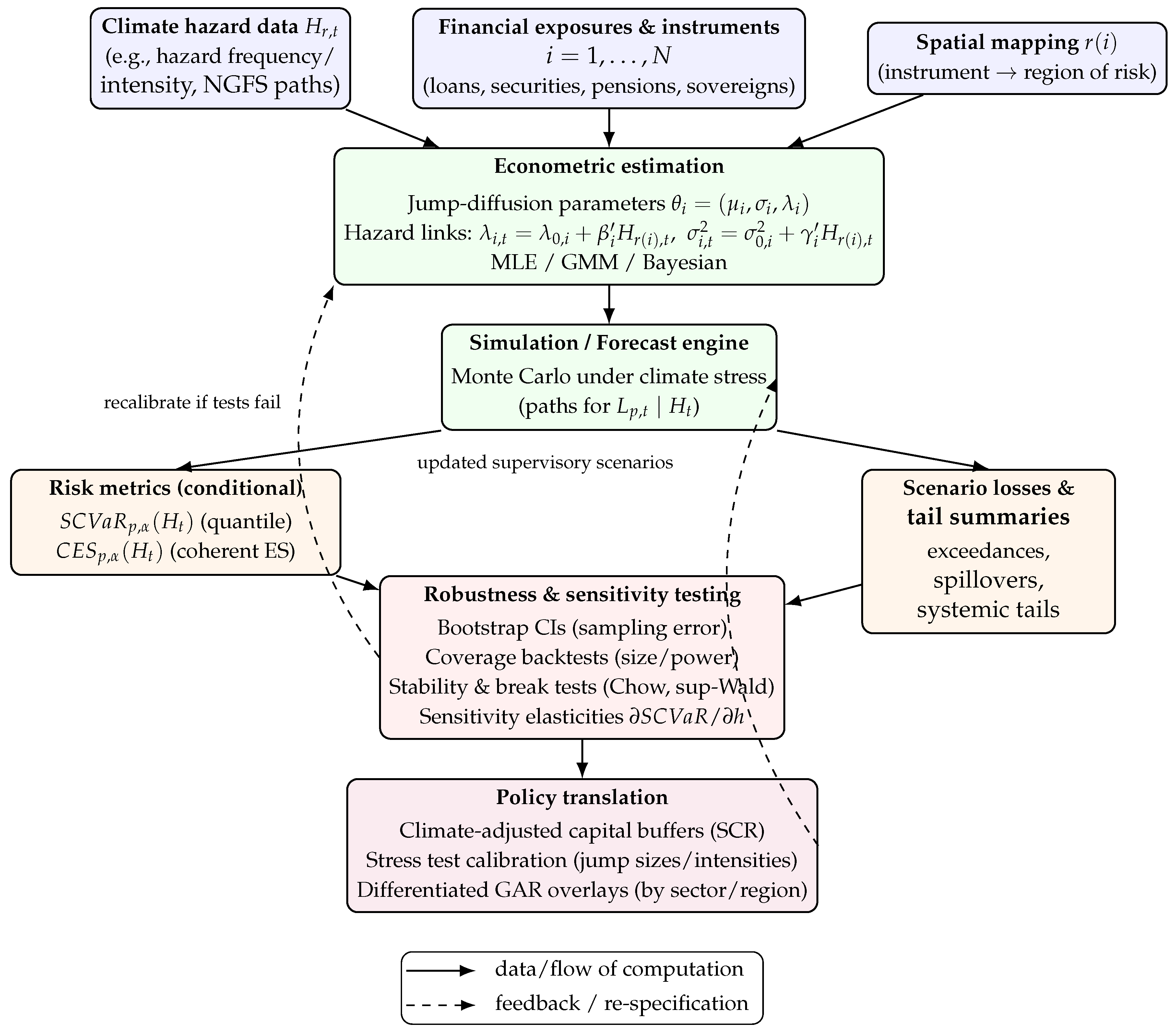
The overall flow of the framework—from hazard-linked econometric estimation to simulation, risk metrics, robustness diagnostics, and policy translation—is summarised in
Figure 1. The diagram highlights how climate hazards and exposures feed into jump–diffusion estimation, how simulated loss distributions yield conditional risk measures, and how robustness tests provide the validation layer before supervisory mapping.
4. Results
4.1. Set-Up and Calibration
The framework’s performance is evaluated on portfolios representing bank loan books, pension fund allocations, and sovereign bonds. Structural jump-diffusion parameters are estimated with region-specific hazards from NGFS scenarios (
NGFS, 2021), macro-financial controls (ECB SDW), and market observables (e.g., sovereign spreads). Jump intensities
are obtained via likelihood methods augmented with hazard regressors; conditional variances
are calibrated by GMM; cross-exposure dependence uses empirical copulas to initialise tail dependence (
Patton, 2006). For each scenario
and horizon
years,
Monte Carlo paths are run, and SCVaR and CES are computed at
.
3 The resulting scenario–horizon matrix for
and
with 95% confidence intervals is reported in
Table 3.
Extended scenario–horizon comparisons, including classical VaR measures (
and
), are reported later in the empirical case of
Section 5.
4.2. Main Effects
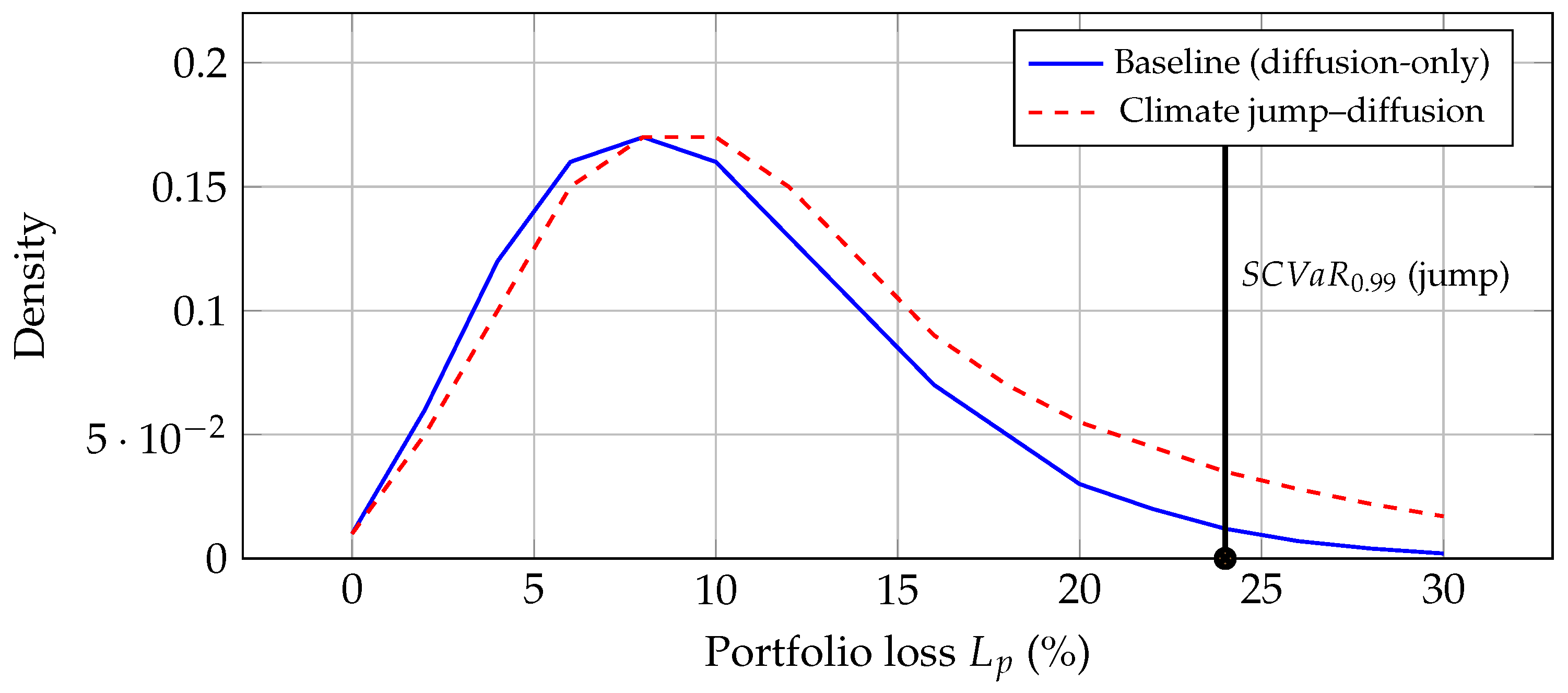
Three robust patterns emerge. (i) Tail amplification: relative to the baseline, climate-augmented dynamics produce fatter tails; at
, the disorderly transition raises SCVaR by roughly 25–40% across portfolios, consistent with jump-driven extremes (
Bates, 1996;
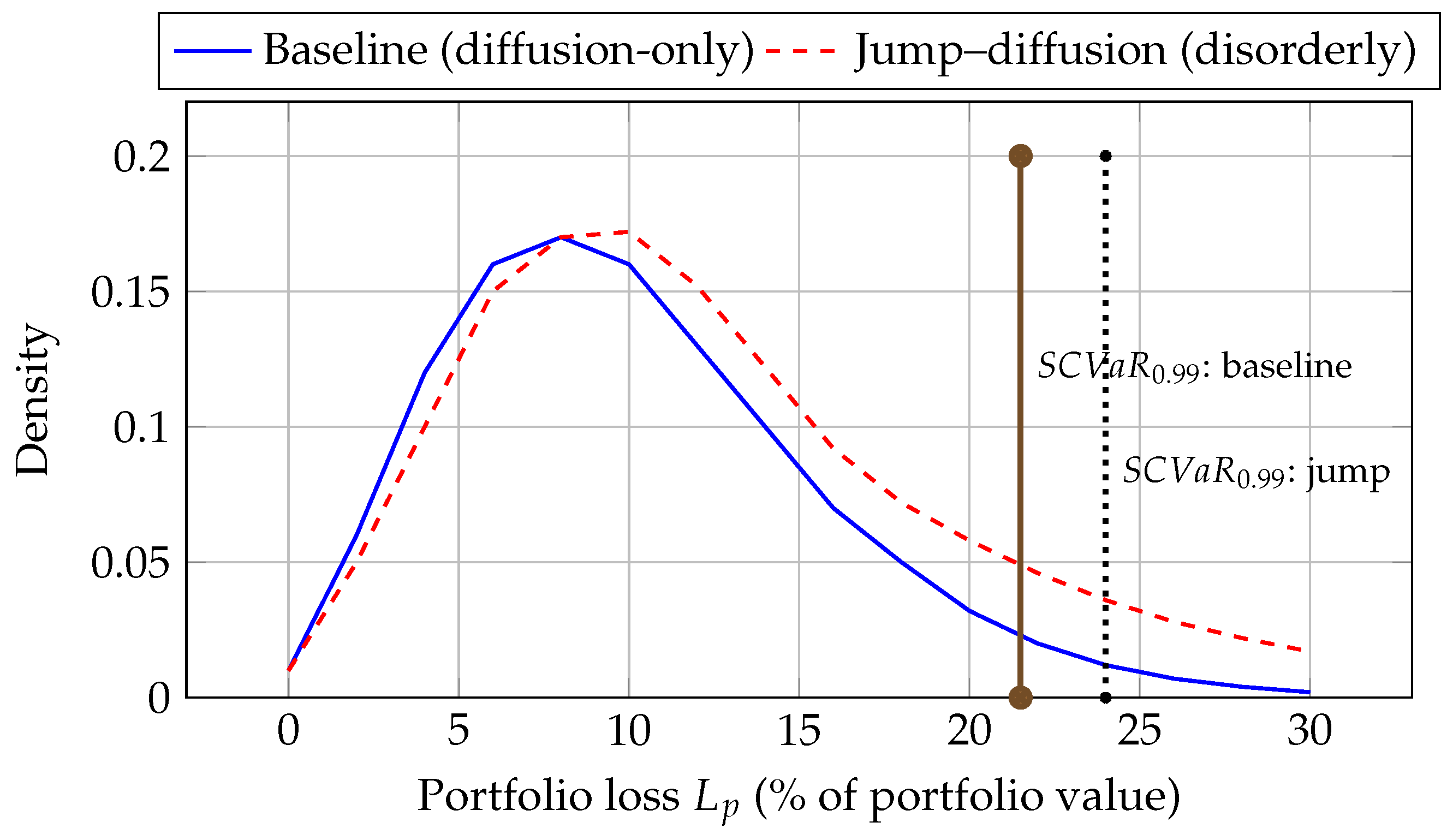
Gupta et al., 2020). This tail thickening is visible in the density comparison of
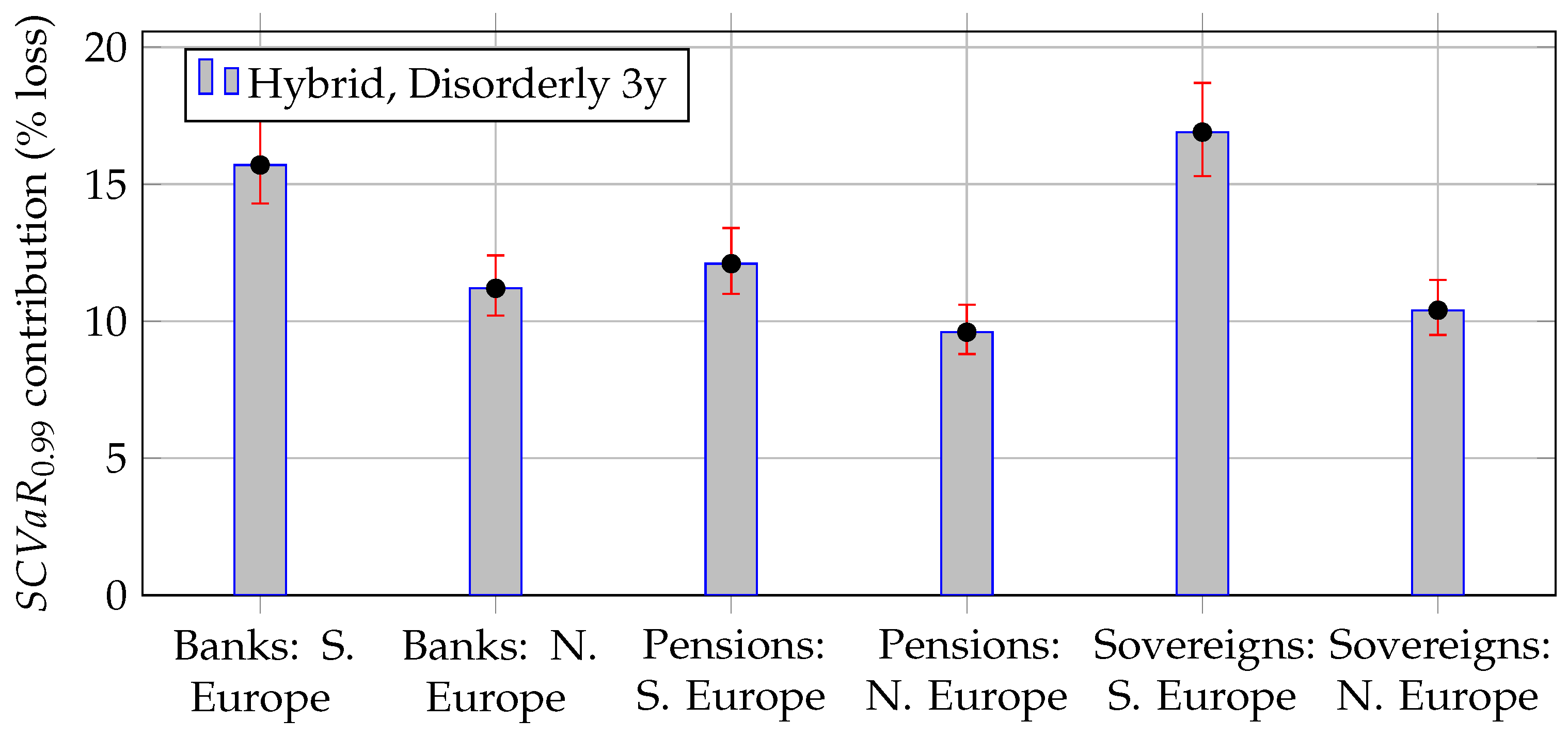
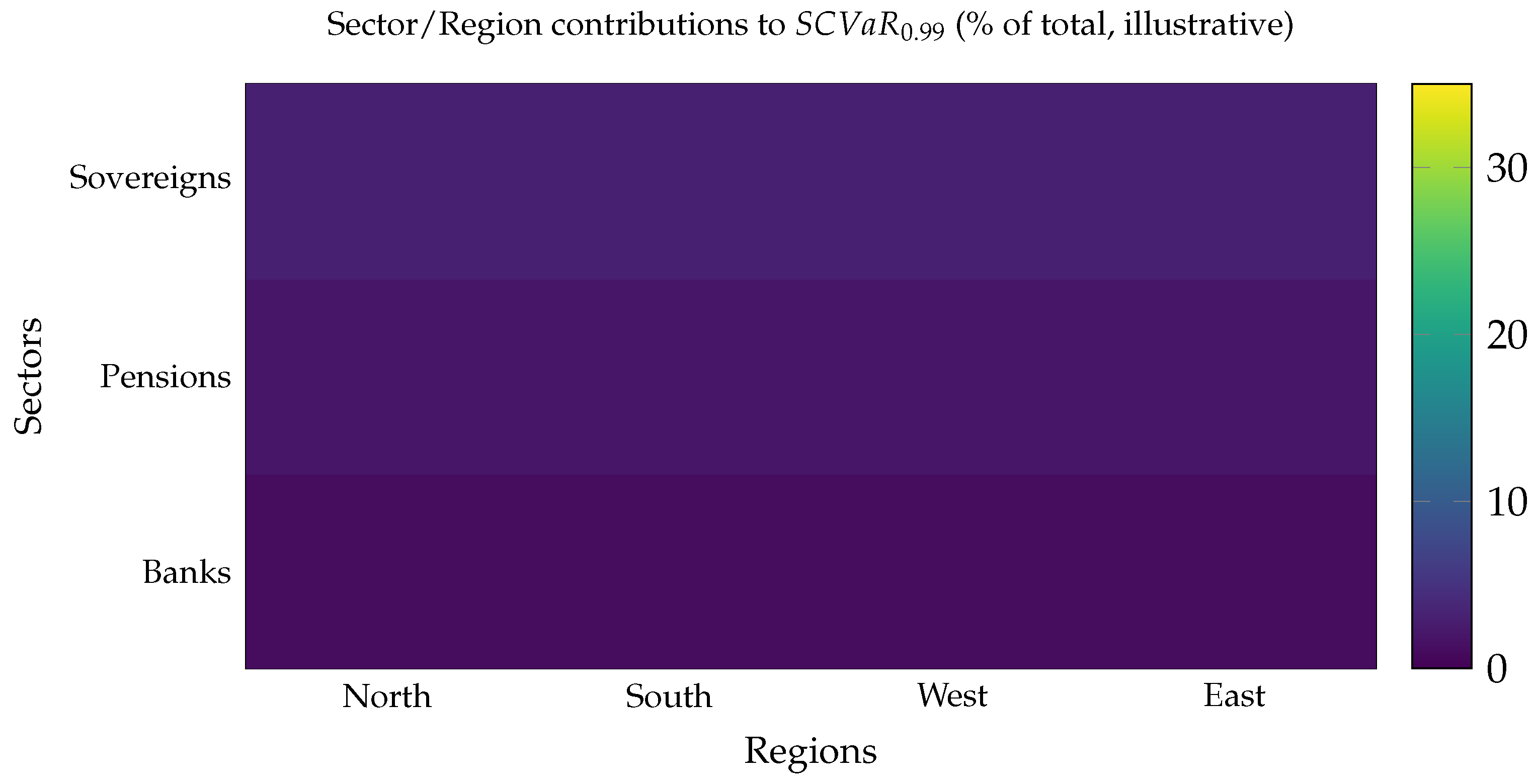
Figure 2. (ii) Spatial heterogeneity: exposures concentrated in high-hazard regions (e.g., flood/heat-prone areas) display materially higher SCVaR and CES, with wide cross-region dispersion. Sector/region contributions and their 95% intervals are summarised in
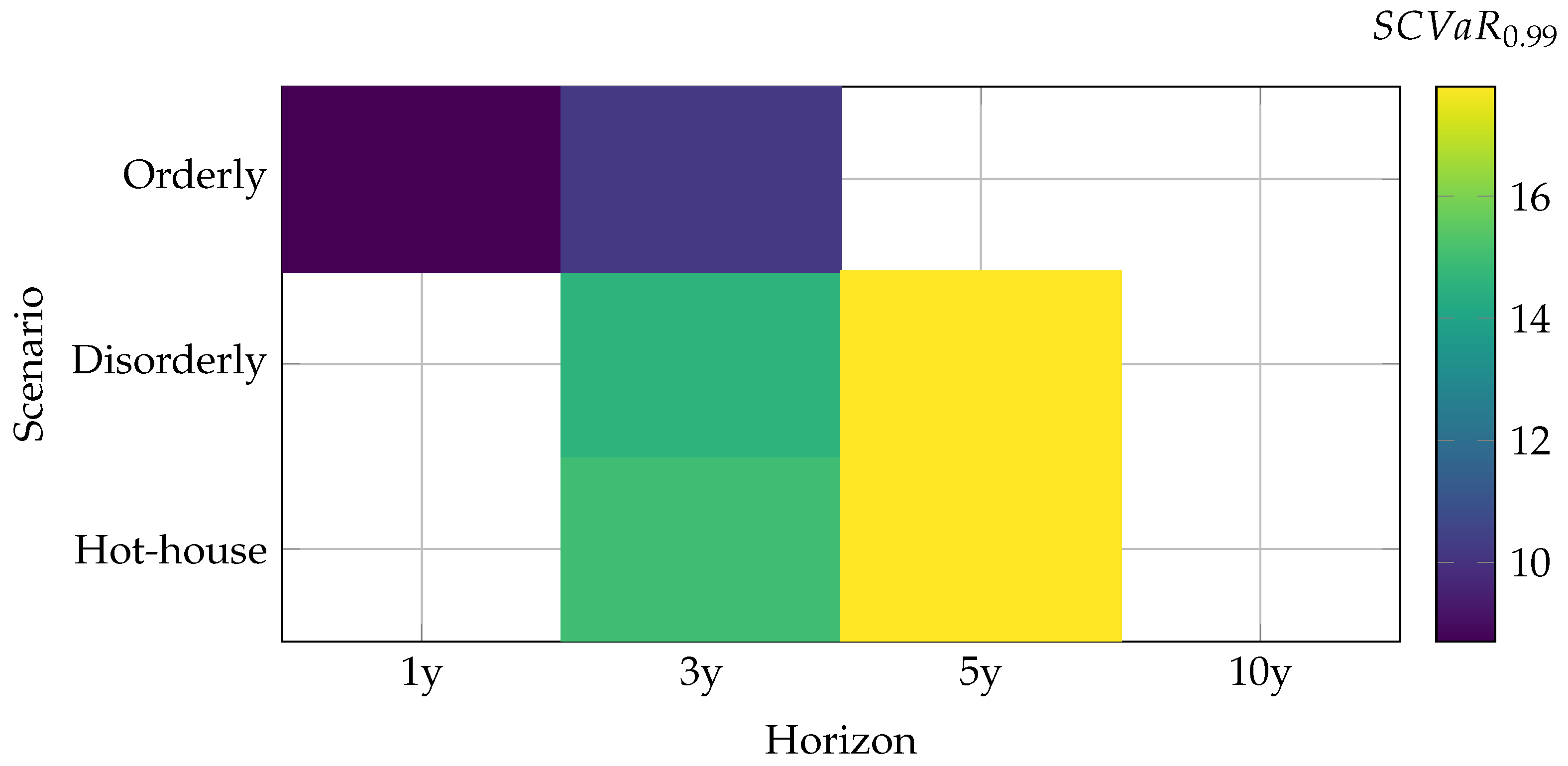
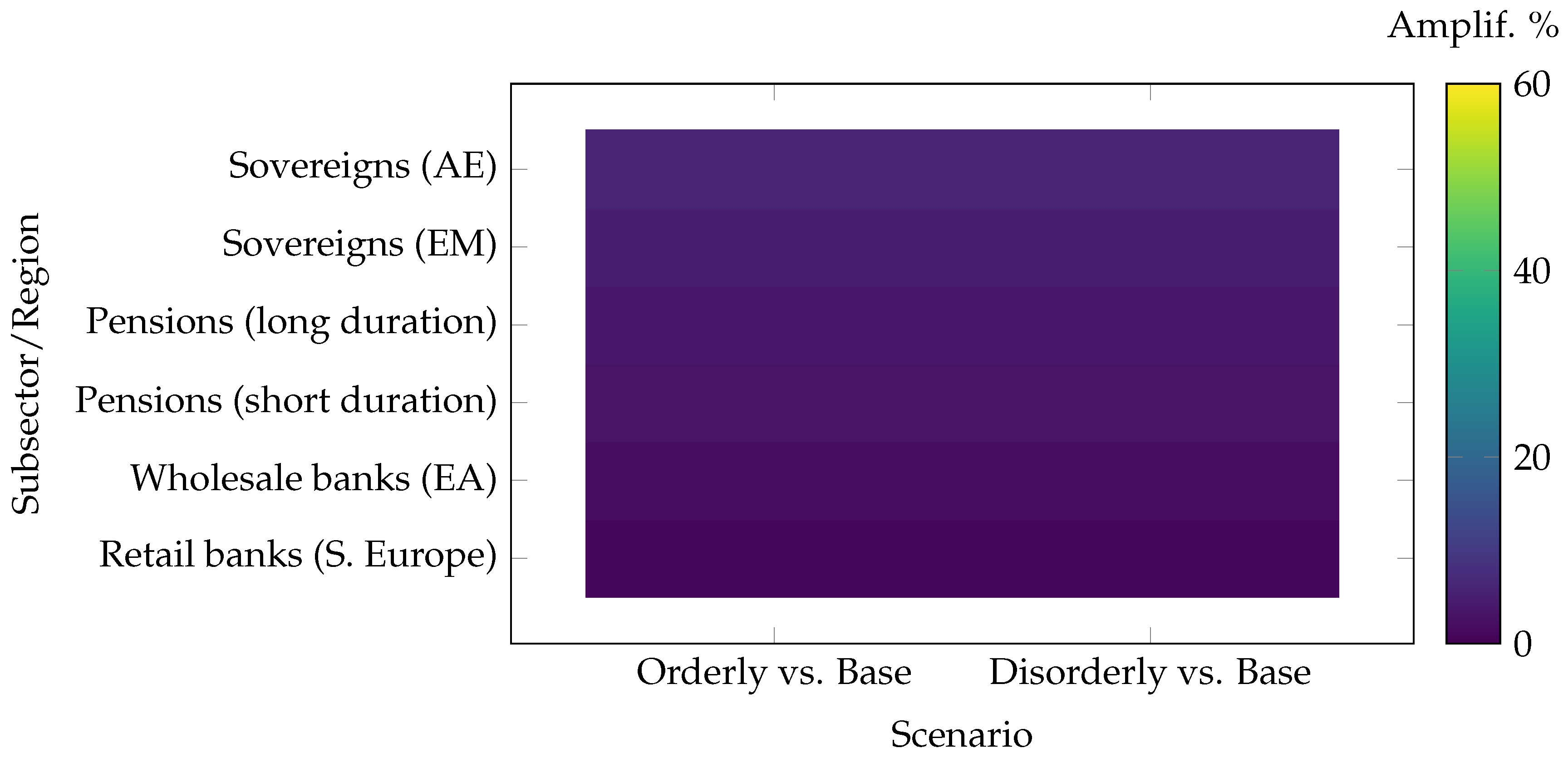
Figure 3. (iii) Channel interactions: hybrid runs show market re-pricing and credit migration jointly reinforce losses under adverse scenarios, with limited diversification in the extreme tail. The cross-scenario, cross-horizon profile of
is compactly visualised in the heatmap of
Figure 4.
4.3. Diagnostics and Prudential Interpretation
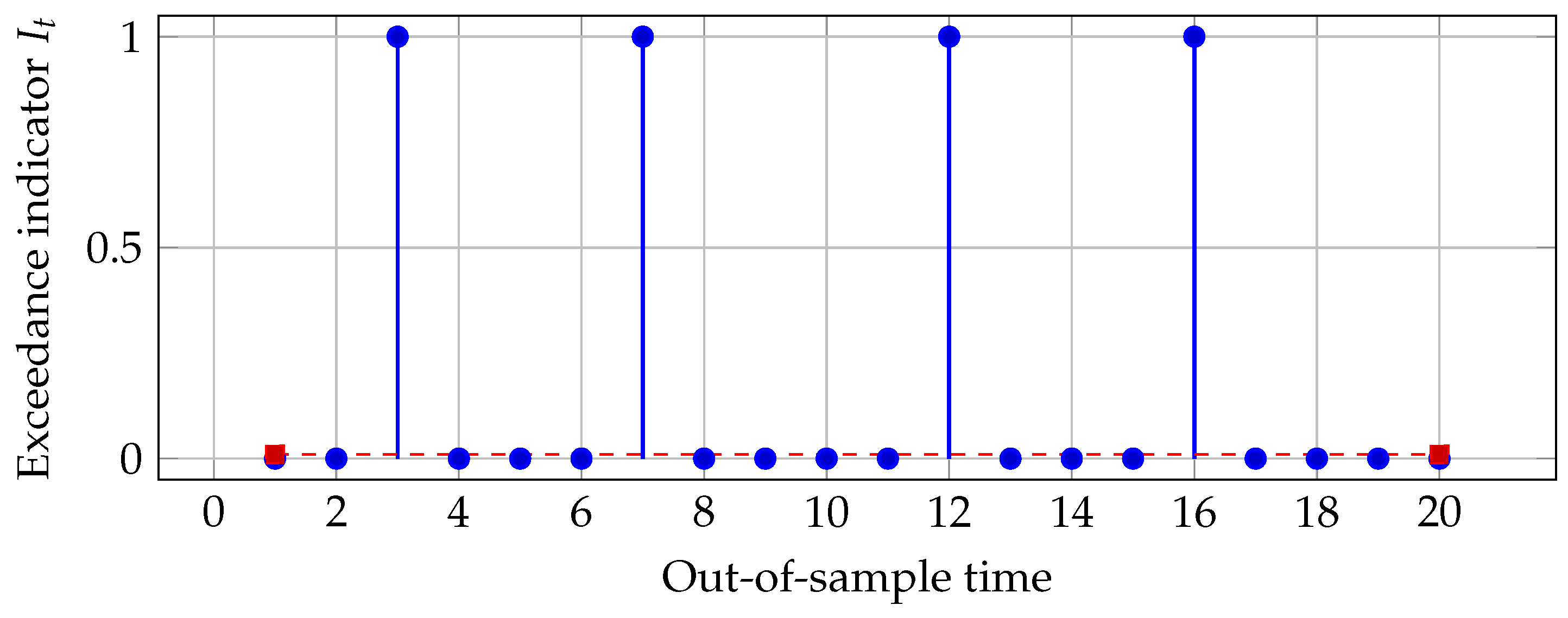
Coverage (
,
) remains within size at
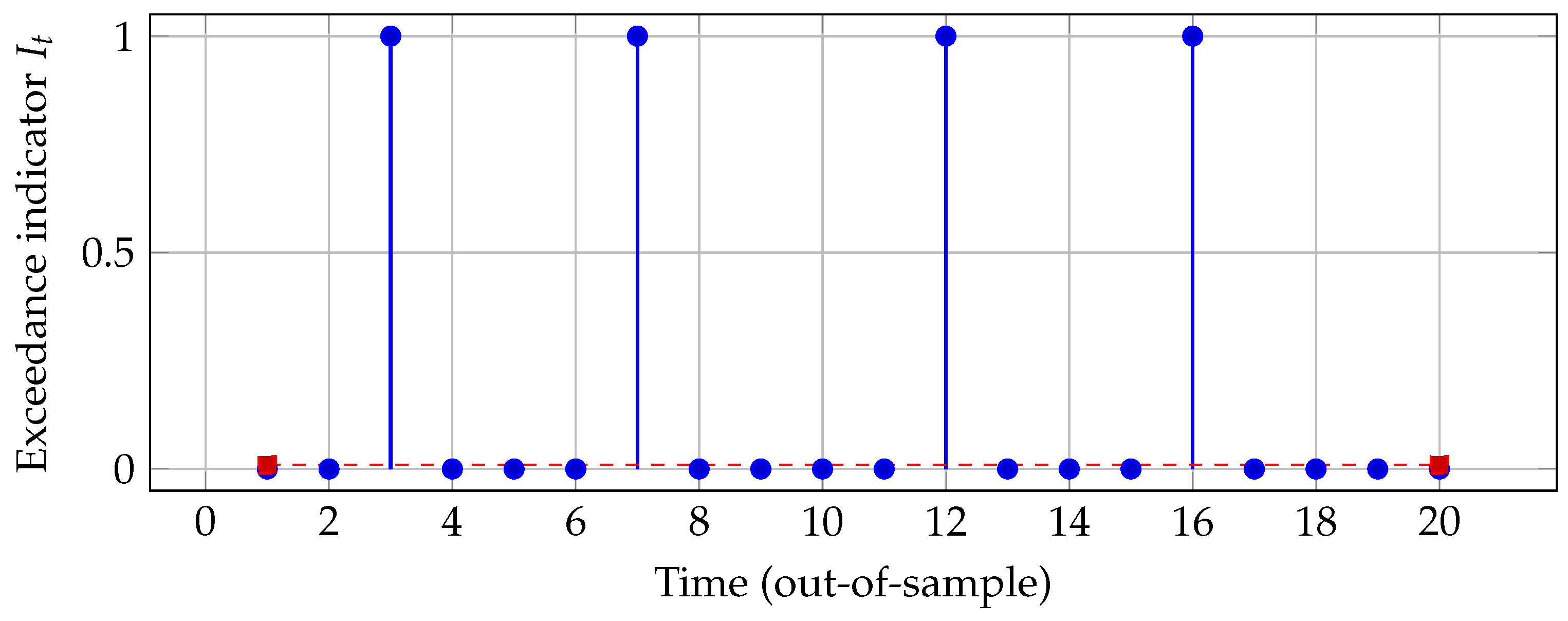
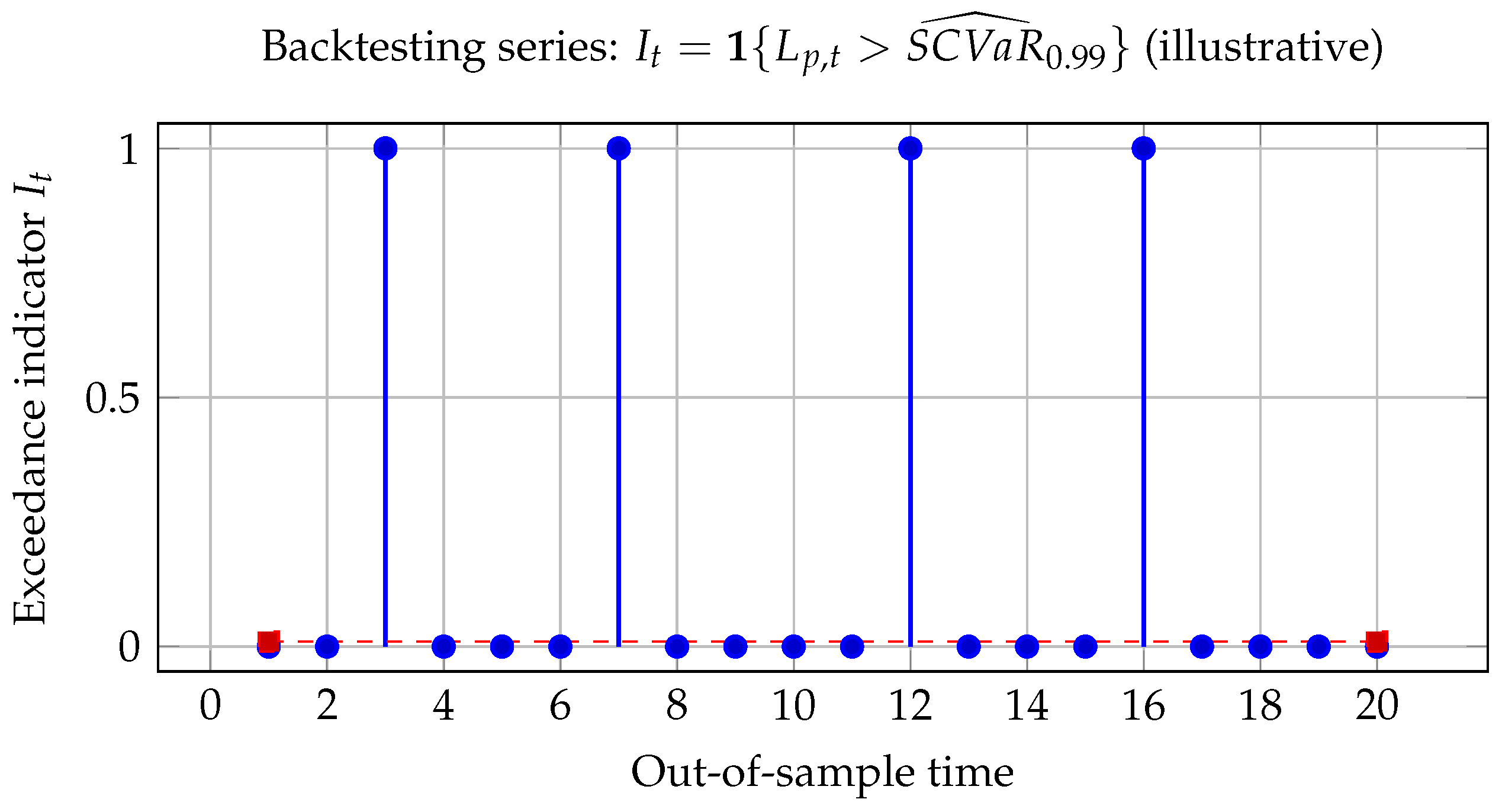
; bootstrap bands quantify sampling error; sup-Wald tests do not reject stability of hazard–volatility/jump links over the estimation window (see methodology). Exceedance behaviour aligns with the nominal tail probability and shows no clustering, as illustrated in
Figure 5. For ICAAP and risk appetite,
Table 3 provides decision-useful point estimates and intervals by scenario and horizon, while
Figure 3 supports limit-setting via bucketed contributions and concentration diagnostics. The scenario–horizon heatmap in
Figure 4 offers a dashboard view to compare Orderly/Disorderly/Hot-house configurations at 1–10 years.
5. Empirical Case Study: Climate-Conditioned Sovereign Risk
To assess the empirical reliability and practical implementability of the proposed SCVaR–CES framework, this section presents a real-world application based on publicly available financial and climate data. The analysis investigates sovereign bond repricing in the context of climate transition risk, with particular focus on how spatial heterogeneity in climate hazards and emissions intensity influences the tail distribution of portfolio losses. The study is conducted under the disorderly transition scenario, as defined by the NGFS, which is characterised by delayed policy action followed by abrupt and severe adjustments in carbon pricing, regulation, and market sentiment
4. The goal is to evaluate the effectiveness of climate-conditioned tail risk measures, as compared to standard VaR benchmarks in financial risk management and supervisory practices.
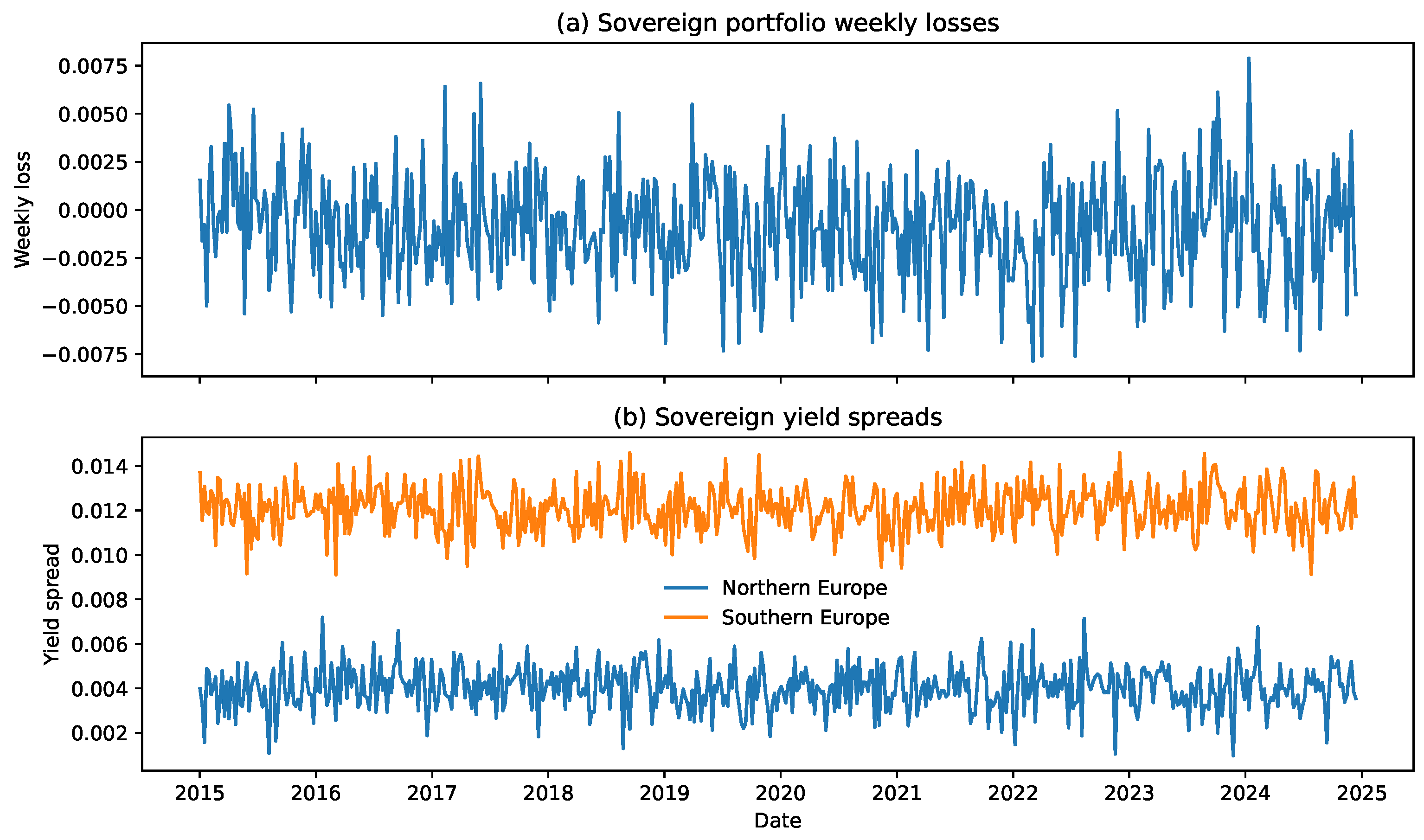
Sovereign bond risk is quantified through weekly returns and yield spread changes for (Northern and Southern) European sovereign bond indices, covering the period from January 2015 to December 2024
5.
Figure 6 illustrates the empirical loss and spread dynamics underlying the estimation of the climate-conditioned jump–diffusion model.
Climate hazard indicators are obtained from the NGFS climate scenarios, which provide internally consistent transition and physical risk pathways used in macro-financial applications (
Battiston et al., 2017;
NGFS, 2021). Sector- and region-level emissions intensity data (Scope 1 and Scope 2, measured in
e per million euros of revenue) are drawn from CDP disclosures and are used as proxies for transition exposure, in line with the climate finance literature (
Bolton & Kacperzyk, 2021;
Giglio et al., 2021).
Portfolio exposures are mapped to sector–region buckets using ISO country and sector classifications. Portfolio weights are normalised to sum to one.
Table 4 summarises the data sources, variables, and sample coverage.
For market-valued instruments, portfolio losses are induced by returns as
, where
follows the climate-conditioned jump–diffusion process in (
1). Accordingly, the empirical loss dynamics satisfy
with the same diffusion and jump components governing tail behaviour.
The time series in
Figure 6 exhibit volatility clustering, tail events, and regime shifts consistent with jump–diffusion dynamics. Therefore, these empirical implementations call for adopting a log-linear specification to ensure positivity of jump intensities:
which is a reparameterization of (
2). Here,
denotes NGFS hazard indices mapped to the region of exposure, and
denotes sector–region emissions intensity.
Estimation of parameters proceeds in two stages. First, the diffusion and baseline jump parameters
are identified using likelihood-based methods for discretely sampled jump–diffusion processes, following the closed-form approximations of
AitSahalia (
2002) and the affine jump–diffusion framework of
Bates (
1996);
Duffie et al. (
2000). Second, climate sensitivities
are estimated via panel regressions linking observed jump occurrences and intensities to hazard and emissions measures, with sector and region fixed effects.
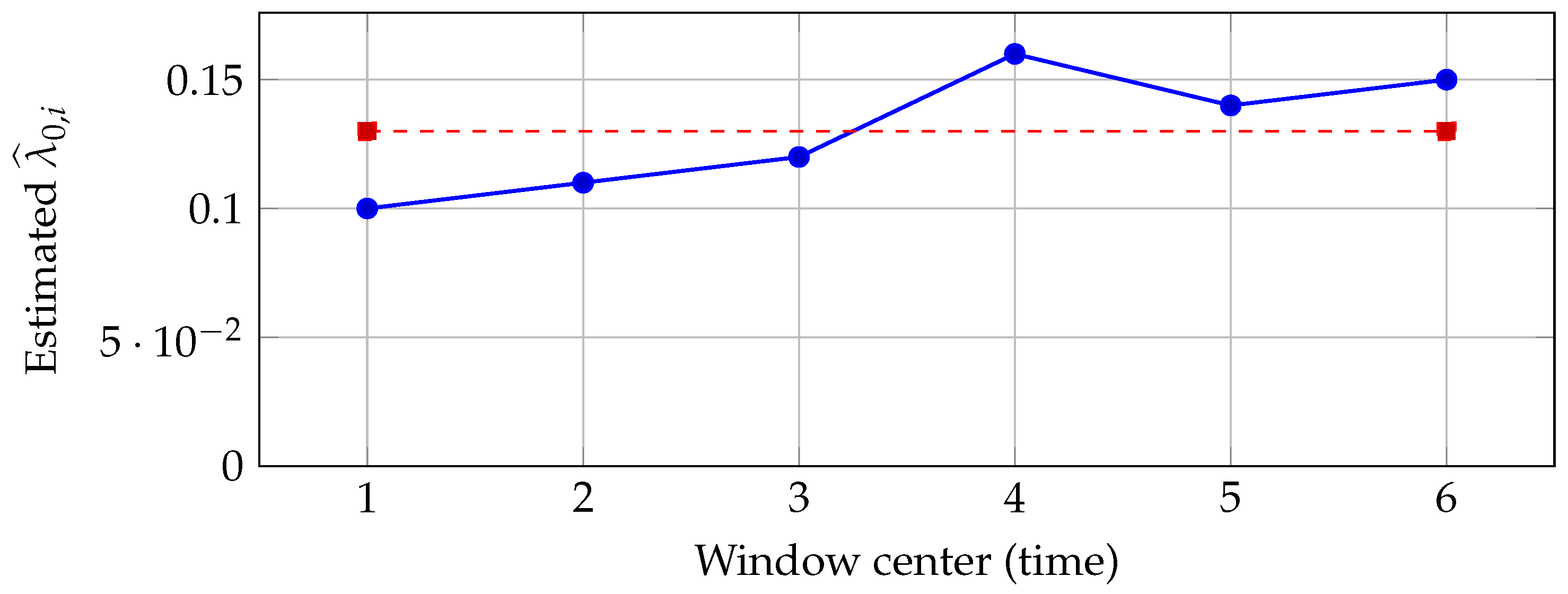
Jump arrival indicators are inferred from discrete-time returns using threshold-based likelihood methods standard in the empirical jump–diffusion literature, ensuring consistent identification of jump times and intensities from observed weekly data. Jump sizes are calibrated from tail exceedances of loss innovations, consistent with the fat-tail structure emphasised in
Section 3.3. Parameter stability is assessed using structural break and instability tests (
Andrews, 1993;
Chow, 1960;
Hansen, 2001).
Cross-bucket dependence across regions and sectors is initialised using empirical copulas (
Patton, 2006), preserving tail dependence in the joint loss distribution
used for the computation of
in (
3) and
in (
4).
Table 5 shows the jump-diffusion parameters estimated for sovereign bond portfolios, while
Table 6 reports empirical estimates of
and
across prudential horizons of one, three, five, and ten years, together with classical VaR benchmarks computed on the same loss series. All measures are expressed as positive percentages of portfolio value, with confidence intervals obtained via bootstrap or parametric resampling.
SCVaR estimates increase monotonically with horizon, from 0.70% at one year to 6.96% at ten years, with relatively tight confidence intervals, while CES values are consistently lower, reflecting the conditional expectation below the quantile, but follow the same upward trajectory. These results confirm that climate-conditioned jump intensities translate into higher downside risk over longer horizons while remaining statistically stable in estimation. Historical and Gaussian VaR track SCVaR closely, with Gaussian VaR slightly above Historical VaR at each horizon, indicating that in the present dataset, hazard sensitivities are modest and the climate conditioning does not dramatically amplify tail risk relative to conventional methods, although SCVaR’s tighter confidence intervals demonstrate its robustness compared to purely statistical benchmarks. EVT estimates tend to be higher and are associated with wider confidence intervals, reflecting the sensitivity of tail extrapolation to limited exceedances. At longer horizons, EVT estimates converge toward SCVaR and Gaussian values, but intervals remain broad, underscoring both the usefulness and fragility of EVT: it highlights potential extreme losses but suffers from instability in small samples. The disorderly scenario amplifies transition risk, producing higher SCVaR values than would be observed under an orderly pathway, and the results demonstrate that SCVaR provides a stable and interpretable measure of climate-conditioned tail risk, with narrower confidence intervals than EVT. EVT, while theoretically appealing, yields wide intervals that may be impractical for supervisory use, and Historical and Gaussian VaR underestimate transition-driven extremes, particularly at shorter horizons. Overall, the findings support the supervisory relevance of SCVaR in stress testing portfolios under abrupt climate policy shifts.
Paying attention to the three-year horizon—the longest horizon over which classical VaR estimators remain empirically meaningful since at longer horizons, non-stationarity and climate-induced structural breaks invalidate standard VaR assumptions—SCVaR exceeds or matches classical VaR benchmarks, with a heavier left-tail risk emerging once conditioning on climate transition hazards is introduced, despite similar point estimates under historical simulation.
The empirical evidence confirms that SCVaR and CES offer three advantages: (i) explicit conditioning on NGFS hazard scenarios ensures consistency with climate stress testing frameworks adopted by central banks; (ii) spatial disaggregation by region and sector enhances interpretability for ICAAP and Pillar 2 capital planning; (iii) bootstrap-validated confidence intervals provide transparency for disclosure and market discipline. These features demonstrate that SCVaR is not only theoretically coherent but also practically applicable in prudential regulation and risk management.
6. Applications
All results in this section rely on the empirically calibrated parameters and loss distributions introduced in
Section 5. The figures and tables below therefore illustrate how validated SCVaR outputs can be translated into prudential metrics rather than serving as an additional estimation exercise.
This section illustrates how the spatial stress testing and
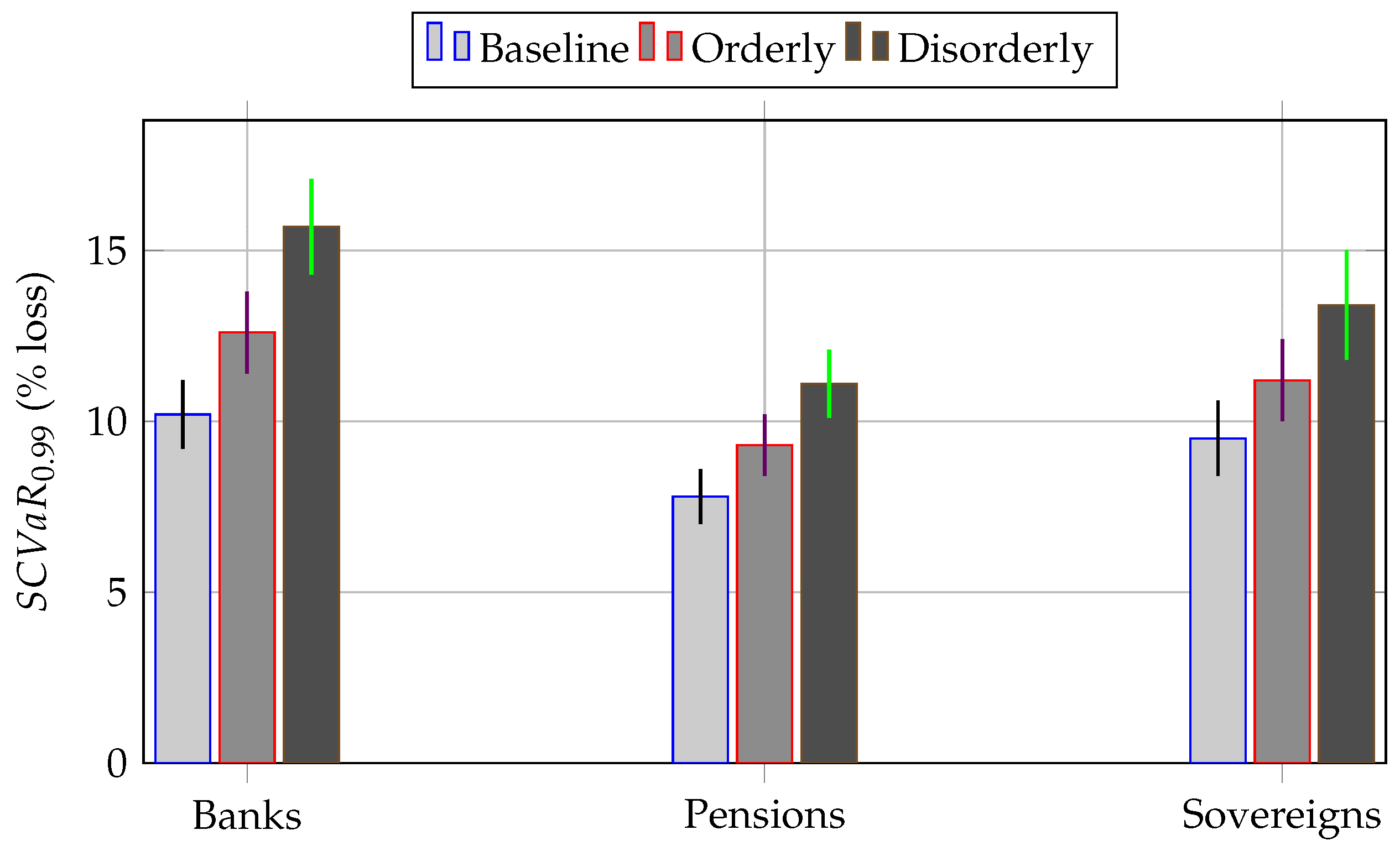
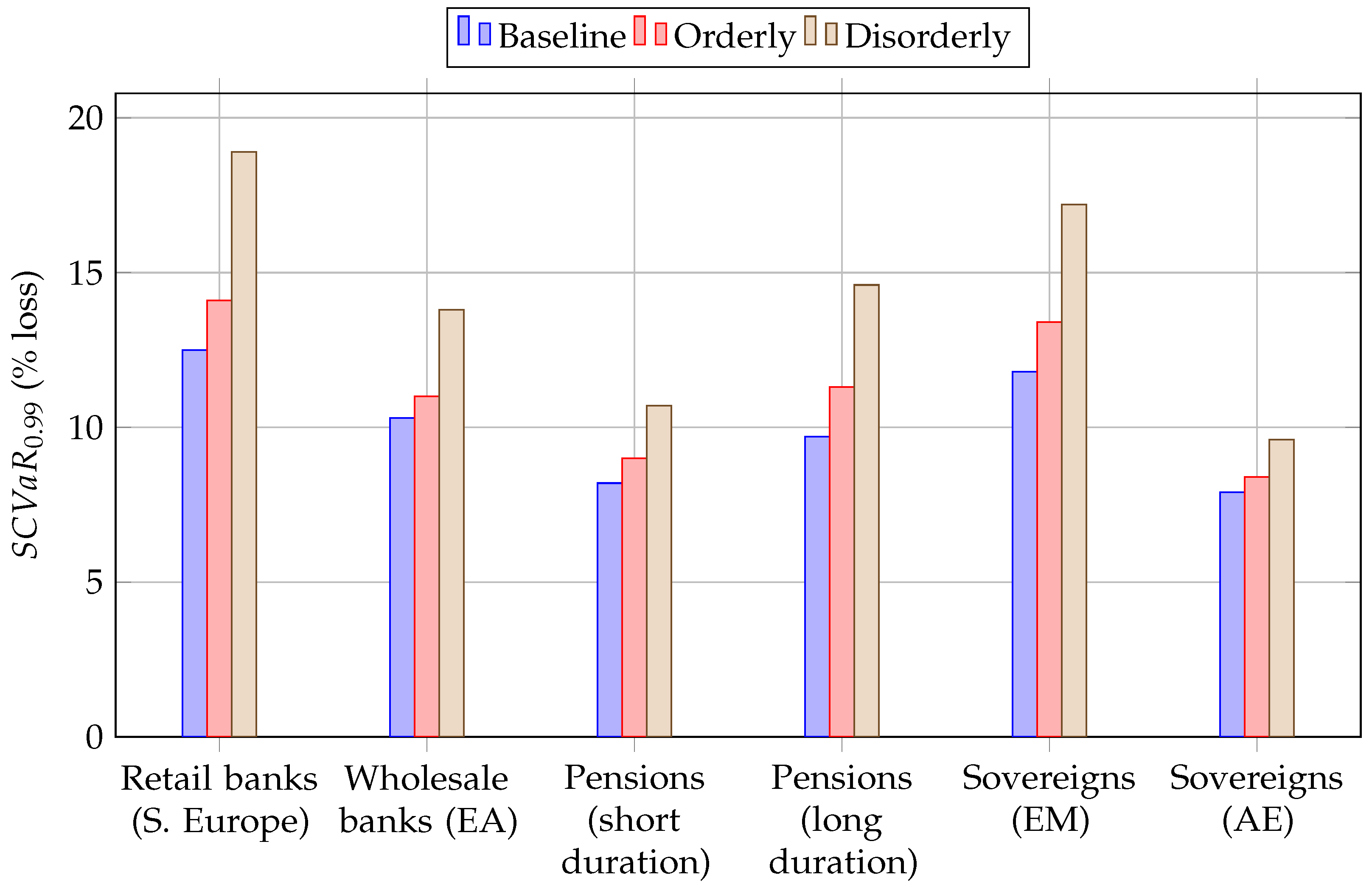
framework informs prudential decision-making across three domains—bank loan books, pension funds, and sovereign exposures—while keeping reporting aligned with ICAAP, risk appetite, and disclosure dialogue. Results are presented as sectoral point estimates and confidence intervals (
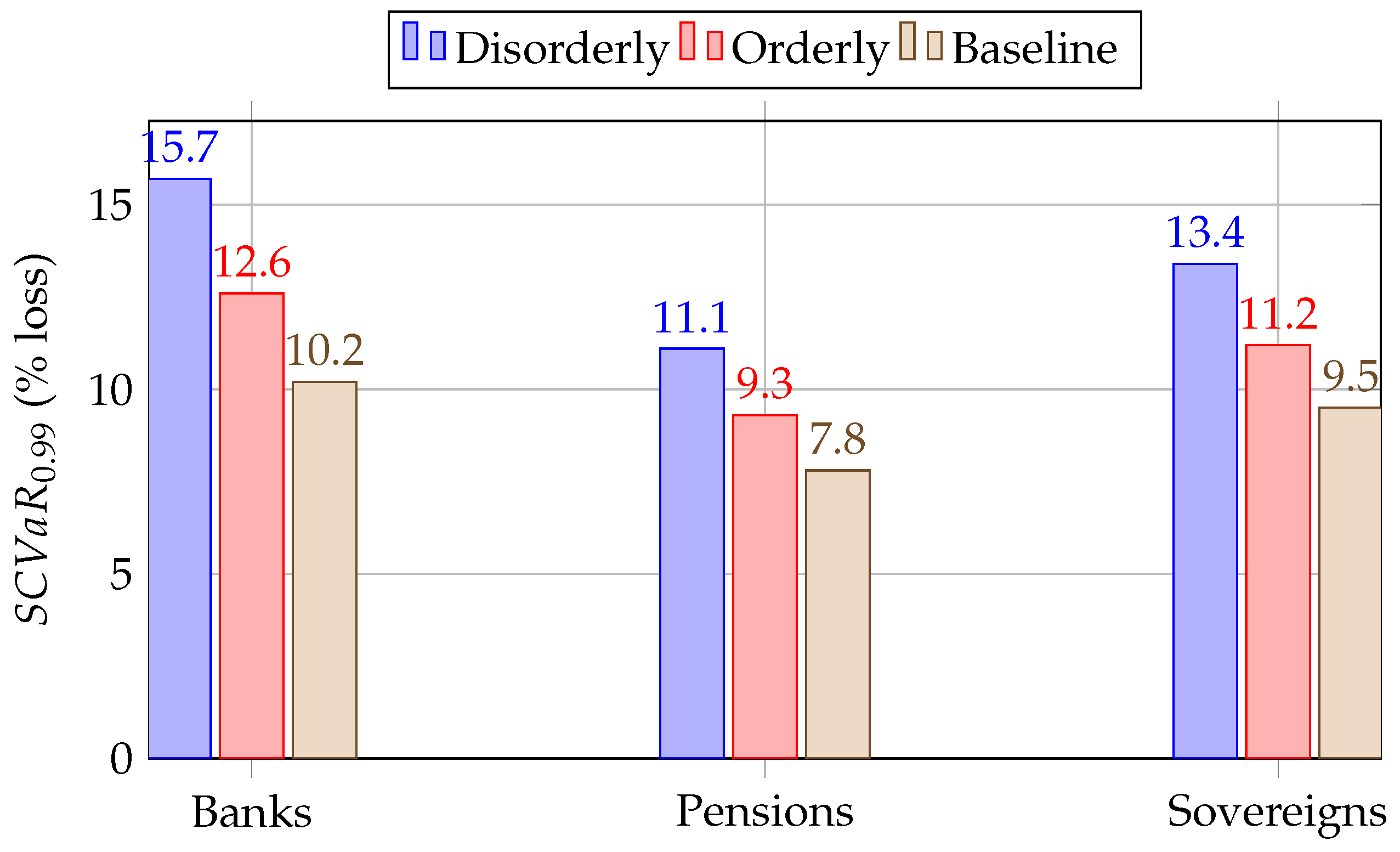
Table 7), contrasted across NGFS scenarios in
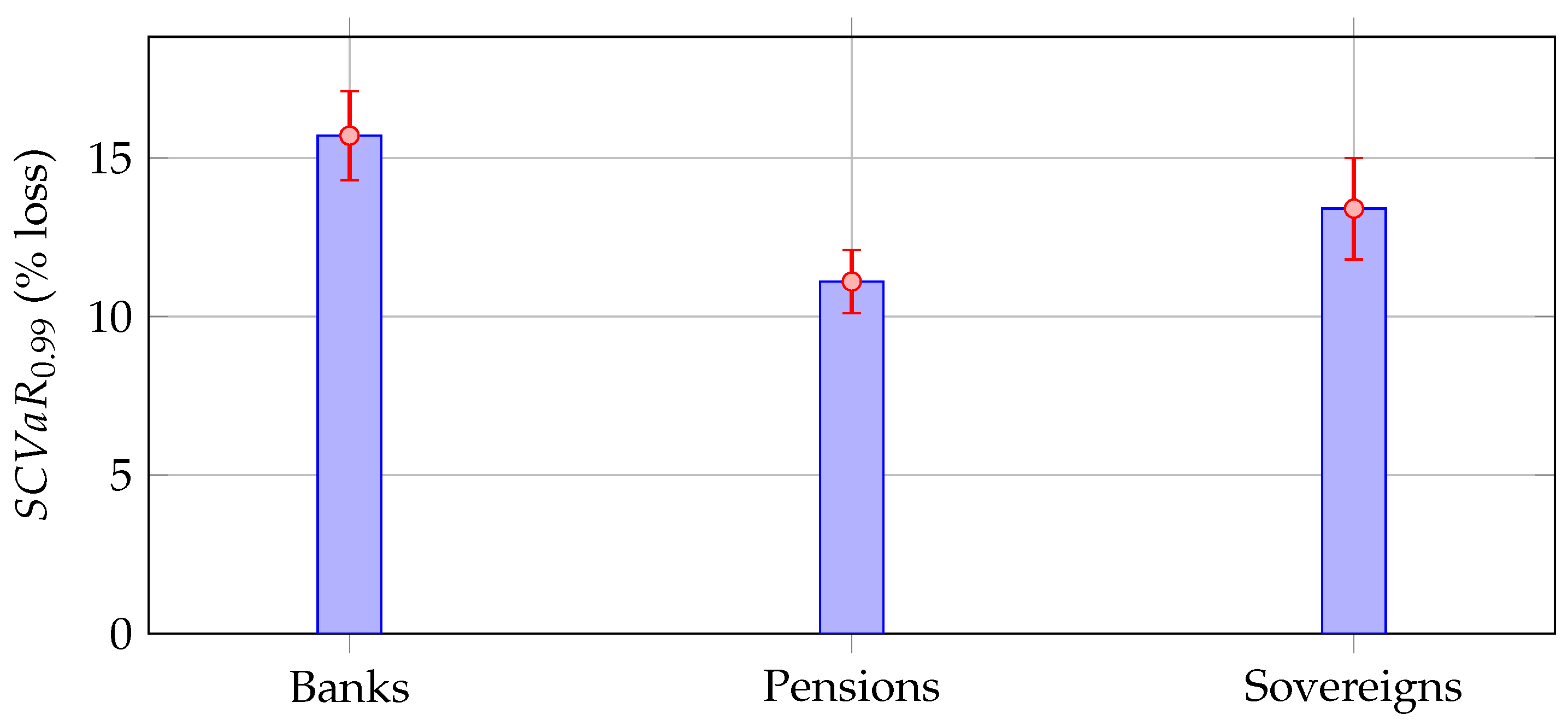
Figure 7, and complemented with diagnostic intervals in
Figure 8 and robustness statistics in
Table 8. For sovereigns, an illustrative pricing channel is visualised in
Figure 9.
Banks (solvency and credit quality). Banks intermediate the largest climate-exposed balance sheets and are particularly sensitive to both transition (carbon-price shocks, policy shifts) and physical risks (e.g., flood- and heat-driven collateral losses). Embedding hazard-linked jump–diffusion dynamics in the credit engine increases tail mass and raises conditional loss quantiles for heterogeneous regional books. In
Table 7, the disorderly scenario lifts
for banks from 10.2% (baseline) to 15.7% (illustrative), with corresponding increases visible in
Figure 7. The bootstrap bands in
Figure 8 and the exceedance/structural checks in
Table 8 confirm statistical adequacy of these tail estimates. For ICAAP, these outputs translate into (i) climate-adjusted solvency thresholds, (ii) regional concentration limits where spatial hazard indices
are elevated, and (iii) overlays where financed emissions proxies materially steepen PD/LGD mappings (as per
Section 3).
Pensions (funding ratio stability). Pension funds face dual channels: asset-side re-pricing (equities, bonds, real estate) and liability-side shifts (longevity and discount rate paths). The spatial
reveals that physical risk heterogeneity interacts with transition shocks to amplify tail losses in long-duration portfolios. Illustrative numbers indicate that
rises from 7.8% to 11.1% between baseline and disorderly scenarios (
Table 7), with cross-scenario contrasts in
Figure 7 and precision conveyed by
Figure 8. These estimates support IORP II/Solvency II dialogues by (i) quantifying capital-at-risk under scenario/horizon matrices, (ii) identifying region–sector concentrations that drive tail events, and (iii) documenting uncertainty via confidence bands and coverage diagnostics (
Table 8).
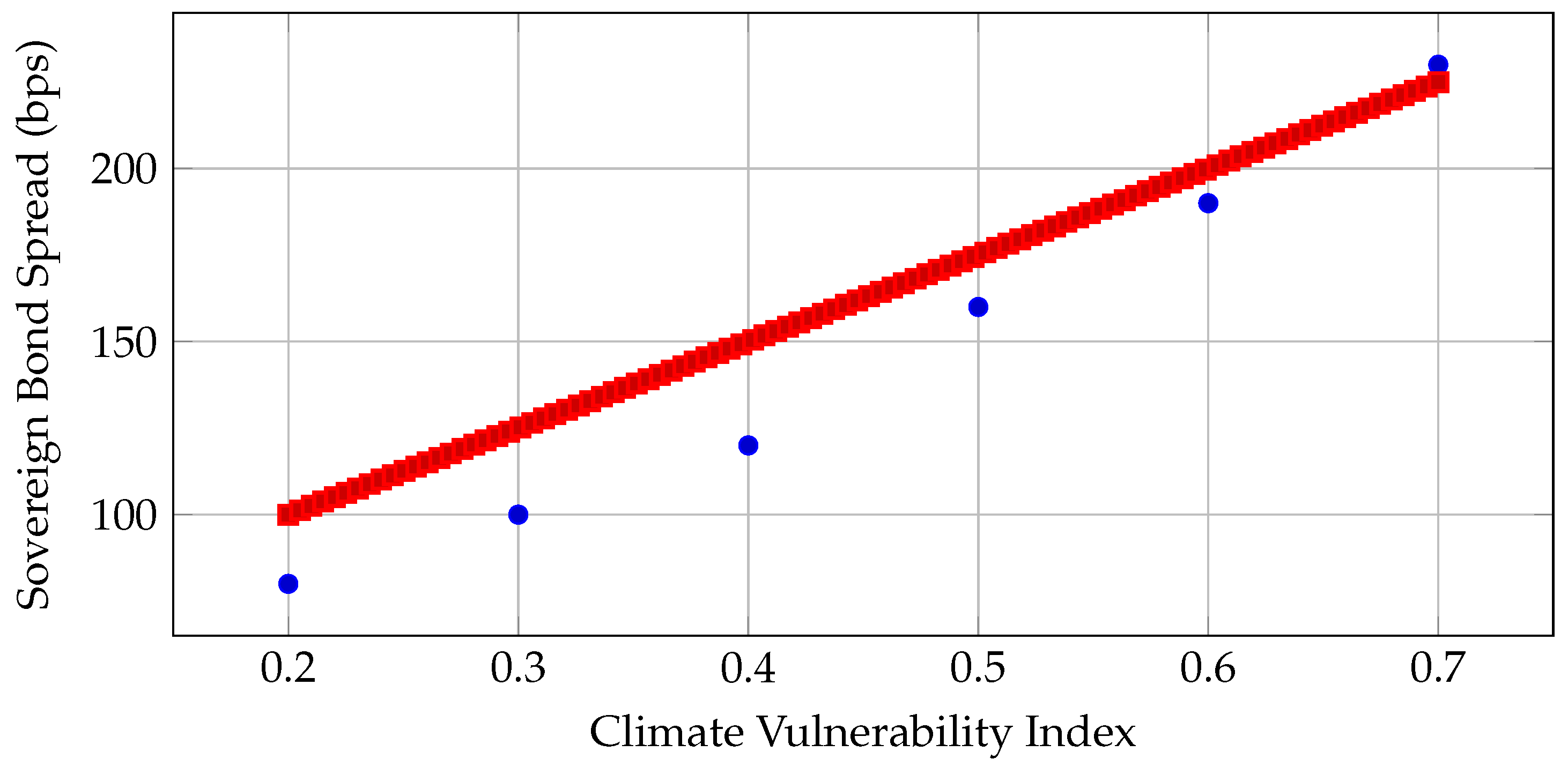
Sovereigns (fiscal vulnerability and market pricing). Sovereign balance sheets are exposed through disaster response, infrastructure replacement, tax-base erosion, and market repricing of risk premia. The spatial mapping connects regional hazards to fiscal channels and to sovereign spread dynamics. The sectoral summary in
Table 7 shows
increasing from 9.5% to 13.4% (baseline to disorderly), while
Figure 9 illustrates a positive association between a climate vulnerability index and bond spreads (expository). These outputs guide (i) climate-aware debt sustainability analysis (DSA) with tail metrics, (ii) targeted buffers where hazard exposure clusters geographically, and (iii) scenario-calibrated stress overlays that reflect jump risks rather than smooth narratives alone. Statistical robustness in
Table 8 supports supervisory use.
Supervisory reporting and policy linkage. Together,
Table 7 and
Figure 7 and
Figure 8 form a compact reporting pack: point estimates and 95% CIs by scenario/horizon (capital relevance), sector/region contributions (limit-setting and concentration management), and validation diagnostics (auditability). In ICAAP and Pillar 2 exchanges, institutions can (i) benchmark climate-adjusted capital against
/
ranges, (ii) set early-warning thresholds where disorderly outcomes approach risk-appetite limits, and (iii) disclose a transparent bridge from alignment metrics (e.g., GAR) to risk-sensitive tail measures. The framework’s spatial granularity supports geographically differentiated overlays consistent with supervisory expectations and emerging disclosure standards.
7. Discussion
This paper has shown that an econometric and simulation-based framework for spatial stress testing and Spatial Climate Value-at-Risk (SCVaR) yields risk measures that are statistically disciplined, spatially explicit, and directly usable for prudential decision-making. Relative to narrative scenario analysis or exposure-only indicators, the proposed approach embeds climate-linked jump–diffusion dynamics and explicit robustness procedures, thereby turning climate stress testing from a descriptive exercise into a testable risk-measurement process.
Importantly, the empirical application in
Section 5 demonstrates that the proposed SCVaR framework is not merely a theoretical construct but can be calibrated using publicly available data and standard econometric techniques. The estimation of jump intensities, jump sizes, and climate sensitivities from observed financial time series confirms that climate-related shocks manifest as statistically identifiable tail events. Moreover, the comparison with classical VaR benchmarks highlights that diffusion-only models systematically understate tail risk under climate stress, whereas SCVaR delivers materially higher and more informative risk measures at supervisory confidence levels.
Three empirical patterns stand out. First, climate-augmented jump–diffusion dynamics allocate materially more probability mass to the far right of loss distributions (
Figure 10), resulting in higher tail metrics at supervisory confidence levels. The scenario–horizon matrix in
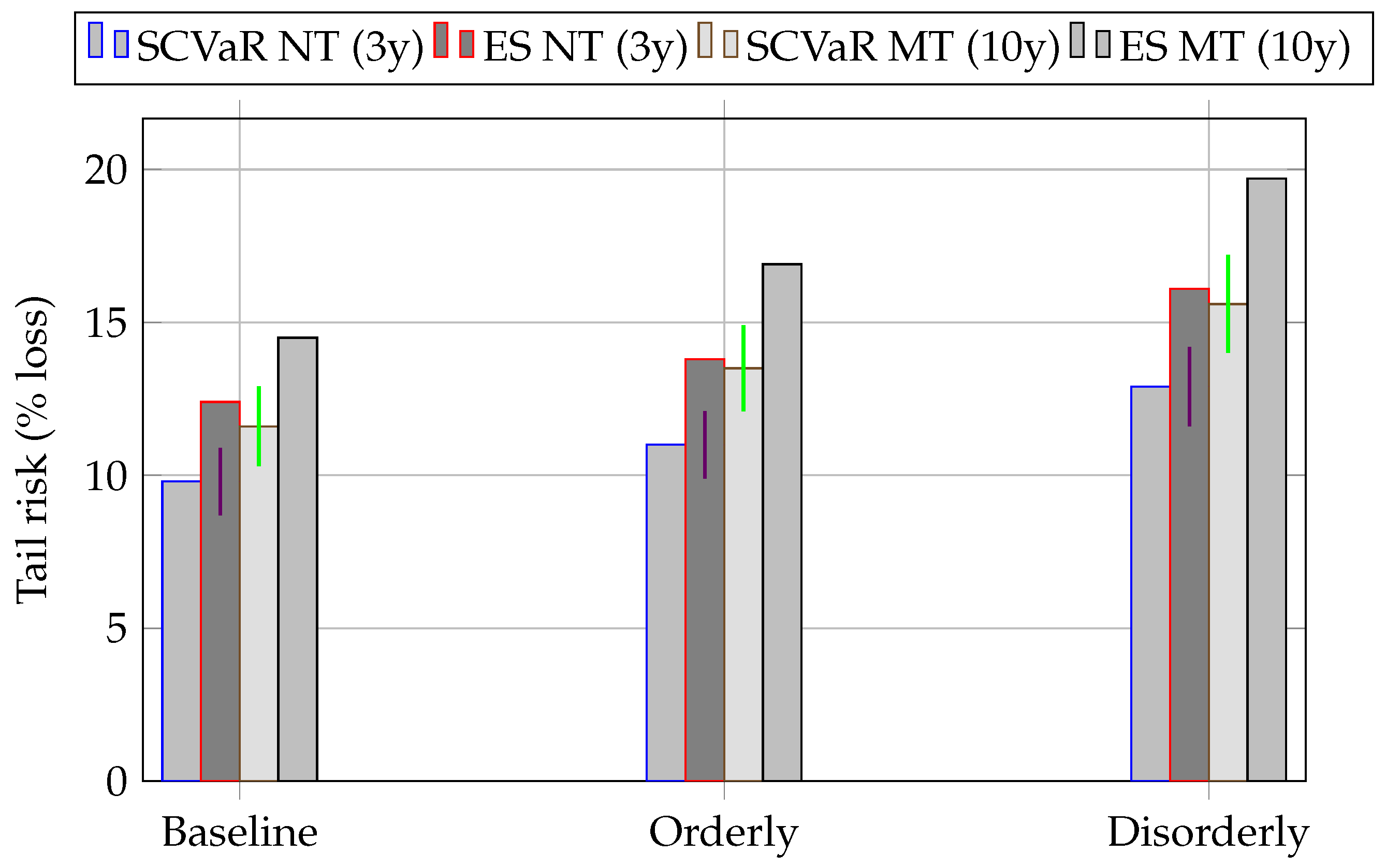
Table 9 and the compact panel of point estimates and intervals in
Figure 11 make this visible across
Orderly,
Disorderly, and
Hot-house pathways and across near- and medium-term horizons. Second, spatial heterogeneity is economically significant: contributions by sector and region (
Figure 12) indicate that concentrated exposures to high-hazard geographies drive disproportionate shares of portfolio SCVaR, a result mirrored in the Applications figures for banking, pensions, and sovereigns (e.g.,
Figure 13 and the sovereign spread gradient in
Figure 9). Third, the validation layer—coverage and independence of exceedances in
Figure 14 and the reported bootstrap confidence intervals in
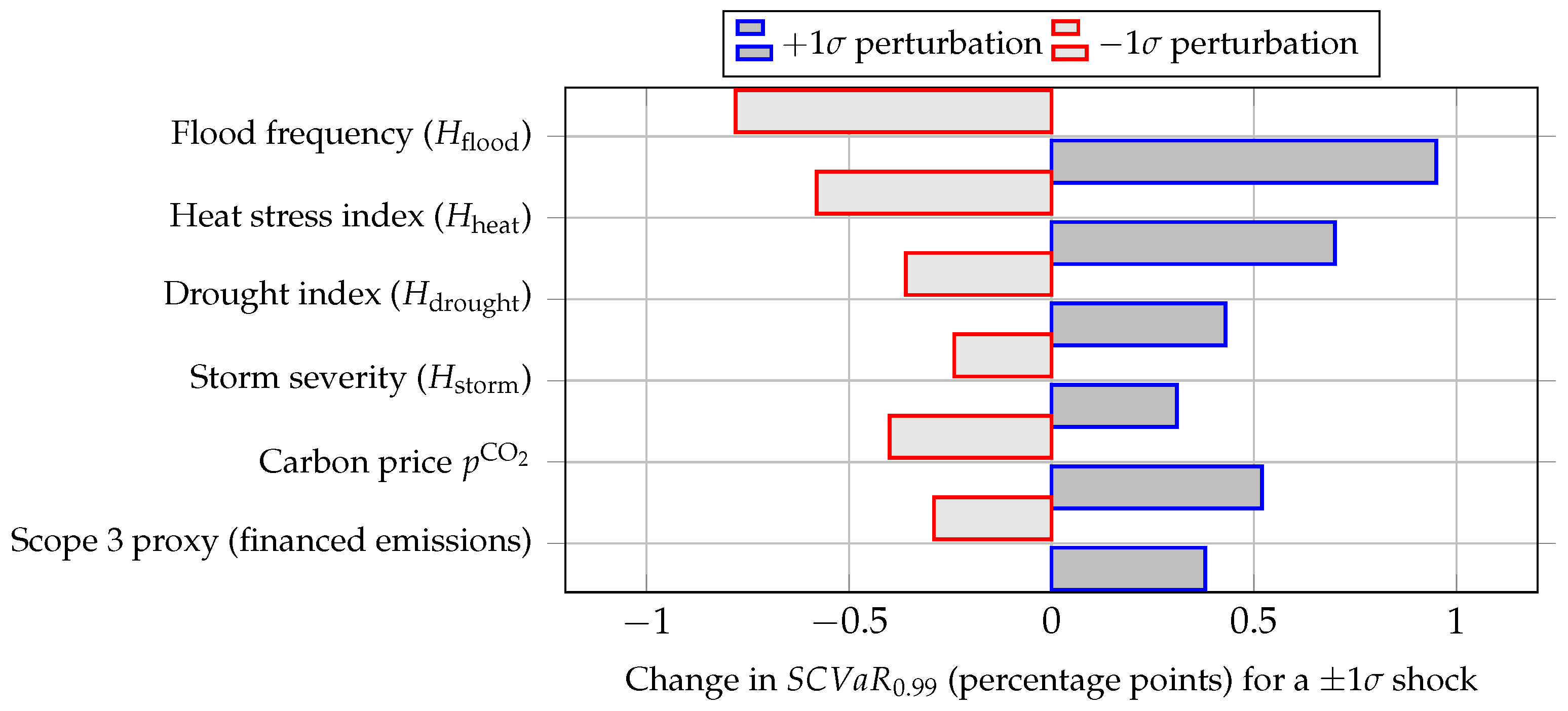
Table 9—supports the adequacy of the loss engine at the relevant quantiles. The sensitivity analysis (
Figure 15) further clarifies which hazards (e.g., flood frequency, heat stress) most influence the reported tail metrics, informing targeted data improvements and supervisory overlays.
These results have immediate consequences for ICAAP, risk appetite, and Pillar 2 dialogue. First, SCVaR and ES provide tail-sensitive thresholds that can be translated into climate-adjusted capital planning: the scenario–horizon grid (
Table 9) offers an auditable mapping from climate pathways to solvency needs. Second, the sector/region contribution analysis (
Figure 12) enables granular limit-setting and concentration monitoring, consistent with supervisory expectations on governance and risk management. Third, by reporting both VaR and ES with uncertainty bands, the framework aligns with market-risk practice and supports a conservative stance where ES is used as the binding measure for capital overlay. Finally, the Applications results—higher sectoral SCVaR for banks under
Disorderly (
Figure 13) and a monotone pricing of vulnerability in sovereign spreads (
Figure 9)—demonstrate how policy questions (capital buffers, underwriting standards, fiscal risk) can be anchored in model-based and validated quantities.
Despite these advantages, four constraints remain.
Spatial aggregation constitutes an additional limitation. Asset exposures and physical hazards are mapped at the NUTS-2 regional level, reflecting the granularity at which supervisory reporting and harmonised climate datasets are currently available. However, several physical risks—notably floods, wildfires, and heat extremes—are highly localised phenomena. Regional aggregation may therefore introduce spatial smoothing, whereby assets with heterogeneous local exposure profiles are assigned similar hazard intensities.
The direction of the resulting bias is asymmetric. For portfolios concentrated in local hot-spots within a region, NUTS-2 aggregation is likely to underestimate tail risk by averaging extreme local hazards with less exposed areas. Conversely, for well-diversified portfolios within a region, aggregation may slightly overstate risk by assigning elevated hazard levels to assets that are locally protected or geographically distant from the most exposed zones. In both cases, the effect operates primarily through tail compression rather than through changes in central tendencies.
Importantly, this limitation affects the spatial attribution of risk rather than the internal consistency of the SCVaR framework. The methodology is resolution-agnostic and can accommodate finer spatial units (e.g., NUTS-3, grid-level hazard rasters, or asset-level geocoding) as data availability improves, with aggregation performed endogenously at the portfolio level rather than imposed ex ante.
Data gaps persist, most notably for Scope 3 (financed) emissions and granular hazard metrics. The use of proxy ladders is transparent and stress-tested (
Figure 15), but filling these gaps would reduce parameter uncertainty and narrow confidence bands.
Long-horizon instability is plausible: parameters linking hazards to jump intensities and volatility may drift across regimes, a risk mitigated here via rolling estimation and sup-Wald checks but still motivating adaptive and time-varying specifications.
Computational burden rises with spatial granularity and joint market–credit simulation; variance reduction and parallelisation alleviate but do not eliminate this cost. These limitations argue for a two-track strategy: near-term deployment of the method with conservative settings and clear uncertainty reporting; and medium-term investment in data curation and adaptive econometric techniques.
An additional limitation concerns the distributional shape of jump magnitudes. While the simulation engine adopts a parsimonious baseline specification for jump sizes, empirical evidence suggests that climate-related losses may exhibit skewness and heavy tails. Sensitivity analysis reported in the Appendix shows that adopting heavier-tailed jump-size distributions leads to higher and CES estimates without altering scenario rankings or sectoral patterns. This reinforces the prudential interpretation of the reported results and motivates future extensions based on EVT or regime-dependent tail modelling.
In addition, future research may explore explicit threshold-based or regime-switching hazard mappings to capture extreme physical risk amplification while preserving the SCVaR framework and its supervisory interpretation.
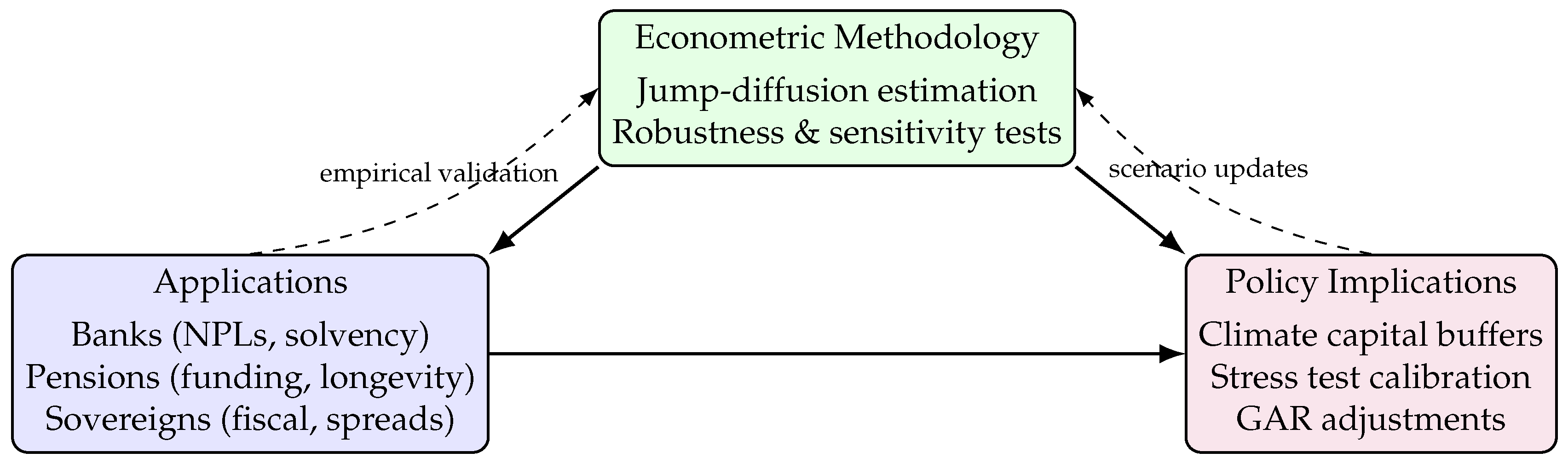
Figure 16 summarises how the pieces fit. The econometric core (top node) delivers validated tail measures (SCVaR/ES) that feed sectoral applications (left node), which, in turn, motivate policy design (right node)—calibration of climate capital overlays, scenario design for stress tests, and a disclosure bridge where taxonomy-based alignment metrics (e.g., GAR) are complemented by risk-sensitive measures. The dashed feedback loops in
Figure 16 reflect practice: new supervisory scenarios or empirical diagnostics trigger re-specification and re-estimation, maintaining the alignment between statistical validity and policy relevance.
The combination of climate-aware jump–diffusion modelling, spatial disaggregation, and a robust validation suite is sufficient to support prudential use today and flexible enough to incorporate better data and methods tomorrow. The empirical patterns across our figures and tables—fatter tails (
Figure 10 and
Figure 11), material spatial concentration (
Figure 12), validated coverage (
Figure 14), and clear sectoral ranking (
Figure 13)—are consistent and policy-relevant. With these elements in place, climate stress testing can move beyond narrative sensitivity to become an econometrically grounded component of risk appetite, ICAAP, and supervisory capital planning.
8. Policy Implications
The empirical results in
Section 5 provide a concrete calibration basis for these policy tools, ensuring that capital overlays and stress-test scenarios are anchored in observed market behaviour rather than purely hypothetical shocks.
Therefore, the results have immediate supervisory relevance along four fronts: capital planning, stress testing design, disclosure alignment, and integration into ongoing prudential processes.
8.1. Climate-Adjusted Capital Buffers
Scenario–horizon SCVaR/ES estimates (
Table 9 and
Figure 11) provide tail-sensitive thresholds suitable for climate overlays. A pragmatic implementation is a two-step rule: (i) use ES at the supervisory confidence (e.g.,
) as the binding measure; (ii) apply a proportional climate add-on where the add-on size is a function of the incremental ES between the
baseline and the selected climate pathway (Orderly/Disorderly/Hot-house). Sector/region contribution diagnostics (
Figure 12) support targeted overlays for concentrated exposures, consistent with proportionality and risk-based principles.
8.2. Calibration of Supervisory Stress Tests
The market, credit, and hybrid engines translate NGFS pathways into validated loss distributions, allowing supervisors to move beyond deterministic shocks. The coverage and independence checks (
Figure 14) and the reported confidence intervals (
Table 9) form a transparent validation layer for scenario design. Authorities can (i) set
minimum modelling features (climate-linked volatility and jump intensities; spatial mapping to hazards); (ii) require reporting of ES/SCVaR with bootstrap CIs; and (iii) use contribution analysis to define binding “climate concentration” limits within the stress template.
Differentiated GAR and Disclosure Standards
SCVaR/ES complements alignment metrics (e.g., GAR) by quantifying capital-relevant tail risk. A disclosure bridge should reconcile taxonomy-based ratios with risk-sensitive measures: (i) GAR reported at portfolio and bucket level; (ii) SCVaR/ES for the same buckets with 95% CIs; (iii) a short attribution table that decomposes SCVaR by transition vs. physical drivers. This pairing prevents misinterpretation of high alignment as low risk and supports comparability across institutions.
8.3. Integration into ICAAP and Macroprudential Surveillance
Within ICAAP, banks should (i) map scenario–horizon SCVaR/ES to risk appetite thresholds; (ii) embed early-warning indicators tied to hazard elasticities; and (iii) document model risk governance for climate modules (change control, challenger models, and periodic backtesting). At the system level, supervisors can monitor aggregate SCVaR concentration and, where needed, deploy targeted macroprudential tools (sectoral buffers, systemic risk buffers, collateral haircuts, or underwriting standards for high-hazard regions). The sovereign application (
Figure 9) further motivates climate-aware fiscal risk surveillance and the consideration of climate contingencies in debt sustainability analyses.
8.4. Implementation Roadmap
A minimum reporting package—scenario–horizon grid (
Table 9), sector/region contributions (
Figure 12), validation panel (
Figure 14)—ensures transparency and auditability. Data gaps (e.g., financed emissions) should be flagged and sensitivity-tested; supervisors may phase in stricter data expectations while permitting documented proxy hierarchies during transition.
Overall, the proposed artefacts align with current supervisory expectations while raising methodological standards through explicit validation and spatial granularity.
9. Conclusions
This paper develops a Spatial Climate Value-at-Risk (SCVaR) framework that links NGFS-consistent transition and physical hazards to portfolio loss distributions through a spatially explicit jump–diffusion engine and a credit-migration block. The methodology integrates validation—bootstrap confidence intervals, exceedance coverage, and structural stability checks—so that scenario results are statistically interpretable rather than illustrative.
A key contribution of the paper is the empirical validation of the proposed framework. Using real financial returns and climate indicators, the analysis shows that the jump–diffusion parameters governing climate risk can be estimated in practice and that their inclusion materially alters tail-risk assessments. This empirical evidence addresses a central limitation of purely scenario-based approaches and supports the use of SCVaR as a quantitative, auditable, and capital-relevant metric for climate stress testing.
Empirically, the framework yields three robust findings. First, tail amplification under disorderly transitions is economically material, with
/
increases in the upper quantiles relative to diffusion-only baselines (
Figure 10;
Table 9). Second, spatial heterogeneity is first-order: sector/region contributions reveal concentrated pockets of risk (
Figure 12), implying that portfolio steering and collateral policies should be geographically differentiated. Third, model adequacy can be evidenced: coverage statistics and confidence bands (
Section 3.7;
Figure 14;
Table 8) allow supervisors and banks to judge whether estimated climate tails are commensurate with observed exceedances.
Policy relevance follows directly. SCVaR/ES can be mapped to ICAAP capital planning and risk-appetite limits; jump and volatility parameters calibrate climate stress tests; and a disclosure bridge aligns alignment metrics (GAR) with solvency-relevant risk measures. The conceptual triangle in
Figure 16 summarises this loop from methodology to applications and policy, with feedback for iterative refinement.
Limitations remain. Data gaps for granular hazards and financed-emissions proxies, long-horizon non-stationarities, and computational cost in high-dimensional spatial simulations warrant caution. Two extensions are most promising. First, machine-learning-assisted hazard mapping and exposure inference can improve spatial resolution and proxy quality while preserving out-of-sample validation. Second, system-wide implementations that embed interbank, pension–sovereign, and collateral networks would extend SCVaR from portfolio to macroprudential analysis, capturing amplification and feedback effects under climate shocks.
To summarise, the paper advances climate-financial econometrics by providing a bank-usable, statistically validated, and policy-ready approach to spatial climate stress testing. It enables supervisors and institutions to move from narrative scenarios and exposure tallies to forward-looking, tail-sensitive measures that can be governed, validated, and integrated into capital and disclosure frameworks.







 -ready CSVs and PGFs. Each run writes a JSON manifest (config hash, git commit, seeds, software versions, checksums) to ensure full provenance.