


Abstract
Is momentum a psychology-based phenomenon or is momentum driven by earning fundamentals? Applying predictive processing from brain sciences, I show that a new explanation emerges in which momentum is jointly driven by earning fundamentals and psychology-based mechanisms. The following novel insights emerge and are consistent with empirical evidence: (i) Momentum is stronger in high-performing sectors. (ii) Momentum gets weaker as attention from investors increases. (iii) Momentum is stronger overnight. (iv) Momentum is weaker during unusual times. (v) Momentum stocks respond asymmetrically to positive vs. negative earning news. Overall, this article shows that the brain is an exciting new frontier for momentum research to explore.
1. A Brain-Based Foundation for Momentum
Momentum is a major anomaly. The tendency of stocks that have performed well recently to outperform stocks that have performed poorly over the same time period was first documented in Jegadeesh and Titman (1993). However, since then, momentum has been found almost everywhere including in global stocks, bonds, commodities, and currencies (Asness & Moskowitz, 2013; Goyal et al., 2025). Even stock options are not immune from momentum (Heston et al., 2023). There is even evidence of momentum dating all the way back to the Victorian age (Chabot et al., 2009), indicating that momentum has always been a feature of markets. Prominent psychology-based explanations include underreaction, delayed overreaction, overconfidence, and the disposition effect (for a summary of these explanations, see Goyal et al. (2025)). Alternatively, risk-based explanations for momentum have also been proposed. The essence of risk-based explanations is that past winners face greater risk going forward (see Kelly et al. (2021) and references/discussion therein). The mystery of momentum is further compounded by empirical evidence showing that earning fundamentals appear to be the key driver of momentum (Novy-Marx, 2015; Narayanamoorthy & He, 2020). However, the vast literature on momentum (both psychology-based and risk-based) has thus far treated the brain as a black box.
In recent years, brain sciences have been converging to a framework in which the brain uses predictions from an internal model to convert incoming information into error signals, which are then selectively absorbed based on their relative value.1 The brain has adopted this strategy, known as predictive processing, to conserve its finite internal resources.2 The same strategy is extensively used in modern data compression and communication technology to save on bandwidth.3 In this article, I show that incorporating such predictive processing into asset pricing provides a novel explanation for the momentum effect in which psychology-based mechanisms as well as earning fundamentals jointly drive momentum. Several additional insights regarding the profitability of momentum strategies emerge, which are consistent with a large body of empirical evidence accumulated over the years. These additional insights include the following: (i) Momentum is stronger in high-performing sectors. (ii) Momentum gets weaker as attention from investors increases. (iii) Momentum is stronger overnight. (iv) Momentum is weaker during unusual times. (v) Momentum stocks respond asymmetrically to positive vs. negative earning news.
Demonstrating the consistency of the brain-based approach with the conditional empirical performance of momentum in (i) to (v) is an important contribution of this paper. As noted in Nagel and Singleton (2011) and extensively discussed in Barroso et al. (2025), there are many potential explanations for various anomalies (including momentum) which are all unconditionally supported by empirical evidence. So, the challenge for asset pricing theory is to provide an explanation which is consistent with the conditional performance of momentum. This paper takes a step in this direction by showing the consistency of brain-based momentum with the conditional performance of momentum.
Any brain-based approach must deal with the fact that the brain is a finite resource. This implies that a decision-maker (DM) cannot attend to every relevant piece of information. This observation has sparked a growing body of literature on limited attention and rational inattention. In the limited attention literature, finite attention is allocated in a pre-determined way (examples include Nekrasov et al., 2023; Y. Li et al., 2020; Yuan, 2015; and Hirshleifer et al., 2011, 2009). In the rational inattention literature, the DM chooses what to pay attention to (see Mackowiak et al. (2023) for a review). The common theme in these strands of the literature is that the default perception (rational or Bayesian prior) does not become fully adjusted. Predictive processing adds to this literature on limited attention and rational inattention by flipping the role of default perception. The default perception is no longer a passive background in need of adjustment; rather, it is a tool that the brain actively uses in converting incoming information into error signals. As the brain appears to construct value by encoding the key features first, then building up,4 it follows that the default perception must span such key features. In asset pricing, reward and risk are the key features. It follows that the brain must be using the default perception as a tool to convert incoming information into distinct reward and risk error signals. In fact, Bossaerts (2009) highlights brain scan evidence directly showing such distinct encoding of reward and risk in the brain. Hence, it is not just the total attention to a firm but also the relative attention to risk vs. reward that matters in asset valuation.
The default perception comes from an internal model of the world. However, maintaining and building an internal model is a substantial metabolic investment, implemented in the brain by intrinsic activity, which accounts for over 20% of the total daily energy requirement.5 This makes building a unique internal model for every firm in the market implausible. It is much more plausible that the brain clusters similar firms together and builds one internal model for such a cluster.6 This internal model supplies a mental template of expectations, which reflects fundamentals in some way as the internal model has been trained on similar prior experiences. The brain then extrapolates the default perception from this template in an automatic, involuntary process, without cognitive effort and control. These are the attributes of automatic thinking according to Bargh (1994); hence, the metaphor of system 1 thinking (Kahneman, 2012) applies to it. It follows that psychology-based mechanisms such as salience must also be involved in this process (see Bordalo et al. (2022)). For example, if you see a dog in your neighbor’s yard, then the relevant internal model of a pet dog provides a mental template of expectations (about how a pet dog typically behaves), from which the default perception of a friendly encounter is extrapolated if you hear excited panting (salient). However, if an aggressive bark is salient, then the prediction of danger is automatically extrapolated.
To sum up, the following apply in an asset pricing context: (i) the default perception is used as a tool that sculpts information into distinct risk and reward error signals, (ii) an internal model supplies a mental template of expectations influenced by fundamentals, from which the default perception is automatically extrapolated via psychology-based mechanisms such as salience. I show that (i) and (ii) jointly give rise to the momentum effect. Several additional insights emerge regarding the profitability of momentum strategies, which are consistent with a large body of empirical evidence on momentum accumulated over the years.
Overall, the results in this article indicate that the brain is an exciting new frontier for momentum research to explore, consistent with the discussion in Moskowitz (2010) who argues that the truth about momentum likely has both risk-based and psychology-based flavors.
2. Predictive Processing: A Brain-Based Foundation for Asset Pricing
As discussed in the introduction, in the past decade and a half, a new paradigm has emerged in brain and cognitive sciences as the dominant model of how the brain functions. In this paradigm, a decision-maker (DM) contrasts incoming information with a default perception coming from an internal model of the world. Such a contrast generates error signals which are then selectively absorbed based on the brain’s assessment of their relative value. As mentioned earlier, the brain does this to conserve its finite internal resources and this appears to be the brain’s optimal response to the very large demands on its limited resources.
Predictive processing goes beyond the rational inattention approach which lets a DM allocate finite attention while treating the brain as a black box (for reviews see Mackowiak et al. (2023), Veldkamp (2011), Sims (2010), and Wiederholt (2010)). Predictive processing opens the black box of the brain with the default perception playing the role of a tool that sculpts information into error signals that span the key features of the decision problem. In brain and cognitive sciences, such predictive processing has been applied to explain a wide variety of phenomena such as the emergence of hallucinations (Griffin & Fletcher, 2017), self-recognition (Apps & Tsakiris, 2014), placebo effects (Buchel et al., 2014), automobile driving (Engstrom et al., 2018), the human ability to use and innovate tools (Elk, 2021), among others. In the recent finance literature, Siddiqi and Murphy (2023) apply predictive processing to offer a new explanation for the high equity premium puzzle. In addition, Siddiqi (2024a, 2024b) consider the role of predictive processing in recent financial innovations, whereas Siddiqi (2025a, 2025b) study the implications of such predictive processing for option pricing and the CAPM, respectively. Adding to this emerging literature, in this paper, I apply predictive processing to offer a new explanation for the phenomenon of momentum.
Assuming simple mean-variance maximization (for example, as in a modern CAPM derivation such as the one in Frazzini and Pedersen (2014)), it follows that the total market value of firm equity can be expressed as
where is the total market value of firm equity, with denoting the number of shares in the equity of firm , and is the price per share. The total equity payoff of firm is , with denoting payoff per share. is the aggregate market payoff. is the covariance of total equity payoff of firm with the aggregate market payoff, is the risk aversion parameter, and is the risk-free rate.
Equation (1) captures the basic asset pricing insight that expected reward, , is balanced against risk, , to value equity. The main innovation in this article is to consider what happens when the expectations of reward and risk are influenced by brain-based predictive processing instead of simply assuming rational expectations.
2.1. The Default Perception in the Resource-Constrained Brain
As discussed in the introduction, predictive processing flips the role of the default perception on its head. Specifically, the default perception is no longer a passive background in need of adjustment. Rather, it is a tool that the brain actively uses in converting information into error signals for further processing. As the brain constructs value by encoding the key features first then building up from there (Doherty et al., 2021), it follows that the default perception must span such key features. In asset pricing, the key features are reward and risk. Consistent with this, Bossaerts (2009) highlights brain scan evidence showing the distinct encoding of risk and reward in the brain in asset valuation. It follows that the relevant default perception is a pair of attributes, where and are reward and risk default perceptions of the firm respectively, with being the indicator of the relevant internal model used in generating the default perception.
Building and maintaining an internal model is a significant metabolic investment implemented in the brain by intrinsic activity, which accounts for about 20% of the total energy needs in humans (Berkes et al., 2011; Raichle, 2010). Such high metabolic costs make it implausible that the brain builds and maintains a unique internal model for every firm. It is much more plausible that the brain clusters closely related firms together and builds one internal model per cluster. In fact, such co-categorization appears to be a critical part of the way the brain makes sense of the world, with a dedicated neuronal mechanism in the brain for it (Lech et al., 2016).
In a given situation, the brain automatically activates a relevant internal model. This internal model provides a mental template of expectations. This mental template has been influenced by fundamentals due to the internal model being trained on similar prior experiences. The brain then extrapolates the default perception from the mental template in an automatic, involuntary process, without cognitive effort and control. These are the attributes of automatic thinking according to Bargh (1994); hence, the metaphor of system 1 thinking (Kahneman, 2012) applies to it. It follows that psychology-based mechanisms such as salience must also be involved in the process of generating the default perception (see Bordalo et al. (2022)), in addition to fundamentals.
To fix ideas, consider the following example: You see a dog. Based on past experiences with dogs, your brain automatically classifies it as a pet. A relevant internal model is activated that provides a mental template of expectations regarding pet dogs. If you also hear excited panting (salient) when you became aware of the dog, then your brain automatically extrapolates the prediction of a friendly encounter from the template. However, if you hear an aggressive bark (salient), your brain automatically extrapolates the prediction of danger.
Similarly, when considering a firm, a relevant internal model is automatically activated, which provides a mental template of expectations, reflecting fundamentals, from which the default perception is automatically extrapolated. Defining the gap between the default perception of earnings and the correct cluster average expected earnings by , it is always possible to express the default perception of earnings as
where is the cluster average expected earnings (earnings fundamentals) with representing the number of firms in the cluster. The cumulative impact of psychology-based mechanisms/biases (causing deviations from ) is captured in . Note, two firms in the same cluster may have different default perceptions, for example, if high earnings are relatively more salient for one of them.
Similarly,
where is the cluster average risk (risk fundamentals). The cumulative impact of biases/psychology-based mechanisms is captured in . Two firms in the same cluster may have different default perceptions of risk if risk is more salient for one.
2.2. Signal Processing in the Resource-Constrained Brain
The brain does not have the time and resources to attend to every piece of relevant information, so it has to choose what to pay attention to. Also, the chosen incoming information does not come in the form of ready-made signals which the brain just passively absorbs. Rather, the brain actively uses the default perception as a tool to construct signals. That is, the chosen information is contrasted with the default perception to generate error signals. Such signals are then selectively processed based on the brain’s assessment of their relative value. This process can be described by introducing a parameter, , as follows:
where is the correct adjustment needed, and is the fraction of correct adjustment reached, so . As the brain can only allocate limited resources to information processing, (i) not every piece of useful information is considered, (ii) not every signal associated with a given piece of information is absorbed. This makes .
Similarly, the adjusted risk expectation is
where is the correct adjustment needed, and is the fraction of correct adjustment, , achieved.
It follows that
Using (6) and (7) in (1), it follows that the total market value of firm equity is
Substituting from (2) and (3) into (8) gives the following:
If the brain has infinite resources, then . It follows that rational expectations are a special case of predictive processing corresponding to infinite brain resources. In general, with limited brain resources, the equity value is given in (9), making relative attention to reward and risk, and , as well as their default perceptions, and , important determinants of asset prices, in addition to fundamentals, and .
3. The Momentum Premium
Consider a firm (momentum winner or ) in cluster that has displayed a series of high earnings recently. If such a series of positive news eventually makes high earnings a relatively more salient attribute of the firm, then the extrapolated default perception changes from to with . That is, subsequent to the initial series of positive earnings news, there is a further increase in equity value due to high earnings becoming more salient. Note that this subsequent bump in price is not news-driven and is the result of a change in the default perception after a series of positive news.
It follows from (9) that the increase in equity value of a momentum winner is given by
Similarly, for a momentum loser, , in the same cluster, , a series of bad earnings news eventually makes low earnings more salient, leading to a further decline in price without any associated news.
where . It follows that if one takes a long position in and a short position in then such a momentum portfolio has an expected payoff given by
In general, momentum winners and losers may be in different clusters, so (12) can be written more generally as
In other words, in the brain-based predictive processing framework, momentum premium arises due to changes in the default perception of momentum winners and losers. In momentum winners, a series of positive earnings news eventually makes high earnings more salient leading to the default perception of earnings shifting upwards by . In momentum losers, a series of negative earnings news makes high earnings less salient leading to the default perception of earnings shifting downwards by . So, taking a long position in a momentum winner and a short position in a momentum loser generates the momentum premium (given in (12) and (13)).
It follows straightaway from (12) and (13) that the magnitude of the premium depends on the level of attention to earnings fundamentals, , average earnings expectations in the clusters, and , and size of the changes in the default perceptions, and . It also follows that the momentum premium can arise irrespective of the clusters to which the winners and losers belong. So, momentum does not have an intra-industry aspect, such as what has been found for the value effect (Campbell et al., 2023).
Proposition 1
(Momentum Premium). In the predictive processing framework, momentum premium arises due to changes in the default perceptions of momentum winners and losers. Specifically, the momentum premium from taking a long position in a momentum winner and a short position in a momentum loser is given by
where is the level of attention to earnings fundamentals, is the average expected earnings in the cluster the momentum winner belongs to, is the average expected earnings in the cluster the momentum loser belongs to, is the magnitude of change in the default perception of the momentum winner, is the magnitude of change in the default perception of the momentum loser, and is the risk-free rate.
The expression for the momentum premium in Proposition 1, even though relatively simple and intuitive, provides several additional insights into the momentum effect. These insights are consistent with a large body of empirical research on momentum. These additional insights with associated empirical evidence are discussed next.
Momentum Premium: Additional Insights and Empirical Evidence
In the brain-based predictive processing framework, momentum is a phenomenon arising due to changes in the default perceptions of winners and losers given finite attention. When considering a firm, a relevant internal model (applicable to a cluster of similar firms) is automatically activated, which provides a mental template of expectations, from which the default perception is automatically extrapolated based on the salient attributes. In the case of a momentum winner, high earnings are more salient than in a momentum loser. As the changes in salience follow a period of good/bad earnings performance, they generate momentum. Finite attention plays an important role as it implies that the changes in the default perceptions loom large and are not fully adjusted straight away.
If attention (brain resources) is unlimited, then there is no momentum premium as equals 1 in (14), which makes the momentum premium zero. As attention to earnings fundamentals rise, that is, as rises, momentum weakens. In line with this prediction, empirical evidence shows that increased investor attention weakens the momentum effect. For example, Chan (2003) and Hong et al. (2000) show that the attention of investors decreases the profitability of momentum strategies. Similar findings are reported and summarized in Leseur (2016).
It also follows that any factor which tends to increase attention to earnings fundamentals must weaken the momentum profitability. During unusual time periods where the past is no longer a good guide to the future (such as GFC 2008 and the COVID-19 pandemic), internal models trained on past experience are less reliable. Hence, an investor pays more attention to information and adjusts away more from the default perception. It follows that the momentum effect is predicted to be weaker during such unusual time periods. Empirical evidence on momentum premiums supports this prediction (Butt et al., 2021; Avramov et al., 2014).
If something diverts attention away from earnings fundamentals, then it makes momentum stronger. In particular, market open is generally a time of high volatility and is widely considered to be a riskier time to trade. It follows that, at open, in the traders’ brains, attention is temporarily diverted away from earnings fundamentals and towards risk, leading to a fall in and a rise in Hence, the brain-based approach predicts that momentum is stronger overnight. Empirical evidence strongly supports this prediction (Lou et al., 2019).
In high-performing sectors, average expected earnings, and , are larger. It immediately follows from Proposition 1 that the momentum premium must be larger in high-performing sectors. Empirical evidence confirms that momentum is stronger in sectors that are already high-performing. This phenomenon, referred to as “industry momentum”, is present in both developed and emerging markets (Giannikos & Ji, 2007). Moskowitz and Grinblatt (1999) find that industry momentum is a key driver of individual stock momentum. In line with academic research, chasing “industry momentum” is an established strategy among professional traders (Renevier, 2024).
4. Asymmetric Response to News
Predictive processing has important implications for over- and underreaction to news among momentum winners and losers. In general, there are three types of news: earnings-specific, risk-specific, as well as earnings and risk news.
4.1. Response to Earnings-Specific News
News that only changes expected earnings is earnings-specific news. If positive earnings-specific news arrives which increases expected earnings, the response is asymmetric between momentum winners and losers. Momentum winners are stocks whose default perception is changing due to high earnings becoming more salient, whereas momentum losers are stocks whose default perception is changing due to low earnings/inferior performance becoming more salient. For benchmarking, we define momentum neutral as stocks whose default perception is stable and not undergoing any change. If positive earnings-specific news arrives that increases expected earnings by , then the increase in price under rational expectations is (follows from (1))
The corresponding increase in price in momentum-neutral stock is (follows from (9))
The corresponding price increase in stock which is a momentum winner (from (9)) is given as follows:
That is, in a momentum winner’s case, the time period during which the positive earnings-specific news arrives also sees the default perception of earnings improve by .
The corresponding price change in a momentum loser is given by
In a momentum loser’s case, the time period during which positive earnings-specific news arrives is also the time period during which the default perception of earnings worsens by .
A comparison of (15) with (16) shows that a momentum-neutral stock always underreacts to positive earnings-specific news. Comparing (15) with (17) shows that a momentum winner’s stock underreacts less to positive earnings-specific news, with overreaction arising if the following condition holds: . A momentum loser’s stock underreacts even more to positive earnings news than momentum-neutral stock (follows from comparing (15) with (18)). It is easy to directly check that similar conclusions hold about negative earnings-specific news with the roles of momentum winner and momentum loser swapped with each other.
Proposition 2
(Asymmetric Response to Earnings News). A loser stock underreacts more to positive earnings news than a winner stock which may overreact depending on the size of the increase in the default perception of earnings. A winner stock underreacts more to negative earnings news than a loser stock which may overreact depending on the size of the fall in the default perception of earnings. A neutral stock always underreacts.
Proposition 2 shows that stocks that have been doing well (momentum winners) in general underreact less to positive earnings-specific news and may even overreact. However, stocks that have been performing poorly (momentum losers) underreact more to positive earnings-specific news. The roles of winners and losers are swapped when negative earnings-specific news arrives. Empirical evidence supports Proposition 2. In particular, Z. Li et al. (2023) find that investors appear to disregard news that contradicts their sentiment, which causes a muted announcement day price reaction to such news. That is, bad earnings news about winners leads to a greater underreaction than such news about losers, whereas positive earnings news about losers faces a greater underreaction than such news about winners.
4.2. Response to Risk-Specific News
News that only changes risk is risk-specific news. If risk-specific news arrives that increases risk by , then the fall in price under rational expectations is given by (follows from (1))
If the firm is momentum-neutral, then the fall in price is given by(follows from (9))
However, for a momentum winner
While for a momentum loser
Proposition 3
(Asymmetric Response to Risk News). If risk goes up, winner stocks underreact more than loser stocks which may overreact depending on the size of the fall in the default perception of earnings. If risk falls, loser stocks underreact more than winner stocks which may overreact depending on the size of the rise in the default perception of earnings. Neutral stocks always underreact to risk news.
4.3. Response to Earnings and Risk News
Earnings and risk news is information which impacts both the expected earnings as well as risk. An interesting case is one where the expected earnings and risk go up or down together. For example, if a firm announces an international merger, then expected earnings go up due to better access to a new market; however, risk also rises as indicated by failed mergers in the past (for example, the Daimler–Chrysler merger which was announced in 1998 but failed in 2007). Other examples of earnings and risk news include changes in top management, new business strategy, a new product launch, etc.
If expected earnings go up by and, at the same time, risk also goes up by such that the value of total equity goes up under rational expectations, then it follows that . For ease of reference, in this article, I refer to such news as positive earnings and risk news. The change in the total equity value of the firm due to positive earnings and risk news under rational expectations is given by (follows from (1))
With predictive processing, if the firm is momentum-neutral, then the corresponding change in the total equity value is given by
A comparison of (23) and (24) shows that a neutral firm can display both over- and underreaction depending on the level of attention to earnings, , and risk, . Specifically, overreaction arises if the level of attention to earnings satisfies the following inequality:
With predictive processing, if the firm is a momentum winner, then, assuming that , its total equity value changes by
It follows that the momentum winner overreacts to information that increases both the expected earnings and risk (positive earnings and risk news) if the following inequality is satisfied:
If the firm is a momentum loser, then its total equity value changes by
So, the momentum loser overreacts to information that increases both the expected earnings and risk (positive earnings and risk news) if the following inequality is satisfied:
A comparison of (27) and (29) shows that a winner starts overreacting at lower levels of attention to earnings, , when compared with a loser, with all else equal. It follows that overreaction to positive earnings and risk news is more likely among winners than losers.
Proposition 4
(Positive Earnings and Risk News). Overreaction to positive earnings and risk news is more likely among momentum winners than losers. Specifically, the overreaction among winners starts at a lower level of attention to earning fundamentals than the level of attention needed to generate an overreaction among neutral stocks. However, the overreaction among losers starts at a higher level of attention to earning fundamentals than the level of attention needed to generate an overreaction among neutral stocks.
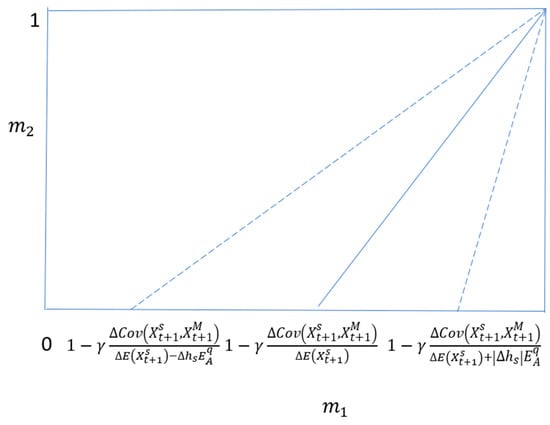
Figure 1 shows the overreaction threshold for momentum-neutral stocks and winners and losers. The overreaction threshold for winners follows from rotating the threshold for neutral firms to the left, whereas the threshold for losers follows from rotating the threshold for neutral firms to the right. With all else equal, overreaction to positive news is more likely among winners than neutral stocks and losers.
Figure 1.
Over- vs. Underreaction to Positive Earnings and Risk News. Note: Overreaction among neutral firms arises to the right of the solid line with the x-intercept at . Overreaction among winners is observed to the right of the dashed line with the x-intercept at . Overreaction among losers is observed to the right of the dashed line with the x-intercept at . It follows that overreaction to positive news is more likely among winners than losers and neutral firms.
Are loser stocks more likely to overreact to negative earnings news? If negative earnings and risk news arrives, that is, the expected earnings fall by along with a fall in risk of , such that the price falls under rational expectations, then it follows that .
With negative earnings and risk news, the fall in the total equity value of the firm under rational expectations (follows from (1)) is given by
With predictive processing, if the firm is momentum-neutral, the change in the total equity value of the firm due to negative earnings and risk news is given by (follows from (9))
A comparison of (30) with (31) shows that both over- and underreaction are possible with overreaction arising if the following inequality is satisfied:
If the firm is a momentum loser, the corresponding change in its total equity value is given by
Assuming , it immediately follows that the loser displays overreaction if the following inequality is satisfied:
However, if the firm is a momentum winner, the change in its total equity value is given by
With overreaction arising if
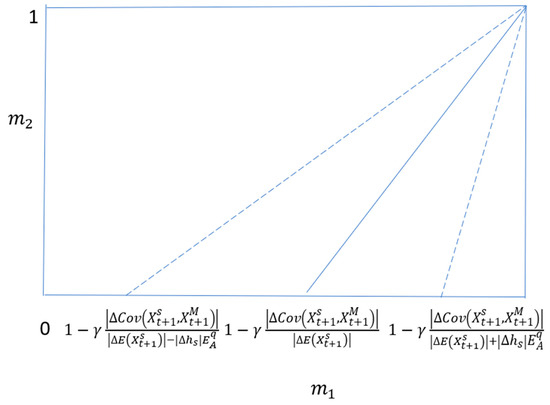
Figure 2 illustrates the overreaction thresholds of neutral, winner, and loser stocks.
Figure 2.
Over- vs. Underreaction to Negative Earnings and Risk News. Note: Overreaction among neutral stocks arises to the right of the solid line with the x-intercept at . Overreaction among losers is observed to the right of the dashed line with the x-intercept at . Overreaction among winners is observed to the right of the dashed line with the x-intercept at . It follows that overreaction to negative news is more likely among losers than winners and neutral stocks.
Proposition 5
(Negative Earnings and Risk News). Overreaction to negative earnings and risk news is more likely among losers than winners. Specifically, losers start to overreact at lower levels of attention to earnings than neutral stocks, whereas winners only start to overreact at higher levels of attention to earnings than neutral stocks.
A large body of literature in economics and finance has found empirical evidence for both over- and underreaction in the stock market (see Kwon and Tang (2025) and references therein for a brief review of this literature). As the results in this article show, with predictive processing, both over- and underreaction are possible. The additional insight in this article is that momentum stocks respond asymmetrically to news, with winners more likely to show overreaction to positive news than losers and neutral stocks, whereas losers are more likely to overreact to negative news than winners and neutral stocks.
5. Conclusions
Recently, research in brain sciences has converged to predictive processing as the primary framework for understanding how the brain functions. In essence, the brain is a prediction engine that relies on an internal model of the world to generate a default perception. The brain actively uses this default perception as a tool to sculpt incoming information into relevant error signals, which are then further processed in a selective manner. The brain does this in an attempt to optimally utilize its limited internal resources. This article applies predictive processing to asset pricing and shows that finite brain resources imply that the influence of the default perception is generally not fully adjusted straight away. The phenomenon of momentum naturally arises after changes in the default perceptions of winners and losers following a period of superior/inferior earnings performance. A range of additional insights follows that are consistent with empirical evidence, making predictive processing a framework that brings previously disjointed empirical findings about momentum neatly together. This paper shows that the brain-based momentum approach is consistent with the conditional performance of momentum and, as mentioned in the introduction, this is an important step towards finding the true explanation among many false ones. This paper is an initial proof of concept that makes a theoretical contribution by taking the standard mean-variance optimization (which underpins CAPM) and enriching it with brain-based limited attention. Overall, this article shows that the brain is an exciting new frontier for momentum research to explore. In particular, this paper shows that providing a brain-based foundation connects momentum phenomenon to stock market over-and underreaction. A key novel prediction of this paper is that momentum winners show an overreaction to positive news and an underreaction to negative news, whereas momentum losers show an underreaction to positive news and an overreaction to negative news. Recent research has begun testing over- and underreaction with the help of laboratory experiments (Ba et al., 2025). The novel prediction mentioned above can potentially be tested in a laboratory experiment of this type. This is a natural subject for future research.
Funding
This research received no external funding.
Institutional Review Board Statement
Not applicable.
Informed Consent Statement
Not applicable.
Data Availability Statement
No new data were created or analyzed in this study.
Conflicts of Interest
The author declares no conflicts of interest.
Notes
| 1 | A large body of literature in brain sciences on how the brain is a prediction engine includes Nave et al. (2020), Clark (2013), Hohwy (2013), Bubic et al. (2010), among others. An accessible sample based on writings of prominent brain scientists includes Clark (2023), chapter 3 in Hawkins (2021), chapter 4 in Feldman (2021a), chapter 4 in Seth (2021), and chapters 4 and 5 in Goldstein (2020). Feldman (2021b) also provides a summary of the main ideas. |
| 2 | Ali et al. (2022) demonstrate that predictive processing emerges in an artificial neural network optimized to be energy efficient, indicating that such optimization may be why the brain implements predictive processing. |
| 3 | Instead of transmitting a large file, only the error signals are transmitted, with what is already known (default) at the receivers end used to reconstruct the file. Similarly, instead of storing all the neighboring frames in a large video file, a frame and its associated error signals are stored (see chapter 1 in Clark (2023)). |
| 4 | Doherty et al. (2021) present a review of the neuroscience evidence showing that the brain constructs value from key features in a process that involves the brain regions of the lateral orbital and medial prefrontal cortex. |
| 5 | See, for example, Berkes et al. (2011) and Raichle (2010), among others. |
| 6 | Such categorization is a critical part of the way the brain puts the world in order and has a dedicated neuronal mechanism in the brain (Lech et al., 2016). There is a significant body of literature in economics on categorization. See Mohlin (2014) for a discussion on optimal categorization. For an overview of a large body of literature, see Cohen and Lefebvre (2005) and Murphy (2002). Prominent economic applications of categorization include “coarse thinking” (Mullainathan et al., 2009) and “the economics of structured finance” where rating agencies categorize firms with respect to default risk (Coval & Jurek, 2009) among others. |
References
- Ali, A., Ahmad, N., de Groot, E., Johannes van Gerven, M. A., & Kietzmann, T. C. (2022). Predictive coding is a consequence of energy efficiency in recurrent neural networks. Patterns, 3(12), 100639. [Google Scholar] [CrossRef] [Scilit] [PubMed]
- Apps, M. A. J., & Tsakiris, M. (2014). The free-energy self: A predictive coding account of self-recognition. Neuroscience and Biobehavioral Review, 41, 85–97. [Google Scholar] [CrossRef] [Scilit] [PubMed]
- Asness, C., & Moskowitz, L. (2013). Value and momentum everywhere. Journal of Finance, 68(3), 929–985. [Google Scholar] [CrossRef] [Scilit]
- Avramov, D., Cheng, S., & Hameed, A. (2014). Time varying liquidity and momentum profits. Journal of Financial and Quantitative Analysis, 51(6), 1897–1923. [Google Scholar] [CrossRef] [Scilit]
- Ba, C., Bohren, J. A., & Imas, A. (2025). Over-and underreaction to information (Revise-and-Resubmit). Quarterly Journal of Economics. Available online: https://cuiminba.com/working-papers/overreaction/ (accessed on 27 October 2025).
- Bargh, J. A. (1994). The four horsemen of automaticity: Awareness, intention, efficiency, and control in social cognition. In R. S. Wyer Jr., & T. K. Srull (Eds.), Handbook of social cognition: Basic processes; applications (2nd ed., pp. 1–40). Lawrence Erlbaum Associates, Inc. [Google Scholar]
- Barroso, P., Detzel, A., & Maio, P. (2025). The volatility puzzle of the beta anomaly. Journal of Financial Economics, 165, 103994. [Google Scholar] [CrossRef] [Scilit]
- Berkes, P., Orban, G., Lengyel, M., & Fiser, J. (2011). Spontaneous cortical activity reveals hallmarks of an optimal internal model of the environment. Science, 331(6013), 83–87. [Google Scholar] [CrossRef] [Scilit]
- Bordalo, P., Gennaioli, N., & Shleifer, A. (2022). Salience. Annual Review of Economics, 14, 521–544. [Google Scholar] [CrossRef] [Scilit]
- Bossaerts, P. (2009). What decision neuroscience teaches us about financial decision-making. Annual Review of Financial Economics, 1, 383–404. [Google Scholar] [CrossRef]
- Bubic, A., Von Cramon, D. Y., & Schubotz, R. I. (2010). Prediction, cognition and the brain. Frontiers in Human Neuroscience, 4, 25. [Google Scholar] [CrossRef] [Scilit]
- Buchel, C., Geuter, S., Sprenger, C., & Eippert, F. (2014). Placebo analgesia: A predictive coding perspective. Neuron, 81(6), 1223–1239. [Google Scholar] [CrossRef] [Scilit]
- Butt, H. A., Kolari, J. W., & Sadaqat, M. (2021). Revisiting momentum profits in emerging markets. Pacific-Basin Finance Journal, 65, 101486. [Google Scholar] [CrossRef] [Scilit]
- Campbell, J., Giglio, S., & Polk, C. (2023). What drives booms and busts in value (NBER working paper No. 31859). National Bureau of Economic Research.
- Chabot, B., Ghysels, E., & Jagannathan, R. (2009). Momentum cycles and limits to arbitrage: Evidence from Victorian era and post-depression US stock market (NBER Paper No. 15591). National Bureau of Economic Research.
- Chan, W. S. (2003). Stock price reaction to news and no-news: Drift and reversal after headlines. Journal of Financial Economics, 70(2), 223–260. [Google Scholar] [CrossRef] [Scilit]
- Clark, A. (2013). Whatever next? Predictive brains, situated agents, and the future of cognitive science. Behavioral and Brain Sciences, 36, 181–204. [Google Scholar] [CrossRef] [Scilit] [PubMed]
- Clark, A. (2023). The experience machine: How our minds predict and shape reality (1st ed.). Allen Lane. [Google Scholar]
- Cohen, H., & Lefebvre, C. (2005). Handbook of categorization in cognitive science. Elsevier Science. ISBN 978-0-08-044612-7. [Google Scholar]
- Coval, J. D., & Jurek, E. J. (2009). The economics of structured finance. Journal of Economic Perspectives, 23(1), 3–25. [Google Scholar] [CrossRef] [Scilit]
- Doherty, J. P., Rutishauser, U., & Iigaya, K. (2021). The hierarchical construction of value. Current Opinion in Behavioral Sciences, 41, 71–77. [Google Scholar] [CrossRef] [Scilit] [PubMed]
- Elk, M. (2021). A predictive processing framework of tool use. Cortex, 139, 211–221. [Google Scholar] [CrossRef] [Scilit]
- Engstrom, J., Bargman, J., Nilsson, D., Seppelt, B., Markkula, G., Piccinini, G. B., & Viktor, T. (2018). Great expectations: A predictive coding account of automobile driving. Theoretical Issues in Ergonomics Science, 19(2), 156–194. [Google Scholar] [CrossRef] [Scilit]
- Feldman, L. B. (2021a). Seven and a half lessons about the brain. Mariner Books. [Google Scholar]
- Feldman, L. B. (2021b). Your brain predicts (almost) everything you do. Available online: https://www.mindful.org/your-brain-predicts-almost-everything-you-do/ (accessed on 6 October 2025).
- Frazzini, A., & Pedersen, L. (2014). Betting against beta. Journal of Financial Economics, 114, 1–25. [Google Scholar] [CrossRef] [Scilit]
- Giannikos, C., & Ji, X. (2007). Industry momentum at the end of the 20th century. International Journal of Business and Economics, 6, 29–46. [Google Scholar]
- Goldstein, B. (2020). The mind: Consciousness, prediction, and the brain. The MIT Press. ISBN-10 0262044064. [Google Scholar]
- Goyal, A., Jegadeesh, N., & Subrahmanyam, A. (2025). Empirical determinants of momentum: A perspective using international data. Review of Finance, 29(1), 241–273. [Google Scholar] [CrossRef] [Scilit]
- Griffin, J. D., & Fletcher, P. C. (2017). Predictive processing, source monitoring, and psychosis. Annual Review of Clinical Psychology, 13(13), 265–289. [Google Scholar] [CrossRef] [Scilit]
- Hawkins, J. (2021). A thousand brains: A new theory of intelligence. Basic Books. ISBN-10 1541675819. [Google Scholar]
- Heston, S., Jones, C., Khorram, M., Li, S., & Mo, H. (2023). Option momentum. Journal of Finance, 78(6), 3141–3192. [Google Scholar] [CrossRef] [Scilit]
- Hirshleifer, D., Lim, S. S., & Teoh, S. H. (2009). Driven to distraction: Extraneous events and underreaction to earnings news. Journal of Finance, 64(5), 2289–2325. [Google Scholar] [CrossRef] [Scilit]
- Hirshleifer, D., Lim, S. S., & Teoh, S. H. (2011). Limited investor attention and stock market misreactions to accounting information. Review of Asset Pricing Studies, 1(1), 35–73. [Google Scholar] [CrossRef] [Scilit]
- Hohwy, J. (2013). The predictive mind. Oxford University Press. ISBN 9780199682737. [Google Scholar]
- Hong, H., Lim, T., & Stein, C. (2000). Bad news travels slowly: Size, analyst coverage, and the probability of momentum strategies. Journal of Finance, 55, 265–295. [Google Scholar] [CrossRef] [Scilit]
- Jegadeesh, N., & Titman, S. (1993). Returns to buying winners and selling losers: Implications for stock market efficiency. Journal of Finance, 48(1), 65–91. [Google Scholar] [CrossRef]
- Kahneman, D. (2012). Thinking fast and slow. Penguin Books Ltd. [Google Scholar]
- Kelly, B. T., Moskowitz, T., & Pruitt, S. (2021). Understanding momentum and reversal. Journal of Financial Economics, 140(3), 726–743. [Google Scholar] [CrossRef] [Scilit]
- Kwon, S., & Tang, J. (2025). Extreme categories and overreaction to news. Review of Economic Studies, rdaf037. [Google Scholar] [CrossRef] [Scilit]
- Lech, R., Güntürkün, O., & Suchan, B. (2016). An interplay of fusiform gyrus and hippocampus enables prototype- and exemplar-based category learning. Behavioural Brain Research, 311, 239–246. [Google Scholar] [CrossRef] [Scilit]
- Leseur, M. (2016). Analysis of the causes of the momentum effect and the implications for the efficient market hypothesis [Master’s thesis, Université de Liège]. [Google Scholar]
- Li, Y., Nekrasov, A., & Teoh, S. H. (2020). Opportunity knocks but once: Delayed disclosure of financial items in earnings announcements and neglect of earnings news. Review of Accounting Studies, 25(1), 159–200. [Google Scholar] [CrossRef] [Scilit]
- Li, Z., Wen, F., & Huang, Z. (2023). Asymmetric response to earnings news across different sentiment states: The role of cognitive dissonance. Journal of Corporate Finance, 78, 102343. [Google Scholar] [CrossRef] [Scilit]
- Lou, D., Polk, C., & Skouras, S. (2019). A tug of war: Overnight versus intraday expected returns. Journal of Financial Economics, 134(1), 192–213. [Google Scholar] [CrossRef] [Scilit]
- Mackowiak, B., Matejka, F., & Wiederholt, M. (2023). Rational inattention: A review. Journal of Economic Literature, 62, 226–273. [Google Scholar] [CrossRef] [Scilit]
- Mohlin, E. (2014). Optimal categorization. Journal of Economic Theory, 152, 356–381. [Google Scholar] [CrossRef] [Scilit]
- Moskowitz, T. (2010). Explanations for the momentum premium. In AQR capital management. University of Chicago Booth School of Business. [Google Scholar]
- Moskowitz, T., & Grinblatt, M. (1999). Do industries explain momentum? Journal of Finance, 54, 1249–1290. [Google Scholar] [CrossRef] [Scilit]
- Mullainathan, S., Schwartzstein, J., & Shleifer, A. (2009). Coarse thinking and persuasion. Quarterly Journal of Economics, 123(2), 577–619. [Google Scholar] [CrossRef] [Scilit]
- Murphy, G. L. (2002). The big book of concepts. MIT Press. [Google Scholar]
- Nagel, S., & Singleton, K. J. (2011). Estimation and evaluation of conditional asset pricing models. Journal of Finance, 66, 873–909. [Google Scholar] [CrossRef] [Scilit]
- Narayanamoorthy, G., & He, S. (2020). Earning acceleration and stock returns. Journal of Accounting & Economics, 69(1), 101238. [Google Scholar]
- Nave, K., Deane, G., Miller, M., & Clark, A. (2020). Wilding the predictive brain. Wiley Interdisciplinary Review of Cognitive Science, 11(6), E1542. [Google Scholar] [CrossRef] [Scilit]
- Nekrasov, A., Teah, S., & Wu, S. (2023). Limited attention and financial decision making. In G. Hillary, & D. McLean (Eds.), Handbook of financial decision making. Edward Elgar Publishing. [Google Scholar]
- Novy-Marx, R. (2015). Fundamentally, momentum is fundamental momentum (NBER paper No. 20984). National Bureau of Economic Research.
- Raichle, M. E. (2010). Two views of brain function. Trends in Cognitive Sciences, 14(4), 180–190. [Google Scholar] [CrossRef] [Scilit]
- Renevier, S. (2024). Sharpen your edge: A simple guide to sector momentum investing. Available online: https://finimize.com/content/sharpen-your-edge-a-simple-guide-to-sector-momentum-investing (accessed on 8 August 2025).
- Seth, A. (2021). Being you: A new science of consciousness. Dutton Books. [Google Scholar]
- Siddiqi, H. (2024a). Information processing in the brain and financial innovations. Journal of Behavioral Finance, 25(4), 410–419. [Google Scholar] [CrossRef] [Scilit]
- Siddiqi, H. (2024b). Strict certainty preference in the predictive brain: A new perspective on financial innovations and their role in the real economy. Annals of Finance, 20, 277–287. [Google Scholar] [CrossRef] [Scilit]
- Siddiqi, H. (2025a). Asset pricing with finite attention. Available online: https://papers.ssrn.com/sol3/papers.cfm?abstract_id=5213132 (accessed on 31 March 2025). [CrossRef] [Scilit]
- Siddiqi, H. (2025b). Option pricing with rational inattention. Available online: https://papers.ssrn.com/sol3/papers.cfm?abstract_id=5172077 (accessed on 10 March 2025). [CrossRef] [Scilit]
- Siddiqi, H., & Murphy, A. (2023). The resource-constrained brain: A new perspective on the equity premium puzzle. Journal of Behavioral Finance, 24(3), 315–332. [Google Scholar] [CrossRef] [Scilit]
- Sims, C. A. (2010). Rational inattention and monetary economics. In B. M. Friedman, & M. Woodford (Eds.), Handbook of monetary economics (Vol. 3, pp. 155–181). Elsevier. [Google Scholar]
- Veldkamp, L. (2011). Information choice in macroeconomics and finance. Princeton University Press. [Google Scholar]
- Wiederholt, M. (2010). Rational inattention. In The new palgrave dictionary of economics (Online ed.). Palgrave Macmillan. [Google Scholar]
- Yuan, Y. (2015). Market-wide attention, trading, and stock returns. Journal of Financial Economics, 116(3), 548–564. [Google Scholar] [CrossRef] [Scilit]
Disclaimer/Publisher’s Note: The statements, opinions and data contained in all publications are solely those of the individual author(s) and contributor(s) and not of MDPI and/or the editor(s). MDPI and/or the editor(s) disclaim responsibility for any injury to people or property resulting from any ideas, methods, instructions or products referred to in the content. |
© 2025 by the author. Licensee MDPI, Basel, Switzerland. This article is an open access article distributed under the terms and conditions of the Creative Commons Attribution (CC BY) license.