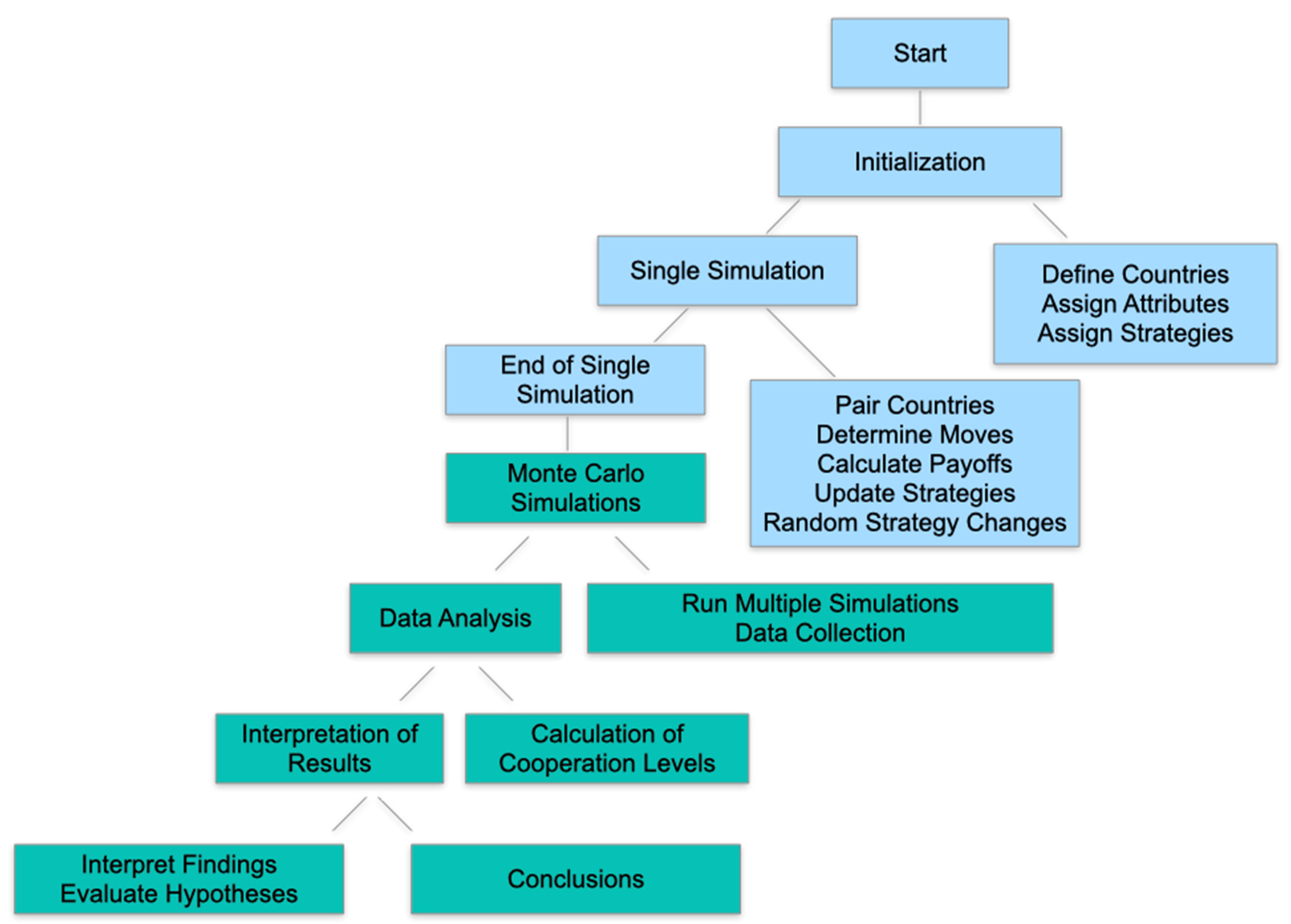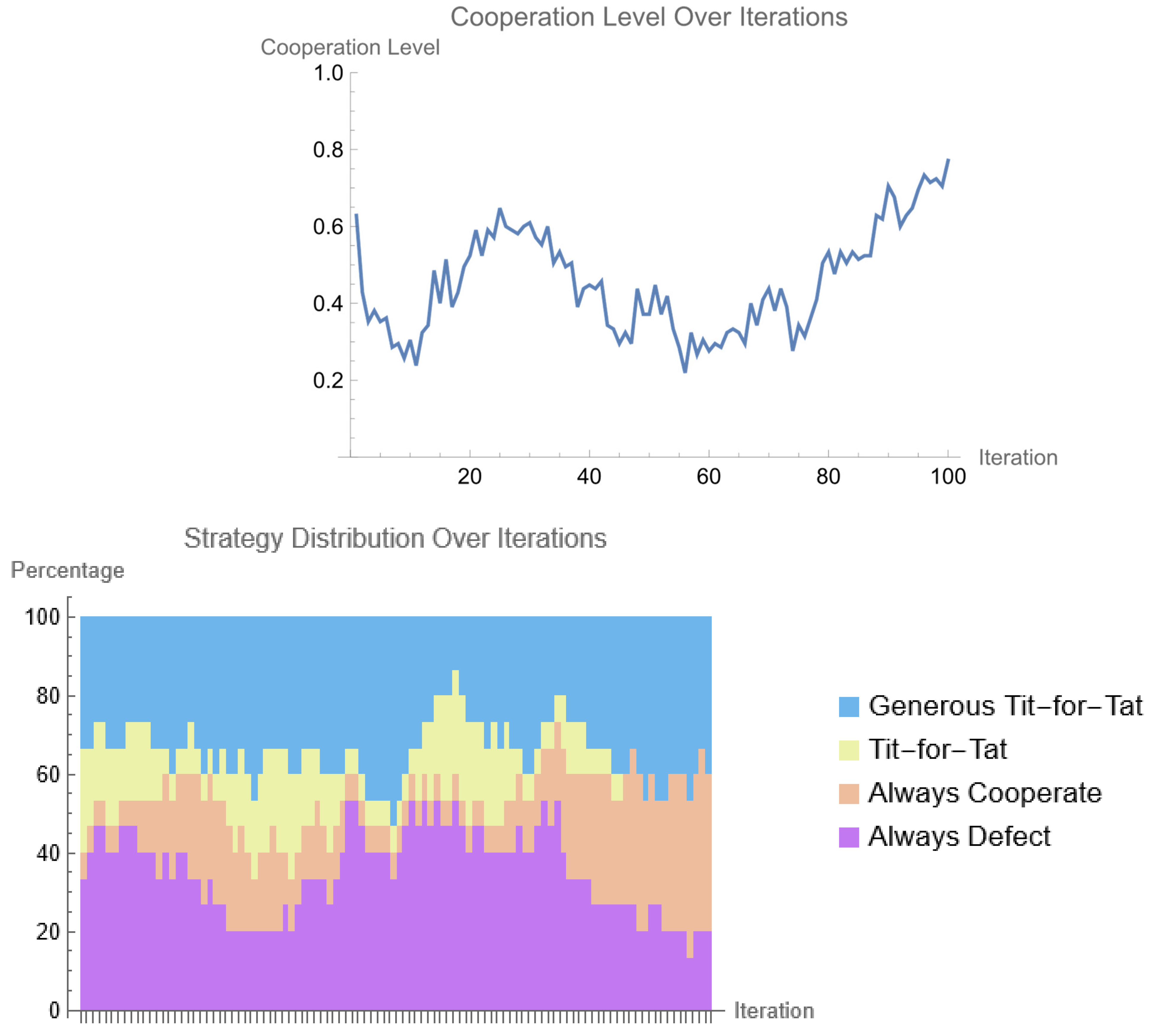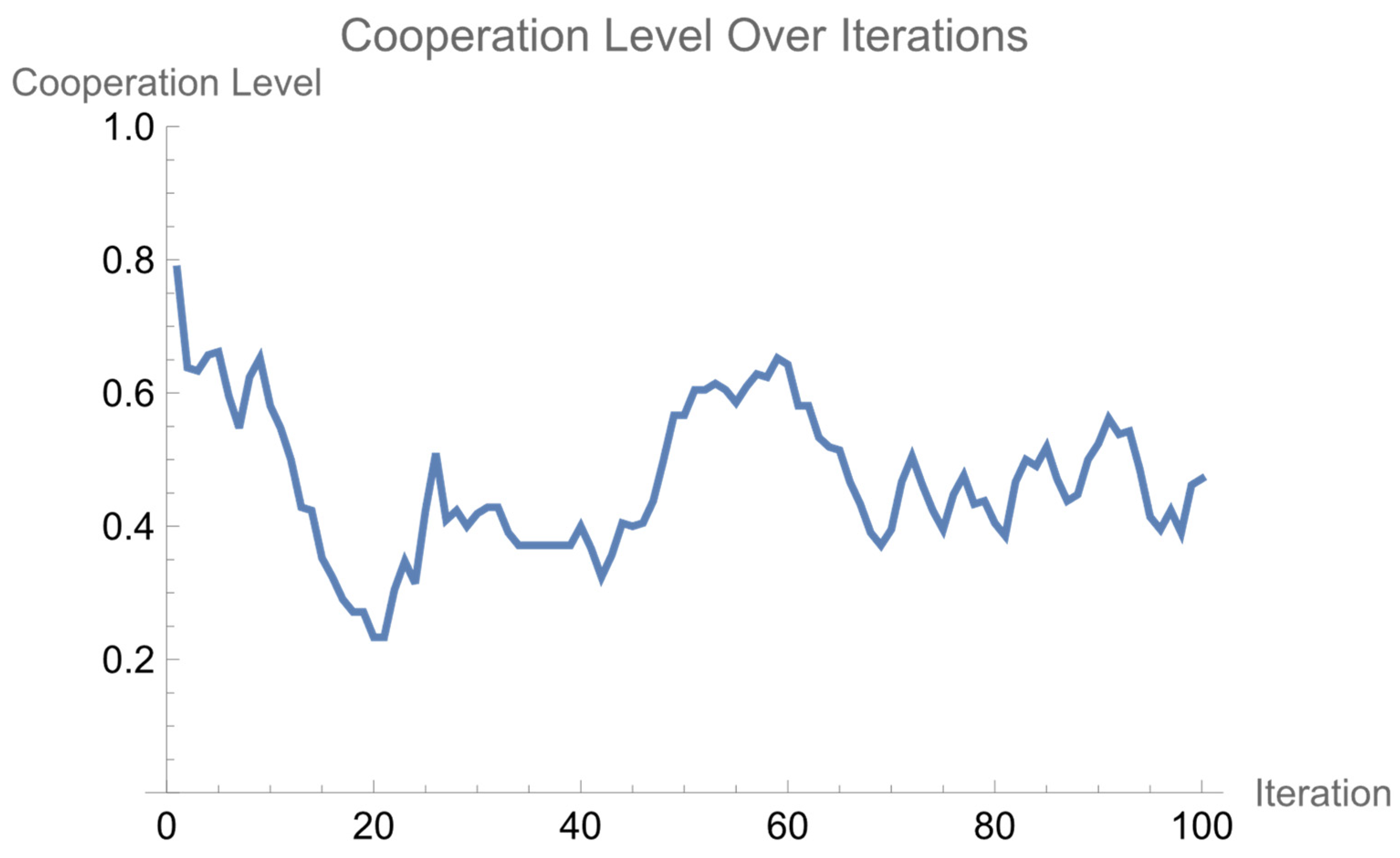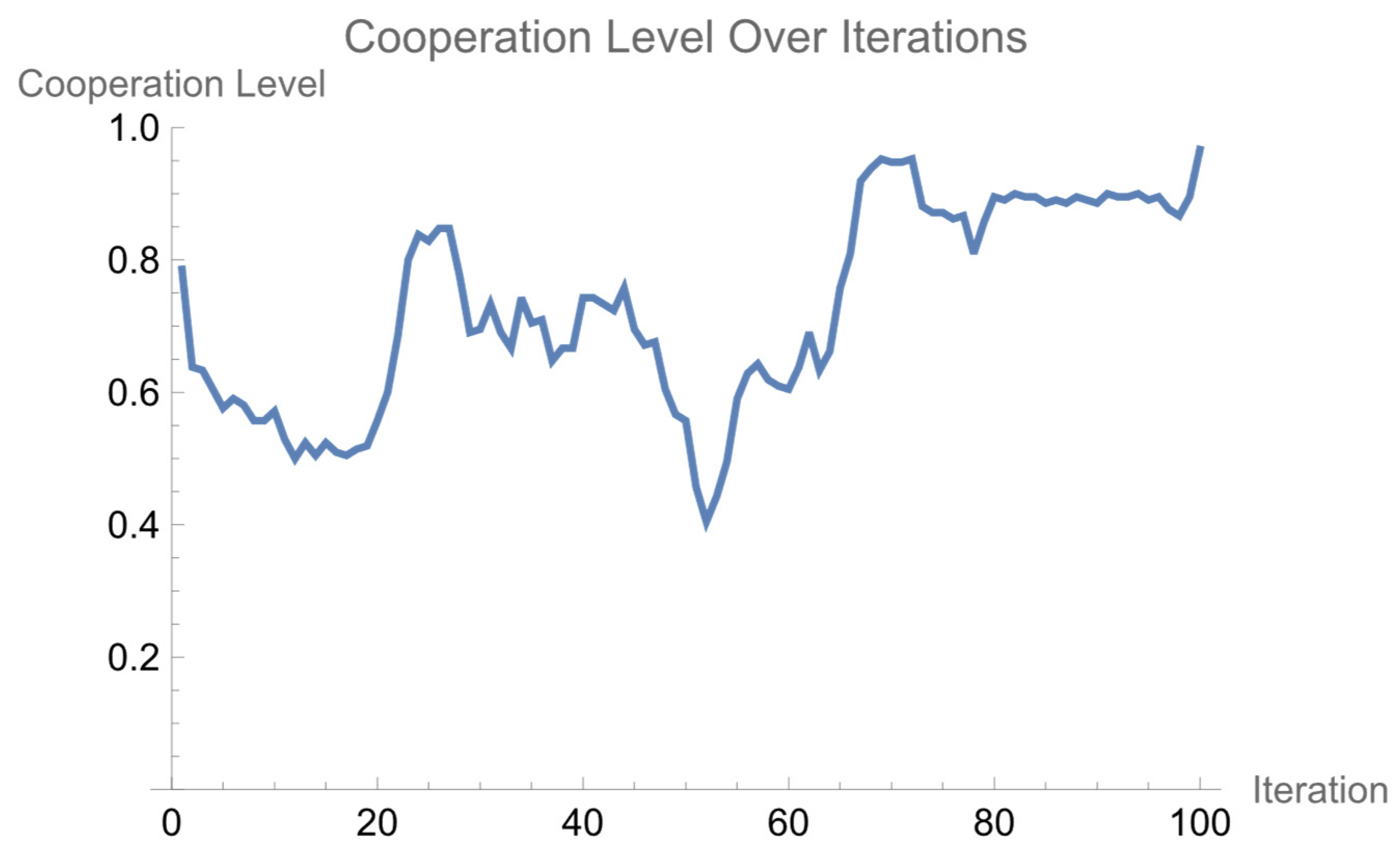

Adapting to Multipolarity: Insights from Iterated Game Theory Simulations—A Preliminary Study on Hypothetical Optimal Global Cooperation



Abstract
Share and Cite
Petrakis, P.E.; Kanzola, A.-M.; Lomis, I. Adapting to Multipolarity: Insights from Iterated Game Theory Simulations—A Preliminary Study on Hypothetical Optimal Global Cooperation. J. Risk Financ. Manag. 2024, 17, 370. https://doi.org/10.3390/jrfm17080370
Petrakis PE, Kanzola A-M, Lomis I. Adapting to Multipolarity: Insights from Iterated Game Theory Simulations—A Preliminary Study on Hypothetical Optimal Global Cooperation. Journal of Risk and Financial Management. 2024; 17(8):370. https://doi.org/10.3390/jrfm17080370
Chicago/Turabian StylePetrakis, Panagiotis E., Anna-Maria Kanzola, and Ioannis Lomis. 2024. "Adapting to Multipolarity: Insights from Iterated Game Theory Simulations—A Preliminary Study on Hypothetical Optimal Global Cooperation" Journal of Risk and Financial Management 17, no. 8: 370. https://doi.org/10.3390/jrfm17080370
APA StylePetrakis, P. E., Kanzola, A.-M., & Lomis, I. (2024). Adapting to Multipolarity: Insights from Iterated Game Theory Simulations—A Preliminary Study on Hypothetical Optimal Global Cooperation. Journal of Risk and Financial Management, 17(8), 370. https://doi.org/10.3390/jrfm17080370