Do LRG1–SERPINA1 Interactions Modulate Fibrotic and Inflammatory Signatures in Rheumatoid Arthritis? A Proteomic and In Silico Investigation

Abstract
1. Introduction
2. Methodology
2.1. Proteomic Data Analysis
2.2. Common Gene Identification
2.3. Protein–Protein Interaction (PPI) and Functional Enrichment Analysis
2.4. Target Protein Selection and Molecular Docking
2.5. Molecular Dynamics Simulation (MD)
3. Results
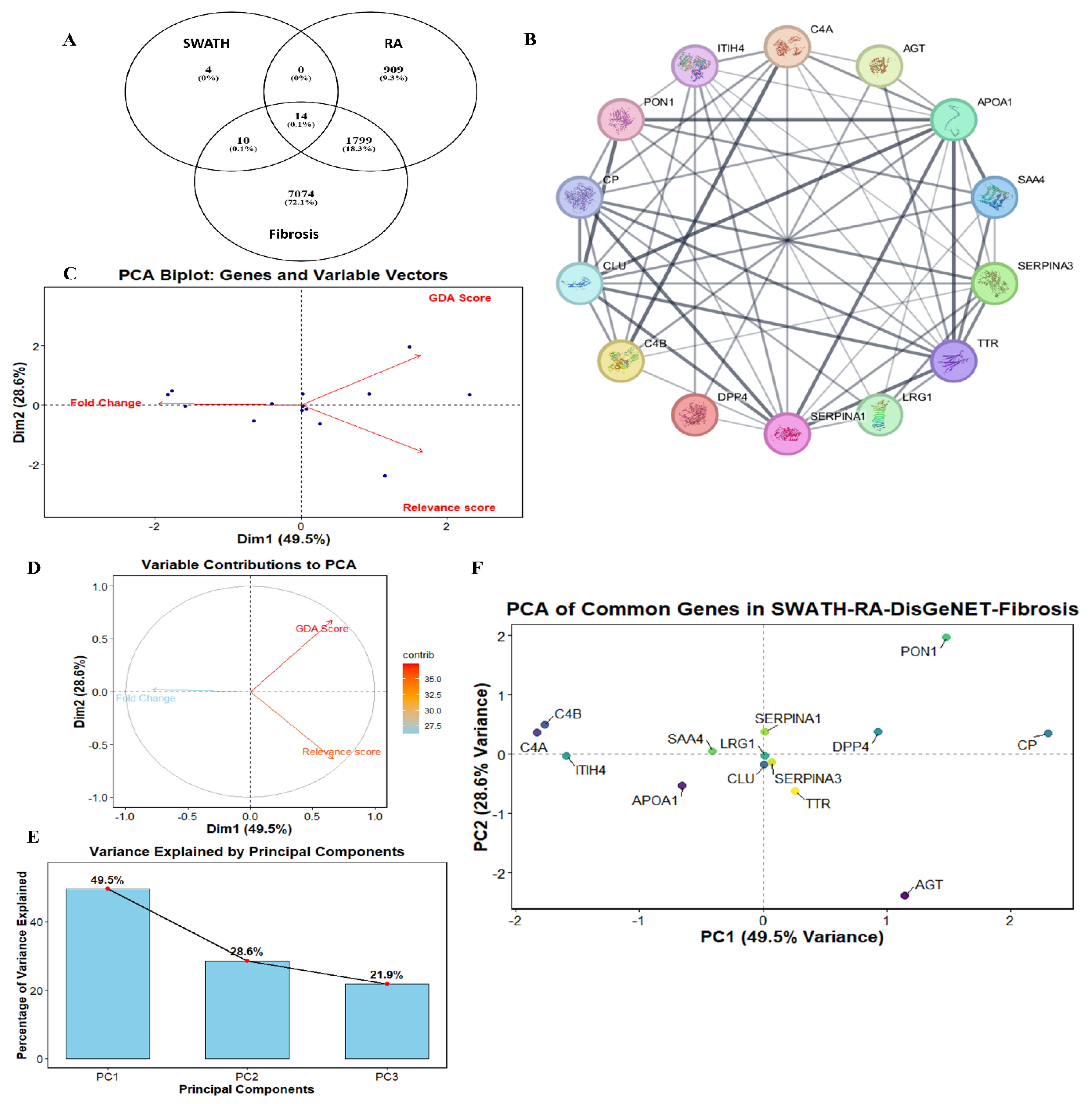
3.1. Identification of Common Proteins and PCA Analysis
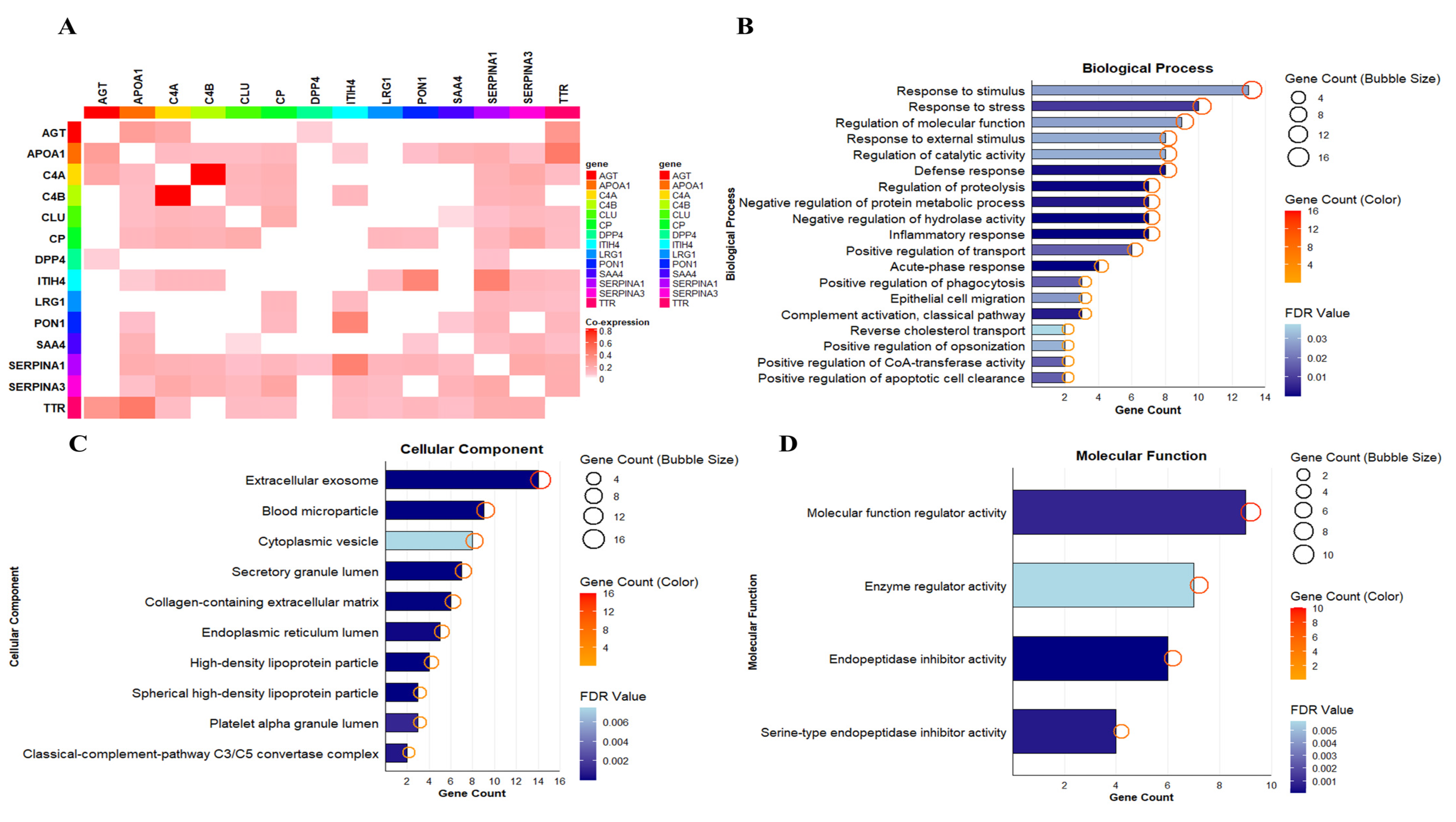
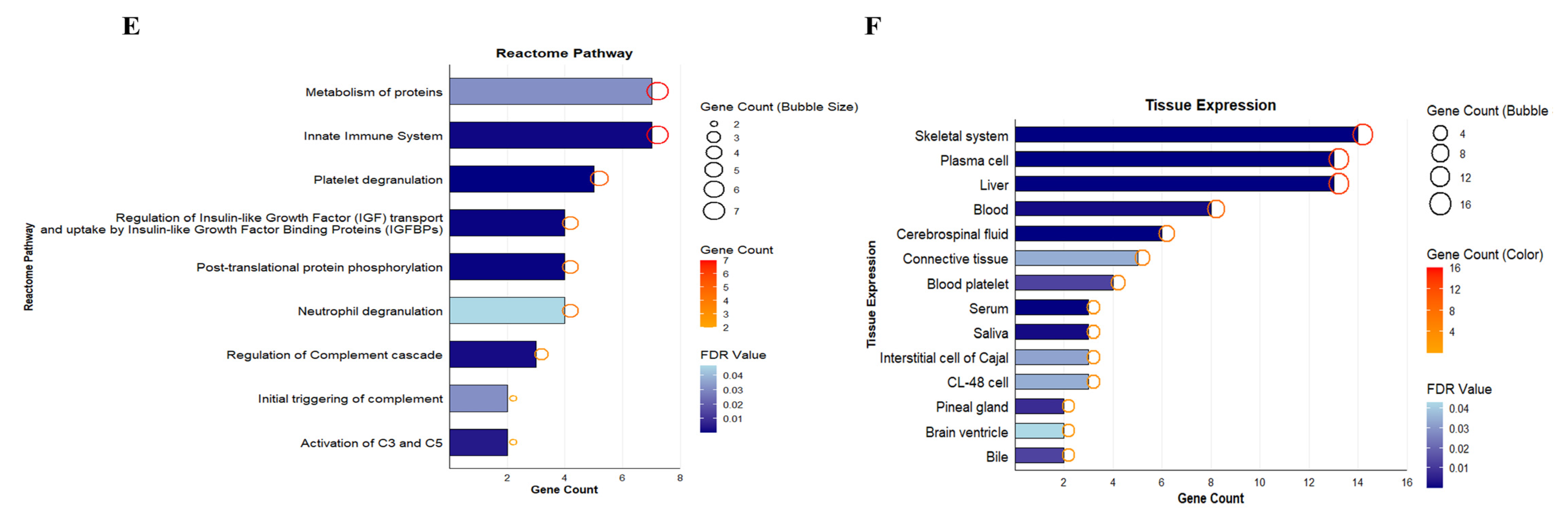
3.2. Co-Expression and Functional Enrichment Analysis
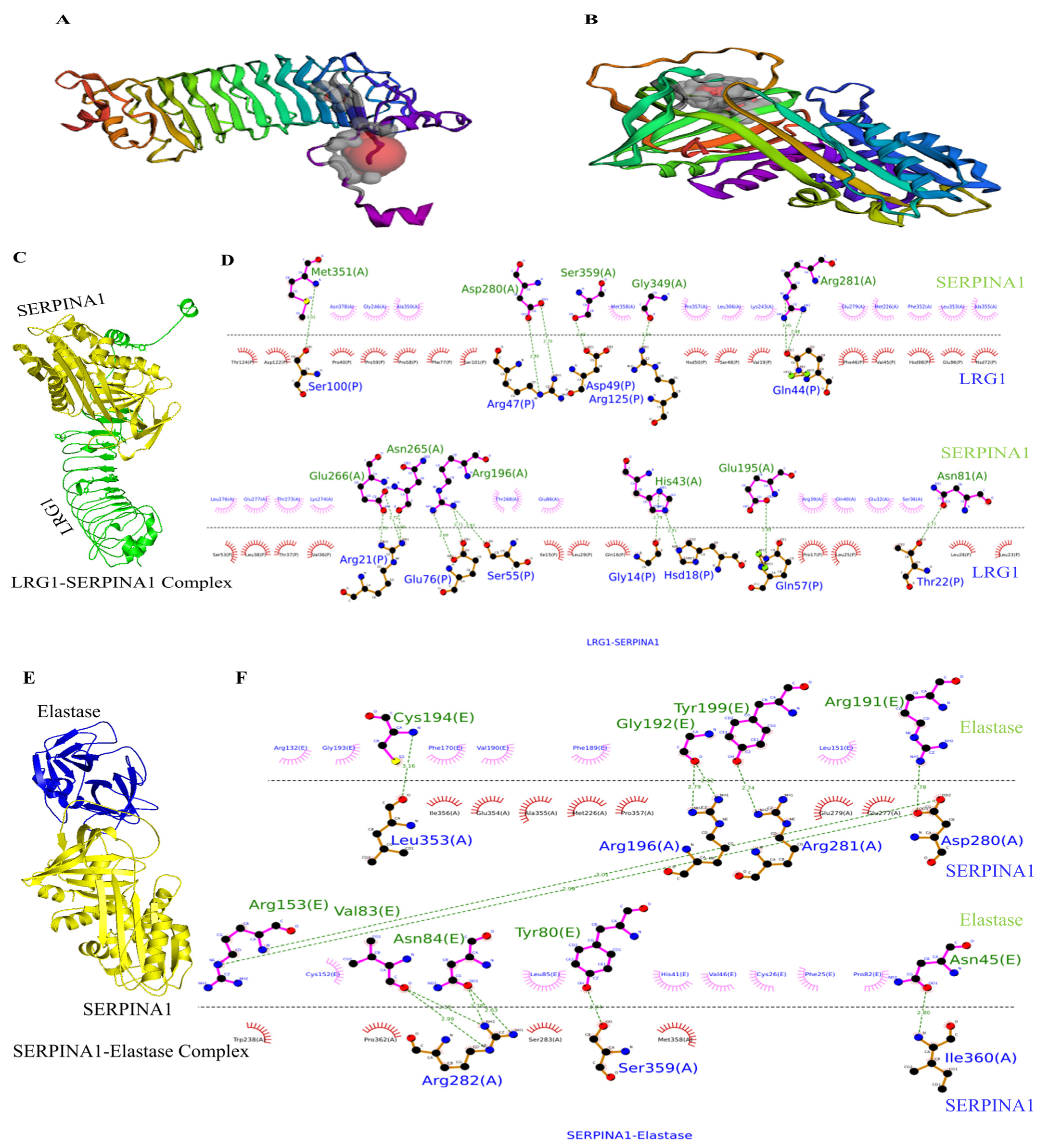
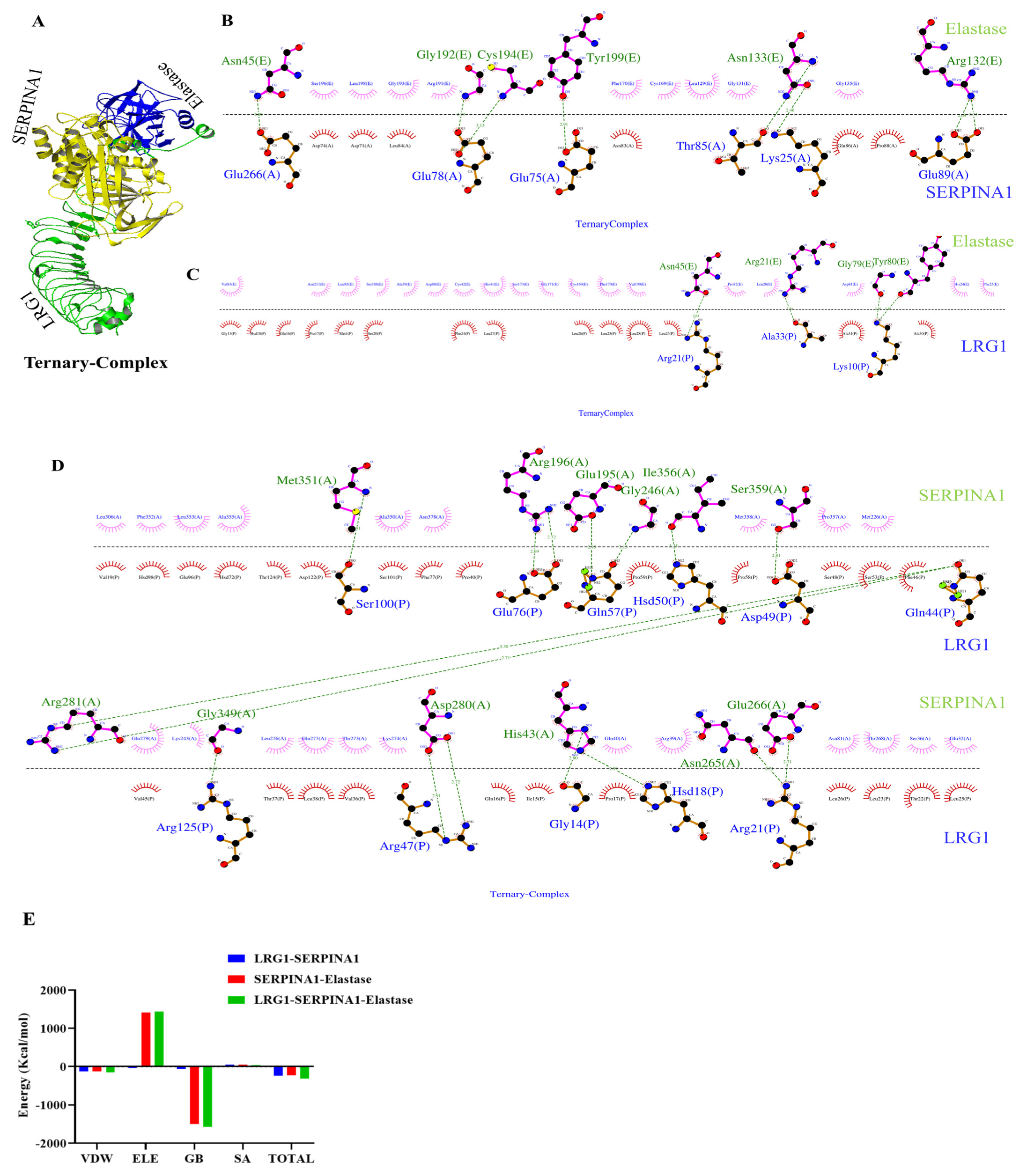
3.3. Protein–Protein Docking Analysis
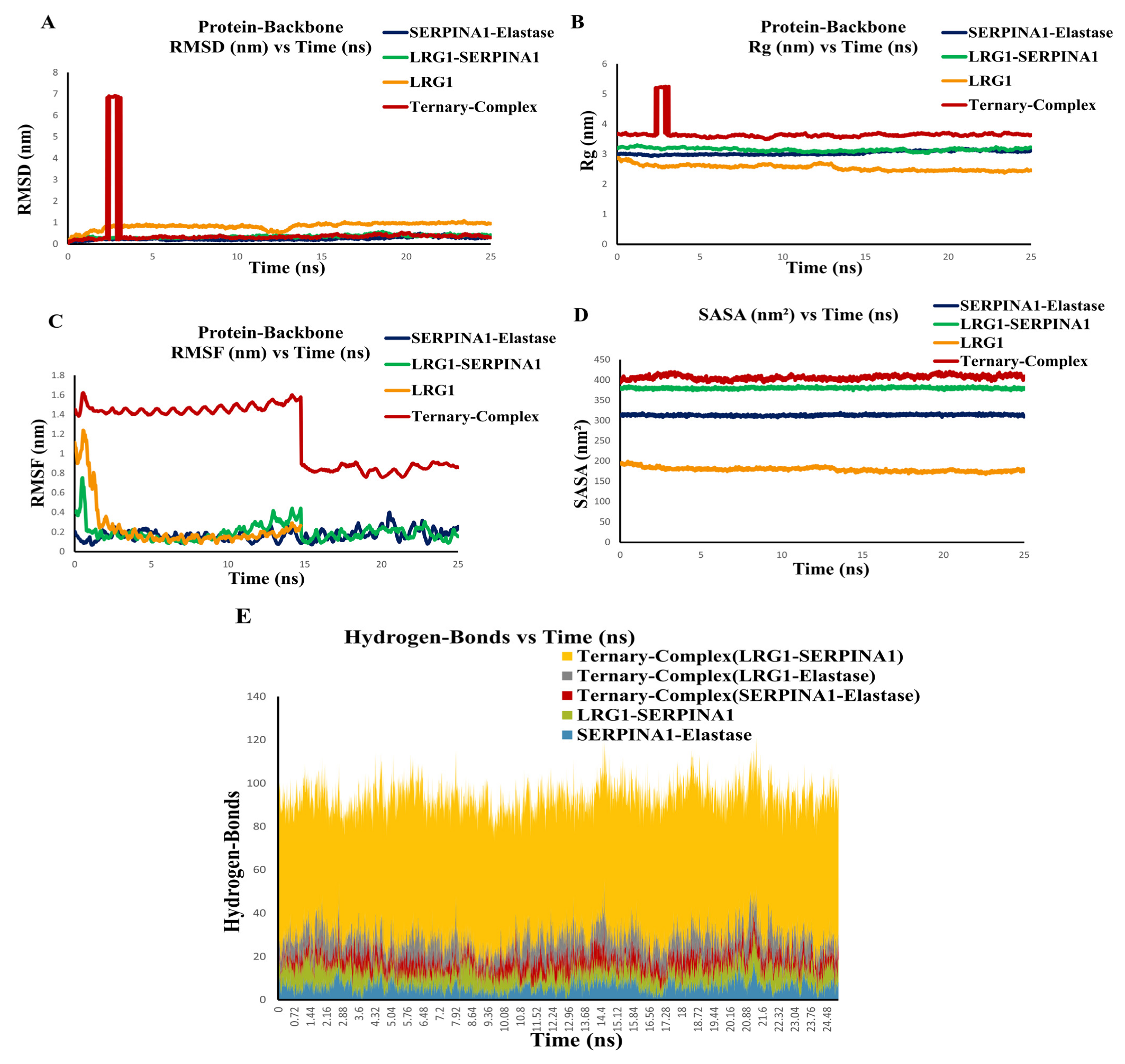
3.4. MD-Simulation
4. Discussion
5. Conclusions
6. Limitations
Supplementary Materials
Author Contributions
Funding
Institutional Review Board Statement
Informed Consent Statement
Data Availability Statement
Acknowledgments
Conflicts of Interest
Abbreviations
References
- Saquib, M.; Agnihotri, P.; Sarkar, A.; Malik, S.; Mann, S.; Chakraborty, D.; Joshi, L.; Malhotra, R.; Biswas, S. Functional Significance of miR-4693-5p in Targeting HIF1α and Its Link to Rheumatoid Arthritis Pathogenesis. Non-Coding RNA 2024, 10, 22. [Google Scholar] [CrossRef]
- Monu; Agnihotri, P.; Saquib, M.; Sarkar, A.; Chakraborty, D.; Kumar, U.; Biswas, S. Transthyretin and Receptor for Advanced Glycation End Product’s Differential Levels Associated with the Pathogenesis of Rheumatoid Arthritis. J. Inflamm. Res. 2021, 14, 5581. [Google Scholar] [CrossRef]
- Chauhan, K.; Jandu, J.S.; Brent, L.H.; Al-Dhahir, M.A. Rheumatoid Arthritis. In Rosen Barkin’s 5-Minute Emergency Medicine Consult, 5th ed.; LWW: Philadelphia, PA, USA, 2023. [Google Scholar] [CrossRef]
- Chen, L.; Lu, Y.; Chu, Y.; Xie, J.; Ding, W.; Wang, F. Tissue factor expression in rheumatoid synovium: A potential role in pannus invasion of rheumatoid arthritis. Acta Histochem. 2013, 115, 692–697. [Google Scholar] [CrossRef] [PubMed]
- Koenders, M.I.; Joosten, L.A.B.; Van Den Berg, W.B. Potential new targets in arthritis therapy: Interleukin (IL)-17 and its relation to tumour necrosis factor and IL-1 in experimental arthritis. Ann. Rheum. Dis. 2006, 65, iii29. [Google Scholar] [CrossRef] [PubMed]
- Müller-Ladner, U.; Ospelt, C.; Gay, S.; Distler, O.; Pap, T. Cells of the synovium in rheumatoid arthritis. Synovial fibroblasts. Arthritis Res. Ther. 2007, 9, 223. [Google Scholar] [CrossRef] [PubMed]
- Zheng, Y.; Wei, K.; Jiang, P.; Zhao, J.; Shan, Y.; Shi, Y.; Zhao, F.; Chang, C.; Li, Y.; Zhou, M.; et al. Macrophage polarization in rheumatoid arthritis: Signaling pathways, metabolic reprogramming, and crosstalk with synovial fibroblasts. Front. Immunol. 2024, 15, 1394108. [Google Scholar] [CrossRef]
- Zhao, F.; Hu, Z.; Li, G.; Liu, M.; Huang, Q.; Ai, K.; Cai, X. Angiogenesis in rheumatoid Arthritis: Pathological characterization, pathogenic mechanisms, and nano-targeted therapeutic strategies. Bioact. Mater. 2025, 50, 603–639. [Google Scholar] [CrossRef]
- Mousavi, M.J.; Karami, J.; Aslani, S.; Tahmasebi, M.N.; Vaziri, A.S.; Jamshidi, A.; Farhadi, E.; Mahmoudi, M. Transformation of fibroblast-like synoviocytes in rheumatoid arthritis; from a friend to foe. Autoimmun. Highlights 2021, 12, 3. [Google Scholar] [CrossRef]
- Scutellari, P.N.; Orzincolo, C. Rheumatoid arthritis: Sequences. Eur. J. Radiol. 1998, 27, S31–S38. [Google Scholar] [CrossRef]
- Madsen, S.F.; Madsen, S.S.; Madrid, A.S.; Andersen, M.R.; Bay-Jensen, A.-C.; Thudium, C.S. Fibrotic remodeling in joint diseases: Induction and inhibition of fibrosis in fibroblast-like synoviocytes. Transl. Med. Commun. 2024, 9, 18. [Google Scholar] [CrossRef]
- Song, H.Y.; Kim, M.Y.; Kim, K.H.; Lee, I.H.; Shin, S.H.; Lee, J.S.; Kim, J.H. Synovial fluid of patients with rheumatoid arthritis induces α-smooth muscle actin in human adipose tissue-derived mesenchymal stem cells through a TGF-β1-dependent mechanism. Exp. Mol. Med. 2010, 42, 565. [Google Scholar] [CrossRef] [PubMed]
- Guo, Q.; Wang, Y.; Xu, D.; Nossent, J.; Pavlos, N.J.; Xu, J. Rheumatoid arthritis: Pathological mechanisms and modern pharmacologic therapies. Bone Res. 2018, 6, 15. [Google Scholar] [CrossRef] [PubMed]
- Smolen, J.S.; Schoels, M.M.; Nishimoto, N.; Breedveld, F.C.; Burmester, G.R.; Dougados, M.; Emery, P.; Ferraccioli, G.; Gabay, C.; Gibofsky, A.; et al. Consensus statement on blocking the effects of interleukin-6 and in particular by interleukin-6 receptor inhibition in rheumatoid arthritis and other inflammatory conditions. Ann. Rheum. Dis. 2012, 72, 482–492. [Google Scholar] [CrossRef] [PubMed]
- Jain, A.; Singh, J.A. Harms of Tumor Necrosis Factor Inhibitors in Rheumatic diseases: A focused Systematic Review of the Literature. Immunotherapy 2013, 5, 265–299. [Google Scholar] [CrossRef]
- Ding, H.; Chen, J.; Qin, J.; Chen, R.; Yi, Z. TGF-β-induced α-SMA expression is mediated by C/EBPβ acetylation in human alveolar epithelial cells. Mol. Med. 2021, 27, 22. [Google Scholar] [CrossRef]
- Gonzalo-Gil, E.; Criado, G.; Santiago, B.; Dotor, J.; Pablos, J.L.; Galindo, M. Transforming growth factor (TGF)-β signalling is increased in rheumatoid synovium but TGF-β blockade does not modify experimental arthritis. Clin. Exp. Immunol. 2013, 174, 245–255. [Google Scholar] [CrossRef]
- Agnihotri, P.; Saquib, M.; Joshi, L.; Malik, S.; Chakraborty, D.; Sarkar, A.; Kumar, U.; Biswas, S. Integrative metabolomic-proteomic analysis uncovers a new therapeutic approach in targeting rheumatoid arthritis. Arthritis Res. Ther. 2024, 26, 227. [Google Scholar] [CrossRef]
- Naka, T.; Fujimoto, M. LRG is a novel inflammatory marker clinically useful for the evaluation of disease activity in rheumatoid arthritis and inflammatory bowel disease. Immunol. Med. 2018, 41, 62–67. [Google Scholar] [CrossRef]
- Urushima, H.; Fujimoto, M.; Mishima, T.; Ohkawara, T.; Honda, H.; Lee, H.; Kawahata, H.; Serada, S.; Naka, T. Leucine-rich alpha 2 glycoprotein promotes Th17 differentiation and collagen-induced arthritis in mice through enhancement of TGF-β-Smad2 signaling in naïve helper T cells. Arthritis Res. Ther. 2017, 191, 137. [Google Scholar] [CrossRef]
- Joshi, L.; Chakraborty, D.; Kumar, V.; Biswas, S. ITIH4 in Rheumatoid Arthritis Pathogenesis: Network Pharmacology and Molecular Docking Analysis Identify CXCR4 as a Potential Receptor. Pathophysiology 2024, 31, 514–530. [Google Scholar] [CrossRef]
- Huang, D.; Huang, S.; Gao, Y.; Yin, L.; Pan, L.; Xu, W. Identification of a Four-Gene Signature Based on Metal Metabolism for Alzheimer’s Disease Diagnosis. Genes 2025, 16, 1287. [Google Scholar] [CrossRef] [PubMed]
- Agnihotri, P.; Deka, H.; Chakraborty, D.; Monu; Saquib, M.; Kumar, U.; Biswas, S. Anti-inflammatory potential of selective small compounds by targeting TNF-α & NF-kB signaling: A comprehensive molecular docking and simulation study. J. Biomol. Struct. Dyn. 2023, 41, 13815–13828. [Google Scholar] [CrossRef] [PubMed]
- Pomeroy, A.E.; Bixler, A.; Chen, S.H.; Kerr, J.E.; Levine, T.D.; Ryder, E.F. “R” U ready?: A case study using R to analyze changes in gene expression during evolution. Front. Educ. 2024, 9, 1379910. [Google Scholar] [CrossRef]
- Szklarczyk, D.; Kirsch, R.; Koutrouli, M.; Nastou, K.; Mehryary, F.; Hachilif, R.; Gable, A.L.; Fang, T.; Doncheva, N.T.; Pyysalo, S.; et al. The STRING database in 2023: Protein-protein association networks and functional enrichment analyses for any sequenced genome of interest. Nucleic Acids Res. 2023, 51, D638–D646. [Google Scholar] [CrossRef]
- Honorato, R.V.; Trellet, M.E.; Jiménez-García, B.; Schaarschmidt, J.J.; Giulini, M.; Reys, V.; Koukos, P.I.; Rodrigues, J.P.G.L.M.; Karaca, E.; van Zundert, G.C.P.; et al. The HADDOCK2.4 web server for integrative modeling of biomolecular complexes. Nat. Protoc. 2024, 19, 3219–3241. [Google Scholar] [CrossRef]
- Chongruchiroj, S.; Kongsawadworakul, P.; Nukoolkarn, V.; Jaturanpinyo, M.; Nosoong-Noen, W.; Chingunpitak, J.; Pratuangdejkul, J. Protein-Protein Docking and Molecular Dynamics Simulations Elucidated Binding Modes of FUBI-p62 UBA Complex. Thai J. Pharm. Sci. 2015, 39, 171–179. [Google Scholar] [CrossRef]
- Sen, D.; Debnath, P.; Debnath, B.; Bhaumik, S.; Debnath, S. Identification of potential inhibitors of SARS-CoV-2 main protease and spike receptor from 10 important spices through structure-based virtual screening and molecular dynamic study. J. Biomol. Struct. Dyn. 2022, 40, 941–962. [Google Scholar] [CrossRef]
- Sen, D.; Debnath, B.; Debnath, P.; Debnath, S.; Zaki, M.E.A.; Masand, V.H. Identification of potential edible mushroom as SARS-CoV-2 main protease inhibitor using rational drug designing approach. Sci. Rep. 2022, 12, 1503. [Google Scholar] [CrossRef]
- Verma, M.; Panchal, N.S.; Yadav, P.K. Exploring Chemical Space to Identify Partial Binders Against hMPV Nucleocapsid Protein. J. Cell. Biochem. 2025, 126, e30618. [Google Scholar] [CrossRef]
- Kaneva, M.K.; Muley, M.M.; Krustev, E.; Reid, A.R.; Souza, P.R.; Dell’Accio, F.; McDougall, J.J.; Perretti, M. Alpha-1-antitrypsin reduces inflammation and exerts chondroprotection in arthritis. FASEB J. 2021, 35, e21472. [Google Scholar] [CrossRef]
- De Mezer, M.; Rogaliński, J.; Przewoźny, S.; Chojnicki, M.; Niepolski, L.; Sobieska, M.; Przystańska, A. SERPINA3: Stimulator or Inhibitor of Pathological Changes. Biomedicines 2023, 11, 156. [Google Scholar] [CrossRef]
- Falgarone, G.; Essabbani, A.; Dumont, F.; Cagnard, N.; Mistou, S.; Chiocchia, G. Implication of clusterin in TNF-α response of rheumatoid synovitis: Lesson from in vitro knock-down of clusterin in human synovial fibroblast cells. Physiol. Genom. 2012, 44, 229–235. [Google Scholar] [CrossRef]
- Sarkar, A.; Chakraborty, D.; Kumar, V.; Malhotra, R.; Biswas, S. Upregulation of leucine-rich alpha-2 glycoprotein: A key regulator of inflammation and joint fibrosis in patients with severe knee osteoarthritis. Front. Immunol. 2022, 13, 1028994. [Google Scholar] [CrossRef]
- Fan, L.; Qi, Y.; Yang, X.; Xu, Y.; Zhang, Y.; Wang, L.; Zhu, A.; Zhang, L.; Song, J.; Du, S.; et al. Targeted degradation of LRG1 to attenuate renal fibrosis. Asian J. Pharm. Sci. 2024, 19, 100941. [Google Scholar] [CrossRef] [PubMed]
- Mahajan, M.A.; Samuels, H.H. Nuclear receptor coactivator/coregulator NCoA6(NRC) is a pleiotropic coregulator involved in transcription, cell survival, growth and development. Nucl. Recept. Signal. 2008, 6, e002. [Google Scholar] [CrossRef] [PubMed]
- Xiang, S.; Yang, L.; He, Y.; Ding, F.; Qiao, S.; Su, Z.; Chen, Z.; Lu, A.; Li, F. Alpha-1 Antitrypsin as a Regulatory Protease Inhibitor Modulating Inflammation and Shaping the Tumor Microenvironment in Cancer. Cells 2025, 14, 88. [Google Scholar] [CrossRef] [PubMed]
- Clarke, J. NETs directly injure cartilage in RA. Nat. Rev. Rheumatol. 2020, 16, 410. [Google Scholar] [CrossRef]
- Hollingsworth, S.A.; Dror, R.O. Molecular dynamics simulation for all. Neuron 2018, 99, 1129. [Google Scholar] [CrossRef]
- Kavallaris, M.; Marshall, G.M. Proteomics and disease: Opportunities and challenges. Med. J. Aust. 2005, 182, 575–579. [Google Scholar] [CrossRef]
- Ha, Y.J.; Kang, E.J.; Lee, S.W.; Lee, S.K.; Park, Y.B.; Song, J.S.; Choi, S.T. Usefulness of Serum Leucine-Rich Alpha-2 Glycoprotein as a Disease Activity Biomarker in Patients with Rheumatoid Arthritis. J. Korean Med. Sci. 2014, 29, 1199. [Google Scholar] [CrossRef]
- Park, H.N.; Song, M.J.; Choi, Y.E.; Lee, D.H.; Chung, J.H.; Lee, S.T. LRG1 Promotes ECM Integrity by Activating the TGF-β Signaling Pathway in Fibroblasts. Int. J. Mol. Sci. 2023, 24, 12445. [Google Scholar] [CrossRef]
- Akhmetshina, A.; Palumbo, K.; Dees, C.; Bergmann, C.; Venalis, P.; Zerr, P.; Horn, A.; Kireva, T.; Beyer, C.; Zwerina, J.; et al. Activation of canonical Wnt signalling is required for TGF-β-mediated fibrosis. Nat. Commun. 2012, 3, 735. [Google Scholar] [CrossRef]
- Dicamillo, S.J.; Carreras, I.; Panchenko, M.V.; Stone, P.J.; Nugent, M.A.; Foster, J.A.; Panchenko, M.P. Elastase-released Epidermal Growth Factor Recruits Epidermal Growth Factor Receptor and Extracellular Signal-regulated Kinases to Down-regulate Tropoelastin mRNA in Lung Fibroblasts. J. Biol. Chem. 2002, 277, 18938–18946. [Google Scholar] [CrossRef]
- Korkmaz, B.; Horwitz, M.S.; Jenne, D.E.; Gauthier, F. Neutrophil Elastase, Proteinase 3, and Cathepsin G as Therapeutic Targets in Human Diseases. Pharmacol. Rev. 2010, 62, 726–759. [Google Scholar] [CrossRef]


Disclaimer/Publisher’s Note: The statements, opinions and data contained in all publications are solely those of the individual author(s) and contributor(s) and not of MDPI and/or the editor(s). MDPI and/or the editor(s) disclaim responsibility for any injury to people or property resulting from any ideas, methods, instructions or products referred to in the content. |
© 2026 by the authors. Licensee MDPI, Basel, Switzerland. This article is an open access article distributed under the terms and conditions of the Creative Commons Attribution (CC BY) license.
Share and Cite
Hussain, T.; Verma, M.; Biswas, S. Do LRG1–SERPINA1 Interactions Modulate Fibrotic and Inflammatory Signatures in Rheumatoid Arthritis? A Proteomic and In Silico Investigation. Pathophysiology 2026, 33, 16. https://doi.org/10.3390/pathophysiology33010016
Hussain T, Verma M, Biswas S. Do LRG1–SERPINA1 Interactions Modulate Fibrotic and Inflammatory Signatures in Rheumatoid Arthritis? A Proteomic and In Silico Investigation. Pathophysiology. 2026; 33(1):16. https://doi.org/10.3390/pathophysiology33010016
Chicago/Turabian StyleHussain, Talib, Monika Verma, and Sagarika Biswas. 2026. "Do LRG1–SERPINA1 Interactions Modulate Fibrotic and Inflammatory Signatures in Rheumatoid Arthritis? A Proteomic and In Silico Investigation" Pathophysiology 33, no. 1: 16. https://doi.org/10.3390/pathophysiology33010016
APA StyleHussain, T., Verma, M., & Biswas, S. (2026). Do LRG1–SERPINA1 Interactions Modulate Fibrotic and Inflammatory Signatures in Rheumatoid Arthritis? A Proteomic and In Silico Investigation. Pathophysiology, 33(1), 16. https://doi.org/10.3390/pathophysiology33010016