A Case of Primary EGFR T790M Mutation in Treatment-Naïve Advanced NSCLC: Clinical and Molecular Implications
by
 , ,
, ,
George Dimitrov
1,2,* ,
,
Elitsa Kraevska
2,3, 
Vladislav Nankov
2,4,
Victoria Hlebarova
2 and
Savelina Popovska
2,3 1
Department of Medical Oncology, Medical University of Sofia, University Hospital “Tsaritsa Yoanna”, 1527 Sofia, Bulgaria
2
Centre of Competence in Personalized Medicine, 3D and Telemedicine, Robotic Assisted and Minimally Invasive Surgery—Leonardo da Vinci, 5800 Pleven, Bulgaria
3
Department of Pathoanatomy, Medical University of Pleven, 5800 Pleven, Bulgaria
4
Department of Anatomy, Histology, Cytology and Biology, Medical University of Pleven, 5800 Pleven, Bulgaria
*
Author to whom correspondence should be addressed.
Curr. Oncol. 2026, 33(5), 244; https://doi.org/10.3390/curroncol33050244
Submission received: 5 March 2026
/
Revised: 16 April 2026
/
Accepted: 23 April 2026
/
Published: 24 April 2026
(This article belongs to the Special Issue Advances in Thoracic Oncology: From Surgical Innovation to Outcome Optimization)
Simple Summary
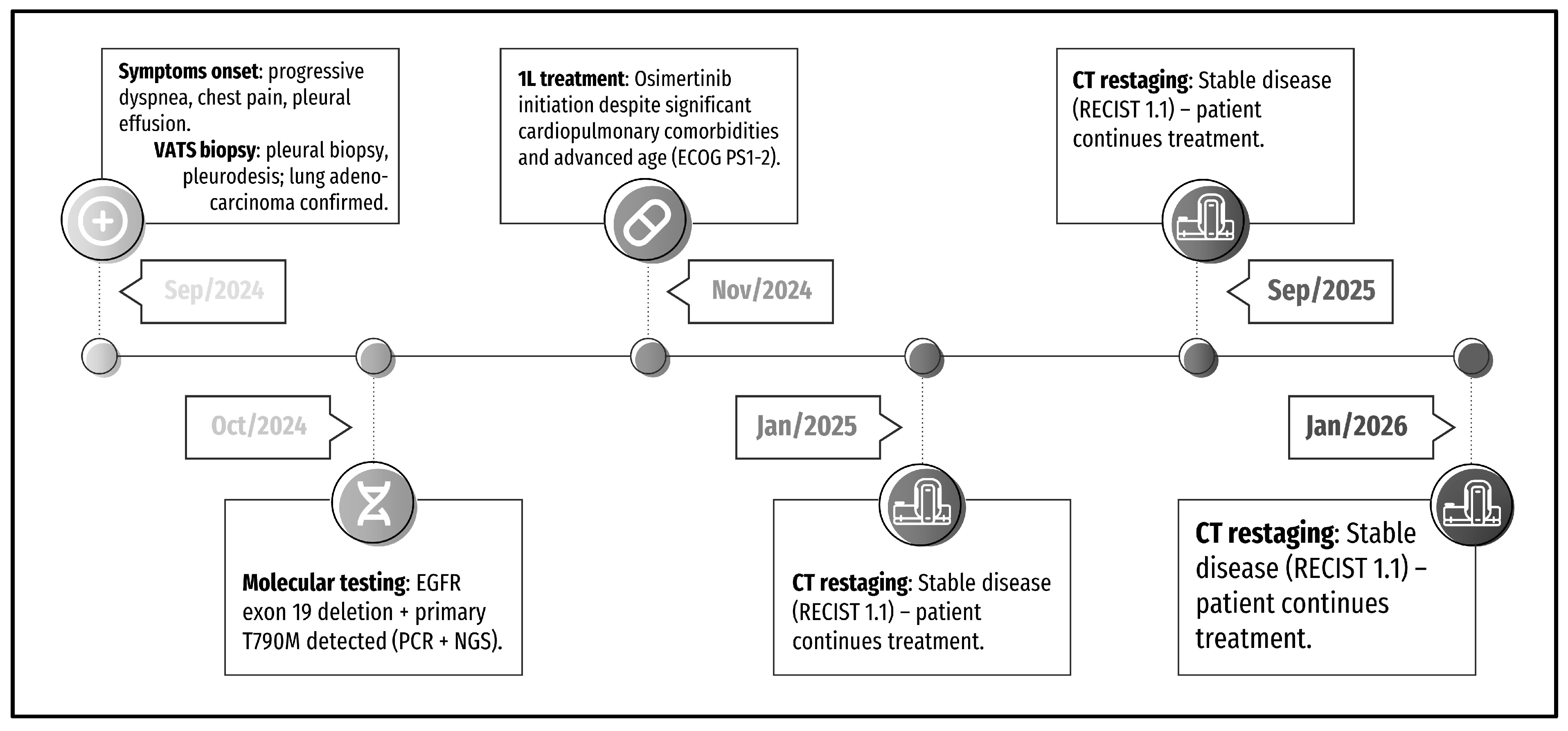
The primary EGFR T790M mutation is a rare change in non-small cell lung cancer and is usually associated with resistance to older targeted therapies. There is limited guidance on how to treat patients with this mutation, especially elderly individuals with other health problems. We report a case of an older patient with advanced lung cancer carrying both an EGFR exon 19 deletion and a primary T790M mutation. Given the patient’s age and significant heart and lung conditions, the tumor board recommended first-line treatment with osimertinib 80 mg/day alone. The therapy was well tolerated, improved the patient’s daily functioning, and kept the disease stable for several months without serious side effects. This case shows that even frail, older patients can benefit from personalized targeted treatment, highlighting the value of molecular testing and careful clinical assessment to guide therapy.
Abstract
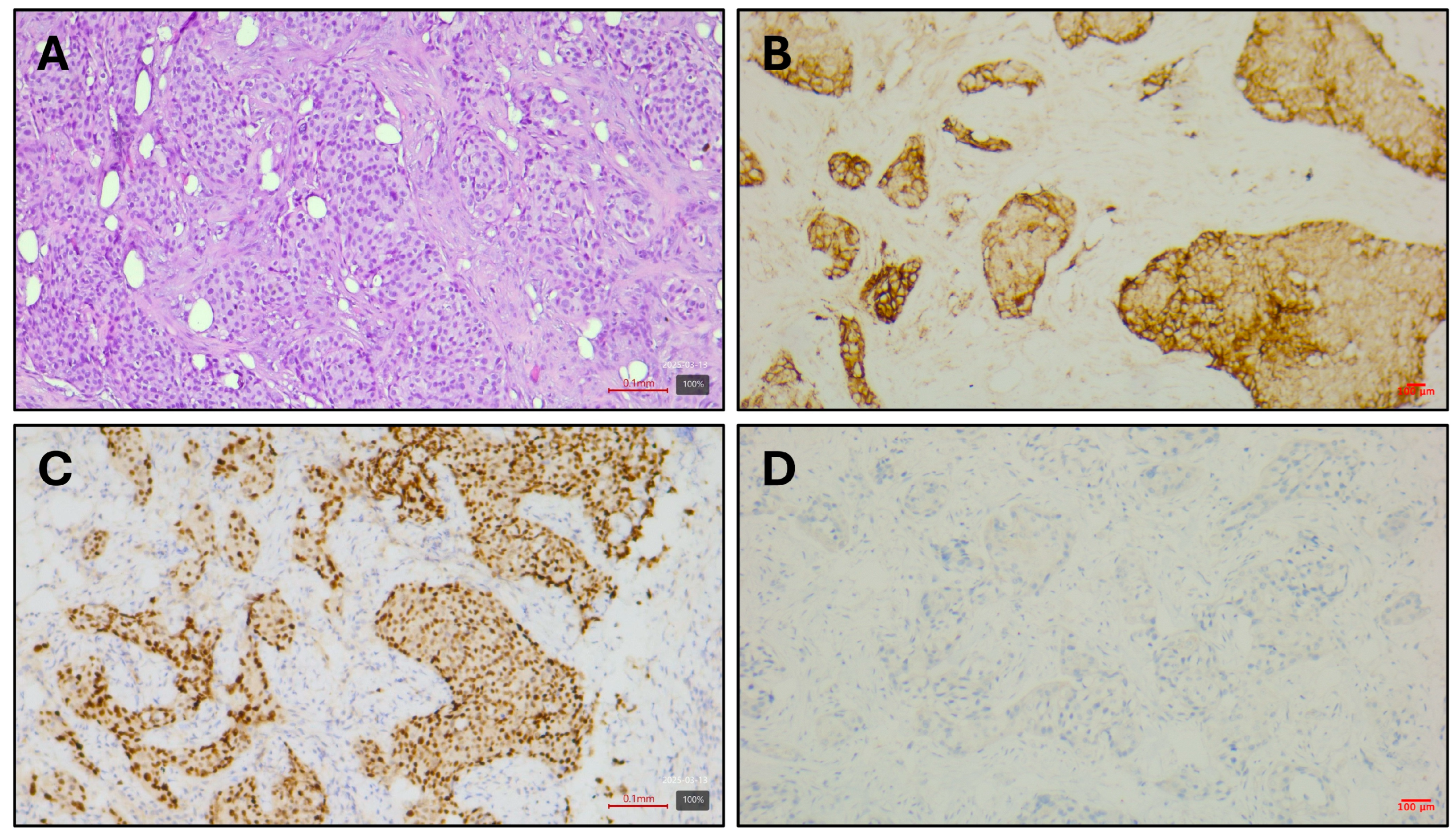
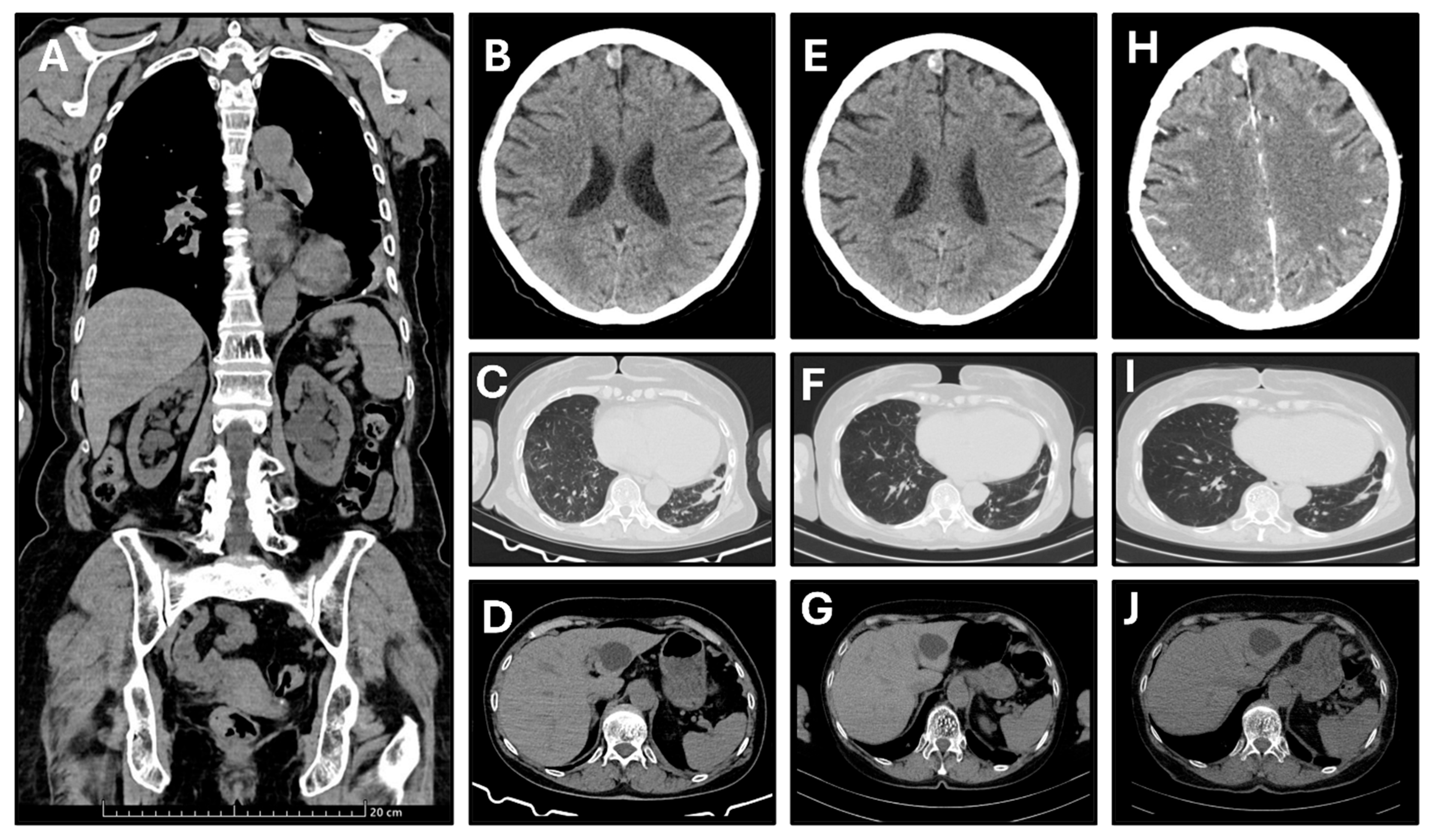
Background: De novo (pretreatment) EGFR T790M mutation is a rare molecular finding in non-small cell lung cancer (NSCLC) and has historically been associated with primary resistance to first- and second-generation EGFR tyrosine kinase inhibitors (TKIs). Evidence guiding optimal first-line management in this subgroup, particularly in elderly patients, remains limited. Case Presentation: We report a case of an elderly patient with treatment-naïve advanced non-squamous NSCLC harboring a concurrent EGFR exon 19 deletion and de novo EGFR T790M mutation. Given the patient’s age, significant cardiopulmonary comorbidities, and absence of rapidly progressive disease, a multidisciplinary tumor board recommended first-line osimertinib monotherapy. Treatment was well tolerated, with rapid improvement in performance status and no clinically significant adverse events. Serial contrast-enhanced CT restaging demonstrated RECIST 1.1–defined stable disease, without development of new visceral, nodal, cerebral, or osseous metastases. The patient remains on continuous osimertinib therapy with durable disease control at the time of manuscript preparation. Conclusion: Primary EGFR T790M–positive NSCLC can achieve durable disease control with first-line osimertinib, even in advanced age. While combination strategies with chemotherapy may improve survival outcomes in selected patients, treatment decisions in elderly individuals must carefully balance efficacy, toxicity, and quality of life. Chronological age alone should not discourage active targeted treatment when guided by molecular profiling and comprehensive clinical assessment.
Keywords:
NSCLC; geriatric oncology; oncogene addicted cancer; primary T790M