Article

Real-World Outcomes of First-Line Cetuximab and Platinum-Based Chemotherapy in Recurrent and/or Metastatic Head and Neck Squamous Cell Carcinoma: A Multicenter Observational Study and Literature Review


1
Department of Oncology, University Hospital Center Zagreb, 10000 Zagreb, Croatia
2
School of Medicine, University of Zagreb, 10000 Zagreb, Croatia
3
Medikol Polyclinic, 10000 Zagreb, Croatia
4
Department of Oncology, University Hospital Center Osijek, 31000 Osijek, Croatia
5
Faculty of Medicine, Josip Juraj Strossmayer University of Osijek, 31000 Osijek, Croatia
6
Faculty of Dental Medicine and Health, University of Osijek, 31000 Osijek, Croatia
7
Department of Oncology and Radiotherapy, University Hospital Center Split, 21000 Split, Croatia
8
Division of Medical Oncology, University Hospital for Tumors, Sestre Milosrdnice University Hospital Center, 10000 Zagreb, Croatia
9
Department of Oncology and Nuclear Medicine, Sestre Milosrdnice University Hospital Center, 10000 Zagreb, Croatia
10
School of Dental Medicine, University of Zagreb, 10000 Zagreb, Croatia
11
Tumor Clinic, Clinical Hospital Center Rijeka, 51000 Rijeka, Croatia
12
School of Medicine, University of Rijeka, 51000 Rijeka, Croatia
13
Special Hospital Radiochirurgia Zagreb, 10431 Sveta Nedjelja, Croatia
*
Author to whom correspondence should be addressed.
Curr. Oncol. 2026, 33(4), 183; https://doi.org/10.3390/curroncol33040183
Submission received: 11 February 2026 / Revised: 18 March 2026 / Accepted: 21 March 2026 / Published: 26 March 2026
(This article belongs to the Section Head and Neck Oncology)

Simple Summary

Recurrent or metastatic head and neck squamous cell carcinoma is a challenging disease that often requires systemic treatment. For many years, the combination of chemotherapy and the targeted agent cetuximab (the EXTREME regimen) was the standard first-line therapy. Although immunotherapy is now widely used, not all patients are eligible for it, and access may be limited in some countries. In this multicenter retrospective study, we analyzed the outcomes of 217 patients in Croatia treated with cetuximab-based chemotherapy before immunotherapy became available. The treatment provided meaningful survival and disease control with acceptable toxicity in routine clinical practice. Patients who developed cetuximab-related skin rash had better progression-free survival. These findings support the continued use of cetuximab-based chemotherapy as a treatment option for selected patients with recurrent or metastatic head and neck cancer.

Abstract

Background: The EXTREME regimen (cetuximab with cisplatin/carboplatin and 5-fluorouracil) has long been a standard first-line treatment for recurrent and/or metastatic head and neck squamous cell carcinoma (R/M HNSCC), particularly in patients ineligible for immunotherapy. However, real-world evidence remains limited, especially in regions with delayed access to novel therapies. Methods: We conducted a retrospective, multicenter study of 217 patients with R/M HNSCC treated with cetuximab-based chemotherapy at six Croatian oncology centers between 2016 and 2022, prior to reimbursement of pembrolizumab. The primary endpoint was overall survival (OS); secondary endpoints included progression-free survival (PFS), response rates, and safety. Results: The majority (91%) received the EXTREME regimen. Median OS was 14 months (95% CI, 12–17), and median PFS was 6.2 months (95% CI, 6.0–7.2). Objective response rate was 21%, and disease control rate was 63%. Cetuximab-induced rash correlated with longer PFS. Grade ≥ 3 toxicity occurred in 18.9% of patients. No treatment-related deaths were observed. Conclusion: In routine clinical practice, cetuximab combined with platinum-based chemotherapy remains an effective and well-tolerated first-line treatment for R/M HNSCC, particularly in patients who are ineligible for immunotherapy or with PD-L1–negative tumors. These findings support its continued use in appropriately selected patients.

1. Introduction

Although the incidence and mortality rates of head and neck cancers (HNC) vary across regions worldwide, globally, HNC ranks as the seventh most commonly diagnosed cancer, accounting for more than 890,000 new cases and approximately 450,000 deaths annually [1]. Approximately 90% of these cases are squamous cell carcinomas (SCC). At diagnosis, around 10–15% of patients present with distant metastases, and about 50% have locoregionally advanced disease [2]. Among those with locoregional disease, 50–60% will eventually develop recurrent and/or metastatic disease. Only about 20% of patients are eligible for local treatment modalities. Therefore, systemic therapy remains the cornerstone of management.
From 2008 to 2019, the EXTREME regimen, comprising 5-fluorouracil, cisplatin or carboplatin, and cetuximab, was the standard first-line treatment for patients with recurrent and/or metastatic head and neck squamous cell carcinoma (R/M HNSCC) [3]. In European populations, this regimen significantly improved overall survival (OS) (median 10.1 vs. 7.4 months; hazard ratio [HR] 0.80, 95% confidence interval [CI] 0.64–0.99), progression-free survival (PFS) (5.6 vs. 3.3 months; HR 0.54, 95% CI 0.43–0.67), overall response rate (ORR) (36% vs. 20%), and disease control rate (DCR) (81% vs. 60%) compared with chemotherapy alone. These findings were subsequently corroborated 13 years later in the phase III CHANGE-2 trial conducted in a Chinese population [4]. The efficacy of the EXTREME regimen using carboplatin was further supported by the phase II ELAN-FIT study in fit patients aged 70 years or older, demonstrating an ORR of 40%, DCR of 71.8%, median OS of 15.8 months, and median PFS of 6.0 months [5].
In a phase II study, Guigay et al. [6] compared the TPEx regimen (docetaxel, cisplatin, and cetuximab) with EXTREME. Although no significant differences in efficacy were observed (median OS 14.5 vs. 13.4 months; median PFS 6.0 vs. 6.2 months; ORR 57% vs. 59%), the TPEx regimen was associated with significantly lower rates of grade ≥ 3 toxicity (81% vs. 93%).
Furthermore, HPV status has been shown to have prognostic significance [7,8]. Its predictive role in cetuximab therapy, however, remains inconclusive, although some studies suggest higher objective response rates in HPV-negative compared with HPV-positive tumors [9].
Soulieres et al. [10] demonstrated no significant differences in safety or efficacy between the two cetuximab formulations, and that cisplatin and carboplatin are complementary, with the choice depending on the patient’s clinical profile.
Following the results of the KEYNOTE-048 trial, the U.S. Food and Drug Administration (FDA) approved pembrolizumab in 2019 as monotherapy for tumors expressing programmed death-ligand 1 (PD-L1; combined positive score, CPS ≥ 1) or in combination with 5-fluorouracil and cisplatin/carboplatin regardless of PD-L1 status, as the preferred first-line treatment for R/M HNSCC [11,12]. In the same year, the European Commission approved pembrolizumab, either as monotherapy or in combination with chemotherapy, for PD-L1–positive tumors [13].
Nevertheless, the EXTREME regimen remains a recommended option for patients with PD-L1–negative tumors or those ineligible for immunotherapy, as outlined in the European Society for Medical Oncology (ESMO) guidelines [14]. It also continues to be listed as a treatment option in the current National Comprehensive Cancer Network (NCCN) guidelines [15]. Additionally, the EXTREME regimen may still be preferred in cases involving large or rapidly progressing tumors [16].
However, access to newly approved therapies varies considerably between countries [17]. In Croatia, cetuximab was not reimbursed until 2016, and pembrolizumab, either as monotherapy or in combination with chemotherapy, for first-line treatment of PD-L1 CPS ≥ 1 tumors was not reimbursed until November 2023.
The use of cetuximab in combination with chemotherapy as a first-line treatment for R/M HNSCC has been evaluated in numerous real-world studies aiming to assess treatment outcomes in routine clinical practice outside the controlled settings of clinical trials [3,4,5,6,18,19,20,21,22,23,24,25,26,27,28,29,30,31,32,33,34,35,36,37,38,39,40,41,42] (Table S1). Here, we present the results of a retrospective, observational study conducted across six oncology centers in Croatia.

2. Materials and Methods

2.1. Data Sources

We conducted a retrospective analysis of data from 217 patients with R/M HNSCC who received first-line treatment with cetuximab in combination with cisplatin-based chemotherapy at the six largest oncology centers in Croatia between March 2016 and January 2022. During this period, pembrolizumab had not yet been approved for the treatment of R/M HNSCC in Croatia. Eligible patients were aged 18 years or older, had histologically confirmed squamous cell carcinoma of the oral cavity, oropharynx, larynx, or hypopharynx, and were deemed ineligible for local therapy.
Data were extracted from hospital information systems and included the following variables: sex, age, Eastern Cooperative Oncology Group (ECOG) performance status, primary tumor site, extent of disease, p16 status (for oropharyngeal cancer), prior treatment in the non-metastatic setting, chemotherapy regimen, type of platinum compound administered, number of chemotherapy cycles, number of cetuximab administrations during maintenance, total number of cetuximab administrations during first-line treatment, time to first radiological assessment, duration of therapy, treatment response, date of disease progression, date of last follow-up or death, and treatment-related adverse events.
p16 status, serving as a surrogate marker for HPV in oropharyngeal cancers, was evaluated in archived tumor tissues by immunohistochemistry using the Ventana Roche CINtec® p16 Histology assay, Tucson, AZ, USA (lot no. N14733). Tumors exhibiting p16 overexpression in ≥70% of tumor cells were classified as positive.
Patients treated according to the EXTREME protocol received 5-fluorouracil (1000 mg/m2/day for 4 days) and cisplatin (100 mg/m2 on day 1) or carboplatin (target area under the curve [AUC] 5 on day 1) every 21 days, for up to six cycles. Cetuximab was administered on days 1, 8, and 15 (400 mg/m2 loading dose on day 1 of cycle 1, followed by 250 mg/m2 weekly). During the maintenance phase, cetuximab was administered either weekly at 250 mg/m2 in two centers or biweekly at 500 mg/m2 in four centers.
Patients treated according to the TPEx protocol received docetaxel (75 mg/m2) and cisplatin (75 mg/m2), both administered intravenously on day 1 of each 21-day cycle, for up to four cycles. Cetuximab was administered on days 1, 8, and 15 as described above. All patients in the TPEx group received prophylactic granulocyte colony-stimulating factor (G-CSF) support during each cycle. During maintenance phase, cetuximab was administered at a dose of 500 mg/m2 every two weeks.
Tumor response was assessed using multi-slice computed tomography (MSCT) (Siemens, Erlangen, Germany) of the head and neck, as well as the chest and abdomen. The cut-off date for follow-up was 30 August 2024.

2.2. Endpoints

The primary endpoint was OS, defined as the time from initiation of first-line treatment for R/M HNSCC to death from any cause. For patients still alive at the time of analysis, OS was censored at the date of last follow-up. PFS was defined as the time from initiation of treatment to radiographic disease progression or death from any cause, whichever occurred first.
Treatment response was evaluated according to the Response Evaluation Criteria in Solid Tumors (RECIST), version 1.1 [43], and categorized as complete response (CR), partial response (PR), stable disease (SD), or progressive disease (PD). The ORR was defined as the proportion of patients achieving CR or PR, while the DCR was defined as the proportion of patients achieving CR, PR, or SD.
Adverse events were retrospectively extracted from patients’ medical records, including clinical notes, laboratory results, and treatment documentation. They were assessed according to the Common Terminology Criteria for Adverse Events (CTCAE) version 4.03 or 5.0 [44,45], depending on the period of treatment.

2.3. Ethical Considerations

All data were anonymized and centrally analyzed. The study was approved by the ethics committees of all participating institutions (Approval numbers: 02/013 AG, R1-398/2025, 2181-147/01-06/LJ.Z.-25-02, 251-29-11/3-24-20, 251-29-11/3-24-06, 2170-29-02/1-25-2) and was conducted in accordance with the principles of the Declaration of Helsinki [46]. Patient consent was waived due to the retrospective design of the study.

2.4. Statistical Analysis

OS and PFS were estimated using the Kaplan–Meier method. Differences between groups were compared using the log-rank test. All statistical tests were two-sided, with a p-value < 0.05 considered statistically significant. Subgroup analyses were conducted to evaluate the influence of baseline characteristics and treatment-related variables on OS and PFS using a Cox proportional hazards regression model. Hazard ratios (HRs) and corresponding 95% confidence intervals (CIs) were calculated and presented using forest plots. All statistical analyses were performed using the R statistical computing and graphics environment Version 452.

3. Results

3.1. Patient Characteristics and Treatment Summary

The median follow-up time was 59 months (95% CI, 57–not reached (NR)). The median age of patients was 61 years (range, 30–88), with a predominance of males (84%). Most patients had an ECOG performance status of 0–1 (91.7%) (Table 1). The majority presented with metastatic disease at the time of treatment initiation (82.5%). Prior chemotherapy in the curative setting had been administered in 51.6% of patients. The EXTREME regimen was used as the first-line treatment of advanced disease in 91% of cases. Cisplatin could not be administered in 13.8% of patients, who were instead treated with carboplatin. Among the 84 patients with oropharyngeal cancer p16 status was positive in 8 patients (9.5%), negative in 25 (29.8%), and unknown in 51 (60.7%).
The median number of chemotherapy cycles administered was 6 (interquartile range (IQR), 4–6). Maintenance therapy was initiated in 119 patients (55%), with a median of 8 cetuximab administrations during the maintenance phase (IQR, 6–14). Among these patients, 52 (44%) received weekly dosing, while 67 patients (56%) received biweekly dosing. The median total number of cetuximab administrations (including both chemotherapy cycles and maintenance therapy) was 18 (IQR, 10–26).
The median duration of total therapy was 22 weeks (IQR, 15–34), and the median duration of maintenance therapy was 7 weeks (IQR, 1–20).

3.2. Efficacy of Treatment

A total of 201 patients underwent radiological evaluation of disease status, with a median time to first assessment being 12 weeks (IQR, 10–18). ORR and DCR are summarized in Table 2.
The median OS was 14 months (95% CI, 12–17), and the median PFS was 6.2 months (95% CI, 6.0–7.2) (Figure 1a,b).
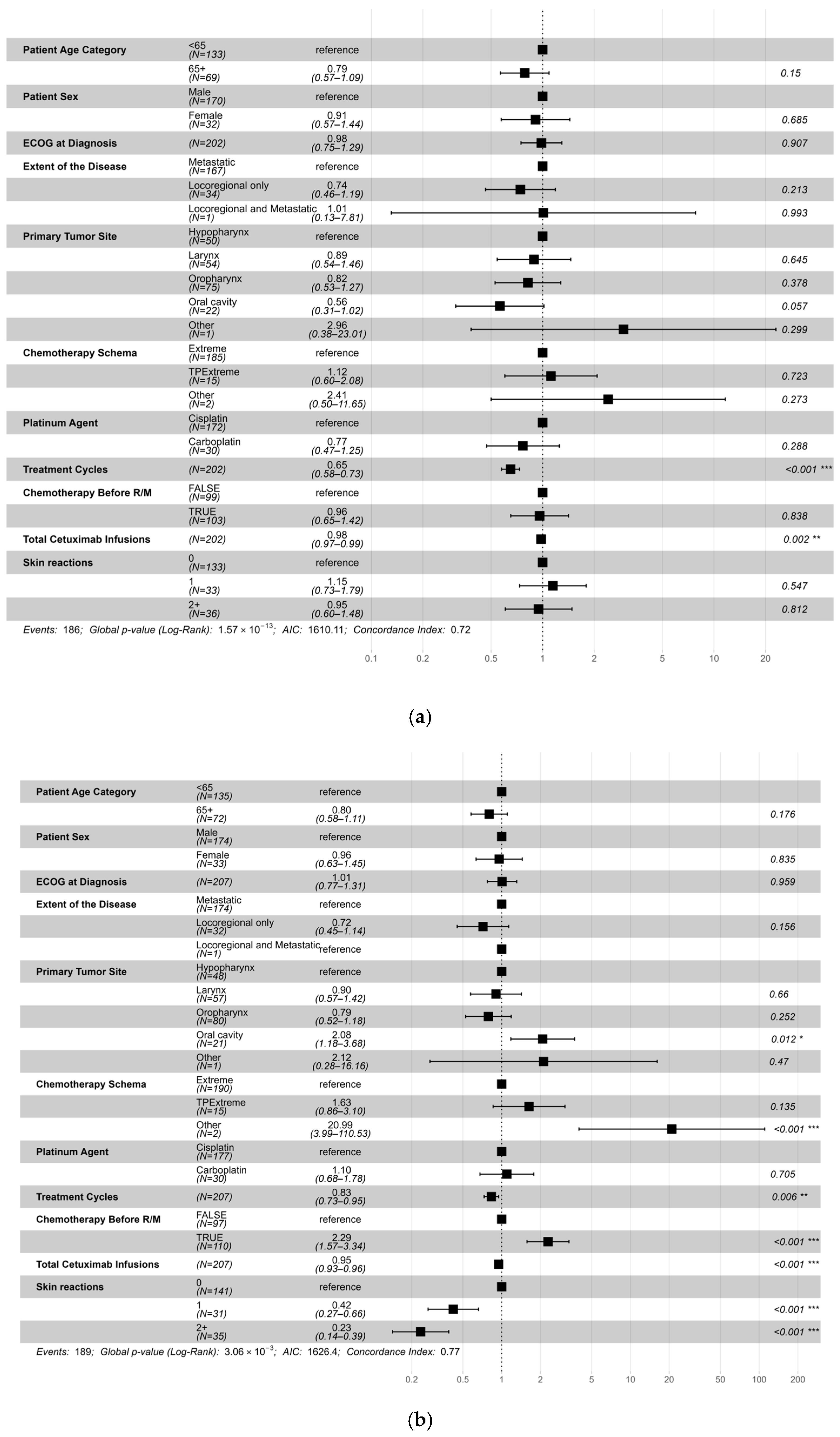
Subgroup analyses revealed that both the number of chemotherapy cycles and the number of cetuximab administrations had a statistically significant impact on OS and PFS. Furthermore, patients who developed a prominent cetuximab-induced skin rash experienced improved PFS, with the magnitude of benefit correlating with the severity of the rash (Figure 2a,b). In contrast, patients who had previously received chemotherapy in the curative setting, as well as those with primary tumors in the oral cavity, demonstrated significantly shorter PFS. In our cohort, survival did not differ between patients receiving weekly and biweekly cetuximab as maintenance therapy (p = 0.3).

3.3. Safety

Grade 3 and 4 adverse events occurred in 18.9% of patients (Table 3), with grade 4 toxicities observed in 10 patients (4.6%). Cetuximab therapy was permanently discontinued in six patients: five cases (2.3%) due to grade 4 infusion-related reactions, and one case (0.5%) due to grade 4 fatigue. No treatment-related deaths were reported.

4. Discussion

In this retrospective, multicenter cohort study, we present real-world outcomes of 217 Croatian patients with R/M HNSCC, the majority of whom received the EXTREME regimen as first-line therapy. Only 6.9% of patients were treated with the TPEx regimen. Consistent with the study by Guigay et al. [6], no significant differences in efficacy were observed between the EXTREME and TPEx regimens. However, it is important to note that the number of patients receiving the TPEx protocol was very limited, and this study was not designed to compare treatment regimens.
The baseline characteristics of our cohort were generally comparable to those reported by Vermorken et al. [3], with several notable differences. Our population included a higher proportion of older patients (≥65 years: 35% vs. 18%), a lower proportion with recurrent-only disease at the time of treatment initiation (16.1% vs. 53%), and a higher proportion treated with cisplatin (85% vs. 67%). In subgroup analyses, neither age, extent of disease nor choice of platinum agent significantly influenced treatment efficacy. Consistent with our observations, both the EXTREME and Soulieres et al. trials demonstrated that substituting cisplatin with carboplatin did not compromise outcomes [3,10]. Similarly, in the DIRECT trial [19], neither age nor extent of disease at baseline adversely affected overall survival.
Regarding primary tumor site, our study demonstrated the highest OS among patients with oral cavity carcinoma, consistent with findings from Vermorken et al. [3], Gao et al. [4], and Pontes et al. [27]. However, in contrast to these studies, PFS for patients with oral cavity tumors was shorter than for other tumor sites in our cohort. This discrepancy may reflect differences in tumor biology, response dynamics, or variability in imaging interpretation.
Maintenance therapy was administered to 55% of patients, similar to the rates reported in the CHANGE-2 and DIRECT trials, and higher than in the EXTREME trial (45%) [3,4,19]. Our findings support previous studies indicating that weekly and biweekly cetuximab maintenance regimens offer comparable efficacy and safety [6,19,20,42].
The median OS of 14 months observed in our study exceeded that reported in the EXTREME trial, and falls within the range of outcomes reported in other randomized and real-world studies. Reported median OS with first-line cetuximab-containing chemotherapy for R/M HNSCC ranges from 7.9 to 17.9 months [3,4,5,6,18,19,20,21,22,23,24,25,26,27,28,29,30,31,32,33,34,35,36,37,38,39,40,41,42]. Similarly, our median PFS of 6.2 months aligns with results from most published studies.
Consistent with Pontes et al. [27], we observed that cetuximab-induced skin rash was associated with improved PFS. Skin rash and mucositis were the most frequently reported adverse events.
Grade 3–4 adverse events occurred in 18.9% of patients, comparable to the 25% reported by Falco et al. [35], but notably lower than the rates observed in the EXTREME (82%) and CHANGE-2 (61.3%) trials [3,4]. However, the incidence of infusion reactions was 3.2%, similar to that reported in the aforementioned two randomized phase III studies. It should be acknowledged that, due to the retrospective design, under-reporting of adverse events, particularly low-grade events, may have occurred.
Compared with the patient population treated with the two cetuximab formulations in Soulieres et al. [10], our cohort included a higher proportion of patients with metastatic disease, while age distribution and male predominance were similar. The overall frequency of adverse events of all grades was comparable, with the most common toxicities in our population being rash, mucositis, and nausea, whereas in the study by Soulieres et al. [10], nausea, fatigue, and hypomagnesemia were most frequently observed. The incidence of higher-grade adverse events was also very similar between the two cohorts.
Although ORR and DCR vary considerably across studies, phase III trials have consistently reported an ORR of approximately 36% for the EXTREME regimen [3,11,47,48]. In contrast, our real-world cohort demonstrated a lower ORR of 21% and a DCR of 63%. Notably, time to treatment failure (TTF) was comparable to that reported in the EXTREME trial, whereas the duration of response in our cohort was nearly twice as long (11.0 vs. 5.6 months). This apparent discrepancy may be attributed to several factors. Although the RECIST v1.1 criteria were applied, response assessments were conducted by different radiologists across participating institutions, and baseline and follow-up imaging were not consistently conducted at the same facility. Additionally, imaging protocols were not standardized across centers, although MSCT was the most frequently used modality. Response evaluations were based on local assessments without centralized radiologic review, which may have introduced inter-observer variability.
Moreover, the higher proportion of patients with metastatic disease at treatment initiation, compared with those with recurrent-only disease, may have contributed to the lower ORR observed. Importantly, real-world evidence studies are inherently prone to multiple sources of bias, including outcome misclassification and non-standardized assessment schedules, as highlighted by methodological frameworks such as APPRAISE [49]. These limitations may lead to an underestimation of categorical endpoints such as ORR in observational settings, whereas time-to-event outcomes, including TTF and duration of response, are generally more robust indicators of clinical benefit.
Other limitations of our study include its retrospective design, lack of data on the relative dose intensity of cetuximab, and missing information regarding second-line therapy, including whether it was administered and which agents were used, all of which may have influenced observed treatment outcomes. In Croatia, nivolumab was approved as the only immunotherapy for second-line treatment of R/M HNSCC in July 2022. Therefore, during the period covered by this study, taxane monotherapy was likely the most commonly used second-line regimen.
In addition, PD-L1 status was not routinely assessed, considering the time period covered by this study, during which pembrolizumab was not yet available in Croatia as a first-line treatment option for R/M HNSCC.
The absence of p16 status data for up to 61% of patients with oropharyngeal cancer represents a notable limitation of this study, as it may have influenced OS, PFS, and ORR.
p16 status is well recognized as a prognostic factor for oropharyngeal carcinomas [8]. Some studies have also suggested that p16-negative tumors may exhibit higher ORR [9]. This challenge is not unique to our cohort and is commonly observed in real-world studies. Among the 19 studies summarized in Table S1, p16 status was reported in only five [31,33,34,37,41], and in two of these, more than 60% of patients had unknown p16 status [31,41].
Notably, the KESTREL study showed that patients who received second-line immunotherapy following first-line EXTREME treatment had longer median OS than those who did not receive immunotherapy or did not receive any second-line treatment [50].
These results should be interpreted within the context of the current post-KEYNOTE 048 treatment landscape. Since pembrolizumab, alone or in combination with chemotherapy, established as a standard first-line therapy for PD-L1 positive R/M HNSCC, cetuximab-based regimens are now primarily relevant for patients who are ineligible for immunotherapy or have PD-L1 negative tumors. Our findings offer real-world evidence supporting the continued effectiveness and tolerability of the EXTREME regimen in these patient populations.

5. Conclusions

Cetuximab in combination with platinum-based chemotherapy has demonstrated efficacy not only in well-controlled phase III clinical trials but also in numerous real-world studies. While pembrolizumab, either alone or in combination with chemotherapy, is now the preferred first-line treatment for tumors with PD-L1 CPS ≥ 1, cetuximab plus platinum-based chemotherapy remains a recommended first-line option for patients with PD-L1 negative tumors and those ineligible for immunotherapy. As treatment decisions increasingly rely on patient- and tumor-specific factors, a central challenge in managing R/M HNSCC is optimizing therapy sequencing to maximize clinical outcomes.
Our findings reinforce that first-line treatment with cetuximab and platinum-based chemotherapy continues to be a viable and effective option for a subset of patients, providing manageable toxicity and acceptable adverse event profiles in routine clinical practice.

Supplementary Materials

The following supporting information can be downloaded at: https://www.mdpi.com/article/10.3390/curroncol33040183/s1, Table S1: Randomized and real-world studies of cetuximab in the first-line treatment of recurrent and/or metastatic squamous cell carcinoma of the head and neck.

Author Contributions

Conceptualization: Z.R. and V.B.; methodology: Z.R. and V.B.; validation: Z.R. and V.B.; formal analysis: Z.R. and V.B.; investigation: S.V., Z.K., S.E., J.V., L.V., M.P., D.K. and D.V.; resources: S.V., Z.K., S.E., J.V., L.V., M.P., D.K. and D.V.; data curation: Z.R., S.V., Z.K., S.E., J.V., L.V., M.P., D.K. and D.V.; writing—original draft preparation: Z.R. and V.B.; writing—review and editing: S.V., Z.K., S.E., J.V., L.V., M.P., D.K. and D.V.; visualization: Z.R. and V.B.; supervision; Z.R.; project administration: Z.R. and V.B. All authors have read and agreed to the published version of the manuscript.

Funding

This research received no external funding.

Institutional Review Board Statement

The study was conducted in accordance with the Declaration of Helsinki, and approved by the Ethics Committees of all participating institutions: University Hospital Center Zagreb, protocol code: 02/013 AG, date of approval: 4 November 2024; University Hospital Center Osijek, protocol code: R1-398/2025, date of approval: 17 January 2025; University Hospital Center Split, protocol code: 2181-147/01-06/LJ.Z.-25-02, date of approval: 29 September 2025; University Hospital for Tumors, Sestre milosrdnice University Hospital Center, protocol code 251-29-11/3-24-20, date of approval: 12 November 2024; Sestre milosrdnice University Hospital Center, protocol code: 251-29-11/3-24-06, date of approval: 12 November 2024; University Hospital Center Rijeka, protocol code: 2170-29-02/1-25-2, date of approval: 24 January 2025.

Informed Consent Statement

Patient consent was waived due to the retrospective nature of the study.

Data Availability Statement

The data presented in this study are available upon request from the corresponding author. The data are not publicly available due to privacy and ethical restrictions.

Acknowledgments

We thank Kristian Vlahoviček. Faculty of Science, University of Zagreb for help with statistical analysis and figure preparation.

Conflicts of Interest

The authors declare no conflicts of interest.

Abbreviations

The following abbreviations are used in this manuscript:
R/M HNSCCRecurrent/Metastatic head and neck squamous cell carcinoma
OSOverall survivalDirectory of open access journals
PFSProgression-free survivalThree letter acronym
ORRObjective response rateLinear dichroism

References

  1. Bray, F.; Laversanne, M.; Sung, H.; Ferlay, J.; Siegel, R.L.; Soerjomataram, I.; Jemal, A. Global cancer statistics 2022: GLOBOCAN estimates of incidence and mortality worldwide for 36 cancers in 185 countries. CA Cancer J. Clin. 2024, 74, 229–263. [Google Scholar] [CrossRef]
  2. Barsouk, A.; Aluru, J.S.; Rawla, P.; Saginala, K.; Barsouk, A. Epidemiology, Risk Factors, and Prevention of Head and Neck Squamous Cell Carcinoma. Med. Sci. 2023, 11, 42. [Google Scholar] [CrossRef]
  3. Vermorken, J.B.; Mesia, R.; Rivera, F.; Remenar, E.; Kawecki, A.; Rottey, S.; Erfan, J.; Zabolotnyy, D.; Kienzer, H.-R.; Cupissol, D.; et al. Platinum-based chemotherapy plus cetuximab in head and neck cancer. N. Engl. J. Med. 2008, 359, 1116–1127. [Google Scholar] [PubMed]
  4. Guo, Y.; Luo, Y.; Zhang, Q.; Huang, X.; Li, Z.; Shen, L.; Feng, J.; Sun, Y.; Yang, K.; Ge, M.; et al. First-line treatment with chemotherapy plus cetuximab in Chinese patients with recurrent and/or metastatic squamous cell carcinoma of the head and neck: Efficacy and safety results of the randomised, phase III CHANGE-2 trial. Eur. J. Cancer 2021, 156, 35–45. [Google Scholar] [CrossRef] [PubMed]
  5. Guigay, J.; Le Caer, H.; Ferrand, F.R.; Geoffrois, L.; Saada-Bouzid, E.; Fayette, J.; Sire, C.; Cupissol, D.; Blot, E.; Guillet, P.; et al. Adapted EXTREME regimen in the first-line treatment of fit, older patients with recurrent or metastatic head and neck squamous cell carcinoma (ELAN-FIT): A multicentre, single-arm, phase 2 trial. Lancet Healthy Longev. 2024, 5, e392–e405. [Google Scholar] [CrossRef]
  6. Guigay, J.; Aupérin, A.; Fayette, J.; Saada-Bouzid, E.; Lafond, C.; Taberna, M.; Geoffrois, L.; Martin, L.; Capitain, O.; Cupissol, D.; et al. Cetuximab, docetaxel, and cisplatin versus platinum, fluorouracil, and cetuximab as first-line treatment in patients with recurrent or metastatic head and neck squamous-cell carcinoma (GORTEC 2014-01 TPExtreme): A multicentre, open-label, randomised, phase 2 trial. Lancet Oncol. 2021, 22, 463–475. [Google Scholar] [PubMed]
  7. Vermorken, J.B.; Psyrri, A.; Mesía, R.; Peyrade, F.; Beier, F.; de Blas, B.; Celik, I.; Licitra, L. Impact of tumor HPV status on outcome in patients with recurrent and/or metastatic squamous cell carcinoma of the head and neck receiving chemotherapy with or without cetuximab: Retrospective analysis of the phase III EXTREME trial. Ann. Oncol. 2014, 25, 801–807. [Google Scholar] [CrossRef]
  8. Argiris, A.; Li, S.; Ghebremichael, M.; Egloff, A.M.; Wang, L.; Forastiere, A.A.; Burtness, B.; Mehra, R. Prognostic significance of human papillomavirus in recurrent or metastatic head and neck cancer: An analysis of Eastern Cooperative Oncology Group trials. Ann. Oncol. 2014, 25, 1410–1416. [Google Scholar] [CrossRef]
  9. Zhang, S.; Zheng, M.; Nie, D.; Xu, L.; Tian, H.; Wang, M.; Liu, W.; Feng, Z.; Han, F. Efficacy of cetuximab plus PD-1 inhibitor differs by HPV status in head and neck squamous cell carcinoma: A systematic review and meta-analysis. J. Immunother. Cancer 2022, 10, e005158. [Google Scholar] [CrossRef] [PubMed]
  10. Soulières, D.; Aguilar, J.L.; Chen, E.; Misiukiewicz, K.; Ernst, S.; Lee, H.J.; Bryant, K.; He, S.; Obasaju, C.K.; Chang, S.-C.; et al. Cetuximab plus platinum-based chemotherapy in head and neck squamous cell carcinoma: A randomized, double-blind safety study comparing cetuximab produced from two manufacturing processes using the EXTREME study regimen. BMC Cancer 2016, 16, 1–10. [Google Scholar] [CrossRef]
  11. Burtness, B.; Harrington, K.J.; Greil, R.; Soulières, D.; Tahara, M.; de Castro, G., Jr.; Psyrri, A.; Basté, N.; Neupane, P.; Bratland, Å.; et al. Pembrolizumab alone or with chemotherapy versus cetuximab with chemotherapy for recurrent or metastatic squamous cell carcinoma of the head and neck (KEYNOTE-048): A randomised, open-label, phase 3 study. Lancet 2019, 394, 1915–1928. [Google Scholar] [CrossRef]
  12. FDA Resources for Information. Available online: https://www.fda.gov/drugs/resources-information-approved-drugs/fda-approves-pembrolizumab-first-line-treatment-head-and-neck-squamous-cell-carcinoma (accessed on 2 January 2026).
  13. MERCK. Available online: https://www.merck.com/news/european-commission-approves-two-new-regimens-of-mercks-keytruda-pembrolizumab-as-first-line-treatment-for-metastatic-or-unresectable-recurrent-head-and-neck-squamous-cell-carcinoma (accessed on 2 January 2026).
  14. Machiels, J.P.; René Leemans, C.; Golusinski, W.; Grau, C.; Licitra, L.; Gregoire, V. Squamous cell carcinoma of the oral cavity, larynx, oropharynx and hypopharynx: EHNS-ESMO-ESTRO Clinical Practice Guidelines for diagnosis, treatment and follow-up. Ann. Oncol. 2020, 31, 1462–1475. [Google Scholar] [CrossRef] [PubMed]
  15. National Comprehensive Cancer Network. National Comprehensive Cancer Network (NCCN) Guidelines. Head and Neck Cancers V1. 2026. Available online: https://www.nccn.org/professionals/physician_gls/pdf/head-and-neck.pdf (accessed on 2 January 2026).
  16. Szturz, P.; Fuereder, T.; Guo, Y.; Licitra, L.; Mesia, R.; Ivanyi, P.; Falco, A.; Tahara, M.; Solbes, M.N.; Venturini, F.; et al. Treatment decision-making factors and sequencing in recurrent and/or metastatic squamous cell carcinoma of the head and neck. Cancer Treat. Rev. 2025, 135, 102910. [Google Scholar] [CrossRef]
  17. Grünwald, V.; Chirovsky, D.; Cheung, W.Y.; Bertolini, F.; Ahn, M.-J.; Yang, M.-H.; Castro, G.; Berrocal, A.; Sjoquist, K.; Kuyas, H.; et al. Global treatment patterns and outcomes among patients with recurrent and/or metastatic head and neck squamous cell carcinoma: Results of the GLANCE H&N study. Oral Oncol. 2020, 102, 104526. [Google Scholar]
  18. Yoshino, T.; Hasegawa, Y.; Takahashi, S.; Monden, N.; Homma, A.; Okami, K.; Onozawa, Y.; Fujii, M.; Taguchi, T.; de Blas, B.; et al. Platinum-based chemotherapy plus cetuximab for the first-line treatment of Japanese patients with recurrent and/or metastatic squamous cell carcinoma of the head and neck: Results of a phase II trial. Jpn. J. Clin. Oncol. 2013, 43, 524–531. [Google Scholar] [CrossRef] [PubMed]
  19. Guigay, J.; Chamorey, E.; Lefebvre, G.; Rotarski, M.; Wagner, J.P.; Blot, E.; Alfonsi, M.; Seronde, A.; Schulten, J.; Peyrade, F.; et al. Observational, prospective, phase 4 study in patients with first-line recurrent and/or metastatic squamous cell carcinoma of the head and neck treated with cetuximab and platinum-based therapy: DIRECT. Cancer Rep. 2022, 5, e1467. [Google Scholar] [CrossRef] [PubMed]
  20. Klinghammer, K.; Gauler, T.; Dietz, A.; Grünwald, V.; Stöhlmacher, J.; Knipping, S.; Schroeder, M.; Guntinas-Lichius, O.; Frickhofen, N.; Lindeman, H.W.; et al. Cetuximab, fluorouracil and cisplatin with or without docetaxel for patients with recurrent and/or metastatic squamous cell carcinoma of the head and neck (CeFCiD): An open-label phase II randomised trial (AIO/IAG-KHT trial 1108). Eur. J. Cancer 2019, 122, 53–60. [Google Scholar] [CrossRef]
  21. Klinghammer, K.; Fayette, J.; Kawecki, A.; Dietz, A.; Schafhausen, P.; Folprecht, G.; Rottey, S.; Debourdeau, P.; Lavernia, J.; Jacobs, A.; et al. A randomized phase II study comparing the efficacy and safety of the glyco-optimized anti-EGFR antibody tomuzotuximab against cetuximab in patients with recurrent and/or metastatic squamous cell cancer of the head and neck—The RESGEX study. ESMO Open 2021, 6, 100242. [Google Scholar] [CrossRef]
  22. Bossi, P.; Miceli, R.; Locati, L.D.; Ferrari, D.; Vecchio, S.; Moretti, G.; Denaro, N.; Caponigro, F.; Airoldi, M.; Moro, C.; et al. A randomized, phase 2 study of cetuximab plus cisplatin with or without paclitaxel for the first-line treatment of patients with recurrent and/or metastatic squamous cell carcinoma of the head and neck. Ann. Oncol. 2017, 28, 2820–2826. [Google Scholar] [CrossRef] [PubMed]
  23. Tahara, M.; Kiyota, N.; Yokota, T.; Hasegawa, Y.; Muro, K.; Takahashi, S.; Onoe, T.; Homma, A.; Taguchi, J.; Suzuki, M.; et al. Phase II trial of combination treatment with paclitaxel, carboplatin and cetuximab (PCE) as first-line treatment in patients with recurrent and/or metastatic squamous cell carcinoma of the head and neck (CSPOR-HN02). Ann. Oncol. 2018, 29, 1004–1009. [Google Scholar] [CrossRef]
  24. Le Tourneau, C.; Ghiani, M.; Cau, M.C.; Depenni, R.; Ronzino, G.; Bonomo, P.; Montesarchio, V.; Leo, L.; Schulten, J.; Salmio, S.; et al. First-line cetuximab + platinum-based therapy for recurrent/metastatic head and neck squamous cell carcinoma: A real-world observational study-ENCORE. Cancer Rep. 2023, 6, e1804. [Google Scholar] [CrossRef] [PubMed]
  25. Hecht, M.; Hahn, D.; Wolber, P.; Hautmann, M.G.; Reichert, D.; Weniger, S.; Belka, C.; Bergmann, T.; Göhler, T.; Welslau, M.; et al. Prospective Real-World Multi-Center Study to Evaluate Progression-Free and Overall Survival of Radiotherapy with Cetuximab and Platinum-Based Chemotherapy with Cetuximab in Locally Recurrent Head and Neck Cancer. Cancers 2021, 13, 3413. [Google Scholar]
  26. Yazilitas, D.; Sahinli, H.; Saylam, G.; Imamoglu, G.I.; Korkmaz, M.H.; Bayir, O. Outcomes of Chemotherapy plus Cetuximab as First-line Treatment in Patients with Metastatic, Recurrent, Unresectable Head and Neck Cancers: Real-life Data. J. Coll. Physicians Surg. Pak. 2023, 33, 469–473. [Google Scholar]
  27. Pontes, F.; Garcia, A.R.; Domingues, I.; João Sousa, M.; Felix, R.; Amorim, C.; Salgueiro, F.; Mariano, M.; Teixeira, M. Survival predictors and outcomes of patients with recurrent and/or metastatic head and neck cancer treated with chemotherapy plus cetuximab as first-line therapy: A real-world retrospective study. Cancer Treat. Res. Commun. 2021, 27, 100375. [Google Scholar] [CrossRef] [PubMed]
  28. Bahl, A.; Bhatia, K.; Choudhary, P.; Singhla, S.; Shrivastava, G.; Bal, J.; Anand, A.K.; Chaturvedi, H.; Dua, B. Palliative chemotherapy with or without cetuximab in recurrent or metastatic squamous cell carcinoma of the head and neck: Indian tertiary care retrospective analysis. Head Neck 2020, 42, 955–962. [Google Scholar] [CrossRef]
  29. Tiwari, S.; Goel, V.; John, M.C.; Patnaik, N.; Doval, D.C. Efficacy and toxicity of cetuximab with chemotherapy in recurrent and metastatic head and neck cancer: A prospective observational study. Indian J. Cancer 2016, 53, 487–492. [Google Scholar] [CrossRef]
  30. Chen, T.-H.; Pan, Y.-Y.; Lee, T.-L.; Wang, L.-W.; Tai, S.-K.; Chu, P.-Y.; Lo, W.L.; Wu, C.-H.; Yang, M.-H.; Chang, P.M.-H. Treatment outcomes of cetuximab-containing regimen in locoregional recurrent and distant metastatic head and neck squamous cell carcinoma. BMC Cancer 2022, 22, 1336. [Google Scholar] [CrossRef]
  31. Sano, D.; Fujisawa, T.; Tokuhisa, M.; Shimizu, M.; Sakagami, T.; Hatano, T.; Nishimura, G.; Ichikawa, Y.; Iwai, H.; Oridate, N. Real-world Treatment Outcomes of the EXTREME Regimen as First-line Therapy for Recurrent/Metastatic Squamous Cell Carcinoma of the Head and Neck: A Multi-center Retrospective Cohort Study in Japan. Anticancer. Res. 2019, 39, 6819–6827. [Google Scholar] [CrossRef]
  32. Zupančič, T.; Zakotnik, B.; Kuhar, C.G. Outcome of patients with recurrent/metastatic squamous cell head and neck cancer treated with platinum-based chemotherapy with or without cetuximab in real-world practice. Mol. Clin. Oncol. 2021, 15, 190. [Google Scholar] [CrossRef]
  33. Depenni, R.; Cossu Rocca, M.; Ferrari, D.; Azzarello, G.; Baldessari, C.; Alù, M.; Nolé, F.; Codecà, C.; Boscolo, G.; Piccininni, M.; et al. Clinical outcomes and prognostic factors in recurrent and/or metastatic head and neck cancer patients treated with chemotherapy plus cetuximab as first-line therapy in a real-world setting. Eur. J. Cancer 2019, 115, 4–12. [Google Scholar] [CrossRef] [PubMed]
  34. Nakano, K.; Marshall, S.; Taira, S.; Sato, Y.; Tomomatsu, J.; Sasaki, T.; Shimbashi, W.; Fukushima, H.; Yonekawa, H.; Mitani, H.; et al. A comparison of weekly paclitaxel and cetuximab with the EXTREME regimen in the treatment of recurrent/metastatic squamous cell head and neck carcinoma. Oral Oncol. 2017, 73, 21–26. [Google Scholar] [CrossRef] [PubMed]
  35. Falco, A.; Leiva, M.; Blanco, A.; Cefarelli, G.; Rodriguez, A.; Melo, J.; Cayol, F.; Rizzo, M.M.; Sola, A.; Rodríguez Montani, H.; et al. First-line cisplatin, docetaxel, and cetuximab for patients with recurrent or metastatic head and neck cancer: A multicenter cohort study. World J. Clin. Oncol. 2022, 13, 147–158. [Google Scholar] [CrossRef]
  36. Libert, L.; Abdeddaim, C.; Saleh, K.; Even, C.; Duplomb, S.; Dubreuil, J.; Rambeau, A.; Guiard, E.; Pointreau, Y.; Olympios-Gerotzortzos, N.; et al. Retrospective multicentric survival analysis of patients receiving TPEx regimen as first-line treatment of recurrent and/or metastatic head and neck squamous cell carcinoma. ESMO Open 2025, 10, 104544. [Google Scholar] [CrossRef]
  37. Simon, A.; Abdeddaim, C.; Nguyen, D.; Gallet, P.; Peiffert, D.; Lambert, A.; Geoffrois, L. First-Line Therapy in Recurrent or Metastatic Head and Neck Squamous Cell Carcinoma: A Retrospective, Multicenter, Real-World Study. Head Neck 2025, 47, 2939–2949. [Google Scholar] [CrossRef] [PubMed]
  38. Aguin, S.; Carral, A.; Iglesias, L.; Pena, C.; Molina, A.; Costa, M.; Covela, M.; Gomez, J.G.; Arroyo, R.G.; Huidobro, G.; et al. Real-world Data of Paclitaxel and Cetuximab in Recurrent/Metastatic Squamous Cell Carcinoma of the Head and Neck. Cancer Diagn. Progn. 2023, 3, 264–271. [Google Scholar] [CrossRef] [PubMed]
  39. Fushimi, C.; Baba, D.; Masubuchi, T.; Yamazaki, M.; Kitani, Y.; Kitajima, T.; Tanaka, J.; Hanyu, K.; Tanaka, N.; Miura, K.; et al. Weekly Cetuximab and Paclitaxel for Recurrent or Metastatic Head and Neck Squamous Cell Carcinoma. In Vivo 2020, 34, 2653–2657. [Google Scholar] [CrossRef]
  40. Rubió-Casadevall, J.; Cirauqui Cirauqui, B.; Martinez Trufero, J.; Plana Serrahima, M.; García Castaño, A.; Carral Maseda, A.; Iglesias Docampo, L.; Pérez Segura, P.; Ceballos Lenza, I.; Gutiérrez Calderón, V.; et al. TTCC-2019-02: Real-world evidence of first-line cetuximab plus paclitaxel in recurrent or metastatic squamous cell carcinoma of the head and neck. Front. Oncol. 2023, 13, 1226939. [Google Scholar] [CrossRef]
  41. Wang, C.C.; Yeh, S.A.; Chen, W.H.; Li, H.J.; Yang, C.C.; Huang, T.J.; Su, Y.C. Evaluating Cetuximab Regimens in Head and Neck Cancer: Insights from a Retrospective Cohort Study. Cancers 2025, 17, 210. [Google Scholar] [CrossRef] [PubMed]
  42. Posch, D.; Fuchs, H.; Kornek, G.; Grah, A.; Pammer, J.; Aretin, M.B.; Fuereder, T. Docetaxel plus cetuximab biweekly is an active regimen for the first-line treatment of patients with recurrent/metastatic head and neck cancer. Sci. Rep. 2016, 6, 32946. [Google Scholar] [CrossRef]
  43. Schwartz, L.H.; Litière, S.; de Vries, E.; Ford, R.; Gwyther, S.; Mandrekar, S.; Shankar, L.; Bogaerts, J.; Chen, A.; Dancey, J.; et al. RECIST 1.1-Update and clarification: From the RECIST committee. Eur. J. Cancer 2016, 62, 132–137. [Google Scholar] [CrossRef]
  44. U.S. Department of Health and Human Services, National Institutes of Health, National Cancer Institute. Common Terminology Criteria for Adverse Events (CTCAE) Version 4.03. 2010. Available online: https://ctep.cancer.gov/protocolDevelopment/electronicapplications/ctc.htm (accessed on 2 January 2026).
  45. U.S. Department of Health and Human Services, National Institutes of Health, National Cancer Institute. Common Terminology Criteria for Adverse Events (CTCAE) Version 5.0. 2017. Available online: https://ctep.cancer.gov/protocolDevelopment/electronic_applications/ctc.htm (accessed on 2 January 2026).
  46. World Medical Association. World Medical Association Declaration of Helsinki: Ethical principles for medical research involving human subjects. JAMA 2013, 310, 2191–2194. [Google Scholar] [CrossRef] [PubMed]
  47. Tahara, M.; Greil, R.; Rischin, D.; Harrington, K.J.; Burtness, B.; de Castro, G.; Psyrri, A.; Braña, I.; Neupane, P.; Bratland, Å.; et al. Pembrolizumab with or without chemotherapy in recurrent or metastatic head and neck squamous cell carcinoma: 5-year follow-up from the randomized phase III KEYNOTE-048 study. Eur. J. Cancer 2025, 221, 115395. [Google Scholar] [CrossRef] [PubMed]
  48. Haddad, R.I.; Harrington, K.; Tahara, M.; Ferris, R.L.; Gillison, M.; Fayette, J.; Daste, A.; Koralewski, P.; Zurawski, B.; Taberna, M.; et al. Nivolumab Plus Ipilimumab Versus EXTREME Regimen as First-Line Treatment for Recurrent/Metastatic Squamous Cell Carcinoma of the Head and Neck: The Final Results of CheckMate 651. J. Clin. Oncol. 2023, 41, 2166–2180. [Google Scholar] [CrossRef]
  49. Bykov, K.; Jaksa, A.; Lund, J.L.; Franklin, J.M.; Girman, C.J.; Gazarian, M.; Yuan, H.; Duffield, S.; Kent, S.; Patorno, E. APPRAISE: A Tool for Appraising Potential for Bias in Real-World Evidence Studies on Medication Effectiveness or Safety. Value Health 2025, 28, 1849–1856. [Google Scholar] [CrossRef] [PubMed]
  50. Psyrri, A.; Fayette, J.; Harrington, K.; Gillison, M.; Ahn, M.J.; Takahashi, S.; Weiss, J.; Machiels, J.P.; Baxi, S.; Vasilyev, A.; et al. Durvalumab with or without tremelimumab versus the EXTREME regimen as first-line treatment for recurrent or metastatic squamous cell carcinoma of the head and neck: KESTREL, a randomized, open-label, phase III study. Ann. Oncol. 2023, 34, 262–274. [Google Scholar] [CrossRef]
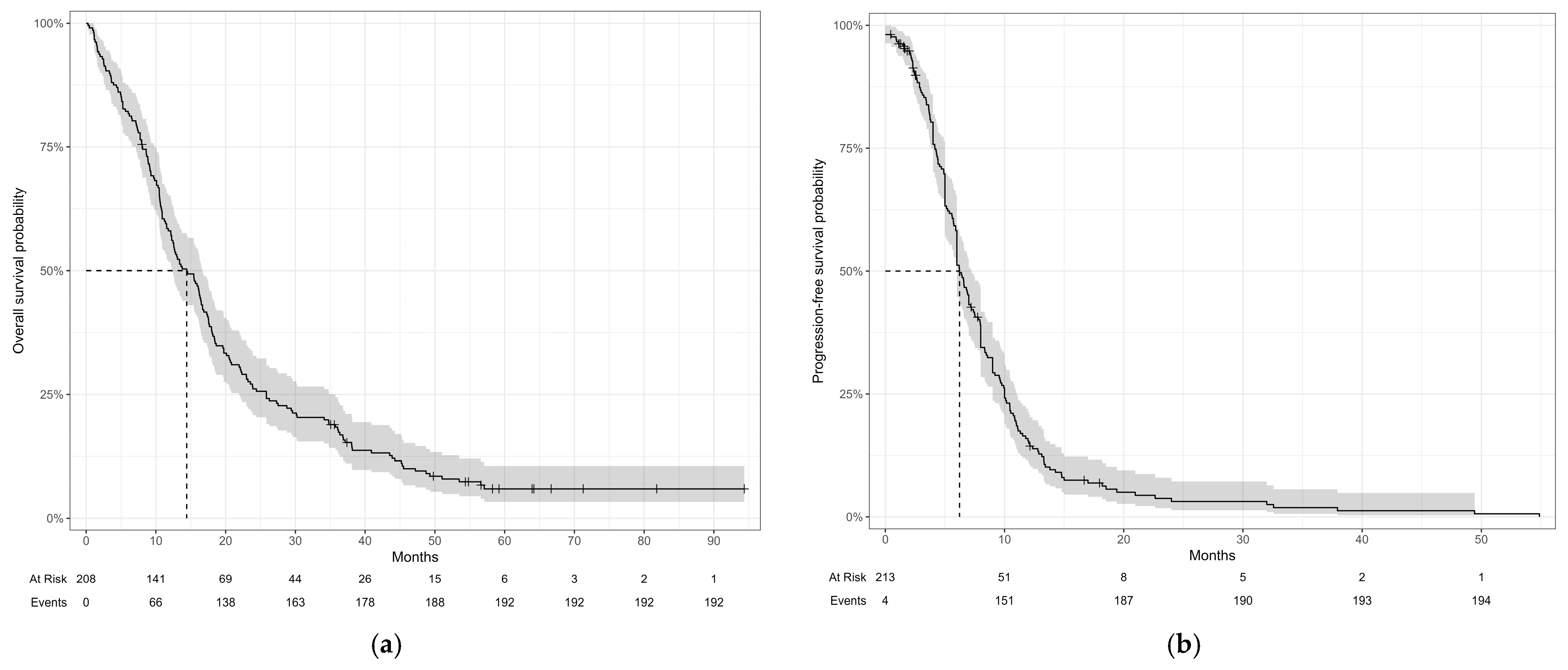
Figure 1. Kaplan–Meier estimates of (a) overall survival; (b) progression-free survival.
Curroncol 33 00183 g001
Figure 2. Hazard ratios for (a) death; (b) disease progression * p < 0.05; ** p < 0.01; *** p < 0.001.
Curroncol 33 00183 g002
Table 1. Patients’ baseline characteristics and treatment summary.
CharacteristicsN = 217 (%)
Age category (yr.)
<65142 (65.0)
≥6575 (35.0)
Sex
Male183 (84.0)
Female34 (16.0)
ECOG PS status
068 (31.3)
1131 (60.4)
218 (8.3)
Primary tumor site
Hypopharynx51 (23.5)
Larynx59 (27.2)
Oropharynx84 (38.7)
Oral cavity22 (10.1)
Other1 (0.5)
Extent of disease
Locoregionally recurrent only35 (16.1)
Metastatic and locoregional3 (1.4)
Metastatic only179 (82.5)
Previous therapy200 (92)
Previous chemotherapy
Yes112 (51.6)
No102 (47.0)
Unknown3 (1.4)
Chemotherapy protocol
EXTREME198 (91.2)
TPEx15 (6.9)
Other4 (1.8)
Platinum compound
Cisplatin185 (85.3)
Carboplatin30 (13.8)
Unknown2 (0.9)
yr.—year; ECOG PS—Eastern Cooperative Oncology Group performance status; EXTREME—5-fluorouracil, cisplatin or carboplatin and cetuximab; TPEx—docetaxel, cisplatin and cetuximab.
Table 2. Treatment efficacy.
EfficacyN = 201
Best overall response, N (%)
Complete response6 (3)
Partial response36 (18)
Stable disease85 (42)
Progressive disease74 (37)
ORR, N (%)42 (21)
95% CI16–27
DCR, N (%)127 (63)
95% CI56–70
Median DOR, months11
95% CI10–16
Median TTF, months6.0
95% CI5.6–6.9
ORR—objective response rate; DCR—disease control rate; CI—confidence interval; DOR—duration of response; TTF—time to treatment failure.
Table 3. Overview of adverse events.
EventGrade 1–2, N (%)Grade 3, N (%)Grade 4, N (%)
Any168 (77.4)31 (14.3)10 (4.6)
Skin rash63 (29.0)7 (3.2)1 (0.5)
Mucositis23 (10.6)7 (3.2)0
Nausea22 (10.1)2 (0.9)0
Polyneuropathy12 (5.5)00
Neutropenia10 (4.6)5 (2.3)2 (0.9)
Hypocalcemia8 (3.7)00
Vomiting8 (3.7)00
Hypomagnesemia5 (2.3)00
Infusion reaction4 (1.8)2 (0.9)5 (2.3)
Leucopenia3 (1.4)5 (2.3)0
Thrombocytopenia3 (1.4)00
Anemia2 (0.9)01 (0.5)
Febrile neutropenia2 (0.9)2 (0.9)0
Renal failure2 (0.9)00
Fatigue1 (0.5)01 (0.5)
Sepsis01 (0.5)0
Disclaimer/Publisher’s Note: The statements, opinions and data contained in all publications are solely those of the individual author(s) and contributor(s) and not of MDPI and/or the editor(s). MDPI and/or the editor(s) disclaim responsibility for any injury to people or property resulting from any ideas, methods, instructions or products referred to in the content.