Hepatocellular Carcinoma Around the Clock


Simple Summary
Abstract
1. Introduction
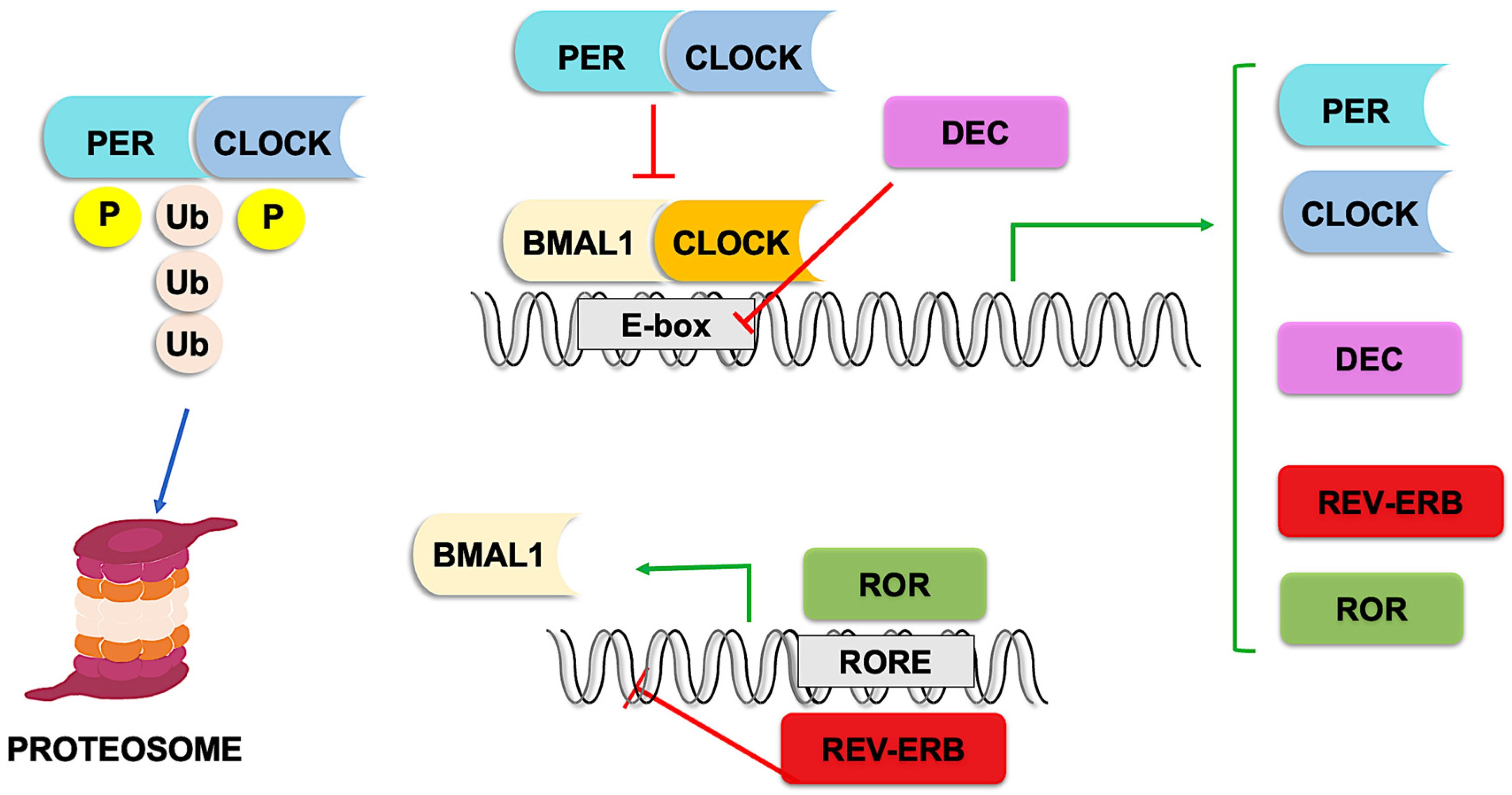
2. Physiology of the Circadian Rhythm
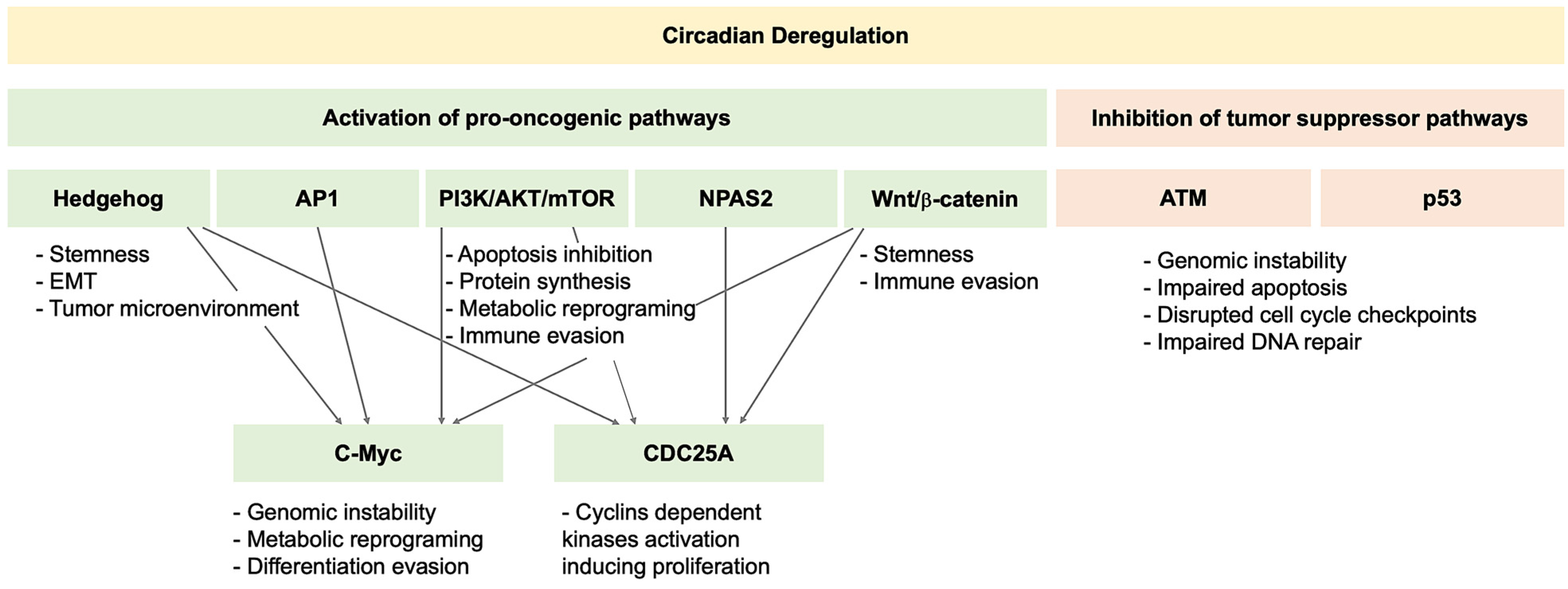
3. Possible Mechanisms Linking Circadian Disruption and HCC
4. Epidemiological Evidence Linking Circadian Disruption and HCC
5. Chronotherapy for HCC
6. Conclusions
Funding
Data Availability Statement
Conflicts of Interest
Abbreviations
| BMAL1 | Brain and Muscle ARNT-Like-1 |
| CAR | Constitutive Androstane Receptor |
| CLOCK | Circadian Locomotor Output Cycle Kaput |
| CRY | Cryptochrome |
| CTLA-4 | Cytotoxic T-Lymphocyte Antigen-4 |
| DEC | Differentiated Embryo Chondrocytes |
| HCC | HepatoCellular Carcinoma |
| HDAC | Histone DdeACetylase |
| IARC | International Agency for Research on Cancer |
| ICI | Immune Checkpoint Inhibitors |
| MARCKSL1 | Myristoylated Alanine-Rich C Kinase Substrate-Like 1 |
| MASLD | Metabolic dysfunction-Associated Steatotic Liver Disease |
| NNMT | Nicotinamide N-MethylTransferase |
| NPAS2 | Neuronal PAS domain Protein-2 |
| PD-1 | Programmed cell Death protein-1 |
| PD-L1 | Programmed Death-Ligand-1 |
| PER | Period |
| PKA | Protein Kinase A |
| ROR | Retinoic acid-related Orphan nuclear Receptors |
| SLD | Steatotic Liver Disease |
| SNP | Single Nucleotide Polymorphisms |
| TIMP-1 | Tissue Inhibitor of MetalloProteinases-1 |
| TRE | Time Restricting Eating |
References
- Bray, F.; Laversanne, M.; Sung, H.; Ferlay, J.; Siegel, R.L.; Soerjomataram, I.; Jemal, A. Global cancer statistics 2022: Globocan estimates of incidence and mortality worldwide for 36 cancers in 185 countries. CA Cancer J. Clin. 2024, 74, 229–263. [Google Scholar] [CrossRef]
- Vogel, A.; Meyer, T.; Sapisochin, G.; Salem, R.; Saborowski, A. Hepatocellular carcinoma. Lancet 2022, 400, 1345–1362. [Google Scholar] [CrossRef]
- Rumgay, H.; Arnold, M.; Ferlay, J.; Lesi, O.; Cabasag, C.J.; Vignat, J.; Laversanne, M.; McGlyn, K.A.; Soeromataram, I. Global burden of primary liver cancer in 2020 and predictions to 2040. J. Hepatol. 2022, 77, 1598–1606. [Google Scholar] [CrossRef]
- Adhoute, X.; Penaranda, G.; Raoul, J.L.; Edeline, J.; Blanc, J.F.; Pol, B.; Campanile, M.; Perrier, H.; Bayle, O.; Monnet, O.; et al. Barcelona clinic liver cancer nomogram and others staging/scoring systems in a french hepatocellular carcinoma cohort. World J. Gastroenterol. 2017, 23, 2545–2555. [Google Scholar] [CrossRef]
- Vitale, A.; Morales, R.R.; Zanus, G.; Farinati, F.; Burra, P.; Angeli, P.; Frigo, A.C.; Del Poggio, P.; Rapaccini, G.; Di Nolfo, M.A.; et al. Barcelona clinic liver cancer staging and transplant survival benefit for patients with hepatocellular carcinoma: A multicentre, cohort study. Lancet Oncol. 2011, 12, 654–662. [Google Scholar] [CrossRef]
- Huang, D.Q.; Singal, A.G.; Kono, Y.; Tan, D.J.H.; El-Serag, H.B.; Loomba, R. Changing global epidemiology of liver cancer from 2010 to 2019: Nash is the fastest growing cause of liver cancer. Cell Metab. 2022, 34, 969–977.e2. [Google Scholar] [CrossRef]
- Zhou, K.; Lim, T.; Dodge, J.L.; Terrault, N.A.; Wilkens, L.R.; Setiawan, V.W. Population-attributable risk of modifiable lifestyle factors to hepatocellular carcinoma: The multi-ethnic cohort. Aliment. Pharmacol. Ther. 2023, 58, 89–98. [Google Scholar] [CrossRef] [PubMed]
- Hu, L.Y.; Chen, P.M.; Hu, Y.W.; Shen, C.C.; Perng, C.L.; Su, T.P.; Yen, S.H.; Tzeng, C.H.; Chiou, T.J.; Yeh, C.M.; et al. The risk of cancer among patients with sleep disturbance: A nationwide retrospective study in taiwan. Ann. Epidemiol. 2013, 23, 757–761. [Google Scholar] [CrossRef] [PubMed]
- Erren, T.C.; Morfeld, P. Circadian epidemiology: Structuring circadian causes of disease and practical implications. Chronobiol. Int. 2024, 41, 38–52. [Google Scholar] [CrossRef]
- Verdelho Machado, M. Circadian deregulation: Back facing the sun toward metabolic dysfunction-associated steatotic liver disease (MASLD) development. Nutrients 2024, 16, 4294. [Google Scholar] [CrossRef] [PubMed]
- Mazzoccoli, G.; Miele, L.; Marrone, G.; Mazza, T.; Vinciguerra, M.; Grieco, A. A role for the biological clock in liver cancer. Cancers 2019, 11, 1778. [Google Scholar] [CrossRef]
- Hurni, C.; Weger, B.D.; Gobet, C.; Naef, F. Comprehensive analysis of the circadian nuclear and cytoplasmic transcriptome in mouse liver. PLoS Genet. 2022, 18, e1009903. [Google Scholar] [CrossRef]
- Reinke, H.; Asher, G. Circadian clock control of liver metabolic functions. Gastroenterology 2016, 150, 574–580. [Google Scholar] [CrossRef]
- Stokkan, K.A.; Yamazaki, S.; Tei, H.; Sakaki, Y.; Menaker, M. Entrainment of the circadian clock in the liver by feeding. Science 2001, 291, 490–493. [Google Scholar] [CrossRef] [PubMed]
- Ko, C.H.; Takahashi, J.S. Molecular components of the mammalian circadian clock. Hum. Mol. Genet. 2006, 15, R271–R277. [Google Scholar] [CrossRef] [PubMed]
- Gekakis, N.; Staknis, D.; Nguyen, H.B.; Davis, F.C.; Wilsbacher, L.D.; King, D.P.; Takahashi, J.S.; Weitz, C.J. Role of the clock protein in the mammalian circadian mechanism. Science 1998, 280, 1564–1569. [Google Scholar] [CrossRef]
- Yan, J.; Wang, H.; Liu, Y.; Shao, C. Analysis of gene regulatory networks in the mammalian circadian rhythm. PLoS Comput. Biol. 2008, 4, e1000193. [Google Scholar] [CrossRef] [PubMed]
- Zheng, B.; Albrecht, U.; Kaasik, K.; Sage, M.; Lu, W.; Vaishnav, S.; Li, K.; Sun, Z.S.; Eichele, G.; Bradley, A.; et al. Nonredundant roles of the mper1 and mper2 genes in the mammalian circadian clock. Cell 2001, 105, 683–694. [Google Scholar] [CrossRef]
- Kume, K.; Zylka, M.J.; Sriram, S.; Shearman, L.P.; Weaver, D.R.; Jin, X.; Maywood, E.S.; Hastings, M.H.; Reppert, S.M. Mcry1 and mcry2 are essential components of the negative limb of the circadian clock feedback loop. Cell 1999, 98, 193–205. [Google Scholar] [CrossRef]
- Crespo, M.; Leiva, M.; Sabio, G. Circadian clock and liver cancer. Cancers 2021, 13, 3631. [Google Scholar] [CrossRef]
- Knippschild, U.; Gocht, A.; Wolff, S.; Huber, N.; Lohler, J.; Stoter, M. The casein kinase 1 family: Participation in multiple cellular processes in eukaryotes. Cell Signal 2005, 17, 675–689. [Google Scholar] [CrossRef] [PubMed]
- Lamia, K.A.; Sachdeva, U.M.; DiTacchio, L.; Williams, E.C.; Alvarez, J.G.; Egan, D.F.; Vasquez, D.S.; Juguilon, H.; Panda, S.; Shaw, R.J.; et al. AMPK regulates the circadian clock by cryptochrome phosphorylation and degradation. Science 2009, 326, 437–440. [Google Scholar] [CrossRef] [PubMed]
- Correia, S.P.; Chan, A.B.; Vaughan, M.; Zolboot, N.; Perea, V.; Huber, A.L.; Kriebs, A.; Moresco, J.J.; Yates, R., 3rd; Lamia, K.A. The circadian e3 ligase complex scf(fbxl3+cry) targets tlk2. Sci. Rep. 2019, 9, 198. [Google Scholar] [CrossRef]
- Guillaumond, F.; Dardente, H.; Giguere, V.; Cermakian, N. Differential control of bmal1 circadian transcription by rev-erb and ror nuclear receptors. J. Biol. Rhythms 2005, 20, 391–403. [Google Scholar] [CrossRef] [PubMed]
- Honma, S.; Kawamoto, T.; Takagi, Y.; Fujimoto, K.; Sato, F.; Noshiro, M.; Kato, Y.; Honma, K.I. Dec1 and dec2 are regulators of the mammalian molecular clock. Nature 2002, 419, 841–844. [Google Scholar] [CrossRef]
- Barnes, J.W.; Tischkau, S.A.; Barnes, J.A.; Mitchell, J.W.; Burgoon, P.W.; Hickok, J.R.; Gillette, M.U. Requirement of mammalian timeless for circadian rhythmicity. Science 2003, 302, 439–442. [Google Scholar] [CrossRef]
- Engelen, E.; Janssens, R.C.; Yagita, K.; Smits, V.A.; van der Horst, G.T.; Tamanini, F. Mammalian timeless is involved in period determination and DNA damage-dependent phase advancing of the circadian clock. PLoS ONE 2013, 8, e56623. [Google Scholar] [CrossRef]
- Sanada, K.; Okano, T.; Fukada, Y. Mitogen-activated protein kinase phosphorylates and negatively regulates basic helix-loop-helix-pas transcription factor bmal1. J. Biol. Chem. 2002, 277, 267–271. [Google Scholar] [CrossRef]
- Cardone, L.; Hirayama, J.; Giordano, F.; Tamaru, T.; Palvimo, J.J.; Sassone-Corsi, P. Circadian clock control by sumoylation of bmal1. Science 2005, 309, 1390–1394. [Google Scholar] [CrossRef]
- Hirayama, J.; Sahar, S.; Grimaldi, B.; Tamaru, T.; Takamatsu, K.; Nakahata, Y.; Sassone-Corsi, P. Clock-mediated acetylation of bmal1 controls circadian function. Nature 2007, 450, 1086–1090. [Google Scholar] [CrossRef]
- Nakahata, Y.; Kaluzova, M.; Grimaldi, B.; Sahar, S.; Hirayama, J.; Chen, D.; Guarente, L.P.; Sassoni-Corsi, P. The nad+-dependent deacetylase sirt1 modulates clock-mediated chromatin remodeling and circadian control. Cell 2008, 134, 329–340. [Google Scholar] [CrossRef]
- Zhang, R.; Lahens, N.F.; Ballance, H.I.; Hughes, M.E.; Hogenesch, J.B. A circadian gene expression atlas in mammals: Implications for biology and medicine. Proc. Natl. Acad. Sci. USA 2014, 111, 16219–16224. [Google Scholar] [CrossRef]
- Lee, S.; Donehower, L.A.; Herron, A.J.; Moore, D.D.; Fu, L. Disrupting circadian homeostasis of sympathetic signaling promotes tumor development in mice. PLoS ONE 2010, 5, e10995. [Google Scholar] [CrossRef] [PubMed]
- Kettner, N.M.; Voicu, H.; Finegold, M.J.; Coarfa, C.; Sreekumar, A.; Putluri, N.; Katchy, C.A.; Lee, C.; Moore, D.D.; Fu, L. Circadian homeostasis of liver metabolism suppresses hepatocarcinogenesis. Cancer Cell 2016, 30, 909–924. [Google Scholar] [CrossRef]
- Padilla, J.; Osman, N.M.; Bissig-Choisat, B.; Grimm, S.L.; Qin, X.; Major, A.M.; Yang, L.; Lopez-Terrada, D.; Coarfa, C.; Li, F. Circadian dysfunction induces nafld-related human liver cancer in a mouse model. J. Hepatol. 2024, 80, 282–292. [Google Scholar]
- Xu, C.; Xu, Z.; Zhang, Y.; Evert, M.; Calvisi, D.F.; Chen, X. Beta-catenin signaling in hepatocellular carcinoma. J. Clin. Investig. 2022, 132, e154515. [Google Scholar] [CrossRef]
- Ding, J.; Li, H.Y.; Zhang, L.; Zhou, Y.; Wu, J. Hedgehog signaling, a critical pathway governing the development and progression of hepatocellular carcinoma. Cells 2021, 10, 123. [Google Scholar] [CrossRef]
- Marbach-Breitruck, E.; Matz-Soja, M.; Abraham, U.; Schmidt-Heck, W.; Sales, S.; Rennert, C.; Kern, M.; Aleithe, S.; Spormann, L.; Thiel, C. Tick-tock hedgehog-mutual crosstalk with liver circadian clock promotes liver steatosis. J. Hepatol. 2019, 70, 1192–1202. [Google Scholar] [CrossRef] [PubMed]
- Jeng, K.S.; Chang, C.F.; Tsang, Y.M.; Sheen, I.S.; Jeng, C.J. Reappraisal of the roles of the sonic hedgehog signaling pathway in hepatocellular carcinoma. Cancers 2024, 16, 1739. [Google Scholar] [CrossRef] [PubMed]
- Mteyrek, A.; Filipski, E.; Guettier, C.; Okyar, A.; Levi, F. Clock gene per2 as a controller of liver carcinogenesis. Oncotarget 2016, 7, 85832–85847. [Google Scholar] [CrossRef] [PubMed]
- Luciano, A.K.; Zhou, W.; Santana, J.M.; Kyriakides, C.; Velazquez, H.; Sessa, W.C. Clock phosphorylation by akt regulates its nuclear accumulation and circadian gene expression in peripheral tissues. J. Biol. Chem. 2018, 293, 9126–9136. [Google Scholar] [CrossRef]
- Morishita, Y.; Miura, D.; Kida, S. Pi3k regulates bmal1/clock-mediated circadian transcription from the dbp promoter. Biosci. Biotechnol. Biochem. 2016, 80, 1131–1140. [Google Scholar] [CrossRef]
- Paskeh, M.D.A.; Ghadyani, F.; Hashemi, M.; Abbaspour, A.; Zabolian, A.; Javanshir, S.; Razzazan, M.; Mirzaei, S.; Entezari, M.; Goharrizi, M.; et al. Biological impact and therapeutic perspective of targeting pi3k/akt signaling in HCC: Promises and challenges. Pharmacol. Res. 2023, 187, 106553. [Google Scholar] [CrossRef]
- Larue, L.; Bellacosa, A. Epithelial-mesenchymal transition in development and cancer: Role of phosphatidylinositol 3′ kinase/akt pathways. Oncogene 2005, 24, 7443–7454. [Google Scholar] [CrossRef] [PubMed]
- Chen, J.S.; Wang, Q.; Fu, X.H.; Huang, X.H.; Chen, X.L.; Cao, L.Q.; Chen, L.Z.; Tan, H.X.; Li, W.; Bi, J.; et al. Involvement of pi3k/pten/akt/mtor pathway in invasion and metastasis in hepatocellular carcinoma: Association with mmp-9. Hepatol. Res. 2009, 39, 177–186. [Google Scholar] [CrossRef] [PubMed]
- Yuan, P.; Li, J.; Zhou, F.; Huang, Q.; Zhang, J.; Guo, X.; Lyu, Z.; Zhang, H.; Xing, J. NPAS2 promotes cell survival of hepatocellular carcinoma by transactivating CDC25a. Cell Death Dis. 2017, 8, e2704. [Google Scholar] [CrossRef]
- Liang, Y.; Wang, S.; Huang, X.; Chai, R.; Tang, Q.; Yang, R.; Huang, X.; Wang, X.; Zheng, K. Dysregulation of circadian clock genes as significant clinic factor in the tumorigenesis of hepatocellular carcinoma. Comput. Math. Methods Med. 2021, 2021, 8238833. [Google Scholar] [CrossRef]
- Wu, Z.; Hu, H.; Zhang, Q.; Wang, T.; Li, H.; Qin, Y.; Ai, X.; Yi, W.; Wei, X.; Gao, W.; et al. Four circadian rhythm-related genes predict incidence and prognosis in hepatocellular carcinoma. Front. Oncol. 2022, 12, 937403. [Google Scholar] [CrossRef]
- VoPham, T.; Weaver, M.D.; Vetter, C.; Hart, J.E.; Tamimi, R.M.; Laden, F.; Bertrand, K.A. Circadian misalignment and hepatocellular carcinoma incidence in the united states. Cancer Epidemiol. Biomark. Prev. 2018, 27, 719–727. [Google Scholar] [CrossRef]
- Gu, F.; Xu, S.; Devesa, S.S.; Zhang, F.; Klerman, E.B.; Graubard, B.I.; Caporaso, N.E. Longitude position in a time zone and cancer risk in the united states. Cancer Epidemiol. Biomark. Prev. 2017, 26, 1306–1311. [Google Scholar] [CrossRef] [PubMed]
- Niu, J.; Brown, C.; Law, M.; Colacino, J.A.; Ritov, Y. Longitudinal position and cancer risk in the united states revisited. Cancer Res. Commun. 2024, 4, 328–336. [Google Scholar] [CrossRef]
- Ferrell, J.M. Chronobiology of cancers in the liver and gut. Cancers 2024, 16, 2925. [Google Scholar] [CrossRef] [PubMed]
- Park, Y.; Ramirez, Y.; Xiao, Q.; Liao, L.M.; Jones, G.S.; McGlynn, K.A. Outdoor light at night and risk of liver cancer in the nih-aarp diet and health study. Cancer Causes Control 2022, 33, 1215–1218. [Google Scholar] [CrossRef]
- Su, F.; Huang, D.; Wang, H.; Yang, Z. Associations of shift work and night work with risk of all-cause, cardiovascular and cancer mortality: A meta-analysis of cohort studies. Sleep Med. 2021, 86, 90–98. [Google Scholar] [CrossRef]
- Arafa, A.; Eshak, E.S.; Iso, H.; Muraki, I.; Tamakoshi, A. Night work, rotating shift work, and the risk of cancer in japanese men and women: The JACC study. J. Epidemiol. 2021, 31, 585–592. [Google Scholar] [CrossRef]
- Machado, M.V. The beauty sleep to keep a healthy liver. Int. J. Mol. Sci. 2025, 26, 11322. [Google Scholar] [CrossRef]
- Wang, Q.; Chen, H.; Deng, H.; Zhang, M.; Hu, H.; Ouyang, H.; Ma, L.; Liu, R.; Sun, J.; Hu, G.; et al. Association of daily sleep duration with risk of metabolic dysfunction-associated steatotic liver disease and adverse liver outcomes. Diabetes Metab. 2025, 51, 101628. [Google Scholar] [CrossRef]
- Long, L.; Zhao, L.; Petrick, J.L.; Liao, L.M.; Huang, T.; Hakim, A.; Yang, W.; Campbell, P.T.; Giovnnucci, E.; McGlyn, K.A.; et al. Daytime napping, nighttime sleeping duration, and risk of hepatocellular carcinoma and liver disease-related mortality. JHEP Rep. 2023, 5, 100819. [Google Scholar] [CrossRef]
- Royse, K.E.; El-Serag, H.B.; Chen, L.; White, D.L.; Hale, L.; Sangi-Haghpeykar, H.; Jiao, L. Sleep duration and risk of liver cancer in postmenopausal women: The women’s health initiative study. J. Womens Health 2017, 26, 1270–1277. [Google Scholar] [CrossRef] [PubMed]
- Wang, W.; Zhuang, Z.; Song, Z.; Zhao, Y.; Huang, T. Sleep patterns, genetic predisposition, and risk of chronic liver disease: A prospective study of 408,560 uk biobank participants. J. Affect. Disord. 2024, 352, 229–236. [Google Scholar] [CrossRef] [PubMed]
- Lin, Y.M.; Chang, J.H.; Yeh, K.T.; Yang, M.Y.; Liu, T.C.; Lin, S.F.; Su, W.W.; Chang, G. Disturbance of circadian gene expression in hepatocellular carcinoma. Mol. Carcinog. 2008, 47, 925–933. [Google Scholar] [CrossRef]
- Yang, S.L.; Yu, C.; Jiang, J.X.; Liu, L.P.; Fang, X.; Wu, C. Hepatitis b virus x protein disrupts the balance of the expression of circadian rhythm genes in hepatocellular carcinoma. Oncol. Lett. 2014, 8, 2715–2720. [Google Scholar] [CrossRef]
- Zhao, H.; Han, G.; Jiang, Z.; Gao, D.; Zhang, H.; Yang, L.; Ma, T.; Gao, L.; Wang, A.; Chao, W.; et al. Identification of bmal1-regulated circadian genes in mouse liver and their potential association with HCC: Gys2 and upp2 as promising candidates. Biochem. Biophys. Res. Commun. 2024, 696, 149422. [Google Scholar] [CrossRef]
- Chen, X.; Zhao, Q.; Wang, H.; Qiu, K.; Deng, X.; Xu, F. Period2 is associated with immune cell infiltration and is a potential diagnostic and prognostic marker for hepatocellular carcinoma. Front. Mol. Biosci. 2023, 10, 1264553. [Google Scholar] [CrossRef]
- Li, H.; Lu, Y.F.; Chen, H.; Liu, J. Dysregulation of metallothionein and circadian genes in human hepatocellular carcinoma. Chronobiol. Int. 2017, 34, 192–202. [Google Scholar]
- Liang, Q.; Ye, Y.; Li, E.; Fan, J.; Gong, J.; Ying, J.; Cao, Y.; Li, R.; Wang, P. A circadian clock gene-related signature for predicting prognosis and its association with sorafenib response in hepatocellular carcinoma. Transl. Cancer Res. 2023, 12, 2493–2507. [Google Scholar] [CrossRef]
- Ye, Z.; Du, Y.; Yu, W.; Lin, Y.; Zhang, L.; Chen, X. Construction of a circadian rhythm-relevant gene signature for hepatocellular carcinoma prognosis, immunotherapy and chemosensitivity prediction. Heliyon 2024, 10, e33682. [Google Scholar] [CrossRef]
- Huang, L.H.; Huang, C.Y.; Liu, Y.W.; Chien, P.C.; Hsieh, T.M.; Liu, H.T.; Lin, H.P.; Wu, C.J.; Chuang, P.C.; Hsieh, C.H. Circadian rhythm disruption in hepatocellular carcinoma investigated by integrated analysis of bulk and single-cell RNA sequencing data. Int. J. Mol. Sci. 2024, 25, 5748. [Google Scholar] [CrossRef]
- Anafi, R.C.; Francey, L.J.; Hogenesch, J.B.; Kim, J. Cyclops reveals human transcriptional rhythms in health and disease. Proc. Natl. Acad. Sci. USA 2017, 114, 5312–5317. [Google Scholar] [CrossRef]
- Zhong, Y.; Ye, Q.; Chen, C.; Wang, M.; Wang, H. Ezh2 promotes clock function and hematopoiesis independent of histone methyltransferase activity in zebrafish. Nucleic Acids Res. 2018, 46, 3382–3399. [Google Scholar] [CrossRef]
- Etchegaray, J.P.; Yang, X.; DeBruyne, J.P.; Peters, A.; Weaver, D.R.; Jenuwein, T.; Reppert, S.M. The polycomb group protein ezh2 is required for mammalian circadian clock function. J. Biol. Chem. 2006, 281, 21209–21215. [Google Scholar] [CrossRef]
- Freese, K.; Seitz, T.; Dietrich, P.; Lee, S.M.L.; Thasler, W.E.; Bosserhoff, A.; Hellerbrand, C. Histone deacetylase expressions in HCC and functional effects of histone deacetylase inhibitors on liver cancer cells in vitro. Cancers 2019, 11, 1587. [Google Scholar]
- Wang, J.; Liu, R.; Wang, Y.; Mo, H.; Niu, Y.; Xu, Q.; Liu, Q. Repression of the mir-627-5p by histone deacetylase 3 contributes to hypoxia-induced hepatocellular carcinoma progression. J. Cancer 2021, 12, 5320–5330. [Google Scholar]
- Fogg, P.C.; O’Neill, J.S.; Dobrzycki, T.; Calvert, S.; Lord, E.C.; McIntosh, R.L.; Elliott, C.J.H.; Sweeney, S.T.; Hastings, M.H.; Chawla, S. Class IIa histone deacetylases are conserved regulators of circadian function. J. Biol. Chem. 2014, 289, 34341–34348. [Google Scholar] [CrossRef]
- Sadia, K.; Castagna, A.; Udali, S.; Ambrosani, F.; Pattini, P.; Beri, R.; Argentino, G.; Masutti, S.; Riso, S. Epigenetic regulation through histone deacetylation: Implications and therapeutic potential in hepatocellular carcinoma. Cells 2025, 14, 1337. [Google Scholar] [CrossRef] [PubMed]
- Gu, Y.; Wei, X.; Sun, Y.; Gao, H.; Zheng, X.; Wong, L.L.; Jin, L.; Liu, N.; Hernandez, B.; Peplowska, K.; et al. Mir-192-5p silencing by genetic aberrations is a key event in hepatocellular carcinomas with cancer stem cell features. Cancer Res. 2019, 79, 941–953. [Google Scholar] [CrossRef] [PubMed]
- Wen, D.Y.; Huang, J.C.; Wang, J.Y.; Pan, W.Y.; Zeng, J.H.; Pang, Y.Y.; Yang, H. Potential clinical value and putative biological function of mir-122-5p in hepatocellular carcinoma: A comprehensive study using microarray and rna sequencing data. Oncol. Lett. 2018, 16, 6918–6929. [Google Scholar] [CrossRef]
- Cui, M.; Zheng, M.; Sun, B.; Wang, Y.; Ye, L.; Zhang, X. A long noncoding rna perturbs the circadian rhythm of hepatoma cells to facilitate hepatocarcinogenesis. Neoplasia 2015, 17, 79–88. [Google Scholar] [CrossRef]
- Wu, Y.; Shen, C.; Wang, X.; Zhao, W.; Li, Y.; He, X.; Chen, Y.; Liu, J.; Wu, X.; Shen, A. Development and validation of a novel circadian rhythm-related signature to predict the prognosis of the patients with hepatocellular carcinoma. Biomed. Res. Int. 2022, 2022, 4263261. [Google Scholar]
- Li, X.J.; Chang, L.; Mi, Y.; Zhang, G.; Zhu, S.S.; Zhang, Y.X.; Wang, H.Y.; Lu, Y.S.; Ping, Y.X.; Zheng, P.Y.; et al. Integrated-omics analysis defines subtypes of hepatocellular carcinoma based on circadian rhythm. J. Integr. Med. 2025, 23, 445–456. [Google Scholar] [CrossRef]
- Xu, Z.; Huang, W.; Zou, X.; Liu, S. Integrated machine learning constructed a circadian-rhythm-related model to assess clinical outcomes and therapeutic advantages in hepatocellular carcinoma. Transl. Cancer Res. 2025, 14, 1799–1823. [Google Scholar] [PubMed]
- Zhang, Z.; Gao, W.; Tan, X.; Deng, T.; Zhou, W.; Jian, H.; Zeng, P. Construction and verification of a novel circadian clock related long non-coding RNA model and prediction of treatment for survival prognosis in patients with hepatocellular carcinoma. BMC Cancer 2023, 23, 57. [Google Scholar] [CrossRef] [PubMed]
- Zhang, Z.; Liang, Z.; Gao, W.; Yu, S.; Hou, Z.; Li, K.; Zeng, P. Identification of circadian clock genes as regulators of immune infiltration in hepatocellular carcinoma. J. Cancer 2022, 13, 3199–3208. [Google Scholar] [CrossRef]
- Zhu, X.; Zhang, Z.; Zhang, J.; Xiao, Y.; Wang, H.; Wang, M.; Jiang, M.; Xu, Y. Single-cell and bulk transcriptomic analyses reveal a stemness and circadian rhythm disturbance-related signature predicting clinical outcome and immunotherapy response in hepatocellular carcinoma. Curr. Gene Ther. 2025, 25, 178–193. [Google Scholar]
- Zhang, Z.; Ma, F.; Zhou, F.; Chen, Y.; Wang, X.; Zhang, H.; Zhu, Y.; Bi, J.; Zhang, Y. Functional polymorphisms of circadian negative feedback regulation genes are associated with clinical outcome in HCC patients receiving radical resection. Med. Oncol. 2014, 31, 179. [Google Scholar] [CrossRef]
- Zhao, B.; Lu, J.; Yin, J.; Liu, H.; Guo, X.; Yang, Y.; Ge, N.; Zhu, Y.; Zhang, H.; Xing, J. A functional polymorphism in per3 gene is associated with prognosis in hepatocellular carcinoma. Liver Int. 2012, 32, 1451–1459. [Google Scholar]
- Yuan, P.; Wang, S.; Zhou, F.; Wan, S.; Yang, Y.; Huang, X.; Zhang, Z.; Zhu, Y.; Zhang, H.; Xing, J. Functional polymorphisms in the npas2 gene are associated with overall survival in transcatheter arterial chemoembolization-treated HCC patients. Cancer Sci. 2014, 105, 825–832. [Google Scholar] [CrossRef]
- Fey, R.M.; Billo, A.; Clister, T.; Doan, K.L.; Berry, E.G.; Tibbitts, D.C.; Kulkarni, R.P. Personalization of cancer treatment: Exploring the role of chronotherapy in immune checkpoint inhibitor efficacy. Cancers 2025, 17, 732. [Google Scholar] [CrossRef] [PubMed]
- Das, M.; Kumar, D.; Sauceda, C.; Oberg, A.; Ellies, L.G.; Zeng, L.; Jih, L.J.; Newton, I.G.; Webster, J.G. Time-restricted feeding attenuates metabolic dysfunction-associated steatohepatitis and hepatocellular carcinoma in obese male mice. Cancers 2024, 16, 1513. [Google Scholar] [PubMed]
- Becker, S.; Momoh, J.; Biancacci, I.; Mockel, D.; Wang, Q.; May, J.N.; Su, H.; Candels, L.S.; Berres, M.L.; Kiessling, F.; et al. Intermittent fasting primes the tumor microenvironment and improves nanomedicine delivery in hepatocellular carcinoma. Small 2023, 19, e2208042. [Google Scholar] [CrossRef]
- Molina-Aguilar, C.; Guerrero-Carrillo, M.J.; Espinosa-Aguirre, J.J.; Olguin-Reyes, S.; Castro-Belio, T.; Vazquez-Martinez, O.; Rivera-Zavala, J.B.; Diaz-Munoz, M. Time-caloric restriction inhibits the neoplastic transformation of cirrhotic liver in rats treated with diethylnitrosamine. Carcinogenesis 2017, 38, 847–858. [Google Scholar] [CrossRef]
- Meng, Q.J.; Logunova, L.; Maywood, E.S.; Gallego, M.; Lebiecki, J.; Brown, T.M.; Brown, T.M.; Sládek, M.; Semikhodskii, A.S.; Glossop, N.R.J. Setting clock speed in mammals: The ck1 epsilon tau mutation in mice accelerates circadian pacemakers by selectively destabilizing period proteins. Neuron 2008, 58, 78–88. [Google Scholar] [CrossRef]
- Ramsey, K.M.; Yoshino, J.; Brace, C.S.; Abrassart, D.; Kobayashi, Y.; Marcheva, B.; Hong, H.K.; Chong, J.L.; Buhr, E.D.; Lee, C.; et al. Circadian clock feedback cycle through nampt-mediated nad+ biosynthesis. Science 2009, 324, 651–654. [Google Scholar] [CrossRef]
- Ramanathan, C.; Kathale, N.D.; Liu, D.; Lee, C.; Freeman, D.A.; Hogenesch, J.B.; Cao, R.; Liu, A.C. mTOR signaling regulates central and peripheral circadian clock function. PLoS Genet. 2018, 14, e1007369. [Google Scholar]
- Krstic, J.; Reinisch, I.; Schindlmaier, K.; Galhuber, M.; Riahi, Z.; Berger, N.; Kupper, N.; Moyschwitz, E.; Auer, M.; Michenthaler, H.; et al. Fasting improves therapeutic response in hepatocellular carcinoma through p53-dependent metabolic synergism. Sci. Adv. 2022, 8, eabh2635. [Google Scholar] [CrossRef]
- Usman, M.; Javed, N.; Jawhari, A.; Ghouri, N.; Waqar, S.; Shah, F.; Ahmad, S.; Hart, A.; Hameed, B.; Khan, Q.M.; et al. Ramadan intermittent fasting for patients with gastrointestinal and hepatobiliary diseases: Practical guidance for health-care professionals. Lancet Gastroenterol. Hepatol. 2025, 10, 168–182. [Google Scholar] [CrossRef] [PubMed]
- Wang, T.H.; Wu, C.H.; Yeh, C.T.; Su, S.C.; Hsia, S.M.; Liang, K.H.; Chen, C.C.; Hsueh, C.; Chen, C.Y. Melatonin suppresses hepatocellular carcinoma progression via lncrna-cps1-it-mediated hif-1alpha inactivation. Oncotarget 2017, 8, 82280–82293. [Google Scholar] [CrossRef] [PubMed]
- Nabih, H.K.; Hamed, A.R.; Yahya, S.M.M. Anti-proliferative effect of melatonin in human hepatoma hepg2 cells occurs mainly through cell cycle arrest and inflammation inhibition. Sci. Rep. 2023, 13, 4396. [Google Scholar] [CrossRef]
- Kim, J.I.; Cheon, H.G. Melatonin ameliorates hepatic fibrosis via the melatonin receptor 2-mediated upregulation of bmal1 and anti-oxidative enzymes. Eur. J. Pharmacol. 2024, 966, 176337. [Google Scholar] [CrossRef] [PubMed]
- Han, Y.; Chen, L.; Baiocchi, L.; Ceci, L.; Glaser, S.; Francis, H.; Alpini, G.; Kennedy, L. Circadian rhythm and melatonin in liver carcinogenesis: Updates on current findings. Crit. Rev. Oncog. 2021, 26, 69–85. [Google Scholar] [CrossRef]
- Carbajo-Pescador, S.; Ordonez, R.; Benet, M.; Jover, R.; Garcia-Palomo, A.; Mauriz, J.L.; Gonzalez-Gallego, J. Inhibition of vegf expression through blockade of hif1alpha and stat3 signalling mediates the anti-angiogenic effect of melatonin in hepg2 liver cancer cells. Br. J. Cancer 2013, 109, 83–91. [Google Scholar] [CrossRef]
- Prieto-Dominguez, N.; Mendez-Blanco, C.; Carbajo-Pescador, S.; Fondevila, F.; Garcia-Palomo, A.; Gonzalez-Gallego, J.; Mauriz, J.L. Melatonin enhances sorafenib actions in human hepatocarcinoma cells by inhibiting mtorc1/p70s6k/hif-1alpha and hypoxia-mediated mitophagy. Oncotarget 2017, 8, 91402–91414. [Google Scholar] [CrossRef]
- Carbajo-Pescador, S.; Garcia-Palomo, A.; Martin-Renedo, J.; Piva, M.; Gonzalez-Gallego, J.; Mauriz, J. Melatonin modulation of intracellular signaling pathways in HCC hepg2 cell line: Role of the mt1 receptor. J. Pineal Res. 2011, 51, 463–471. [Google Scholar] [CrossRef]
- Guo, R.; Rao, P.G.; Liao, B.Z.; Luo, X.; Yang, W.W.; Lei, X.H.; Ye, J.M. Melatonin suppresses pd-l1 expression and exerts antitumor activity in hepatocellular carcinoma. Sci. Rep. 2025, 15, 8451. [Google Scholar] [CrossRef]
- Ordonez, R.; Carbajo-Pescador, S.; Prieto-Dominguez, N.; Garcia-Palomo, A.; Gonzalez-Gallego, J.; Mauriz, J.L. Inhibition of matrix metalloproteinase-9 and nuclear factor kappa b contribute to melatonin prevention of motility and invasiveness in hepg2 liver cancer cells. J. Pineal Res. 2014, 56, 20–30. [Google Scholar] [CrossRef]
- Dauchy, R.T.; Wren-Dail, M.A.; Dupepe, L.M.; Hill, S.M.; Xiang, S.; Anbalagan, M.; Belancio, V.P.; Dauchy, E.M.; Blask, E. Effect of daytime blue-enriched led light on the nighttime circadian melatonin inhibition of hepatoma 7288ctc warburg effect and progression. Comp. Med. 2018, 68, 269–279. [Google Scholar] [CrossRef]
- Moreira, A.J.; Ordonez, R.; Cerski, C.T.; Picada, J.N.; Garcia-Palomo, A.; Marroni, N.P.; Mauriz, J.L.; González-Gallego, J. Melatonin activates ER stress and apoptosis in rats with diethylnitrosamine-induced hepatocarcinogenesis. PLoS ONE 2015, 10, e0144517. [Google Scholar] [CrossRef]
- Lin, S.; Hoffmann, K.; Gao, C.; Petrulionis, M.; Herr, I.; Schemmer, P. Melatonin promotes sorafenib-induced apoptosis through synergistic activation of jnk/c-jun pathway in human hepatocellular carcinoma. J. Pineal Res. 2017, 62, e12398. [Google Scholar] [CrossRef]
- Cheng, L.; Liu, J.; Liu, Q.; Liu, Y.; Fan, L.; Wang, F.; Yu, H.; Li, Y.; Bu, L.; Li, X.; et al. Exosomes from melatonin treated hepatocellularcarcinoma cells alter the immunosupression status through stat3 pathway in macrophages. Int. J. Biol. Sci. 2017, 13, 723–734. [Google Scholar] [CrossRef]
- Zou, Y.; Sun, H.; Guo, Y.; Shi, Y.; Jiang, Z.; Huang, J.; Li, L.; Jiang, F.; Lin, Z.; Wu, J.; et al. Integrative pan-cancer analysis reveals decreased melatonergic gene expression in carcinogenesis and rora as a prognostic marker for hepatocellular carcinoma. Front. Oncol. 2021, 11, 643983. [Google Scholar] [CrossRef]
- Sartorelli, L.S.; Neto, R.; Mosqueta-Pinheiro, M.; de Castro, T.B.; Fernandes, F.; Silva, R.; Novais, A.A.; Chuffa, L.G.D.A.; Reiter, R.J.; Zuccari, D.A.P.d.C. Blood melatonin level can serve as a potential biomarker for prostate and hepatocellular carcinomas. Melatonin Res. 2021, 4, 253–269. [Google Scholar] [CrossRef]
- Lorente, L.; Rodriguez, S.T.; Sanz, P.; Abreu-Gonzalez, P.; Gonzalez-Rivero, A.F.; Perez-Cejas, A.; Padilla, J.; Díaz, D.; González, A.; Martín, M.M.; et al. Low serum melatonin levels prior to liver transplantation in patients with HCC are associated with lower survival after liver transplantation. Int. J. Mol. Sci. 2019, 20, 1696. [Google Scholar]
- Levi, F.; Zidani, R.; Misset, J.L. Randomised multicentre trial of chronotherapy with oxaliplatin, fluorouracil, and folinic acid in metastatic colorectal cancer. International organization for cancer chronotherapy. Lancet 1997, 350, 681–686. [Google Scholar]
- Printezi, M.I.; Kilgallen, A.B.; Bond, M.J.G.; Stibler, U.; Putker, M.; Teske, A.J.; Cramer, M.J.; Punt, C.J.A.; Sluijer, J.P.G.; Huitema, A.D.R.; et al. Toxicity and efficacy of chronomodulated chemotherapy: A systematic review. Lancet Oncol. 2022, 23, e129–e143. [Google Scholar] [CrossRef]
- Voigt, R.M.; Forsyth, C.B.; Keshavarzian, A. Circadian rhythms: A regulator of gastrointestinal health and dysfunction. Expert. Rev. Gastroenterol. Hepatol. 2019, 13, 411–424. [Google Scholar] [PubMed]
- Yu, F.; Zhang, T.; Zhou, C.; Xu, H.; Guo, L.; Chen, M.; Wu, B. The circadian clock gene bmal1 controls intestinal exporter mrp2 and drug disposition. Theranostics 2019, 9, 2754–2767. [Google Scholar] [CrossRef] [PubMed]
- Iwasaki, M.; Koyanagi, S.; Suzuki, N.; Katamune, C.; Matsunaga, N.; Watanabe, N.; Takahashi, M.; Izumi, T.; Ohdo, S. Circadian modulation in the intestinal absorption of p-glycoprotein substrates in monkeys. Mol. Pharmacol. 2015, 88, 29–37. [Google Scholar] [CrossRef]
- Eckerbom, P.; Hansell, P.; Cox, E.; Buchanan, C.; Weis, J.; Palm, F.; Francis, S.; Liss, P. Circadian variation in renal blood flow and kidney function in healthy volunteers monitored with noninvasive MRI. Am. J. Physiol. Renal Physiol. 2020, 319, F966–F978. [Google Scholar] [CrossRef] [PubMed]
- Zhao, M.; Zhao, H.; Deng, J.; Guo, L.; Wu, B. Role of the clock protein in liver detoxification. Br. J. Pharmacol. 2019, 176, 4639–4652. [Google Scholar] [CrossRef]
- Lin, Y.; Wang, S.; Zhou, Z.; Guo, L.; Yu, F.; Wu, B. Bmal1 regulates circadian expression of cytochrome p450 3a11 and drug metabolism in mice. Commun. Biol. 2019, 2, 378. [Google Scholar] [CrossRef]
- Ge, W.; Wang, T.; Zhao, Y.; Yang, Y.; Sun, Q.; Yang, X.; Gao, Y.; Xu, X.; Zhang, J. Period1 mediates rhythmic metabolism of toxins by interacting with cyp2e1. Cell Death Dis. 2021, 12, 76. [Google Scholar] [CrossRef]
- Chen, M.; Chen, M.; Lu, D.; Wang, Y.; Zhang, L.; Wang, Z.; Wu, B. Period 2 regulates cyp2b10 expression and activity in mouse liver. Front. Pharmacol. 2021, 12, 764124. [Google Scholar] [CrossRef]
- Fekry, B.; Aggarwal, S.; Van Drunen, R.; Bravo, R.; Escalante, A.; Atkins, C.; Pan, S.; Chen, Z.; Sun, K.; Hall, D.R.; et al. Targeting the hepatic circadian clock concomitant with tyrosine kinase inhibition reverses late-stage hepatocellular carcinoma. Cell Rep. 2025, 44, 116313. [Google Scholar] [CrossRef]
- Hassan, S.A.; Ali, A.A.H.; Sohn, D.; Flogel, U.; Janicke, R.U.; Korf, H.W.; von Gall, C. Does timing matter in radiotherapy of hepatocellular carcinoma? An experimental study in mice. Cancer Med. 2021, 10, 7712–7725. [Google Scholar] [CrossRef]
- Yassine, M.; Hassan, S.A.; Sommer, S.; Yucel, L.A.; Bellert, H.; Hallenberger, J.; Sohn, D.; Korf, H.W.; von Gall, C.; Ali, A.A.H. Radiotherapy of the hepatocellular carcinoma in mice has a time-of-day-dependent impact on the mouse hippocampus. Cells 2022, 12, 61. [Google Scholar] [CrossRef] [PubMed]
- Karaboue, A.; Innominato, P.F.; Wreglesworth, N.I.; Duchemann, B.; Adam, R.; Levi, F.A. Why does circadian timing of administration matter for immune checkpoint inhibitors’ efficacy? Br. J. Cancer 2024, 131, 783–796. [Google Scholar] [CrossRef]
- Lim, M.; Espinoza, M.; Huang, Y.H.; Franses, J.; Zhu, H.; Hsiehchen, D. Complete response to immunotherapy in patients with hepatocellular carcinoma. JAMA Netw. Open 2025, 8, e2461735. [Google Scholar] [CrossRef]
- Shek, D.; Read, S.A.; Nagrial, A.; Carlino, M.S.; Gao, B.; George, J.; Ahlenstiel, G. Immune-checkpoint inhibitors for advanced hepatocellular carcinoma: A synopsis of response rates. Oncologist 2021, 26, e1216–e1225. [Google Scholar] [CrossRef]
- Landre, T.; Karaboue, A.; Buchwald, Z.S.; Innominato, P.F.; Qian, D.C.; Assie, J.B.; Chouaid, C.; Levi, F.; Duchemann, B. Time-dependent efficacy of immune checkpoint inhibitors in the treatment of metastatic cancers: A meta-analysis. J. Clin. Oncol. 2024, 41, 2562. [Google Scholar] [CrossRef]
- Kemeny, M.M.; Alava, G.; Oliver, J.M. Improving responses in hepatomas with circadian-patterned hepatic artery infusions of recombinant interleukin-2. J. Immunother. 1992, 12, 219–223. [Google Scholar] [CrossRef] [PubMed]
- Naganuma, A.; Kakizaki, S.; Hatanaka, T.; Hiraoka, A.; Tada, T.; Hirooka, M.; Karyiama, K.; Tani, J.; Atsukawa, M.; Takaguchi, K.; et al. Impact of time-of-day atezolizumab plus bevacizumab combination therapy infusion for unresectable HCC: A retrospective multicenter study. Hepatol. Res. 2025, 55, 741–751. [Google Scholar] [CrossRef] [PubMed]
- Centanni, M.; Moes, D.; Troconiz, I.F.; Ciccolini, J.; van Hasselt, J.G.C. Clinical pharmacokinetics and pharmacodynamics of immune checkpoint inhibitors. Clin. Pharmacokinet. 2019, 58, 835–857. [Google Scholar] [CrossRef] [PubMed]
- Qian, D.C.; Buchwald, Z.S. Immune checkpoint inhibitors and timing of administration—authors’ reply. Lancet Oncol. 2022, 23, e57. [Google Scholar] [CrossRef]
- van der Veen, E.L.; Giesen, D.; Pot-de Jong, L.; Jorritsma-Smit, A.; De Vries, E.G.E.; Lub-de Hooge, M.N. 89zr-pembrolizumab biodistribution is influenced by pd-1-mediated uptake in lymphoid organs. J. Immunother. Cancer 2020, 8, e000938. [Google Scholar] [CrossRef]
- Wang, C.; Zeng, Q.; Gul, Z.M.; Wang, S.; Pick, R.; Cheng, P.; Bill, R.; Wu, Y.; Naulaerts, S.; Barnoud, C.; et al. Circadian tumor infiltration and function of cd8(+) t cells dictate immunotherapy efficacy. Cell 2024, 187, 2690–2702.e17. [Google Scholar] [CrossRef]
- He, W.; Holtkamp, S.; Hergenhan, S.M.; Kraus, K.; de Juan, A.; Weber, J.; Bradfield, P.; Grenier, J.M.P.; Pelletier, J.; Druzd, D.; et al. Circadian expression of migratory factors establishes lineage-specific signatures that guide the homing of leukocyte subsets to tissues. Immunity 2018, 49, 1175–1190.e7. [Google Scholar] [CrossRef]
- Gibbs, J.; Ince, L.; Matthews, L.; Mei, J.; Bell, T.; Yang, N.; Saer, B.; Begley, N.; Poolman, T.; Pariollaud, M.; et al. An epithelial circadian clock controls pulmonary inflammation and glucocorticoid action. Nat. Med. 2014, 20, 919–926. [Google Scholar] [CrossRef] [PubMed]



| Study | Study Design | Factors Adjusted | Main Results |
|---|---|---|---|
| Geographical longitude and HCC incidence | |||
| Gu, F. 2017 [50] | SEER data (2000–2012) from 607 counties across 11 U.S. states. Incidence rates for 23 cancers types. | Age | Per 5° westward increase in longitude within a time zone: HCC RR 1.11 [95%CI 1.05–1.18] |
| VoPham, T. 2018 [49] | SEER data (2000–2014) from 16 population-based US cancer registries. 56,347 HCC cases included. | Demographics Socioeconomic status Obesity, T2DM rates Lifestyle habits Shift work occupation Environmental factors | Per 5° westward increase in longitude within a time zone: HCC IRR 1.07 [95%CI 1.01–1.14] |
| Niu, J. 2024 [51] | State Cancer Profiles (2016–2020) from 2853 counties across 48 U.S. states. Incidence rates for 8 cancers types. | Demographics Socioeconomic status Obesity rate Altitude Environmental factors | Decreasing incidence of liver and bile duct cancers from west to east within a time zone |
| Residential outdoor LAN exposure (measured from satellite imagery) and HCC risk | |||
| Park, Y. 2022 [53] | U.S. prospective cohort of 451,945 participants aged 50–71 years from the NIH-AARP Diet and Health Study (1995–1996). Median follow up 12.2 years. | Demographics Socioeconomic status BMI Lifestyle habits | No association between outdoor LAN exposure and HCC risk: RR 0.96 [95%CI 0.77–1.20], quartile 5 vs. 1 |
| Night shift work and HCC risk | |||
| Arafa, A. 2021 [55] | Japanese prospective cohort of 45,390 workers aged 40–79 years from the JACC Study (1988–1990). Median follow up 14.2 years. | Demographics Socioeconomic status Lifestyle habits | Rotation shift-work associates with increased HCC risk: HR 0.54 [95%CI 0.30–0.98] |
| Sleep patterns and HCC risk | |||
| Hu, L.Y. 2013 [8] | Taiwan prospective cohort of 63,381 newly diagnosed sleep disorder patients from the Taiwan National Health Insurance Research Database (1996–2010). Median follow up 6.2 years. | Demographics | SIR for liver cancer 1.44 [95%CI 1.28–1.61] |
| Royse, K.E. 2017 [59] | U.S. prospective cohort of 139,368 postmenopausal women from the Prospective Women’s Health Institute Study (1993–1998). Median follow up 13.8 years. | Demographics Socioeconomic status Lifestyle habits BMI and T2DM | HCC HR compared with 6–8 H sleep: ≤5 H: 1.10 [95%CI 0.63–1.94] 6 H: 0.90 [95%CI 0.61–1.32] ≥9 H: 1.88 [95%CI 1.02–3.45] |
| Long, L. 2023 [58] | U.S. prospective cohort of 295,837 participants from the NIH-AARP Diet and Health Study (1995–1996). Median follow up 15.5 years. | Demographics Socioeconomic status Lifestyle habits | HCC HR compared with 7–8 H sleep: <5 H: 2.00 [95%CI 1.22–3.26] 5–6 H: 1.15 [95%CI 0.91–1.45] ≥9 H: 1.63 [95%CI 1.04–2.65] Napping > 1 H: 1.46 [95%CI 1.04–2.06] |
| Wang, W. 2024 [60] | UK prospective cohort of 408,560 participants free of CLD, aged 40–70 years from the UK Biobank (2006–2010). Median follow up 12.5 years. | Demographics Lifestyle habits BMI, lipid profile, HTN and T2DM | Healthy sleep score associates with decreased HCC risk: HR 0.53 [95%CI 0.37–0.77] |
| Wang, Q. 2024 [57] | UK prospective cohort of 489,261 participants aged 37–73 years from the UK Biobank (2006–2010). Median follow up 13.8 years. | Demographics Socioeconomic status BMI, T2DM, HTN Lifestyle habits | HCC HR compared with 7 H sleep: ≤5 H: 1.26 [95%CI 0.98–1.60] 6 H: 1.02 [95%CI 0.86–1.24] 8 H: 1.04 [95%CI 0.89–1.20] ≥9 H: 1.23 [95%CI 1.01–1.51] |
Disclaimer/Publisher’s Note: The statements, opinions and data contained in all publications are solely those of the individual author(s) and contributor(s) and not of MDPI and/or the editor(s). MDPI and/or the editor(s) disclaim responsibility for any injury to people or property resulting from any ideas, methods, instructions or products referred to in the content. |
© 2026 by the author. Licensee MDPI, Basel, Switzerland. This article is an open access article distributed under the terms and conditions of the Creative Commons Attribution (CC BY) license.
Share and Cite
Machado, M.V. Hepatocellular Carcinoma Around the Clock. Curr. Oncol. 2026, 33, 32. https://doi.org/10.3390/curroncol33010032
Machado MV. Hepatocellular Carcinoma Around the Clock. Current Oncology. 2026; 33(1):32. https://doi.org/10.3390/curroncol33010032
Chicago/Turabian StyleMachado, Mariana Verdelho. 2026. "Hepatocellular Carcinoma Around the Clock" Current Oncology 33, no. 1: 32. https://doi.org/10.3390/curroncol33010032
APA StyleMachado, M. V. (2026). Hepatocellular Carcinoma Around the Clock. Current Oncology, 33(1), 32. https://doi.org/10.3390/curroncol33010032