You are currently viewing a new version of our website. To view the old version click .
Cardiovascular Medicine
  • Cardiovascular Medicine is published by MDPI from Volume 28 Issue 1 (2025). Previous articles were published by another publisher in Open Access under a CC-BY (or CC-BY-NC-ND) licence, and they are hosted by MDPI on mdpi.com as a courtesy and upon agreement with Editores Medicorum Helveticorum (EMH).
  • Case Report
  • Open Access

28 April 2004

Hypereosinophilia and Brightness, not just a Failing Heart

and
Cardiology, Swiss Cardiovascular Center, Bern University Hospital, CH-3010 Bern, Switzerland
*
Author to whom correspondence should be addressed.
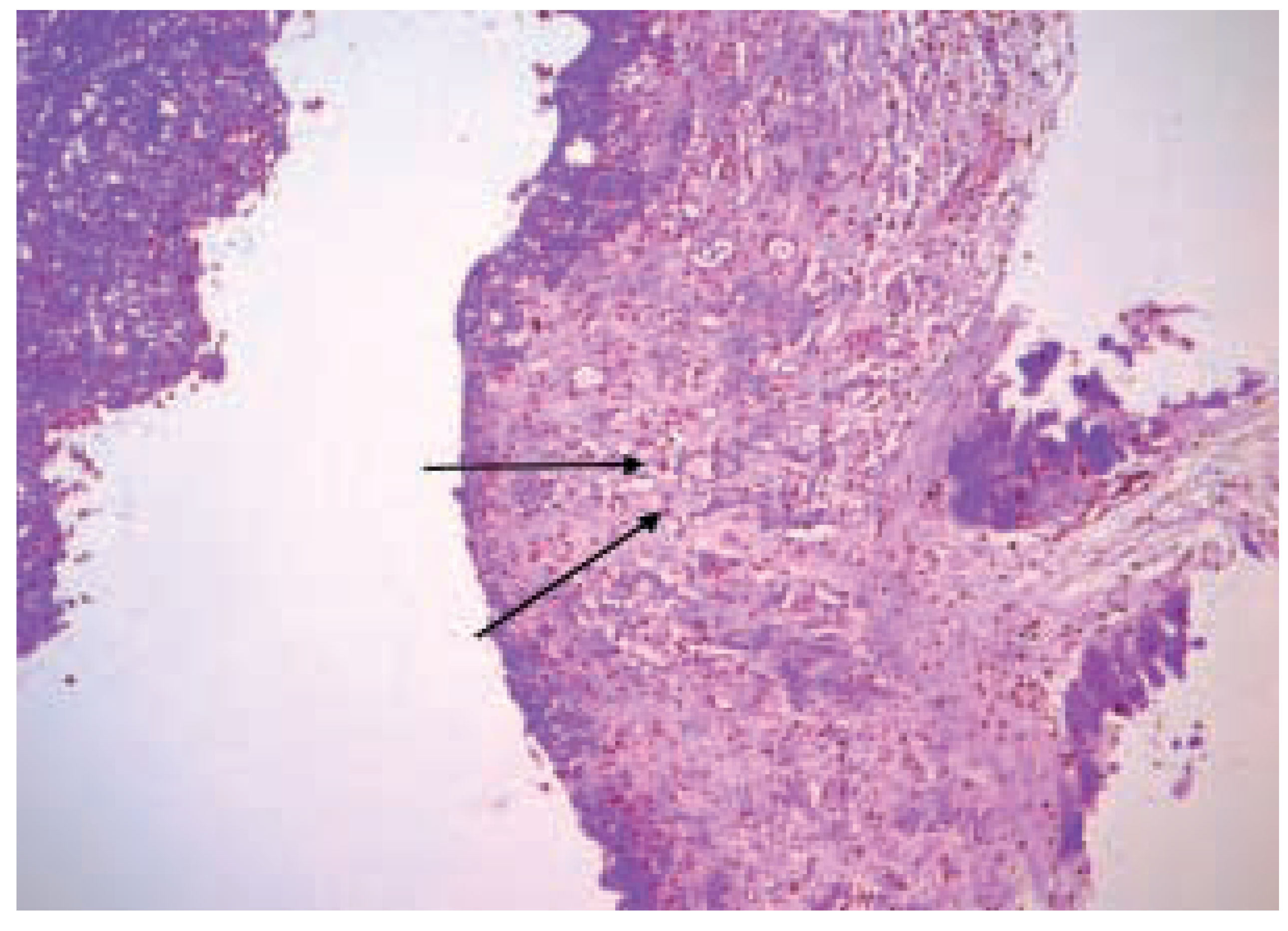
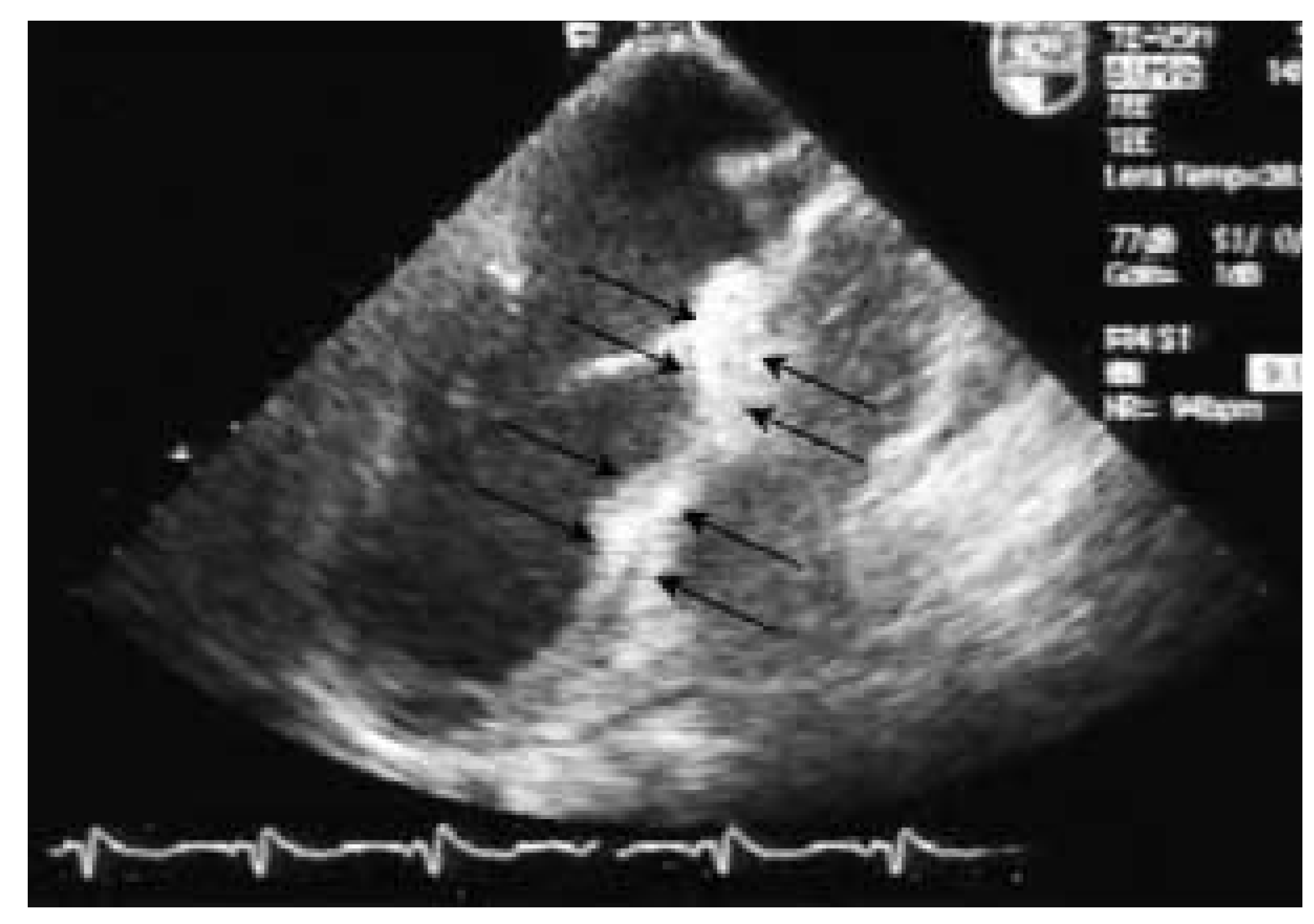
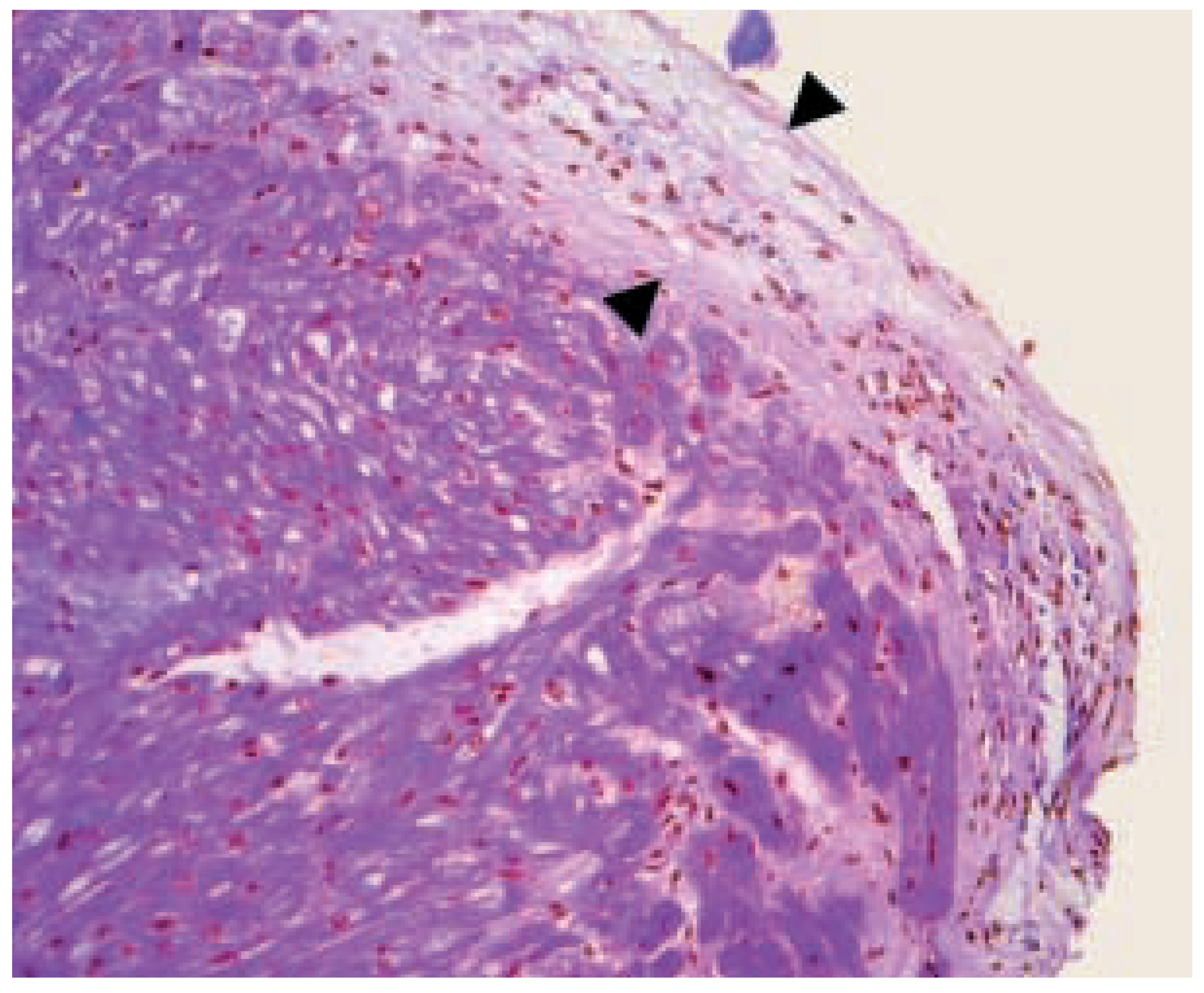
A 66-year-old woman was admitted with NYHA class II congestive heart failure, oedema of the lower extremities, and slight jugular vein enlargement. She had no history of drug allergy but was known for an adult form of bronchial asthma, treated with oral corticosteroids, and for a newly diagnosed type-2 diabetes mellitus. She complained of headaches, low-grade fever, painful ears, decreased appetite and 12 kg weight lost during the last six months. The results of a routine haematological study showed a total eosinophil count of 5750/ml. The routine clinical chemistry demonstrated small augmentation of troponin T level, creatine phosphokinase, lactic dehydrogenase and pro-BNP. Transthoracic and then transoesophagial echocardiography [1] revealed a thickening of the anterior left ventricular wall, appearing bright (Figure 1 – arrows) and a mass-like lesion in the left ventricle. An invasive examination showed normal coronary arteries, modest impaired left ventricular function due to apical hypokinesia and a restrictive filling pattern. The endomyocardial biopsy (Figure 2 and Figure 3) from the right ventricle illustrated oedematous changes, thickening of the endocardium (Figure 2– arrowheads), necrosis and degeneration of the myocytes. Fibrosis and infiltration of lymphocytes admixed with marked eosinophils (Figure 3 – arrows) were seen in the interstitial space of the myocardium, and eosinophils had infiltrated the endocardium. These findings finally assessed the diagnosis of Loeffler’s syndrome or so-called idiopathic hypereosinophilic syndrome [2, 3]. Magnetic resonance imaging showed multiple little cerebral infarctions probably due to embolism from thrombotic material in the left ventricle [3, 4].
Figure 1.
Figure 2.
Figure 3.

References

  1. Acquatella, H.; Schiller, N.B. Echocardiographic recognition of Chagas’ disease and endomyocardial fibrosis. J Am Soc Echocardiogr 1988, 1, 60–68. [Google Scholar] [CrossRef] [PubMed]
  2. Desreumaux, P.; Janin, A.; Dubucquoi, S.; et al. Synthesis of interleukin-5 by activated eosinophils in patients with eosinophilic heart diseases. Blood 1993, 82, 1553–1560. [Google Scholar] [CrossRef] [PubMed][Green Version]
  3. Weller, P.F.; Bubley, G.J. The idiopathic hypereosinophilic syndrome. Blood 1994, 83, 2759–2763. [Google Scholar] [CrossRef] [PubMed]
  4. Chusid, M.J.; Dale, D.C.; West, B.C.; et al. The hypereosinophilic syndrome: analysis of fourteen cases with review of the literature. Medicine (Baltimore) 1975, 54, 1–27. [Google Scholar] [CrossRef] [PubMed]
Article Metrics

Citations

Article Access Statistics

Multiple requests from the same IP address are counted as one view.