
Annurca Apple-Derived Polyphenols, Bioactive Fractions and By-Products as Context-Dependent Redox Modulators: Molecular Mechanisms and Nutraceutical Perspectives—A Narrative Review


Abstract
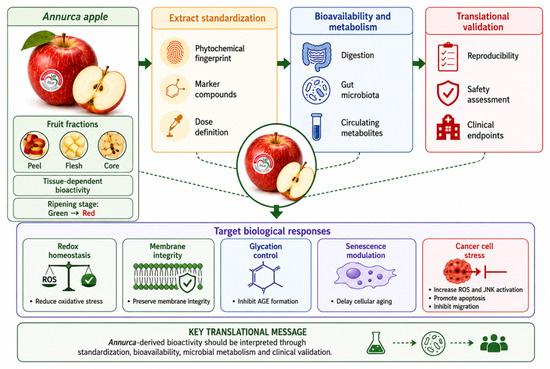
1. Introduction
2. Literature Search Strategy and Review Framework
3. Annurca Apple as a Fruit-Fraction-Specific Bioactive Matrix
4. Annurca Apple By-Products and Sustainable Valorization
5. Redox-Related Cytoprotection and Erythrocyte Membrane Homeostasis
6. AGE-Related Injury and Endothelial Cell Protection
7. Lipid Metabolism and Cardiometabolic Evidence
8. Skin, Hair and Senescence-Related Evidence
9. Exploratory Neuromodulatory and Neuroprotective Targets
10. Cancer Cell Redox Modulation: In Vitro Evidence
11. Bioavailability, Gut Microbiota and Translational Bottlenecks
12. Critical Appraisal and Future Perspectives
13. Conclusions
Funding
Institutional Review Board Statement
Informed Consent Statement
Data Availability Statement
Acknowledgments
Conflicts of Interest
Abbreviations
| AGE | Advanced glycation end products |
| AChE | Acetylcholinesterase |
| EMT | Epithelial–mesenchymal transition |
| HDL-C | High-density lipoprotein cholesterol |
| HgCl2 | Mercury chloride |
| JNK | c-Jun N-terminal kinase |
| LDL-C | Low-density lipoprotein cholesterol |
| MAO | Monoamine oxidase |
| MET | Mesenchymal-to-epithelial transition |
| NPC1L1 | Niemann–Pick C1-like 1 |
| PLSCR1 | Phospholipid scramblase 1 |
| PS | Phosphatidylserine |
| RAGE | Receptor for advanced glycation end products |
| RCT | Randomized controlled trial |
| ROS | Reactive oxygen species |
| SASP | Senescence-associated secretory phenotype |
| TLP1a | Thaumatin-like protein 1a |
References
- Mierczak, K.; Garus-Pakowska, A. An Overview of Apple Varieties and the Importance of Apple Consumption in the Prevention of Non-Communicable Diseases—A Narrative Review. Nutrients 2024, 16, 3307. [Google Scholar] [CrossRef] [Scilit] [PubMed]
- Tsao, R.; Yang, R.; Young, J.C.; Zhu, H. Polyphenolic Profiles in Eight Apple Cultivars Using High-Performance Liquid Chromatography. J. Agric. Food Chem. 2003, 51, 6347–6353. [Google Scholar] [CrossRef] [Scilit] [PubMed]
- Boyer, J.; Liu, R.H. Apple Phytochemicals and Their Health Benefits. Nutr. J. 2004, 3, 5. [Google Scholar] [CrossRef] [Scilit] [PubMed]
- Francini, A.; Sebastiani, L. Phenolic Compounds in Apple (Malus × domestica Borkh.): Compounds Characterization and Stability during Postharvest and after Processing. Antioxidants 2013, 2, 181–193. [Google Scholar] [CrossRef] [Scilit] [PubMed]
- Jakobek, L.; Matić, P. Phenolic Compounds from Apples: From Natural Fruits to the Beneficial Effects in the Digestive System. Molecules 2024, 29, 568. [Google Scholar] [CrossRef] [Scilit] [PubMed]
- Drogoudi, P.D.; Michailidis, Z.; Pantelidis, G. Peel and Flesh Antioxidant Content and Harvest Quality Characteristics of Seven Apple Cultivars. Sci. Hortic. 2008, 115, 149–153. [Google Scholar] [CrossRef] [Scilit]
- Tomás-Barberán, F.A.; Selma, M.V.; Espín, J.C. Interactions of Gut Microbiota with Dietary Polyphenols and Consequences to Human Health. Curr. Opin. Clin. Nutr. Metab. Care 2016, 19, 471–476. [Google Scholar] [CrossRef] [Scilit] [PubMed]
- Manach, C.; Williamson, G.; Morand, C.; Scalbert, A.; Rémésy, C. Bioavailability and Bioefficacy of Polyphenols in Humans. I. Review of 97 Bioavailability Studies. Am. J. Clin. Nutr. 2005, 81, 230S–242S. [Google Scholar] [CrossRef] [Scilit] [PubMed]
- Del Rio, D.; Rodriguez-Mateos, A.; Spencer, J.P.E.; Tognolini, M.; Borges, G.; Crozier, A. Dietary (Poly)phenolics in Human Health: Structures, Bioavailability, and Evidence of Protective Effects against Chronic Diseases. Antioxid. Redox Signal. 2013, 18, 1818–1892. [Google Scholar] [CrossRef] [Scilit] [PubMed]
- Espín, J.C.; González-Sarrías, A.; Tomás-Barberán, F.A. The Gut Microbiota: A Key Factor in the Therapeutic Effects of (Poly)phenols. Biochem. Pharmacol. 2017, 139, 82–93. [Google Scholar] [CrossRef] [Scilit] [PubMed]
- Perrone, P.; Palmieri, S.; Piscopo, M.; Lettieri, G.; Eugelio, F.; Fanti, F.; D’Angelo, S. Antioxidant Activity of Annurca Apple By-Products at Different Ripening Stages: A Sustainable Valorization Approach. Antioxidants 2025, 14, 941. [Google Scholar] [CrossRef] [Scilit] [PubMed]
- D’Angelo, S.; Cimmino, A.; Raimo, M.; Salvatore, A.; Zappia, V.; Galletti, P. Effect of Reddening–Ripening on the Antioxidant Activity of Polyphenol Extracts from cv. ‘Annurca’ Apple Fruits. J. Agric. Food Chem. 2007, 55, 9977–9985. [Google Scholar] [CrossRef] [Scilit] [PubMed]
- Cefarelli, G.; D’Abrosca, B.; Fiorentino, A.; Izzo, A.; Monaco, P. Isolation, Characterization, and Antioxidant Activity of E- and Z-p-Coumaryl Fatty Acid Esters from cv. Annurca Apple Fruits. J. Agric. Food Chem. 2005, 53, 3525–3529. [Google Scholar] [CrossRef] [Scilit] [PubMed]
- Tenore, G.C.; Campiglia, P.; Stiuso, P.; Ritieni, A.; Novellino, E. Nutraceutical Potential of Polyphenolic Fractions from Annurca Apple (M. pumila Miller cv. Annurca). Food Chem. 2013, 140, 614–622. [Google Scholar] [CrossRef] [Scilit] [PubMed]
- European Commission. Commission Regulation (EC) No. 417/2006 of 10 March 2006 Supplementing the Annex to Regulation (EC) No. 2400/96 as Regards the Entry of Certain Names in the Register of Protected Designations of Origin and Protected Geographical Indications: Melannurca Campana (PGI). Off. J. Eur. Union 2006, L72, 8–9. [Google Scholar]
- Iannaccone, M.; Palumbo, D.; Ventimiglia, I.; Patocchi, A.; Spigno, P.; Capparelli, R. Use of Molecular Markers and Flow Cytometry to Preserve Ancient Annurca Apple Germplasm. Biotechnol. Lett. 2007, 29, 279–284. [Google Scholar] [CrossRef] [Scilit] [PubMed]
- Lo Scalzo, R.; Testoni, A.; Genna, A. ‘Annurca’ Apple Fruit, a Southern Italy Apple Cultivar: Textural Properties and Aroma Composition. Food Chem. 2001, 73, 333–343. [Google Scholar] [CrossRef] [Scilit]
- Corrado, G.; Mataffo, A.; Scognamiglio, P.; Teobaldelli, M.; Basile, B. Resolving the Texture–Flavor Trade-Off in ‘Annurca’ Apples with an Integrated Postharvest System. Foods 2025, 14, 3554. [Google Scholar] [CrossRef] [Scilit] [PubMed]
- Graziani, G.; Ritieni, A.; Cirillo, A.; Cice, D.; Di Vaio, C. Effects of Biostimulants on Annurca Fruit Quality and Potential Nutraceutical Compounds at Harvest and during Storage. Plants 2020, 9, 775. [Google Scholar] [CrossRef] [Scilit] [PubMed]
- Tenore, G.C.; Calabrese, G.; Stiuso, P.; Ritieni, A.; Giannetti, D.; Novellino, E. Effects of Annurca Apple Polyphenols on Lipid Metabolism in HepG2 Cell Lines: A Source of Nutraceuticals Potentially Indicated for the Metabolic Syndrome. Food Res. Int. 2014, 63, 252–257. [Google Scholar] [CrossRef] [Scilit]
- Vuoso, D.C.; Porcelli, M.; Cacciapuoti, G.; D’Angelo, S. Biological Activity of MelAnnurca Flesh Apple Biophenols. Curr. Nutr. Food Sci. 2020, 16, 1149–1162. [Google Scholar] [CrossRef] [Scilit]
- Liccardo, M.; Perrone, P.; Perrella, S.; Sirangelo, I.; D’Angelo, S.; Iannuzzi, C. Annurca Apple By-Products at Different Ripening Stages Inhibit AGE Formation and Protect against AGE-Induced Cytotoxicity through Antioxidant Activity. Antioxidants 2026, 15, 200. [Google Scholar] [CrossRef] [Scilit] [PubMed]
- Schieber, A.; Stintzing, F.C.; Carle, R. By-Products of Plant Food Processing as a Source of Functional Compounds—Recent Developments. Trends Food Sci. Technol. 2001, 12, 401–413. [Google Scholar] [CrossRef] [Scilit]
- Bhushan, S.; Kalia, K.; Sharma, M.; Singh, B.; Ahuja, P.S. Processing of Apple Pomace for Bioactive Molecules. Crit. Rev. Biotechnol. 2008, 28, 285–296. [Google Scholar] [CrossRef] [Scilit] [PubMed]
- Perussello, C.A.; Zhang, Z.; Marzocchella, A.; Tiwari, B.K. Valorization of Apple Pomace by Extraction of Valuable Compounds. Compr. Rev. Food Sci. Food Saf. 2017, 16, 776–796. [Google Scholar] [CrossRef] [Scilit] [PubMed]
- D’Angelo, S.; Sammartino, D. Protective Effect of Annurca Apple Extract against Oxidative Damage in Human Erythrocytes. Curr. Nutr. Food Sci. 2015, 11, 248–256. [Google Scholar] [CrossRef] [Scilit]
- D’Angelo, S.; La Porta, R.; Napolitano, M.; Galletti, P.; Quagliuolo, L.; Boccellino, M. Effect of Annurca Apple Polyphenols on Human HaCaT Keratinocytes Proliferation. J. Med. Food 2012, 15, 1024–1031. [Google Scholar] [CrossRef] [Scilit] [PubMed]
- Perrone, P.; Moriello, C.; Alessio, N.; Manna, C.; D’Angelo, S. Cytoprotective Potential of Annurca Apple Polyphenols on Mercury-Induced Oxidative Stress in Human Erythrocytes. Int. J. Mol. Sci. 2025, 26, 8826. [Google Scholar] [CrossRef] [Scilit] [PubMed]
- Perrone, P.; Moriello, C.; Alessio, N.; Contri, A.; Manna, C.; D’Angelo, S. Annurca Apple Polyphenols Prevent Mercury-Induced Phosphatidylserine Externalization in Human Erythrocytes via Calcium-Dependent PLSCR1 Regulation. Front. Nutr. 2026, 13, 1770188. [Google Scholar] [CrossRef] [Scilit] [PubMed]
- Moriello, C.; Alessio, N.; Perrone, P.; Squillaro, T.; D’Angelo, S.; Galderisi, U.; Di Bernardo, G. Polyphenol-Rich Extracts from Annurca Apple Differentially Modulate Oxidative Stress-Induced Senescence in Human Dermal Fibroblasts. Antioxidants 2026, 15, 372. [Google Scholar] [CrossRef] [Scilit] [PubMed]
- Tenore, G.C.; Caruso, D.; Buonomo, G.; D’Urso, E.; D’Avino, M.; Campiglia, P.; Marinelli, L.; Novellino, E. Annurca (Malus pumila Miller cv. Annurca) Apple as a Functional Food for the Contribution to a Healthy Balance of Plasma Cholesterol Levels: Results of a Randomized Clinical Trial. J. Sci. Food Agric. 2017, 97, 2107–2115. [Google Scholar] [CrossRef] [Scilit] [PubMed]
- Tenore, G.C.; Caruso, D.; Buonomo, G.; D’Avino, M.; Campiglia, P.; Marinelli, L.; Novellino, E. A Healthy Balance of Plasma Cholesterol by a Novel Annurca Apple-Based Nutraceutical Formulation: Results of a Randomized Trial. J. Med. Food 2017, 20, 288–300. [Google Scholar] [CrossRef] [Scilit] [PubMed]
- Tenore, G.C.; Carotenuto, A.; Caruso, D.; Buonomo, G.; D’Avino, A.M.; Brancaccio, D.; Ciampaglia, R.; Maisto, M.; Schisano, C.; Novellino, E. A Nutraceutical Formulation Based on Annurca Apple Polyphenolic Extract Is Effective on Intestinal Cholesterol Absorption: A Randomised, Placebo-Controlled, Crossover Study. PharmaNutrition 2018, 6, 85–94. [Google Scholar] [CrossRef] [Scilit]
- Sommella, E.; Badolati, N.; Riccio, G.; Salviati, E.; Bottone, S.; Dentice, M.; Campiglia, P.; Tenore, G.C.; Stornaiuolo, M.; Novellino, E. A Boost in Mitochondrial Activity Underpins the Cholesterol-Lowering Effect of Annurca Apple Polyphenols on Hepatic Cells. Nutrients 2019, 11, 163. [Google Scholar] [CrossRef] [Scilit] [PubMed]
- Tenore, G.C.; Caruso, D.; Buonomo, G.; D’Avino, M.; Santamaria, R.; Irace, C.; Piccolo, M.; Maisto, M.; Novellino, E. Annurca Apple Nutraceutical Formulation Enhances Keratin Expression in a Human Model of Skin and Promotes Hair Growth and Tropism in a Randomized Clinical Trial. J. Med. Food 2018, 21, 90–103. [Google Scholar] [CrossRef] [Scilit] [PubMed]
- Badolati, N.; Sommella, E.; Riccio, G.; Salviati, E.; Heintz, D.; Bottone, S.; Di Cicco, E.; Dentice, M.; Tenore, G.C.; Campiglia, P.; et al. Annurca Apple Polyphenols Ignite Keratin Production in Hair Follicles by Inhibiting the Pentose Phosphate Pathway and Amino Acid Oxidation. Nutrients 2018, 10, 1406. [Google Scholar] [CrossRef] [Scilit] [PubMed]
- D’Angelo, S.; Martino, E.; Ilisso, C.P.; Bagarolo, M.L.; Porcelli, M.; Cacciapuoti, G. Pro-Oxidant and Pro-Apoptotic Activity of Polyphenol Extract from Annurca Apple and Its Underlying Mechanisms in Human Breast Cancer Cells. Int. J. Oncol. 2017, 51, 939–948. [Google Scholar] [CrossRef] [Scilit] [PubMed]
- D’Angelo, S.; Martino, E.; Cacciapuoti, G. Effects of Annurca Apple (Malus pumila cv. Annurca) Polyphenols on Breast Cancer Cells. Curr. Nutr. Food Sci. 2019, 15, 745–751. [Google Scholar] [CrossRef] [Scilit]
- Martino, E.; Vuoso, D.C.; D’Angelo, S.; Mele, L.; D’Onofrio, N.; Porcelli, M.; Cacciapuoti, G. Annurca Apple Polyphenol Extract Selectively Kills MDA-MB-231 Cells through ROS Generation, Sustained JNK Activation and Cell Growth and Survival Inhibition. Sci. Rep. 2019, 9, 13045. [Google Scholar] [CrossRef] [Scilit] [PubMed]
- Vuoso, D.C.; D’Angelo, S.; Ferraro, R.; Caserta, S.; Guido, S.; Cammarota, M.; Porcelli, M.; Cacciapuoti, G. Annurca Apple Polyphenol Extract Promotes Mesenchymal-to-Epithelial Transition and Inhibits Migration in Triple-Negative Breast Cancer Cells through ROS/JNK Signaling. Sci. Rep. 2020, 10, 15921. [Google Scholar] [CrossRef] [Scilit] [PubMed]
- Boccellino, M.; Quagliuolo, L.; D’Angelo, S. Annurca Apple Biophenols’ Effects in Combination with Cisplatin on A549 Cells. Curr. Nutr. Food Sci. 2021, 17, 111–120. [Google Scholar] [CrossRef] [Scilit]
- Orlandella, F.M.; Mirabelli, P.; De Stefano, A.E.; Iervolino, P.L.C.; Luciano, N.; D’Angelo, S.; Salvatore, G. Effects of Annurca Flesh Apple Polyphenol in Human Thyroid Cancer Cell Lines. Oxid. Med. Cell. Longev. 2022, 2022, 6268755. [Google Scholar] [CrossRef] [Scilit] [PubMed]
- Nasso, R.; Pagliara, V.; D’Angelo, S.; Rullo, R.; Masullo, M.; Arcone, R. Annurca Apple Polyphenol Extract Affects Acetylcholinesterase and Monoamine Oxidase In Vitro Enzyme Activity. Pharmaceuticals 2021, 14, 62. [Google Scholar] [CrossRef] [Scilit] [PubMed]
- D’Errico, A.; Nasso, R.; Di Maro, A.; Landi, N.; Chambery, A.; Russo, R.; D’Angelo, S.; Masullo, M.; Arcone, R. Identification and Characterization of Neuroprotective Properties of Thaumatin-like Protein 1a from Annurca Apple Flesh Polyphenol Extract. Nutrients 2024, 16, 307. [Google Scholar] [CrossRef] [Scilit] [PubMed]
- Prior, R.L.; Wu, X.; Schaich, K. Standardized Methods for the Determination of Antioxidant Capacity and Phenolics in Foods and Dietary Supplements. J. Agric. Food Chem. 2005, 53, 4290–4302. [Google Scholar] [CrossRef] [Scilit] [PubMed]
- Apak, R.; Özyürek, M.; Güçlü, K.; Çapanoğlu, E. Antioxidant Activity/Capacity Measurement. 1. Classification, Physicochemical Principles, Mechanisms, and Electron Transfer (ET)-Based Assays. J. Agric. Food Chem. 2016, 64, 997–1027. [Google Scholar] [CrossRef] [Scilit] [PubMed]
- Koutsos, A.; Tuohy, K.M.; Lovegrove, J.A. Apples and Cardiovascular Health—Is the Gut Microbiota a Core Consideration? Nutrients 2015, 7, 3959–3998. [Google Scholar] [CrossRef] [Scilit] [PubMed]
- Green, B.N.; Johnson, C.D.; Adams, A. Writing Narrative Literature Reviews for Peer-Reviewed Journals: Secrets of the Trade. J. Chiropr. Med. 2006, 5, 101–117. [Google Scholar] [CrossRef] [Scilit] [PubMed]
- Baethge, C.; Goldbeck-Wood, S.; Mertens, S. SANRA—A Scale for the Quality Assessment of Narrative Review Articles. Res. Integr. Peer Rev. 2019, 4, 5. [Google Scholar] [CrossRef] [Scilit] [PubMed]
- Jakobek, L.; Barron, A.R. Ancient Apple Varieties from Croatia as a Source of Bioactive Polyphenolic Compounds. J. Food Compos. Anal. 2016, 45, 9–15. [Google Scholar] [CrossRef] [Scilit]
- O’Shea, N.; Arendt, E.K.; Gallagher, E. Dietary Fibre and Phytochemical Characteristics of Fruit and Vegetable By-Products and Their Recent Applications as Novel Ingredients in Food Products. Innov. Food Sci. Emerg. Technol. 2012, 16, 1–10. [Google Scholar] [CrossRef] [Scilit]
- Sudha, M.L.; Baskaran, V.; Leelavathi, K. Apple Pomace as a Source of Dietary Fiber and Polyphenols and Its Effect on the Rheological Characteristics and Cake Making. Food Chem. 2007, 104, 686–692. [Google Scholar] [CrossRef] [Scilit]
- Scalbert, A.; Williamson, G. Dietary Intake and Bioavailability of Polyphenols. J. Nutr. 2000, 130, 2073S–2085S. [Google Scholar] [CrossRef] [Scilit] [PubMed]
- Williamson, G.; Clifford, M.N. Role of the Small Intestine, Colon and Microbiota in Determining the Metabolic Fate of Polyphenols. Biochem. Pharmacol. 2017, 139, 24–39. [Google Scholar] [CrossRef] [Scilit] [PubMed]
- Cardona, F.; Andrés-Lacueva, C.; Tulipani, S.; Tinahones, F.J.; Queipo-Ortuño, M.I. Benefits of Polyphenols on Gut Microbiota and Implications in Human Health. J. Nutr. Biochem. 2013, 24, 1415–1422. [Google Scholar] [CrossRef] [Scilit] [PubMed]
- Mosca, L.; Pagano, C.; Tafuri, M.G.; Di Maio, G.; Rejano-Gordillo, C.M.; Della Marca, R.; D’Angelo, S.; Monda, M.; Messina, G.; Polito, R.; et al. The Gut Microbiota–Polyphenol–NLRP3 Inflammasome Axis: A Key Regulatory Network Linking Diet to Chronic Inflammation. Nutrients 2026, 18, 1483. [Google Scholar] [CrossRef] [Scilit] [PubMed]
- Sies, H. Oxidative Stress: Concept and Some Practical Aspects. Antioxidants 2020, 9, 852. [Google Scholar] [CrossRef] [Scilit] [PubMed]
- Pandey, K.B.; Rizvi, S.I. Biomarkers of Oxidative Stress in Red Blood Cells. Biomed. Pap. Med. Fac. Univ. Palacky Olomouc Czech Repub. 2011, 155, 131–136. [Google Scholar] [CrossRef] [Scilit] [PubMed]
- Clarkson, T.W.; Magos, L. The Toxicology of Mercury and Its Chemical Compounds. Crit. Rev. Toxicol. 2006, 36, 609–662. [Google Scholar] [CrossRef] [Scilit] [PubMed]
- Ahmad, S.; Mahmood, R. Mercury Chloride Toxicity in Human Erythrocytes: Enhanced Generation of ROS and RNS, Hemoglobin Oxidation, Impaired Antioxidant Power, and Inhibition of Plasma Membrane Redox System. Environ. Sci. Pollut. Res. Int. 2019, 26, 5645–5657. [Google Scholar] [CrossRef] [Scilit] [PubMed]
- Piscopo, M.; Notariale, R.; Tortora, F.; Lettieri, G.; Palumbo, G.; Manna, C. Novel Insights into Mercury Effects on Hemoglobin and Membrane Proteins in Human Erythrocytes. Molecules 2020, 25, 3278. [Google Scholar] [CrossRef] [Scilit] [PubMed]
- Lang, E.; Qadri, S.M.; Lang, F. Killing Me Softly—Suicidal Erythrocyte Death. Int. J. Biochem. Cell Biol. 2012, 44, 1236–1243. [Google Scholar] [CrossRef] [Scilit] [PubMed]
- Bevers, E.M.; Williamson, P.L. Getting to the Outer Leaflet: Physiology of Phosphatidylserine Exposure at the Plasma Membrane. Physiol. Rev. 2016, 96, 605–645. [Google Scholar] [CrossRef] [Scilit] [PubMed]
- Dal Col, J.; Lamberti, M.J.; Nigro, A.; Casolaro, V.; Fratta, E.; Steffan, A.; Montico, B. Phospholipid Scramblase 1: A Protein with Multiple Functions via Multiple Molecular Interactors. Cell Commun. Signal. 2022, 20, 78. [Google Scholar] [CrossRef] [Scilit] [PubMed]
- Guo, J.; Li, J.; Xia, L.; Wang, Y.; Zhu, J.; Du, J.; Lu, Y.; Liu, G.; Yao, X.; Shen, B. Transient Receptor Potential Canonical 5-Scramblase Signaling Complex Mediates Neuronal Phosphatidylserine Externalization and Apoptosis. Cells 2020, 9, 547. [Google Scholar] [CrossRef] [Scilit] [PubMed]
- Notariale, R.; Perrone, P.; Mele, L.; Lettieri, G.; Piscopo, M.; Manna, C. Olive Oil Phenols Prevent Mercury-Induced Phosphatidylserine Exposure and Morphological Changes in Human Erythrocytes Regardless of Their Different Scavenging Activity. Int. J. Mol. Sci. 2022, 23, 5693. [Google Scholar] [CrossRef] [Scilit] [PubMed]
- Brownlee, M. Biochemistry and Molecular Cell Biology of Diabetic Complications. Nature 2001, 414, 813–820. [Google Scholar] [CrossRef] [Scilit] [PubMed]
- Goldin, A.; Beckman, J.A.; Schmidt, A.M.; Creager, M.A. Advanced Glycation End Products: Sparking the Development of Diabetic Vascular Injury. Circulation 2006, 114, 597–605. [Google Scholar] [CrossRef] [Scilit] [PubMed]
- Ramasamy, R.; Yan, S.F.; Schmidt, A.M. Receptor for AGE: Signaling Mechanisms in the Pathogenesis of Diabetes and Its Complications. Ann. N. Y. Acad. Sci. 2011, 1243, 88–102. [Google Scholar] [CrossRef] [Scilit] [PubMed]
- Poulsen, M.W.; Hedegaard, R.V.; Andersen, J.M.; de Courten, B.; Bügel, S.; Nielsen, J.; Skibsted, L.H.; Dragsted, L.O. Advanced Glycation Endproducts in Food and Their Effects on Health. Food Chem. Toxicol. 2013, 60, 10–37. [Google Scholar] [CrossRef] [Scilit] [PubMed]
- Yeh, W.J.; Hsia, S.M.; Lee, W.H.; Wu, C.H. Polyphenols with Antiglycation Activity and Mechanisms of Action: A Review of Recent Findings. J. Food Drug Anal. 2017, 25, 84–92. [Google Scholar] [CrossRef] [Scilit] [PubMed]
- Ference, B.A.; Ginsberg, H.N.; Graham, I.; Ray, K.K.; Packard, C.J.; Bruckert, E.; Hegele, R.A.; Krauss, R.M.; Raal, F.J.; Schunkert, H.; et al. Low-Density Lipoproteins Cause Atherosclerotic Cardiovascular Disease. 1. Evidence from Genetic, Epidemiologic, and Clinical Studies. A Consensus Statement from the European Atherosclerosis Society Consensus Panel. Eur. Heart J. 2017, 38, 2459–2472. [Google Scholar] [CrossRef] [Scilit] [PubMed]
- Hyson, D.A. A Comprehensive Review of Apples and Apple Components and Their Relationship to Human Health. Adv. Nutr. 2011, 2, 408–420. [Google Scholar] [CrossRef] [Scilit] [PubMed]
- Jia, L.; Betters, J.L.; Yu, L. Niemann-Pick C1-like 1 Protein in Intestinal and Hepatic Cholesterol Transport. Annu. Rev. Physiol. 2011, 73, 239–259. [Google Scholar] [CrossRef] [Scilit] [PubMed]
- Wang, D.Q.H. Regulation of Intestinal Cholesterol Absorption. Annu. Rev. Physiol. 2007, 69, 221–248. [Google Scholar] [CrossRef] [Scilit] [PubMed]
- Maisto, M.; Schiano, E.; Novellino, E.; Piccolo, V.; Iannuzzo, F.; Salviati, E.; Summa, V.; Annunziata, G.; Tenore, G.C. Application of a Rapid and Simple Technological Process to Increase Levels and Bioaccessibility of Free Phenolic Compounds in Annurca Apple Nutraceutical Product. Foods 2022, 11, 1453. [Google Scholar] [CrossRef] [Scilit] [PubMed]
- Campisi, J. Aging, Cellular Senescence, and Cancer. Annu. Rev. Physiol. 2013, 75, 685–705. [Google Scholar] [CrossRef] [Scilit] [PubMed]
- Gorgoulis, V.; Adams, P.D.; Alimonti, A.; Bennett, D.C.; Bischof, O.; Bishop, C.; Campisi, J.; Collado, M.; Evangelou, K.; Ferbeyre, G.; et al. Cellular Senescence: Defining a Path Forward. Cell 2019, 179, 813–827. [Google Scholar] [CrossRef] [Scilit] [PubMed]
- Rinnerthaler, M.; Bischof, J.; Streubel, M.K.; Trost, A.; Richter, K. Oxidative Stress in Aging Human Skin. Biomolecules 2015, 5, 545–589. [Google Scholar] [CrossRef] [Scilit] [PubMed]
- Rittié, L.; Fisher, G.J. Natural and Sun-Induced Aging of Human Skin. Cold Spring Harb. Perspect. Med. 2015, 5, a015370. [Google Scholar] [CrossRef] [Scilit] [PubMed]
- Jenkins, G. Molecular Mechanisms of Skin Ageing. Mech. Ageing Dev. 2002, 123, 801–810. [Google Scholar] [CrossRef] [Scilit] [PubMed]
- Kammeyer, A.; Luiten, R.M. Oxidation Events and Skin Aging. Ageing Res. Rev. 2015, 21, 16–29. [Google Scholar] [CrossRef] [Scilit] [PubMed]
- Halliwell, B. Oxidative Stress and Neurodegeneration: Where Are We Now? J. Neurochem. 2006, 97, 1634–1658. [Google Scholar] [CrossRef] [Scilit] [PubMed]
- Spencer, J.P.E. The Interactions of Flavonoids within Neuronal Signalling Pathways. Genes Nutr. 2007, 2, 257–273. [Google Scholar] [CrossRef] [Scilit] [PubMed]
- Mandel, S.A.; Amit, T.; Kalfon, L.; Reznichenko, L.; Youdim, M.B.H. Targeting Multiple Neurodegenerative Disease Etiologies with Multimodal-Acting Green Tea Catechins. J. Nutr. 2008, 138, 1578S–1583S. [Google Scholar] [CrossRef] [Scilit] [PubMed]
- Soreq, H.; Seidman, S. Acetylcholinesterase—New Roles for an Old Actor. Nat. Rev. Neurosci. 2001, 2, 294–302. [Google Scholar] [CrossRef] [Scilit] [PubMed]
- Youdim, M.B.H.; Edmondson, D.; Tipton, K.F. The Therapeutic Potential of Monoamine Oxidase Inhibitors. Nat. Rev. Neurosci. 2006, 7, 295–309. [Google Scholar] [CrossRef] [Scilit] [PubMed]
- Trachootham, D.; Alexandre, J.; Huang, P. Targeting Cancer Cells by ROS-Mediated Mechanisms: A Radical Therapeutic Approach? Nat. Rev. Drug Discov. 2009, 8, 579–591. [Google Scholar] [CrossRef] [Scilit] [PubMed]
- Gorrini, C.; Harris, I.S.; Mak, T.W. Modulation of Oxidative Stress as an Anticancer Strategy. Nat. Rev. Drug Discov. 2013, 12, 931–947. [Google Scholar] [CrossRef] [Scilit] [PubMed]
- Davis, R.J. Signal Transduction by the JNK Group of MAP Kinases. Cell 2000, 103, 239–252. [Google Scholar] [CrossRef] [Scilit] [PubMed]
- Hanahan, D. Hallmarks of Cancer: New Dimensions. Cancer Discov. 2022, 12, 31–46. [Google Scholar] [CrossRef] [Scilit] [PubMed]
- Nieto, M.A.; Huang, R.Y.J.; Jackson, R.A.; Thiery, J.P. Epithelial–Mesenchymal Transitions in Development and Disease. Cell 2016, 166, 21–45. [Google Scholar] [CrossRef] [Scilit] [PubMed]
- Perrone, P.; D’Angelo, S. Gut Microbial Metabotypes Shape Polyphenol Bioactivity: Toward Precision Nutrition Strategies for Human Health. Nutrients 2026, 18, 2396. [Google Scholar] [CrossRef] [Scilit] [PubMed]
- Sumner, L.W.; Amberg, A.; Barrett, D.; Beale, M.H.; Beger, R.; Daykin, C.A.; Fan, T.W.-M.; Fiehn, O.; Goodacre, R.; Griffin, J.L.; et al. Proposed Minimum Reporting Standards for Chemical Analysis. Metabolomics 2007, 3, 211–221. [Google Scholar] [CrossRef] [Scilit] [PubMed]
- Minekus, M.; Alminger, M.; Alvito, P.; Ballance, S.; Bohn, T.; Bourlieu, C.; Carrière, F.; Boutrou, R.; Corredig, M.; Dupont, D.; et al. A Standardised Static In Vitro Digestion Method Suitable for Food—An International Consensus. Food Funct. 2014, 5, 1113–1124. [Google Scholar] [CrossRef] [Scilit] [PubMed]
- Brodkorb, A.; Egger, L.; Alminger, M.; Alvito, P.; Assunção, R.; Ballance, S.; Bohn, T.; Bourlieu-Lacanal, C.; Boutrou, R.; Carrière, F.; et al. INFOGEST Static In Vitro Simulation of Gastrointestinal Food Digestion. Nat. Protoc. 2019, 14, 991–1014. [Google Scholar] [CrossRef] [Scilit] [PubMed]
- Schulz, K.F.; Altman, D.G.; Moher, D.; CONSORT Group. CONSORT 2010 Statement: Updated Guidelines for Reporting Parallel Group Randomized Trials. BMJ 2010, 340, c332. [Google Scholar] [CrossRef] [Scilit] [PubMed]



| Fruit Fraction/Matrix | Main Phytochemical Features | Representative Compounds or Classes | Evidence Type | Biological Relevance | Critical Interpretation/Limitations | Refs. |
|---|---|---|---|---|---|---|
| Whole Annurca apple | Cultivar-specific Mediterranean food matrix influenced by reddening, ripening stage and post-harvest conditions | Flavan-3-ols, flavonols, phenolic acids, dihydrochalcones, procyanidins and other apple phytochemicals | Annurca-specific and broader apple literature | Provides the food-matrix background for interpreting Annurca-derived bioactivity | Whole-fruit effects cannot be directly extrapolated from concentrated extracts or isolated fractions | [1,2,3,4,6,12,14,15,16,17,18,19,20,21,50] |
| Peel | Phenolic-rich outer fraction, strongly influenced by light exposure, pigmentation and reddening-ripening | Flavonols, quercetin derivatives, procyanidins, phenolic acids, E- and Z-p-coumaryl fatty acid esters | Mainly phytochemical and chemical antioxidant evidence | Relevant source of redox-active compounds; potentially important for by-product valorization | Most evidence is based on chemical assays; antioxidant capacity does not directly demonstrate physiological efficacy | [2,6,11,13] |
| Flesh | Main edible fraction and commonly investigated source of Annurca-derived biophenols | Flavan-3-ols, phenolic acids, dihydrochalcones, procyanidin-rich fractions and other biophenols; non-phenolic components such as TLP1a may also contribute | Annurca-specific cellular and mechanistic studies | Used in studies on oxidative stress, skin-related models, neuroprotective targets and cancer cell redox modulation | Flesh-derived extracts are not equivalent to whole-fruit intake; extract dose, composition and bioavailability require clarification | [20,21,26,27,37,38,39,40,41,42,43,44] |
| Core | Usually discarded internal fraction with potential residual phenolic content | Phenolic acids, flavan-3-ols, procyanidins and fiber/pectin-associated matrix components | Emerging Annurca-specific by-product evidence | Potential source of bioactives for circular valorization strategies | Direct biological evidence remains limited; core should be distinguished from edible flesh and from processed pomace | [11,22,23,24,25,51,52] |
| Peel/core by-products | Usually discarded fractions with ripening- and tissue-dependent phenolic content | Total polyphenols, flavonoids, ortho-diphenols and antioxidant fractions; fiber- and pectin-associated components | Annurca-specific by-product studies and broader by-product literature | Antioxidant and antiglycative activity; inhibition of AGE formation and protection against AGE-induced cytotoxicity in preclinical models | Mainly chemical and in vitro evidence; safety, contaminants, digestion, bioaccessibility and batch reproducibility need assessment | [11,22,23,24,25,51,52] |
| Polyphenol-rich extracts/bioactive fractions | Concentrated preparations obtained from defined or partially defined fruit matrices | Procyanidin-rich components, flavan-3-ols, flavonols, phenolic acids and other extractable polyphenols | Annurca-specific mechanistic studies | Redox-related cytoprotection, erythrocyte membrane protection, lipid metabolism, senescence marker modulation and cancer cell stress responses | Concentrated extracts may not reflect dietary exposure; native compounds may differ from circulating metabolites after digestion and microbiota metabolism | [5,7,8,9,10,12,14,20,21,26,27,28,29,30,31,32,33,34,37,38,39,40,41,42,53,54,55] |
| Annurca-based nutraceutical formulations | Enriched or standardized formulations based on Annurca apple polyphenolic extracts | Polyphenol-enriched preparations, usually formulation-specific | Human intervention studies and mechanistic studies | Evidence for lipid-profile modulation and hair/keratin-related outcomes | Findings are formulation-specific and should not be automatically extrapolated to whole-fruit consumption or non-standardized extracts | [31,32,33,34,35,36] |
| Biological Domain | Model/Evidence | Annurca-Derived Material | Main Reported Effects | Evidence Strength/Critical Limitations | Refs. |
|---|---|---|---|---|---|
| Redox-related cytoprotection | Human erythrocytes and non-malignant cellular models | Annurca apple extract/polyphenol-rich extracts | Reduced oxidative damage; preservation of membrane integrity and cellular viability | Mainly in vitro/ex vivo evidence using concentrated extracts; physiological relevance depends on dose, digestion and metabolites | [26,27,28] |
| Mercury-induced erythrocyte damage | Human erythrocytes exposed to HgCl2 | Polyphenol-rich extracts | Modulation of ROS, Ca2+ homeostasis, PLSCR1 and phosphatidylserine externalization | Mechanistically relevant ex vivo model; in vivo relevance and contribution of individual compounds remain unclear | [28,29] |
| Skin-related responses and senescence markers | HaCaT keratinocytes; dermal fibroblasts | Polyphenols/polyphenol-rich extracts | Modulation of keratinocyte responses and oxidative stress-induced senescence markers | Preclinical cellular evidence; not proof of anti-aging efficacy in humans | [27,30] |
| AGE-related injury | AGE formation assays; AGE-stressed endothelial cells | Annurca apple by-products | Inhibition of AGE formation and protection against AGE-induced cytotoxicity | Mainly chemical and in vitro evidence; does not directly demonstrate clinical vascular benefit | [22] |
| Lipid metabolism | Human trials; intestinal and hepatic models | Whole Annurca apple; nutraceutical formulations; polyphenols | Improvement of plasma lipid profile; effects on cholesterol handling and hepatic metabolism | Includes human data, but trials are limited and often formulation-specific | [31,32,33,34] |
| Hair and keratin biology | Human skin model; clinical trial; hair follicle-related models | Annurca-based nutraceutical formulations/polyphenols | Enhanced keratin expression and improvement of hair growth-related parameters | Includes formulation-based clinical evidence; findings are product- and dose-specific | [35,36] |
| Neuromodulatory targets | Enzyme assays; preclinical models | Polyphenol extract; Annurca-derived TLP1a | Modulation of AChE, MAO and non-phenolic neuroprotective components | Exploratory preclinical evidence; brain bioavailability and physiological relevance remain unclear | [43,44] |
| Cancer cell redox modulation—in vitro | Breast, triple-negative breast, lung and thyroid cancer cell models | Polyphenols/polyphenol-rich extracts/biophenols | ROS/JNK modulation, apoptosis, survival inhibition, EMT/MET modulation and reduced migration | In vitro and hypothesis-generating only; not evidence of anticancer efficacy in humans | [37,38,39,40,41,42] |
| By-product bioactivity | Peel, flesh and core at different ripening stages | Annurca apple by-products | Identification of antioxidant and antiglycative bioactive reservoirs | Mainly chemical and in vitro evidence; safety, bioaccessibility and batch reproducibility require assessment | [11,22] |
| Area | Translational Relevance | Main Limitations | Future Priorities | Refs. |
|---|---|---|---|---|
| Phytochemical profile and standardization | Defines the bioactive basis of Annurca-derived preparations and explains differences between peel, flesh, core and ripening stages | Extract heterogeneity; incomplete marker-compound reporting; limited comparability among preparations | Standardized phytochemical fingerprints; marker compounds; targeted and untargeted metabolomic profiling | [2,4,11,12,13,14,50] |
| By-product valorization | Supports peel, core and usually discarded fractions as sustainable sources of functional ingredients | Variability due to ripening, processing and extraction; safety, stability and batch-to-batch issues | Optimized extraction; safety assessment; contaminant control; batch reproducibility; functional ingredient development | [11,22,23,24,25,51,52] |
| Oxidative, glycative and toxicant-induced stress | Shows cytoprotection in erythrocytes, endothelial cells and other stress-related models | Mostly in vitro/ex vivo evidence; use of concentrated extracts; uncertain physiological dose relevance | Digested extracts; circulating metabolites; validated redox, glycation and erythrocyte membrane biomarkers | [22,26,27,28,29,30,57,58,59,60,61,62,63,64,65,66,67,68,69,70,71,79] |
| Cardiometabolic effects | Includes human data on lipid profile and mechanistic evidence related to cholesterol handling | Limited number of trials; formulations differ from whole-fruit intake; incomplete mechanistic biomarker assessment | Larger RCTs; comparison of whole fruit vs. formulations; cholesterol absorption, bile acid and circulating metabolite biomarkers | [31,32,33,34,72,73,74,75] |
| Skin, hair and senescence | Supports dermonutraceutical potential through keratinocyte, fibroblast, senescence and hair-related evidence | Limited clinical mechanistic validation; variable formulations; uncertain tissue exposure to active metabolites | 3D skin models; standardized dermonutraceutical trials; senescence, extracellular matrix and oxidative stress biomarkers | [27,30,35,36,77,78,80,81,82] |
| Neuroprotective potential | Suggests modulation of AChE, MAO and Annurca-derived TLP1a-associated neuroprotective activity | Exploratory evidence; uncertain brain bioavailability; unclear contribution of phenolic vs. non-phenolic components | Neuronal/glial models; blood–brain barrier studies; mitochondrial and neuroinflammatory endpoints; phenolic vs. non-phenolic mechanisms | [43,44,83,84,85,86,87] |
| Cancer cell redox modulation | Demonstrates context-dependent pro-oxidant effects in selected cancer cell models | In vitro evidence only; no clinical anticancer evidence; dose and bioavailability concerns | Normal vs. cancer cell comparisons; metabolite-based studies; complex tumor models; distinction between nutraceutical research and anticancer therapy | [37,38,39,40,41,42,88,89,90,91,92] |
| Bioavailability, gut microbiota and microbial metabotypes | Essential for translating extract bioactivity into nutritional relevance and for explaining interindividual variability | Limited Annurca-specific data on digestion, absorption, microbial metabolism and responder profiles | INFOGEST digestion; colonic fermentation; metabolomics; circulating metabolites; microbial metabotype characterization; precision nutrition approaches | [5,7,8,9,10,53,54,55,56,93,94,95,96] |
Disclaimer/Publisher’s Note: The statements, opinions and data contained in all publications are solely those of the individual author(s) and contributor(s) and not of MDPI and/or the editor(s). MDPI and/or the editor(s) disclaim responsibility for any injury to people or property resulting from any ideas, methods, instructions or products referred to in the content. |
© 2026 by the author. Licensee MDPI, Basel, Switzerland. This article is an open access article distributed under the terms and conditions of the Creative Commons Attribution (CC BY) license.
Share and Cite
D’Angelo, S. Annurca Apple-Derived Polyphenols, Bioactive Fractions and By-Products as Context-Dependent Redox Modulators: Molecular Mechanisms and Nutraceutical Perspectives—A Narrative Review. Nutraceuticals 2026, 6, 65. https://doi.org/10.3390/nutraceuticals6040065
D’Angelo S. Annurca Apple-Derived Polyphenols, Bioactive Fractions and By-Products as Context-Dependent Redox Modulators: Molecular Mechanisms and Nutraceutical Perspectives—A Narrative Review. Nutraceuticals. 2026; 6(4):65. https://doi.org/10.3390/nutraceuticals6040065
Chicago/Turabian StyleD’Angelo, Stefania. 2026. "Annurca Apple-Derived Polyphenols, Bioactive Fractions and By-Products as Context-Dependent Redox Modulators: Molecular Mechanisms and Nutraceutical Perspectives—A Narrative Review" Nutraceuticals 6, no. 4: 65. https://doi.org/10.3390/nutraceuticals6040065
APA StyleD’Angelo, S. (2026). Annurca Apple-Derived Polyphenols, Bioactive Fractions and By-Products as Context-Dependent Redox Modulators: Molecular Mechanisms and Nutraceutical Perspectives—A Narrative Review. Nutraceuticals, 6(4), 65. https://doi.org/10.3390/nutraceuticals6040065