Article

Soil Resources Area Affects Herbivore Health

1
Department of Biology, Jackson State University, Jackson, MS 39269, USA
2
Biostatistical Support Unit, Department of Biology, Jackson State University, Jackson, MS 39217, USA
3
Mississippi Department of Wildlife, Fisheries, and Parks, 1505 Eastover Drive, Jackson, MS 39211, USA
*
Author to whom correspondence should be addressed.
Int. J. Environ. Res. Public Health 2011, 8(6), 2556-2564; https://doi.org/10.3390/ijerph8062556
Submission received: 8 December 2010 / Revised: 30 December 2010 / Accepted: 31 December 2010 / Published: 23 June 2011

Abstract

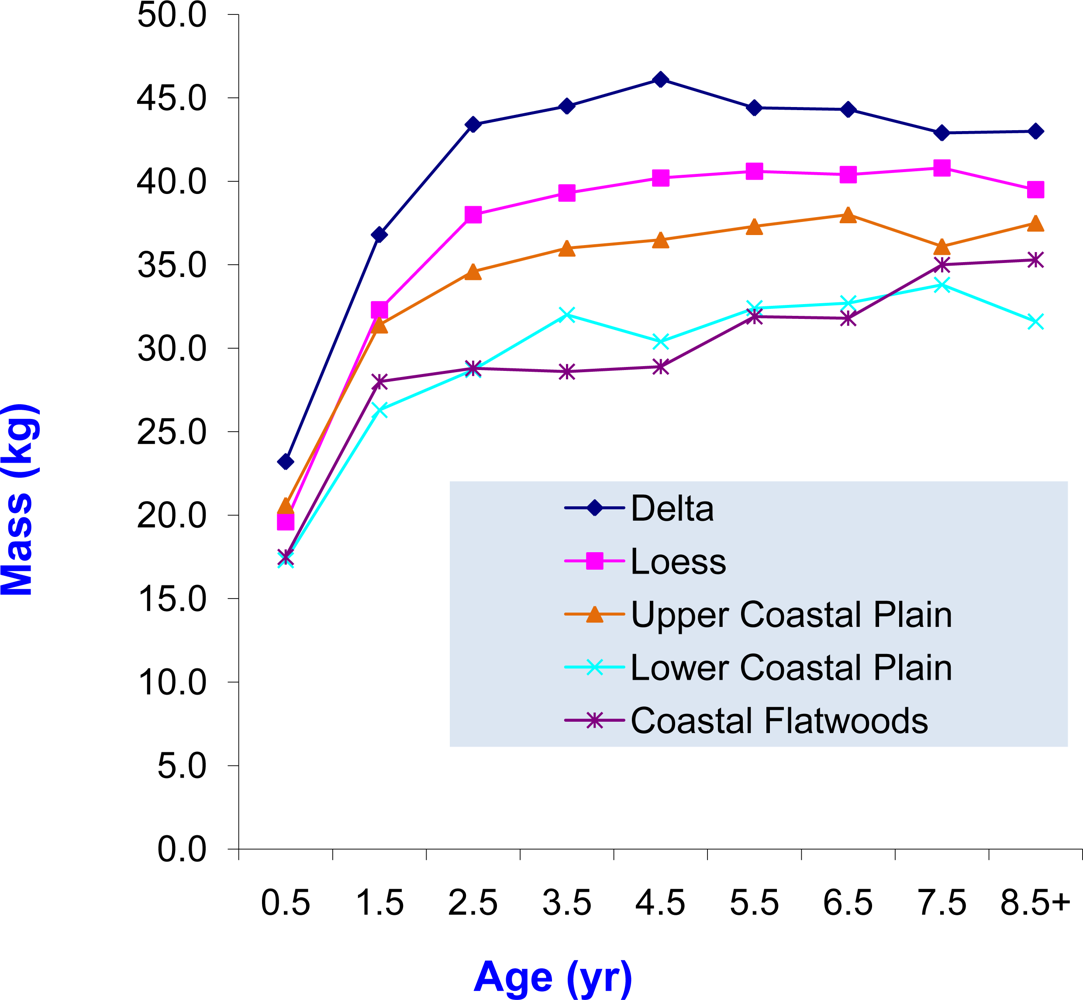
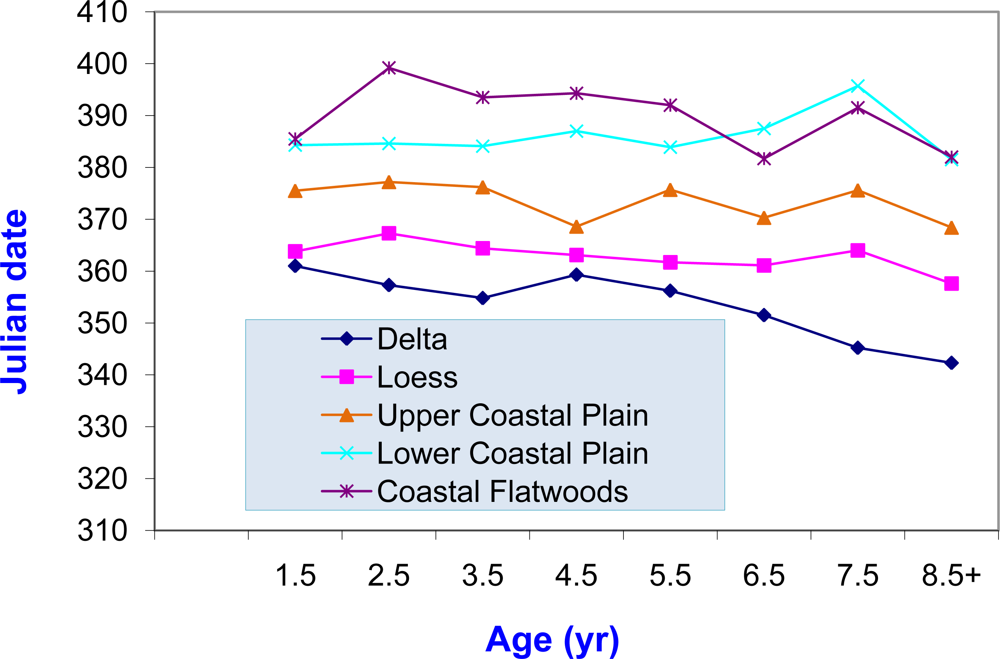
Soil productivity effects nutritive quality of food plants, growth of humans and animals, and reproductive health of domestic animals. Game-range surveys sometimes poorly explained variations in wildlife populations, but classification of survey data by major soil types improved effectiveness. Our study evaluates possible health effects of lower condition and reproductive rates for wild populations of Odocoileus virginianus Zimmerman (white-tailed deer) in some physiographic regions of Mississippi. We analyzed condition and reproductive data for 2400 female deer from the Mississippi Department of Wildlife, Fisheries, and Parks herd health evaluations from 1991–1998. We evaluated age, body mass (Mass), kidney mass, kidney fat mass, number of corpora lutea (CL) and fetuses, as well as fetal ages. Region affected kidney fat index (KFI), which is a body condition index, and numbers of fetuses of adults (P ≤ 0.001). Region affected numbers of CL of adults (P ≤ 0.002). Mass and conception date (CD) were affected (P ≤ 0.001) by region which interacted significantly with age for Mass (P ≤ 0.001) and CD (P < 0.04). Soil region appears to be a major factor influencing physical characteristics of female deer.
Keywords: body mass; corpora lutea; fetus; kidney fat index; Mississippi; Odocoileus virginianus; physiographic region; soil productivity; white-tailed deer body mass; corpora lutea; fetus; kidney fat index; Mississippi; Odocoileus virginianus; physiographic region; soil productivity; white-tailed deer