Associations of Cardiometabolic Risk Burden, Metabolic Syndrome, and Functional Exercise Capacity in Thai Older Adults: A Cross-Sectional Study

 , ,
, ,
Highlights
- Functional decline and cardiometabolic disorders are major contributors to disability and loss of independence among older adults.
- This study examined whether cumulative cardiometabolic burden provides greater insight into functional exercise capacity than the conventional binary classification of metabolic syndrome.
- Binary MetS status was not associated with the evaluated functional outcomes after FDR correction, whereas cumulative MetS component burden was associated with selected outcomes in the age- and sex-adjusted model.
- Greater cumulative MetS component burden was associated with slower sit-to-stand performance and shorter walking distance in the age- and sex-adjusted model; both associations were attenuated and no longer statistically significant after additional BMI adjustment.
- The observed cross-sectional associations warrant prospective investigation before cumulative MetS burden or adiposity measures can be considered for risk identification or screening.
- Observed associations with sit-to-stand and walking performance warrant prospective validation before clinical or public health application.
Abstract
1. Introduction
2. Materials and Methods
2.1. Study Design and Participants
2.2. Sample Size Calculation
2.3. Eligibility Criteria
2.3.1. Inclusion Criteria
2.3.2. Exclusion Criteria
2.4. Participant Recruitment and Screening
2.5. Participant Preparation
2.6. Vital Signs Assessment
2.7. Anthropometric and Fat Distribution Measurements
2.8. Body Composition Measurement
2.9. Blood Collection and Biochemical Analyses
Definition of MetS
2.10. Physical Fitness and Functional Exercise Capacity Assessments
2.10.1. Leg Muscle Strength
2.10.2. Five-Times Sit-to-Stand Test
2.10.3. Cadence-Derived Estimated Oxygen Uptake
2.10.4. Two-Minute Step Test
2.10.5. Incremental Shuttle Walk Test
2.11. Statistical Analysis
3. Results
3.1. Participant Characteristics
3.2. Comparison of Functional Exercise Capacity According to Metabolic Syndrome Status
3.3. Bivariate Correlations of Cardiometabolic Risk Factors with Functional Outcomes
3.4. Regression Results for Binary Metabolic Syndrome Status
4. Discussion
Strengths and Limitations
5. Conclusions
Supplementary Materials
Author Contributions
Funding
Institutional Review Board Statement
Informed Consent Statement
Data Availability Statement
Acknowledgments
Conflicts of Interest
Abbreviations
| 1MRWT | One-min rapid walking test |
| 2MST | Two-min step test |
| 5TSTS | Five-times sit-to-stand test |
| ASCVD | Atherosclerotic cardiovascular disease |
| BMI | Body mass index |
| CI | Confidence interval |
| CPET | Cardiopulmonary exercise testing |
| CV | Cardiovascular |
| DBP | Diastolic blood pressure |
| FDR | False-discovery-rate |
| HbA1c | Hemoglobin A1c |
| HDL-C | High-density lipoprotein cholesterol |
| HOMA-IR | Homeostatic model assessment of insulin resistance |
| IQR | Interquartile range |
| ISWT | Incremental shuttle walk test |
| LDL-C | Low-density lipoprotein cholesterol |
| MetS | Metabolic syndrome |
| SBP | Systolic blood pressure |
| SD | Standard deviation |
| VIF | Variance inflation factors |
| VO2max | Maximal oxygen uptake |
| VO2peak | Peak oxygen uptake |
References
- Zhou, M.; Zhao, G.; Zeng, Y.; Zhu, J.; Cheng, F.; Liang, W. Aging and cardiovascular disease: Current status and challenges. Rev. Cardiovasc. Med. 2022, 23, 135. [Google Scholar] [CrossRef] [Scilit] [PubMed]
- Swarup, S.; Zeltser, R. Metabolic syndrome. In StatPearls; StatPearls Publishing: Treasure Island, FL, USA, 2024. [Google Scholar]
- Lin, F.-A.; Hwang, L.-C.; Tsou, M.-T.; Huang, W.-H. Incidence of metabolic syndrome and its risk factors in elderly with nonalcoholic fatty liver disease. Diabetes Metab. Syndr. Obes. 2023, 16, 2835–2842. [Google Scholar] [CrossRef] [Scilit] [PubMed]
- Obeidat, A.A.; Ahmad, M.N.; Ghabashi, M.A.; Alazzeh, A.Y.; Habib, S.M.; Abu Al-Haijaa, D.; Azzeh, F.S. Developmental trends of metabolic syndrome in the past two decades: A narrative review. J. Clin. Med. 2025, 14, 2402. [Google Scholar] [CrossRef] [Scilit] [PubMed]
- Anton, S.D.; Cruz-Almeida, Y.; Singh, A.; Alpert, J.; Bensadon, B.; Cabrera, M.; Clark, D.J.; Ebner, N.C.; Esser, K.A.; Fillingim, R.B.; et al. Innovations in geroscience to enhance mobility in older adults. Exp. Gerontol. 2020, 142, 111123. [Google Scholar] [CrossRef] [Scilit] [PubMed]
- Ribeiro, A.S.F.; Zerolo, B.E.; Lopez-Espuela, F.; Sanchez, R.; Fernandes, V.S. Cardiac system during the aging process. Aging Dis. 2023, 14, 1105–1122. [Google Scholar] [CrossRef] [Scilit] [PubMed]
- Li, C.; Yu, K.; Shyh-Chang, N.; Jiang, Z.; Liu, T.; Ma, S.; Luo, L.; Guang, L.; Liang, K.; Ma, W.; et al. Pathogenesis of sarcopenia and the relationship with fat mass: Descriptive review. J. Cachexia Sarcopenia Muscle 2022, 13, 781–794. [Google Scholar] [CrossRef] [Scilit] [PubMed]
- Boccardi, V.; Sinclair, A.J. Rethinking insulin resistance in aging: A reserve-oriented clinical framework. Ageing Res. Rev. 2026, 119, 103180. [Google Scholar] [CrossRef] [Scilit] [PubMed]
- Yu, M.; Ge, L.; Fu, C.; Zhao, R. Unraveling the metabolic pathways between atherosclerosis and sarcopenia. Front. Endocrinol. 2026, 16, 1762825. [Google Scholar] [CrossRef] [Scilit] [PubMed]
- Koceva, A.; Janež, A.; Jensterle, M. Impact of incretin-based therapy on skeletal muscle health. Medicina 2025, 61, 1691. [Google Scholar] [CrossRef] [Scilit] [PubMed]
- Bowden Davies, K.A.; Pickles, S.; Sprung, V.S.; Kemp, G.J.; Alam, U.; Moore, D.R.; Tahrani, A.A.; Cuthbertson, D.J. Reduced physical activity in young and older adults: Metabolic and musculoskeletal implications. Ther. Adv. Endocrinol. Metab. 2019, 10, 2042018819888824. [Google Scholar] [CrossRef] [Scilit] [PubMed]
- Malaikah, S.; Willis, S.A.; Henson, J.; Sargeant, J.A.; Yates, T.; Thackray, A.E.; Goltz, F.R.; Roberts, M.J.; Bodicoat, D.H.; Aithal, G.P.; et al. Associations of objectively measured physical activity, sedentary time and cardiorespiratory fitness with adipose tissue insulin resistance and ectopic fat. Int. J. Obes. 2023, 47, 1000–1007. [Google Scholar] [CrossRef] [Scilit] [PubMed]
- Raghuveer, G.; Hartz, J.; Lubans, D.R.; Takken, T.; Wiltz, J.L.; Mietus-Snyder, M.; Perak, A.M.; Baker-Smith, C.; Pietris, N.; Edwards, N.M. Cardiorespiratory fitness in youth: An important marker of health: A scientific statement from the American Heart Association. Circulation 2020, 142, e101–e118. [Google Scholar] [CrossRef] [Scilit] [PubMed]
- Lang, J.J.; Prince, S.A.; Merucci, K.; Cadenas-Sanchez, C.; Chaput, J.-P.; Fraser, B.J.; Manyanga, T.; McGrath, R.; Ortega, F.B.; Singh, B.; et al. Cardiorespiratory fitness is a strong and consistent predictor of morbidity and mortality among adults: An overview of meta-analyses representing over 20.9 million observations from 199 unique cohort studies. Br. J. Sports Med. 2024, 58, 556–566. [Google Scholar] [CrossRef] [Scilit] [PubMed]
- Ross, R.; Blair, S.N.; Arena, R.; Church, T.S.; Després, J.-P.; Franklin, B.A.; Haskell, W.L.; Kaminsky, L.A.; Levine, B.D.; Lavie, C.J.; et al. Importance of assessing cardiorespiratory fitness in clinical practice: A case for fitness as a clinical vital sign: A scientific statement from the American Heart Association. Circulation 2016, 134, e653–e699. [Google Scholar] [CrossRef] [Scilit] [PubMed]
- Kim, B.; Ku, M.; Kiyoji, T.; Isobe, T.; Sakae, T.; Oh, S. Cardiorespiratory fitness is strongly linked to metabolic syndrome among physical fitness components: A retrospective cross-sectional study. J. Physiol. Anthropol. 2020, 39, 30. [Google Scholar] [CrossRef] [Scilit] [PubMed]
- Câmara, M.; Browne, R.A.V.; Souto, G.C.; Schwade, D.; Lucena Cabral, L.P.; Macêdo, G.A.D.; Farias-Junior, L.F.; Gouveia, F.L.; Lemos, T.M.A.M.; Lima, K.C.; et al. Independent and combined associations of cardiorespiratory fitness and muscle strength with metabolic syndrome in older adults: A cross-sectional study. Exp. Gerontol. 2020, 135, 110923. [Google Scholar] [CrossRef] [Scilit] [PubMed]
- Menoth Mohan, D.; Al Anouti, F.; Kohli, N.; Khalaf, K. Association of obesity with musculoskeletal health and functional mobility in females—A systematic review. Int. J. Obes. 2025, 49, 2184–2205. [Google Scholar] [CrossRef] [Scilit] [PubMed]
- Batsis, J.A.; Zbehlik, A.J.; Barre, L.K.; Mackenzie, T.A.; Bartels, S.J. The impact of waist circumference on function and physical activity in older adults: Longitudinal observational data from the osteoarthritis initiative. Nutr. J. 2014, 13, 81. [Google Scholar] [CrossRef] [Scilit] [PubMed]
- Khanna, S.; Gan, G.C.H.; Sindone, A.P.; Tromp, J.; Butler, J.; Foo, R.; Nerlekar, N.; Bhat, A. Asia at the epicenter of the global cardiometabolic shift. JACC Asia 2026, 6, 269–283. [Google Scholar] [CrossRef] [Scilit] [PubMed]
- Aekplakorn, W.; Chariyalertsak, S.; Bumrerraj, S.; Assanangkornchai, S.; Taneepanichskul, S.; Neelapaichit, N.; Ongphiphadhanakul, B.; Nitiyanant, W.; Patanavanich, R. Diabetes trends and determinants among Thai adults from 2004 to 2020. Sci. Rep. 2025, 15, 31620. [Google Scholar] [CrossRef] [Scilit] [PubMed]
- Grundy, S.M.; Cleeman, J.I.; Daniels, S.R.; Donato, K.A.; Eckel, R.H.; Franklin, B.A.; Gordon, D.J.; Krauss, R.M.; Savage, P.J.; Smith, S.C., Jr.; et al. Diagnosis and management of the metabolic syndrome: An American Heart Association/National Heart, Lung, and Blood Institute Scientific Statement. Circulation 2005, 112, 2735–2752, Correction in Circulation 2005, 112, 17. https://doi.org/10.1161/CIRCULATIONAHA.105.170797. [Google Scholar] [CrossRef] [Scilit] [PubMed]
- Garcia, D.; de Sousa Neto, I.V.; de Souza Monteiro, Y.; Magalhães, D.P.; Ferreira, G.M.L.; Grisa, R.; Prestes, J.; Rosa, B.V.; Abrahin, O.; Martins, T.M.; et al. Reliability and validity of a portable traction dynamometer in knee-strength extension tests: An isometric strength assessment in recreationally active men. Healthcare 2023, 11, 1466. [Google Scholar] [CrossRef] [Scilit] [PubMed]
- Whitney, S.L.; Wrisley, D.M.; Marchetti, G.F.; Gee, M.A.; Redfern, M.S.; Furman, J.M. Clinical measurement of sit-to-stand performance in people with balance disorders: Validity of data for the five-times-sit-to-stand test. Phys. Ther. 2005, 85, 1034–1045. [Google Scholar] [CrossRef] [Scilit]
- Cunningham, D.A.; Rechnitzer, P.A.; Pearce, M.E.; Donner, A.P. Determinants of self-selected walking pace across ages 19 to 66. J. Gerontol. 1982, 37, 560–564. [Google Scholar] [CrossRef] [Scilit] [PubMed]
- He, L.; Wei, W.R.; Can, Z. Effects of 12-week brisk walking training on exercise blood pressure in elderly patients with essential hypertension: A pilot study. Clin. Exp. Hypertens. 2018, 40, 673–679. [Google Scholar] [CrossRef] [Scilit] [PubMed]
- Ishigaki, T.; Kubo, H.; Yoshida, K.; Shimizu, N.; Ogawa, T. Validity and Reliability of the 2-min Step Test in Individuals with Stroke and Lower-Limb Musculoskeletal Disorders. Front. Rehabil. Sci. 2024, 5, 1384369. [Google Scholar] [CrossRef] [Scilit] [PubMed]
- Singh, S.J.; Morgan, M.D.; Scott, S.; Walters, D.; Hardman, A.E. Development of a Shuttle Walking Test of Disability in Patients with Chronic Airways Obstruction. Thorax 1992, 47, 1019–1024. [Google Scholar] [CrossRef] [Scilit] [PubMed]
- Honarvar, M.; Masoumi, S.; Mehran, L.; Khalili, D.; Amouzegar, A.; Azizi, F. Development and Validation of a Continuous Metabolic Syndrome Severity Score in the Tehran Lipid and Glucose Study. Sci. Rep. 2023, 13, 7529. [Google Scholar] [CrossRef] [Scilit] [PubMed]
- Brown, R.C.C.; Coombes, J.S.; Conley, M.M.; Webb, L.; Mayr, H.L.; Isbel, N.M.; Jegatheesan, D.K.; Macdonald, G.A.; Burton, N.W.; Kelly, J.T.; et al. Evaluating the Potential of a Novel Metabolic Syndrome Severity Score to Inform Exercise Interventions for People with Complex Chronic Conditions. Metab. Syndr. Relat. Disord. 2024, 22, 516–524. [Google Scholar] [CrossRef] [Scilit] [PubMed]
- Liaw, F.-Y.; Kao, T.-W.; Wu, L.-W.; Wang, C.-C.; Yang, H.-F.; Peng, T.-C.; Sun, Y.-S.; Chang, Y.-W.; Chen, W.-L. Components of Metabolic Syndrome and the Risk of Disability among the Elderly Population. Sci. Rep. 2016, 6, 22750. [Google Scholar] [CrossRef] [Scilit] [PubMed]
- Harrison, S.L.; Greening, N.J.; Houchen-Wolloff, L.; Bankart, J.; Morgan, M.D.; Steiner, M.C.; Singh, S.J. Age-specific normal values for the incremental shuttle walk test in a healthy British population. J. Cardiopulm. Rehabil. Prev. 2013, 33, 309–313. [Google Scholar] [CrossRef] [Scilit] [PubMed]
- Bozdemir Ozel, C.; Arikan, H.; Demirtas, R.N.; Saglam, M.; Calik-Kutukcu, E.; Vardar-Yagli, N.; Inal-Ince, D.; Akalin, A.; Celer, O.; Sonbahar-Ulu, H.; et al. Evaluation of exercise capacity using two field tests in patients with metabolic syndrome. Disabil. Rehabil. 2021, 43, 1015–1021. [Google Scholar] [CrossRef] [Scilit] [PubMed]
- Chuatrakoon, B.; Nantakool, S.; Waisayanand, N.; Reanpang, T.; Wanichsuksombat, L.; Konghakote, S.; Phisitbuntoon, K.; Jaiin, N.; Rattanaphan, S. Functional walking capacity as a screening indicator for peripheral arterial disease in patients with type 2 diabetes mellitus: Development of a clinical risk equation. Diagnostics 2026, 16, 1750. [Google Scholar] [CrossRef] [Scilit] [PubMed]
- Nantakool, S.; Chuatrakoon, B.; Sittichoke, C.; Konghakote, S.; Rerkasem, K.; Buranapin, S.; Kanlayanee, S.; Pothaya, N.; Kidarn, J. A comparison of walking performance between individuals with and without asymptomatic peripheral artery disease using the six-minute walk test and the incremental shuttle walk test. Sci. Prog. 2024, 107, 368504241305822. [Google Scholar] [CrossRef] [Scilit] [PubMed]
- Roh, E.; Choi, K.M. Health consequences of sarcopenic obesity: A narrative review. Front. Endocrinol. 2020, 11, 332. [Google Scholar] [CrossRef] [Scilit] [PubMed]
- Primavesi, J.; Fernández Menéndez, A.; Hans, D.; Favre, L.; Crettaz von Roten, F.; Malatesta, D. The effect of obesity class on the energetics and mechanics of walking. Nutrients 2021, 13, 4546. [Google Scholar] [CrossRef] [Scilit] [PubMed]
- Choo, Y.N.; Ravi, R.N.; Subramaniyan, V. Insulin resistance induced by obesity: Mechanisms, metabolic implications and therapeutic approaches. Mol. Biol. Rep. 2026, 53, 357. [Google Scholar] [CrossRef] [Scilit] [PubMed]
- Macleod, M.; Price, J.; Tsonou, E.; Baker, D.J.; Tsintzas, K.; Jones, S.W. Adipose-derived extracellular vesicles and intercellular crosstalk with skeletal muscle: Implications for sarcopenic obesity and metabolic dysregulation. Obes. Rev. 2025, 27, 1–22. [Google Scholar] [CrossRef] [Scilit] [PubMed]
- Zheng, X.; Zhang, C. Vitamin D and exercise in obesity: A neurovascular–muscle axis. Front. Nutr. 2026, 13, 1750915. [Google Scholar] [CrossRef] [Scilit] [PubMed]
- Guillet, C.; Masgrau, A.; Walrand, S.; Boirie, Y. Impaired protein metabolism: Interlinks between obesity, insulin resistance and inflammation. Obes. Rev. 2012, 13, 51–57. [Google Scholar] [CrossRef] [Scilit] [PubMed]
- Correia de Faria Santarém, G.; de Cleva, R.; Santo, M.A.; Bernhard, A.B.; Gadducci, A.V.; Greve, J.M.D.A.; Silva, P.R.S. Correlation between body composition and walking capacity in severe obesity. PLoS ONE 2015, 10, e0130268. [Google Scholar] [CrossRef] [Scilit] [PubMed]
- Ramírez-Vélez, R.; Pérez-Sousa, M.A.; Venegas-Sanabria, L.C.; Chavarro-Carvajal, D.A.; Cano-Gutierrez, C.A.; Correa-Bautista, J.E.; González-Ruíz, K.; Izquierdo, M. Gait speed moderates the adverse effect of obesity on dependency in older Colombian adult. Exp. Gerontol. 2019, 127, 110732. [Google Scholar] [CrossRef] [Scilit] [PubMed]
- Nakamura, T.; Kamiya, K.; Matsunaga, A.; Hamazaki, N.; Matsuzawa, R.; Nozaki, K.; Yamashita, M.; Maekawa, E.; Noda, C.; Yamaoka-Tojo, M.; et al. Impact of gait speed on the obesity paradox in older patients with cardiovascular disease. Am. J. Med. 2019, 132, 1458–1465.e1. [Google Scholar] [CrossRef] [Scilit] [PubMed]
- Wennman, H.; Jerome, G.J.; Simonsick, E.M.; Sainio, P.; Valkeinen, H.; Borodulin, K.; Stenholm, S. Adiposity markers as predictors of 11-year decline in maximal walking speed in late midlife. J. Appl. Gerontol. 2020, 40, 1110–1115. [Google Scholar] [CrossRef] [Scilit] [PubMed]



| Variable | Overall (n = 182) | Non-MetS (n = 127) | MetS (n = 55) | Effect Size | p-Value |
|---|---|---|---|---|---|
| Age (years) | 66.00 (63.00–70.00) | 66.00 (63.00–70.00) | 66.00 (63.00–68.50) | 0.06 | 0.549 |
| Female, n (%) | 147 (80.8%) | 103 (81.1%) | 44 (80%) | 0.01 | 0.862 |
| Cigarette smoking, n (%) | 5 (2.7%) | 3 (2.4%) | 2 (3.6%) | 0.04 | 0.629 |
| Alcohol consumption, n (%) | 38 (20.9%) | 24 (18.9%) | 14 (25.5%) | 0.07 | 0.318 |
| Exercise duration/week (min) | 216.38 ± 152.22 | 222.01 ± 156.85 | 203.38 ± 141.47 | 0.12 | 0.437 |
| Body weight (kg) | 57.40 (52.23–64.35) | 55.40 (49.95–60.85) | 63.70 (58.40–70.75) | 0.53 | <0.001 |
| BMI (kg/m2) | 23.60 (21.60–26.38) | 22.60 (20.90–24.75) | 26.30 (24.15–28.15) | 0.59 | <0.001 |
| Waist circumference (cm) | 83.37 ± 9.50 | 80 (74.00–85.30) | 90.63 ± 7.68 | 0.66 | <0.001 |
| Hip circumference (cm) | 97 (92.12–102.00) | 95 (90.00–99.00) | 99 (95.50–105.00) | 0.41 | <0.001 |
| Waist-to-hip ratio | 0.86 ± 0.06 | 0.83 ± 0.06 | 0.90 ± 0.05 | 0.81 | <0.001 |
| Skeletal muscle mass (kg) | 19.20 (17.65–21.65) | 18.70 (17.20–20.40) | 20.60 (19.12–23.88) | 0.436 | <0.001 |
| Fat-free mass (kg) | 36.20 (33.45–40.50) | 35.20 (32.90–38.20) | 38.50 (36.35–43.85) | 0.439 | <0.001 |
| Body fat mass (kg) | 19.00 (15.55–23.30) | 17.90 (15.00–21.60) | 22.60 (19.32–27.62) | 0.490 | <0.001 |
| Percent body fat (%) | 34.25 ± 7.09 | 33.30 ± 6.98 | 36.45 ± 6.93 | 0.453 | 0.006 |
| Visceral fat level | 9.00 (7.00–12.00) | 9.00 (6.00–11.00) | 10.50 (9.00–14.00) | 0.394 | <0.001 |
| Heart rate (bpm) | 69.07 ± 9.76 | 69.70 ± 10.09 | 66 (63.00–71.75) | 0.11 | 0.227 |
| SBP (mmHg) | 126.50 (113.00–138.75) | 122.20 ± 18.65 | 136 (127.50–146.00) | 0.45 | <0.001 |
| DBP (mmHg) | 74 (64.25–81.75) | 72.45 ± 11.24 | 78.04 ± 13.11 | 0.47 | 0.007 |
| Fasting glucose (mg/dL) | 93 (87.00–102.00) | 91 (86.50–95.50) | 105 (94.00–120.50) | 0.60 | <0.001 |
| HbA1c (%) | 5.52 (5.28–5.78) | 5.46 (5.26–5.67) | 5.70 (5.35–6.31) | 0.32 | 0.001 |
| Insulin (µIU/mL) | 7.77 (5.90–10.80) | 7.12 (5.42–9.44) | 10.50 (7.52–14.40) | 0.40 | <0.001 |
| HOMA-IR | 1.82 (1.33–2.69) | 1.63 (1.20–2.13) | 2.84 (1.95–3.88) | 0.51 | <0.001 |
| Total cholesterol (mg/dL) | 220 (194.50–248.75) | 224.39 ± 43.94 | 222.51 ± 48.16 | 0.04 | 0.805 |
| Triglycerides (mg/dL) | 114.50 (87.50–150.75) | 104 (81.00–133.00) | 163.95 ± 59.24 | 0.56 | <0.001 |
| LDL-C (mg/dL) | 130 (108.00–151.75) | 130 (107.00–148.00) | 139.93 ± 43.97 | 0.12 | 0.204 |
| HDL-C (mg/dL) | 62 (54.00–72.00) | 66 (58.00–76.50) | 52 (47.00–63.50) | 0.54 | <0.001 |
| MetS components | |||||
| Abdominal obesity, n (%) | 108 (59.3) | 56 (44.1) | 52 (94.5) | 0.47 | <0.001 |
| Elevated BP or antihypertensive medication use, n (%) | 100 (54.9) | 52 (40.9) | 48 (87.3) | 0.43 | <0.001 |
| Elevated fasting glucose or antidiabetic medication use, n (%) | 53 (29.1) | 16 (12.6) | 37 (67.3) | 0.55 | <0.001 |
| Elevated triglycerides, n (%) | 48 (26.4) | 16 (12.6) | 32 (58.2) | 0.52 | <0.001 |
| Reduced HDL-C, n (%) | 22 (12.1) | 10 (7.9) | 12 (21.8) | 0.22 | 0.002 |
| Thai CV risk (%) | 9.45 (5.52–14.13) | 7.29 (4.73–12.44) | 15.19 (9.50–21.28) | 0.54 | <0.001 |
| ASCVD risk (%) | 8.30 (5.20–15.50) | 7.30 (4.05–14.47) | 11.65 (7.62–18.93) | 0.34 | <0.001 |
| Outcome | Overall (n = 182) | Non-MetS (n = 127) | MetS (n = 55) | Effect Size | p-Value |
|---|---|---|---|---|---|
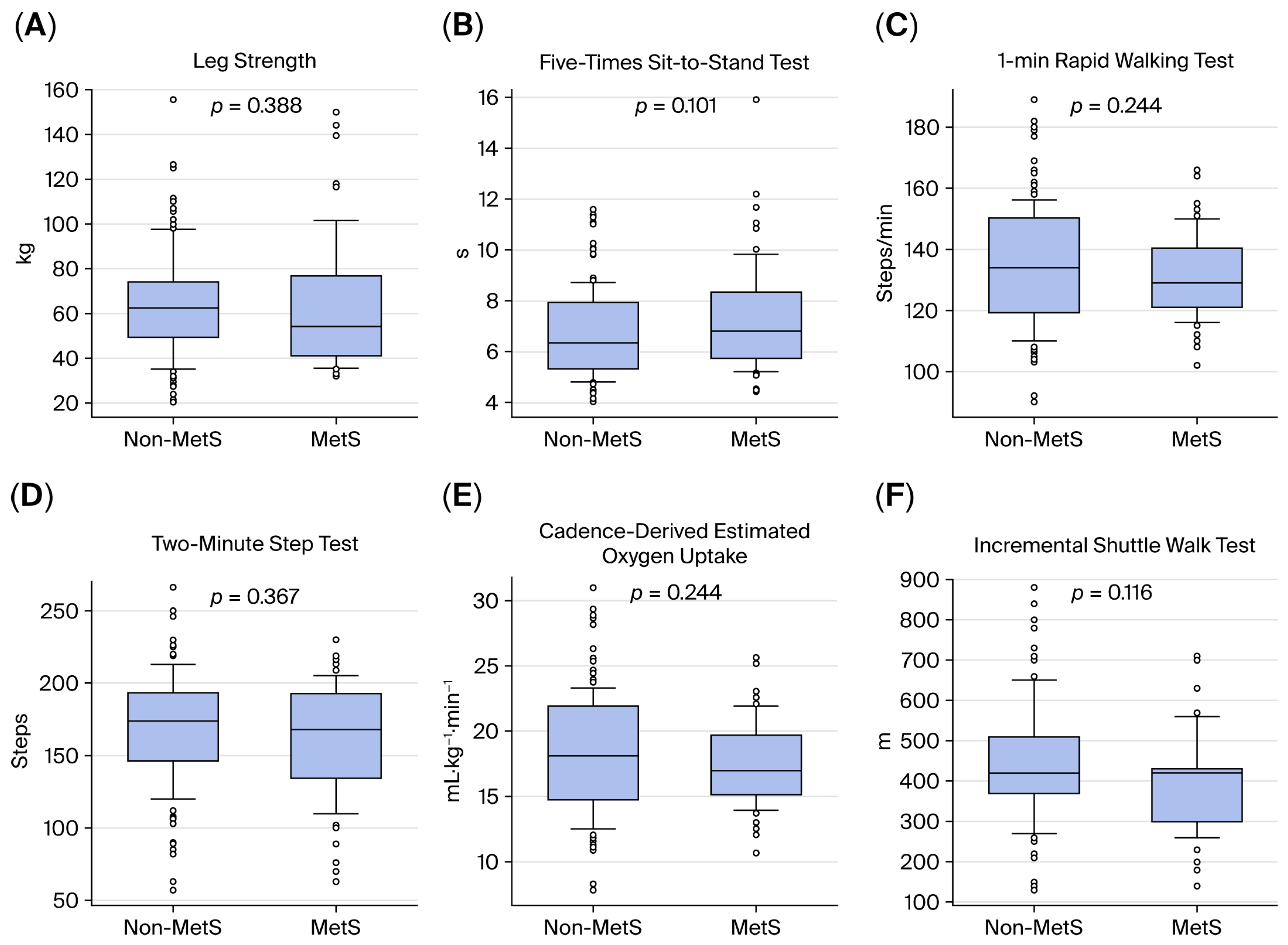
| Leg strength (kg) | 60.25 (47.62–74.00) | 62.50 (49.50–74.00) | 54.25 (41.12–76.62) | 0.087 | 0.388 |
| 5TSTS (s) | 6.46 (5.40–8.00) | 6.34 (5.33–7.90) | 6.80 (5.74–8.31) | 0.153 | 0.101 |
| 1MRWT (steps) | 132.00 (120.00–146.00) | 134.00 (119.50–150.00) | 129.00 (121.00–140.50) | 0.109 | 0.244 |
| 2MST (steps) | 173.00 (141.00–193.50) | 174.00 (146.00–193.00) | 167.50 (134.25–192.75) | 0.085 | 0.367 |
| Cadence-derived estimated VO2 (mL/kg/min) | 17.65 (14.84–20.92) | 18.12 (14.72–21.86) | 16.95 (15.07–19.64) | 0.109 | 0.244 |
| ISWT (m) | 420.00 (350.00–490.00) | 420.00 (370.00–510.00) | 420.00 (300.00–430.00) | 0.164 | 0.116 |
| Predictor | 5TSTS, ρ (q) | 2MST, ρ (q) | Cadence-Derived Estimated VO2, ρ (q) | ISWT, ρ (q) |
|---|---|---|---|---|
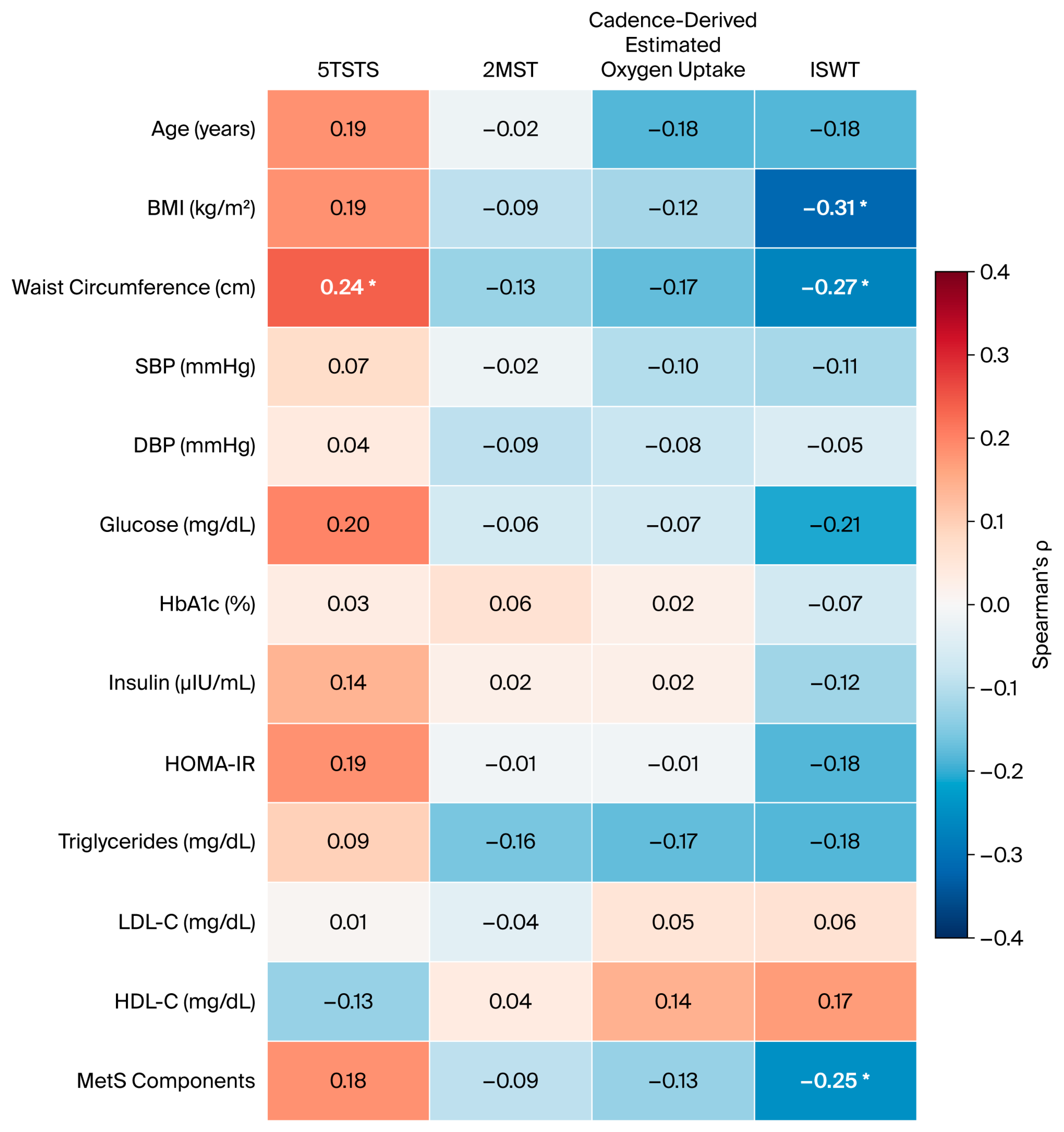
| Age (years) | 0.193 (0.067) | −0.018 (0.879) | −0.184 (0.067) | −0.176 (0.125) |
| BMI (kg/m2) | 0.193 (0.067) | −0.094 (0.390) | −0.117 (0.249) | −0.313 (0.008) |
| Waist circumference | 0.238 (0.023) | −0.127 (0.203) | −0.172 (0.088) | −0.266 (0.023) |
| SBP (mmHg) | 0.075 (0.498) | −0.016 (0.879) | −0.101 (0.340) | −0.114 (0.340) |
| DBP (mmHg) | 0.040 (0.747) | −0.085 (0.428) | −0.081 (0.451) | −0.051 (0.715) |
| Glucose (mg/dL) | 0.198 (0.067) | −0.061 (0.607) | −0.071 (0.516) | −0.206 (0.067) |
| HbA1c (%) | 0.033 (0.779) | 0.062 (0.607) | 0.023 (0.877) | −0.065 (0.621) |
| Insulin (µIU/mL) | 0.139 (0.162) | 0.016 (0.879) | 0.019 (0.879) | −0.121 (0.312) |
| HOMA-IR | 0.186 (0.067) | −0.011 (0.896) | −0.014 (0.884) | −0.177 (0.125) |
| Triglycerides (mg/dL) | 0.094 (0.402) | −0.159 (0.131) | −0.173 (0.108) | −0.185 (0.129) |
| LDL-C (mg/dL) | 0.008 (0.920) | −0.036 (0.759) | 0.052 (0.645) | 0.060 (0.645) |
| HDL-C (mg/dL) | −0.129 (0.193) | 0.037 (0.759) | 0.141 (0.158) | 0.171 (0.129) |
| MetS components | 0.182 (0.067) | −0.092 (0.392) | −0.131 (0.193) | −0.247 (0.040) |
| Outcome | Age + Sex B (95% CI) | p-Value (q) | Age + Sex + BMI B (95% CI) | p-Value (q) |
|---|---|---|---|---|
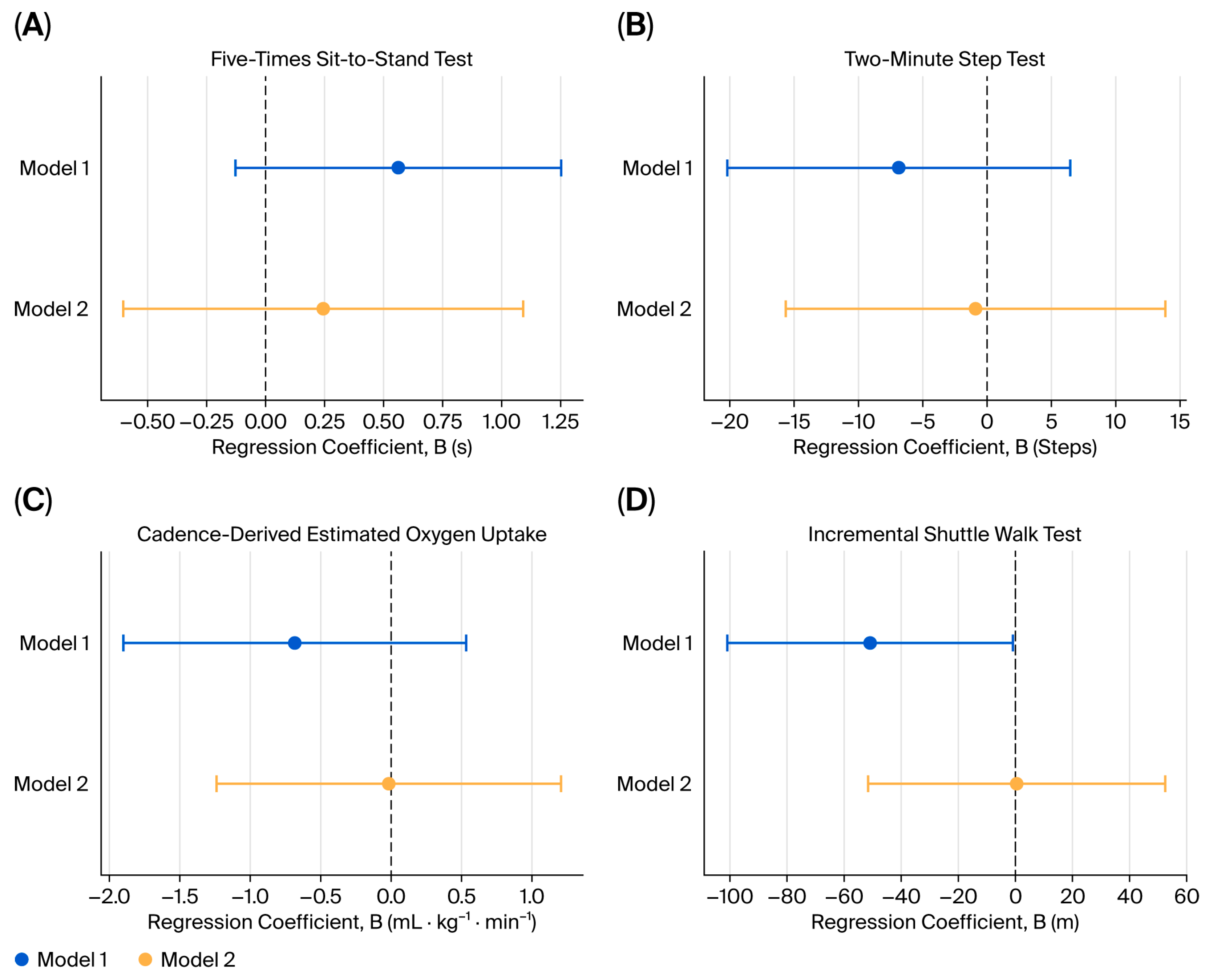
| 5TSTS (s) | 0.56 (−0.13 to 1.25) | 0.110 (0.329) | 0.24 (−0.60 to 1.09) | 0.570 (0.760) |
| 2MST (steps) | −6.87 (−20.20 to 6.45) | 0.310 (0.465) | −0.91 (−15.65 to 13.84) | 0.904 (0.987) |
| Cadence-derived estimated VO2 (mL/kg/min) | −0.68 (−1.90 to 0.53) | 0.269 (0.465) | −0.02 (−1.24 to 1.21) | 0.980 (0.987) |
| ISWT (m) | −50.94 (−100.98 to −0.90) | 0.046 (0.293) | 0.44 (−51.63 to 52.51) | 0.987 (0.987) |
| Outcome | Age + Sex B (95% CI) | p-Value (q) | Age + Sex + BMI B (95% CI) | p-Value (q) |
|---|---|---|---|---|
| 5TSTS (s) | 0.27 (0.07 to 0.46) | 0.008 (0.030) | 0.15 (−0.13 to 0.43) | 0.294 (0.411) |
| 2MST (steps) | −2.55 (−7.48 to 2.37) | 0.308 (0.411) | 0.15 (−5.74 to 6.03) | 0.960 (0.960) |
| Cadence-derived estimated VO2 (mL/kg/min) | −0.47 (−0.96 to 0.03) | 0.063 (0.169) | −0.25 (−0.78 to 0.28) | 0.359 (0.411) |
| ISWT (m) | −27.80 (−45.01 to −10.59) | 0.002 (0.014) | −9.45 (−29.43 to 10.54) | 0.352 (0.411) |
Disclaimer/Publisher’s Note: The statements, opinions and data contained in all publications are solely those of the individual author(s) and contributor(s) and not of MDPI and/or the editor(s). MDPI and/or the editor(s) disclaim responsibility for any injury to people or property resulting from any ideas, methods, instructions or products referred to in the content. |
© 2026 by the authors. Licensee MDPI, Basel, Switzerland. This article is an open access article distributed under the terms and conditions of the Creative Commons Attribution (CC BY) license.
Share and Cite
Boonla, O.; Singhasoot, N.; Boonpitak, S.; Sukkho, O.; Poncumhak, P.; Anuchitchanchai, P.; Prasertsri, P. Associations of Cardiometabolic Risk Burden, Metabolic Syndrome, and Functional Exercise Capacity in Thai Older Adults: A Cross-Sectional Study. Int. J. Environ. Res. Public Health 2026, 23, 1237. https://doi.org/10.3390/ijerph23091237
Boonla O, Singhasoot N, Boonpitak S, Sukkho O, Poncumhak P, Anuchitchanchai P, Prasertsri P. Associations of Cardiometabolic Risk Burden, Metabolic Syndrome, and Functional Exercise Capacity in Thai Older Adults: A Cross-Sectional Study. International Journal of Environmental Research and Public Health. 2026; 23(9):1237. https://doi.org/10.3390/ijerph23091237
Chicago/Turabian StyleBoonla, Orachorn, Nutsupa Singhasoot, Sudarat Boonpitak, Oranat Sukkho, Puttipong Poncumhak, Promtpong Anuchitchanchai, and Piyapong Prasertsri. 2026. "Associations of Cardiometabolic Risk Burden, Metabolic Syndrome, and Functional Exercise Capacity in Thai Older Adults: A Cross-Sectional Study" International Journal of Environmental Research and Public Health 23, no. 9: 1237. https://doi.org/10.3390/ijerph23091237
APA StyleBoonla, O., Singhasoot, N., Boonpitak, S., Sukkho, O., Poncumhak, P., Anuchitchanchai, P., & Prasertsri, P. (2026). Associations of Cardiometabolic Risk Burden, Metabolic Syndrome, and Functional Exercise Capacity in Thai Older Adults: A Cross-Sectional Study. International Journal of Environmental Research and Public Health, 23(9), 1237. https://doi.org/10.3390/ijerph23091237