1. Introduction
Cancer remains one of the leading causes of morbidity and mortality in the United States, with substantial differences in health outcomes observed across racial and ethnic groups [
1]. African Americans experience higher incidence and mortality rates for several cancers, including prostate, lung, breast, and colorectal cancers, compared with other racial and ethnic populations. Despite advances in screening, early detection, and treatment, differences in health outcomes persist and are influenced by complex social, economic, cultural, and healthcare factors [
2,
3,
4,
5,
6].
Multiple factors contribute to differences in cancer incidence among predominantly African American communities, including limited access to quality healthcare, inadequate insurance coverage, structural challenges, medical mistrust, socioeconomic disadvantage, and cultural beliefs surrounding cancer and preventive care. Previous studies have demonstrated that these factors influence cancer screening behaviors, timely diagnosis, treatment utilization, and survival outcomes [
7,
8,
9]. Although evidence-based screening recommendations and public health initiatives have expanded opportunities for early detection, gaps in cancer prevention and care continue to affect medically underserved communities [
10].
Community perspectives are essential for understanding challenges and facilitators to cancer prevention and screening. Qualitative approaches allow individuals to describe their experiences with healthcare systems, perceptions of cancer risk, cultural influences, and the challenges they face when accessing preventive services. Such perspectives may help identify opportunities for culturally responsive interventions and community-based strategies to improve cancer prevention efforts [
11,
12,
13]. Community engagement has emerged as a critical strategy for improving cancer outcomes by ensuring that prevention, screening, and treatment initiatives are responsive to community needs and priorities [
14]. Understanding community perspectives is particularly important in predominantly African American communities, where inadequate access to health resources continue to influence healthcare experiences and health outcomes [
14,
15].
The Third Ward community in Houston, Texas is a historically and predominantly African American neighborhood that has experienced longstanding inadequate access to social and health resources. Through the Community Engagement Core of the NIH-Funded Center of Biomedical Health Research (CBMHR CEC), Texas Southern University (TSU) has partnered with local organizations to promote health education, research participation, and community dialogue regarding differences in cancer outcomes. As part of these efforts, a series of focus groups engaging community members from Third Ward and the broader Houston area were conducted to better understand the community’s perceptions of cancer prevention, screening, and cancer-related outcomes.
The purpose of this study was to explore perceptions, experiences, and challenges related to cancer prevention and screening among adults recruited through a community engagement initiative centered in a predominantly African American urban community in Houston, Texas. The Socioecological Model provides a useful framework for understanding how individual, interpersonal, organizational, community, and structural influences interact to shape health behaviors [
16]. In this study, the framework was applied to organize and interpret the final themes rather than to guide the initial coding process. Findings from this study may inform future community-engaged interventions and public health strategies aimed at enhancing cancer awareness, increasing cancer prevention efforts, and improving cancer outcomes in the community.
2. Materials and Methods
2.1. Study Design & Setting
This qualitative study used a thematic analysis approach to explore community perceptions of cancer prevention, screening, and cancer-related outcomes among adults recruited from Houston, Texas, with a particular focus on engagement with the historically African American Third Ward community [
17,
18]. The primary study site was TSU, a Historically Black College and University (HBCU) located in Houston’s Third Ward. The Third Ward community in Houston, Texas, is a historically and predominantly African American neighborhood that has experienced longstanding inadequate social and healthcare access, and has a high burden of chronic diseases such as diabetes and hypertension [
19,
20]. More broadly, challenges related to access to healthcare and health resources, health literacy, affordability, and the utilization of available services have contributed to poor health outcomes across the Houston area [
21,
22]. The study was reported according to the Consolidated Criteria for Reporting Qualitative Research (COREQ) guidelines for qualitative studies [
23]. The research protocol, informed consent forms, and study instruments were reviewed and approved by Texas Southern University’s Institutional Review Board #11705 prior to study initiation.
2.2. Participant Recruitment
A purposive, community-based sampling approach was used to recruit adults for the focus groups. Eligible participants were aged 18 years or older and able to participate in a virtual focus group conducted in English. Participants were recruited between May 2021 and August 2022 through community outreach activities, health education events, email announcements, and social media postings across Houston and the Greater Houston area. Community membership was defined broadly through engagement with the Houston-area community rather than residence within a specific neighborhood or ZIP code. Recruitment materials emphasized voluntary participation and invited community members interested in cancer prevention and health outcomes. Participants were recruited as community members; cancer survivor, patient, caregiver, and advocate status was not systematically collected. Recruitment occurred during the peak of the COVID-19 pandemic; therefore, all focus groups were conducted virtually using the Zoom platform (Version 5.0x). Informed consent was obtained electronically using an IRB-approved informed consent form, which participants reviewed and signed before participating in a focus group. An investigator from the Sankofa Research Institute, a community-based organization with longstanding relationships within the Third Ward community and greater Houston area, served as a community partner and facilitated participant engagement and recruitment (A.R.).
2.3. Focus Groups
Four focus groups were conducted, including two prostate cancer discussions, one breast cancer discussion, and one general cancer prevention discussion. Group sizes ranged from six to twelve participants, with a total of 35 participants across all sessions. Each session lasted approximately 90 min and was conducted virtually using the HIPAA-compliant Zoom platform. Participants were informed that the sessions would be audio-recorded and provided authorization as part of the informed consent process. Participants were also reminded to respect the confidentiality of information shared by other group members. All recordings, transcripts, and study related data were stored in a secure electronic folder encrypted and protected by TSU Information Technology, with access limited to authorized members of the research team.
The disease-specific focus groups were designed to explore participants’ perceptions, experiences, and concerns related to different aspects of cancer prevention and screening. While all groups addressed common topics such as healthcare experiences, challenges in accessing care, and health-seeking behaviors, the prostate and breast cancer sessions also explored disease-specific concerns, screening experiences, treatment considerations, and perceived risk.
Discussions were facilitated by an experienced moderator with doctoral training in public health and cross-cultural communication (A.R.). The moderator was a member of the local community and a trusted and respected community partner through her work with the Sankofa Research Institute. Although she had established relationships within the community, she did not have personal relationships with participants prior to the focus groups. A semi-structured interview guide consisting of eight open-ended questions was developed by the research team based on the objectives of the community engagement initiative and was designed to elicit participants’ perspectives on health-seeking behaviors, challenges in accessing care, healthcare experiences, and community needs (
Table 1). The same guide was used across all four focus groups to provide consistency across sessions, while allowing flexibility for discussion of issues raised by participants. The core questions were intentionally broad, with the moderator using follow-up questions and probes tailored to the cancer focus of each session. For example, discussions were tailored to prostate cancer prevention and screening in the prostate cancer groups, breast cancer prevention and screening in the breast cancer group, and broader cancer prevention topics in the general cancer prevention group.
Thematic consistency was evaluated iteratively throughout data collection and analysis by two investigators (M.C.M. and I.O.P.). After coding the third and fourth focus group transcripts, the investigators observed substantial repetition of codes and themes across the focus groups. Through consensus discussions, the investigators considered the data sufficient to identify the major themes relevant to the study objectives. Given the limited number of focus groups and their differing cancer-specific contexts, thematic saturation within each cancer-specific group was not established. To compensate participants for their time and contributions to the study, each received a $50 gift card. Following the focus groups, participants were invited to complete a brief 6-question online survey to provide demographic information and feedback on their perceptions of the meeting experience and its relevance to community health priorities. The survey collected the following demographic variables: sex, age, race, ethnicity, and zip code. Using a 5-point Likert scale, participants rated the clarity of the meeting objectives; the extent to which the discussion addressed important population health needs; their understanding of the TSU CBMHR CEC’s proposed community plans; the extent to which they felt their opinions were valued; satisfaction with meeting facilitation; and their openness to learning more about or participating in a clinical health trial related to the topic. Participants were also provided with an open-ended question to share additional feedback about their meeting experience or the topics discussed.
2.4. Data Collection and Analysis
Focus group sessions were audio-recorded and transcribed verbatim by three trained pharmacy interns. One designated investigator (I.O.P.) verified the accuracy of the transcript’ text. A thematic analysis approach was used to identify, analyze, and report patterns within the focus group data [
11]. The analytic team included investigators with backgrounds in preventive medicine, pharmacy, public health, and community engagement. The analysis began with familiarization, during which two investigators (M.C.M. and I.O.P.) independently read the transcripts multiple times. Transcripts were then imported into the NVivo software (Version 15). Initial codes were generated from meaningful units of text related to the research questions and organized in NVivo. The analysis was primarily inductive and data-driven, with codes developed from participant accounts rather than from predetermined theoretical categories.
The two investigators independently reviewed and coded the transcripts and compared coding decisions throughout the analytic process. Codes were iteratively reviewed and refined to identify broader themes and subthemes reflecting participants’ perceptions of cancer prevention, healthcare interactions, and challenges in accessing care. Coding discrepancies and differences in interpretation were resolved through discussion and consensus; no formal quantitative measure of intercoder agreement was calculated. The coding framework was developed through this iterative process using the interview guide topics presented in
Table 2. During theme development, investigators also considered variation across the four focus group sessions to determine whether findings reflected broader patterns across the dataset or were primarily associated with a cancer-specific discussion. Candidate themes were reviewed against the coded data and refined through investigator consensus to arrive at the four final themes reported in the Results Section.
Reflexivity was addressed through discussions among the analytic team regarding potential assumptions and interpretations during coding and theme development; however, no formal reflexive journaling or structured reflexivity process was conducted. Final themes were reviewed collaboratively by the two investigators and reflected consensus regarding the major factors influencing cancer prevention and health-seeking behaviors. Participant member checking was not conducted.
Final themes were mapped to the Socioecological Model to support conceptual interpretation and synthesis. The model conceptualizes health behavior as being shaped by interacting influences at individual, interpersonal, organizational, community, and structural or policy levels [
16]. The Socioecological Model was therefore used as an interpretive framework after inductive thematic analysis rather than as a predetermined framework for coding.
3. Results
Four focus group sessions were conducted, including two groups focused on prostate cancer, one on breast cancer, and one on general cancer prevention, with six, nine, eight, and twelve participants respectively, totaling 35 participants. Twenty-five participants (71%) completed the post-focus group survey (
Table 3). Most respondents were African American (84%) and non-Hispanic (88%), 56% were female, and the mean age was 54.5 years (range: 28–77). Ten participants (40%) reported residing within the TSU campus zip code area.
The qualitative analysis included all 35 focus group participants and identified four major themes related to cancer prevention and healthcare experiences: (1) personal and family experiences and social support; (2) healthcare experiences and trust; (3) structural and financial challenges; and (4) community engagement, education, and advocacy (
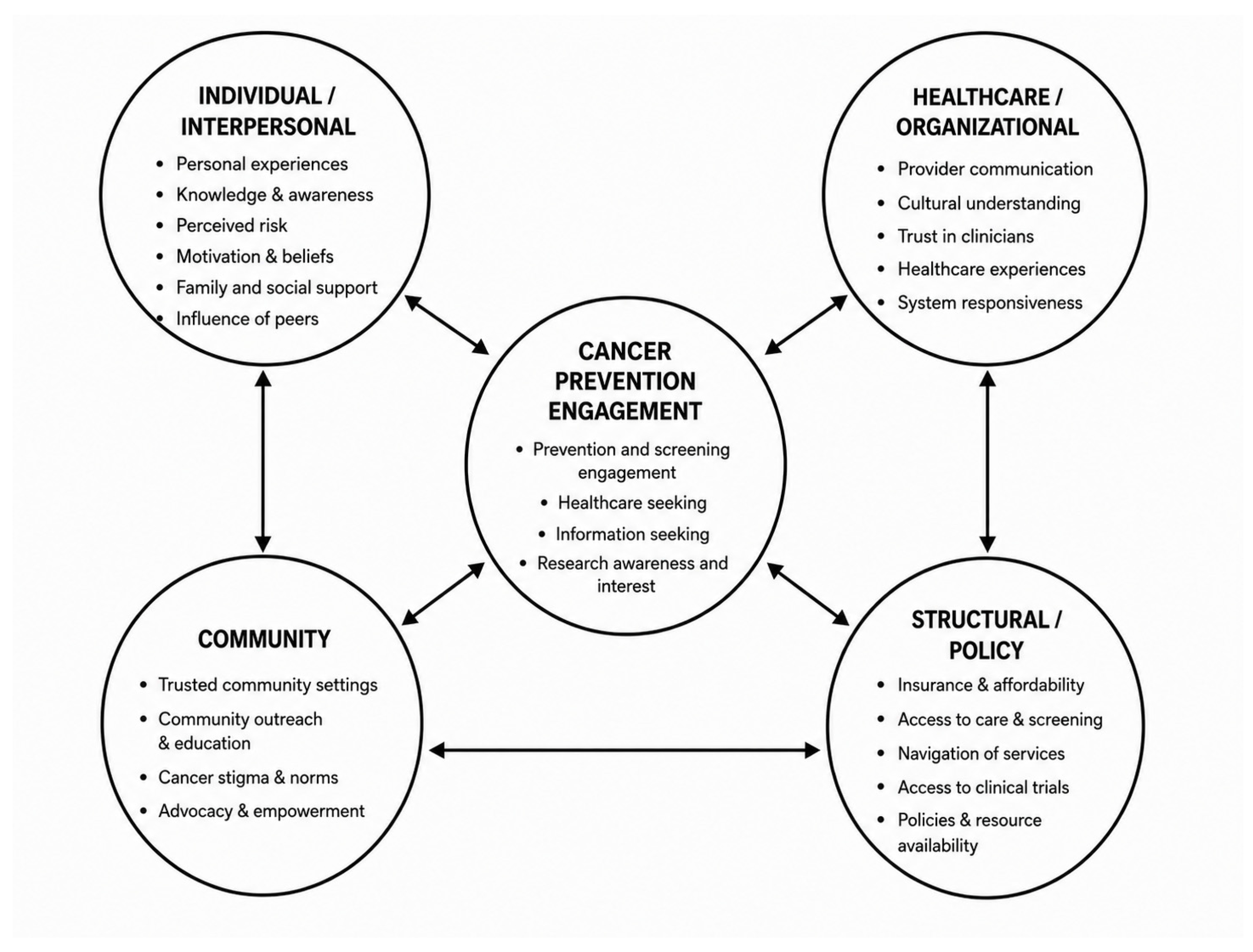
Table 4). Although common themes were observed across the focus group dataset, the relative emphasis of specific topics varied across sessions. The prostate cancer groups placed greater emphasis on screening decisions and interactions with healthcare providers, while the breast cancer group emphasized family experiences with cancer and insurance-related concerns. The general cancer prevention group raised broader issues related to healthcare trust, community education, and access to clinical research. These variations were consistent with the cancer-specific focus of the sessions, while substantial overlap was observed in participants’ discussions of healthcare access, social support, and the need for community-based education. The final themes were subsequently mapped to the Socioecological Model to illustrate influences operating across individual/interpersonal, healthcare/organizational, community, and structural/policy levels (
Table 4).
3.1. Personal and Family Experiences, and Social Support
Personal experiences with cancer strongly influenced participants’ perceptions of cancer prevention and screening. Two interrelated subthemes emerged: personal and family experiences with cancer and the influence of social support networks. Within the Socioecological Model, these findings reflect individual and interpersonal influences, illustrating how personal cancer experiences, perceived risk, family history, and social support may shape motivation and engagement in cancer prevention and screening.
Participants frequently cited family or friend’s cancer diagnoses as motivating factors for their own engagement in health-seeking behaviors. In both prostate cancer sessions, participants cited personal connections to cancer as central to their awareness and advocacy. A participant shared,
“I lost my uncle to prostate, which is why I’m here”
(PCFG1-pg3)
“It’s (prostate cancer) a serious matter in our community, you know, as uncomfortable as it is…”
(PCFG2-pg4)
Similarly, participants described family history as an important reason for seeking information and engaging in preventive behaviors.
“We do have a history in our family of breast cancer, so we wanted to learn more about it”
(BCFG-pg5)
Family members frequently served as sources of emotional support, encouragement, and health information. Participants described spouses, parents, and children as influential in healthcare decision-making, preventive behaviors, and healthcare utilization. One participant stated:
“My mother is a breast cancer survivor… I just want to make sure I am always aware for not only my family or my mother but my daughter who is probably going to be in that high-risk category as well.”
(BCFG-pg11)
Another participant emphasized the importance of spouses and family members in supporting healthcare decisions and facilitating healthcare use:
“My wife is my partner in health. She comes with me to my appointments because she knows I forget things. Her support makes all the difference.”
(CPFG-pg7)
3.2. Healthcare Experiences and Trust
Participants described trust at both interpersonal and institutional levels. Interpersonal trust centered on relationships with individual healthcare providers, including communication, empathy, professionalism, and cultural understanding. Institutional concerns reflected participants’ previous experiences with healthcare systems and their broader perceptions of whether healthcare services were accessible, responsive, and trustworthy. Participants expressed a need for accessible, culturally competent healthcare providers. Within the Socioecological Model, these findings represent healthcare and organizational influences, demonstrating how provider communication, cultural understanding, previous healthcare experiences, and institutional trust may facilitate or hinder engagement in cancer prevention and screening.
Participants described both positive and negative experiences with healthcare providers. Effective communication, empathy, and cultural understanding were viewed as important aspects of healthcare interactions. Participants emphasized the importance of providers who understood their experiences and communicated in ways that fostered trust. One participant expressed frustration with finding providers who understood their experiences:
“Even near one of the world’s largest medical centers, it’s hard to find a doctor who understands my needs.”
(PCFG2-pg4)
Several participants described preferences for providers who demonstrated professionalism and effective communication:
“I feel more comfortable with female doctors because I think they are more professional; they’re more clinical.”
(PCFG1-pg6)
“I feel like they should make you feel more comfortable and also be able to talk to you and better relate with you better, and be more influence and be able to make you have it, the procedure done. And like you say, the on the cost of everything, it’s always the cost for everything.”
(PCFG-pg13)
Similar sentiments were echoed in the general cancer prevention group, although participants described both negative and positive healthcare experiences.
“…for me it’s challenging because I’ve had past experiences in the healthcare industry that I’m not eager to go and see a doctor”
(CPFG-pg12)
In contrast, another participant described how a positive relationship with a provider encouraged greater engagement in care:
“What’s working well for me is cultural competence. My new nurse practitioner, an African American man, communicated in a way that encouraged me to get back on track.”
(CPFG-pg7)
Together, these contrasting experiences illustrate how interactions with individual providers could either discourage or facilitate healthcare engagement. Participants particularly emphasized communication and cultural understanding as important features of positive healthcare relationships.
3.3. Structural and Financial Challenges
Participants frequently discussed insurance limitations, treatment costs, and difficulties obtaining preventive services. Many described uncertainties regarding insurance coverage for screenings and treatment, particularly among individuals managing multiple competing priorities. Within the Socioecological Model, these findings reflect structural and policy influences, illustrating how insurance coverage, affordability, healthcare access, and system navigation may constrain access to preventive services even when individuals are motivated to seek care.
“It’s frustrating that whether you get screened depends on what your insurance covers.”
(CPFG-pg12)
Several participants described ongoing struggles with insurance companies and healthcare costs.
“My insurance company tried to stop paying for my treatment… It’s a fight with them as well as with resources.”
(BCFG-pg9)
Participants also described difficulties navigating healthcare systems, identifying providers, and obtaining access to recommended services, which often delayed preventive care and treatment.
3.4. Community Engagement, Education, and Advocacy
Finally, three interrelated subthemes emerged within this domain: community-based education, cancer stigma and cultural norms, and advocacy for improved access to information and resources. Many participants expressed a desire for greater awareness and early education regarding cancer prevention. Within the Socioecological Model, these findings represent community-level influences, illustrating how trusted settings, culturally relevant education, community norms, advocacy, and access to information may support cancer prevention engagement and connect community members with screening, healthcare, and clinical research opportunities.
“If I knew more about breast cancer when I was younger, I’d have felt empowered to ask for screening.”
(BCFG-pg9)
Participants emphasized the importance of receiving information in familiar and trusted settings such as churches, community centers, and local organizations.
“ I would feel more comfortable learning about screenings at a community center than at a clinic.”
(BCFG-pg8)
Several participants described cancer as a sensitive or taboo topic within their communities. Fear, stigma, and limited communication about cancer often discourage open discussions regarding prevention and screening.
“In our community, it’s like you don’t talk about cancer until it’s too late. I want to know better ways to approach it.”
(CPFG-pg10)
Similarly, another participant noted:
“I know that when I went seeking answers, it was so hush-hush and no one really wanted to talk about it.”
(CPFG-pg11)
Participants also expressed a desire for culturally relevant approaches that normalize discussions about cancer within families and communities and reduce fear associated with screening and diagnosis. Several participants raised concerns regarding differences in cancer outcomes among racial and ethnic groups and expressed interest in understanding the factors contributing to these differences.
“What is being done differently by Asians than African American men? And you know diet is a major factor.”
(CPFG-pg18)
Participants also discussed advocacy and improving access to resources. The community also expressed a desire for accessible information on preventive clinical trials, with a particular emphasis on disseminating resources through trusted venues.
“I just wish …the African American community could have more access to these clinical trials, at the church I tried to get the information on clinical trials. I’m wondering what type of resources can be made available where we can find out about these clinical trials for prevention”
(CPFG-pg20)
Community engagement and education were viewed as important mechanisms for increasing awareness, promoting prevention, and reducing poor cancer outcomes. Rather than viewing cancer prevention solely as a personal responsibility, participants emphasized the role of healthcare systems and public policy in shaping access to screening and treatment.
Collectively, these findings demonstrate the interconnected influence of personal experiences, healthcare interactions, social support, financial challenges, and community resources on cancer prevention behaviors. Viewed through the Socioecological Model, the four themes span individual and interpersonal, healthcare and organizational, community, and structural and policy levels, highlighting how factors operating across these levels may collectively shape cancer prevention engagement. Participants consistently emphasized the importance of trusted relationships, culturally relevant education, and accessible healthcare services in promoting cancer prevention within their communities.
4. Discussion
This qualitative study explored perceptions of cancer prevention, healthcare experiences, and challenges to care among adults recruited through a community engagement initiative centered in a predominantly African American urban community. Four interconnected themes emerged: personal and family experiences, and social support; healthcare experiences and trust; structural and financial challenges; and community engagement, education, and advocacy. Viewed through a socioecological perspective, these findings suggest that cancer prevention engagement develops through the interaction of motivation, social support, healthcare relationships, community resources, and structural access (
Figure 1). Personal or family experiences with cancer may increase the perceived relevance of prevention and motivate information seeking or screening, while family members can reinforce these behaviors through encouragement, information sharing, and practical support. However, motivation alone may be insufficient when individuals encounter poor healthcare communication, mistrust, insurance restrictions, financial burden, or difficulty navigating services. Trusted community organizations may function as bridging institutions by connecting residents with healthcare systems, cancer education, screening resources, and research opportunities. Cancer prevention engagement therefore appears to reflect an interconnected multilevel process rather than solely an individual decision.
4.1. Individual and Interpersonal
Personal experiences with cancer and social support emerged as important influences on cancer prevention behaviors. Personal experiences described by the participants appeared to increase awareness of cancer risk and motivate engagement in preventive care. Participants frequently described family members or friends affected by cancer as important influences on their own health behaviors. Thus, personal connections to cancer can foster awareness and a proactive stance toward health, particularly in high-risk communities [
24,
25,
26]. In addition, spouses, parents, and other family members often serve as advocates for screening and healthcare utilization. Social support appeared to influence cancer prevention through several pathways, including reinforcing perceived risk based on family experiences with cancer, encouraging screening and information seeking, and providing practical assistance during healthcare encounters. In this way, family networks may function not only as sources of emotional support but also as facilitators of engagement with preventive care.
4.2. Healthcare/Organizational
Interpersonal trust was reflected in participants’ emphasis on provider communication, empathy, professionalism, and cultural understanding, while broader institutional confidence was shaped by previous experiences with healthcare organizations and insurance systems. Positive relationships with individual clinicians may therefore promote preventive engagement, while broader organizational or structural experiences may reinforce or undermine that trust.
These findings are consistent with evidence that culturally competent healthcare providers can improve communication, trust, and adherence to recommended screening and treatment [
8,
26,
27,
28]. The mistrust described by participants should also be understood within the broader context of historical and ongoing challenges experienced by African American communities within healthcare systems. In this context, mistrust may reflect not only individual negative encounters with healthcare providers, but also accumulated experiences of poor communication, perceived unfair treatment, and differences in the quality of care within healthcare systems. Participants’ emphasis on providers who understand their needs suggest that trust is shaped by both the quality of individual patient–provider interactions and perceptions of the healthcare system.
Improving cultural competence within the healthcare workforce may help reduce misunderstandings and challenges to cancer prevention [
28]. While participants used language consistent with cultural competence, their emphasis on listening, understanding, communication, and trusting relationships also aligns with cultural humility. Cultural humility emphasizes an ongoing process of self-reflection and self-critique, recognition of power imbalances within patient–provider relationships, and openness to patients’ lived experiences [
29]. Participants’ emphasis on culturally relevant communication also supports the use of tailored education and health promotion strategies delivered by trusted messengers to foster dialogue and promote preventive behaviors within underserved communities [
27].
4.3. Structural/Policy
The structural challenges identified by participants illustrate how access to cancer prevention can remain constrained even when individuals are motivated to engage in preventive care. Insurance restrictions, affordability, and healthcare navigation operate beyond the individual level and may limit the extent to which knowledge, family support, or positive relationships with providers translate into screening and other preventive behaviors. Inadequate insurance coverage and financial burden contribute to delayed diagnosis, reduced screening uptake, and persistent cancer outcomes among underserved populations [
30,
31]. These challenges should also be considered within the broader context of structural factors that have historically shaped access to healthcare and preventive services in African American communities [
24]. Structural factors provide one framework for understanding how these challenges may be produced and sustained through institutions and systems. Unlike challenges that arise through individual interactions, structural factors operate through institutional policies, resource distribution, insurance systems, and other conditions that can influence access to care across different populations. Participants did not explicitly attribute their experiences to structural factors; however, their accounts of insurance limitations, affordability concerns, and difficulties navigating healthcare illustrate how structural conditions can constrain preventive engagement even among individuals motivated to seek care. From a socioecological perspective, these findings further illustrate how structural and policy level conditions can constrain individual health behaviors and potentially undermine the benefits of supportive family relationships, trusted healthcare providers, and community-based cancer education. Cancer prevention should not be viewed solely as an individual’s responsibility, but rather as a shared responsibility among healthcare systems, policymakers, and community organizations. Addressing these challenges through policies that improve healthcare access, reduce financial burden, and facilitate navigation of healthcare services may help reduce differences in health outcomes and promote health equity.
4.4. Community
Participants’ preference for trusted community settings as well as concerns about cancer-related stigma and limited community dialogue, highlights the potential role of community organizations in bridging cancer education and preventive services. Community-based educational approaches and culturally relevant interventions may help normalize conversations about cancer, increase awareness, and promote preventive behaviors. These programs foster a sense of belonging and reassurance, reducing perceived stigma and promoting open discussions about health topics that may otherwise feel uncomfortable. These findings support growing evidence that community-engaged and culturally tailored approaches can improve health promotion efforts in underserved populations [
26,
27,
32].
Access to information about clinical trials also emerged as a notable concern within the community engagement theme. One participant specifically described difficulty identifying clinical research opportunities and expressed a preference for receiving this information through a trusted community setting such as a church. This observation suggests that gaps in awareness and navigation may limit community access to research opportunities even when interest in participation exists. Partnerships among cancer centers, community organizations, faith-based organizations, and community health programs may provide opportunities to disseminate understandable information about clinical research and connect interested individuals with appropriate studies. Community navigators or trained research ambassadors could also help explain study opportunities and facilitate connections with research teams. These findings may also inform NIH-funded cancer prevention and community engagement programs by highlighting the importance of incorporating trusted community partners and navigation strategies into efforts to improve awareness and access to cancer clinical trials.
4.5. Strengths and Limitations
This study has many strengths. The use of focus groups facilitated rich discussions regarding subjective experiences, healthcare interactions, and community perspectives. In addition, the inclusion of prostate cancer, breast cancer, and general cancer prevention discussions provided insight across multiple cancer-related contexts. However, several limitations should be considered when interpreting the findings. First, the study included a relatively small sample recruited primarily through community engagement activities in Houston, Texas. Although the initiative was centered in the historically African American Third Ward community, participants were not required to reside in Third Ward. These factors limit our ability to characterize the findings as representative of Third Ward residents specifically or to generalize them to other populations or geographic settings. Second, all focus groups were conducted virtually during the COVID-19 pandemic, which may have influenced participation and the nature of group discussions. Third, participants were recruited exclusively through community engagement activities and social media outreach, which may have resulted in greater participation among individuals with a stronger interest in cancer prevention. Fourth, structural and social factors that may influence healthcare experiences were not directly assessed. Therefore, although participants described insurance limitations, affordability constraints, healthcare navigation difficulties, and challenges accessing culturally responsive care, these findings should not be interpreted as direct evidence of perceived unfair treatment or experiences. Rather, they provide insight into structural conditions that may contribute to persistent challenges in cancer prevention and healthcare access. Fifth, not all COREQ items were conducted or recorded, including field notes, participant transcript reviews, member checking, structured reflexivity, and reasons for non-participation. Finally, despite multiple reminders, demographic information was available for only 25 of the 35 participants. The post-focus group survey was intentionally kept brief to support participant completion and did not collect additional characteristics such as education, insurance status, income, cancer survivor status, or caregiver status. The absence of this data limited our ability to further characterize the focus group sample and examine how these characteristics may have influenced participants’ perspectives. Despite these limitations, the study provides valuable insights into community perspectives on cancer prevention, healthcare access, and challenges to care among underserved adults and offers important considerations for the development of culturally responsive cancer prevention and community engagement initiatives.
4.6. Implications for Implementation and Community Cancer Prevention
Our findings highlight several opportunities to translate community perspectives into cancer prevention practices. Partnerships with churches, community centers, and established community organizations may provide trusted settings for culturally relevant cancer education and screening outreach. Health systems and public health programs may also consider community health workers, patient navigators, or trained cancer prevention ambassadors who can connect underserved communities with screening services, clarify healthcare and insurance processes, and provide information about relevant clinical trials. Importantly, education alone may have limited impact when insurance, affordability, and healthcare navigation concerns remain unresolved. Multilevel interventions should therefore combine trusted communication and community outreach with practical mechanisms for improving access to preventive services.




 ,
,