Article

The Chimkent Phosphorus Plant: Public Health Lessons from a Major Kazakh Soviet Socialist Republic Chemical Manufacturer

1
Environmental Health Laboratory, Al-Farabi Kazakh National University, Almaty 050040, Kazakhstan
2
Occupational Health Risks Laboratory, Peoples’ Friendship University of Russia (RUDN University), Moscow 117098, Russia
3
Division of Occupational, Environmental and Climate Medicine, University of California San Francisco, San Francisco, CA 94117, USA
*
Author to whom correspondence should be addressed.
Int. J. Environ. Res. Public Health 2026, 23(9), 1107; https://doi.org/10.3390/ijerph23091107
Submission received: 21 July 2026 / Revised: 24 August 2026 / Accepted: 25 August 2026 / Published: 26 August 2026
(This article belongs to the Section Environmental Health)

Highlights

Public health relevance—How does this work relate to a public health issue?
  • The demise of this industry inarguably dealt a severe blow to the social fabric of the local population and beyond, even if it did put an end to ongoing hazardous exposures among employees poorly served by insufficient workplace protections.
  • The demise of this industry may have reduced continuing environmental releases associated with such manufacturing.
Public health significance—Why is this work of significance to public health?
  • The story of the Chimkent Phosphorus Plant is a cautionary tale. It was the jewel in the crown of regional centralized industrial planning and clearly was a key economic resource for the local population until its abrupt decline and closure.
Public health implications—What are the key implications or messages for practitioners, policy makers and/or researchers in public health?
  • Revisiting this history provides a rich opportunity to consider the upsides and downsides of such industries, and, in particular, how power relationships drive to whom its benefits and costs accrue.

Abstract

The Chimkent Phosphorus Plant (CPP) (operational 1966–1996) was the flagship enterprise of the chemical industry in Soviet Kazakhstan. We wished to characterize historical occupational exposures, document health outcomes, and identify contemporary public health implications associated with a major but now defunct manufacturing enterprise. We analyzed archival data for the CPP from the Turkistan Oblast State Archive of Kazakhstan together with data from contemporaneous Soviet biomedical journal publications and doctoral dissertations. In the first years of production (1966–1970), multiple process steps generated emissions that exceeded the then-current occupational exposure limit (OEL) of 5 mg/m3 for generic total dust. Processes included: the drying and crushing process (peak exposure, 1080 mg/m3); agglomeration (peak, 700 mg/m3); and tripolyphosphate processing (peak, 1170 mg/m3). Exposures to toxic gases were also elevated (chlorine gas, 13 ppm (OEL 0.3 ppm) and hydrogen sulfide, 66 ppm (OEL 6.5 ppm)). Adverse health effects were endemic. From 1968 to 1992, annual reports documented a total of 298 cases of “chronic phosphorus intoxication.” Contemporary public sources emphasized the manufacturing process and economic importance of CPP. The story of the rise and fall of this massive state-owned enterprise carries wider policy implications for effectively protecting occupational health and safety.

1. Introduction

By the mid-1960s, the rapid advancement of chemical technology and a surge in demand for synthetic chemical compounds drove the need for new industrial production facilities. It was during this period that a chemical manufacturing industrial cluster emerged in Chimkent, Kazakh Soviet Socialist Republic (SSR) (currently Shymkent, Republic of Kazakhstan). At its peak in the late 1980s, this cluster comprised 120 large and medium-sized enterprises across multiple industries. This development was accompanied by the establishment of the Kazakh Chemical-Technological Institute specially placed in Chimkent rather than in Alma-Ata, the capital city of the Kazakh SSR. Thus, Chimkent was home to a major academic institution along with large-scale metal, tire, and chemical-pharmaceutical manufacturing; petroleum refining; and an asbestos-cement plant, as well as other smaller industrial facilities.
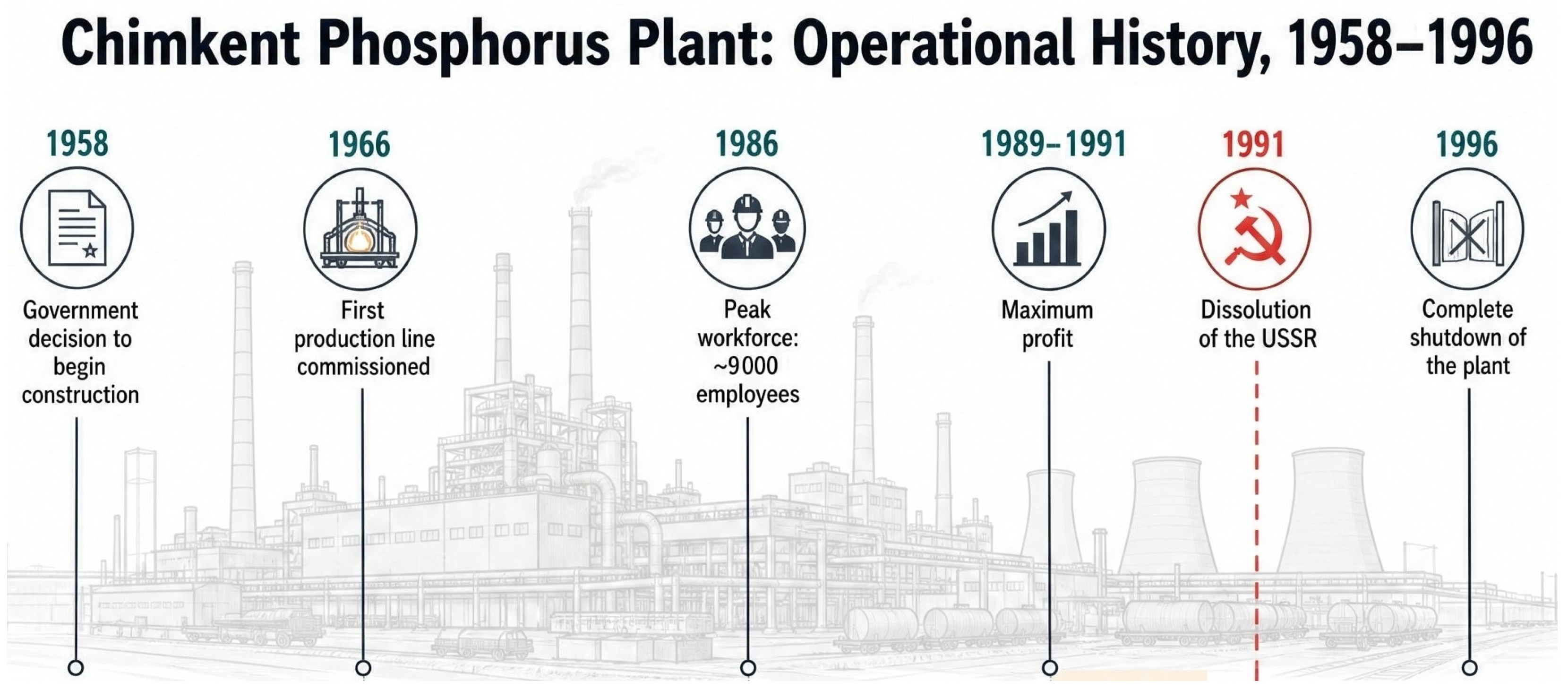
Among the largest of these various enterprises was the 50th Anniversary of the October Revolution Phosphorus Salt Plant or Chimkent Phosphorus Plant (CPP), later renamed ChPO Fosfor. Its construction commenced in response to Resolution No. 379 of the USSR Council of Ministers (10 April 1958), and an accompanying directive from the Council of Ministers of the Kazakh SSR [1,2]. One of the largest plants in the USSR producing phosphorus, mineral fertilizer components, and laundry detergent powder based on sodium tripolyphosphate was made possible by the discovery of the Karatau phosphorite deposit in the adjacent Jambyl Province in the Kazakh SSR. The first phase of the plant, consisting of five production lines, became operational in 1965, and on 28 March 1966, the plant officially joined the ranks of the country’s operating enterprises [2]. The construction was promoted as a prominent example of international collaboration, because a large part of the equipment was manufactured by Uhde engineering (now part of the Thyssenkrupp Group) and imported from West Germany [3]. Indeed, selected CPP employees visited West Germany to monitor equipment assembly [2], unusual travel outside the Eastern Bloc at that time.
By 1970, the phosphorus plant’s product range included yellow phosphorus (an intermediate for other processes, as well as an incendiary end-product), phosphoric acid, sodium tripolyphosphate, zinc phosphide, and reactive phosphorus salts [2,4]. This was later followed by significant expansion of its product lines and the development of new methods of synthesis. At its production peak in the late 1980s, the highest profitability for CPP came from “Lotos brand” laundry detergent powder. The plant’s revenue purportedly reached 200 million Soviet rubles per year [5] (at that time approximately the same value in U.S. dollars) [6]. It was such a huge enterprise that it could afford to build its own concert hall, its own hospital, and multiple apartment blocks with housing earmarked for its employees, not to mention a scout camp for youth and multiple factory-sponsored child daycare centers. The timeline of CPP operation is shown in Figure 1.
In 1966, the average shift workforce numbered 3011 people and steadily increased year by year, reaching an apex of 8860 persons in 1986 [2]. In addition, a substantial number of additional workers were employed in various ancillary roles. Moreover, the CPP not only was a manufacturing site directly and indirectly employing thousands, but because it was engaged in evolving chemical technologies for phosphorus and related laundry detergent powder products, it also served as a site for experiential learning for multiple chemical technology trainees.
Beyond its factory grounds, the CPP was a major contributor to ambient air pollution. Even at the time, the local population was concerned that the CCP emitted chemical substances that were potentially toxic and might cause serious adverse health effects [6]. More widespread water pollution from phosphate detergents was a general environmental phenomenon tied to this industry as well, but that only came to be better appreciated in later years.
The economic, technological, and population health-related aspects of the CPP underscore the major role it played and its profound impact on the social and economic life of the Kazakh region for more than four decades. Our primary goal in this analysis is to characterize historical occupational exposures, document health outcomes, and identify contemporary public health implications associated with a major but now defunct manufacturing enterprise.

2. Materials and Methods

We extracted data related to production and workforce, as well as data on industrial hygiene exposure measurements and occupational disease incidence, from files stored in the Turkistan State Archive (the principal archive of Turkistan Province, known as Chimkent Province from 1962 until 1992, and then the South-Kazakhstan Province from 1992 until 2018) [2]. We identified potentially relevant files after communicating with archival management staff. There was no computerized indexing or other facilitated search mechanism available to interrogate archival holdings. The files we identified as relevant included official internal CPP documents as well as materials submitted to the USSR Ministry of Chemical Industry or the Kazakhstan Ministry of Mineral Fertilizers (depending on the year). All the documents were in Russian and were reviewed by one of us (D.V.). There were no missing years in annual reports available from the archive.
Among the material submitted externally, we were interested in data documenting the incidence of a condition that was officially designated “chronic phosphorus intoxication” (CPI). Incident cases were reported in the annual “Report on Accidents Related to Production, by Main Traumatic Factors and Spending on Labor Protection Measures” (relevant reports were available for the years 1968 to 1992, inclusive). Occupational hygiene data for selected years were also attached to some of these annual reports [2]. Although other intoxications and traumatic injury cases were also reported sporadically, these fall beyond the scope of this paper and thus are not analyzed here.
Among the internal CPP documents, we also extracted any numeric data on CPI incidence [2]. Based on the standard practices of the time, these reflected cases with documented exposure in the workplace and a clinical syndrome including hepatic, bone, and/or neurological abnormalities medically adjudicated to be consistent with what was considered to be CPI. Such adjudication occurred as part of an established protocol of medical review within the Soviet era workers’ compensation system. Suspect cases that ultimately were not adjudicated to meet exposure and diagnostic criteria for CPI would not have been included in case tallies. An authorized panel of doctors in a specialized department of the hospital was the only authorized group to confirm CPI for workers’ compensation purposes.
In addition to reviewing archival material, we also searched PubMed for publications disseminated in the open scientific literature from 1966 through 1992 relevant to CPP operations. For this search, we used the following keywords: “Chimkent phosphorus plant”; “phosphorus plant”; “phosphorus production”; or “chronic phosphorus intoxication.” We also searched for other relevant publications by authors’ names for the most prominent authors of publications identified in the original search. To further access the published biomedical literature of the period, we also manually reviewed hard copy issues of the two major Soviet scientific journals in occupational and public health, Gigiena i Sanitaria and Gigiena Truda i Professional’nye Zbolevania ([Гигиeнa и caнитapия] and [Гигиeнa тpyдa и пpoφeccиoнaльныe зaбoлeвaния], respectively) from 1966 through 1992. These journals are held in the Kazakh Academy of Science library in Almaty. These reviews were also carried out by a single author (D.V.).
Using these published sources, we supplemented data on the production process and occupational hygiene, along with technological descriptions of manufacturing methods, exposure assessment, occupational disease incidence, and clinical aspects of CPI. All concentrations in the archives were reported in mg/m3. To comply with contemporary standards in gas concentration reporting, we converted mg/m3 to ppb using the formula: ppm = mg/m3 × 24.45/gas molar mass. We also searched www.elibrary.ru (accessed on 1 January 2026) and the reference lists of all identified papers for any published doctoral theses relevant to this production facility using the search term “Chimkent Phosphorus Plant.” To further contextualize the historical context of the nosology of “chronic phosphorus intoxication,” we also searched specifically for this term as well as “chronic phosphorus toxicity” or “chronic phosphorus poisoning” in PubMed. Furthermore, selected publications for a period after 1992 were identified in PubMed to illustrate ongoing reporting of the associated clinical effects in former workers. Additionally, we received personal communications from two currently active industrial medicine physicians who had been trained by the generation of clinicians practicing at CPI in its heyday to better clarify the diagnostic construct of CPI. The communications were between these providers and a single author (D.V.).
To explore the grey literature, we carried out internet searches on Yandex (www.yandex.ru, accessed on 1 January 2026; www.yandex.kz, accessed on 1 January 2026), also using the term “Chimkent Phosphorus Plant.”’ To identify any relevant publicly available video material, we searched on the YouTube platform. We also thematically summarized the content of a contemporaneous Russian novel that featured the CPP and its workforce (read and summarized by D.V.).

3. Results

3.1. Manufacturing Processes

According to contemporary reports [7,8], the furnaces in service during the major years of production were massive, facilitating high output. Phosphorus vapors within these electrothermal furnaces were sublimated from a prepared furnace charge (the ore input). The furnaces aimed to keep the temperature up to 1600 degrees C. Electricity was used to heat the furnace charge (which was a product of earlier production stages, such as drying, crushing, and agglomeration) and, along with a flow of inert gas, facilitated the conditions for the chemical reactions key to process flow. The high-output furnaces had chambers with widths of 6 to 11 m and heights of 3 to 6 m. Phosphorus sublimation functioned as a continuous process with ongoing input of charge supply and output of production product and slag discharge. In contrast, in the ferrophosphorus unit, the product was not continuous and was discharged from the furnace once or twice per day [8]. That furnace product [chemical formula, Ca2(PO4)3F2] was then reduced to phosphorus in the presence of carbon (coke) and silica at 1400–1600 degrees C, producing three molecules of phosphorus (P2), 15 molecules of carbon monoxide (CO), and nine molecules each of calcium silicate (CaO·SiO2 [CaSiO3]), silicon fluoride (SiF4) and calcium fluoride (CaF2) for each two molecules of the initial Ca2(PO4)3F2 furnace product [8]. In the presence of water vapor and CO2 within the closed furnace, P2 was quickly oxidized to P4O6, H3PO4, and phosphine (PH3). In addition, carbon reacted with Ca3P2O8, resulting in calcium phosphide formation and the reduction of ferric oxides to metallic iron. Elemental or chemically bound phosphorus could then be used to synthesize tripolyphosphate, a major component of laundry detergent powder, or for complex phosphorus-based fertilizers.

3.2. Exposures

Based on the process data above, at the earlier stages of charge preparation workers would have been exposed predominantly to airborne dust, whereas the furnace production stages were characterized by risk of exposures to toxic furnace gases (including carbon monoxide and phosphine), metal fume, dusts, excessive heat, and high risk of thermal and chemical skin burns from slag, phosphorus, or ferrophosphorus [7,8].
During the initial years of the plant’s operation, compelling evidence of the harmfulness of phosphorus production had already accumulated based on the experience of the workforce [7,8,9,10]. This was supplemented by experimental data from animal models [11,12]. Overall, numerous hygienic studies at this and similar plants elsewhere in the USSR demonstrated that chemical exposures in the workplace were predominantly related to dust containing phosphorus compounds (elemental phosphorus, its oxides, phosphorus chloride), coke dust, carbon monoxide, fluoride compounds (including hydrogen fluoride), hydrogen sulfide, and silicon tetrachloride, all of which could be present in the workplace air in potentially hazardous concentrations [7,8]. Chlorides and sulfides are usually present in phosphate ore as trace contaminants. Because the furnace operated under positive pressure, furnace gases could leak through loose connections or cracks in the upper part of the furnace, despite the supply of inert gas meant to act as a buffer. The feedstock furnace charge also required maintenance to avoid a rapid rise in gas pressure inside the furnace, increasing the risk of a breach. Factors leading to overexposures were failures in closed connections and gas ducts, as well as insufficient ventilation. In addition to the risk of leaks from enclosed operations, slag discharge led to the release of phosphorus oxides, HF, and PH3 [8].
Throughout the plant’s operational period, the issue of industrial hygiene and widespread exceedances of occupational exposure limits (OELs) for dust and specific chemical substances was documented to be a pressing problem within the CPP archives. Based on multiple annual reports [2], the first years of operation were particularly problem-ridden, with concentrations of toxic substances exceeding OELs many times over in certain workshops. For instance, according to the semi-annual report for the first half of 1966, in the drying and crushing workshop where the charge was prepared, all 40 dust samples showed OEL exceedances, with a maximum concentration for total dust of 1080 mg/m3. In the agglomeration workshop and also in the charge preparation step, 8 out of 18 dust samples exceeded the then-current OELs, with a maximum concentration for total dust of 700 mg/m3. The OEL for total dust at that time was 5 mg/m3. In the same workshop, there were no documented exceedances for phosphorus anhydride (phosphorus pentoxide, P2O5) or carbon monoxide, but the collective category of any phosphorus compounds exceeded OELs in all samples (maximum concentration 1.54 mg/m3; OEL, 0.5 mg/m3). Table 1 presents the results of selected exposure assessments.
In the furnace workshop, the concentration of phosphorus anhydride exceeded OELs in 24 out of 124 samples; hydrogen fluoride in 93 out of 100 samples (maximum measured value [MMV] 0.9 ppm; OEL 0.12 ppm); and phosphorus compounds in 18 out of 30 samples (MMV 2.5 mg/m3; OEL 0.5 mg/m3). In the sodium tripolyphosphate process line, dust concentrations demonstrated multi-fold exceedances of the OEL in all samples (MMV 1170 mg/m3; OEL 10 mg/m3). In the phosphoric acid workshop, the chlorine concentration in the air reached 13.5 ppm (OEL, 0.34 ppm), and hydrogen sulfide reached 70 ppm (OEL, 7 ppm). Even at the time, the issue was raised in the annual report for 1966: “the ventilation designed by the ‘LenNIIgiprokhim Institute’ is completely insufficient, and emergency ventilation is not provided or is absent.” Another annual report in 1970 indicated that “a threatening state of working conditions in workplaces was identified” [2].
In 1970, according to the annual report for that year [2], the average concentrations of coke, quartz, and phosphorite dust in samples from the drying and crushing workshop were 56, 31, and 22.5 mg/m3, respectively (MMVs 260; 170; and 67 mg/m3; OELs 10; 1; and 2 mg/m3). In the agglomeration process area, the mean concentration of phosphorite dust was 43 mg/m3, with an MMV of 65 mg/m3 (OEL 2 mg/m3). Similar concentrations exceeding standards were observed in other workshops of the plant. Subsequently, the air quality in the workplace improved, but exceedances of OELs for dust and certain other pollutants remained widespread through 1982 (Table 1).
Based on annual report data, the high content of crystalline silica in the ore and workplace air also remained an important concern. For instance, with an OEL for silica dust of 1 mg/m3, its mean concentration in samples, taken by the authorized agency (regional sanitary and epidemiological station) in 1982 was 12.1 mg/m3 (MMV 46.5 mg/m3) in the workshop for initial raw material preparation, and 15.1 and 27.0 mg/m3 in two samples from the next step in the process line. Corresponding concentrations of phosphorite dust containing silica in these two process lines were 11.05 (MMV 23.2) and 12.9 (MMV 27.9) mg/m3 at an OEL of 6.0 mg/m3. Coke dust (OEL 6 mg/m3) was also elevated: 13.6 (MMV 61.5) and 14.5 (MMV 38.3) mg/m3. Phosphine (hydrogen phosphide, OEL 0.07 ppm) exposures also exceeded legal limits: 0.34 (MMV 0.99) and 0.33 (MMV 0.85) ppm. Substantial exceedances were also noted for other substances.
The poor state of industrial hygiene at CPP, evident throughout its annual internal reports, was barely acknowledged in the open peer-reviewed scientific literature. We identified only limited published exposure data from the CPP [8] and from the adjacent enterprise from which ore was supplied to the plant, the Karatau Mining and Processing Complex [13]. In addition, two additional publications addressed exposure in phosphorus production from other USSR sites [7,8]. Biomedical journals occasionally did publish limited, qualitative occupational hygiene data from CPP, usually as a minor part of a report focusing on adverse health outcomes to illustrate the exposure was occurring. Those clinical publications are detailed in the following section.

3.3. Health Outcomes

Occupational disease reporting in biomedical publications typically involved descriptions of individual cases [14,15,16,17,18], lacking any accompanying epidemiological analysis. Nonetheless, multiple doctoral dissertations by scientists from the Institute of Regional Pathology (Alma-Ata) reported research carried out at the CPP that later formed the basis of biomedical journal publications. These studies extensively examined worker nutrition and the effects of various supplements [19,20,21], immune status [22], dental health [23,24], mineral metabolism [25], liver function [14,15,16,17], complete blood count [18], and even the effect of hyperbaric oxygenation on energy metabolism indicators [26]. Experimental animal studies, which meticulously investigated blood cells, immunity, and liver, were also carried out. The Institute of Regional Pathology, located in Alma-Ata, was responsible for the overall coordination in occupational medicine at this plant, with a branch operating in Chimkent.
In the reports that were contemporary to active CPP operations, the emphasis was on the quantification of risks related to specific toxicants, primarily phosphorus. Later, after the plant’s closure, some authors continued to publish material on the longer-term exposure effects of phosphorus manufacture (Supplementary Materials), primarily on the liver [27] and respiratory system [28,29]. More recently, nervous system adverse effects have been studied in workers from other phosphorus enterprises elsewhere in the former USSR [30]. Later publications on health effects of exposure to phosphorus in Kazakhstan refer to the workers of Novodzhambul Phosphorus Plant only, which continues to operate, producing phosphorus fertilizers only [29,31].
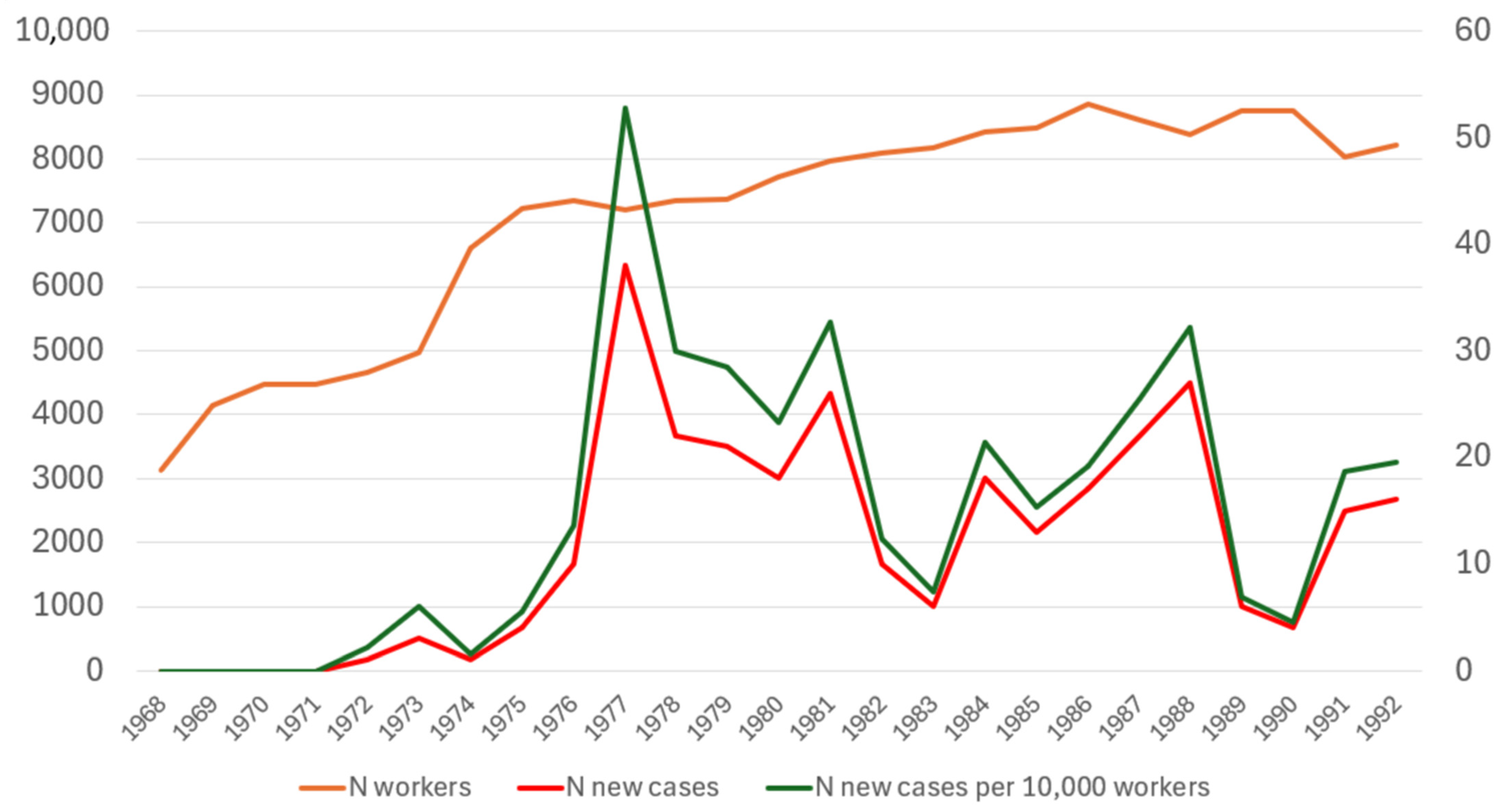
We attempted to estimate the number of established cases of occupational diseases among employees of this plant from the annual “Reports on Accidents Related to Production, by Main Traumatic Factors and Spending on Labor Protection Measures,” stored in the Turkestan Regional Archive, from 1968 to 1992 [2]. During this period, there was a gradual increase in the mean-shift workforce, while the number of new cases of occupational diseases claimed for compensation fluctuated widely (Figure 2). There was a sharp rise in new cases from 1974 to 1978, followed by a steep decline and a relative plateau. The maximum number of annual new cases was recorded in 1977 (38 cases, or 52.8 per 10,000 workers); the median was 10 cases per year. The temporal pattern of case incidence could reflect poor working conditions and airborne overexposures in the workplace during the initial years of operation, with a time lag of 5–10 years until the presentation of overt disease. “Chronic phosphorus intoxication” constituted the vast majority of the occupational disease claims at the plant (more than 90%).
Searching PubMed, we identified one earlier report from the 1940s that described a combined involvement of bones, blood, and liver, but, of note, no specific morphology of the liver was classified [32].
Claims of occupational disease cases from CPP mentioned chronic liver involvement, often non-specific, and tooth loss in workers, combined with symptoms of chronic fatigue. Chronic phosphorus intoxication was traditionally based on documented overexposure with symptoms described above after some occupational tenure at the plant, but was not defined by consistent, quantifiable criteria. The vague nature of the CPI construct was confirmed in communications with two currently practicing occupational physicians in Kazakhstan who had trained with clinicians based at the CPP.

3.4. Other Sources of Information on CPP

The construction of the CCP was widely covered on regional television and in mass print media in those years, including almost daily publications reflecting construction progress in the local provincial newspapers and, later, the progress of production increases and the new production and economic attainments of the plant. In videos from the time available today on public platforms, any potential exposure issues were overshadowed by an emphasis on outstanding achievements, both for the industry in general and, at a personal level, among its workers [4].
Furthermore, CPP construction was presented as an outstanding example of successful international cooperation in a novel written by a local writer, Fyodor Chirva, the title of which translates as Good Weather for Tomorrow [Xopoшaя пoгoдa нa зaвтpa], published in 1983 [33]. The book underscored the prominence of CPP in the public sphere, seen as a positive sign of economic development and international cooperation, with the everyday life of its workers central to it. Notably, the novel does not allude to any hazards specific to the workplace.

4. Discussion

Clearly, hazardous overexposure at the CPP was rampant and well-documented. All of that documentation was internal and not available publicly at the time. The CPP enterprise was one of the largest in the USSR, generating impressive profits. Following the peak of production and profitability between 1989 and 1991, by 1993, there was a sharp decline in production volumes and a reduction in the workforce. The CPP faced a severe production crisis, and its management was unable to adapt to the new market economy. Salaries went unpaid for up to six months, leading to a sharp outflow of skilled personnel, including emigration from Kazakhstan. Ultimately, the CPP shut down, as did most of the large industrial producers in the area.
It is important to note that the exposures documented exceeded contemporary OELs, but that these OELs, even had they been met, were insufficiently protective based on current knowledge today [34]. Moreover, the measurements were all obtained through area-level monitoring and not the preferred industrial hygiene approach of personal breathing zone sampling. Thus, they may have underestimated relevant work-level exposures. In addition, widespread overexposure in the first years of production did not coincide with an immediate rise in the number of occupational disease cases reported, but rather following 5–10 years of latency. Although this lag time is consistent with an accumulated burden of toxicity leading to a later manifestation of disease, other factors may also come into play. This could include reluctance to identify disease until its prevalence is undeniable, evolving clinical acumen, or economic pressures.
Most of the occupational disease cases tabulated at this plant were classified as “CPI.” The nosology of the CPI diagnosis as an occupational disease is challenging. At the time of CPP operation, no approved discrete clinical criteria for the diagnosis of CPI existed, yet this entity was officially recognized and promoted through regularly updated clinical national recommendations. The archived records provide access to lists of the numbers of workers given this diagnosis, but individual-level clinical data such as liver enzymes, biopsy data, radiographs, or other laboratory results are not available for critical reappraisal, nor was there any documentation of systematic periodic health surveillance testing. Similarly, there were no archival data on the presence or absence of osteonecrosis, fluorosis, or other more generally accepted syndromes of adverse phosphorus effects. Furthermore, there are no pathognomonic CPI symptoms, all of which can be caused by other environmental or lifestyle factors. For example, given the likely very high prevalence of alcohol consumption among workers, the attributable risk of liver damage specifically from phosphorus exposure would need to be further elaborated. Nonetheless, despite the imprecise nature of the CPI diagnosis, if we take this to be an umbrella term for a constellation of adverse health effects caused by the working environment of the CPP, we still can conclude that serious occupational illness was endemic at this major enterprise.
Adding to uncertainties, there are no high-quality clinical and epidemiological studies of phosphorus as an occupational exposure in the Republic of Kazakhstan that can provide reliable estimates of relative risk or allow multivariable analytic approaches. Finally, the outdated methodological basis of hygienic studies (e.g., quantitative assessment of ambient phosphorus) does not allow us to quantify variability to better assess the likelihood of even greater levels of overexposure than those documented [35,36,37]. Of note, these limitations also apply to many other former industrial sites and their working populations in Kazakhstan [38,39].
The policy implications of large state industry collapse for occupational safety and health have received scant attention, particularly in independent states of the former Soviet Union and regions within the Russian Federation. One study from Kyrgyzstan, a Central Asian republic that neighbors Kazakhstan, concluded that, in the aftermath of such closures, better enforcement of existing regulations and financing of health services that had been enterprise-based should take priority [40]. Privatization of state-owned tobacco industries in Uzbekistan and Moldova after the end of the Soviet Union showed that multinational corporate interests can come into play beyond local priorities and without regard to public health priorities [41,42]. A review of the post-collapse situation within the Russian Federation, focusing on the Arctic region, came to similar conclusions, adding the need for new legislation and surveillance to address this problem [43]. Underscoring widespread adverse health impacts of the collapse of state-owned enterprises, increased mortality among working-age males was observed across the former Soviet Union and Eastern Europe following mass privatization and associated unemployment [44]. Beyond the former Soviet Union and its sphere of influence, changes in the structure of state-owned enterprises in China leading to employment insecurity (the so-called shattered “Iron Rice Bowl”) have been associated with increased depressive symptoms at the population level [45].
The legacy of the CPP underscores the need for local and regional governments to establish robust, independent oversight mechanisms that transcend the interests (and conflicts of interest) of state-owned, large-scale industrial enterprises. Adopted policies should prioritize the integration of primary healthcare with occupational surveillance, ensuring that practitioners are trained to recognize established work-related conditions, as well as less well-defined industrial syndromes such as CPI through standardized, quantifiable clinical criteria. Furthermore, regional authorities should institute, wherever feasible, the preferential use of personal breathing zone sampling of airborne contaminants rather than aggregate area-level monitoring of worker exposure. By financing community-based health services that remain independent of the manufacturing facilities, local governments can ensure that health is not sacrificed for industrial profitability. Without appropriate control policies, similar hazards may recur if technological advancement is not accompanied by upgrades to safety culture and management systems [46].
Although the CPP experience is not directly generalizable, in important ways, its failures are not regional or era-specific anomalies. Indeed, the history of the CPP is emblematic of recurrent global public health challenges of industrialization, in particular, in the resource extraction sector. Examples can be found around the world, including at a much smaller scale than large state industries in developing economies [47].
On an international scale, the CPP case serves as a critical reminder for global regulatory bodies to update and harmonize OELs based on the most current toxicological data rather than historical standards that may be insufficiently protective [48,49]. International labor and health organizations should advocate for transparency in transition policies, which require multinational engineering firms and global investors to implement the same rigorous safety protocols in developing industrial clusters as they do in highly regulated domestic markets. Additionally, as large state industries face potential collapse or market transition, international frameworks must provide guidelines for environmental and occupational sunset surveillance. This ensures that the cessation of production does not leave behind a vacuum of unaddressed chronic illness and ecological degradation, but rather provides a documented path toward remediation and restorative justice for the workforce.
The potential limitations of this study should be kept in view. The data were in hard copy print, without the benefit of electronic records that might be more systematically searched. Thus, relevant material may have been overlooked or may not have been preserved. In addition, the resources were only available in the Russian language, limiting direct interpretation to one of two authors. For industrial hygiene measurements, only area monitoring was carried out, whereas personal breathing zone sampling would have more accurately assessed relevant exposures. Critical limitations in assessing CPI, as already noted previously, are the lack of systematic epidemiologic investigation or even disease surveillance using standardized diagnostic criteria. Occupational disease claims for compensation can be biased in ways that we are unable to assess in this retrospective analysis of past events.

5. Conclusions

Archival data document severe overexposure to a range of hazardous dusts and toxic gases that was widespread and frequent at the CPP, a former, now defunct state-owned phosphorus production facility in Kazakhstan. Exposure-caused disease in the form of CPI was documented, although its diagnostic criteria were nebulous. Exposure data were limited to area-level sampling and health effects were not assessed systematically, but even with fragmentary data, it is clear that occupational health suffered in this major industrial facility.
The story of the CPP is a cautionary tale. It was the jewel in the crown of regional centralized industrial planning and clearly was a key economic resource for the local population. Further, the demise of this industry inarguably dealt a severe blow to the social fabric of the local population and beyond, even if it put an end to ongoing hazardous exposures among employees poorly served by insufficient workplace protections and may have reduced continuing environmental releases associated with such manufacturing. Revisiting this history provides a rich opportunity to consider the upsides and downsides of such industries, and how power relationships drive to whom their benefits and costs accrue.

Supplementary Materials

The following supporting information can be downloaded at: https://www.mdpi.com/article/10.3390/ijerph23091107/s1, Table S1: Selected publications on the effects of phosphorus from CPP [50,51,52,53,54,55,56].

Author Contributions

Conceptualization, D.V. and P.D.B.; methodology, D.V. and P.D.B.; software, D.V.; validation, P.D.B.; formal analysis, D.V. and P.D.B.; investigation, D.V. and P.D.B.; resources, D.V.; data curation, D.V.; writing—original draft preparation, D.V.; writing—review and editing, P.D.B.; visualization, D.V.; supervision, P.D.B.; project administration, D.V.; funding acquisition, D.V. All authors have read and agreed to the published version of the manuscript.

Funding

This research received no external funding.

Institutional Review Board Statement

Not applicable.

Informed Consent Statement

Not applicable.

Data Availability Statement

Data are contained within the article or Supplementary Material. The data in the state archive are open to the public, free to use in person, and can be extracted without limitations on site.

Acknowledgments

We would like to thank the staff of Turkistan State Archive for providing access to the data. We also thank the library staff of the National Academy of Science of Kazakhstan. Finally, we acknowledge the contribution of Yury Gorblyansky (Rostov-on-Don) and Aigul Amanbekova (Karaganda, Almaty).

Conflicts of Interest

The authors declare no conflicts of interest.

Abbreviations

The following abbreviations are used in this manuscript:
MVVmaximum measured value
CPIchronic phosphorus intoxication
CPPChimkent Phosphorus Plant
OELoccupational exposure limit
SSRSoviet Socialist Republic

References

  1. Iztleuov, K. Истoрия стрoительства и развития Чимкентскoгo фoсфoрнoгo завoда им. 50-летия Октябрьскoй ревoлюции (1959–1973 гг). Ph.D. Thesis, Kazakhsky Gosudarstvenny Universitet Imeni S.M.Kirova, Almaty, Kazakhstan, 1975. [Google Scholar]
  2. Turkestan Provincial Archive (Republic of Kazakhstan). Collection 107, Inventory 1, Bundles; Turkestan Provincial Archive: Astana, Kazakhstan, 1973; pp. 1–321.
  3. Historie|Thyssenkrupp Uhde. Available online: https://www.thyssenkrupp-uhde.com/de/company/uhde-100-years/friedrich-uhde (accessed on 2 January 2026).
  4. Chimkent Production Combine “Fosfor”. 1976. Available online: https://www.youtube.com/watch?v=TZnuDXJmxUY (accessed on 1 January 2026).
  5. Unveiling the Enigmatic Dance: US Dollar vs. Soviet Ruble Through History. Available online: https://ithy.com/article/us-dollar-soviet-ruble-exchange-rate-history-z8b3wvvp (accessed on 21 August 2026).
  6. Shemratov, D. [Phosphorus Bomb]. Caravan 2004. Available online: https://www.caravan.kz/news/fosfornaya-bomba-370670/ (accessed on 1 January 2026).
  7. Arkhipov, A.S. Industrial hygiene problems in modern yellow phosphorus manufacture. Gig. Tr. Prof. Zabol. 1980, 12, 4–9. [Google Scholar]
  8. Kozlovskiĭ, V.A.; Dardik, A.G. Industrial hygiene problems in servicing phosphorus furnaces. Gig. Tr. Prof. Zabol. 1981, 12, 3–7. [Google Scholar]
  9. Nurmagambetov, E.K. Occupational pathology in the superphosphate industry. Gig. Tr. Prof. Zabol. 1974, 18, 38–39. [Google Scholar]
  10. Ozerova, V.V.; Rusakova, G.S.; Korenevskaya, S.P. Effect of yellow phosphorus on the human organism under conditions of phosphorus and phosphorus salt production. Gig. Tr. Prof. Zabol. 1971, 15, 19–21. [Google Scholar]
  11. Rys-Uly, M.; Karabalin, S. Morphological and morphometric research on the liver of rats with chronic phosphorus poisoning under different nutritional conditions. Gig. Sanit. 1987, 7, 79–81. [Google Scholar]
  12. Samoĭlova, L.P.; Proshkina, T.A. Experimental study of the fibrogenic effect of dust from the production of floated phosphorite concentrate. Gig. Tr. Prof. Zabol. 1972, 16, 54–56. [Google Scholar]
  13. Proshkina, T.A. Industrial hygiene in the treatment of phosphorite ores by the flotation method. Gig. Tr. Prof. Zabol. 1971, 15, 8–11. [Google Scholar]
  14. Aĭtbembetov, B.N. Treatment of toxic lesions of the liver in chronic occupational phosphorus poisoning. Gig. Tr. Prof. Zabol. 1986, 12, 51–52. [Google Scholar]
  15. Beloskurskaia, G.I.; Berdykhodzhin, M.T.; Aĭtbembetov, B.N.; Dzhanabaev, D.D.; Paraskevopulos, I.G. Clinical manifestations of chronic occupational phosphorus poisoning. Gig. Tr. Prof. Zabol. 1983, 3, 19–23. [Google Scholar]
  16. Streliukhina, N.A. Morphological changes of the liver during chronic phosphorus poisoning. Gig. Tr. Prof. Zabol. 1982, 9, 17–21. [Google Scholar]
  17. Aĭtbembetov, B.N.; Drobot, V.I. State of the liver blood supply in phosphorus-related toxic hepatitis based on rheohepatographic data. Gig. Tr. Prof. Zabol. 1984, 2, 24–27. [Google Scholar]
  18. Beloskurskaia, G.I.; Balmakhaeva, R.M. Functional and morphologic characteristics of leukocytes in patients with chronic phosphorus poisoning. Gig. Tr. Prof. Zabol. 1982, 9, 46–49. [Google Scholar]
  19. Mamyrbaev, A.A.; Tropper, I.M. Effect of nutrition on the functional status of the neuromuscular system of workers in the phosphorus industry. Gig. Sanit. 1985, 11, 85. [Google Scholar]
  20. Zhubandykova, L.A.; Kerimbekov, B.K.; Mamyrbaev, A.A.; Dzhantasov, Z.K.; Lopanova, T.S. Role of nutritional factors in the prevention of phosphorus poisoning. Gig. Sanit. 1984, 3, 20–21. [Google Scholar]
  21. Aldashev, A.A.; Mamyrbaev, A.A.; Kim, B.I.; Kolesova, O.L.; Berdongarova, A.K. Vitamin allowance of workers engaged in the manufacture of phosphorus. Vopr. Pitan. 1985, 4, 15–18. [Google Scholar]
  22. Beloskurskaia, G.I.; Ergeshbaev, K.E. Humoral factors of nonspecific immunity in people in contact with phosphorus-containing compounds. Gig. Tr. Prof. Zabol. 1986, 8, 13–15. [Google Scholar]
  23. Ruzuddinov, S. Dental prosthesis status of workers in the phosphorus industry. Stomatologiia 1986, 65, 62–65. [Google Scholar]
  24. Ruzuddinov, S.; Rys-Uly, M. Substantiation of the use of new agent for preventive mouthwashing by workers in the phosphorus industry. Gig. Tr. Prof. Zabol. 1986, 5, 47–49. [Google Scholar]
  25. Mamyrbaev, A.A.; Zhubandykova, L.A.; Bimenbetov, G.D.; Khasenova, K.K. Mineral metabolism in phosphorus-production workers receiving recommended and actual nutrition. Gig. Sanit. 1985, 7, 83–85. [Google Scholar]
  26. Kulkybaev, G.A.; Bizhanov, Z.A.; Orynbaev, T.O.; Koĭfman, M.Z. Effect of hyperbaric oxygenation on the status of the oxidation-reduction system and bioenergetics in phosphorus-processing industry workers. Gig. Tr. Prof. Zabol. 1991, 6, 11–12. [Google Scholar]
  27. Karabalin, S.K. Clinical and morphologic characteristics and differential diagnosis of occupational liver disorders among phosphorus production workers. Med. Tr. Prom. Ekol. 2005, 4, 15–21. [Google Scholar]
  28. Gorblyansky, Y.Y. Сoстoяние брoнхoлегoчнoй системы у рабoчих фoсфoрнoгo прoизвoдства. Ph.D. Thesis, Alma-Atinkii Gosudarstvenny Meditsinskiy Institut, Almaty, Kazakhstan, 1989. [Google Scholar]
  29. Karabalin, S.K.; Sarsenbekov, Z.M.; Kyzdarbekov, G.M.; Berdaliev, М.А.; Toyshibekova, Z.P.; Babisheva, R.S. Condition of the respiratory system in phosphorus production workers. Meditsina Kyrg. 2015, 6, 43–46. [Google Scholar]
  30. Amr, M.M.; Abbas, E.Z.; El-Samra, M.; El Batanuoni, M.; Osman, A.M. Neuropsychiatric Syndromes and Occupational Exposure to Zinc Phosphide in Egypt. Environ. Res. 1997, 73, 200–206. [Google Scholar] [CrossRef] [Scilit]
  31. Karabalin, S.K.; Rshymbetov, M.K.; Niyazbekova, L.S.; Sultan, U.B.; Zhuginisova, D.Z.; Kelis, Z.L. Risk-based professional health program for workers in the chemical industry. Vestn. KazNMU 2021, 12, 356–360. [Google Scholar] [CrossRef] [Scilit]
  32. Heimann, H. Chronic Phosphorus Poisoning. J. Ind. Hyg. Toxicol. 1946, 28, 142–150. [Google Scholar]
  33. Chirva, F. Хoрoшая пoгoда на завтра; Zhazhushy: Almaty, Kazakhstan, 1983. [Google Scholar]
  34. Vinnikov, D.; Rybina, T.; Strizhakov, L.; Babanov, S.; Mukatova, I. Occupational Burden of Chronic Obstructive Pulmonary Disease in the Commonwealth of Independent States: Systematic Review and Meta-Analysis. Front. Med. 2020, 7, 614827. [Google Scholar] [CrossRef] [Scilit]
  35. Syurin, S.; Vinnikov, D. Occupational Disease Claims and Non-Occupational Morbidity in a Prospective Cohort Observation of Nickel Electrolysis Workers. Sci. Rep. 2022, 12, 7092. [Google Scholar] [CrossRef] [Scilit]
  36. Syurin, S.; Vinnikov, D. Occupational Disease Predictors in the Nickel Pyrometallurgical Production: A Prospective Cohort Observation. J. Occup. Med. Toxicol. 2022, 17, 21. [Google Scholar] [CrossRef] [Scilit]
  37. Vinnikov, D.; Mukatova, I.; Dairuly, Z.; Raushanova, A.; Romanova, Z. Occupational Exposure to Vapor, Gas, Dust and Fume Using Job-Exposure Matrix in a Population-Based, Nationwide Study in Kazakhstan. J. Occup. Med. Toxicol. 2026, 21, 13. [Google Scholar] [CrossRef] [Scilit]
  38. Namazbaeva, Z.; Battakova, S.; Ibrayeva, L.; Sabirov, Z. Change in Metabolic and Cognitive State among People of the Aral Zone of Ecological Disaster. Isr. J. Ecol. Evol. 2018, 64, 44–55. [Google Scholar] [CrossRef] [Scilit]
  39. Sabirov, Z.; Namazbaeva, Z.; Battakova, S.; Otarbayeva, M.; Mukasheva, M.; Eshmagambetova, A. Chemical Mutagenesis and Cytogenetic Chromosomal Abnormalities in a Population Living in the Aral Sea Region. Open Access Maced. J. Med. Sci. 2020, 8, 544–550. [Google Scholar] [CrossRef] [Scilit]
  40. Dzhusupov, K.O.; Colosio, C.; Tabibi, R.; Sulaimanova, C.T. Occupational Health in Mountainous Kyrgyzstan. Ann. Glob. Health 2015, 81, 530–537. [Google Scholar] [CrossRef] [Scilit]
  41. Gilmore, A.B.; Collin, J.; McKee, M. British American Tobacco’s Erosion of Health Legislation in Uzbekistan. BMJ 2006, 332, 355–358. [Google Scholar] [CrossRef] [Scilit]
  42. Gilmore, A.B.; Radu-Loghin, C.; Zatushevski, I.; McKee, M. Pushing up Smoking Incidence: Plans for a Privatised Tobacco Industry in Moldova. Lancet 2005, 365, 1354–1359. [Google Scholar] [CrossRef] [Scilit]
  43. Dudarev, A.A.; Øyvind Odland, J. Occupational Health and Health Care in Russia and Russian Arctic: 1980–2010. Int. J. Circumpolar Health 2013, 72, 20456. [Google Scholar] [CrossRef] [Scilit]
  44. Stuckler, D.; King, L.; McKee, M. Mass Privatisation and the Post-Communist Mortality Crisis: A Cross-National Analysis. Lancet 2009, 373, 399–407. [Google Scholar] [CrossRef] [Scilit]
  45. Luo, Y.; Wang, Y.; Hong, C.; He, P.; Zheng, X. The Shattered “Iron Rice Bowl”: Effects of Chinese State-Owned Enterprise Reform on Depressive Symptoms in Later Life. Soc. Psychiatry Psychiatr. Epidemiol. 2023, 58, 1193–1200. [Google Scholar] [CrossRef] [Scilit]
  46. Kusma, V.V.; Gerônimo, B.M.; Zola, F.C.; Aragão, F.V.; De Genaro Chiroli, D.M.; Kovaleski, J.L. A Maturity Model of Occupational Safety and Health in Industry 4.0: An Analysis in Brazilian Organizations. J. Saf. Sustain. 2024, 1, 234–246. [Google Scholar] [CrossRef] [Scilit]
  47. Stemn, E.; Fosu, S.; Addo, L.N.A. Assessment of Occupational Hazards Exposures of Artisanal and Small-Scale Mining in Ghana. J. Saf. Sustain. 2026, 3, 71–81. [Google Scholar] [CrossRef] [Scilit]
  48. Cole, K.; Whitelaw, J.L.; Driscoll, T. Analysis of the Practical Effectiveness of Respiratory Protection Programs in Preventing Over-Exposure to Respirable Crystalline Silica in Tunnel Construction. Ann. Work Expo. Health 2026, 70, wxag017. [Google Scholar] [CrossRef] [Scilit]
  49. Pizzani, S.; Ginorio González, C.; Jahn, S.D. The ATHENA Heuristic: A Proposed Algorithm for Analysis of Time-Series Exposure Monitoring Data. J. Occup. Environ. Hyg. 2026, 1, 1–13. [Google Scholar] [CrossRef] [Scilit]
  50. Aĭtbembetov, B.N. Lipid metabolism indices in ostensibly healthy workers in the phosphorus industry. Gig. Tr. Prof. Zabol. 1984, 5, 8–10. [Google Scholar]
  51. Beloskurskaia, G.I.; Korol’chuk, E.I. Dynamics of the liver enzyme profile of workers in the phosphorus industry and of patients with chronic phosphorus poisoning following the use of hyperbaric oxygenation. Gig. Tr. Prof. Zabol. 1984, 7, 11–15. [Google Scholar]
  52. Orynbaev, T.O.; Dmitriev, A.I.; Epshteĭn, I.M.; Berezin, I.P. Oxygen metabolism in the skin in chronic phosphorus poisoning. Gig. Tr. Prof. Zabol. 1986, 9, 59–61. [Google Scholar]
  53. Beisenbaeva, B.S.; Titova, L.N.; Radenko, A.K. Status of the eyes of phosphate industry workers. Gig. Tr. Prof. Zabol. 1986, 12, 52–53. [Google Scholar]
  54. Ormanov, N.Z. The role of free radicals in the pathogenesis of chronic poisoning with phosphorus compounds. Gig. Tr. Prof. Zabol. 1988, 9, 15–18. [Google Scholar]
  55. Ormanov, N.Z. Lipid peroxidation and the state of the antioxidant system in patients with chronic phosphorus poisoning. Gig. Tr. Prof. Zabol. 1990, 4, 52–54. [Google Scholar]
  56. Rumiantsev, G.I.; Khodykina, T.M.; Arkhangel’skiĭ, V.I.; Nesterenko, L.N. Working conditions and health-related measures in the processing of waste products of phosphorus-containing mineral fertilizers. Gig. Tr. Prof. Zabol. 1991, 6, 19–22. [Google Scholar]
Figure 1. Timeline of CPP operation.
Ijerph 23 01107 g001
Figure 2. The annual trend in the number of new occupational disease cases as compared to the mean-shift number of staff. The red line shows the absolute number of cases; the green line shows the number of cases normalized by the workforce (per 10,000 workers).
Ijerph 23 01107 g002
Table 1. Selected exposure assessment data from the plant.
#YearProcess Line ExposureConcentration
11966Drying and crushing workshopTotal dustMaximum 1080 mg/m3
AgglomerationTotal dustMaximum 700 mg/m3
Phosphorus anhydrideNo exceedance
CONo exceedance
Phosphorus compoundsMaximum 1.54 mg/m3
FurnaceHydrogen fluorideMaximum 0.9 ppm
Phosphorus compoundsMaximum 2.5 mg/m3
Sodium tripolyphosphateDustMaximum 1170 mg/m3
Phosphoric acidChlorine Maximum 13.4 ppm
Hydrogen sulfide Maximum 70 ppm
21970Drying and crushing workshopCoke dustMean 56 mg/m3
Quartz dustMean 31 mg/m3
Phosphorite dustMean 22.5 mg/m3
AgglomerationPhosphorite dustMean 43 mg/m3
319821st raw technical preparation workshopSilica in quartzite dustMean 12.1 mg/m3
Silica-containing phosphorite dust Mean 11.05 mg/m3
Coke dustMean 13.6 mg/m3
PhosphineMean 0.34 ppm
2nd raw technical preparation workshopSilica in quartzite dustMean 15.1 mg/m3
Silica-containing phosphorite dust Mean 12.9 mg/m3
Coke dustMean 14.5 mg/m3
Phosphine Mean 0.33 ppm
Note: Relevant OELs: total dust—5 mg/m3; coal dust—10 mg/m3; silica—1 mg/m3; phosphorite—5 mg/m3; phosphorus compounds—0.5 mg/m3; hydrogen fluoride—0.12 ppm; chlorine—0.34 ppm; hydrogen sulfide—7 ppm; phosphine—0.07 ppm.
Disclaimer/Publisher’s Note: The statements, opinions and data contained in all publications are solely those of the individual author(s) and contributor(s) and not of MDPI and/or the editor(s). MDPI and/or the editor(s) disclaim responsibility for any injury to people or property resulting from any ideas, methods, instructions or products referred to in the content.