Implicit Bias in Health Professionals: A Scoping Review

 , , , , and
Highlights
- Implicit bias in healthcare professionals contributes to inequities in clinical communication, diagnostic pathways, and treatment decisions, which can accumulate into measurable population-level disparities.
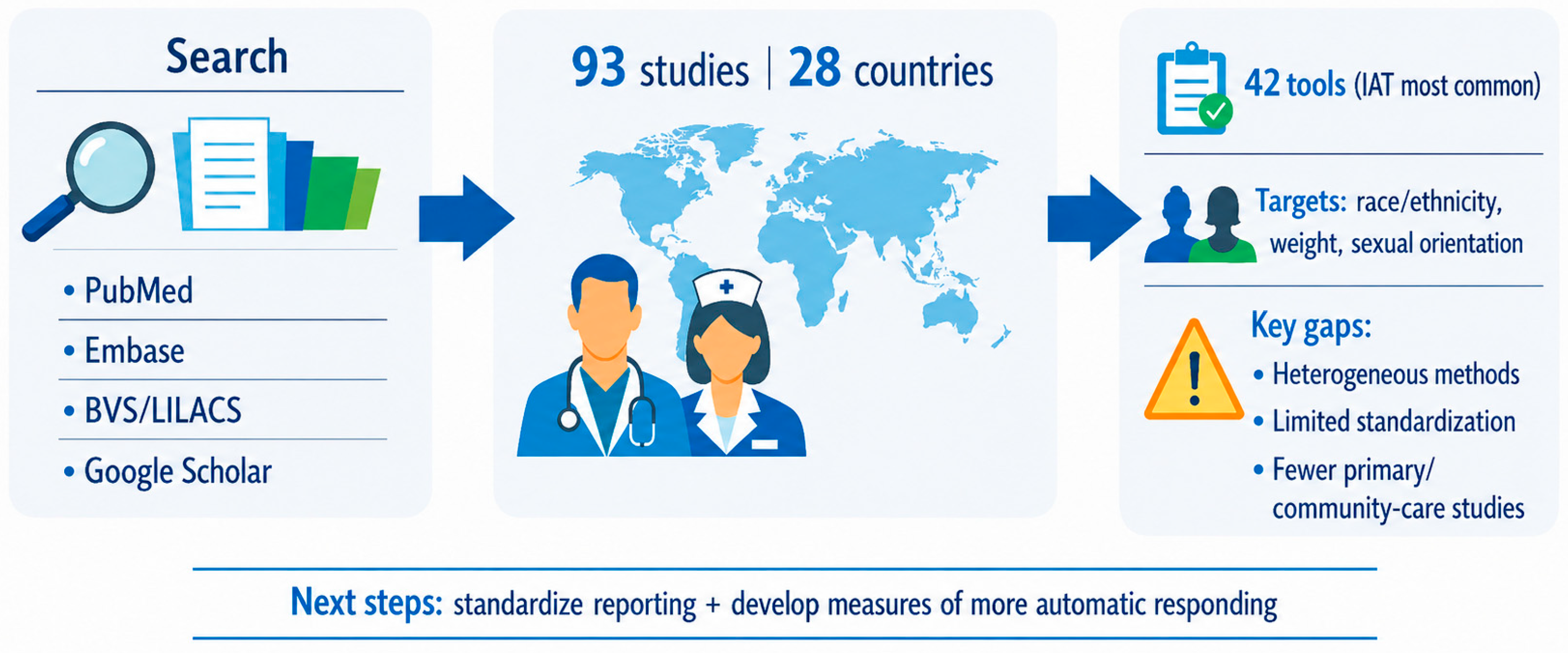
- This scoping review maps how implicit bias is being assessed across professions, settings, and bias targets, helping to identify where evidence exists (and where it is missing) to address inequities in health systems.
- The review highlights major methodological heterogeneity (tools, administration, scoring, and reporting) that limits comparability and weakens the evidence base needed to design and scale effective equity interventions.
- By synthesizing constructs, targets, and contexts of bias measurement, the study supports surveillance and evaluation strategies that are essential for monitoring progress toward equitable care at the system level.
- Practitioners and educators should prioritize standardized, evidence-based administration and reporting of implicit measures and integrate bias mitigation as a longitudinal competency rather than a single-session training activity.
- Researchers and policy makers should invest in developing and validating measurement approaches that better capture truly automatic, context-robust responses and link bias metrics to patient-centered and equity-relevant outcomes.
Abstract
1. Introduction
2. Materials and Methods
2.1. Protocol and Registration
2.2. Eligibility Criteria
- Population: Health professionals including physicians, nurses, allied health workers, and healthcare students.
- Concept: Implicit bias (e.g., unconscious stereotypes, attitudes, or perceptions) measured through validated or adapted tools.
- Context: Healthcare-related settings, including clinical practice, educational environments, and training programs.
- Types of sources: We included primary research studies (quantitative, qualitative, and mixed methods), as well as instrument development and validation studies. Editorials, commentaries, and conference abstracts were excluded unless they contained original data
2.3. Information Sources and Search
2.4. Selection of Sources of Evidence
2.5. Data Charting Process
2.6. Synthesis of Results
2.7. Critical Appraisal of Sources of Evidence
3. Results
3.1. Selection of Sources
3.2. Characteristics of Sources of Evidence
- Race/ethnicity-related bias;
- Bias toward patients with specific diseases (e.g., mental illness, HIV, chronic pain);
- Weight-related stigma;
- Sexual orientation and gender identity;
- Disability-related bias;
- Age.
4. Discussion
5. Conclusions
Supplementary Materials
Author Contributions
Funding
Institutional Review Board Statement
Informed Consent Statement
Data Availability Statement
Acknowledgments
Conflicts of Interest
Abbreviations
| IAT | Implicit Association Test |
| BIAT | Brief Implicit Association Test |
| SC-IAT | Single-Category Implicit Association Test |
| GNAT | Go/No-Go Association Task |
| AMP | Affect Misattribution Procedure |
| JBI | Joanna Briggs Institute |
| PRISMA-ScR | Preferred Reporting Items for Systematic Reviews and Meta-Analyses extension for Scoping Reviews |
References
- Ellis, G. So, What Are Cognitive Biases? In Cognitive Biases in Visualizations; Springer International Publishing: Cham, Switzerland, 2018; pp. 1–10. [Google Scholar]
- Wilke, A.; Mata, R. Cognitive Bias. In Reference Module in Neuroscience and Biobehavioral Psychology; Elsevier: Amsterdam, The Netherlands, 2017. [Google Scholar]
- Naderer, B.; Rieger, D.; Schulze, H.; Rothut, S. Increasing Knowledge about Cognitive Biases: An Evaluation Study of a Radicalization Prevention Campaign Targeted at European Adolescents and Young Adults. J. Child. Media 2023, 17, 426–442. [Google Scholar] [CrossRef]
- Greenwald, A.G.; Banaji, M.R. Implicit Social Cognition: Attitudes, Self-Esteem, and Stereotypes. Psychol. Rev. 1995, 102, 4–27. [Google Scholar] [CrossRef] [PubMed]
- Welpinghus, A. The Imagination Model of Implicit Bias. Philos. Stud. 2020, 177, 1611–1633. [Google Scholar]
- Rivers, A.M.; Rees, H.R.; Calanchini, J.; Sherman, J.W. Implicit Bias Reflects the Personal and the Social. Psychol. Inq. 2017, 28, 301–305. [Google Scholar] [CrossRef]
- Marcelin, J.; Siraj, D.; Victor, R.; Kotadia, S.; Maldonado, Y. The Impact of Unconscious Bias in Healthcare: How to Recognize and Mitigate It. J. Infect. Dis. 2019, 220, S62–S73. [Google Scholar] [CrossRef] [PubMed]
- Maina, I.W.; Belton, T.D.; Ginzberg, S.; Singh, A.; Johnson, T.J. A Decade of Studying Implicit Racial/Ethnic Bias in Healthcare Providers Using the Implicit Association Test. Soc. Sci. Med. 2018, 199, 219–229. [Google Scholar] [CrossRef] [PubMed]
- De Houwer, J. Implicit Bias Is Behavior: A Functional-Cognitive Perspective on Implicit Bias. Perspect. Psychol. Sci. 2019, 14, 835–840. [Google Scholar] [CrossRef] [PubMed]
- Blair, I. Implicit Stereotypes and Prejudice. In Cognitive Social Psychology; Psychology Press: London, UK, 2013; pp. 354–369. [Google Scholar]
- Amodio, D.; Devine, P. Stereotyping and Evaluation in Implicit Race Bias: Evidence for Independent Constructs and Unique Effects on Behavior. J. Pers. Soc. Psychol. 2006, 91, 652–661. [Google Scholar] [CrossRef] [PubMed]
- Greenwald, A.G.; Brendl, M.; Cai, H.; Cvencek, D.; Dovidio, J.F.; Friese, M.; Hahn, A.; Hehman, E.; Hofmann, W.; Hughes, S.; et al. Best Research Practices for Using the Implicit Association Test. Behav. Res. Methods 2022, 54, 1161–1180. [Google Scholar] [CrossRef] [PubMed]
- Holroyd, J.; Puddifoot, K. Implicit Bias and Prejudice. In The Routledge Handbook of Social Epistemology; Routledge: New York, NY, USA, 2019; pp. 313–326. [Google Scholar]
- Holroyd, J. Implicit Bias, Awareness and Imperfect Cognitions. Conscious. Cogn. 2015, 33, 511–523. [Google Scholar] [CrossRef] [PubMed]
- Greenwald, A.; Nosek, B.; Banaji, M. Understanding and Using the Implicit Association Test: I. An Improved Scoring Algorithm. J. Personal. Soc. Psychol. 2003, 85, 197–216. [Google Scholar] [CrossRef] [PubMed]
- Hannay, J.W.; Payne, B.K. Effects of Aggregation on Implicit Bias Measurement. J. Exp. Soc. Psychol. 2022, 101, 104331. [Google Scholar] [CrossRef]
- Fadus, M.; Odunsi, O.; Squeglia, L. Race, Ethnicity, and Culture in the Medical Record: Implicit Bias or Patient Advocacy? Acad. Psychiatry 2019, 43, 532–536. [Google Scholar] [CrossRef] [PubMed]
- Desai, M.U.; Paranamana, N.; Restrepo-Toro, M.; O’Connell, M.; Davidson, L.; Stanhope, V. Implicit Organizational Bias: Mental Health Treatment Culture and Norms as Barriers to Engaging with Diversity. Am. Psychol. 2021, 76, 78. [Google Scholar] [CrossRef] [PubMed]
- Beckles-Raymond, G. Implicit Bias, (Global) White Ignorance, and Bad Faith: The Problem of Whiteness and Anti-black Racism. J. Appl. Philos. 2020, 37, 169–189. [Google Scholar]
- Tait, R.; Chibnall, J. Racial/Ethnic Disparities in the Assessment and Treatment of Pain: Psychosocial Perspectives. Am. Psychol. 2014, 69, 131–141. [Google Scholar] [CrossRef] [PubMed]
- Robb, J.; Stone, J. Implicit Bias toward People with Mental Illness: A Systematic Literature Review. J. Rehabil. 2016, 82, 3–13. [Google Scholar]
- Chapman, E.; Kaatz, A.; Carnes, M. Physicians and Implicit Bias: How Doctors May Unwittingly Perpetuate Health Care Disparities. J. Gen. Intern. Med. 2013, 28, 1504–1510. [Google Scholar] [CrossRef] [PubMed]
- Zestcott, C.A.; Blair, I.V.; Stone, J. Examining the Presence, Consequences, and Reduction of Implicit Bias in Health Care: A Narrative Review. Group Process. Intergroup Relat. 2016, 19, 528–542. [Google Scholar] [CrossRef] [PubMed]
- Charlesworth, T.E.; Navon, M.; Rabinovich, Y.; Lofaro, N.; Kurdi, B. The Project Implicit International Dataset: Measuring Implicit and Explicit Social Group Attitudes and Stereotypes across 34 Countries (2009–2019). Behav. Res. Methods 2023, 55, 1413–1440. [Google Scholar] [PubMed]
- Phelan, S.M.; Burke, S.E.; Hardeman, R.R.; White, R.O.; Przedworski, J.; Dovidio, J.F.; Perry, S.P.; Plankey, M.; Cunningham, B.A.; Finstad, D.; et al. Medical School Factors Associated with Changes in Implicit and Explicit Bias Against Gay and Lesbian People among 3492 Graduating Medical Students. J. Gen. Intern. Med. 2017, 32, 1193–1201. [Google Scholar] [CrossRef] [PubMed]
- Vela, M.; Erondu, A.; Smith, N.; Peek, M.; Woodruff, J.; Chin, M. Eliminating Explicit and Implicit Biases in Health Care: Evidence and Research Needs. Annu. Rev. Public Health 2022, 43, 477–501. [Google Scholar] [CrossRef] [PubMed]
- Hall, W.J.; Chapman, M.V.; Lee, K.M.; Merino, Y.M.; Thomas, T.W.; Payne, B.K.; Eng, E.; Day, S.H.; Coyne-Beasley, T. Implicit Racial/Ethnic Bias Among Health Care Professionals and Its Influence on Health Care Outcomes: A Systematic Review. Am. J. Public Health 2015, 105, e60–e76. [Google Scholar] [CrossRef] [PubMed]
- Gopal, D.P.; Chetty, U.; O’Donnell, P.; Gajria, C.; Blackadder-Weinstein, J. Implicit Bias in Healthcare: Clinical Practice, Research and Decision Making. Future Healthc. J. 2021, 8, 40–48. [Google Scholar] [CrossRef] [PubMed]
- Arif, S.A.; Schlotfeldt, J. Gaps in Measuring and Mitigating Implicit Bias in Healthcare. Front. Pharmacol. 2021, 12, 633565. [Google Scholar] [CrossRef] [PubMed]
- FitzGerald, C.; Hurst, S. Implicit Bias in Healthcare Professionals: A Systematic Review. BMC Med. Ethics 2017, 18, 19. [Google Scholar] [CrossRef] [PubMed]
- Ogungbe, O.; Mitra, A.; Roberts, J. A Systematic Review of Implicit Bias in Health Care: A Call for Intersectionality. IMC J. Med. Sci. 2019, 13, 005. [Google Scholar] [CrossRef]
- Greenwald, A.G.; McGhee, D.E.; Schwartz, J.L. Measuring Individual Differences in Implicit Cognition: The Implicit Association Test. J. Pers. Soc. Psychol. 1998, 74, 1464–1480. [Google Scholar] [CrossRef] [PubMed]
- Sriram, N.; Greenwald, A.G. The Brief Implicit Association Test. Exp. Psychol. 2009, 56, 283–294. [Google Scholar] [CrossRef] [PubMed]
- Karpinski, A.; Steinman, R.B. The Single Category Implicit Association Test as a Measure of Implicit Social Cognition. J. Pers. Soc. Psychol. 2006, 91, 16–32. [Google Scholar] [CrossRef] [PubMed]
- Nosek, B.A.; Banaji, M.R. The Go/No-Go Association Task. Soc. Cogn. 2001, 19, 625–666. [Google Scholar] [CrossRef]
- Teachman, B.A. Evaluating Implicit Spider Fear Associations Using the Go/No-Go Association Task. J. Behav. Ther. Exp. Psychiatry 2007, 38, 156–167. [Google Scholar] [CrossRef] [PubMed]
- Fazio, R.H.; Olson, M.A. Implicit Measures in Social Cognition Research: Their Meaning and Use. Annu. Rev. Psychol. 2003, 54, 297–327. [Google Scholar] [CrossRef] [PubMed]
- Payne, B.K.; Cheng, C.M.; Govorun, O.; Stewart, B.D. An Inkblot for Attitudes: Affect Misattribution as Implicit Measurement. J. Pers. Soc. Psychol. 2005, 89, 277–293. [Google Scholar] [CrossRef] [PubMed]
- Peters, M.D.J.; Godfrey, C.; McInerney, P.; Munn, Z.; Tricco, A.C.; Khalil, H. Scoping Reviews. In JBI Manual for Evidence Synthesis; JBI: Adelaide, Australia, 2024. [Google Scholar]
- Tricco, A.C.; Lillie, E.; Zarin, W.; O’Brien, K.K.; Colquhoun, H.; Levac, D.; Moher, D.; Peters, M.D.J.; Horsley, T.; Weeks, L.; et al. PRISMA Extension for Scoping Reviews (PRISMA-ScR): Checklist and Explanation. Ann. Intern. Med. 2018, 169, 467–473. [Google Scholar] [CrossRef] [PubMed]
- Page, M.J.; McKenzie, J.E.; Bossuyt, P.M.; Boutron, I.; Hoffmann, T.C.; Mulrow, C.D.; Shamseer, L.; Tetzlaff, J.M.; Akl, E.A.; Brennan, S.E.; et al. The PRISMA 2020 Statement: An Updated Guideline for Reporting Systematic Reviews. BMJ 2021, 372, n71. [Google Scholar] [CrossRef] [PubMed]
- Alzahrani, F.; Waite, N.; Beazely, M.; Cooke, M. Estimating Implicit and Explicit Racial and Ethnic Bias among Community Pharmacists in Canada. Saudi Pharm. J. 2024, 32, 102024. [Google Scholar] [CrossRef] [PubMed]
- Wasmuth, S.; Pritchard, K.; Milton, C.; Smith, E. A Mixed-Method Analysis of Community-Engaged Theatre Illuminates Black Women’s Experiences of Racism and Addresses Healthcare Inequities by Targeting Provider Bias. Inq. J. Health Care Organ. Provis. Financ. 2020, 57, 0046958020976255. [Google Scholar] [CrossRef] [PubMed]
- Etienne, S.; Lewis, L.S. Racial Implicit Bias: Perspectives of Nursing Students. J. Prof. Nurs. 2024, 50, 95–103. [Google Scholar] [CrossRef] [PubMed]
- Lowe, C.L.; Beach, M.C.; Roter, D.L. Genetic Counselor Implicit Bias and Its Effects on Cognitive and Affective Exchanges in Racially Discordant Simulations. J. Genet. Couns. 2020, 29, 332–341. [Google Scholar] [CrossRef] [PubMed]
- Fraiman, Y.S.; Cheston, C.C.; Morales, D.; Leeman, K.T.; Hansen, A.R. A Mixed Methods Study of Perceptions of Bias among Neonatal Intensive Care Unit Staff. Pediatr. Res. 2023, 93, 1672–1678. [Google Scholar] [CrossRef] [PubMed]
- Shah-Altaf, Z.; Ranford, D.; Miu, K.; Hopkins, C.; Surda, P. Exploring Implicit Bias among ENT Surgeons: An Analysis of the Implicit Association Test. J. Laryngol. Otol. 2024, 138, 112–114. [Google Scholar] [CrossRef] [PubMed]
- Daratsianou, M.; Fradelos, E.C.; Spyridakis, M.S.; Prezerakos, P.; Tzavella, F. Development and Validation of a Questionnaire to Evaluate Attitudes and Beliefs of Discrimination by Nursing Staff. Pol. Merkur. Lek. 2024, 52, 304–318. [Google Scholar] [CrossRef] [PubMed]
- Burgess, D.J.; Burke, S.E.; Cunningham, B.A.; Dovidio, J.F.; Hardeman, R.R.; Hou, Y.; Nelson, D.B.; Perry, S.P.; Phelan, S.M.; Yeazel, M.W.; et al. Medical Students’ Learning Orientation Regarding Interracial Interactions Affects Preparedness to Care for Minority Patients: A Report from Medical Student CHANGES. BMC Med. Educ. 2016, 16, 254. [Google Scholar] [CrossRef] [PubMed]
- Green, A.R.; Carney, D.R.; Pallin, D.J.; Ngo, L.H.; Raymond, K.L.; Iezzoni, L.I.; Banaji, M.R. Implicit Bias among Physicians and Its Prediction of Thrombolysis Decisions for Black and White Patients. J. Gen. Intern. Med. 2007, 22, 1231–1238. [Google Scholar] [CrossRef] [PubMed]
- Hagiwara, N.; Duffy, C.; Quillin, J. Implicit and Explicit Racial Prejudice and Stereotyping toward Black (vs. White) Americans: The Prevalence and Variation among Genetic Counselors in North America. J. Genet. Couns. 2023, 32, 397–410. [Google Scholar] [CrossRef] [PubMed]
- Schatz, A.A.; Brooks-Coley, K.; Harrington, E.; Murray, M.S.; Carlson, R.W. Patient, Caregiver, and Oncologist Experiences with and Perceptions of Racial Bias and Discrimination in Cancer Care Delivery. J. Natl. Compr. Cancer Netw. 2022, 20, 1092–1098.e2. [Google Scholar] [CrossRef] [PubMed]
- Delafield, R.; Hermosura, A.; Ahn, H.J.; Kaholokula, J.K. Implicit Racial Attitudes and Associations Among Obstetricians in Hawai’i: A Pilot Study. J. Racial Ethn. Health Disparities 2022, 9, 2395–2403. [Google Scholar] [CrossRef] [PubMed]
- Burgess, D.J.; Phelan, S.; Workman, M.; Hagel, E.; Nelson, D.B.; Fu, S.S.; Widome, R.; van Ryn, M. The Effect of Cognitive Load and Patient Race on Physicians’ Decisions to Prescribe Opioids for Chronic Low Back Pain: A Randomized Trial. Pain Med. 2014, 15, 965–974. [Google Scholar] [CrossRef] [PubMed]
- Bean, M.G.; Stone, J.; Moskowitz, G.B.; Badger, T.A.; Focella, E.S. Evidence of Nonconscious Stereotyping of Hispanic Patients by Nursing and Medical Students. Nurs. Res. 2013, 62, 362–367. [Google Scholar] [CrossRef] [PubMed]
- Puumala, S.E.; Burgess, K.M.; Kharbanda, A.B.; Zook, H.G.; Castille, D.M.; Pickner, W.J.; Payne, N.R. The Role of Bias by Emergency Department Providers in Care for American Indian Children. Med. Care 2016, 54, 562–569. [Google Scholar] [CrossRef] [PubMed]
- Roach, P.; Ruzycki, S.M.; Hernandez, S.; Carbert, A.; Holroyd-Leduc, J.; Ahmed, S.; Barnabe, C. Prevalence and Characteristics of Anti-Indigenous Bias among Albertan Physicians: A Cross-Sectional Survey and Framework Analysis. BMJ Open 2023, 13, e063178. [Google Scholar] [CrossRef] [PubMed]
- Abu-Bakr, A. Unconscious Bias and Its Impact on Public Health and Health-Care Systems. Creat. Nurs. 2021, 27, 158–162. [Google Scholar] [CrossRef] [PubMed]
- Howard, K.A.; Witrick, B.; Clark, A.; Morse, A.; Atkinson, K.; Kapoor, P.; McGinigle, K.L.; Minc, S.; Alabi, O.; Hicks, C.W.; et al. Investigating Unconscious Race Bias and Bias Awareness Among Vascular Surgeons. medRxiv 2024. [Google Scholar] [CrossRef] [PubMed]
- Amdani, S.; Conway, J.; Kleinmahon, J.; Auerbach, S.; Hsu, D.; Cousino, M.K.; Kaufman, B.; Alejos, J.; Cruz, J.H.; Lee, H.Y.; et al. Race and Socioeconomic Bias in Pediatric Cardiac Transplantation. JACC Heart Fail. 2023, 11, 19–26. [Google Scholar] [CrossRef] [PubMed]
- Hull, S.J.; Tessema, H.; Thuku, J.; Scott, R.K. Providers PrEP: Identifying Primary Health Care Providers’ Biases as Barriers to Provision of Equitable PrEP Services. J. Acquir. Immune Defic. Syndr. 2021, 88, 165–172. [Google Scholar] [CrossRef] [PubMed]
- Green, T.L.; Vu, H.; Swan, L.E.T.; Luo, D.; Hickman, E.; Plaisime, M.; Hagiwara, N. Implicit and Explicit Racial Prejudice among Medical Professionals: Updated Estimates from a Population-Based Study. Lancet Reg. Health Am. 2023, 21, 100489. [Google Scholar] [CrossRef] [PubMed]
- Londono Tobon, A.; Flores, J.M.; Taylor, J.H.; Johnson, I.; Landeros-Weisenberger, A.; Aboiralor, O.; Avila-Quintero, V.J.; Bloch, M.H. Racial Implicit Associations in Psychiatric Diagnosis, Treatment, and Compliance Expectations. Acad. Psychiatry 2021, 45, 23–33. [Google Scholar] [CrossRef] [PubMed]
- Johnson, T.J.; Winger, D.G.; Hickey, R.W.; Switzer, G.E.; Miller, E.; Nguyen, M.B.; Saladino, R.A.; Hausmann, L.R.M. Comparison of Physician Implicit Racial Bias Toward Adults Versus Children. Acad. Pediatr. 2017, 17, 120–126. [Google Scholar] [CrossRef] [PubMed]
- Blair, I.V.; Steiner, J.F.; Hanratty, R.; Price, D.W.; Fairclough, D.L.; Daugherty, S.L.; Bronsert, M.; Magid, D.J.; Havranek, E.P. An Investigation of Associations between Clinicians’ Ethnic or Racial Bias and Hypertension Treatment, Medication Adherence and Blood Pressure Control. J. Gen. Intern. Med. 2014, 29, 987–995. [Google Scholar] [CrossRef] [PubMed]
- Blair, I.V.; Havranek, E.P.; Price, D.W.; Hanratty, R.; Fairclough, D.L.; Farley, T.; Hirsh, H.K.; Steiner, J.F. Assessment of Biases against Latinos and African Americans among Primary Care Providers and Community Members. Am. J. Public Health 2013, 103, 92–98. [Google Scholar] [CrossRef] [PubMed]
- Hagiwara, N.; Dovidio, J.F.; Stone, J.; Penner, L.A. Applied Racial/Ethnic Healthcare Disparities Research Using Implicit Measures. Soc. Cogn. 2020, 38, s68–s97. [Google Scholar] [CrossRef] [PubMed]
- Sabin, J.; Nosek, B.A.; Greenwald, A.; Rivara, F.P. Physicians’ Implicit and Explicit Attitudes about Race by MD Race, Ethnicity, and Gender. J. Health Care Poor Underserved 2009, 20, 896–913. [Google Scholar] [CrossRef] [PubMed]
- Aziz, M.M.; Badahdah, A.M.; Mohammed, H.M. Cross-Cultural Adaptation and Psychometric Assessment of an Arabic Version of the Health Care Provider HIV/AIDS Stigma Scale. J. Int. Assoc. Provid. AIDS Care 2021, 20, 23259582211066402. [Google Scholar] [CrossRef] [PubMed]
- Hopp, A.; Dechering, S.; Wilm, S.; Pressentin, M.; Müller, T.; Richter, P.; Schäfer, R.; Franz, M.; Karger, A. The Influence of Patient-Centered Teaching on Medical Students’ Stigmatization of the Mentally Ill. GMS J. Med. Educ. 2023, 40, Doc46. [Google Scholar] [CrossRef] [PubMed]
- Lasalvia, A.; D’agnalo Vallan, M.; Bodini, L.; Bonetto, C. Attitudes of Ambulance Service Staff towards People with Mental Illness: A Cross-Sectional Survey in the Verona Province, Italy. Psychiatry Res. 2025, 343, 116291. [Google Scholar] [CrossRef] [PubMed]
- Wada, K.; Smith, D.R.; Ishimaru, T. Reluctance to Care for Patients with HIV or Hepatitis B/C in Japan. BMC Pregnancy Childbirth 2016, 16, 31. [Google Scholar] [CrossRef] [PubMed]
- Addala, A.; Hanes, S.; Naranjo, D.; Maahs, D.M.; Hood, K.K. Provider Implicit Bias Impacts Pediatric Type 1 Diabetes Technology Recommendations in the United States: Findings from The Gatekeeper Study. J. Diabetes Sci. Technol. 2021, 15, 1027–1033. [Google Scholar] [CrossRef] [PubMed]
- Pleuhs, B.; Mistler, C.B.; Quinn, K.G.; Dickson-Gomez, J.; Walsh, J.L.; Petroll, A.E.; John, S.A. Evidence of Potential Discriminatory HIV Pre-Exposure Prophylaxis (PrEP) Prescribing Practices for People Who Inject Drugs Among a Small Percentage of Providers in the U.S. J. Prim. Care Community Health 2022, 13, 21501319211063999. [Google Scholar] [CrossRef] [PubMed]
- Goswami, S.; Barnard, M.; Bynum, L.A.; Thompson, S.; Kang, M. Psychometric Evaluation of the Health Care Provider HIV/AIDS Stigma Scale (HPASS) Using Rasch Analysis. Curr. Pharm. Teach. Learn. 2022, 14, 1143–1153. [Google Scholar] [CrossRef] [PubMed]
- Chekuri, L.; Mittal, D.; Ounpraseuth, S. Relationship between Stereotypes, Prejudice, and Social Distancing in a Sample of Health Care Providers. Prim. Care Companion J. Clin. Psychiatry 2018, 20, 17m02264. [Google Scholar] [CrossRef] [PubMed]
- Sandhu, H.S.; Arora, A.; Brasch, J.; Streiner, D.L. Mental Health Stigma: Explicit and Implicit Attitudes of Canadian Undergraduate Students, Medical School Students, and Psychiatrists. Can. J. Psychiatry 2019, 64, 209–217. [Google Scholar] [CrossRef] [PubMed]
- Rodriguez, N.; Kintzer, E.; List, J.; Lypson, M.; Grochowalski, J.H.; Marantz, P.R.; Gonzalez, C.M. Implicit Bias Recognition and Management: Tailored Instruction for Faculty. J. Natl. Med. Assoc. 2021, 113, 566–575. [Google Scholar] [CrossRef] [PubMed]
- Bower, K.M.; Kramer, B.; Warren, N.; Ahmed, S.; Callaghan-Koru, J.; Stierman, E.; Wilson, C.; Lawson, S.; Creanga, A.A. Development of an Instrument to Measure Awareness and Mitigation of Bias in Maternal Healthcare. Am. J. Obstet. Gynecol. Matern.-Fetal Med. 2023, 5, 100872. [Google Scholar] [CrossRef] [PubMed]
- McGhie-Fraser, B.; Lucassen, P.; Ballering, A.; Abma, I.; Brouwers, E.; van Dulmen, S.; Olde Hartman, T. Persistent Somatic Symptom Related Stigmatisation by Healthcare Professionals: A Systematic Review of Questionnaire Measurement Instruments. J. Psychosom. Res. 2023, 166, 111161. [Google Scholar] [CrossRef] [PubMed]
- Featherston, R.; Downie, L.E.; Vogel, A.P.; Galvin, K.L. Decision Making Biases in the Allied Health Professions: A Systematic Scoping Review. PLoS ONE 2020, 15, e0240716. [Google Scholar] [CrossRef] [PubMed]
- Ohm, R.; Rosen, L. Psychometric Evaluation of the Perceived Prejudice in Health Care Scale-Modified (Pphc-m) among Baccalaureate Student Nurses. J. Transcult. Nurs. 2011, 22, 282–289. [Google Scholar] [CrossRef] [PubMed]
- Thirsk, L.M.; Panchuk, J.T.; Stahlke, S.; Hagtvedt, R. Cognitive and Implicit Biases in Nurses’ Judgment and Decision-Making: A Scoping Review. Int. J. Nurs. Stud. 2022, 133, 104284. [Google Scholar] [CrossRef] [PubMed]
- Suri, A.; Yang, D.; Sun, W.W.; Fofana, M.; Binstadt, E.S.; Weygandt, P.L.; Moll, J.L.; Strout, T.D.; Gipson, K.; Norman, M.S.; et al. “I Don’t Want to Be the Squeaky Wheel”: Addressing Bias as a Leader in Emergency Medicine. Acad. Emerg. Med. 2024, 31, 354–360. [Google Scholar] [CrossRef] [PubMed]
- Sabin, J.; Guenther, G.; Ornelas, I.J.; Patterson, D.G.; Andrilla, C.H.A.; Morales, L.; Gurjal, K.; Frogner, B.K. Brief Online Implicit Bias Education Increases Bias Awareness among Clinical Teaching Faculty. Med. Educ. Online 2022, 27, 2025307. [Google Scholar] [CrossRef] [PubMed]
- Pool, N.; Hebdon, M.; de Groot, E.; Yee, R.; Herrera-Theut, K.; Yee, E.; Allen, L.A.; Hasan, A.; Lindenfeld, J.; Calhoun, E.; et al. A Novel Approach for Assessing Bias during Team-Based Clinical Decision-Making. Front. Public Health 2023, 11, 1014773. [Google Scholar] [CrossRef] [PubMed]
- Calabrese, S.K.; Earnshaw, V.A.; Krakower, D.S.; Underhill, K.; Vincent, W.; Magnus, M.; Hansen, N.B.; Kershaw, T.S.; Mayer, K.H.; Betancourt, J.R.; et al. A Closer Look at Racism and Heterosexism in Medical Students’ Clinical Decision-Making Related to HIV Pre-Exposure Prophylaxis (PrEP): Implications for PrEP Education. AIDS Behav. 2018, 22, 1122–1138. [Google Scholar] [CrossRef] [PubMed]
- Crump, A.; Al-Jorani, M.S.; Ahmed, S.; Abrol, E.; Jain, S. Implicit Bias Assessment by Career Stage in Medical Education Training: A Narrative Review. BMC Med. Educ. 2025, 25, 137. [Google Scholar] [CrossRef] [PubMed]
- Gilbert, S.R.; Torrez, T.; Jardaly, A.H.; Templeton, K.J.; Ode, G.E.; Coe, K.; Patt, J.C.; Schenker, M.L.; McGwin, G.; Ponce, B.A. A Shadow of Doubt: Is There Implicit Bias Among Orthopaedic Surgery Faculty and Residents Regarding Race and Gender? Clin. Orthop. Relat. Res. 2024, 482, 1145–1155. [Google Scholar] [CrossRef] [PubMed]
- Gleicher, S.T.; Chalmiers, M.A.; Aiyanyor, B.; Jain, R.; Kotha, N.; Scott, K.; Song, R.S.; Tram, J.; Vuong, C.L.; Kesselheim, J. Confronting Implicit Bias toward Patients: A Scoping Review of Post-Graduate Physician Curricula. BMC Med. Educ. 2022, 22, 696. [Google Scholar] [CrossRef] [PubMed]
- Jayawickrama, R.S.; O’Connor, M.; Flint, S.W.; Hemmingsson, E.; Lawrence, B.J. Explicit and Implicit Weight Bias among Health Care Students: A Cross-Sectional Study of 39 Australian Universities. eClinicalMedicine 2023, 58, 101894. [Google Scholar] [CrossRef] [PubMed]
- Abbott, S.; Shuttlewood, E.; Flint, S.W.; Chesworth, P.; Parretti, H.M. “Is It Time to Throw out the Weighing Scales?” Implicit Weight Bias among Healthcare Professionals Working in Bariatric Surgery Services and Their Attitude towards Non-Weight Focused Approaches. eClinicalMedicine 2023, 55, 101770. [Google Scholar] [CrossRef] [PubMed]
- Yildiz, M.; Yalcinoz Baysal, H. Prejudice against Obesity in University Students Studying in Health-Related Departments. Perspect. Psychiatr. Care 2019, 55, 170–174. [Google Scholar] [CrossRef] [PubMed]
- Jones, C.A.; Forhan, M. Addressing Weight Bias and Stigma of Obesity amongst Physiotherapists. Physiother. Theory Pract. 2021, 37, 808–816. [Google Scholar] [CrossRef] [PubMed]
- McLean, M.E.; McLean, L.E.; McLean-Holden, A.C.; Campbell, L.F.; Horner, A.M.; Kulkarni, M.L.; Melville, L.D.; Fernandez, E.A. Interphysician Weight Bias: A Cross-Sectional Observational Survey Study to Guide Implicit Bias Training in the Medical Workplace. Acad. Emerg. Med. 2021, 28, 1024–1034. [Google Scholar] [CrossRef] [PubMed]
- Kadar, G.E.; Thompson, H.G. Obesity Bias among Preclinical and Clinical Chiropractic Students and Faculty at an Integrative Health Care Institution: A Cross-Sectional Study. J. Chiropr. Educ. 2019, 33, 8–15. [Google Scholar] [CrossRef] [PubMed]
- Yılmaz, H.Ö.; Yabancı Ayhan, N. Is There Prejudice against Obese Persons among Health Professionals? A Sample of Student Nurses and Registered Nurses. Perspect. Psychiatr. Care 2019, 55, 262–268. [Google Scholar] [CrossRef] [PubMed]
- Turner, S.L. Pediatric Healthcare Professionals’ Attitudes and Beliefs about Weight Stigma: A Descriptive Study. J. Pediatr. Nurs. 2024, 75, 64–71. [Google Scholar] [CrossRef] [PubMed]
- van der Voorn, B.; Camfferman, R.; Seidell, J.C.; Puhl, R.M.; Halberstadt, J. Weight-Biased Attitudes about Pediatric Patients with Obesity in Dutch Healthcare Professionals from Seven Different Professions. J. Child Health Care 2023, 27, 243–252. [Google Scholar] [CrossRef] [PubMed]
- Waller, T.; Lampman, C.; Lupfer-Johnson, G. Assessing Bias against Overweight Individuals among Nursing and Psychology Students: An Implicit Association Test. J. Clin. Nurs. 2012, 21, 3504–3512. [Google Scholar] [CrossRef] [PubMed]
- Brown, C.; Keller, C.J.; Brownfield, J.M.; Lee, R. Predicting Trans-Inclusive Attitudes of Undergraduate Nursing Students. J. Nurs. Educ. 2017, 56, 660–669. [Google Scholar] [CrossRef] [PubMed]
- Jiménez-Barbero, J.A.; Cutillas-Fernández, M.A.; Herrera-Giménez, M.; Jiménez-Ruiz, I. Attitudes of Spanish Mental Health Professionals towards Trans People: A Cross-Sectional Study. J. Psychiatr. Ment. Health Nurs. 2024, 31, 43–51. [Google Scholar] [CrossRef] [PubMed]
- Nathan, M.L.; Ormond, K.E.; Dial, C.M.; Gamma, A.; Lunn, M.R. Genetic Counselors’ and Genetic Counseling Students’ Implicit and Explicit Attitudes toward Homosexuality. J. Genet. Couns. 2019, 28, 91–101. [Google Scholar] [CrossRef] [PubMed]
- Sabin, J.A.; Riskind, R.G.; Nosek, B.A. Health Care Providers’ Implicit and Explicit Attitudes Toward Lesbian Women and Gay Men. Am. J. Public Health 2015, 105, 1831–1841. [Google Scholar] [CrossRef] [PubMed]
- Burke, S.E.; Dovidio, J.F.; Przedworski, J.M.; Hardeman, R.R.; Perry, S.P.; Phelan, S.M.; Nelson, D.B.; Burgess, D.J.; Yeazel, M.W.; van Ryn, M. Do Contact and Empathy Mitigate Bias Against Gay and Lesbian People Among Heterosexual First-Year Medical Students? A Report from the Medical Student CHANGE Study. Acad. Med. J. Assoc. Am. Med. Coll. 2015, 90, 645–651. [Google Scholar] [CrossRef] [PubMed]
- Ni, Z.; Shrestha, R.; Earnshaw, V.A.; Tee, Y.C.; Altice, F.L.; Azwa, I.; Kamarulzaman, A.; Zhou, X.; Wickersham, J.A. Exploring Malaysian Physicians’ Intention to Discriminate Against Gay, Bisexual, and Other Men Who Have Sex with Men Patients. LGBT Health 2023, 10, 169–175. [Google Scholar] [CrossRef] [PubMed]
- Sorathiya, R.; Bharati, A.; Patil, A.; Gorade, S. Study of Knowledge, Attitude, and Perception toward LGBTQ People amongst Medical Students. Ind. Psychiatry J. 2023, 32, S54–S58. [Google Scholar] [CrossRef] [PubMed]
- Skvortsova, A.; Meeuwis, S.H.; Vos, R.C.; Vos, H.M.M.; van Middendorp, H.; Veldhuijzen, D.S.; Evers, A.W.M. Implicit Gender Bias in the Diagnosis and Treatment of Type 2 Diabetes: A Randomized Online Study. Diabet. Med. 2023, 40, e15087. [Google Scholar] [CrossRef] [PubMed]
- Banwari, G.; Mistry, K.; Soni, A.; Parikh, N.; Gandhi, H. Medical Students and Interns Knowledge about and Attitude towards Homosexuality. J. Postgrad. Med. 2015, 61, 95–100. [Google Scholar] [CrossRef] [PubMed]
- Bartual-Figueras, M.T.; Donoso-Vázquez, T.; Sierra-Martínez, F.J.; Turmo Garuz, J. Validation of a Gender Awareness Scale in Health Sciences Students. Gac. Sanit. 2023, 37, 102304. [Google Scholar] [CrossRef] [PubMed]
- Cleveland Manchanda, E.C.; Macias-Konstantopoulos, W.L. Tackling Gender and Racial Bias in Academic Emergency Medicine: The Perceived Role of Implicit Bias in Faculty Development. Cureus 2020, 12, e11325. [Google Scholar] [CrossRef] [PubMed]
- Alzahrani, F.; Al-Mansour, K.; Alarifi, G.; Alyahya, S.; AlMehaizie, N.; Almoaibed, H. Estimating Implicit and Explicit Gender Leadership Bias among Primary Healthcare Professionals in Saudi Arabia. Int. J. Environ. Res. Public Health 2022, 19, 15871. [Google Scholar] [CrossRef] [PubMed]
- Salles, A.; Awad, M.; Goldin, L.; Krus, K.; Lee, J.V.; Schwabe, M.T.; Lai, C.K. Estimating Implicit and Explicit Gender Bias among Health Care Professionals and Surgeons. JAMA Netw. Open 2019, 2, e196545. [Google Scholar] [CrossRef] [PubMed]
- Derbyshire, D.W.; Keay, T. “But What Do You Really Think?” Nurses’ Contrasting Explicit and Implicit Attitudes towards People with Disabilities Using the Implicit Association Test. J. Clin. Nurs. 2024, 33, 4342–4353. [Google Scholar] [CrossRef] [PubMed]
- Parildar, H.; Tuncer, O.U.; Sahin, M.K.; Demirpence, M.; Yilmaz, H. Are Patients with Obesity “Scapegoats”? The Obesity Prejudice Levels of Health Care Workers in Turkey. Rev. Assoc. Med. Bras. 2021, 67, 1785–1792. [Google Scholar] [CrossRef] [PubMed]
- Feldner, H.A.; VanPuymbrouck, L.; Friedman, C. Explicit and Implicit Disability Attitudes of Occupational and Physical Therapy Assistants. Disabil. Health J. 2022, 15, 101217. [Google Scholar] [CrossRef] [PubMed]
- Vaimberg, E.; Demers, L.; Ford, E.; Sabatello, M.; Stevens, B.; Dasgupta, S. Project Inclusive Genetics: Exploring the Impact of Patient-Centered Counseling Training on Physical Disability Bias in the Prenatal Setting. PLoS ONE 2021, 16, e0255722. [Google Scholar] [CrossRef] [PubMed]
- VanPuymbrouck, L.; Friedman, C.; Feldner, H. Explicit and Implicit Disability Attitudes of Healthcare Providers. Rehabil. Psychol. 2020, 65, 101–112. [Google Scholar] [CrossRef] [PubMed]
- Bankovská Motlová, L.; Švancara, J.; Őri, D.; Janoušková, M. Attitudes of psychiatrists towards people with mental illness in the Czech Republic. Ceska Slov. Psychiatr. 2024, 120, 221–227. [Google Scholar]
- McQuade, B.M.; Schwartz, A.; Jarrett, J.B. Acknowledging and Assessing Implicit Bias among Healthcare Professionals: A Randomized Controlled Trial. J. Interprof. Educ. Pract. 2021, 24, 100452. [Google Scholar] [CrossRef]
- Dos Santos, B.F.; Madathil, S.; Zuanon, A.C.C.; Bedos, C.; Nicolau, B. Brazilian Dental Students’ Attitudes About Provision of Care for Patients Living in Poverty. J. Dent. Educ. 2017, 81, 1309–1316. [Google Scholar] [CrossRef] [PubMed]
- Wagner, A.C.; MacLean, R. Preliminary Investigation of the STBBI Stigma Scale: Description and Pilot Results. Can. J. Public Health Rev. Can. Sante Publique 2017, 108, e368–e373. [Google Scholar] [CrossRef] [PubMed]
- Almutairi, A.F.; Adlan, A.A.; Nasim, M. Perceptions of the Critical Cultural Competence of Registered Nurses in Canada. BMC Nurs. 2017, 16, 47. [Google Scholar] [CrossRef] [PubMed]
- Neal, D.; Morgan, J.L.; Kenny, R.; Ormerod, T.; Reed, M.W. Is There Evidence of Age Bias in Breast Cancer Health Care Professionals’ Treatment of Older Patients? Eur. J. Surg. Oncol. 2022, 48, 2401–2407. [Google Scholar] [CrossRef] [PubMed]
- Ribera Casado, J.M.; Bustillos, A.; Guerra Vaquero, A.I.; Huici Casal, C.; Fernández-Ballesteros, R. Age Discrimination. Point of View of the Professionals. Rev. Esp. Geriatr. Gerontol. 2016, 51, 270–275. [Google Scholar] [CrossRef] [PubMed]
- Wagner, A.C.; Girard, T.; McShane, K.E.; Margolese, S.; Hart, T.A. HIV-Related Stigma and Overlapping Stigmas towards People Living with Hiv among Health Care Trainees in Canada. AIDS Educ. Prev. 2017, 29, 364–376. [Google Scholar] [CrossRef] [PubMed]
- Barradell, A.C.; Robertson, N.; Houchen-Wolloff, L.; Singh, S.J. Exploring the Presence of Implicit Bias Amongst Healthcare Professionals Who Refer Individuals Living with COPD to Pulmonary Rehabilitation with a Specific Focus Upon Smoking and Exercise. Int. J. Chron. Obstruct. Pulmon. Dis. 2023, 18, 1287–1299. [Google Scholar] [CrossRef] [PubMed]
- McGhie-Fraser, B.; McLoughlin, C.; Lucassen, P.; Ballering, A.; van Dulmen, S.; Brouwers, E.; Stone, J.; Olde Hartman, T. Measuring Persistent Somatic Symptom Related Stigmatisation: Development of the Persistent Somatic Symptom Stigma Scale for Healthcare Professionals (PSSS-HCP). J. Psychosom. Res. 2024, 181, 111689. [Google Scholar] [CrossRef] [PubMed]
- Khalafalla, H.E.; Albasheer, O.; Alfaifi, B.A.H.; Abudayah, A.H.K.; Almasary, M.H.; Alsulami, E.S.; Alshuqayhi, D.S.; Kremers, S.P.J. Diabetes-Related Social Stigma among University Students in Saudi Arabia: A Cross-Sectional Study. Medicine 2024, 103, e36863. [Google Scholar] [CrossRef] [PubMed]
- Porfyri, G.N.; Athanasiadou, M.; Siokas, V.; Giannoglou, S.; Skarpari, S.; Kikis, M.; Myroforidou, A.; Anoixa, M.; Zerakis, N.; Bonti, E.; et al. Mental Health-Related Stigma Discrimination and Prejudices among Greek Healthcare Professionals. Front. Psychiatry 2022, 13, 1027304. [Google Scholar] [CrossRef] [PubMed]
- Garpenhag, L.; Dahlman, D. Primary Healthcare Professionals’ Attitudes toward Patients with Current or Previous Drug Use. Scand. J. Prim. Health Care 2024, 42, 525–531. [Google Scholar] [CrossRef] [PubMed]
- Amdani, S.; Gossett, J.G.; Chepp, V.; Urschel, S.; Asante-Korang, A.; Dalton, J.E. Review on Clinician Bias and Its Impact on Racial and Socioeconomic Disparities in Pediatric Heart Transplantation. Pediatr. Transplant. 2024, 28, e14704. [Google Scholar] [CrossRef] [PubMed]
- Neal, D.; Morgan, J.L.; Ormerod, T.; Reed, M.W.R. Intervention to Reduce Age Bias in Medical Students’ Decision Making for the Treatment of Older Women with Breast Cancer: A Novel Approach to Bias Training. J. Psychosoc. Oncol. 2024, 42, 48–63. [Google Scholar] [CrossRef] [PubMed]
- Dos Santos, M.A. Discrimination and Mental Health among Lesbian, Gay and Bisexual Adults. Eur. Psychiatry 2017, 41, S734. [Google Scholar] [CrossRef]
- Meidert, U.; Dönnges, G.; Bucher, T.; Wieber, F.; Gerber-Grote, A. Unconscious Bias among Health Professionals: A Scoping Review. Int. J. Environ. Res. Public Health 2023, 20, 6569. [Google Scholar] [CrossRef] [PubMed]
- Axt, J.R.; Feng, T.Y.; Bar-Anan, Y. The Good and the Bad: Are Some Attribute Words Better than Others in the Implicit Association Test? Behav. Res. Methods 2021, 53, 2512–2527. [Google Scholar] [CrossRef] [PubMed]



| Bias(es) Studied | ||
|---|---|---|
| Race/Ethnicity | 28 | [8,42,43,44,45,46,47,48,49,50,51,52,53,54,55,56,57,58,59,60,61,62,63,64,65,66,67,68] |
| Specific Diseases * | 15 | [44,69,70,71,72,73,74,75,76,77,78,79,80,81,82] |
| Multiple Bias | 14 | [30,78,79,80,81,82,83,84,85,86,87,88,89,90] |
| Weight | 10 | [91,92,93,94,95,96,97,98,99,100] |
| Sexual Orientation | 7 | [25,101,102,103,104,105,106] |
| Gender | 7 | [107,108,109,110,111,112,113] |
| Disability | 5 | [114,115,116,117,118] |
| Other ** | 4 | [119,120,121,122] |
| No specific | 1 | [123] |
| Age | 2 | [124,125] |
| Country of study | ||
| USA | 52 | [8,25,43,44,45,46,49,50,51,52,53,54,55,56,58,59,60,61,62,63,64,65,66,67,68,73,74,75,76,78,79,82,84,85,86,87,88,89,90,95,96,97,98,100,101,103,105,111,113,117,118,120] |
| Canada | 9 | [42,57,77,83,94,106,122,123,126] |
| United Kingdom | 6 | [47,92,104,114,127,128] |
| Netherlands | 3 | [99,108,128] |
| Spain | 2 | [102,125] |
| Turkey | 2 | [93,115] |
| Compared countries | 2 | [85,119] |
| Saudi Arabia | 2 | [112,129] |
| Greece | 2 | [48,130] |
| India | 2 | [107,109] |
| Australia | 2 | [81,91] |
| NR | 1 | [116] |
| Egypt | 1 | [69] |
| Sweden | 1 | [131] |
| Germany | 1 | [70] |
| Malaysia | 1 | [106] |
| Nicaragua | 1 | [110] |
| Brazil | 1 | [121] |
| Italy | 1 | [71] |
| Switzerland | 1 | [30] |
| Japan | 1 | [72] |
| Profession of participants | ||
| Healthcare Professionals | 13 | [43,56,58,74,80,81,86,98,99,100,114,117,131] |
| Medical students | 13 | [25,54,63,70,77,78,87,88,95,104,107,109,125] |
| Healthcare professionals related with specific condition | 10 | [59,61,73,75,79,80,92,127,132,133] |
| Healthcare Students | 7 | [55,91,103,105,110,122,129] |
| Physicians | 7 | [25,56,69,106,108,109] |
| Primary Healthcare Professionals | 7 | [65,66,67,76,104,112,118] |
| Nurses | 5 | [48,72,90,97,123] |
| Nurses students | 4 | [44,82,93,101] |
| Mental Health Professionals | 4 | [30,83,102,119] |
| Surgeons | 3 | [47,89,113] |
| Unclear | 3 | [47,89,113] |
| Emergency Healthcare professionals | 3 | [64,84,111] |
| Therapists | 2 | [94,116] |
| Pharmacists | 2 | [42,120] |
| Genetic counselors | 1 | [51] |
| Dental students | 1 | [134] |
| Hospital Healthcare Professionals | 1 | [130] |
| Not reported | 1 | [115] |
| Social services providers | 1 | [126] |
| Oncologists | 1 | [52] |
| Ambulance personnel/Paramedics | 1 | [71] |
| ICU Healthcare professionals | 1 | [4] |
| Chiropractic students | 1 | [96] |
| OB-GYNs | 1 | [53] |
| Instrument | Domains/Subscales | Questions/Items | Assessment Procedure | Bias Assessed | Scoring and Administration Details | Psychometric Reference |
|---|---|---|---|---|---|---|
| IAT | Gender | N/A | Computer-based IAT following standard protocol (Greenwald et al., 1998) [32]. Participants rapidly categorize words or images representing target groups and evaluative attributes using two keys. Reaction time differences between congruent and incongruent pairings are used to calculate the D-score, which indicates implicit bias. | Preference for male professionals, underestimation of women in leadership, or stereotypical career-family associations in healthcare settings | Performance is expressed as the IAT D-score, which quantifies the magnitude and direction of implicit bias. Higher positive or negative D-scores indicate stronger associations favoring one group over another. | Interpretation of IAT D-score values is based on international standards established by Greenwald, Nosek, and Banaji (2003) [15]. The D-score quantifies implicit bias as the difference in reaction times between congruent and incongruent pairings. The IAT is widely validated, but there is no universally accepted cutoff for bias strength; interpretation should be contextualized to the study population and setting. None of the included studies explicitly reported references or detailed psychometric properties for the D-score. Therefore, this methodological reference is provided to support interpretation and reporting in accordance with best scientific practices. |
| Disability | Assumptions about limited competence, social exclusion, or reduced expectations in clinical care. | |||||
| Weight | Negative attitudes toward patients with overweight/obesity, beliefs about personal responsibility for weight, or reduced empathy in treatment. | |||||
| Race/Ethnicity | Preference for White over minority patients, stereotypes affecting diagnostic or treatment decisions, or bias in clinical encounters. | |||||
| Sexual Orientation/LGBTQI+ | Less positive attitudes toward LGBTQI+ individuals, discomfort in clinical interactions, or expectations of non-traditional family structures. | |||||
| Age | preference for younger over older adults, stereotypes about cognitive decline, or assumptions about capacity for recovery. | |||||
| Disease-specific | Sigma toward people living with HIV, diabetes, or Substance Abuse | |||||
| Multiple Bias/Mixed | Simultaneous assessment of gender and race, or evaluation of bias across several social identities within the same study. This type of implicit Bias, was reported in Systematic Review studies included | |||||
| D-PIB (Diabetes Provider Implicit Bias) | No subscales reported. | NR | Computerized performance-based task assessing implicit bias toward patients with Type 1 diabetes. Administration details not fully reported in the included study. | Implicit bias toward pediatric patients with Type 1 diabetes affecting technology recommendations. | Scoring details NR in the included study. | Addala et al. (2021) [73] |
| IRAP (Implicit Relational Assessment Procedure) | No subscales reported | NR | Response-time paradigm measuring the relative ease of responding to stimulus-response combinations across trial types. Reported in a narrative review of measurement approaches across medical education career stages. | Multiple bias targets in LGBTQ+ health education context. | Response latency differences between pro-true and pro-false trial types indicate implicit relational responding. Full scoring details NR in the included study. | Crump et al. (2025) [88] |
| Instrument | Type | n Studies | Bias Assessed | Psychometric Properties Reported in Included Studies |
|---|---|---|---|---|
| IAT and variants (BIAT, SC-IAT, BiasProof) | Performance-based implicit | 40 | Race/ethnicity; weight; gender; sexual orientation; disability; age; disease-specific; multiple | Rarely reported at sample level; D-score interpretation referenced to Greenwald et al., 2003 [15] |
| Clinical vignettes (various designs) | Scenario-based | 8 | Race/ethnicity; weight; sexual orientation; multiple | Varies by study; most did not report formal psychometric properties |
| Beliefs About Obese Persons Scale (BAOP) | Explicit self-report | 3 | Weight bias | NR in included studies |
| Health Care Provider HIV/AIDS Stigma Scale (HPASS) | Explicit self-report | 3 | HIV/AIDS stigma | Rasch analysis reported in one included study [75] |
| Opening Minds Scale for Health Care Providers (OMS-HC) | Explicit self-report | 3 | Mental illness stigma | Internal consistency (α ≥ 0.70) reported in some included studies |
| Attitudes Toward Obese Persons Scale (ATOP) | Explicit self-report | 2 | Weight bias | NR in included studies |
| Antifat Attitudes Questionnaire (AFA) | Explicit self-report | 2 | Weight bias | NR in included studies |
| D-PIB (Diabetes Provider Implicit Bias tool) | Performance-based implicit | 1 | Diabetes-related bias | NR in included study |
| IRAP (Implicit Relational Assessment Procedure) | Performance-based implicit | 1 | Multiple | NR in included study |
| Genderism and Transphobia Scale (GTS) | Explicit self-report | 1 | Gender identity/transphobia | NR in included study |
| Mental Illness Clinician’s Attitudes Scale (MICA-4) | Explicit self-report | 1 | Mental illness stigma | NR in included study |
| Other instruments (n = 31) | Explicit self-report/mixed | 1 each | Various | See Supplementary Table S6 |
| Total | 93 * |
Disclaimer/Publisher’s Note: The statements, opinions and data contained in all publications are solely those of the individual author(s) and contributor(s) and not of MDPI and/or the editor(s). MDPI and/or the editor(s) disclaim responsibility for any injury to people or property resulting from any ideas, methods, instructions or products referred to in the content. |
© 2026 by the authors. Licensee MDPI, Basel, Switzerland. This article is an open access article distributed under the terms and conditions of the Creative Commons Attribution (CC BY) license.
Share and Cite
Chacon-Acevedo, K.; Castillo, A.M.; Castro-Muñoz, J.A.; Rojas, Y.F.; Bermudez-Rodriguez, A.; Rojas-Gómez, A.M. Implicit Bias in Health Professionals: A Scoping Review. Int. J. Environ. Res. Public Health 2026, 23, 840. https://doi.org/10.3390/ijerph23070840
Chacon-Acevedo K, Castillo AM, Castro-Muñoz JA, Rojas YF, Bermudez-Rodriguez A, Rojas-Gómez AM. Implicit Bias in Health Professionals: A Scoping Review. International Journal of Environmental Research and Public Health. 2026; 23(7):840. https://doi.org/10.3390/ijerph23070840
Chicago/Turabian StyleChacon-Acevedo, Kelly, Ana María Castillo, John Alexander Castro-Muñoz, Yonatan Ferney Rojas, Andrea Bermudez-Rodriguez, and Ana María Rojas-Gómez. 2026. "Implicit Bias in Health Professionals: A Scoping Review" International Journal of Environmental Research and Public Health 23, no. 7: 840. https://doi.org/10.3390/ijerph23070840
APA StyleChacon-Acevedo, K., Castillo, A. M., Castro-Muñoz, J. A., Rojas, Y. F., Bermudez-Rodriguez, A., & Rojas-Gómez, A. M. (2026). Implicit Bias in Health Professionals: A Scoping Review. International Journal of Environmental Research and Public Health, 23(7), 840. https://doi.org/10.3390/ijerph23070840