
Toxicity and Appeal of Flavoured E-Cigarettes and Flavour Ban Outcomes: A Narrative Review

 ,
,  , , , , ,
  , , , , , , and
Highlights
- The rising prevalence of vaping among young never-smokers represents a serious public health concern.
- While flavours strongly increase the appeal of e-cigarettes to youths, flavouring substances contribute to the overall toxicity of vaping.
- This work provides a highly multidisciplinary synthesis of the e-cigarette flavour issue, covering toxicity, attractiveness, and international regulatory responses.
- It reviews international flavour ban experiences to inform policymakers on best practices, expected outcomes, and potential pitfalls.
- Banning non-tobacco e-cigarette flavours is a key measure to reduce youth appeal, e-cigarette use and initiation.
- Post-ban, effective enforcement, sound legislation, and comprehensive tobacco control strategies are crucial to prevent illicit sales, industry circumvention, and substitution to smoking.
Abstract
1. Introduction
2. Methodology: Working Group and Narrative Literature Review
2.1. Working Group Composition
2.2. Narrative Review
2.3. Literature Search, Selection, and Inclusion Criteria
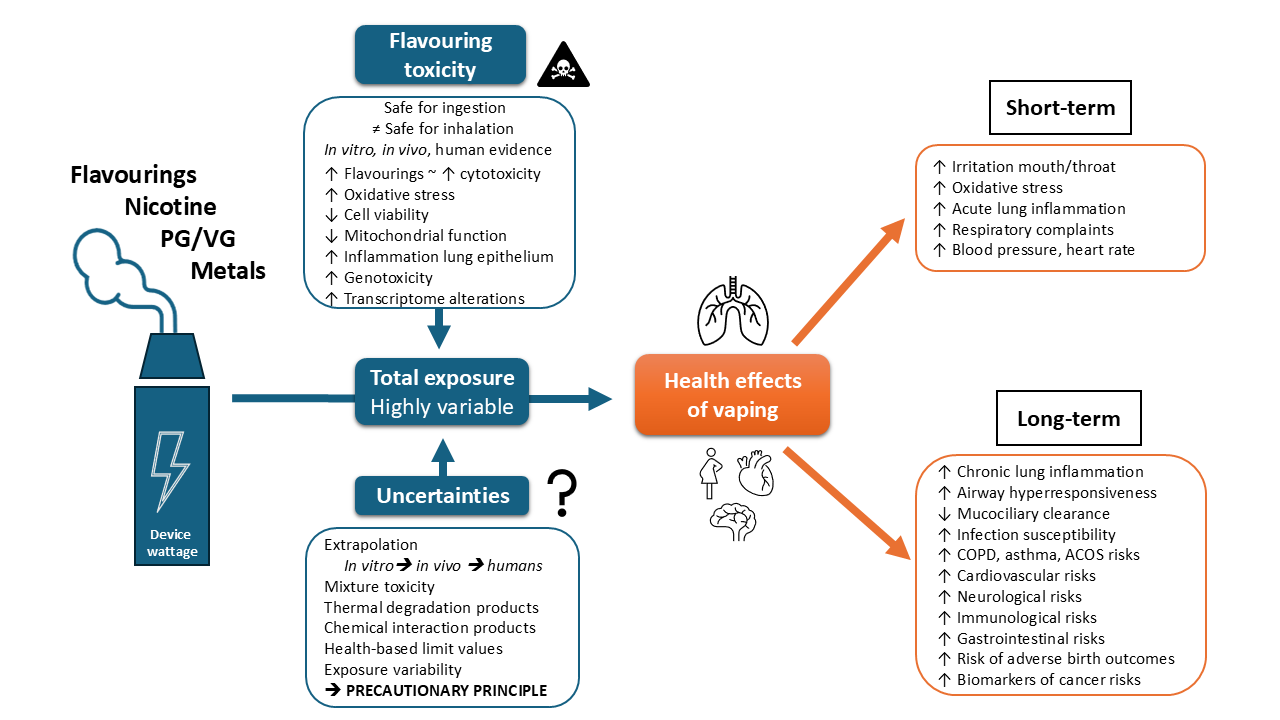
3. Results: Health Effects of Vaping and the Toxicology of E-Cigarette Flavours
3.1. General Health Impact of Vaping (Total Exposure)
- -
- -
- -
3.2. Toxicity of Flavouring Chemicals and E-Liquid Flavours
3.2.1. Flavouring Substances (Individual Chemicals)
3.2.2. E-Liquid Flavours (Mixtures of Chemicals in Commercial Products)
3.3. Uncertainties Justify the Application of the Precautionary Principle
4. Results: Flavoured E-Cigarettes and Attractiveness
4.1. Attractiveness to Young People (Adolescents and Young Adults)
4.2. Attractiveness for Smoking Cessation
5. Results: Objectives, Designs, and Outcomes of Flavour Bans
5.1. Objectives and Side Effects of Flavour Bans
5.2. Designs of Flavour Bans
5.3. Outcomes of Existing Flavour Bans
5.3.1. European Union
5.3.2. United States
5.3.3. People’s Republic of China
5.4. Future Flavour Ban in Belgium (European Union)
6. Discussion
7. Conclusions
Supplementary Materials
Author Contributions
Funding
Institutional Review Board Statement
Informed Consent Statement
Data Availability Statement
Acknowledgments
Conflicts of Interest
Abbreviations
| ACOS | Asthma-COPD overlap syndrome |
| ANSES | French Agency for Food, Environmental and Occupational Health and Safety |
| aOR | Adjusted Odds Ratio |
| BMDL | Benchmark Dose Lower Confidence Limit |
| CI | Confidence Interval |
| CMR | Carcinogenic, Mutagenic and Reprotoxic |
| COPD | Chronic obstructive pulmonary disease |
| DNA | Deoxyribonucleic acid |
| EFSA | European Food Safety Authority |
| ENDS | Electronic Nicotine Delivery System |
| EU | European Union |
| EU-CEG | European Common Entry Gate system |
| EVALI | E-cigarette or Vaping product use–Associated Lung Injury |
| FCTC | Framework Convention on Tobacco Control |
| FDA | Food and Drug Administration |
| GC-MS | Gas Chromatography–Mass Spectrometry |
| HTS | High-throughput screening |
| ICP-MS | Inductively Coupled Plasma–Mass Spectrometry |
| MoE | Margin of Exposure |
| MTT | 3-(4,5-dimethylthiazol-2-yl)-2,5-diphenyltetrazolium bromide |
| NGO | Non-governmental organisation |
| NRT | Nicotine Replacement Therapy |
| NVWA | Dutch Food and Consumer Product Safety Authority |
| OR | Odds Ratio |
| PG | Propylene Glycol |
| PG/VG | Propylene Glycol/Vegetable Glycerin ratio |
| PoD | Point of Departure |
| pOR | Pooled Odds Ratio |
| ppt | Percentage Point |
| pRR | Pooled Relative Risk/Risk Ratio |
| RCT | Randomised Controlled Trial |
| RD | Royal Decree |
| ROS | Reactive Oxygen Species |
| REACH | Registration, Evaluation, Authorisation, and Restriction of Chemicals |
| RIVM | Dutch National Institute for Public Health and the Environment |
| RR | Relative Risk/Risk Ratio |
| RYO | Roll-Your-Own |
| SCHEER | Scientific Committee on Health, Environmental and Emerging Risks |
| SHC | Superior Health Council of Belgium |
| TRIS | Technical Regulations Information System |
| TPD | Tobacco Products Directive 2014/40/EU |
| TTC | Threshold of Toxicological Concern |
| U.S. | United States of America |
| VG | Vegetable Glycerin |
| VOC | Volatile Organic Compounds |
| WHO | World Health Organization |
References
- Petrella, F.; Faverio, P.; Cara, A.; Cassina, E.M.; Libretti, L.; Torto, S.L.; Pirondini, E.; Raveglia, F.; Spinelli, F.; Tuoro, A.; et al. Clinical Impact of Vaping. Toxics 2025, 13, 470. [Google Scholar] [CrossRef]
- WHO. Technical Note on the Call to Action on Electronic Cigarettes; World Health Organization: Geneva, Switzerland, 2023. [Google Scholar]
- Bandi, P.; Cahn, Z.; Goding Sauer, A.; Douglas, C.E.; Drope, J.; Jemal, A.; Fedewa, S.A. Trends in E-Cigarette Use by Age Group and Combustible Cigarette Smoking Histories, U.S. Adults, 2014–2018. Am. J. Prev. Med. 2021, 60, 151–158. [Google Scholar] [CrossRef]
- National Academies of Sciences; Engineering, and Medicine; Health and Medicine Division; Board on Population Health and Public Health Practice; Committee on the Review of the Health Effects of Electronic Nicotine Delivery Systems. Public Health Consequences of E-Cigarettes; Eaton, D.L., Kwan, L.Y., Stratton, K., Eds.; National Academies Press: Washington, DC, USA, 2018. [Google Scholar]
- Izquierdo-Condoy, J.S.; Naranjo-Lara, P.; Morales-Lapo, E.; Hidalgo, M.R.; Tello-De-la-Torre, A.; Vásconez-Gonzáles, E.; Salazar-Santoliva, C.; Loaiza-Guevara, V.; Rincón Hernández, W.; Becerra, D.A.; et al. Direct health implications of e-cigarette use: A systematic scoping review with evidence assessment. Front. Public Health 2024, 12, 1427752. [Google Scholar] [CrossRef] [PubMed]
- Gandhi, A.; Lee, C.E.; Beaumont, A.L.; Ozeki, S.; Parambil, C.J.; Bowler, R.P.; Rezaee, F. The respiratory epithelium in the era of vaping: Insights from in vitro, in vivo and human studies. Eur. Respir. Rev. 2025, 34, 240256. [Google Scholar] [CrossRef] [PubMed]
- Allbright, K.; Villandre, J.; Crotty Alexander, L.E.; Zhang, M.; Benam, K.H.; Evankovich, J.; Königshoff, M.; Chandra, D. The paradox of the safer cigarette: Understanding the pulmonary effects of electronic cigarettes. Eur. Respir. J. 2024, 63, 2301494. [Google Scholar] [CrossRef] [PubMed]
- Sciensano. Gebruik van de Elektronische Sigaret. Gezondheidsenquête 2023–2024; Sciensano: Brussels, Belgium, 2025. [Google Scholar]
- VAD. VAD-Leerlingenbevraging in Het Kader van een Drugbeleid op School. Syntheserapport Schooljaar 2023–2024; Vlaams expertisecentrum Alcohol en andere Drugs (VAD): Brussels, Belgium, 2025. [Google Scholar]
- Yuan, M.; Cross, S.J.; Loughlin, S.E.; Leslie, F.M. Nicotine and the adolescent brain. J. Physiol. 2015, 593, 3397–3412. [Google Scholar] [CrossRef]
- Arain, M.; Haque, M.; Johal, L.; Mathur, P.; Nel, W.; Rais, A.; Sandhu, R.; Sharma, S. Maturation of the adolescent brain. Neuropsychiatr. Dis. Treat. 2013, 9, 449–461. [Google Scholar] [CrossRef]
- Golder, S.; Hartwell, G.; Barnett, L.M.; Nash, S.G.; Petticrew, M.; Glover, R.E. Vaping and harm in young people: Umbrella review. Tob. Control 2025. [Google Scholar] [CrossRef]
- SCHEER. Opinion on Electronic Cigarettes; Scientific Committee on Health, Environmental and Emerging Risks SCHEER: Luxembourg, 2021. [Google Scholar]
- RCP. E-Cigarettes and Harm Reduction: An Evidence Review; Royal College of Physicians: London, UK, 2024. [Google Scholar]
- Barhdadi, S.; Mertens, B.; Van Bossuyt, M.; Van De Maele, J.; Anthonissen, R.; Canfyn, M.; Courselle, P.; Rogiers, V.; Deconinck, E.; Vanhaecke, T. Identification of flavouring substances of genotoxic concern present in e-cigarette refills. Food Chem. Toxicol. 2021, 147, 111864. [Google Scholar] [CrossRef]
- McAdam, K.; Waters, G.; Moldoveanu, S.; Margham, J.; Cunningham, A.; Vas, C.; Porter, A.; Digard, H. Diacetyl and Other Ketones in e-Cigarette Aerosols: Some Important Sources and Contributing Factors. Front. Chem. 2021, 9, 742538. [Google Scholar] [CrossRef]
- Toledo, E.F.V.; Simões, I.F.; Farias, M.T.d.; Minho, L.A.C.; Conceição, J.d.L.; Santos, W.N.L.d.; Mesquita, P.R.R.d.; Júnior, A.d.F.S. A Comprehensive Review of the Harmful Compounds in Electronic Cigarettes. Toxics 2025, 13, 268. [Google Scholar] [CrossRef]
- Girvalaki, C.; Tzatzarakis, M.; Vardavas, A.I.; Stivaktakis, P.; Kyriakos, C.; Papadakis, S.; Tsatsakis, A.; Vardavas, C.I.; on behalf of the EUREST-PLUS consortium. What is the content of the electronic cigarette liquids according to their flavor? An evaluation in nine European Union countries before TPD implementation. Tob. Prev. Cessat. 2018, 4, A80. [Google Scholar] [CrossRef]
- Zhu, S.H.; Sun, J.Y.; Bonnevie, E.; Cummins, S.E.; Gamst, A.; Yin, L.; Lee, M. Four hundred and sixty brands of e-cigarettes and counting: Implications for product regulation. Tob. Control 2014, 23, iii3–iii9. [Google Scholar] [CrossRef]
- Havermans, A.; Krüsemann, E.J.Z.; Pennings, J.; de Graaf, K.; Boesveldt, S.; Talhout, R. Nearly 20 000 e-liquids and 250 unique flavour descriptions: An overview of the Dutch market based on information from manufacturers. Tob. Control 2021, 30, 57–62. [Google Scholar] [CrossRef] [PubMed]
- Barhdadi, S.; Rogiers, V.; Deconinck, E.; Vanhaecke, T. Toxicity assessment of flavour chemicals used in e-cigarettes: Current state and future challenges. Arch. Toxicol. 2021, 95, 2879–2881. [Google Scholar] [CrossRef] [PubMed]
- Kaur, G.; Muthumalage, T.; Rahman, I. Mechanisms of toxicity and biomarkers of flavoring and flavor enhancing chemicals in emerging tobacco and non-tobacco products. Toxicol. Lett. 2018, 288, 143–155. [Google Scholar] [CrossRef] [PubMed]
- Muthumalage, T.; Prinz, M.; Ansah, K.O.; Gerloff, J.; Sundar, I.K.; Rahman, I. Inflammatory and Oxidative Responses Induced by Exposure to Commonly Used e-Cigarette Flavoring Chemicals and Flavored e-Liquids without Nicotine. Front. Physiol. 2017, 8, 1130. [Google Scholar] [CrossRef]
- Leigh, N.J.; Lawton, R.I.; Hershberger, P.A.; Goniewicz, M.L. Flavourings significantly affect inhalation toxicity of aerosol generated from electronic nicotine delivery systems (ENDS). Tob. Control 2016, 25, ii81–ii87. [Google Scholar] [CrossRef]
- Livingstone-Banks, J.; Travis, N.; Conde, M.; Chen, Y.C.; Zi, P.; Jarman, H.; Lindson, N.; Hartmann-Boyce, J. The impacts of e-cigarette flavours: An overview of systematic reviews. Addiction 2025, 120, 1327–1344. [Google Scholar] [CrossRef]
- Sassano, M.F.; Davis, E.S.; Keating, J.E.; Zorn, B.T.; Kochar, T.K.; Wolfgang, M.C.; Glish, G.L.; Tarran, R. Evaluation of e-liquid toxicity using an open-source high-throughput screening assay. PLoS Biol. 2018, 16, e2003904. [Google Scholar] [CrossRef]
- Hua, M.; Omaiye, E.E.; Luo, W.; McWhirter, K.J.; Pankow, J.F.; Talbot, P. Identification of Cytotoxic Flavor Chemicals in Top-Selling Electronic Cigarette Refill Fluids. Sci. Rep. 2019, 9, 2782. [Google Scholar] [CrossRef] [PubMed]
- Omaiye, E.E.; Luo, W.; McWhirter, K.J.; Pankow, J.F.; Talbot, P. Electronic Cigarette Refill Fluids Sold Worldwide: Flavor Chemical Composition, Toxicity, and Hazard Analysis. Chem. Res. Toxicol. 2020, 33, 2972–2987. [Google Scholar] [CrossRef] [PubMed]
- Noël, A.; Yilmaz, S.; Farrow, T.; Schexnayder, M.; Eickelberg, O.; Jelesijevic, T. Sex-Specific Alterations of the Lung Transcriptome at Birth in Mouse Offspring Prenatally Exposed to Vanilla-Flavored E-Cigarette Aerosols and Enhanced Susceptibility to Asthma. Int. J. Environ. Res. Public Health 2023, 20, 3710. [Google Scholar] [CrossRef] [PubMed]
- Lamb, T.; Muthumalage, T.; Meehan-Atrash, J.; Rahman, I. Nose-Only Exposure to Cherry- and Tobacco-Flavored E-Cigarettes Induced Lung Inflammation in Mice in a Sex-Dependent Manner. Toxics 2022, 10, 471. [Google Scholar] [CrossRef]
- Effah, F.; Taiwo, B.; Baines, D.; Bailey, A.; Marczylo, T. Pulmonary effects of e-liquid flavors: A systematic review. J. Toxicol. Environ. Health Part B 2022, 25, 343–371. [Google Scholar] [CrossRef]
- Lucas, J.H.; Muthumalage, T.; Wang, Q.; Friedman, M.R.; Friedman, A.E.; Rahman, I. E-Liquid Containing a Mixture of Coconut, Vanilla, and Cookie Flavors Causes Cellular Senescence and Dysregulated Repair in Pulmonary Fibroblasts: Implications on Premature Aging. Front. Physiol. 2020, 11, 924. [Google Scholar] [CrossRef]
- Pennings, J.L.A.; Havermans, A.; Krüsemann, E.J.Z.; Zijtveld, D.; Huiberts, E.H.W.; Bos, P.M.J.; Schenk, E.; Visser, W.F.; Bakker-‘t Hart, I.M.E.; Staal, Y.C.M.; et al. Reducing attractiveness of e-liquids: Proposal for a restrictive list of tobacco-related flavourings. Tob. Control 2024, 33, e41–e47. [Google Scholar] [CrossRef]
- Hellmich, I.M.; Havermans, A.; Pauwels, C.G.G.M.; Boesveldt, S.; Talhout, R. A comprehensive evaluation of an e-cigarette flavor ban on consumer behavior and purchasing. Tob. Induc. Dis. 2025, 23, A409. [Google Scholar]
- Tam, J.; Jimenez-Mendoza, E.; Buckell, J.; Sindelar, J.; Meza, R. Responses to Real-World and Hypothetical E-Cigarette Flavor Bans Among US Young Adults Who Use Flavored E-Cigarettes. Nicotine Tob. Res. Off. J. Soc. Res. Nicotine Tob. 2024, 26, 1113–1117. [Google Scholar] [CrossRef]
- Friedman, A.S.; Pesko, M.F.; Whitacre, T.R. Flavored E-Cigarette Sales Restrictions and Young Adult Tobacco Use. JAMA Health Forum 2024, 5, e244594. [Google Scholar] [CrossRef]
- Cadham, C.J.; Liber, A.C.; Sánchez-Romero, L.M.; Issabakhsh, M.; Warner, K.E.; Meza, R.; Levy, D.T. The actual and anticipated effects of restrictions on flavoured electronic nicotine delivery systems: A scoping review. BMC Public Health 2022, 22, 2128. [Google Scholar] [CrossRef]
- Cheng, D.; Lee, B.; Jeffers, A.M.; Stover, M.; Kephart, L.; Chadwick, G.; Kruse, G.R.; Evins, A.E.; Rigotti, N.A.; Levy, D.E. State E-Cigarette Flavor Restrictions and Tobacco Product Use in Youths and Adults. JAMA Netw. Open 2025, 8, e2524184. [Google Scholar] [CrossRef]
- Buckell, J.; Tam, J.; Mendoza, E.J.; Meza, R.; Sindelar, J. Impact of state cigarette and e-cigarette flavors bans on smoking, vaping and dual use in the United States. Drug Alcohol Depend. 2025, 274, 112786. [Google Scholar] [CrossRef] [PubMed]
- Cotti, C.; Courtemanche, C.; Liang, Y.; Maclean, J.C.; Nesson, E.; Sabia, J.J. The effect of e-cigarette flavor bans on tobacco use. J. Health Econ. 2025, 102, 103013. [Google Scholar] [CrossRef] [PubMed]
- Saffer, H.; Ozdogan, S.; Grossman, M.; Dench, D.; Dave, D. Comprehensive E-Cigarette Flavor Bans and Tobacco Use Among Youth and Adults. Health Econ. 2025, 34, 2238–2254. [Google Scholar] [CrossRef] [PubMed]
- Ali, F.R.M.; Vallone, D.; Seaman, E.L.; Cordova, J.; Diaz, M.C.; Tynan, M.A.; Trivers, K.F.; King, B.A. Evaluation of Statewide Restrictions on Flavored e-Cigarette Sales in the US From 2014 to 2020. JAMA Netw. Open 2022, 5, e2147813. [Google Scholar] [CrossRef]
- Lovše, M. How Slovenia banned flavours in e-cigarettes with the support of foreign NGOs (recognized by WHO in 2024). Tob. Prev. Cessat. 2024, 10, A69. [Google Scholar] [CrossRef]
- Ollila, H.; Ruokolainen, O. Flavoured e-cigarette use among youth after comprehensive regulations and market entry of new vapes. Eur. J. Public Health 2025, 35, ckaf161.075. [Google Scholar] [CrossRef]
- Ruokolainen, O.; Ollila, H.; Karjalainen, K. Correlates of e-cigarette use before and after comprehensive regulatory changes and e-liquid flavour ban among general population. Drug Alcohol Rev. 2022, 41, 1174–1183. [Google Scholar] [CrossRef]
- JATC. Work Package 7 D 7.1 Report on Regulation of Novel Tobacco Products and E-Cigarettes in Different EU MS; Joint Action on Tobacco Control: Copenhagen, Denmark, 2022. [Google Scholar]
- Hawkins, S.S.; Kruzik, C.; Brien, M.; Levine Coley, R. Flavoured tobacco product restrictions in Massachusetts associated with reductions in adolescent cigarette and e-cigarette use. Tob. Control 2022, 31, 576. [Google Scholar] [CrossRef]
- Rogers, T.; Brown, E.M.; Siegel-Reamer, L.; Rahman, B.; Feld, A.L.; Patel, M.; Vallone, D.; Schillo, B.A. A Comprehensive Qualitative Review of Studies Evaluating the Impact of Local US Laws Restricting the Sale of Flavored and Menthol Tobacco Products. Nicotine Tob. Res. Off. J. Soc. Res. Nicotine Tob. 2022, 24, 433–443. [Google Scholar] [CrossRef]
- Schneller, L.M.; Reid, J.L.; Kasza, K.A.; O’Connor, R.J.; Hyland, A.; Hammond, D. Awareness and perceived behaviour changes following the New York state vaping flavour ban, 2021–2022. Tob. Control 2025, 34, 664–670. [Google Scholar] [CrossRef]
- Lyu, M.; Lu, W.; Zou, L.; Xiong, J.; Yang, J. The Impact of New Regulations on Prevention and Control of E-Cigarettes on Adolescents in Middle Schools—A City in China, 2022–2023. China CDC Wkly. 2024, 6, 289–293. [Google Scholar] [CrossRef]
- Weng, X.; Song, C.Y.; Liu, K.; Wu, Y.S.; Lee, J.J.; Guo, N.; Wang, M.P. Perceptions of and responses of young adults who use e-cigarettes to flavour bans in China: A qualitative study. Tob. Control 2025, 34, 436. [Google Scholar] [CrossRef] [PubMed]
- Wang, Z.; Xu, X.; Laestadius, L.; Wang, Y. Understanding stakeholder responses to the electronic cigarette flavor ban in China: A news media analysis. Public Health 2025, 238, 303–309. [Google Scholar] [CrossRef] [PubMed]
- Hrywna, M.; Teotia, A.; Miller Lo, E.; Giovenco, D.P.; Delnevo, C.D. The Impact of New Jersey’s 2020 E-cigarette Flavor Ban on E-cigarette, Cigarette, and Cigar Sales in New Jersey. Nicotine Tob. Res. Off. J. Soc. Res. Nicotine Tob. 2024, 26, 1700–1707. [Google Scholar] [CrossRef]
- Ollila, E. See you in court: Obstacles to enforcing the ban on electronic cigarette flavours and marketing in Finland. Tob. Control 2020, 29, e175–e180. [Google Scholar] [CrossRef] [PubMed]
- Romm, K.F.; Henriksen, L.; Huang, J.; Le, D.; Clausen, M.; Duan, Z.; Fuss, C.; Bennett, B.; Berg, C.J. Impact of existing and potential e-cigarette flavor restrictions on e-cigarette use among young adult e-cigarette users in 6 US metropolitan areas. Prev. Med. Rep. 2022, 28, 101901. [Google Scholar] [CrossRef]
- Lin, M.Y.; Abdelfattah, L.I.; Hanchate, A.D.; Sutfin, E.L.; Denlinger-Apte, R.L. State-Level Flavored E-Cigarette Bans and Initiation Rates Among Youths and Adults. JAMA Netw. Open 2026, 9, e2551744. [Google Scholar] [CrossRef]
- Lv, X.; Yan, D.; Laestadius, L.; Wilson, F.A.; Yang, M.; Martin, A.; Wang, Y. Effect of Advertising Exposure on Responses of Young Non-e-Cigarette Users to Banning Flavors in China: A Cross-Sectional Study. Health Sci. Rep. 2025, 8, e71322. [Google Scholar] [CrossRef]
- Brown, E.M.; Rogers, T.; Spinks, J.G.; Gammon, D.; Nonnemaker, J.; Farrelly, M.C. Changes in Sales of Vaping Products and Cigarettes Associated With the New York State Flavored Vaping Product Sales Restriction. Nicotine Tob. Res. 2024, 26, 135–141. [Google Scholar] [CrossRef]
- Vandenbroucke, F. Minister Vandenbroucke Legt Volledig Smaakjesverbod Vapes op Regeringstafel. Available online: https://vandenbroucke.belgium.be/nl/nieuws/minister-vandenbroucke-legt-volledig-smaakjesverbod-vapes-op-regeringstafel (accessed on 19 November 2025).
- SHC. Electronic Cigarette: Flavour Restrictions; Superior Health Council of Belgium: Brussels, Belgium, 2025. [Google Scholar]
- Sukhera, J. Narrative Reviews: Flexible, Rigorous, and Practical. J. Grad. Med. Educ. 2022, 14, 414–417. [Google Scholar] [CrossRef] [PubMed]
- Seiler-Ramadas, R.; Sandner, I.; Haider, S.; Grabovac, I.; Dorner, T.E. Health effects of electronic cigarette (e-cigarette) use on organ systems and its implications for public health. Wien. Klin. Wochenschr. 2021, 133, 1020–1027. [Google Scholar] [CrossRef] [PubMed]
- Petrella, F.; Rizzo, S.; Masiero, M.; Marzorati, C.; Casiraghi, M.; Bertolaccini, L.; Mazzella, A.; Pravettoni, G.; Spaggiari, L. Clinical impact of vaping on cardiopulmonary function and lung cancer development: An update. Eur. J. Cancer Prev. Off. J. Eur. Cancer Prev. Organ. (ECP) 2023, 32, 584–589. [Google Scholar] [CrossRef] [PubMed]
- Kaur, J.; Goel, S.; Shabil, M.; Rana, R.K.; Rinkoo, A.V.; Chauhan, A.; Gupta, S. Health impacts of electronic nicotine delivery systems: An umbrella review of systematic reviews. BMJ Open 2025, 15, e100168. [Google Scholar] [CrossRef]
- Bin Abdulrahman, K.A.; Bin Abdulrahman, A.K.; Anwer, R. Inflammatory and Carcinogenic Biomarker Signatures in E-Cigarette Users: A Comprehensive Meta-Analysis of ~24,000 Adults. Int. J. Public Health 2025, 70, 1608885. [Google Scholar] [CrossRef]
- Rose, J.J.; Krishnan-Sarin, S.; Exil, V.J.; Hamburg, N.M.; Fetterman, J.L.; Ichinose, F.; Perez-Pinzon, M.A.; Rezk-Hanna, M.; Williamson, E.; on behalf of the American Heart Association Council on Cardiopulmonary, C.C.P.; et al. Cardiopulmonary Impact of Electronic Cigarettes and Vaping Products: A Scientific Statement From the American Heart Association. Circulation 2023, 148, 703–728. [Google Scholar] [CrossRef]
- McNeill, A.; Simonavičius, E.; Brose, L.; Taylor, E.; East, K.; Zuikova, E.; Calder, R.; Robson, D. Nicotine Vaping in England: An Evidence Update Including Health Risks and Perceptions, 2022; A Report Commissioned by the Office for Health Improvement and Disparities; King’s College London: London, UK, 2022. [Google Scholar]
- SHC. Elektronische Sigaret: Bijsluiters en Update Literatuuroverzicht; Superior Health Council of Belgium: Brussels, Belgium, 2025. [Google Scholar]
- SHC. Elektronische Sigaret: Evolutie; Superior Health Council of Belgium: Brussels, Belgium, 2022. [Google Scholar]
- ANSES. Evaluation des Risques Sanitaires Liés aux Produits du Vapotage. Avis de l’Anses. Rapport D’expertise Collective; ANSES: Maisons-Alfort, France, 2025; p. 683. [Google Scholar]
- López-Ojeda, W.; Hurley, R.A. Vaping and the Brain: Effects of Electronic Cigarettes and E-Liquid Substances. J. Neuropsychiatry Clin. Neurosci. 2024, 36, A41–A45. [Google Scholar] [CrossRef]
- Ruszkiewicz, J.A.; Zhang, Z.; Gonçalves, F.M.; Tizabi, Y.; Zelikoff, J.T.; Aschner, M. Neurotoxicity of e-cigarettes. Food Chem. Toxicol. 2020, 138, 111245. [Google Scholar] [CrossRef]
- Beltran-Castillo, S.; Espinoza, J.P.; Grambs, M. Prenatal Exposure to Tobacco Smoke and Vaping Aerosols: Mechanisms Disrupting White-Matter Formation. Toxics 2025, 13, 1071. [Google Scholar] [CrossRef]
- Deprato, A.; Garud, A.; Azzolina, D.; Murgia, N.; Davenport, M.H.; Kaul, P.; Lacy, P.; Moitra, S. Associations between vaping during pregnancy and perinatal outcomes: A systematic review and meta-analysis. J. Hazard. Mater. 2025, 486, 137028. [Google Scholar] [CrossRef] [PubMed]
- Chen, H.; Li, G.; Chan, Y.L.; Chapman, D.G.; Sukjamnong, S.; Nguyen, T.; Annissa, T.; McGrath, K.C.; Sharma, P.; Oliver, B.G. Maternal E-Cigarette Exposure in Mice Alters DNA Methylation and Lung Cytokine Expression in Offspring. Am. J. Respir. Cell Mol. Biol. 2018, 58, 366–377. [Google Scholar] [CrossRef] [PubMed]
- Vallée, A.; Eid, M.; Feki, A.; Ayoubi, J.-M. Maternal vaping and pregnancy adverse outcomes: A systematic review and meta-analysis. Women Birth 2025, 38, 101951. [Google Scholar] [CrossRef] [PubMed]
- Vilcassim, M.J.R.; Stowe, S.; Majumder, R.; Subramaniam, A.; Sinkey, R.G. Electronic Cigarette Use during Pregnancy: Is It Harmful? Toxics 2023, 11, 278. [Google Scholar] [CrossRef]
- Paulo de Oliveira, N.F.; Guimarães, J.R.; Viana Filho, J.M.C. A review of e-cigarettes and their effects on DNA methylation in human studies. Epigenomics 2025, 17, 1659–1668. [Google Scholar] [CrossRef]
- Lupo, G.; Anfuso, C.D.; Smecca, G.; Cosentino, A.; Agafonova, A.; Prinzi, C.; Ferrauto, R.J.; Turzo, S.; Rapisarda, V.; Ledda, C. Assessing the impact of e-cigarettes on human barrier systems: A systematic review. Transl. Res. 2025, 277, 39–63. [Google Scholar] [CrossRef]
- Jukic, I.; Matulic, I.; Vukovic, J. Effects of Nicotine-Free E-Cigarettes on Gastrointestinal System: A Systematic Review. Biomedicines 2025, 13, 1998. [Google Scholar] [CrossRef]
- Glantz, S.A.; Nguyen, N.; Oliveira da Silva, A.L. Population-Based Disease Odds for E-Cigarettes and Dual Use versus Cigarettes. NEJM Evid. 2024, 3, EVIDoa2300229. [Google Scholar] [CrossRef]
- Lerner, C.A.; Sundar, I.K.; Yao, H.; Gerloff, J.; Ossip, D.J.; McIntosh, S.; Robinson, R.; Rahman, I. Vapors produced by electronic cigarettes and e-juices with flavorings induce toxicity, oxidative stress, and inflammatory response in lung epithelial cells and in mouse lung. PLoS ONE 2015, 10, e0116732. [Google Scholar] [CrossRef]
- Kim, M.D.; Chung, S.; Dennis, J.S.; Yoshida, M.; Aguiar, C.; Aller, S.P.; Mendes, E.S.; Schmid, A.; Sabater, J.; Baumlin, N.; et al. Vegetable glycerin e-cigarette aerosols cause airway inflammation and ion channel dysfunction. Front. Pharmacol. 2022, 13, 1012723. [Google Scholar] [CrossRef]
- Staudt, M.R.; Salit, J.; Kaner, R.J.; Hollmann, C.; Crystal, R.G. Altered lung biology of healthy never smokers following acute inhalation of E-cigarettes. Respir. Res. 2018, 19, 78. [Google Scholar] [CrossRef]
- Caporale, A.; Langham, M.C.; Guo, W.; Johncola, A.; Chatterjee, S.; Wehrli, F.W. Acute Effects of Electronic Cigarette Aerosol Inhalation on Vascular Function Detected at Quantitative MRI. Radiology 2019, 293, 97–106. [Google Scholar] [CrossRef] [PubMed]
- Vlachopoulos, C.; Ioakeimidis, N.; Abdelrasoul, M.; Terentes-Printzios, D.; Georgakopoulos, C.; Pietri, P.; Stefanadis, C.; Tousoulis, D. Electronic Cigarette Smoking Increases Aortic Stiffness and Blood Pressure in Young Smokers. J. Am. Coll. Cardiol. 2016, 67, 2802–2803. [Google Scholar] [CrossRef] [PubMed]
- Franzen, K.F.; Willig, J.; Cayo Talavera, S.; Meusel, M.; Sayk, F.; Reppel, M.; Dalhoff, K.; Mortensen, K.; Droemann, D. E-cigarettes and cigarettes worsen peripheral and central hemodynamics as well as arterial stiffness: A randomized, double-blinded pilot study. Vasc. Med. 2018, 23, 419–425. [Google Scholar] [CrossRef] [PubMed]
- Kwon, H.J.; Oh, Y.T.; Park, S.; Kim, S.S.; Park, J.; Yin, J.; Hong, J.H.; Kim, C.I.; Ryu, H.; Park, J.B.; et al. Analysis of electric cigarette liquid effect on mouse brain tumor growth through EGFR and ERK activation. PLoS ONE 2021, 16, e0256730. [Google Scholar] [CrossRef]
- Bircan, E.; Bezirhan, U.; Porter, A.; Fagan, P.; Orloff, M.S. Electronic cigarette use and its association with asthma, chronic obstructive pulmonary disease (COPD) and asthma-COPD overlap syndrome among never cigarette smokers. Tob. Induc. Dis. 2021, 19, 75. [Google Scholar] [CrossRef]
- Xie, W.; Kathuria, H.; Galiatsatos, P.; Blaha, M.J.; Hamburg, N.M.; Robertson, R.M.; Bhatnagar, A.; Benjamin, E.J.; Stokes, A.C. Association of Electronic Cigarette Use with Incident Respiratory Conditions Among US Adults from 2013 to 2018. JAMA Netw. Open 2020, 3, e2020816. [Google Scholar] [CrossRef]
- Malvi, A.; Khatib, M.N.; Ganesan, S.; Kaur, M.; Srivastava, M.; Barwal, A.; Siva Prasad, G.V.; Rajput, P.; Syed, R.; Hooda, R.C.; et al. Assessing the impact of electronic nicotine delivery systems on chronic obstructive pulmonary disease: A systematic review and meta-analysis. Respir. Med. 2025, 241, 108059. [Google Scholar] [CrossRef]
- Shabil, M.; Malvi, A.; Khatib, M.N.; Ganesan, S.; Kaur, M.; Srivastava, M.; Prasad, G.V.S.; Rajput, P.; Mohan, B.; Jena, D.; et al. Association of electronic cigarette use and risk of COPD: A systematic review and meta-analysis. npj Prim. Care Respir. Med. 2025, 35, 31. [Google Scholar] [CrossRef]
- Song, C.; Hao, X.; Critselis, E.; Panagiotakos, D. The impact of electronic cigarette use on chronic obstructive pulmonary disease: A systematic review and meta-analysis. Respir. Med. 2025, 239, 107985. [Google Scholar] [CrossRef]
- Forey, B.A.; Thornton, A.J.; Lee, P.N. Systematic review with meta-analysis of the epidemiological evidence relating smoking to COPD, chronic bronchitis and emphysema. BMC Pulm. Med. 2011, 11, 36. [Google Scholar] [CrossRef] [PubMed]
- Sharma, A.; Gupta, I.; Venkatesh, U.; Singh, A.K.; Golamari, R.; Arya, P. E-cigarettes and myocardial infarction: A systematic review and meta-analysis. Int. J. Cardiol. 2023, 371, 65–70. [Google Scholar] [CrossRef] [PubMed]
- Alzahrani, T.; Pena, I.; Temesgen, N.; Glantz, S.A. Association Between Electronic Cigarette Use and Myocardial Infarction. Am. J. Prev. Med. 2018, 55, 455–461. [Google Scholar] [CrossRef] [PubMed]
- Nicholson, T.; Davis, L.; Davis, E.T.; Newton Ede, M.; Scott, A.; Jones, S.W. e-Cigarette Vapour Condensate Reduces Viability and Impairs Function of Human Osteoblasts, in Part, via a Nicotine Dependent Mechanism. Toxics 2022, 10, 506. [Google Scholar] [CrossRef]
- Bracken-Clarke, D.; Kapoor, D.; Baird, A.M.; Buchanan, P.J.; Gately, K.; Cuffe, S.; Finn, S.P. Vaping and lung cancer—A review of current data and recommendations. Lung Cancer 2021, 153, 11–20. [Google Scholar] [CrossRef]
- Mohapatra, S.; Tiwari, A.; Kandala, A.; Winayak, R.; Ghose, A.; Das, R.; Hasanova, M.; Gunani, M.; Jaswal, G.; Mitra, S.; et al. The risk of lung cancer from vaping or e-cigarette usage: A systematic review. ESMO Open 2025, 10, 105910. [Google Scholar] [CrossRef]
- Kundu, A.; Sachdeva, K.; Feore, A.; Sanchez, S.; Sutton, M.; Seth, S.; Schwartz, R.; Chaiton, M. Evidence update on the cancer risk of vaping e-cigarettes: A systematic review. Tob. Induc. Dis. 2025, 23. [Google Scholar] [CrossRef]
- Stewart, B. E-cigarettes and Cancer: A Qualitative Risk Assessment; Clinical Oncology Society of Australia: Sydney, Australia, 2025. [Google Scholar]
- Auschwitz, E.; Almeda, J.; Andl, C.D. Mechanisms of E-Cigarette Vape-Induced Epithelial Cell Damage. Cells 2023, 12, 2552. [Google Scholar] [CrossRef]
- Zahedi, A.; Phandthong, R.; Chaili, A.; Remark, G.; Talbot, P. Epithelial-to-mesenchymal transition of A549 lung cancer cells exposed to electronic cigarettes. Lung Cancer 2018, 122, 224–233. [Google Scholar] [CrossRef]
- Komura, M.; Sato, T.; Yoshikawa, H.; Nitta, N.A.; Suzuki, Y.; Koike, K.; Kodama, Y.; Seyama, K.; Takahashi, K. Propylene glycol, a component of electronic cigarette liquid, damages epithelial cells in human small airways. Respir. Res. 2022, 23, 216. [Google Scholar] [CrossRef]
- Lerner, C.A.; Rutagarama, P.; Ahmad, T.; Sundar, I.K.; Elder, A.; Rahman, I. Electronic cigarette aerosols and copper nanoparticles induce mitochondrial stress and promote DNA fragmentation in lung fibroblasts. Biochem. Biophys. Res. Commun. 2016, 477, 620–625. [Google Scholar] [CrossRef]
- Ganapathy, V.; Manyanga, J.; Brame, L.; McGuire, D.; Sadhasivam, B.; Floyd, E.; Rubenstein, D.A.; Ramachandran, I.; Wagener, T.; Queimado, L. Electronic cigarette aerosols suppress cellular antioxidant defenses and induce significant oxidative DNA damage. PLoS ONE 2017, 12, e0177780. [Google Scholar] [CrossRef] [PubMed]
- Lee, H.W.; Park, S.H.; Weng, M.W.; Wang, H.T.; Huang, W.C.; Lepor, H.; Wu, X.R.; Chen, L.C.; Tang, M.S. E-cigarette smoke damages DNA and reduces repair activity in mouse lung, heart, and bladder as well as in human lung and bladder cells. Proc. Natl. Acad. Sci. USA 2018, 115, E1560–E1569. [Google Scholar] [CrossRef] [PubMed]
- Platel, A.; Dusautoir, R.; Kervoaze, G.; Dourdin, G.; Gateau, E.; Talahari, S.; Huot, L.; Simar, S.; Ollivier, A.; Laine, W.; et al. Comparison of the in vivo genotoxicity of electronic and conventional cigarettes aerosols after subacute, subchronic and chronic exposures. J. Hazard. Mater. 2022, 423, 127246. [Google Scholar] [CrossRef] [PubMed]
- Tang, M.S.; Wu, X.R.; Lee, H.W.; Xia, Y.; Deng, F.M.; Moreira, A.L.; Chen, L.C.; Huang, W.C.; Lepor, H. Electronic-cigarette smoke induces lung adenocarcinoma and bladder urothelial hyperplasia in mice. Proc. Natl. Acad. Sci. USA 2019, 116, 21727–21731. [Google Scholar] [CrossRef]
- Canistro, D.; Vivarelli, F.; Cirillo, S.; Babot Marquillas, C.; Buschini, A.; Lazzaretti, M.; Marchi, L.; Cardenia, V.; Rodriguez-Estrada, M.T.; Lodovici, M.; et al. E-cigarettes induce toxicological effects that can raise the cancer risk. Sci. Rep. 2017, 7, 2028. [Google Scholar] [CrossRef]
- Sun, Y.W.; Chen, K.M.; Atkins, H.; Aliaga, C.; Gordon, T.; Guttenplan, J.B.; El-Bayoumy, K. Effects of E-Cigarette Aerosols with Varying Levels of Nicotine on Biomarkers of Oxidative Stress and Inflammation in Mice. Chem. Res. Toxicol. 2021, 34, 1161–1168. [Google Scholar] [CrossRef]
- Kamal, N.M.; Shams, N.S. The impact of tobacco smoking and electronic cigarette vaping on salivary biomarkers. A comparative study. Saudi Dent. J. 2022, 34, 404–409. [Google Scholar] [CrossRef]
- Tommasi, S.; Blumenfeld, H.; Besaratinia, A. Vaping Dose, Device Type, and E-Liquid Flavor are Determinants of DNA Damage in Electronic Cigarette Users. Nicotine Tob. Res. Off. J. Soc. Res. Nicotine Tob. 2023, 25, 1145–1154. [Google Scholar] [CrossRef]
- Taylor, E.; Simonavičius, E.; McNeill, A.; Brose, L.S.; East, K.; Marczylo, T.; Robson, D. Exposure to Tobacco-Specific Nitrosamines Among People Who Vape, Smoke, or do Neither: A Systematic Review and Meta-Analysis. Nicotine Tob. Res. Off. J. Soc. Res. Nicotine Tob. 2024, 26, 257–269. [Google Scholar] [CrossRef]
- Kelesidis, T.; Tran, E.; Nguyen, R.; Zhang, Y.; Sosa, G.; Middlekauff, H.R. Association of 1 Vaping Session With Cellular Oxidative Stress in Otherwise Healthy Young People With No History of Smoking or Vaping: A Randomized Clinical Crossover Trial. JAMA Pediatr. 2021, 175, 1174–1176. [Google Scholar] [CrossRef] [PubMed]
- Hammond, D.; Reid, J.L.; Goniewicz, M.L.; McNeill, A.; O’Connor, R.J.; Corsetti, D.; Brose, L.S.; Schurr, B.; Robson, D. Biomarkers of Toxicant Exposure among Youth in Canada, England, and the United States Who Vape and/or Smoke Tobacco or Do Neither. Cancer Epidemiol. Biomark. Prev. 2025, 34, 815–824. [Google Scholar] [CrossRef] [PubMed]
- Sakamaki-Ching, S.; Williams, M.; Hua, M.; Li, J.; Bates, S.M.; Robinson, A.N.; Lyons, T.W.; Goniewicz, M.L.; Talbot, P. Correlation between biomarkers of exposure, effect and potential harm in the urine of electronic cigarette users. BMJ Open Respir. Res. 2020, 7, e000452. [Google Scholar] [CrossRef] [PubMed]
- Krüsemann, E.J.Z.; Havermans, A.; Pennings, J.L.A.; de Graaf, K.; Boesveldt, S.; Talhout, R. Comprehensive overview of common e-liquid ingredients and how they can be used to predict an e-liquid’s flavour category. Tob. Control 2021, 30, 185. [Google Scholar] [CrossRef]
- Krüsemann, E.J.Z.; Pennings, J.L.A.; Cremers, J.W.J.M.; Bakker, F.; Boesveldt, S.; Talhout, R. GC–MS analysis of e-cigarette refill solutions: A comparison of flavoring composition between flavor categories. J. Pharm. Biomed. Anal. 2020, 188, 113364. [Google Scholar] [CrossRef]
- Bishop, E.; Haswell, L.; Adamson, J.; Costigan, S.; Thorne, D.; Gaca, M. An approach to testing undiluted e-cigarette aerosol in vitro using 3D reconstituted human airway epithelium. Toxicol. Vitr. 2019, 54, 391–401. [Google Scholar] [CrossRef]
- Caruso, M.; Li Volti, G.; Furneri, P.M.; Fuochi, V.; Emma, R.; Polosa, R. Commentary: Inflammatory and Oxidative Responses Induced by Exposure to Commonly Used e-Cigarette Flavoring Chemicals and Flavored e-Liquids without Nicotine. Front. Physiol. 2018, 9, 1240. [Google Scholar] [CrossRef]
- Szafran, B.N.; Pinkston, R.; Perveen, Z.; Ross, M.K.; Morgan, T.; Paulsen, D.B.; Penn, A.L.; Kaplan, B.L.F.; Noël, A. Electronic-Cigarette Vehicles and Flavoring Affect Lung Function and Immune Responses in a Murine Model. Int. J. Mol. Sci. 2020, 21, 6022. [Google Scholar] [CrossRef]
- Hofmann, J.J.; Poulos, V.C.; Zhou, J.; Sharma, M.; Parraga, G.; McIntosh, M.J. Review of quantitative and functional lung imaging evidence of vaping-related lung injury. Front. Med. 2024, 11, 1285361. [Google Scholar] [CrossRef]
- Barhdadi, S.; Canfyn, M.; Courselle, P.; Rogiers, V.; Vanhaecke, T.; Deconinck, E. Development and validation of a HS/GC-MS method for the simultaneous analysis of diacetyl and acetylpropionyl in electronic cigarette refills. J. Pharm. Biomed. Anal. 2017, 142, 218–224. [Google Scholar] [CrossRef]
- Cao, D.J.; Aldy, K.; Hsu, S.; McGetrick, M.; Verbeck, G.; De Silva, I.; Feng, S.Y. Review of Health Consequences of Electronic Cigarettes and the Outbreak of Electronic Cigarette, or Vaping, Product Use-Associated Lung Injury. J. Med. Toxicol. Off. J. Am. Coll. Med. Toxicol. 2020, 16, 295–310. [Google Scholar] [CrossRef] [PubMed]
- Das, S.; Smid, S.D. Small molecule diketone flavorants diacetyl and 2,3-pentanedione promote neurotoxicity but inhibit amyloid β aggregation. Toxicol. Lett. 2019, 300, 67–72. [Google Scholar] [CrossRef] [PubMed]
- Clapp, P.W.; Lavrich, K.S.; van Heusden, C.A.; Lazarowski, E.R.; Carson, J.L.; Jaspers, I. Cinnamaldehyde in flavored e-cigarette liquids temporarily suppresses bronchial epithelial cell ciliary motility by dysregulation of mitochondrial function. Am. J. Physiol. Lung Cell. Mol. Physiol. 2019, 316, L470–L486. [Google Scholar] [CrossRef] [PubMed]
- Clapp, P.W.; Pawlak, E.A.; Lackey, J.T.; Keating, J.E.; Reeber, S.L.; Glish, G.L.; Jaspers, I. Flavored e-cigarette liquids and cinnamaldehyde impair respiratory innate immune cell function. Am. J. Physiol. Lung Cell. Mol. Physiol. 2017, 313, L278–L292. [Google Scholar] [CrossRef]
- Behar, R.Z.; Luo, W.; Lin, S.C.; Wang, Y.; Valle, J.; Pankow, J.F.; Talbot, P. Distribution, quantification and toxicity of cinnamaldehyde in electronic cigarette refill fluids and aerosols. Tob. Control 2016, 25, ii94–ii102. [Google Scholar] [CrossRef]
- Herbert, J.; Kelty, J.S.; Laskin, J.D.; Laskin, D.L.; Gow, A.J. Menthol flavoring in e-cigarette condensate causes pulmonary dysfunction and cytotoxicity in precision cut lung slices. Am. J. Physiol. Lung Cell. Mol. Physiol. 2023, 324, L345–L357. [Google Scholar] [CrossRef]
- Nair, V.; Tran, M.; Behar, R.Z.; Zhai, S.; Cui, X.; Phandthong, R.; Wang, Y.; Pan, S.; Luo, W.; Pankow, J.F.; et al. Menthol in electronic cigarettes: A contributor to respiratory disease? Toxicol. Appl. Pharmacol. 2020, 407, 115238. [Google Scholar] [CrossRef]
- Talhout, R.; Leventhal, A.M. Coolants, organic acids, flavourings and other additives that facilitate inhalation of tobacco and nicotine products: Implications for regulation. Tob. Control 2026, 35, 110–116. [Google Scholar] [CrossRef]
- Bitzer, Z.T.; Goel, R.; Reilly, S.M.; Elias, R.J.; Silakov, A.; Foulds, J.; Muscat, J.; Richie, J.P. Effect of flavoring chemicals on free radical formation in electronic cigarette aerosols. Free Radic. Biol. Med. 2018, 120, 72–79. [Google Scholar] [CrossRef]
- Jabba, S.V.; Jordt, S.-E. Risk Analysis for the Carcinogen Pulegone in Mint- and Menthol-Flavored e-Cigarettes and Smokeless Tobacco Products. JAMA Intern. Med. 2019, 179, 1721–1723. [Google Scholar] [CrossRef]
- Uchiyama, S.; Noguchi, M.; Sato, A.; Ishitsuka, M.; Inaba, Y.; Kunugita, N. Determination of Thermal Decomposition Products Generated from E-Cigarettes. Chem. Res. Toxicol. 2020, 33, 576–583. [Google Scholar] [CrossRef]
- Muthumalage, T.; Rahman, I. Pulmonary immune response regulation, genotoxicity, and metabolic reprogramming by menthol- and tobacco-flavored e-cigarette exposures in mice. Toxicol. Sci. 2023, 193, 146–165. [Google Scholar] [CrossRef] [PubMed]
- Yogeswaran, S.; Muthumalage, T.; Rahman, I. Comparative Reactive Oxygen Species (ROS) Content among Various Flavored Disposable Vape Bars, including Cool (Iced) Flavored Bars. Toxics 2021, 9, 235. [Google Scholar] [CrossRef] [PubMed]
- Bitar, M.; Mercier, C.; Bertoletti, L.; Pourchez, J.; Forest, V. Flavor-induced inflammation and cytotoxicity in human aortic smooth muscle cells: Potential implications for E-cigarette safety. Toxicol. Appl. Pharmacol. 2025, 500, 117388. [Google Scholar] [CrossRef] [PubMed]
- Mulder, H.A.; Stewart, J.B.; Blue, I.P.; Krakowiak, R.I.; Patterson, J.L.; Karin, K.N.; Royals, J.M.; DuPont, A.C.; Forsythe, K.E.; Poklis, J.L.; et al. Characterization of E-cigarette coil temperature and toxic metal analysis by infrared temperature sensing and scanning electron microscopy-energy-dispersive X-ray. Inhal. Toxicol. 2020, 32, 447–455. [Google Scholar] [CrossRef]
- Erythropel, H.C.; Jabba, S.V.; DeWinter, T.M.; Mendizabal, M.; Anastas, P.T.; Jordt, S.E.; Zimmerman, J.B. Formation of flavorant-propylene Glycol Adducts With Novel Toxicological Properties in Chemically Unstable E-Cigarette Liquids. Nicotine Tob. Res. Off. J. Soc. Res. Nicotine Tob. 2019, 21, 1248–1258. [Google Scholar] [CrossRef]
- Jabba, S.V.; Diaz, A.N.; Erythropel, H.C.; Zimmerman, J.B.; Jordt, S.-E. Chemical Adducts of Reactive Flavor Aldehydes Formed in E-Cigarette Liquids Are Cytotoxic and Inhibit Mitochondrial Function in Respiratory Epithelial Cells. Nicotine Tob. Res. 2020, 22, S25–S34. [Google Scholar] [CrossRef]
- Fernández-Martínez, N.F.; Ching-López, A.; Olry de Labry Lima, A.; Salamanca-Fernández, E.; Pérez-Gómez, B.; Jiménez-Moleón, J.J.; Sánchez, M.J.; Rodríguez-Barranco, M. Relationship between exposure to mixtures of persistent, bioaccumulative, and toxic chemicals and cancer risk: A systematic review. Environ. Res 2020, 188, 109787. [Google Scholar] [CrossRef]
- Luijten, M.; Vlaanderen, J.; Kortenkamp, A.; Antignac, J.-P.; Barouki, R.; Bil, W.; van den Brand, A.; den Braver-Sewradj, S.; van Klaveren, J.; Mengelers, M.; et al. Mixture risk assessment and human biomonitoring: Lessons learnt from HBM4EU. Int. J. Hyg. Environ. Health 2023, 249, 114135. [Google Scholar] [CrossRef]
- Bourguignon, J.-P.; Parent, A.-S.; Kleinjans, J.C.S.; Nawrot, T.S.; Schoeters, G.; Van Larebeke, N. Rationale for Environmental Hygiene towards global protection of fetuses and young children from adverse lifestyle factors. Environ. Health 2018, 17, 42. [Google Scholar] [CrossRef]
- SHC. Physical Chemical Environmental Hygiene (Limiting Exposure to Mutagenic or Endocrine Disrupting Agents) and the Importance of Exposures Early in Life; Superior Health Council of Belgium: Brussels, Belgium, 2019. [Google Scholar]
- Martin, O.; Scholze, M.; Ermler, S.; McPhie, J.; Bopp, S.K.; Kienzler, A.; Parissis, N.; Kortenkamp, A. Ten years of research on synergisms and antagonisms in chemical mixtures: A systematic review and quantitative reappraisal of mixture studies. Environ. Int. 2021, 146, 106206. [Google Scholar] [CrossRef] [PubMed]
- Sexton, K. Cumulative Risk Assessment: An Overview of Methodological Approaches for Evaluating Combined Health Effects from Exposure to Multiple Environmental Stressors. Int. J. Environ. Res. Public Health 2012, 9, 370–390. [Google Scholar] [CrossRef] [PubMed]
- Hubbs, A.F.; Cummings, K.J.; McKernan, L.T.; Dankovic, D.A.; Park, R.M.; Kreiss, K. Comment on Farsalinos et al., “Evaluation of Electronic Cigarette Liquids and Aerosol for the Presence of Selected Inhalation Toxins”. Nicotine Tob. Res. 2015, 17, 1288–1289. [Google Scholar] [CrossRef] [PubMed]
- Barhdadi, S. Chemical and Toxicological Assessment of E-Cigarette Liquids; VUB: Brussels, Belgium, 2020. [Google Scholar]
- Bennekou, S.H.; Allende, A.; Bearth, A.; Casacuberta, J.; Castle, L.; Coja, T.; Crépet, A.; Halldorsson, T.; Hoogenboom, L.R.; Knutsen, H.; et al. Statement on the use and interpretation of the margin of exposure approach. EFSA J. Eur. Food Saf. Auth. 2025, 23, e9606. [Google Scholar] [CrossRef]
- More, S.J.; Bampidis, V.; Benford, D.; Bragard, C.; Halldorsson, T.I.; Hernández-Jerez, A.F.; Hougaard Bennekou, S.; Koutsoumanis, K.P.; Machera, K.; Naegeli, H.; et al. Guidance on the use of the Threshold of Toxicological Concern approach in food safety assessment. EFSA J. Eur. Food Saf. Auth. 2019, 17, e05708. [Google Scholar] [CrossRef]
- Meernik, C.; Baker, H.M.; Kowitt, S.D.; Ranney, L.M.; Goldstein, A.O. Impact of non-menthol flavours in e-cigarettes on perceptions and use: An updated systematic review. BMJ Open 2019, 9, e031598. [Google Scholar] [CrossRef]
- Groom, A.L.; Vu, T.-H.T.; Kesh, A.; Hart, J.L.; Walker, K.L.; Giachello, A.L.; Sears, C.G.; Tompkins, L.K.; Mattingly, D.T.; Landry, R.L.; et al. Correlates of youth vaping flavor preferences. Prev. Med. Rep. 2020, 18, 101094. [Google Scholar] [CrossRef]
- EC. Special Eurobarometer 539: Attitudes of Europeans Towards Tobacco and Related Products; Report. Fieldwork: May–June 2023; European Commission: Brussels, Belgium, 2024. [Google Scholar]
- Harrell, M.B.; Weaver, S.R.; Loukas, A.; Creamer, M.; Marti, C.N.; Jackson, C.D.; Heath, J.W.; Nayak, P.; Perry, C.L.; Pechacek, T.F.; et al. Flavored e-cigarette use: Characterizing youth, young adult, and adult users. Prev. Med. Rep. 2017, 5, 33–40. [Google Scholar] [CrossRef]
- Jenkins, C.; Powrie, F.; Kelso, C.; Morgan, J. Chemical Analysis and Flavor Distribution of Electronic Cigarettes in Australian Schools. Nicotine Tob. Res. Off. J. Soc. Res. Nicotine Tob. 2025, 27, 997–1005. [Google Scholar] [CrossRef]
- Indiville. Stichting Tegen Kanker, Onderzoek Jongeren en Vapen 2023. 14/09/2023; Belgian Foundation Against Cancer: Schaarbeek, Belgium, 2023. [Google Scholar]
- Landry, R.L.; Groom, A.L.; Vu, T.-H.T.; Stokes, A.C.; Berry, K.M.; Kesh, A.; Hart, J.L.; Walker, K.L.; Giachello, A.L.; Sears, C.G.; et al. The role of flavors in vaping initiation and satisfaction among U.S. adults. Addict. Behav. 2019, 99, 106077. [Google Scholar] [CrossRef]
- Kopa-Stojak, P.N.; Pawliczak, R. The role of sweet/fruit-flavored disposable electronic cigarettes on early nicotine initiation—A systematic review. BMC Public Health 2025, 25, 643. [Google Scholar] [CrossRef] [PubMed]
- Soneji, S.S.; Knutzen, K.E.; Villanti, A.C. Use of Flavored E-Cigarettes Among Adolescents, Young Adults, and Older Adults: Findings From the Population Assessment for Tobacco and Health Study. Public Health Rep. 2019, 134, 282–292. [Google Scholar] [CrossRef] [PubMed]
- Bae, D.; Rahman, T.; Sanchez, L.M.M.; Miech, R.; Harlow, A.F.; Han, D.H.; Cho, J.; Sussman, S.; Dai, H.D.; Meza, L.R.; et al. Trends in e-cigarette flavour use and demographic correlates among US youth from 2020 to 2023. Tob. Control 2025. [Google Scholar] [CrossRef] [PubMed]
- Maes, V. Vapen en Roken: Het Gedrag van Jongeren (12–26 jaar) Onder de Loep. de Belangrijkste Bevindingen uit een Onderzoek van Kom op Tegen Kanker-Kwantitatief Luik; Kom op tegen Kanker: Belgium, Belgium, 2024. [Google Scholar]
- Chowdhury, S.; Roy, S.; Ferdous, T.; Osibogun, O.; Asfar, T.; Bursac, Z.; Maziak, W. Menthol flavour enhances vaping experiences: A randomised crossover clinical trial. Tob. Control 2025. [Google Scholar] [CrossRef]
- Gomes, M.N.; Reid, J.L.; Taylor, E.V.; Edwards, R.; O’Connor, R.; Hyland, A.; Hammond, D. E-cigarette consumption among youth who vape in Canada, England, New Zealand and the USA: Exploring methods to quantify consumption amounts and differences by product attributes using population-level surveys. Tob. Control 2025. [Google Scholar] [CrossRef]
- Patterson, J.G.; LaPolt, D.T.; Miranda, A.R.; Zettler, P.J.; Berman, M.; Roberts, M.E.; Keller-Hamilton, B.; Ferketich, A.K. Switching stories: User testimonials on juul.com continue to contradict JUUL’s switch ≠ cessation narrative. Tob. Control 2021, 30, e37–e40. [Google Scholar] [CrossRef]
- Butler, A.R.; Lindson, N.; Fanshawe, T.R.; Theodoulou, A.; Begh, R.; Hajek, P.; McRobbie, H.; Bullen, C.; Notley, C.; Rigotti, N.A.; et al. Longer-term use of electronic cigarettes when provided as a stop smoking aid: Systematic review with meta-analyses. Prev. Med. 2022, 165, 107182. [Google Scholar] [CrossRef]
- Jackson, S.E.; Brown, J.; Buss, V.; Shahab, L. Prevalence of Popular Smoking Cessation Aids in England and Associations With Quit Success. JAMA Netw. Open 2025, 8, e2454962. [Google Scholar] [CrossRef]
- Sciensano. Gebruik van Tabak. Gezondheidsenquête 2023–2024; Sciensano: Brussels, Belgium, 2025. [Google Scholar]
- Hajek, P.; Phillips-Waller, A.; Przulj, D.; Pesola, F.; Myers Smith, K.; Bisal, N.; Li, J.; Parrott, S.; Sasieni, P.; Dawkins, L.; et al. A Randomized Trial of E-Cigarettes versus Nicotine-Replacement Therapy. N. Engl. J. Med. 2019, 380, 629–637. [Google Scholar] [CrossRef]
- Lindson, N.; Livingstone-Banks, J.; Butler, A.R.; McRobbie, H.; Bullen, C.R.; Hajek, P.; Wu, A.D.; Begh, R.; Theodoulou, A.; Notley, C.; et al. Electronic cigarettes for smoking cessation. Cochrane Database Syst. Rev. 2025, 2025, CD010216. [Google Scholar] [CrossRef]
- Hedman, L.; Galanti, M.R.; Ryk, L.; Gilljam, H.; Adermark, L. Electronic cigarette use and smoking cessation in cohort studies and randomized trials: A systematic review and meta-analysis. Tob. Prev. Cessat. 2021, 7, 62. [Google Scholar] [CrossRef] [PubMed]
- Wang, R.J.; Bhadriraju, S.; Glantz, S.A. E-Cigarette Use and Adult Cigarette Smoking Cessation: A Meta-Analysis. Am. J. Public Health 2021, 111, 230–246. [Google Scholar] [CrossRef] [PubMed]
- Lindson, N.; Butler, A.R.; Liber, A.; Levy, D.T.; Barnett, P.; Theodoulou, A.; Notley, C.; Rigotti, N.A.; Hartmann-Boyce, J. An exploration of flavours in studies of e-cigarettes for smoking cessation: Secondary analyses of a systematic review with meta-analyses. Addiction 2023, 118, 634–645. [Google Scholar] [CrossRef] [PubMed]
- Lindson, N.; Livingstone-Banks, J.; Butler, A.R.; Levy, D.T.; Barnett, P.; Theodoulou, A.; Notley, C.; Rigotti, N.A.; Chen, Y.; Hartmann-Boyce, J. An update of a systematic review and meta-analyses exploring flavours in intervention studies of e-cigarettes for smoking cessation. Addiction 2025, 120, 770–778. [Google Scholar] [CrossRef]
- Liber, A.C.; Knoll, M.; Cadham, C.J.; Issabakhsh, M.; Oh, H.; Cook, S.; Warner, K.E.; Mistry, R.; Levy, D.T. The role of flavored electronic nicotine delivery systems in smoking cessation: A systematic review. Drug Alcohol Depend. Rep. 2023, 7, 100143. [Google Scholar] [CrossRef]
- Friedman, A.S.; Xu, S. Associations of Flavored e-Cigarette Uptake With Subsequent Smoking Initiation and Cessation. JAMA Netw. Open 2020, 3, e203826. [Google Scholar] [CrossRef]
- Krüsemann, E.J.Z.; van Tiel, L.; Pennings, J.L.A.; Vaessen, W.; de Graaf, K.; Talhout, R.; Boesveldt, S. Both Nonsmoking Youth and Smoking Adults Like Sweet and Minty E-liquid Flavors More Than Tobacco Flavor. Chem. Senses 2021, 46, bjab009. [Google Scholar] [CrossRef]
- Pesola, F.; Myers Smith, K.; Przulj, D.; Ladmore, D.; Phillips-Waller, A.; McRobbie, H.; Hajek, P. Patterns of e-Cigarette Use and Smoking Cessation Outcomes: Secondary Analysis of a Large Randomised Controlled Trial to Inform Clinical Advice. Nicotine Tob. Res. 2025, ntaf240. [Google Scholar] [CrossRef]
- Jongenelis, M.I.; McCausland, K.; Bode, S. The impact of e-cigarette product characteristics on attitudes and use susceptibility: An experimental study. Health Promot. Int. 2025, 40, daaf098. [Google Scholar] [CrossRef]
- Bittoni, M.A.; Carbone, D.P.; Harris, R.E. Vaping, smoking and risk of early onset lung cancer. Front. Oncol. 2026, 15, 1741978. [Google Scholar] [CrossRef]
- Squires, H.; Gillespie, D.; Kock, L.; Hock, E.; Hiscock, R.; Bogdanovica, I.; Lewis, C.; Robson, D.; Filippidis, F.; Langley, T.; et al. Scoping of Policy Impacts for Regulating E-cigarettes (SPIRE): Findings from a data and decision analytic model mapping project. NIHR Open Res. 2025, 5, 92. [Google Scholar] [CrossRef]
- van Mourik, D.J.; Rijswijk, P.; Meex, I. Enforcement of the flavor ban on e-cigarettes and e-liquids in the Netherlands. Tob. Induc. Dis. 2025, 23, A542. [Google Scholar]
- Tackett, A.P.; Han, D.H.; Peraza, N.; Whaley, R.C.; Mason, T.; Cahn, R.; Hong, K.; Pang, R.; Monterosso, J.; Page, M.K.; et al. Effects of ‘Ice’ flavoured e-cigarettes with synthetic cooling agent WS-23 or menthol on user-reported appeal and sensory attributes. Tob. Control 2025, 34, 175–182. [Google Scholar] [CrossRef]
- Tripathi, A.; Chu, K.H. A mixed-methods analysis of a do-it-yourself e-cigarette community on Reddit. Tob. Prev. Cessat. 2025, 11, 54. [Google Scholar] [CrossRef] [PubMed]
- Singer, J.M.; Klein, E.G.; Berman, M.L.; Wing, J.J.; Roberts, M.E. ‘I’m sure within 5 minutes I can find someone that will be selling it’: Qualitative insights into how social media facilitates the sale of banned flavoured tobacco products. Tob. Control 2025. [Google Scholar] [CrossRef] [PubMed]
- Dobbs, P.D.; Schisler, E.D.; McCormick, C. #Discreetshipping: Selling E-cigarettes on TikTok. Nicotine Tob. Res. Off. J. Soc. Res. Nicotine Tob. 2025, 27, 748–752. [Google Scholar] [CrossRef]
- RIVM. Advieslijst Met Verboden Additieven in Tabaksproducten en E-Sigaretten; RIVM: Bilthoven, The Netherlands, 2022; p. 64. [Google Scholar]
- HealthCanada. Order Amending Schedules 2 and 3 to the Tobacco and Vaping Products Act (Flavours). Can. Gaz. Part I 2021, 155. [Google Scholar]
- Hellmich, I.M.; Havermans, A.; Pauwels, C.; Boesveldt, S.; Talhout, R. A Comprehensive Evaluation of an E-Cigarette Flavor Ban on Consumer Behavior and Purchasing. Poster; National Institute for Public Health and the Environment: Bilthoven, The Netherlands, 2025; Available online: https://www.rivm.nl/sites/default/files/2025-07/Poster-e-cigarette-flavor-ban.pdf (accessed on 20 March 2026).
- Hellmich, I.M.; Havermans, A.; Pauwels, C.; Boesveldt, S.; Talhout, R. Reduced Vaping and Smoking Prevalence among Pre-ban E-cigarette Users after Implementation of an E-cigarette flavor Ban in the Netherlands. Tob. Control 2026, in press. [Google Scholar]
- CDCFoundation. Changes in U.S. and State Cigarette Sales Following Flavored Tobacco Sales Restrictions (2019–2025). Issue 03, December 2025. 2026. Available online: https://tobaccomonitoring.org/wp-content/uploads/2026/03/2025-Annual-Cigarette-Data-Brief.pdf (accessed on 20 March 2026).
- Hermans, L.; Gisle, L. The rise of E-cigarette use in Belgium: A growing concern among adolescents. Eur. J. Public Health 2025, 35, ckaf161.236. [Google Scholar] [CrossRef]
- Cozier, G.E.; Gardner, M.; Craft, S.; Skumlien, M.; Spicer, J.; Andrews, R.; Power, A.; Haines, T.; Bowman, R.; Manley, A.E.; et al. Synthetic cannabinoids in e-cigarettes seized from English schools. Addiction 2025, 120, 1995–2004. [Google Scholar] [CrossRef]
- Clapson, C. ‘Spice’ in Flemish teenagers’ vapes: ‘Up to 50 times stronger than cannabis and as addictive as heroin’ (24 April 2025). VRTNWS. 2025. Available online: https://www.vrt.be/vrtnws/en/2025/04/24/spice-in-flemish-teenagers-vapes-up-to-50-times-stronger-tha/ (accessed on 20 March 2026).
- Breitbarth, A.K.; Morgan, J.; Jones, A.L. E-cigarettes—An unintended illicit drug delivery system. Drug Alcohol Depend. 2018, 192, 98–111. [Google Scholar] [CrossRef] [PubMed]
- Taylor, E.; Ebdon, M.; Nottage, M.; Simonavicius, E.; Brose, L.; McNeill, A.; Arnott, D.; Cheeseman, H.; Bunce, L.; East, K. The effect of standardised packaging and limited flavour descriptors of vape pods among adults and youth in Great Britain: A cross-sectional between-subjects experimental study. Lancet Reg. Health-Eur. 2025, 58, 101442. [Google Scholar] [CrossRef] [PubMed]
- Thrasher, J.F.; Osman, A.; Abad-Vivero, E.N.; Hammond, D.; Bansal-Travers, M.; Cummings, K.M.; Hardin, J.W.; Moodie, C. The Use of Cigarette Package Inserts to Supplement Pictorial Health Warnings: An Evaluation of the Canadian Policy. Nicotine Tob. Res. 2014, 17, 870–875. [Google Scholar] [CrossRef] [PubMed]
- Thrasher, J.F.; Swayampakala, K.; Cummings, K.M.; Hammond, D.; Anshari, D.; Krugman, D.M.; Hardin, J.W. Cigarette package inserts can promote efficacy beliefs and sustained smoking cessation attempts: A longitudinal assessment of an innovative policy in Canada. Prev. Med. 2016, 88, 59–65. [Google Scholar] [CrossRef]
- Thrasher, J.F.; Ferguson, S.G.; Hackworth, E.E.; Wu, C.L.; Lambert, V.C.; Porticella, N.; Kim, M.; Hardin, J.W.; Niederdeppe, J. Combining Inserts With Warning Labels on Cigarette Packs to Promote Smoking Cessation: A 2-Week Randomized Trial. Ann. Behav. Med. Publ. Soc. Behav. Med. 2024, 58, 56–66. [Google Scholar] [CrossRef]
- ERS. Adoption of Tobacco Endgame Policies in the EU: Can Member States Introduce a Generational Sales Ban? European Respiratory Society: Lausanne, Switzerland, 2025; p. 67. [Google Scholar]
- Chen, D.T.-H.; Grigg, J.; Filippidis, F.T. European Respiratory Society statement on novel nicotine and tobacco products, their role in tobacco control and “harm reduction”. Eur. Respir. J. 2024, 63, 2301808. [Google Scholar] [CrossRef]
- Münzel, T.; Crea, F.; Rajagopalan, S.; Lüscher, T. Nicotine and the cardiovascular system: Unmasking a global public health threat. Eur. Heart J. 2025, ehaf1010. [Google Scholar] [CrossRef]
- Arora, M.; Kulkarni, M.M.; Ghosal, S.; Sathyan, A.; Gupta, M.; Verma, S.; Farmer, M.; Hadjipanayis, A.; Klein, J.D.; Winickoff, J.; et al. E-Cigarettes and the Nicotine Epidemic: Statement From the International Pediatric Association. Pediatrics 2025, 156, e2025072337. [Google Scholar] [CrossRef]


| Objectives of Flavour Bans | Potential Undesired Effects of Flavour Bans | |
|---|---|---|
| Target | ↓ Appeal for young never-smokers (<25 years). ↓ Long-term dual use (smoking + vaping) | ↓ Appeal as a smoking cessation aid for (adult) smokers. |
| Behavioural impact | ↓ Experimentation and vaping initiation among young never-smokers. ↓ Long-term nicotine addiction. ↓ Gateway effect of vaping among youth. | ↑ Continuation of smoking among potential switchers. ↑ Relapse/substitution to combustible cigarettes among vapers. |
| Regulatory approach | Clear legal framework on permitted flavours/flavourings. Alignment with the “characterising flavour” ban in other tobacco products (EU TPD). | Industry circumvention via novel additives (e.g., synthetic coolants) and flavoured accessories. |
| Market impact | ↓ Flavoured e-cigarette sales. ↓ E-liquid heterogeneity. | ↑ Sales of other tobacco products. ↑ Illicit market sales. ↑ Illegal internet sales (including social media). ↑ Cross-border sales. ↑ Consumption of illegal e-liquids. ↑ Do-It-Yourself e-liquid mixing with unsuitable aromas, food additives, and illegal flavourings. |
| Health outcomes | ↓ Preventable nicotine addiction. ↓ Vaping-associated morbidity. | ↓ Smoking cessation rates among adults. |
| Monitoring | Youth vaping prevalence/initiation. Dual-use trends. | Smoking cessation rates. Substitution patterns. Illicit market surveillance. |
Disclaimer/Publisher’s Note: The statements, opinions and data contained in all publications are solely those of the individual author(s) and contributor(s) and not of MDPI and/or the editor(s). MDPI and/or the editor(s) disclaim responsibility for any injury to people or property resulting from any ideas, methods, instructions or products referred to in the content. |
© 2026 by the authors. Licensee MDPI, Basel, Switzerland. This article is an open access article distributed under the terms and conditions of the Creative Commons Attribution (CC BY) license.
Share and Cite
Everaert, S.; Lardon, F.; Deconinck, E.; Barhdadi, S.; Adang, D.; Larebeke, N.V.; Schoeters, G.; Meunier, A.; Maes, V.; Gabriels, S.; et al. Toxicity and Appeal of Flavoured E-Cigarettes and Flavour Ban Outcomes: A Narrative Review. Int. J. Environ. Res. Public Health 2026, 23, 416. https://doi.org/10.3390/ijerph23040416
Everaert S, Lardon F, Deconinck E, Barhdadi S, Adang D, Larebeke NV, Schoeters G, Meunier A, Maes V, Gabriels S, et al. Toxicity and Appeal of Flavoured E-Cigarettes and Flavour Ban Outcomes: A Narrative Review. International Journal of Environmental Research and Public Health. 2026; 23(4):416. https://doi.org/10.3390/ijerph23040416
Chicago/Turabian StyleEveraert, Stijn, Filip Lardon, Eric Deconinck, Sophia Barhdadi, Dirk Adang, Nicolas Van Larebeke, Greet Schoeters, Adrien Meunier, Veerle Maes, Suzanne Gabriels, and et al. 2026. "Toxicity and Appeal of Flavoured E-Cigarettes and Flavour Ban Outcomes: A Narrative Review" International Journal of Environmental Research and Public Health 23, no. 4: 416. https://doi.org/10.3390/ijerph23040416
APA StyleEveraert, S., Lardon, F., Deconinck, E., Barhdadi, S., Adang, D., Larebeke, N. V., Schoeters, G., Meunier, A., Maes, V., Gabriels, S., Remue, E., Eger, K., Goeminne, P., & Matthys, F. (2026). Toxicity and Appeal of Flavoured E-Cigarettes and Flavour Ban Outcomes: A Narrative Review. International Journal of Environmental Research and Public Health, 23(4), 416. https://doi.org/10.3390/ijerph23040416