Article

Metal Concentrations in Edible Leafy Vegetables and Their Potential Risk to Human Health

1
Aquatic Systems Research Group, School of Biology and Environmental Sciences, University of Mpumalanga, Nelspruit 1200, South Africa
2
College of Agriculture, Engineering and Science, University of Kwa Zulu Natal, Scottsville 3209, South Africa
3
Department of Biological Sciences, Louisiana State University, Baton Rouge, LA 70803, USA
4
South African Institute for Aquatic Biodiversity, Makhanda 6140, South Africa
5
Department of Geography and Spatial Information Techniques, Ningbo University, Ningbo 315211, China
*
Author to whom correspondence should be addressed.
Int. J. Environ. Res. Public Health 2026, 23(2), 188; https://doi.org/10.3390/ijerph23020188
Submission received: 4 August 2025 / Revised: 25 September 2025 / Accepted: 5 October 2025 / Published: 31 January 2026

Abstract

Leafy green vegetables provide important nutrients for human growth; however, human health is highly compromised through consumption of vegetables contaminated by heavy metals. Therefore, the study aimed to investigate the bioaccumulation of heavy metals in five different leafy green vegetables and soils and determine the human health risks that may arise from consuming those vegetables from Tonga town in Mpumalanga province, South Africa. Soils and five edible leafy vegetables (i.e., lettuce, cabbage, rape, pumpkin leaves, and spinach) were assessed for bio-concentration factor, daily intake of metals, health risk, and target hazard quotient across the study sites. The Si, K, Na, Ca, Mg, Al, and Fe concentrations were high in the soils. In general, vegetables exhibited elevated Ca, Fe, Si, Al, and Sr levels, although spinach had high Na concentrations. The bioconcentration factor showed the following trends: Mg > B > Si > V for trace metals and Cr > Co > Mn > Ni > B for heavy metals in lettuce, spinach, and pumpkin leaves. The human risk index for all vegetables showed that all metals were not likely to induce any health hazards to humans, and the target hazard quotient for B, Si, V, Al, Cr, Mn, Fe, Ni, Zn, and Pb showed potential for substantial health risk hazard. The findings of this study generally reveal that the concentrations of the analysed metals exceeded the permissible limits established by the World Health Organisation and the Food and Agricultural Organisation. Given the high levels of metals detected in the soil and vegetables within the study area, it is important to investigate the potential implications for human health and mitigate both acute and chronic health challenges associated with heavy metal exposure. Furthermore, this study will guide policymakers in developing improved regulations and safety standards for agricultural practices and environmental protection, particularly for vulnerable peri-urban and rural communities.

1. Introduction

Metal contamination in leafy vegetables has become an increasing concern due to the potential risk it poses to human health [1]. Leafy edible vegetables, such as spinach, cabbage, cauliflower, Swiss chard, rape, tomato, lettuce, and kale, are widely consumed due to their high nutritional value [1,2]. However, they can also accumulate toxic metals such as lead (Pb), cadmium (Cd), arsenic (As), copper (Cu), and mercury (Hg) from contaminated soils and water [3,4,5,6]. This contamination can occur through multiple pathways, including agricultural practices involving the application of pesticides, herbicides, fertilisers, wastewater irrigation, and proximity to urban or mining areas [7,8,9]. The accumulation (bioaccumulation) of metals in leafy vegetables presents a significant risk, as these metals can be transferred to animals and humans through consumption [10,11,12]. Certain metals such as zinc (Zn) and magnesium (Mg) are essential for human growth, but in small quantities. However, excessive exposure to these metals can lead to adverse health effects [13,14,15]. A notable example is that of cadmium (Cd), which can cause kidney damage and bone complications [16,17]. Lead (Pb) is known to negatively affect cognitive development in children and cause cardiovascular problems in adults, [18,19], due to its carcinogenic effects [20,21], and mercury (Hg) toxicity can lead to neurological disorders [22,23].
The African continent is experiencing rapid urbanisation and industrialisation, which has led to increased pollution and the contamination of water and soil. Many farming activities, human activities, and climate change, especially in urban and peri- [24,25,26]. Many farming activities [27,28], human activities and climate change [29] especially in urban and peri–urban areas, occur near industrial zones, floodplain areas, wetlands and/or along highways, exposing vegetables to environmental pollutants. These farming activities often rely on irrigation from potentially contaminated water sources and contaminated soils [30,31,32], and contaminated soils [33] increasing the likelihood of metal uptake by crops. Therefore, understanding metal concentrations in these vegetables is essential to adhere to the developed guidelines for safe consumption levels and potential threats to animal and human health. Some metals are suitable for human consumption. However, they must not exceed the permissible limits described by the World Health Organisation (WHO) [34]. Regular dietary intake of contaminated vegetables could result in gradual bioaccumulation in the human body, leading to chronic health issues [35,36].
Vulnerable communities, especially those in rural areas that depend on subsistence farming are at risk, making it imperative to assess the potential dangers of consuming contaminated vegetables. Hence, the current study aimed to evaluate metal concentrations in vegetables cultivated and sold by subsistence farmers in the town of Tonga in the Ehlanzeni District Municipality of Mpumalanga in South Africa. In addition, we assess the non-carcinogenic risk of vegetable consumption on human health in a rural area in the subtropical South African region. Thus, we anticipate this research will guide policymakers in developing improved regulations and safety standards for agricultural practices and environmental protection, particularly for vulnerable peri-urban and rural communities. Doing so will help safeguard public health and promote sustainable food production in South Africa.

2. Materials and Methods

2.1. Study Site

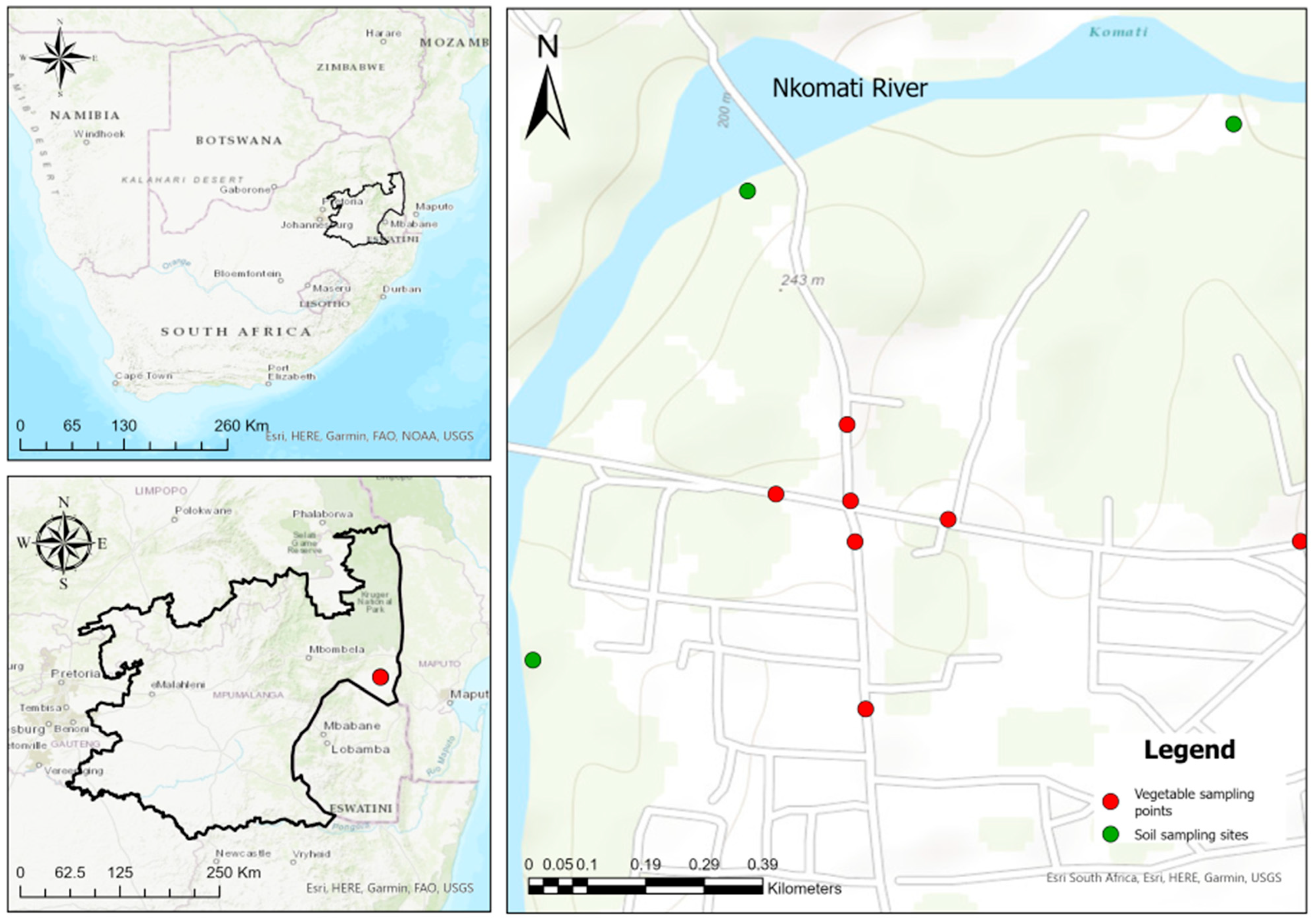
Samples were collected from Tonga (25.7097′ S, 31.7195′ E), Nkomazi Local Municipality in the Mpumalanga province of South Africa (Figure 1). This municipality covers 4786.86 km2, which is approximately 17% of the land of the Ehlanzeni district (Nkomazi Local Municipality, 2020). This municipality has 43 villages, and Tonga is one of them (Nkomazi Local Municipality, 2020). Tonga was the site of interest because they use water from the wetlands to irrigate their leafy vegetables.
Tonga is a town in the Nkomazi Local Municipality, which is dominated mainly by Shangaan/Tsonga and SiSwati speaking ethnic groups due to its closeness to Mozambique and Eswatini [37]. Tonga’s population was 17,333 as of the 2011 census and is estimated to reach over 591,000 residents by 2022. In 2011, the census reported Tonga’s population as having a relatively high density of about 2300 people per square kilometer [38]. On average, summer temperatures can reach 35 °C or higher during heatwaves, whereas winter can be 10 °C. This area receives summer rainfall between 750 mm and 860 mm, while winters are generally dry.
Geologically, Tonga is based on the Kaapvaal Craton, identified by granite, gneiss, and basalt, impacting the region’s soil quality. This combination of geological features and soil types (clay, sandy, and alluvial soils) supports agricultural activities, especially sugarcane farming. Alluvial soil is naturally found along the riverbanks, which supports most agricultural production [39]. The main biome within Tonga is the savanna, which forms one-third of South Africa. It is characterised by an upper covering of shrubs, scattered trees, and a ground covering of grasses [40].

2.2. Collection of Vegetables and Soils

Edible leafy vegetables (i.e., lettuce, cabbage, rape, pumpkin leaves, spinach, n = 10–40 leaves per vegetable type) were randomly purchased from different traders within Tonga in September 2023. Immediately after each purchase, each leafy bundle (n = 10) was placed individually in a labelled Ziplock bag and transported to the laboratory. Prior to purchasing the vegetables, the traders were asked where they got the vegetables from; furthermore, visitation of the cultivation areas/gardens was conducted to confirm the source of irrigation water, which was from the nearby river system (i.e., Nkomati). These edible leafy vegetables were not deposited in the herbarium, they are common local vegetables within the study area. Integrated soil samples (n = 2500 g) from different sites were collected using a plastic hand shovel and placed into 164 polyethylene Ziplock bags.

2.3. Vegetable and Soil Sample Preparation

In the laboratory, the vegetables were washed with distilled water to remove any soil particles. Each vegetable leaf type was then oven-dried at 60 °C for 72 h. After drying, soil samples were ground using a porcelain pestle and mortar and sieved through a 63 μm sieve to remove any plant material. The dried vegetables were ground into a fine powder and homogenised using a kitchen blender (Summit® Pro Bar Blend series BBS1200, Hamilton Beach Brands Inc., Glen Allan, VA, USA) and 20 g of powder of each vegetable was weighed and placed into an airtight Ziplock bag for the determination of metal concentrations: magnesium (Mg), calcium (Ca), sodium (Na), potassium (K), phosphorus (P), boron (B), aluminium (Al), silicon (Si), vanadium (V), chromium (Cr), manganese (Mn), iron (Fe), cobalt (Co), nickel (Ni), copper (Cu), zinc (Zn), arsenic (As), molybdenum (Mo), cadmium (Cd), tin (Sn), barium (Ba), strontium (Sr), and lead (Pb). To determine metal concentrations, 0.5 g of each powdered vegetable was weighed and transferred into a Teflon digestion vessel, where 7 mL of high-purity concentrated 65% nitric acid (HNO3) and 1 mL of high-purity concentrated 30% hydrogen peroxide (H2O2) were added. Subsequently, the vessels were capped, fitted into rotor segments, and inserted into the microwave digestion system, where the samples were radiated for 20 min. Upon cooling, the solution was transferred into a 50 mL volumetric flask before analysis using an Inductively Coupled Plasma Mass–Spectrophotometer (ICP–MS) instrument with an Elan 9000 (Perkin Elmer, Waltham, MA, USA) and Agilent 7500a (Agilent, Santa Clara, CA, USA) [6]. All sample analyses were conducted at the Central Analytical Facility, Stellenbosch University, South Africa. The accuracy % of the internal quality control ranged from 89.4% to 113.6%, with the tomato leaf certified reference material having a recovery % on certified reference of 86.2% to 114.4%.

2.4. Data Analysis

2.4.1. Statistical Analysis

The data were first tested for normality (i.e., using Shapiro–Wilk test) and 203 homogeneity of variances (i.e., Levene’s test) and were found to meet all assumptions of parametric analysis. A one–way analysis of variance (ANOVA) was used to determine the differences in metal concentrations among vegetable types (i.e., lettuce, cabbage, rape, pumpkin leaves, spinach) using SPSS version 25. A principal component analysis (PCA) with the varimax rotation method was used to determine the natural and/or anthropogenic sources of sediment metals among vegetable types, was used for metal source identification in PC–ORD version 5.10.

2.4.2. Bio-Concentration Factor of Metals

Bio-concentration factor (BCF) of metals translocated from the soils to vegetables was measured by calculating the ratio of the concentration of each metal in vegetable leaves and the concentration of the corresponding metal in the respective soil where these vegetables were grown [41]. A BCF value of less than 1 means minimal translocation of metals from the soils to vegetables, and a value greater than 1 means a high translocation of metals from soils to vegetables.

2.4.3. Daily Intake of Metals

The daily intake of metals (DIM) is the potential risk associated with the ingestion of heavy metals via the consumption of vegetables [42] and was calculated using the following equation:
D I M = C m e t a l × C f a c t o r × D f o o d   i n t a k e B a v e r a g e   w e i g h t
where, Cmetal represents the metal concentrations in vegetables (mg/kg−1), Cfactor is a conversion factor which is estimated at 0.085 [42], the human average body weight (Baverage weight) in South Africa is 60.7 kg [43], and the intake of vegetables (Dfood intake) for South Africans is estimated at 200 g per person per day [44,45].

2.4.4. Health Risk Index

The risk to human health (HRI) by intake of metal through the consumption of vegetables in the study area was calculated using an equation described by the following equation [6]:
H R I = D I M / R f D
where DIM is the daily exposure to metals and RfD is the reference oral dose. The RfD values used in this study for boron (B), aluminium (Al), silicon (Si), vanadium (V), chromium (Cr), manganese (Mn), iron (Fe), cobalt (Co), nickel (Ni), copper (Cu), zinc (Zn), arsenic (As), molybdenum (Mo), cadmium (Cd), tin (Sn), barium (Ba), and lead (Pb) are 0.2, 1, 0.005, 0.007, 1.5, 0.033, 0,7, 0.02, 0,02, 0,4, 0.003, 0.005, 0.6, 0.004, 0.2, 0.004, respectively [2,46,47]. If the ratio is lower than 1, then vegetables are not likely to induce any health hazard to humans, and if the HRI value is equal to or higher than 1, it is considered to be not safe for humans, as a potential health risk may occur [48].

2.4.5. Target Hazard Quotient

The target hazard quotient (THQ) assesses the non-cancerous risks due to heavy metal intake through regular intake of contaminated vegetables [36]. The health risk hazard is enhanced with increased THQ and was calculated using the following equation:
T H Q = E D I RfD
where EDI refers to estimated daily intake of heavy metals (mg/person/day), and RfD is oral reference dose. THQ values of less than 1 mean no non-carcinogenic risks, and values greater than 1 indicate there is potential for a substantial health risk hazard.

3. Results

3.1. Soil and Vegetable Trace and Heavy Metal Dynamics

3.1.1. Soil Trace Metal Concentrations

The mean concentrations of trace metals in the soil were generally high for Si, K, Na, Ca, and Mg. In contrast, lower concentrations were observed for P, V, and B (Table 1). Similarly, for heavy metals in the soil, elevated levels were recorded for Al and Fe, while much lower concentrations were measured for Cu, Ni, Pb, Co, As, Cd, and Hg (Table 1).

3.1.2. Trace Metal Concentrations in Vegetables

Cabbage exhibited notably high Ca, K, Na, Mg, and P concentrations, while low concentrations were observed for Si, B, and V (Table 1). Rape showed elevated concentrations of Ca, K, Na, Mg, and P, whereas low concentrations were recorded for Si, B, and V, indicating a similar trend as observed in cabbage (Table 1). On average, trace metal concentrations in lettuce were high in K, Ca, Na, P, and Mg, with distinctly lower concentrations of Si, B, and V (Table 1). Concentrations of K, Ca, P, and Mg characterised pumpkin leaves. However, the concentrations of Na, Si, B, and V were generally lower in pumpkin leaves. Spinach leaves exhibited high Na, K, Mg, Ca, and P concentrations, coupled with low concentrations of Si, B, and V (Table 1). An Analysis of Variance (ANOVA) revealed significant differences (p < 0.05) in the concentrations of Na, Mg, P, K, and Ca (Table 2).

3.1.3. Heavy Metal Concentrations in Vegetables

For heavy metals, cabbage exhibited high concentrations of Fe, Si, Al and Sr, with low concentrations being observed for metals such as Ba, Cr, Ni, Mo, Sn, Pb, Cd, As, and Hg (Table 1). In rape, heavy metal concentrations were high in Sr, Fe, and Al, while low concentrations were recorded for Ni, Mo, Sn, and Co (Table 1). Heavy metals such as As, Cd, Pb, As, and Hg were below the 0.1 mg kg−1 permissible level (Table 1). Lettuce had high heavy metal concentrations of Al and Fe, with lower levels in Co, Sn, Mo, Pb, As, Cd, and Hg (Table 1). The mean concentration of heavy metals in pumpkin leaves was generally high for Al and Fe, with low concentrations recorded for Co, Mo, Sn, Pb, As, Cd, and Hg (Table 1). Spinach leaves were characterised by high levels of Al and Fe, with low concentrations of Co, Sn, Mo, Pb, As, Cd, and Hg (Table 1). Analysis of variance for various metals in leafy edible vegetables indicated that Al, Fe, Cu, Zn, As, Sr, Mo, and Cd showed significant differences (p < 0.005) among vegetable groups (Table 2), indicating variability in heavy metal accumulation across the studied vegetables (Table 2).

3.2. Variation and Relationships of Metals in Vegetables

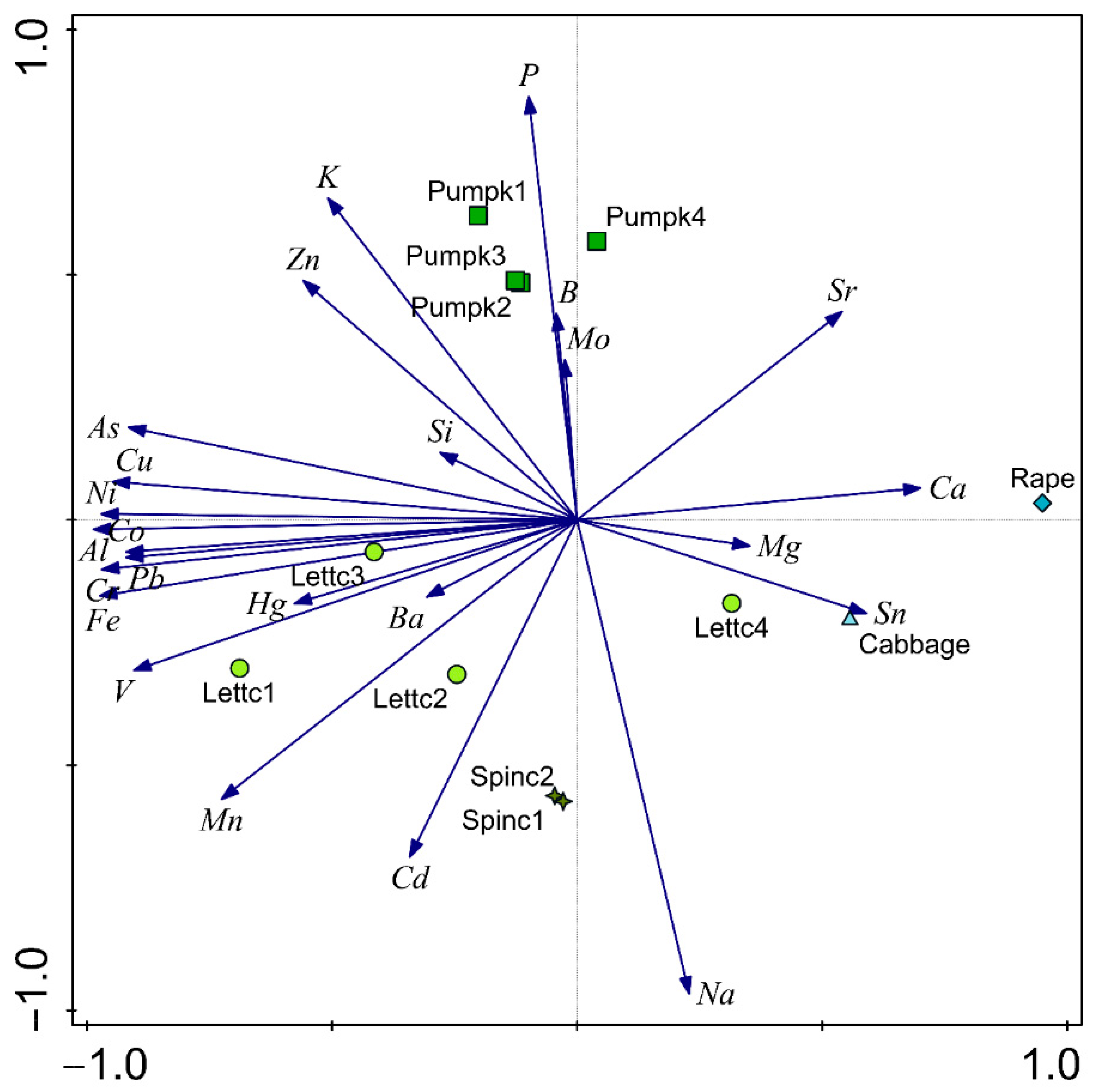
Our data revealed considerable variation and relationships across different species, reflecting differences in their uptake and accumulation capacities (Figure 2). Principal component analysis (PCA) results (Table 3) revealed that axis 1 accounted for 42.5% of the total variance. This axis showed high and moderate positive relations for Sr, Ca, Mg, and Sn and high negative relations for V, Al, Cr, Mn, Fe, Co, Ni, Cu, As, Hg, and Pb (Figure 2; Table 3). Axis 2 explained 18.1% of the total variance with positive and significant loadings for P, K, B, and Zn and high negative relations for Na and Sn (Table 3). The PCA biplot indicated two distinct metal components, showing the clustering of heavy and trace metals. Metals including As, Cu, Ni, Co, Al, Pb, Ca, Fe, Pb, and Fe clustered with Lettc3. Further, the plot indicates that V had a strong relationship with Lettc1, Mn with Lettc2, and Cd with Spinc2 and Spinc1. A negative relationship between Ba and other metals was observed, where increasing concentrations of other metals corresponded to a decrease in Ba. In terms of P, it clustered with all four pumpkin leaves. The results suggest that concentrations of B and Mo in pumpkins could be lowered with increasing P, and K and Zn could lower Si in pumpkins. The Ca had a strong association with rape, and Sn with cabbage. It is clear to note that Sn in cabbage and lettuce will be lowered with an increase in Na.

3.3. Health Indices

3.3.1. Bio-Concentration Factors

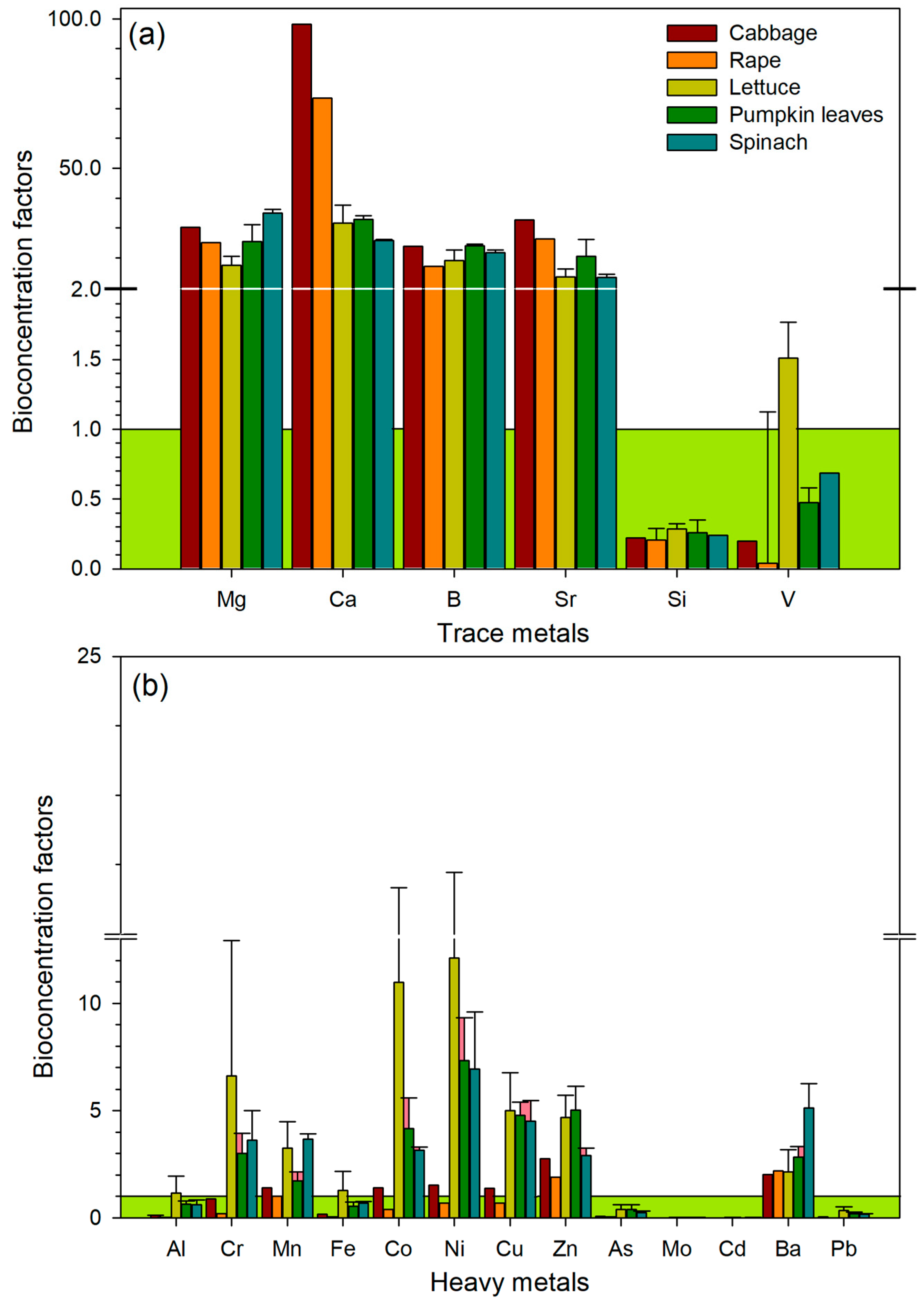
The BCF of trace metals exhibited the following trend: Ca > Sr > Mg > B > Si > V for trace metals (Figure 3a). Generally, the study indicated that all vegetables showed accumulation of trace metals, except Si and V, which showed low accumulation. However, the BCF values for V were accumulated in lettuce (Figure 3a). The BCF of heavy metals showed maximum translocations of Cr, Co, Mn, Ni, and Ba in lettuce, spinach, and pumpkin leaves. There was a maximum translocation of B in spinach and Cu in cabbage. Minimum translocations were observed in As, Mo, Cd, Pb, and Al from the soil to all leafy vegetables. (Figure 3b).

3.3.2. Daily Intake of Metals (DIM)

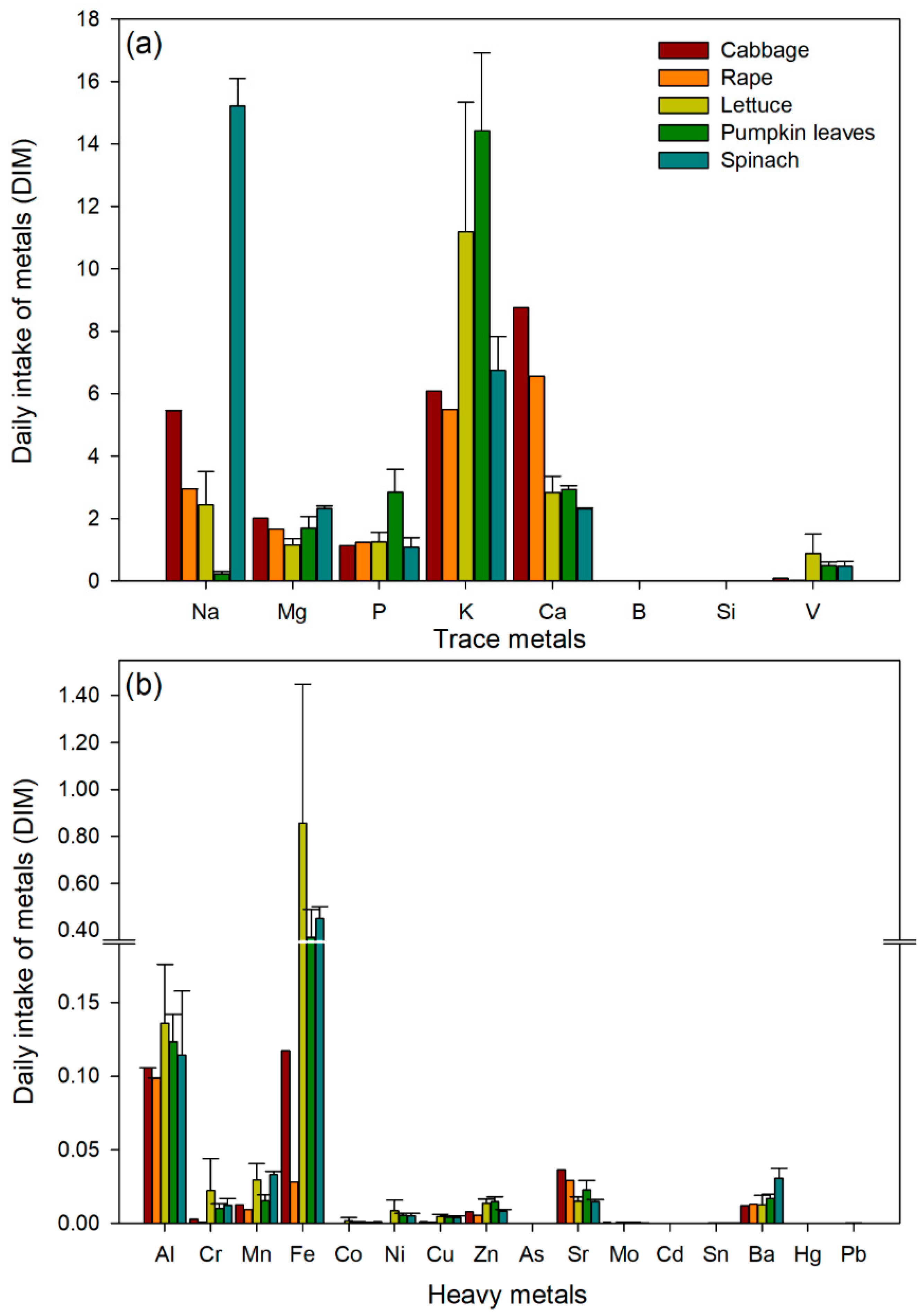
The daily intake of metals by humans when consuming leafy edible vegetables within the study area was compared to the RfD limits set by USEPA. A high intake of K was observed from the consumption of pumpkin leaves and lettuce and Na from the consumption of spinach. In the case of heavy metals, the highest intake of Fe was from lettuce, pumpkin leaves, and spinach (Figure 4). Our study showed that Fe exceeded the oral dose described by USEPA guidelines.

3.3.3. Human Health Risk Index (HRI)

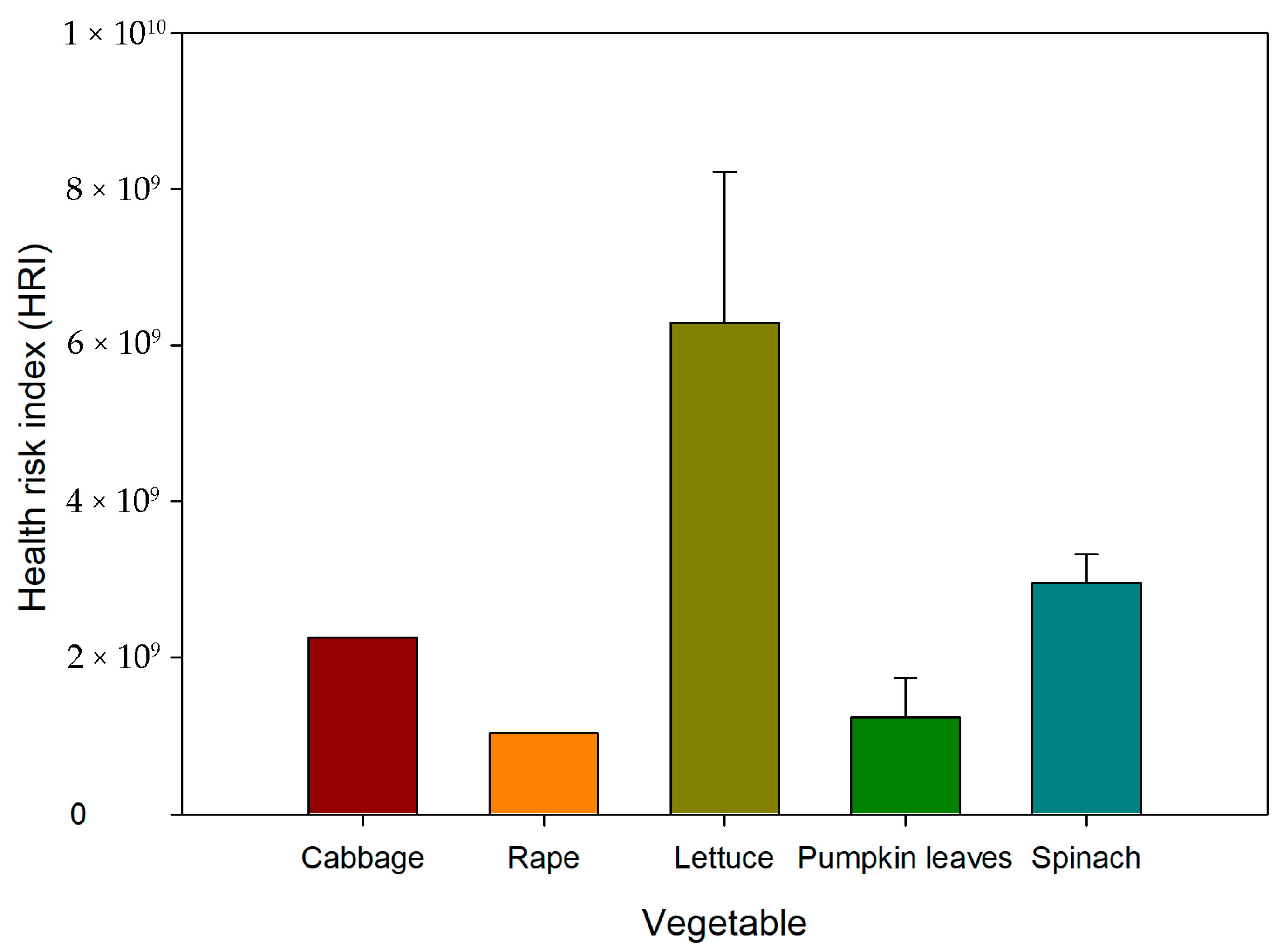
The HRI values for all vegetables were very high and in the following pattern: lettuce > spinach > cabbage > pumpkin leaves > rape (Figure 5). The study indicated all HRIs for all edible leafy vegetables were greater than 1, which indicated all vegetables accumulated metals that pose significant harm to humans.

3.3.4. Target Hazard Quotient (THQ)

The THQ values for all trace metals (B, Si, and V) were greater than 1 for all vegetables. For heavy metals (Al, Cr, Mn, Fe, Ni, Zn, Cd, and Pb), THQ values were greater than 1 for all vegetables, whereas for Cu, As, Mo, Sn, and Ba in all edible leafy vegetables, the THQ values were less than 1; however, Ba was greater than 1 in spinach, with Co being less than 1 in rape and high in other vegetables (Table 4).

4. Discussion

The present study revealed varying concentrations of metals, with high concentrations of Na, Mg, K, and Ca recorded in soils. On the other hand, we found lower concentrations in P, V, and B. Variation in metal concentrations might be due to the natural processes and anthropogenic activities within the soils as [49], environmental changes affect the soil concentrations. These results align with a previous study that reported high concentrations of Na, K, Ca, and Mg in soils from fields where cabbage was cultivated [50].
Among the identified metals, Si had a high concentration in the soil, which might be a reason that Si has a limited uptake ability by plants and remains in the soil [51]. Silicon is found naturally in the soil [52] but is not beneficial for plant growth. However, it plays a major role in diseases and pest defense in the soil [53]. Potassium had a high mean concentration from the study area’s soils. Soils in the study area indicated that K uptake was more than other metals, such as Na, Ca and Mg. This has been confirmed by the findings from [54] that absorption of K can be 10 times greater than that of Na. Potassium availability in the soil is dependent on the pH of the soil and wastewaters [54].
For heavy metals, the high mean concentrations were found in Al and Fe only, and other metals such as Cr, Cu, Co, Ni, As, and Zn had low concentrations. Similar results were observed in agricultural fields where Fe [10] and Al had high concentrations [55]. On the contrary, high concentrations of Cr, Zn, Ni and Cu were observed in agricultural soils where different vegetables were grown [35]. These differences might be due to the activities, such as mining, fumes released from cars and even littering near the cultivation land. Our study reported higher concentrations of trace metals than the heavy metals in the soil, thus suggesting that the accumulation of these trace metals in the soil is an indication of the impact of fertilisers from agricultural activities, human activities and climate change.
Cabbage and rape leaves in the study area had high concentrations of Ca, K, Na, Mg, and P. These concentrations were consistent with the results reported by [56], where high concentrations of Ca, K, and P were observed and a high concentration of Na was also observed in cabbage [50]. Moreover, according to [56], cabbage had Si (2.1 mg kg−1), which was reported not to be a Si accumulator; however, our study reported that cabbage had accumulated about 377.2 mg kg−1 of Si. Potassium levels were higher in lettuce and pumpkin, as well as in all leafy vegetables, compared to Ca [57]. The current study found high Na accumulation in spinach, which was low in the leafy vegetables tested by Punchay et al. in Thailand. Overall, Mg was higher than B, Si, and Vi in all leafy vegetables, which is consistent with a study by [57].
Even if Mg is important for bone structure, metabolism, and as a powerful antioxidant, a high level of Mg can be harmful and affect the nervous system, which, in turn, may cause insomnia, depression, or illusions and, eventually, progressive alterations in gait and balance and tremors and Parkinson-like symptoms [58].
This study indicates that mean concentrations of Al and Fe were high in all heavy metals in all the vegetables. Similar results were reported by Gebeyehu and Bayissa [59] and Guadie et al. [60], where they observed leafy vegetables having a higher concentration of Fe than Cr, Cu, and Pb. Furthermore, lettuce was the highest accumulator of Fe compared to other vegetables. Contrarily, it was observed that cabbage was the highest accumulator of Fe [60]. Aluminium had higher mean concentrations in lettuce and spinach, Ghasemidehkordi et al. observed where spinach accumulated high concentrations of Al as compared to other investigated leafy vegetables [61].
The PCA axes 1 and 2 contributed 42.5% and 18.1% of the total variance, respectively, and showed high and moderate positive relations for Sr, Ca, Mg, Sn, and Zn. Zn had positive loadings, and most of the trace metals showed positive loadings. The current study reported that Cu, Cd, Pb, and Zn have a strong relationship with lettuce. This trend was also reported by Manzoor et al., who found that Cu, Cd, Pb, and Zn are strongly associated with lettuce [62].
The current study indicated that trace metals (Mg, Ca, B, Sr, and V in lettuce) had maximum translocation from the soil into all leafy vegetables, which indicated that their BCF values were greater than 1. Si and V had a minimal translocation from the soil to the leafy vegetables. Contrary to the study of Polechońska et al. [63], trace metals had a lower BCF, meaning that these metals had a passive translocation from the soil into the leafy vegetables. The maximum translocation of metals suggests that the tested vegetables may be useful in the phytoextraction of Mg, Ca, B, Sr, and V. The results of this study show that BCF values vary, and they have been shown to be species–dependent. The BCF values indicate whether the plant is an accumulator or an excluder [64]. Regarding heavy metals, the BCF showed maximum translocations of Cr, Co, Mn, Ni, and Ba in lettuce, spinach, and pumpkin leaves. There was a maximum translocation of B in spinach and Cu in cabbage. Minimum translocations were observed in As, Mo, Cd, Pb, and Al from the soil to all leafy vegetables. Similarly, Latif et al. [65] reported that Cd was passively translocated from the soil into pumpkin leaves, and contrarily, a high BCF for Cr was observed in spinach, however, Fontes et al. [66] observed Cd was highly translocated from the soil into lettuce. The translocation of metals from soils into the plant tissues depends on the soil properties, the vegetable’s ability to absorb metals and nutrient management [67]. Therefore, it is important to consider these factors when choosing vegetables for consumption, as the risk of human exposure to metal contamination can be considerably decreased. This study indicates that the tested leafy vegetables are accumulators of metals.
Daily intake of metals (DIM) is used to determine the exposure of metals being consumed by human beings [35]. There are possible human exposure routes, such as the food chain, skin contact, and inhalation, but oral intake is considered to be the main route for exposure in the food chain [68]. Our study indicated that through consuming pumpkin leaves or spinach around the study area, there is a chance of consuming high amounts of K and Na, respectively.
The study indicated that HRI for all edible leafy vegetables was greater than 1, which indicated all vegetables accumulated metals which pose significant harm to humans [69]. The high HRI values show the possibility of high BCF values of heavy metals being transferred from the soil to the vegetables [70]. The results suggest that the population is highly exposed to high health risks from the metals.
The target hazard quotient method was used to measure the potential human health risk posed by metals through the consumption of vegetables [71]. The THQ values for all trace metals (B, Si and V) were greater than 1 for all vegetables. For heavy metals (Al, Cr, Mn, Fe, Ni, Zn, Cd, and Pb), THQ values were greater than 1 for all vegetables, whereas for Cu, As, Mo, Sn, and Ba in all edible leafy vegetables, the THQ values were less than 1; however, Ba was greater than 1 in spinach, with Co being less than 1 in rape and high in other vegetables. The current study is in agreement with results reported by Sharma et al. [72], where spinach was found to be more hazardous due to high THQ values greater than 1 of Cd, Co, Fe and Pb. Irrespective of the hazardous effects of these heavy metals, they have some important roles in human bodies; Co is found in vitamin B12 with various physiological functions [73]. Sharma et al. [72] further reported that these heavy metals have health hazards. They target some specific organs: Cd targets kidneys, Co targets the endocrine gland, and Cu and Fe target the gastrointestinal tract due to their high THQ values. If THQ values of less than 1 mean no non-carcinogenic risks and those greater than 1 indicate there is a considered potential of substantial health risk hazard [36], then, in the current study, we observed that these leafy vegetables pose a significant hazard to human beings due to high THQ values.

5. Conclusions

The study concludes that different vegetables accumulated different metals at different concentration levels. Furthermore, the study indicates potential health risks associated with consuming vegetables from the current study area due to the high accumulation of metals. There is a high translocation of metals from the soil into the vegetables. In addition, the results of the health risk assessment revealed that the HRI and THQ values through consumption of vegetables were >1, revealing that the people consuming these vegetables might suffer a higher non-carcinogenic risk. Thus, an extensive investigation on heavy metals in this area should be a priority since metal concentrations exceeded the limits guided by the WHO/FAO.

Author Contributions

Conceptualisation, E.K., C.M. and T.D.; methodology, E.K. and T.D.; validation, E.K., C.M. and T.D.; formal analysis, E.K.; investigation, E.K. and T.D.; resources, E.K. and T.D.; data curation, E.K.; writing—original draft preparation, E.K., C.M. and T.D.; writing—review and editing, E.K., L.F.M., C.M., S.M., F.D., N.W. and T.D.; visualisation, T.D.; supervision, C.M. and T.D.; project administration, T.D.; funding acquisition, E.K. and T.D. All authors have read and agreed to the published version of the manuscript.

Funding

This research was funded by the National Research Foundation, South Africa, grant number TTK240409213108 (TD), the National Natural Science Foundation of China (No. 52279068) (NW), the University of Venda Niche Grant (FSEA/21/GGES/02), and the University of Mpumalanga Institutional Research Themes grants (MEK, TD).

Institutional Review Board Statement

Not applicable.

Informed Consent Statement

Not applicable.

Data Availability Statement

All data has been presented in the manuscript.

Acknowledgments

We gratefully acknowledge Aquatics Research System Group members who assisted in the field.

Conflicts of Interest

The authors declare that they have no known competing financial interests or personal relationships that could have appeared to influence the work reported in this paper.

References

  1. Zakir, H.; Quadir, Q.; Mollah, M. Human Health Risk Assessment of Heavy Metals through the Consumption of Common Foodstuffs Collected from Two Divisional Cities of Bangladesh. Expo. Health 2021, 13, 253–268. [Google Scholar] [CrossRef]
  2. Feseha, A.; Chaubey, A.; Abraha, A. Heavy Metal Concentration in Vegetables and Their Potential Risk for Human Health. Health Risk Anal. 2021, 1, 68–81. [Google Scholar] [CrossRef]
  3. Akan, J.C. Human Health Assessment of Heavy Metals through Consumption of Vegetables from Some Agricultural Locations in Borno State, North East Nigeria. J. Chem. Lett. 2021, 2, 120–127. [Google Scholar] [CrossRef]
  4. Dalu, T.; Mwedzi, T.; Wasserman, R.J.; Madzivanzira, T.C.; Nhiwatiwa, T.; Cuthbert, R.N. Land Use Effects on Water Quality, Habitat, and Macroinvertebrate and Diatom Communities in African Highland Streams. Sci. Total Environ. 2022, 846, 157346. [Google Scholar] [CrossRef]
  5. Khatun, J.; Intekhab, A.; Dhak, D. Effect of Uncontrolled Fertilization and Heavy Metal Toxicity Associated with Arsenic(as), Lead (Pb) and Cadmium (Cd), and Possible Remediation. Toxicology 2022, 477, 153274. [Google Scholar] [CrossRef]
  6. Fatai, M.I.; Ibrahim, M.A.; Ibrahim, M.; Umoren, O.D.; Saheed, M.B.; Ndriza, J.B.; Okoriko, E.M. The Concentration and Health Risk Assessment of Selected Heavy Metals (HMs) in African spinach (Amaranthus hybridus) and Tomato (Solanum lycopersicum) Grown around Ashaka Community, Gombe State, Nigeria. J. Chem. Nutr. Biochem. 2024, 5, 16–26. [Google Scholar] [CrossRef]
  7. Akhtar, N.; Syakir Ishak, M.I.; Bhawani, S.A.; Umar, K. Various Natural and Anthropogenic Factors Responsible for Water Quality Degradation: A Review. Water 2021, 13, 2660. [Google Scholar] [CrossRef]
  8. Rashid, A.; Schutte, B.J.; Ulery, A.; Deyholos, M.K.; Sanogo, S.; Lehnhoff, E.A.; Beck, L. Heavy Metal Contamination in Agricultural Soil: Environmental Pollutants Affecting Crop Health. Agronomy 2023, 13, 1521. [Google Scholar] [CrossRef]
  9. Sarkar, S.; Jaswal, A.; Singh, A. Chapter 7—Sources of Inorganic Nonmetallic Contaminants (Synthetic Fertilizers, Pesticides) in Agricultural Soil and Their Impacts on the Adjacent Ecosystems. In Bioremediation of Emerging Contaminants from Soils; Kumar, P., Srivastav, A.L., Chaudhary, V., van Hullebusch, E.D., Busquets, R., Eds.; Elsevier: Amsterdam, The Netherlands, 2024; pp. 135–161. [Google Scholar]
  10. Affum, A.O.; Osae, S.D.; Kwaansa-Ansah, E.E.; Miyittah, M.K. Quality Assessment and Potential Health Risk of Heavy Metals in Leafy and Non-Leafy Vegetables Irrigated with Groundwater and Municipal-Waste-Dominated Stream in the Western Region, Ghana. Heliyon 2020, 6, e05829. [Google Scholar] [CrossRef]
  11. Uddin, M.M.; Zakeel, M.C.M.; Zavahir, J.S.; Marikar, F.M.M.T.; Jahan, I. Heavy Metal Accumulation in Rice and Aquatic Plants Used as Human Food: A General Review. Toxics 2021, 9, 360. [Google Scholar] [CrossRef]
  12. Najmi, A.; Albratty, M.; Al-Rajab, A.J.; Alhazmi, H.A.; Javed, S.A.; Ahsan, W.; Rehman, Z.u.; Hassani, R.; Alqahtani, S.S. Heavy Metal Contamination in Leafy Vegetables Grown in Jazan Region of Saudi Arabia: Assessment of Possible Human Health Hazards. Int. J. Environ. Res. Public Health 2023, 20, 2984. [Google Scholar] [CrossRef] [PubMed]
  13. Witkowska, D.; Słowik, J.; Chilicka, K. Heavy Metals and Human Health: Possible Exposure Pathways and the Competition for Protein Binding Sites. Molecules 2021, 26, 6060. [Google Scholar] [CrossRef] [PubMed]
  14. Jomova, K.; Makova, M.; Alomar, S.Y.; Alwasel, S.H.; Nepovimova, E.; Kuca, K.; Rhodes, C.J.; Valko, M. Essential Metals in Health and Disease. Chem.-Biol. Interact. 2022, 367, 110173. [Google Scholar] [CrossRef] [PubMed]
  15. Khaliq, M.A.; Javed, M.T.; Hussain, S.; Imran, M.; Mubeen, M.; Nasim, W.; Fahad, S.; Karuppannan, S.; Al-Taisan, W.a.A.; Almohamad, H.; et al. Assessment of Heavy Metal Accumulation and Health Risks in Okra (Abelmoschus esculentus L.) and spinach (Spinacia oleracea L.) Fertigated with Wastwater. Int. J. Food Contam. 2022, 9, 11. [Google Scholar] [CrossRef]
  16. Olayiwola, V.A.; Mesele, S.A.; Ajayi, E.O. Towards a Clean Environment: To What Extent Can Trees Serve as Phytoremediators for Chemically Polluted Soils? Environ. Chall. 2023, 13, 100764. [Google Scholar] [CrossRef]
  17. Umoren, O.D.; Akinbola, S.A.; Abimbolu, A.K.; Omonijo, J.M.; Benjamin, N.F.; Adetula, E.E.; Donatus, U.D.; Oke, M.B. Occupational and Human Health Risks of Exposure to Potentially Toxic Elements (Ptes) in Top Soils from Steel Fabrication Workshops. J. Trace Elem. Miner. 2024, 9, 100172. [Google Scholar] [CrossRef]
  18. Collin, M.S.; Venkatraman, S.K.; Vijayakumar, N.; Kanimozhi, V.; Arbaaz, S.M.; Stacey, R.G.S.; Anusha, J.; Choudhary, R.; Lvov, V.; Tovar, G.I.; et al. Bioaccumulation of Lead (Pb) and Its Effects on Human: A Review. J. Hazard. Mater. Adv. 2022, 7, 100094. [Google Scholar] [CrossRef]
  19. Nasab, H.; Rajabi, S.; Eghbalian, M.; Malakootian, M.; Hashemi, M.; Mahmoudi-Moghaddam, H. Association of as, Pb, Cr, and Zn Urinary Heavy Metals Levels with Predictive Indicators of Cardiovascular Disease and Obesity in Children and Adolescents. Chemosphere 2022, 294, 133664. [Google Scholar] [CrossRef] [PubMed]
  20. Palma-Lara, I.; Martínez-Castillo, M.; Quintana-Pérez, J.C.; Arellano-Mendoza, M.G.; Tamay-Cach, F.; Valenzuela-Limón, O.L.; García-Montalvo, E.A.; Hernández-Zavala, A. Arsenic Exposure: A Public Health Problem Leading to Several Cancers. Regul. Toxicol. Pharmacol. 2020, 110, 104539. [Google Scholar] [CrossRef] [PubMed]
  21. Kumar, A.; Ali, M.; Kumar, R.; Kumar, M.; Sagar, P.; Pandey, R.K.; Akhouri, V.; Kumar, V.; Anand, G.; Niraj, P.K.; et al. Arsenic Exposure in Indo Gangetic Plains of Bihar Causing Increased Cancer Risk. Sci. Rep. 2021, 11, 2376. [Google Scholar] [CrossRef] [PubMed]
  22. Kaur, I.; Behl, T.; Aleya, L.; Rahman, M.H.; Kumar, A.; Arora, S.; Akter, R. Role of Metallic Pollutants in Neurodegeneration: Effects of Aluminum, Lead, Mercury, and Arsenic in Mediating Brain Impairment Events and Autism Spectrum Disorder. Environ. Sci. Pollut. Res. 2021, 28, 8989–9001. [Google Scholar] [CrossRef] [PubMed]
  23. Nabi, M.; Tabassum, N. Role of Environmental Toxicants on Neurodegenerative Disorders. Front. Toxicol. 2022, 4, 837579. [Google Scholar] [CrossRef]
  24. Darko, G.; Obiri-Yeboah, S.; Takyi, S.A.; Amponsah, O.; Borquaye, L.S.; Amponsah, L.O.; Fosu-Mensah, B.Y. Urbanizing with or without Nature: Pollution Effects of Human Activities on Water Quality of Major Rivers That Drain the Kumasi Metropolis of Ghana. Environ. Monit. Assess. 2021, 194, 38. [Google Scholar] [CrossRef]
  25. Chen, S.S.; Kimirei, I.A.; Yu, C.; Shen, Q.; Gao, Q. Assessment of Urban River Water Pollution with Urbanization in East Africa. Environ. Sci. Pollut. Res. 2022, 29, 40812–40825. [Google Scholar] [CrossRef]
  26. Swain, C.K. Environmental Pollution Indices: A Review on Concentration of Heavy Metals in Air, Water, and Soil near Industrialization and Urbanisation. Discov. Environ. 2024, 2, 5. [Google Scholar] [CrossRef]
  27. Kookana, R.S.; Drechsel, P.; Jamwal, P.; Vanderzalm, J. Urbanisation and Emerging Economies: Issues and Potential Solutions for Water and Food Security. Sci. Total Environ. 2020, 732, 139057. [Google Scholar] [CrossRef]
  28. Carrilho, J.; Trindade, J. Sustainability in Peri-Urban Informal Settlements: A Review. Sustainability 2022, 14, 7591. [Google Scholar] [CrossRef]
  29. Xiong, Y.; Mo, S.; Wu, H.; Qu, X.; Liu, Y.; Zhou, L. Influence of Human Activities and Climate Change on Wetland Landscape Pattern—A Review. Sci. Total Environ. 2023, 879, 163112. [Google Scholar] [CrossRef]
  30. Qadir, M.; Wichelns, D.; Raschid-Sally, L.; McCornick, P.G.; Drechsel, P.; Bahri, A.; Minhas, P.S. The Challenges of Wastewater Irrigation in Developing Countries. Agric. Water Manag. 2010, 97, 561–568. [Google Scholar] [CrossRef]
  31. Gashaye, D. Wastewater-Irrigated Urban Vegetable Farming in Ethiopia: A Review on Their Potential Contamination and Health Effects. Cogent Food Agric. 2020, 6, 1772629. [Google Scholar] [CrossRef]
  32. Singh, N.; Kamboj, S.; Siwal, S.S.; Srivastav, A.L.; Naresh, R.K. Chapter 14—Toxic, Non-Toxic, and Essential Elements in Drinking Water: Sources and Associated Health Issues in Rural Asia. In Water Resources Management for Rural Development; Madhav, S., Srivastav, A.L., Chibueze Izah, S., van Hullebusch, E., Eds.; Elsevier: Amsterdam, The Netherlands, 2024; pp. 171–190. [Google Scholar]
  33. Tauqeer, H.M.; Turan, V.; Iqbal, M. Production of Safer Vegetables from Heavy Metals Contaminated Soils: The Current Situation, Concerns Associated with Human Health and Novel Management Strategies. In Advances in Bioremediation and Phytoremediation for Sustainable Soil Management: Principles, Monitoring and Remediation; Malik, J.A., Ed.; Springer: Berlin/Heidelberg, Germany, 2022; pp. 301–312. [Google Scholar]
  34. Moyo, B.; Matodzi, V.; Legodi, M.A.; Pakade, V.E.; Tavengwa, N.T. Determination of Cd, Mn and Ni Accumulated in Fruits, Vegetables and Soil in the Thohoyandou Town Area, South Africa. Water SA 2020, 46, 285–290. [Google Scholar]
  35. Ahmed, S.; Fatema Tuj, Z.; Mahdi, M.M.; Nurnabi, M.; Alam, M.Z.; Choudhury, T.R. Health Risk Assessment for Heavy Metal Accumulation in Leafy Vegetables Grown on Tannery Effluent Contaminated Soil. Toxicol. Rep. 2022, 9, 346–355. [Google Scholar] [CrossRef] [PubMed]
  36. Gupta, N.; Yadav, K.K.; Kumar, V.; Prasad, S.; Cabral-Pinto, M.M.S.; Jeon, B.-H.; Kumar, S.; Abdellattif, M.H.; Alsukaibia, A.K.D. Investigation of Heavy Metal Accumulation in Vegetables and Health Risk to Humans From Their Consumption. Front. Environ. Sci. 2022, 10, 791052. [Google Scholar] [CrossRef]
  37. Mkhonto, T.V. Women and Promotability in Rural South African Schools: Listening to the Voices of Female Teachers in Ehlanzeni District Municipality. Master’s Thesis, University of Pretoria, Pretoria, South Africa, 2018. [Google Scholar]
  38. Morakinyo, A.A. Application of Remotely Sensed Environmental Variables for Predicting Malaria Cases in Nkomazi Municipality South Africa. Master’s Thesis, University of Pretoria (South Africa), Pretoria, South Africa, 2016. [Google Scholar]
  39. Khoza, N. An Ethnobotanical Study of Indigenous Knowledge of the Medicinal Plants Used by Traditional Healers in the Rural Communities of Nkomazi Local Municipality, Mpumalanga Province. Master’s Thesis, University of the Witwatersrand Johannesburg, Johannesburg, South Africa, 2023. [Google Scholar]
  40. Mucina, L.; Rutherford, M.C.; Powrie, L.W. Logic of the Map: Approaches and Procedures. In The Vegetation of South Africa, Lesotho and Swaziland; South African National Biodiversity Institute (SANBI): Brummeria, Pretoria, 2006; Volume 19, pp. 12–29. [Google Scholar]
  41. Ngoc Ba, V.; Thien, B.N.; Phuong, H.T.; Thi Hong Loan, T.; Anh, T.T. Bioconcentration and Translocation of Elements from Soil to Vegetables and Associated Health Risk. J. Food Compos. Anal. 2024, 132, 106296. [Google Scholar] [CrossRef]
  42. Obiora, S.C.; Chukwu, A.; Davies, T.C. Heavy Metals and Health Risk Assessment of Arable Soils and Food Crops around Pb–Zn Mining Localities in Enyigba, Southeastern Nigeria. J. Afr. Earth Sci. 2016, 116, 182–189. [Google Scholar] [CrossRef]
  43. Walpole, S.C.; Prieto-Merino, D.; Edwards, P.; Cleland, J.; Stevens, G.; Roberts, I. The Weight of Nations: An Estimation of Adult Human Biomass. BMC Public Health 2012, 12, 1–6. [Google Scholar] [CrossRef] [PubMed]
  44. Nel, J.; Steyn, N.P. Report on South African Food Consumption Studies Undertaken Amongst Different Population Groups (1983–2000): Average Intakes of Foods Most Commonly Consumed; Directorate: South African Department of Health: Pretoria, South Africa, 2002. [Google Scholar]
  45. Shisana, O.; Labadarios, D.; Rehle, T.; Simbayi, L.; Zuma, K.; Dhansay, A.; Reddy, P.; Parker, W.; Hoosain, E.; Naidoo, P. The South African National Health and Nutrition Examination Survey, 2012: SANHANES-1: The Health and Nutritional Status of the Nation; HSRC Press: Cape Town, South Africa, 2014. [Google Scholar]
  46. Nkosi, S.b.M.; Msimango, N.M. Screening of Zinc, Copper and Iron in Lettuce and Chinese Cabbage Cultivated in Durban, South Africa, Towards Human Health Risk Assessment. S. Afr. J. Sci. 2022, 118, 1–5. [Google Scholar] [CrossRef]
  47. Chowdhury, A.I.; Shill, L.C.; Raihan, M.M.; Rashid, R.; Bhuiyan, M.N.H.; Reza, S.; Alam, M.R. Human Health Risk Assessment of Heavy Metals in Vegetables of Bangladesh. Sci. Rep. 2024, 14, 15616. [Google Scholar] [CrossRef] [PubMed]
  48. Chauhan, G.; Chauhan, U. Human Health Risk Assessment of Heavy Metals Via Dietary Intake of Vegetables Grown in Wastewater Irrigated Area of Rewa, India. Int. J. Sci. Res. Publ. 2014, 4, 1–9. [Google Scholar]
  49. Yahaya, Y.; Birnin-Yauri, U.; Bagudo, B.; Noma, S. Quantification of Macro and Micro Elements in Selected Green Vegetables and Their Soils from Aliero Agricultural Fields in Aliero, Kebbi State, Nigeria. J. Soil Sci. Environ. Manag. 2012, 3, 207–215. [Google Scholar] [CrossRef]
  50. Mohamed, W.F.; Hasan, H.M.A.; Mohammed, E.F. Detection the Contents of Minerals of (Sodium, Potassium and Calcium) and Some Metals of (Iron, Nickel and Copper) in Some Vegetable and Soil Samples Collected from Al-Marj Region, Libya. Int. J. Adv. Multidiscip. Res. Stud. 2023, 3, 304–309. [Google Scholar]
  51. Camargo, M.S.; Keeping, M.G. Silicon in Sugarcane: Availability in Soil, Fertilization, and Uptake. Silicon 2021, 13, 3691–3701. [Google Scholar] [CrossRef]
  52. Tayade, R.; Ghimire, A.; Khan, W.; Lay, L.; Attipoe, J.Q.; Kim, Y. Silicon as a Smart Fertilizer for Sustainability and Crop Improvement. Biomolecules 2022, 12, 1027. [Google Scholar] [CrossRef]
  53. Vashi, J.; Saravaiya, S.; Patel, A.; Chaudhari, B. Silicon—The Most under-Appreciated Element for Vegetables. Int. J. Chem. Stud. 2020, 8, 2122–2127. [Google Scholar] [CrossRef]
  54. Arienzo, M.; Christen, E.W.; Quayle, W.; Kumar, A. A Review of the Fate of Potassium in the Soil–Plant System after Land Application of Wastewaters. J. Hazard. Mater. 2009, 164, 415–422. [Google Scholar] [CrossRef]
  55. Ene, A.; Moraru, S.S.; Moraru, D.I.; Pantelica, A.; Gosav, S.; Ceoromila, A.M. Major and Trace Element Accumulation in Soils and Crops (Wheat, Corn, Sunflower) around Steel Industry in the Lower Danube Basin and Associated Ecological and Health Risks. Appl. Sci. 2024, 14, 5616. [Google Scholar] [CrossRef]
  56. Golubkina, N.; Antoshkina, M.; Bondareva, L.; Sekara, A.; Campagna, E.; Caruso, G. Effect of Foliar Application of Sodium Selenate on Mineral Relationships in Brassicaceae Crops. Horticulturae 2023, 9, 535. [Google Scholar] [CrossRef]
  57. Punchay, K.; Inta, A.; Tiansawat, P.; Balslev, H.; Wangpakapattanawong, P. Nutrient and Mineral Compositions of Wild Leafy Vegetables of the Karen and Lawa Communities in Thailand. Foods 2020, 9, 1748. [Google Scholar] [CrossRef] [PubMed]
  58. Buchman, A.M. Modern Nutrition in Health and Disease; Ross, C., Cousins, R., Tucker, K., Ziegler, T., Eds.; Lippimcott Williams & Williams: Baltimore, MD, USA, 2014; pp. 238–244. [Google Scholar]
  59. Gebeyehu, H.R.; Bayissa, L.D. Levels of heavy metals in soil and vegetables and associated health risks in Mojo area, Ethiopia. PLoS ONE 2020, 15, e0227883. [Google Scholar] [CrossRef]
  60. Guadie, A.; Yesigat, A.; Gatew, S.; Worku, A.; Liu, W.; Ajibade, F.O.; Wang, A. Evaluating the Health Risks of Heavy Metals from Vegetables Grown on Soil Irrigated with Untreated and Treated Wastewater in Arba Minch, Ethiopia. Sci. Total Environ. 2021, 761, 143302. [Google Scholar] [CrossRef] [PubMed]
  61. Ghasemidehkordi, B.; Nazem, H.; Malekirad, A.; Fazilati, M.; Salavati, H.; Rezaei, M. Human Health Risk Assessment of Aluminium Via Consumption of Contaminated Vegetables. Qual. Assur. Saf. Crops Foods 2018, 10, 115–123. [Google Scholar] [CrossRef]
  62. Manzoor, J.; Sharma, M.; Wani, K.A. Heavy metals in vegetables and their impact on the nutrient quality of vegetables: A review. J. Plant Nutr. 2018, 41, 1744. [Google Scholar] [CrossRef]
  63. Polechońska, L.; Szczęśniak, E.; Klink, A. Comparative Analysis of Trace and Macro-Element Bioaccumulation in Four Free-Floating Macrophytes in Area Contaminated by Copper Smelter. Int. J. Phytoremediat. 2022, 24, 324–333. [Google Scholar] [CrossRef] [PubMed]
  64. Eid, E.M.; Shaltout, K.H.; El-Sheikh, M.A.; Asaeda, T. Seasonal Courses of Nutrients and Heavy Metals in Water, Sediment and above-and Below-Ground Typha Domingensis Biomass in Lake Burullus (Egypt): Perspectives for Phytoremediation. Flora-Morphol. Distrib. Funct. Ecol. Plants 2012, 207, 783–794. [Google Scholar] [CrossRef]
  65. Latif, A.; Bilal, M.N.; Asghar, W.; Azeem, M. Heavy Metal Accumulation in Vegetables and Assessment of their Potential Health Risk. J. Environ. Anal. Chem. 2018, 5, 1. [Google Scholar] [CrossRef]
  66. Fontes, R.; Pereira, J.; Neves, J. Uptake and translocation of Cd and Zn in two lettuce cultivars. An. Acad. Bras. Cienc. 2014, 86, 907–922. [Google Scholar] [CrossRef]
  67. Qazi, G.; Bedi, K.; Johri, R.; Sharma, S.; Tikoo, M.; Tikoo, A.; Abdullah, S.; Singh, K.; Pandita, R.; Suri, O. Plant Based Agents as Bioavailability/Bioefficacy Enhancers for Drugs and Nutraceuticals. U.S. Patent 10/621,038, 24 June 2004. [Google Scholar]
  68. Begum, M.; Gani, M.; Alam, M. Transfer of Heavy Metals to Leafy Vegetables in Gazipur Textile Area. Bangladesh J. Sci. Ind. Res. 2021, 56, 155–164. [Google Scholar] [CrossRef]
  69. Andleeb, S.; Ur Rehman, K.; Mahmood, A.; Elsadek, M.F.; Ul Safa, N.; Hussein, D.S.; Essam El-Din, M.M. Human Health Risk Hazards by Heavy Metals through Consumption of Vegetables Cultivated by Wastewater. J. King Saud Univ.-Sci. 2023, 35, 102467. [Google Scholar] [CrossRef]
  70. Fonge, B.A.; Larissa, M.T.; Egbe, A.M.; Afanga, Y.A.; Fru, N.G.; Ngole-Jeme, V.M. An Assessment of Heavy Metal Exposure Risk Associated with Consumption of Cabbage and Carrot Grown in a Tropical Savannah Region. Sustain. Environ. 2021, 7, 1909860. [Google Scholar] [CrossRef]
  71. Sridhara Chary, N.; Kamala, C.T.; Samuel Suman Raj, D. Assessing Risk of Heavy Metals from Consuming Food Grown on Sewage Irrigated Soils and Food Chain Transfer. Ecotoxicol. Environ. Saf. 2008, 69, 513–524. [Google Scholar] [CrossRef] [PubMed]
  72. Sharma, A.; Katnoria, J.K.; Nagpal, A.K. Heavy metals in vegetables: Screening health risks involved in cultivation along wastewater drain and irrigating with wastewater. SpringerPlus 2016, 5, 488. [Google Scholar] [CrossRef] [PubMed]
  73. González-Montaña, J.R.; Escalera-Valente, F.; Alonso, A.J.; Lomillos, J.M.; Robles, R.; Alonso, M.E. Relationship Between Vitamin B12 and Cobalt Metabolism in Domestic Ruminant: An Update. Animals 2020, 10, 1855. [Google Scholar] [CrossRef] [PubMed]
Figure 1. Location of the study area in Tonga, Nkomazi Municipality, Mpumalanga Province of South Africa.
Ijerph 23 00188 g001
Figure 2. The principal component plot in rotated space for trace and heavy metals in the study area. Abbreviations for edible leafy vegetables: Spinc—spinach, Lettc—lettuce, Pumpk—pumpkin leaves.
Ijerph 23 00188 g002
Figure 3. The bio-concentration factors (BCF) of trace metals (a) and heavy metals (b) in leafy edible vegetables from Tonga, South Africa. Red shade—BCF value greater than 1, suggesting a high metal translocation from soil to the vegetables; green shade—BCF values of less than 1, meaning that there is minimal translocation of metals from the soils to vegetables.
Ijerph 23 00188 g003
Figure 4. The daily intake of trace metals (a) and heavy metals (b) values from consuming leafy edible vegetables.
Ijerph 23 00188 g004
Figure 5. The risk to human health (HRI) by intake of metal through the consumption of vegetables. Red shade—the HRI value is equal to or higher than 1; it is therefore considered to be not safe for humans, as a potential health risk may occur. Green shade—the HRI ratio is lower than 1; the vegetables are therefore not likely to induce any health hazard to humans.
Ijerph 23 00188 g005
Table 1. Concentration of metals (mean ± standard deviation) measured in soils (shaded in grey) and edible leafy vegetables from Tonga, South Africa.
MetalUnitSoil (n = 4)Cabbage (n = 1)Rape (n = 1)Lettuce (n = 4)Pumpkin (n = 4)Spinach (n = 2)
RangeMean ± SDRangeMean ± SDRangeMean ± SD
Namg/kg344.6 ± 29.619,505.210,514.34350.9–13,537.18698.9 ± 3863486.5–1106.1799 ± 282.152,152–56,542.954,347.5± 3104.8
Mgmg/kg678.4 ± 237.37186.85945.63279–4936.14146.8 ± 7144066.9–6952.76041.9 ± 1349.18122.4–8503.28312.8 ± 269.2
Pmg/kg57.4 ± 11.64031.34409.52922–5616447 ± 31,1267413–13,68910,182 ± 25983124–46723898 ± 1095
Kmg/kg641.5 ± 67.821,74619,60325,270–60,07739,940 ± 14,81139,447–60,35451,499 ± 887921,325–26,83524,080 ± 3896
Camg/kg318.7 ± 29.231,26823,4488253–11,90610,097 ± 187810,001–10,99410,476 ± 409.28130–83238227 ± 136.5
Bmg/kg1.4 ± 1.232.623.520.6–31.326.1 ± 4.732–33.732.8 ± 0.728.9–30.529.7 ± 1.1
Almg/kg2753 ± 1301328.693.3675.1–60923165 ± 22331187–20751774 ± 410.31263–2108.31685 ± 598
Simg/kg1706.5 ± 813.5377.2351.7279.5–602.2485.5 ± 142.4386.9–538.6439.3 ± 67.9298.3–518.4408.4 ± 155.6
Vmg/kg6.7 ± 2.91.30.31.8–19.310.1 ± 7.31.8–5.73.1 ± 1.74.1–54.6 ± 0.7
Crmg/kg12.1 ± 7.710.62.48.4–186.680.1 ± 76.121.1–47.936.3 ± 11.332–55.643.8 ± 16.6
Mnmg/kg32.3 ± 29.545.332.947.3–139.4104.9 ± 39.846.9–75.955.8 ± 13.4113.4–124.3118.8 ± 7.6
Femg/kg2379 ± 1292417.8100.1682–57643063 ± 2107930.4–19281321 ± 427.41491–17371614 ± 174.3
Comg/kg0.7 ± 0.40.90.30.7–17.27.2 ± 72–4.12.7 ± 0.92–2.12 ± 0.1
Nimg/kg2.6 ± 2.23.91.84.4–63.531.3 ± 25.213.4–25.818.9 ± 5.113–22.817.9 ± 6.9
Cumg/kg3.3 ± 1.44.52.37.9–20.416.3 ± 5.713.1–17.915.6 ± 1.912.4–16.914.7 ± 3.1
Znmg/kg10.4 ± 7.428.819.934.6–58.948.7 ± 10.842.8–69.252.3 ± 11.627.9–32.730.3 ± 3.3
Asmg/kg0.4 ± 0.140.030.020.08–0.310.17 ± 0.100.09–0.320.18 ± 0.100.09–0.130.11 ± 0.03
Srmg/kg4.0 ± 2.8130.3104.845.5–67.954 ± 10.554–109.481.6 ± 22.850–56.653.3 ± 4.6
Momg/kg118.2 ± 61.43.11.60.2–2.41.1 ± 0.91.3–31.9 ± 0.71–1.11 ± 0
Cdmg/kg0.00 ± 0.000.040.010.09–0.170.11 ± 0.040.00–0.000.02 ± 0.010.05–0.060.05 ± 0.01
Snmg/kg0.3 ± 0.11.51.60.8–1.51.2 ± 0.21.1–1.31.2 ± 01.4–1.51.4 ± 0.1
Bamg/kg21.3 ± 12.642.946.715.9–66.745.8 ± 22.146–72.460.2 ± 1191.9–126.2109.1 ± 24.2
Hgmg/kg<0.010.000.010.00–0.000.01 ± 0.010.00–0.000.01 ± 0.000.01–0.000.01 ± 0.00
Pbmg/kg2.2 ± 0.90.10.10.3–1.30.7 ± 0.40.3–0.60.4 ± 0.10.3–0.40.3 ± 0
Table 2. Analysis of variance results for metal concentrations in leafy edible vegetables. Values in bold indicate significant differences at p < 0.05. Abbreviations: df—degrees of freedom.
VariableDfFp
Trace metals
Na445.548<0.001
Mg44.7450.036
P47.0450.013
K44.8400.034
Ca429.207<0.001
B42.9100.103
Si40.2990.870
V42.8660.106
Heavy metals
Al46.5150.016
Cr42.3950.148
Mn44.0180.053
Fe45.9540.021
Co41.5940.277
Ni42.4060.147
Cu49.4100.006
Zn46.2730.018
As44.4330.042
Sr44.9830.032
Mo41.5660.283
Cd420.9650.001
Sn41.2500.373
Ba41.7860.236
Hg40.3040.867
Pb42.9620.100
Table 3. Principal component analysis (PCA) of trace and heavy metals for various vegetables.
Variance Extracted
AxisEigen Value% of VarianceCumulative % of VarianceBroken-Stick
Eigen Value
110.6242.4642.463.82
24.5118.0560.512.82
33.0212.0872.592.32
42.6710.6883.281.98
Eigen Vectors
MetalsAxis 1Axis 2Axis 3Axis 4
Trace metals
Na0.14−0.700.56−0.25
Mg0.54−0.140.310.11
P0.140.860.180.09
K−0.200.900.06−0.18
Ca0.59−0.19−0.260.59
Si−0.400.14−0.49−0.11
V−0.95−0.19−0.040.1
B0.380.570.550
Heavy metals
Al−0.98−0.010.080.13
Cr−0.94−0.150.020.28
Mn−0.73−0.430.4−0.21
Fe−0.97−0.130.020.1
Co−0.94−0.12−0.080.3
Ni−0.950.000.060.23
Cu−0.780.340.41−0.22
Zn−0.270.83−0.13−0.37
As−0.760.400.150.2
Sr0.600.22−0.010.65
Mo0.040.150.080.88
Cd−0.41−0.26−0.49−0.55
Sn0.47−0.48−0.20.11
Sb0.070.610.130.04
Ba0.07−0.260.93−0.08
Hg−0.78−0.120.050.36
Pb−0.990.06−0.010.09
Table 4. The target hazard quotient (THQ) for the leafy edible vegetables. The bold and not bold numbers indicate the potential of substantial non-carcinogenic risks and no non-carcinogenic risks, respectively.
MetalsCabbageRapeLettucePumpkin LeavesSpinach
Trace metals
B975.1702.7782.3 ± 143984.1 ± 21.6890.6 ± c3.3
Si4476.34173.55762.2 ± 1690.65214.4 ± 806.84846.7 ± 1847.3
V340.764.82576 ± 1853.2809 ± 4391167.7 ± 179.1
Heavy metals
Al670.2190.26454.4 ± 4554.53618.4 ± 836.93437.1 ± 1219.6
Cr118.127.2891.2 ± 846.9403.7 ± 126.1487 ± 185.4
Mn308.2224.2713.9 ± 271.4380.3 ± 91.8809.1 ± 52.2
Fe2334.2559.317,110.3 ± 11,768.77379.4 ± 23889015.7 ± 974
Co1.10.38.8 ± 8.53.3 ± 1.12.5 ± 0.1
Ni>10,000>10,000>10,000>10,000>10,000
Cu0.10.030.2 ± 0.20.2 ± 0.010.2 ± 0.01
Zn>10,000>10,000>10,000>10,000>10,000
As0.010.010.05 ± 0.030.05 ± 0.030.03 ± 0.01
Sr>10,000>10,000>10,000>10,000>10,000
Mo0.00010.0001<0.0001<0.0001<0.0001
Cd>10,000>10,000>10,000>10,000>10,000
Sn0.00010.0001<0.0001<0.0001<0.0001
Ba0.50.50.5 ± 0.20.6 ± 0.11.2 ± 0.2
Pb659.6338.44392.4 ± 2393.22660.4 ± 710.22300.8 ± 228.2
Disclaimer/Publisher’s Note: The statements, opinions and data contained in all publications are solely those of the individual author(s) and contributor(s) and not of MDPI and/or the editor(s). MDPI and/or the editor(s) disclaim responsibility for any injury to people or property resulting from any ideas, methods, instructions or products referred to in the content.