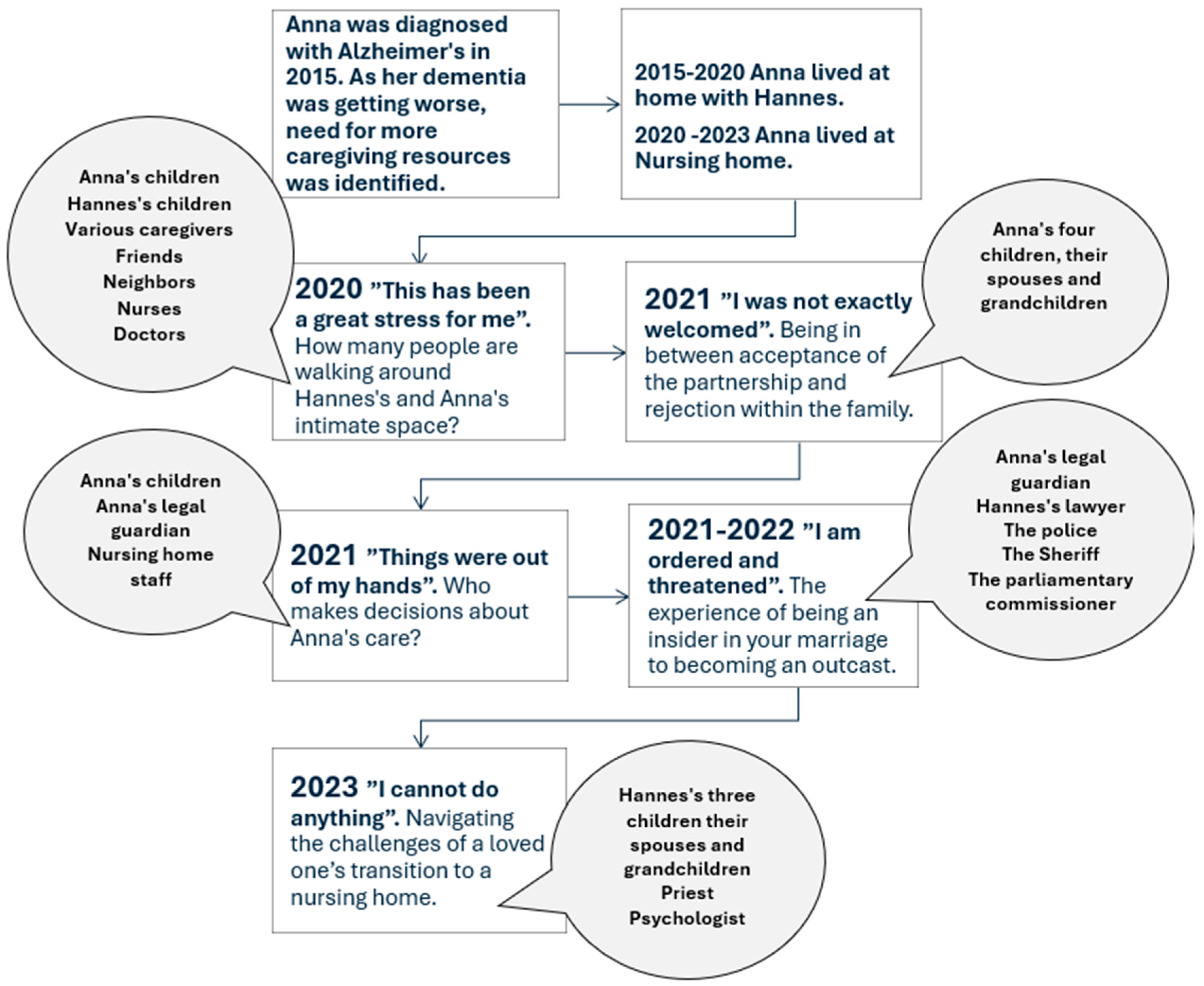
Second Partnership and Dementia Care in a Blended Family: Case Study of a Wicked Problem


Abstract
Share and Cite
Stefansdottir, O.A.; Kaas, M.J.; Sudmann, T. Second Partnership and Dementia Care in a Blended Family: Case Study of a Wicked Problem. Int. J. Environ. Res. Public Health 2024, 21, 1213. https://doi.org/10.3390/ijerph21091213
Stefansdottir OA, Kaas MJ, Sudmann T. Second Partnership and Dementia Care in a Blended Family: Case Study of a Wicked Problem. International Journal of Environmental Research and Public Health. 2024; 21(9):1213. https://doi.org/10.3390/ijerph21091213
Chicago/Turabian StyleStefansdottir, Olga Asrun, Merrie J. Kaas, and Tobba Sudmann. 2024. "Second Partnership and Dementia Care in a Blended Family: Case Study of a Wicked Problem" International Journal of Environmental Research and Public Health 21, no. 9: 1213. https://doi.org/10.3390/ijerph21091213
APA StyleStefansdottir, O. A., Kaas, M. J., & Sudmann, T. (2024). Second Partnership and Dementia Care in a Blended Family: Case Study of a Wicked Problem. International Journal of Environmental Research and Public Health, 21(9), 1213. https://doi.org/10.3390/ijerph21091213