Article

Self-Rated Health and Mortality: Moderation by Purpose in Life

Department of Human Development and Family Science, Purdue University, West Lafayette, IN 47907, USA
*
Author to whom correspondence should be addressed.
Int. J. Environ. Res. Public Health 2023, 20(12), 6171; https://doi.org/10.3390/ijerph20126171

Submission received: 13 April 2023 / Revised: 10 June 2023 / Accepted: 15 June 2023 / Published: 19 June 2023

Abstract

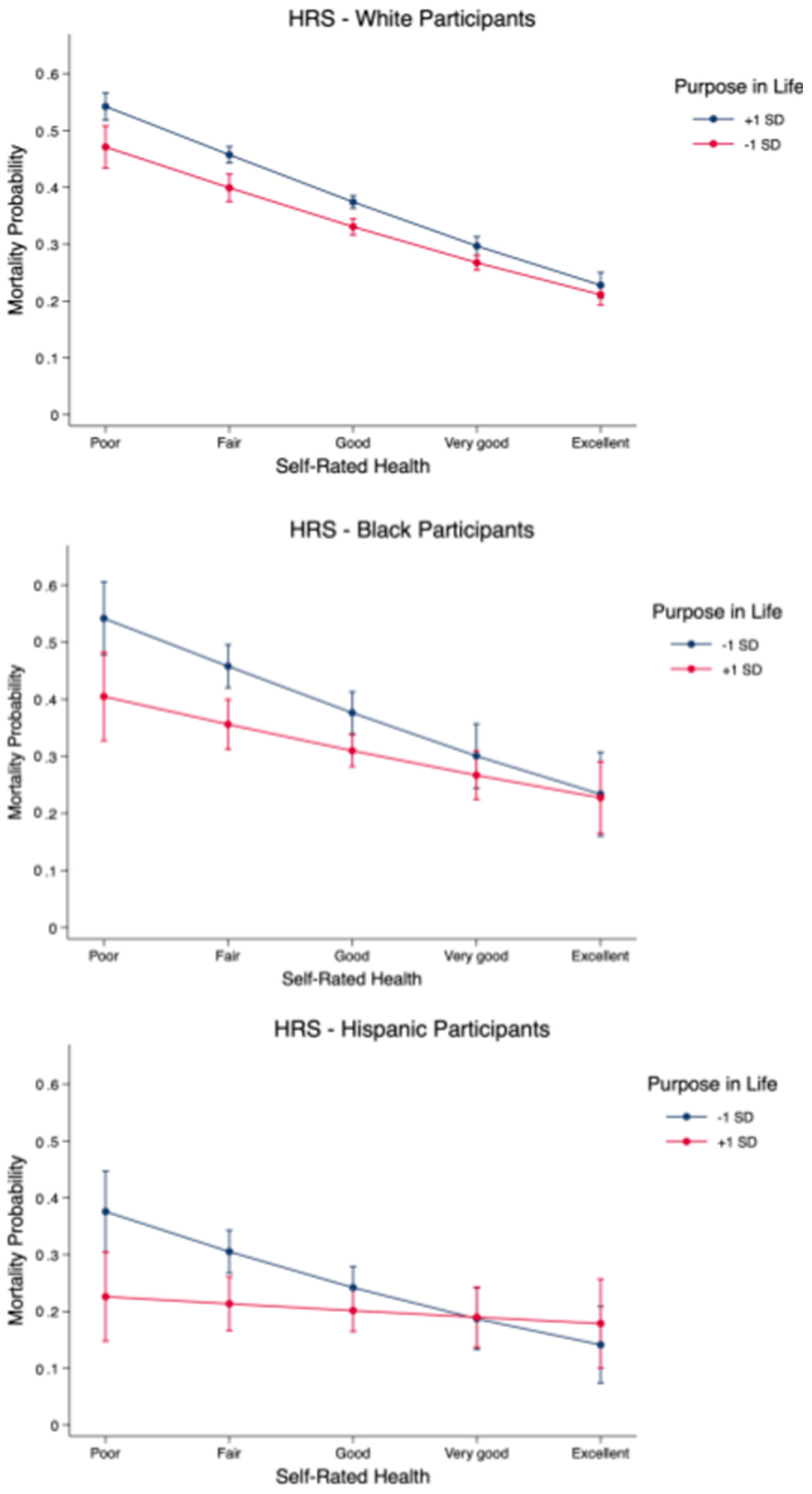
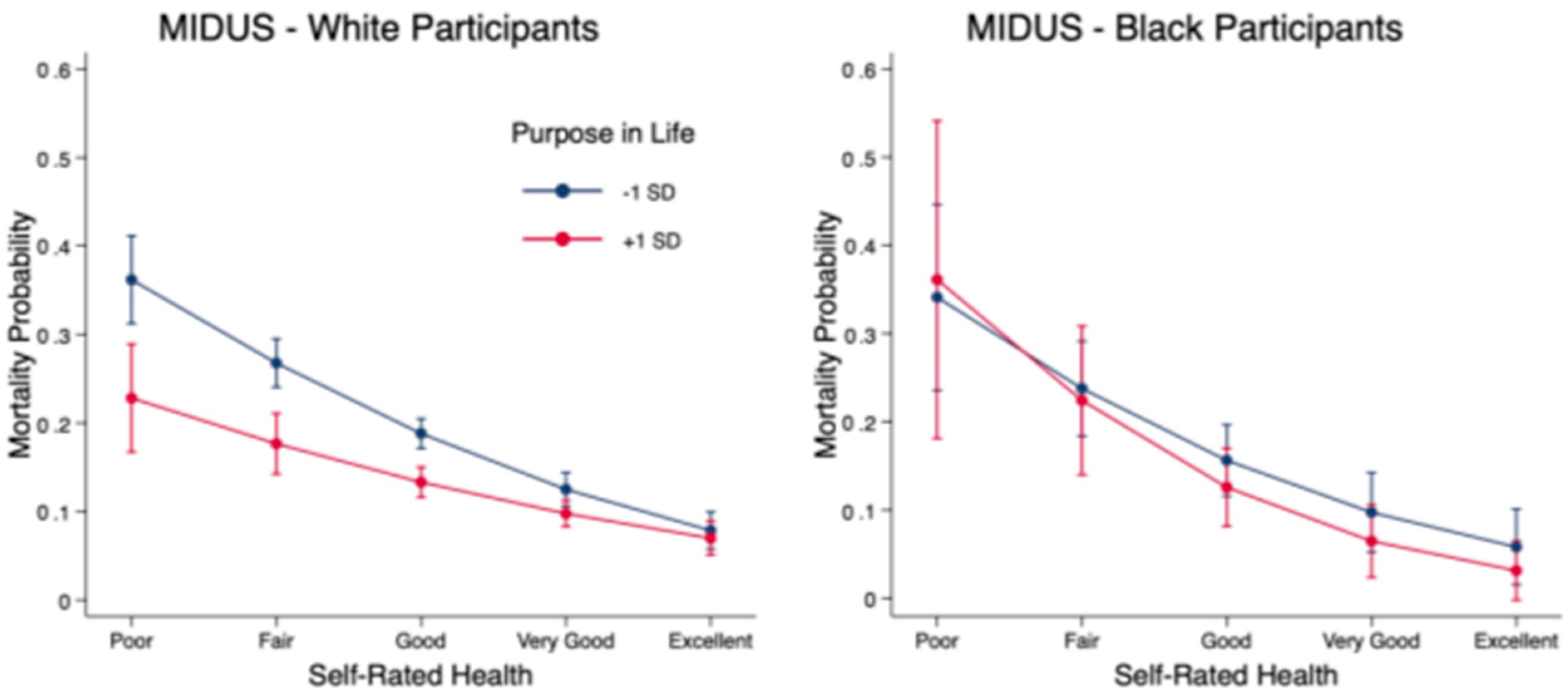
Poor self-rated health consistently predicts reduced longevity, even when objective disease conditions and risk factors are considered. Purpose in life is also a reliable predictor of diverse health outcomes, including greater longevity. Given prior work in which we showed that purpose in life moderated the association between chronic conditions and health-related biological factors, the aim of the current study was to examine the role of purpose in life in moderating the relationship between subjective health and mortality. We also examined potential differences in these associations by race/ethnicity. Data were from two large national longitudinal studies—the Health and Retirement Study (HRS) and the Midlife in the United States (MIDUS) study—with a 12- to 14-year follow-up period for mortality estimates. Results of logistic regression analyses showed that purpose in life and self-rated health were both significantly positively associated with longevity, and that purpose in life significantly moderated the relationship between self-rated health and mortality. Stratified analyses showed similar results across all racial/ethnic groups, with the exception of Black MIDUS participants. These results suggest that greater purpose in life may provide a buffer against the greater probability of mortality associated with poor subjective health.
Keywords: self-rated health; purpose in life; mortality; racial differences self-rated health; purpose in life; mortality; racial differences