Article

Human Microbiome Mixture Analysis Using Weighted Quantile Sum Regression

1
Department of Environmental Medicine and Public Health, Icahn School of Medicine at Mount Sinai, 1 Gustave L. Levy Place, Box 1057, New York, NY 10029, USA
2
Department of Medical-Surgical Specialties, Radiological Sciences and Public Health, Università degli Studi di Brescia, Piazza del Mercato, 15, 25121 Brescia, Italy
*
Author to whom correspondence should be addressed.
Int. J. Environ. Res. Public Health 2023, 20(1), 94; https://doi.org/10.3390/ijerph20010094

Submission received: 3 November 2022 / Revised: 13 December 2022 / Accepted: 16 December 2022 / Published: 21 December 2022
(This article belongs to the Special Issue 3rd Edition of Big Data, Decision Models, and Public Health)

Abstract

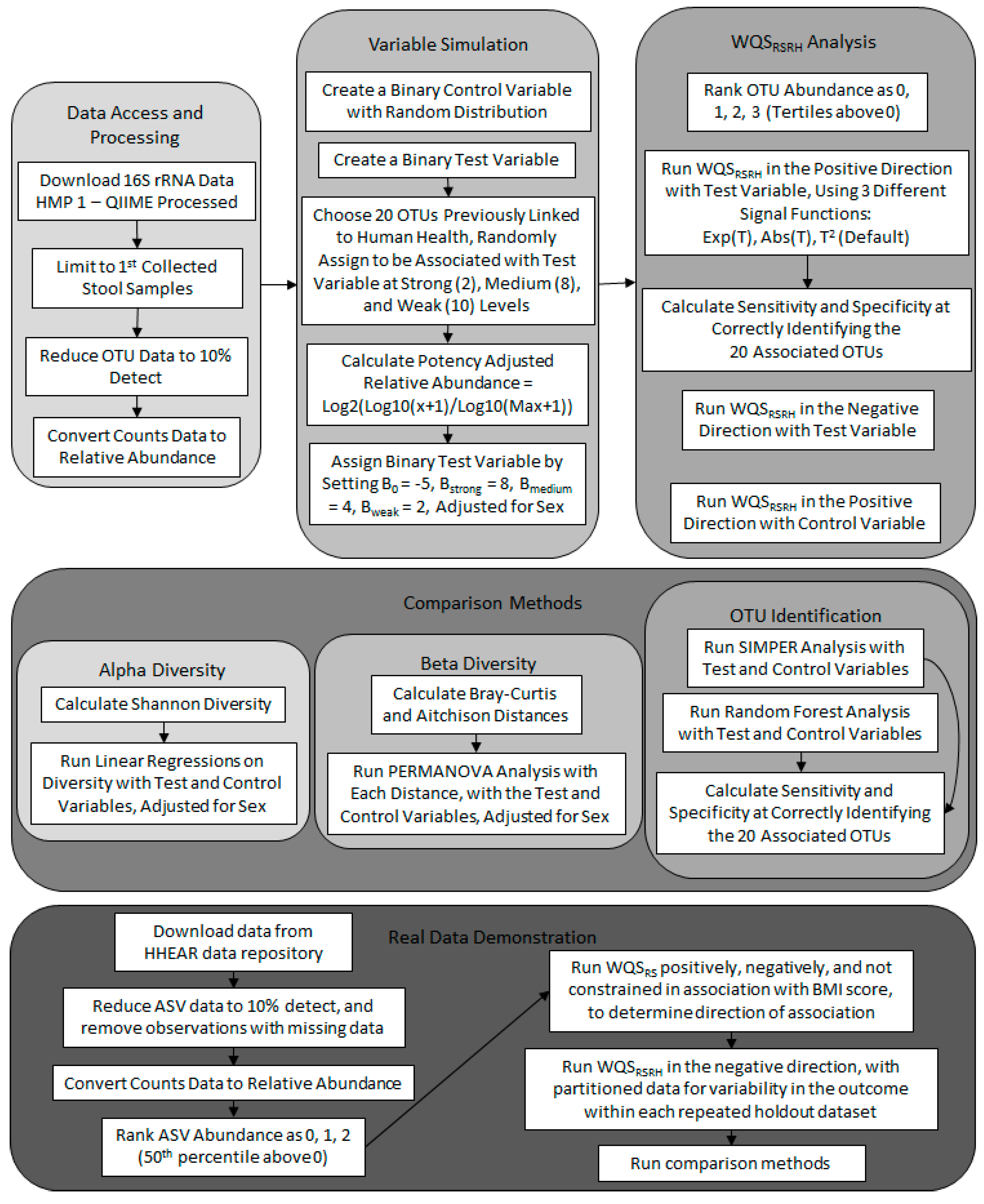
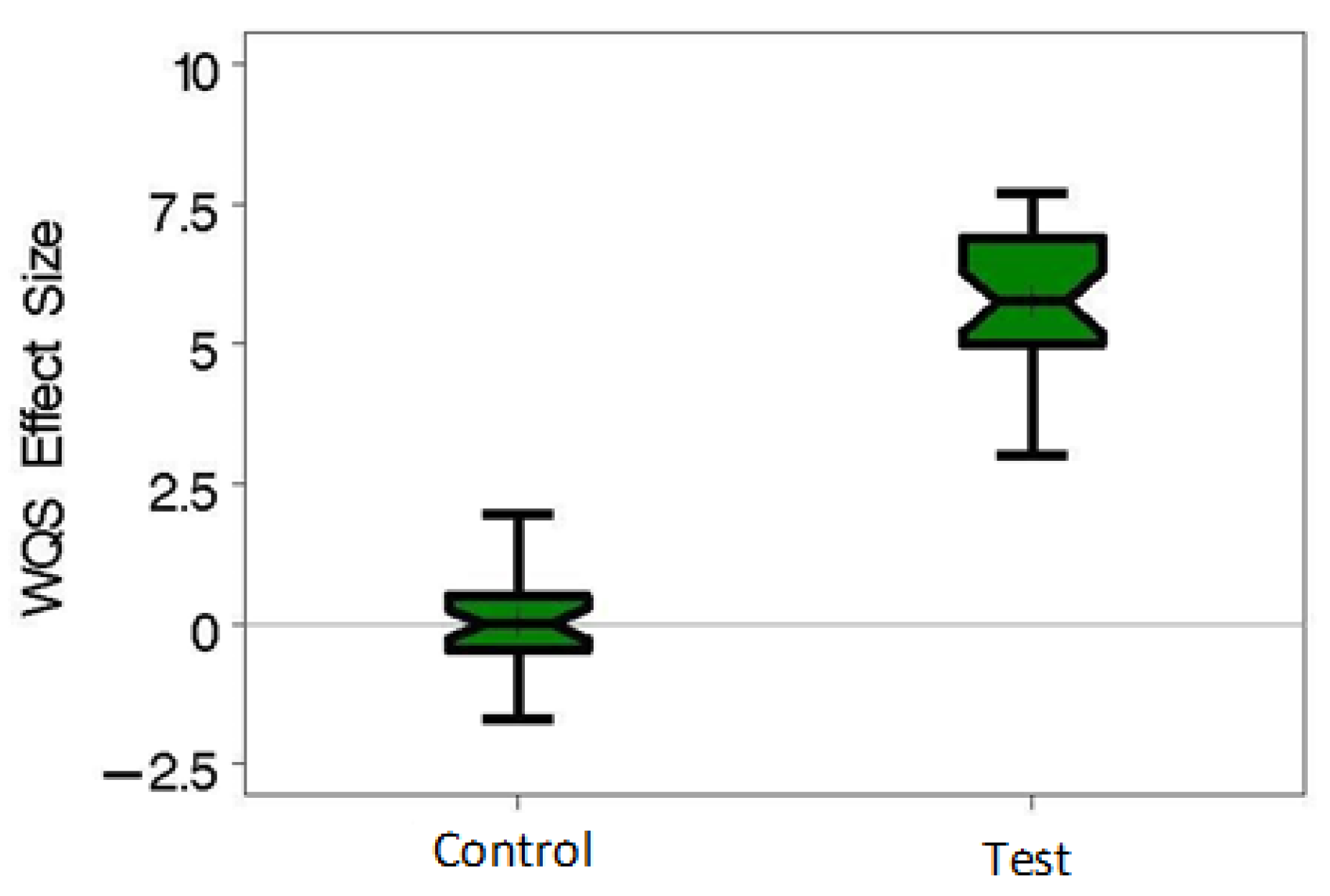
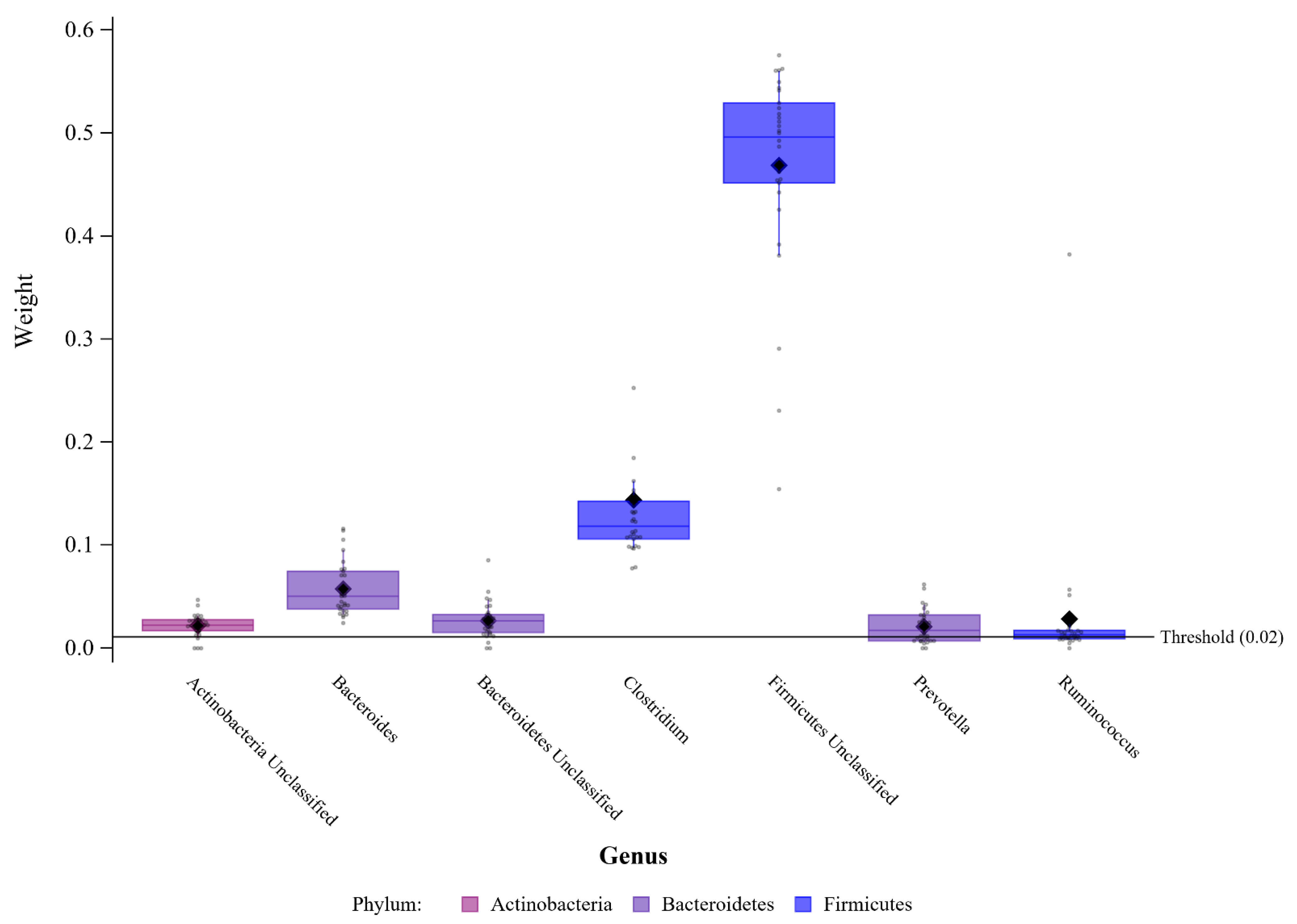
Studies of the health effects of the microbiome often measure overall associations by using diversity metrics, and individual taxa associations in separate analyses, but do not consider the correlated relationships between taxa in the microbiome. In this study, we applied random subset weighted quantile sum regression with repeated holdouts (WQSRSRH), a mixture method successfully applied to ‘omic data to account for relationships between many predictors, to processed amplicon sequencing data from the Human Microbiome Project. We simulated a binary variable associated with 20 operational taxonomic units (OTUs). WQSRSRH was used to test for the association between the microbiome and the simulated variable, adjusted for sex, and sensitivity and specificity were calculated. The WQSRSRH method was also compared to other standard methods for microbiome analysis. The method was further illustrated using real data from the Growth and Obesity Cohort in Chile to assess the association between the gut microbiome and body mass index. In the analysis with simulated data, WQSRSRH predicted the correct directionality of association between the microbiome and the simulated variable, with an average sensitivity and specificity of 75% and 70%, respectively, in identifying the 20 associated OTUs. WQSRSRH performed better than all other comparison methods. In the illustration analysis of the gut microbiome and obesity, the WQSRSRH analysis identified an inverse association between body mass index and the gut microbe mixture, identifying Bacteroides, Clostridium, Prevotella, and Ruminococcus as important genera in the negative association. The application of WQSRSRH to the microbiome allows for analysis of the mixture effect of all the taxa in the microbiome, while simultaneously identifying the most important to the mixture, and allowing for covariate adjustment. It outperformed other methods when using simulated data, and in analysis with real data found results consistent with other study findings.
Keywords: human microbiome; microbiome analysis; mixture analysis; weighted quantile sum regression human microbiome; microbiome analysis; mixture analysis; weighted quantile sum regression