Article

Moderation of Services’ EKC through Transportation Competitiveness: PQR Model in Global Prospective


1
Department of Economics and Statistics, University of Management and Technology, Lahore 54770, Pakistan
2
Department of Economics, Division of Management and Administrative Science, University of Education Lahore, Lahore 54770, Pakistan
3
School of Engineering and Natural Sciences, Istanbul Medipol University, Istanbul 34810, Turkey
4
Department of Computer Science, University of Calgary, Calgary, AB T2N 1N4, Canada
5
Department of Health Informatics, University of Southern Denmark, 5230 Odense, Denmark
*
Author to whom correspondence should be addressed.
Int. J. Environ. Res. Public Health 2023, 20(1), 293; https://doi.org/10.3390/ijerph20010293

Submission received: 22 November 2022 / Revised: 19 December 2022 / Accepted: 21 December 2022 / Published: 24 December 2022

Abstract

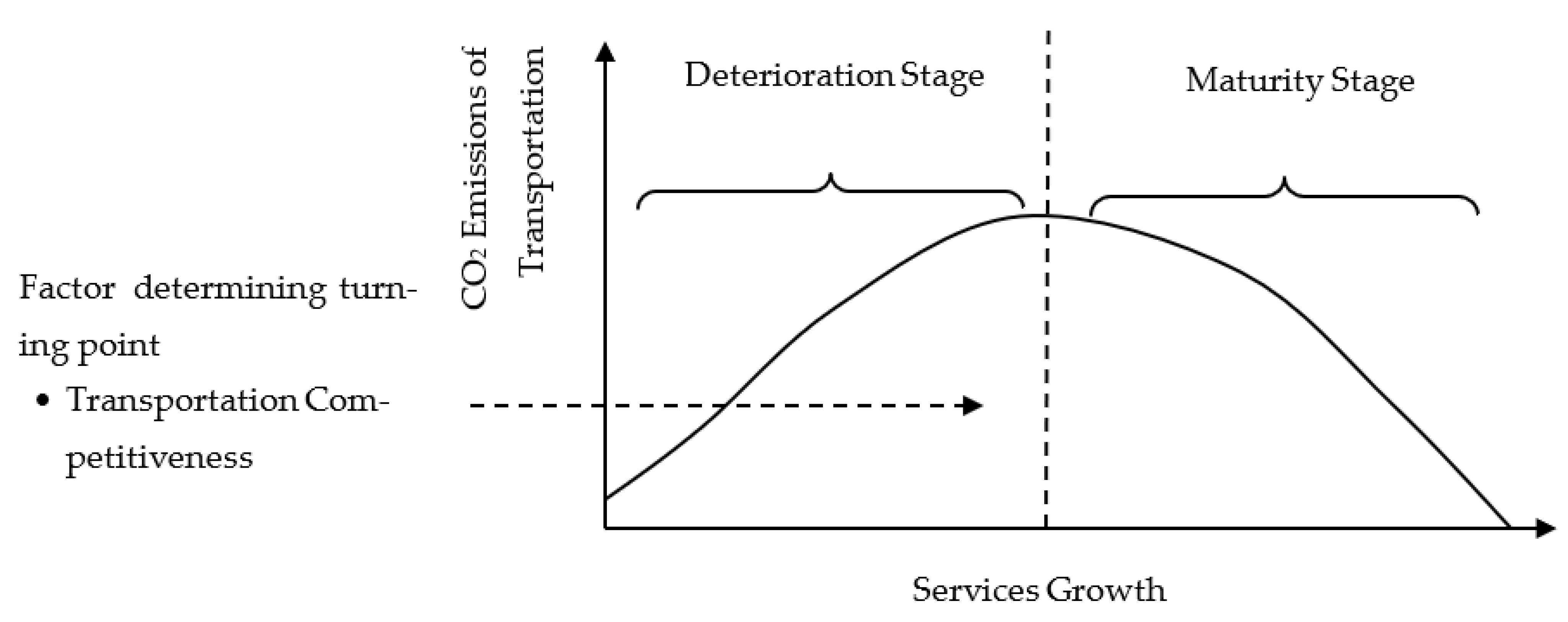
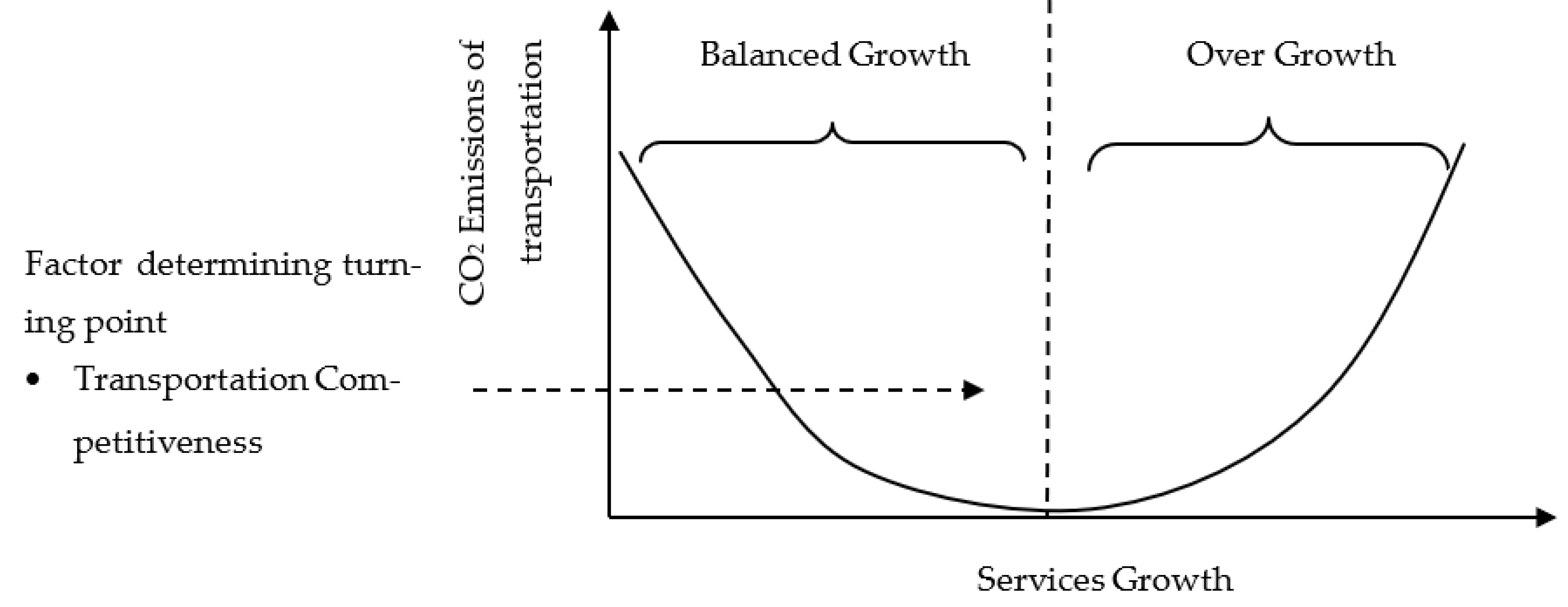
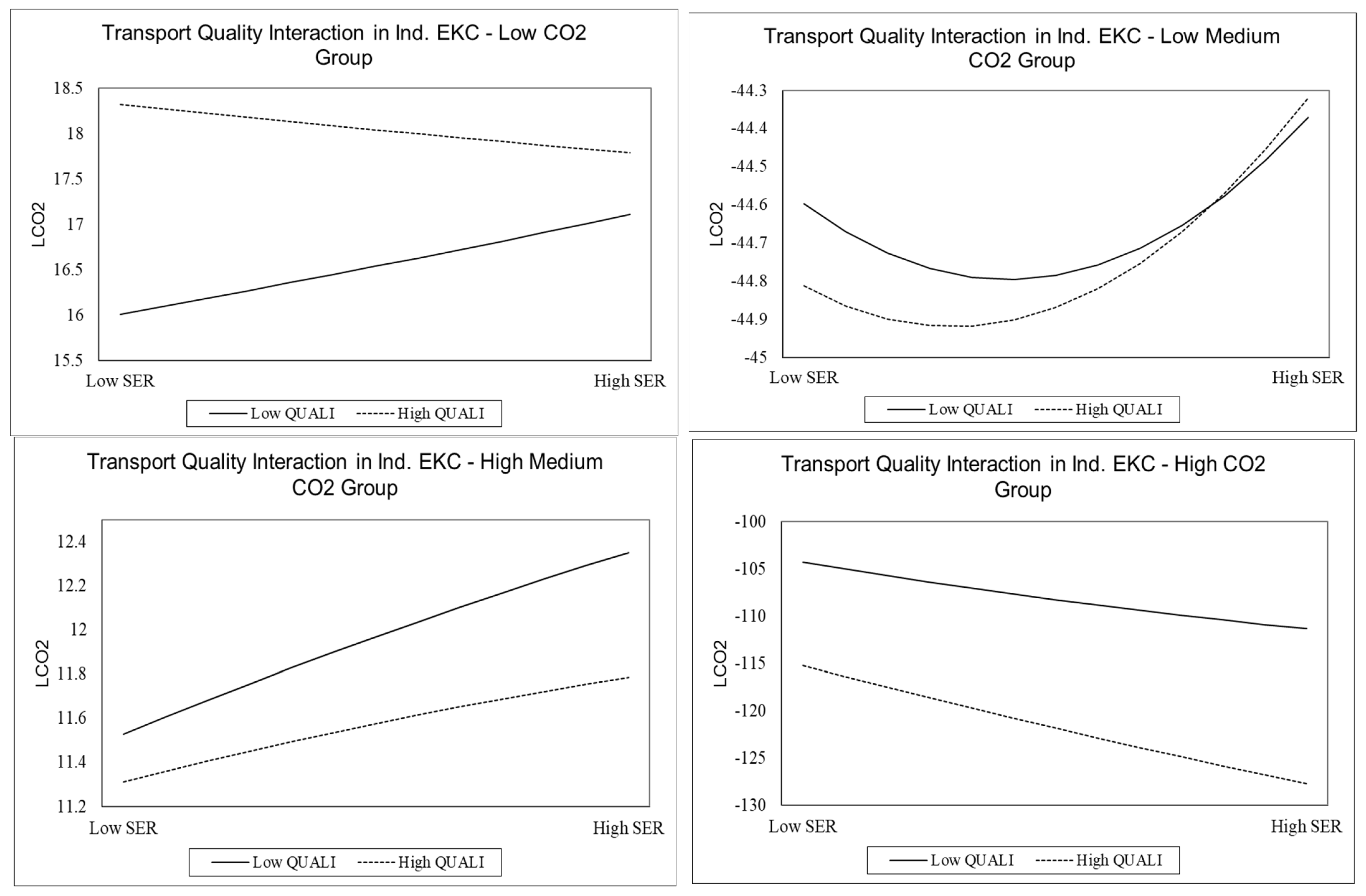
The continuously increasing GHG emissions have created environmental pollution and several challenges to ecosystems and biodiversity. The challenges of climate change are multipronged, resulting in melting glaciers, flash floods, and severe heat waves. In this regard, the adaptive and mitigation strategies to manage the consequences of climate change are highly important. The transport sector creates a quarter of carbon emissions, and this share is continuously increasing. Accordingly, this research study uses transport competitiveness to determine carbon emissions of the transport sector for 121 countries covering the time period from 2008 to 2018. The Panel Quantile Regression (PQR) technique is engaged to analyze the study results. The findings highlight that transport competitiveness tends to increase carbon emissions of the transport sector across quantile groups 1 and 3, while it reduces carbon emissions in quantile group 2. The U-shaped services’ EKC is validated in quantile groups 2 and 4. The moderation engaged, i.e., transportation competitiveness, changes the turning point of the services’ EKC across quantile groups 2 and 4. However, in the high-CO2 quantile group, the moderation impact of transport competitiveness is strongest as it reduces the sensitivity by flattening the services’ EKC. Furthermore, the planned expansion of the population and improved institutional quality tend to mitigate carbon emissions across different quantile groups. The policy relevance/implications that are based on the study results/findings are made part of the research paper.
Keywords: transportation competitiveness; services’ EKC; carbon emissions; institutional quality; population density; penal quantile regression model transportation competitiveness; services’ EKC; carbon emissions; institutional quality; population density; penal quantile regression model