Article

Reflection in Rural Family Medicine Education

1
Community Care, Unnan City Hospital, 699-1221 96-1 Iida, Daito-cho, Unnan 699-1221, Japan
2
Department of Community Medicine Management, Faculty of Medicine, Shimane University, 89-1 Enya cho, Izumo 693-8501, Japan
*
Author to whom correspondence should be addressed.
Int. J. Environ. Res. Public Health 2022, 19(9), 5137; https://doi.org/10.3390/ijerph19095137

Submission received: 19 March 2022 / Revised: 19 April 2022 / Accepted: 22 April 2022 / Published: 23 April 2022
(This article belongs to the Special Issue Diagnosis and Advances in Research on Human Behavior)

Abstract

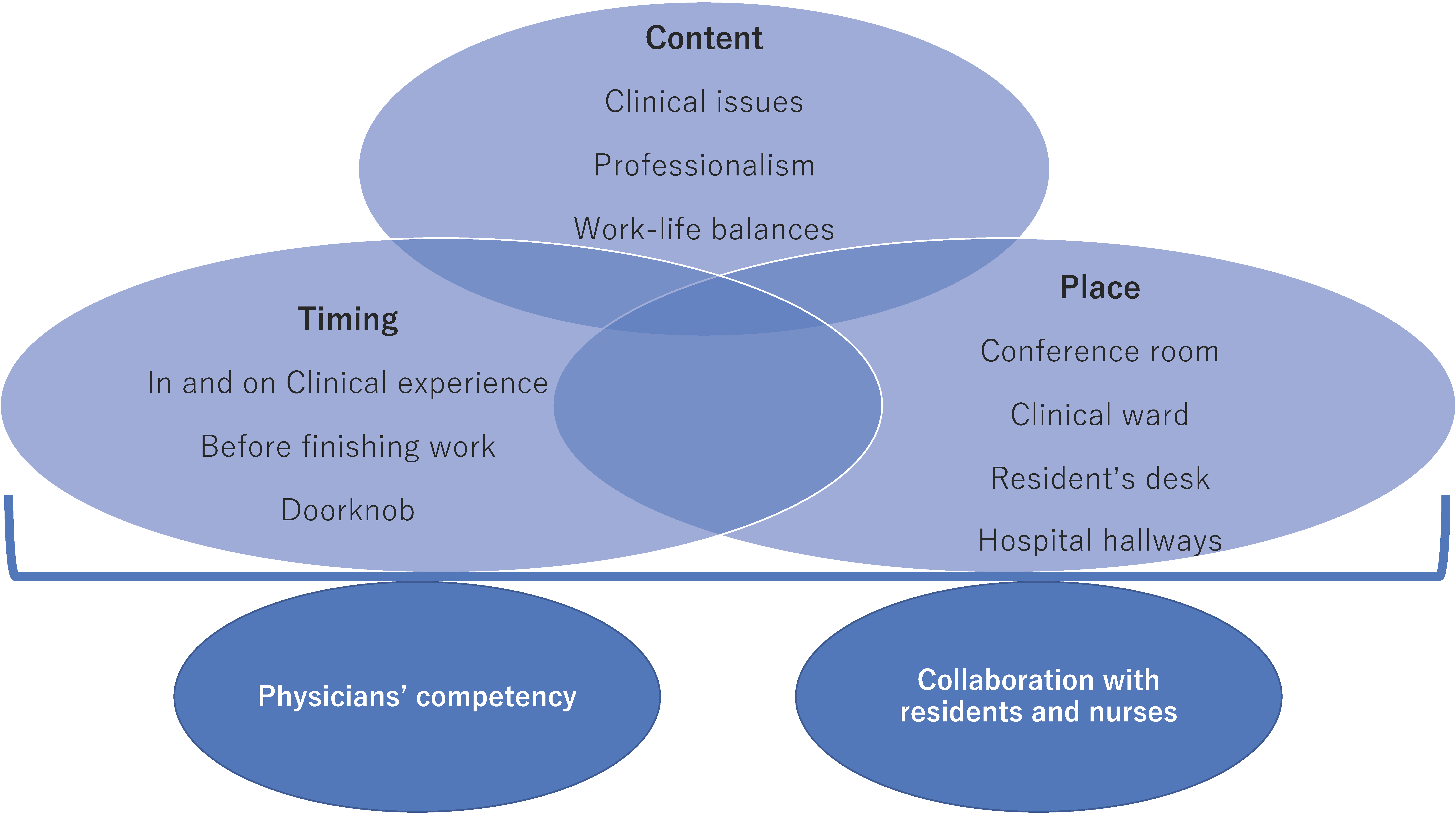
Reflection in medical education is vital for students’ development as professionals. The lack of medical educators in rural family medicine can impinge on the effective reflection of residents’ learning. Hence, based on qualitative research, we proposed a framework regarding reflection in rural family medicine education, indicating when, where, and how reflection is performed and progresses. The contents of reflection include clinical issues regarding knowledge and skills, professionalism in clinical decisions, and work-life balance. The settings of reflection include conference rooms, clinical wards, residents’ desks, and hospital hallways. The timing of educational reflection includes during and after patient examination and discussion with various professionals, before finishing work, and during “doorknob” times (right before going back home). Rural medical teachers need competence as clinicians and medical educators to promote learning in medical residents and sustain rural medical care. Furthermore, medical teachers must communicate and collaborate with medical residents and nurses for educational reflection to take place in rural family medicine education, especially regarding professionalism. In rural family medicine education, reflection can be performed in various clinical situations through collaboration with learners and various medical professionals, aiding the enrichment of residents’ learning and sustainability of rural medical care.
Keywords: reflection; rural family medicine education; medical resident; medical teacher; nurses; community hospital; Japan reflection; rural family medicine education; medical resident; medical teacher; nurses; community hospital; Japan